Sports Round Up

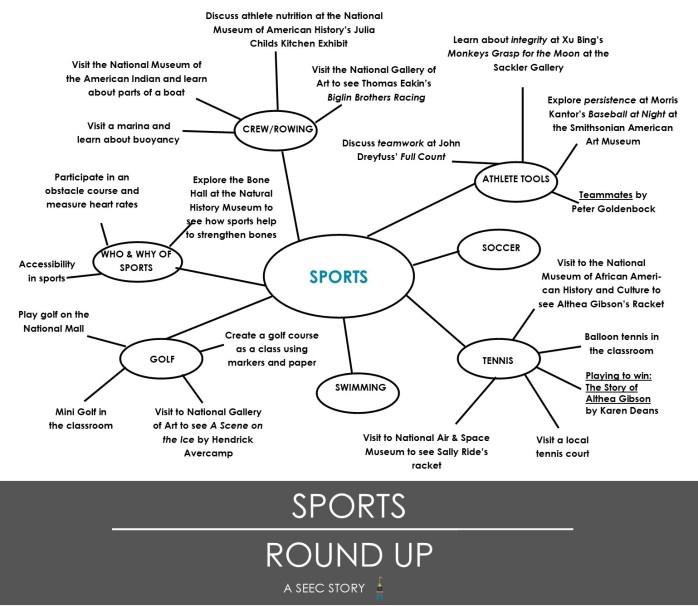
Recently we brought you a Teacher Feature showcasing a lesson on rowing and crew from of our 4-year-old classes.  We’re back with a round up of their sports unit led by teachers Jessie Miller and Will Kuehnle.   The web below depicts their entire unit, and the photos that follow highlight some of their lessons.

Web.jpg

The Why of Sports
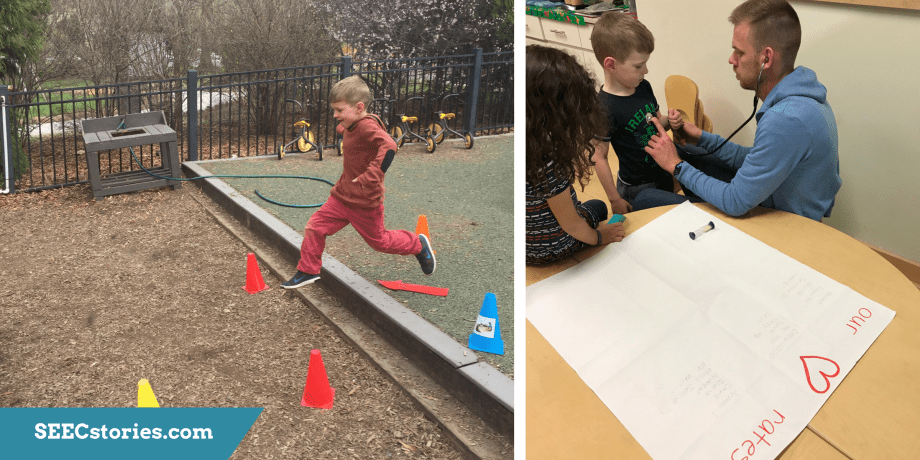
It was important to Will and Jessie, that their sports unit not solely consist of playing games, but also integrated an array of subjects such as science and art.  During their week on the “who and why of sports”, the Honey Bears learned more about the science of their bodies and how sports and exercise affect their health. 1

How does physical exercise get our hearts pumping?  The children took their resting heart rates in the classroom, and then participated in an obstacle course on the playground.  Right after the course they measured their heart rate again, comparing it to their resting heart rate to see the difference.

SEECstories.com (44).png

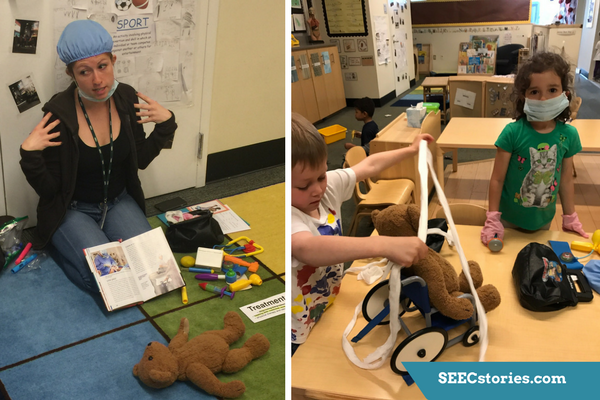
They also talked about sports medicine, and the importance of taking care of our bodies when they are injured.  The children were so interested in sports medicine, that Will and Jessie incorporated more lessons related to medicine throughout the unit, for example, they talked about tendinitis during their week on tennis.

Golf

SEECstories.com (40)

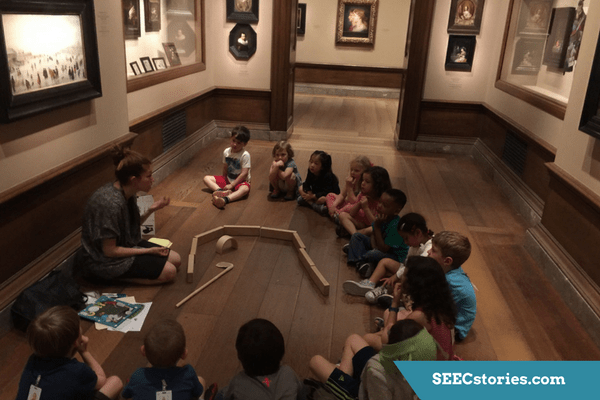
To introduce the children to golf, the class visited Hendrick Avercamp’s A Scene on the Ice at the National Gallery of Art.  The painting shows people playing on the ice, including two boys playing “colf”, a mix between golf and hockey.  After observing the painting, Jessie showed the children the tools of golf including a golf club, ball, and “hole” (made using blocks from the classroom).

1

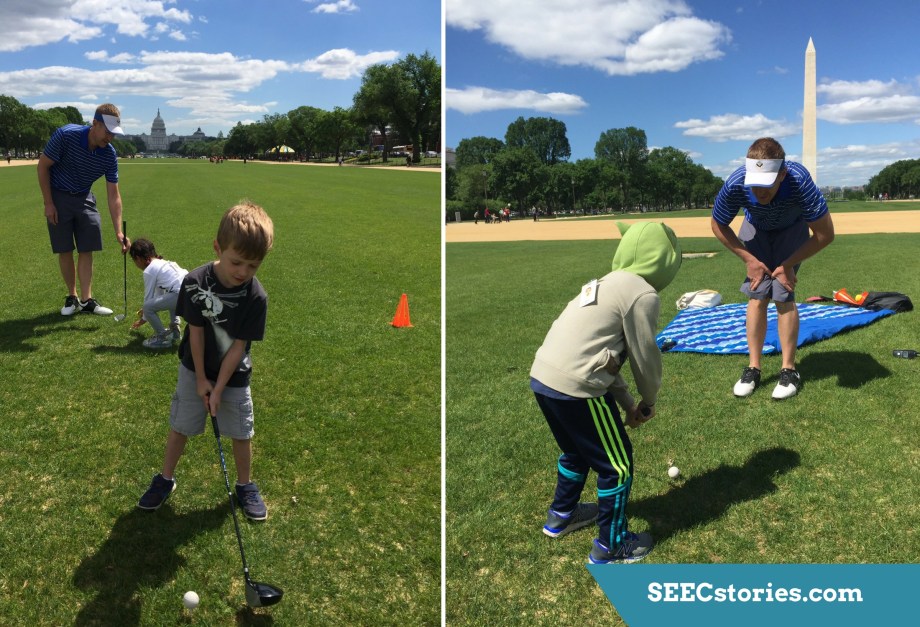
Later that week the children met with a parent who plays golf.  He answered the children’s questions about golf, and showed how he likes to swing the golf clubs.  The children took turns swinging the golf club at ping pong balls (they wanted to be safe with all the people around).

1.jpg

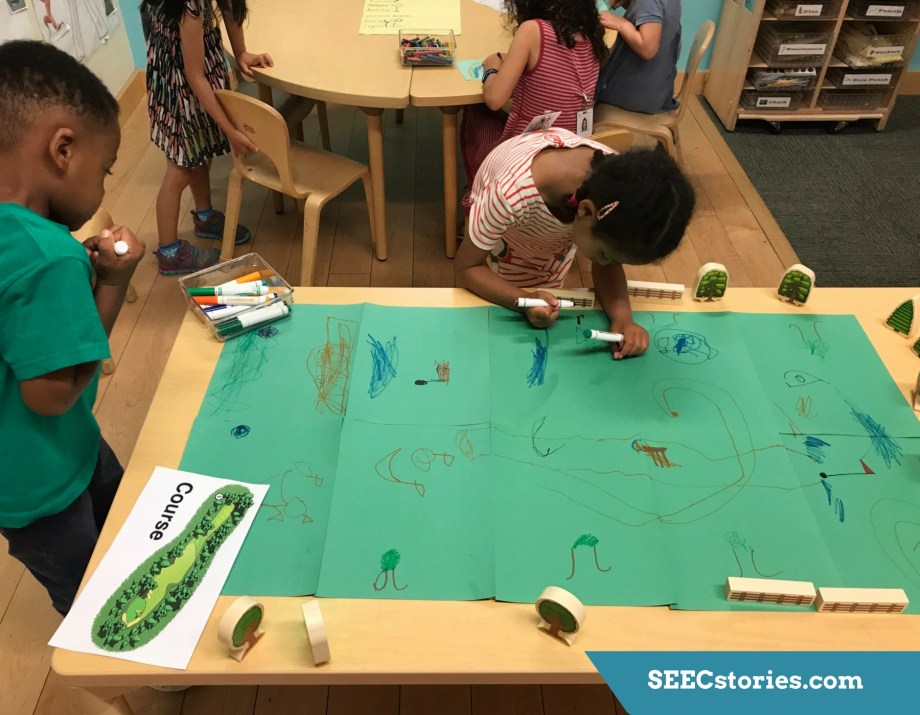
Back in the classroom the children collaborated on a golf course using blocks, markers, and paper.

2

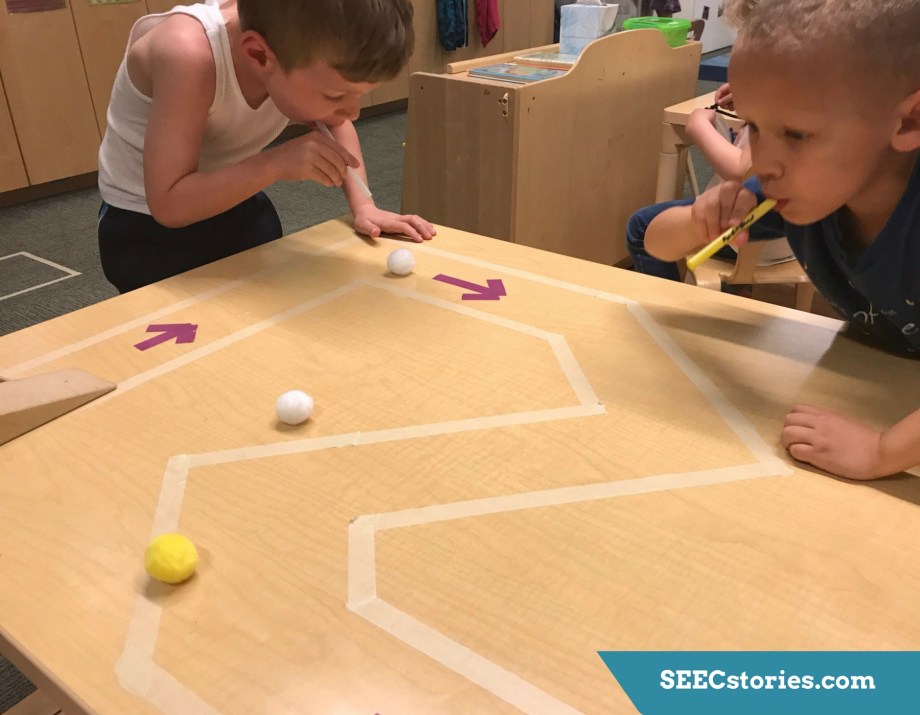
They also practiced their persistence by playing a golf-like game by blowing their golf balls (pompoms) along the course with a straw.

Tennis

SEECstories.com (41)

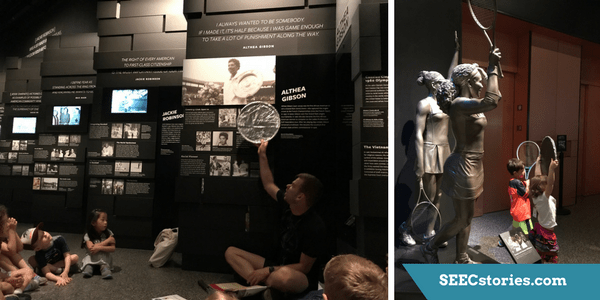
The class visited the National Museum of African American History and Culture to learn about three exceptional tennis players: Althea Gibson, Serena Williams, and Venus Williams. 4

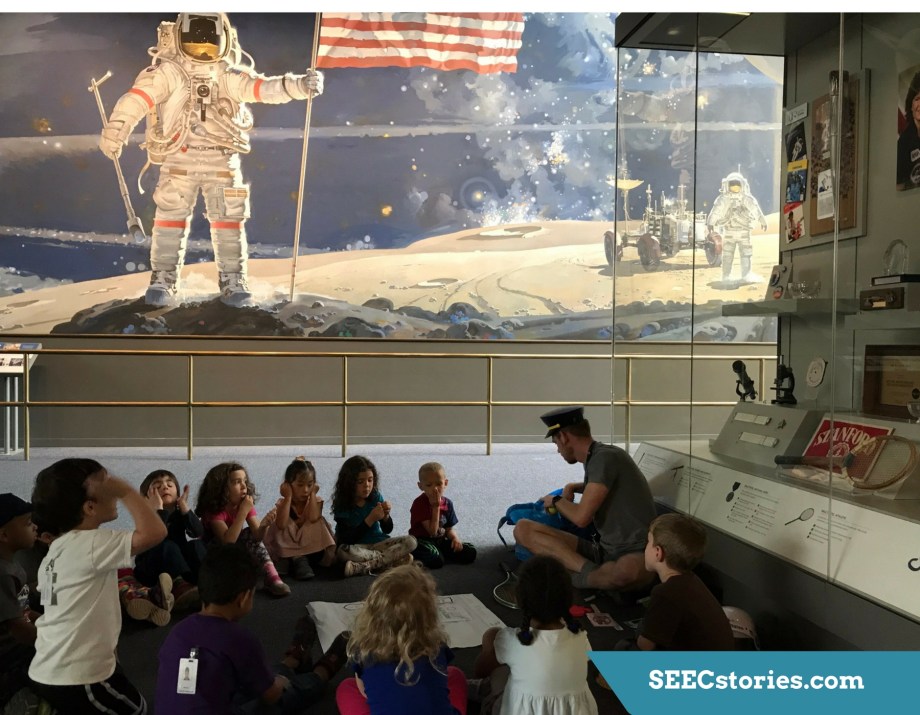
The National Air and Space Museum has Sally Ride’s racket on view, and the class visited it to learn about Sally Ride, and think about how gravity affects the game of tennis.

25

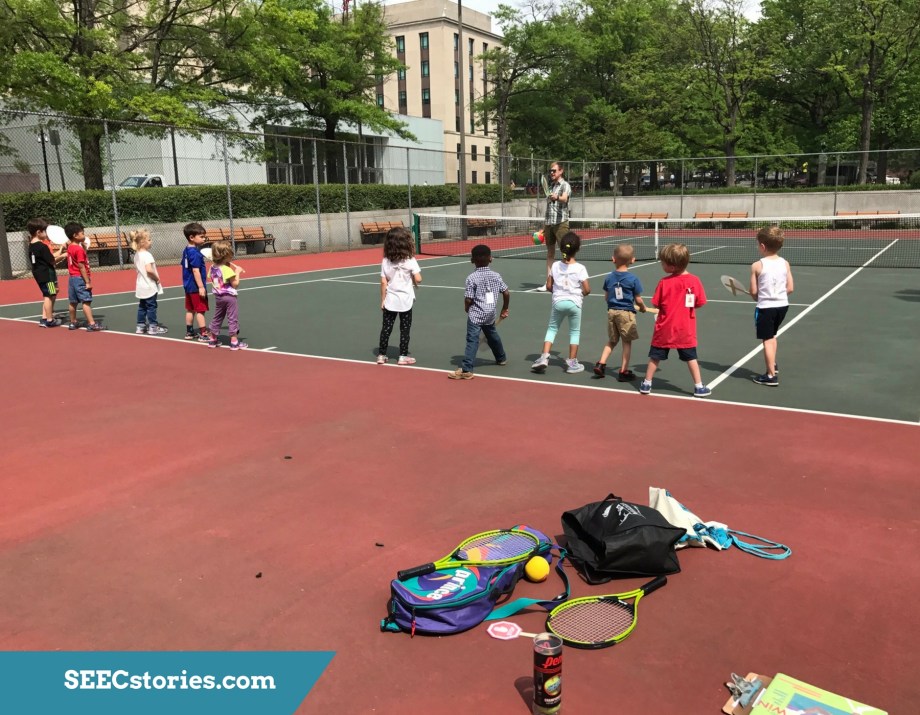
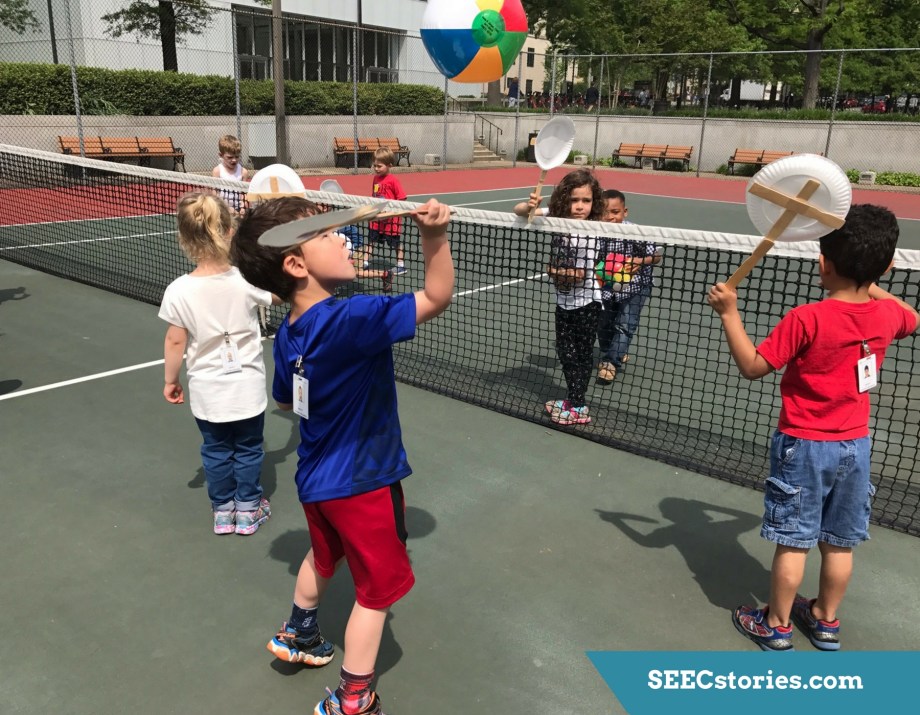
To end their week on tennis, the Honey Bears went to a local tennis court to try their hand at the sport.  After observing and talking about the parts of the court and equipment, they got to hit tennis balls with a racket, and then play a game of “beach ball tennis” using rackets made of paper plates and paint stirrers.

3

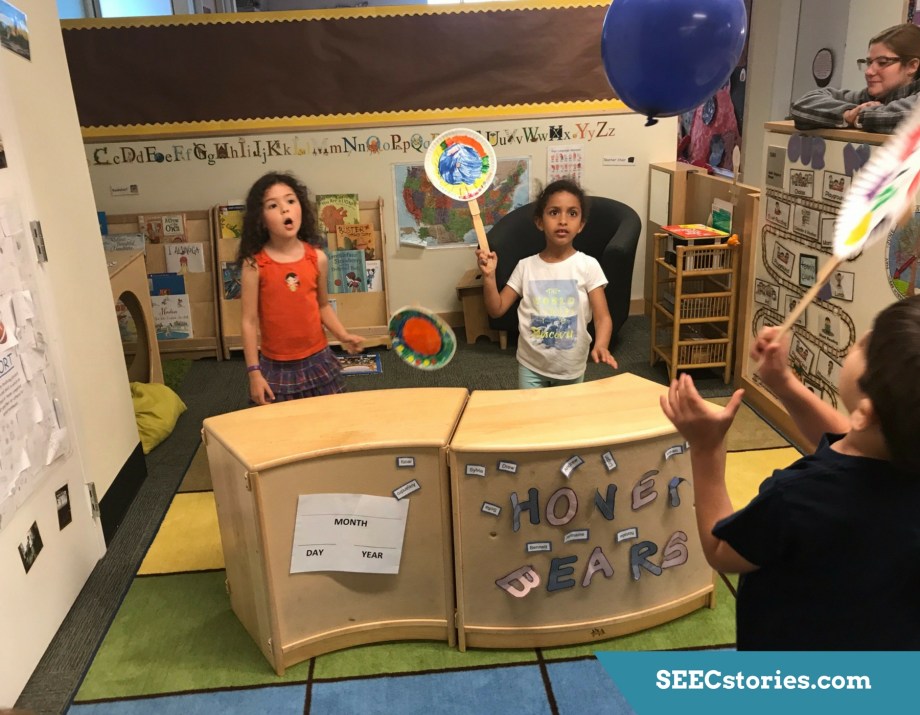
Back in the classroom, they continued to play tennis with balloons and their now decorated rackets.

Rowing/Crew

3

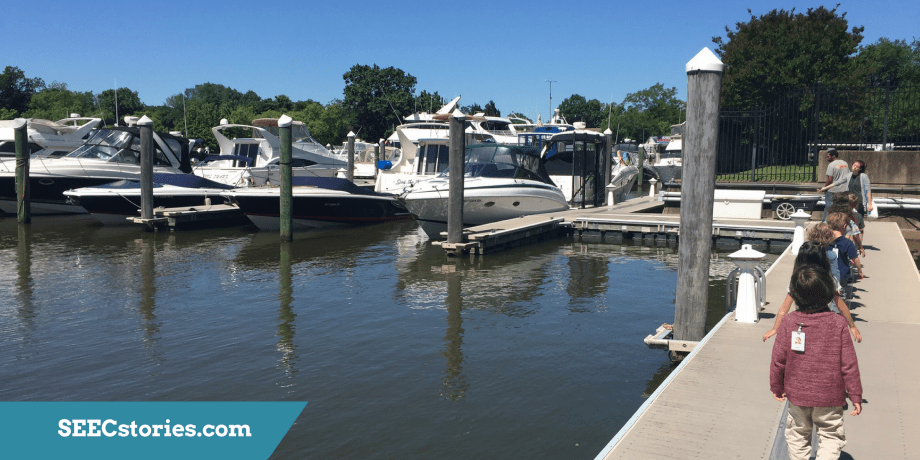
What better way to understand the idea of buoyancy than heading down to the docks and seeing boats on the water?  The class went to the marina by the Tidal Basin to do just that.

2

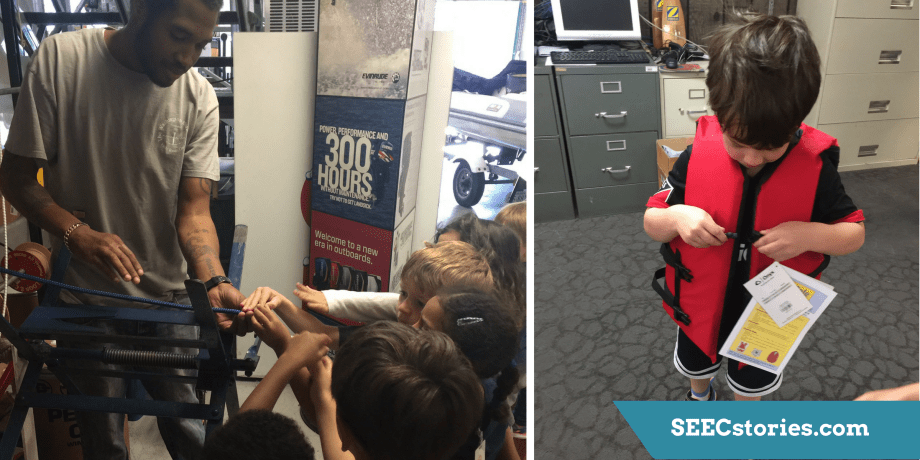
They also went into a boating store and talked with an expert about boats.  Boat safety was also discussed and they got to try on life jackets.

SEECstories.com (42)SEECstories.com (43)

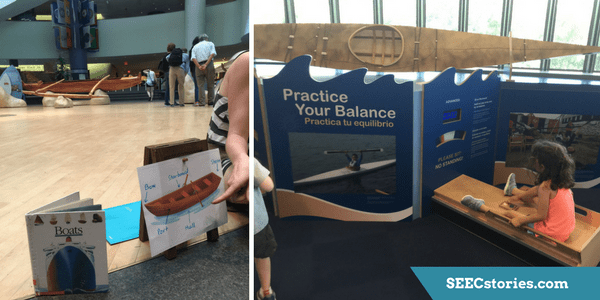
Later that week, the class ventured to the National Museum of the American Indian to see an Ojibwe Birch Bark Canoe to learn about the parts of a boat.  After that, they headed to imagiNATIONS Activity Center and practiced their balance in boats.


We hope you enjoyed getting a bigger picture of our Honey Bear class’ unit on sports!  Visit our sports Pinterest board for more ideas.

Teacher Feature: Infants Explore Tea

For this week’s Teacher Feature we will highlight how our infant class investigated tea. Educators Brandi Gordon, J. Kelly, and Rebecca Morgan Parr took their class to the Smithsonian’s Enid A. Haupt Garden where they saw a tea plant in the Moongate. Afterwards they went back to our center where they made and drank tea. Below you will find images from the lesson and a reflection from the educators.

Cover Photo_Pointing_Cropped

Preparation:

i-qd7Fnf6-L

Prior to this lesson, the class had been learning about food and different things that people eat and drink. Inspired by the drinks that their parents, caregivers, and teachers had been consuming, they recently began exploring hot drinks including tea and coffee.

This tea lesson felt like a natural topic to explore after our class finished learning about fruits, vegetables, and other foods that grow from plants. We followed the interests of the children in our Duckling class who were interested in their teachers’ drinks. They children wanted to drink, touch, and taste our tea and coffee. In general, letting small children drink or handle hot beverages is not acceptable. We did not want to leave their interests ignored, so we decided to teach about them instead. We wanted to explore why some beverages feel hot and felt it was an excellent opportunity to reinforce language and safety ideas.

i-j7Hgvsk-L

To learn more about tea, the class visited the Smithsonian’s Enid A. Haupt Garden where they were able to look at a tea plant.

For our objectives, we began by expanding upon the past units’ objectives. We had been teaching our Ducklings that many plants become the food that we eat, so visiting the tea plant was another way to do that. We also wanted more opportunities to explore our community, visit local shops, and see different parts of our school like the staff room, where we boiled the water to make tea. Another objective was to introduce our class to the idea of temperature. Lastly, we wanted to expose them to many kinds of tea as well as show them various beverages that exist in the world.

As educators, we had our own set of objectives for ourselves. We wanted to follow our class’s interest even if it was an unconventional topic. We wanted to weave the ideas of safety into a lesson. And we wanted to allow the children to embrace having sensory experiences. It was nice to remind ourselves that getting messy is ok and can be fun!

Lesson Implementation:

i-TcCLKtt-L

While looking at the tea plant, the educator Rebecca explained that people pick leaves from this plant to make tea.

Before the visit and on the way to the Moongate, we talked to the Ducklings about how we were going to see a tea plant. At the Moongate, we took the students out of the buggies and helped them into the circular marble seating next to the tea plant. We compared the real tea plant to the pretend tea plant and looked closely at the leaves.

i-TVxz9zs-L

Since plucking the tea leaves off the real tea plant would damage the plant, the educators brought their own pretend tea plant which was made by taping images of the tea plant to a cardboard box. To help the children experience plucking, they velcroed tea leaves to the box which the children were encouraged to pull off and put in a teapot.

The great thing about the pretend tea plant was that the children had the opportunity to pull off the leaves without hurting a live plant. After the Ducklings pulled the leaves off the box, we encouraged them to place them into tea bags which in turn they placed into our toy teapots. Then we poured pretend tea into their cups to drink. Many of the children loved pretending to drink out of the cups. As they pretended to make and drink the tea, we sang I’m a Little Tea Pot.

Some of children were more interested in playing with the water from the rain. They smacked their hands down on the marble seating to splash. We talked to the Ducklings about how we ingest plants for eating in many ways and that plants also go into tea. They had seen flowers throughout our gardening unit so the idea that some flowers can go in tea seemed to excite them.

i-Fd9DDCJ-L

The class returned to the center, to watch Kelly brew tea. Kelly talked about the different plants that can be used to make tea and poured hot water over tea leaves so the children could watch the steeping process.

We took our students into the kitchen area of the staff break room, where they began the beginnings of a circle time by sitting on the floor with their teachers. Kelly showed the class the electric kettle, tea bags, and the tea strainer. We gave out some tea bags to allow the students to explore. Some of the Ducklings started to rip the tea bags. We decided to encourage their exploration of the loose-leaf tea and asked questions like “What does that feel like?”


i-WLcNqSZ-L

Children were encouraged to explore tea using their senses. They smelled tea, touched tea (and even pulled apart tea bags), and eventually tasted the tea.

We allowed free exploration. Some of the children enjoyed ripping the tea bags, some of them preferred chewing a strand of lavender, others placed dried rose petals into our tea strainer. We let the children stand up and sit down as they wished but made sure that they stayed within the confines of the small kitchen area so we could see everyone.

We tried to encourage our students to explore many kinds of sensory options. We also know that they are at an age when most things still go in their mouths for exploration and provide important details about the world around them. Tea is something they can learn about through all the senses–sight, sound, smell, touch and taste. They could see the tea, hear the water boil and steam, they could touch the dry and rehydrated tea leaves, smell the tea as it is brewing and finally taste it.

Reflection:

i-d6svSh4-L

To conclude the lesson, the class had the opportunity to drink tea and as they drank, they engaged in conversation. Some children chose to clink cups as if they were cheering before drinking.Enter a caption

We followed up by this lesson by having the students “paint” with tea bags on a big sheet of paper. We continued to make different varieties of teas and visited the United States Botanical Garden to see different herbs that are used in tea (like mint.) Later in the afternoon, after everyone had woken up from their nap, we gave all of them a cup with the tea we made so they could try it as well as practice using open-face cups.

For other teachers trying this lesson, we recommend making sure whatever tea you use is decaffeinated and that the teas taste good to a child’s palate. Try to make sure you give enough time for the students to explore the objects and try to see how you can explore all the senses. Be flexible and open to mess– this is a great opportunity to allow each child to be an investigator, a scientist, a creative, and as always, their most curious self.


Easy At-Home Learning: Architecture

Why Architecture

As a parent, I am always on the look out for fun and easy learning opportunities. While I was scrolling through my Facebook feed, I noticed this great blog on shadows and I began to think more about architecture. We encounter architecture everyday– it is all around us. Whether we live in the city, suburbs or country – architecture is an essential component of our environment. And if you haven’t read any previous posts, SEEC staff has been busy thinking about the importance of environment and its impact on learning. Young children connect to architecture and at an early age, begin to notice its features. Don’t believe me….Well, just take a walk with a group of SEEC students across the Mall and ask them where their parents works. Inevitably, they will identify the museum by the building’s architecture. “My mommy works in the round one (Hirshhorn Museum and Sculpture Garden).” or “Dad works in the one with a lot of glass (National Air and Space Museum).”


Seize the Moment

Maybe your child doesn’t spend their days in Washington, DC, but I bet they are noticing their own neighborhood. Ask them to think about their friend’s homes, can they identify a feature: color, shape, number of stories? What about their school? The first words out of my kid’s mouths when they set foot in their school cafeteria was, “There are a ton of windows.” Its true, one wall of their cafeteria is ceiling to floor windows that look out onto a wooded area. That feature made a strong impression and four years later, they continue to marvel at the fact these windows connect them to the outdoors. The point I am trying to make is simple: if your child notices these details seize the opportunity to take what they are interested in and run with it.

That is exactly what our teachers did in the set of photos below of our three-year old class last year. I specifically chose to highlight this lesson because I thought it would be easy to recreate at home and inspire your inner teacher. Keep in mind, I am not suggesting that after working a 10-hour day (whether it be in an office or at home) that you whip up a lesson plus museum visit (for on-the-spot ideas, see below), but it is something to keep in mind for a weekend. These ideas encourage your child’s imagination, include some simple math and gets them to think about design, engineering and even aesthetics.

Since SEEC is located near so many buildings that feature columns that seemed like an obvious element to discuss with the class.

Since SEEC is located near so many buildings that feature columns – they were the perfect element to discuss with the class. Using the tablet, helps them visualize the idea before the headed out for their museum visit.

An over-sized can was another convenient choice - something easily pulled from the kitchen.

An over-sized can was another convenient choice for the teachers who simply pulled it from the kitchen. Each child got a turn feeling the weight of the can. This is an important step so that they experience of the weight of the can.

The teacher places the can on her 2-column building with disappointing results.

The teacher places the can on her 2-column building, made simply of cardboard and blocks. Clearly, the results were disappointing.

It turns out that by adding two columns, the house will hold the can.

It turns out that by adding two more columns, the house will hold the can.

The kids get a chance to see the real thing at the National Archives.

The kids get a chance to see the real thing at the National Archives.

And inside the National Gallery of Art.

And inside the National Gallery of Art.


On-the-spot Ideas

Don’t have time or energy to plan – don’t worry. Here are a few simple, spontaneous ideas that will get your little one to notice the architecture in their neighborhood.

1. Ask them to count the number of windows/columns (or whatever feature interests them) and draw their shapes with their finger – identify the shapes.

2. Ask them what they like or dislike about a building or a particular part of it?

3. Ask them to draw what they see or use their imagination to draw a building.

5. Play with building blocks when you get home and design your own space.

5. Play “I spy” with a particular architectural feature while riding home and describe its physical characteristics.

Hoping these ideas inspire you to get out and learn with your little one!

Tips for Challenging Behaviors

We’ve all been there. Your child or student is exhibiting a challenging behavior, you’re frustrated, and you’re not sure what to do. While there is no sure-fire way to address any and all behaviors, we’ve reflected on some of our philosophies when it comes to consequences and dealing with undesired behaviors.

i-NcXvrv2-X2

Choices

Sometimes children act out because they want to feel a sense of control. As adults, we want to offer them the opportunity to assert their autonomy, but sometimes what they want to do is unsafe, unacceptable, or just not appropriate for the time and place. In order to respect the child’s voice and need to feel independent, while also ensuring the behavior is safe and appropriate, we rely on offering choices to the child. A few notes and tips when offering children a choice:

  • Offer a choice between two things. Too many choices can be overwhelming to a child. Often times it can be helpful to hold out a hand as you offer each choice, and allow your child to verbally tell you which they want to do or point to a hand. This is a helpful visual for less verbal children.
  • Make sure that the choice is a real choice. People often will say to young children, “You have a choice: eat the broccoli or you can’t have dessert” believing that they are offering their children a choice. But statements like these are really about consequences not choices. The consequence of not eating the broccoli is no dessert. Talking about and explaining consequences to children is not a bad thing. In fact, we explain more about the power of consequences below. But masquerading a consequence as a choice can actually be harmful. A true choice honors the child’s ability to choose between two (seemingly equal) things. One way to make the above example a choice would be to say “You have a choice between carrots and broccoli. It’s your choice. You choose.”
  • Only offer realistic choices. If you offer a choice, be prepared for your child to choose either of the options. If you are not comfortable with one of the options, simply don’t offer that as a choice. It can be extremely frustrating for a child to be told that they have the opportunity to choose something only to be told that their choose is no longer an option.
  • When there isn’t a choice. Sometimes you cannot offer a child a choice due to safety reasons, for example, “You must hold my hand while we are in the parking lot.” In this case, it is perfectly fine not to offer a choice, but explaining why to the child is respectful and helpful.

i-mXfhH2W-L.png

Natural Consequences

At SEEC, we try to give natural consequences as much as possible for children’s behavior. This allows children to understand the cause and effects of their actions. For example, if a child refuses to wear their gloves in the winter, we warn them that their hands will get cold instead of struggling with them to put them on. When they get outside, they more often than not are bothered by the cold on their hands, and want their gloves. At this point we offer the child their gloves, and can remind them of this occasion if they refuse to wear their gloves again.

One of the great things about natural consequences is that the adults do not have to do anything for that consequence to happen. But unfortunately, that is not always the case and sometimes adults have to play a role. When this happens, it is important that the consequence is appropriate for the behavior. For example, it can be tempting to take away play time when a child isn’t listening or playing when they should be doing something else. However, this is not a natural consequence, it tends to not be meaningful as they suffer the consequence minutes or hours after the undesired behavior, and children NEED the play time. In fact, removing play time can often increase the challenging behaviors of children.

It is also equally important that the adult is willing and able to follow through with the consequence. If you say, “You need to behave or we’re leaving the store”, be sure that you are willing and able to leave the store if your child doesn’t behave in the way you want them to. It is also important that you explain to your child exactly what behaviors are appropriate versus not appropriate. Try saying, “you can calm down, hold my hand, and we’ll keep shopping, or we can leave” gives the child a positive idea of how they need to act and what the consequence will be if they do not.

i-V9DgD49-X3

Time Outs & Redirection

Growing up, I remember receiving time outs and being told that I was supposed to reflect on what I had done to earn the punishment. Instead of reflecting, I remember sitting and stewing about what had happened, and just said what I needed to say to get out of time out. In short, it was not productive for me, or to the learning process of why my behavior was inappropriate.

At times, we will redirect a child and have them leave a heated situation and take a moment to sit down in order to calm their bodies and emotions. We feel that this is helpful in terms of deescalating situations, and assisting children with their developing self-control, however we don’t set time constraints on these sessions, and often tell the child that when they feel like they are ready, to rejoin the group or come talk to the adult.  We often call this “taking a break” instead of a time out.

i-3b6CtSJ-X3

Communication 

We recognize that we won’t always be there when a child has a conflict with a peer, nor do we want to always have to step in and solve their problems. Instead, we try to give children agency to solve their problems, and thus we do not step in right away (unless their is a potential safety issue).

We give children language to express themselves, often we call it SEEC Speak. This language encourages and empowers children to communicate their feelings through language instead of physically. This looks different depending on the age group. For example, the toddlers are encouraged to say, “Mine!” or “Space!” in a big, strong voice if another child is trying to take something away from them or invading their personal bubble.

We also think about the language that we as adults use with young children when we are asking them to change their challenging behavior to more appropriate behavior. For example, if a child keeps standing up at lunch time, instead of saying, “Sit down” repeatedly, using more developmental language such as, “Bend your knees and put your bottom in the chair” might help children better understand what you’re asking and follow through.

Playing with Electricity


During one of our educator seminars, Play: Engaging Children in Object Rich Environments, participants observed a museum or community visit with our classes, who were all exploring electricity.  But how do you make electricity playful?  And how can educators make the same topic developmentally appropriate for infants, all the way up through five-year-olds?  Below are examples from our classes, ranging in age, across downtown DC, all engaging in playful learning about electricity.

Infants

Our youngest class, the Cottontails, love water play so the class chose to explore watermills . Before their visit, their teachers gave them laminated prints of paintings and images of watermills to look at, while describing their shapes and how they move.  Next they visited the Haupt Garden to play with watermill toys in a fountain to see for themselves how water, when poured onto the watermill, makes the wheel turn.  Through their play the children practiced fine motor skills, witnessed cause and effect, and heard new vocabulary.


The older infant class, the Ducklings, went to National Gallery of Art to see MultiVerse by Leo Villareal.  On their way to the museum their teachers talked about lights, and the Ducklings began pointing to lights along the way in hallways and elevators.  Once at the piece, a tunnel with a moving walkway covered in flashing lights, the children were given glow sticks and flashlights to explore on their own.  They used their fine motor skills to turn the lights on and off, waved them around to see their effect, and watched the flashing lights as they practiced new vocabulary.


Toddlers

One of our toddler classes, the Toucans, has been studying the Olympics, so they worked this lesson into their unit by learning about crowd energy.  They talked about why people cheer, and how encouragement and support can make someone feel.  They ventured to the Hirshhorn Museum and cheered on the fountain, which gradually gets higher.  While cheering for the fountain the Toucans practiced their social-emotional skills and also developed literacy skills through the use of songs and chants (“Take Me Out to the Ballgame” and “We Will Rock You”).


The older toddler class, the Dragonflies, focused on light versus dark, and how light gets its energy from different sources.  To illustrate this, the class experimented turning a lamp on and off when it was unplugged versus plugged in.  After their experiment they too went to MultiVerse by Leo Villareal at National Gallery of Art to see the small circular lights go on and off while they played with flashlights and glow sticks. They used their fine motor skills to control their lights and sang, “This Little Light of Mine”, which reinforced the concept while also practicing new vocabulary.


Twos

One of our two’s classroom, the Penguins, also focused on the “on and off” functions of objects that use electricity.  In the classroom they looked at light bulbs, and turned the lights on and off.  The class played musical chairs, which meant paying extra attention to when the radio was on versus off, while also engaging in gross motor play and practicing social-emotional skills.  To extend their learning they went to Lighting a Revolution at the National Museum of American History where they looked at a timeline of light bulbs and made observations about how they have changed in size and shape over the years.


Threes

The three-year-old class, the Wallabies, had been learning about trees, so they merged this with electricity and learned about the impact of lightning on trees.  The group went to the Hirshhorn Sculpture Garden to see Needle Tower by Kenneth Snelson .  The class discussed how storms and lightning can be very damaging to trees and buildings, but they can be protected by lightning rods, like the tall metal sculpture. They built a tower using connector toys, practicing their fine motor and problem solving skills.  Lastly, they played “Rain, Rain, Lightning” (just like “Duck, Duck, Goose”) to reinforce that lighting can be unpredictable, while also working on their turn-taking and gross motor skills.


Fours

The four-year-olds learned about renewable energy, specifically wind energy.  They went to the US Botanic Garden to see wind turbines, but found that the turbines had recently been removed.  When the teachers explained to the class that the turbines had been removed they made connections to their past study of animals and conservation, theorizing that they had most likely been taken down due to their potential harm to birds.

After learning about the parts of a wind turbine, the class split up into groups and used their bodies to create their own wind turbines with each child acting out a key role of either the wind, blade, generator, tower, or electron.  Through their play the children were actively engaged in scientific thinking about the different parts of a wind turbine, how they work together, and their effect. Working in groups to bring their wind turbine to life also gave the students a chance to practice teamwork.


Reflections

Through their observations the Play seminar participants reflected that the play they witnessed not only engaged young children in the concept of electricity, but also strengthened developmental and learning skills.  One participant was struck by the amount of learning the infants were engaged in through their water play, including their careful concentration on pouring water and making the watermills spin.  Participants also  noticed how the play and content of the lessons carried over into the walks back from their visit, for example, pointing out lights in elevators or talking about lightening.

This day of playful electricity lessons also proved useful for our team. The experience of exploring the same topic on the same day helped us to reflect on the way we use play in the classroom, as well as how topics can be explored in a meaningful and developmentally appropriate way across ages.  We found we were inspired by each other’s unique and creative ideas about how to use the museums and community for playful, object-based, electricity lessons.  We also discussed the standard challenges of taking our students into the communities and museums, such as objects being removed right before our visit, and how we can be flexible to still achieve a successful and engaging lesson in spite of these logistical challenges. We’re already thinking about another all school project to reflect on our practice further, so be sure to keep an eye out for a future blog.


Teacher Feature: PreK 4 Class Explores Archaeology

Today we’re featuring Pre-K 4 teacher Jessie Miller of the Honey Bear classroom. The class has been exploring topics related to digging, and I joined them for a lesson at the Freer Sackler Galleries about archaeology.  Below you will find images from the lesson, as well as reflections from Jessie. 

cover1

The children had recently shown a growing interest in digging and the creatures and objects they were discovering underground. To build on this interest, we decided to start a “can you dig it?”unit where we would explore a variety of topics related to digging, such as underground animals and insects, construction, gems and minerals, paleontology, archaeology, etc.

i-fd5P3n5-L

 The class visited the Freer Sackler Galleries for their lesson on archaeology. There are many wonderful exhibits at the Freer Sackler, but for this lesson, they looked for gallery 21: Feast Your Eyes: A Taste of Luxury in Ancient Iran.

Engaging the children throughout the entire journey from classroom to the museum and back to classroom creates excitement and curiosity. This also scaffolds their learning and gives them multiple exposure to a topic. For example, we will often tell them the name of the exhibit we are looking for before we leave the classroom, then ask them what we are looking for before we enter the museum, and once we find the exhibit inside. This gets the children looking for letters, words, and/or numbers, as well as sparks their interest about our learning topic for that day.
i-PFhtz49-L

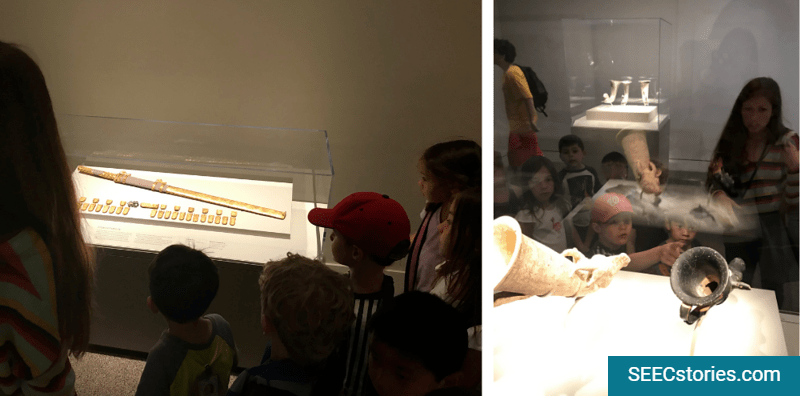
After finding the gallery, the class walked through it, stopping at artifacts that they wanted to look closely at. Jessie went with the groups’ pace and read information about each object that interested the children. They wondered and predicted together what each object was used for and from what materials they were made.

I chose this exhibit because it has a variety of objects to explore rather than just one. I also wanted the exhibit to provide our class with enough space to move around freely. This exhibit in the Sackler Gallery tends to have less foot traffic, and it has an array of objects to observe. The word ‘ancient’ in the title of the exhibit indicates the objects are from a long time ago, which was perfect for us to use in our exploration of archaeology.
i-SRCn7DM-L

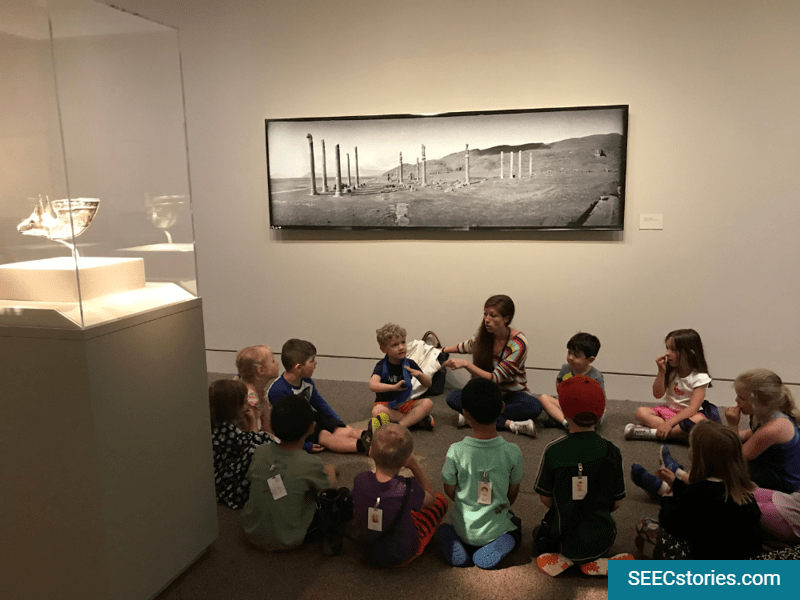
Near the end of the exhibit, the class sat down in a circle in front of the photograph Panorama of Persepolis by Ernst Herzfeld. Jessie asked the children to remember what paleontology is and the class recalled that it is the study of fossils or things that were once alive. Jessie asked if they saw any fossils in the exhibit or in the photograph behind them. The children said that they couldn’t see any fossils, but perhaps there were some beneath the surface in the photograph. One child said that they weren’t sure about fossils, but that the pillars in the photograph looked old because she could see holes, scratches, and dents on them.

The children had learned about fossils and paleontology the day before this lesson. We explored the fossil hall in the Natural History Museum and observed a variety of things paleontologists study. The main learning objectives of this lesson were to reflect on what we had learned about paleontology, compare and contrast paleontology and archaeology, and provide the children with some authentic objects archaeologists would work with. These objectives provided the children with exposure to these two fields of science, and their similarities and differences.
i-TLdrFvm-L

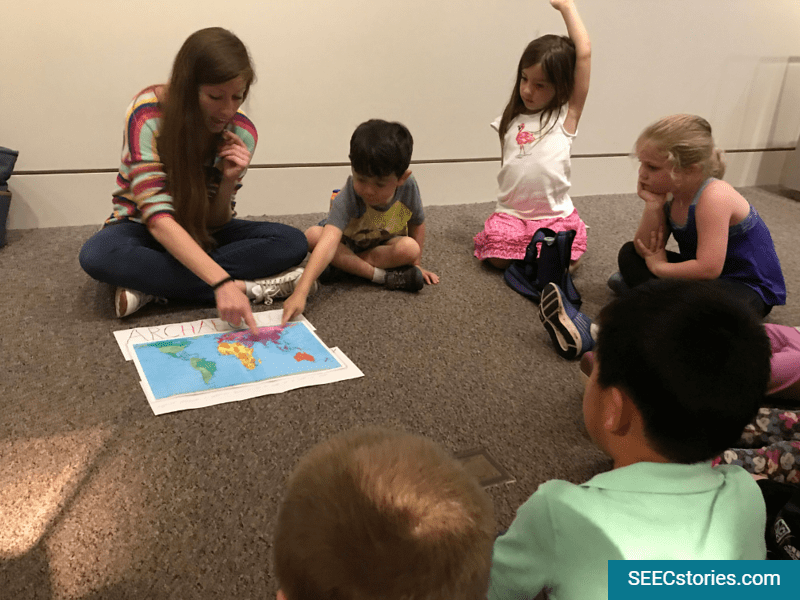
Jessie told the group that the pillars or columns were old and in the country of Iran. All the artifacts they had seen in the galleries are from Iran as well. To better understand where Iran is located, the class looked at a world map and sang the song, “7 Continents“, which they often sing when locating a place on the map. Jessie told the group that Iran is on the continent of Asia and pointed out where it is.

i-35wp6ZF-L

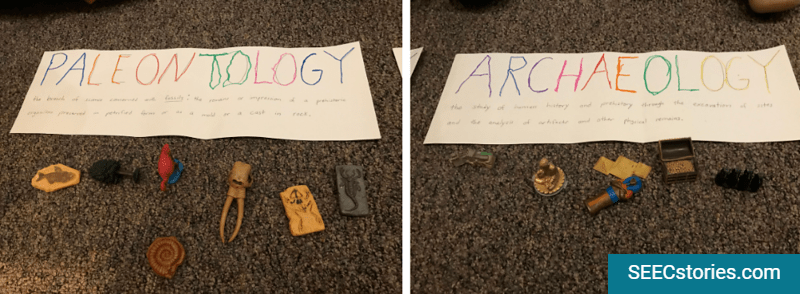
Next, the group thought about the difference between paleontology and archaeology. While both fields dig into the Earth to find clues about the past, paleontology is the study of fossils, and archaeology is the study of objects that are human-made. To further explore this, Jessie gave each child an object to examine. Then, everyone had a turn to place their object either in the paleontology group if it would be studied by paleontologists, or the archaeology group, if it would be studied by archaeologists.   

I already had some previous knowledge about these two topics and had created related lessons in the past. However, I wanted to prepare myself a bit more for this lesson through online research and books to make sure my knowledge was up to date. I also relied on the exhibits we visited to provide us with information. For example, as we ventured through the exhibit before sitting down for our lesson, I made observations about the objects we were seeing along with the children, and then read the titles and descriptions from the labels so we could have organic conversations about the pieces in the exhibit.
i-63BRQ62-L

 When the game ended there were two distinct piles for each field of study. The children understood that paleontologists study fossils, or things that used to be alive, while archaeologists study objects or buildings that were human-made.

i-VSksDFQ-L

Jessie reiterated that we know how people lived long ago because of the artifacts that archaeologists dig up and examine. She shared some pages from the book A Street Through Time by Anne Millard, which shows the same street and how it might have looked from the Stone Age to modern day. 

i-BcQTQp4-L

To end their lesson Jessie gave the children a challenge: pick an artifact in the exhibit that made them curious, observe it closely, and sketch what they saw.

Going into the lesson I wanted to make sure the children had time and space to complete structured as well as unstructured activities. Sometimes providing the children with too much freedom in a space can cause silliness but by preparing them for the sketching activity and giving them specific guidelines to follow they completed the activity with no issues.

 Back in the classroom, we asked each child to describe the object from the exhibit they had chosen to sketch. We wrote these descriptions on their paper with the date and a title, and then hung them up in the classroom. Once they were up in the classroom, we could refer to them later and encourage the children to share them with their families and friends. This provided multiple exposures to the topics we were learning about and enhanced their curiosity to learn more.

i-vvLCkcL-L

If another teacher wanted to try this lesson, I would recommend finding spaces for the lessons and activities that give the children enough space to move around and explore. I would also recommend being prepared with a few things, such as a book and activity or two, but also leave plenty of time for organic conversation to happen. By building in time to just wander around and chat about what you are seeing, the children get more unstructured time to simply enjoy the space and objects and share their thoughts with their classmates and teachers.

After this lesson, the children were provided with a variety of tools, such as paintbrushes, gloves, magnifying glasses, pencils, and sketch paper, that would help them to explore little “dig sites”with sand, and mini objects that an archaeologist would study. We also picked out books from the library related to digging and incorporated story times into multiple parts of our day. This lesson was one of our final explorations in our “can you dig it?”unit, so we spent the following days reflecting on and making comparisons between the digging topics we had explored over the previous weeks.


After exploring digging, it was time for our preschoolers to graduate! For more digging ideas, visit our Dinosaurs, Can You Dig it?, and Ancient RomePinterest boards.