


Preparation:
What were your topics of exploration? Why did you choose them? Where did they come from?
During our walks outside, we noticed the Cottontails (infant class) seemed to enjoy when we pointed out the budding flowers to them. It is always exciting when the cherry blossoms reach peak bloom, so we decided to get into flower fever!
Why and how did you choose the visit?
As followers of @smithsoniangardens on Instagram, we were able to see when the various trees and garden displays were blossoming. Because our kids were on differentiated schedules, we needed to choose easily accessible locations so we could easily return to the classroom when our bottles and naps beckoned.

This class had previously learned about nature and plants through visits, art making and exploring objects.
What were your learning objectives? What did you want your children to take away from the lesson?
Sensory exploration is a great entry point for our age group, so our goal was for our kids to get familiar with the sights, smells, and textures of spring. We paid attention to their reactions to see where their curiosities were leading them.
Implementation:
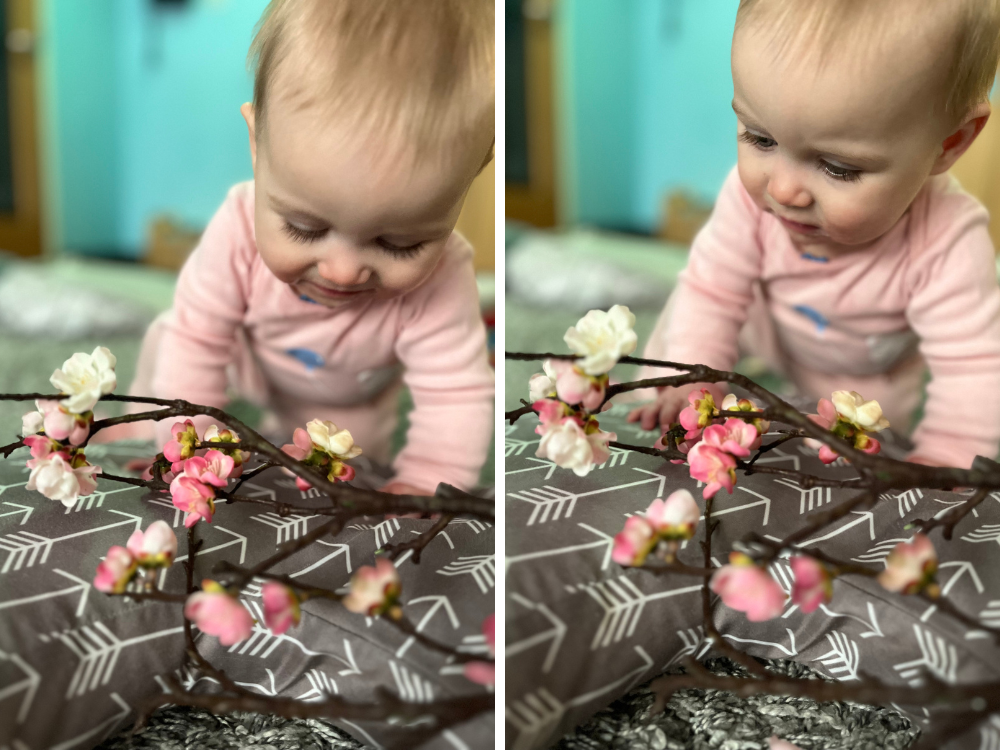
An infant child investigates a faux cherry blossom branch.
What activities did you use to engage the children in in the classroom?
We placed several new materials in the classroom to connect to our outdoor explorations. We brought in live cherry blossoms to decorate our counters and offered faux blossoms to the children for more in-depth investigation and pretend play. We gently fluttered the fake branches and blew on them so that it seemed like the branches were moving in the wind. The children enjoyed trying to imitate blowing the branches – this was also good practice for calming ourselves with deep breaths!
We also brought in baskets of soft, crocheted, cherry blossoms and placed them in baskets. The children practiced filling and dumping the baskets of blossoms and covering their bodies with them.

The class created ”flower petals” by dipping coffee filters in hibiscus and rose petal tea. The warm, yummy-smelling, tea provided a soothing sensory experience that the kids really seemed to enjoy.
Finally, we did a process art activity using hibiscus and rose petal tea to paint on coffee filters. The scent of the tea was delicious, and it created a lovely pink hue on the filters. After the project was dry, we laminated the pieces and hung them in the window for the children to continue to admire.

The infants look closely at and reach out to touch different flower petals including azaleas at the National Gallery of Art and the Saucer Magnolia flowers at the Haupt Garden.
What was it like taking the children out of the classroom to see various flower displays? How did you keep them engaged?
Outings with young infants can be tricky to schedule, especially in the chillier months when everyone has multiple layers to bundle up in! We found success by choosing our destinations strategically and paying attention to our children’s cues. We kept the Cottontails engaged by talking to them about the sights and sounds around us and lifted them out of the stroller to help get them closer to the flower displays. Connecting our adventures with song is another winning tactic – our Cottontails loved playing “Ring around the Roses” next to the azalea display in the National Gallery of Art!
How did you tailor your lessons to meet the learning needs of your age group?
Babies are always taking in information from the environment around them, so we do our best to let them explore freely and notice where their curiosities are leading them. While they aren’t able to communicate with language, we can understand so much by paying attention to what they are looking at or reaching towards.
Reflection:
What was most successful about your lesson?
We were proud of how active and engaged the group was throughout our explorations! By offering plenty of time and support for them to observe and interact freely with the materials and flowers, we were able to build on their natural curiosity and sense of focus.

When the children got a little restless in the stroller the educators helped them take walk (or dance) break and held them closer to get a better look at the flowers.
How did the lesson reach your objectives to expand the topic?
We tried to think creatively about how to offer a variety of sensory experiences that would help our Cottontails get familiar with the sights, smells, and feel of springtime blossoms. We later laminated the art project we made using hibiscus and rose petal tea and displayed it in our classroom window. Even after we had ended the unit, the children could look at the artwork and we would remind them of our springtime explorations.
What recommendations would you have for another teacher trying out this lesson?
Pay attention to the non-verbal cues of your students and offer as much free exploration as possible! Kids put everything in their mouths, so have a plan to discourage snacking on flowers while still acknowledging that appropriate developmental need.
 seecstories.com