Teacher Feature: Two Year Old Classroom Explores The Human Body

It’s Teacher Feature Thursday!

This week we are featuring Javasa Finney. Her twos classroom was learning about the human body and decided to spend a day learning about hair and how the human body grows. Below you will find a reflection from Javasa and images from some of her lessons.
Body_Cover

What were your topics of exploration?

During the months of October and November the Penguins were exploring the human body.  We talked about the different parts of the human body.  Some of the parts we focused on included:

  • hair
  • skin
  • mouth
  • bones
  • eyes
  • brain
  • heart

In addition to how these body parts work we had a lot of fun learning about the five senses.  We talked about nutrition, how important it is, and how what we eat affects our body. Then they made delicious food from the different food groups with my co-teachers throughout the week. We also talked about the importance of sleep and how important exercise is for the human body.  They were extremely excited to have the opportunity to go exercise at the Washington Monument.

What were your learning objectives? (What did you want your children to take away from the lesson?)

I wanted the class to learn all about their amazing bodies. My main learning objective when teaching the kids about the human body was for them to learn about how important their bodies are and how to care for them. I also wanted them to learn all the bodies’ functions and abilities.

What was most successful about your lesson?

During the time we spent learning about the human body there are two lessons that I feel were extremely successful and memorable.  The first one would definitely be when a baby came to visit.  The child is currently a student in the infant class here at SEEC.  The five month old was our model for the lesson. During this lesson I talked to the Penguins about how we start out as small babies.  We talked about how different a baby’s body is compared to older people.  We talked about how when babies are born they don’t have teeth and can’t talk, walk, run, or jump.  They learned that during the first year a baby sleeps and drinks a lot and cries to communicate.  During circle time we made observations about the baby’s body and talked about how fragile it is.  Then the Penguins had the opportunity to touch him.  It was wonderful to see the children light up and respond to the child.  The second most successful and memorable human body lesson was our lesson on hair.  We learned how hair can be many colors, textures, and lengths.  We talked about the things we use to care for our hair.  Then the Penguins had the opportunity to try on wigs that were different colors, textures, and lengths. This lesson was followed up with a trip to the National Gallery of Art.  We went to look at the “Little Dancer” by Edgar Degas sculpture. First we made observations about the body and then we had the Penguins take a closer look at her braid.  The braid is made of real human hair, coated and held in place by wax.

What could you have done differently? What recommendations would you have for another teacher trying out this lesson? 

During the first lesson, if I were to do this again, I wouldn’t keep the baby on my lap the entire time.  I realized later it would have been nice for the kids to see him crawling, playing, etc.   For the second lesson about hair, I would have picked a different day to go to the National Gallery of Art.  The day we went there were several trips there and the room with “Little Dancer” was extremely crowded.

Here are a few images from their unit on the human body:
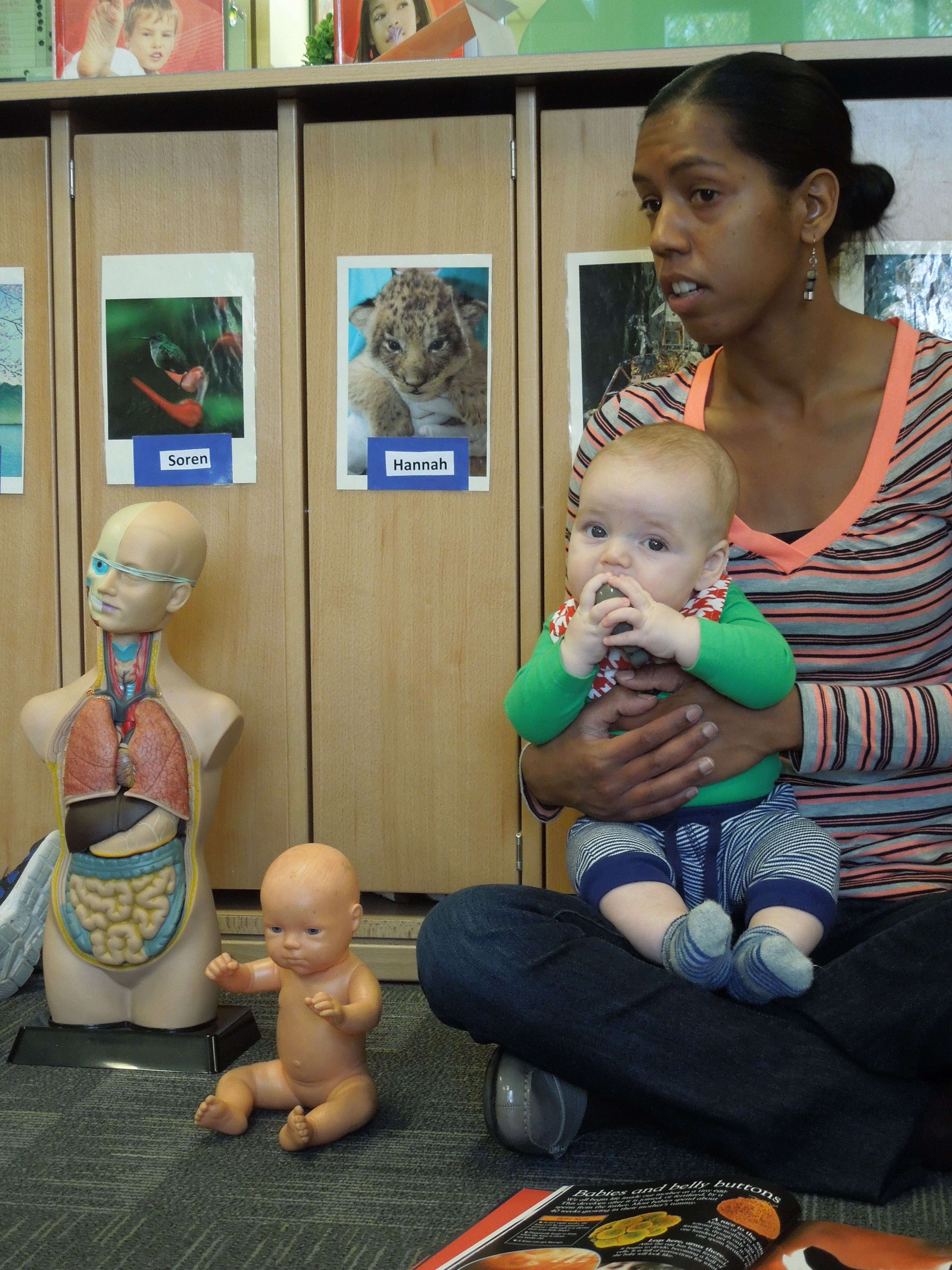
DSCN1370Javasa began the week by exploring how our bodies grow and change. As a way to illustrate this development, Javasa invited a child from the infant classroom to visit. She wanted the class to look at the baby and compare his body to their own and the teachers’. Javasa explained that people start by needing a lot of help from adults but as our body changes we become more independent.
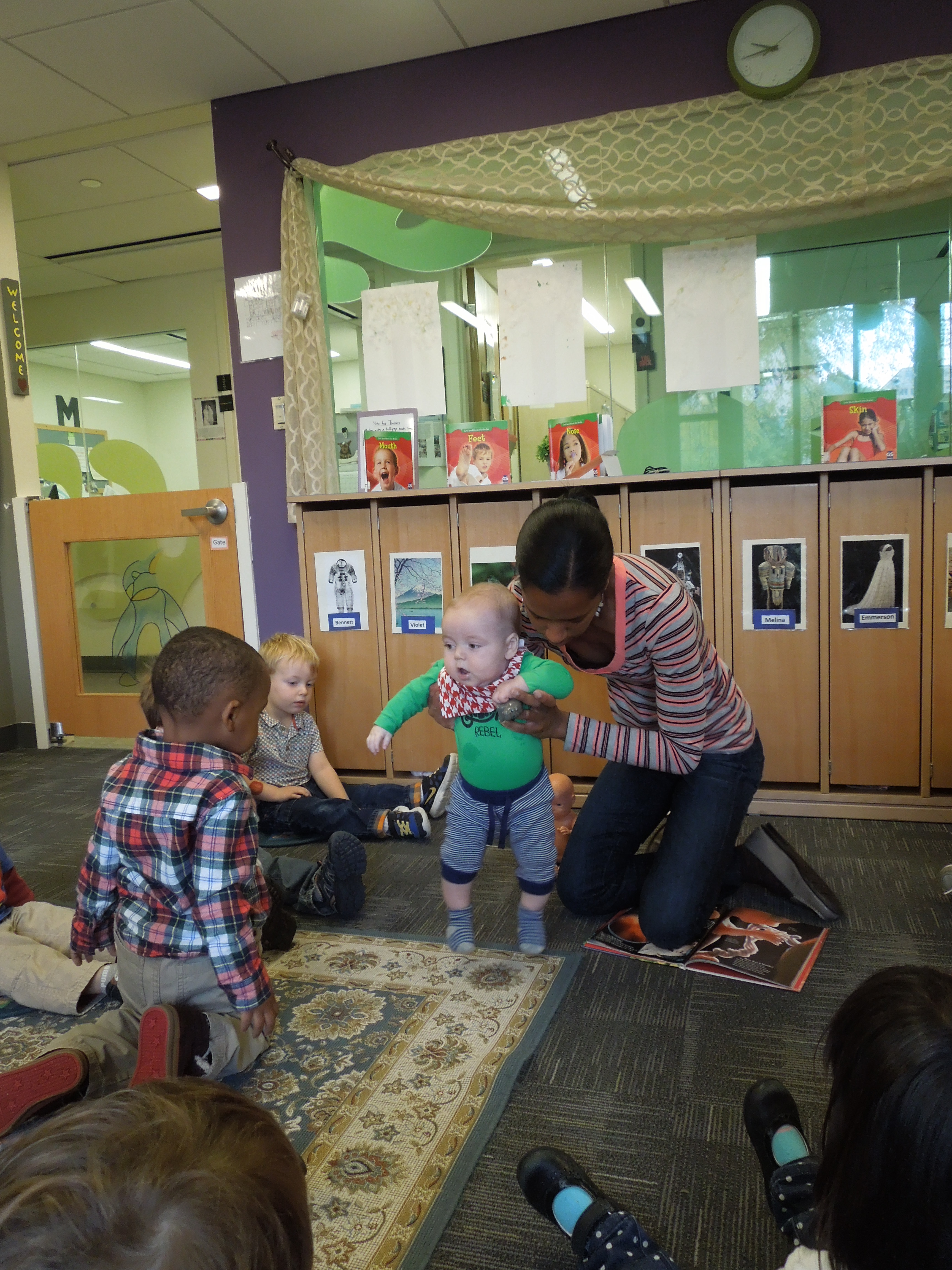
DSCN1373Javasa explained that the baby couldn’t feed himself, talk, or even walk yet. She showed how the baby would eventually learn how to do all these things as he gets older.
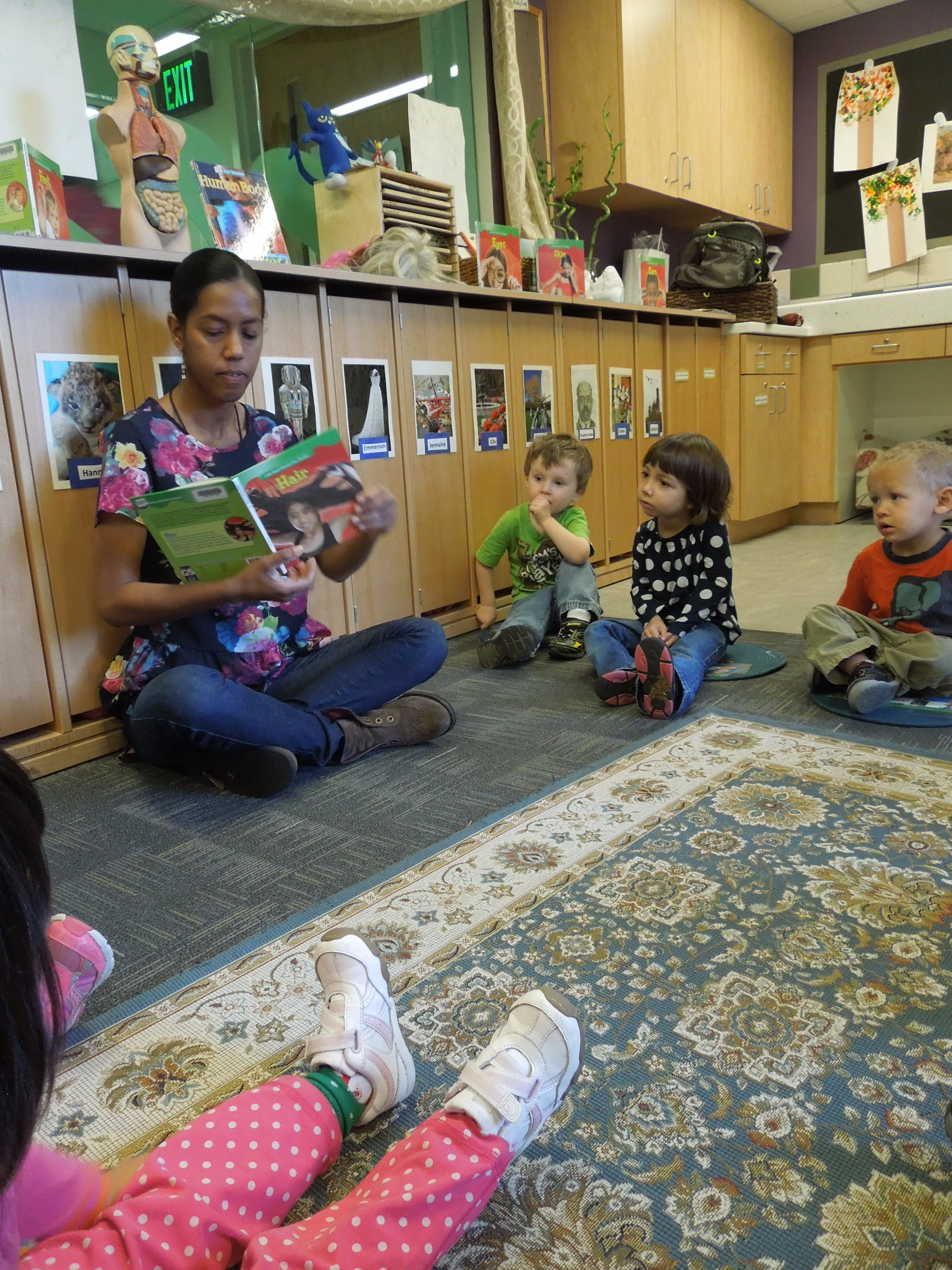
DSCN1382The next day the class moved on to Hair. Javasa read “Hair” by Cynthia Klingel and Robert B. Noyed to introduce the topic. The book helped students understand that people all over the world have many different types of hair and hair styles and each one is as special as the next.

DSCN1387One of Javasa’s co-teachers shared her collection of wigs as way to talk about how hair can be all different colors, textures, lengths, and styles. She explained that hair comes in a range of color but if you want certain colors (for example, pink) you would need to dye it that color.

DSCN1390She showed the group a zoomed in picture of a hair follicle. The kids couldn’t believe how the root of their hair looks.

DSCN1393Javasa went on to explain that hair can grow curly, straight, or wavy.

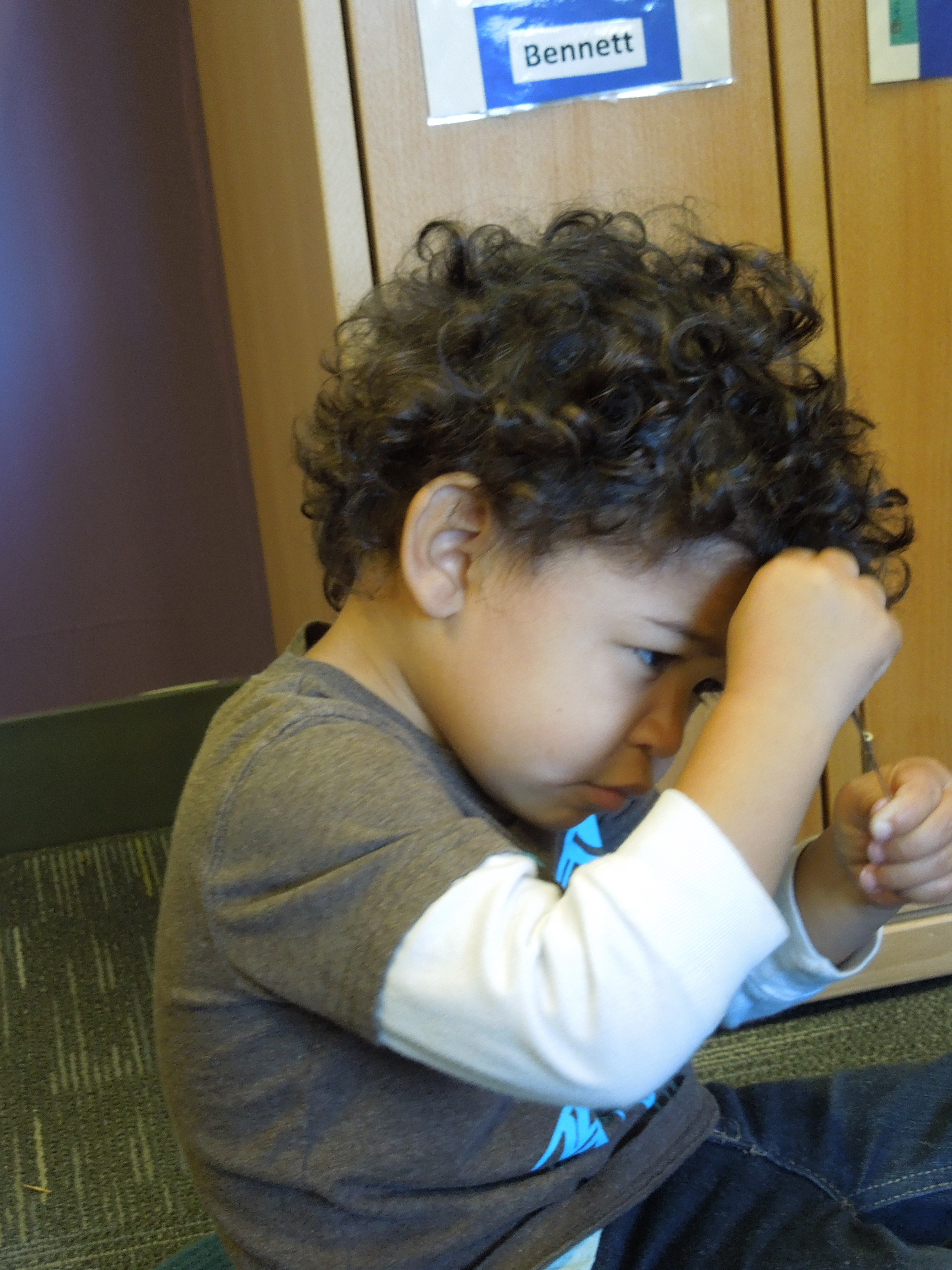
DSCN1397 DSCN1398The group spent a long time looking and touching their own hair.

DSCN1409Then it was time to try out new hair!

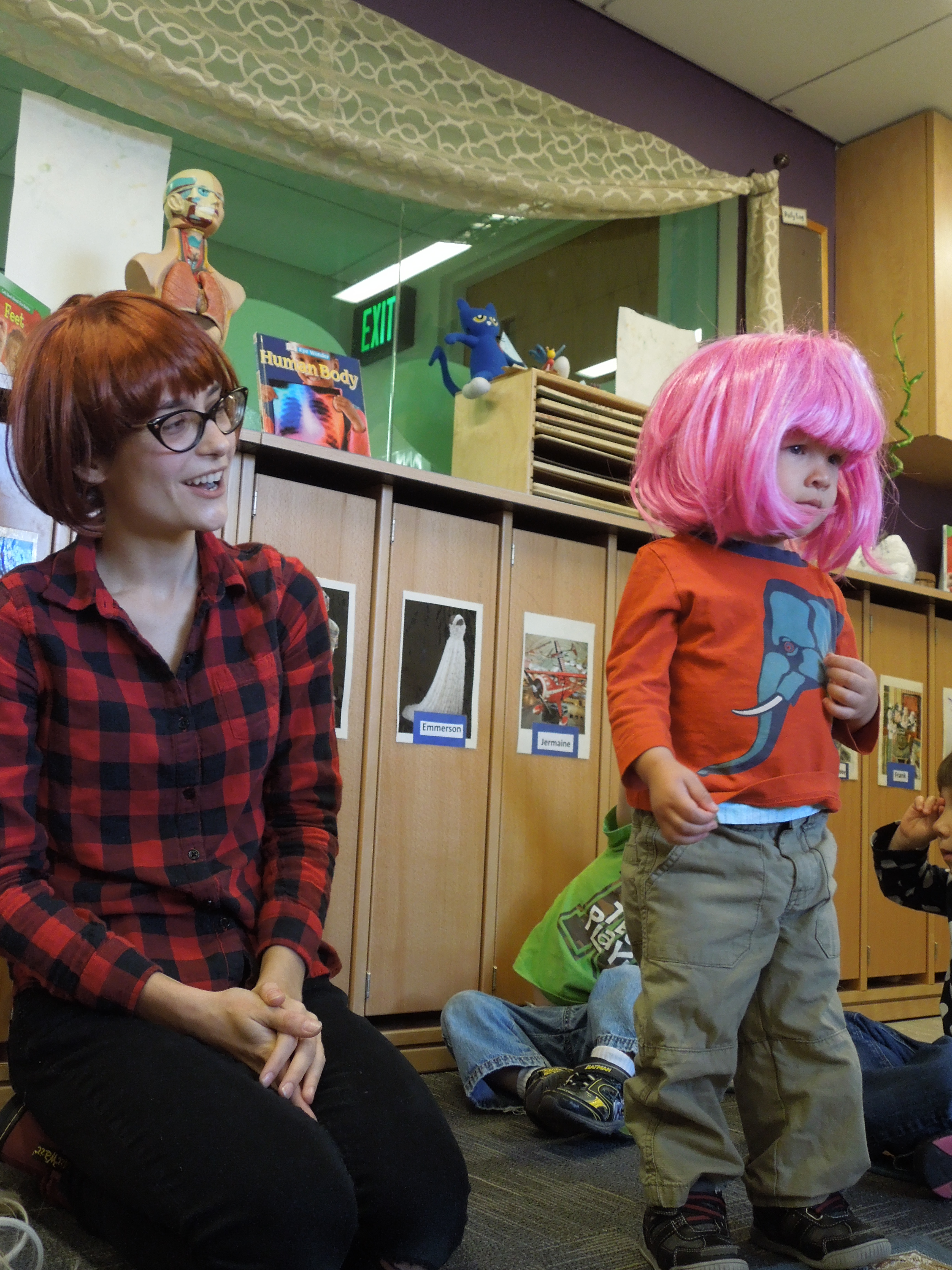
DSCN1415 DSCN1431They had a wonderful time trying on the different wigs!
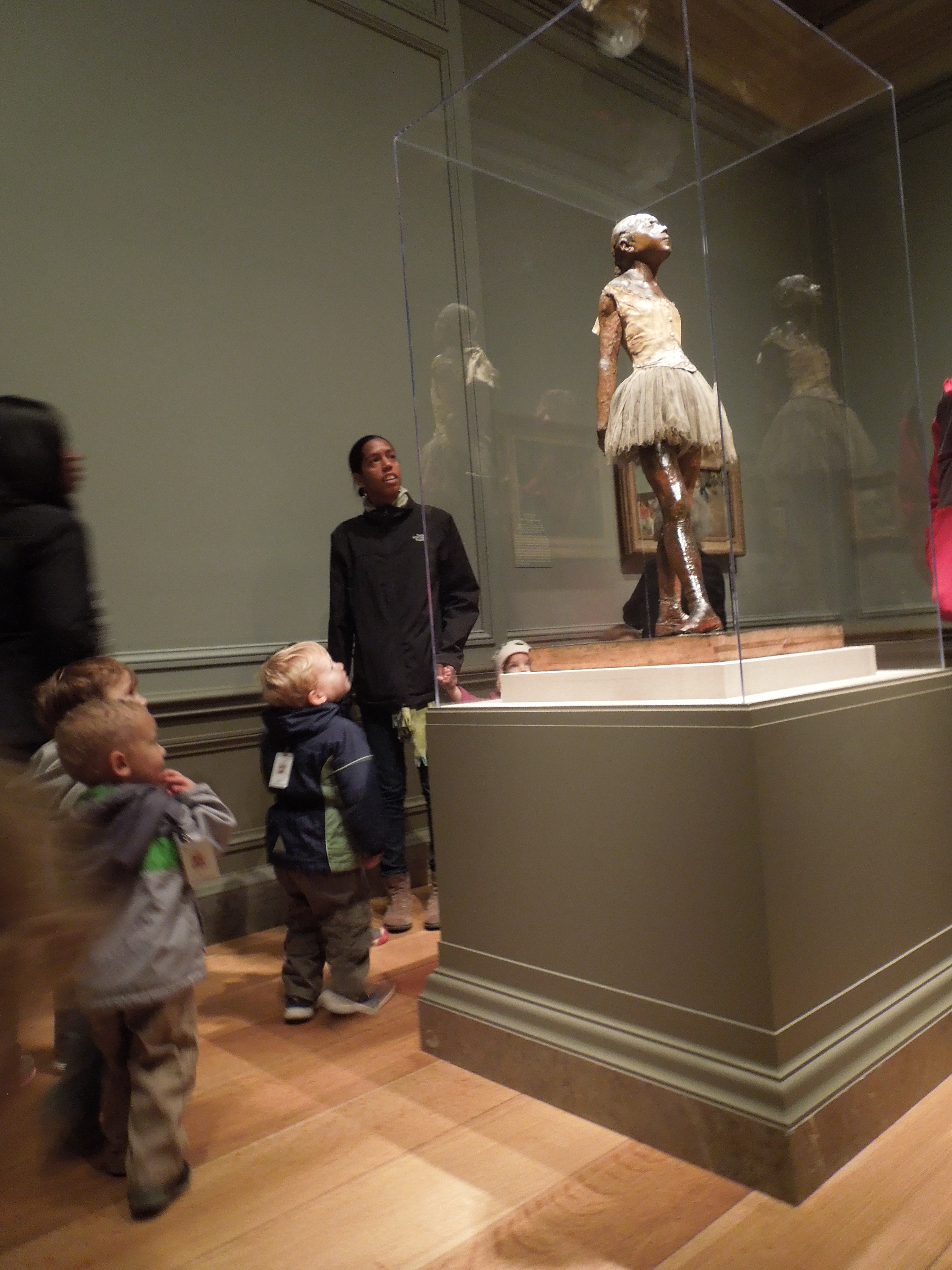
DSCN1436 DSCN1438The group then walked over to the National Gallery of Art to see Degas’ “Little Dancer.” They were fascinated by how Degas used real hair for the sculpture. The children discussed the color, length and style of the dancer’s hair.

This class had an awesome time learning about their bodies! Be sure to check back for our Teacher Feature next week!
Teacher Feature: Three Year Old Classroom Explores Pirates

It’s Teacher Feature Thursday!

This week we are featuring Brooke Shoemaker. Her Pre-K three classroom was learning about The Swiss Family Robinson and decided to spend a week on Pirates. Below you will find a reflection from Brooke and images from some of her lessons.

Pirate_Koala_TF

What were your topics of exploration?

The Koalas had been exploring topics related to the Swiss Family Robinson.  Over the course of the unit we explored boats, architecture, animals, navigation and pirates.  Specifically for pirates we talked about what pirates wear, where they live, how they talk, pirate flags and pirate sidekicks – parrots.

What were your learning objectives? (What did you want your children to take away from the lesson?):

From the Treasure Hunt lesson I wanted the children to:

  • Reflect on the past lessons during the Swiss Family Robinson unit
  • Use critical thinking skills to solve clues as to where we were to go on the treasure hunt
  • Use pre-math skills to fill in the next symbol in a pattern (to open the lock on the treasure chest)
  • Feel accomplished after achieving the goal of solving all the clues and finding the treasure chest.
  • Enjoy dramatic play as a pirate

What was most successful about your lesson?

The most successful part of the lesson was how excited the students were about solving the clues and finding the treasure hunt.  They were very enthusiastic about wearing the pirate costumes, liked talking “in character” and worked hard to solve the clues.  I was happy that they remembered our past lessons and it was successful in being a cumulative last lesson for our unit.

What could you have done differently? What recommendations would you have for another teacher trying out this lesson?

If I were to do this lesson again I would shorten the treasure hunt by 1 or 2 clues.  The children were great sports and walked a great distance to solve the clues and get to the treasure chest, but it ended up taking a long time and I think the objectives of the lesson would still have been achieved with fewer clues/stops.

Here are a few images from their unit on pirates:

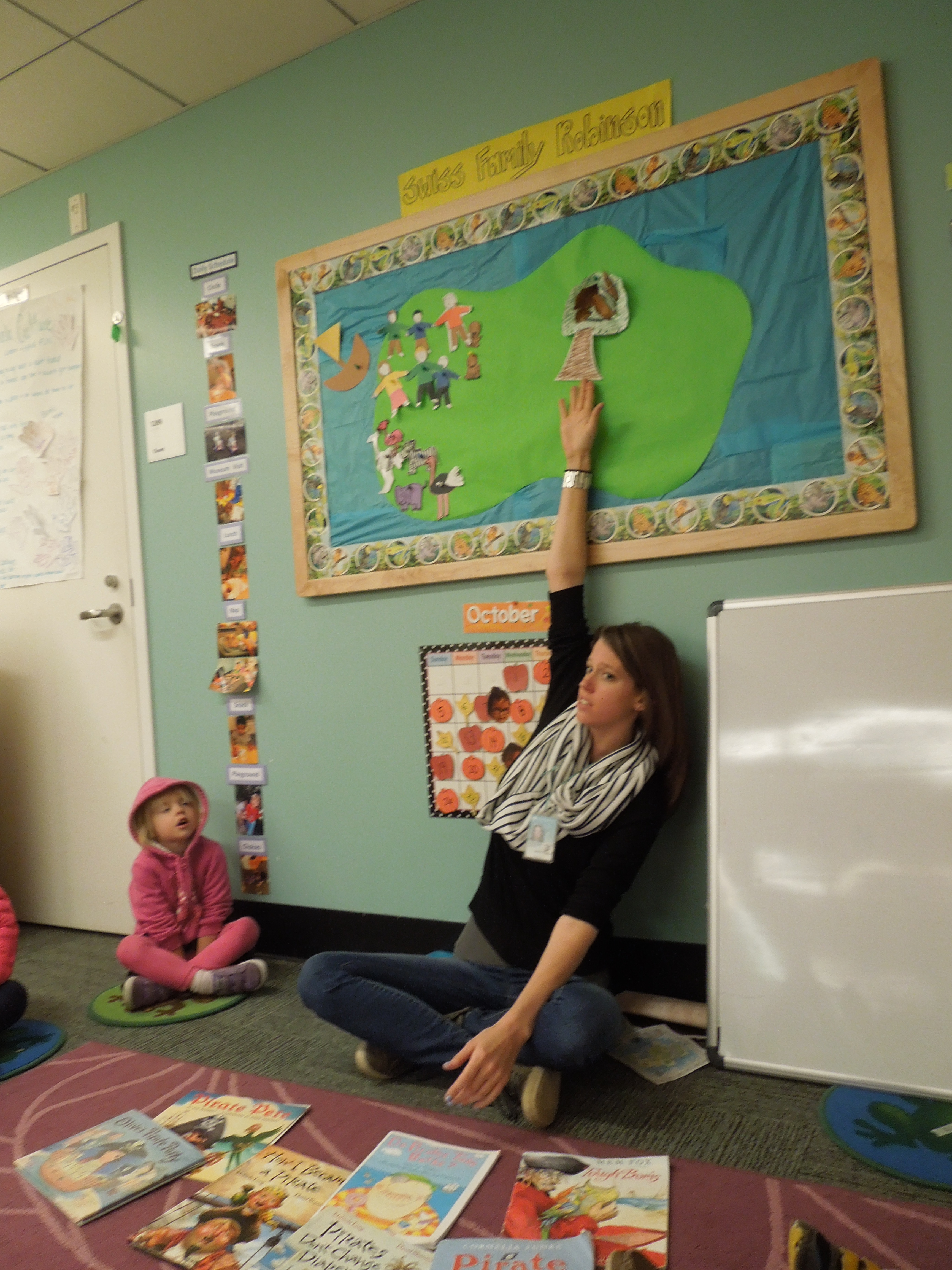
DSCN1122Brooke began her lesson by revisiting the themes and story line of The Swiss Family Robinson before introducing her theme for the week: pirates! The kids were so excited! Brooke spread out a collection of pirate themed books for the kids to look at and then asked the group what they knew about pirates.


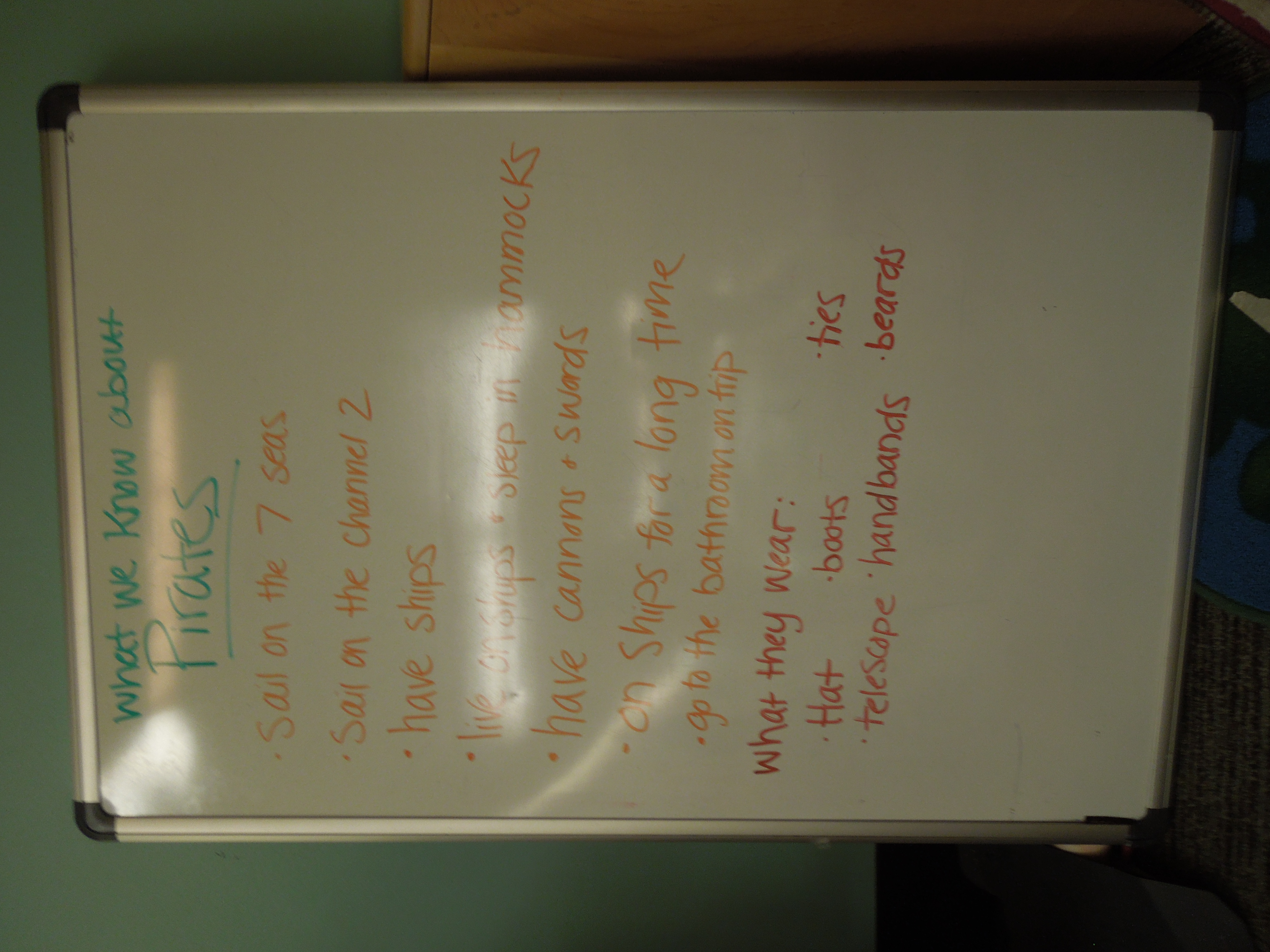
DSCN1144This is the list of things the group came up with (even pirates need to go potty!).

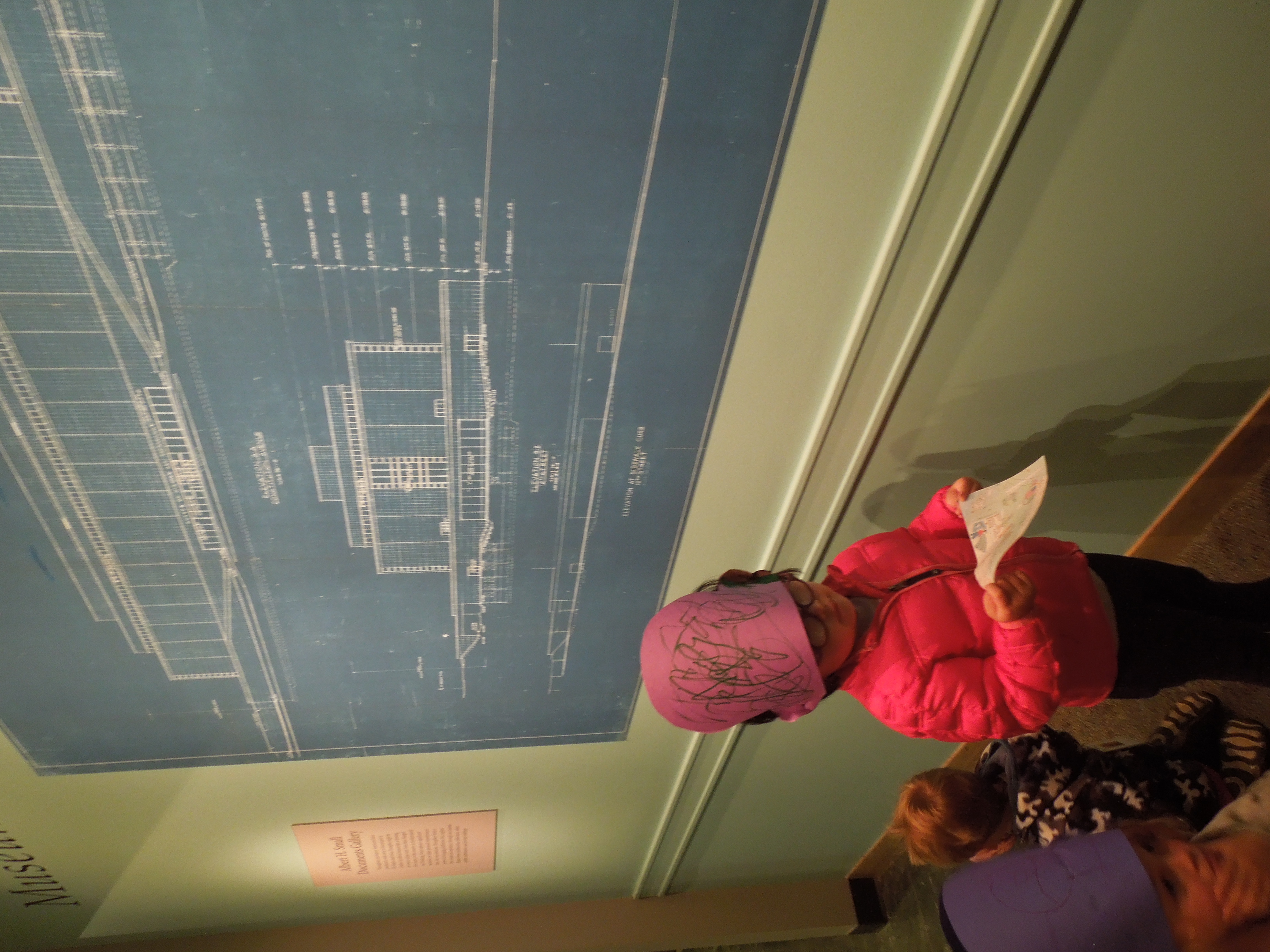
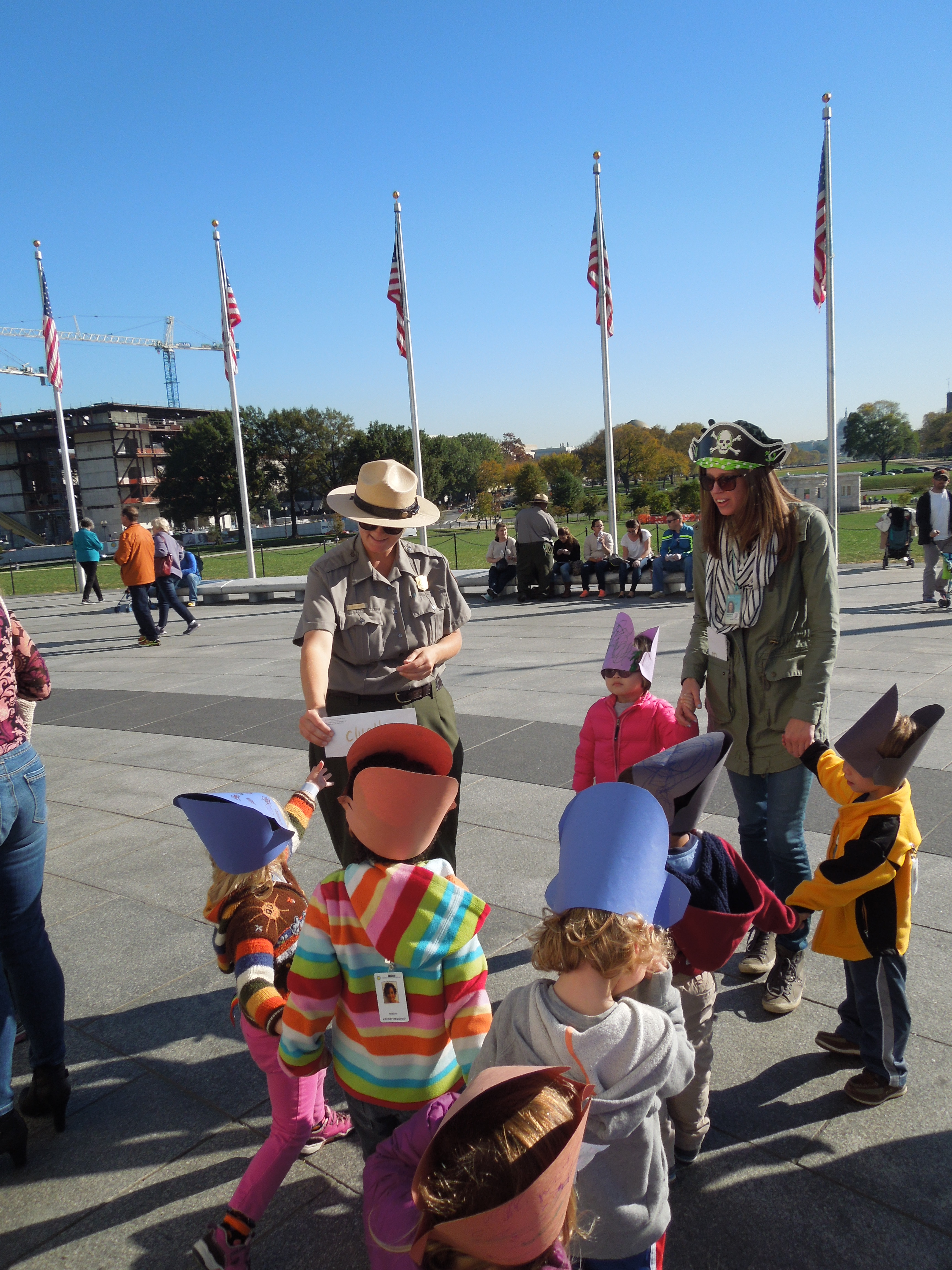
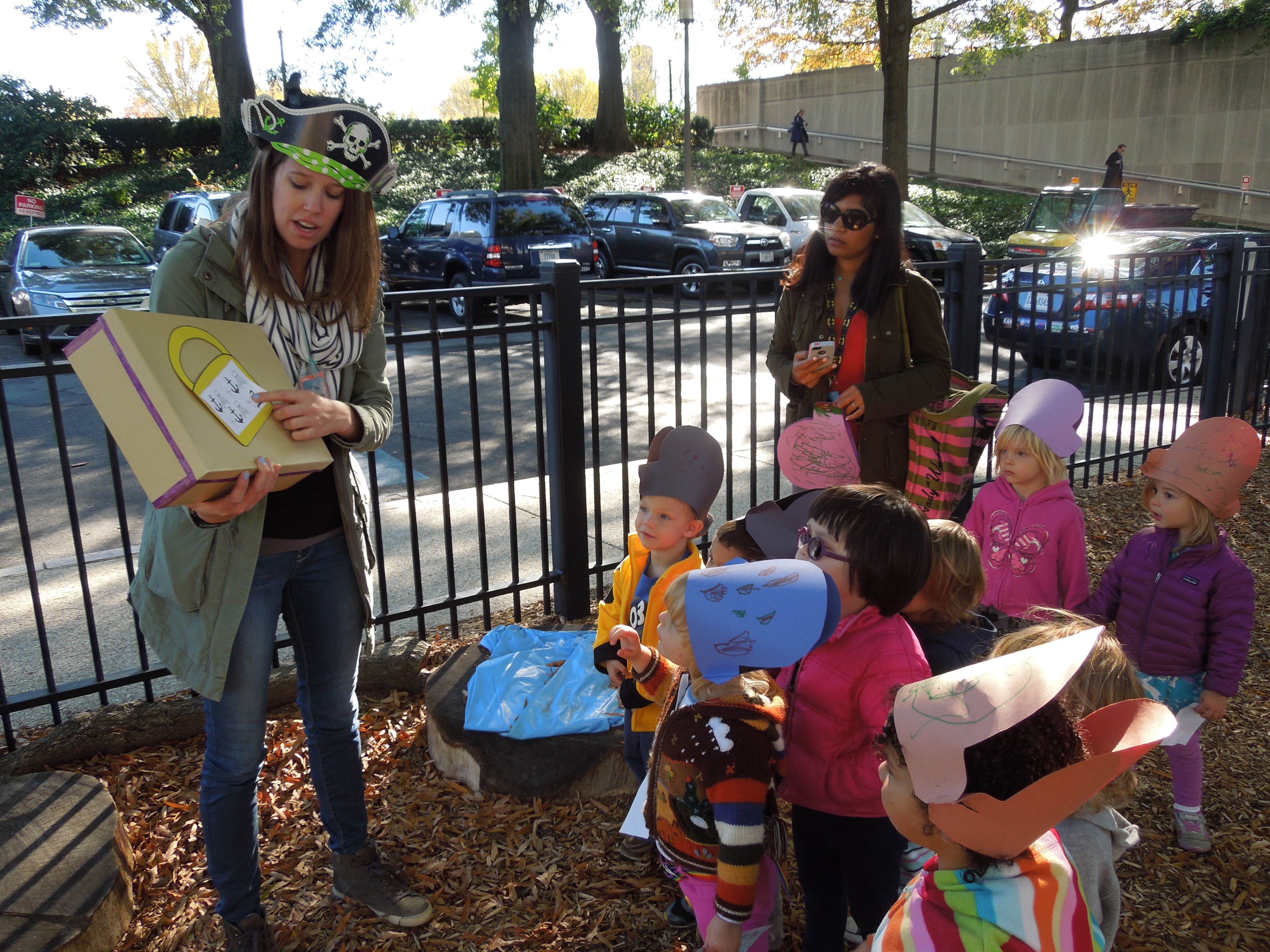
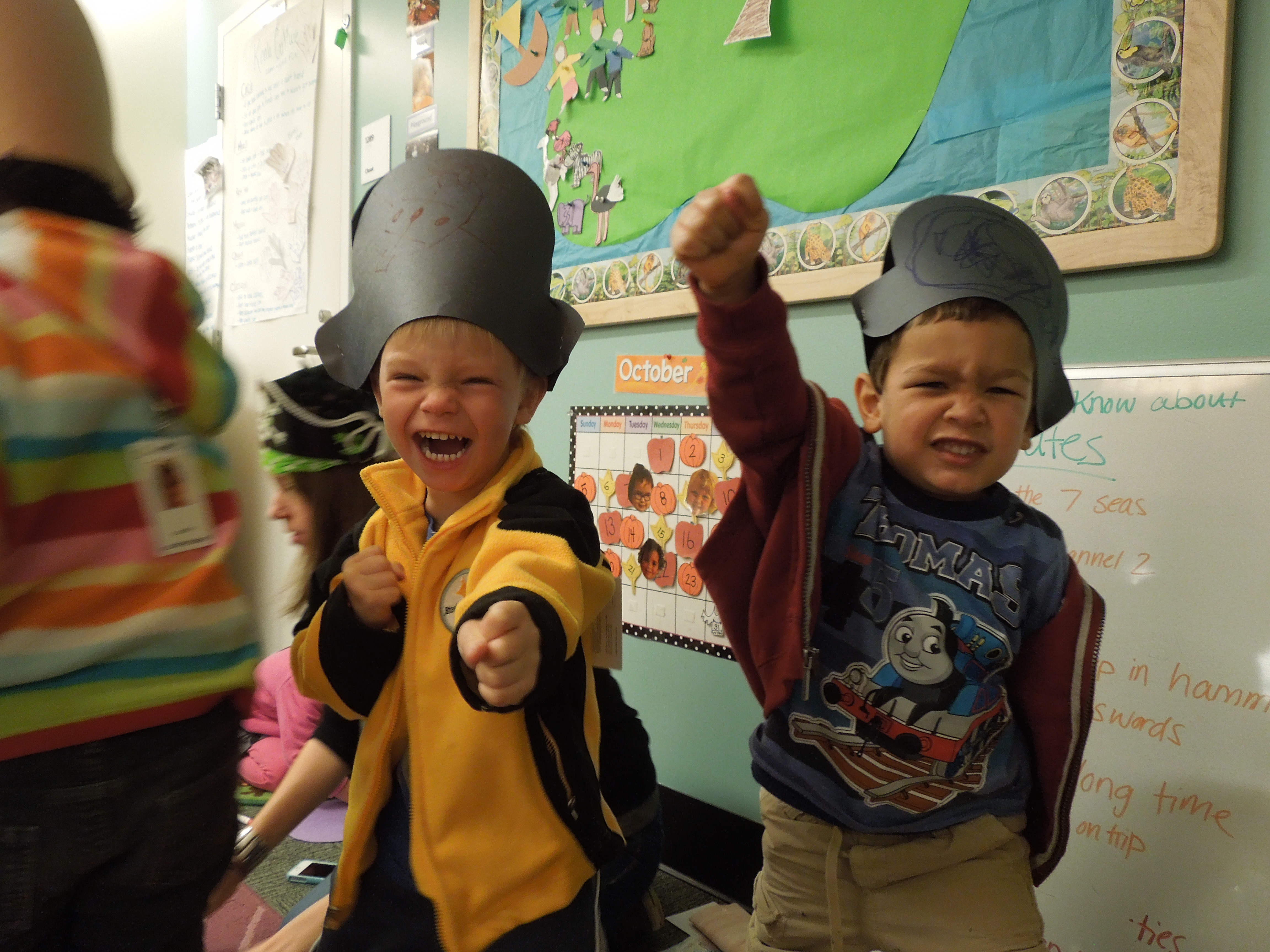
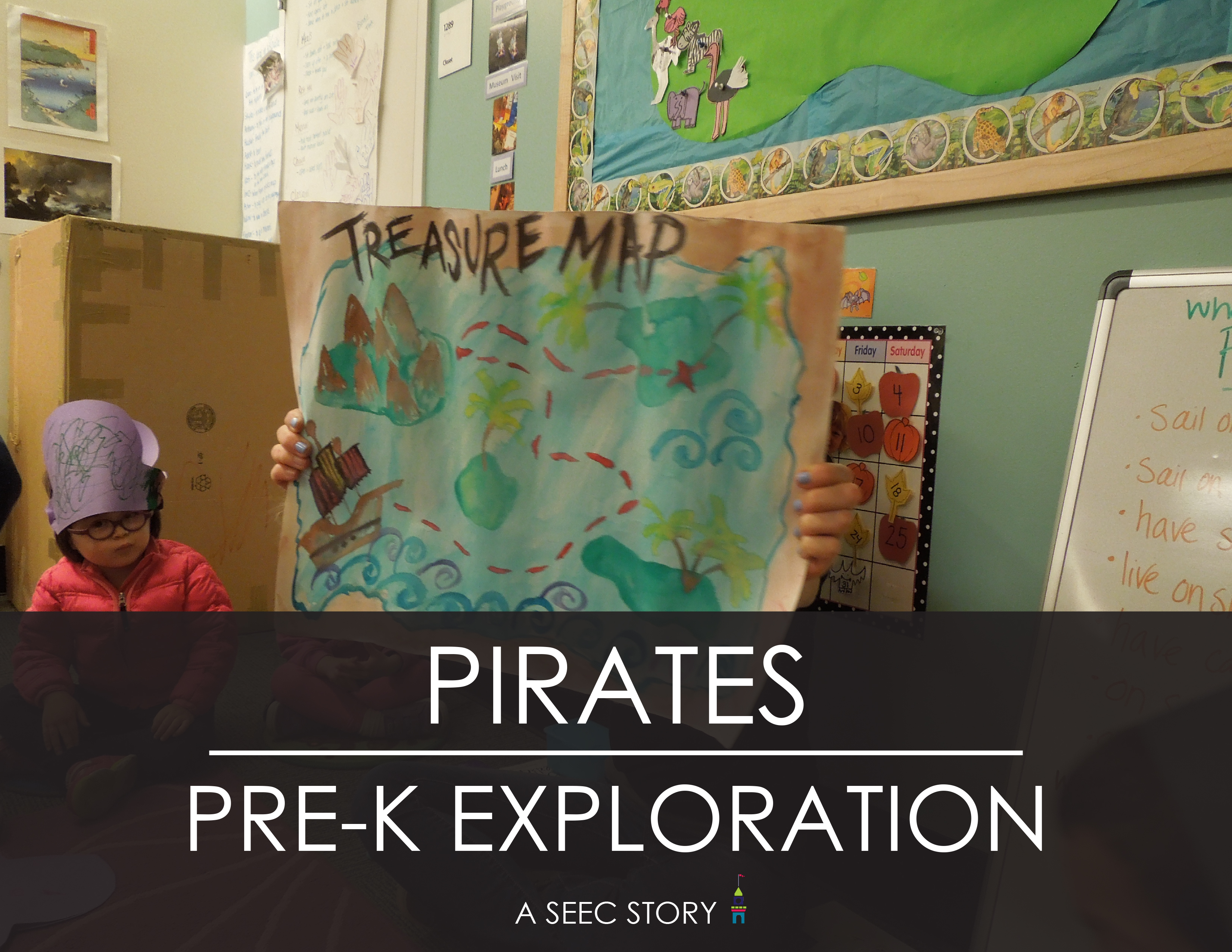
DSCN1142Brooke then passed out pre-cut pirate hats for the children to decorate and wear during their scavenger hunt. As you can see they loved them! She then explained that the class was going on a treasure hunt around the National Mall. Brooke had written clues prior to the lesson that would guide the group to some of the places they had visited during their unit on The Swiss Family Robinson. She wanted to use this activity as a way to summarize their past topics.
DSCN1162Their first clue took them to the blue print of the National Museum of American History building. Earlier in their unit they used this image to talk about architecture and the building of the Robinson Family home on the island.

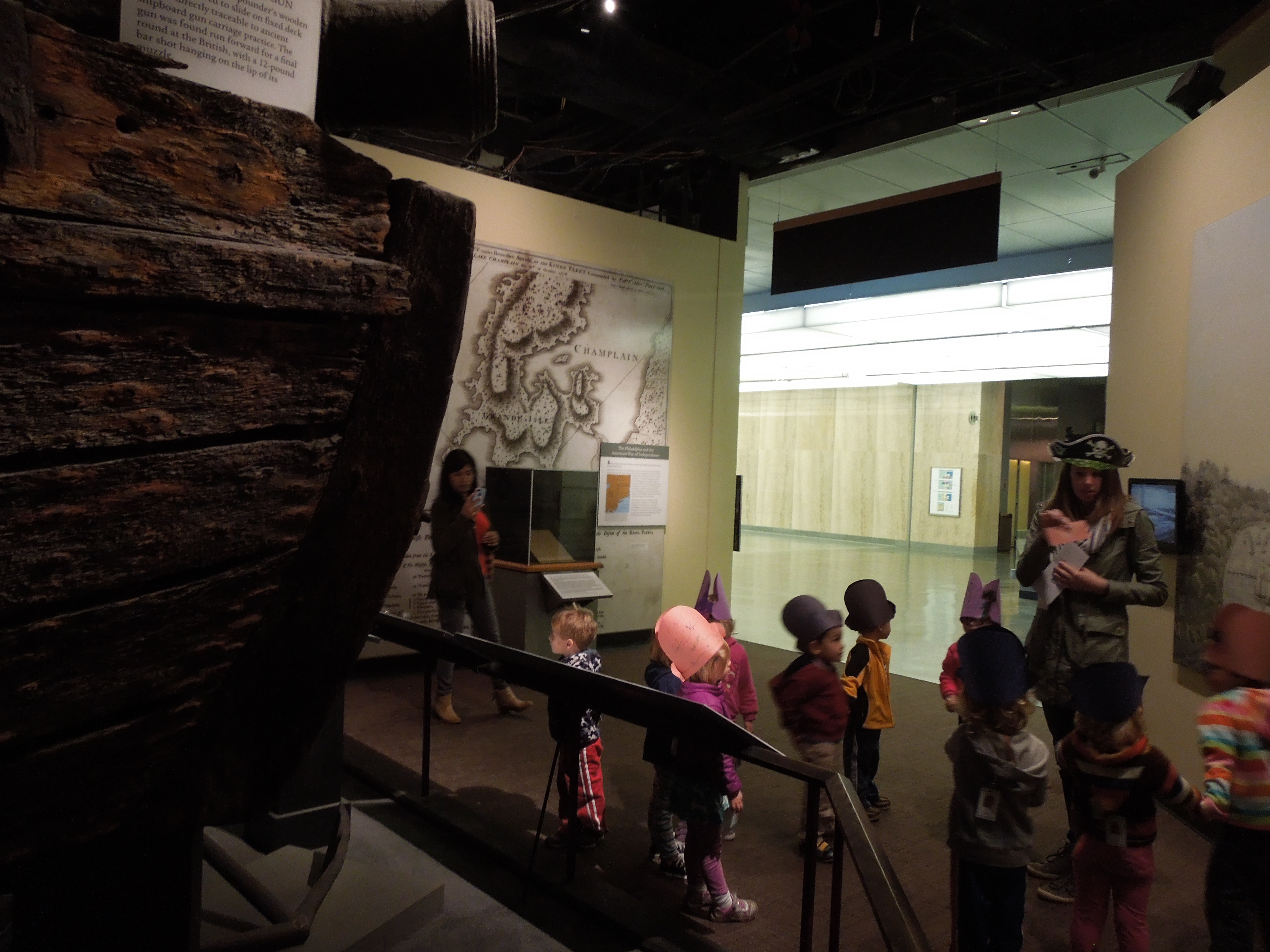
DSCN1177Their second clue led them to the third floor of the National Museum of American History to see the “Gunboat Philadelphia”  (http://bit.ly/1IZ8r51). Previously in their unit, the teachers used this boat to talk about how the Robinson family traveled to the island.

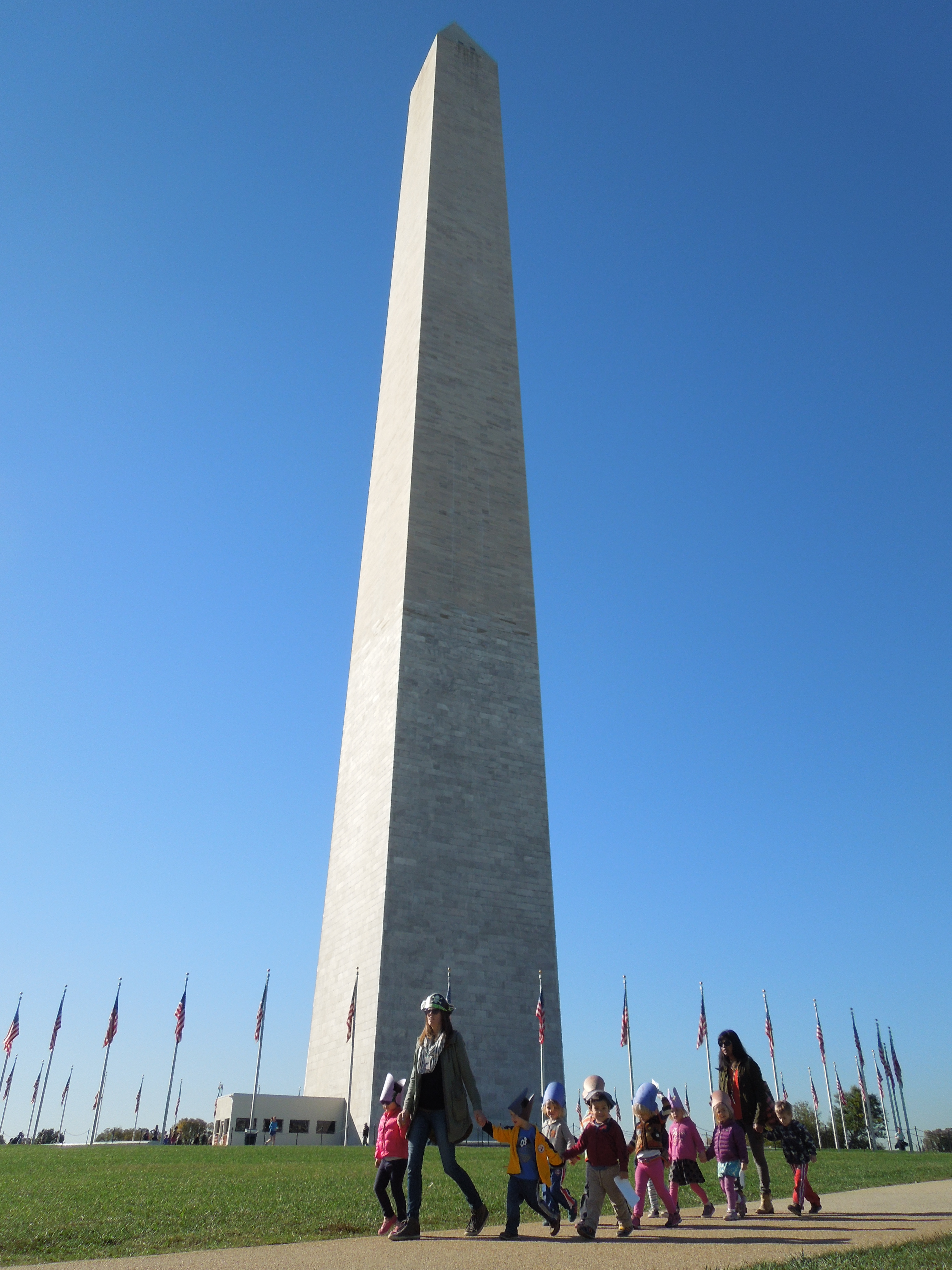
DSCN1190Their third clue guided them all the way to the Washington Monument. They visited the top during their week on architecture.

DSCN1194Brooke asked a park ranger to distribute the next clue.

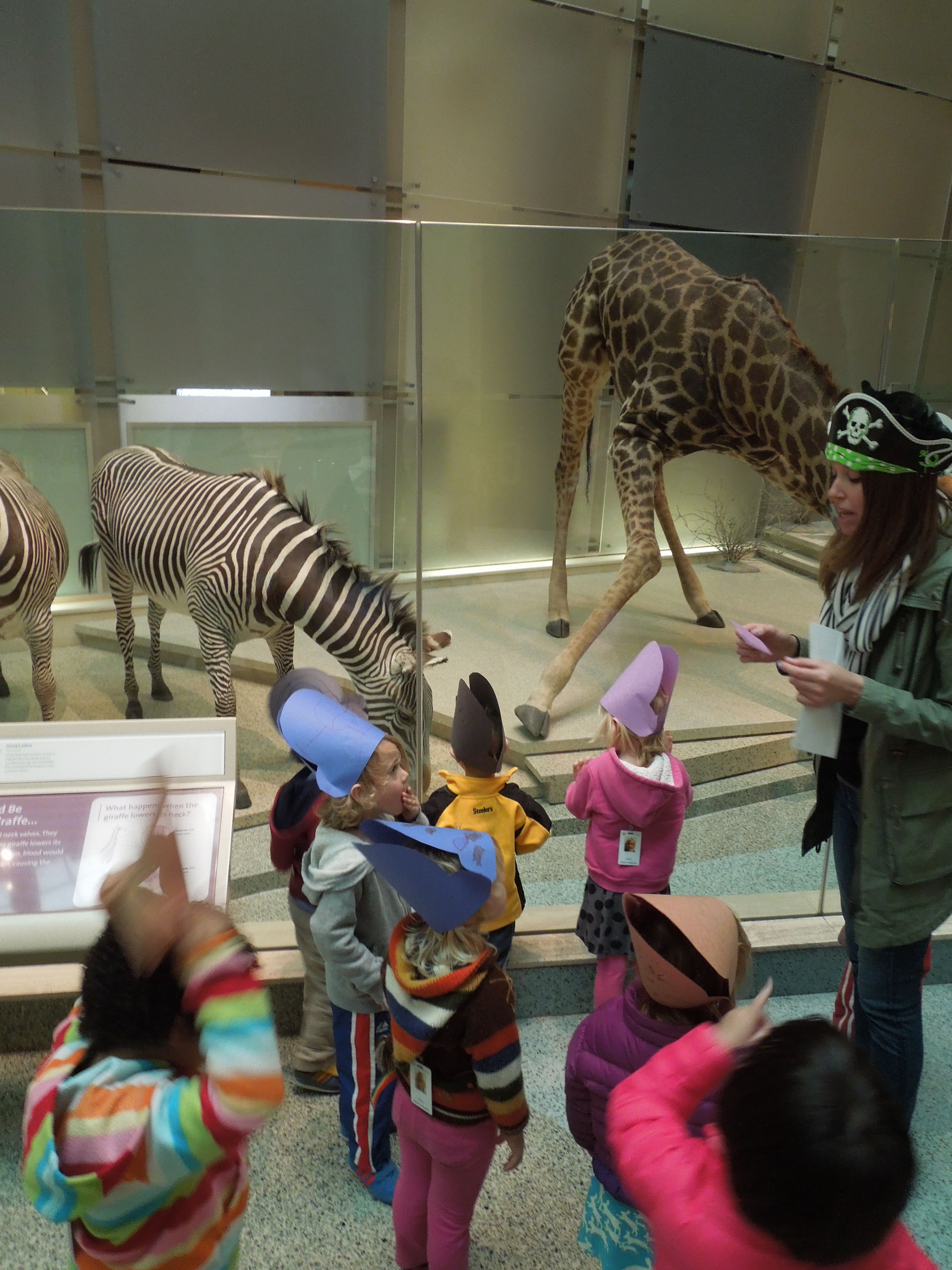
DSCN1203 DSCN1208The fourth clue led them to the National Museum of Natural History Mammal Hall (http://www.mnh.si.edu/mammals/index.htm). In the book, the Island is full of animals, so the group often went to the Mammal Hall to learn all about some of the creatures that inhabited the Robinson’s home.

DSCN1216Their last clue directed them back to their playground where they found the treasure chest!

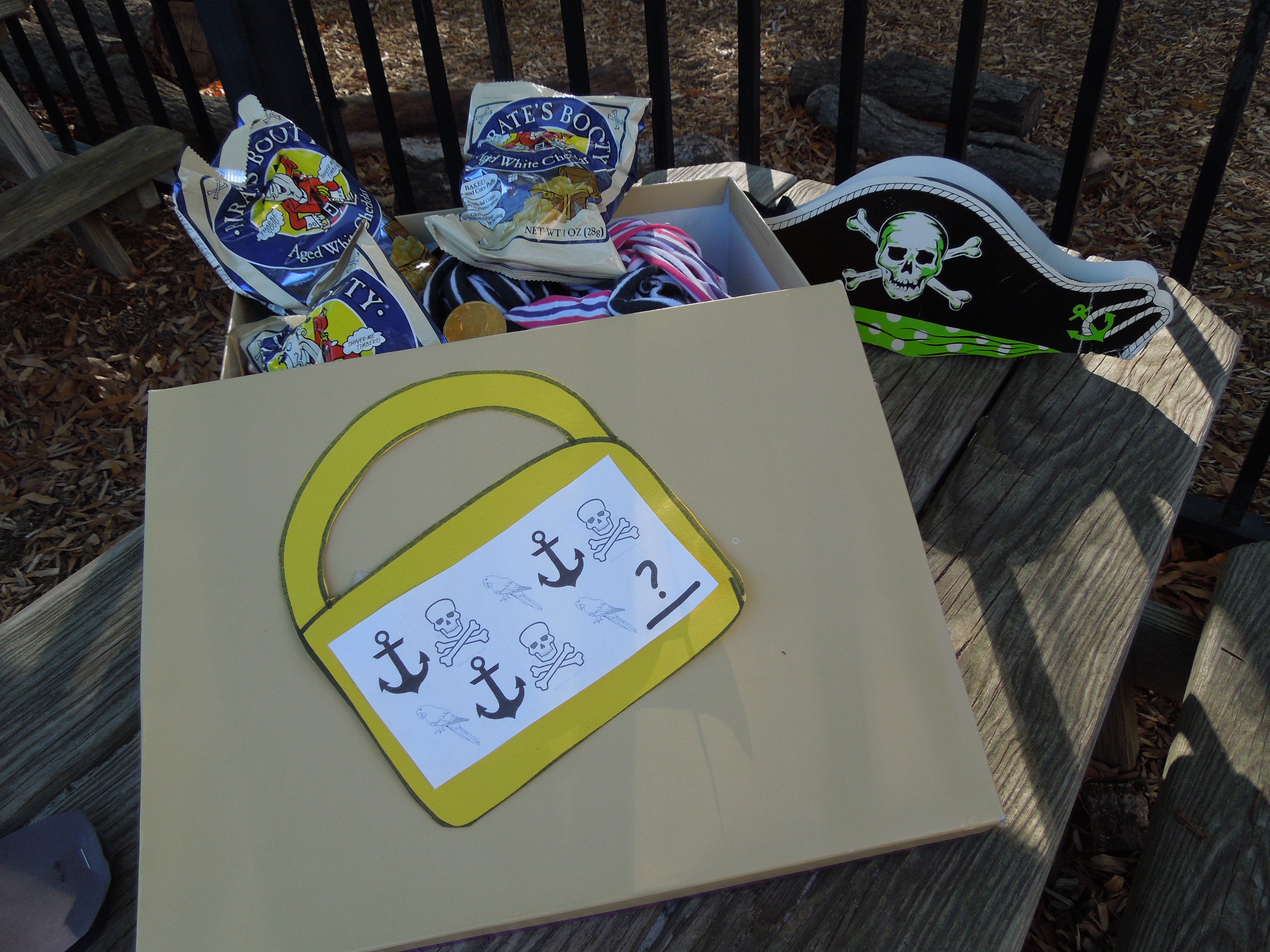
DSCN1225In order to open their treasure chest they needed to crack the pattern and fill in the next shape.

DSCN1221Inside was gold, Pirate’s Booty, and pirate headbands!

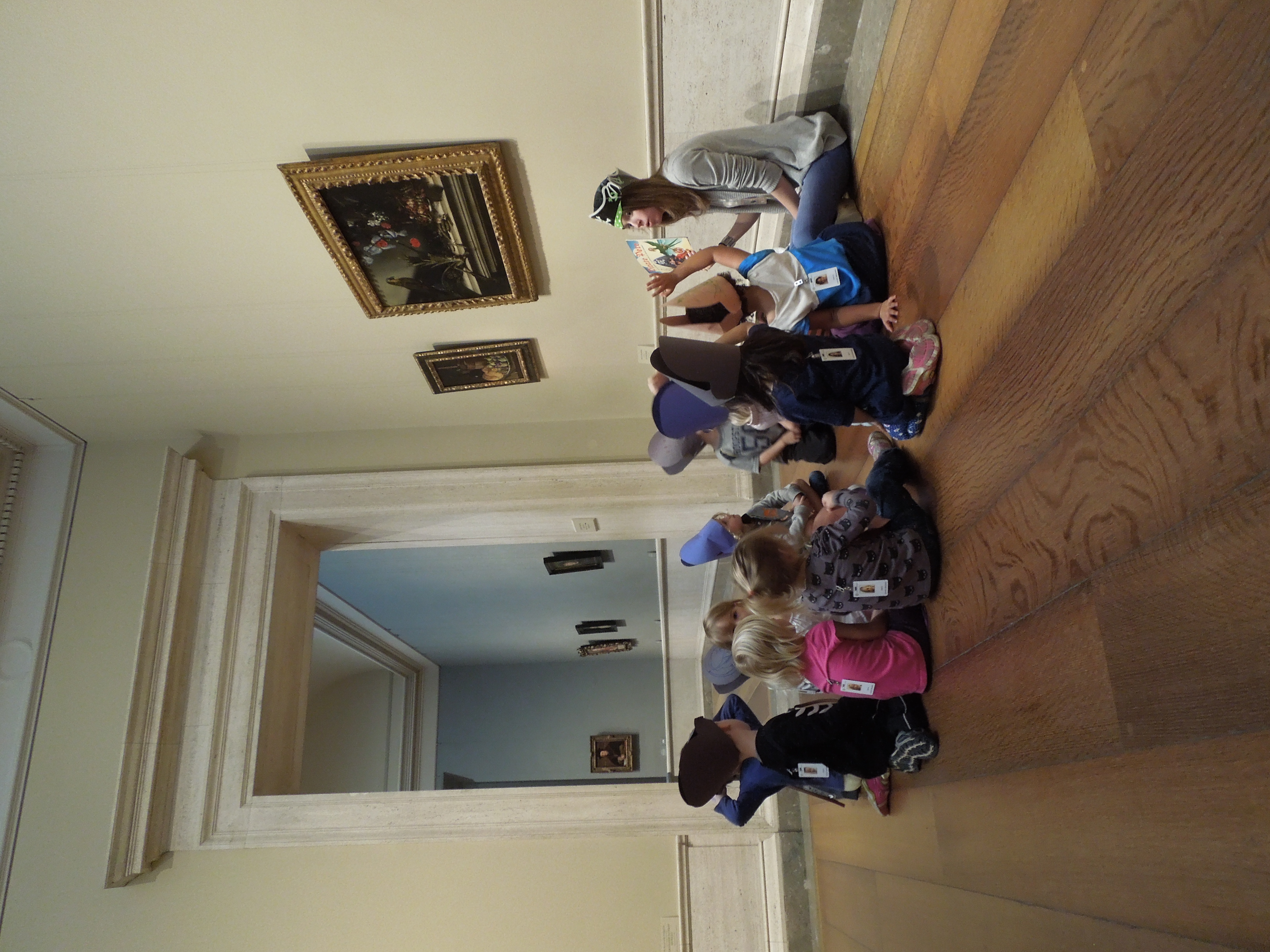
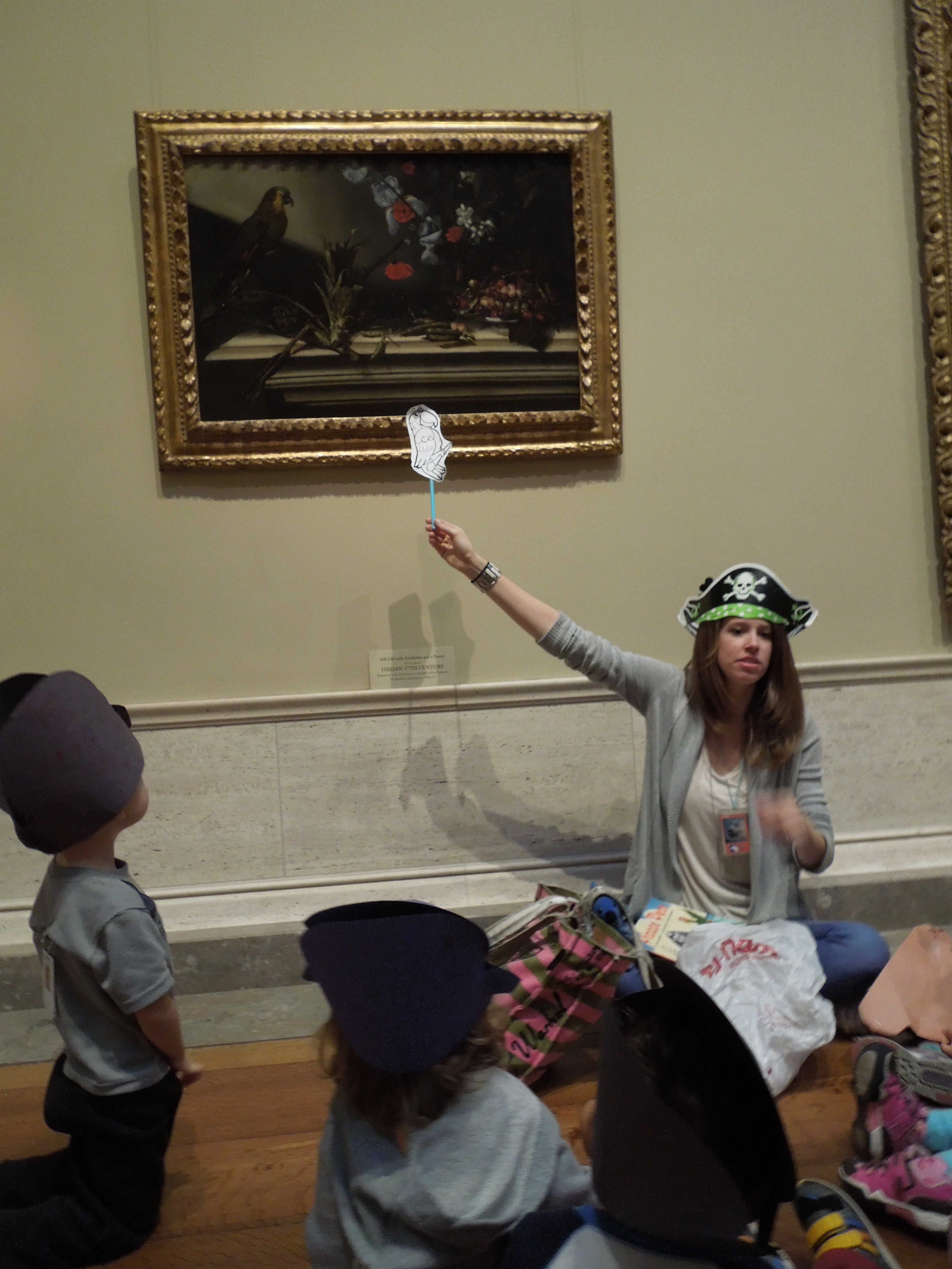
DSCN1245The next day Brooke took the class to the National Gallery of Art to see Still Life with Artichokes and a Parrot, 17th c., Italian. For her visit, she focused on the pirate’s trusty sidekick, the parrot. They read Pirate Pete by Kim Kennedy and talked about all the ways a parrot can help a pirate.

DSCN1250Brooke brought each child a paper parrot and asked them to look closely at the painting.  She asked: “What is the same or different about the one in your hand and the one in the work of art?” The kids had a lot of ideas to share.

The 3 year olds had a wonderful time exploring the book, The Swiss Family Robinson by Johann David Wyss. Be sure to check back after the holidays for our next teacher feature!

Teacher Feature: Three Year Old Classroom Explores Elvis

It’s Teacher Feature Thursday!

This week we are featuring Rebecca Wilcox. Her Pre-k four classroom was learning about Music and decided to spend a week on Elvis Presley. Below you will find a reflection from Rebecca and images from some of her lessons.

Elvis_Cover

What were your topics of exploration?

At the start of the school year, the Wallabies showed a great interest in instruments. As a result, we decided to lead the class in exploring music and instruments. When we finished, my co-teacher and I decided to share our musical passions with the kids so I was able to spend the week with them exploring the life and music of Elvis Presley. We talked about Elvis’ personal and professional life, highlighting his ambitions as a child and how growing up in his circumstances influenced his philanthropic endeavors as an adult. I hoped that this would provide a logical connecting thread to a broader theme of empathy and encourage them to feel empowered to make changes in their world. We listened to lots of his music all week, watched him singing and dancing on the 1968 Comeback Special, and talked about different ways that Elvis tried to help make other people’s lives better.

What were your learning objectives? (What did you want your children to take away from the lesson?)

For this week’s lesson I had one personal objective and two professional objectives. As a huge Elvis fan, I wanted to introduce and encourage an interest in the music of my favorite artist, Elvis Presley. Professionally, I wanted to develop close-looking skills and to provide a unique example of a person who was able to make positive changes in other people’s lives. My co-teacher and I have been utilizing the Visual Thinking Routine, SEE-THINK-WONDER, during which the children practice close-looking with an object or artwork. For this thinking routine, teachers ask each child to share something that they see, something that they think, and something that they wonder.

What was most successful about your lesson?

The most successful part about this whole unit was instilling an interest in Elvis’ music and Elvis as an icon. My passion for him definitely made an impact on the children and they love talking about him with me. I especially love the knock-knock jokes that they created: “Knock-Knock!” (Who’s there?) “ELVIS!!” I am always ecstatic when they request Elvis for their naptime music!

What could you have done differently? What recommendations would you have for another teacher trying out this lesson?

If I were to do this unit again, I would spend more time talking about how Elvis’ childhood struggles with poverty affected his desire to be a helpful and charitable person. While I am so excited that my class understands who Elvis is and why I love him, I feel that his charitable work is exceptional, especially because even after his death The Elvis Presley Charitable Foundation is a critical function of Elvis Presley Enterprises.

I would recommend other teachers learn about Elvis’ childhood as a means of creating a strong connection for the kids. I also recommend playing lots of his music and letting the kids have fun and enjoy his unique style! Also, Graceland (http://bit.ly/1BAIDu7) has fabulous resources for all ages and disciplines!

Here are a few images from their unit on Elvis:
DSCN1050

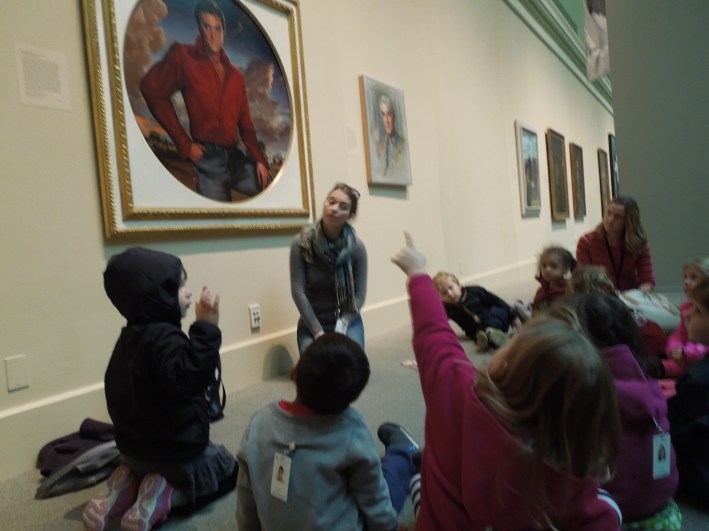
Rebecca wanted to start her unit by introducing Elvis Presley to the kids so they ventured to the National Portrait Gallery to see the painting, Elvis Presley by Ralph Wolfe Cowan (http://bit.ly/1zB6xU1). The children were invited to look at the work and share what they saw. The children had a number of observations that helped lead and guide the discussion. They wondered about the keys in Elvis’ pocket and the building in the back of the scene.

DSCN1070Rebecca used those observations to introduce Elvis’ family and childhood. She used the tablet to show Elvis at different ages.

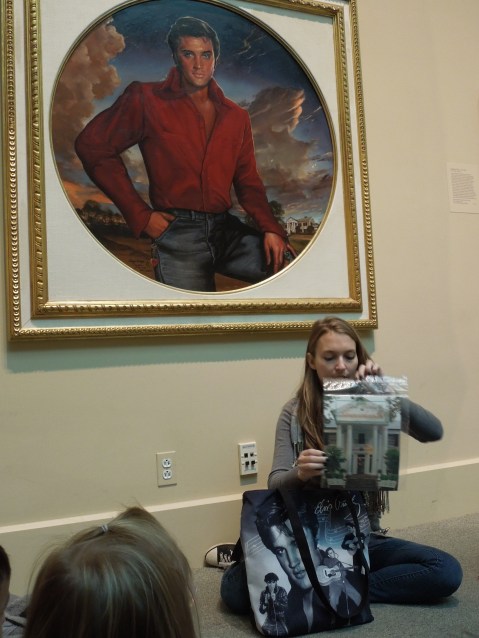
DSCN1063She then showed them other pictures of Elvis at the same age as in the portrait and also a larger image of Graceland.

DSCN1101The next day the class walked over to the Hirshhorn Museum to continue their exploration.


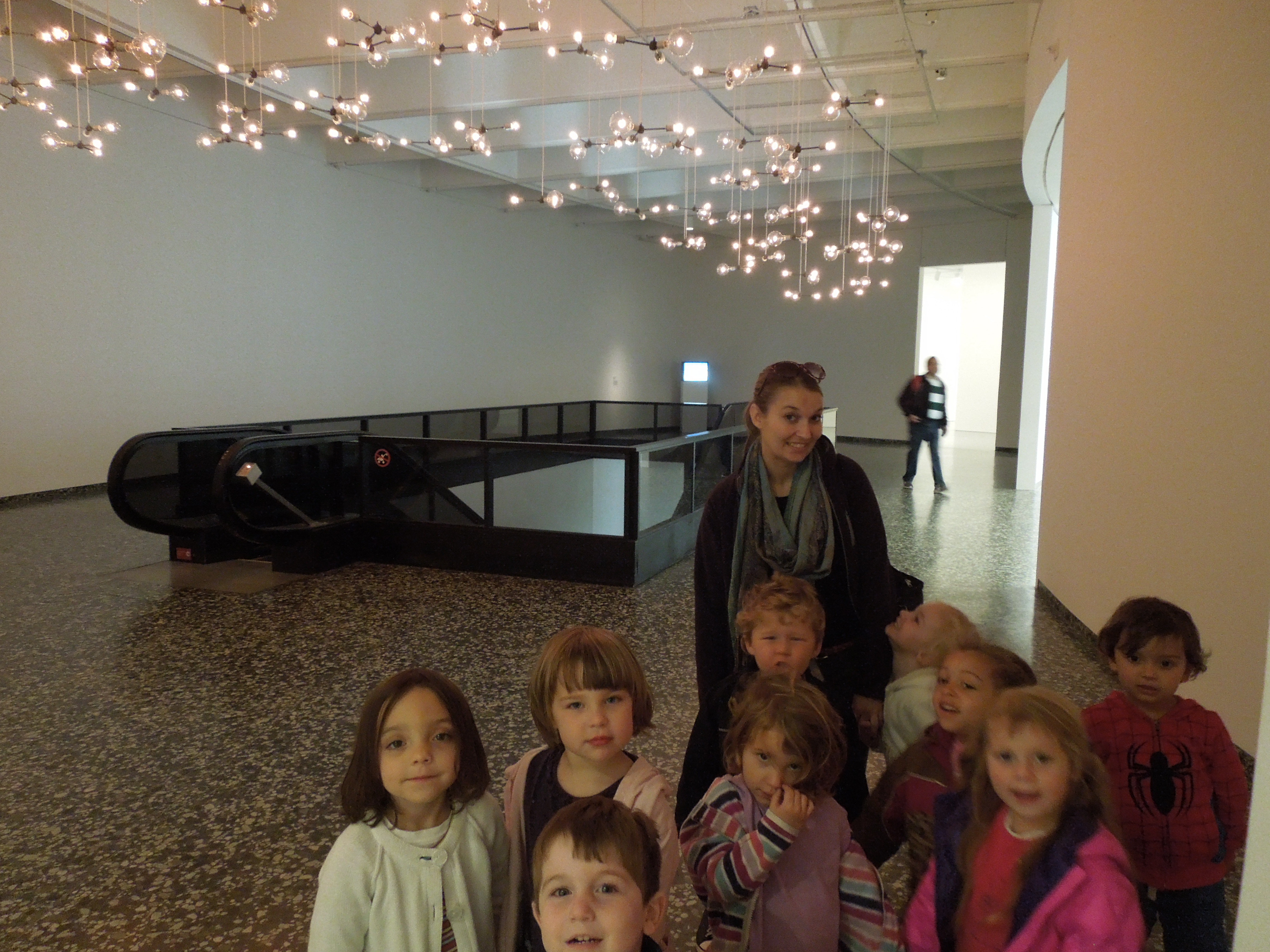
DSCN1119Rebecca focused her lesson on the Elvis classic “If I can dream” and visited the Cloud by Spencer Finch (http://bit.ly/1uoUAKM).  She wanted to focus on the concept of a dream. Illustrating that a dream can be a hope or desire or something you imagined when you were sleeping. The dark room and soft light from the art work set a wonderful atmosphere for them to talk all about dreaming.

DSCN1113Rebecca started her lesson by showing a video of Elvis singing his “If I can dream”.

DSCN1108Rebecca asked the group: “What is a dream?” After sharing the definition, she pulled out a few rest time items as way to emphasize the concept. She then asked the children what they dream about when they are sleeping. One child exclaimed “I dream about Museums!”

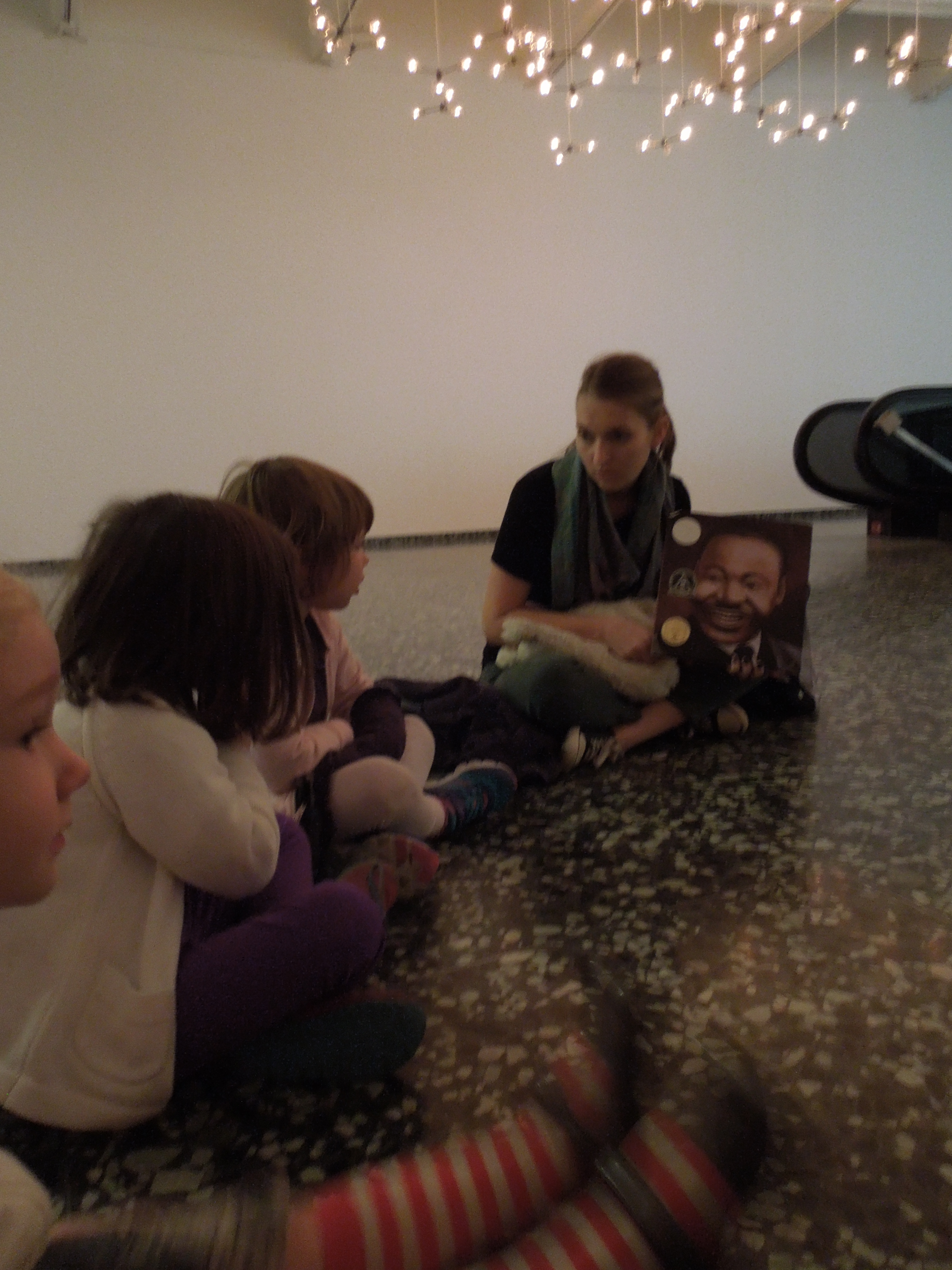
DSCN1114She then explained that the dream that Elvis was describing in his song is his hope for everyone to get along in the future. Rebecca then introduced Martin Luther King who also had big dreams and read Martin’s Big Words: The Life of Dr. Martin Luther King, Jr. by Doreen Rappaport. Rebecca ended the lesson by asking the children to share their big dreams for the future. One child said “I want to be a great big huge chef that feeds everyone in the whole word.” 

file (21)file (27)

In the afternoon the children were invited to make their own hip-shaking Elvis. The class cut out Elvis and painted him with gold sparkles. The teachers helped fasten his hip to his body with a brad.

The class had a wonderful time exploring Music and learning all about Elvis. They have now moved on to a unit on performance! Check back in next week Thursday for an all new teacher feature!


Teacher Feature: Four Year Old Classroom Explores Dr. Dolittle

It’s Teacher Feature Thursday!

This week we are featuring Carrie Heflin and Emma Cowan-Young. Carrie and Emma’s pre-k four classroom learned about Dr. Doolittle. Below you will find a reflection from Carrie and Emma and images from some of their lessons.

Lucas_Cover

What were your topics of exploration?

“The unit we were working on was a case study of the novel The Story of Dr. Doolittle by Hugh Lofting. We looked at a variety of topics including long, long ago (Dr. Doolittle was published in 1920), geography (Dr. Doolittle travels from his home in England to Africa by boat), and communication (comparing and contrasting animal and human communication in real life and in the story).”

What were your learning objectives? (What did you want your children to take away from the lesson?)

  • “Making a connection between the story we were studying and our own lives (i.e. the trips we take, our pets, how we communicate with the world around us).
  • Thinking about the differences and similarities between how people communicate and how animals communicate.
  • Practicing some of the different ways that people communicate (i.e. in various languages, with our words, with our bodies).
  • Observing some of the ways that animals communicate.”

What was most successful about your lesson?

“I think that the most successful thing about this unit is the way it has opened up a larger conversation in our classroom about how we interact with the world around us. We had started the year with a unit on portraiture where we talked a lot about how we represent ourselves and how we learn about others by observing and interpreting how they represent themselves. I felt that this was a natural continuation of that line of thought. We went from talking about how we represent ourselves to exploring how we communicate and how that affects how others see and understand us. I began to see these concepts at work in my classroom in the way my students were interacting with each other. I saw a lot more care being put into apologies and working through problems. In particular I noticed the class as a whole took a very marked interest in sign language. We had dedicated one of our lessons to sign language as a form of human communication because one of our students comes from an ASL-speaking family and he was able to demonstrate some signs from the Dr. Doolittle plot that really engaged the class. We are now two weeks into a new unit and I still hear students asking him about new signs and using them in the classroom every day. It has really created strong sense of community in our class.”

What could you have done differently? What recommendations would you have for another teacher trying out this lesson?

“I really wish we had been able to find a way to get the kids more one on one time with animals. I think there is so much to be learned from observing and interacting with animals and children treat them in such a gentle and thoughtful way. Ideally I would go back and take the time to contact perhaps a service dog organization and have them come and talk to the class about how people can communicate with animals to extend the thought process even further. Unfortunately, I was gone for a week during this unit and I think it threw off the rhythm a little for me and the kids and our momentum fizzled out so it was time to move on. Otherwise, we might still be talking about Dr. D.”

Here a few images from their exploration of  communication as part of their Dr. Doolittle unit:
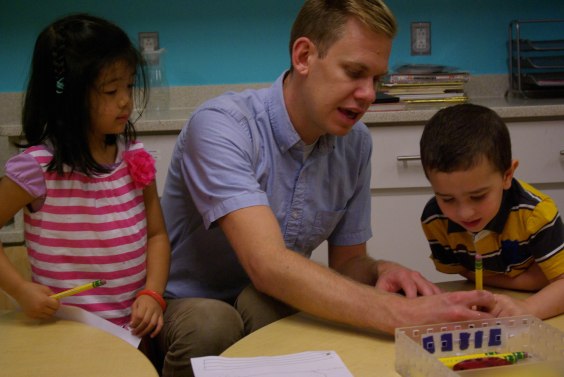
DSCN0962They began the lesson by asking the children how they communicate. Carrie then asked if we all spoke the same language. As you can see they came up with quite an extensive list. Some shared a few words in the languages they knew.

DSCN0980One of the children speaks American Sign Language at home and was excited to share some animal signs  from Dr. Doolittle with his classmates.

DSCN0989Carrie is fluent in French and sang the song “Head, Shoulders, Knees, and Toes” first in English and then in French. This was a great way to practice one to one association and get the kids up and moving during their lesson.

DSCN1014The next day the class visited the Park Police horse stable on the National Mall to meet with a few officers who explained that horses have their own way of communicating with each other. They also explained that the officers have a special way of communicating with the horses especially when they are riding them.

DSCN1017

DSCN1028The children noticed that the sounds and movements of the horses could tell them something about how the horse was feeling. They loved the opportunity to get up close and interact with these amazing animals.

This class had a wonderful time exploring the magical world of Dr. Doolittle and now they are off on their next adventure. Be sure to check back for our Teacher Feature next week!
Teacher Feature: Four Year Old Classroom Explores Camelot

It’s Teacher Feature Thursday!

This week we are featuring Will Kuehnle. Will’s pre-k four classroom is currently learning about Camelot. Below you will find a reflection from Will and images from some of his lessons.

Print

What were your topics of exploration?

“We were exploring the world of King Arthur and Camelot. The children at the beginning of the year were enjoying the idea of dragons chasing them when we were running around on the playground. Dragons were also popping up during our chatter around the snack table. I definitely noticed an interest. My associate teacher and I put our heads together to think of a topic to explore that would quench the students interest, touch on topics we thought would be useful for the children to have as a foundation for the year ahead (chivalry, community) and also allowed us as educators to have a wide variety of ideas to teach upon, which makes lesson planning fun and flexible.”

What were your learning objectives? (What did you want your children to take away from the lesson?)

“I always want my students to take away a sense of enjoyment from a unit of study. I want them to have that everyday we are together, no matter if we are going on an exciting museum visit or stuck inside the classroom on a rainy day.  For this particular unit I wanted to have each student have a strong sense of what the code of chivalry was, because that can be applied to so many routine situations throughout our day. I wanted to be able to focus my language with children around kindness, bravery, loyalty, community and justice. To be able to do that with such a fascinating backdrop as King Arthur and the Knights of the Round Table was a real treat. Another objective I had for the students was to nurture their sense of adventure and curiosity towards learning. We can take that energy and harness it towards future lessons and topics this year, I’m really excited to see where this year leads us.”

What was most successful about your lesson?

“I believe the way the children used what we were discussing into their play was the most successful. I did not notice it at first, but after a few weeks into the unit the play structures in the classroom were really developing. The dramatic play we had in the classroom, the manipulatives the children were using, the art they were making and the games they were creating on the playground were centered around the world of Camelot. The children were so whimsical in their approach to the unit that you really saw what you were talking to them about sink in. I am able to suggest to a child that they be knightly or chivalrous and see them reflect with positive reaction to the choice they are making.”

What could you have done differently? What recommendations would you have for another teacher trying out this lesson?

“Reflecting back on the unit, which is still going on up until our knighting ceremony on December 18th, I wish that the transition of topics within the unit were more thought out and not as rushed. I think we were really excited to dive head first into something for the start of the year that we barreled through ideas that we could have taken more time on. Maybe it was because we wanted to go from looking at the places of Camelot, to the people of Camelot, to the stories of King Arthur, to the code of chivalry, to how castles were built and protected, etc. As an educator I am trying learn how best to balance all the information there is to know and all the information I believe is best for my students to know, and then unveiling that in a cohesive story line that is engaging and enriching for them. I think having a strong idea of what you want to the overall story to be in the unit when you are first venturing out is very helpful, and that is something I struggled with in this unit. At the same time you always need to be flexible.”

Here a few images from their days in Camelot:

They began their exploration of the topic with the story of the Sword in the Stone. Will had the students create their own stone from a cardboard box and painted paper. They were very surprised and excited when Merlin dropped off a sword later in the day.

IMGP8021To encourage close looking, Will asked the children to create their own illustrations of the sword for their journals.

IMGP8008

IMGP8022The children were very thorough in their illustrations. Some even included the text found below the sword.

IMGP7996DSCN0837The children were then offered the opportunity to try and pull the sword out of the stone. Will explained that the person who was able to remove the sword from the stone would be the rightful ruler of their kingdom. He reminded the children that they might not be the strongest or largest person but the one with the truest and kindest heart would be able to claim the sword. In the end it was their center director Megan who was able to remove the sword from the stone and students talked about why she would make a great ruler of their kingdom.

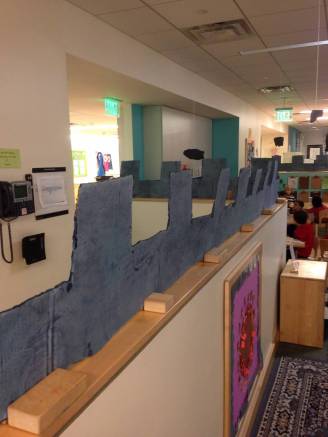
file (16)file (17)Will also began to alter their classroom to take on the attributes of a castle. Above the students are painting the castle wall and below you can see it installed in their space.
DSCN1099DSCN1096In addition to the castle wall, Will wanted a way to track their their progress through Camelot so they created a board with the different locations they might travel. As part of the board, he also created popsicle sticks with images of the children as their favorite Camelot characters which will move around the board as they continue through the story.

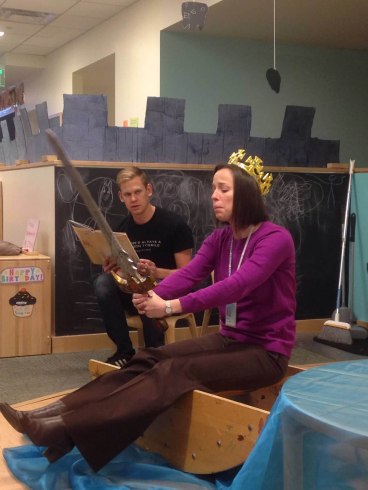
file (14)The group was so excited about Excalibur that Will decided to do a theatrical reading of the Lady in the Lake with help from a few educators and our site director.
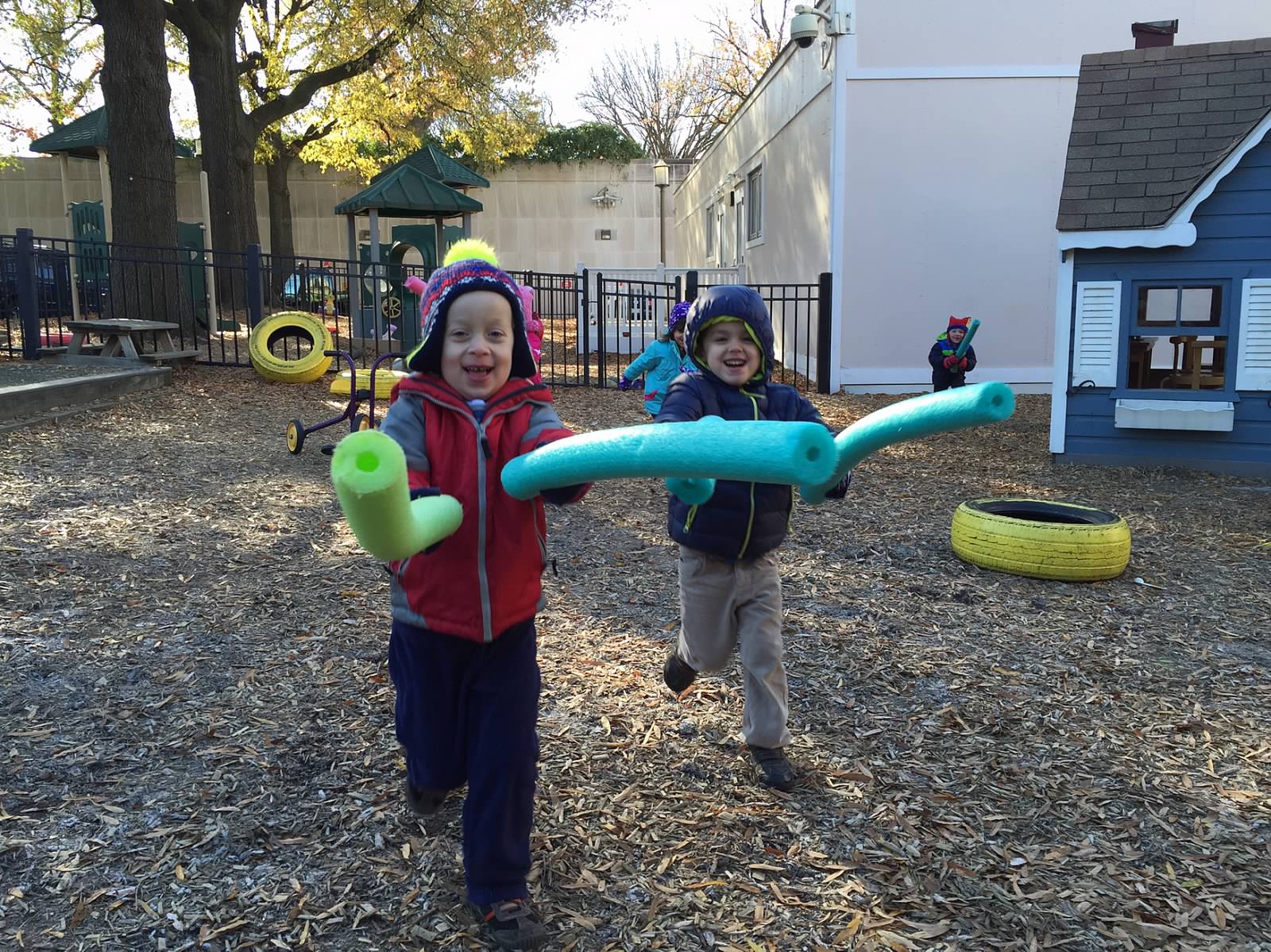
file (20)Their exploration of Camelot even extended out to the playground where they used pool noodles to do some jousting.

The children continue to be extremely excited about this topic and have exciting adventures in Camelot. Be sure to check back for our Teacher Feature next week!