Museum Visits: Autumn Edition

Congratulations parents, you made it through the summer and the first month of school! By now, I hope you are settling into a routine and finding that you have a few free afternoons to enjoy this glorious time of year. While many of you are out apple-picking or in the pumpkin patch, the National Mall is another viable option. It can offer a cost-friendly opportunity where you can divide your time between the museums and taking in the beauty of the Nation’s Capital.

For this year’s fall picks, we have two categories: autumn-inspired exhibits and newly-opened features.

Autumn

PreK class making their own Arcimboldo portraits.

PreK class making their own Arcimboldo portraits.

Four Seasons in One Head is tucked deep inside the National Gallery’s main level in a room that is often forgotten but should never be ignored. Arcimboldo, known for his distinctive portraits in which faces are formed from natural materials, depicts the four seasons in this image. This portrait has an element of mystery that will pique a child’s curiosity and it offers a strong connection to what your child is observing everyday outside. To make deeper connections bring along straw and autumnal fruits for the child to touch and interact with during your visit (note: keep all materials in a sealed plastic bags).

Artifact Walls- You Must Remember This at the National Museum of American History is a no-brainer when it comes to fall-themed visits. Situated adjacent to the Warner Brothers Theater in the Constitution lobby of the National Museum of American History Museum, the cases showcase a selection of Hollywood costumes. In the past, it has featured such classics as robes from the Harry Potter films and Super Man’s cape. With Halloween fast approaching, this is a great stop for the family who wants to brainstorm costume ideas. It is also a learning opportunity for children to think about the process of costume making. PreK children might enjoy sketching their Halloween costume or working with an adult to make a list of materials you will need for the costume.   These simple activities will encourage fine motor development and planning skills. Younger children might enjoy reading a book where one of the costumes are featured or simply bringing a favorite book in which a character wears a costume.

image (7)Food: Transforming the American Table 1950–2000 also at the National Museum of American History is the perfect stop as we begin to approach Thanksgiving.   This exhibition demonstrates the inclusive nature of American culture as seen through food. Young children can see examples of our multicultural food identity in their everyday lives as they accompany you to the grocery store or eat at a local restaurant. Before your museum visit, identify foods in your kitchen that originate from countries other than America and then see if you can find them in the exhibition. Infants and toddlers, on the other hand, might enjoy taking a stroll through the space and matching cooking implements from home with ones on display. End your visit by sitting at the large table planning your Thanksgiving meal or reading a book about family meals.

What’s New

Don’t forget that the Smithsonian is also home to the Discovery Theater. On November 23 and 24, the theater will host Mother Earth and Me: Sister Rain and Brother Earth. This interactive musical uses life-size puppets to tell the story of Mother Nature and her determination to save the Earth from drought – with the help of the audience. Recommended for ages 4-8, this story conveys the importance of working together to protect the Earth.

The Great Inka RoadThe National Museum of the American Indian has it all! It is brand new and showcases the museum’s cutting edge collaboration with the company ideum to capture 3D imaging of the ancient Incan capital of Cusco. The images can be viewed on an interactive touch table and are completely spherical. This technological innovation allows visitors to move through the images in all four directions and transports viewers into the space of the pictures. But that is far from the only interactive element. The exhibit also features several video and audio elements which include bilingual storytelling and two “flythrough” stations where you can take a virtual tour of Cusco.

IMG_3588

Family workshop participants heading into the Sackler Gallery.

Sōtatsu: Making Waves opens October 24th at the Arthur M. Sackler Gallery and based on prior experience, this will be a great stop for the family. The spacious galleries in the Sackler are often quiet and work well for families who might need a little space. If the two screens highlighted on the Sackler’s website: Waves at Matsushima and Dragons and Clouds  are any indication, the exhibition will be full of lively, dramatic imagery that will capture a young child’s imagination.  In addition to featuring large-scale Japanese screens (perfect for young viewers) hanging scrolls and fans will also be included. It is a great opportunity to introduce young children to these mediums and experiment with making your own versions. Don’t forget to check out the ImaginAsia classroom schedule on the Sackler’s website for the all-ages offering tied to this exhibition!

Living and Learning Spaces

At SEEC we have been making changes to our classroom environments over the last three years. There is no question the environment influences everything from behavior to feelings. Think about the difference between how you feel in a busy urban city vs by a stream in the woods (what will feel better to you is very individual!). The environment in our spaces are not just the “third teacher”, giving the children cues about how to behave and making visible what we believe about educating them, they are also the physical representation of the time we spend together in that space. I believe that these spaces should represent the teachers as people, that they should reflect the daily lives of the children and the adults spending time there, and that they should respect the needs of everyone, children and adults.


These classrooms are our “living rooms” — they are the places we live together for many hours a day. They should look more like spaces of living, of wonder, of curiosity than like spaces of instruction. They should have color that warms, softness that calms, spaces where both children and adults can be comfortable, and stories of their time together beautifully displayed in ways that show respect for wonder and curiosity and that reflect the voices of the children. We are working to make our spaces “living and learning” rooms rather than “classrooms” because this is what we do together every day!


A Intern’s Reflection: Hayon Park

This summer we had a wonderful team of interns who were involved in a variety of projects around SEEC. Hayon Park, our Art Enrichment Intern, had the pleasure of spending time with a number of our children doing art inspired activities. She assisted with the Smithsonian Early Explorer Program (our two day a week toddler class for child and caregiver), developed in-class experiences for infant, toddler, and twos classes upon request, and led afternoon art studio experiences for the pre-K classes. Below you will find Hayon’s reflection and favorite projects from her time at SEEC.

Internship Reflection 1: SEE Program

Every Smithsonian Early Explorer (SEE) class was an insightful moment for me to see how children engage with the museum resources in their own playful way. Although I only joined the last classes of the year, I sincerely enjoyed getting to know the children and their caregivers. One girl’s grandmother told me that she asked “Is Miss Hayon going to be there today?” I was amazed at how she remembered my name and was anticipating playing with me despite our limited interactions in class. I am grateful for every moment I experienced within the SEE program and hope to join the class again soon.

The image above I designed for the SEE program was printed on the end-of-the-year gifts for the family, and on SEEC’s gala brochure.


Internship Reflection 2: Art with Infant and Toddler Friends

For the last half of my internship, I had the opportunity to do something I absolutely love: making art with young friends. I visited the infant, toddler, and twos classrooms classes twice during the month of July.

I began every class reading a book that would trigger some ideas for the activity. A short discussion time followed, where children shared their brilliant observations. Then I introduced the main activity and gave a quick demonstration on how to use the materials. Most of the projects were sensory based and open-ended. I was quite nervous if the children would be interested in the activities, but each artwork turned out to be fun and unique. To me, just being there with the children was a joyful moment. 

Art with the Infants

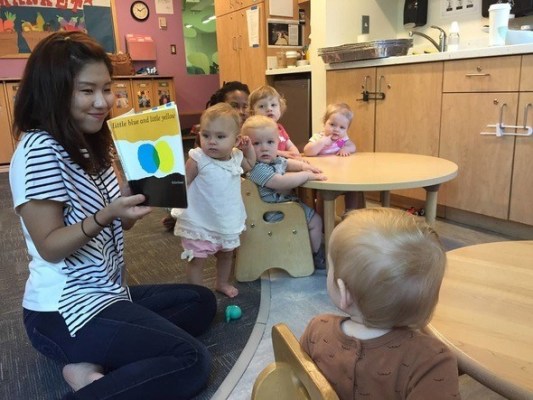
With the youngest friends of the center, I explored ice painting. I first read a short storybook called “Little Blue and Little Yellow” to introduce the color-mixing activity. Then, I demonstrated how they could roll the frozen paint ice cubes on paper. As the ice cubes melted, the primary colors naturally mixed together, making an abstract piece of work. More importantly, our little friends enjoyed the sensory experience of touching and exploring the cold ice cubes.


Art with the Toddlers

With the toddler classes, I introduced the activity with a book called “Mouse Paint”, a story in which three white mice explore color-mixing by diving into primary color paint jars. We imagined that a white piece of yarn was a mouse and dipped it into red, yellow, and blue paint bowls. The children then made the yarn dance on the white paper. As the yarn playfully danced on the surface, curvy lines and dots appeared and created a Jackson Pollock-like abstract piece of art. They had so much fun with the yarn painting and I loved playing with the little artists as well.

Art with the Twos

I started off by reading one of my favorite children’s books, “Matthew’s Dream”. I emphasized that ANYTHING could be art, including food, landscape, and even ourselves. I briefly introduced Robert Rauschenberg, an artist who used everyday objects in his artworks, blurring the border between 2-dimension and 3-dimension works. In order to encourage children to explore different objects, I brought in small objects, such as pasta shells, beads, short straws, yarn, stickers, pieces of paper, and pompoms. I handed out cardboard pieces to each student and encouraged them to use glue to attach the different objects to the surface. Some friends were very creative and experimental.  For example, one friend glued the straws to stand on the surface, which made a sculptural piece. There were also friends who showed interest in only using particular materials such as stickers or pasta shells. Overall, everyone spent a lot of time working on their art piece, and each one of them was absolutely fun and artistic.


Internship Reflection 3: Studio time

Upon starting the internship, I acquired permission to do research for my Master’s thesis at SEEC. I obtained consent from the parents of the children in the four year old classes. My research focuses on how young children’s environment affect everyday art activities and creativity, especially their drawings and narratives.


Sketchbook Time

We started art with drawing in our own sketchbooks. I kept the sketchbooks on a shelf, so that kids could  grab theirs as they were coming in to the studio. Amazing conversations emerged during this time while friends gathered around the table and drew.


Snow covered studio

One morning, we had a stack of Styrofoam donated to the school. As soon as children saw the Styrofoam, they began working together to make an igloo. Some friends worked on making windows for the igloo, and some just playfully drew on the surface. The Styrofoam broke into smaller and smaller pieces, and the whole studio space became a snow land!

Homemade play dough

With some simple ingredients, I made a big chunk of play dough and brought in to the studio. The kids loved the texture of the sticky dough. They created imaginative figures by adding other materials and color to the dough and paper plates with markers. It turned out to be pretty awesome.


pic7


Egg Carton Ideas

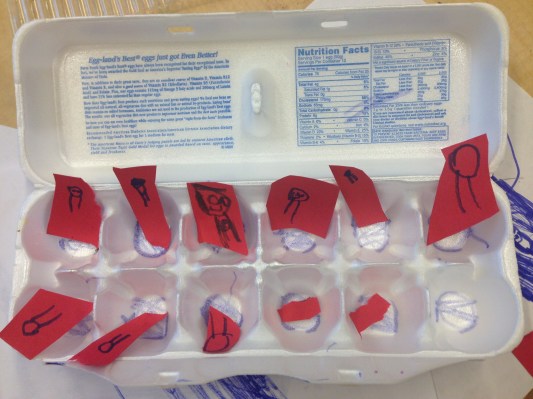
A family donated a number of egg cartons from home. The kids loved making stuff with the cartons and used them in ways I never would have imagined. Some of them used other objects like yarn to create a container for spaghetti others created vehicles like trucks and metro trains. I loved watching them explore an everyday object in their own creative way.


Thank you Hayon for all of your hard work this summer! To read the full story and learn more about Hayon’s work visit here and keep an eye out for future artistic endeavors at SEEC with our new, full-time art educator, Carolyn Eby.

Life Lessons from Two-Year-Olds

I spend a lot of time listening to two year olds since my office at SEEC is across the hall from the two year old classrooms. Two year olds are incredibly cool human beings. They are honest, yet loving; assertive, yet shy; funny, yet serious. I have always said that the year between two and three is one of my favorite years of child development because you have a rare and fleeting view into the mind of your child– they can tell you what they are thinking but they have not yet started to censor what they are saying. I think that there are a lot of life lessons we adults can learn from two year olds. Here are some of those lessons…

  • Use all your energy to engage in things that you are interested in doing. Two year olds go and go and go, seemingly nonstop, but it’s all about doing what they are interested in. We all say that we wish we had the kind of energy two year olds have…maybe we would all have this kind of energy if we spent more time doing things we like.
  • When you are done, be done. While two year olds go and go, when they are done they are done. When they are done with the Playdoh there is no convincing them otherwise. When they are done playing cars they move on. Have you ever watched a tired two year old fall asleep? One minute they are wide awake and the next…sound asleep. No tossing and turning and worrying there. Be done with it and move on.
  • Eat a little bit all day long. Nutritionists tell us that this idea of grazing is the right way to eat but do we do it? No! We sit and eat three (often huge) meals every day. Two year olds, when left alone, prefer to graze on small meals all day long. It is so much healthier.
  • Hold someone’s hand and get their attention when you want to tell or show them something really important. I love how two year olds come take my hand or put their tiny hands on my face to be sure I am looking right at them when they have something important to tell or show me. Too often we talk at people rather than with them.  Get people’s attention when you want to talk to them and give them your attention when they talk to you.
  • Don’t underestimate the power of a great facial expression. Two year olds are experts at funny faces. They break the tension, communicate their feelings and make people laugh. If only more of us did that the world would be a better place.
  • Make sure people clap for you when you do something cool. I love how two year olds do something and then look to you to clap for them as soon as they stop. Everyone needs to be acknowledged for doing something cool. We should do it for each other more often.
  • Ask “What’s this?” and “Why?” a lot. It makes things more clear and helps everyone know what is really going on. You should also ask “Why not?” a lot as you get older. It opens new doors and new ways of thinking.
  • Feel proud of yourself in pictures. As adults we often resist getting our pictures taken and worry about how we look when they are taken. Two year olds delight in getting their pictures taken and insist on seeing them over and over regardless of how they look. They just love to see themselves. No image problems here.
  • Move around often rather than sitting still for hours. It makes you healthier and keeps you slim. Two year olds have it right. It also makes you tired so you sleep better. Not a bad deal.
  • Let people know when you are not happy. It is so much healthier than keeping your feelings all bottled up inside. Two year olds are masters at letting you know when they are not happy, but they don’t hold a grudge either. We could learn from both of these behaviors.
  • Try something new often. Two year olds often don’t think twice about trying something new, especially if you don’t make a big deal about it being new. Two year olds know how to “live juicy”…not a bad way to live your life.
  • Give hugs and kisses. Lots of them. Every day. To lots of people. Say “I love you” often.

If you have not spent any time with a two year old lately I strongly suggest you find one (the adorable one below is my granddaughter!). It will put your life in perspective and make you appreciate the small things that truly make up a life. It is definitely making my life better.

10472730_10204759529774632_5172286771279512364_n

It’s a bittersweet time of year…..

By Kim Kiehl, Executive Director of the Smithsonian Early Enrichment Center

All across the country it is a bittersweet time of year…back to school time. This time of year inevitably brings transition. It doesn’t matter if you are bringing your child to a new classroom here at SEEC, sending your child off to Kindergarten, or sending him off to college, the rituals and the feelings are the same. Transitions are tough. Transitions mean change. Transitions bring emotions. As I watch the start of the new school year here at SEEC I often wonder who the transition is more difficult for…the parents or the children. Sure, the children are crying and calling for mommy and daddy as they move to a new room with new friends. But I promise you that the crying stops soon after you leave as they become involved in the wonder of learning and the excitement of first friends. But for us parents that feeling often lingers over our morning coffee, into that first meeting of the day and through that long team meeting after lunch. While my own children are adults, now 30 and 26, as I watch parents as they drop off here at SEEC I can still feel that pull of leaving your child and not being sure it will be OK.  Whether we are bringing our child to a new early childhood classroom or dropping them off at college it’s all the same. At both ends we have to give up our children in some way. we have to let them go the become who they are going to be…often without us.

Still, I love this time of year. I love the planning and the school supply shopping. I love the promise of the days being more organized and ordered. Don’t get me wrong…I totally love summer, but autumn is like the first day of the new year to me. It is a new start and a new beginning. I make resolutions in the the fall. I start new calendars and develop new ways of keeping things organized. I resolve to follow a schedule this year. I resolve to be slower and not to rush from thing to thing this year. These resolutions often last about five days and then reality sets in (although I am determined this year to make them stick!). So for me this is a magical time of year. To me there is nothing more exciting than the promise of learning new things, nothing more exciting than the opportunity to discover a new idea, test a new skill, and make a new friend.

FullSizeRender

At the same time, this time of transition can bring sadness. Where did the years go? How can they be this old? Where did the summer go, along with all my grand plans for how to spend it? What will they do without me all day…or maybe what will I do without them all day? But there is joy too…the crying stops (for both adults and children), the stories of the wonder of learning start to pile up, and we all become comfortable with the transition. We made it.

It’s a new year and a time of new beginnings. Savor every moment of learning with your child just like we do here at SEEC. Drown yourself in their questions and their wonder and start looking at the world through curious eyes again. It’s true that transitions can be tough, but they can also be filled with growth, wonder and joy. Savor every moment—the rough and the joyful— it is through transition that we grow.

A Fresh Take: Back-to-School Books

It’s that time again! Many of our nation’s teachers are preparing their classrooms for the first day of school and so we wanted to share with you what some of our SEEC teachers are planning to include on their bookshelves this coming fall. Before school ended this past week, I interviewed several of our teachers to get their perspective on back-to-school books and here’s what I learned.
Duckling Book_1

HOMEMADE BOOKS

Many of our infant and toddler teachers lamented that there weren’t a lot of options for their young students. They were opting for making homemade books like the one featured to the right that documents a trip to their new classroom. This group of toddlers will be going to a new center, so the teacher thought it was especially important to have something to ease into a new location. I liked that the book highlighted the children’s feelings and pointed out some exciting new components of the classroom. I guess you could call it an end-of-the-year book, but since it will be with them in their new classroom too it still bridges their experiences and offers them continuity.  Duckling Book_2

Many of our teachers also like to create individual books for their students that include photos of family, special events or things the child likes. These types of books can be a great source of comfort at any time of the year when they need a little extra soothing. They also help classmates learn about each other.

FAMILIAR FRIENDS

At least four teachers said to me that they weren’t necessarily looking for back-to-school books for September. Rather they wanted  books with which the children were familiar. Having these books were important because they built in a familiar component that would help their students feel safe and more easily transition to their new teachers and routines. This was especially true of the teachers in our toddler and twos classes. Here were some of their top recommendations.

  1. Chicka, Chicka, Boom, Boom by Bill Martin, Jr. and John Archambault
  2. Good Night Moon by Margaret Wise Brown
  3. Brown Bear, Brown Bear, What do You See by Bill Martin Jr.
  4. The Napping House by Audrey Wood
  5. The Very Hungry Caterpillar by Eric Carle

MAKE IT A PROJECT

Our current Kindergarten teacher shared that when she was teaching in Europe she stumbled across the book, Mommy in My Pocket by Carol Hunt Sendarak. She said she fell in love with the book and its story of a little girl who imagines shrinking her mother so she can accompany her to school. In the end, she realizes that she will be fine on her own as she carries the memory of her mother’s hug and kiss.

Our teacher, Cathryn, took the book a step further and had her pocketstudents bring in a photo of their moms/caretakers and adhered it to the shape of a person. The children were invited to “dress” the body by coloring in clothes. When they were finished, she attached it to a heart, which was then glued on top of a cut-out pocket shape. Finally, she attached yarn to the pocket so the children could wear their “caretaker pockets” like a necklace.

After their project was done, the class sat together and talked. She recounts that she would ask about their feelings or other objects that they might want to bring to school with them.

CELEBRATING INDIVIDUALITY

Many of our PreK teachers said they like to use the beginning of the year to teach about what makes their students special or unique. One PreK-4 teacher praised Tacky the Penguin by Helen Lester for not only honoring everyone’s differences, but also just being silly. Another teacher suggested Ian Falconer’s Olivia because of how it embraces the character’s unique spirit – plus, it doesn’t hurt that the book showcases a visit to the museum where Olivia encounters paintings by Degas and Pollock – a very SEEC moment.

OTHER FAVORITESImage 3346

  1. Lilly’s Purple Plastic Purse by David Henkes

Though not really about back-to-school, this book features the relationship between student and teacher and introduces children to the concept of having different perspectives.

2.  The Night Before Kindergarten by Natasha Wing

This one is for the parents out there! It is a personal favorite that helped both my children transition to Kindergarten.

2.  Splat the Cat by Rob Scotton

3.   If  You Take a Mouse to School by Laura Numeroff

4.   Franklin Goes to School by Paulette Bourgeois

DON’T FORGET THE SPACEphoto 4

Creating a cozy corner, can be as important as the books. Have fun creating a space that is quiet by sectioning it off from the classroom buzz. Use inviting colors, comfortable furniture and include soft, soothing objects. Such a space will undoubtedly help with those first day transitions as well as difficult moments throughout the year.

Hope these give you some fresh ideas! Happy back-to-school.

It’s been quite a year!: Teacher Feature Highlights

Written by Alex Francis (Liaison and Curriculum Development Specialist @ SEEC):

What a year it has been here at SEEC!  It has been a privilege to bring you Teacher Feature each week and offer a peek into the magical experiences our teachers provide their students. As our school year comes to a close I wanted to take the opportunity to share some of my favorite moments caught on camera during Teacher Feature. Being able to regularly join the classes has only confirmed how AMAZING these teachers are at creating age appropriate and exciting learning opportunities for their students! Here is visual proof of some of the things I believe they are especially great at doing! If you want to read more about the lessons be sure to look back at our archived Teacher Features and  to stay tuned in to the blog in the Fall for the triumphant return of Teacher Feature.

Teacher Feature 2014-2015 Greatest Hits:

1. Use of Authentic Objects in Museum and Classroom Experiences.


2.Lesson Introductions


3. Sensory Experiences


4. Classroom Lesson Extensions


5. Use of Technology


6. Community Visits


7. Museum Visits


Thank you teachers for a great year! We can’t wait to see what’s in store next!

Shared Curiosity with the Smithsonian Early Explorers

Not many of us remember when we were two years old, but imagine if two mornings a week your day had started out in the Natural History Museum’s Q?rius Jr. Discovery Room space! And, what if those two mornings were spent exploring interesting things with somebody that you cared about – maybe a grandma or a parent, special caregiver or nanny? Wait, though, it gets even better. What if those opportunities for adventure took place in the Smithsonian museums and surrounding DC community? Last year, just such an experience got off the ground!

In September 2014, SEEC launched its brand new Smithsonian Early Explorer program where two mornings a week, children and their adults came together to learn about the world around them through hands-on experiences designed for active and growing toddlers. Activities took place in the discovery room space, SEEC’s art studio, museum galleries, surrounding community, and outdoors on the playground. In collaboration with Smithsonian Early Explorer facilitators, this small multi-generational learning community explored topics ranging from safari animals and the strength of bones, to dance traditions of Bollywood and shelters from around the world.

It is now one year later and we have learned a lot. The second SEE cohort will soon get together for another year of growing and learning together. Children and adults will share moments of curiosity, awe and wonder as we encounter the amazing and authentic artifacts, objects and masterpieces that make up the vast collections of our Smithsonian. Imaginations will be sparked and creativity encouraged. We are excited for what’s in store and look forward to reconnecting with returning families and welcoming new ones. For more information about the Smithsonian Early Explorer’s program visit seecstories.com/see

Teacher Feature: Toddlers Explore Oceans

It’s Teacher Feature Thursday!

This week we are featuring Laura Bonilla. Her toddler classroom was learning about oceans and Laura decided to create a sensory bin full of bubbles and ocean animals. Below you will find a reflection from Laura and images from her lesson.

Print


What were your topics of exploration?

We were learning about the ocean as a habitat.

What were your learning objectives? (What did you want your children to take away from the lesson?)

I wanted to provide an ocean inspired sensory experience.

What was most successful about your lesson?

The kids loved the experience and the bubbles nicely replicated sea foam. I was also amazed at how long the bubbles lasted.

What could you have done differently? What recommendations would you have for another teacher trying out this lesson?

I recommend teachers use a powerful mixer to create a large pile of bubbles. I would have also included more objects for the children to use in the sensory table.

Here are a few images from their unit on oceans:

DSCN3705This class had been learning about oceans all month and used this lesson as a way to review the topic. Laura began by reading Smiley Shark by Ruth Galloway. They had read the book before and the children were able to help identify the different sea life depicted.
DSCN3715Then it was time for sensory fun. Laura had the children help create the bubble mixture. She started by adding dish soap. The children used their gross and fine motor skills to help Laura.
DSCN3718Next Laura added corn starch. The corn starch acted as a binder for the bubbles making them last longer.
DSCN3719Lastly, Laura used a hand mixer to create the frothy bubbles. The children were mesmerized and couldn’t wait to get wet.
DSCN3741Then the kids were off! Some of the children liked the discovery sensation when they found a sea creature under the bubbles and other focused on washing the animals in the frothy water. Laura spent time narrating their play and sharing information about the different sea creatures in the bin.


This class had a wonderful time learning about the ocean! Be sure to check back for our Teacher Feature review next week!

Teacher Feature: Toddler Classroom Explores Safari

It’s Teacher Feature Thursday!

This week we are featuring Meg McDonald. Her toddler classroom was learning about safari’s and decided to go on one in the museum. Below you will find a reflection from Meg and images from her lesson.

Safari_Cover

What were your topics of exploration?

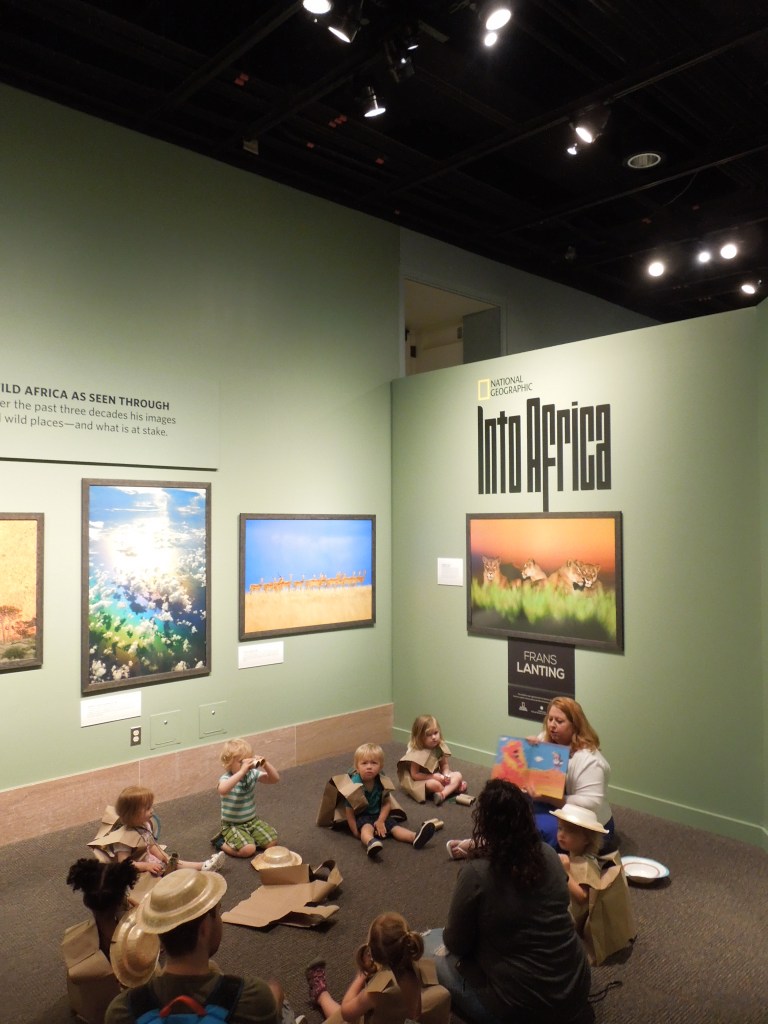
We had been studying jungle animals and this week we focused on going on a safari. We began by discussing the items we might need to have a successful safari. We decided on binoculars, safari hats and vests. Throughout the week we spent time creating these items so everyone could have them for our safari. The day of the lesson each child was decked out in the vest, hat, and binoculars and given a wooden puzzle piece of a jungle animal.  It provided the children with something tangible to hold while we read Rumble in the Jungle by Giles Andeae and took our safari through the exhibit.

What were your learning objectives? (What did you want your children to take away from the lesson?)

I wanted the children to gain some understanding of the natural habitat of some of their favorite animals and how we can observe them during a safari. Many books and movies mis-represent the habitats of these animals and I wanted to provide them with authentic information and exploration. I also wanted to provide them with authentic and exploration. I also wanted them to have practice with matching through the puzzle pieces and photographs.

What was most successful about your lesson?

I feel that the most important measure of success is if the children enjoyed what they were experiencing and in this case they definitely did. They got very excited when they found their specific animals and as well as all the animals that we had been learning about previously. They also really liked the photographs and even asked to go back and see them again.

What could you have done differently? What recommendations would you have for another teacher trying out this lesson?

Instead of giving them the wooden animals I would have given them a small photo that had a more realistic representation of the animal. I think that would have made a more concrete connection to the photo exhibit.

Here are a few images from their safari:DSCN3497DSCN3506Earlier in the week the group discussed the type of gear they might need for a safari and worked on making their own for the museum safari. The group got all dressed up and then headed straight to the Into Africa  exhibit at National Museum of Natural History. DSCN3545Meg had the group gather at the front of the exhibit. She passed out different animals found in Africa and invited the children to let her know when they saw the same animal in her book: Rumble in the Jungle by Giles Andeae.
DSCN3526DSCN3554They stayed very focused and attentive through the book, carefully watching for their animal to reveal itself. Some of the children worked together to help identify the animals of the different group. 
DSCN3569DSCN3570 DSCN3578Then it was time to head out on their safari. The binocular encourage lots of careful looking and sparked many conversations about the different animals.

This class had a wonderful time learning about safaris! Be sure to check back for our Teacher Feature next week!