Saturdays with SEEC Teachers

Posted on behalf of SEEC two year old teacher Javasa Finney:

Javasa at the Hirshhorn with SEEC's two year old class.

Javasa at the Hirshhorn with SEEC’s two year old class.

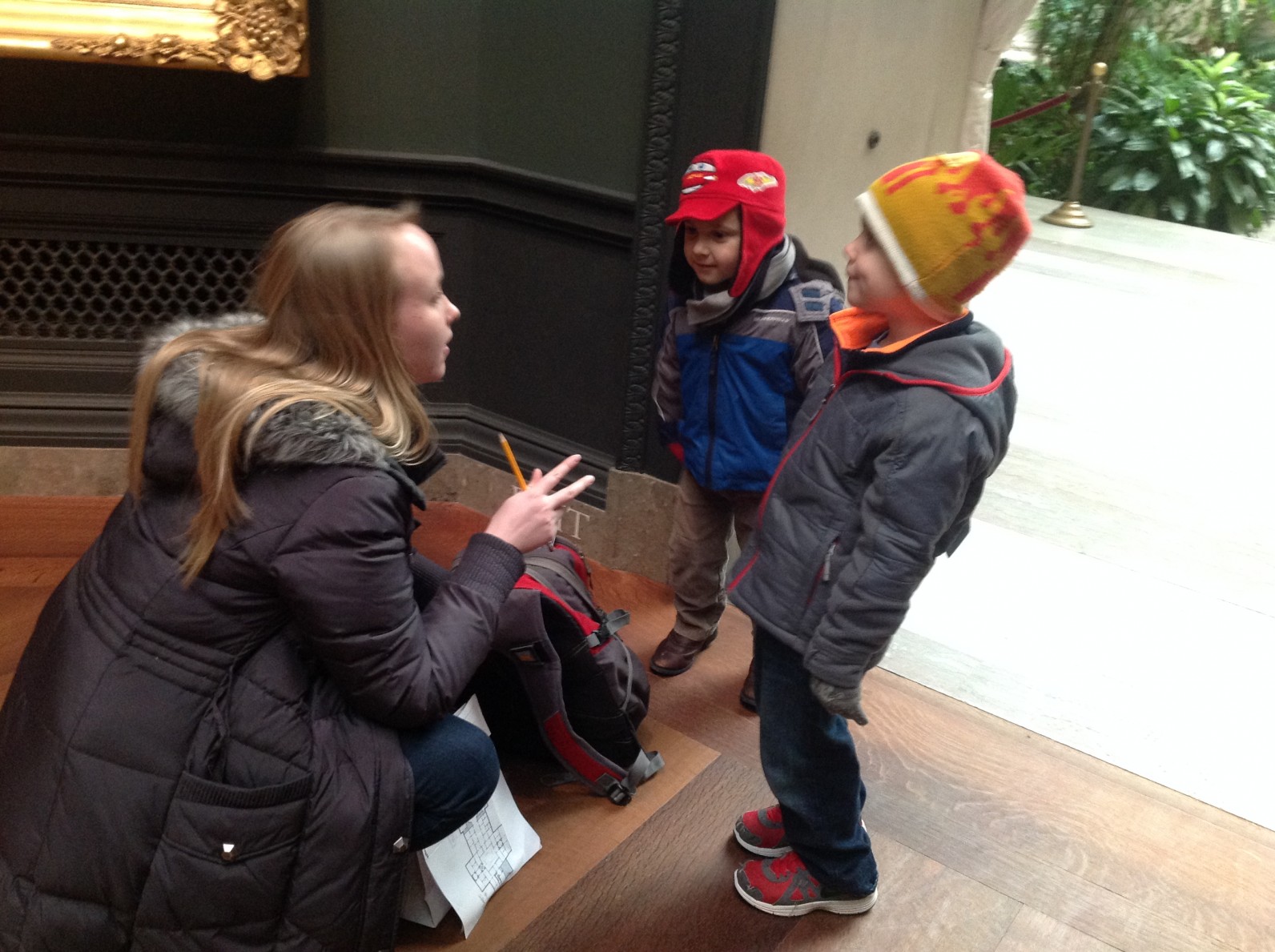
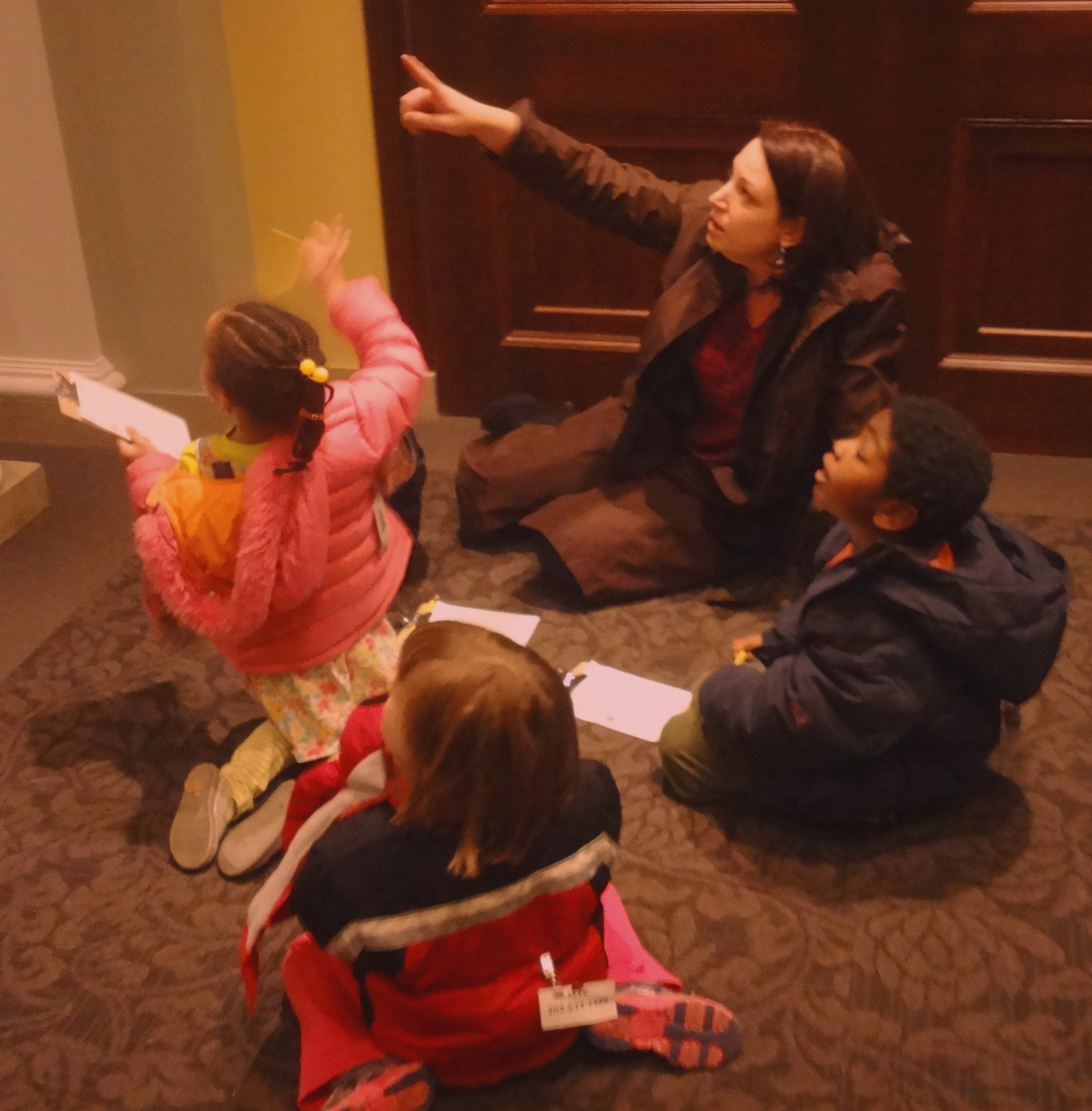
This spring I decided to volunteer with the museum education team at the Smithsonian Early Enrichment Center (SEEC) to help out with the weekend family workshops. I currently teach in one of the two year old classesthere and was interested in seeing how the experience changes once parents are involved, in the classroom and museum visit.

During the workshops I worked with the infants, toddlers, and preschoolers. The theme for the infants/toddlers was “Tiny Gardeners” and in these classes the children had the opportunity to explore flowers and gardens. The theme for the older toddlers and two year olds was, “Where Does it Come From” which focused on exploring different foods and the origins of food. Every week we met at the Natural History Museum and then headed to the museum where we would find out the topic for the day by focusing on a particular object, exhibit or art work. _MG_4180After our visits, we headed back to the SEEC classrooms for some hands-on activities related to our topic of the day. Time in the classroom was spent, planting, cooking, painting, reading, singing, and additional play. It was also wonderful to see the children socializing and making new friends.

In the museum the children did a fantastic job. They all seemed very curious and ready to explore. Everyone was respectful of the exhibits and stayed together as a group. We were often even able to sit down together to share a story and hands-on objects while we were inside the museum. Everyone seemed captivated and engaged. During our trips we visited exhibits that were directly related to what our topic for that day was. Some of the museums we visited during the four weeks include the American History Museum, Freer Gallery, the Botanic Gardens and National Gallery of Art.

As I reflect upon my time in the family workshops, I have many great memories. It was great to see the children so involved at the end of the session that they didn’t want to leave. Since several of our families return from one session to the next, I imagine that they are also finding the experiences together both meaningful and memorable as well. Museums have so much to offer, they are inspiring and educating. They are great for introducing new topics or re-enforcing facts. The most wonderful thing I saw during my time volunteering at the family workshops was the parents and children bonding, learning, and discovering new things together at the museum. What a wonderful way to spend a Saturday morning!_MG_4086 SEEC’s infant, toddler and pre-k Family Workshops will start up again in the fall. We hope to see you there!

Moments of Joy

When I looked out the window of my apartment this morning and saw that there was a torrential downpour occurring just as I was about to walk to the Metro I decided there were two ways I could approach the situation. Approach 1–I could leave feeling annoyed that I would have to walk in the rain and wishing that I could just stay home curled up on my couch.  Approach 2–I could leave with the excitement of a child in a rain storm. I chose approach 2 and decided to spend the walk being excited about the fact that I was getting to carry a “brella” (as the toddlers at my school call them) and to walk right through every big puddle in my rain boots rather than carefully walking around them. While this might sound crazy to you it actually made my walk much more fun. I found myself looking for puddles and I noticed the drips coming off the edge of the umbrella. I felt that same thrill of discovery that I remembered from being a kid when I turned the corner to walk down the small hill and saw a mini rushing river running along the curb and then I splashed my way right through it. I listened to the sound of the rain pounding on the top of the umbrella and noticed that the birds were all still singing right through the rain. Walking to the Metro became an adventure rather than a chore. Walking to the Metro became an experience rather than something to simply get over with.

Image

The rain today has reminded me that as adults we too often get bogged down in the negativity of real life. This being an adult thing that looked so good to us as kids can, in reality, be draining and overwhelming. It is so easy to just slog through life and to see things like pouring rain as negatives rather than as experiences. It reminded me that the reason children delight in things like walking in the rain is that they see them as an experience and have no preconceived notions of what that experience will be like–it is just another of life’s adventures. It reminded me that attitude is everything–the experience becomes what you think it will be in so many cases.

Here at SEEC I get to watch teachers curate experiences that create life adventures for children every day. I see the joy at the little things all day long. I hear the exclamations of “It’s a parade!” from the twos class when they look at the window and see what in reality is just a huge group of middle school students coming to the museum. I have conversations like the one with three-year-old Charlie when he tells me “I REALLY love school.” I see the joy in watching the classroom caterpillars suddenly become butterflies and in seeing stalagmites at the gem hall and watching them grow on a video on the tablet. I see the kindness as four-year-olds identify and take photos of how their friends are really superheroes because of their kind acts toward others. I see the excitement as a classroom heads to a museum, yelling “GOODBYE!!” at the top of their lungs to me as they walk by my office. I live in moments of joy every day but that joy can be too easily forgotten in my own life.

At our school this year we are making a conscious effort to appreciate these little moments of joy. Every classroom and every admin office has a jar labeled “Moments of Joy” where we collect stories of those moments that make up a day for a child. I believe it helps keep us focused on the wonder. And I discover that when I am feeling stressed actively watching for a story to add to my jar gives my day a whole new focus. Life can be hard and overwhelming some days and it isn’t possible to always see the joy—some days just really stink. But if we all truly tried harder to say nice things to each other, to approach as many experiences as possible with a positive outlook, and to look for the joy and wonder in our days the world just might be less hard and overwhelming for all of us. Go walk in the rain and look for that mini river flowing along the curb to splash in.

It’s All About the Relationship

Relationships are at the heart of everything we do at SEEC—relationships with parents, with each other as educators, and, most importantly, with the children. Forming strong relationships with children is the most important thing we can do as adults. It is through these relationships that much of who a child comes to be will emerge. Let’s start with a short biology lesson about the brain. Your brain has three parts—the rational brain, the mammalian brain and the reptilian brain. The reptilian brain is the oldest part of the brain and the part that is most developed at birth. This is where body functions such as sneezing, coughing, breathing and instincts are controlled. The mammalian brain is where emotions live—fear, anger, joy, sadness. The rational brain is the part that most of us associate with the brain—the thinking part. At birth, and throughout much of childhood, the rational brain is still developing. This means that instinct and emotions arising from the other two parts of the brain often take over behavior—think tantrums and biting here. It is only through relationships, coupled with experiences, that these vital connections in the rational brain are formed, resulting in a child who grows up with the ability to cope with stress, form fulfilling relationships of their own, manage anger, feel kindness and compassion, have the will and motivation to reach for and achieve goals, and have the ability to love intimately.

Image

Many of the things we do here in our infant classrooms (and we have some pretty amazing infant teachers here!) are things that not only should be happening in every infant classroom but with babies and toddlers everywhere.

* Take their distress seriously: because of the way the brain of a very young child works they feel emotions strongly and need to be not only allowed to experience them but learn to name them and understand how to cope with them. A child who is upset should be held and comforted and allowed to be sad while the adult talks about what he or she might be feeling.

* Support yourself as the adult: it takes a lot of energy and patience to help support a child as she grows. This ability to override the emotional part of the brain doesn’t develop quickly. In fact, it may be the mid-20s before the rational brain fully kicks in (this may be why that first love is something you remember so clearly….). Because of this, being with young children all day can be exhausting so adults need to give themselves permission to step away from the child or the situation and find ways to recharge themselves throughout the day.

* Physically soothe young children: touch, rocking, massage and hugs all release oxytocin and opiods in the brain. These chemicals, sometimes called the “love chemicals” are the ones that make you feel calm and safe. Their production also reduces stress hormones in the body. Touch is a vital part of a strong relationship with a child.

*Experience real joy with them: when was the last time you felt real, true, in your gut joy? Young children experience it all the time and at the tiniest things. Finding a bug on the sidewalk, seeing an airplane in the sky, playing with bubbles—these all bring real joy to young children. It is important that you share that joy with them through the excitement in your voice, the words you use, and by giving them your complete attention. Sharing true moments of joy is a great way to build a relationship.

* Provide lots of face to face, 1:1 interactions: while we all interact with our children on a regular basis, we are often doing it with all sorts of distractions in the background. Forming real relationships means having face to face interactions on a regular basis, ones where we are really paying attention.

* Allow for clinging: someone once said that being with a toddler is like being possessed by a demonic lover. Clinging, while annoying, is an important way for children to calm themselves when they are stressed (and sometimes for adults as well!). Those love chemicals get released with the physical contact from clinging and can help a child feel more calm and safe. This is probably why you also want a good hug when you are feeling stressed!

* Let your child lead: let the child choose what to do and what parts he wants you to play. The more you let the child lead the play, the stronger the relationship gets as the child feels respected, trusted and cared for.

Building strong relationships with children takes time and patience. Strong relationships formed early in life will serve as an anchor for a child even when they are floundering out there in the world later in life. Knowing in their hearts that they are truly cared for will always be with them and is the best gift you can give them for a life time of love.

 relationships babies 2

Everyday Activities Seen with a New Lens

Posted on behalf of SEEC educator Carolyn Eby:

Visiting the National Art Education Association conference in San Diego San Diego thinwas incredibly inspiring, intriguing, and refreshing. The theme of the conference was Spark: Fusing Innovating Teaching and Emerging Technologies. In a recent conversation with coworkers we had discussed the use of technology with children and what role it plays in our lives. Practically any student in any given age range when given an Ipad knows exactly how to manipulate the screen with their fingers. How much of this technology is beneficial for their little minds, and how much is overwhelming? Or distracting from real learning? These questions are everyday concerns of teachers and parents everywhere. How do we prepare our students and/or children to deal with a rapidly modernizing world around them?

With these concerns in mind I headed into the conference, really not knowing how the presenters would approach the subject or if I would be coming out with any answers at all. The scene was lively and full of energetic enthusiasm that lasted up until the last day. I met so many wonderfully stimulating educators from all backgrounds who had come seeking community and some of the same answers I desired.

As it turned out, one of the most valuable ideas I walked away with as a new Early Childhood Educator with a back ground in art education, was that of the Architect Simon Nicholson and his theory of “loose parts”. Simon states: “In any environment, both the degree of inventiveness and creativity, and the possibility of discovery, are directly proportional to the number and kind of variables in it.” His belief that pleasure came from exploring materials and their possible outcomes rang so true to my ears. If I put puzzles out for our young three year old students they are very interested but if I put out link-n-logs (something we have not yet formally introduced to them) they are magically transformed into magic wands, drum sticks, and/or a material to build with. Without formal instruction as to how to use these materials young children assign meaning that they have created themselves with their imagination. This is a skill I see every SEEC child carrying with them their entire lives.

SEEC students roast marshmallows over a virtual campfire.

SEEC students roast marshmallows over a virtual campfire.


Using his theory with the theme of the conference I was so inspired! Technology in its most basic form is loose parts that someone once had the brilliant idea to put together to form a new and unique creation. Let’s not forget about the key and the kite that started it all! In today’s world it is most important that we present our young ones with up-to-date tools and technology so they can understand their use within our culture, and also develop their own possible concepts of how to use these tools. In this sense of play a student’s mind for design and problem solving is challenged.

CarolynLast but not least, I left the conference understanding and being thankful for what an amazing tool technology is for us as teachers. Not only as a tool in our classroom, but a tool to connect us all and make us stronger and better instructors. Medias such as Pinterest, Blogs, Instagram, and Facebook have enabled us to connect and form a strong community that is ever growing and changing for the better.

Using Art to Teach Science

While it is not at all unusual to see a classroom of late 2- and early 3-year-olds excited about bugs, the way one of our classrooms recently explored bugs over a period of weeks was a great example of using ideas from museum education to compliment best practices in early childhood education. The teachers in that classroom–Elaine, Ashlee and Carolyn–combined art, sculpture, exhibitions, literature, real bugs, and mounted specimens to talk first about spiders and then to move to a study of insects and other crawling and flying creatures…all of which culminated in the children creating an exhibition that was “opened” to a full audience of parents and others! How these teachers combined art and science together with play and exploration to curate a learning experience for the children was nothing short of masterful. Here are some of the things they did throughout this study: – They started their discussion of spiders by visiting the large bronze spider sculpture in the National Gallery of Art’s Sculpture Garden. Here they did careful looking to see what they could notice about spiders and sculpture. While there they pulled out spider toys to compare to the sculpture and to the other spider toys using careful looking and  questions.

photo 2

Studying the spider sculpture at the NGA Sculpture Garden

-As they moved on to talking about spider webs they headed to the American Art Museum to look at a piece of art made with string wound in an elaborate pattern around a piece of clear plastic and mounted in a frame. They compared this to the photos of spider webs they had seen and sat in front of the piece to read Eric Carle’s Very Busy Spider. Finally, they used yarn to build a life size web of their own with each child holding a piece of the yarn to create a pattern and then balance a toy spider! -Back in the classroom, they gathered tree branches and used yarn to “spin” webs for spiders. Their careful looking made them realize they needed to look for branches that had “L” or “Y” shapes because they made the best spots for spider homes. – The classroom visited the Insect Zoo at the National Museum of Natural History to watch the tarantula feeding on crickets! Here they were also able to see all types of real insects and carefully study things that they had seen in books and photos. – Across the course of the several weeks they also conducted scientific studies of bugs–comparing them, examining their habitats, asking questions and searching for the answers, and studying how they would help the garden we have on our playground. They looked at detailed drawings of crickets and grasshoppers to notice similarities and differences and then brought crickets into their classroom to live. They also used careful looking at photos and specimens to study the difference between moths and butterflies and brought caterpillars into the classroom to live and eventually will watch turn into butterflies. As the weeks passed they also studied worms and ants and watched the ants in their own classroom ant farm. – We feel strongly at SEEC that play is a vital part of the lives of children and we provide open play experiences that are rich and carefully curated too. Props were available for dramatic play and children spent time playing with pretend worms in dirt in the classroom sensory box and used pretend worms for painting, as well as having many other play experiences.

20140327_145411

Playing with worms

20140325_111535

Searching for bugs

-Real mounted specimens were brought in for them to look at and study. The children were thoughtful about their observations…something you can see reflected in their final exhibition. As Adele narrated to us for her exhibition label for her caterpillar sculpture “….He has a head, thorax and abdomen.”

Image 92

Studying the specimens

-To culminate their study they returned to the giant spider sculpture, this time focusing on the idea of sculpture. When they returned to the classroom they created their own insect sculptures for a final exhibition complete with an exhibition case and labels. As a result of this combination of art and science our late two and early three-year-old children know a great deal about insects, spiders, worms, butterflies and moths. They are comfortable telling you all sorts of information about these creatures and have deep knowledge about many “facts” of science without having been drilled on these facts. By providing the children with multiple exposures to an idea in a wide variety of ways we are able to build richer understanding and find that the children are deeply engaged in the topics. Linking art and science makes the science more real and the art more accessible–something that is good for all children!

_SAM0134

The exhibitors


image

The Exhibition Opens!

image (3)

The Exhibition Opens!

Rethinking the Environment

Posted on behalf of SEEC Educator Amber Simatic:

For the past several years, my classroom left much to be desired: white walls, fluorescent lighting, and undefined spaces. However, at the beginning of the school year, I set a goal to create a more comfortable and inviting environment and to truly utilize the classroom as a teaching tool. I tried everything — changing bulletin boards, hanging art prints, displaying children’s drawings; but having mismatched, bright, primary colors everywhere was just not cutting it.

Early in the school year, I was unable to focus on the environment as much as I would have liked, given the challenges of settling in with a new class of students and getting to know a new team of teachers. However, within a few months we found our rhythm and I was able to focus again on the world around me. That’s when I noticed another SEEC center had used magnetic paint on a large wall to hang art with magnets instead of tape, which caused the wheels to start turning and brought me to my current realization: that I could expand the definition of changing my classroom beyond that of simply rearranging bulletin boards; that I could begin to think of my classroom as a home away from home and put just as much thought and care into it as I do my own home, because, after all, teachers and students spend a lot of time in their classrooms!

Once I realized my classroom’s potential, the possibilities became limitless.
A particularly challenging area of my room, above the changing table, could use some magnet paint, I thought:
“If that area can be magnetized, why not the whole wall?”
“And if I can use magnetic paint — why not colorful, magnetic paint?”
“Why not paint the whole room?”
“And if I can paint the whole room — what other changes, big and small, could I make to turn this classroom into a home?”
Each day at nap time, when the room was quiet and the soft music played, I would pat the kids to sleep and look around at the white walls, dreaming of color and comfort. For people who know me well, this concept is not a novel one: every apartment in which I’ve ever lived has been painted, if the lease allows.
I love having the creative outlet to change a space, but until recently I had never thought of applying it to my classroom.

To begin, I reflected on how the space worked, where the kids congregated, and how the placement of furniture influenced traffic patterns. I made several lists of what I liked and what I didn’t like; what I could change and what I couldn’t change; words that would describe my room and words that I would like to describe my room. These lists were extremely helpful in determining how to start the process.

There are a lot of things to consider when it comes to the physical classroom environment, the basics include: color, line, texture, form, and space. These five elements work together to create the physical environment.
Color can evoke certain moods and emotions. We even use this idea in our daily lives with sayings such as “green with envy” and “feeling blue”. Generally, when painting walls, cool colors like green and blue are calming while warm colors like red and orange tend to be stimulating.

Line can also set the emotional mood. Horizontal, vertical, curved, and diagonal lines all evoke different feelings. For example, diagonal lines suggest motion while curved lines relax a room.

Texture, both tactile and visual, engages learners and creates interest.

Form and space relate to how a room is set up. For example, does the placement of shelving units create symmetry and balance?

Baskets

Thinking about all of these items at once can quickly become overwhelming. I started with color by painting the walls then branched into some of the other elements, such as line, by adding a curved curtain draped along a window, and texture, by replacing plastic toy bins with baskets. Other things started falling into place too; I brought in plants, made slip-covers for brightly colored pillows and bought rugs.

Full view

If there is one thing I’ve learned throughout this entire journey it’s that reinventing the classroom is indeed a process. It’s a transformation that doesn’t happen overnight. Plans change and the project must adapt to fit our needs, and, more importantly, those of the children.

I’ve also learned to be vulnerable. Parents, kids, other teachers, and any one who walks into our center will see my classroom “unfinished” and that’s okay. As it turns out, the process is about figuring out what works best and feels most authentic for you and your classroom.

Pondering Play

NMAH PG

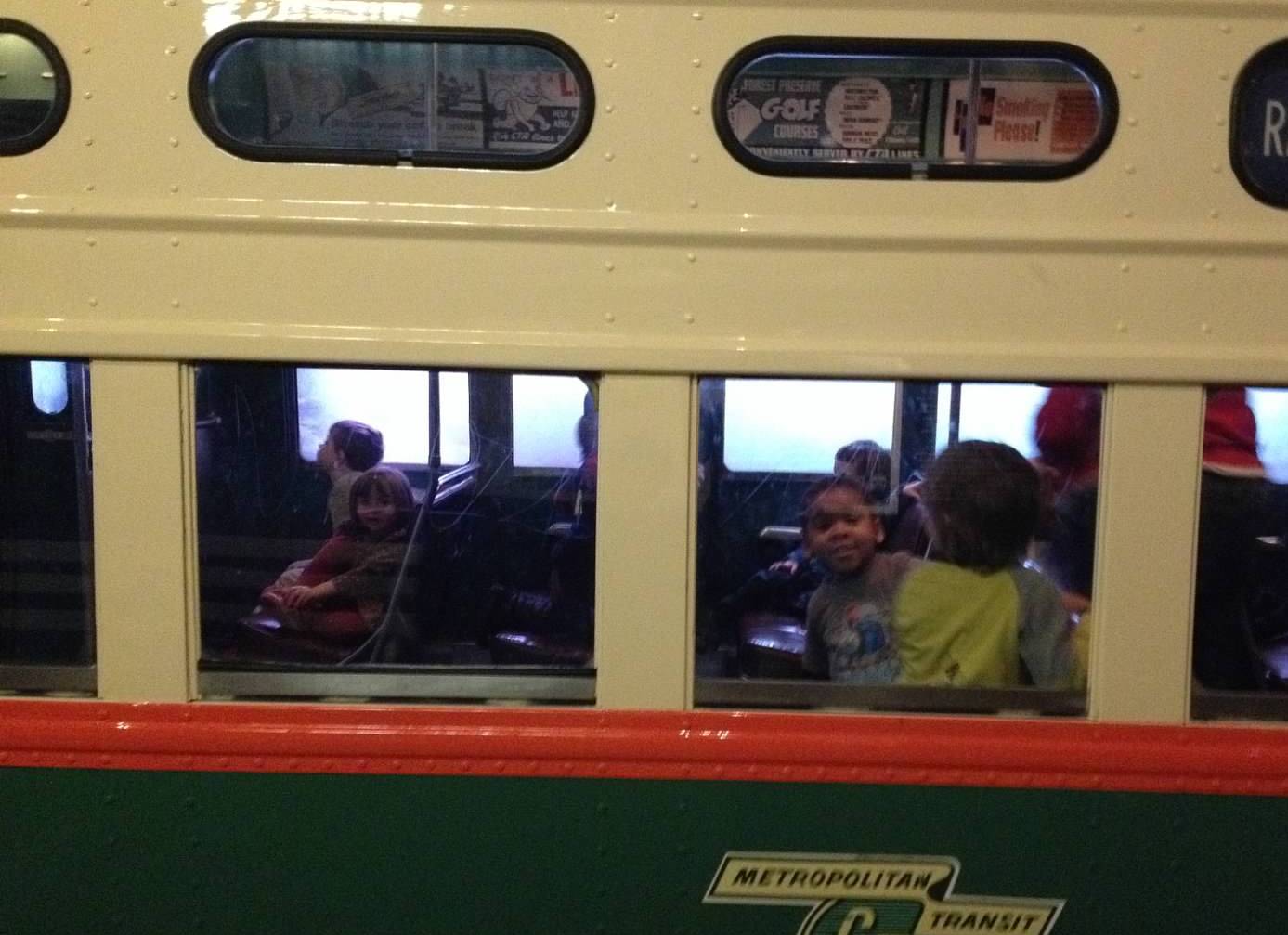
When museum folks think of “play,” the “go to” place that comes to mind is often one of the many amazing children’s museums found across the country. For many, when used together, the words “play” and “museum” conjure images of boisterous children engaged in hands-on learning experiences in an interactive museum play space or exhibit. On the other hand, early childhood educators are inclined to think about play in the context of their classroom. A carefully structured environment supports literacy development in the dramatic play area, pre-math concepts in block building and social emotional growth during “free choice” time. Whether working in a museum setting or classroom environment, educators that work with young children recognize the power of play in developing skills essential to one’s future success in school.Transportation line up

What does “play” look like for young children in a traditional object centered museum setting? Is it possible to help early learners embrace the “free choice learning” aspect of museums in a constructive and meaningful way? On RapidIn early May, SEEC will launch a new two day professional seminar called, “Play: Engaging Young Learners in Object Rich Environments.” Museum professionals and early childhood educators will collaboratively explore potential intersections between play and traditional object centered museums. The workshop will feature new approaches to museum learning used by SEEC educators as they determine how to best connect children’s emerging interests to museum exploration. This pilot program makes use of the Smithsonian Institution’s collection and enlists the perspective and expertise of participants as workshop content takes shape over the course of the two day Smithsonian based seminar. No doubt you have some questions, considerations, or examples of your own that come to mind as we post these thought provoking questions about play in museums. Please share!

Through SEEC’s flagship seminar, “Learning Through Objects,” we have had an opportunity to present ideas about using objects and museums to build critical thinking skills in young children to hundreds of museum and classroom educators. SEEC’s latest “Play” workshop takes this foundational information to the next level as we challenge ourselves to consider how to support positive learning experiences for young children through the use of play, objects and museums. Participants will consider the role that storytelling and question asking takes in play and museums as we encourage children to become curious explorers, creative thinkers, inquisitive learners and 21st century problem solvers.

Checking Out the Car

Pedagogies of Wonder

Image

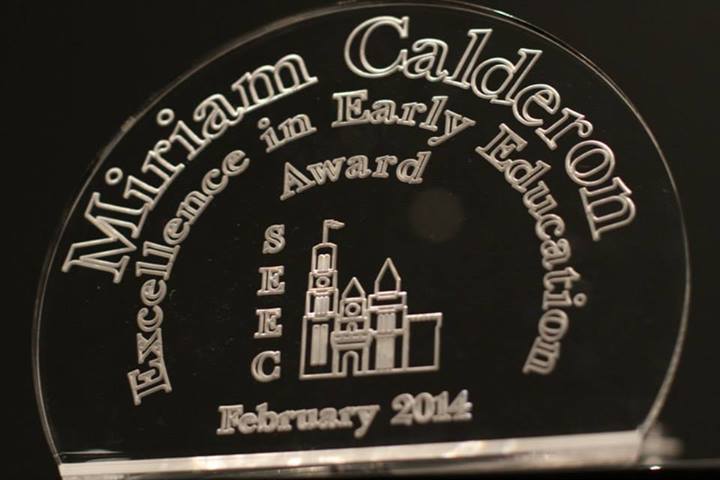
On February 22, 2014, Miriam Calderon was recognized by SEEC for her thoughtful work in the field of early childhood. She has held influential positions such as Senior Advisor on Early Learning to the Obama administration, Director of Early Childhood Education for DCPS and Associate Director of Education Policy at the National Council of La Raza. She currently supports the work of School Readiness Consulting.

We would like to share Miriam’s presentation comments from SEEC’s Excellence in Early Learning gala: Miriam Receiving Award

“Thank you Kim, and the leadership at SEEC for this recognition. It’s truly humbling to be at this wonderful event with all of you – Dr. Sullivan, the first woman in human history to walk in space, and to precede Josh Bernstein – who shows us the power of what can happen when we allow children to approach the world with wonder. Thanks to my husband, my friends and colleagues at School Readiness Consulting for being here this evening. I do want to use the honor of this award to share with you a few thoughts and conclude with a question for us all.

First, I cannot speak highly enough of SEEC! SEEC works so intelligently to light the fire of curiosity in young children – connecting children to a world of wonder using the Smithsonian’s rich collections – it is truly inspirational. To some it may look easy, but it’s not! Teaching in this manner is a craft. SEEC teachers apply developmental science daily to inform their teaching and interactions with children. As early learning gets more attention nationally, it’s absolutely critical that places like SEEC exist as a model and vehicle for others to see what it should look like.

This last point brings me to a second thought. Simply put, America needs more SEEC’s…SEEC serves over a hundred very lucky young children annually, but there are not enough SEECs for all the children that need a place like it. Millions of children in our nation endure poor quality early learning or go without it. D.C.’s children are fortunate enough to benefit from universal pre-school under Mayor Gray’s leadership but nationally the reality remains grim.

Only about half of three- and four-year olds nationwide attend preschool. That alone is a problem given the strong evidence linking the lack of quality early childhood experiences to delinquency, school drop-out, poverty and poor health in adulthood.

That National Institute for Early Education Research estimates that about nine out of ten children in the top 20% of America’s wealthiest households attend pre-k. Compare that to just under half of middle-income children, and less than half of poor children. Less than 5% of infants and toddlers in low-income households are in quality programs.

Unfortunately, despite the overwhelming and preponderance of evidence demonstrating that 90% of a child’s brain forms before the age of five, high quality early learning is only guaranteed to those families that can afford to pay for it. We also lack equity in the quality of children’s early learning experiences – how they are taught. Children from more affluent families are more likely to get richer experiences rooted in creative play with an eye to nurturing a skilled sense of wonder. This we might call a ‘pedagogy of wonder.’ In contrast, children from families who lack resources are more likely to be in environments where they are drilled on their letters and numbers, tied to tests, and punished for misbehavior, what Martin Haberman has called a ‘pedagogy of poverty.’

The science of child development and the craft of early childhood tell us that all of these children can learn in the same manner. All children come into the world with an innate curiosity and love of learning. Indeed, we need more SEECs to spread a pedagogy of wonder and ignite a curiosity in a child that will last them a lifetime. Nothing short of this will ensure that a child’s zip code doesn’t determine whether or not they realize their full potential.

So the question I want to leave you with is this:
How do we make this happen? How do we spread pedagogies of wonder?

All of our children – and their development – must be a shared public responsibility.

Thank you.”

New Directions and Reflection

There is some fun stuff going on at SEEC these days. Over the course of the past year and a half, we’ve seen some big changes. Our teachers shifted from using a theme based curriculum to a more emergent approach. They are encouraged to experiment with new ideas and ways of doing things. They are being challenged to be extra thoughtful about their classroom environment. Our museum educators are listening to what the students’ interests are and providing museum visit suggestions that support each group’s individual interests. SEEC educators are helping with our new Saturday workshops for families with children between 6 months and 6 years. As we give parents and children a chance to explore the museums, experience hands-on activities and share stories, we discover new and better ways of doing things from one week to the next.

Cardello in Classroom.In addition, we have educators thinking about the role museums could play in supporting a child’s sense of self identity. The result of this long term action research project will be an article featured in the Museums & Society journal later this year. Another fascinating project that one of our museum educators is working on with our three, four and five year olds is based on current work of the Smithsonian’s Office of Policy and Analysis. movementEach child is given a choice about which of four activities they would like to participate in during their museum visit that day. Once the students arrive at the museum, the class splits up into four small self selected groups and a different teacher leads each pre-planned gallery based experience. The theory that is being explored states that there are four major types of experiences to which people are drawn: Ideas (conceptual thinking), People (emotional connection), Objects (visual language), and Physical (physical sensation). What SEEC is wondering is whether these traits are easily identified and determined in very young children.

These activities reflect a new direction for SEEC. Watch for more information on the development of SEEC’s Center for Innovative Early Learning (CIEL) where this spirit of experimenting, taking risks and wondering together is embraced.
History Connections

Kindergartners and Exhibit Design, Part I

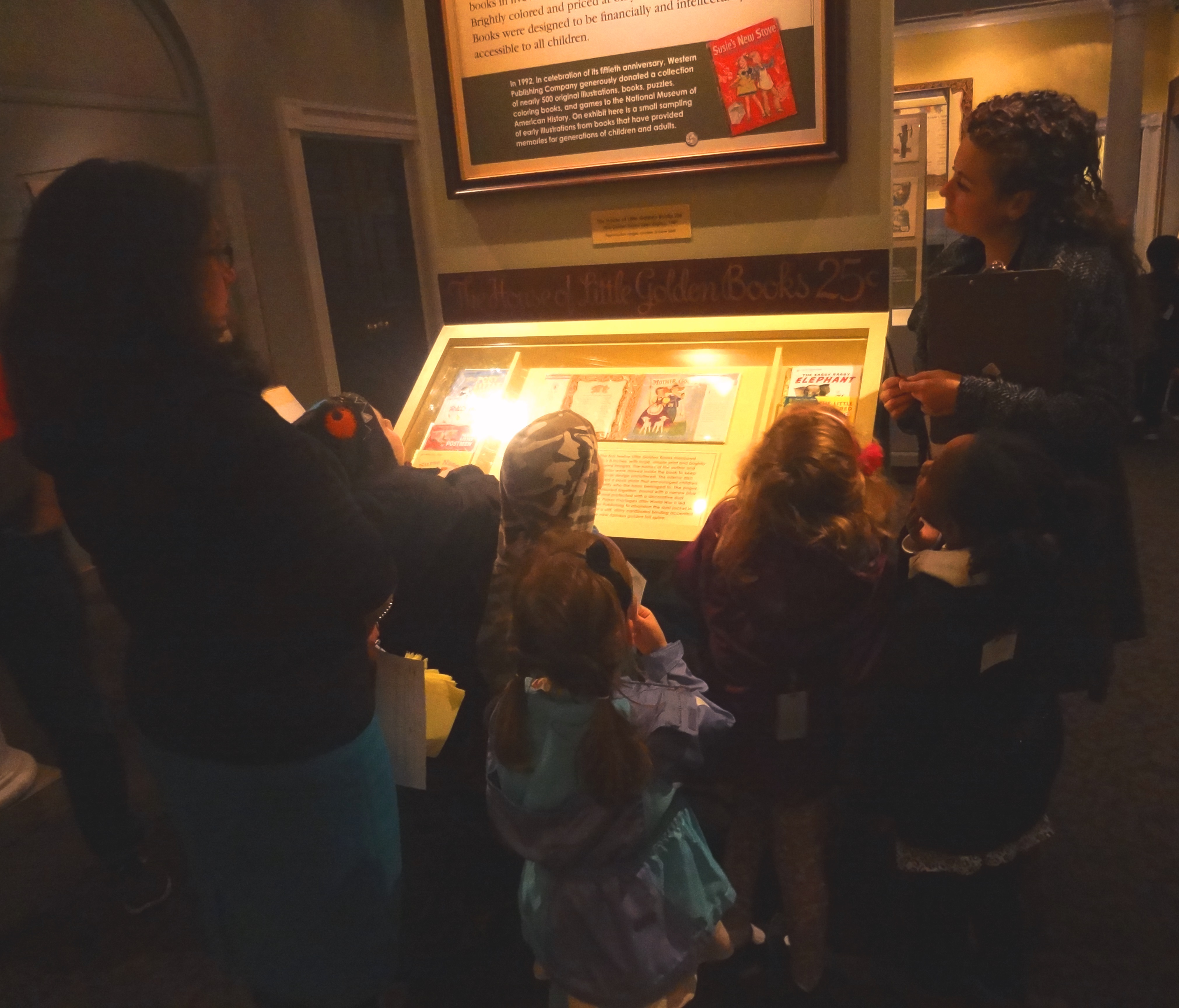
That there is a national emphasis on the value of early childhood education goes without saying.  So it makes good sense that museums are starting to think more about how they serve this audience.  At the Smithsonian Early Enrichment Center, our students generally visit museums 3-5 times a week; it’s a space in which they are comfortable and familiar.  So when  staff at the National Museum of American History wanted to understand more about how young children interact with exhibits, they thought of SEEC.  Through a series of discussions, the staff agreed upon using Little Golden Books, an exhibit with obvious kid-appeal, to examine how children felt about their exhibit design.  Similarly, SEEC wanted to see the exhibit through the eyes of their students in order to inform our own teaching practices and professional development.  Finally, we decided to experiment with SEEC’s Kindergarten class because, at the end of the year, they will be asked to create their very own exhibitions.  The experience seemed like a great way to support their endeavor.

ClassCircleWe planned two visits to the exhibit.  The first visit was simply to familiarize the students with the content and the layout of the space.  Prior to going to the museum, Sara Cardello, Museum Educator, planned an interactive, hands-on lesson in which the students identified parts of the exhibit; i.e. object, case, label etc. and introduced them to Golden Books.  Almost all of them immediately recognized the Golden Books and were anxious to share their personal stories with the class.

Museum1

We headed over to the exhibit and first, met with the exhibit designer.  We then took turns walking through the exhibit in small groups, each with either a classroom or museum educator.  During that time, the children got to look and ask questions.  Educators came prepared with specific questions to encourage them to think about the exhibit.  Below are some of the questions and some of their answers.

What do you see, notice, or what is the exhibit showing you?

  • Really old books
  • TV screen helps us read the booksExhibit2
  • Some of the books have interesting ideas
  • Each display case has a theme: doctor, transportation, mining, cooking
  • Measurements along the sides of the larger illustrations
  • Really old (again)
  • Some are dusty
  • Some are new
  • Golden strip


What do you hear?

  • Wanted to hear the stories
  • Kind of loud because we are all in here
  • No music
  • Too loud
  • Conversations about all of our observations

What are you learning, thinking about, what would you add?

  • Who is in the picture with Mickey and Donald?
  • Beautiful, looks painted
  • I see some letters, and I see the same letters, but different pictures (referring to Little Golden Books)
  • I would add a kids book, like Toy Story 3, even though these are kids books
  • I would add toys that you see in the books to play with

Who is the exhibit for, who would like this exhibit?

  • Me and my mom would like this, she read these books
  • My grandma likes to read
  • Grandma and grandpa would like them because they haven’t seen them in years
  • Bullies would not like it because they do not like books
  • Giants would be too big and they like to break stuff

In addition to these questions, we had some open-ended discussions based on their responses to the objects.  Here is an example of one such discussion. 

When looking at the case displaying the Here Comes the Parade the students quickly identified Donald Duck and Mickey, but were stumped when it came to Howdy Doody.  This was a great time for us to look at the label and see if we could get some more information.  Although the name didn’t ring a bell, it did give us a chance to talk about when the book was made and how our parents or grandparents might know about this character.  I asked this group if they could tell me where they thought the characters were and after some investigation, they concluded it was a parade.  This line of inquiry prompted me to share my own experiences watching the parade on Thanksgiving morning.  This encouraged others to share their own Thanksgiving traditions and/or recollections of parades.  It was a great conversation and before we knew it, we had been standing at that case for close to 10 minutes, which is considerable for a Kindergartner.

Following the visit to the exhibit, we had a chance to debrief as a whole group (there are 18 students in the class).  Below is a glimpse of that discussion. 

What did you notice?WrapUp2

  • A new book, Little Red Hen
  • An interesting book about cars
  • A girl cleaning up
  • Boy and girl playing doctor
  • I noticed #65 on one of the books

Who would like this exhibit?

  • Grandma and grandpa would like it because they haven’t seen them in years
  • Grandma and grandpa would like the books because they would remember them
  • Moms and dads like books, they would like to visit

How did you feel about the exhibit?

  • Really like it because they are lots of interesting books to see
  • Cool. Cool books, cool answers, moms and dads would like it too
  • I felt surprised when I saw the spine but then I realized that’s why it’s called Golden Books

What would you add or change?WrapUp1

  • More books!
  • Add books that you might know
  • You could bring your own Golden Books once you were done with them
  • Add a book or a chair to look at books
  • I love Golden Books
  • I would add airplanes, they are more interesting
  • I would add my own books

What questions do you have for the curator or designer?

  • Why did you choose Golden Books?
  • Why do they make Golden Books?
  • Dinosaurs are big and you have to think about cases and storage, you have to think about the size of objects for exhibits

How much did it cost to build this exhibit?

  • $100 because books can break easily
  • $60 because book are expensive
  • $15 because it is a really big exhibit