Object of the Month: Spoons at NMAI

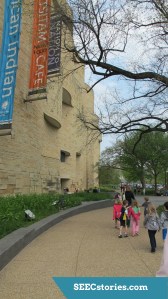
With our recent post regarding Thanksgiving and breaking stereotypes in the seecstories-comclassroom, I found myself getting reacquainted with the National Museum of the American Indian. On one of my visits, I discovered a display case, near the Maryland/Independence Avenue entrance, full of utensils and thought this was the perfect group of objects to highlight during a month when we seem to find ourselves doing a lot of eating. The text adjacent to the case speaks specifically to the importance of spoons and ladles as they were traditionally used to serve oneself from a communal dish or pot.

I thought the collection was especially relevant to our early learners who are beginning to discover new foods and master how to use utensils. Finally, it is a collection that has the ability to remind young
children of how the human race is so often alike and yet, different at the same time.

Infants and Toddlers4

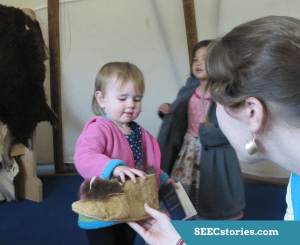
Eating is especially important to this age group as they are trying new foods and learning how to handle utensils. What better way to encourage a young child’s development than by taking them to see this collection and narrating the physical features of some of the objects – differentiating between spoon and fork and noticing differences in size.  As you visually explore these objects, introduce key vocabulary like; handle, mouth, scoop, or pierce. Before you head into the Museum, take five minutes outside to demonstrate how forks and spoons work with different types of foods. Give them time to touch and explore real foods and utensils.

Twos and Preschoolers5

By the time children are two, they are becoming more familiar with utensils and are more adept at using them. It makes sense to connect this growth and explore more details about utensils in general, i.e. steak knives versus regular knives or, teaspoons versus tablespoons.  Since the objects are conveniently displayed together, look at the utensils as a group and lead children in a sorting activity based on shape, material, use, or decoration. In addition to sorting, students would benefit from having materials to touch that reflect those seen in the case. At home or in the classroom, children can curate their own collections of utensils and continue to explore those from cultures around the world.

A visit to the case can provide a small glimpse into the types of utensils used by a range of Native peoples.  Two things are important to keep in mind. Firstly, these utensils are reflect specific cultures, which can be referenced in the labels. Parents and educators might consider using the spoons to demonstrate the wide variety of places and environments in which Indigenous Americans live.  Secondly, teachers want to be careful not to support stereotypes, namely that American Indian cultures exist only in the past.  The objects on display in this case represent a wide time frame and while, young children have difficulty with abstract concepts of time, they can benefit from being introduced to things that happen long ago and things that have occurred in recent history. Sometimes this can be done by giving context to an object for example, explaining that it was made long ago before your parents and grandparents were born. Or you could elaborate by creating a visual timeline that shows in what order a group of objects were made.   An introduction to a collection such as this one can help children begin to understand that Native peoples have a long history in the Americas that extends to the present day.

Below is a sampling of some of the utensils represented:

Serving Utensil from King Island Village; Bering Straits Native Corporation; Alaska; USA 

Gitxsan Spoon

Pueblo Dipper/Ladel

Lakota (probably) Spoon (Teton Sioux)

Tlinglit Fork and Spoon

Spoon/Ladel with bear effigy handle


Beyond Stereotypes: Thanksgiving and the American Indian

31At a very young age, a child begins to form their sense of self, even infants can recognize subtle differences between themselves and others. Early childhood educators can play a key role in helping a child form a positive self-image. Similarly, educators can also instill in their young students a respect and appreciation for diversity. It seems like a tall order, but by thoughtfully choosing content and activities and, by creating an inclusive environment, educators can begin to help shape a child who values both themselves, and others.

SEEC has partnered with the National Museum of the American Indian (NMAI) to publish a series of blogs that we hope will begin to help teachers and parents reconsider some of the traditional lessons and activities that are often circulated, especially on social media channels, during the Thanksgiving season.  While they may appear fun and cute, many of the suggestions actually perpetuate stereotypes and historical inaccuracies. There has been a long history of misinformation about Indigenous Americans in our school systems and we want to work together to alter some of those misconceptions.

To tell us more, Adrienne Smith of the National Museum of the American Indian, shares her own story:seecstories-com-3

During my early childhood years, I was fortunate enough to attend a preschool that was directed by my tribal nation. When I would walk into the classroom, there were items from my culture and words familiar to me in my tribal language, posted on the bulletin boards and, in our play areas.  It made me feel comfortable to be here and see things with which I was familiar. That changed when I entered the public-school system for elementary school. I can recall making paper headdresses and paper roll totem poles. I went along with it because, “Hey, I knew it wasn’t my culture.” It wasn’t until my adulthood that I looked back and wondered “Why didn’t my elementary or high school teachers use the resources that were readily available?” We had a tribal museum with educators from my tribe who could have come out and spoken to them. Maybe the teachers just didn’t know or were uncomfortable changing the way they taught. Either way, I missed out on being able to connect to my culture while at school.

Working at the National Museum of the American Indian has given me the opportunity to observe what our visitors know about American Indians and sadly, much of it is stereotypical. Below is a list of ways that you, as a teacher, can break through some of those stereotypes and begin to paint a more realistic picture of American Indians.


Teacher Tips

Never assume that there are no Native or indigenous
seecstories-com-9students in your class.

I have had visitors tell me that I am not Native or that I am only a little bit Native because of my green eyes and fair skin. Not all Native people look like what you see in the movies or in books.

Allow students to explore their own cultures and other cultures by including culturally diverse objects, contemporary photos, and toys in your classroom.

Be mindful not to choose stereotypical or culturally insensitive materials.  For example, Native people prefer that their clothing not be used as dress up because traditional clothing or regalia is sacred and there are many cultural meanings behind the items that we wear.

Discuss similarities and differences of American Indian tribes, even those that live in the same area.

There was not one Native language or culture. Though Native people adapted to other languages and cultures, each Nation still has their own identity.

Should you teach about regions, for example, “plains” tribes, be mindful to note their differences, as well.

Consider using maps, talking about the environment, and comparing housing to illustrate these differences. They are great examples of the unique attributes of different tribes.

 Teach that Native people are still here today.

Share with your students that American Indian nations are vibrant communities that exist today living in the modern world and still honoring their traditions.

Utilize the internet and explore Native American owned businesses. They can provide access to goods for your classroom. I recommend Native Northwest Select or museum gift shops. Do be thoughtful when choosing which site from which to purchase. 

There’s More

In a future blog, we will feature actual classroom lessons that will be centered initially on homes, a concept with which most children easily identify. We will then branch out to explore a typical home of the Wampanoag Nation, a wetu. Our goal is to illustrate how preschools can easily incorporate engaging, playful, and interactive lessons that can breakdown stereotypes and build appreciation for the diverse and rich cultures of the American Indian.

Continue reading

Object of the Month: Calder Gallery at the National Gallery of Art

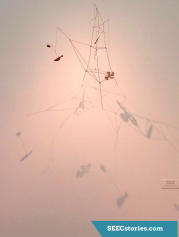
As was the case in September, this month’s Object of the Month is actually an entire gallery. This gallery is dedicated to the artist, Alexander Calder, and is located in the newly re-opened East Wing of the National Gallery of Art. The latest iteration of this gallery is bright, airy, colorful, and full of shadows. It is in many ways the perfect art space for a young child can while away their time looking and getting lost in their imaginations.
The objects within the gallery can be used in conjunction to several age-appropriate themes.

  • Shadows – The sundial just outside the Smithsonian Castle in the Haupt Garden  + Moonbear’s Shadow by Frank Asch would round out the experience.
  • Color – Calder’s bold color palette is a great way to introduce your child to colors.
  • Shape – Circles, triangles, even a quadrilateral (the elephant’s ears)!
  • Ocean – Finny Fish offers an imaginative take on our ocean friends- combine it with a trip to the Natural History’s Sant Ocean Hall.
  • Balance – His mobiles are a great way to introduce children to the concept of balance.
  • Movement/Wind – Take notice, Calder’s mobiles move and come alive!
  • Space – Many of his pieces reminiscent of the solar system, especially Vertical Constellation with Bomb.


Infants, Toddlers, and Twos

1

Visit the NGA’s website to learn more about each of these objects.

The animals in the center of the gallery are a perfect height for your infant and toddler, especially those who are in the stroller and struggling to see what is around them. I like the idea of pairing these objects with Sandra Boyton’s Are You a Cow or Doreen Cronin’s Click Clack Moo. I am also very fond of the Crinkly Worm and pairing it with one of my all-time favs- Inch by Inch by Leo Lionni. Whichever literary direction you go, you can also choose to bring photos, stuffed animals, or even watch a short video featuring one of the animals. Head out to the nearby terrace and see if you can imagine moving like a bull or a worm.  If worms, cows, and bulls aren’t your thing, then focus on the elephant. This sculpture is a playful interpretation of the animal and is certain to capture your child’s attention. Enjoy an elephant hunt though the 3Smithsonian and stop by the Sackler Gallery to see the Seated Ganesha, the rotunda of the Natural History Museum to see Henry the Elephant and of course, the Zoo. Take a photo of each visit and display it somewhere at home where your child can see it (you could make a mobile if you want to stay true to the Calder theme). By documenting their experience, it will help them connect events and see their own learning.
Threes and Four

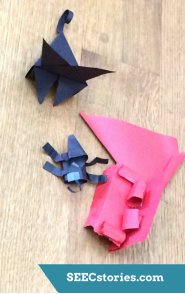
I was recently in this gallery with a group of adults as part of a workshop and I was asked to work with a partner to create something Calder–inspired with paper and some scotch tape. We don’t often think about it, but museums, with the right materials, can also be art studios.  I love these types of activities not just because they support creativity, but because they encourage young children to look carefully. Here are a few gallery-safe ideas:

  • Sketch the shadows on the walls2
  • Use pipe cleaners to make shapes and forms.
  • Add pieces to a mobile that you have started
  • Have them tear a piece of paper into one of the shapes they see  (just remember a trash bag).

Enjoy, have fun, and don’t forget to share your ideas with us too!

Object of the Month: Rocks Gallery at the National Museum of Natural History

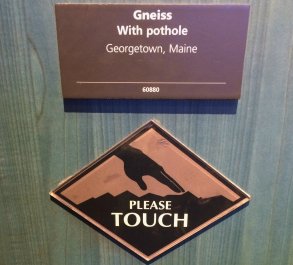
img_2453Our inaugural Object of the Month is actually not so much an object, but a gallery. The Rocks Gallery in the National Museum of Natural History is tucked at the back of the Janet Annenber Hooker Hall of Geology, Gems, and Minerals. Recently renovated, this gallery is great because it is often a little quieter than the adjacent galleries, objects are at varying heights, there is space to move, and most importantly, you can touch the objects.
Twos and Under

6a71b096-fffc-432e-85be-f1af5f353a50

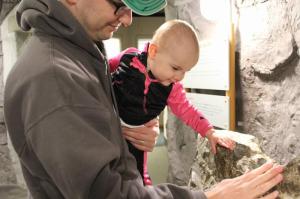
This gallery is an ideal space for infants and toddlers – it provides them with the chance to explore different textures and build vocabulary. With all of the touchable rocks, you can walk around the gallery feeling things that are hard, bumpy, and smooth. Don’t limit yourself to what is in the gallery though, consider bringing a stuffed animal or a favorite blanket to juxtapose them with the hard rocks. Each time you touch a rock, consider singing a song or rhyme that uses the vocabulary to describe it. While in the gallery, stop and read a touch-and-feel book. Extend the visit outdoors by collecting rocks and saving them in a clear container so their collection is a visible reminder of their experience. Return to the gallery again and again noticing different physical characteristics of the rocks like color and size.

img_2451

Preschoolers

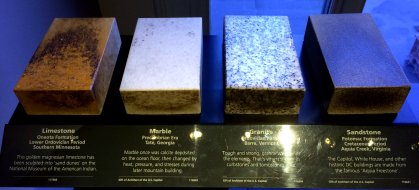
At the back of the gallery is a window that looks out towards the Capitol.  On the ledge of the window stands a selection of rocks that were used in making important buildings around Washington, D.C. You can touch all of these materials, so a great place to begin is by inviting preschoolers to observe by looking closely and touching. Ask them questions about what they notice or how the rocks are the same or different. You might even want to write their answers down and make a chart of their observations. If it is just you and your child – do the same by adding your own observations or that of a sibling.

After exploring the materials, you could reading The Three Little Pigs and think about how different materials make for stronger buildings. Bring in some straw, wood, and bricks and compare it to the rock in the galleries. Another approach would be to match the materials with the DC buildings by sharing photos or discuss explore how rocks are taken from the ground in places called quarries.  After leaving museums you could look for rocks embedded in the ground, pick up a collection of rocks to create your own home, or visit some of the buildings referenced in the exhibit.

This is just a small taste of what a parent or educator can do with this gallery. Have other ideas, please share them with us and the rest of our community.

Smithsonian Early Explorers: A Part-time Caregiver and Child Program

20160113_100700Our Smithsonian Early Explorer program, or SEE as we call it, is about to embark on its third year! We are so excited to see how this program has changed and grown over the years. All along we have hoped to make this program into a community of learners and I think we are well on our way.


What is SEE?

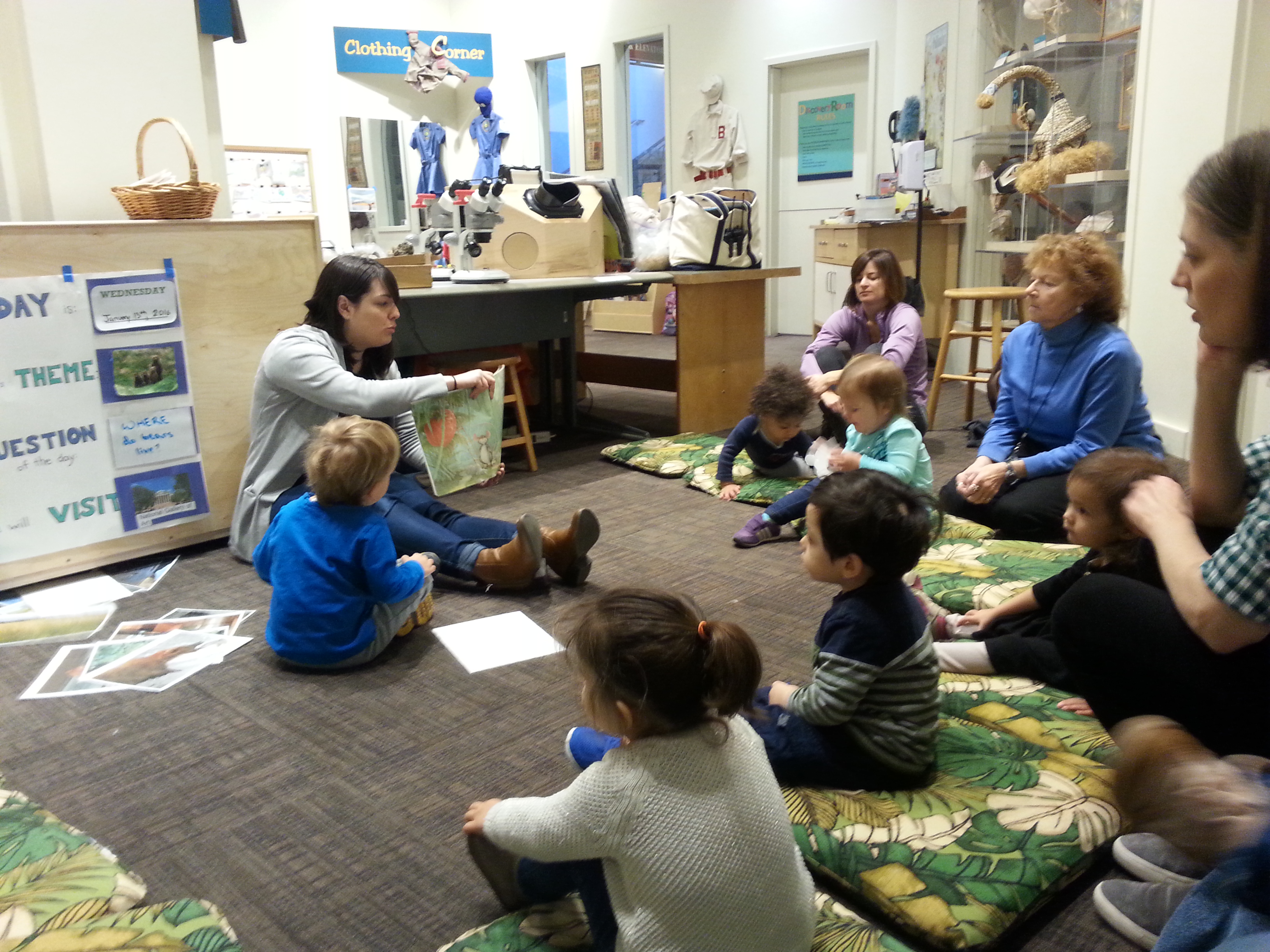
SEE meets Monday and Wednesday mornings for two-hours in the National Museum of Natural History’s Q?rius Jr. room. Most of our children begin the program around 18 months of age and remain with us until they are about three. We begin the day with learning centers that have three objectives: to engage families in playful activities, to provide hands-on learning experiences that connect to a theme, and to allow the child to naturally practice developmental skills. We all convene as a group following the learning centers to say hello to each other and introduce the class’ theme. We include repetitive components into the morning meeting, such as a hello song, that create a routine that helps children transition and feel comfortable in the classroom. Our morning meeting is a time for learning – you will often observe teachers introducing objects for the children to explore, presenting experiments, or leading group activities.


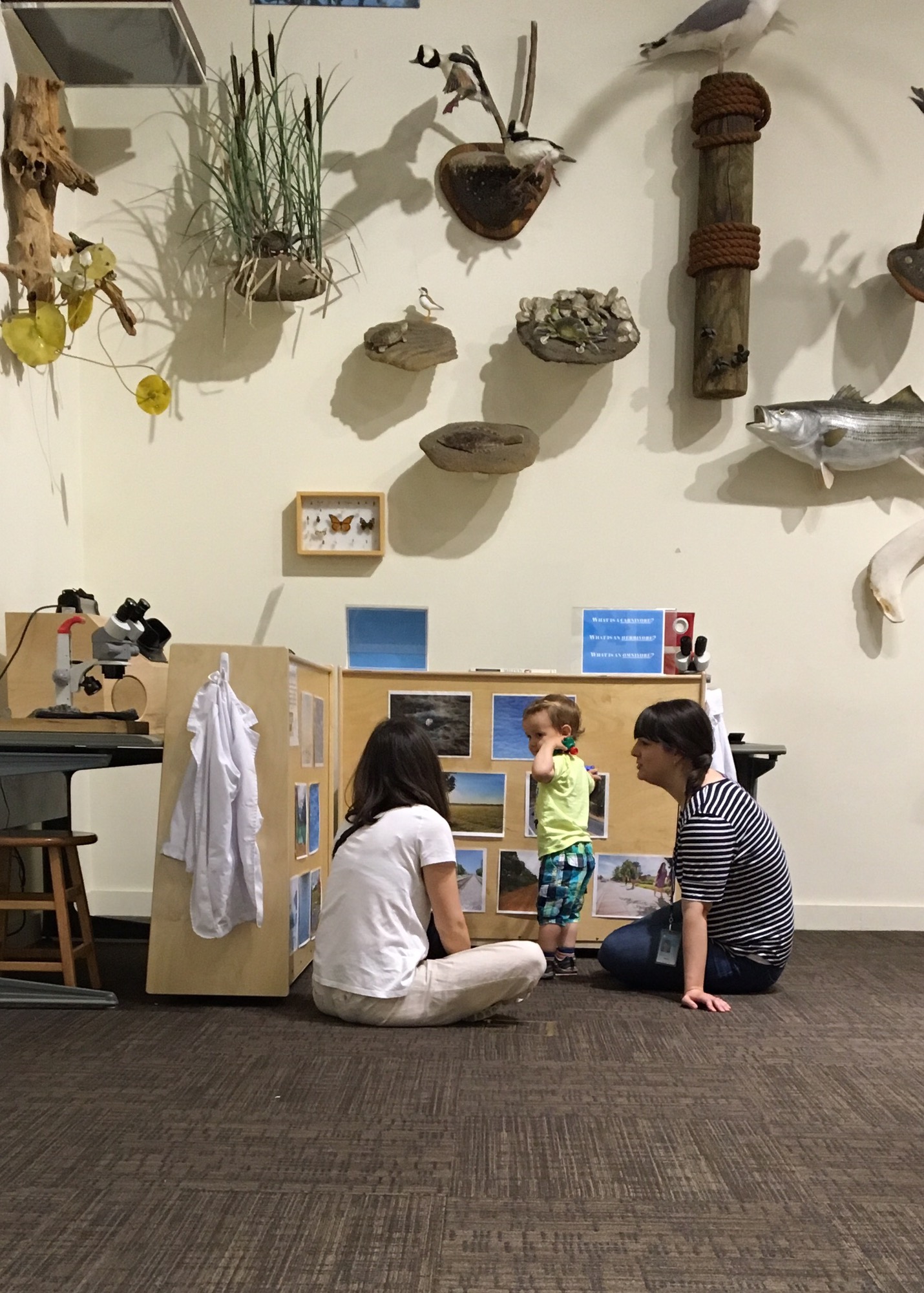
After our meeting we break for the bathroom and a quick snack, and then head out into the community. Most often, this means a visit to a museum on the Mall, but it can take many different shapes. The museum visit is similar to our morning meeting – it often includes objects, experiments, and activities. It is also a time when we encourage families to use their observation skills and really explore an object. We also use the visit as a time to facilitate one-on-one learning with the caretaker. This facilitation helps this audience engage better with the object and is a chance for caretakers to practice different approaches to learning with the child.FullSizeRender

SEE as a Community of Learners


We hope that the classes will inspire our caretakers to model methods they observe in the classroom on their own. It can be something as simple as recreating one of our learning centers at home or noticing that their child is interested in a subject and providing them with more opportunities to learn about it. Of course, we also hope that they will begin to see museums as learning environments for young children and employ some of our techniques on their own, i.e. bringing objects, books, or simply engaging a child in conversations about what they see. Our educators strive to interact with each family and model ways in which parents can navigate tricky behavioral situations or ways that support their child’s development and growth. For example, we may notice that a child is at a block building center and start a conversation in which we discuss what the child is building. In this way, we hope caretakers see the thought that children put into their play, demonstrate the child’s thought process and propose new challenges. These are just a few examples of how we hope that families will take the seeds we plant on these mornings and grow them over the coming months and years – hoping that this experience will provide a foundation for how they approach learning as a family.


What do we want to do better?

We are always learning and growing and this year, we will be focusing on crafting a two-year curriculum, and how best to set our parents up for success. Last year, we did a trimester surrounded by the idea of going on a bear trek. This 12-week study explored the physical features of bears, their habitat and habits, as well as bear-inspired songs, stories, and art. We like to say we are moving full STEAM (science, technology, engineering, art, and math) ahead! As for our parents, we are rethinking our orientation strategy and doing a Google Hangout to allow parents and caregivers to attend together and on their schedule. We are also planning social events.IMG_3708

We are always working on nurturing relationships between the educators and the families, and between the families themselves – I think this is an ongoing process and one to which we could devote a separate blog to. Suffice it to say that, like with any group, it can be difficult to meet the needs of each family and child, especially as we often have a range of ages in the classroom. Finally, we are always thinking about transitions and transportation. We have families who are diapering and potty training and trying to get everyone to break at the same time and meet up for our museum visit is not always easy. Then there is the walk to the museum where we often struggle to keep our group going at the same pace. It can be tricky – you don’t want to rush a toddler, but if they are too far behind, the rest of the group gets restless. Over the next year, we hope to smooth out these transitions.

We look forward to beginning our fall trimester in mid-September, we have seven returning families and three new ones. We are also very excited to announce the addition of SEE 2.0 —  SEE in the Community. This pilot program, is a bilingual version that is free to qualifying families. We had our first iteration over the spring at the National Zoo and our second one will begin in the fall. Funds for this program have been generously provided by Battelle. Look for more about this program in an upcoming blog.

Parent’s Perspective

A final thought to share from a family that became part of our community when they first began attending our infant programs and later, joined SEE and has been active since last fall.

We are comfortable going to any museum together. When we enter, my son often says, “We look at the artwork with our eyes Mommy, don’t touch with our hands!”  He understands we are in a museum and he wants to explore the space. He looks around and inquires about what he sees. Noticeably, he’s not bored. I’ve learned from class to bring things he can hold to enrich his experience and help with those busy fingers!

IMG_7757

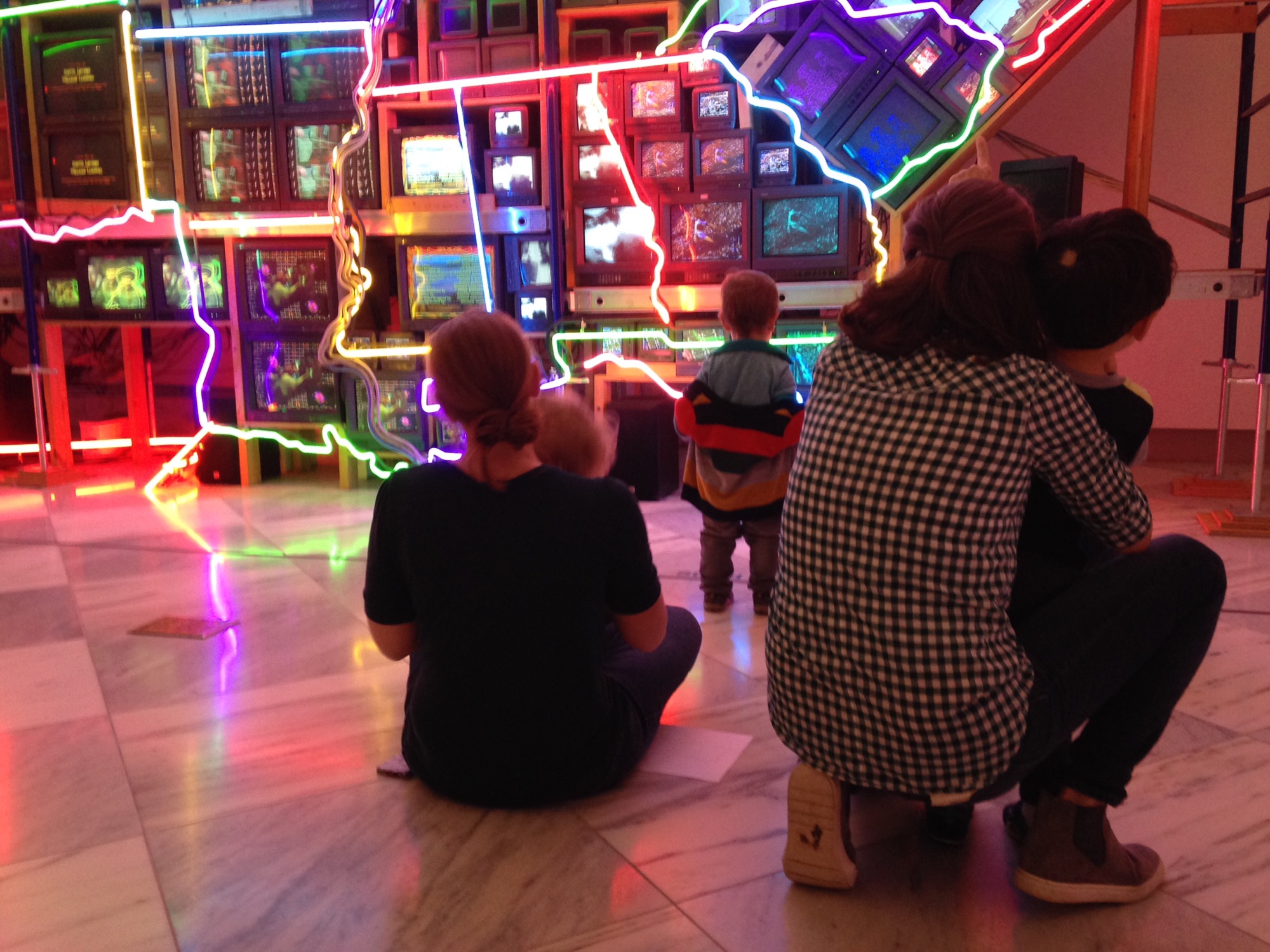
Electronic Superhighway: Continental U.S., Alaska, Hawaii; 1995 Nam June Paik Born: Seoul, Korea 1932; Died: Miami Beach, Florida 2006 fifty-one channel video installation (including one closed-circuit television feed), custom electronics, neon lighting, steel and wood; color, sound approx. 15 x 40 x 4 ft. Smithsonian American Art Museum; Gift of the artist; © Nam June Paik Estate 2002.23 Smithsonian American Art Museum

My son is learning about self-control and socialization, both of which started in the Smithsonian program with sharing, taking turns, sitting down during circle and cleaning up/putting things away. Often these things are done singing a short transition song. They’re comforting, we do them daily and we continue to make up new ones about bath time, cleaning up spills, helping me cook, etc. Thank you Smithsonian!


If you are interested in SEE, we still have a few spots available. Contact Cynthia Raso at rasoc@si.edu

Word Expeditions

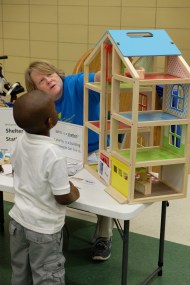
PrintIn the fall of 2015, the Friends of the National Zoo, National Museum of African American History and Culture, National Air and Space Museum, National Museum of American History, National Museum of Natural History, Smithsonian Associates’ Discovery Theater, and the Smithsonian Early Enrichment Center, together with the DC Promise Neighborhood Initiative (DCPNI) were awarded a two-year grant through Grow Up Great, PNC’s initiative focused on early childhood education, to launch Word Expeditions. The grant’s objective is to build vocabulary in preschool students from the Kenilworth-Parkside neighborhood in Northeast DC. DCPNI works exclusively with this neighborhood supporting all members of the Kenilworth-Parkside and describes its mission as “improving the quality of their own lives and inspiring positive change in their neighborhood.”  The group has a strong foothold with families of young children and so it seemed natural to integrate Word Expeditions into their already existing Take and Play structure. Once a month, Smithsonian representatives visit Neval Thomas Elementary School during which time, families participate in activities that teach about the Institution’s collections, build vocabulary, and support a child’s development. The evening concludes with a meal and families take home a kit from DCPNI outlining fun and simple ways to incorporate learning and vocabulary skills at home.
DSCF1330A few weeks later, families are invited to come to the museum that co-hosted the
Take and Play. During their visit, families engage in similarly fun activities that reiterate the vocabulary and theme from the Take and Play. In addition to the literacy component, the Smithsonian wants to create a welcoming experience that will make families feel at-home and inspire them to visit again. We also hope that through these programs, they will begin to see how museums can be used as a place to learn and explore together as a family.

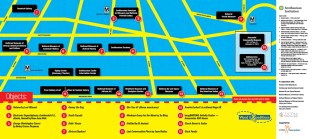
As part of the grant, SEEC was tasked with creating a unique map featuring the Smithsonian in Washington, DC. The map displays the museums on and off the Mall and includes the Smithsonian Gardens and Discovery Theater. Each one is represented by an object, which isWord_Expeditions_Map Word_Expeditions_Map2accompanied by what I like to call, conversation starters. These conversation starters include key vocabulary terms that help families define some big ideas they can use to discuss the object. They also pose open-ended questions and suggest easy ways to engage with the object and use the vocabulary in ways that will help children understand and recall the word’s meaning.  For example, The Smithsonian Gardens description asks families to look closely at an elm tree and find its parts. The children will walk away with a concrete understanding of terms like roots, trunk and bark.  The National Portrait Gallery’s entry asks families to imagine what they would see, hear and taste if they jumped into the portrait of George Washington Carver and suggest that parents use the term five senses and, of course, portrait.
These conversation starters also motivate families to stop and take a look – conveying the importance of observation and careful looking. The Hirshhorn Museum and Sculpture Garden encourages families to walk around Juan Muñoz’ Last Conversation Piece and try to pose like the figures. The description features the words pose and conversation and also asks families to imagine what their conversation is about. Using a concrete analogy to the vocabulary is so important for young learners.

To keep families returning, we offer them four free tickets to Discovery Theater after visiting five museums, and a free book after visiting ten. Perhaps more important to the map’s success is the presence of Ariel Gory, Education Specialist for Early Learning, from the National Museum of American History. She speaks directly to families about the map. Her presence has been important in communicating the purpose of the map, encouraging families to use it, and creating a sense of community. She shares her experiences:

DCPNI NASM Photo1 (002)I find that dinner time at the Take and Play program provides the perfect opportunity for me to get to know families on a deeper level as I talk with them about the maps and their museum visits. Recently, I engaged in a conversation with two families who have become “regulars” at the workshops and museum visits.  When I asked what museums the families had visited lately, the mothers immediately began to list all of the museum trips they had been on since the program’s inception in the fall and what’s more, they described their visits in detail – recalling the vocabulary that was introduced and the activities in which they participated. It was exciting to see their enthusiasm for the program and it was clear that the map had helped foster and grow their interest in museums.

 Getting to see the map in action is one of the most uplifting aspects of this program. During a spring visit to the National Museum of American History, I noticed one mother rustling through her backpack before pulling out a well-worn map. “I can’t forget to get this signed!” she said. As I took a closer look at the map, I noticed that she had a signature for the National Air and Space Museum. I asked her when she had visited and she responded that they had gone the day before because her children had the day off from school. She noted that even though they weren’t in school that day, she still wanted them to “learn something.” Seeing that this mom had used the map to independently seek out a museum to expand her children’s learning shows the importance of programs like this.

So often we realize that local families are unfamiliar with the Smithsonian or feel that it is a place that they don’t belong. We hope that the map and the Word Expeditions program not only help to build young children’s vocabulary, but also encourage families to explore the opportunities for wonder and learning located in their backyards.

Supported by:
GUG_RGB


In cooperation with:

Friends of the National Zoo
Smithsonian Early Enrichment Center
National Air and Space Museum
National Museum of American History
National Museum of Natural History
National Museum of African American History and Culture
Smithsonian Associates/Discovery Theater
DC Promise Neighborhood Initiative

A Playful Experiment

Originally posted May 2014:

This past week I had the chance to attend one of SEEC’s seminars: Play: Engaging Learners in Object Rich Environments. During the two-day workshop, we explored the meaning of play and how to use it when teaching with objects. We began the seminar by defining play as a group. Some of the key words were: fun, tools, free thought, child directed, social, emotional, intellectual. To help us articulate the discussion, we also read Museum Superheroes: The Role of Play in Yong Children’s Lives by Pamela Krakowski, which distinguishes play as:

active engagement, intrinsic motivation, attention to process rather than the ends, nonliteral (symbolic behavior) and freedom from external rules.1

I reflected on these concepts and how they related to my own teaching. I wondered how I could incorporate more play into my practice, especially when I was in the museums. I decided to try out some new play strategies on a recent visit to the National Gallery of Art with a group of preschoolers.

E11183

Asher Brown Durand The Stranded Ship 1844 oil on canvas National Gallery of Art Gift of Ann and Mark Kington/The Kington Foundation through Millennium Funds 2003.71.1

My first playful endeavor was completely spontaneous. I began the discussion by asking the children to describe this painting by Asher Brown Durand. One  girl pointed toward the artwork and said:

The sun is always moving through the sky.

I took this opportunity to ask the rest of the class whether they had ever noticed the sun moving through the sky too. They immediately offered their own examples. At that moment, I decided we should play the Earth. I asked everyone to stand up and slowly turn their bodies. I grabbed a parent and had her stand in the center pretending to be the sun.  As we moved, I explained how it was actually the Earth’s rotation that made it look the sun was moving in the sky. This was a completely unexpected and child-initiated moment, which was great. I think it was the playful element though that really made the experience memorable. If I hadn’t asked the children to get up and pretend to be the Earth, they would have been less likely to understand and remember the concept of rotation. By having them participate in the experience the concept was made real, tangible.

Part of the seminar was inspired by our colleagues at Discovery Theater. This session was, as one would expect, more theater driven and honestly, really challenged me. As the class continued to describe the Durand painting, I added secondary questions to enliven the discussion. For example, when the ocean was observed, I asked them to show me with their bodies how the ocean was moving and then I asked them to make the sound of the waves.  The kids were happy to illustrate both for me so when it came time to talk about the clouds and wind, we added sound effects and movements again. These exercises captured the essence of the painting, encouraged different learning styles and made everything more fun.

photo 2 (3)As the last part of the object lesson, I laid out several objects and asked them to work together to recreate the painting. They needed no instruction, but went right to work, collaborating until the composition was complete. Was it exactly like the painting, no, but they had used these tools to create their OWN composition. They were quite proud and were completely engaged in the activity. I saw them looking back at the painting, rearranging objects and making their own decisions.
All in all, the visit felt playful and meaningful. I am continuing to think about how to make my lessons more playful and how play can be a tool for learning within the museum environment.  If you have any ideas, please share!!!!

1. Journal of Museum Education, Volume 37, number 1, Spring 2012, pp. 49-58.

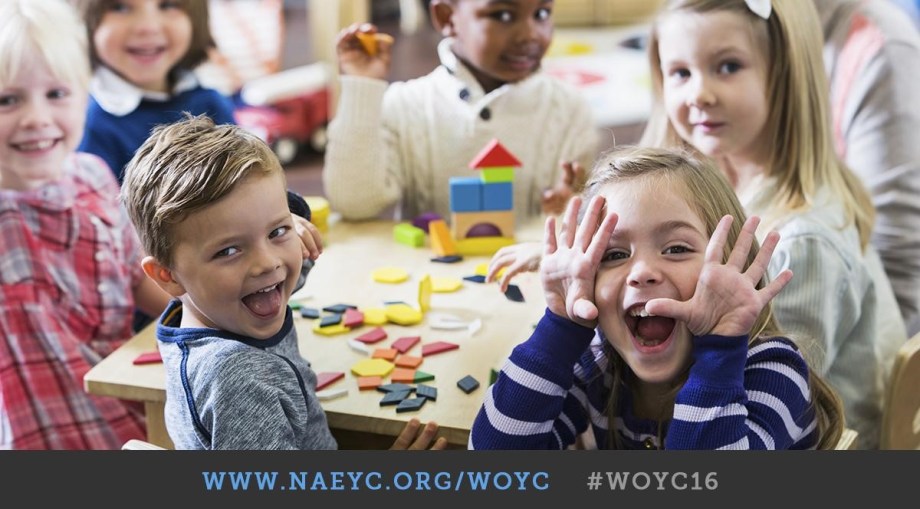
Celebrate NAEYC’s 2016 Week of the Young Child™! Guest Post by Rhian Evans Allvin

NAECY1

A special guest post by Rhian Evans Allvin, Executive Director of the National Education for the Education of Young Children

Every year, NAEYC’s Week of the Young Child™ brings together thousands of young children, educators, and families from around the globe in celebration of our youngest learners. WOYC™ is a wonderful opportunity to celebrate the joy and play that are at the heart of early learning.

During this year’s Week of the Young Child™, April 10—16,  parents and teachers are encouraged to explore developmentally-appropriate activities based around five fun daily themes: Music Monday, Taco Tuesday, Work Together Wednesday, Artsy Thursday, and Family Friday. These suggested themes offer activity ideas supporting early math, language, literacy, and more, while promoting social-emotional development with diverse hands-on learning opportunities.

For this year’s WOYC™, NAEYC invites everyone to get involved in the celebration!  Make up a fun dance routine to our 2016 featured song, “One Love” as performed by Aaron Nigel Smith and the One World Chorus on Music Monday, or invite children to help measure ingredients on Taco Tuesday. Work Together to explore the world around you on Wednesday, create imaginative works of art on Artsy Thursday, and celebrate your unique family on Family Friday!

The Week of the Young Child™ is also a great opportunity to thank early educators for their hard work and dedication to the early learning profession. Research tells us that US voters overwhelmingly believe that early educators play an essential role within our communities—nearly on par with firefighters and nurses. These same voters recognize that early childhood educators have complex and demanding jobs and responsibilities, and that our national policies do not reflect the vast amount of developmental science supporting the importance of high-quality early learning experiences during a child’s most formative years. No matter how you celebrate WOYC™ this year, be sure to thank the early educators in your life, and the family members who help encourage learning at home.

As an NAEYC-accredited program, the Smithsonian Early Enrichment Center has proven to maintain high-quality early learning standards and offers quality learning experiences to its students and community. NAEYC is excited to see the fun activities and learning experiences that will be taking place this year! Teachers and families are encouraged to share their WOYC™-inspired activities by sharing photos, activity ideas, videos and more to NAEYC’s Facebook or Twitter using #woyc16, or sending directly to woyc@naeyc.org. We can’t wait to see how you celebrate the early learners in your life!

NAECY2To learn more about NAEYC’s Week of the Young Child™ visit naeyc.org/woyc. To get involved in the conversation about supporting and elevating the early education profession through our nation’s public policy, join NAEYC’s Early Ed for President movement at earlyedforpresident.org.

The Art Room

We recently featured our art educator, Carolyn Eby, in our bi-weekly Teacher Feature.  We thought it would be great to take another look at the work she is doing with all of our age groups. Check out some of her great ideas!

Infants Explore the Arctic

Carolyn used frozen paints and invited each child to mix them with other colors on their tables. After which, she took a mono print of their work. Children later ripped the mono print to create a collage – a fun activity that also helped them build important fine motor skills!

Toddlers Sand Paint

This sand paint, made with puffy paint and baking soda,  was delivered straight to the toddler class in dump trucks — the perfect accompaniment to their study of, you guessed it, trucks!

PreK-3 Color Mixing

Our preschool students join Carolyn every afternoon for art. Here we see them exploring color with the help of a light table. They also used eyedroppers and watercolors to explore what happened when the colors ran together. So focused!


PreK-4 Shapes

Like the three-year-olds, the fours join Carolyn every afternoon. Here she took a common  theme, shapes, and added depth. On the floor, the students are participating in a drawing game in which the dice indicate a color and a shape. Then, she had the class paint with sponges cut into specific shapes. Finally, she has them cutting shapes to match an artwork. They approached the concept in a variety of ways and thus, got a deeper understanding of it and had a lot of fun!

The Everyday Artist

I am, by training, an art historian. After having taught for more than fifteen years in museums, I consider myself a museum educator by experience. I do not, however, consider myself an art educator and _MG_0755yet, I find myself in the position of having to provide and support art based projects. I am not going to lie, I have often felt a little out of my element and concerned about creating authentic art experiences. And I’m guessing I’m not the only one. I am certain there are other early childhood educators and parents out there who dread the “art activity” largely because many of us have the mindset of either being good or bad artists.

I am happy to report that over the past five years, I have managed to take on a different perspective. I’ve learned that my art projects don’t have to have the same goals as those of art educators. I use these projects as a way to extend a theme, facilitate a creative experience and shape a community atmosphere. I don’t try to teach technique or fundamentals and leave that to the experts. Here are some ideas for getting to your own place of Zen with your student’s or children’s art activities.

Extend the Idea

In a class featuring African masks, we visited the National Museum of African Art and explored this mask from Burkino Faso. Our conversation began simply by observing the piece and then connecting the mask with shape of a butterfly wing. We then talked about how the mask connected to nature – not only in its subject matter, but also in its meaning and use. On our way back to the classroom, we walked through a nearby butterfly garden in the hopes of seeing a real butterfly.

Once we returned, I provided students with large cut-outs of butterfly wings and asked them to design their own butterfly patterns. I was drawn to this idea because it extended the butterfly theme and supported the same connection with art and nature. I also liked it because it was simple and manageable for everyone.

Keep it Open-ended

_MG_1294I try to avoid prescribed rules or a specific set of steps for a project because it helps me stay in my comfort zone, and also sets the children up for success.

After a visit to the Freer Gallery of Art’s Peacock Room, we spent the end of class creating our own peacock-inspired painting and frame by using the Whistler’s blue, green and gold color palette. Again, this project was simple to execute but underlined the importance of the color scheme. I also thought it worked well since Whistler felt that his artwork should be beautiful.  Not giving them too many parameters enabled them to create something using their abilities and to do it in their own individual way.

Provide a Variety of Materials

I think a range of materials helps speak to different children and what interests them. For example, when designing the butterfly wings I provided markers, paint and oil pastel crayons. Each produced different effects and gave the children a chance to experiment with different mediums. It was interesting to see what they chose to work with and how they used it. The opportunity to choose for themselves felt like an exercise in creativity. With that said, the trick is trying not to overwhelm them with too many options.

Provide Inspiration

IMG_3536Like the materials, the inspiration piece has to balance. I like posting images around the room when doing an art project – whether it’s an example of another child’s work or of a famous artist, having inspiration available can help get the creative juices flowing.

Share

_MG_1320Finally, I love to give children the chance to share.  Of course there are times when children don’t want to share, but I find that they still benefit from the conversation. I begin by asking them to describe their artwork and then inquire about one or two interesting components. Why they chose a color? Did an element mean something? What did they like about the project? The class gets to see multiple perspectives, practice speaking/listening in a group and be proud of their accomplishments.


Want to have some fun with us? Join us for our Preschool Pioneers and create your own art project.