Changes: Facing the Strange at the Smithsonian American Art Museum

This week’s blog is written by Phoebe Cos.  Phoebe is a support educator at the Smithsonian Early Enrichment Center. She spends most of her time working with the three and four-year-old classes at the National Museum of American History campus.


“Cha-cha-cha-cha-changes. Turn and face the strange.” – David Bowie

Changes. Life is full of them starting from the day one comes into the world. With life experience that they carry with them, young children encounter change on a whirlwind level with a swirl of mixed feelings that can be hard to unpack. Eating solid food for the first time, entering a new classroom, losing teeth, meeting a new sibling, all have conflicting joys and concerns that accompany them. Although it sometimes feels uncomfortable, having direct conversations about change in children’s lives can help young minds “turn and face the strange,” in the words of David Bowie. The strangeness of change is bound to be much less scary if you have been presented with the space to talk about your fears and given the tools to face uncertainties.
2

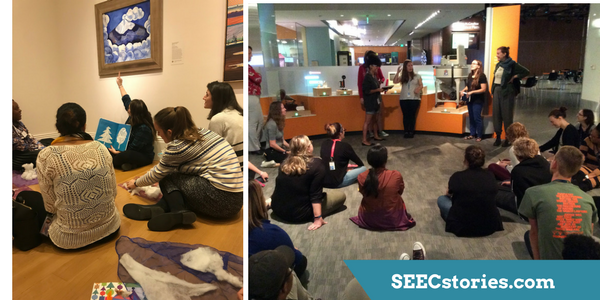
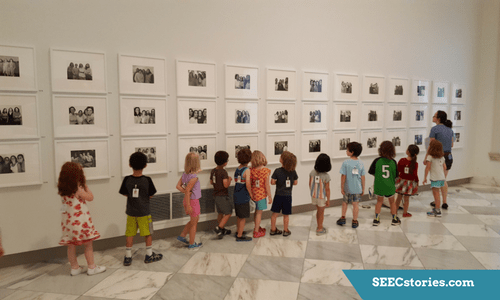
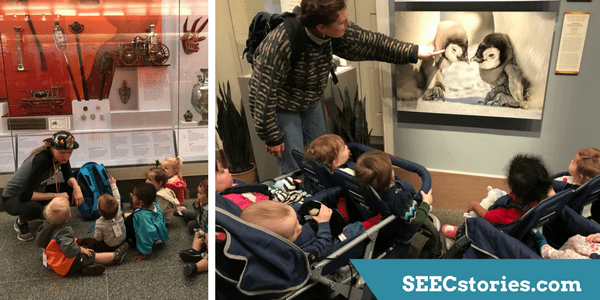
My first experience crafting a lesson specifically on life changes was last May while working with one of the pre-kindergarten classes at SEEC. It was the end of the school year and many of the children in the class were leaving the school they had attended since they were infants. Mixed emotions filled the classrooms. In an attempt to unpack and reflect on the change that was about to take place as our students moved onto kindergarten, I took the class to the Smithsonian American Art Museum. The children were familiar with the Smithsonian American Art Museum, as it is one of the many museums we visit often in our daily museum visits around the National Mall. At SEEC, we use objects to discuss and learn as we explore galleries and cultural spaces around Washington, DC. An object, image, song or texture can be a great way to engage children in a complex conversation, as both adults and the children encounter the space with a shared point of entry.

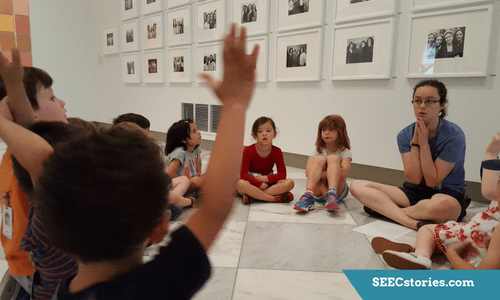
In this case, I chose the collection of photographs entitled The Brown Sisters by Nicholas Nixon, which documents the images of the photographer’s wife and her three sisters over forty years. We began the lesson talking about portraits and why people get their portraits taken. Then, in a single file line we slowly looked at the pictures. “What do you see?” I asked, broadly opening up the floor, unsure myself at what they might have picked up on. Many hands go up.
1

“I see a bunch of girls over there,” one four-year-old said pointing to the early photos on the left.

“There are old ladies over there,” another child said pointing to the right side.

“How do you know they are old?” I asked.

“Because they have gray hair,” the child answered. “That means they are going to die soon.” This led to an outbreak of conversations and a few tears from children who worried that their loved ones were going to die because of their hair color. My colleague and I assured them that while hair color can determine age, it doesn’t determine death. We named multiple people in our school community with gray hair that were healthy adults.

After this period of analysis, I told the class the women in all of the pictures were the same; that they were four sisters. “How are the pictures of them different?” I asked.

“They look like they are at the beach. Though they look like they are in the country in that picture” a five-year-old observed. We talked about why they might be in different places.

“They look further away in that photograph,” a four-year-old observed. “Maybe she’s mad at her sister.” With each observation, children used their cognitive reasoning to build connections on how these women’s lives changed overtime.

What tools did this exercise provide for the children as they were grappling with their changing identity as they moved from being preschoolers to kindergarteners? By reflecting on the sisters’ changes, the children were ready to look analytically at their own past and the physical changes they had gone through over the last year, or for those at SEEC, from infancy. I passed out the youngest photograph of each child that I could find in their portfolio, a binder full of projects and developmental write-ups that follow each child throughout their time at SEEC (for more on these portfolios, look below). These photographs provided a tangible layer to their experience. Next, I placed a mirror next to each child. Then, I asked everyone to hold up both the picture and the mirror and compare what they saw. “My cheeks are less puffy. They have kind of flattened out,” one four-year-old observed.

“My hair is more blonder here,” another four-year-old boy stated, pointing to a picture of his two-year-old self, surprised that his own hair color had changed. “And [my baby brother] now wears those shoes. My feet won’t fit them.” Children were picking up on their own signs of aging. It was at this point that I told the children that although they might not feel ready or old enough for kindergarten, they had all changed in many ways over the past year. My colleague and I assured them that we had seen them grow over the school year and that their bodies and minds were ready for all the things to come in a new school. Sometimes to face change, you need to see and hear that you are ready for the change to come.
3

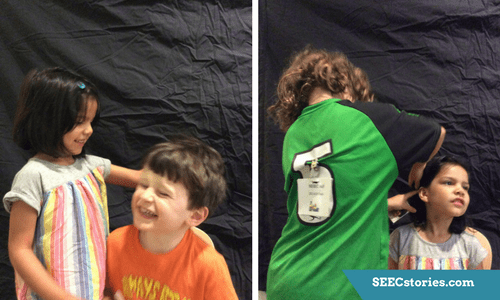
Later in the day, a dramatic play “photo studio” was set up where children had the option of trying to replicate these photos of their younger selves. Children used their analytical and language skills to position each other to match the photograph, while remarking on changes to their classmates’ physical appearances, like shorter hair or lost teeth. By discussing these changes through play, children were able to share their fears and excitement in a social setting with their peers.

Over the course of the next year, we will delve deeper into specific life changes and how to discuss them with children. From transitioning out of diapers and into underwear, to talking about death, to moving to a new house, we look forward to sharing our ideas and stories with you, and hearing about your successes and challenges in explaining and discovering this constantly changing world with young children.


Portfolio Close Up:
CORNER TAB.jpg

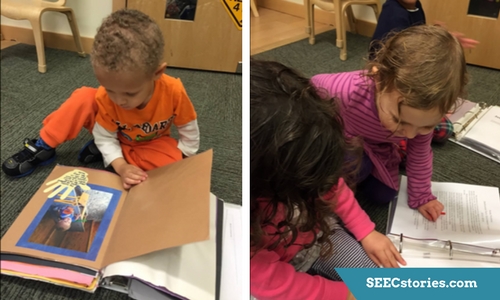
When a child enters SEEC, their teachers create a portfolio that follows their journey throughout their time at the school. The portfolio consists of a binder that contains artwork, photographs and anecdotes by teachers that document the development of the child over time. The children love to look through their portfolios with peers, sharing about past experiences, and self-reflecting on their young lives. Portfolios serve as a tangible representation of how a child has grown and changed over the years.
 

What Do We Want From Our Teachers?

SEEC’s Executive Director, Meredith McMahon’s latest Director blog:


In the last few months there’s been quite a bit of discussion about early childhood teachers, what kind of training is necessary, how to support them once they enter the classroom, how to compensate them in a way that keeps them working in early childhood classrooms and not higher paying public or private schools.  Here in DC a debate continues about what level of credentialing the Office of the State Superintendent of Education should require for lead teachers.  The National Association for the Education of Young Children (NAEYC) currently has an initiative, Power to the Profession, meant to seek unity around qualifications, competencies, and qualifications. These many considerations point to that greater question, who do we want our early childhood educators to be?  How can an early childhood educator know what we want when we, as a field, don’t yet know or agree?

1

At SEEC we have a pretty strong sense of what we want in our educators. We embrace the notion of the well-educated teacher, and we look for that in all of our educators, not just our preschool and kindergarten teachers. When some might question the need for an infant or toddler teacher to have formal education course work we see it as essential. Without a strong understanding of child development how can you purposefully plan rich experiences that maximize the incredible brain development that we know is happening in these first years? At SEEC these teachers choose toys, objects, and books that push our youngest learners to reach just a little beyond where they are, always guided with love, support, and rich language. Would they create the same learning opportunities if they did not have that clear understanding of what’s happening developmentally? Combined with their natural talent and joy for working with the youngest children, our infant teachers design classroom and community experiences that truly enrich the days of these little ones. And the same thing is happening across all of our classrooms and programs.

3

At SEEC we know it’s not just about the formal learning our teachers have experienced themselves that has such a positive impact on the classroom, it’s also the creativity and flexibility they bring to their work that combines to create incredible learning opportunities for the children at SEEC. We look for those educators who embrace the idea of children as capable learners who are ready for concepts often dismissed as too complex for young children. We ask our faculty to push themselves as educators, drawing on the current interests of their students, rather than relying on tried and true lessons from years past. And we ask them to regularly put new ideas into context for the children, using community resources, which we’re so fortunate to have in the form of our many museums and gardens. What we ask of them is not easy – they become quasi-experts in new topics regularly [think lemurs, ancient civilizations, farm to table] and they do so willingly.

2

SEEC educators embody the idea of life-long learning that we hope to instill in our children by continuing to push themselves to constantly hone their teaching practice. Our faculty embrace the idea of professional growth, seeking out constructive feedback and ways to push themselves. They soak up creative ideas for their classrooms at every opportunity, and they support each other as a community of educators, sharing resources and classroom strategies. We purposefully look for educators with a growth mindset, who believe they’re always learning and have the capacity to better their teaching. That mindset as part of our culture, gives us such strength, and I find myself constantly in awe of their dedication to themselves, SEEC, and the ECE field.

So at SEEC we have a clear vision of who we want as educators and why, but we, too, struggle with the same concerns early childhood schools everywhere face. We ask our educators to take on a role with such great consequences without adequately compensating them for the vital role they play and the immense value they bring to our community. We know the importance of these earliest years, and we also know the impact that high quality learning experiences can have on future learning and life itself. Yet we still struggle to compensate our early childhood educators for the incredibly important work that they do. A recent New York Times story pointed to the many challenges of teachers in the early childhood field and highlighted the issues we already know we need to solve, and much of it hit very close to home.  At SEEC we continue to work towards salaries that are comparable to public or private schools, commensurate with the education & experience we expect our educators to have, but we still have work to do.  We look to elevate the importance of our faculty’s work whenever we have a platform to do so. We offer them autonomy over their own classrooms, from the curriculum right down to the paint color, knowing that they are well-trained and capable of crafting exceptional experiences for the children in their classrooms. We look for opportunities for our faculty to share their own work with other educators, stretching beyond the bounds of their own classrooms. Beyond SEEC we’ll continue to look for ways to lend our voice to this important discussion, knowing that our work, and our focus – the youngest children – is too important not to.

Empowering Young Conservationists


If you’ve ever driven or walked down Constitution Avenue in Washington DC, you probably have seen the larger than life Albert Einstein sculpture lounging on a bench.  But have you ever been in the building behind Einstein?  That building is home to the National Academy of Sciences, a non-profit organization of the country’s leading scientists.  Not only is it a place for the members to gather, but through the Cultural Programs of the National Academy of Sciences, the site also hosts rotating art exhibits that explore the intersection of culture and science that are open to the public.

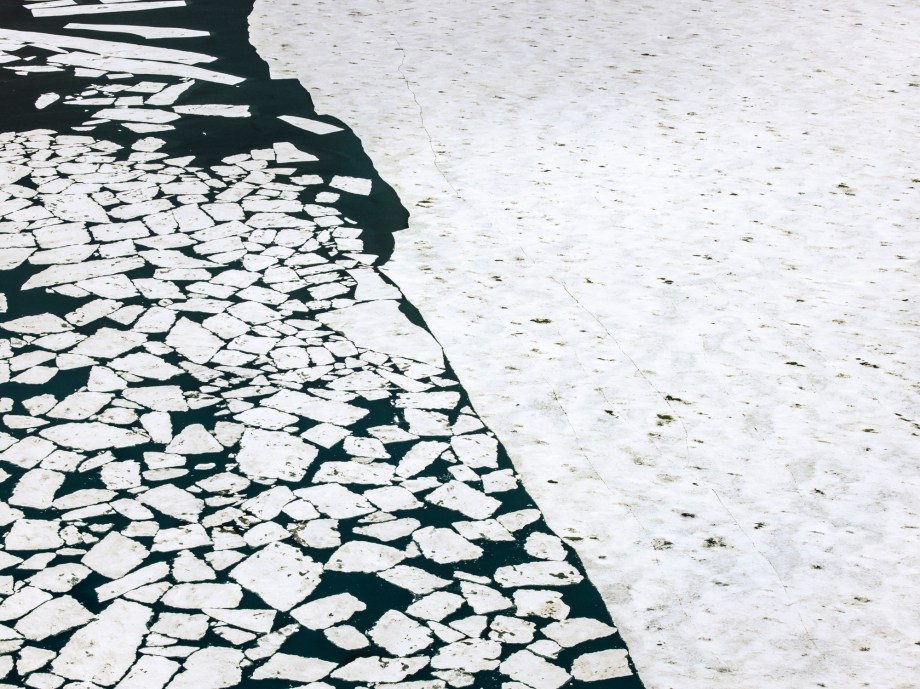
DTUFT_TheArcticMelt_TheArcticMeltGreenlandSea

Greenland Sea by Diane Tuft

Diane Tuft’s The Arctic Melt: Images of a Disappearing Landscape is one such exhibit that is currently on display at the National Academy of Sciences.  A recent Washington Post article describes her Arctic landscape photographs as vivid in color, yet also notes that, “these glimpses of an unfrozen North, some of them shot from an airplane or a helicopter, are also ominous. Discharged from glaciers, icebergs and ice sheets, that picturesque water is headed this way.”

Tuft’s Arctic Landscape exhibit will be the focal point of an upcoming family day that SEEC is leading at the National Academy of Sciences on February 10th. We are excited about facilitating this topic despite the fact that some might say the concept of global warming is too complex, depressing, and scary to explore with young children. After all, they are topics that can be difficult for adults to fully comprehend.  So why create a family day around this exhibit and topic? While we do not expect to put a stop to global warming in just one day, we believe that exploring the Arctic landscape, climate change, and conservation with young children will foster a sense of environmentalism among the next generation.

DTUFT_TheArcticMelt_Meltwater

Melt Water by Diane Tuft

During the family day, children will be able to explore the landscape of the Arctic through literacy, art, dramatic play, sensory experiences, and experimentation.  By interacting with the Arctic environment, children will foster an understanding and love for the Arctic environment and those creatures living in it.  Research has shown that the more time a child spends in nature or exploring a natural landscape, the more empathetic they are towards that habitat and its inhabitants.  Developing this empathy for the natural world and its creatures leads to a strong interest in conservation that lasts through adulthood.

The family day will also feature an experiment that illustrates the consequences of climate change in the Arctic.  Through the demonstration children will begin to form an understanding of climate change, and how it effects are world.  While we want to educate children on climate change, we will also be focusing on conservation, so that children leave the family day feeling empowered to help make a positive change in the world. As Jane Goodall said, “You cannot get through a single day without having an impact on the world around you. What you do makes a difference, and you have to decide what kind of difference you want to make.” We aim for children to feel a sense of control that they too impact the world, and can make that impact positive.  After exploring the Arctic habitat and learning about climate change, we will have an activity that encourages families to think together about what steps they can take, large or small, to positively impact our world.

Empower your young conservationists by coming to the National Academy of Sciences on February 10th!  Get more information and register here!

Teacher Feature: Three-Year-Old Class Explores Wrecking Balls

This week’s Teacher Feature highlights a three-year-old class’ exploration of wrecking balls at the Hirshhorn Museum and Sculpture Garden.  The teachers, Amy Schoolcraft and Connie Giles, noticed a strong interest among the children in construction, so decided to start with demolition.  This lesson included play, art, observation, connection to objects, literacy, and problem solving.  Below you will find images from the lesson, as well as reflections from the teachers. 

cover

We noticed that our class was often playing games such as building with blocks, digging mounds of dirt, and finding inventive ways to create structures on the playground. So when thinking about what our next topic of study should be, it was an easy decision to explore construction. We hope that through this unit our class will have a deeper understanding of construction and demolition, including the various jobs, tools, and equipment needed. We also hope this unit will provide great opportunities to learn about safety, teamwork, and problem solving.

1
On their way to the Hirshhorn Museum and Sculpture Garden, the class stopped several times to observe construction taking place around the National Mall.  Amy and Connie asked children guiding questions such as, “What is that?” and “Where do you think he’s going?” The children excitedly described the tall cherry picker and safety equipment they saw.

There is no better way to engage with a topic than to have first-hand experience with it. We were lucky to come across some big machines and workers on our way to our museum visit, and it was a great opportunity to get us thinking about construction vehicles. By taking the time to notice construction tools and machines on our walk, the kids were able to build context and gain a greater understanding of large machines as they observed how they move, who uses them, and for what kind of jobs big machines can be used.

2
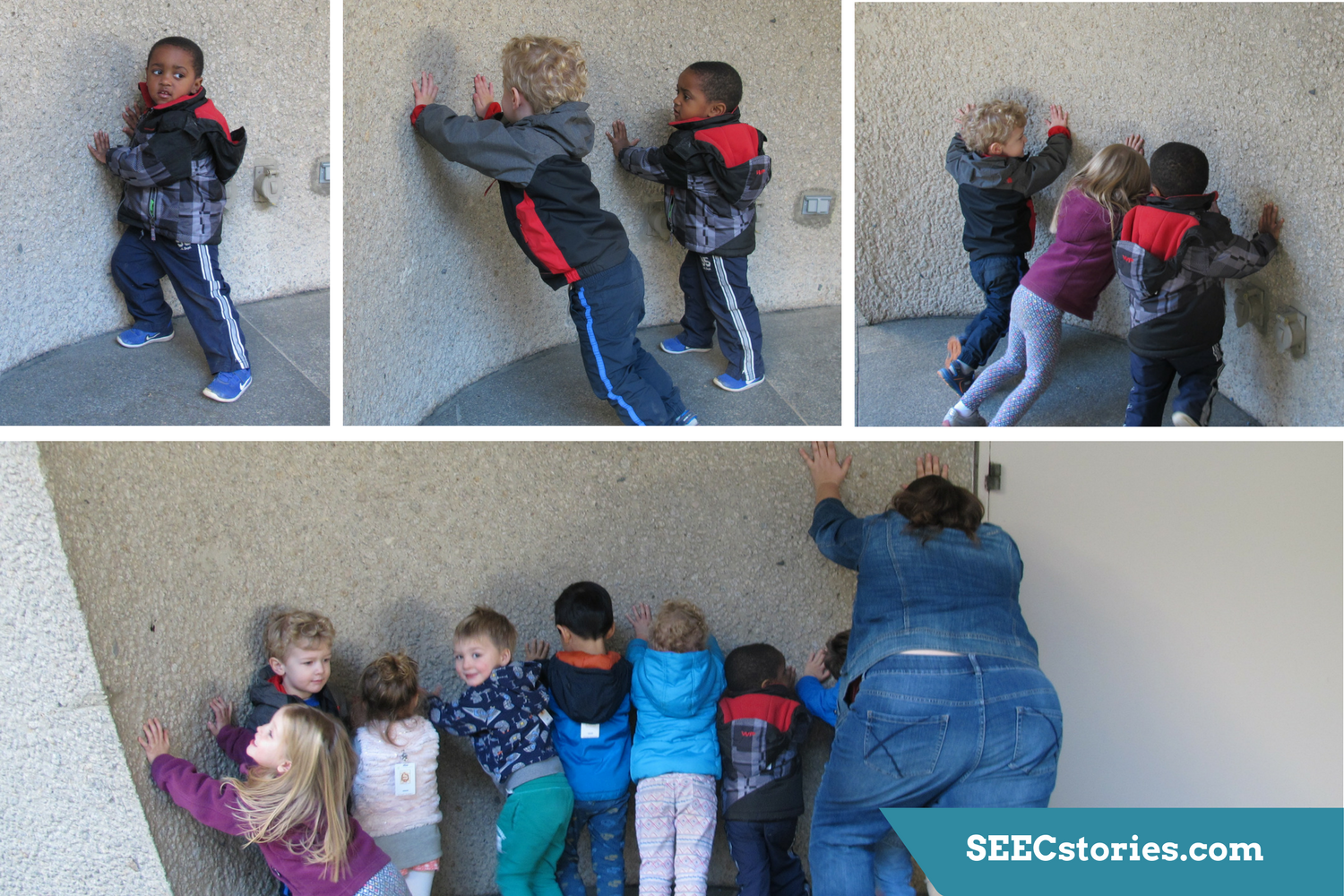
When the class arrived at the museum, Amy reminded the children of “The Three Little Pigs” story, which they had read the week before, to see how the pigs constructed their houses.  She continued, “But this week, we’re going to learn about what the Big Bad Wolf was doing – demolition!”  The class decided to try to push over the museum, just like the Big Bad Wolf knocked over the pigs houses.  Although they tried with more and more classmates, none of their efforts were successful.  As they were trying, some children commented, “It’s concrete. It’s too hard”; “My arms aren’t strong enough”; and “This is hard!”

The kids really enjoyed using a familiar story, “The Three Little Pigs”, to learn about construction materials in a previous lesson. By connecting our demolition lesson to the Big Bad Wolf, we hoped to capitalize on their love of the story as we built upon their understanding of construction while also creating a mental image of what demolition is.

As an introduction to demolition, I wanted them to understand how strong buildings are and why a large machine is necessary to knock a building down. What better way to gain a more concrete (pardon the pun) understanding of these concepts than to use our muscles and experiment in knocking a building down ourselves? This activity was an opportunity to work together, problem solve, have a little fun, and give them a chance to get extra energy out in a purposeful way.

3
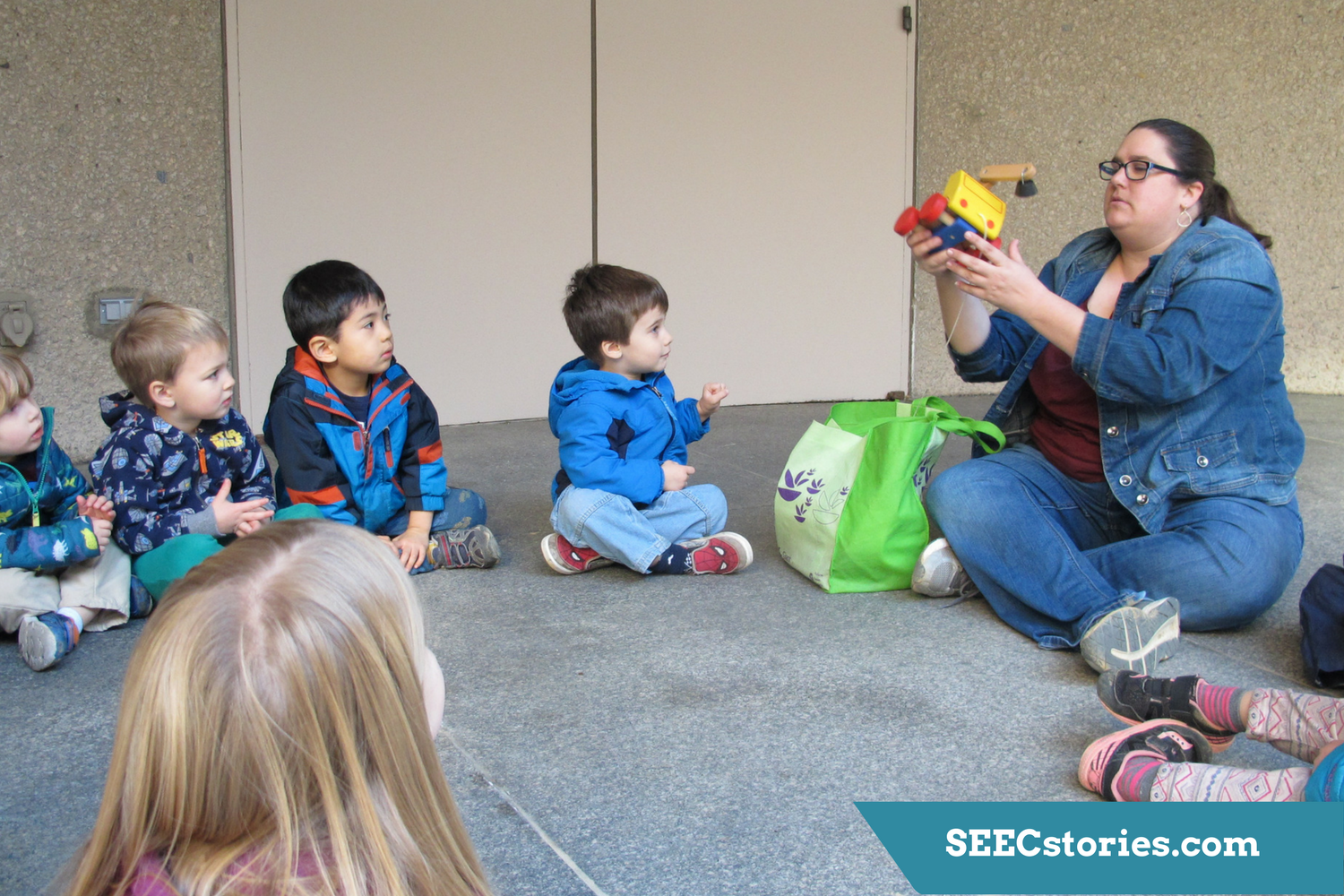
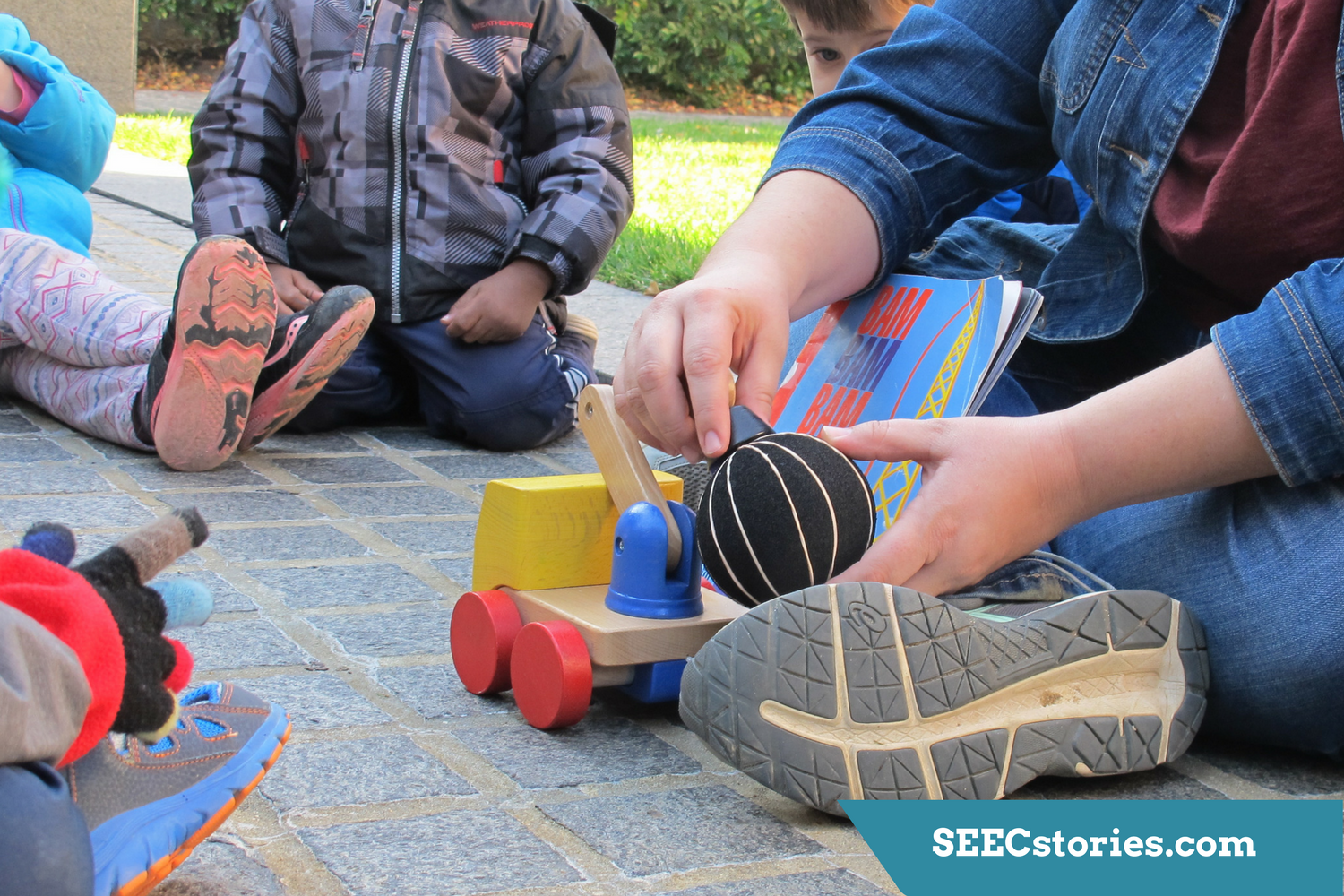
The class decided that knocking a building over with just their bodies was way too hard, and that in order to do it, strong tools are needed.  For example, as one child said, “Like a strong drill to knock it down!”  Amy explained that sometimes smaller tools work, but for big buildings, you need a very large tool, called a wrecking ball.  She brought out a toy construction truck as an example and said that the first thing they would need in order to build their wrecking ball is a boom – the long, strong part that allows a wrecking ball to swing.  The class decided to look around the museum for something they could use as a boom.

I wanted the class to be looking for a sculpture that looked like a wrecking crane’s boom. Boom was a new term for them and by exploring the parts of a toy, they were able to identify and label a boom in a very tangible way.

4
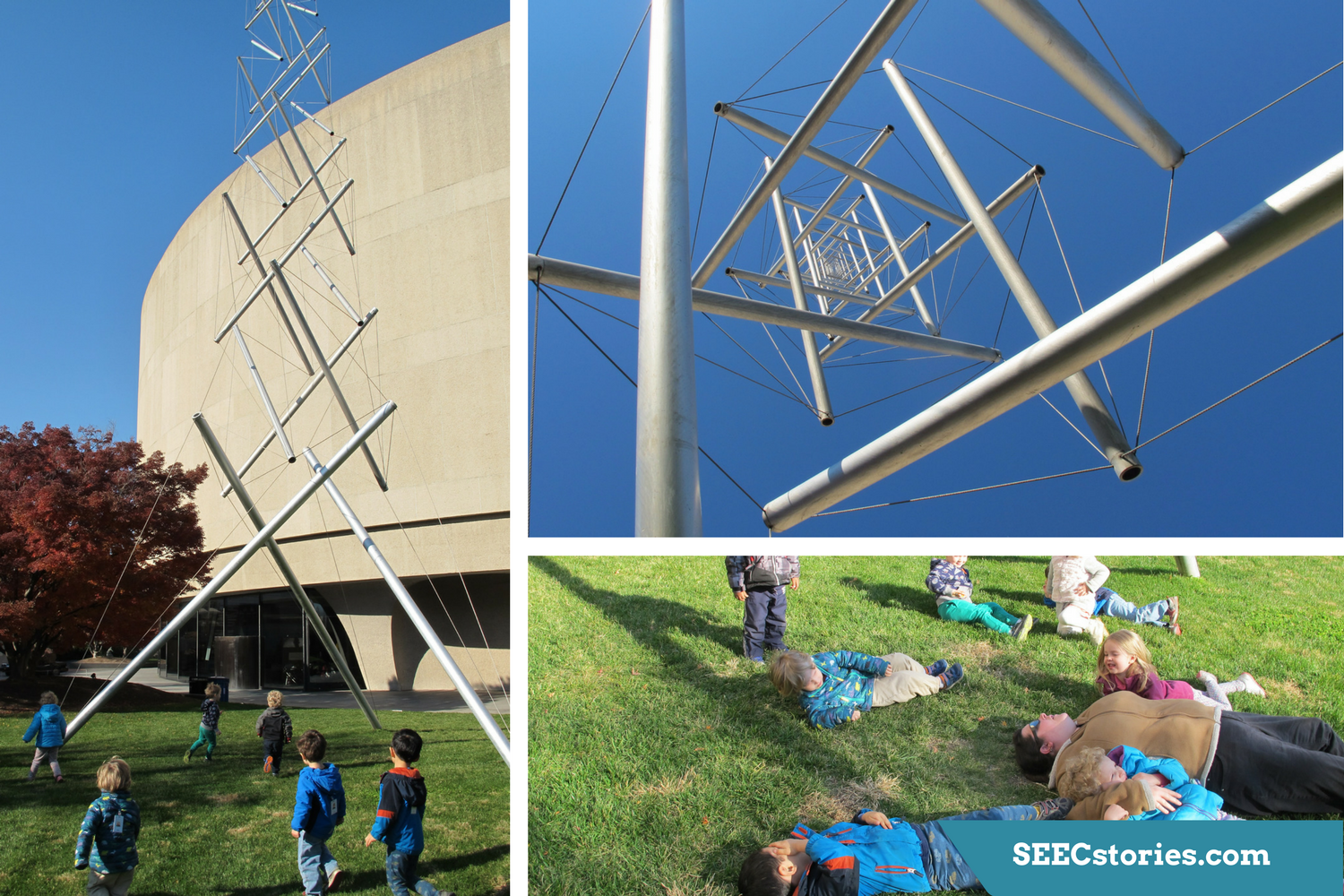
After some searching, the children spotted Kenneth Snelson’s Needle Tower and felt that it was long and strong enough to be the boom for their wrecking ball.

I chose this sculpture because of its resemblance to a wrecking ball boom. Its size and shape helped to build the perspective of how large a wrecking ball crane is.  Also its safe and open location gave us an opportunity to explore the sculpture from different perspectives.

5
After finding their boom, the class continued to build their pretend wrecking ball out of the truck, and noticed that they would need to attach a string or chain from the boom to the wrecking ball.

I wanted the kids to think critically about how the wrecking ball would work. By posing the problem of how to attach the wrecking ball to the boom, they began to generate ideas from using a string, to jump ropes, and eventually a chain.

6
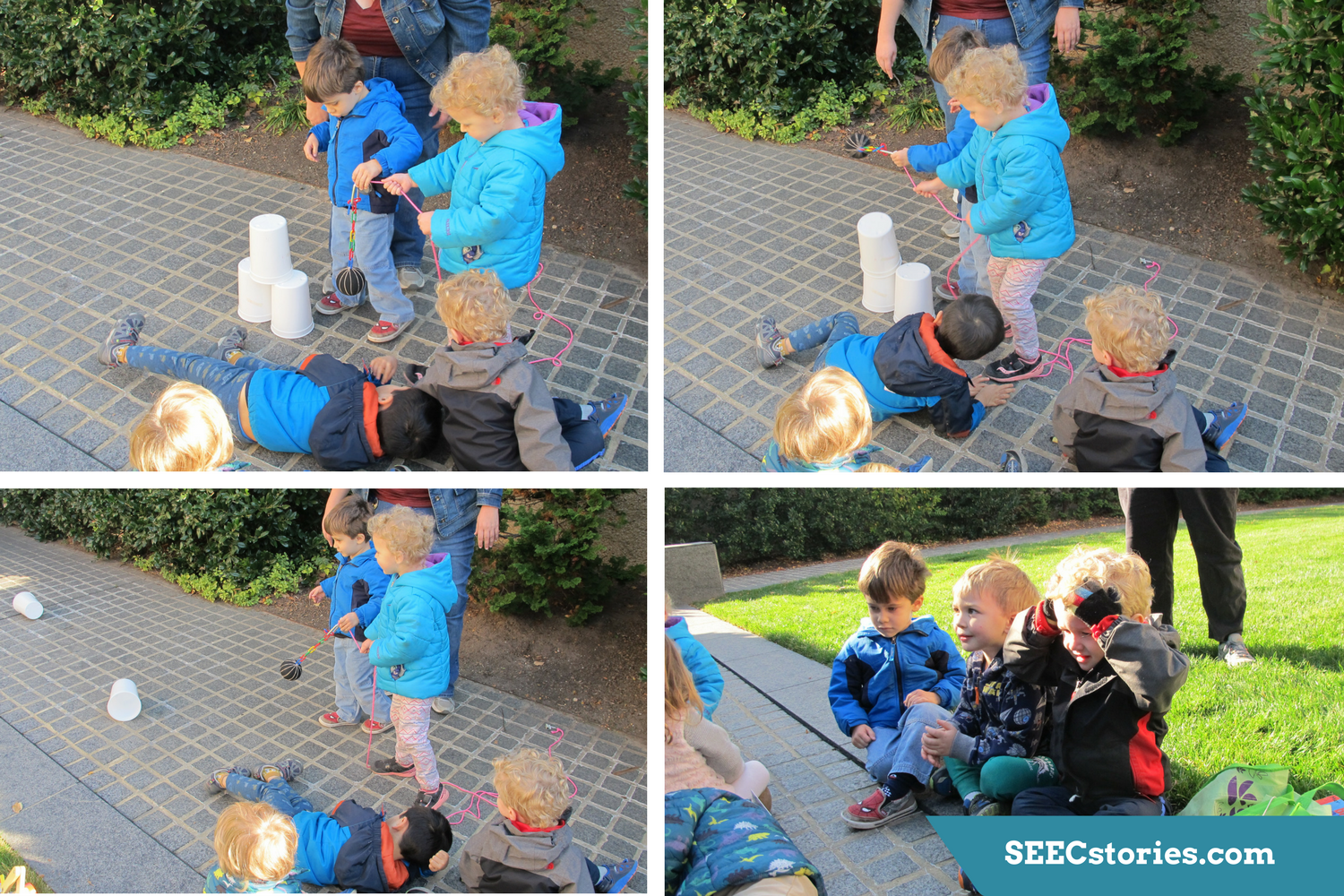
After discussing the parts of the wrecking ball using the toy, the children set to work creating a wrecking ball with their bodies and objects.  First, a child laid down on the ground to be the foundation of the truck.  Another child was at the front of the foundation acting as the person in the truck cab, controlling the movements of the boom and wrecking ball.  Two children acted as the boom by holding the wrecking ball attached to a pulley and rope. The goal was to knock over the building (made of recycled yogurt containers), and the children had to figure out how to move the wrecking ball in order to achieve this.

As a way to apply what we learned about the parts of a wrecking ball crane, we took turns acting out the parts of a wrecking ball working together to knock down a “building”. However, it felt like the activity was getting a bit chaotic and they appeared to be missing the idea that the ball needed to hit the building instead of their hands or feet. In hind sight, shortening the chain, simplifying each kid’s role, and adding a demonstration would have been helpful.

7
To round out the lesson, Amy read Bam, Bam, Bam by Eve Merriam, which had simple words, and large images of a wrecking ball that connected to the lesson.  Then she used an iPad to show a video of a wrecking ball in action.  The children commented on how loud it was.  Amy pointed out how much dust and dirt rises during a demolition and how water is used to control it.

I chose this book because the rhythm and rhyme make it a fun and easy read but also because it had clear illustrations of the different parts of a wrecking ball and its job. The video we watched helped our class to see and hear a wrecking ball at work. It inspired a great discussion about some of the draw backs of using a wrecking ball, such as the noise and dust, which are two reasons why they are now rarely used on construction sites. In our classroom, we use technology to help bring a topic to life. Although I feel that teachers need to careful not to use technology as a substitute for hands-on experiences, it can be a great resource for exploring new ideas, initiating discussions, and building observations and insights about a topic.

8
Before heading back to school, the children ran around the sculpture getting a closer look.  They noticed the silver color and the cables holding it up.  They even lay underneath the sculpture observing the shapes from a new perspective.

I hadn’t planned to let the kids explore the artwork on their own. I typically walk around the sculpture with the kids to point things out and encourage observation. However, with such an open and safe space, it was a perfect opportunity to allow them to experience the artwork in their own way. Before I knew it, they were pointing out the shapes, materials, and experimenting by finding new ways to look at the sculpture. It all happened very organically and the kids had a great time in the process. Our kids are comfortable around artwork and are aware of the rules, such as no wandering away or touching the art, so I did not worry about reviewing the rules with them before setting them loose. While they did a pretty good job, it would have been a good idea to review the rules anyway.

10
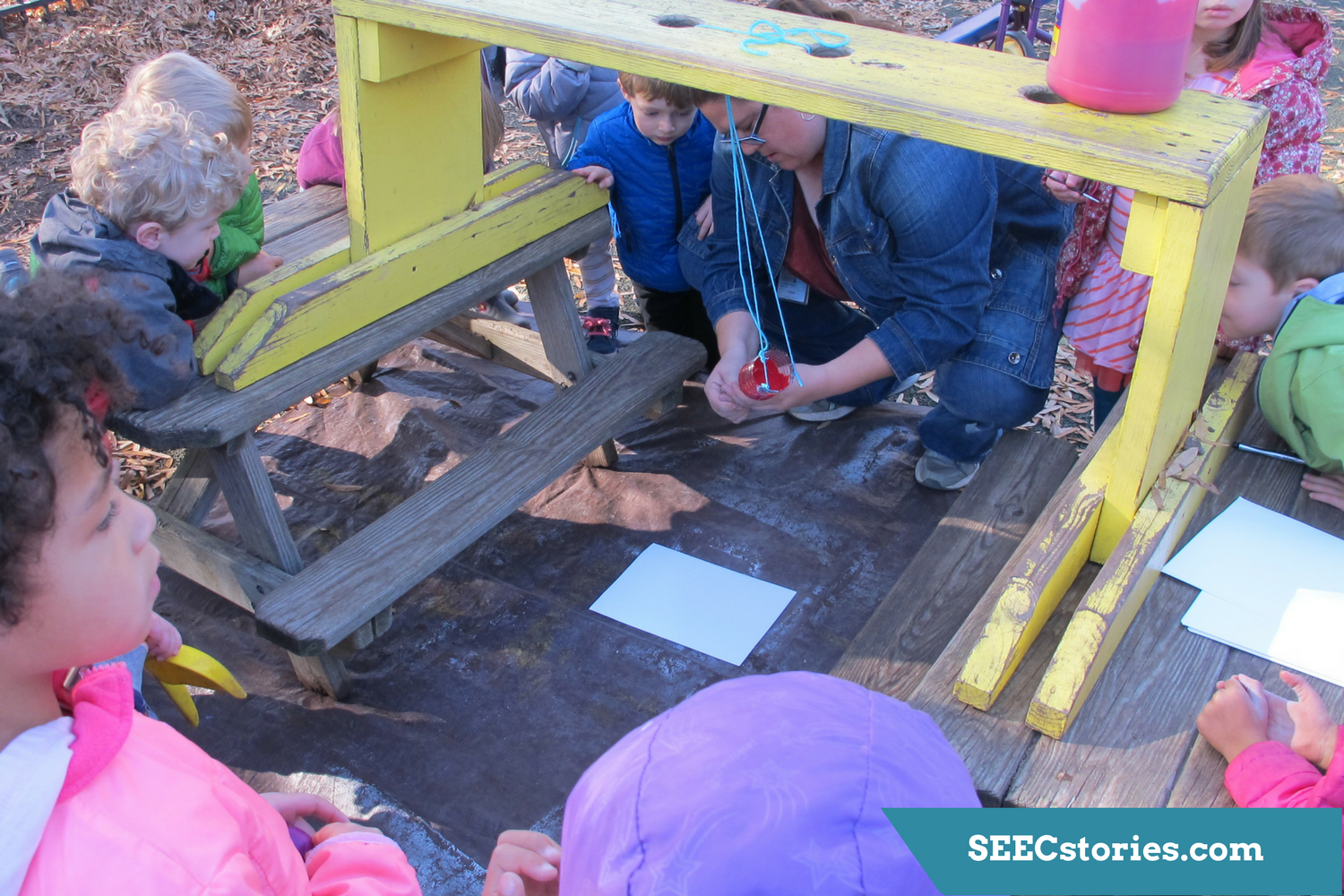
Back on the playground, Amy set up an art activity where children had turns moving a “wrecking ball” and seeing how the paint hit the paper.
11
The children were able to swing the wrecking ball in different ways and saw the result of their efforts on the paper.

I was excited about this art activity. I hadn’t tried it before but I found it on Pinterest and thought it would be a great way to make some “wrecking ball” art and experiment with the way a wrecking ball moves. We used a plastic water bottle with a squeeze glue lid and filed it with paint. We attached the bottle to a table using string and had the kids swing the bottle over a paper to create a design. Unfortunately, this project did not work as well as it had on Pinterest. The paint was too thick and instead of leaving a stream of paint creating a design, dots of paint ended up scattered on the page instead. All in all, the kids had a lot of fun and were still able to experiment in swinging the “wrecking ball”. A colleague suggested that a variation to try in the future would be attaching a paintbrush to swing back and forth instead. I am looking forward to giving it a try.


After learning more about demolition, the class continued their exploration of construction by exploring building materials, safety equipment, planning, tools, and more!  For more ideas, see our construction Pinterest board!

Top 5 – DIY Gifts from Kids Edition Take Two

Are you scouring the internet for a gift that your child or students can create to give as a gift for family members?  It’s tough to find something that’s budget friendly, useful, and actually fun and meaningful for children to make.  That’s why we’ve rounded up seven (we just couldn’t keep it to five!) more ideas for exciting DIY gifts that your children will actually enjoy making.  And if these aren’t enough, check out our Top 5 from last year!

Cover

Hand Print Key Chains

How great are these hand print key chains from Grey House Harbor? Not only are they useful, stylish, and personal, they also look like a ton of fun to make! Mix science with art as you watch the shrinky dinks shrink in the oven.

Handprint-Keychain-4

Paper Plants

Not only are these paper plants from The House that Lars Built beautiful, they require no watering or light!  Grab some paper, markers, scissors, and a box or cup to make these colorful plants.  Children will let their imagination loose as they practice their fine motor skills.

paper-plants1

Suncatchers

Our preschoolers enjoyed making these wintery suncatchers and we’re sure their families will love them too!  To create these colorful creations, open up a sheet of laminating paper (our art educator, Caroyln Eby, suggests taping the paper on the table so it stays open), and decorate it with oil pastels, tissue paper, and glitter glue.  Spice it up further by adding dyed noodles and icicles made from crumpling foil.

1

Twig Pencil Holder

These twig pencil holders from the Royal Horticulture Society are easy to make and functional too! Take a nature walk together to gather the twigs while noticing the nature in your neighborhood.  You could even paint the twigs to add a pop of color to a family member’s desk.

Twiggy-pencil-holder_940x627

Calendar

If your child is anything like our students at SEEC, they love to make artwork year round.  Save some throughout the year or sit down for a drawing session to make these custom calendars from Martha Stewart. For a more budget friendly version, print out a year calendar from the internet.

991836e4952d2a3ff10fa655a694fcba

Rock Photo Holder

Create a rock photo holder from Buggy and Buddy that can hold a special photo.  Painting the rock can be enjoyed by any age and putting the beads on the wire builds fine motor skills!

photo-fb-768x768

Homemade Wrapping Paper

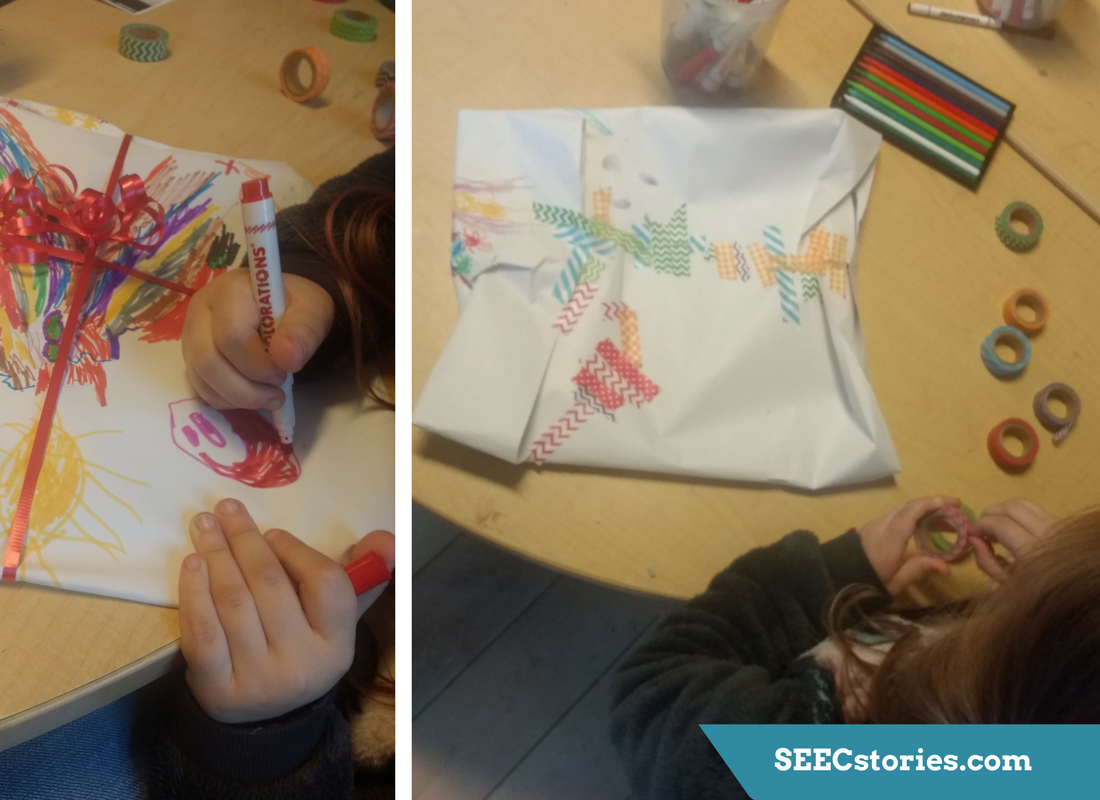
Don’t forget to wrap up all these gifts!  Include your child in the wrapping process by providing them large white paper to decorate.   If you’re child is an older infant or toddler, lay out paper and allow them to dance or move on the paper with paint.  If they’re older, provide a variety of ribbon and washi tape that they can use to wrap and practice fine motor skills.

2

If you have other ideas for fun DIY gifts that children can make for their families, please comment; we’d love to hear your ideas!  And check out our DIY Gifts from Kids Pinterest board for more ideas!

10 Things You Can with Your Child While Cooking

This post was originally published on July 20, 2017.

2

Making dinner or lunch? Why not include your child in the process! Cooking with your child is a fun way to work on math, fine motor, and gross motor skills. It also allows them to invest in the meal they are about to eat. Here are a few ways to make the experience extra child friendly:

  1. Re-write the Recipe: Go over the recipe you are going to make with your child. If 1possible, add images/drawings of the ingredients needed. Give your child a chance to “write” their own version of the recipe on a separate sheet. Going through this process helps your child build on their understanding of sequencing. Use “first….then…” phrases.
  2. Measure: This is an excellent way to work on math skills. Working with more than one child? Divide up measurements to smaller units to allow for more participation.
  3. Pour: This is a big milestone in a child’s development and requires a lot of practice. If you are worried about a big mess, place a plastic bin lid or plastic table cloth on the floor to create a pouring station.1
  4. Mix: Mixing is a great gross motor activity. Sing a song or count while mixing! If items are spilling out of the bowl, transfer a small portion to another bowl for your child to mix.
  5. Cut: Provide your child with a very blunt knife or a spoon to cut up soft items such as butter or bananas. While not all recipes include a child friendly item to cut, consider providing them with an item to cut that can be served as a side dish/appetizer. They will enjoy mimicking the way that you cut the tougher items.
  6. Cook: Baking, boiling, toasting, grilling, etc. is the magical transformation and the scientific part of cooking. While these steps of the process are the most dangerous for your child, they are also some of the most exciting. Allow your child to observe and “check on food” from a safe distance.2
  7. Serve: Serving the food is a great way to practice their balance and to develop upper arm strength!
  8. Share: Children are working hard on practicing this important social skill. Having them share the food over which they feel ownership provides great practice!
  9. Talk about Nutrition: Sometimes this conversation gets lost in the shuffle and excitement of the cooking process. Take a little extra time to explain to your child why we need different ingredients to make a nutritious and well balanced meal. Work with your child to sort each item on their plate into the different food pyramid categories (grains, fruits, veggies, proteins, etc.)
  10. Wash/Clean up: Ask your child to help clear the table and help with the dishes. Washing the dishes is a fun water play activity! Not ready to have them work at the sink with breakables? Fill a small tub with soapy water for them to wash a selected set of dishes!

Have fun cooking traditions or tips to share? We would love to hear them!


SEEC’s Book Club: Einstein Never Used Flash Cards

In the past year SEEC began a book club to enhance our practice through discussions about books relevant to our field.  As educators (and parents for some of us), it can be hard to find time to read books of interest, but having a dedicated time and place to discuss amongst colleagues has proved to be a valuable incentive. Our most recent meeting was about Einstein Never Used Flash Cards  and our conversation centered around the pressure parents often feel related to parenting and how educators can help to alleviate that pressure.  

Parenting Pressure

For October’s book club, we chose Einstein Never Used Flash Cards by Kathy Hirsh-Pasek, Roberta Michnick Golikoff and Diane Eyer. The book focuses on the pressures that caretakers and educators increasingly feel in regards to young children and achievement.  In the first chapter the authors state, “as parenting itself becomes more competitive, many moms and dads worry that their children could be left behind if they don’t take advantage of every available opportunity” (p. 7).  The book points out that many toy and media companies have capitalized on this fear by producing numerous educational toys that will “give your kids an edge.”  In this day and age, many parents feel anxious to “make the most of these early, finite years.”  During our book club we talked about some of these pressures, and how we can share SEEC’s philosophy and educational experience with caregivers and other educators to help ease these anxieties.

3

Academics vs. Context Learning

Our book club participants ranged from infant to kindergarten educators and each of them shared that they had observed this parenting pressure. They noted that parents’ concerns ranged from academic skills to overall school readiness. One educator noted,

“It makes sense they’re concerned with academics.  It’s human nature to want what’s best for your child, and it’s ingrained in society that you need good test scores and to participate in numerous activities, or you’ll get left behind.”

Thinking about the book and the group’s personal experiences, we began to realize that both caretakers and educators ultimately want what is best for the child. The difference seems to stem from HOW we achieve those results.  The authors of the book observed that many caretakers view worksheets, flashcards, and drills as the means through which children will achieve academically. Many times, caregivers don’t recognize that learning occurs naturally via play.  Adults often don’t understand that when learning is coupled with play (at SEEC, we recognize that there are many types of play), the results are more powerful and long lasting. The group concurred with the book’s notion that learning should be fun and “…unleash the child’s natural curiosity and creativity” (p. 257).

We’ve witnessed this combination of play, creativity and curiosity in our own classrooms.  We view play as a vehicle to teach content and build developmental skills. For example, a few years ago one of our four-year-old classes was interested in digging.  The educators noticed this and they embarked on a three month exploration of the underground world.  The class experimented with pipes, understood mining through play, gardened, learned about animals that dig, and even spent some time talking about ancient civilizations and the clues about them that are hidden underground.  Academic learning was integrated throughout the unit as they learned new vocabulary, drew or wrote about their experiences, counted pipes, read literature, and more.  Instead of learning academic skills in a vacuum, we make learning meaningful and memorable by focusing on what is important and immediate in their lives.

SEECstories.com (51).png

Active Learners

Some parents, understandably, feel that they are solely responsible for their child’s learning and development,  but where does that leave the child? We believe that children are active learners and while adults do have a a role in a child’s learning, the onus isn’t all on them.  The role of an adult, “is to see our children as active learners, to see the world as a virtual school year of interesting lessons, and to find a happy medium that allows us both to teach children and to retain the unprogrammed benefits of childhood” (p. 251).  During our meeting we discussed how we, at SEEC, strive to strike a balance between structured learning opportunities, and unstructured play time.  We want children to leave our doors with a sense of wonder and a love of learning that will motivate them to work hard even when learning becomes difficult.

The authors also provide some perspective stating, “millions of years of evolution have created children who love to learn on their own-it’s how nature has ensured our survival” (p. 21).

4

Being Present 

The book also explored specific ways in which this pressure impacted caregiver/child interactions.  One of the participants echoed the book’s sentiment that parents are often not “in the moment.” She shared that she’s witnessed parents focus solely on the intended outcome of an activity so that the child gets it “right.” It felt, to her, like parents aren’t always able to enjoy the experience. This was echoed in the book as well, “families are apparently so busy stimulating their children, they increasingly have little time just to enjoy one another” (p. 5).  We would also suggest that there is value in the process and that by slowing down and allowing a child to direct the course of their play, they learn valuable skills like problem-solving and perseverance.

The group also discussed how important it is to be present so that adults can learn ABOUT their children. The book remarks that it is worthwhile to take the time to be “be good observers to find out what our children are interested in and … build from there” (p. 130).   Learning experiences are more meaningful and memorable for both the adult and child when it stems from the child and not the adult.

1

General Thoughts on the Book 

During our discussion, we acknowledged that early childhood is a critical time in a child’s life, but we agreed with the book that it is not the time to fit EVERYTHING in.  Instead, it’s a time to foster a love of learning and a sense of wonder that will benefit them throughout their entire lives.

Our only complaint was that tone of the book was heavy handed at times. Ironically, we felt that it might leave parents feeling more pressure, rather than less. At SEEC, we believe that parenting is hard work and we do our best not to be judgmental. While we feel that it is important to educate our parent community, we want to do so in a way that makes them feel comfortable and supported.  Overall though, we  agreed that the research presented was helpful and understandable. The suggestions for parents at the end of each chapter brought these concepts into real life, and provided accessible ideas for all families.  We’ll definitely keep this book handy as a reference down the road.

Read along with us!  Our next book will be Free to Learn by Peter Gray, and see what we’ve read in the past on our Pinterest board.


References:

Hirsh-Pasek, K., Golinkoff, R. M, & Eyer, D. (2003). Einstein never used flash cards: How our children really learn- and why they need to play more and memorize less. New York, NY: Rodale Books.

Teacher Feature: PreK Class Explores Illustrators

It’s Teacher Feature Thursday!

This week we are featuring Amy Schoolcraft and Connie Giles of the three-year-old Wallaby class. The Wallabies were exploring books, and I joined the class for a lesson on Eric Carle and illustrators’ inspirations at the National Museum of African American History and Culture. Below you will find images from the lesson, and a reflection from Amy.

cover1.jpg

Here are a few images from their lesson on Illustrators:

SEECstories.com (27).pngThe class began their morning by heading straight to the museum before it got crowded.  Our students have been enjoying visiting the new National Museum of African American History and Culture, using it to explore a variety of topics including music, sports, theater, and architecture.

7The class went into the Visual Art and the American Experience gallery, where they found Transformation “Blue Horse” by local DC artist, BK Adams.  As soon as the group stopped in front of the artwork the children began making observations such as, “It’s three years old because it has a three on it”, and “It has wheels and a bike!”  Amy asked the children if the horse looked like the real horses they had seen when they visited the Park Police Stables.  They used their careful looking skills to examine the artwork further and said that it did not look like the horses they had seen because of the bike, number, lack of eyelashes, golden leg and eyes.

SEECstories.com (29).pngThe class sat down and Amy introduced them to the artist of Transformation “Blue Horse”, BK Adams, with photos, some information about his background, and how he became an artist. They agreed that BK Adams must have used his imagination for his artwork since horses do not look exactly like the one he created.

5Next, Amy introduced another artist who made a blue horse artwork, Franz Marc.  She showed a print out of his piece Blue Horse 1. Amy explained that an author and illustrator saw Franz Marc’s horse painting, and was very inspired to use his own imagination to draw animals any way he could imagine.  This author and illustrator is Eric Carle, and Amy showed the class a photo of him, and introduced his book, The Artist Who Painted a Blue Horse, which was inspired by Marc’s painting.

6They read the book, comparing Carle’s blue horse to BK Adam’s blue horse.  They were happily surprised at all the imaginative animals, often exclaiming something like, “Wait a minute, that fox should be orange!”  It’s safe to say they enjoyed the book because at the end several children said, “Again! Again!”

2Amy then asked the class to use the artwork they had seen as inspiration to create their own imaginative animal.  She laid out the Marc print, a photo of Carle, the book and plastic animals to help inspire ideas.  Before drawing their own animal they brainstormed what animals they wanted to draw which included a green tiger, purple and pink bunny, a rainbow lion, and a normal prairie dog.

4Then the children set to work drawing their imaginative animals, using the art as inspiration.  As they drew they asked questions about what specific animal body parts looked like, and how to draw them.  Instead of simply providing an answer, Amy and Connie helped the children think about their questions and find answers through observing the art, book illustrations, and plastic animals.

3To wrap up the lesson Amy had planned to play a game, but the children requested to stop in the Cultural Expressions gallery to watch the video that surrounds the space, which they had seen on previous visits.  Amy, honoring the interest of the children, said they would decide which activity they would do through a vote.  Each child voted for the game or the video.  With a clear majority for the video, they headed to the space and decided they’d play their game in the afternoon.

2That afternoon they continued their exploration of Eric Carle through looking at his books and watching a video about him and his work.

31The children also used Carle’s technique of creating an illustration by cutting up paper that they had painted and creating a collage on a piece of contact paper.
SEECstories.com (28)

Following that, they played their game of “Guess that Animal!” Each child was given a turn to sit in the middle of the circle with a plastic animal on their head.  Their classmates gave them clues to help them guess their animal.  While none of the animals were as imaginatively colored as the ones they observed earlier in the day, there were plenty of features to focus on to give their friends clues, which connected back to their careful observations of animal features that morning.

A reflection from Amy:

Our class loves books and enjoys exploring books any chance they can get. We wanted to use their enthusiasm to help deepen their understanding of books and stories. So, we planned an entire unit dedicated to books. This particular week we were focusing on illustrators, including their style and technique. For this lesson, I chose to learn about Eric Carle, an author and illustrator that the class is familiar with, since we have read several of his books throughout the year. My original objective was to learn about Eric Carle’s illustration technique but while researching, I discovered that his book, The Artist Who Painted a Blue Horse, was inspired by the painting Blue Horse I by Franz Marc. This new information shaped the rest of the lesson and my new objective was to build on their knowledge of Eric Carle by exploring the idea of what inspiration is, how artists and illustrators use inspiration to create their work, and to find our own inspiration to create original illustrations.

We had planned to visit Hahn/Cock by Katharina Fritsch, a giant blue rooster sculpture at the National Gallery of Art. Unfortunately, the weather was not conducive for this outdoor visit. So, we opted for a visit at the National Museum of African American History and Culture to see BK Adams’ sculpture . The kids had been entranced by this sculpture as we passed by it earlier in the year, and it turned out to be a great way to revisit the piece in a meaningful way. Because it was a last-minute change, there was not time to research Adams’ artwork beforehand. Thankfully our museum educator did some quick research and was able to find information on the piece and the artist, which she was able contribute to the lesson.

This lesson turned out better than I had anticipated because the book, painting, and sculpture tied together so nicely. The kids were able to make a connection easily between the inspiration (Marc’s painting) and the result (Carle’s book). Also, having learned about horses earlier in the year, they were able to make comparisons of what they already knew about horses and what they noticed about the Transformation “Blue Horse” by BK Adams. It was clear in their animal illustrations that they were using their animal figures as inspiration and their imaginations to make their artwork unique.

I had hoped to play an animal guessing game in the gallery, and have a follow up activity back in the classroom directly after our museum visit where they would make an Eric Carle style collage.  However, as we were wrapping up the kids said that they wanted to visit one of their favorite parts of the museum: a video montage of important moments in African American culture. So, we postponed the game and artwork for later in the day and spent a little more time in the museum instead. In retrospect, I would not have done the collage at all since we did not focus on Eric Carle’s technique during the lesson, and it felt as though the collage wasn’t as meaningful as it could have been.

If you are considering visiting NMAAHC, my recommendation is to get there early since it gets quite busy and is a little noisy.


Following their lesson on illustrators, the Wallabies explored authors, story structure, and story-telling.  Be sure to check back soon for a Round Up of the Wallabies’ unit on books, and in the meantime, check out our All About Books Pinterest board!


Top 5: Transitioning Back to School

Publication2

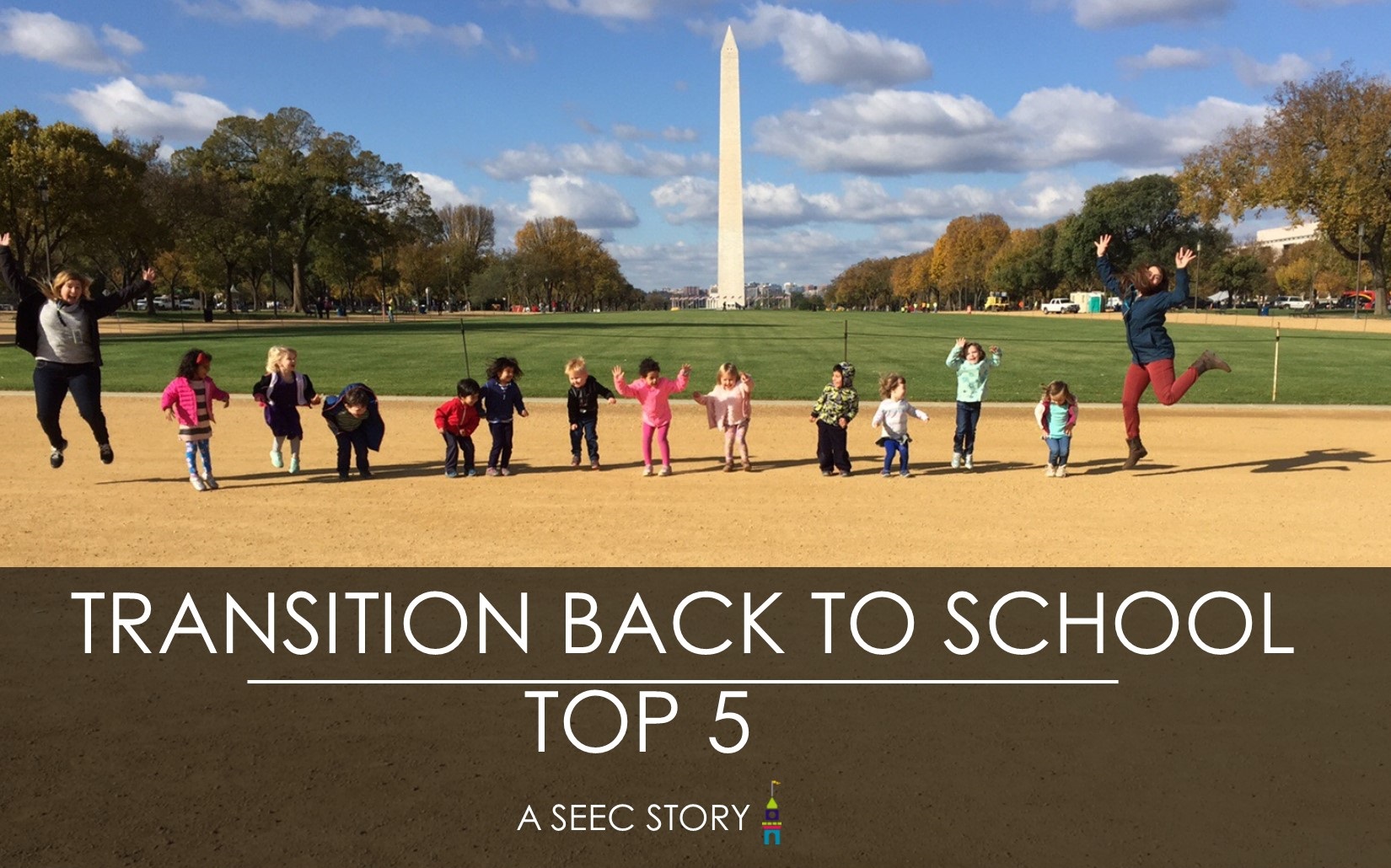
Transitioning back to school can be difficult for children, no matter their age.  Luckily, there are steps you can take to ensure a smooth and exciting transition to the school year.  Try out some of these ideas to ease back into the school year.

1. Create a Morning Routine – Waking up in time for school after a summer break can come as a shock to the whole family!  Try getting into your school year routine gradually the week before the start of school.  Wake up ten to fifteen minutes earlier every morning until you reach the time you’ll need to get up.  Set the alarm together; this will make your child feel included and develop math skills.  After waking up, practice the school morning routine.  If the bus will take the children to school, take a morning walk to the bus stop the week before school to get them acclimated.

SEECstories.com (47).png

2.  Talk about Feelings The start of school can bring up a lot of emotions.  Some children will be eager, while others will be more hesitant, and of course, there can be a combination.  Talk about how your children are feeling, and validate those feelings.  Share times when you might have felt the same way, i.e., when you met new people, or started a new job.  There are many books that can help get the conversation started.  Check out this list of back to school books from Gift of Curiosity for some ideas.

SEECstories.com (45).png

3. Talk about what to Expect – Just like adults, children feel more in control and less anxious when they know what to expect. Attend any school events prior to the start of the school year and learn a little bit about their future teacher and classroom.  Read their class list together and talk about who you know and who will be new friends.  Have an end of summer play date with future classmates to get the ball rolling.  If your child is still anxious about the first day of school, create a plan for the day, listing your morning routine, their school day, and after school activities.

SEECstories.com (46).png

4. Prepare Together! – Do some things that will engage your child in school and get them excited!  For example, go shopping together for their lunch box or make a list together of healthy lunch options.  Shop for the items on their school supply list together together, encouraging your child to check off each item as they put it in the cart.  Involving your child in the school preparation will make your child feel part of the process and also help them learn about nutrition, literacy, and math.


7.png

5. Document the First Day – The first day of school marks the beginning of another chapter in your child’s life.  Make it special by sitting down for breakfast together or including a note in your child’s lunch.  Snapping a photo is another great way to mark the occasion and share the moment with friends and family.  The Idea Room has put together a fantastic list of creative ideas for that first day photo!

Copy-of-20-Back-to-School-Photo-Ideas-683x1024.png

Plan on taking photos on every first and last day of school, and all throughout the year! You can create a book of each school year and include your child’s accomplishments from that school year, for example, started soccer, began reading chapter books, started wearing underwear, etc.  At SEEC, documenting each child’s growth is part of our practice, and our children love to look through their books and reflect on their own growth and memories.

It’s important to note, that if your child is feeling anxious and doesn’t want to pose for a photo, you should respect their feelings over snapping an Instagram-worthy shot. If they aren’t feeling it the first day, perhaps later in the week or year they’ll be feeling more comfortable, and you can get a photo then.


Want more ideas?  Visit our Back to School Pinterest board for more books, activities, and resources to make the start of the school year great!

Biblioburro (Donkey Library) Revisited

You may remember a Teacher Feature from the spring that highlighted our kindergarten’s lesson on Luis Soriano and his biblioburro or donkey library.  During the lesson, Maureen Leary, the Kindergarten Spanish teacher, used books, videos, and a trip to a Smithsonian Library to encourage the children to think about the importance of libraries, and to learn more about a very unique library in Colombia – Luis Soriano’s biblioburro.  At the end of the lesson, Maureen wrote down the children’s questions for Mr. Soriano and asked if they wanted to help support his library.  They all agreed that they would like to help in some way, and they were busy with these efforts until the end of the school year.

1236038_10151651895909716_728206024_n

Photo used with permission from Luis Soriano.

To help, the class decided to create a book of their own that could be a contribution to the library.  They had just finished a unit learning about the ocean, so creating a bilingual alphabet book about ocean creatures seemed to be a logical fit.  Each child took a few letters of the alphabet and thought of an ocean creature that started with those letters in Spanish.

SEECstories.com (39).png

The class took photos in the National Museum of Natural History’s Sant Ocean Hall with their favorite ocean creatures.  With the guidance of SEEC’s Art teacher, they also created artwork for each creature, which was incorporated into the book. They worked individually with Maureen to look up information about their animals and chose one or two interesting facts to include in the book. All the text was done in both English and Spanish.

SEECstories.com (48).png

The class used Shutterfly to compile the artwork and photos, and to produce their book.  They each got a copy to keep for themselves, and they sent a book to Mr. Soriano so that he could have a copy in his biblioburro.

SEECstories.com (49).png

Maureen communicated with Luis Soriano throughout the project and was able to share their conversations with the children. The students had a lot of questions for Mr. Soriano, which he was happy to answer. Some of the things they learned about him and his work were that his grandmother taught him to read and instilled in him a love of books; he delivers books on Wednesdays and Saturdays; the kids in the villages can borrow five books at a time for up to one month; and he uses a small portable computer to keep track of all his books.

1After learning so much about Mr. Soriano and his work, the children were eager to raise funds for his library renovation so they held a bake sale.  The day of the bake sale was filled with excitement! The students all brought in baked goods and took turns running the bake sale in our conference room.  The children were proud to share their treats with parents, teachers, and museum staff, while taking donations to send to the biblioburro.  They enjoyed counting the money, and sending it off to Mr. Soriano. Every last treat was sold and the class raised almost $500 to support Mr. Soriano’s library!

3Through this extension of the original biblioburro lesson, the kindergartners worked hard in the service of someone else and gained a sense of accomplishment when they finished the projects.  They gained a new appreciation for community service and helping others.  Their world view expanded as they explored something familiar (libraries) with the unfamiliar (donkey libraries).  Important skills were also built upon; for example, their Spanish vocabulary grew as they researched the names of their favorite ocean creatures; their math skills were expanded through counting the donations from their bake sale; their fine motor skills and creativity were developed through their artwork for the book. It was truly an interdisciplinary project that all of the students felt ownership in and one that allowed them to make a positive difference in other children’s lives.