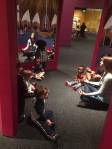
Summer Fun: Building Collections with Your Child

If you have a child in elementary school, they have probably come home with some sort of summer packet. I’ve seen the “packet” take various forms: from a list of innovative ways to encourage reading to a dull packet of worksheets. Either way, parents and educators alike want to encourage learning outside of school and during a time that has been characterized as the “summer slide.”  I hope some of the ideas on how to build a collection will inspire your family to engage in playful learning this summer. Adjust as you see fit for age and your schedule.
table
household objects
Flower Parts
Looking at flowers
  1. Choose a topic in which your child is interested and then find a space in your home where you can place a table and don’t mind hanging things on the wall.
  2. Begin building your collection by visiting your local library and selecting several books.
  3. Find other toys and household items that you don’t mind donating to the cause.
  4. Use these items in a way that they can explore them with their senses, i.e. what does the flower smell like or what sound do seeds make in a bottle. Also allow them to manipulate the toys or objects so they are using they are able to discover how things work and practice their fine motor skills.
  5. Build a model, draw pictures and display.
  6. Add vocabulary words.
  7. Take it outside of the home and “experience” the topic, i.e. pick flowers or keep a journal of flowers you see during your day.
  8. Take to the community and visit a museum, local store, etc. Take pictures and post in the collection area.

Helpful Hints

  • Collect, create and display together!
  • Keep the collection at their height.
  • When they are ready, change it up or expand on the topic, i.e. flowers – gardening – water cycle.
  • Let them come and go on their own and edit along the way.
  • Have fun!


5 Things I Learned About Art From Children

For the past year and a half, SEEC has worked with the Memphis Brooks Museum of Art and the Lifelong Learning Group on a project designed to positively impact the educational experience of young children and their families through the arts. As we collaborated with the Memphis based museum educators, docents and early childhood teachers to create meaningful interdisciplinary classroom and museum based hands-on activities, we found that each of us learned more than we imagined possible at the start of the project. The following post presents one great unexpected example of the project’s impact.

Thanks to the partnership with the Brooks Museum of Art, the following is posted on behalf of docent Cheryl Caldwell: Docent Leading Group

5 Things I Learned About Art From Children

Art is so much more than just art: It can be science, culture, motion, and history, as well as color, line, and shape. Young children naturally think like artists, and their imagination is at its peak during their early development as students. Yet educators struggle with ways to develop and instill creative and critical thinking skills—crucial tools that this generation needs to utilize their creative impulses in educational and civic pursuits. As a docent at the Memphis Brooks Museum of Art, I work in conjunction with the Smithsonian Early Enrichment program, engaging Pre-Kindergarten and Kindergarten children from Title 1 schools, where 40 percent or more of the students enrolled are eligible for free or reduced lunches.

Equipped with my knowledge from the six-month docent training course, I teach these children about visual art in a museum setting. As a new docent, I am excited to introduce children to a museum and see that they fully experience all it has to offer. At the Brooks, children have the opportunity to see, touch, and feel the materials an artist might have used in creating a piece. Engaging these children in this setting while they are young takes the fear out of the museum experience and brings out the fun. Of course, the kids aren’t the only ones gaining from this experience.

Here are the top five things I’ve learned during my first year as a Brooks Museum docent:

▪ Get down low and look up at the artwork through the eyes of a child. This perspective might just give you new insight on a piece of art you thought you knew all about.
▪ Art inspires critical thinking rather than getting the right answer
▪ The smiles and enthusiasm are contagious.
▪ You won’t know everything, but you will probably learn something new with every tour.
▪ Children are far smarter and more creative than we give them credit for. You will often be amazed at how much they can offer if you take the time to watch and listen.

Participating families gathered in the Memphis Brooks Museum of Art.

Participating families gathered in the Memphis Brooks Museum of Art.

Saturdays with SEEC Teachers

Posted on behalf of SEEC two year old teacher Javasa Finney:

Javasa at the Hirshhorn with SEEC's two year old class.

Javasa at the Hirshhorn with SEEC’s two year old class.

This spring I decided to volunteer with the museum education team at the Smithsonian Early Enrichment Center (SEEC) to help out with the weekend family workshops. I currently teach in one of the two year old classesthere and was interested in seeing how the experience changes once parents are involved, in the classroom and museum visit.

During the workshops I worked with the infants, toddlers, and preschoolers. The theme for the infants/toddlers was “Tiny Gardeners” and in these classes the children had the opportunity to explore flowers and gardens. The theme for the older toddlers and two year olds was, “Where Does it Come From” which focused on exploring different foods and the origins of food. Every week we met at the Natural History Museum and then headed to the museum where we would find out the topic for the day by focusing on a particular object, exhibit or art work. _MG_4180After our visits, we headed back to the SEEC classrooms for some hands-on activities related to our topic of the day. Time in the classroom was spent, planting, cooking, painting, reading, singing, and additional play. It was also wonderful to see the children socializing and making new friends.

In the museum the children did a fantastic job. They all seemed very curious and ready to explore. Everyone was respectful of the exhibits and stayed together as a group. We were often even able to sit down together to share a story and hands-on objects while we were inside the museum. Everyone seemed captivated and engaged. During our trips we visited exhibits that were directly related to what our topic for that day was. Some of the museums we visited during the four weeks include the American History Museum, Freer Gallery, the Botanic Gardens and National Gallery of Art.

As I reflect upon my time in the family workshops, I have many great memories. It was great to see the children so involved at the end of the session that they didn’t want to leave. Since several of our families return from one session to the next, I imagine that they are also finding the experiences together both meaningful and memorable as well. Museums have so much to offer, they are inspiring and educating. They are great for introducing new topics or re-enforcing facts. The most wonderful thing I saw during my time volunteering at the family workshops was the parents and children bonding, learning, and discovering new things together at the museum. What a wonderful way to spend a Saturday morning!_MG_4086 SEEC’s infant, toddler and pre-k Family Workshops will start up again in the fall. We hope to see you there!

Moments of Joy

When I looked out the window of my apartment this morning and saw that there was a torrential downpour occurring just as I was about to walk to the Metro I decided there were two ways I could approach the situation. Approach 1–I could leave feeling annoyed that I would have to walk in the rain and wishing that I could just stay home curled up on my couch.  Approach 2–I could leave with the excitement of a child in a rain storm. I chose approach 2 and decided to spend the walk being excited about the fact that I was getting to carry a “brella” (as the toddlers at my school call them) and to walk right through every big puddle in my rain boots rather than carefully walking around them. While this might sound crazy to you it actually made my walk much more fun. I found myself looking for puddles and I noticed the drips coming off the edge of the umbrella. I felt that same thrill of discovery that I remembered from being a kid when I turned the corner to walk down the small hill and saw a mini rushing river running along the curb and then I splashed my way right through it. I listened to the sound of the rain pounding on the top of the umbrella and noticed that the birds were all still singing right through the rain. Walking to the Metro became an adventure rather than a chore. Walking to the Metro became an experience rather than something to simply get over with.

Image

The rain today has reminded me that as adults we too often get bogged down in the negativity of real life. This being an adult thing that looked so good to us as kids can, in reality, be draining and overwhelming. It is so easy to just slog through life and to see things like pouring rain as negatives rather than as experiences. It reminded me that the reason children delight in things like walking in the rain is that they see them as an experience and have no preconceived notions of what that experience will be like–it is just another of life’s adventures. It reminded me that attitude is everything–the experience becomes what you think it will be in so many cases.

Here at SEEC I get to watch teachers curate experiences that create life adventures for children every day. I see the joy at the little things all day long. I hear the exclamations of “It’s a parade!” from the twos class when they look at the window and see what in reality is just a huge group of middle school students coming to the museum. I have conversations like the one with three-year-old Charlie when he tells me “I REALLY love school.” I see the joy in watching the classroom caterpillars suddenly become butterflies and in seeing stalagmites at the gem hall and watching them grow on a video on the tablet. I see the kindness as four-year-olds identify and take photos of how their friends are really superheroes because of their kind acts toward others. I see the excitement as a classroom heads to a museum, yelling “GOODBYE!!” at the top of their lungs to me as they walk by my office. I live in moments of joy every day but that joy can be too easily forgotten in my own life.

At our school this year we are making a conscious effort to appreciate these little moments of joy. Every classroom and every admin office has a jar labeled “Moments of Joy” where we collect stories of those moments that make up a day for a child. I believe it helps keep us focused on the wonder. And I discover that when I am feeling stressed actively watching for a story to add to my jar gives my day a whole new focus. Life can be hard and overwhelming some days and it isn’t possible to always see the joy—some days just really stink. But if we all truly tried harder to say nice things to each other, to approach as many experiences as possible with a positive outlook, and to look for the joy and wonder in our days the world just might be less hard and overwhelming for all of us. Go walk in the rain and look for that mini river flowing along the curb to splash in.

It’s All About the Relationship

Relationships are at the heart of everything we do at SEEC—relationships with parents, with each other as educators, and, most importantly, with the children. Forming strong relationships with children is the most important thing we can do as adults. It is through these relationships that much of who a child comes to be will emerge. Let’s start with a short biology lesson about the brain. Your brain has three parts—the rational brain, the mammalian brain and the reptilian brain. The reptilian brain is the oldest part of the brain and the part that is most developed at birth. This is where body functions such as sneezing, coughing, breathing and instincts are controlled. The mammalian brain is where emotions live—fear, anger, joy, sadness. The rational brain is the part that most of us associate with the brain—the thinking part. At birth, and throughout much of childhood, the rational brain is still developing. This means that instinct and emotions arising from the other two parts of the brain often take over behavior—think tantrums and biting here. It is only through relationships, coupled with experiences, that these vital connections in the rational brain are formed, resulting in a child who grows up with the ability to cope with stress, form fulfilling relationships of their own, manage anger, feel kindness and compassion, have the will and motivation to reach for and achieve goals, and have the ability to love intimately.

Image

Many of the things we do here in our infant classrooms (and we have some pretty amazing infant teachers here!) are things that not only should be happening in every infant classroom but with babies and toddlers everywhere.

* Take their distress seriously: because of the way the brain of a very young child works they feel emotions strongly and need to be not only allowed to experience them but learn to name them and understand how to cope with them. A child who is upset should be held and comforted and allowed to be sad while the adult talks about what he or she might be feeling.

* Support yourself as the adult: it takes a lot of energy and patience to help support a child as she grows. This ability to override the emotional part of the brain doesn’t develop quickly. In fact, it may be the mid-20s before the rational brain fully kicks in (this may be why that first love is something you remember so clearly….). Because of this, being with young children all day can be exhausting so adults need to give themselves permission to step away from the child or the situation and find ways to recharge themselves throughout the day.

* Physically soothe young children: touch, rocking, massage and hugs all release oxytocin and opiods in the brain. These chemicals, sometimes called the “love chemicals” are the ones that make you feel calm and safe. Their production also reduces stress hormones in the body. Touch is a vital part of a strong relationship with a child.

*Experience real joy with them: when was the last time you felt real, true, in your gut joy? Young children experience it all the time and at the tiniest things. Finding a bug on the sidewalk, seeing an airplane in the sky, playing with bubbles—these all bring real joy to young children. It is important that you share that joy with them through the excitement in your voice, the words you use, and by giving them your complete attention. Sharing true moments of joy is a great way to build a relationship.

* Provide lots of face to face, 1:1 interactions: while we all interact with our children on a regular basis, we are often doing it with all sorts of distractions in the background. Forming real relationships means having face to face interactions on a regular basis, ones where we are really paying attention.

* Allow for clinging: someone once said that being with a toddler is like being possessed by a demonic lover. Clinging, while annoying, is an important way for children to calm themselves when they are stressed (and sometimes for adults as well!). Those love chemicals get released with the physical contact from clinging and can help a child feel more calm and safe. This is probably why you also want a good hug when you are feeling stressed!

* Let your child lead: let the child choose what to do and what parts he wants you to play. The more you let the child lead the play, the stronger the relationship gets as the child feels respected, trusted and cared for.

Building strong relationships with children takes time and patience. Strong relationships formed early in life will serve as an anchor for a child even when they are floundering out there in the world later in life. Knowing in their hearts that they are truly cared for will always be with them and is the best gift you can give them for a life time of love.

 relationships babies 2

Everyday Activities Seen with a New Lens

Posted on behalf of SEEC educator Carolyn Eby:

Visiting the National Art Education Association conference in San Diego San Diego thinwas incredibly inspiring, intriguing, and refreshing. The theme of the conference was Spark: Fusing Innovating Teaching and Emerging Technologies. In a recent conversation with coworkers we had discussed the use of technology with children and what role it plays in our lives. Practically any student in any given age range when given an Ipad knows exactly how to manipulate the screen with their fingers. How much of this technology is beneficial for their little minds, and how much is overwhelming? Or distracting from real learning? These questions are everyday concerns of teachers and parents everywhere. How do we prepare our students and/or children to deal with a rapidly modernizing world around them?

With these concerns in mind I headed into the conference, really not knowing how the presenters would approach the subject or if I would be coming out with any answers at all. The scene was lively and full of energetic enthusiasm that lasted up until the last day. I met so many wonderfully stimulating educators from all backgrounds who had come seeking community and some of the same answers I desired.

As it turned out, one of the most valuable ideas I walked away with as a new Early Childhood Educator with a back ground in art education, was that of the Architect Simon Nicholson and his theory of “loose parts”. Simon states: “In any environment, both the degree of inventiveness and creativity, and the possibility of discovery, are directly proportional to the number and kind of variables in it.” His belief that pleasure came from exploring materials and their possible outcomes rang so true to my ears. If I put puzzles out for our young three year old students they are very interested but if I put out link-n-logs (something we have not yet formally introduced to them) they are magically transformed into magic wands, drum sticks, and/or a material to build with. Without formal instruction as to how to use these materials young children assign meaning that they have created themselves with their imagination. This is a skill I see every SEEC child carrying with them their entire lives.

SEEC students roast marshmallows over a virtual campfire.

SEEC students roast marshmallows over a virtual campfire.


Using his theory with the theme of the conference I was so inspired! Technology in its most basic form is loose parts that someone once had the brilliant idea to put together to form a new and unique creation. Let’s not forget about the key and the kite that started it all! In today’s world it is most important that we present our young ones with up-to-date tools and technology so they can understand their use within our culture, and also develop their own possible concepts of how to use these tools. In this sense of play a student’s mind for design and problem solving is challenged.

CarolynLast but not least, I left the conference understanding and being thankful for what an amazing tool technology is for us as teachers. Not only as a tool in our classroom, but a tool to connect us all and make us stronger and better instructors. Medias such as Pinterest, Blogs, Instagram, and Facebook have enabled us to connect and form a strong community that is ever growing and changing for the better.

Using Art to Teach Science

While it is not at all unusual to see a classroom of late 2- and early 3-year-olds excited about bugs, the way one of our classrooms recently explored bugs over a period of weeks was a great example of using ideas from museum education to compliment best practices in early childhood education. The teachers in that classroom–Elaine, Ashlee and Carolyn–combined art, sculpture, exhibitions, literature, real bugs, and mounted specimens to talk first about spiders and then to move to a study of insects and other crawling and flying creatures…all of which culminated in the children creating an exhibition that was “opened” to a full audience of parents and others! How these teachers combined art and science together with play and exploration to curate a learning experience for the children was nothing short of masterful. Here are some of the things they did throughout this study: – They started their discussion of spiders by visiting the large bronze spider sculpture in the National Gallery of Art’s Sculpture Garden. Here they did careful looking to see what they could notice about spiders and sculpture. While there they pulled out spider toys to compare to the sculpture and to the other spider toys using careful looking and  questions.

photo 2

Studying the spider sculpture at the NGA Sculpture Garden

-As they moved on to talking about spider webs they headed to the American Art Museum to look at a piece of art made with string wound in an elaborate pattern around a piece of clear plastic and mounted in a frame. They compared this to the photos of spider webs they had seen and sat in front of the piece to read Eric Carle’s Very Busy Spider. Finally, they used yarn to build a life size web of their own with each child holding a piece of the yarn to create a pattern and then balance a toy spider! -Back in the classroom, they gathered tree branches and used yarn to “spin” webs for spiders. Their careful looking made them realize they needed to look for branches that had “L” or “Y” shapes because they made the best spots for spider homes. – The classroom visited the Insect Zoo at the National Museum of Natural History to watch the tarantula feeding on crickets! Here they were also able to see all types of real insects and carefully study things that they had seen in books and photos. – Across the course of the several weeks they also conducted scientific studies of bugs–comparing them, examining their habitats, asking questions and searching for the answers, and studying how they would help the garden we have on our playground. They looked at detailed drawings of crickets and grasshoppers to notice similarities and differences and then brought crickets into their classroom to live. They also used careful looking at photos and specimens to study the difference between moths and butterflies and brought caterpillars into the classroom to live and eventually will watch turn into butterflies. As the weeks passed they also studied worms and ants and watched the ants in their own classroom ant farm. – We feel strongly at SEEC that play is a vital part of the lives of children and we provide open play experiences that are rich and carefully curated too. Props were available for dramatic play and children spent time playing with pretend worms in dirt in the classroom sensory box and used pretend worms for painting, as well as having many other play experiences.

20140327_145411

Playing with worms

20140325_111535

Searching for bugs

-Real mounted specimens were brought in for them to look at and study. The children were thoughtful about their observations…something you can see reflected in their final exhibition. As Adele narrated to us for her exhibition label for her caterpillar sculpture “….He has a head, thorax and abdomen.”

Image 92

Studying the specimens

-To culminate their study they returned to the giant spider sculpture, this time focusing on the idea of sculpture. When they returned to the classroom they created their own insect sculptures for a final exhibition complete with an exhibition case and labels. As a result of this combination of art and science our late two and early three-year-old children know a great deal about insects, spiders, worms, butterflies and moths. They are comfortable telling you all sorts of information about these creatures and have deep knowledge about many “facts” of science without having been drilled on these facts. By providing the children with multiple exposures to an idea in a wide variety of ways we are able to build richer understanding and find that the children are deeply engaged in the topics. Linking art and science makes the science more real and the art more accessible–something that is good for all children!

_SAM0134

The exhibitors


image

The Exhibition Opens!

image (3)

The Exhibition Opens!

Perfect Spring Break Family Museum Visit

signSpring and summer break are just around the corner and I know a lot of our parents are looking for some local, inexpensive family outings. Well, look no further than the Museum of Natural History. I am sure a lot of families have done it’s most popular features but, for this visit we are headed up to the top floor to  Beyond Bollywood: Indian Americans Shape the Nation. This jem has a lot to offer the younger child in your family.

First, it’s spacious, colorful and inviting. Read our recent blog on environment – it makes a difference.

Second, there are a lot of mirrors.  From infants to preschoolers, mirrors are fascinating portals to understanding more about themselves and how their bodies work.

Image 280

One of SEEC’s classes practices their yoga.

Finally, there are interactive sections where you can listen to music, watch a video and sit at a table set with Indian food. This will give your child different types of sensory input and provide a chance for some dramatic play.

Depending on the age of your children, you can choose to approach the exhibit from several perspectives, here are some ideas:

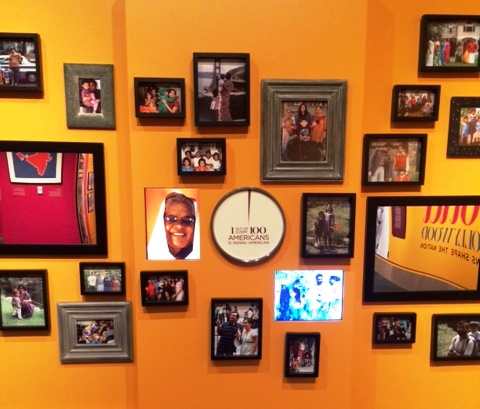
 families6 months – 18 months: Babies are learning to recognize themselves and their families. Take the time to look in a mirror and identify baby and yourself. Describe your features and talk about your similarities and differences. Head over to the family photos and pull up a family photo on your phone. Compare it to the families on the exhibit wall. At home, share a book about families or sit down and make a toy family. This is a great opportunity to begin talking about how not all families are the same. Even at such a young age, you can begin to lay a foundation for understanding and respecting diversity.

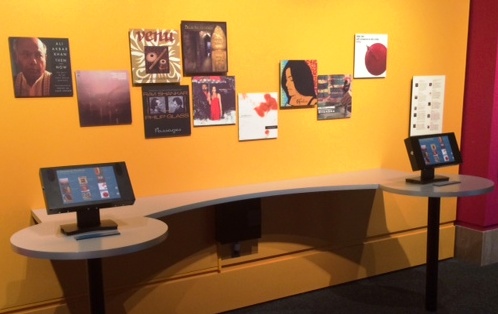
listening station19 months – 3.5 years: Toddlers love music and dancing, so it is great that this exhibit features a listening station. Pick a couple of tracks and see if you can compare their tempo or guess the instruments. You might simply ask which their favorite was. Give them a chance to dance to the music and then go to the outer hallway and see the images of Indian dancers. Notice how the dancers are moving their body and what they are wearing. Build on the experience at home by listening to more Indian music or discovering that of another country. Look up a few videos highlighting different Indian dances and watch them together on a tablet or computer. Similar to the infant experience, introducing your toddler to the arts of other countries will help them gain an appreciation of their culture and, those of others.

photo (5)Preschoolers – Early Elementary:  A great way to connect with young children is to begin with their personal experiences. Since food is universal, the table would be a great place to begin a conversation about the foods we eat at home or at our favorite restaurants. The exhibit can teach children about food from India AND about the many cultures that contribute to the food we eat in the United States. If food doesn’t interest your child, consider talking about some of the notable Indian Americans like football player, Brandon Chillar or fashion designer, Naeem Khan.

Finally, consider going to visit the Freer and Sackler’s collection of Indian art on another visit or grabbing a bite of Indian food at the Natural History’s café.

Like with any visit, keep in mind some of these helpful tips for visiting a museum with your kiddos and enjoy!!

Rethinking the Environment

Posted on behalf of SEEC Educator Amber Simatic:

For the past several years, my classroom left much to be desired: white walls, fluorescent lighting, and undefined spaces. However, at the beginning of the school year, I set a goal to create a more comfortable and inviting environment and to truly utilize the classroom as a teaching tool. I tried everything — changing bulletin boards, hanging art prints, displaying children’s drawings; but having mismatched, bright, primary colors everywhere was just not cutting it.

Early in the school year, I was unable to focus on the environment as much as I would have liked, given the challenges of settling in with a new class of students and getting to know a new team of teachers. However, within a few months we found our rhythm and I was able to focus again on the world around me. That’s when I noticed another SEEC center had used magnetic paint on a large wall to hang art with magnets instead of tape, which caused the wheels to start turning and brought me to my current realization: that I could expand the definition of changing my classroom beyond that of simply rearranging bulletin boards; that I could begin to think of my classroom as a home away from home and put just as much thought and care into it as I do my own home, because, after all, teachers and students spend a lot of time in their classrooms!

Once I realized my classroom’s potential, the possibilities became limitless.
A particularly challenging area of my room, above the changing table, could use some magnet paint, I thought:
“If that area can be magnetized, why not the whole wall?”
“And if I can use magnetic paint — why not colorful, magnetic paint?”
“Why not paint the whole room?”
“And if I can paint the whole room — what other changes, big and small, could I make to turn this classroom into a home?”
Each day at nap time, when the room was quiet and the soft music played, I would pat the kids to sleep and look around at the white walls, dreaming of color and comfort. For people who know me well, this concept is not a novel one: every apartment in which I’ve ever lived has been painted, if the lease allows.
I love having the creative outlet to change a space, but until recently I had never thought of applying it to my classroom.

To begin, I reflected on how the space worked, where the kids congregated, and how the placement of furniture influenced traffic patterns. I made several lists of what I liked and what I didn’t like; what I could change and what I couldn’t change; words that would describe my room and words that I would like to describe my room. These lists were extremely helpful in determining how to start the process.

There are a lot of things to consider when it comes to the physical classroom environment, the basics include: color, line, texture, form, and space. These five elements work together to create the physical environment.
Color can evoke certain moods and emotions. We even use this idea in our daily lives with sayings such as “green with envy” and “feeling blue”. Generally, when painting walls, cool colors like green and blue are calming while warm colors like red and orange tend to be stimulating.

Line can also set the emotional mood. Horizontal, vertical, curved, and diagonal lines all evoke different feelings. For example, diagonal lines suggest motion while curved lines relax a room.

Texture, both tactile and visual, engages learners and creates interest.

Form and space relate to how a room is set up. For example, does the placement of shelving units create symmetry and balance?

Baskets

Thinking about all of these items at once can quickly become overwhelming. I started with color by painting the walls then branched into some of the other elements, such as line, by adding a curved curtain draped along a window, and texture, by replacing plastic toy bins with baskets. Other things started falling into place too; I brought in plants, made slip-covers for brightly colored pillows and bought rugs.

Full view

If there is one thing I’ve learned throughout this entire journey it’s that reinventing the classroom is indeed a process. It’s a transformation that doesn’t happen overnight. Plans change and the project must adapt to fit our needs, and, more importantly, those of the children.

I’ve also learned to be vulnerable. Parents, kids, other teachers, and any one who walks into our center will see my classroom “unfinished” and that’s okay. As it turns out, the process is about figuring out what works best and feels most authentic for you and your classroom.

The Power of Real

For too long school has taken place mainly within the four walls of a classroom. This has been especially true in early childhood where field trips are often viewed as a nuisance for the adults rather than a gift to young children. This is not the case at SEEC. I marvel daily as I see teachers happily bundle up children from babies through kindergarten to take them out into the museums and other sites around the DC area. You see, at SEEC, we believe in the power of real and that children learn in ways that are richer and deeper when they get a chance to see the real items.
Imagine how a study centered around the Wizard of Oz is more meaningful for a group of 4 year olds when it starts with the actual ruby slippers, extends to exhibitions about caves where emeralds come from and the gem exhibition to see actual gems; moves from visiting Marla the tin woman piece in the Smithsonian American Art Museum to compare it to the Tin Man in the story to the Library of Congress to see the original book where you discover that Dorothy didn’t wear ruby slippers originally!

Imagine how the study of wheels is richer for a toddler when they not only see wheels in books and photos but go to the National Museum of American History to see them on covered wagons, trains and old cars; to the Metro to examine the cars of the train there; to the Hirshhorn to look for wheels in art and notice that the building itself is shaped like a wheel before they even enter the museum. While we are lucky that we have all these rich resources outside our door, in reality every neighborhood has its own set of resources. A toddler class in the city could go out and look at buses, various cars, motorcycles and bikes. A class of four year olds could go to the local shoe store to see shoes, a jewelry store to look at emeralds and the library to look up the book. The key is to get out of the classroom. Make learning real. Let children explore the real objects and make connections to their own lives.

At SEEC we believe that museums of all types and in every city should play a more active role in the education of our children. We believe that learning should be a search for knowledge rather than sitting in a classroom being fed information. We are trying to share our work more widely to try and build stronger bridges between school, museums and home. At SEEC, we believe that it does, indeed, take a village to educate a child.

Posted on behalf of SEEC Executive Director Kimberlee Kiehl