
This post was written by the Center for Innovation in Early Learning’s Director, Betsy Bowers
Partnership
Friendship was the theme for the National Archives Cherry Blossom Festival Family Day, and SEEC was excited to help plan a variety of activities for the event. Our goal was to engage families of all types and provide fun but informative activities that spoke to multiple generations and varied interests.
Geography
The GeoFind Challenge gave visitors an opportunity to learn interesting facts related to gift giving between nations. For example, did you know that the King of Siam offered President Lincoln an elephant to help with farming but he graciously declined? While several participants already knew, others learned that the city of DC’s many cherry blossom trees were originally a gift from Japan. We met students from all over the world who enjoyed the geography, history and political connections tied to this mapping challenge.
Cranes
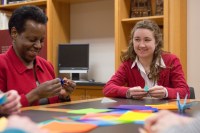
For visitors that had family members more interested in using their hands to create a special souvenir to remember the day, many made origami cranes. A Japanese legend says that if you fold 1000 cranes you are granted a wish. Over the years, thousands of origami cranes were sent to the American people and US presidents, along with good wishes from the people of Japan. These are now found in the National Archives’ holdings. Folding the origami crane was a popular activity enjoyed by many visitors. Younger participants were encouraged to try creating the slightly simpler samurai helmet – which also has interesting connections to the diverse holdings of the Archives. Did you know that President Reagan received a very large framed origami samurai helmet made of over 3000 pieces of paper folded by Japanese children?
Treaties
Especially meani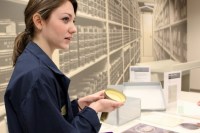 ngful was the amount of time that families took to work together to create a family treaty. Many took the task to heart as they learned that this type of agreement between two nations required conversation, cooperation and compromise. A wide variety of ideas were discussed. For example, younger family members agreed to clean up their rooms in exchange for time to play with a special toy. Teenagers agreed to balance their screen time with in person family time together. And, members of a high school color guard worked on agreements that supported their group and bound their friendship. After using language from a treaty between the US and Japan and writing the document in special script, families worked together to bind them with a fabric cover. Once finished, this personal connection to treaties inspired visitors to find out more and the discovery boxes which included the examples of materials that were used to make historic treaties. From there, they were encouraged to find an authentic treaty on display in the Archives’ galleries.
Benefits of Working Together
SEEC and NARA worked together to create additional activities that accommodated different 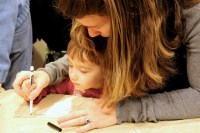 ages, learning styles and interests. As NARA and SEEC colleagues reflect on the planning experience, we are reminded of the synergy that these types of collaborations evoke. Each team member brought a different area of expertise to the planning process. We encourage you to refresh your own practice and seek out a similar partnership. Your results may be similar: positive multigenerational learning experiences for families from near and far. More important to us, though, was to see families of all ages having fun together in this national treasure known as the National Archives and Records Administration (NARA).
Teachers
Want to turn these ideas into classroom-friendly projects? Just visit NARA’s blog for some great adaptations.
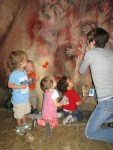
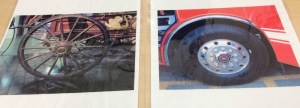
 workshops. If you are an educator, post your ideas and thoughts. If you are a parent, come and check us out. Our next set of classes begins January 31st when we are offering infant, toddler and pre-K classes. Don’t be deterred by the weather families – what we lack in warmth we make up for in ample parking during this time of year!


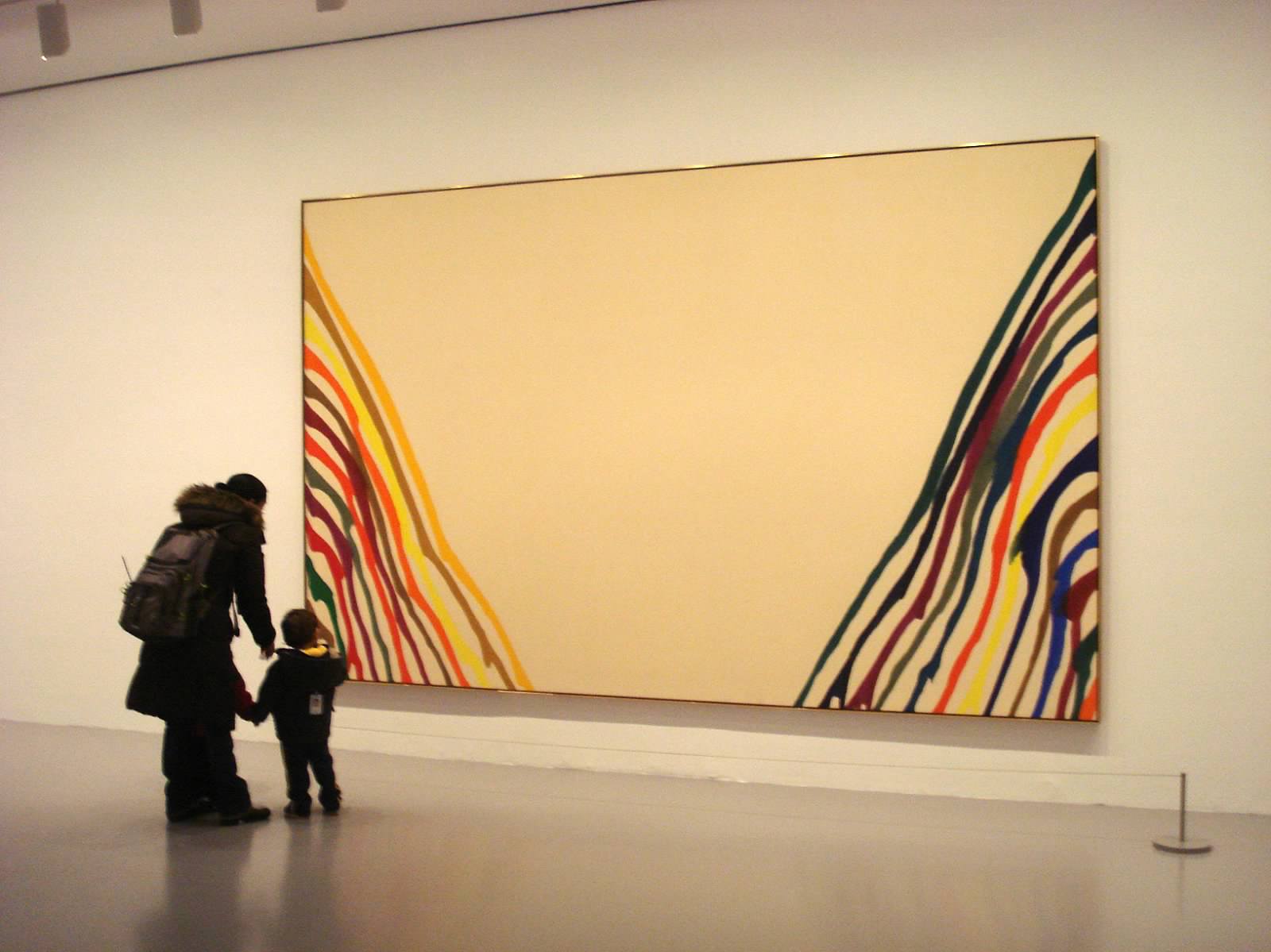


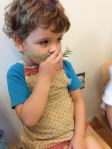 nses, a lot of other things can happen. They can use the experience to practice and build upon their vocabulary. Ask them questions: “What color is it?; How does it feel?; What does it smell like?. A parent can also enhance this experience by adding objects that can be used for comparison purposes. , Add parsley, for example, and encourage basic math skills by asking them to find shapes or compare the size of the two herbs. You can also stimulate critical thinking by adding elements like, scissors or water. These elements prompt children to conduct experiments: i.e. “What will happen if I cut the rosemary – will it still smell? or, What will the rosemary feel like when I pour water on it? Adding these components not only gets them to investigate and hypothesize, it also gives them the chance to practice their fine motor skills. Cutting and pouring are everyday tasks that they hope to master one day and using these skills will also aid in developing the coordination required for writing.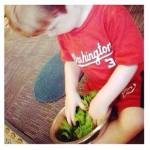
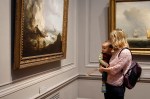 interaction during the museum visit. Often we ask parents to lead simple activities in the galleries that are open-ended and encourage observation and conversation. For example, we might ask infant/toddler parents to find all the boats in a gallery space or simply describe an object. If it seems odd to talk about having conversations with your little one, remember recent research is making direct correlations between how much a parent talks to their child and their literacy.
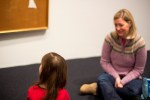 Preschooler families might be asked to create a story or make a list of questions they have about an object. In both of these scenarios, we are encouraging independent thinking, literacy and providing time for you and your child to learn together. It is also giving the parent practice having open-ended conversations and ideas of how to use museums when there is not an educator around.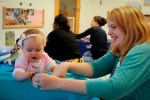


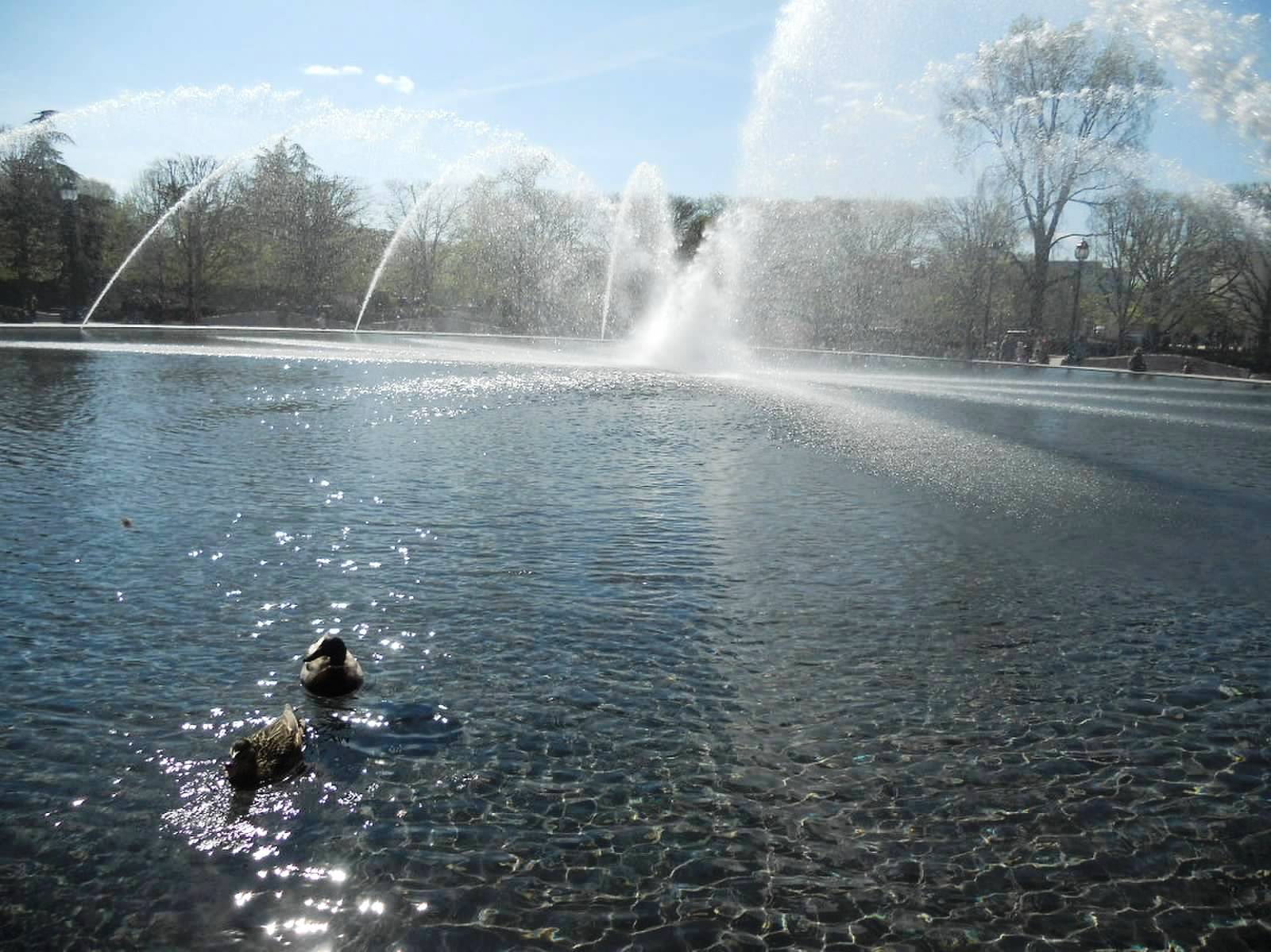
 Pools, beaches, lakes, sprinklers…it’s that time again! Children all over the US are enjoying summer-time to its fullest and likewise, parents are looking for water-inspired activities. Here in DC, we are lucky enough to have a number of public fountains that are both beautiful and refreshing. Fountains capture the imagination of children, so why not take this opportunity to create a learning experience?
 Infants


 seecstories.com