Teacher Feature: Three Year Old Classroom Explores Pirates

It’s Teacher Feature Thursday!

This week we are featuring Brooke Shoemaker. Her Pre-K three classroom was learning about The Swiss Family Robinson and decided to spend a week on Pirates. Below you will find a reflection from Brooke and images from some of her lessons.
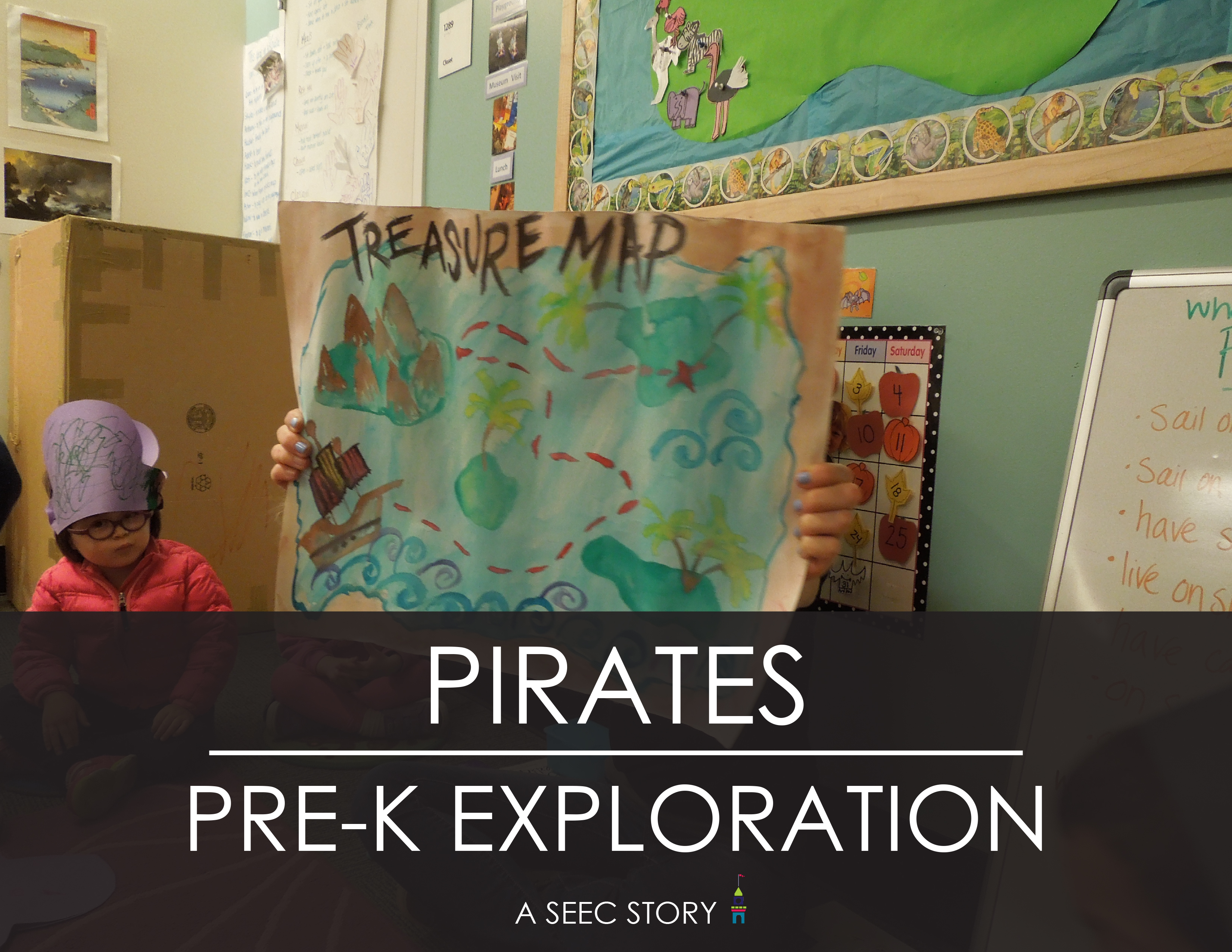
Pirate_Koala_TF

What were your topics of exploration?

The Koalas had been exploring topics related to the Swiss Family Robinson.  Over the course of the unit we explored boats, architecture, animals, navigation and pirates.  Specifically for pirates we talked about what pirates wear, where they live, how they talk, pirate flags and pirate sidekicks – parrots.

What were your learning objectives? (What did you want your children to take away from the lesson?):

From the Treasure Hunt lesson I wanted the children to:

  • Reflect on the past lessons during the Swiss Family Robinson unit
  • Use critical thinking skills to solve clues as to where we were to go on the treasure hunt
  • Use pre-math skills to fill in the next symbol in a pattern (to open the lock on the treasure chest)
  • Feel accomplished after achieving the goal of solving all the clues and finding the treasure chest.
  • Enjoy dramatic play as a pirate

What was most successful about your lesson?

The most successful part of the lesson was how excited the students were about solving the clues and finding the treasure hunt.  They were very enthusiastic about wearing the pirate costumes, liked talking “in character” and worked hard to solve the clues.  I was happy that they remembered our past lessons and it was successful in being a cumulative last lesson for our unit.

What could you have done differently? What recommendations would you have for another teacher trying out this lesson?

If I were to do this lesson again I would shorten the treasure hunt by 1 or 2 clues.  The children were great sports and walked a great distance to solve the clues and get to the treasure chest, but it ended up taking a long time and I think the objectives of the lesson would still have been achieved with fewer clues/stops.

Here are a few images from their unit on pirates:
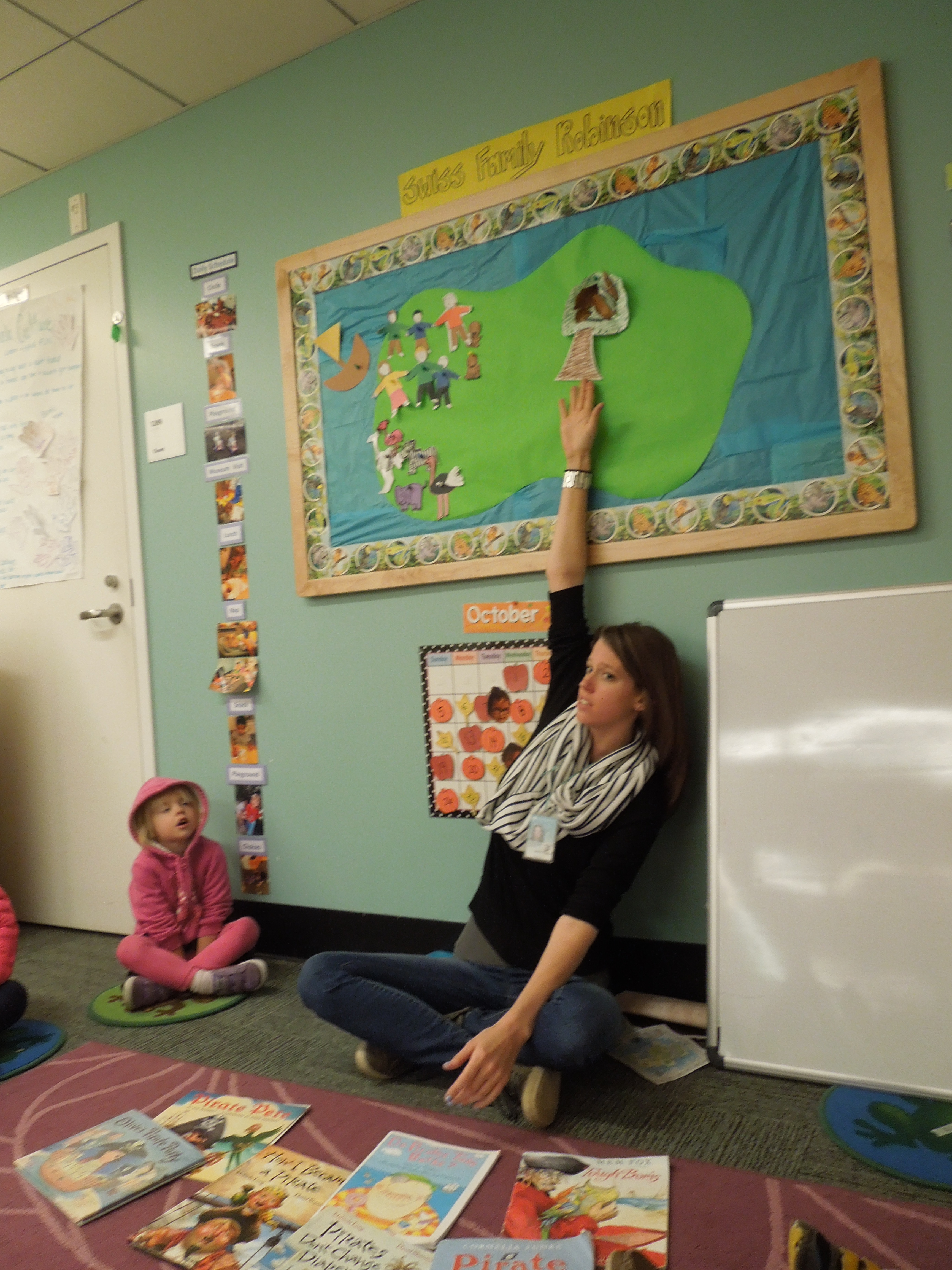
DSCN1122Brooke began her lesson by revisiting the themes and story line of The Swiss Family Robinson before introducing her theme for the week: pirates! The kids were so excited! Brooke spread out a collection of pirate themed books for the kids to look at and then asked the group what they knew about pirates.
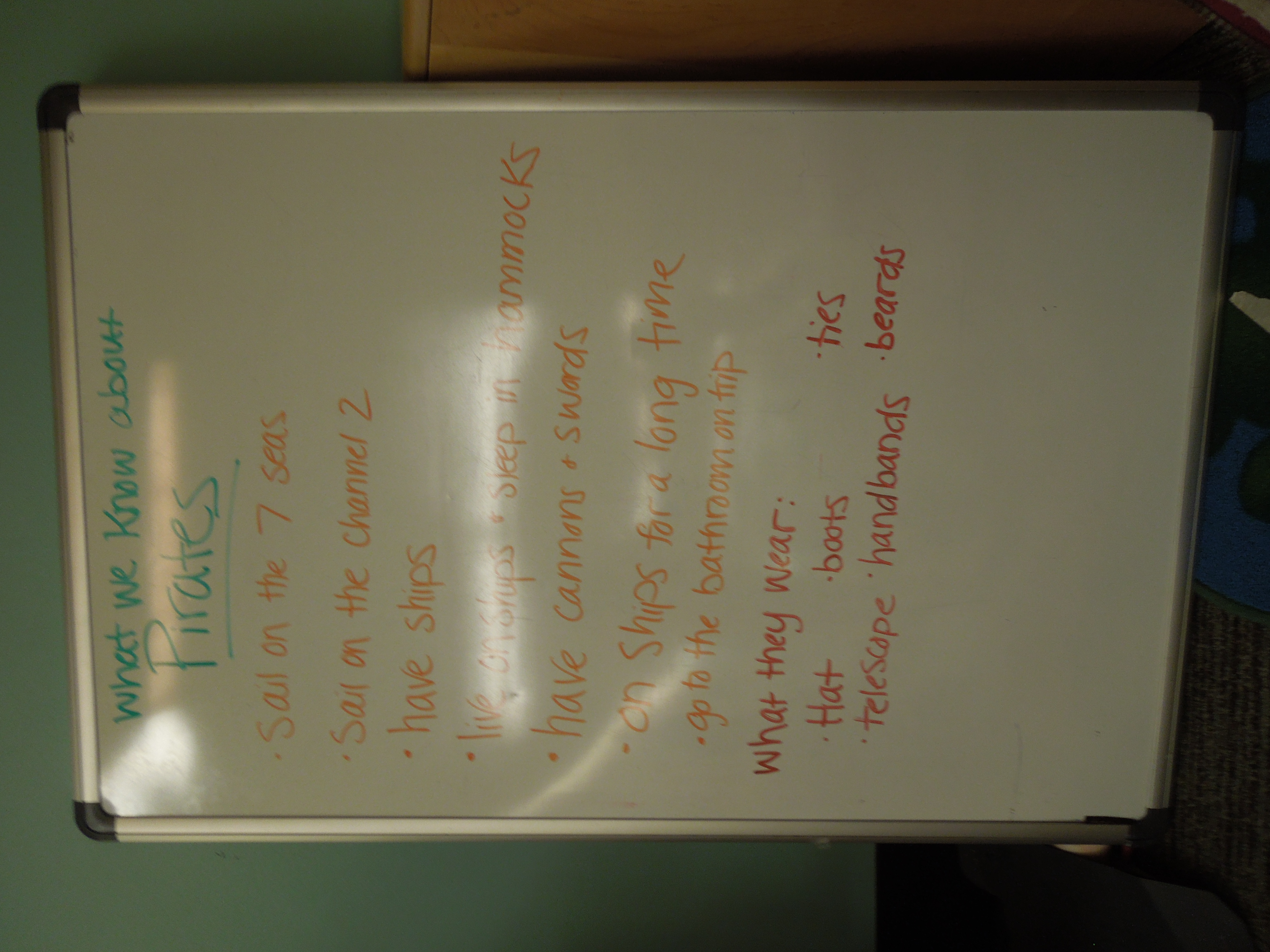

DSCN1144This is the list of things the group came up with (even pirates need to go potty!).
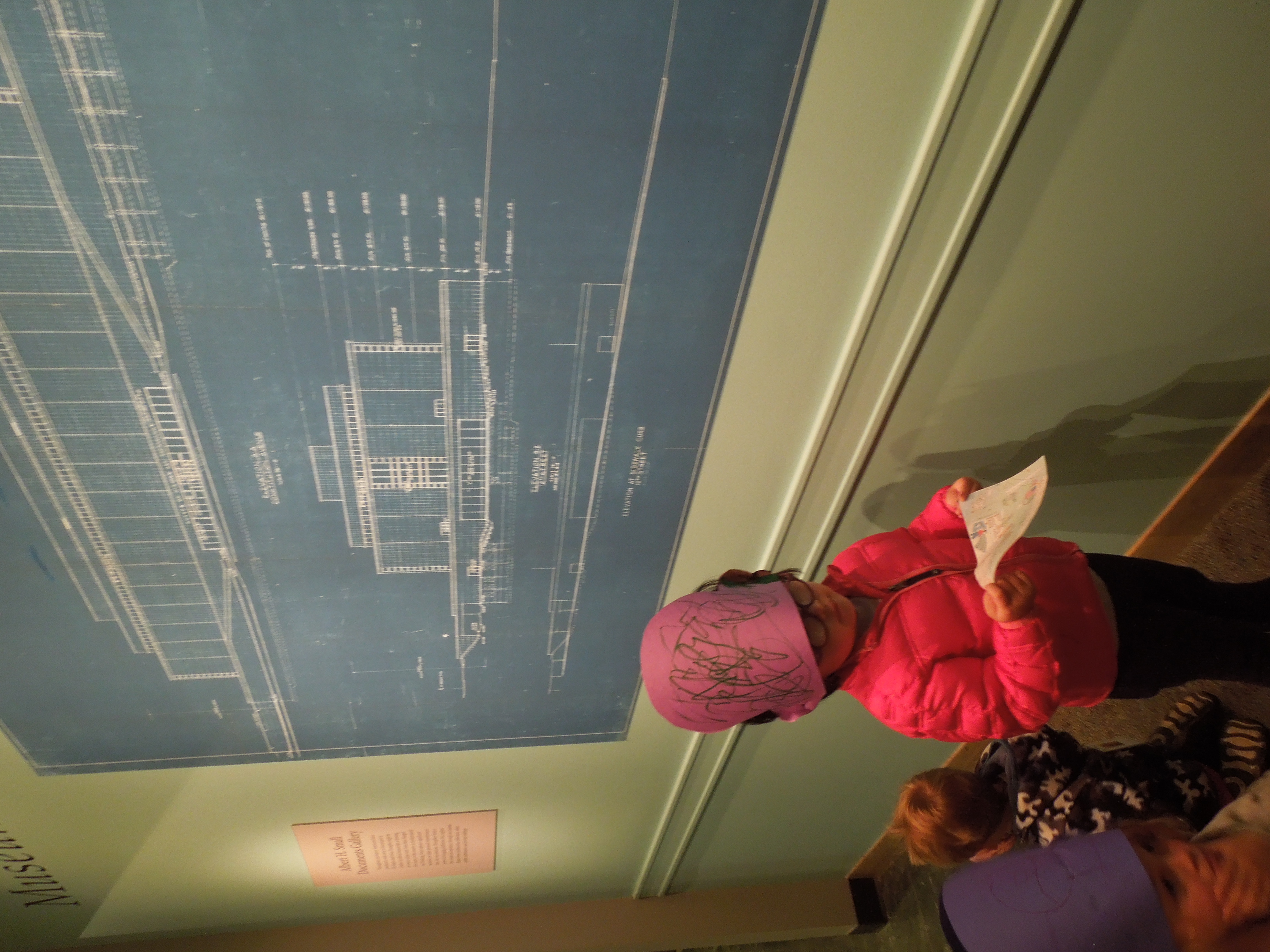
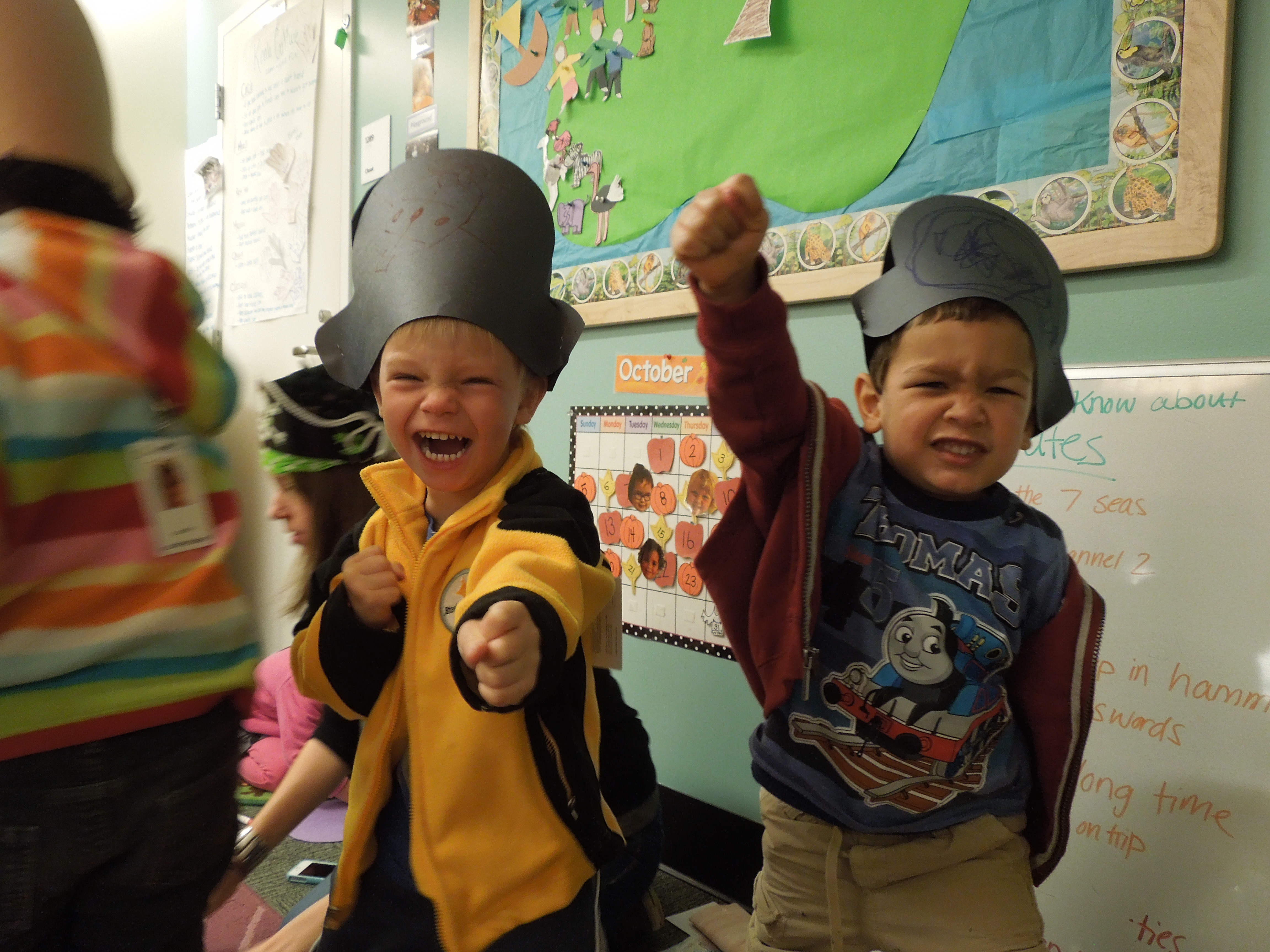
DSCN1142Brooke then passed out pre-cut pirate hats for the children to decorate and wear during their scavenger hunt. As you can see they loved them! She then explained that the class was going on a treasure hunt around the National Mall. Brooke had written clues prior to the lesson that would guide the group to some of the places they had visited during their unit on The Swiss Family Robinson. She wanted to use this activity as a way to summarize their past topics.
DSCN1162Their first clue took them to the blue print of the National Museum of American History building. Earlier in their unit they used this image to talk about architecture and the building of the Robinson Family home on the island.
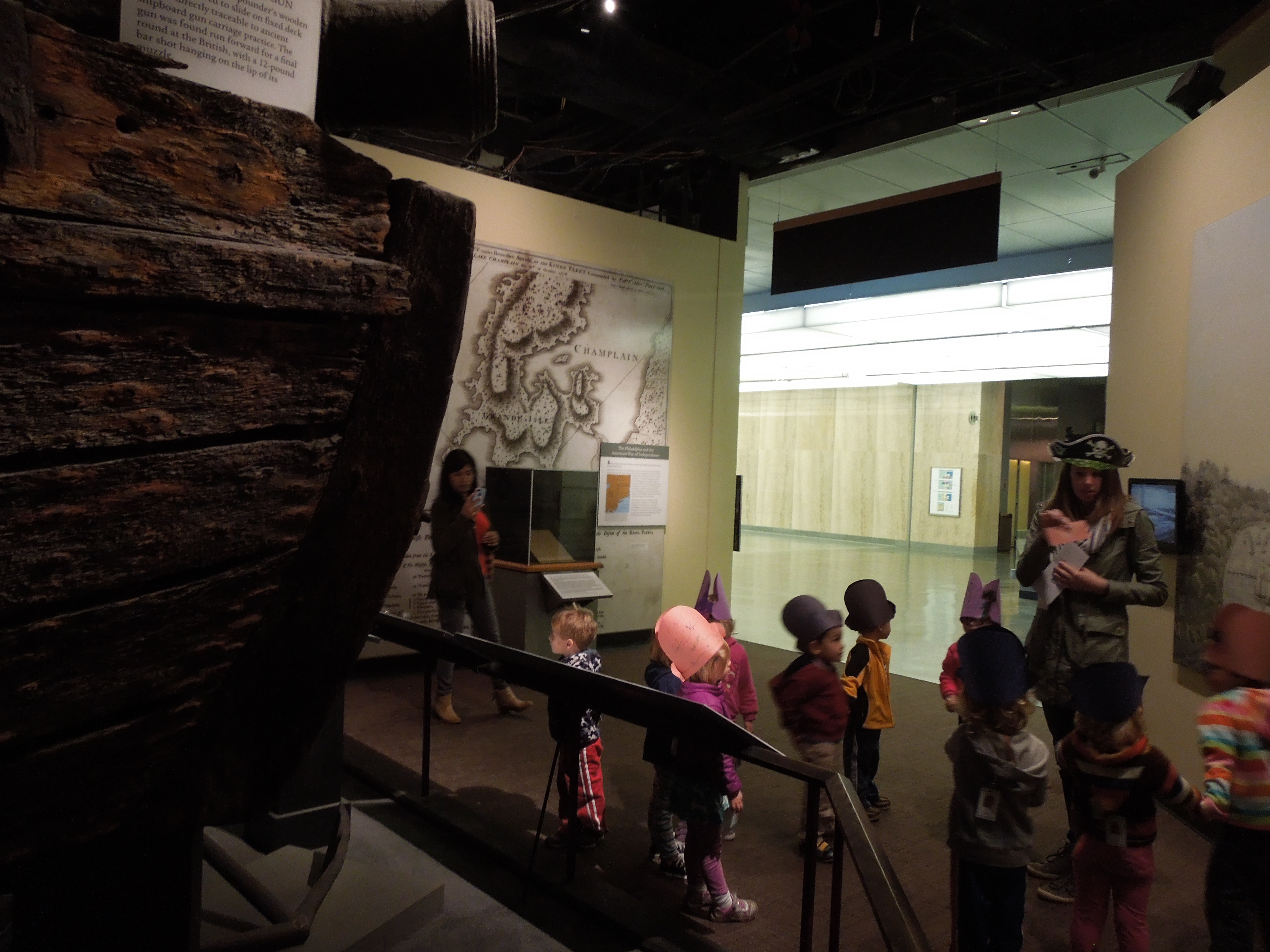
DSCN1177Their second clue led them to the third floor of the National Museum of American History to see the “Gunboat Philadelphia”  (http://bit.ly/1IZ8r51). Previously in their unit, the teachers used this boat to talk about how the Robinson family traveled to the island.

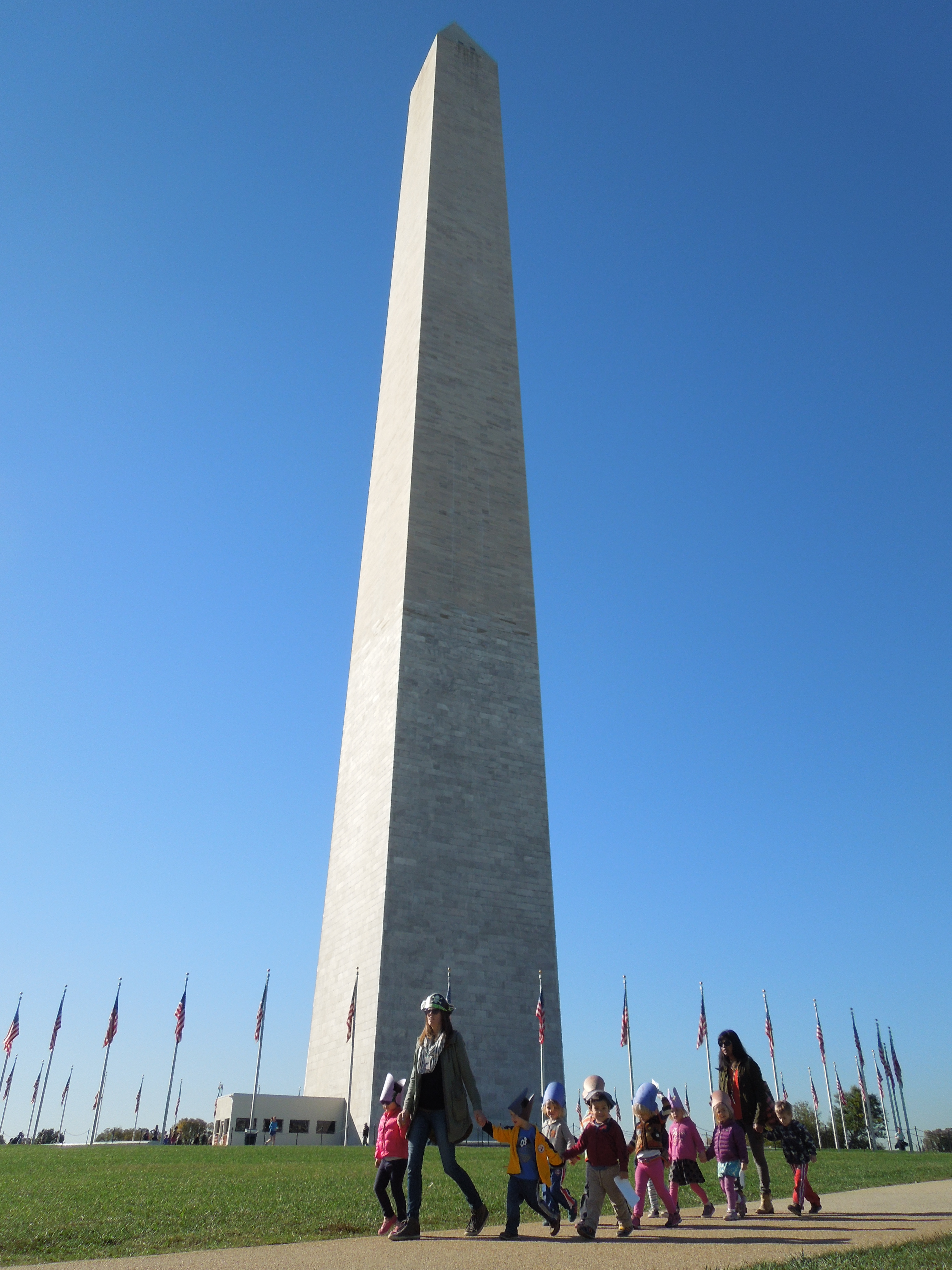
DSCN1190Their third clue guided them all the way to the Washington Monument. They visited the top during their week on architecture.
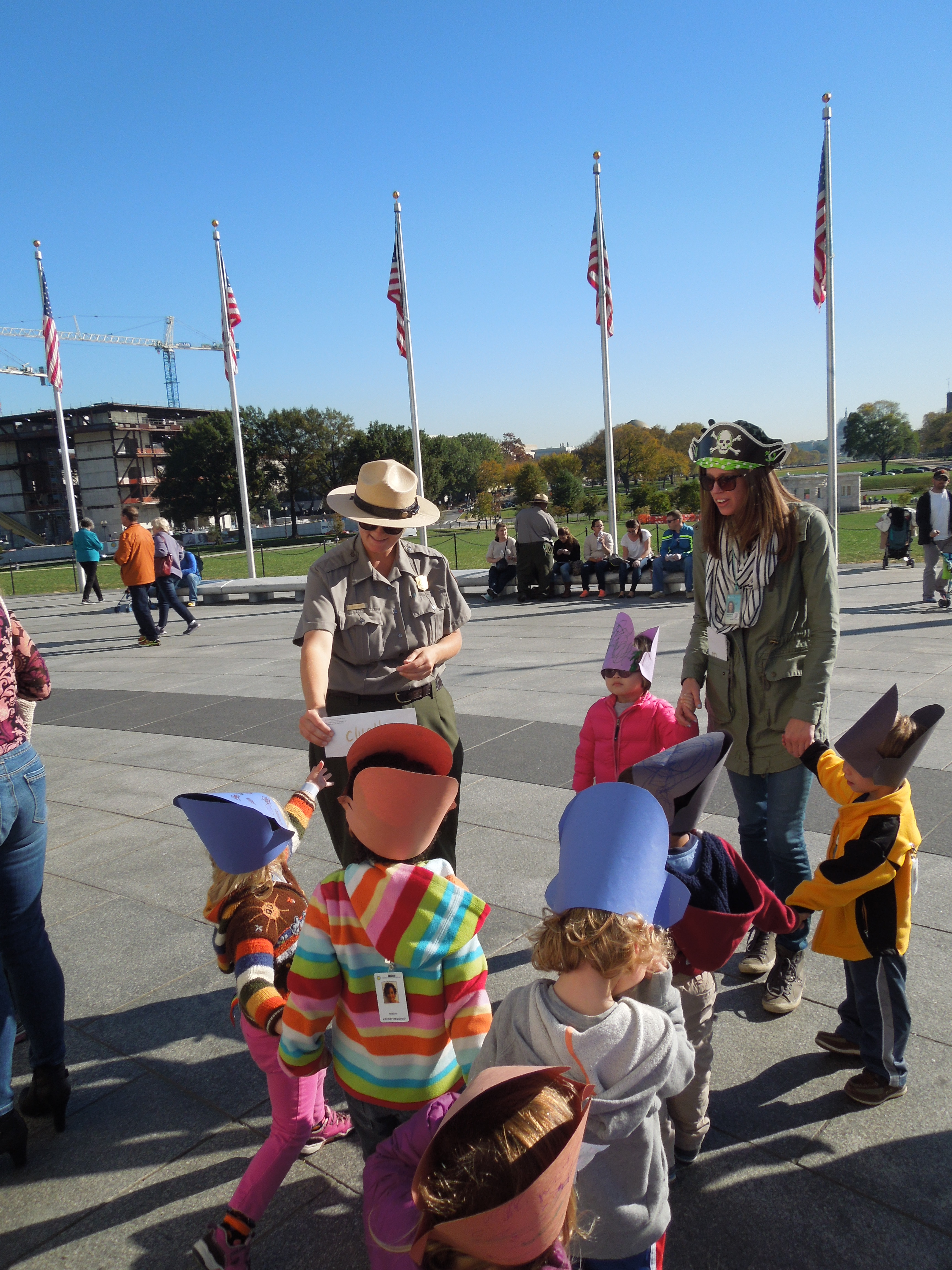
DSCN1194Brooke asked a park ranger to distribute the next clue.
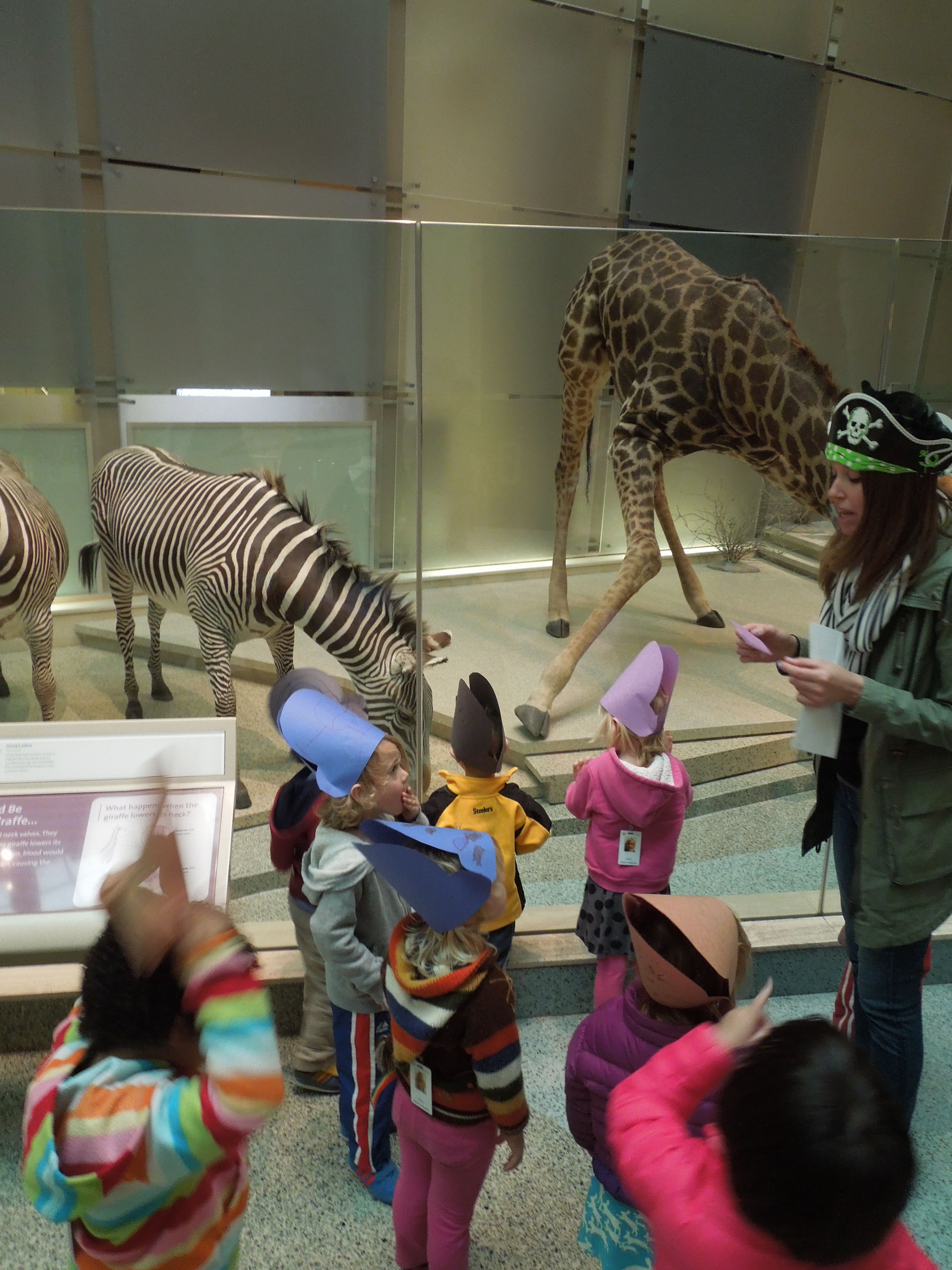
DSCN1203 DSCN1208The fourth clue led them to the National Museum of Natural History Mammal Hall (http://www.mnh.si.edu/mammals/index.htm). In the book, the Island is full of animals, so the group often went to the Mammal Hall to learn all about some of the creatures that inhabited the Robinson’s home.
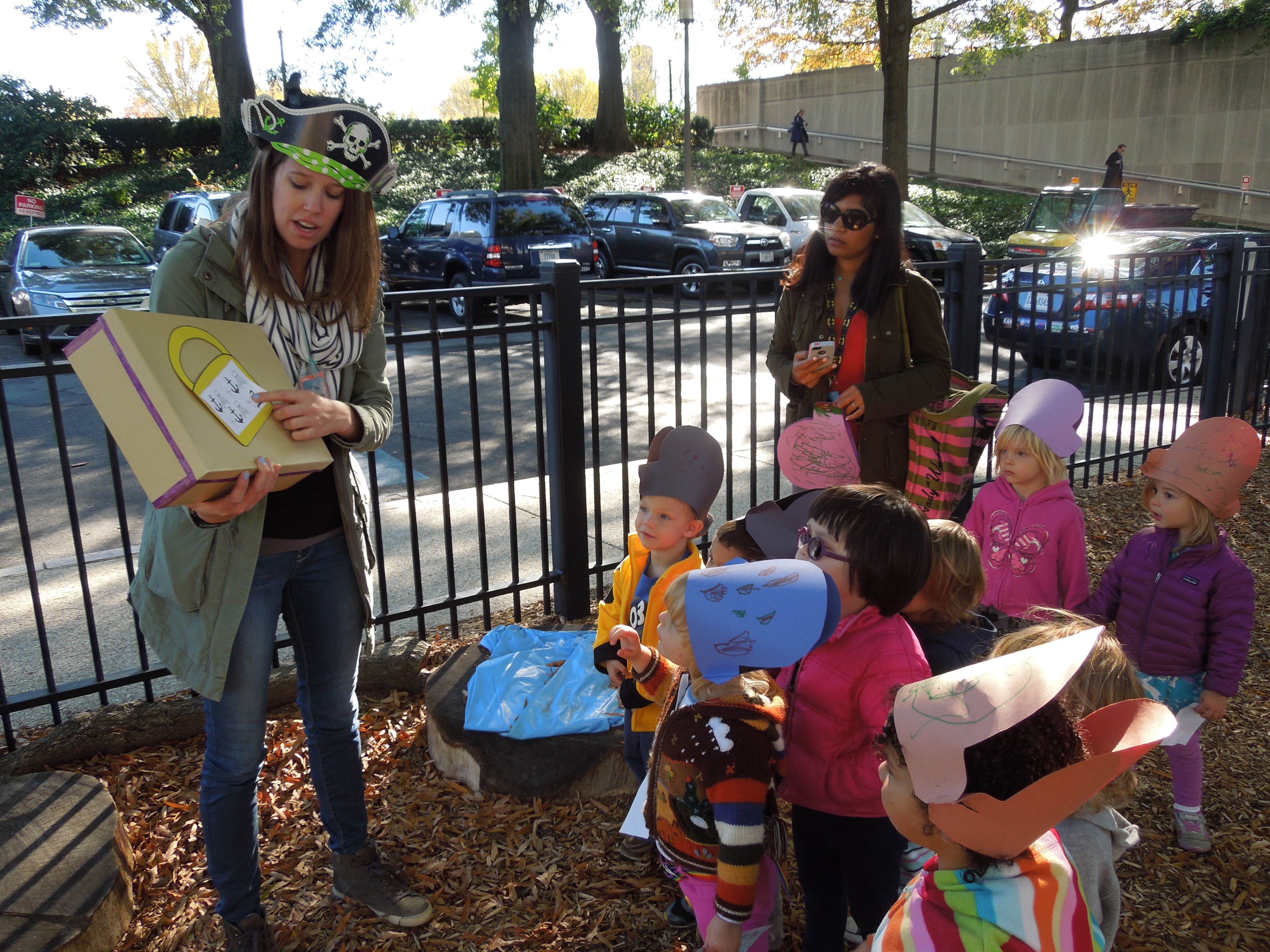
DSCN1216Their last clue directed them back to their playground where they found the treasure chest!
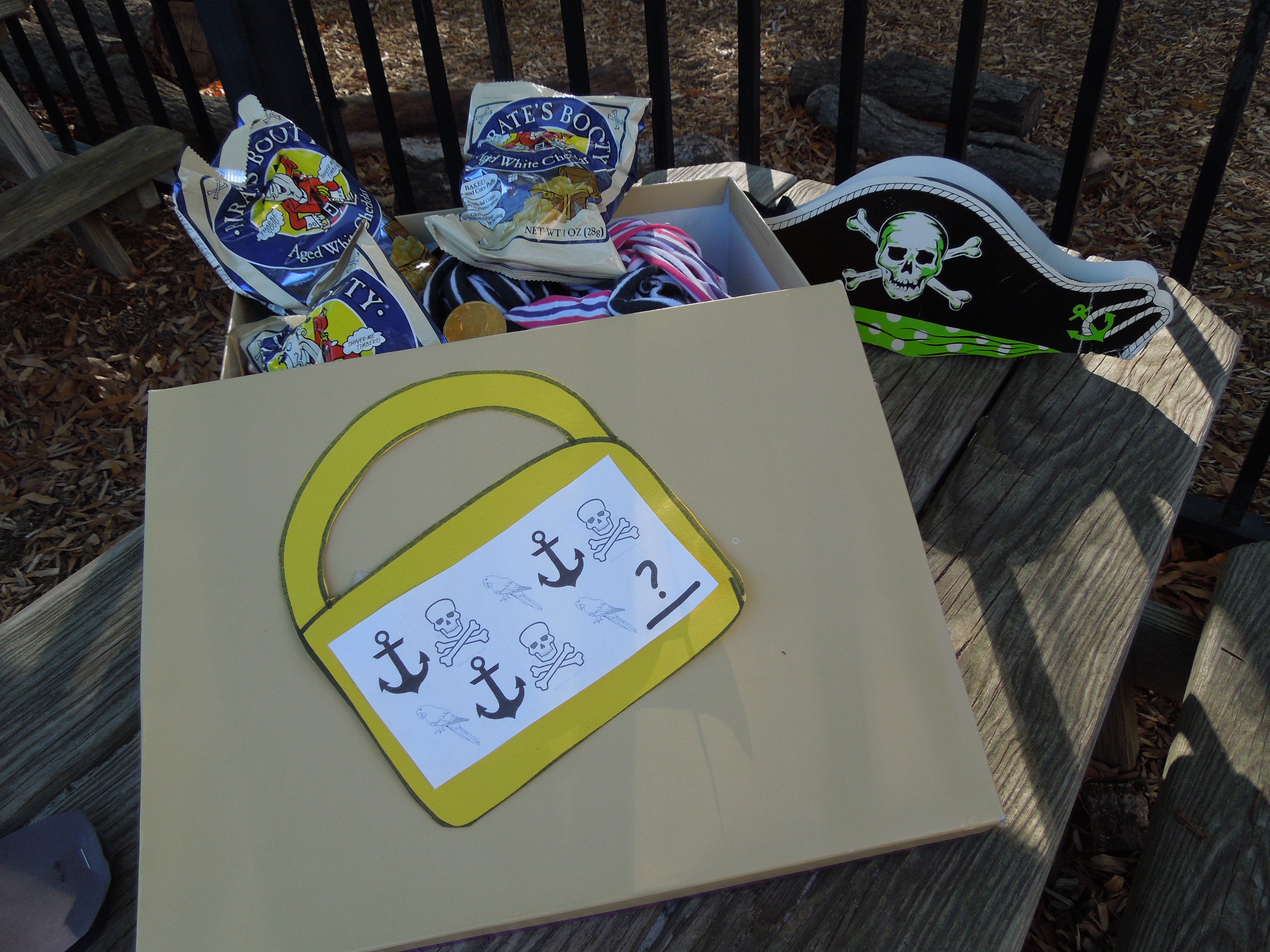
DSCN1225In order to open their treasure chest they needed to crack the pattern and fill in the next shape.

DSCN1221Inside was gold, Pirate’s Booty, and pirate headbands!
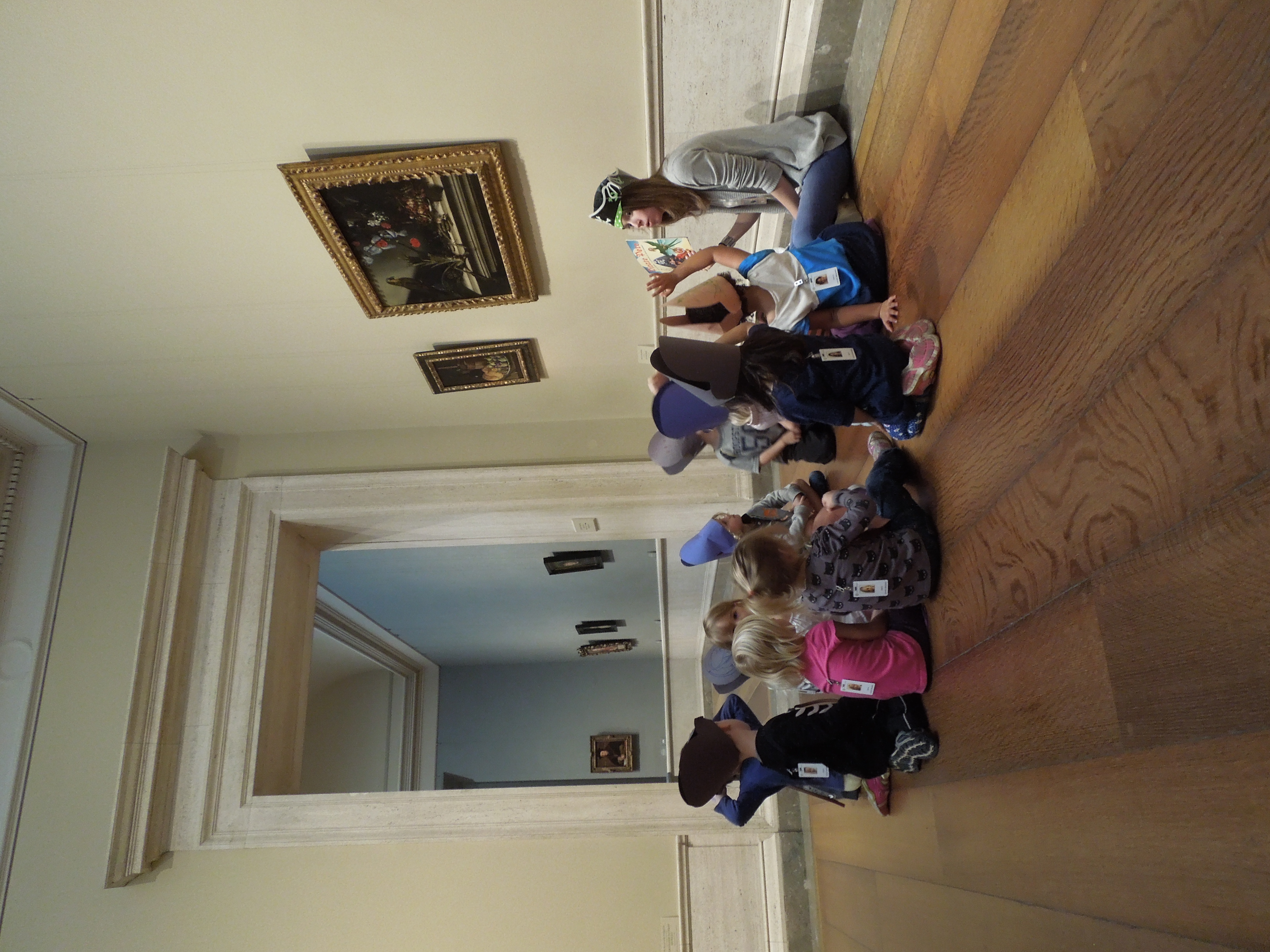
DSCN1245The next day Brooke took the class to the National Gallery of Art to see Still Life with Artichokes and a Parrot, 17th c., Italian. For her visit, she focused on the pirate’s trusty sidekick, the parrot. They read Pirate Pete by Kim Kennedy and talked about all the ways a parrot can help a pirate.
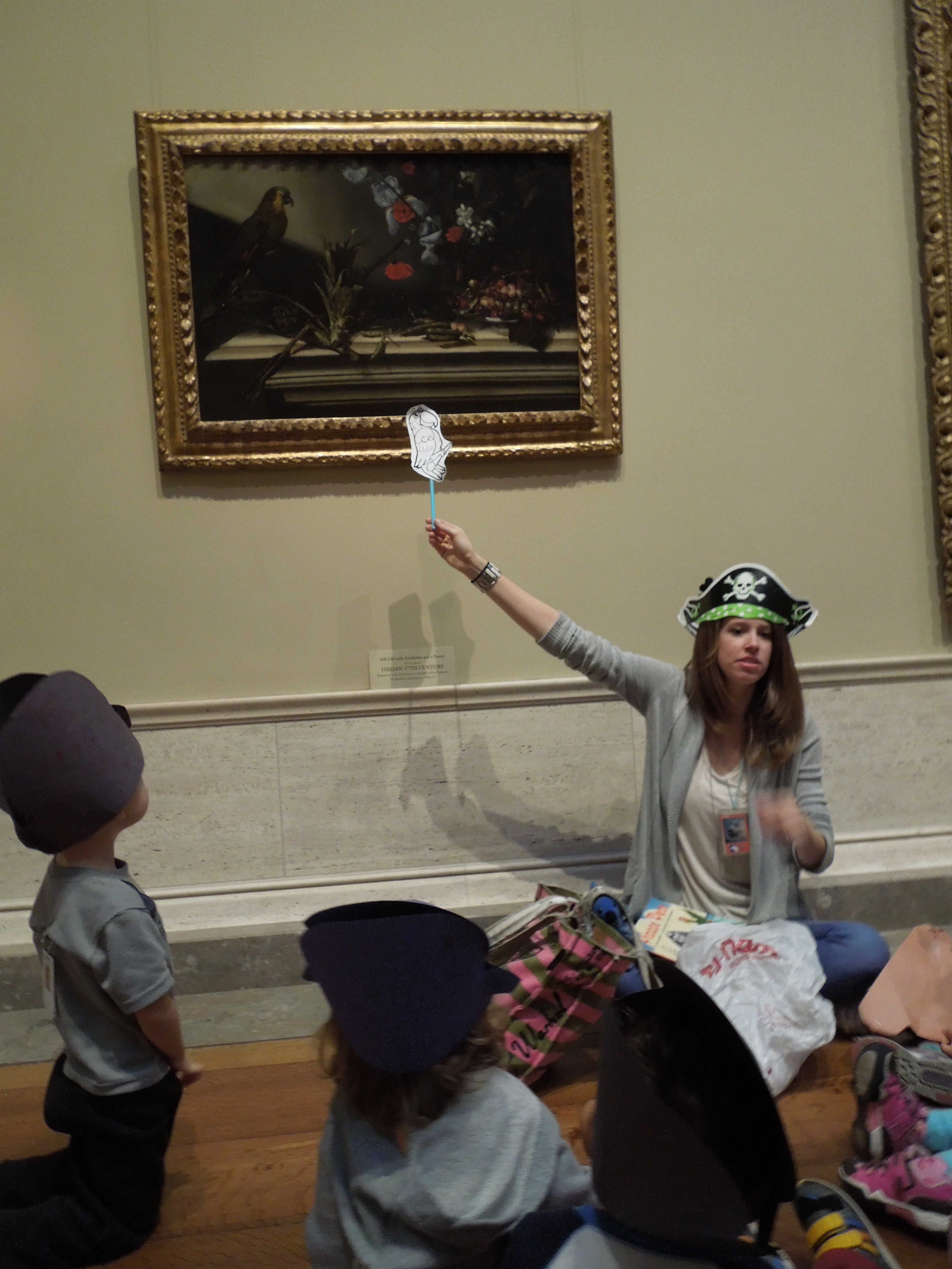
DSCN1250Brooke brought each child a paper parrot and asked them to look closely at the painting.  She asked: “What is the same or different about the one in your hand and the one in the work of art?” The kids had a lot of ideas to share.

The 3 year olds had a wonderful time exploring the book, The Swiss Family Robinson by Johann David Wyss. Be sure to check back after the holidays for our next teacher feature!

Teacher Feature: Three Year Old Classroom Explores Elvis

It’s Teacher Feature Thursday!

This week we are featuring Rebecca Wilcox. Her Pre-k four classroom was learning about Music and decided to spend a week on Elvis Presley. Below you will find a reflection from Rebecca and images from some of her lessons.

Elvis_Cover

What were your topics of exploration?

At the start of the school year, the Wallabies showed a great interest in instruments. As a result, we decided to lead the class in exploring music and instruments. When we finished, my co-teacher and I decided to share our musical passions with the kids so I was able to spend the week with them exploring the life and music of Elvis Presley. We talked about Elvis’ personal and professional life, highlighting his ambitions as a child and how growing up in his circumstances influenced his philanthropic endeavors as an adult. I hoped that this would provide a logical connecting thread to a broader theme of empathy and encourage them to feel empowered to make changes in their world. We listened to lots of his music all week, watched him singing and dancing on the 1968 Comeback Special, and talked about different ways that Elvis tried to help make other people’s lives better.

What were your learning objectives? (What did you want your children to take away from the lesson?)

For this week’s lesson I had one personal objective and two professional objectives. As a huge Elvis fan, I wanted to introduce and encourage an interest in the music of my favorite artist, Elvis Presley. Professionally, I wanted to develop close-looking skills and to provide a unique example of a person who was able to make positive changes in other people’s lives. My co-teacher and I have been utilizing the Visual Thinking Routine, SEE-THINK-WONDER, during which the children practice close-looking with an object or artwork. For this thinking routine, teachers ask each child to share something that they see, something that they think, and something that they wonder.

What was most successful about your lesson?

The most successful part about this whole unit was instilling an interest in Elvis’ music and Elvis as an icon. My passion for him definitely made an impact on the children and they love talking about him with me. I especially love the knock-knock jokes that they created: “Knock-Knock!” (Who’s there?) “ELVIS!!” I am always ecstatic when they request Elvis for their naptime music!

What could you have done differently? What recommendations would you have for another teacher trying out this lesson?

If I were to do this unit again, I would spend more time talking about how Elvis’ childhood struggles with poverty affected his desire to be a helpful and charitable person. While I am so excited that my class understands who Elvis is and why I love him, I feel that his charitable work is exceptional, especially because even after his death The Elvis Presley Charitable Foundation is a critical function of Elvis Presley Enterprises.

I would recommend other teachers learn about Elvis’ childhood as a means of creating a strong connection for the kids. I also recommend playing lots of his music and letting the kids have fun and enjoy his unique style! Also, Graceland (http://bit.ly/1BAIDu7) has fabulous resources for all ages and disciplines!

Here are a few images from their unit on Elvis:
DSCN1050

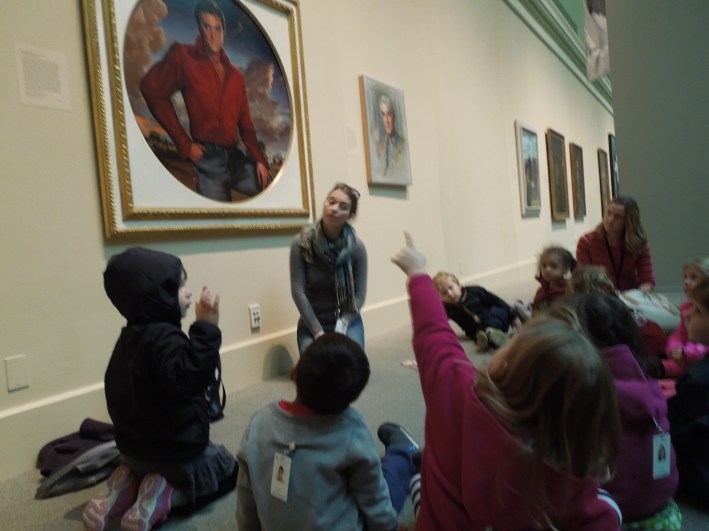
Rebecca wanted to start her unit by introducing Elvis Presley to the kids so they ventured to the National Portrait Gallery to see the painting, Elvis Presley by Ralph Wolfe Cowan (http://bit.ly/1zB6xU1). The children were invited to look at the work and share what they saw. The children had a number of observations that helped lead and guide the discussion. They wondered about the keys in Elvis’ pocket and the building in the back of the scene.

DSCN1070Rebecca used those observations to introduce Elvis’ family and childhood. She used the tablet to show Elvis at different ages.
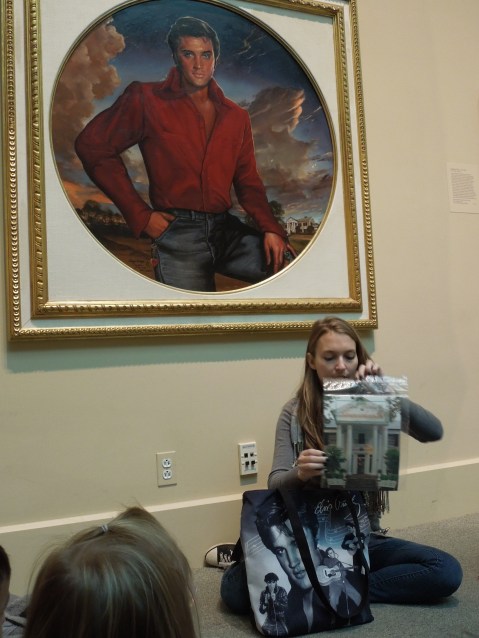
DSCN1063She then showed them other pictures of Elvis at the same age as in the portrait and also a larger image of Graceland.

DSCN1101The next day the class walked over to the Hirshhorn Museum to continue their exploration.
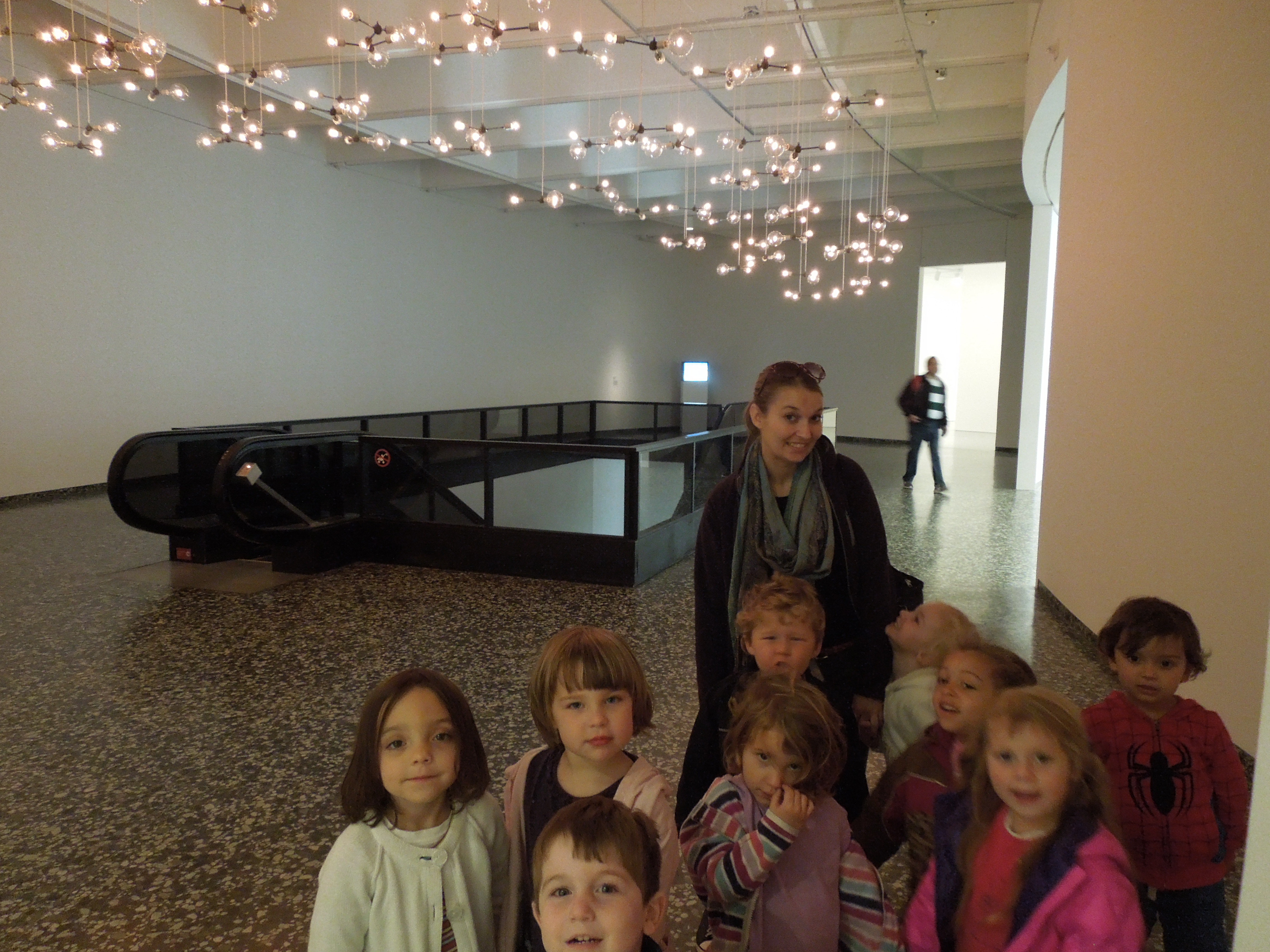

DSCN1119Rebecca focused her lesson on the Elvis classic “If I can dream” and visited the Cloud by Spencer Finch (http://bit.ly/1uoUAKM).  She wanted to focus on the concept of a dream. Illustrating that a dream can be a hope or desire or something you imagined when you were sleeping. The dark room and soft light from the art work set a wonderful atmosphere for them to talk all about dreaming.

DSCN1113Rebecca started her lesson by showing a video of Elvis singing his “If I can dream”.

DSCN1108Rebecca asked the group: “What is a dream?” After sharing the definition, she pulled out a few rest time items as way to emphasize the concept. She then asked the children what they dream about when they are sleeping. One child exclaimed “I dream about Museums!”

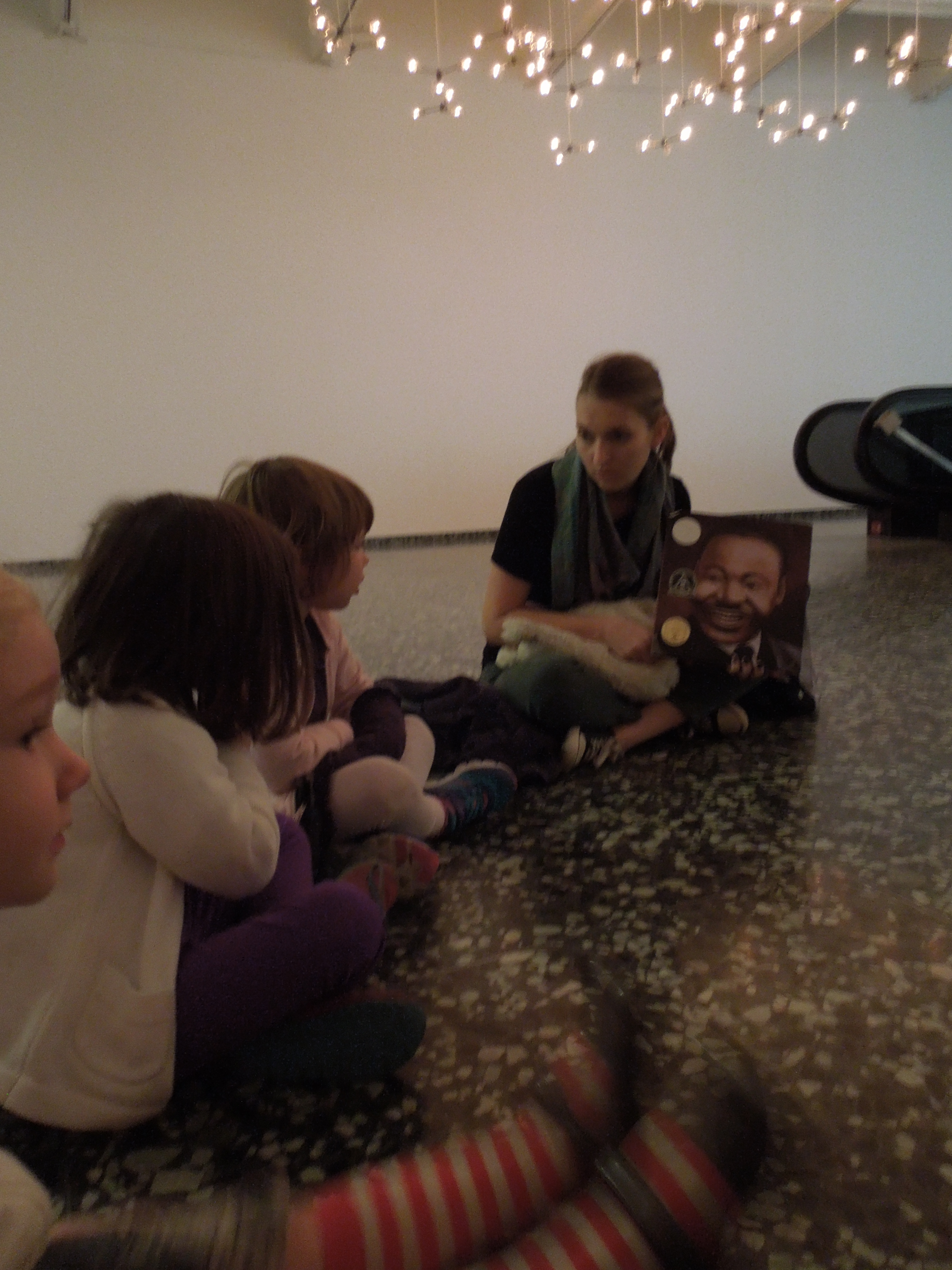
DSCN1114She then explained that the dream that Elvis was describing in his song is his hope for everyone to get along in the future. Rebecca then introduced Martin Luther King who also had big dreams and read Martin’s Big Words: The Life of Dr. Martin Luther King, Jr. by Doreen Rappaport. Rebecca ended the lesson by asking the children to share their big dreams for the future. One child said “I want to be a great big huge chef that feeds everyone in the whole word.” 

file (21)file (27)

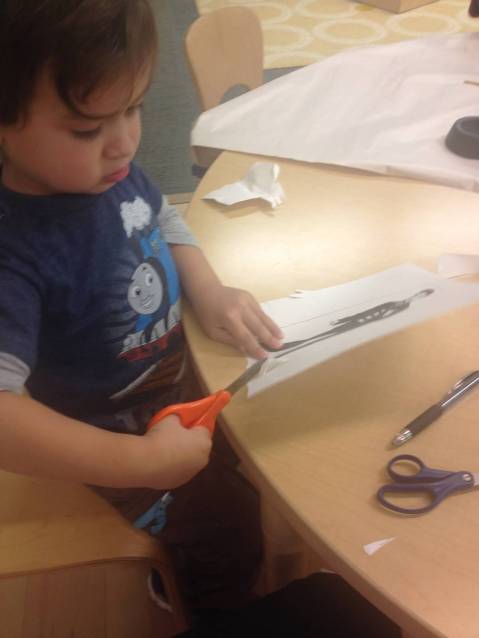
In the afternoon the children were invited to make their own hip-shaking Elvis. The class cut out Elvis and painted him with gold sparkles. The teachers helped fasten his hip to his body with a brad.

The class had a wonderful time exploring Music and learning all about Elvis. They have now moved on to a unit on performance! Check back in next week Thursday for an all new teacher feature!


Teacher Feature: Four Year Old Classroom Explores Dr. Dolittle

It’s Teacher Feature Thursday!

This week we are featuring Carrie Heflin and Emma Cowan-Young. Carrie and Emma’s pre-k four classroom learned about Dr. Doolittle. Below you will find a reflection from Carrie and Emma and images from some of their lessons.

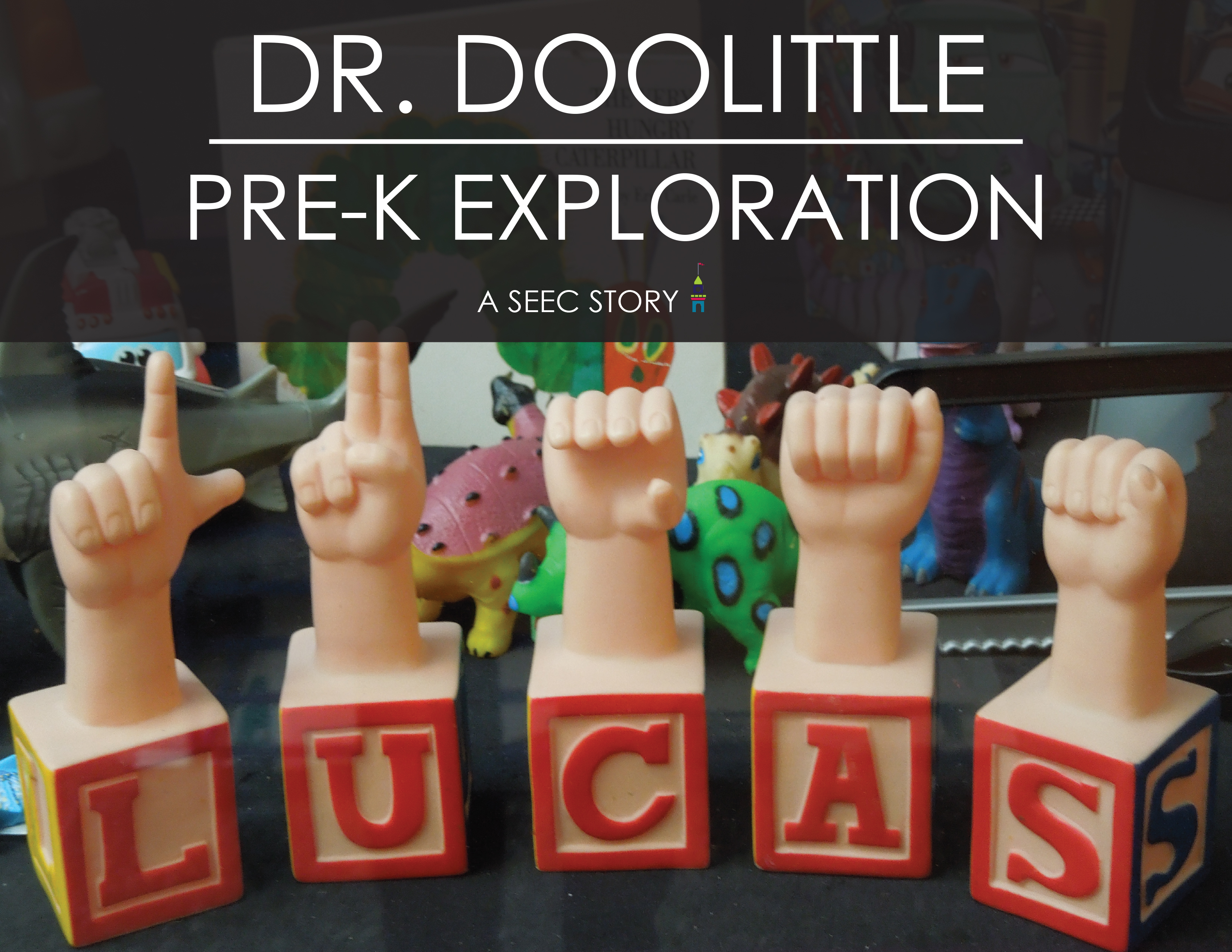
Lucas_Cover

What were your topics of exploration?

“The unit we were working on was a case study of the novel The Story of Dr. Doolittle by Hugh Lofting. We looked at a variety of topics including long, long ago (Dr. Doolittle was published in 1920), geography (Dr. Doolittle travels from his home in England to Africa by boat), and communication (comparing and contrasting animal and human communication in real life and in the story).”

What were your learning objectives? (What did you want your children to take away from the lesson?)

  • “Making a connection between the story we were studying and our own lives (i.e. the trips we take, our pets, how we communicate with the world around us).
  • Thinking about the differences and similarities between how people communicate and how animals communicate.
  • Practicing some of the different ways that people communicate (i.e. in various languages, with our words, with our bodies).
  • Observing some of the ways that animals communicate.”

What was most successful about your lesson?

“I think that the most successful thing about this unit is the way it has opened up a larger conversation in our classroom about how we interact with the world around us. We had started the year with a unit on portraiture where we talked a lot about how we represent ourselves and how we learn about others by observing and interpreting how they represent themselves. I felt that this was a natural continuation of that line of thought. We went from talking about how we represent ourselves to exploring how we communicate and how that affects how others see and understand us. I began to see these concepts at work in my classroom in the way my students were interacting with each other. I saw a lot more care being put into apologies and working through problems. In particular I noticed the class as a whole took a very marked interest in sign language. We had dedicated one of our lessons to sign language as a form of human communication because one of our students comes from an ASL-speaking family and he was able to demonstrate some signs from the Dr. Doolittle plot that really engaged the class. We are now two weeks into a new unit and I still hear students asking him about new signs and using them in the classroom every day. It has really created strong sense of community in our class.”

What could you have done differently? What recommendations would you have for another teacher trying out this lesson?

“I really wish we had been able to find a way to get the kids more one on one time with animals. I think there is so much to be learned from observing and interacting with animals and children treat them in such a gentle and thoughtful way. Ideally I would go back and take the time to contact perhaps a service dog organization and have them come and talk to the class about how people can communicate with animals to extend the thought process even further. Unfortunately, I was gone for a week during this unit and I think it threw off the rhythm a little for me and the kids and our momentum fizzled out so it was time to move on. Otherwise, we might still be talking about Dr. D.”

Here a few images from their exploration of  communication as part of their Dr. Doolittle unit:
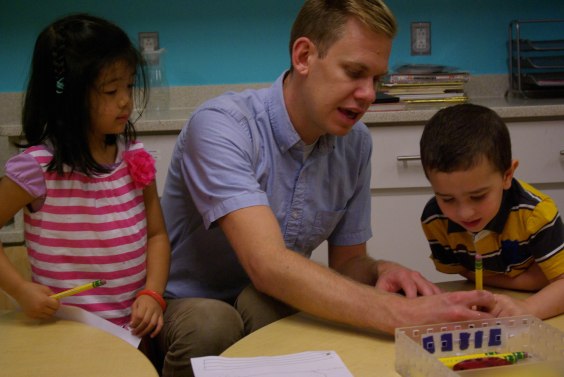
DSCN0962They began the lesson by asking the children how they communicate. Carrie then asked if we all spoke the same language. As you can see they came up with quite an extensive list. Some shared a few words in the languages they knew.

DSCN0980One of the children speaks American Sign Language at home and was excited to share some animal signs  from Dr. Doolittle with his classmates.

DSCN0989Carrie is fluent in French and sang the song “Head, Shoulders, Knees, and Toes” first in English and then in French. This was a great way to practice one to one association and get the kids up and moving during their lesson.

DSCN1014The next day the class visited the Park Police horse stable on the National Mall to meet with a few officers who explained that horses have their own way of communicating with each other. They also explained that the officers have a special way of communicating with the horses especially when they are riding them.

DSCN1017

DSCN1028The children noticed that the sounds and movements of the horses could tell them something about how the horse was feeling. They loved the opportunity to get up close and interact with these amazing animals.

This class had a wonderful time exploring the magical world of Dr. Doolittle and now they are off on their next adventure. Be sure to check back for our Teacher Feature next week!

Teacher Feature: Four Year Old Classroom Explores Camelot

It’s Teacher Feature Thursday!

This week we are featuring Will Kuehnle. Will’s pre-k four classroom is currently learning about Camelot. Below you will find a reflection from Will and images from some of his lessons.

Print

What were your topics of exploration?

“We were exploring the world of King Arthur and Camelot. The children at the beginning of the year were enjoying the idea of dragons chasing them when we were running around on the playground. Dragons were also popping up during our chatter around the snack table. I definitely noticed an interest. My associate teacher and I put our heads together to think of a topic to explore that would quench the students interest, touch on topics we thought would be useful for the children to have as a foundation for the year ahead (chivalry, community) and also allowed us as educators to have a wide variety of ideas to teach upon, which makes lesson planning fun and flexible.”

What were your learning objectives? (What did you want your children to take away from the lesson?)

“I always want my students to take away a sense of enjoyment from a unit of study. I want them to have that everyday we are together, no matter if we are going on an exciting museum visit or stuck inside the classroom on a rainy day.  For this particular unit I wanted to have each student have a strong sense of what the code of chivalry was, because that can be applied to so many routine situations throughout our day. I wanted to be able to focus my language with children around kindness, bravery, loyalty, community and justice. To be able to do that with such a fascinating backdrop as King Arthur and the Knights of the Round Table was a real treat. Another objective I had for the students was to nurture their sense of adventure and curiosity towards learning. We can take that energy and harness it towards future lessons and topics this year, I’m really excited to see where this year leads us.”

What was most successful about your lesson?

“I believe the way the children used what we were discussing into their play was the most successful. I did not notice it at first, but after a few weeks into the unit the play structures in the classroom were really developing. The dramatic play we had in the classroom, the manipulatives the children were using, the art they were making and the games they were creating on the playground were centered around the world of Camelot. The children were so whimsical in their approach to the unit that you really saw what you were talking to them about sink in. I am able to suggest to a child that they be knightly or chivalrous and see them reflect with positive reaction to the choice they are making.”

What could you have done differently? What recommendations would you have for another teacher trying out this lesson?

“Reflecting back on the unit, which is still going on up until our knighting ceremony on December 18th, I wish that the transition of topics within the unit were more thought out and not as rushed. I think we were really excited to dive head first into something for the start of the year that we barreled through ideas that we could have taken more time on. Maybe it was because we wanted to go from looking at the places of Camelot, to the people of Camelot, to the stories of King Arthur, to the code of chivalry, to how castles were built and protected, etc. As an educator I am trying learn how best to balance all the information there is to know and all the information I believe is best for my students to know, and then unveiling that in a cohesive story line that is engaging and enriching for them. I think having a strong idea of what you want to the overall story to be in the unit when you are first venturing out is very helpful, and that is something I struggled with in this unit. At the same time you always need to be flexible.”

Here a few images from their days in Camelot:

They began their exploration of the topic with the story of the Sword in the Stone. Will had the students create their own stone from a cardboard box and painted paper. They were very surprised and excited when Merlin dropped off a sword later in the day.

IMGP8021To encourage close looking, Will asked the children to create their own illustrations of the sword for their journals.

IMGP8008

IMGP8022The children were very thorough in their illustrations. Some even included the text found below the sword.

IMGP7996DSCN0837The children were then offered the opportunity to try and pull the sword out of the stone. Will explained that the person who was able to remove the sword from the stone would be the rightful ruler of their kingdom. He reminded the children that they might not be the strongest or largest person but the one with the truest and kindest heart would be able to claim the sword. In the end it was their center director Megan who was able to remove the sword from the stone and students talked about why she would make a great ruler of their kingdom.

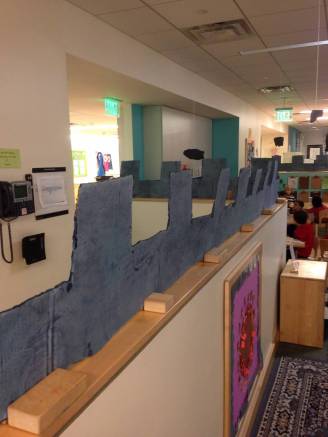
file (16)file (17)Will also began to alter their classroom to take on the attributes of a castle. Above the students are painting the castle wall and below you can see it installed in their space.
DSCN1099DSCN1096In addition to the castle wall, Will wanted a way to track their their progress through Camelot so they created a board with the different locations they might travel. As part of the board, he also created popsicle sticks with images of the children as their favorite Camelot characters which will move around the board as they continue through the story.

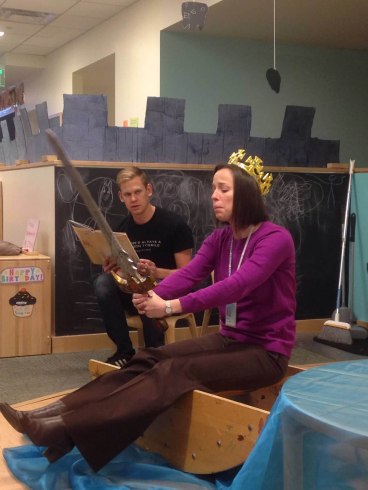
file (14)The group was so excited about Excalibur that Will decided to do a theatrical reading of the Lady in the Lake with help from a few educators and our site director.
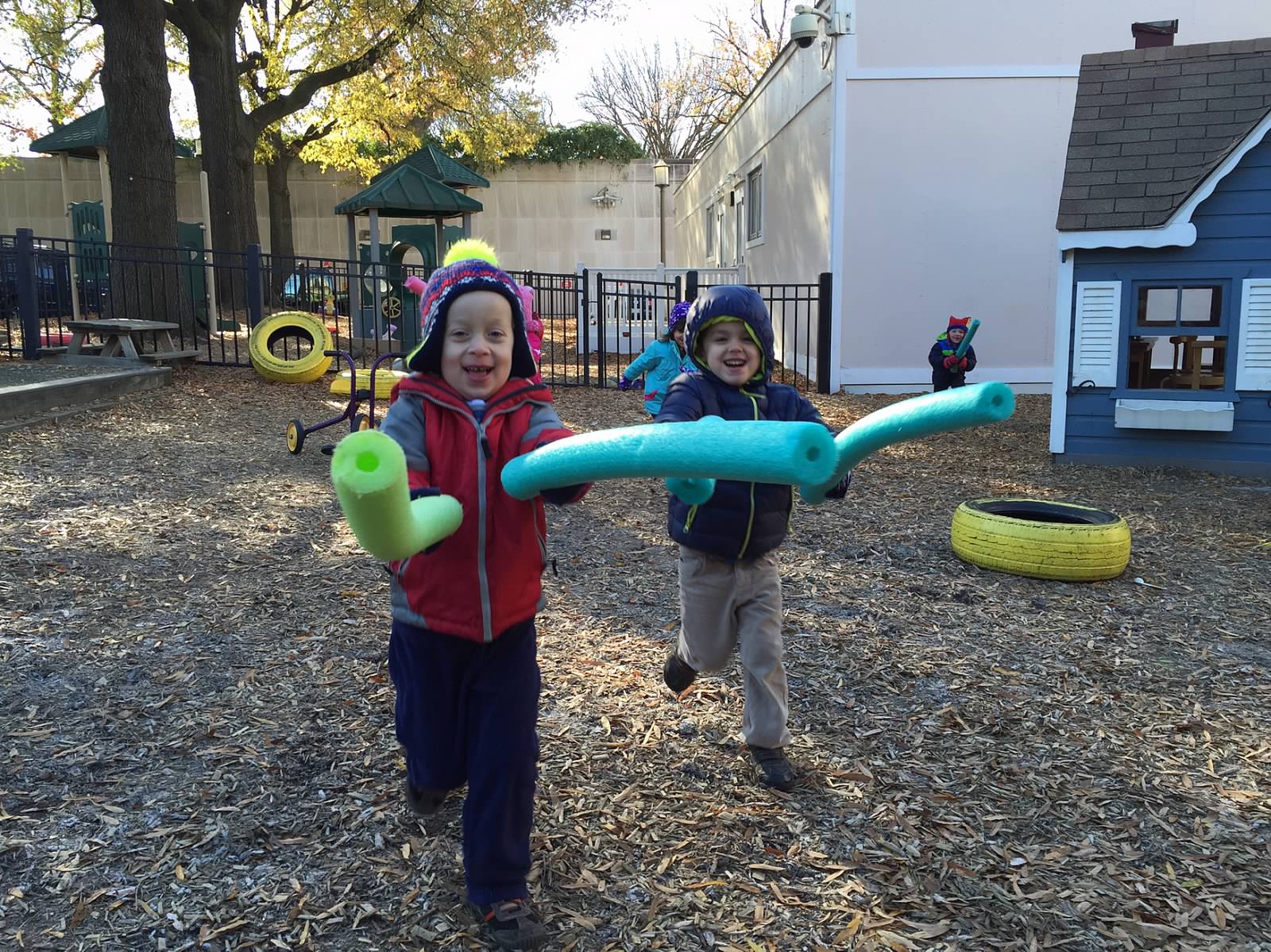
file (20)Their exploration of Camelot even extended out to the playground where they used pool noodles to do some jousting.

The children continue to be extremely excited about this topic and have exciting adventures in Camelot. Be sure to check back for our Teacher Feature next week!

Early Learning in Museums: A Thoughtful Process at DAM

Denver Art Museum
Denver Art Museum

We’ve noticed that more and more museums are thinking about how to create effective programming for children under the age of 6 years old. Why do you think that is? I know we have some ideas but would be curious to know what you all are thinking.

Just last month, SEEC had the opportunity to work with one such museum.  It was inspiring to see how thoughtful they are being about the process. Over the next year, the Denver Art Museum (DAM) will systematically develop programs for early childhood programs in their area. Implementation of these programs is scheduled to start next year.

Mud Woman by Roxanne Swentzell at the Denver Art Museum
Mud Woman by Roxanne S Wentzell at the Denver Art Museum

To get this effort off the ground, the education department has created a case statement that articulates why this initiative is important and how it ties to the mission and vision of the larger organization. In addition, they have brought together a team of stakeholders that will contribute to the development of concepts, monitor progress, communicate considerations and keep the process moving forward. They have considered external factors and internal implications and are working together in new ways to better accommodate the unique of early childhood audiences – whether they arrive in school groups or with a family.

In addition, they engaged the local teacher community. On a Classroom Shotbeautiful October morning in Denver, Colorado, over 20 early childhood educators devoted their time to talking to the Denver Art Museum about what their idea of an ideal early childhood program would include. The teachers were extremely enthusiastic about the possibilities and informed the museum educators that they would like to see everything from museum experiences led by visiting artists to workshop spaces that encouraged young children in “messy” but meaningful play.

We know that many museums are doing interesting programming for young children. If you have stories to share or lessons learned, we would love to hear from you!

Denver Art Museum

Denver Art Museum

What Makes a Good Museum for Young Audiences: The Hirshhorn Museum and Sculpture Garden

SEEC’S LOVE FOR THE HIRSHHORN

Thinking

Sometime back in the spring the Hirshhorn Museum and Sculpture Garden closed a large part of its galleries to the public and the reverberations could be heard throughout SEEC. The Hirshhorn is hands-down one of our favorite stops along the National Mall. Thankfully, their second and third floors reopened this past week and they do not disappoint (more on that below).
The conversation among our teachers got me thinking: Why is the Hirshhorn such a favorite with our educators? I placed an idea web in each of our teacher lounges and asked them: Why do you love teaching at the Hirshhorn? What I learned in a nutshell: engaging collections + ideal layout = a great early childhood experience.

THE COLLECTION

SEEC’s teachers are, without a doubt, drawn to the modern and contemporary collection. One educator noted; “…so open ended.” Her comment encapsulates our approach to teaching at SEEC. Whether it be through play, engagement, or lessons/curricula, our teachers provide students with the chance to inquire, investigate and explore their own interests. Similarly, the Hirshhorn’s collections offer children (really, all visitors) works of art that are open to interpretation. Teachers feel comfortable using such artworks because their meanings are layered and can be adapted to a variety of themes that resonate with young children.


BROAD CONCEPTS

Of equal importance to our educators was that many of their exhibitions explore

Two-year olds visiting Gravity's Edge Exhibit.

Two-year olds visiting Gravity’s Edge Exhibit.

broad concepts. For example, in an exhibition like Gravity’s Edge, where gravity was a determining factor in the works on display, students were able to see multiple examples of a single idea and we know that children, and young children especially, benefit from such repeated exposures. Similarly, the Ai Weiwei zodiac animals fountain was a huge hit with our students. While the animals were not the work’s main focus, it was an exhibition that engaged our students and offered them a portal to learning more about the piece itself.

MATERIALS

Pre-K family workshop in front of Nick Cave’s Soundsuit.

Pre-K family workshop in front of Nick Cave's Soundsuit.

Pre-K family workshop in front of Nick Cave’s Soundsuit.

Our educators also appreciate that the collections demonstrate a unique and varied approach to materials. The introduction of new materials helps children think about things from new perspectives and activates their imagination. A great example is Nick Cave’s Soundsuit, which is currently on display. Cave’s use of unorthodox materials is an attention grabber that uses objects familiar to young children. It also encourages young children to open their minds and be creative.
Varied materials can also be beneficial to the young learner because they appeal to more than just the sense of sight. A few years ago, Suprasensorial: Experiments in Light, Color and Space captivated the whole school because it was just that – suprasensorial. Young children learn better when all of their senses are engaged. Children reacted to and interacted with these artworks through sight, sound, touch and smell. Teachers used that space to explore color, light, lines and even swimming.

THE SPACE
For young audiences, the layout of a museum or gallery can be almost as important as the lesson. Early childhood educators generally look for large spaces with little distraction and the Hirshhorn has all of that. Their spacious galleries make it easy for our teachers to have a circle and not block other visitors. The floorplan’s circular flow makes it easy and fun to move around. Teachers also commented on the building’s architecture and how its shape and outdoor sculpture appeal visually to our students. The fountain was also high on the list of why the children liked going there. (see our blog on fountains and learning spaces).

Having fun exploring the newly opened galleries.

Having fun exploring the newly opened galleries.

On Thursday, I headed over to see the newly opened galleries and I was not disappointed! This piece entitled The Dangerous Logic of Wooing basically sums up why the Hirshhorn is so appealing to young audiences – playful, imaginative and whimsical. What more could you want?

SEEC 3-D!

The Smithsonian Early Enrichment Center is incredibly fortunate to have access to some amazing resources! It’s not just the museums but we often have wonderful experiences with the people working in the museums. For example, over the summer two of our classes were able to collaborate with colleagues at the National Museum of American History. It was great for our students to have an opportunity to work with one of American History’s interns and technology wiz Mariya Sitnova. The following post was written by Mariya and is shared on her behalf. Thanks for introducing us to some cool new technology,  Mariya!

As an education intern at the National Museum of American History, I spent my summer working on various projects that bring the contents of the Museum content to classrooms across the country, including the Smithsonian’s very own classrooms in SEEC. My graduate studies at the Rhode Island School of Design (RISD) have focused on considering the potential relevance of 3D technology (3D scanning and 3D printing) in our every day lives. During this internship I was able explore this idea while working with the students and teachers at SEEC.

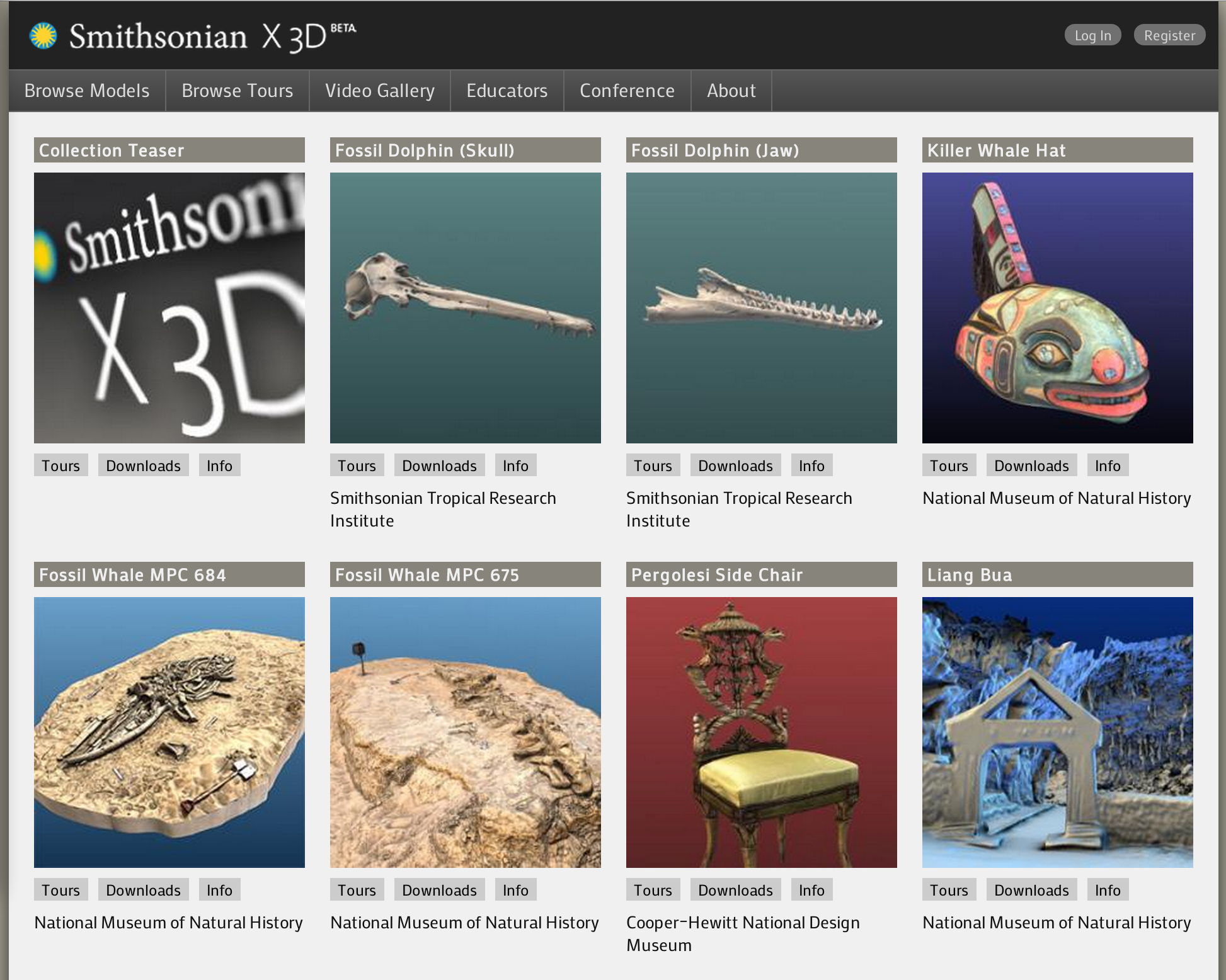
The Smithsonian is in the process of 3D scanning select objects from the collections and some are already available on 3d.si.edu. This summer I explored how young learners interact with these types of objects in 3D printed form.

pic_1_3d.si_screenshot-2

My first pilot project was one I carried over from RISD. I had 3D scanned a few marine creatures from the RISD Nature Lab and added Lego “feet” in various positions. The idea was to 3D print something that enhanced the learning value of the 3D scanned object. The Lego connections resonated with the students because they were familiar with the brick toy concept. For the younger SEEC crowd I created a Duplo connection (the slightly larger Lego) and made the animals significantly bigger. The students asked interesting questions and proposed engaging narratives around these creatures. The wondered about where these creatures lived and where they would go with their new Duplo wheels. I’d be curious to keep going with the connections project by allowing them to choose where on the creature to add the Lego “feet” so they can explore the object even further in digital form.

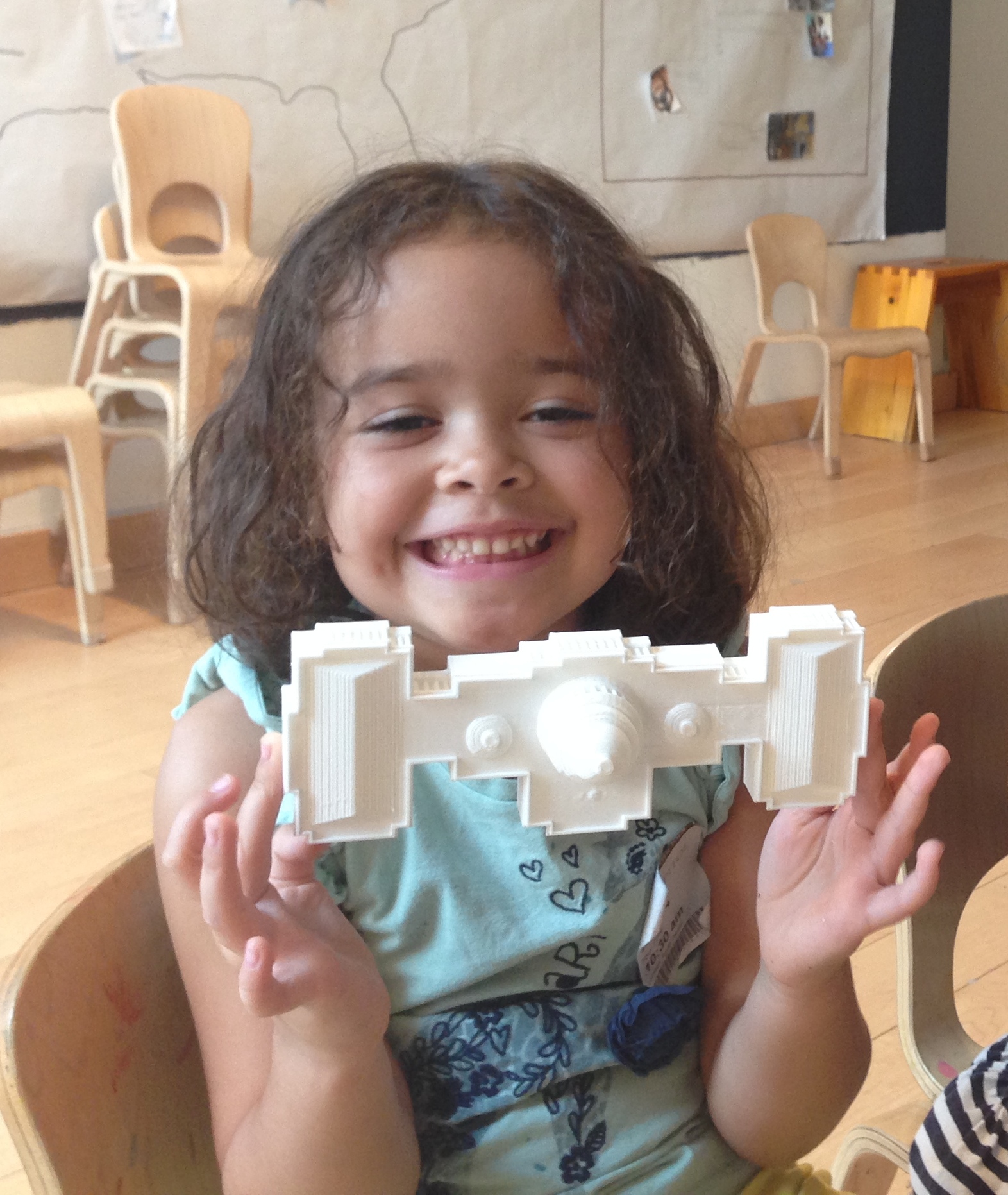
The other project consisted of printing architectural models of the Capitol and the White House. The older group had planned to visit both buildings as part of their community theme. I created the 3D models using computer aided design software and 3D printed them in front of the students to gauge their responses. The project was to serve as a lead into a lesson on Abraham Lincoln whose life masks have been 3D scanned by the Smithsonian 3D team. The life masks are a more complicated concept, so we thought we could introduce 3D first through a simpler object and build up to the Lincoln material. I was genuinely impressed by the complexity of the questions the students asked about the process of 3d printing and 3d modeling and the models themselves. They were intrigued by how the printer functioned and how they could mix up materials to create these models in different colors and size.

photo%20%284%29

Current preschoolers are going to grow up with this technology in their classrooms and maybe even their homes. It’s really impressive to see the Smithsonian pursuing projects that will help determine how this technology can take early education and museum education to a much more engaging level. I’m really looking forward to hearing more about the subsequent 3D projects in the future!

pic5


You Teach Art History to Preschoolers?

Written by Carrie Heflin

Art History

The lesson on emeralds.

Twenty five thousand years ago our rapidly-evolving ancestors discovered a network of caverns in the region currently known as Lascaux, France. What they did there made an indelible mark on our species and our planet.

For most of our early years, man was focused solely on our own existence. But these images on the walls of the caves at Lascaux were created by human hands. We don’t know why they were created or by whom. All we know is that, as our most ancient ancestors spent hours in the dark musty interior of the caves at Lascaux recording the world around them in a way that would preserve their thoughts and feelings for thousands of generations to come.

Today we seem to have lost sight of this earliest vision of our forefathers. As we slash budgets, we often do so at the expense of museums and their programming, art classes in schools, and extracurricular activities. Art and its history are not just some frill belonging to the upper one percent of modern society. They are an element of our most basic nature- a calling in our souls.

I am in my third year as a pre-kindergarten teacher at the Smithsonian Early Enrichment Center and I use my art history degree every day as part of the curriculum. I teach my children to be critical thinkers and careful observers from early on.

The Wizard of OzLooking at a pair of emerald earrings.

One of the first topics we explored at the beginning of the 2013-2014 school year was Frank L. Baum’s timeless classic, The Wizard of Oz. We talked about everything Oz, from men made out of tin, to things that melt when they get wet. At the end of the unit I had two anecdotes that reaffirmed for me that the way that I implement art as an educational tool in my classroom is vital. The first was from a mother who had spent the weekend trying to design her family’s annual Christmas card with her two sons. As they sat in front of the computer trying various filters on the images, her older son became intent on using the dreaded sepia tone filter that makes everyone look like they’re in an amusement park Wild West saloon shoot. To appease him the mother clicked on the sepia option and her younger son (who is my student) immediately pointed at the screen and yelled, “Hey, it looks like we’re in Kansas!” This comment refers back to the first week we studied Oz almost a month prior when we went to the Hirshhorn Museum to look at two Wall Drawings by Sol Lewitt. One piece was in color and the other on the opposite wall was in black and white. We explored the art and how it was created and then we talked about how different color schemes make us feel and how the filmmakers in the Wizard of Oz used this concept to show viewers how Dorothy felt in Kansas.

The second comment was made during a morning circle on the letter “B.” We asked the students to think of words that started with “B” and one boy called out “beryl!” We asked him if he remembered what beryl is and he exasperatedly explained that everyone knows it’s the main ingredient in emeralds. He is four. Did you know what beryl was before you read this paragraph?

As much as I would like to tell you that they are, my students are not all geniuses. They are not smarter because their parents read to them in utero or played Baby Einstein movies in their nurseries. They are able to process and retain knowledge because they have learned critical thinking skills the likes of which I was still honing in high school. They answer open-ended questions with thoughtfulness and clarity that floors me on a daily basis and they remember what they have learned and apply it to their future endeavors. These are the skills that we as educators strive to instill in our students because they are the tools to success. Being able to analyze and apply what you have learned is the only thing that makes knowledge useful.

Conquering the climber with our hand-crafted emerald vision spy glasses.I firmly believe that the work we do in the museums is the key to unlocking these skills at such an early age. Every day I see my students connect with art and with objects. I see their eyes light up when I tell them stories of people who felt and questioned long, long ago and who made beautiful wonderful things that we can see and explore today. I hear their questions as we wander the halls of our nation’s most expansive art collections- “Why is that so blue? Who made those statues? Is that a sculpture or a painting? Is that Hermes or Zeus?”- and I watch them implement their knowledge in their play. My students have used dress up to be French flaneurs and turned our climbing structure into a ship sailing to see Claude Monet and Edgar Degas. They can tell you who the Neanderthals were and what their favorite Shakespeare play is. They are sensitive and passionate and insatiable learners. My greatest fear is that they will leave our school and become less curious and more focused, less passionate and more dedicated to trying to memorize information and facts.

Final ThoughtsLooking at Elizabethan clothes at the beginning of the Shakespeare unit.

As we rang in 2014 the Smithsonian was preparing itself for budget cuts that may have required our nineteen museums to close one day a week for an indefinite period of time. One day a week, we were told, we might not be able to go see the art. While it was only one day, it felt like the beginning of something very big and very bad. When the largest and most renowned museum network in our country is forced to consider closing its doors it seems like only a matter of time before other institutions must follow suit. It didn’t end up happening, thankfully, but it did make me want to sit down and put my thoughts to paper. I didn’t write this article to protest government budget cuts.

There are already plenty of people doing that. I just hope that what I have to say can make my fellow educators stop and think about the enormity of the task before us and I want to offer a suggestion for a way to make it more manageable. Use the mistakes and triumphs of our species’ long and winding path to show your students a better way into the future. Don’t let those critical thinking skills that we worked so hard to develop be lost on a future generation of people with endless knowledge at their fingertips, because the more we depend on our gadgets for answers the less we will seek them ourselves. Instead, use the tools that you have been given- tablets, projectors, laptops, and yes, museums to encourage your students to seek out and interpret knowledge. Immerse yourselves in the passion of human creation and discovery and you will be amazed the places it will take all of you.

Classroom Snapshot: All that Jazz

Our four’s camp was in full swing with their study of jazz this past month. Even though it is summer, our SEEC teachers are still thinking of innovative and creative ways to bring our museum objects to life. As a museum educator who spends a lot more time behind the computer than in front of the classroom these days, I was very jealous of all the fun the four’s were having.

JAZZ 1

The week begins with a study of jazz instruments at the National Museum of American History.

JAZZ 2

The whole class made it up to the National Portrait Gallery where they learned about Duke Ellington and made some jazz gumbo!

Next up: Billie Holiday. The class explored the voice as an instrument.

Next up: Billie Holiday. The class explored the voice as an instrument.


After all that learning, the kids played with some instruments of their own and created their own jazz ensemble.

The kids played with some instruments and created their own jazz ensemble.

These lessons take place over a period of time and typically take shape as teachers discover and nurture the interests of their students. If you have questions or comments, please let us know. We see our teaching practice as constantly evolving.

Educators: Want to learn more about working with museums and early childhood audiences, please visit our list of professional development offerings.

Parents: These snapshots  can give you some great ideas of how to use museums with your children. You can also enroll in one of our weekend classes  or  our 2-day/week program for toddlers and experience it firsthand!


5 Things I Learned About Art From Children

For the past year and a half, SEEC has worked with the Memphis Brooks Museum of Art and the Lifelong Learning Group on a project designed to positively impact the educational experience of young children and their families through the arts. As we collaborated with the Memphis based museum educators, docents and early childhood teachers to create meaningful interdisciplinary classroom and museum based hands-on activities, we found that each of us learned more than we imagined possible at the start of the project. The following post presents one great unexpected example of the project’s impact.

Thanks to the partnership with the Brooks Museum of Art, the following is posted on behalf of docent Cheryl Caldwell: Docent Leading Group

5 Things I Learned About Art From Children

Art is so much more than just art: It can be science, culture, motion, and history, as well as color, line, and shape. Young children naturally think like artists, and their imagination is at its peak during their early development as students. Yet educators struggle with ways to develop and instill creative and critical thinking skills—crucial tools that this generation needs to utilize their creative impulses in educational and civic pursuits. As a docent at the Memphis Brooks Museum of Art, I work in conjunction with the Smithsonian Early Enrichment program, engaging Pre-Kindergarten and Kindergarten children from Title 1 schools, where 40 percent or more of the students enrolled are eligible for free or reduced lunches.

Equipped with my knowledge from the six-month docent training course, I teach these children about visual art in a museum setting. As a new docent, I am excited to introduce children to a museum and see that they fully experience all it has to offer. At the Brooks, children have the opportunity to see, touch, and feel the materials an artist might have used in creating a piece. Engaging these children in this setting while they are young takes the fear out of the museum experience and brings out the fun. Of course, the kids aren’t the only ones gaining from this experience.

Here are the top five things I’ve learned during my first year as a Brooks Museum docent:

▪ Get down low and look up at the artwork through the eyes of a child. This perspective might just give you new insight on a piece of art you thought you knew all about.
▪ Art inspires critical thinking rather than getting the right answer
▪ The smiles and enthusiasm are contagious.
▪ You won’t know everything, but you will probably learn something new with every tour.
▪ Children are far smarter and more creative than we give them credit for. You will often be amazed at how much they can offer if you take the time to watch and listen.

Participating families gathered in the Memphis Brooks Museum of Art.

Participating families gathered in the Memphis Brooks Museum of Art.