
Today we’re featuring kindergarten teachers Cathryn Prudencio and Sharon Jensen. The class has been exploring dinosaurs, and I joined them for a lesson at the National Museum of Natural History that answered the question, “How do dinosaurs get to the museum?” Below you will find images from the lesson, as well as reflections from Cathryn and Sharon.

When the kindergarten class needs to pick a new topic to study, the children always start out by answering the question “What would you like to learn about?” in their journals. Then the students draw what they are interested in. We also explore different ideas for topics throughout the year, and when it’s time for a new topic we brainstorm ideas as a group. We vote to narrow the choices down to the top three or four, and then vote again for our final topic. This way we make sure that the students are truly involved in choosing what they will be learning about, and they are satisfied that it was a decision made fairly. This is how we ended up doing a unit on dinosaurs as our last unit before the kindergartners graduated.

The objective of this lesson was to deepen the understanding of what a paleontologist does on a dig, and what tools and procedures are used. We used the pictures hanging up in the exhibit to support what we were talking about, and to help the children think about what was needed for the dig. We also used the objects on display to talk about the materials needed and how they were used, supporting this with objects passed around for the children to see and hold. Doing this, we not only reinforced information from a previous lesson, but we also prepared the children for their own miniature dig in the museum.
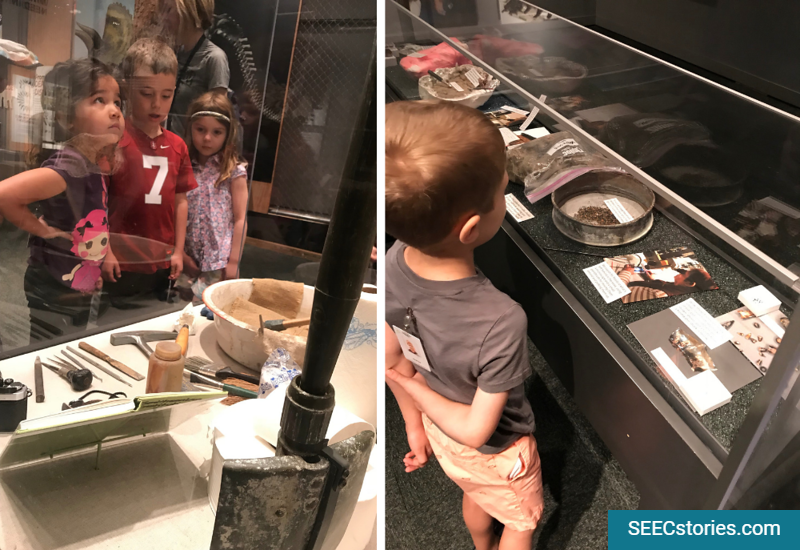
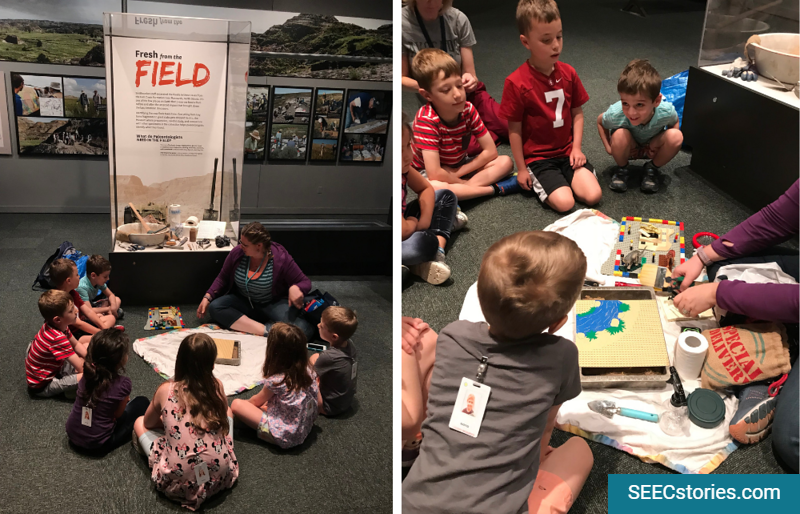
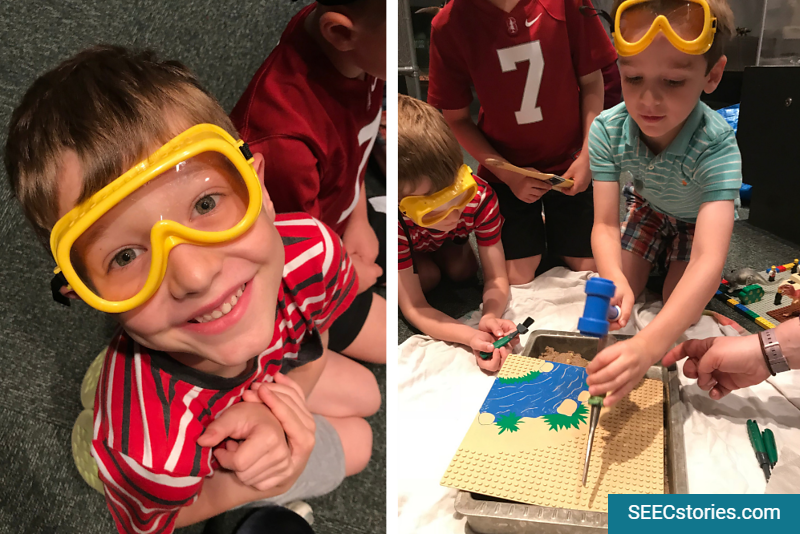

Something that surprised us during the lesson was how the children really took turns and then worked together on the “dig site” in the museum space. Sometimes they get so excited about an activity that it can be hard for them to be patient and wait their turn.

The most ineffective part of our lesson was most likely the read aloud. Even though it explained the process of getting the dinosaur bones from the discovery part to the display in the museum, and all the people involved in the process, it was rather long and made our lesson longer. By the time we finished the story, the children had been sitting for some time. However, this was okay because we already talked about the process so much and the people involved, that it was a way to reinforce what we were teaching. Even though the read aloud was very long, we were still surprised at how well they stayed engaged and listening.
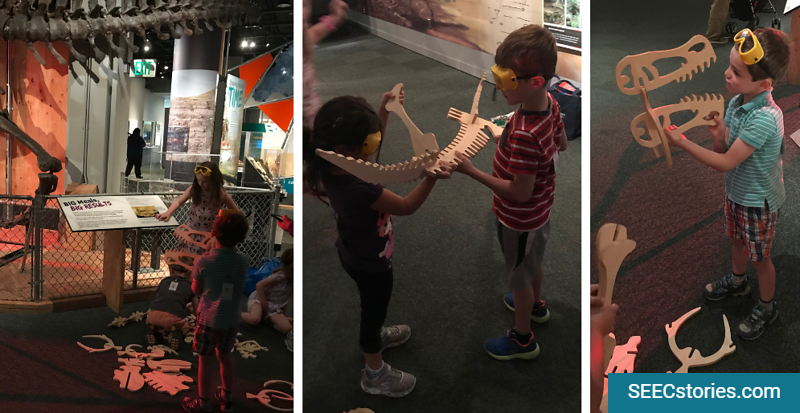
In the beginning, when putting the puzzle together, the children were super excited, but that soon faded when they were trying to figure out which piece went where. Again this was okay, because they did try and got pretty far with it. Eventually they just lost interest.
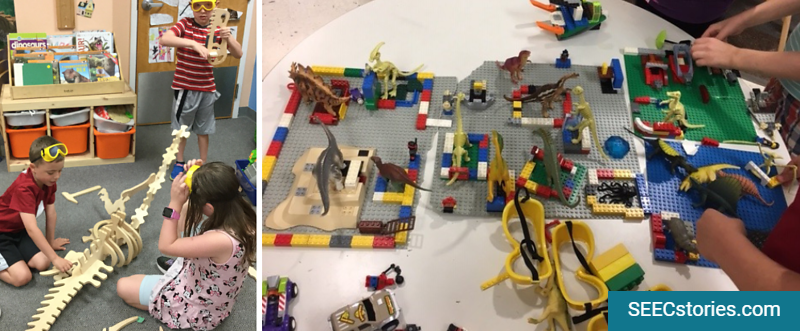
Later in the classroom, we left the section of the museum for the children to play with. On their own they created several additional sections of the museum using Legos, dinosaurs and some blocks. It took up the entire table and throughout the week there were more additions. Written labels the children made to identify objects, for example, and more “tourists” made from Legos were added to see the “exhibit.” It was awesome!
After exploring dinosaurs it was time for our kindergartners to graduate! For more dinosaur ideas, visit our dinosaur Pinterest board.

 When our toddlers begin the school year, they devote a lot of their resources to the development of their emerging physical skills. It takes a lot of energy and hard work to figure out the complex series of muscle movements needed to walk, climb the stairs, hold a peer’s hand, or interact physically with another toddler. In one of our toddler classes, we used
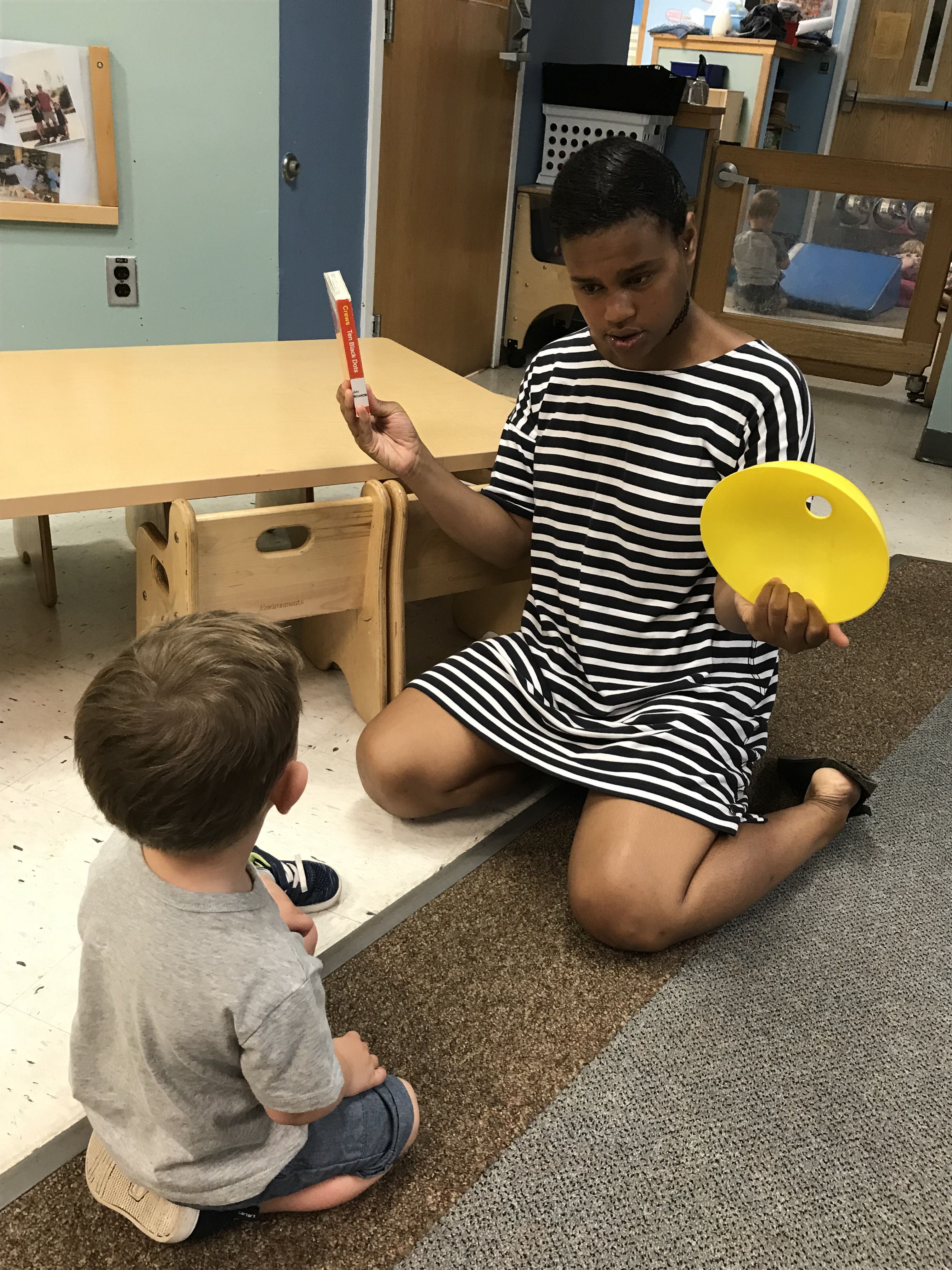
  Toddlers are intrinsically drawn to the repetition of a familiar and beloved book. Their interest in multiple exposures provides opportunities to increase their knowledge and contextual understanding of the new vocabulary. Additionally, these multiple exposures allow children to mirror and repeatedly practice movements depicted in the images of the book. Often these movements link directly to physical skills that toddlers are working on mastering. The book, From Head To Toe, was a great fit for developing physical skills because of its simple, repetitive narrative that drew in our students, and for its playful directives that allowed each child to practice moving their individual body parts like each animal. We decided to create a unit using From Head To Toe that focused on one body part each week. Using the book as a starting off point, we were able to explore how we can use our arms and hands, legs and feet, and head and neck.
 First, we set up the room to give our students many opportunities to freely play and explore the book and concepts we were covering. We had copies of the board book on the bookshelf and a bulletin board showing each animal. We moved the climber directly below the bulletin board to both give them access to the board, enticing them to practice physically going up and down the stairs, and to encourage them to extend their hands to touch the pictures.
 During circle time, our toddlers held photographs of animals’ feet, legs, knees, and toes, as they were encouraged to bend their own knees, wiggle their own toes, and kick their own feet. They gained mastery over their actions in a controlled manner, while also increasing their ability to sit in one place for an extended period. This helped them to expand their capability to focus on one thing, which is very different kind of physical work for toddlers.
 In our classroom, we invited our students to continue using their arms and hands in meaningful ways with art activities and sensory choices that connected to From Head to Toe. They loved waving their arms like a monkey while throwing the paper packing material in the air!
 We did not just focus on gross motor movements, but spent time finding, identifying, and moving our facial features. We also practiced the small muscle movements that are involved in communication by smiling, frowning, and using our mouths to form different sounds.
 We also brought the book into the museum, stomping our feet alongside an elephant, clapping our hands next to a seal, and bending our necks with a giraffe.
 Across these lessons and experiences, the constant was Eric Carle’s book. We referred back to the work, over and over again, not only because our students loved it and asked for it (which they did!), but because we could offer them the chance to work on the difficult physical tasks of developing new motor skills, without asking them to shift their attention and devote resources to a new topic of exploration. By choosing an age-appropriate, well loved book, we were able to extend our students’ focus, offering them meaningful learning opportunities in multiple disciplines while they were engaged and having fun. We allowed them to do the hard, physical work of being a toddler in a way that was exciting, enticing, and very enjoyable.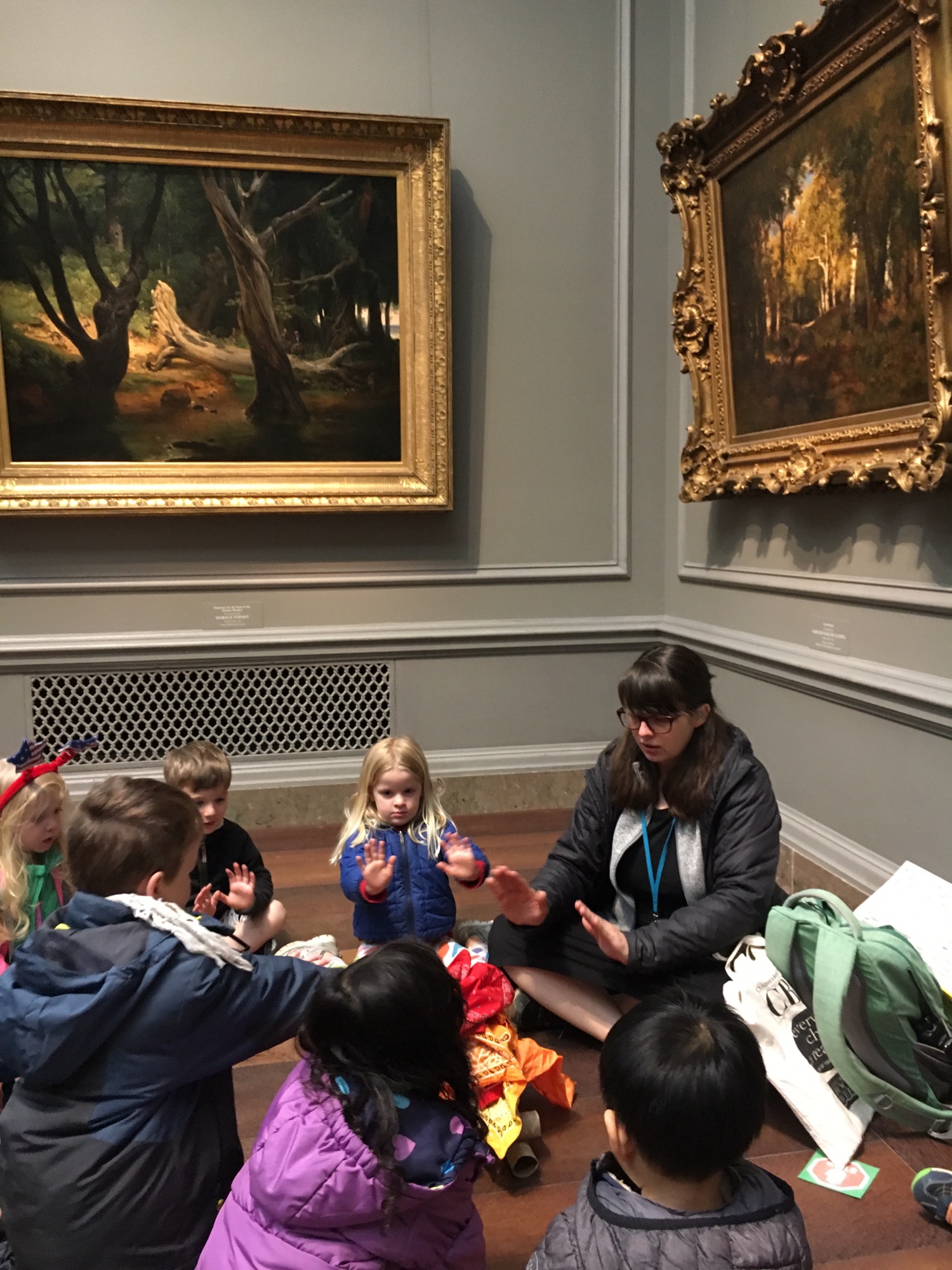


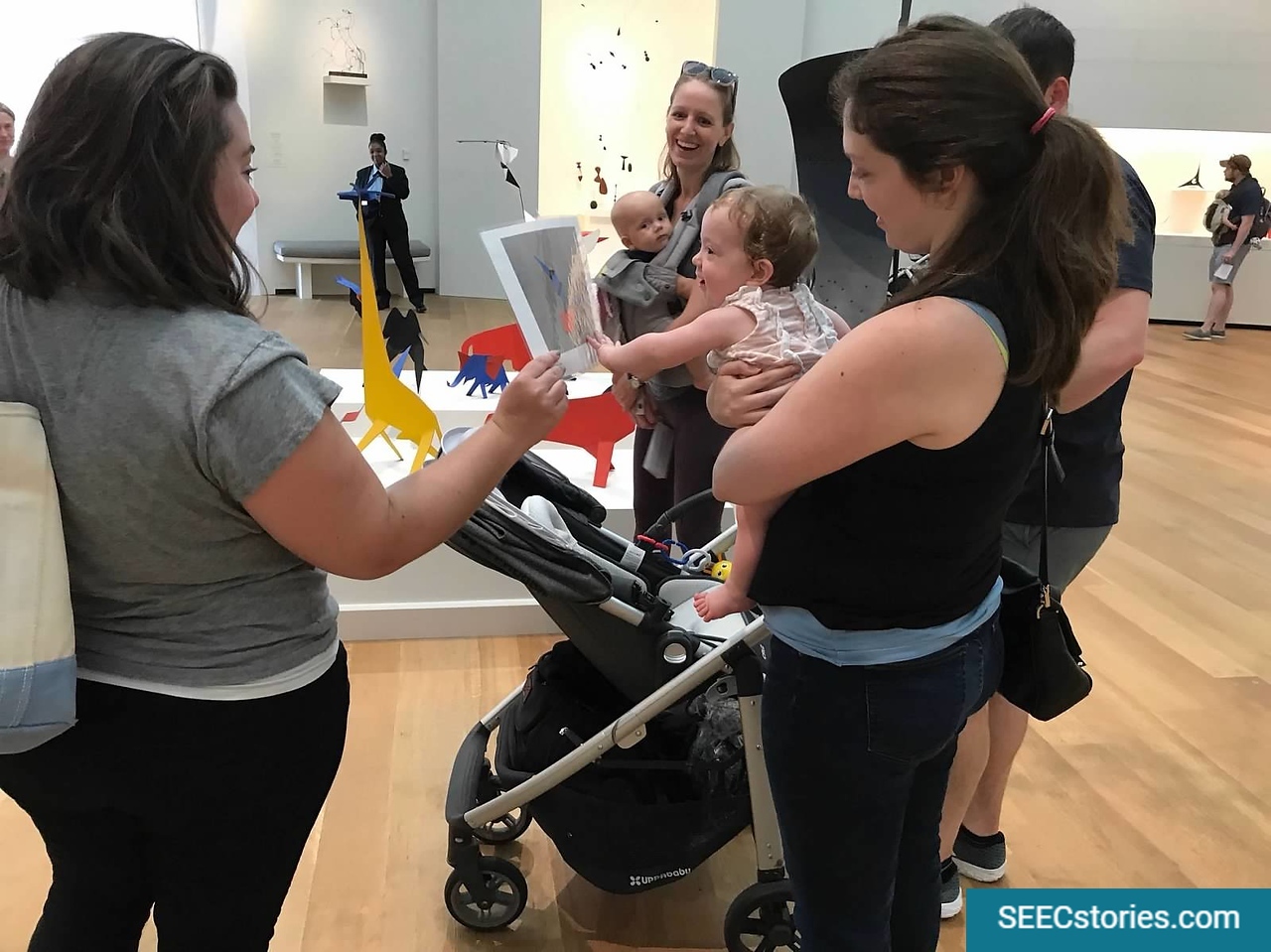
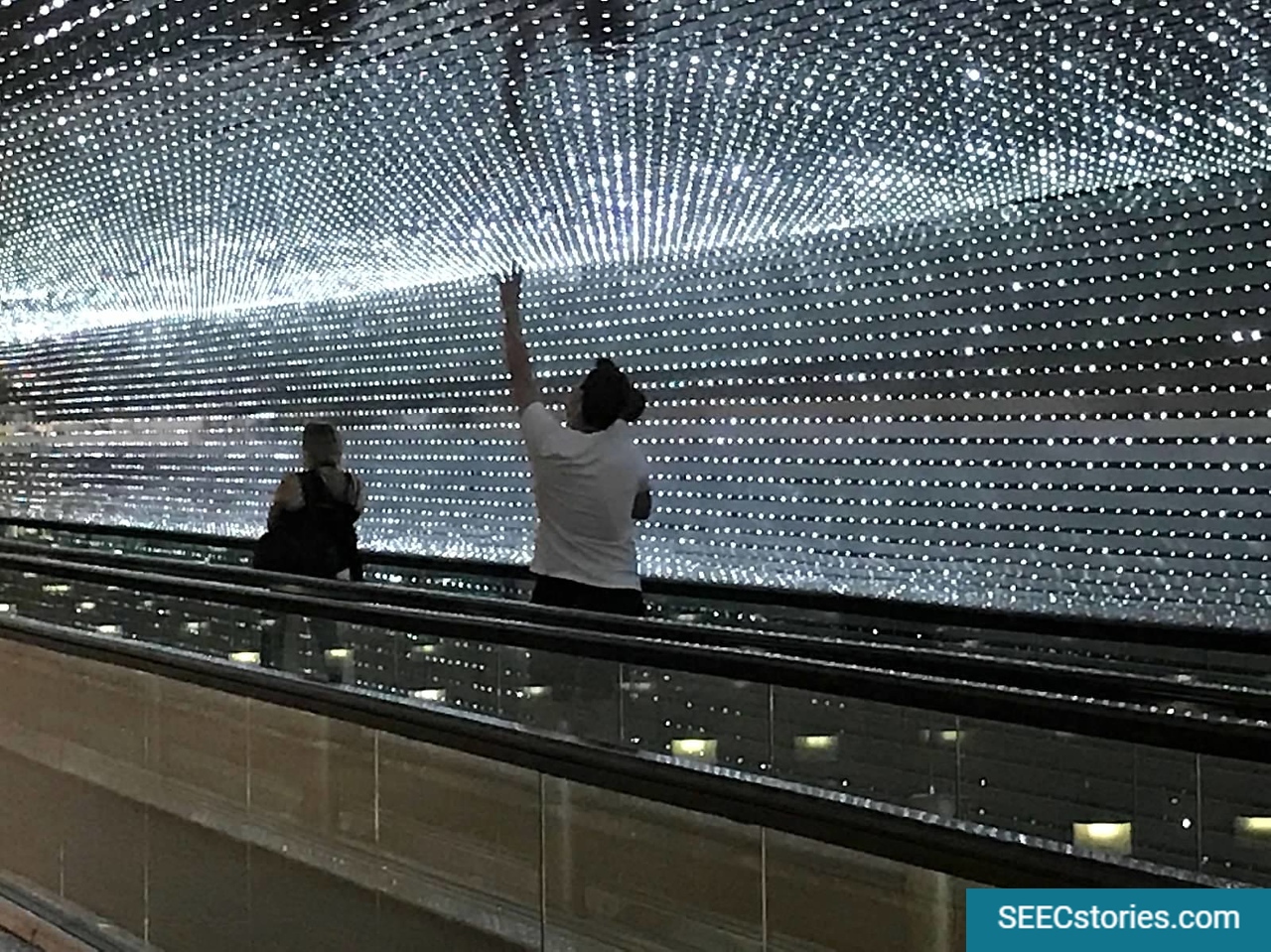
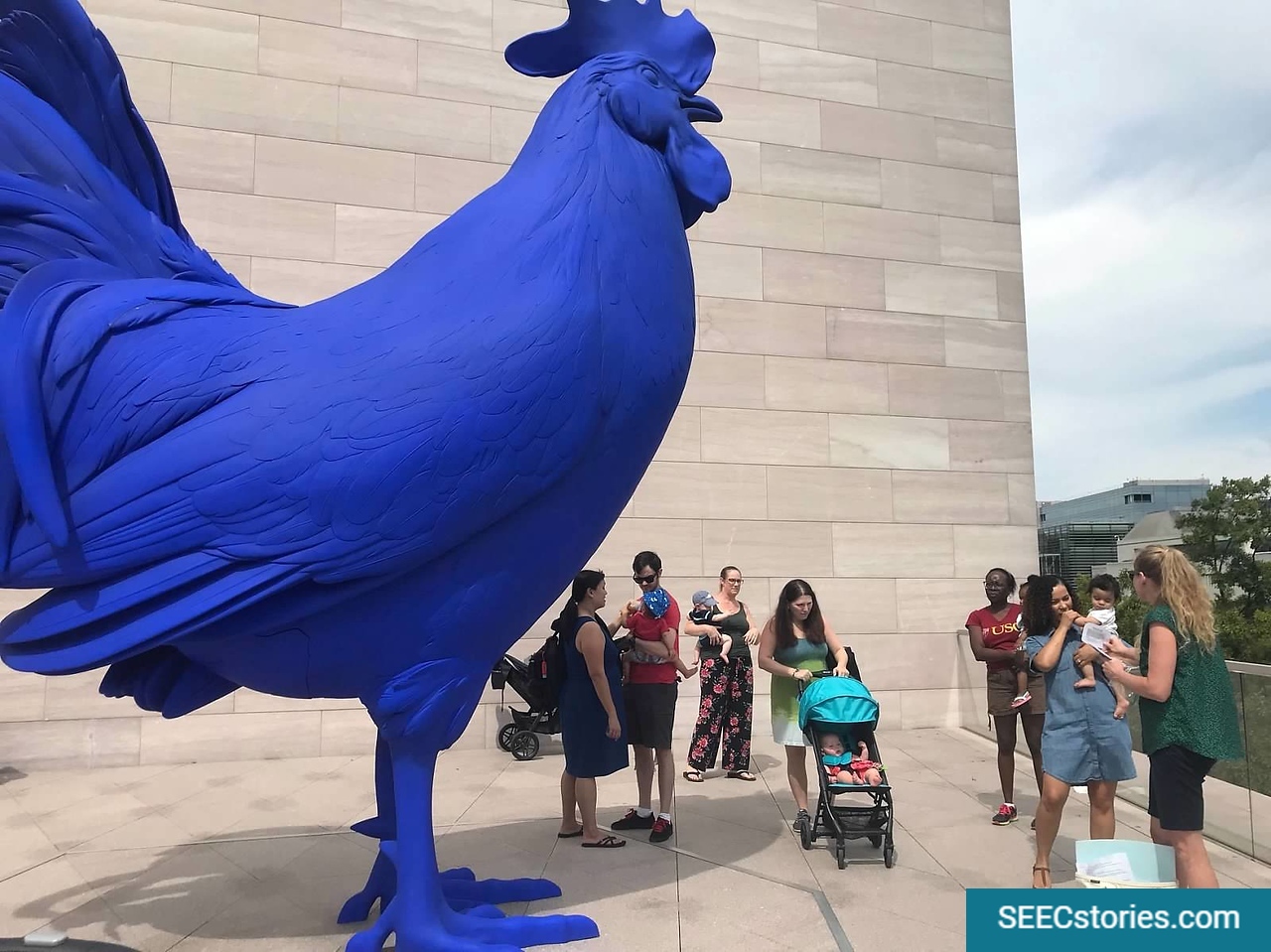
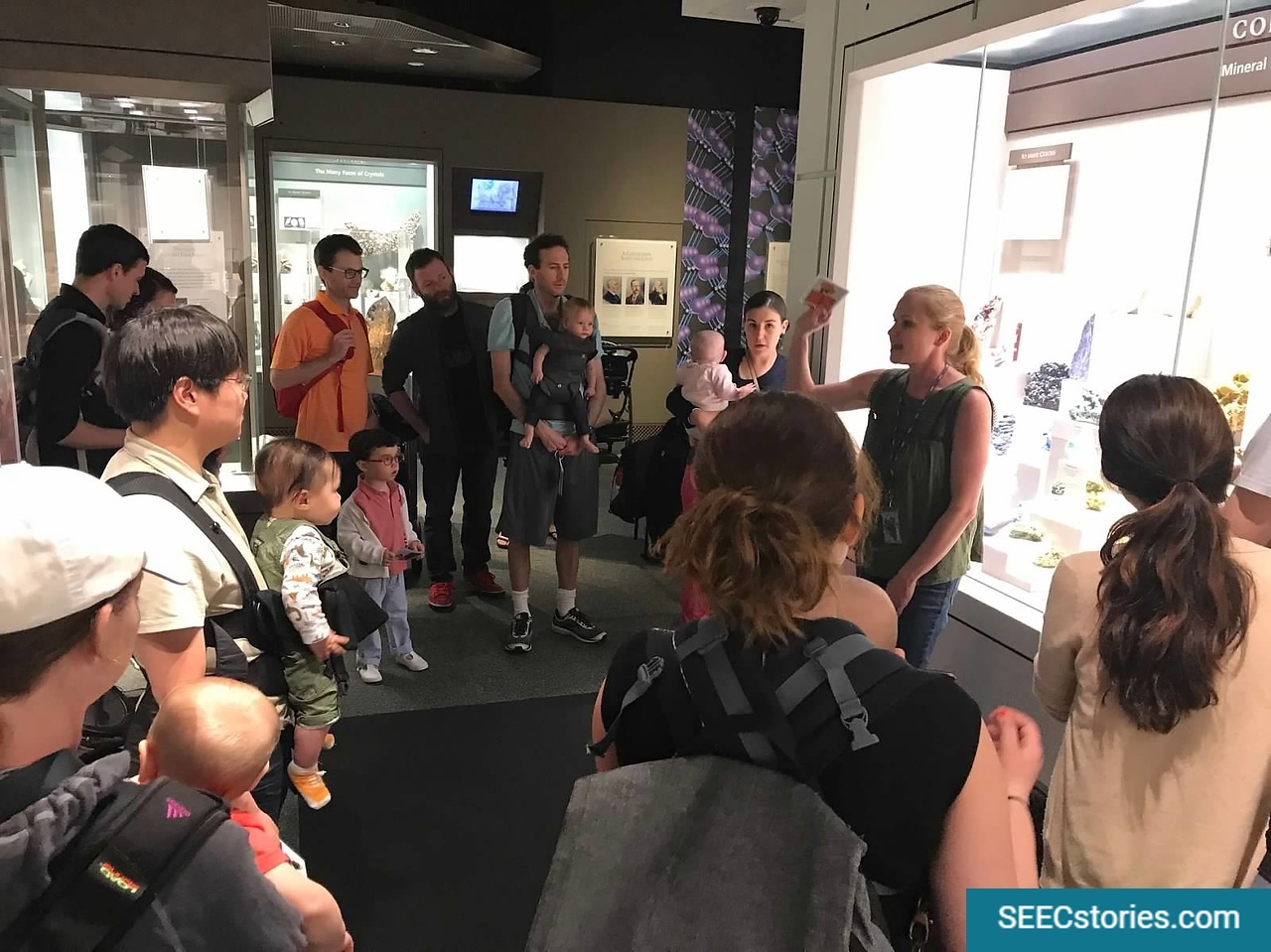


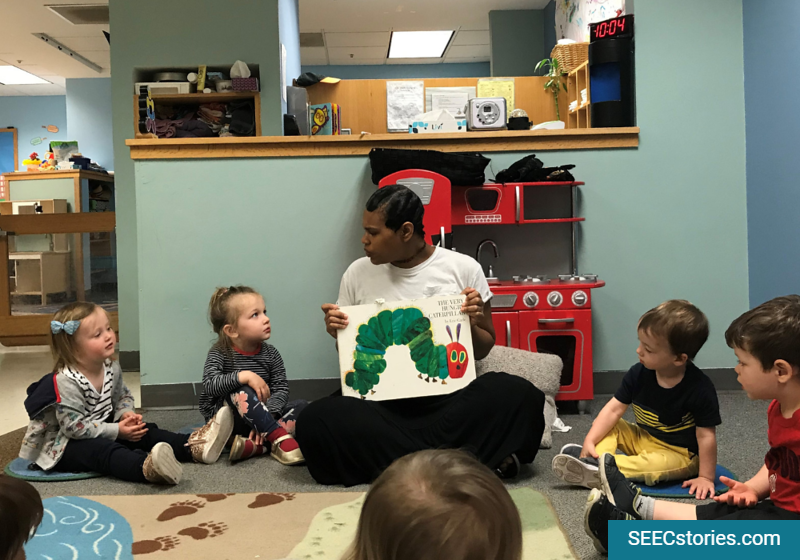


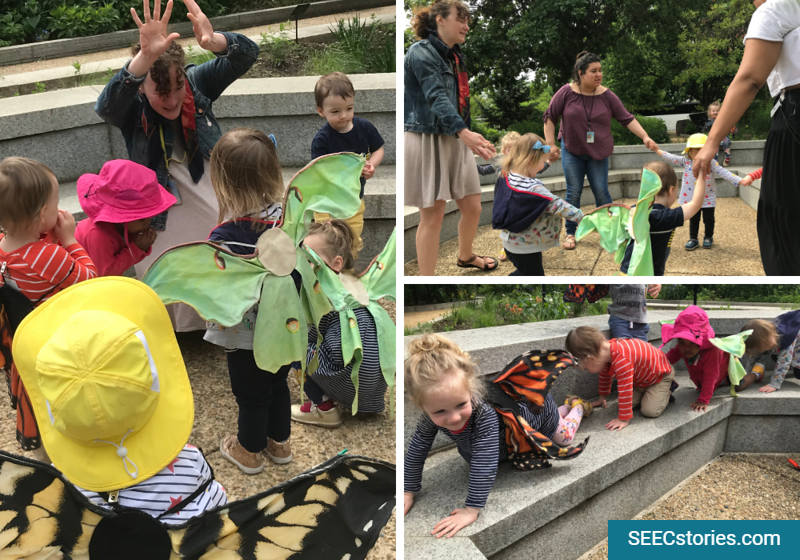
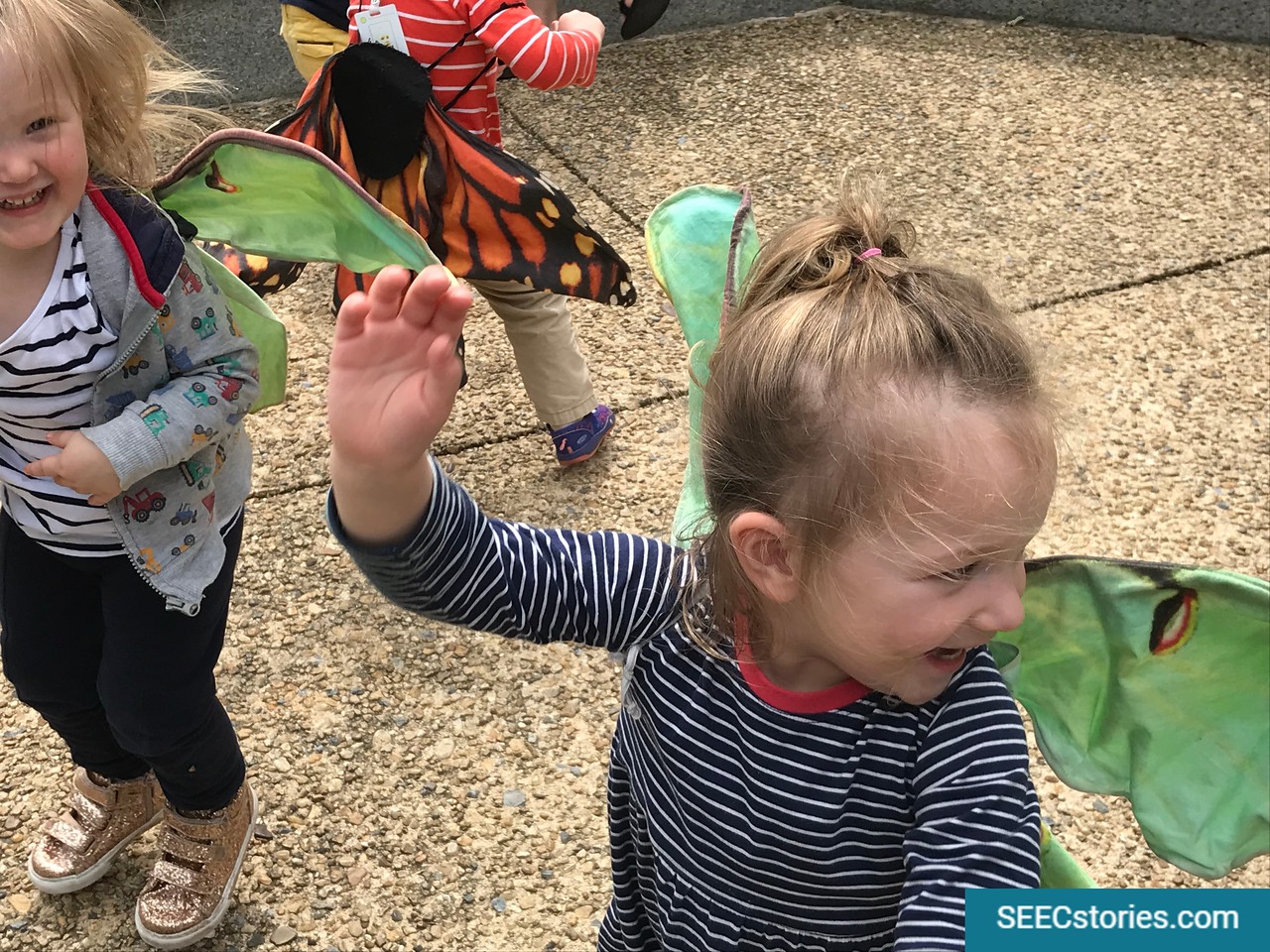


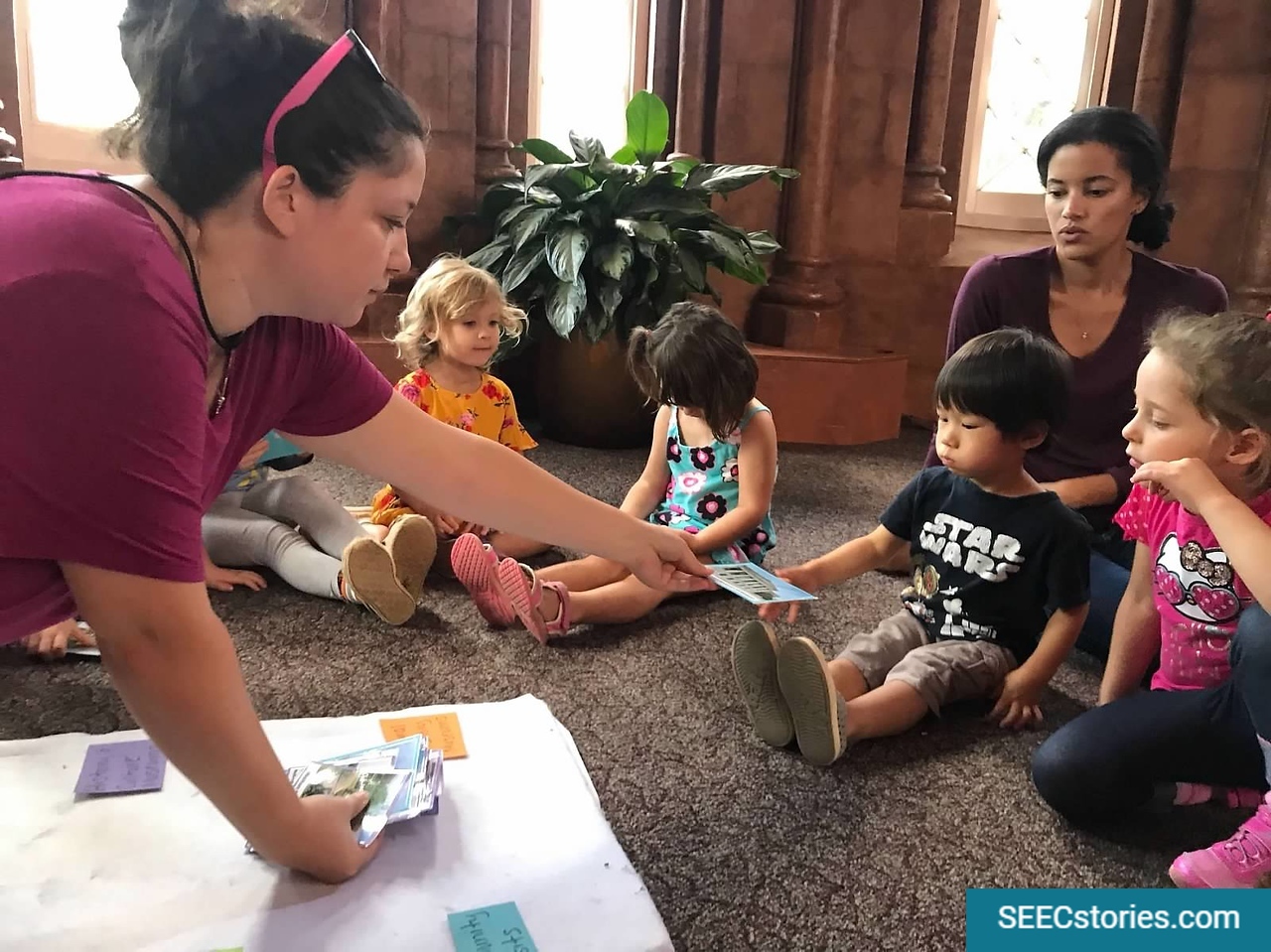
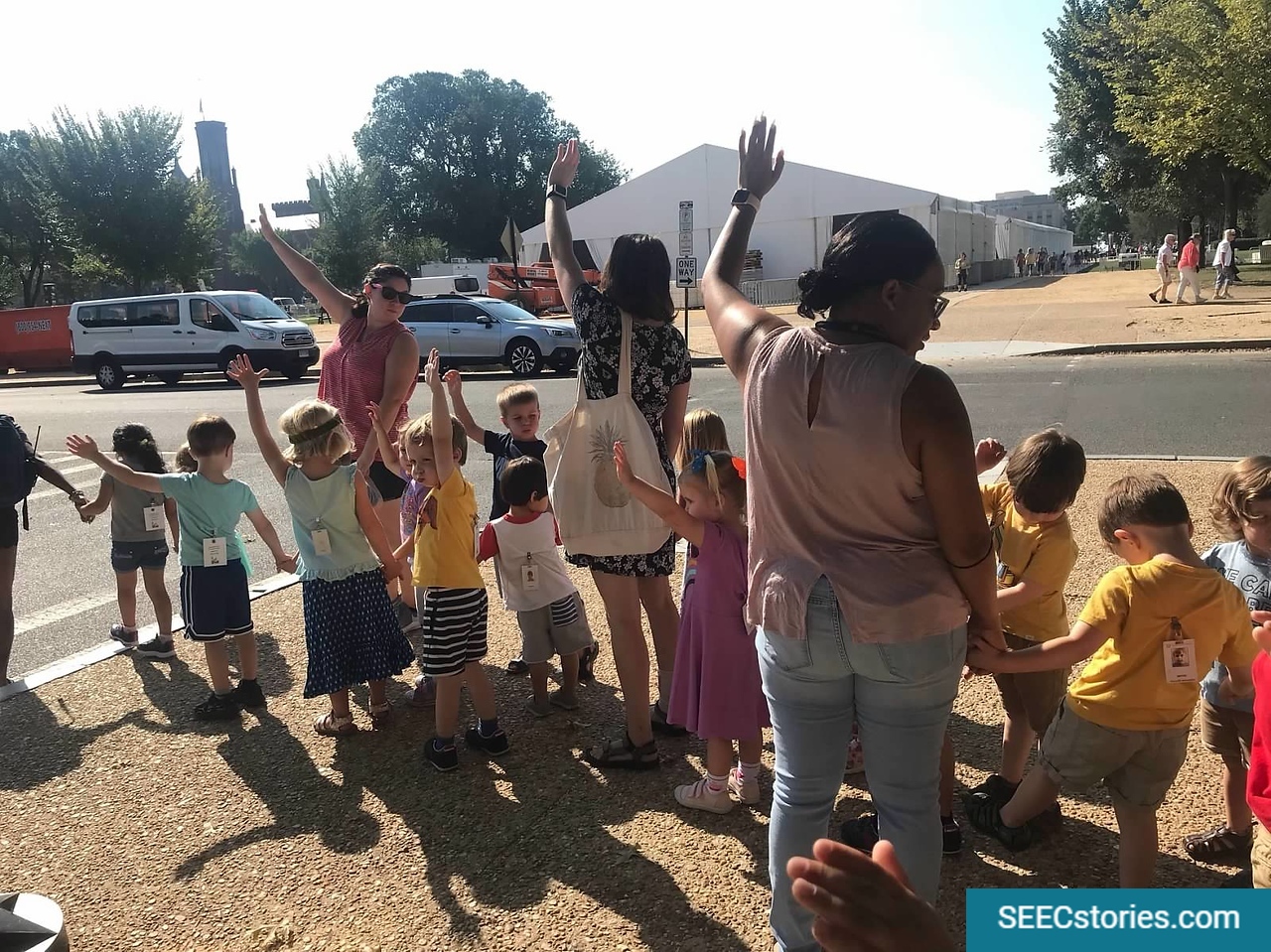
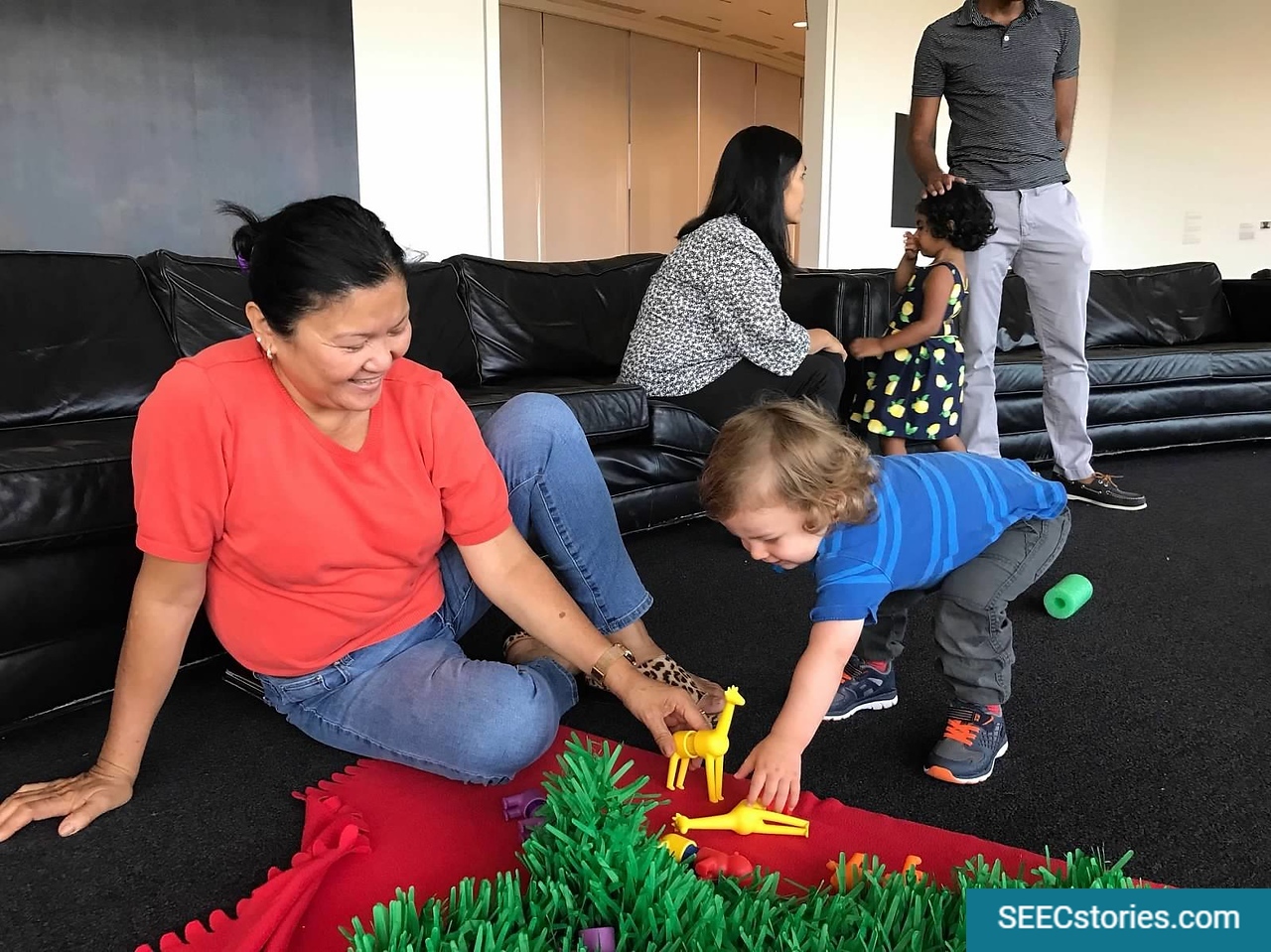
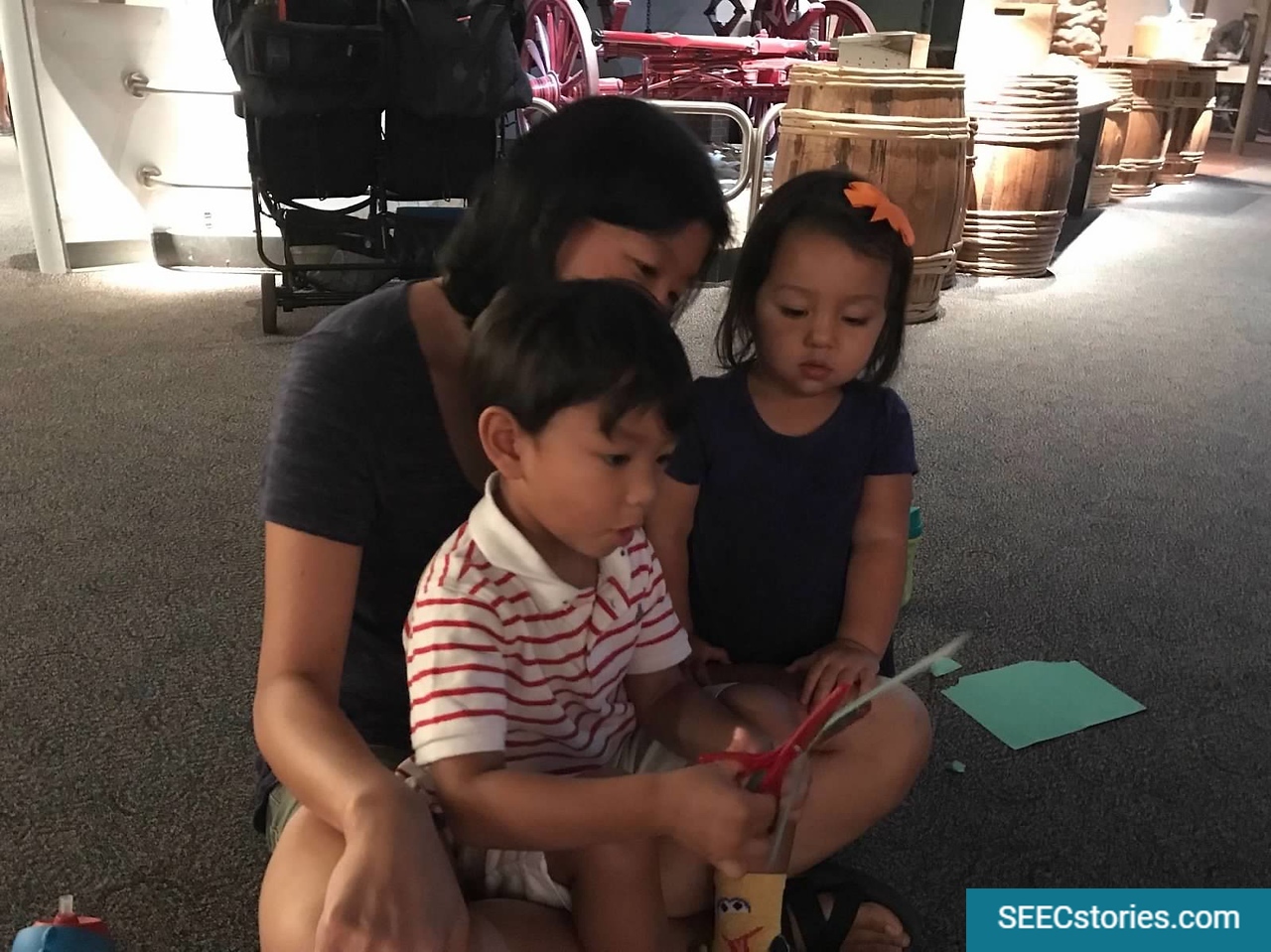

 Our threes and fours devoted an entire day getting to know each other. They kicked things off when the PreK-4 class received a photo of a friend in the PreK-3 class and were asked to match the person to their photo. Once they found a match, the two classes practiced walking on trains. At SEEC, our classrooms walk, holding hands with a partner and positioning teachers in the front and back — like a train. They chose the National Gallery Sculpture Garden as an outdoor space to play team building games with a long, stretchy rope. After which, they read a book about friendship. The PreK-4 classes ended the day by giving their younger friends thank you cards.
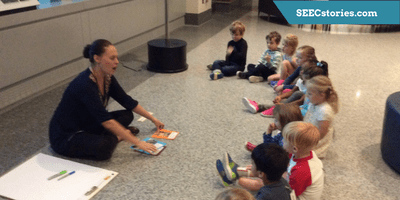 In keeping with our emergent curriculum, another PreK-4 class decided to work as a team and spent the morning discussing school year expectations. The educators were careful to record the children’s thoughts as well as their own. They plan to use this discussion as a permanent part of the classroom and the foundation for a successful school year. My personal favorite part of this lesson was that they solidified this idea of teamwork by visiting an exhibit at the American History Museum illustrating how to make a circuit. Students had to make a
 connection with their bodies between two metal poles to complete the circuit.
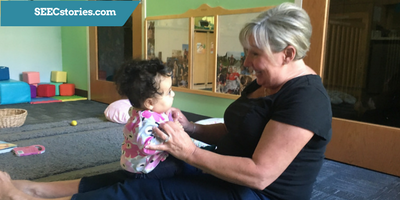 SEEC is lucky to have both an art and music educator and the first few weeks of school are always spent getting to know our newest students in the infants classrooms. This allows the children to acclimate to their daily routines and slowly get to know and build relationships with our enrichment staff.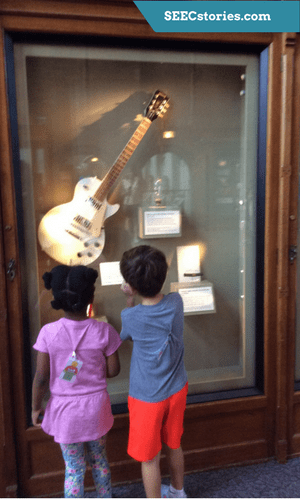















 seecstories.com