
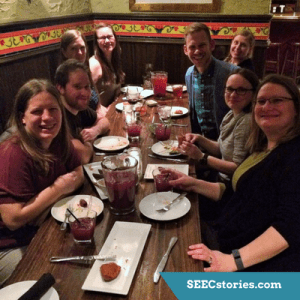
 In keeping with the awards season time of year, SEEC held its annual Staff Appreciation dinner recently in order to recognize the hard work and dedication of our entire team. It was also a great opportunity to kick back, relax, and enjoy some time together.
During the course of the evening, we honored six individuals who have really stood out.
Without further ado, the winners are….
Diane Homiak Award
The Diane Homiak Award is a lasting tribute to the memory of SEEC supporter, parent, and employee Diane Homiak. A fund has been established that annually recognizes the commitment, creativity, and contributions made by a teacher to SEEC.
Melinda Bernsdorf, teacher in one of our two-year-old classes, was the 2017 recipient. With numerous nominations from parents, teammates, and colleagues, Melinda was singled out for fostering a creative and inspiring learning environment, her ability to build independence and inquisitiveness in her children, her willingness to share ideas, and the remarkable warmth she brings to everything she does. Melinda has been at SEEC since 2014 and holds a Bachelors in Psychology. She has a long history of working with children and says she loves how each child has their own individual way of exploring their world.
Rookie of the Year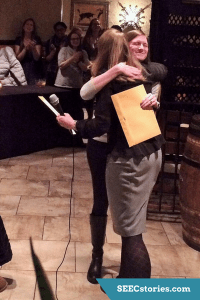
First year toddler teacher Elizabeth Kubba was celebrated as this year’s Rookie of the Year! She, too, was recognized for her creativity in the classroom, her dedication to her children, and her level of communication. As an undergrad, she realized that educating and developing young people was her true passion so she went on to earn her M.Ed. in School Counseling from Liberty University. She has been working in special education at the elementary level for the past three years.
Spirit of SEEC
Brooke Shoemaker was celebrated with the Spirit of SEEC Award. This award isn’t given out every year – it’s only awarded when an educator who reaches across the entire school really stands out, and Brooke truly fits that bill! She was recognized for her work supporting teachers in all three of SEEC’s sites, her ability to connect with everyone (big and little), and her outstanding work within the Center for Innovation in Early Learning. Brooke serves as the Education Specialist for Pre-K and Elementary programs. She holds an M.Ed. in Early Childhood Education and you will often find her combining her knowledge of young learners with her love for theater.
Team Player Awards


The Team Player is awarded to staff who is recognized by their peers. Infant Educator, Logan Crowley, and Assistant Educators, Ace Walton and Phoebe Cos were selected as this year’s award winners – each goes above and beyond to support his/her colleagues, with warmth, willingness to jump in, and a positive outlook! We’re incredibly lucky to have such supportive and dedicated educators across SEEC!
While these 6 individuals were specifically recognized, we also took the time at our dinner to recognize each and every member of SEEC’s team. We’re so incredibly fortunate to have a community of educators as strong and dedicated as those working here each day – it’s what makes SEEC the special place that it is – and we know you recognize that, too! An incredible 27 individuals were nominated this year, and we received more than 50 nominations for these talented educators!

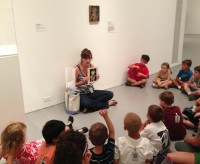
 As the last part of the object lesson, I laid out several objects and asked them to work together to recreate the painting. They needed no instruction, but went right to work, collaborating until the composition was complete. Was it exactly like the painting, no, but they had used these tools to create their OWN composition. They were quite proud and were completely engaged in the activity. I saw them looking back at the painting, rearranging objects and making their own decisions.


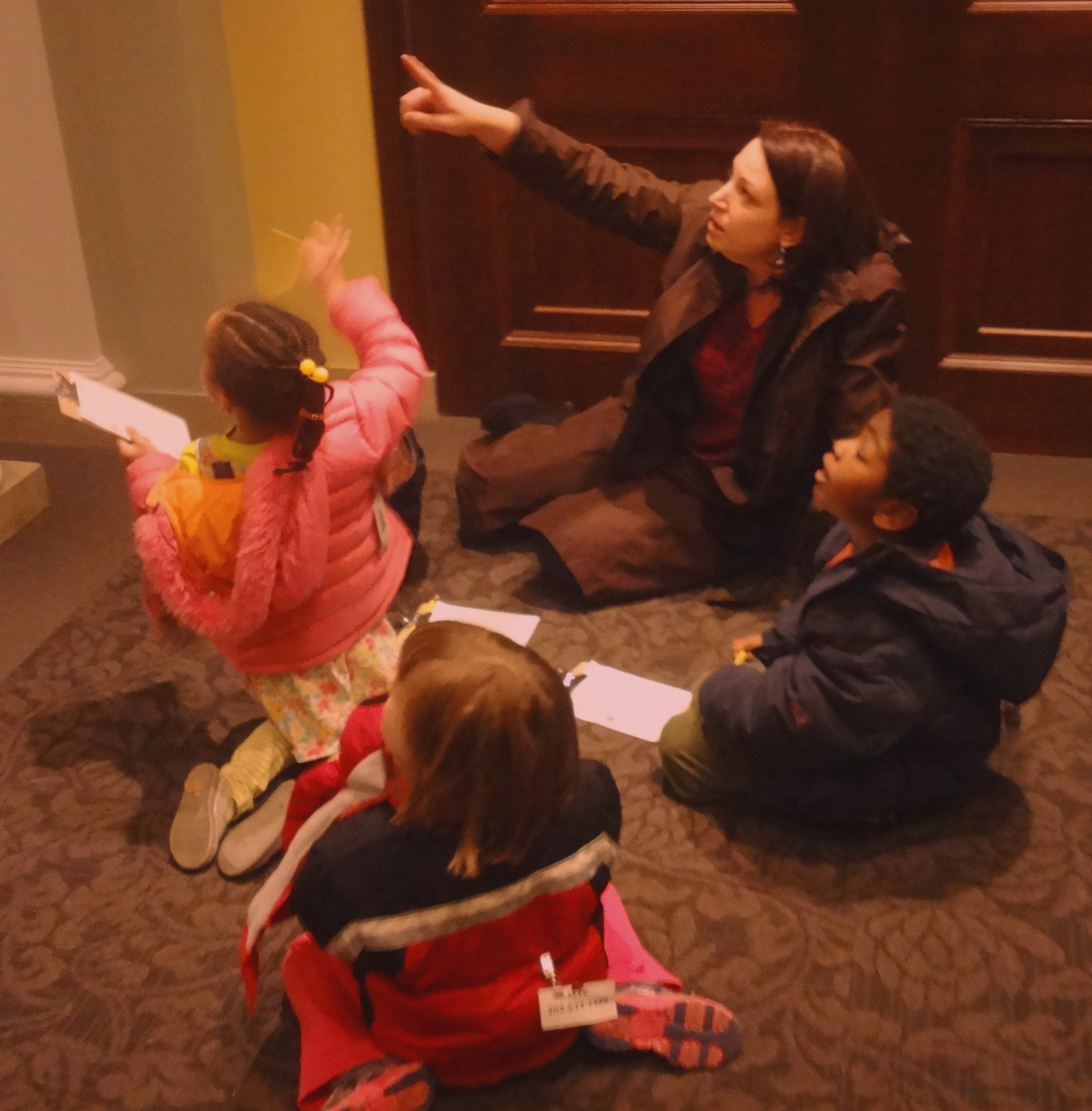
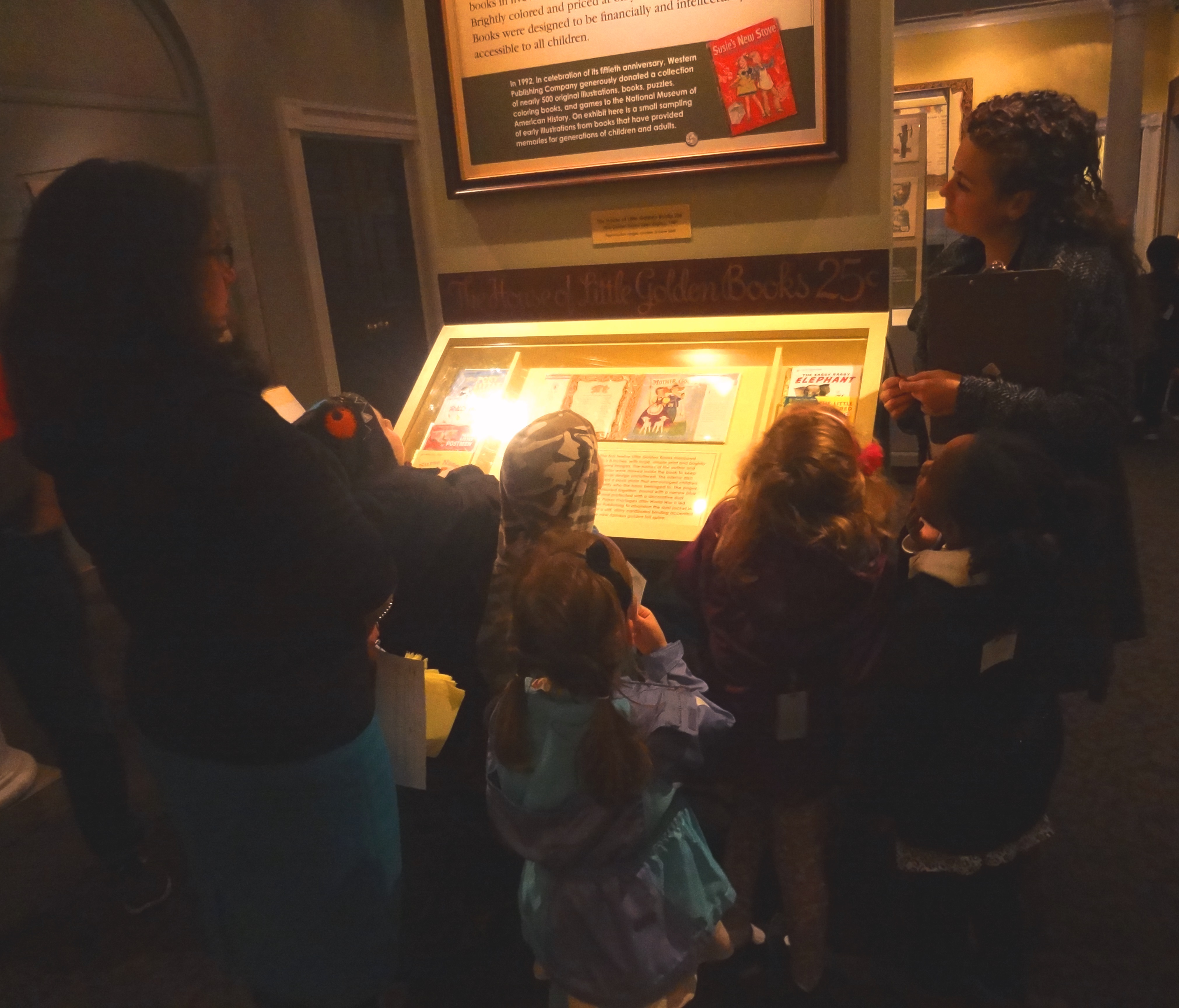
 ngful was the amount of time that families took to work together to create a family treaty. Many took the task to heart as they learned that this type of agreement between two nations required conversation, cooperation and compromise. A wide variety of ideas were discussed. For example, younger family members agreed to clean up their rooms in exchange for time to play with a special toy. Teenagers agreed to balance their screen time with in person family time together. And, members of a high school color guard worked on agreements that supported their group and bound their friendship. After using language from a treaty between the US and Japan and writing the document in special script, families worked together to bind them with a fabric cover. Once finished, this personal connection to treaties inspired visitors to find out more and the discovery boxes which included the examples of materials that were used to make historic treaties. From there, they were encouraged to find an authentic treaty on display in the Archives’ galleries.
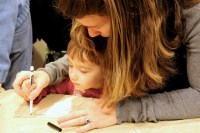 ages, learning styles and interests. As NARA and SEEC colleagues reflect on the planning experience, we are reminded of the synergy that these types of collaborations evoke. Each team member brought a different area of expertise to the planning process. We encourage you to refresh your own practice and seek out a similar partnership. Your results may be similar: positive multigenerational learning experiences for families from near and far. More important to us, though, was to see families of all ages having fun together in this national treasure known as the National Archives and Records Administration (NARA).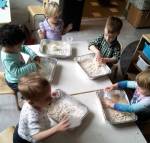
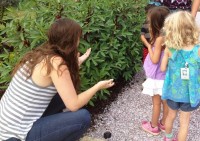
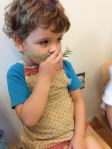 nses, a lot of other things can happen. They can use the experience to practice and build upon their vocabulary. Ask them questions: “What color is it?; How does it feel?; What does it smell like?. A parent can also enhance this experience by adding objects that can be used for comparison purposes. , Add parsley, for example, and encourage basic math skills by asking them to find shapes or compare the size of the two herbs. You can also stimulate critical thinking by adding elements like, scissors or water. These elements prompt children to conduct experiments: i.e. “What will happen if I cut the rosemary – will it still smell? or, What will the rosemary feel like when I pour water on it? Adding these components not only gets them to investigate and hypothesize, it also gives them the chance to practice their fine motor skills. Cutting and pouring are everyday tasks that they hope to master one day and using these skills will also aid in developing the coordination required for writing.






 seecstories.com
