Museum Visits: Autumn Edition

Congratulations parents, you made it through the summer and the first month of school! By now, I hope you are settling into a routine and finding that you have a few free afternoons to enjoy this glorious time of year. While many of you are out apple-picking or in the pumpkin patch, the National Mall is another viable option. It can offer a cost-friendly opportunity where you can divide your time between the museums and taking in the beauty of the Nation’s Capital.

For this year’s fall picks, we have two categories: autumn-inspired exhibits and newly-opened features.

Autumn

PreK class making their own Arcimboldo portraits.

PreK class making their own Arcimboldo portraits.

Four Seasons in One Head is tucked deep inside the National Gallery’s main level in a room that is often forgotten but should never be ignored. Arcimboldo, known for his distinctive portraits in which faces are formed from natural materials, depicts the four seasons in this image. This portrait has an element of mystery that will pique a child’s curiosity and it offers a strong connection to what your child is observing everyday outside. To make deeper connections bring along straw and autumnal fruits for the child to touch and interact with during your visit (note: keep all materials in a sealed plastic bags).

Artifact Walls- You Must Remember This at the National Museum of American History is a no-brainer when it comes to fall-themed visits. Situated adjacent to the Warner Brothers Theater in the Constitution lobby of the National Museum of American History Museum, the cases showcase a selection of Hollywood costumes. In the past, it has featured such classics as robes from the Harry Potter films and Super Man’s cape. With Halloween fast approaching, this is a great stop for the family who wants to brainstorm costume ideas. It is also a learning opportunity for children to think about the process of costume making. PreK children might enjoy sketching their Halloween costume or working with an adult to make a list of materials you will need for the costume.   These simple activities will encourage fine motor development and planning skills. Younger children might enjoy reading a book where one of the costumes are featured or simply bringing a favorite book in which a character wears a costume.

image (7)Food: Transforming the American Table 1950–2000 also at the National Museum of American History is the perfect stop as we begin to approach Thanksgiving.   This exhibition demonstrates the inclusive nature of American culture as seen through food. Young children can see examples of our multicultural food identity in their everyday lives as they accompany you to the grocery store or eat at a local restaurant. Before your museum visit, identify foods in your kitchen that originate from countries other than America and then see if you can find them in the exhibition. Infants and toddlers, on the other hand, might enjoy taking a stroll through the space and matching cooking implements from home with ones on display. End your visit by sitting at the large table planning your Thanksgiving meal or reading a book about family meals.

What’s New

Don’t forget that the Smithsonian is also home to the Discovery Theater. On November 23 and 24, the theater will host Mother Earth and Me: Sister Rain and Brother Earth. This interactive musical uses life-size puppets to tell the story of Mother Nature and her determination to save the Earth from drought – with the help of the audience. Recommended for ages 4-8, this story conveys the importance of working together to protect the Earth.

The Great Inka RoadThe National Museum of the American Indian has it all! It is brand new and showcases the museum’s cutting edge collaboration with the company ideum to capture 3D imaging of the ancient Incan capital of Cusco. The images can be viewed on an interactive touch table and are completely spherical. This technological innovation allows visitors to move through the images in all four directions and transports viewers into the space of the pictures. But that is far from the only interactive element. The exhibit also features several video and audio elements which include bilingual storytelling and two “flythrough” stations where you can take a virtual tour of Cusco.

IMG_3588

Family workshop participants heading into the Sackler Gallery.

Sōtatsu: Making Waves opens October 24th at the Arthur M. Sackler Gallery and based on prior experience, this will be a great stop for the family. The spacious galleries in the Sackler are often quiet and work well for families who might need a little space. If the two screens highlighted on the Sackler’s website: Waves at Matsushima and Dragons and Clouds  are any indication, the exhibition will be full of lively, dramatic imagery that will capture a young child’s imagination.  In addition to featuring large-scale Japanese screens (perfect for young viewers) hanging scrolls and fans will also be included. It is a great opportunity to introduce young children to these mediums and experiment with making your own versions. Don’t forget to check out the ImaginAsia classroom schedule on the Sackler’s website for the all-ages offering tied to this exhibition!

Living and Learning Spaces

At SEEC we have been making changes to our classroom environments over the last three years. There is no question the environment influences everything from behavior to feelings. Think about the difference between how you feel in a busy urban city vs by a stream in the woods (what will feel better to you is very individual!). The environment in our spaces are not just the “third teacher”, giving the children cues about how to behave and making visible what we believe about educating them, they are also the physical representation of the time we spend together in that space. I believe that these spaces should represent the teachers as people, that they should reflect the daily lives of the children and the adults spending time there, and that they should respect the needs of everyone, children and adults.


These classrooms are our “living rooms” — they are the places we live together for many hours a day. They should look more like spaces of living, of wonder, of curiosity than like spaces of instruction. They should have color that warms, softness that calms, spaces where both children and adults can be comfortable, and stories of their time together beautifully displayed in ways that show respect for wonder and curiosity and that reflect the voices of the children. We are working to make our spaces “living and learning” rooms rather than “classrooms” because this is what we do together every day!


A Fresh Take: Back-to-School Books

It’s that time again! Many of our nation’s teachers are preparing their classrooms for the first day of school and so we wanted to share with you what some of our SEEC teachers are planning to include on their bookshelves this coming fall. Before school ended this past week, I interviewed several of our teachers to get their perspective on back-to-school books and here’s what I learned.
Duckling Book_1

HOMEMADE BOOKS

Many of our infant and toddler teachers lamented that there weren’t a lot of options for their young students. They were opting for making homemade books like the one featured to the right that documents a trip to their new classroom. This group of toddlers will be going to a new center, so the teacher thought it was especially important to have something to ease into a new location. I liked that the book highlighted the children’s feelings and pointed out some exciting new components of the classroom. I guess you could call it an end-of-the-year book, but since it will be with them in their new classroom too it still bridges their experiences and offers them continuity.  Duckling Book_2

Many of our teachers also like to create individual books for their students that include photos of family, special events or things the child likes. These types of books can be a great source of comfort at any time of the year when they need a little extra soothing. They also help classmates learn about each other.

FAMILIAR FRIENDS

At least four teachers said to me that they weren’t necessarily looking for back-to-school books for September. Rather they wanted  books with which the children were familiar. Having these books were important because they built in a familiar component that would help their students feel safe and more easily transition to their new teachers and routines. This was especially true of the teachers in our toddler and twos classes. Here were some of their top recommendations.

  1. Chicka, Chicka, Boom, Boom by Bill Martin, Jr. and John Archambault
  2. Good Night Moon by Margaret Wise Brown
  3. Brown Bear, Brown Bear, What do You See by Bill Martin Jr.
  4. The Napping House by Audrey Wood
  5. The Very Hungry Caterpillar by Eric Carle

MAKE IT A PROJECT

Our current Kindergarten teacher shared that when she was teaching in Europe she stumbled across the book, Mommy in My Pocket by Carol Hunt Sendarak. She said she fell in love with the book and its story of a little girl who imagines shrinking her mother so she can accompany her to school. In the end, she realizes that she will be fine on her own as she carries the memory of her mother’s hug and kiss.

Our teacher, Cathryn, took the book a step further and had her pocketstudents bring in a photo of their moms/caretakers and adhered it to the shape of a person. The children were invited to “dress” the body by coloring in clothes. When they were finished, she attached it to a heart, which was then glued on top of a cut-out pocket shape. Finally, she attached yarn to the pocket so the children could wear their “caretaker pockets” like a necklace.

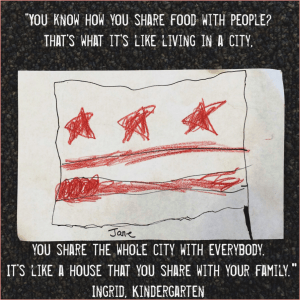
After their project was done, the class sat together and talked. She recounts that she would ask about their feelings or other objects that they might want to bring to school with them.

CELEBRATING INDIVIDUALITY

Many of our PreK teachers said they like to use the beginning of the year to teach about what makes their students special or unique. One PreK-4 teacher praised Tacky the Penguin by Helen Lester for not only honoring everyone’s differences, but also just being silly. Another teacher suggested Ian Falconer’s Olivia because of how it embraces the character’s unique spirit – plus, it doesn’t hurt that the book showcases a visit to the museum where Olivia encounters paintings by Degas and Pollock – a very SEEC moment.

OTHER FAVORITESImage 3346

  1. Lilly’s Purple Plastic Purse by David Henkes

Though not really about back-to-school, this book features the relationship between student and teacher and introduces children to the concept of having different perspectives.

2.  The Night Before Kindergarten by Natasha Wing

This one is for the parents out there! It is a personal favorite that helped both my children transition to Kindergarten.

2.  Splat the Cat by Rob Scotton

3.   If  You Take a Mouse to School by Laura Numeroff

4.   Franklin Goes to School by Paulette Bourgeois

DON’T FORGET THE SPACEphoto 4

Creating a cozy corner, can be as important as the books. Have fun creating a space that is quiet by sectioning it off from the classroom buzz. Use inviting colors, comfortable furniture and include soft, soothing objects. Such a space will undoubtedly help with those first day transitions as well as difficult moments throughout the year.

Hope these give you some fresh ideas! Happy back-to-school.

Children are Citizens: A Collaboration with Project Zero (Part III)


Children are CitizensBook Image

On April 25, 2015 at the National Gallery of Art several DC schools, including SEEC, and Harvard’s Project Zero celebrated the launch of a book authored by over 300 students. The book was the result of a research and professional development project entitled: Children are Citizens: Children and Teachers Collaborating across Washington, D.C. The premise of this project is the belief that children are as much part of the community as their adult counterparts. They should not only be able to voice their opinions, but also participate in their community. Through their participation children will learn to see other’s points of view, work together, and understand how we are all interconnected, thus creating an informed and thoughtful citizenry who will become active participants in our democracy.  To learn more about Project Zero and this collaboration visit here.

SEEC’s Role

The first phase of the project entailed some thoughtful discovery. Children and teachers had several conversations about what they thought of their city, what they would like to change, important people and places. The second phase culminated in a book where SEEC students focused on their relationship with the museums on the National Mall.

Three classes participated in this project—PreK3, PreK4 and Kindergarten. Our final installment in this series features our Kindergarten class  and their teacher, Cathryn Prudencio.

 What made you want to participate in this project?

I thought the idea was great—getting children thinking more deeply about how they interact with both our SEEC community and the community around them.  This was a great opportunity to reinforce what we already know about the city and expand our knowledge even more.

Describe the process in your classroom. Image 3879

We used several different methods for collecting the children’s ideas. I would present a topic for the children to write about in their daily journals. We would then discuss in a morning meeting what they wrote about and I would take note of their answers. We also held discussions about our DC community and I would record their answers for further use. Once the book project became clear, we started exploring the museums more and focusing on big questions like what children visiting DC should see, why the museum was important and how to locate the museums.

Outline how this project was implemented in your classroom?

We would have small class discussions, both teacher and child led. We would brainstorm what we thought was important about the museums and what additional things children should see when coming to DC. We talked about what problems DC had, for example, traffic. The children would also talk about the issues in dramatic play and I would take notes. We would also visit the museums and discuss what to put in the book for others to learn.

How did the professional development help or change your ideas of how to teach or connect children to the city in which they live.

It was great to meet other educators from various schools around DC and have discussions about how their children responded to our study of “children as citizens.” It was interesting to see that even though we taught different age groups and came from various schools, our students had similar responses to our community. It was also great to see how children and adults share similar concerns about their community including the traffic.  Students were upset about how drivers don’t follow the laws and how long they have to wait.  We had a discussion about what could be done to improve this problem.  Being able to connect with the children on issues they feel are important was wonderful.

The project seems to emphasize collaborations and discussion, is there a conversation you had among your students that really stands out?

One that really stood out was when we were in the Smithsonian Castle talking about who the book’s audience would be. We also talked about what role the children would have in creating the book. What I found interesting was the children weren’t so much interested in being the authors or illustrators of the book, but rather more in how they could present the book to others. They wanted to make a play in the Baird Auditorium to present the book to the kids and parents. They were assigning roles and how they should also video tape the show to present to others who couldn’t come. It was also notable that they were concerned about individuals who couldn’t read or understand the book. We discussed adding pictures and translating the book into other languages, even having a braille version. It was really neat to see how they were thinking outside the box and being considerate of others.

How do you think your students views of DC changes during the course of the project?Image 3346

The children’s view of DC changed as we talked more about what our DC community is and who belongs to it. We were very excited when we collaborated with School Within a School and their first grade class for a project. SEEC kids were excited to be tour guides to SWS and show them some of their “secrets” to Natural History. We showed them places you might not have the opportunity to see on a field trip. In return, SWS showed SEEC two great paintings in NGA and did a play for us. We then worked together to create our own ideas about how a museum should look and what it should have in it. This was a great collaboration and the children were asking to be able to do it again.  The children really liked being able to connect with others in our community. They have also become more aware about what is going on around them and what they see on their everyday museum visits.

 What was one of your more challenging moments during the process?

It took a little while to figure out that we wanted to work on a book with the schools from around DC.  Until we actually chose the topic, it was a little difficult to go into the classroom and lead a discussion with the children. However, it was great to be able to talk with all the teachers and the project leaders about questions we wanted to pose to the children and about the final outcome.

What was one of the most rewarding moments during the process?

One of the most rewarding moments was our discussion in the Smithsonian Castle about who the book was for. It was great to see how the children were thinking about all children who would read the book and their general concern about how those who couldn’t read or know the language, would be able to understand the book. This discussion began with a single teacher prompt followed by almost 45 minutes of children-led discussion. The children were in the zone and excited about the book and how they were going to be a part of it. It was great to be able to share their compassion and understanding for others.

Is there anything you would like to add?

Kindergarten City

Kindergarten City

It was a fun project overall and it was nice to see what the children’s understanding of our community is. It was also fun to see how they would follow up with some of our conversations in their dramatic play, for example, making roads with big blocks and the zoo complete with roads to it and food for the animals. The children were also excited about making a tour guide book to our museum as well. Overall, the children responded well to the project and had a good time.

Children are Citizens: A Collaboration with Project Zero (Part II)

Book ImageChildren are Citizens

On April 25, 2015 at the National Gallery of Art several DC schools, including SEEC, and Harvard’s Project Zero celebrated the launch of a book authored by over 300 students. The book was the result of a research and professional development project entitled: Children are Citizens: Children and Teachers Collaborating across Washington, D.C. The premise of this project is the belief that children are as much part of the community as their adult counterparts. They should not only be able to voice their opinions, but also participate in their community. Through their participation children will learn to see other’s points of view, work together, and understand how we are all interconnected, thus creating an informed and thoughtful citizenry who will become active participants in our democracy.  To learn more about Project Zero and this collaboration visit here.

SEEC’s Role

The first phase of the project entailed some thoughtful discovery. Children and teachers had several conversations about what they thought of their city, what they would like to change, important people and places. The second phase culminated in a book where SEEC students focused on their relationship with the museums on the National Mall.

Three classes participated in this project—PreK3, PreK4 and Kindergarten. Our first installment in this series featured our PreK4 class (insert link) and this installment will explore our PreK3 class, the Wallabies. Their section of the book focused on their favorite parts of the Air and Space Museum, the Hirshhorn Museum and the National Museum of American History.

This interview was conducted with, Erin Pruckno, Wallaby teacher.

Erin Pruckno with her PreK3 Wallaby Class

Erin Pruckno with her PreK3 Wallaby Class

What made you want to participate in this project?

I wanted to participate in this project because the concept of citizenship and education is something I’m very interested in and was a major part of my master’s degree in International Education. In my studies, I encountered a lot of scholarship about citizenship education—how we educate students to be citizens, how students are citizens, the definitions of citizenship—however, not many touched upon citizenship and young children. This always irked me because, as an early childhood educator, I believe wholeheartedly that education at this age matters so much and that young children should be treated as citizens who have a vital role in our communities and our futures. So, I jumped at the opportunity to put to action these ideas.

Could you describe the process through which your class participated in the project?

We began by going on investigatory visits to the museums we were covering for our contribution to the book the project published. The Wallabies contributed pages on the Hirshhorn Museum, the National Museum of American History, and the National Air and Space Museum. During these visits, I looked for clues to what the students were interested in, as well as documenting their experiences in these spaces. Later in our classroom, we followed up with conversations on our visits; asking them about what was important about our museums, what other children should know about them, our favorite things there. I really wanted to encourage a sense of ownership from our children and to convey their passion and expertise to the book’s audience. We would then go on follow-up visits to the museums, continuing our conversations, and then later illustrating some of the things they saw or described.

Visiting the Air & Space Museum

Visiting the Air & Space Museum

Can you outline how this project was implemented in your classroom?

We tried to integrate the project into our already existing courses of exploration. For example, when we were learning about space, a trip to NASM was easy to do since it aligned with our topic and we could have a museum visit as well as research trip for the project. Other times, we set aside days to visit the museums and document our learning just for the purpose of the project.

How did the professional development portion of this project help or change your ideas of how to teach or connect children to the city in which they live?

As a professional development opportunity, the project really challenged me to think more about how I document student learning and also how I engage them in conversations. The method I’ve often relied upon with my class is to pose a question, then let students take turns to respond. However, when doing this, we have less of a dialogue among

the class and more of a back-and-forth between me and individual students. This project encouraged me to take a step back during classroom conversations and listen more—allowing students to talk to each other instead of directly to me.

file (1)

Making maps of the museums

The project seems to emphasize collaborations and discussion, is there a conversation you had among your students that really stands out?

Some of our most interesting conversations started when I would ask the Wallabies to share the most important thing to know about the museums and the students began talking about things you can’t do in museums. As I sat back and listened, letting them guide the conversation (which was, as I said, a challenge and learning experience for me), dramas would unfold about why we couldn’t touch exhibits or the planetarium screen. They came up with elaborate stories about how touching the screen would make a hole, creating a problem, workers would have to fix it, and the president and other people coming to the museum would feel sad that it was broken.

How do you think your students views of DC changes during the course of the project?

My hope was that my students expanded their understanding of other children in D.C. They already have a strong understanding of their families’ communities (coming from neighborhoods all over D.C., Virginia, and Maryland) and of our SEEC community, but I wanted them to think more about other students in D.C.  By asking them to think of what other children need to know about the museums, I think they became more aware of how there are children outside our community who do not know the museums as intimately as they do, and that these other students might have different perspectives on D.C. that we can both learn from and share our knowledge with.

What was one of your more challenging moments during the process?

As I mentioned, facilitating conversations in a way that encouraged students to have a dialogue among them was a challenge, but a good learning experience for us. Initially, some questions were difficult for students to answer such as those that asked them to think about D.C. broadly, but over the course of the project it became easier to provoke conversation as we broke down things into more manageable pieces, like discussions about individual museums.

Visiting the Hirshhorn as part of their study of light and dark.

Visiting the Hirshhorn as part of their study of light and dark.

What was one of the most rewarding moments during the process?

During one conversation, a student exclaimed to the class, “Guys! I know something!” I loved her enthusiasm, eagerness, and confidence in sharing her knowledge. This moment also summed up the project for me. I wanted to help my students show that even though they are young, they know something, many things in fact, about their community and Washington, D.C and that their contributions to our understanding of our city are to be valued and heard.

Children are Citizens: A Collaboration with Project Zero (Part I)

Children are Citizens

Visiting the Smithsonian Castle

Visiting the Smithsonian Castle

On April 25, 2015 at the National Gallery of Art several DC schools, including SEEC, and Harvard’s Project Zero celebrated the launch of a book authored by over 300 students. The book was the result of a research and professional development project entitled: Children are Citizens: Children and Teachers Collaborating across Washington, D.C. The premise of this project is the belief that children are as much part of the community as their adult counterparts. They should not only be able to voice their opinions, but also participate in their community. Through their participation children will learn to see other’s points of view, work together, and understand how we are all interconnected, thus creating an informed and thoughtful citizenry who will become active participants in our democracy. To learn more about Project Zero and this collaboration visit here.

SEEC’s Role
The first phase of the project entailed some thoughtful discovery. Children and teachers had several conversations about what they thought of their city, what they would like to change, important people and places. The second phase culminated in a book where SEEC students focused on their relationship with the museums on the National Mall.

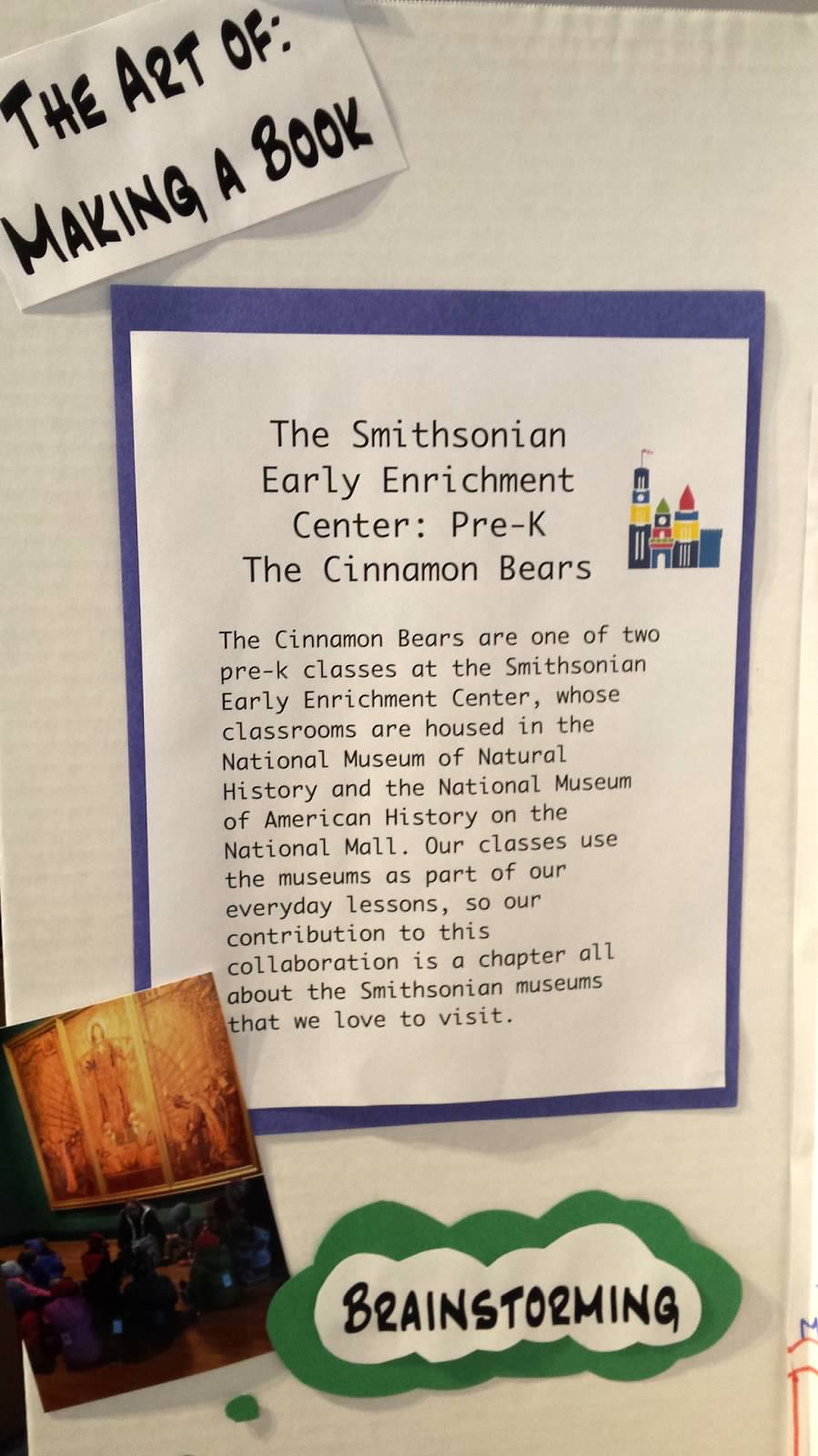
Three classes participated in this project—PreK3, PreK4 and Kindergarten. We will begin with the PreK4 class, also known as the Cinnamon Bears. Their section of the book focused on their favorite parts of the National Museum of African Art and the Smithsonian Castle and some insider tips, including that the Smithsonian Castle is not a real castle! It also featured a list of their favorite objects in the museums, a story entitled The Story of How the Security Officers Own the Museums and photos of museum collections taken by the children.

Below you will find the interview with Cinnamon Bear teacher, Carrie Heflin about her experience with the Children are Citizens project.

Carrie teaching

Carrie Heflin

What made you want to participate in this project?

Project Zero is such an influential presence in the Early Childhood community and I feel so strongly about encouraging children to be active citizens that when we were asked to participate in this project, my commitment was a no-brainer. I couldn’t have dreamed up a better idea for a worthwhile endeavor than to show the DC community and my students how capable and powerful they can be.

Could you describe the process through which your class participated in the project?

We spent a lot of time talking together as a class about our ideas for this project. Much like the process for the adult facilitators, at least the first fifty percent of the project was all planning and bouncing ideas around. We didn’t get to the actual field work—researching and putting together the data for the book until around February. I loved the sense of respect and community that I felt in the classroom when we had these discussions. It was so nice to take time to just talk about our feelings and opinions and to truly listen to each other.

Can you outline how this project was implemented in your classroom?

The teachers did most of the facilitation for this project. We started out with some casual discussions about the city and about the project and then moved on to talking about the book, how books are made, and what information we wanted to contribute to the final product. A member of the coordinating team, Ben Mardell, would stop by occasionally to check in on our progress and to talk with the students about their ideas and opinions on the project thus far. The last phase was the most active. We went to all the different museums we had chosen to showcase in our portion of the book and took pictures and gathered information in small groups.

How did the professional development portion of this project help or change your ideas of how to teach or connect children to the city in which they live?

I really enjoyed getting to know and hear ideas from educators at other schools. We got together about five different times over the course of the project and it was lovely to share our experiences and learn how other classrooms explore the city. I always left our meetings feeling so inspired about all of the wonderful ways other educators were making the city accessible to their students and it helped challenge me to reexamine the way I looked at the city and how I talked about it with my class.

20150425_110313

Bears Display at the NGA

The project seems to emphasize collaborations and discussion, is there a conversation you had among your students that really stands out?

One of my favorite conversations I had with the class happened after one of Ben Mardell’s visits. He had talked to a small group of students about the museums and they ended up starting a story about where the museums came from. Ben sent me the script of the conversation in an email and, when I read the story back to the class they all had something to add. Before long it had morphed into this origin story of how the museums came into being. I learned so much about my students and how they view our community. They had these wonderful ideas about how the security officers are the real owners of the museums and they protect them from all the “bad guys.” I was so taken with the story and the children were so invested in it that it ended up hedging out some other material that we had originally intended to include in the book and it is still my favorite part of our section.

How do you think your students views of DC changes during the course of the project?

I don’t know that their views changed so much as my views widened to include more of theirs. I don’t have any hard evidence of any of my students budging even an iota on their original convictions, but the sense of understanding we gained from each other and from all of our conversations and collaborations in the classroom strikes me as very profound- even if it wasn’t the original intent.

What was one of your more challenging moments during the process?

I was often challenged by trying to balance working on the project and teaching lessons on our current topic of study. I know some of the other schools that participated made the project their main focus rather than trying to add it on to their curriculum. I think I might try that track if I had it to do over again.

What was one of the most rewarding moments during the process?20150425_105806

The absolute most rewarding moment was at the book release event at the National Gallery of Art when I saw all of the students walking around wearing big red badges that said “Author” on them. The sense of pride, accomplishment and empowerment was palpable and I think that really was the point of the whole thing.

Springtime Fun: Full STEAM Ahead

Parent as Teacher_MG_0715_72dp_webi

It has been a long time coming, but spring is finally here and it is the perfect time to introduce your child to some of the changes that are occurring right in front of their eyes. I recently did a lesson on clouds for a family workshop and that, coupled with, some fantastic lessons from my fellow teachers was the inspiration for this blog. These ideas are a blend of natural observation, art, science and museum visits and have all the components of STEAM. STEAM is a popular and important educational movement, which advocates for using science, technology, engineering, art, and math as a means through which children can learn and develop critical thinking skills.

Parents, remember you are your child’s teacher too. When you teach them you are expanding their world,  sharing your interests and bonding. Don’t feel like you have to be a Pinterest guru and spend hours developing a lesson or buying materials. Instead, keep it simple and have fun by using ideas that are easily accessible and follow your own interests.

Clouds and Rain

Natural Observation

  • Walk outside during a light rain and enjoy the feeling of the water or notice the water droplets on the leaves.
  • Feel the ground after a rainstorm and notice the difference in texture and weight when it’s wet.
  • Notice how the sidewalk changes color after its wet.
  • Take a picnic to a nearby park and spend time observing the clouds. Look for shapes and movement.

Science Experimentfile (7)

  • Fill a cup with water and top it off with shaving cream. Add food coloring. Eventually the food coloring will begin to fall when the shaving cream is too full, just like rain falls when a cloud is too full of water.
  • For infants and toddlers, they will enjoy watching the color and might not understand the concept of the cloud, it will help them understand from where rain comes.  Consider using different colors and having fun with it.

Literacy

  • Eric Carle’s The Cloud works well for infants through preschoolers. When you are reading to your child, remember to include them in the book too. In this book, for example, you could ask them what sounds a sheep makes or encourage them to move their arms like a wave when the cloud passes over the ocean in the story.
file (9)

3-year-olds at the National Gallery of Art

Museum Visit

  • Choose a straightforward piece like Ships in Distress of a Rocky Coast by Ludolf Backhuysen at the National Gallery of Art and bring a few simple scarves to reenact the wind from the storm.
  • Choose something more imaginative like the Dangerous Logic of Wooing by Ernesto Neto at the Hirshhorn Museum and Sculpture Garden. We made  tactile clouds by filling white nylons with marshmallows. Even the adults loved them.
  • Don’t live in DC? Visit your local museum or explore these pieces online with your child–that is some worthwhile screen time.

Art Project

  • Make your own clouds with blue construction paper, cotton balls and glue.
  • Make umbrellas using a half paper plate and Popsicle stick. We used do-a-dot markers to decorate them. These are not messy and the perfect size for older infants and toddlers to use.

Gardening

Now that you have had some fun with clouds and rain, your child might be interested in other, related topics. Here are a few more ideas!

Natural Observationfile (1)

  • Get out the sand toys and play in the dirt. If you want to keep things a little neater, you can always grab a large tub and fill it with dirt. I find that a little goes a long way. The sensory experience will give infants and toddlers the chance to experience different textures and to practice filling and dumping.
  • Preschoolers might enjoy the opportunity to plant a few seeds and watch the outcome of their efforts. Not only will they see the physical changes that will occur, but they will likely take ownership and pride in their planting.

Museum Visit

  • Local gardens are everywhere! Even if you just visit a neighbor’s garden.
  • Visit a farmer’s market.
  • My top DMV choices are: the Victory Garden at the National Museum of American History, the US Botanical Gardens and Brookside Gardens in Silver Spring

Fun in the Kitchen_SAM0126

  • Use this chocolaty recipe for making dirt and include some gummy worms for added realism. The kitchen is a great place for a young child to learn because of the countless learning and developmental opportunities like: math – sorting, counting measuring, fine motor skills – pouring, stirring, sensory input, practice working together and following directions.

Literacy

  • Lois Ehlert’s books Eating the Alphabet or Planting a Rainbow.
  • Flower Garden by Eve Bunting and Kathleen Hewitt

Keep visiting us for more ideas. Enjoy your time together and the beautiful spring weather.


Cherry Blossoms, Friendship and the National Archives

This post was written by the Center for Innovation in Early Learning’s Director, Betsy Bowers

PartnershipFriendship Between Nations Family Day

Friendship was the theme for the National Archives Cherry Blossom Festival Family Day, and SEEC was excited to help plan a variety of activities for the event. Our goal was to engage families of all types and provide fun but informative activities that spoke to multiple generations and varied interests.

Geography

The GeoFind Challenge gave visitors an opportunity to learn interesting facts related to gift giving between nations. For example, did you know that the King of Siam offered President Lincoln an elephant to help with farming but he graciously declined? While several participants already knew, others learned that the city of DC’s many cherry blossom trees were originally a gift from Japan. We met students from all over the world who enjoyed the geography, history and political connections tied to this mapping challenge.

Cranes

Origami Workshop Tutorial

For visitors that had family members more interested in using their hands to create a special souvenir to remember the day, many made origami cranes.   A Japanese legend says that if you fold 1000 cranes you are granted a wish.  Over the years, thousands of origami cranes were sent to the American people and US presidents, along with good wishes from the people of Japan.  These are now found in the National Archives’ holdings.  Folding the origami crane was a popular activity enjoyed by many visitors. Younger participants were encouraged to try creating the slightly simpler samurai helmet – which also has interesting connections to the diverse holdings of the Archives. Did you know that President Reagan received a very large framed origami samurai helmet made of over 3000 pieces of paper folded by Japanese children?

Treaties

Especially meaniTreaty Boxngful was the amount of time that families took to work together to create a family treaty. Many took the task to heart as they learned that this type of agreement between two nations required conversation, cooperation and compromise. A wide variety of ideas were discussed. For example, younger family members agreed to clean up their rooms in exchange for time to play with a special toy. Teenagers agreed to balance their screen time with in person family time together. And, members of a high school color guard worked on agreements that supported their group and bound their friendship.  After using language from a treaty between the US and Japan and writing the document in special script, families worked together to bind them with a fabric cover. Once finished, this personal connection to treaties inspired visitors to find out more and the discovery boxes which included the examples of materials that were used to make historic treaties.  From there, they were encouraged to find an authentic treaty on display in the Archives’ galleries.
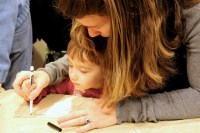
Benefits of Working Together

SEEC and NARA worked together to create additional activities that accommodated different Treatyages, learning styles and interests. As NARA and SEEC colleagues reflect on the planning experience, we are reminded of the synergy that these types of collaborations evoke. Each team member brought a different area of expertise to the planning process. We encourage you to refresh your own practice and seek out a similar partnership. Your results may be similar: positive multigenerational learning experiences for families from near and far. More important to us, though, was to see families of all ages having fun together in this national treasure known as the National Archives and Records Administration (NARA).
 

Teachers

Want to turn these ideas into classroom-friendly projects? Just visit NARA’s blog for some great adaptations.

Quiet Moments: How a Washingtonian Family Does Spring Break

Spring

DSCN3881Spring has finally sprung in DC and although the cherry trees haven’t yet blossomed, the tourists have arrived. If you are anything like me, you prefer to stay away from the crowds, but still want to make the most of spring break with your family. The trick is choosing the right destination. Living in or around D.C. means we are fortunate enough to visit museums year-around. Consider leaving the big attractions like; Air and Space and Natural History for the winter months when they are less crowded and using spring to discover some hidden gems.

The Freer Gallery of Art

Gallery Visit: Japanese Screens
The Freer is scheduled to close next year for renovations so it is an excellent time to visit. This spacious room is a great place to have a seat and do some close looking, read a book or sketch. Remember, you don’t have to be an expert to enjoy or share art with your children.

Make a Connection

  • Read a book like Eliza’s Cherry Trees: Japan’s Gift to America by Andrea Zimmerman and sketch the screens.
  • Learn more about what a Japanese screen is from this teacher resource on page 65.

Finish your visit by walking out through the Sackler, which is connected to the Freer, and heading down Independence Avenue to the Tidal Basin to check out the blossoms. It will undoubtedly be crowded there, but at least you started things out quietly.

The National Museum of African Art

Gallery Visit: Conversations: African and African American Artworks in Dialogue
Inside this exhibit is one of my favorite pieces currently on display at the Smithsonian; a butterfly mask from Burkina Faso. It’s also located in a quiet nook of the Museum and perfectly situated for children to walk around and observe.

Make a Connection:

  • Children are often attracted to butterflies for their beauty and they will likely connect to this mask for that very reason. Bring photos of butterflies and compare wings. Look for shapes, patterns and color.
  • Discover the other animals represented on the mask.
  • Pose questions: Why is the butterfly important in Burkina Faso? Where is Burkina Faso? (this information is included in the link above)
  • Ask your children to design their own butterfly wing and bring paper and colored pencils to the gallery. Finish your visit up with a walk over to the butterfly garden.

The National Gallery of Art

Gallery Visit: American Masterworks from the Corcoran, 1815 – 1940 
This gallery might be a little busy, but its worth it because it closes on May 3. There are some breathtaking works in this gallery that are large and inviting for children and adults alike.

Make a Connection:
Since there might be a few more people in this space, choose what the family wants to see ahead of time by looking online. This will help you plan and will get the kids excited for the visit. Once there, find your selected works and share what you like about them. Do you notice anything in-person that you didn’t online?  If your children are too young to talk – that is ok – talk to them. They will still benefit from the experience.

Enjoy your spring break.

Looking Back: Family Workshop Review

FAMILY WORKSHOP EVALUATION

In early November, we wrapped up our first round of family workshops for the year and the last few weeks have been spent reflecting and sorting through evaluations. We received positive feedback about the types of activities we provided in the classroom, the rapport teachers had with the children and the overall quality of the program. Our families were very thoughtful in the type of feedback they provided – really allowing us as educators to dig deep and see a different perspective.

HOW MUCH TIME IN THE MUSEUM?Nicole in Cave

Last week we met to discuss the evaluations and while we had a lot to talk about, the focus of the conversation was on the museum experience.  Many of our parents indicated they wanted more time in the museum. The art historian in me was excited to hear that parents were craving more of the museum! The early childhood educator, on the other hand, was challenged: How do we develop a longer museum visit without jeopardizing a positive experience.

LAB SCHOOL V. WEEKEND PROGRAM

When we develop our museum visits we think a lot about what is best for the child and what is developmentally appropriate. For example, with each age group we know about how much time they are comfortable and engaged during museum visits and try to plan visits that match the developmental stage of the students. We provide multiple exposures to a single concept in order to help them fully engage in the learning process.

This museum framework is also based largely on our experiences at the lab school. We work in an environment where our students visit the Smithsonian museums almost daily. When we plan our museum visits this ease of access is paramount. Our teachers are great at responding to the needs of the children from one moment to the next and can easily shorten a museum visit or cancel it altogether because they can always return. If there is a protest on the Mall or the weather is bad, there is always tomorrow. Not so with the family programs.

On the weekends, tables are turned; the museum visit has to work that day. We don’t have the option to return. We have to make it work!

PARENTS

Unlike the lab school experience, the parents are present and therefore, are also a key part to the workshop experience. They want to learn and explore the museums. For many this is chance for to visit museums they may not normally get to. They also see the workshops as a time of connection with their children where they can encourage, teach and engage. What they don’t want is a child who is starting to get antsy and is feeling frustrated. We have to carefully consider what works best for both the child and the parent.

EXPERIMENTS

In the past, we’ve experimented with a hybrid model that includes a group learning component with a guided exploratory activity.photo (5)

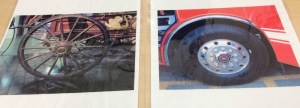
For example, my colleague used a flip book for a toddler lesson on fire trucks. First families were asked to find the parts of the wagon and then came back to the group to share. Matching the photos encouraged families to look closely and the group portion gave everyone the opportunity to connect and share what they had learned.  This is a great example of how we can make the museum visit more focused and detailed, but it doesn’t work in every situation. Another colleague did a lesson with no group component for our infants at the US Botanical Gardens in which she planned four caretaker-directed activities. There was no group component and the class remained entirely at the Gardens – omitting the classroom portion because the walk was too long.  My co-manager is also excited to try out another model: adding a second object. By and large we only visit one object per a museum visit, but having had experience with toddlers using 2-3 objects, she is eager to see if this model might also prove effective.

NO ONE DEFINITIVE ANSWER

I believe that all of these models have real value. As early childhood educators we often have to take the temperature of a group and make adjustments on the fly.  What works once, doesn’t always work again. Part of our challenge is being able to read those signs and being prepared with additional content (early childhood educators do a lot of content research just for this purpose) and being ready to present that content in a variety of ways. Sometimes all the planning in the world can be for naught the day of a lesson because no matter how good we have gotten at anticipating a child’s needs, they are still unpredictable.

I really look forward to experimenting and growing these family Javasa at Hirshhornworkshops. If you are an educator, post your ideas and thoughts. If you are a parent, come and check us out. Our next set of classes begins January 31st when we are offering infant, toddler and pre-K classes. Don’t be deterred by the weather families – what we lack in warmth we make up for in ample parking during this time of year!