Summer Fun: Building Collections with Your Child

If you have a child in elementary school, they have probably come home with some sort of summer packet. I’ve seen the “packet” take various forms: from a list of innovative ways to encourage reading to a dull packet of worksheets. Either way, parents and educators alike want to encourage learning outside of school and during a time that has been characterized as the “summer slide.”  I hope some of the ideas on how to build a collection will inspire your family to engage in playful learning this summer. Adjust as you see fit for age and your schedule.
table
household objects
Flower Parts
Looking at flowers
  1. Choose a topic in which your child is interested and then find a space in your home where you can place a table and don’t mind hanging things on the wall.
  2. Begin building your collection by visiting your local library and selecting several books.
  3. Find other toys and household items that you don’t mind donating to the cause.
  4. Use these items in a way that they can explore them with their senses, i.e. what does the flower smell like or what sound do seeds make in a bottle. Also allow them to manipulate the toys or objects so they are using they are able to discover how things work and practice their fine motor skills.
  5. Build a model, draw pictures and display.
  6. Add vocabulary words.
  7. Take it outside of the home and “experience” the topic, i.e. pick flowers or keep a journal of flowers you see during your day.
  8. Take to the community and visit a museum, local store, etc. Take pictures and post in the collection area.

Helpful Hints

  • Collect, create and display together!
  • Keep the collection at their height.
  • When they are ready, change it up or expand on the topic, i.e. flowers – gardening – water cycle.
  • Let them come and go on their own and edit along the way.
  • Have fun!


5 Things I Learned About Art From Children

For the past year and a half, SEEC has worked with the Memphis Brooks Museum of Art and the Lifelong Learning Group on a project designed to positively impact the educational experience of young children and their families through the arts. As we collaborated with the Memphis based museum educators, docents and early childhood teachers to create meaningful interdisciplinary classroom and museum based hands-on activities, we found that each of us learned more than we imagined possible at the start of the project. The following post presents one great unexpected example of the project’s impact.

Thanks to the partnership with the Brooks Museum of Art, the following is posted on behalf of docent Cheryl Caldwell: Docent Leading Group

5 Things I Learned About Art From Children

Art is so much more than just art: It can be science, culture, motion, and history, as well as color, line, and shape. Young children naturally think like artists, and their imagination is at its peak during their early development as students. Yet educators struggle with ways to develop and instill creative and critical thinking skills—crucial tools that this generation needs to utilize their creative impulses in educational and civic pursuits. As a docent at the Memphis Brooks Museum of Art, I work in conjunction with the Smithsonian Early Enrichment program, engaging Pre-Kindergarten and Kindergarten children from Title 1 schools, where 40 percent or more of the students enrolled are eligible for free or reduced lunches.

Equipped with my knowledge from the six-month docent training course, I teach these children about visual art in a museum setting. As a new docent, I am excited to introduce children to a museum and see that they fully experience all it has to offer. At the Brooks, children have the opportunity to see, touch, and feel the materials an artist might have used in creating a piece. Engaging these children in this setting while they are young takes the fear out of the museum experience and brings out the fun. Of course, the kids aren’t the only ones gaining from this experience.

Here are the top five things I’ve learned during my first year as a Brooks Museum docent:

▪ Get down low and look up at the artwork through the eyes of a child. This perspective might just give you new insight on a piece of art you thought you knew all about.
▪ Art inspires critical thinking rather than getting the right answer
▪ The smiles and enthusiasm are contagious.
▪ You won’t know everything, but you will probably learn something new with every tour.
▪ Children are far smarter and more creative than we give them credit for. You will often be amazed at how much they can offer if you take the time to watch and listen.

Participating families gathered in the Memphis Brooks Museum of Art.

Participating families gathered in the Memphis Brooks Museum of Art.

Saturdays with SEEC Teachers

Posted on behalf of SEEC two year old teacher Javasa Finney:

Javasa at the Hirshhorn with SEEC's two year old class.

Javasa at the Hirshhorn with SEEC’s two year old class.

This spring I decided to volunteer with the museum education team at the Smithsonian Early Enrichment Center (SEEC) to help out with the weekend family workshops. I currently teach in one of the two year old classesthere and was interested in seeing how the experience changes once parents are involved, in the classroom and museum visit.

During the workshops I worked with the infants, toddlers, and preschoolers. The theme for the infants/toddlers was “Tiny Gardeners” and in these classes the children had the opportunity to explore flowers and gardens. The theme for the older toddlers and two year olds was, “Where Does it Come From” which focused on exploring different foods and the origins of food. Every week we met at the Natural History Museum and then headed to the museum where we would find out the topic for the day by focusing on a particular object, exhibit or art work. _MG_4180After our visits, we headed back to the SEEC classrooms for some hands-on activities related to our topic of the day. Time in the classroom was spent, planting, cooking, painting, reading, singing, and additional play. It was also wonderful to see the children socializing and making new friends.

In the museum the children did a fantastic job. They all seemed very curious and ready to explore. Everyone was respectful of the exhibits and stayed together as a group. We were often even able to sit down together to share a story and hands-on objects while we were inside the museum. Everyone seemed captivated and engaged. During our trips we visited exhibits that were directly related to what our topic for that day was. Some of the museums we visited during the four weeks include the American History Museum, Freer Gallery, the Botanic Gardens and National Gallery of Art.

As I reflect upon my time in the family workshops, I have many great memories. It was great to see the children so involved at the end of the session that they didn’t want to leave. Since several of our families return from one session to the next, I imagine that they are also finding the experiences together both meaningful and memorable as well. Museums have so much to offer, they are inspiring and educating. They are great for introducing new topics or re-enforcing facts. The most wonderful thing I saw during my time volunteering at the family workshops was the parents and children bonding, learning, and discovering new things together at the museum. What a wonderful way to spend a Saturday morning!_MG_4086 SEEC’s infant, toddler and pre-k Family Workshops will start up again in the fall. We hope to see you there!

Perfect Spring Break Family Museum Visit

signSpring and summer break are just around the corner and I know a lot of our parents are looking for some local, inexpensive family outings. Well, look no further than the Museum of Natural History. I am sure a lot of families have done it’s most popular features but, for this visit we are headed up to the top floor to  Beyond Bollywood: Indian Americans Shape the Nation. This jem has a lot to offer the younger child in your family.

First, it’s spacious, colorful and inviting. Read our recent blog on environment – it makes a difference.

Second, there are a lot of mirrors.  From infants to preschoolers, mirrors are fascinating portals to understanding more about themselves and how their bodies work.

Image 280

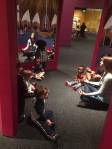
One of SEEC’s classes practices their yoga.

Finally, there are interactive sections where you can listen to music, watch a video and sit at a table set with Indian food. This will give your child different types of sensory input and provide a chance for some dramatic play.

Depending on the age of your children, you can choose to approach the exhibit from several perspectives, here are some ideas:

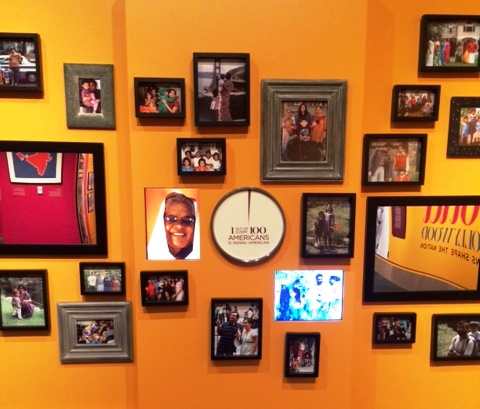
 families6 months – 18 months: Babies are learning to recognize themselves and their families. Take the time to look in a mirror and identify baby and yourself. Describe your features and talk about your similarities and differences. Head over to the family photos and pull up a family photo on your phone. Compare it to the families on the exhibit wall. At home, share a book about families or sit down and make a toy family. This is a great opportunity to begin talking about how not all families are the same. Even at such a young age, you can begin to lay a foundation for understanding and respecting diversity.

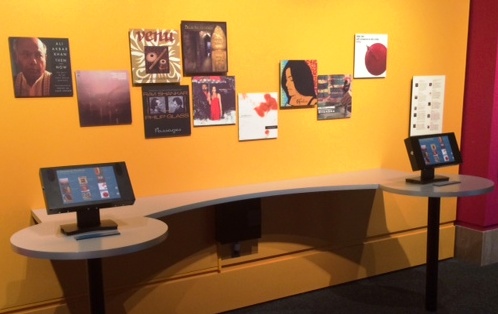
listening station19 months – 3.5 years: Toddlers love music and dancing, so it is great that this exhibit features a listening station. Pick a couple of tracks and see if you can compare their tempo or guess the instruments. You might simply ask which their favorite was. Give them a chance to dance to the music and then go to the outer hallway and see the images of Indian dancers. Notice how the dancers are moving their body and what they are wearing. Build on the experience at home by listening to more Indian music or discovering that of another country. Look up a few videos highlighting different Indian dances and watch them together on a tablet or computer. Similar to the infant experience, introducing your toddler to the arts of other countries will help them gain an appreciation of their culture and, those of others.

photo (5)Preschoolers – Early Elementary:  A great way to connect with young children is to begin with their personal experiences. Since food is universal, the table would be a great place to begin a conversation about the foods we eat at home or at our favorite restaurants. The exhibit can teach children about food from India AND about the many cultures that contribute to the food we eat in the United States. If food doesn’t interest your child, consider talking about some of the notable Indian Americans like football player, Brandon Chillar or fashion designer, Naeem Khan.

Finally, consider going to visit the Freer and Sackler’s collection of Indian art on another visit or grabbing a bite of Indian food at the Natural History’s café.

Like with any visit, keep in mind some of these helpful tips for visiting a museum with your kiddos and enjoy!!

The Power of Real

For too long school has taken place mainly within the four walls of a classroom. This has been especially true in early childhood where field trips are often viewed as a nuisance for the adults rather than a gift to young children. This is not the case at SEEC. I marvel daily as I see teachers happily bundle up children from babies through kindergarten to take them out into the museums and other sites around the DC area. You see, at SEEC, we believe in the power of real and that children learn in ways that are richer and deeper when they get a chance to see the real items.

Imagine how a study centered around the Wizard of Oz is more meaningful for a group of 4 year olds when it starts with the actual ruby slippers, extends to exhibitions about caves where emeralds come from and the gem exhibition to see actual gems; moves from visiting Marla the tin woman piece in the Smithsonian American Art Museum to compare it to the Tin Man in the story to the Library of Congress to see the original book where you discover that Dorothy didn’t wear ruby slippers originally!

Imagine how the study of wheels is richer for a toddler when they not only see wheels in books and photos but go to the National Museum of American History to see them on covered wagons, trains and old cars; to the Metro to examine the cars of the train there; to the Hirshhorn to look for wheels in art and notice that the building itself is shaped like a wheel before they even enter the museum. While we are lucky that we have all these rich resources outside our door, in reality every neighborhood has its own set of resources. A toddler class in the city could go out and look at buses, various cars, motorcycles and bikes. A class of four year olds could go to the local shoe store to see shoes, a jewelry store to look at emeralds and the library to look up the book. The key is to get out of the classroom. Make learning real. Let children explore the real objects and make connections to their own lives.

At SEEC we believe that museums of all types and in every city should play a more active role in the education of our children. We believe that learning should be a search for knowledge rather than sitting in a classroom being fed information. We are trying to share our work more widely to try and build stronger bridges between school, museums and home. At SEEC, we believe that it does, indeed, take a village to educate a child.

Posted on behalf of SEEC Executive Director Kimberlee Kiehl

The Power of Questions

Posted on behalf of Smithsonian Early Enrichment Center Executive Director Kimberlee Kiehl.

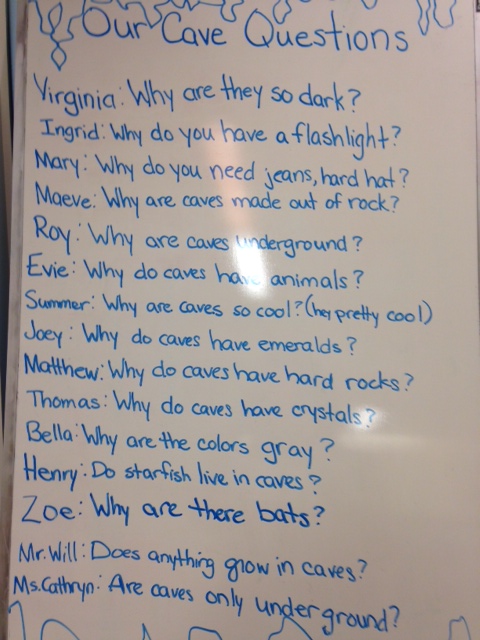
When was the last time you tried something just because you were curious?  When was the last time you visited a place just because you wondered about it or you just wanted to know more?  When was the last time you asked yourself or someone else a good question and then looked for the answers? Young children spend many hours during their days doing just this….trying new things just because they are curious, exploring the world around them just because they wonder about it, and asking questions about what they know and don’t know. Here at SEEC our teacher curate experiences for children that allow them to do what Sugata Mitra calls “wandering aimlessly around ideas.” We give children time to explore an idea or concept in multiple ways over an extended period of time and encourage them to search for knowledge through this exploration.  We also know that questions are vital for learning and discovery and we help children learn to ask good questions and then to search for the knowledge that they are interested in rather than simply feeding them information.  In his recently published book “A More Beautiful Question: The Power of Inquiry to Spark Breakthrough Ideas” author Warren Berger discusses the power of questions– how they can result in change and how essential the ability to ask good questions is to growth and learning.  A lesson at SEEC often starts with questions from the children.  For example, one of our classes of four year olds recently were very interested in caves. This interest grew naturally out of a study of The Wizard of Oz. You might be wondering how…follow me here while I walk you through 4 year old logic….Wizard of Oz—Emerald City—emeralds—mining—caves! Look at the photo of their fantastic questions about caves!

Questions.

Over the course of several weeks they explored these questions and more, visiting museums and using the community and technology to find answers and explore ideas. Children who learn how to ask good questions will be adults who know how to ask good questions. Adults who know how to ask good questions are good leaders, change makers, and innovators. Unfortunately, as adults we too often squelch children’s questions rather than explore them. We are hassled by their questions, joking about how often a toddler asks why, instead of reveling in the sheer beauty of the questions. Even Einstein knew the beauty of a good question and attributed his genius in large part to his ability to question.  Imagine how beautiful education could be and how rich life would be if we all just spent more time asking beautiful questions and searching for information.

Pedagogies of Wonder

Image

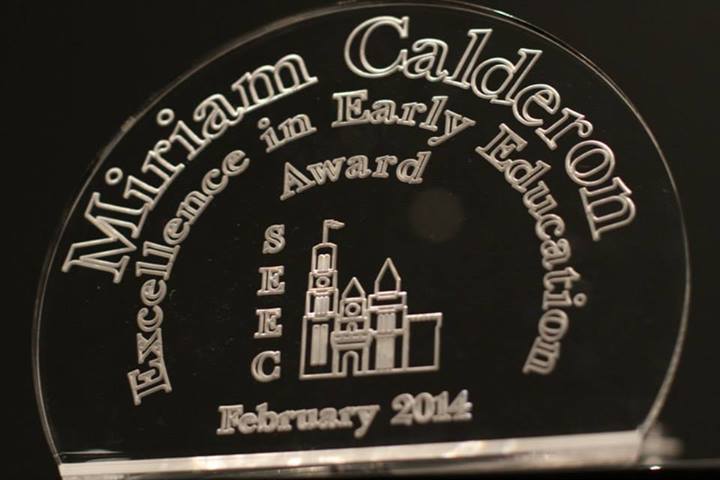
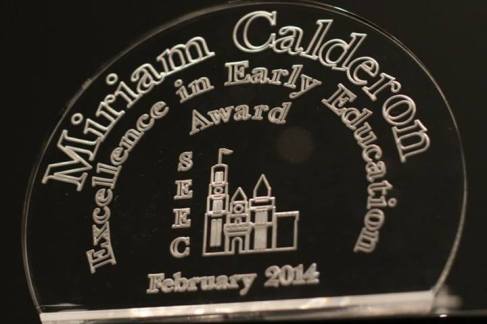
On February 22, 2014, Miriam Calderon was recognized by SEEC for her thoughtful work in the field of early childhood. She has held influential positions such as Senior Advisor on Early Learning to the Obama administration, Director of Early Childhood Education for DCPS and Associate Director of Education Policy at the National Council of La Raza. She currently supports the work of School Readiness Consulting.

We would like to share Miriam’s presentation comments from SEEC’s Excellence in Early Learning gala: Miriam Receiving Award
“Thank you Kim, and the leadership at SEEC for this recognition. It’s truly humbling to be at this wonderful event with all of you – Dr. Sullivan, the first woman in human history to walk in space, and to precede Josh Bernstein – who shows us the power of what can happen when we allow children to approach the world with wonder. Thanks to my husband, my friends and colleagues at School Readiness Consulting for being here this evening. I do want to use the honor of this award to share with you a few thoughts and conclude with a question for us all.

First, I cannot speak highly enough of SEEC! SEEC works so intelligently to light the fire of curiosity in young children – connecting children to a world of wonder using the Smithsonian’s rich collections – it is truly inspirational. To some it may look easy, but it’s not! Teaching in this manner is a craft. SEEC teachers apply developmental science daily to inform their teaching and interactions with children. As early learning gets more attention nationally, it’s absolutely critical that places like SEEC exist as a model and vehicle for others to see what it should look like.

This last point brings me to a second thought. Simply put, America needs more SEEC’s…SEEC serves over a hundred very lucky young children annually, but there are not enough SEECs for all the children that need a place like it. Millions of children in our nation endure poor quality early learning or go without it. D.C.’s children are fortunate enough to benefit from universal pre-school under Mayor Gray’s leadership but nationally the reality remains grim.

Only about half of three- and four-year olds nationwide attend preschool. That alone is a problem given the strong evidence linking the lack of quality early childhood experiences to delinquency, school drop-out, poverty and poor health in adulthood.

That National Institute for Early Education Research estimates that about nine out of ten children in the top 20% of America’s wealthiest households attend pre-k. Compare that to just under half of middle-income children, and less than half of poor children. Less than 5% of infants and toddlers in low-income households are in quality programs.

Unfortunately, despite the overwhelming and preponderance of evidence demonstrating that 90% of a child’s brain forms before the age of five, high quality early learning is only guaranteed to those families that can afford to pay for it. We also lack equity in the quality of children’s early learning experiences – how they are taught. Children from more affluent families are more likely to get richer experiences rooted in creative play with an eye to nurturing a skilled sense of wonder. This we might call a ‘pedagogy of wonder.’ In contrast, children from families who lack resources are more likely to be in environments where they are drilled on their letters and numbers, tied to tests, and punished for misbehavior, what Martin Haberman has called a ‘pedagogy of poverty.’

The science of child development and the craft of early childhood tell us that all of these children can learn in the same manner. All children come into the world with an innate curiosity and love of learning. Indeed, we need more SEECs to spread a pedagogy of wonder and ignite a curiosity in a child that will last them a lifetime. Nothing short of this will ensure that a child’s zip code doesn’t determine whether or not they realize their full potential.

So the question I want to leave you with is this:
How do we make this happen? How do we spread pedagogies of wonder?

All of our children – and their development – must be a shared public responsibility.

Thank you.”

New Directions and Reflection

There is some fun stuff going on at SEEC these days. Over the course of the past year and a half, we’ve seen some big changes. Our teachers shifted from using a theme based curriculum to a more emergent approach. They are encouraged to experiment with new ideas and ways of doing things. They are being challenged to be extra thoughtful about their classroom environment. Our museum educators are listening to what the students’ interests are and providing museum visit suggestions that support each group’s individual interests. SEEC educators are helping with our new Saturday workshops for families with children between 6 months and 6 years. As we give parents and children a chance to explore the museums, experience hands-on activities and share stories, we discover new and better ways of doing things from one week to the next.

Cardello in Classroom.In addition, we have educators thinking about the role museums could play in supporting a child’s sense of self identity. The result of this long term action research project will be an article featured in the Museums & Society journal later this year. Another fascinating project that one of our museum educators is working on with our three, four and five year olds is based on current work of the Smithsonian’s Office of Policy and Analysis. movementEach child is given a choice about which of four activities they would like to participate in during their museum visit that day. Once the students arrive at the museum, the class splits up into four small self selected groups and a different teacher leads each pre-planned gallery based experience. The theory that is being explored states that there are four major types of experiences to which people are drawn: Ideas (conceptual thinking), People (emotional connection), Objects (visual language), and Physical (physical sensation). What SEEC is wondering is whether these traits are easily identified and determined in very young children.

These activities reflect a new direction for SEEC. Watch for more information on the development of SEEC’s Center for Innovative Early Learning (CIEL) where this spirit of experimenting, taking risks and wondering together is embraced.
History Connections

Smithsonian Pre-K Classes

Renaissance Composition 2

Acting out a Renaissance Composition

In our first blog, I talked about what the museum education department does at the Smithsonian Early Enrichment Center. Just to recap, we have two educators who work specifically with our classes here at the lab school. Our director, Betsy Bowers, heads our professional development efforts (more on that later) and my main responsibility is to promote and coordinate our outreach efforts for families who are not enrolled in the school.

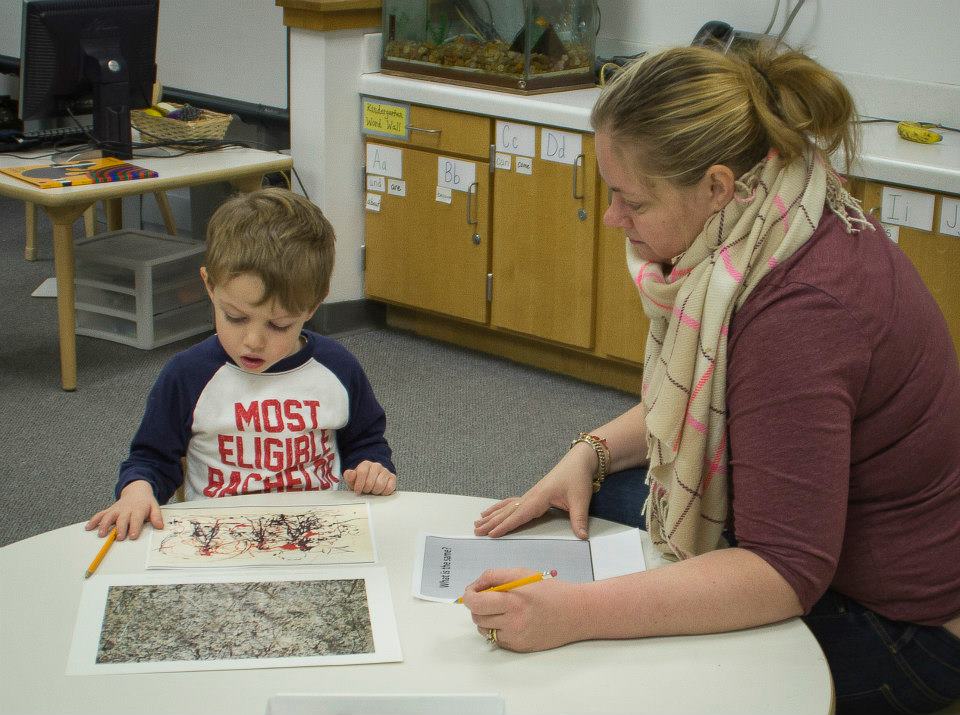
Comparing Jackson Pollock paintings

Comparing Jackson Pollock paintings

With Labor Day in our sights, I thought it was the perfect time to take a look ahead at what we are doing for our community families. Last year, we started offering preschool courses. These courses took place over a four-week period, meeting Saturday mornings. Each course had a theme (more information) and met for two hours. In the first portion of our morning, we would do some sort of introductory activity. This activity ranged from exploring a discovery box featuring cultural objects to comparing two paintings. Almost always these activities were meant to be done independently, meaning child and caretaker working together separate from the teacher. (These classes are very literally family classes, so caretakers play an important role). After our initial work, we would come together in a circle to discuss what they had done. Our discussion led us to an introduction to the museum visit.  

Cary teaching

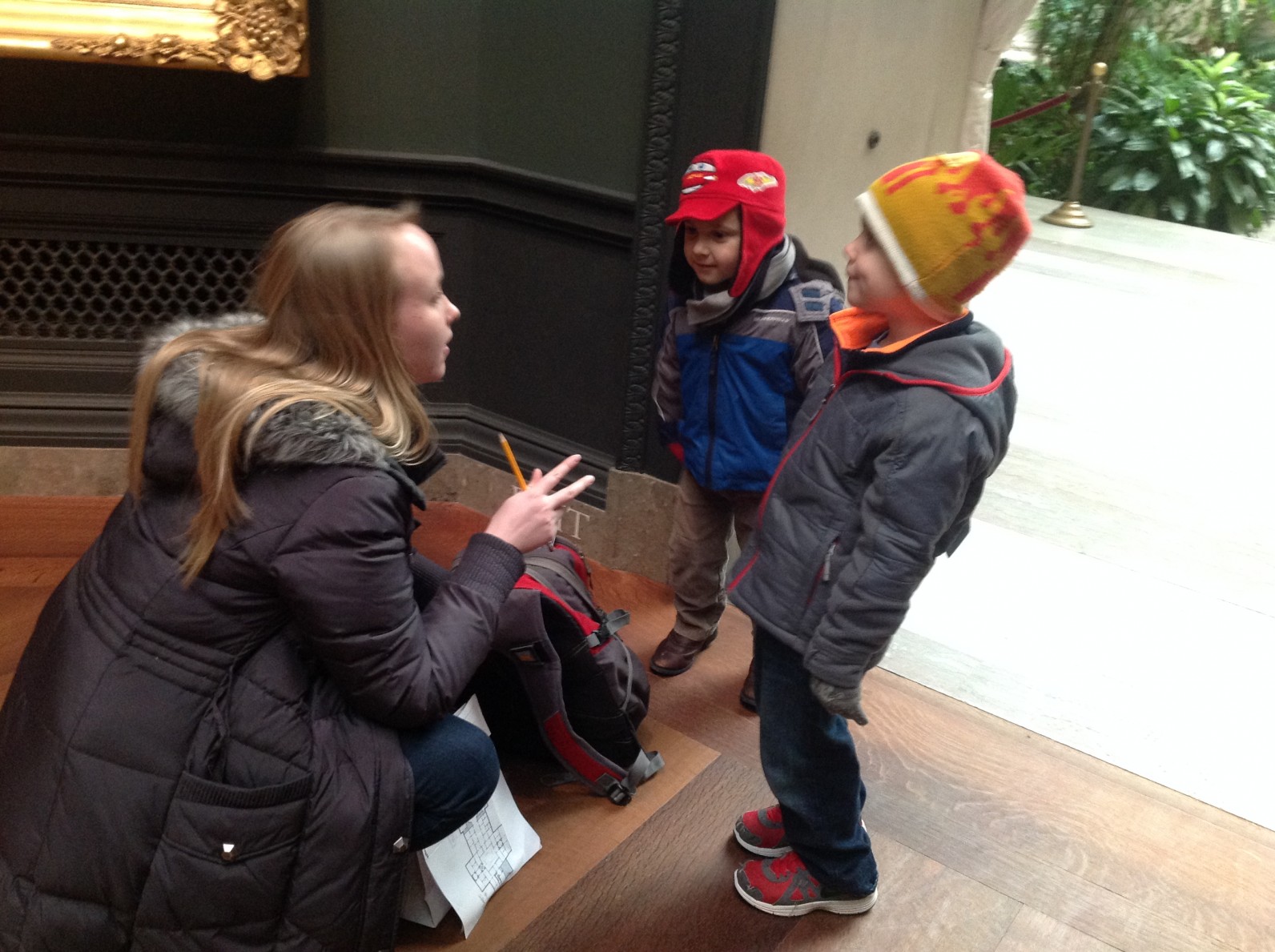
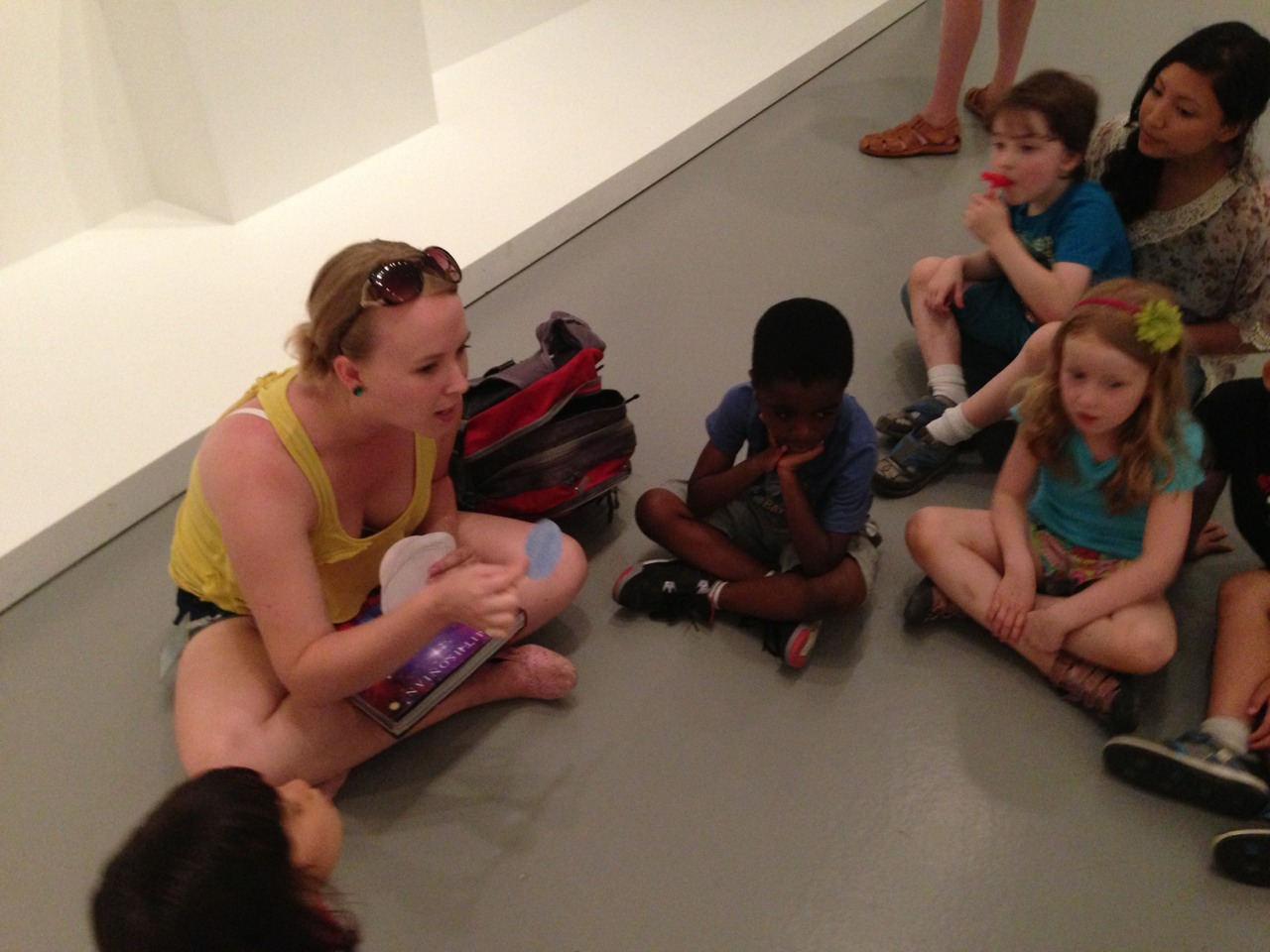
Using hands-on objects to teach in the galleries

After bathroom breaks and the putting on of coats, we head to the museum for what is typically a 20-30 minute visit to one to two objects. During our visits, we use hands-on objects to engage the children in a multi-sensory experience and inquiry to guide the conversation. Museum educators are likely familiar with these approaches of object-based learning and the inquiry method. For educators who are unfamiliar with these approaches, let me suggest SEEC’s line of professional development seminars and/or MOMA’s inquiry course offered through Coursera (just completed it myself, very informative).

F2003.2

Freer Gallery of Art
Shiva Nataraja, ca. 990
Chola Dynasty, India
Bronze
Purchase–Margaret and George Haldeman, and Museum funds F2003.2

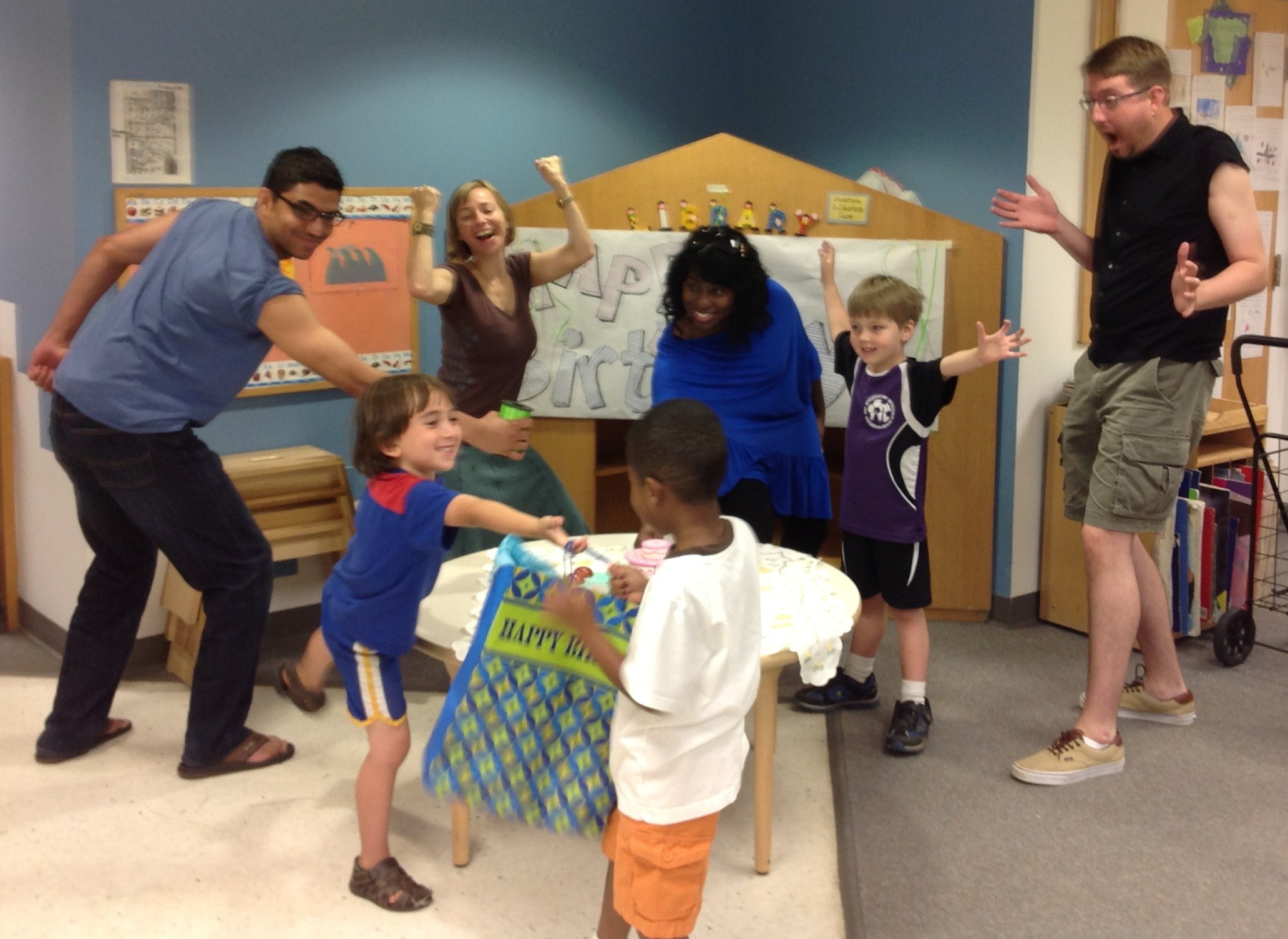
After our visit, we head back to the classroom where we wrap up with a final project.While it’s most often an art project, I do not limit myself to that platform. This is extremely helpful for two reasons; first, sometimes it is not developmentally appropriate for children to recreate the art they have just seen and second, sometimes it’s not culturally sensitive to recreate the art either. A good example of the first scenario is when I did a lesson on the Renaissance and I wanted to talk about composition. They were not up for the challenge of creating a masterpiece that depicted, balance, dynamism and fluidity. However, they could connect to these concepts by acting out their own birthday party photo and seeing the results. And when we do our class on Hinduism and visit the Freer’s Shiva Nataraja, we opt to look at videos of Bharatnatyam dance, do a sample of mudras and keep a beat with bells on our ankles. All activities are meant to build upon the concepts introduced through the lesson in a way that is interactive and self-directed.

This year we also offering infant and toddler class, so keep an eye out for future blogs about these audiences. In the meantime, let me know what is working for you with young audiences in your museum!