The Power of Real

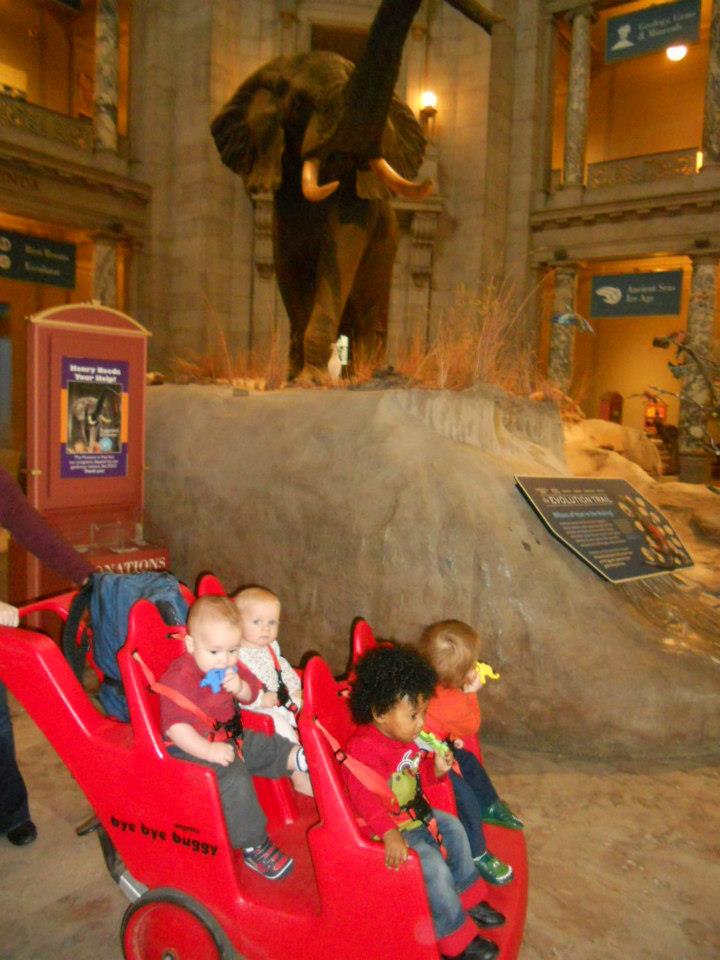
For too long school has taken place mainly within the four walls of a classroom. This has been especially true in early childhood where field trips are often viewed as a nuisance for the adults rather than a gift to young children. This is not the case at SEEC. I marvel daily as I see teachers happily bundle up children from babies through kindergarten to take them out into the museums and other sites around the DC area. You see, at SEEC, we believe in the power of real and that children learn in ways that are richer and deeper when they get a chance to see the real items.

Imagine how a study centered around the Wizard of Oz is more meaningful for a group of 4 year olds when it starts with the actual ruby slippers, extends to exhibitions about caves where emeralds come from and the gem exhibition to see actual gems; moves from visiting Marla the tin woman piece in the Smithsonian American Art Museum to compare it to the Tin Man in the story to the Library of Congress to see the original book where you discover that Dorothy didn’t wear ruby slippers originally!

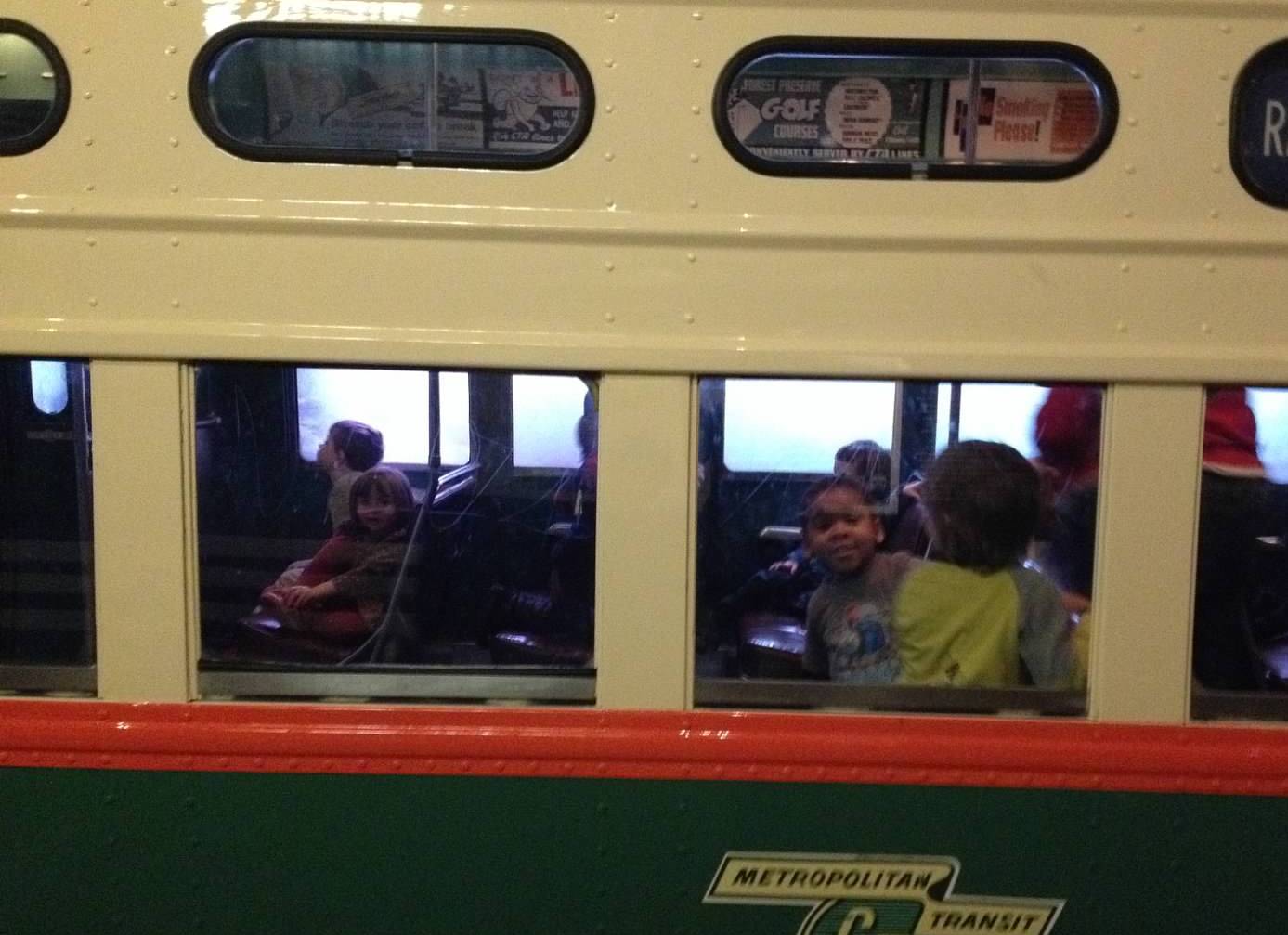
Imagine how the study of wheels is richer for a toddler when they not only see wheels in books and photos but go to the National Museum of American History to see them on covered wagons, trains and old cars; to the Metro to examine the cars of the train there; to the Hirshhorn to look for wheels in art and notice that the building itself is shaped like a wheel before they even enter the museum. While we are lucky that we have all these rich resources outside our door, in reality every neighborhood has its own set of resources. A toddler class in the city could go out and look at buses, various cars, motorcycles and bikes. A class of four year olds could go to the local shoe store to see shoes, a jewelry store to look at emeralds and the library to look up the book. The key is to get out of the classroom. Make learning real. Let children explore the real objects and make connections to their own lives.

At SEEC we believe that museums of all types and in every city should play a more active role in the education of our children. We believe that learning should be a search for knowledge rather than sitting in a classroom being fed information. We are trying to share our work more widely to try and build stronger bridges between school, museums and home. At SEEC, we believe that it does, indeed, take a village to educate a child.

Posted on behalf of SEEC Executive Director Kimberlee Kiehl
Pondering Play

NMAH PG

When museum folks think of “play,” the “go to” place that comes to mind is often one of the many amazing children’s museums found across the country. For many, when used together, the words “play” and “museum” conjure images of boisterous children engaged in hands-on learning experiences in an interactive museum play space or exhibit. On the other hand, early childhood educators are inclined to think about play in the context of their classroom. A carefully structured environment supports literacy development in the dramatic play area, pre-math concepts in block building and social emotional growth during “free choice” time. Whether working in a museum setting or classroom environment, educators that work with young children recognize the power of play in developing skills essential to one’s future success in school.Transportation line up

What does “play” look like for young children in a traditional object centered museum setting? Is it possible to help early learners embrace the “free choice learning” aspect of museums in a constructive and meaningful way? On RapidIn early May, SEEC will launch a new two day professional seminar called, “Play: Engaging Young Learners in Object Rich Environments.” Museum professionals and early childhood educators will collaboratively explore potential intersections between play and traditional object centered museums. The workshop will feature new approaches to museum learning used by SEEC educators as they determine how to best connect children’s emerging interests to museum exploration. This pilot program makes use of the Smithsonian Institution’s collection and enlists the perspective and expertise of participants as workshop content takes shape over the course of the two day Smithsonian based seminar. No doubt you have some questions, considerations, or examples of your own that come to mind as we post these thought provoking questions about play in museums. Please share!

Through SEEC’s flagship seminar, “Learning Through Objects,” we have had an opportunity to present ideas about using objects and museums to build critical thinking skills in young children to hundreds of museum and classroom educators. SEEC’s latest “Play” workshop takes this foundational information to the next level as we challenge ourselves to consider how to support positive learning experiences for young children through the use of play, objects and museums. Participants will consider the role that storytelling and question asking takes in play and museums as we encourage children to become curious explorers, creative thinkers, inquisitive learners and 21st century problem solvers.

Checking Out the Car

Pedagogies of Wonder

Image

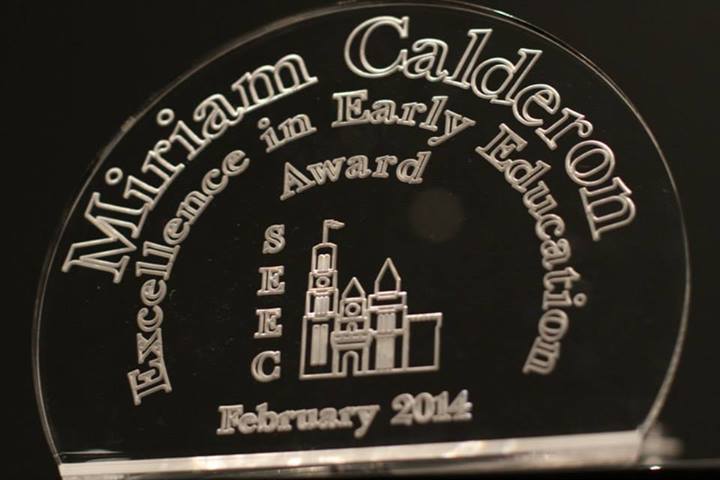
On February 22, 2014, Miriam Calderon was recognized by SEEC for her thoughtful work in the field of early childhood. She has held influential positions such as Senior Advisor on Early Learning to the Obama administration, Director of Early Childhood Education for DCPS and Associate Director of Education Policy at the National Council of La Raza. She currently supports the work of School Readiness Consulting.

We would like to share Miriam’s presentation comments from SEEC’s Excellence in Early Learning gala: Miriam Receiving Award

“Thank you Kim, and the leadership at SEEC for this recognition. It’s truly humbling to be at this wonderful event with all of you – Dr. Sullivan, the first woman in human history to walk in space, and to precede Josh Bernstein – who shows us the power of what can happen when we allow children to approach the world with wonder. Thanks to my husband, my friends and colleagues at School Readiness Consulting for being here this evening. I do want to use the honor of this award to share with you a few thoughts and conclude with a question for us all.

First, I cannot speak highly enough of SEEC! SEEC works so intelligently to light the fire of curiosity in young children – connecting children to a world of wonder using the Smithsonian’s rich collections – it is truly inspirational. To some it may look easy, but it’s not! Teaching in this manner is a craft. SEEC teachers apply developmental science daily to inform their teaching and interactions with children. As early learning gets more attention nationally, it’s absolutely critical that places like SEEC exist as a model and vehicle for others to see what it should look like.

This last point brings me to a second thought. Simply put, America needs more SEEC’s…SEEC serves over a hundred very lucky young children annually, but there are not enough SEECs for all the children that need a place like it. Millions of children in our nation endure poor quality early learning or go without it. D.C.’s children are fortunate enough to benefit from universal pre-school under Mayor Gray’s leadership but nationally the reality remains grim.

Only about half of three- and four-year olds nationwide attend preschool. That alone is a problem given the strong evidence linking the lack of quality early childhood experiences to delinquency, school drop-out, poverty and poor health in adulthood.

That National Institute for Early Education Research estimates that about nine out of ten children in the top 20% of America’s wealthiest households attend pre-k. Compare that to just under half of middle-income children, and less than half of poor children. Less than 5% of infants and toddlers in low-income households are in quality programs.

Unfortunately, despite the overwhelming and preponderance of evidence demonstrating that 90% of a child’s brain forms before the age of five, high quality early learning is only guaranteed to those families that can afford to pay for it. We also lack equity in the quality of children’s early learning experiences – how they are taught. Children from more affluent families are more likely to get richer experiences rooted in creative play with an eye to nurturing a skilled sense of wonder. This we might call a ‘pedagogy of wonder.’ In contrast, children from families who lack resources are more likely to be in environments where they are drilled on their letters and numbers, tied to tests, and punished for misbehavior, what Martin Haberman has called a ‘pedagogy of poverty.’

The science of child development and the craft of early childhood tell us that all of these children can learn in the same manner. All children come into the world with an innate curiosity and love of learning. Indeed, we need more SEECs to spread a pedagogy of wonder and ignite a curiosity in a child that will last them a lifetime. Nothing short of this will ensure that a child’s zip code doesn’t determine whether or not they realize their full potential.

So the question I want to leave you with is this:
How do we make this happen? How do we spread pedagogies of wonder?

All of our children – and their development – must be a shared public responsibility.

Thank you.”

New Directions and Reflection

There is some fun stuff going on at SEEC these days. Over the course of the past year and a half, we’ve seen some big changes. Our teachers shifted from using a theme based curriculum to a more emergent approach. They are encouraged to experiment with new ideas and ways of doing things. They are being challenged to be extra thoughtful about their classroom environment. Our museum educators are listening to what the students’ interests are and providing museum visit suggestions that support each group’s individual interests. SEEC educators are helping with our new Saturday workshops for families with children between 6 months and 6 years. As we give parents and children a chance to explore the museums, experience hands-on activities and share stories, we discover new and better ways of doing things from one week to the next.

Cardello in Classroom.In addition, we have educators thinking about the role museums could play in supporting a child’s sense of self identity. The result of this long term action research project will be an article featured in the Museums & Society journal later this year. Another fascinating project that one of our museum educators is working on with our three, four and five year olds is based on current work of the Smithsonian’s Office of Policy and Analysis. movementEach child is given a choice about which of four activities they would like to participate in during their museum visit that day. Once the students arrive at the museum, the class splits up into four small self selected groups and a different teacher leads each pre-planned gallery based experience. The theory that is being explored states that there are four major types of experiences to which people are drawn: Ideas (conceptual thinking), People (emotional connection), Objects (visual language), and Physical (physical sensation). What SEEC is wondering is whether these traits are easily identified and determined in very young children.

These activities reflect a new direction for SEEC. Watch for more information on the development of SEEC’s Center for Innovative Early Learning (CIEL) where this spirit of experimenting, taking risks and wondering together is embraced.
History Connections

Upcoming Teacher Workshop

LTOWell, we have made it to January. That delightful in between month—the month where we leave the stretch of holiday breaks behind and take a deep breath before the chaos of spring begins. Our students are settling back into familiar routines but experiencing the expected adjustments that time away from school brings. As educators, we too are experiencing the adjustment, searching for renewed inspiration in the face of the winter blues, unpredictable weather, and in my case, growing preschoolers. It seems almost daily one of my students leaves early for their five year preschool check-up.

We are also in the period of resolutions: Join the gym. Use your phone less. Sleep more. Build up your savings. Be more creative in the classroom or museum. In the midst of the screaming gym ads and hyper students, come join us for some respite and rejuvenation. SEEC is offering a space to renew your creativity, collaborate with peers, and take some deep breaths. Our premier seminar, Learning Through Objects, is almost upon us (February 27th & 28th). This seminar brings together educators from a diverse set of learning environments such as classrooms, museum galleries, and cultural centers. Presented by our staff and representing work from our 25 years of learning with young children in museums, LTO may be the perfect antidote to the winter doldrums.

A LTO alum wrote of her experience, “I walked away not only refreshed and inspired, but also with a variety of ideas for how I can incorporate museums, objects, and artist studies into my classroom teaching. I am looking forward to sharing the lesson plan and field trip ideas I learned with my colleagues and of course to sharing the activities themselves with my students.” Additionally, for those in the DC area, LTO is accredited by the DC Office of the State Superintendent of Education and counts as CEUs. Come be renewed, come be refreshed, and check one or two of your resolutions of the list. We look forward to seeing you.

LTO_2

Full registration info can be found here. Keep that “save money” resolution as well, register before February 14th for our Early Bird Rate and plug in discount code SEECPD14 for an additional 10% off!

Onwards!

Kindergartners and Exhibit Design, Part II

exhibit eval page 1

Kindergarten Exhibit Survey, Pt. 1

exhibit eval page 2

Kindergarten Exhibit Survey, Pt. 2

In our last blog,  we discussed the first part of our experiment with SEEC kindergartners visiting the Smithsonian National Museum of American History Golden Books exhibit.  When we left off, they had just concluded their first visit.  The following week, they went to the museum again and like the previous time, we split them up into small groups of three.  Each group had an adult and walked through the exhibit with an educator and were given a “survey.”  After these were completed in the exhibit, they headed out to a small circle to discuss their observations with another educator.

The Results

1) Look at the other people do they like this exhibit? Visitor Graph
Comments:

  • Looking closely
  • Beautiful
  • Pretty good
  • Really liking it
  • Liked it
  • Enjoying everything
  • Looking at computer
  • Looking at all sorts of books
  • Enjoying it
  • One person was normal, so…so-so
  • Some were in to it, some were not
  • 1 vote for all 5 choices
  • All the people were different

2) Look at the objects; do you like how they are displayed?Objects
Comments:

  • Lots of color, some were dusty
  • Loved them
  • They books were having a good time because they were safe in the glass and no robbers were breaking in
  • Could not see, too tall
  • Pretty good
  • Pretty good, a little bad though because it only showed one page of the book
  • Didn’t like, hard to see

3) Look at the lights; do you like how they are used?
Lights Graph

Comments

  • Dark but good
  • Pretty good
  • 1 vote for Liked
  • Orange, it was ok, and I liked it
  • ok

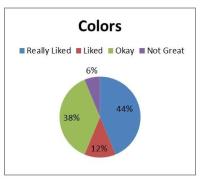
4) Look at the colors; do you like how they are used?
Colors Graph

Comments

  • The ceiling was green, there were good colors
  • A lot of white

5) Look at the signs, are they helpful?

Signs Graph

Comments

  • Really focused about creation, someone worked very hard

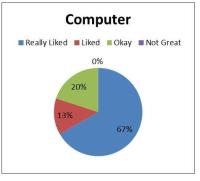
6) Look at the computers; do you like how they were used?

computer Graph

Comments

  • I clicked on two books
  • You could look at the books, I pressed the button and it read the story to us
  • Really cool
  • I touched it
  • I didn’t get to touch it
  • I chose different books, it was awesome, and not too tall
  • I liked pressing buttons
  • Zooming in was cool
  • It shows the books

7)  Look for things you can touch, did they help you enjoy the exhibit?
Touching Graph

Comments

  • Only one thing to touch
  • Touching the computer
  • Computer was just ok
  • I wish there was more stuff to touch, more computers with newer books
  • No touching uhhhhh

Outcomes

I was surprised that they found the lighting and signs appealing.  Like any exhibit featuring paper, it is a dark space, and I assumed that would be unappealing.  Interestingly when the exhibit designer talked to the students during their first visit, he mentioned that the low lighting help protect the books. I wonder if that made a difference.  I also wonder if it was the spotlighting to which they felt drawn.  Despite the overall darkness, light was strategically positioned to make the cases pop. There was minimal distraction.

I was also intrigued by their positive reaction to the signs.  Many in the group are emergent readers and I thought the labels would have been of little or no interest to them.  I wonder if they were responding to the fact that the educators, many of whom were not familiar with the exhibit’s content, used the labels to help add to their conversations.

That they responded positively to the colors and book illustrations was no shock.  Children are naturally drawn to strong, vibrant visuals.  They are also naturally drawn to things they can touch or tinker with.  The opportunity to play with the computer at the end of the exhibit got them very excited and made them notice more about the objects in the cases, encouraging them to revisit objects and think more deeply about some of their conversations.  Interestingly, the computer engaged many of the children, but not all.  Some of them were frustrated  because they weren’t certain how to work it, but I guess usability for young children is another topic entirely!

Although we didn’t measure this in the survey, its important to note that the children responded to the content of the exhibit.  They were familiar with Golden Books and could make connections to the illustrations, many of which depicted children playing.  At SEEC, we encourage our educators to utilize familiar objects or themes when teaching.  Finding this thread can be difficult when considering the often nuanced and complex nature of many exhibits. Still, I would encourage museum staff to consider how they can incorporate familiar elements as a way to engage a young child’s interest in new content.


Smithsonian Pre-K Classes

Renaissance Composition 2

Acting out a Renaissance Composition

In our first blog, I talked about what the museum education department does at the Smithsonian Early Enrichment Center. Just to recap, we have two educators who work specifically with our classes here at the lab school. Our director, Betsy Bowers, heads our professional development efforts (more on that later) and my main responsibility is to promote and coordinate our outreach efforts for families who are not enrolled in the school.

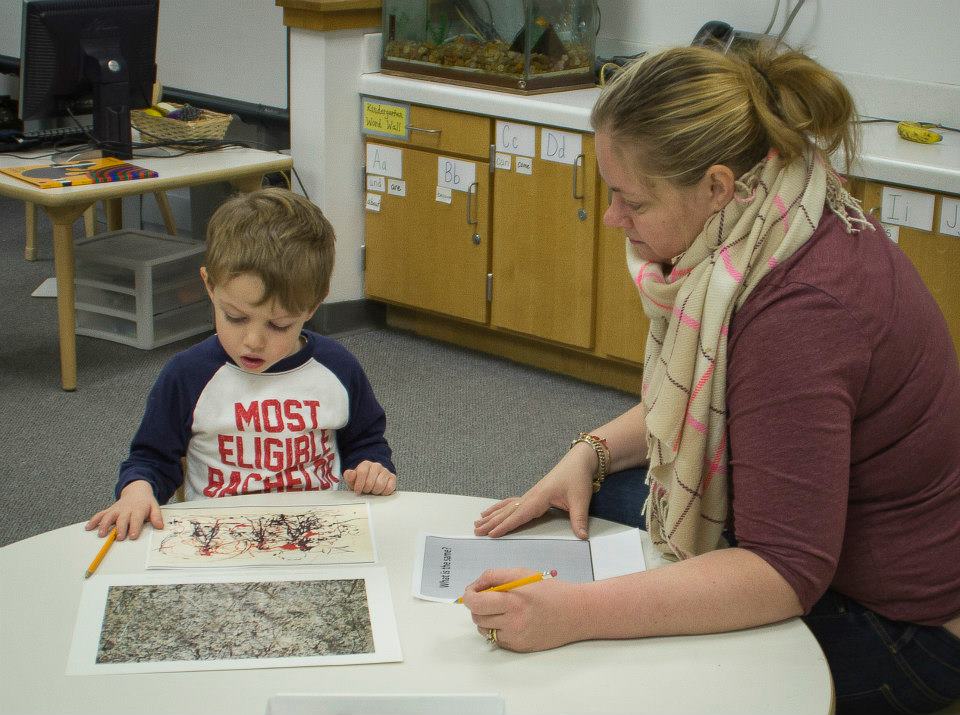
Comparing Jackson Pollock paintings

Comparing Jackson Pollock paintings

With Labor Day in our sights, I thought it was the perfect time to take a look ahead at what we are doing for our community families. Last year, we started offering preschool courses. These courses took place over a four-week period, meeting Saturday mornings. Each course had a theme (more information) and met for two hours. In the first portion of our morning, we would do some sort of introductory activity. This activity ranged from exploring a discovery box featuring cultural objects to comparing two paintings. Almost always these activities were meant to be done independently, meaning child and caretaker working together separate from the teacher. (These classes are very literally family classes, so caretakers play an important role). After our initial work, we would come together in a circle to discuss what they had done. Our discussion led us to an introduction to the museum visit.  

Cary teaching

Using hands-on objects to teach in the galleries

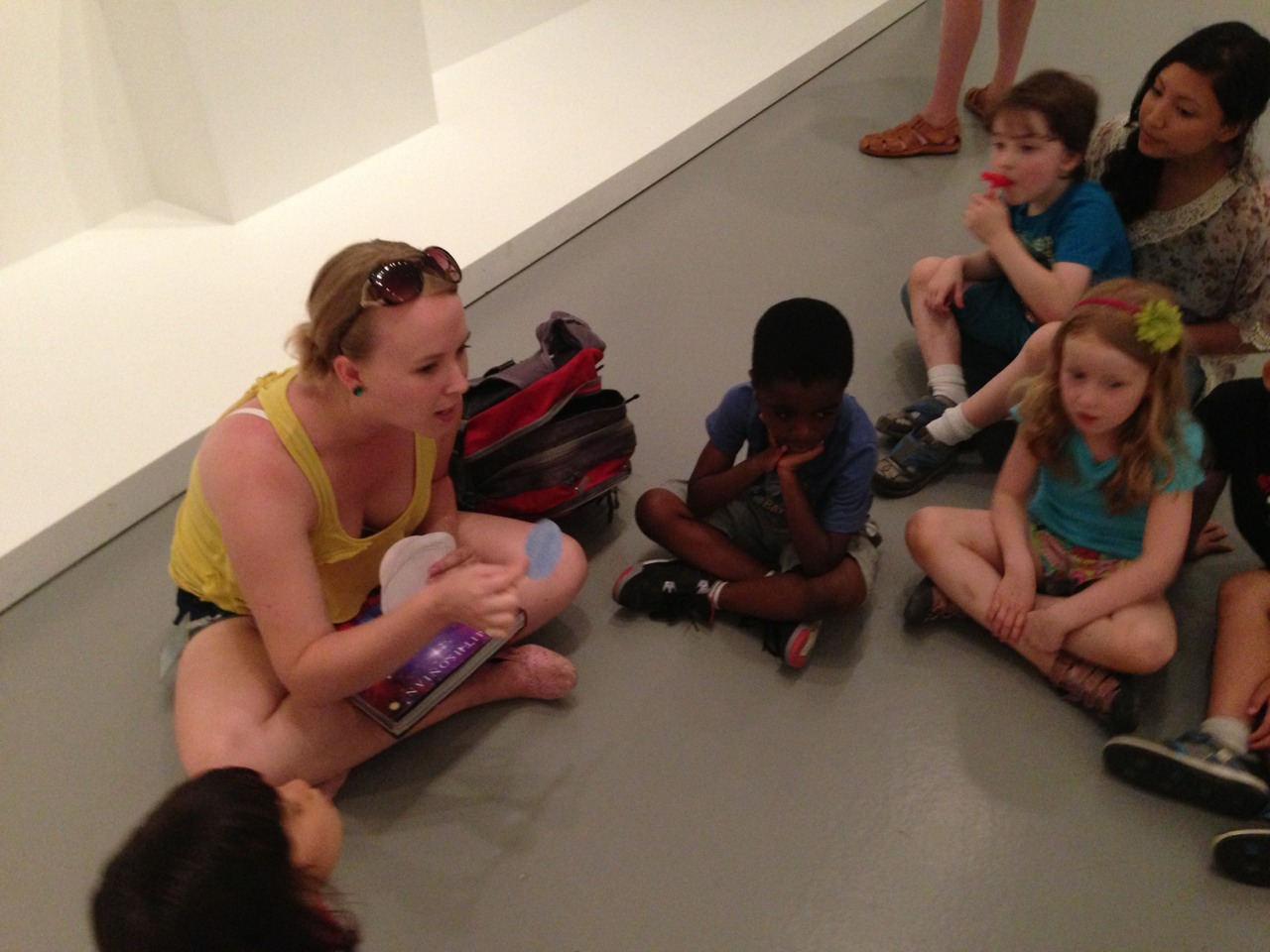
After bathroom breaks and the putting on of coats, we head to the museum for what is typically a 20-30 minute visit to one to two objects. During our visits, we use hands-on objects to engage the children in a multi-sensory experience and inquiry to guide the conversation. Museum educators are likely familiar with these approaches of object-based learning and the inquiry method. For educators who are unfamiliar with these approaches, let me suggest SEEC’s line of professional development seminars and/or MOMA’s inquiry course offered through Coursera (just completed it myself, very informative).

F2003.2

Freer Gallery of Art
Shiva Nataraja, ca. 990
Chola Dynasty, India
Bronze
Purchase–Margaret and George Haldeman, and Museum funds F2003.2

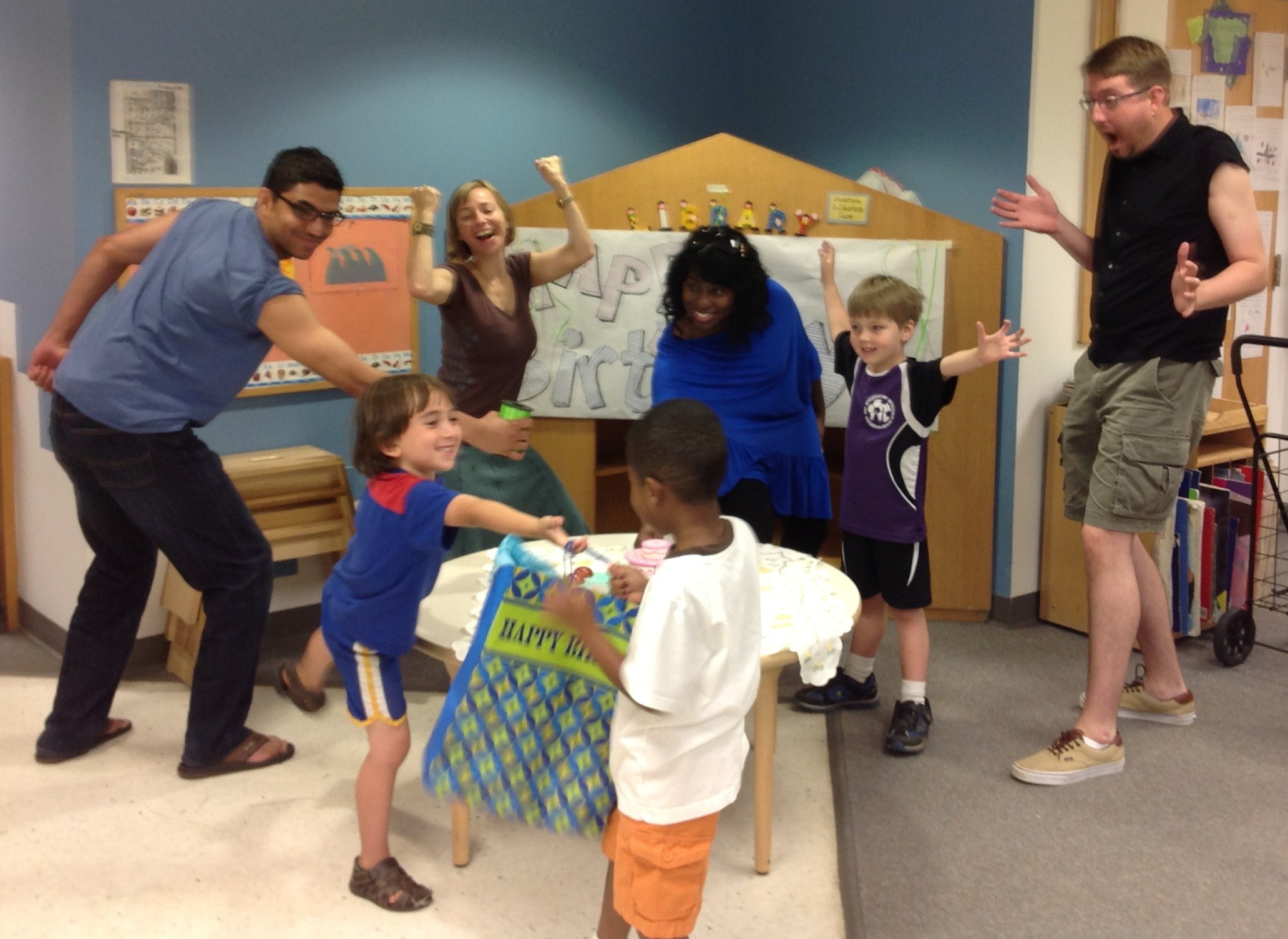
After our visit, we head back to the classroom where we wrap up with a final project.While it’s most often an art project, I do not limit myself to that platform. This is extremely helpful for two reasons; first, sometimes it is not developmentally appropriate for children to recreate the art they have just seen and second, sometimes it’s not culturally sensitive to recreate the art either. A good example of the first scenario is when I did a lesson on the Renaissance and I wanted to talk about composition. They were not up for the challenge of creating a masterpiece that depicted, balance, dynamism and fluidity. However, they could connect to these concepts by acting out their own birthday party photo and seeing the results. And when we do our class on Hinduism and visit the Freer’s Shiva Nataraja, we opt to look at videos of Bharatnatyam dance, do a sample of mudras and keep a beat with bells on our ankles. All activities are meant to build upon the concepts introduced through the lesson in a way that is interactive and self-directed.

This year we also offering infant and toddler class, so keep an eye out for future blogs about these audiences. In the meantime, let me know what is working for you with young audiences in your museum!

Building Meaning for Young Children in the Museum

still lifeWhen it comes to teaching young children using the collections along the National Mall, there are some obvious candidates; Wayne Thiebaud’s cakes or traditional still lifes at the National Gallery of Art and the Mammal Hall at the National Museum of Natural History.  But, what about objects that seem less approachable from a young child’s perspective.  Do we forgo teaching about them altogether? And if we do decide to take that leap, how do we approach it?  It’s a question we consider a lot at SEEC and in effort to understand the process a little better, I share this story.

ImageA few months ago, I was teaching a course for children, ages 3-5 on different genres of art; portraiture, landscape, etc.  It occurred to me that the art of the book would be a nice topic to add to the curriculum.  I had for a long time reserved the theme of Islamic art to classes I taught for early elementary-aged children. But, I love the Freer’s collection of Islamic book art and so,  I decided to take the plunge.  Typically I correlate the beauty of the art form with the importance of the Koran in Islamic culture, but with 3-year olds as my target audience, I had to rethink that strategy.  I was plagued by questions: How do I define religion?  How do I explain the meaning of a holy book?  How do I address the topic by respecting different traditions?.  Basically, how do I teach about these objects without overlooking their cultural significance, but in a way that is developmentally appropriate?

The answer was: exposure.  Early learning often takes the form of introducing students to something new.  By simply visiting the Koran pages in the Freer, we were bringing to light a new concept.  To help them understand the unfamiliar, I built on their own knowledge of books.  Before heading to the museum, we looked at classic children’s books and discussed their different features, specifically; text, pictures and the front cover.   I featured a song that helped them remember these and by the time we got to the Freer, the children were able to identify the Koran pages as pages that would be in a book.  They also noticed the writing and easily observed that it was different from the letters we saw in our classroom books.  With a picture of the Arabic and Roman alphabets in hand, we explored the visual differences between them.  For many, the knowledge of more than one alphabet was novel.  They also compared their classroom books and noticed that the illustrations often included people and the Koran pages illuminations did not.   Armed with real flowers and leafs, we explored the similarities between these objects and the Arabesques on the pages of the Koran.  Finally, we looked at examples of book covers and talked about how we had to put the pages together to form a single book.

It felt like a good lesson, but I still had a nagging feeling that I wasn’t do the subject justice. That was when a colleague reminded me that over the course of their development and education, these children would, hopefully, return to the Freer or another museum and build on their knowledge of the Koran and Islamic art, in general.

ImageCertainly, we see that happening with students enrolled in the SEEC program.  When they pass Henry, the elephant in the Natural History rotunda as babies they are learning to identify him as an elephant.  By the time they are toddlers, they can recreate the sound elephants make and most will be able to show you from where that sound comes.  As they reach the age of two, they can learn more specifics like what Henry eats or where he lives.  By the time they are in the Pre-K program, they have a solid foundation and are ready to explore more complex issues.

Instead of cramming a lot of information into one session, I focused on encouraging parents to return to the galleries on their own.  Letting caretakers know the importance of returning to the same object and seeing it from multiple perspectives became part of all my lessons.  It really sets the stage for multiple exposures over time, that will help children understand the complexities and nuances that are often in contained in just a single object.

Smithsonian Early Enrichment Center – Museum Education

SEEC_Castle

The Smithsonian Early Enrichment Center or SEEC, as it is commonly called, was founded in 1988. It is currently housed in two locations at the National Museum of Natural History and another, at the National Museum of American History.  The school serves children ages 3 months – 6 years and boasts a staff of early childhood educators, art educators, a music educator, a resident scientist and a department of 4 museum educators.

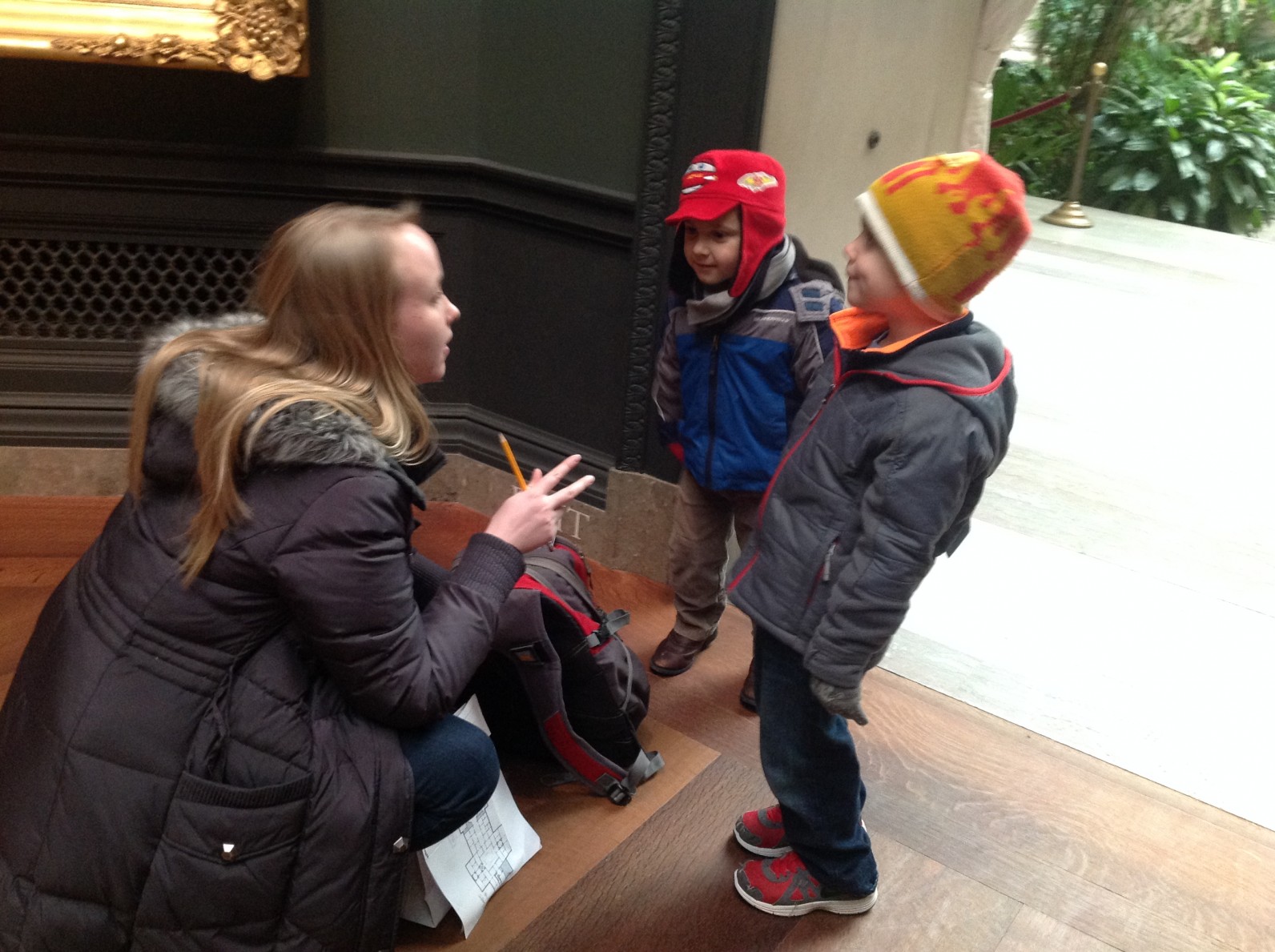
It might seem odd for an early learning center to have a museum education department, but it makes a lot of sense when you consider all that museums have to offer young audiences.   And because of SEEC’s location on the National Mall, it is able to integrate the museum into the fabric of our students’ daily experiences.  Children are naturally curious and museums offer an ideal setting for them to explore, investigate and learn.  Encountering an object helps a child solidify their understanding of a concept and it sparks their imagination.  Whether it’s a trip to the National Zoo to see the snakes, a visit to the Castle to explore architecture or a stop at the Hirshhorn to see examples of modern art, the children are exposed to a variety of disciplines and ideas.

Sara_Vishnu1

Pre-K takes a trip to Arthur M. Sackler Gallery to see a statue of Vishnu

So, what do museum educators do here at SEEC?

  • We educate students within SEEC and the larger community – using methods unique to young learners.
  • We are a conduit between our classroom educators and the museums.
  • We maintain and offer resources to support the classroom in the form of hands-on objects, prints and books
  • We provide high quality research and information on objects within the collections and assist our classroom educators in framing that information in a developmentally appropriate way.
  • We plan special programs within SEEC and for museums across the country.
  • We have a unique understanding of museums and early childhood development and combine those perspectives to offer training to early childhood and museum educators.
  • We believe that young children can benefit from museums and we hope to encourage museum professionals to embrace them as an audience.  Similarly, we hope to encourage early childhood educators to see the museum as an informal learning environment for their students.

    Sara_Vishnu2

    Museum Ed leads Pre-K circle on Vishnu

Our hope is that our blog will open a larger dialogue about early learning and museums.  Please join us and share your thoughts!