It’s Teacher Feature Thursday!
This week we are featuring Katie Heimsath and Laura Muniz of the three-year-old Koala classroom. Katie and Laura noticed a common interest among the children in human bodies and what they are capable of, so a unit on the human body commenced. I joined them for a visit to the National Gallery of Art where they took a closer look at blood, and what goes into it. Blood is a complex concept and this lesson is a great example of how we at SEEC are thinking about how to make a complex topic developmentally appropriate, approachable, hands-on and engaging for young children. Below you will find images and descriptions of the lesson, and a reflection from Katie and Laura.

Here are a few images from their lesson on Blood:
 When the class first sat down, Katie asked the children to look at the painting Red Dance by Kenneth Young, and share what it reminded them of. The piece reminded children of a brain, blood, and strawberries. Katie shared that the painting reminded her of blood too, and that was what they were going to learn more about that day. The class had already learned about how hearts and veins move blood around the human body, but now they were going to look at blood more in depth and see what elements make up blood.
 Katie asked, “Who has ever cut themselves and had blood come out?” Immediately the children began to roll up sleeves or pant legs to display a cut, and several told stories about how they got their boo-boos. Katie asked, “Did your cut keep bleeding forever, or did it stop? Is your cut still bleeding or has it stopped?” The children said they weren’t still bleeding anymore, and Katie explained that cuts stop bleeding because a hard scab is formed by some platelets, just one part that makes up our blood.
 To take a closer look at blood, Katie read A Drop of Blood by Paul Showers. This book is told from the perspective of a vampire and monster, and the children enjoyed the silliness of the illustrations, while the text provided information about what blood is and what it does.
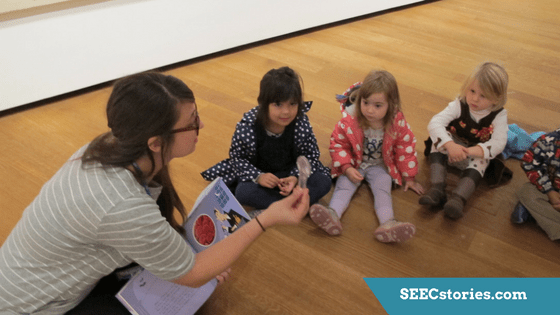 Katie asked the children what blood looks like when we cut ourselves, and the children said, “red”. She explained that when we bleed it looks red like the red dots on the painting, but if you look really close, with a microscope, you can see the different parts of blood. While the children are not as familiar with the concept of a microscope, they are very familiar with magnifying glasses, and Katie brought some out to make the connection that a microscope helps us to see small things that we can’t see with just our eyes.
 As they went through the book, Katie paused to talk about white blood cells, red blood cells, plasma, and platelets. The children passed around pictures of each to get a closer look, while Katie explained why each part is important for our bodies.
 After reading the book it was time to make their own blood! This activity provided a hands-on and engaging way for the children to practice what they had just learned. Katie brought out three “drops of blood”, which were three circles of contact paper. She said that the contact paper is sticky and looks wet, so it would be like the plasma, which keeps everything together. Then the children came up in turns to add red blood cells, and white blood cells (circles of red and white paper).
 To finish the blood, they added platelets, the small blood cells that come together to form a clot and stop a cut from bleeding.

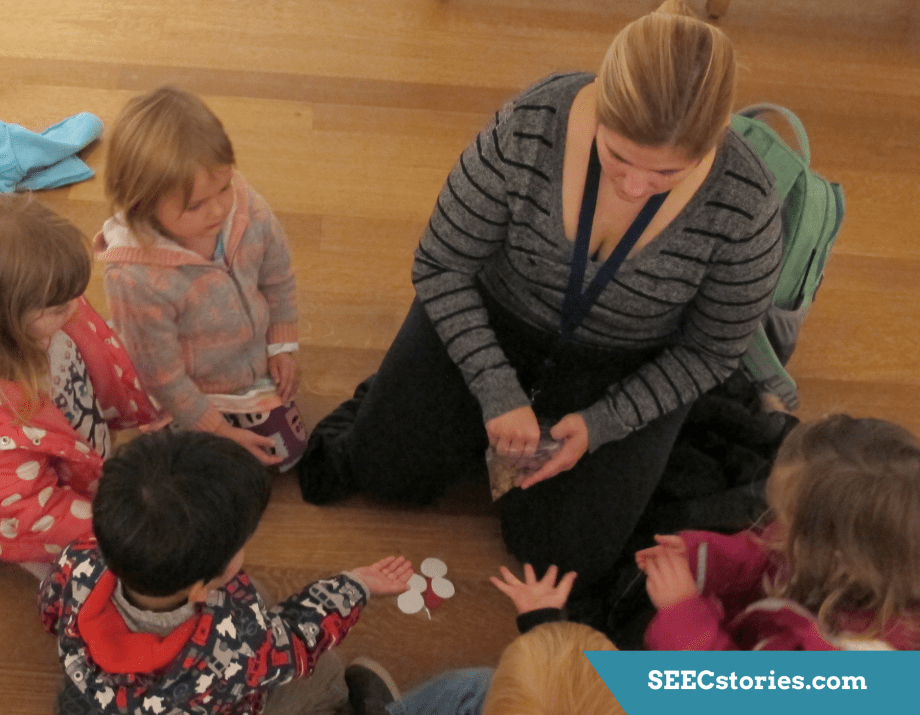 After making one blood cell together, the class split up into two groups and worked together to make more drops of blood. After they finished, there were some stray blood cells on the gallery floor, and the children were excited to help pick them up to leave the space clean.
 Back at school in the afternoon, the class made their own blood cells that they could take home.
 Then it was time to make more blood, but this time it was an edible version for their afternoon snack! First the class helped mix red food coloring into yogurt, which was the plasma.
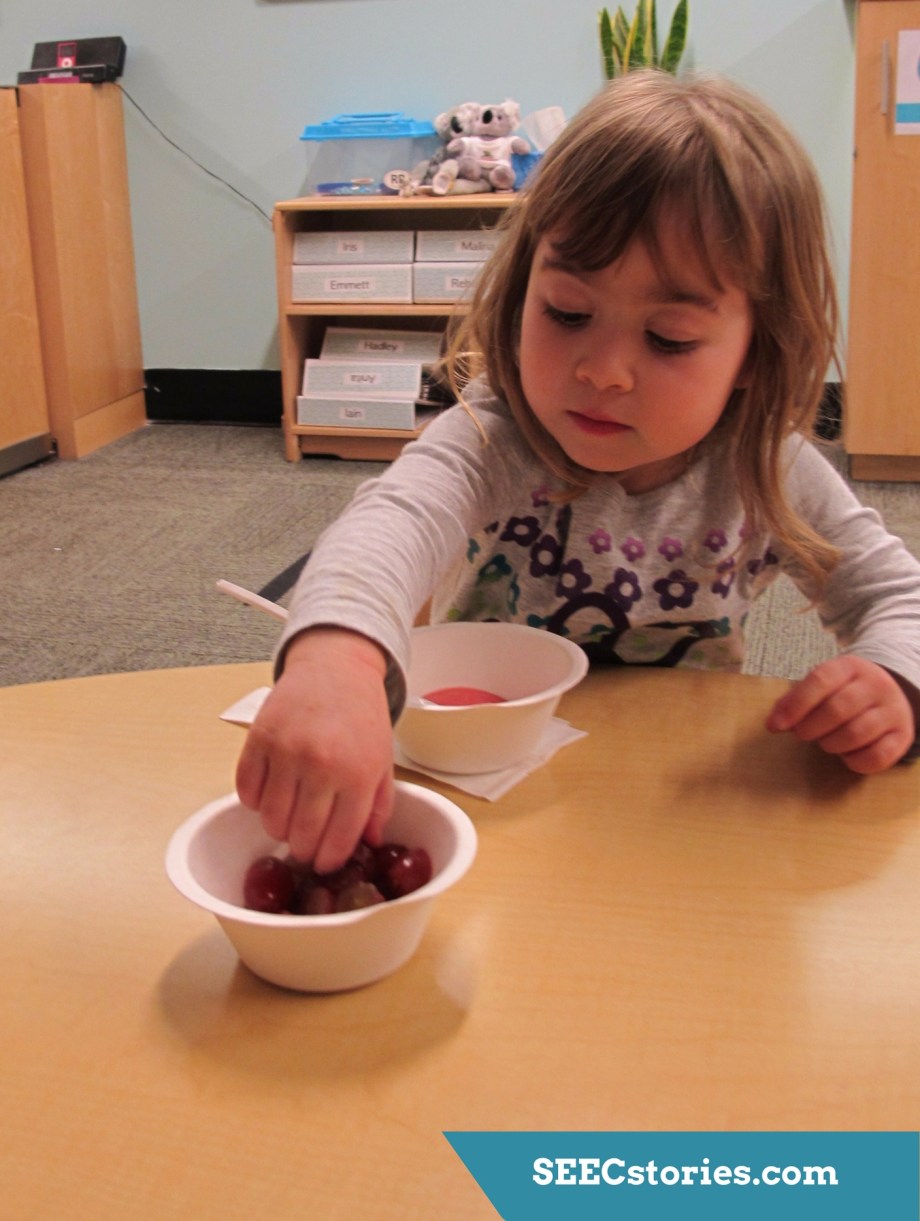 Next they added sliced grapes as the red blood cells.
 For the white blood cells, they added sliced bananas.
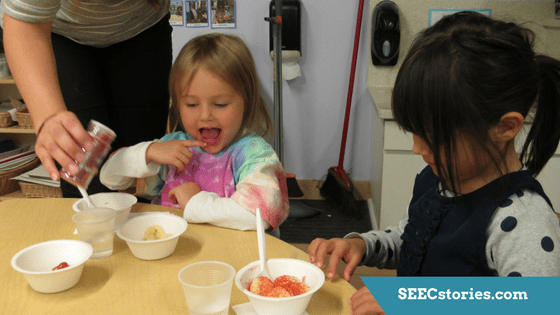 And finally, they topped off their blood snack with red sprinkles, acting as the many platelets found in our blood.
 The only thing left to do was enjoy eating it! By making blood in another way, the children experienced multiple exposure to the same concept, which helps to reinforce it. They were also actively involved in the process, which not only makes it more fun, but helps to strengthen their understanding of the concept.
Reflection from Katie and Laura:
For the first several weeks of school, our class explored their similarities and differences through lessons on favorite things, what their families are like and identifying and expressing their feelings. We noticed that many children in our class were experiencing some major transitions: caring for new siblings, finishing potty training, trying new foods, even adjusting to a new school! Our daily routine, including bathroom time, nap time, lunch time, play time, etc. led to discussions about how and why our bodies need all of these activities. So into the Human Body we went! We divided this unit up by the different body systems; it was a simple way to break down a complicated topic to a three-year-old level and gave us the ability to answer specific questions our class had.
We first explored how people experience the world using their five senses and learned that our brain helps us interpret it all. In the weeks following, we learned parts and functions of the digestive system and investigated our skeletal system. After that, we dove into the circulatory system. Early in the week we learned about the parts of the body that move blood around like our heart, veins and arteries. This particular lesson was all about blood. Our class had a lot of questions about the color of blood, what its job is, and why it is wet. Like a lot of children, our kids viewed Band-Aids as the fixer of all problems. As teachers we noticed a great opportunity to talk about how our bodies use blood to make scabs. Our objectives for this lesson were to address and answer those specific questions as well as practice working together as a group. Through the lesson, they learned the four different parts of blood and how those parts work together to keep our body healthy. Teamwork is a hard, but important skill to practice, so we built it into the lesson with a small group activity.
We chose to visit Red Dance by Kenneth Young at the National Gallery of Art because it is so visually stimulating and looks similar to actual drops of blood. It’s located in a gallery that is quiet and big enough to accommodate a group of curious and wiggly three-year-olds who need some extra room. We brought printed and laminated illustrations of four different parts of blood and small magnifying glasses to accompany the lesson. We passed these objects and pictures around so that the class could have something to hold and focus their attention on, as well as connect new vocabulary to.
Due to the length of time we had been spending on our bodily processes, our class had a solid foundation of ideas and lots of vocabulary to build on. They connected past knowledge (“there must be a lot of blood going around my small intestine if it’s moving all those nutrients outta there”) and asked questions to deepen their learning. They were engaged and curious since the book we read, A Drop of Blood by Paul Showers, made this very technical topic a little more exciting. By giving them objects to hold and engage with, we helped make a difficult concept more concrete. We were able to point specifically to images of parts of the blood that we can’t see with our own eyes, and explain the function of each one.
We were surprised by how well the small groups worked together in the activity to make drops of blood, and also at how they worked together to help clean up. We used some small materials, such as hole punched paper circles, that blended in with the wooden floor, and it was quite funny to hear some of our class saying, “Oh! There are more platelets over there!” and “Get that red blood cell!”
In the afternoon, we made a “blood snack”. The teachers did all of the cutting of the fruit, but the children helped by dividing, measuring and sorting all of the ingredients. It incorporated their fine motor skills, tested their one-to-one correspondence, and recalled a lot of the vocabulary we learned in our morning museum visit. The group also practiced turn-taking since there weren’t enough individual helping jobs to go around. Our class doesn’t have too many picky eaters, but for the few who are usually hesitant to try new things, this activity made it a bit more exciting to have something unfamiliar at snack.
An element we would have liked to add, but didn’t get the chance to, would have been a gross motor component. Our class was focused in the museum, but we realized after the fact that we could have played a game on the playground to extend the topic. It certainly helped their need for movement to have an activity in the museum, but playing a chasing game outside or teamwork game as a group would have been another fun experience.
While we had success with our activities, some of the materials we used to make the drops of blood made it difficult to transition out of the gallery quickly. If any other element had become more complicated, the activity would have become too complicated to do in small group, and we would have needed to make the drops of blood as a singular group.
After our exploration of the circulatory system, we continued learning about muscles, our respiratory system and discussed germs and exercise. Since our class showed continued interest in learning how their bodies worked, we kept our unit going strong for several weeks!
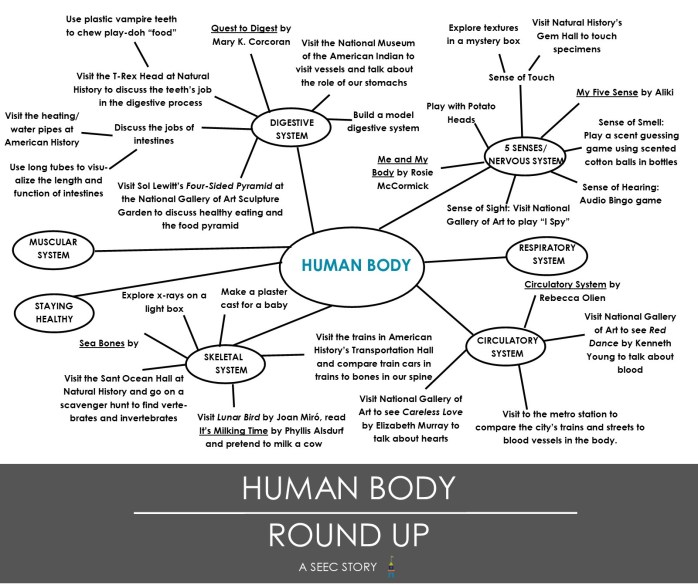
Katie and Laura continued to explore the human body for a few more weeks. Stay tuned for the Human Body Round Up for more ideas from their unit!




 During their morning lesson, Maureen met with the kindergartners in small groups to introduce them to the day’s topic. She began by sharing a map of the world with the children. They were quick to point out the countries they had already learned about. Maureen explained that today they would be moving to a country in South America – Colombia!
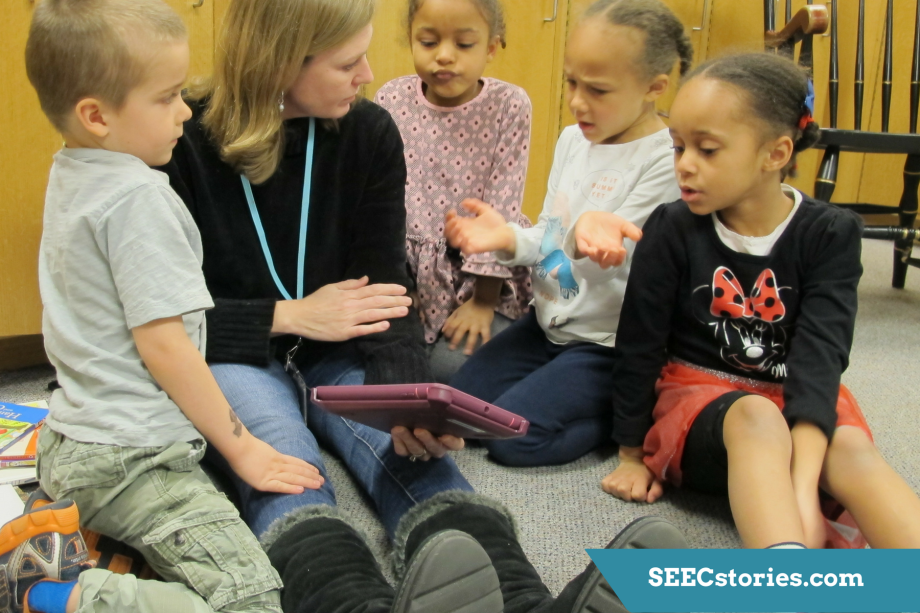 In preparation for this lesson, Maureen asked each child to bring a special book from home. After looking at the map, one child exclaimed, “If we’re talking about Colombia, why did we bring in our books?” Maureen said that was a great question, and she had a video to show them that would make clear the connection between Colombia and books.
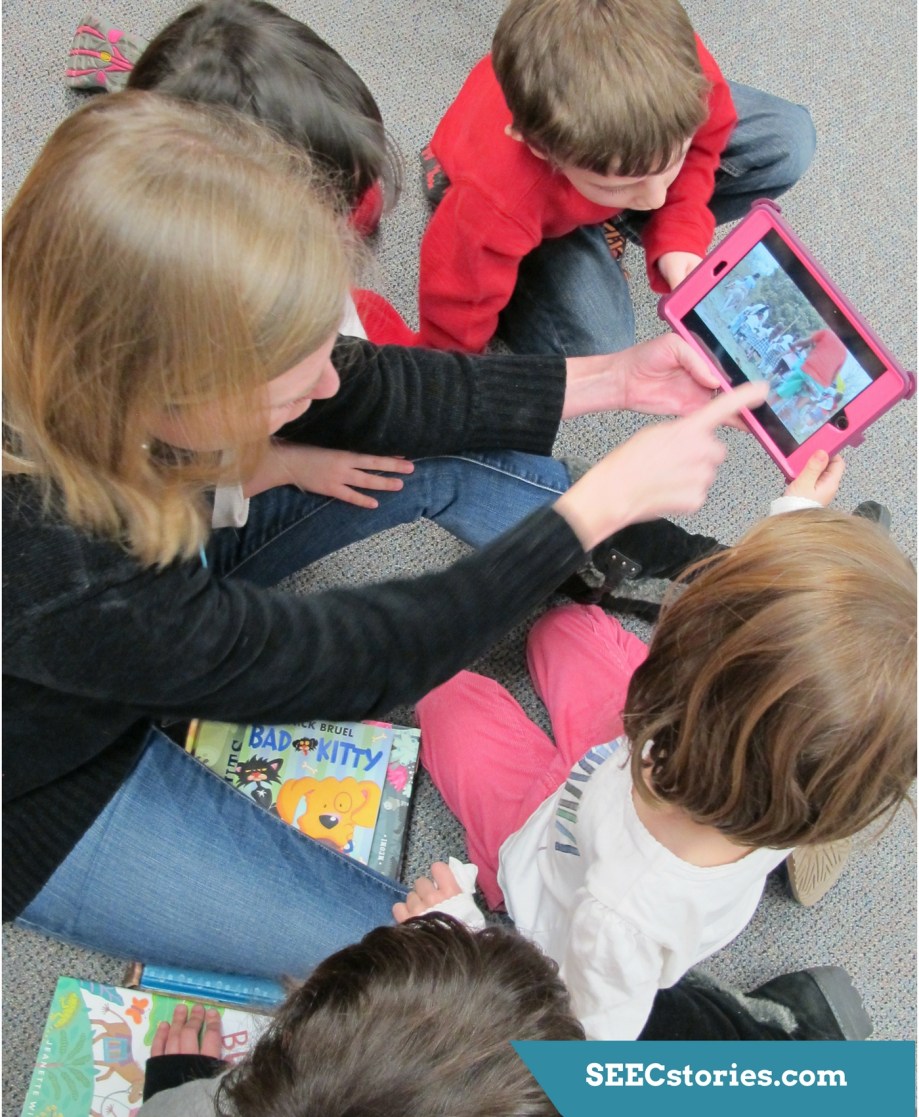 Maureen introduced the children to a man from Colombia named
  As the children watched the video, they were impressed by the number of books that the donkeys carried. Maureen asked questions to get the children to think about what it would be like if they lived in a place where they did not have easy access to books. The children were very engaged in the video, and had comments and questions of their own including, “I can tell he loves books!”, “Is this happening right now?”, “Does he still have that donkey?”, and “I think it makes sense that we brought in our books!”
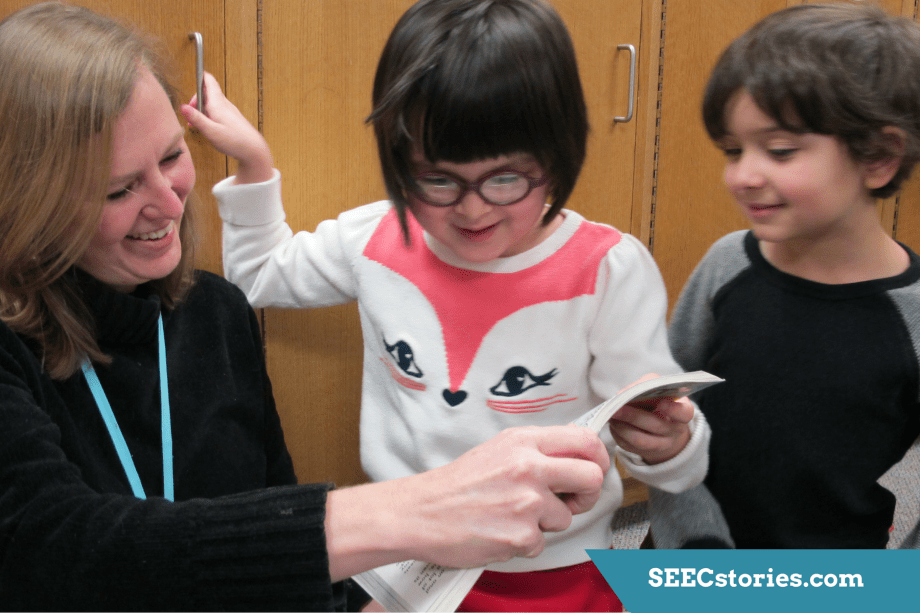 After watching the video, Maureen turned to the children’s special books from home. She asked why they thought books were important. All the children had something to say about this including, “because if you don’t have school, you need to learn from something”, and “you can learn words from books.” Then the children took turns sharing their books, and why they were important to them, whether they were gifts, they loved how funny they were, or provided knowledge.
 To end their morning lesson, Maureen read the children
  That afternoon, the class went to one of the
 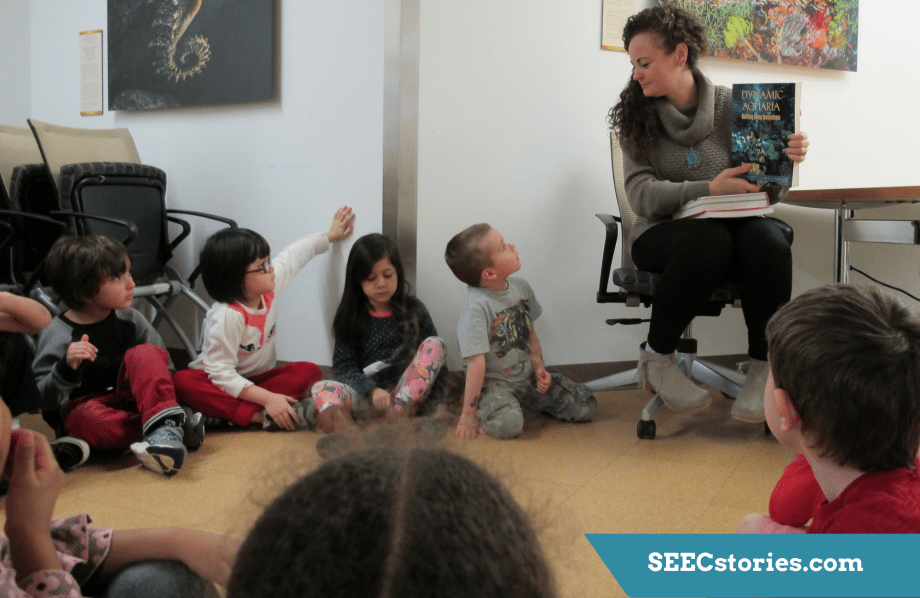 The class sat down and discussed with Sara what you can do in a library including reading, and finding out information if you have a question. The children talked about what they normally check out from libraries, such as books, CDs and DVDs. Then Sara told them a little bit about the Smithsonian Libraries and how they differ from the libraries they might be familiar with. She explained that all the Smithsonian Libraries are usually used by people who work within the Smithsonian who need to do research about something specific.
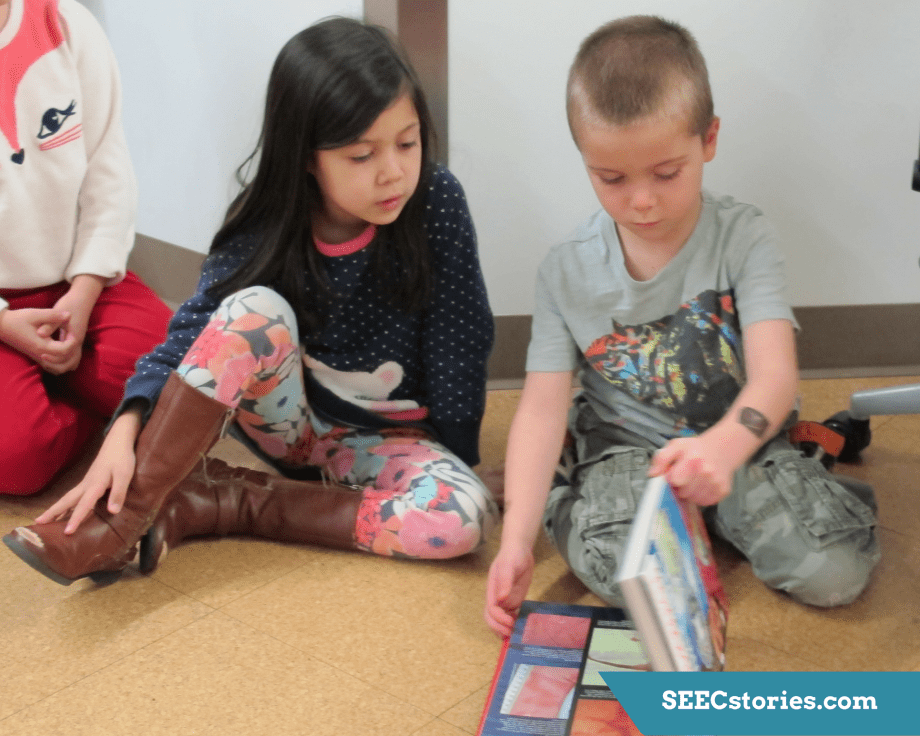 She shared several books from the library about marine life with the children since they were currently studying the ocean. As they flipped through the books, they noticed that there weren’t many photos, and that they contained lots of words, unlike the books that they might check out from the library near their homes.
 On the way out of the library, Sara showed the class an interesting feature of the bookshelves. She explained that since they have lots of books, and not too much space, the bookshelves are on tracks and can move apart if a book from a particular shelf is needed.
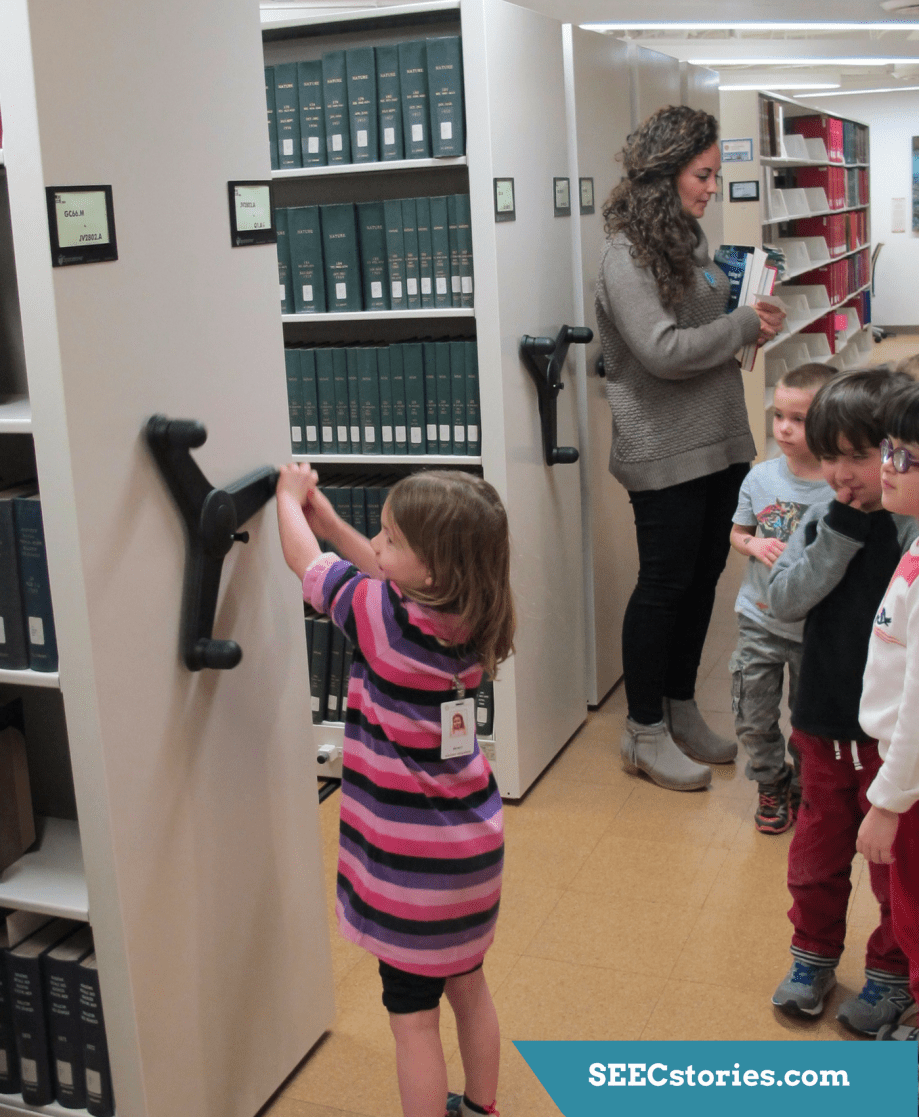 All the children enjoyed taking a turn using their muscles to turn the wheel to move the shelves.
 Following their trip to the library, Maureen brought the lesson full circle by reading
 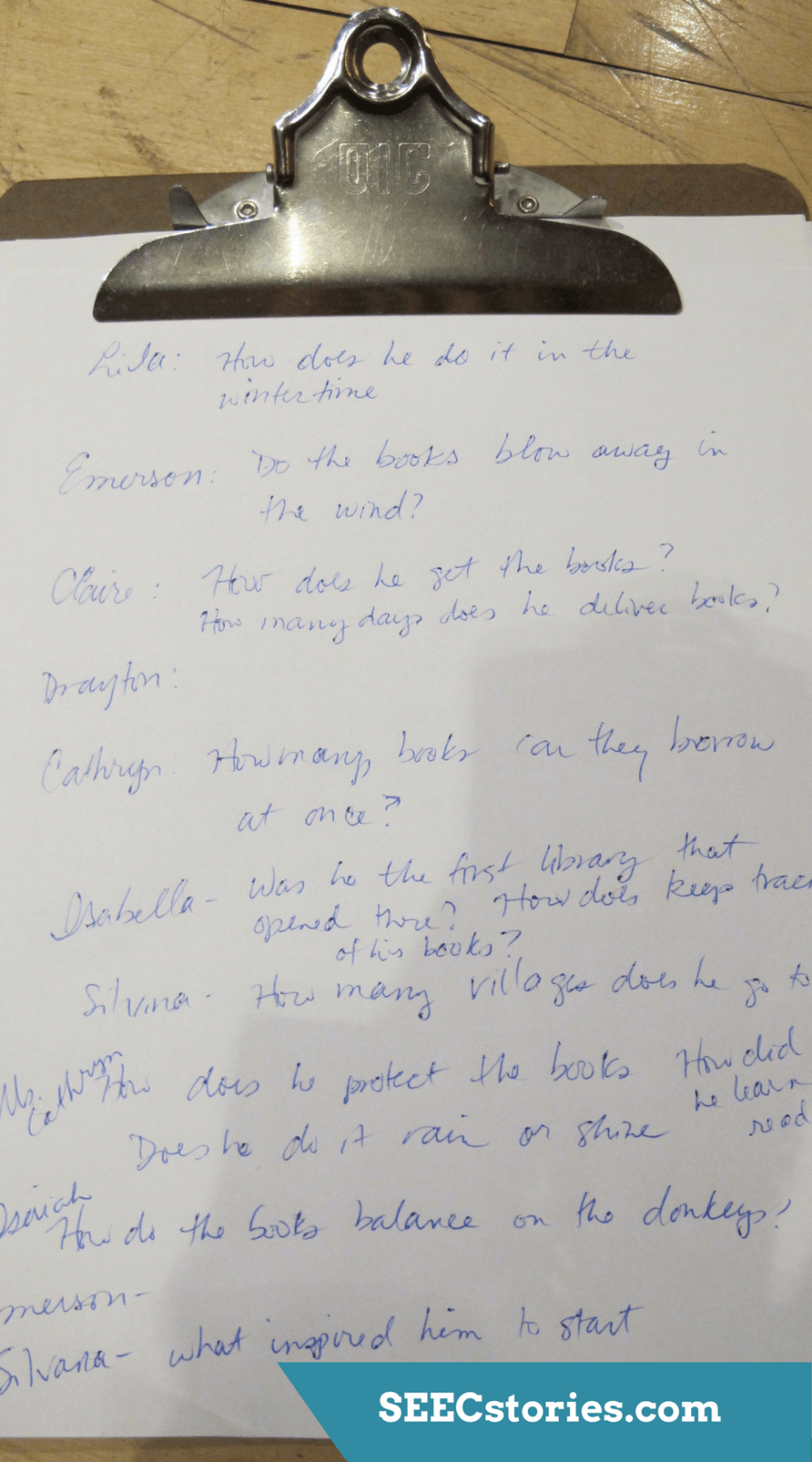 She asked the class if they would like to create their own book and send it to Mr. Soriano to add to his book collection. They were excited at the idea and also had some questions that they wanted to send back to Mr. Soriano. After this lesson the class corresponded with Mr. Soriano to find out more about him, as well as began their work on their book and a fundraiser for the library.



 Why the early years?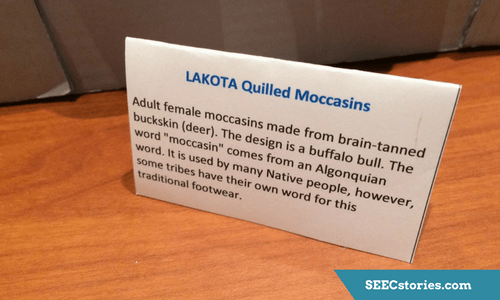
 The second day of the workshop will feature several techniques for supporting children in their understanding of the themselves and the world. We will examine how to use objects (both every day and museum objects) to teach and, identify developmentally appropriate ways to talk about race and culture in the classroom. Participants will create collections that encourage children to embrace differences and acknowledge our shared humanity. We will also work in NMAAHC’s art galleries to model how looking and thinking routines can encourage young children to stop, look, think, and inquire. In this section, we will help educators respond to potentially awkward questions and remarks and support the notion that we don’t have to have all the answers – even if we are teachers. We will conclude the day by examining some common pitfalls used in preschool settings and provide participants with a chance to curate a learning environment using the techniques and resources that we explored during the workshop.
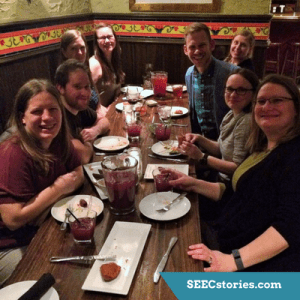 In keeping with the awards season time of year, SEEC held its annual Staff Appreciation dinner recently in order to recognize the hard work and dedication of our entire team. It was also a great opportunity to kick back, relax, and enjoy some time together.


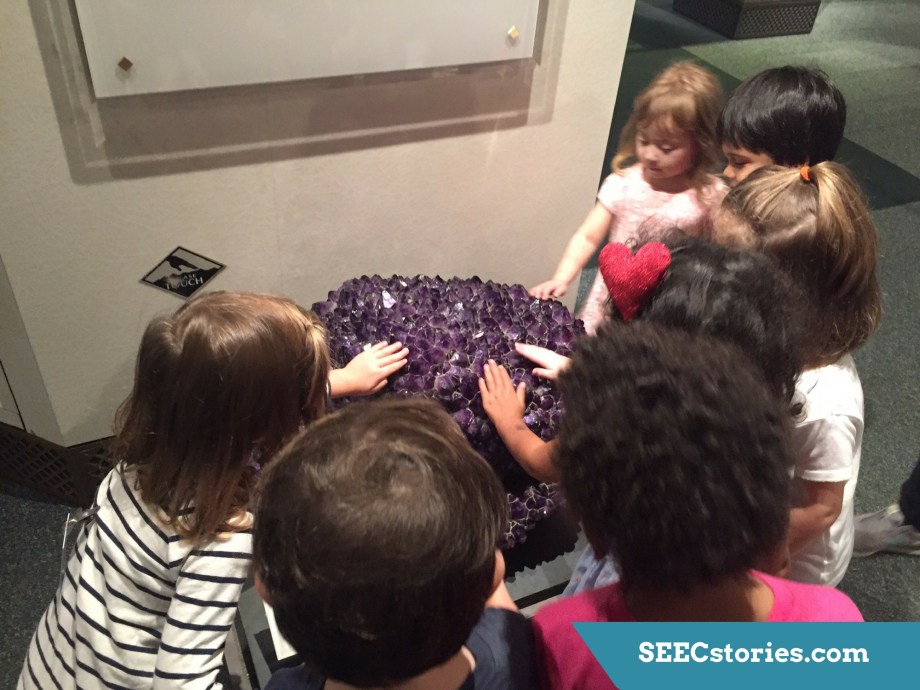 To explore their sense of touch, the class went to the
 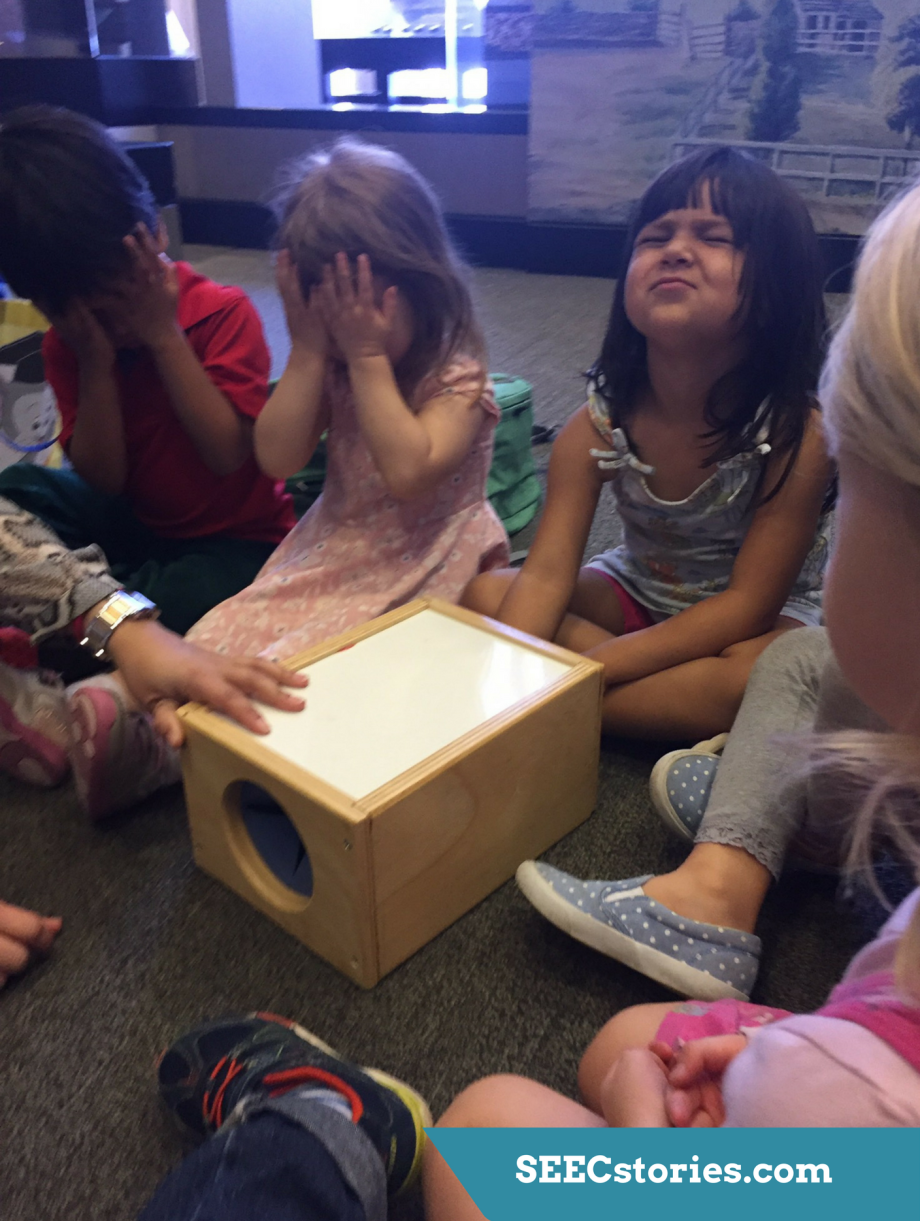 Afterwards, the class sat down and played a game using their sense of touch. Laura brought objects to put in the
 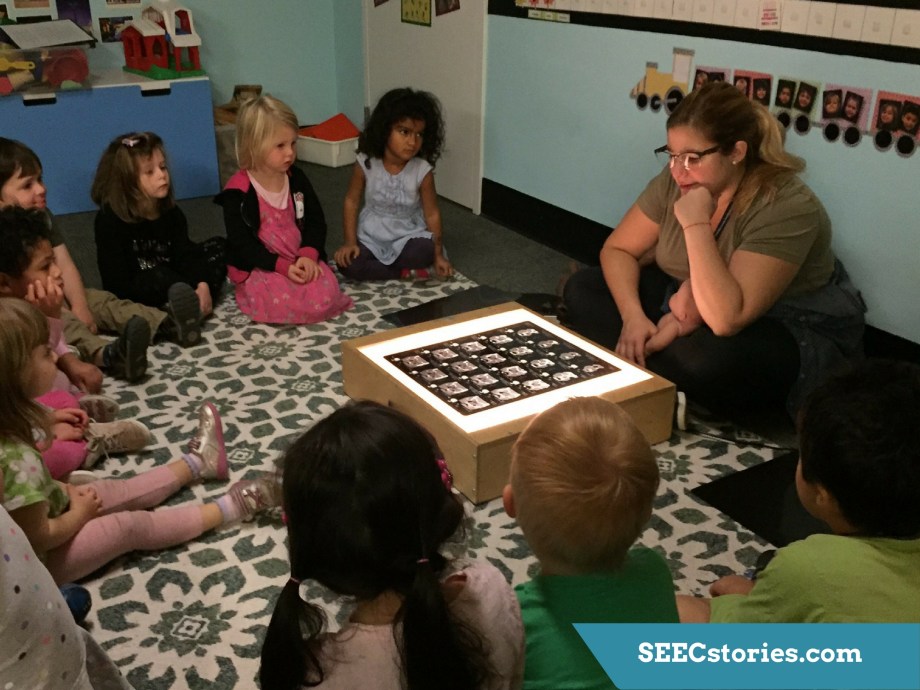 While learning about the skeletal system, the class talked about bones, and what happens when they break. Since we know we cannot see our bones from the outside, the class learned about x-rays and how doctors use them to take a look at our bones if we hurt them. To illustrate this, the class looked at bone x-rays on a light table to get a better idea of what doctors look at when seeing if a bone looks normal or injured.
 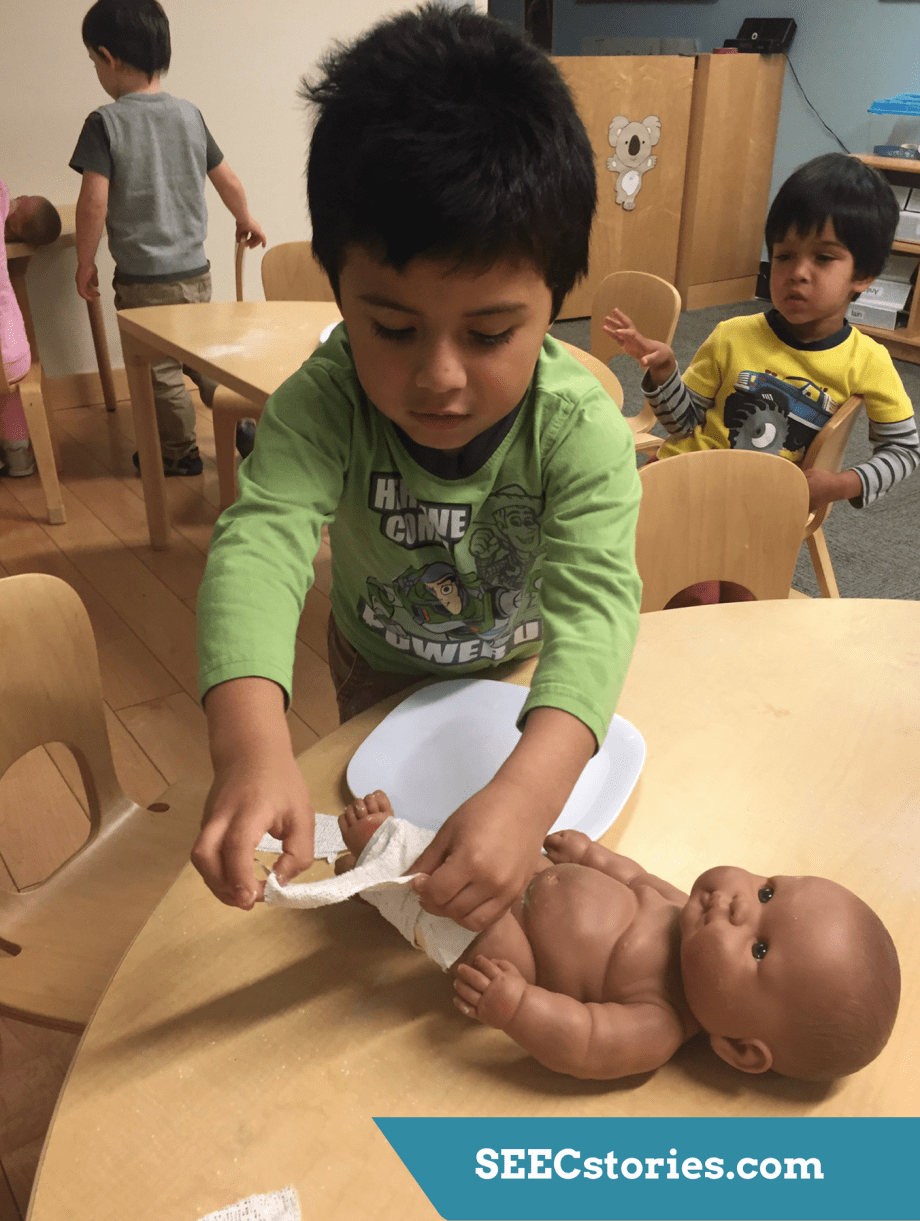 Laura explained how broken bones are wrapped in a cast so they can heal. To make this concept more concrete, the children used bandages to cast a baby doll’s leg.
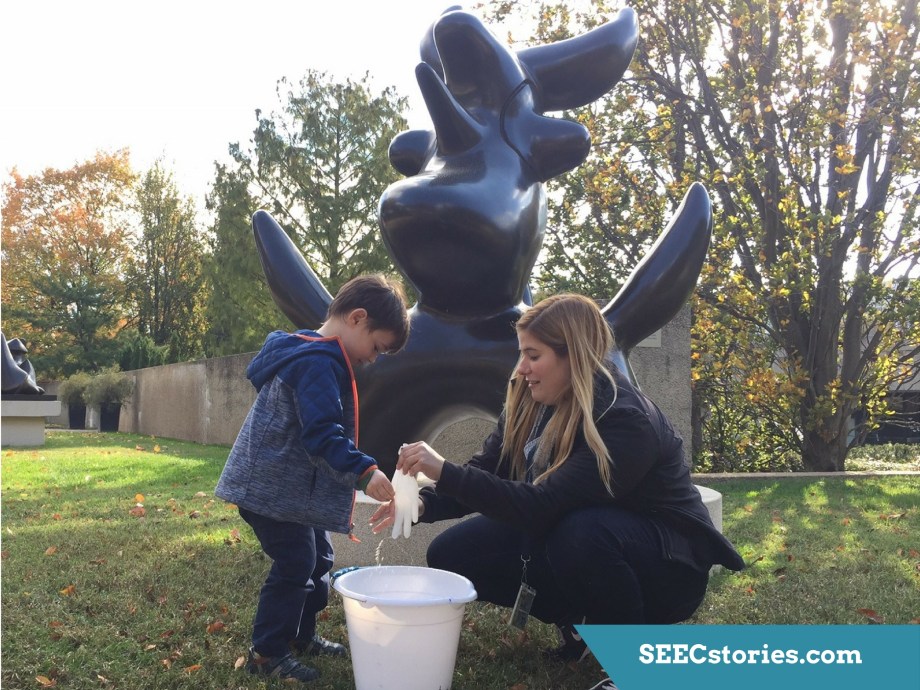 To cap off their week on bones, the class talked about the ways in which we can keep our bones healthy and strong, including drinking milk, which contains calcium. To explore where milk comes from, the class went to the
 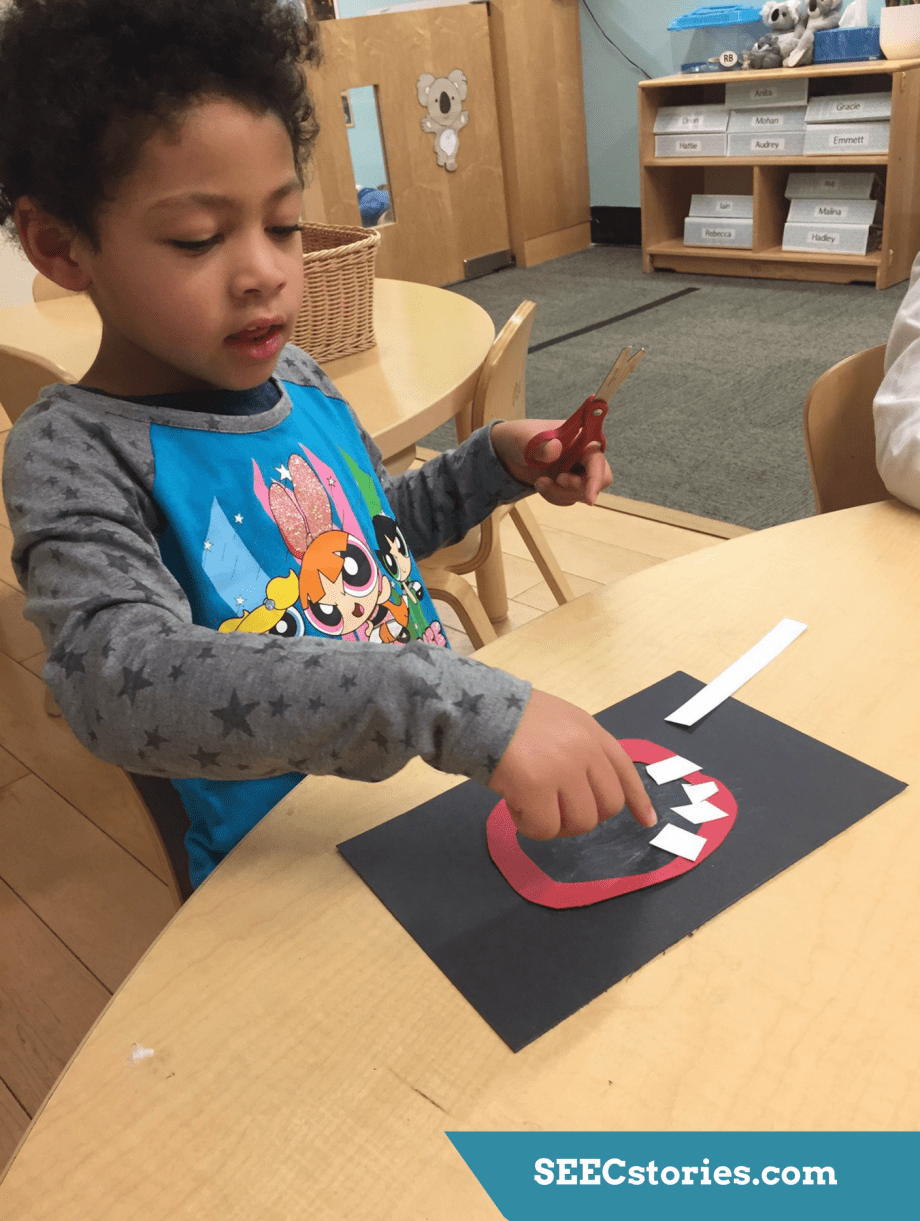 The class began their week on the digestive system by focusing on where food enters our bodies – the mouth! After seeing a giant mouth of a dinosaur, the children practiced their fine motor skills by cutting long strips of white paper into teeth and gluing them into a mouth.
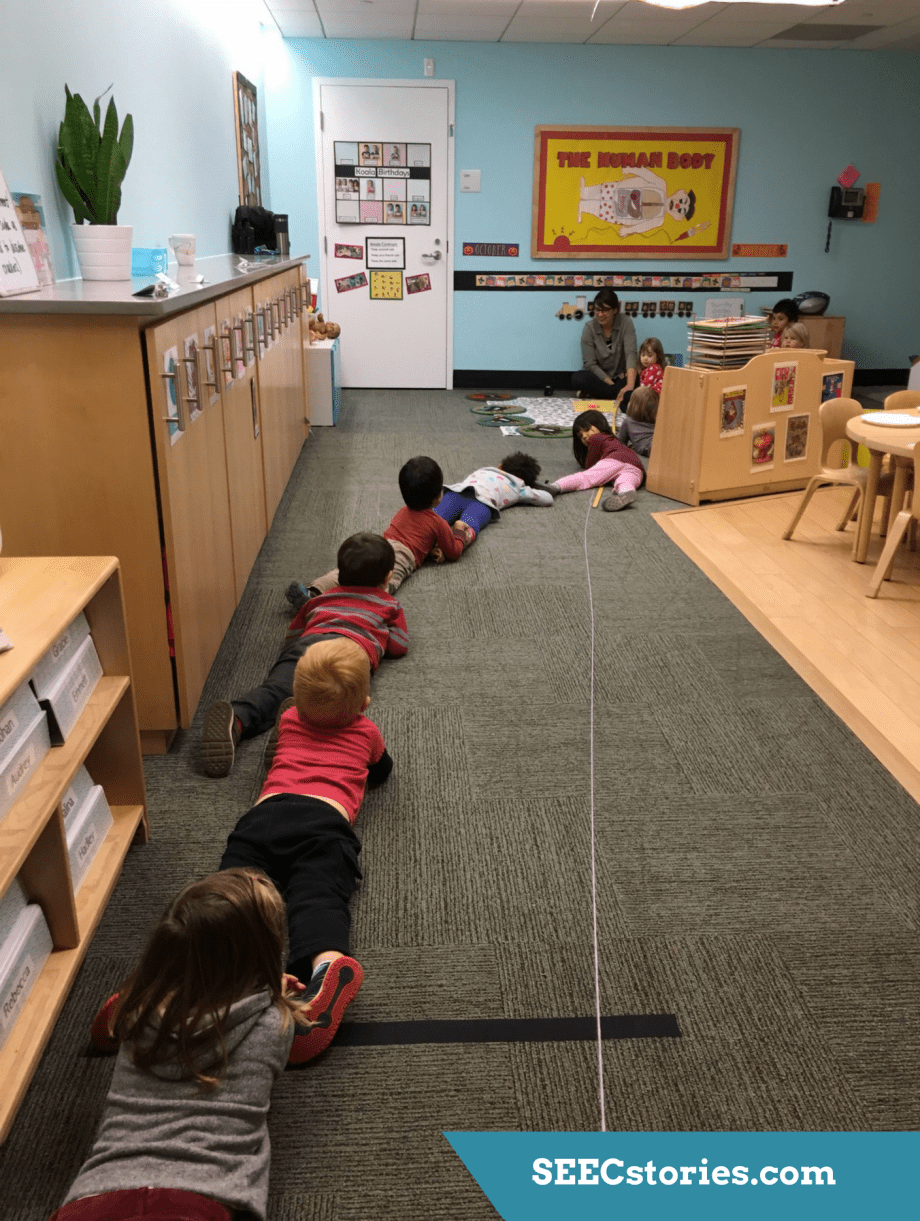 Explaining the length of intestines using only words can prove difficult for young children to understand, so Katie made it more concrete by measuring yarn to visualize how long intestines actually are. After they measured the yarn, the class lay on the floor along the yarn to see how many kids it would take to make the length of the intestine, which turns out to be a lot!
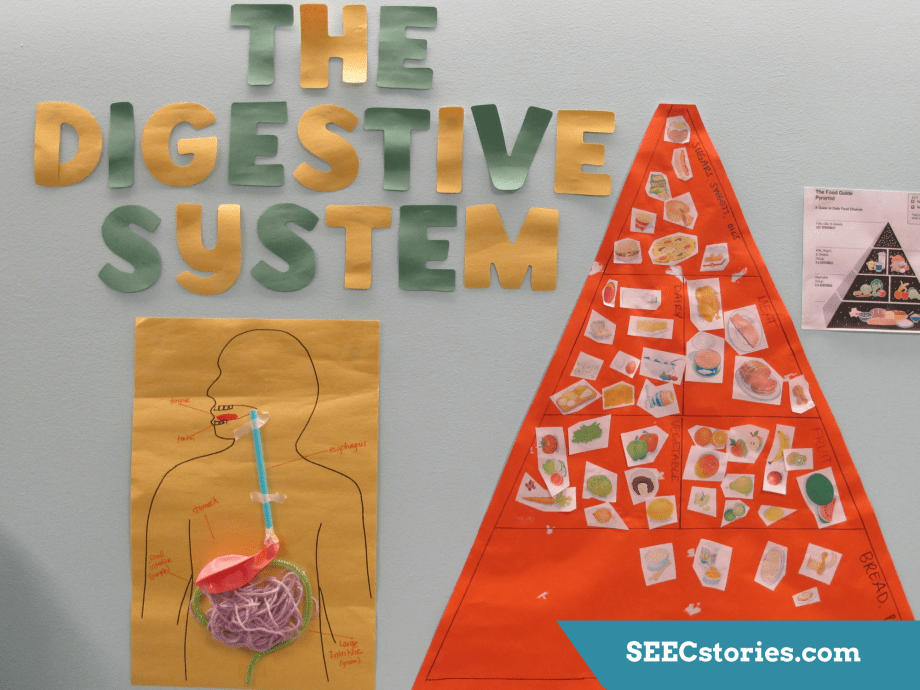 As they went through their week on the digestive system, the class added pieces to a paper model. They used a straw to represent the esophagus, a balloon as a stomach and yarn and ribbon as the intestines.
 Following our coffee and conversation, the group will head out to a nearby museum where we will explore a topic through an adult lens. These museum visits won’t be tours in the traditional sense. They will be opportunities to look, learn, and exchange ideas. So what does SEEC know about adult programming? We actually work a lot with adults through our professional development programs. Not only are we comfortable working with adults, but we find that many of the methods we use with young children work equally as well with this audience. SEEC believes strongly that learning is a lifelong endeavor and we love the idea a of educating caregivers, while at the same time exposing their infants to a new and rich environment.





 seecstories.com