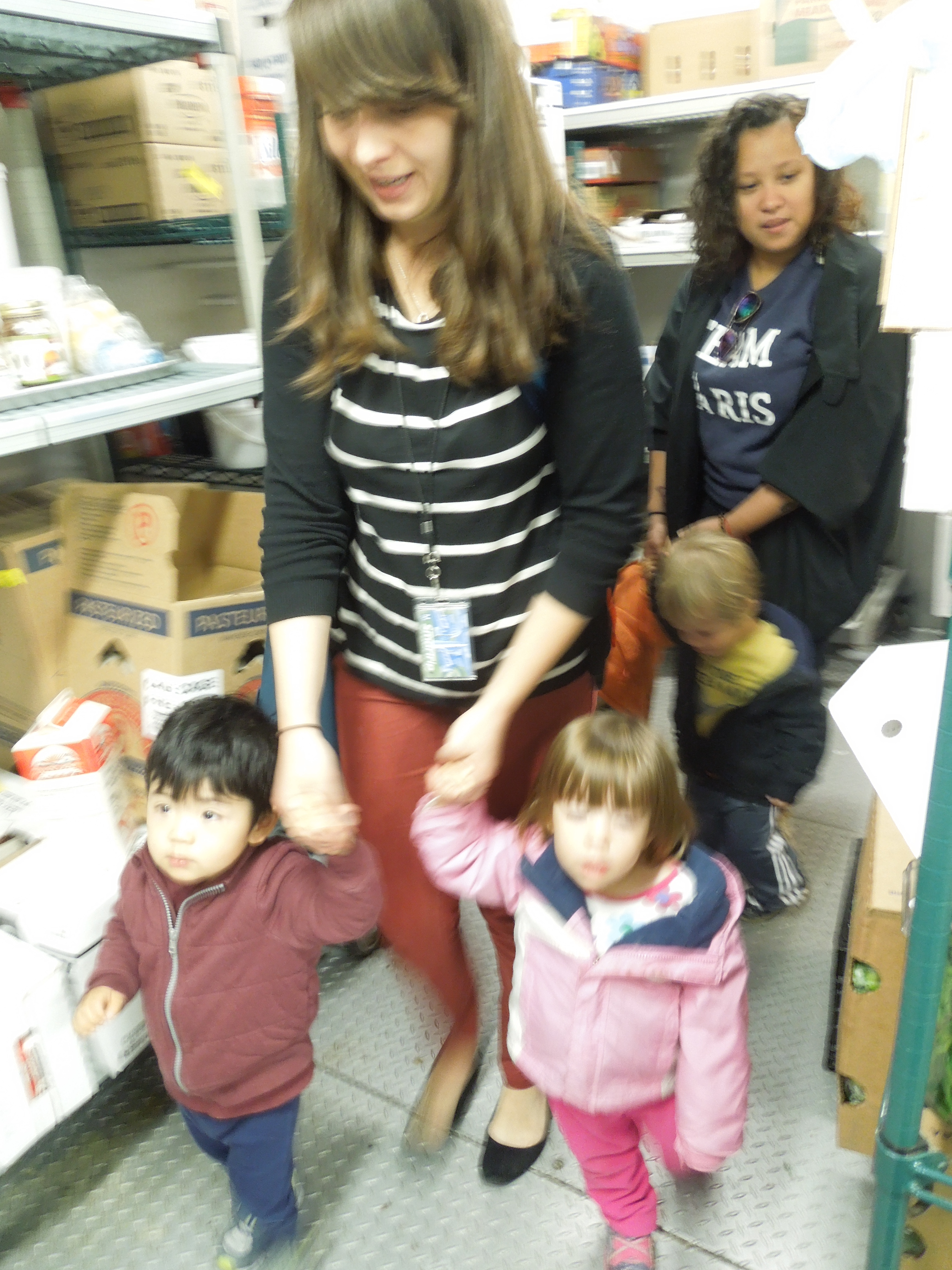
 In the fall of 2015, the Friends of the National Zoo, National Museum of African American History and Culture, National Air and Space Museum, National Museum of American History, National Museum of Natural History, Smithsonian Associates’ Discovery Theater, and the Smithsonian Early Enrichment Center, together with the DC Promise Neighborhood Initiative (DCPNI) were awarded a two-year grant through Grow Up Great, PNC’s initiative focused on early childhood education, to launch Word Expeditions. The grant’s objective is to build vocabulary in preschool students from the Kenilworth-Parkside neighborhood in Northeast DC. DCPNI works exclusively with this neighborhood supporting all members of the Kenilworth-Parkside and describes its mission as “improving the quality of their own lives and inspiring positive change in their neighborhood.” The group has a strong foothold with families of young children and so it seemed natural to integrate Word Expeditions into their already existing Take and Play structure. Once a month, Smithsonian representatives visit Neval Thomas Elementary School during which time, families participate in activities that teach about the Institution’s collections, build vocabulary, and support a child’s development. The evening concludes with a meal and families take home a kit from DCPNI outlining fun and simple ways to incorporate learning and vocabulary skills at home.
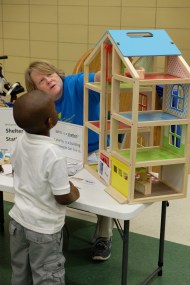 A few weeks later, families are invited to come to the museum that co-hosted the
Take and Play. During their visit, families engage in similarly fun activities that reiterate the vocabulary and theme from the Take and Play. In addition to the literacy component, the Smithsonian wants to create a welcoming experience that will make families feel at-home and inspire them to visit again. We also hope that through these programs, they will begin to see how museums can be used as a place to learn and explore together as a family.
As part of the grant, SEEC was tasked with creating a unique map featuring the Smithsonian in Washington, DC. The map displays the museums on and off the Mall and includes the Smithsonian Gardens and Discovery Theater. Each one is represented by an object, which is
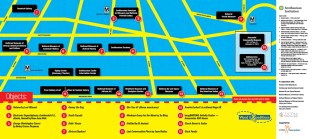 accompanied by what I like to call, conversation starters. These conversation starters include key vocabulary terms that help families define some big ideas they can use to discuss the object. They also pose open-ended questions and suggest easy ways to engage with the object and use the vocabulary in ways that will help children understand and recall the word’s meaning. For example, The Smithsonian Gardens description asks families to look closely at an elm tree and find its parts. The children will walk away with a concrete understanding of terms like roots, trunk and bark. The National Portrait Gallery’s entry asks families to imagine what they would see, hear and taste if they jumped into the portrait of George Washington Carver and suggest that parents use the term five senses and, of course, portrait.
These conversation starters also motivate families to stop and take a look – conveying the importance of observation and careful looking. The Hirshhorn Museum and Sculpture Garden encourages families to walk around Juan Muñoz’ Last Conversation Piece and try to pose like the figures. The description features the words pose and conversation and also asks families to imagine what their conversation is about. Using a concrete analogy to the vocabulary is so important for young learners.
To keep families returning, we offer them four free tickets to Discovery Theater after visiting five museums, and a free book after visiting ten. Perhaps more important to the map’s success is the presence of Ariel Gory, Education Specialist for Early Learning, from the National Museum of American History. She speaks directly to families about the map. Her presence has been important in communicating the purpose of the map, encouraging families to use it, and creating a sense of community. She shares her experiences:
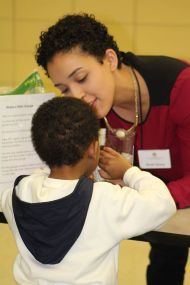 I find that dinner time at the Take and Play program provides the perfect opportunity for me to get to know families on a deeper level as I talk with them about the maps and their museum visits. Recently, I engaged in a conversation with two families who have become “regulars” at the workshops and museum visits. When I asked what museums the families had visited lately, the mothers immediately began to list all of the museum trips they had been on since the program’s inception in the fall and what’s more, they described their visits in detail – recalling the vocabulary that was introduced and the activities in which they participated. It was exciting to see their enthusiasm for the program and it was clear that the map had helped foster and grow their interest in museums.
Getting to see the map in action is one of the most uplifting aspects of this program. During a spring visit to the National Museum of American History, I noticed one mother rustling through her backpack before pulling out a well-worn map. “I can’t forget to get this signed!” she said. As I took a closer look at the map, I noticed that she had a signature for the National Air and Space Museum. I asked her when she had visited and she responded that they had gone the day before because her children had the day off from school. She noted that even though they weren’t in school that day, she still wanted them to “learn something.” Seeing that this mom had used the map to independently seek out a museum to expand her children’s learning shows the importance of programs like this.
So often we realize that local families are unfamiliar with the Smithsonian or feel that it is a place that they don’t belong. We hope that the map and the Word Expeditions program not only help to build young children’s vocabulary, but also encourage families to explore the opportunities for wonder and learning located in their backyards.
Supported by:

In cooperation with:
Friends of the National Zoo
Smithsonian Early Enrichment Center
National Air and Space Museum
National Museum of American History
National Museum of Natural History
National Museum of African American History and Culture
Smithsonian Associates/Discovery Theater
DC Promise Neighborhood Initiative
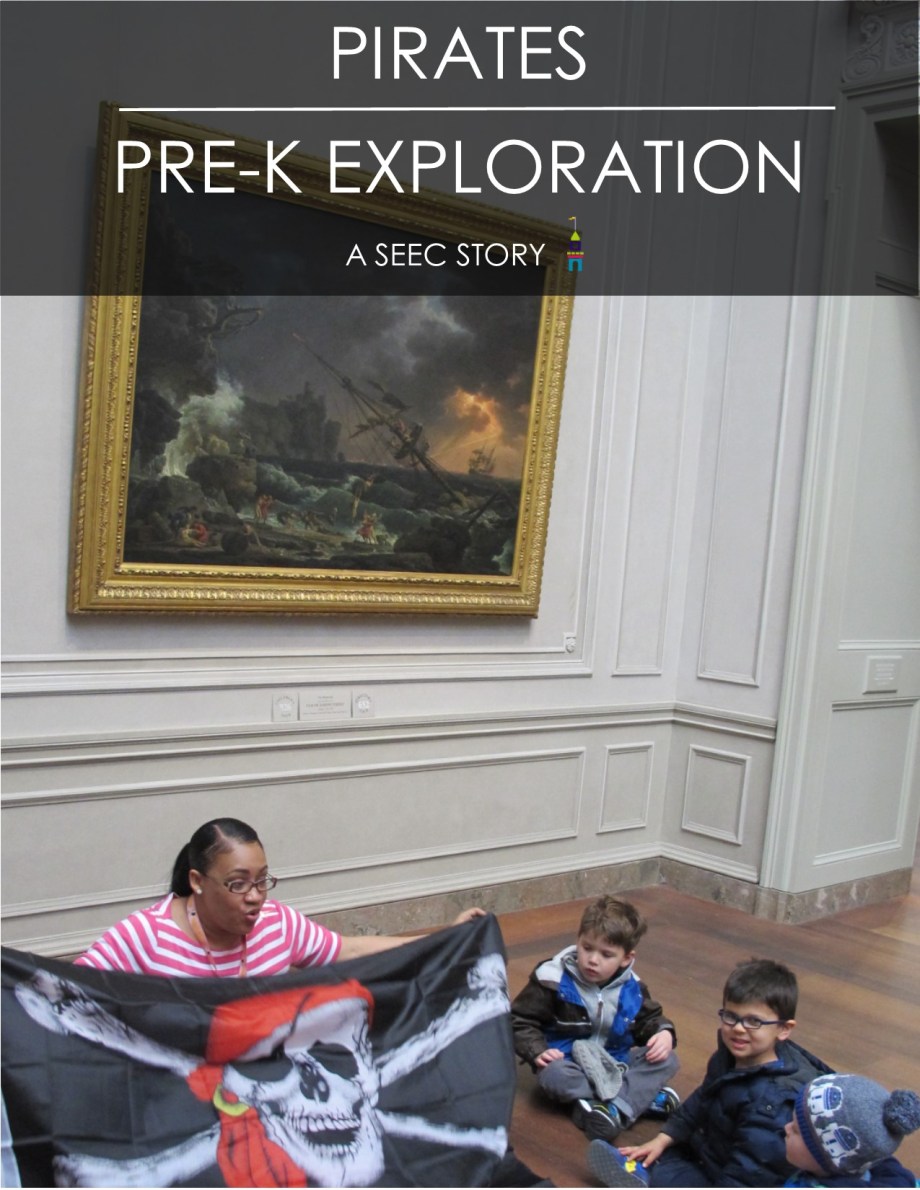
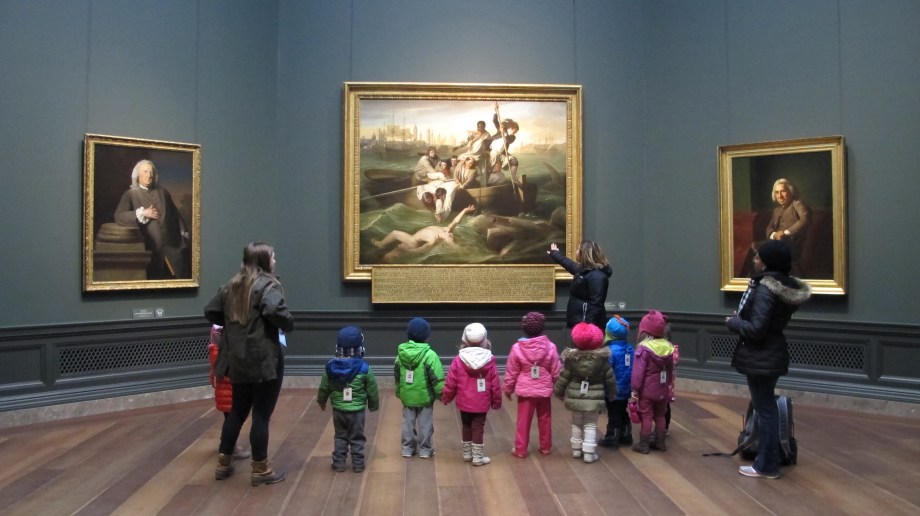
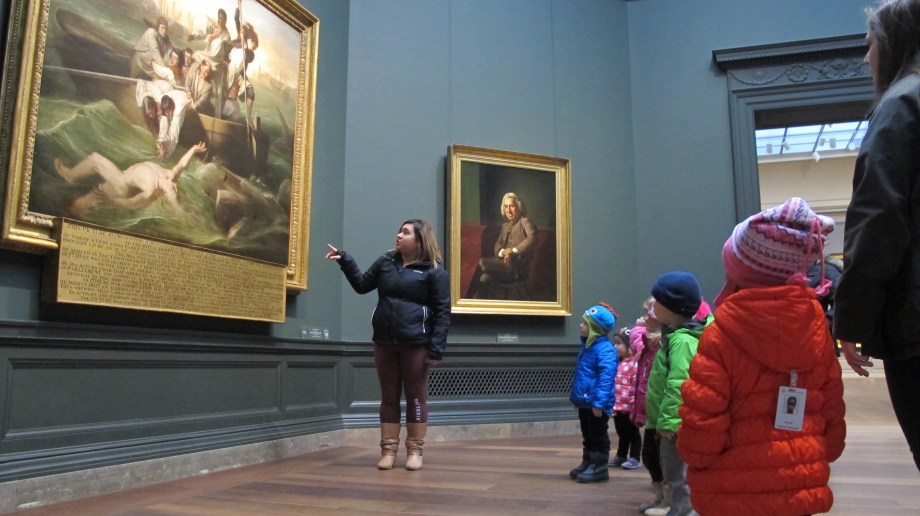
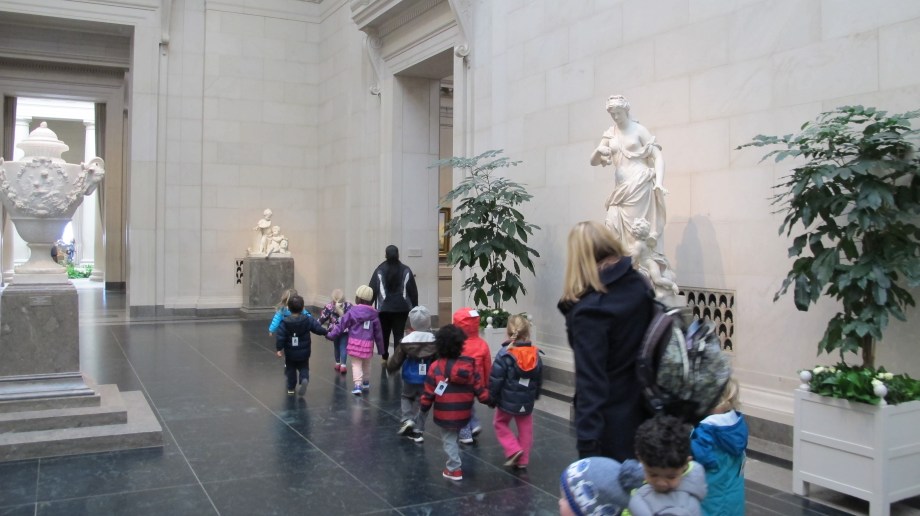 The Wallaby team noticed an interest in pirates among their students, so they thought exploring pirates during their unit on Peter Pan fit perfectly. The class went to the National Gallery of Art to find The Shipwreck by Claude Joseph Vernet.
 Dana began by reading
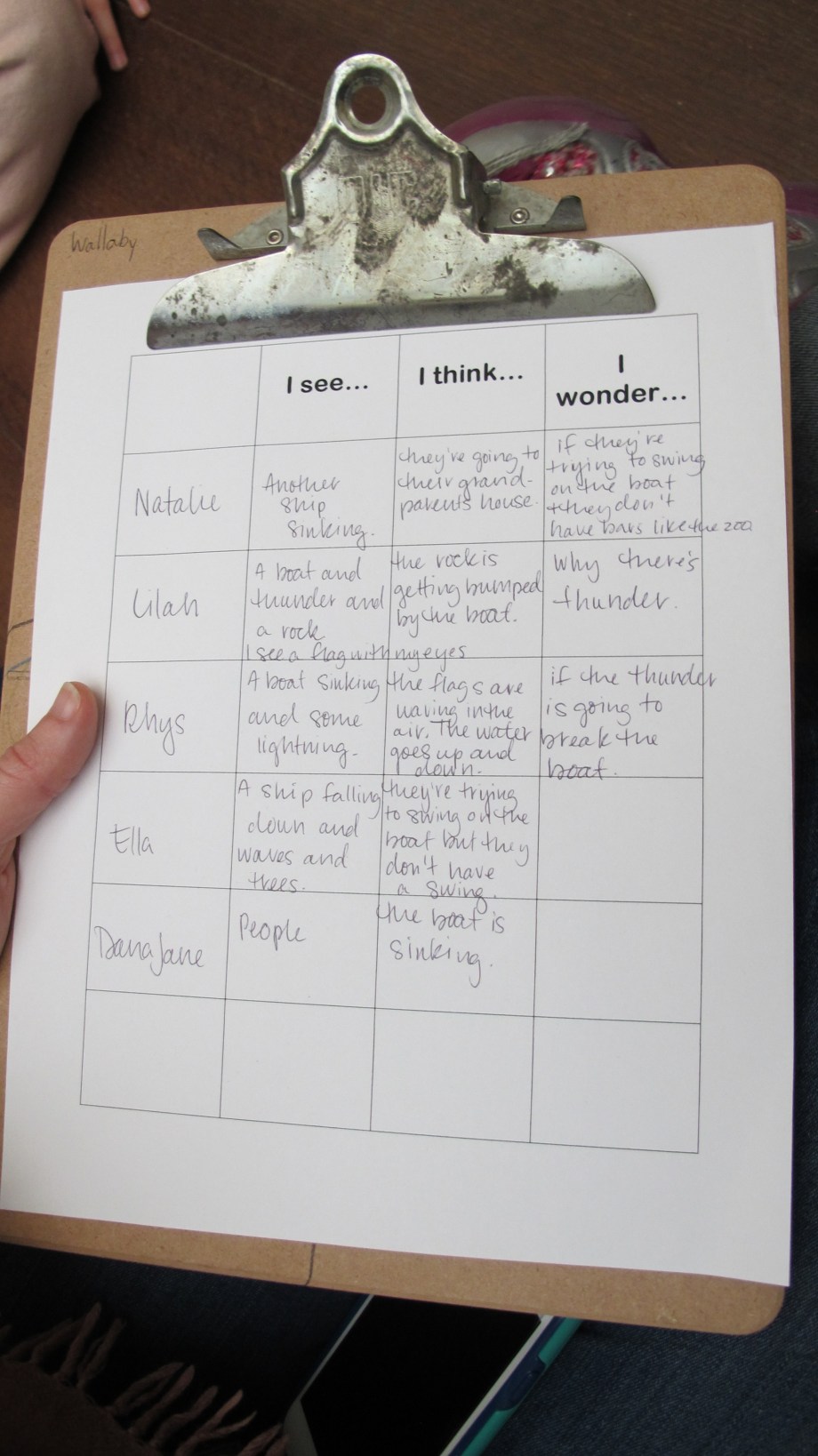
 First Dana and Erin asked each child in their circle what they saw in the painting and recorded what they said. Next they went around the circle again and asked each child what they thought about what they saw. Lastly, they asked each child what they wondered about the painting. This gave the children time to observe and think about the painting, and also gave them a turn to talk frequently, keeping them engaged in the activity.
 To end their lesson on pirates they went onto the National Mall to play a game of Capture the Flag. First the children practiced their mean pirate faces and saying, “Arrrr matey!”
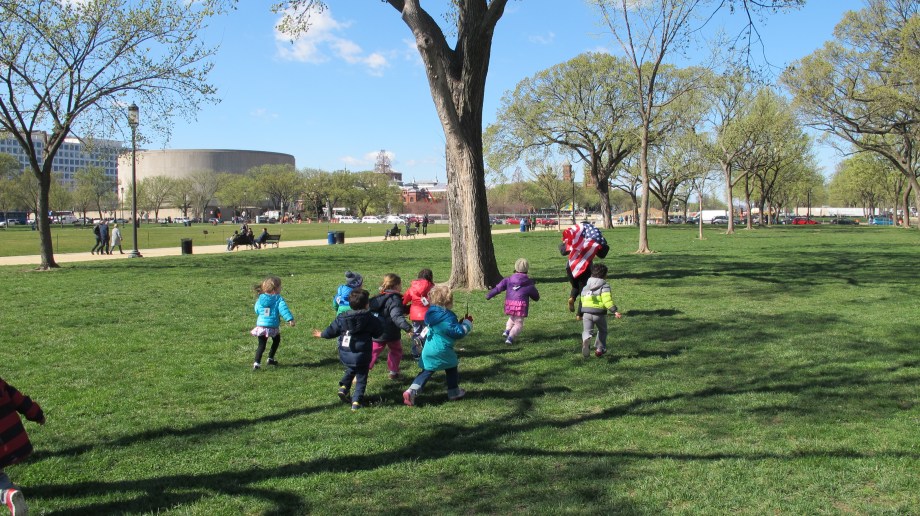 Then it was time to RUN! They chased Dana’s “ship” as she sailed with her flag.
  When they caught her they excitedly took down the flag and hoisted up their pirate flag!
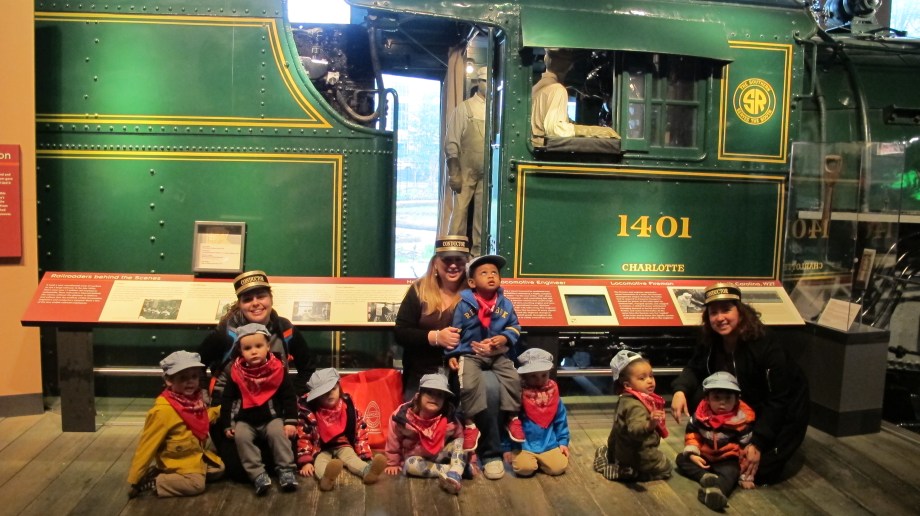

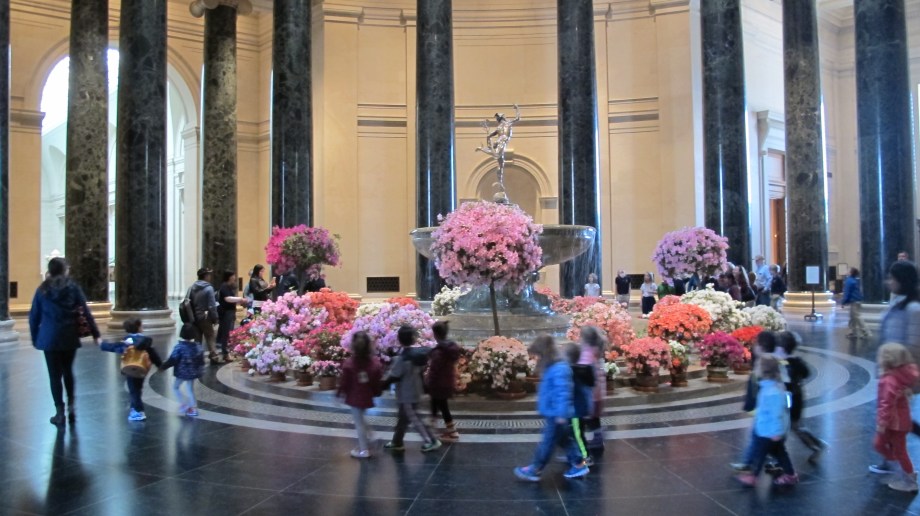 The Koalas visited the National Gallery of Art to begin their exploration of Earth, specifically what elements it is made of.
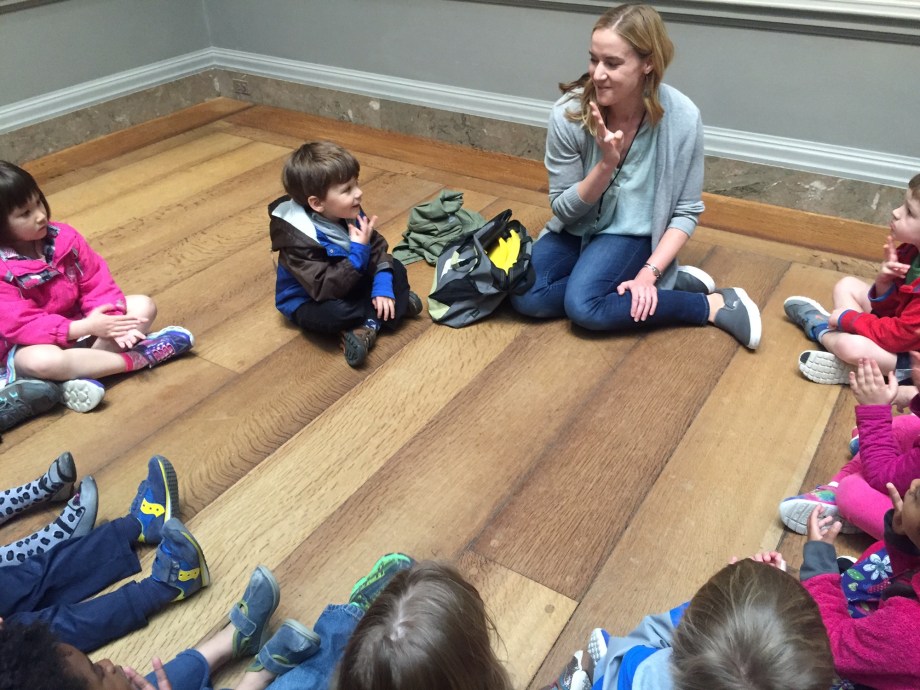
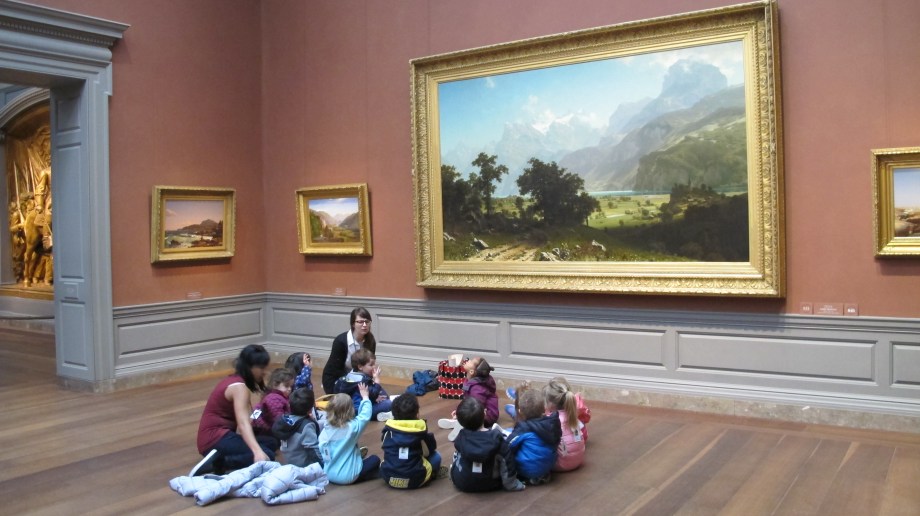 They found Lake Lucerne by Albert Bierstadt, and sat down for their museum circle. Katie began by explaining that the Earth is made up of land, water, and air, each of which is depicted in Lake Lucerne. She asked the class to observe the landscape and find something in the land, in the water, and in the air. The children noticed animals, trees, people, flowers and a castle on the land, boats in the water, and clouds in the air.
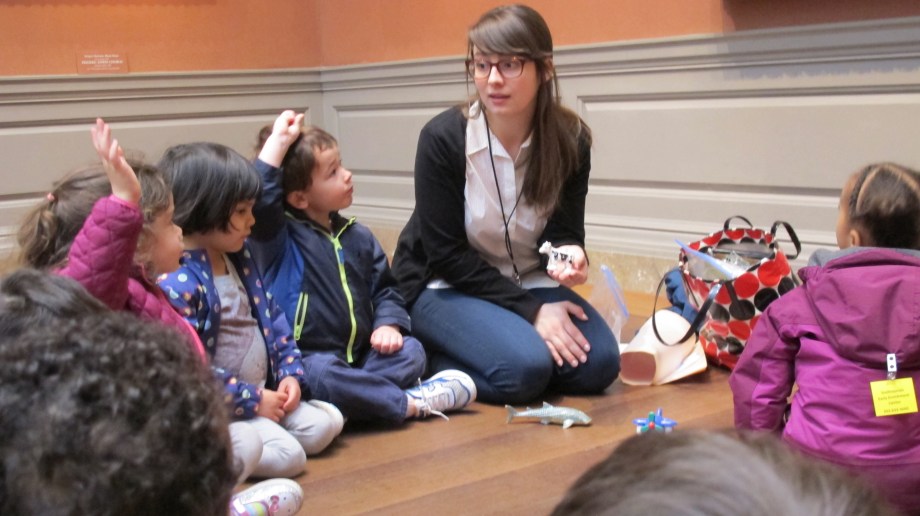 Next the class played a game to categorize items into where they are found: the land, water or air. As a group they identified that a shark goes in the water, a plane flies through the air, and a cow belongs on land.
 Then Katie gave each child a picture of something that belongs either on land, in water or in the air.
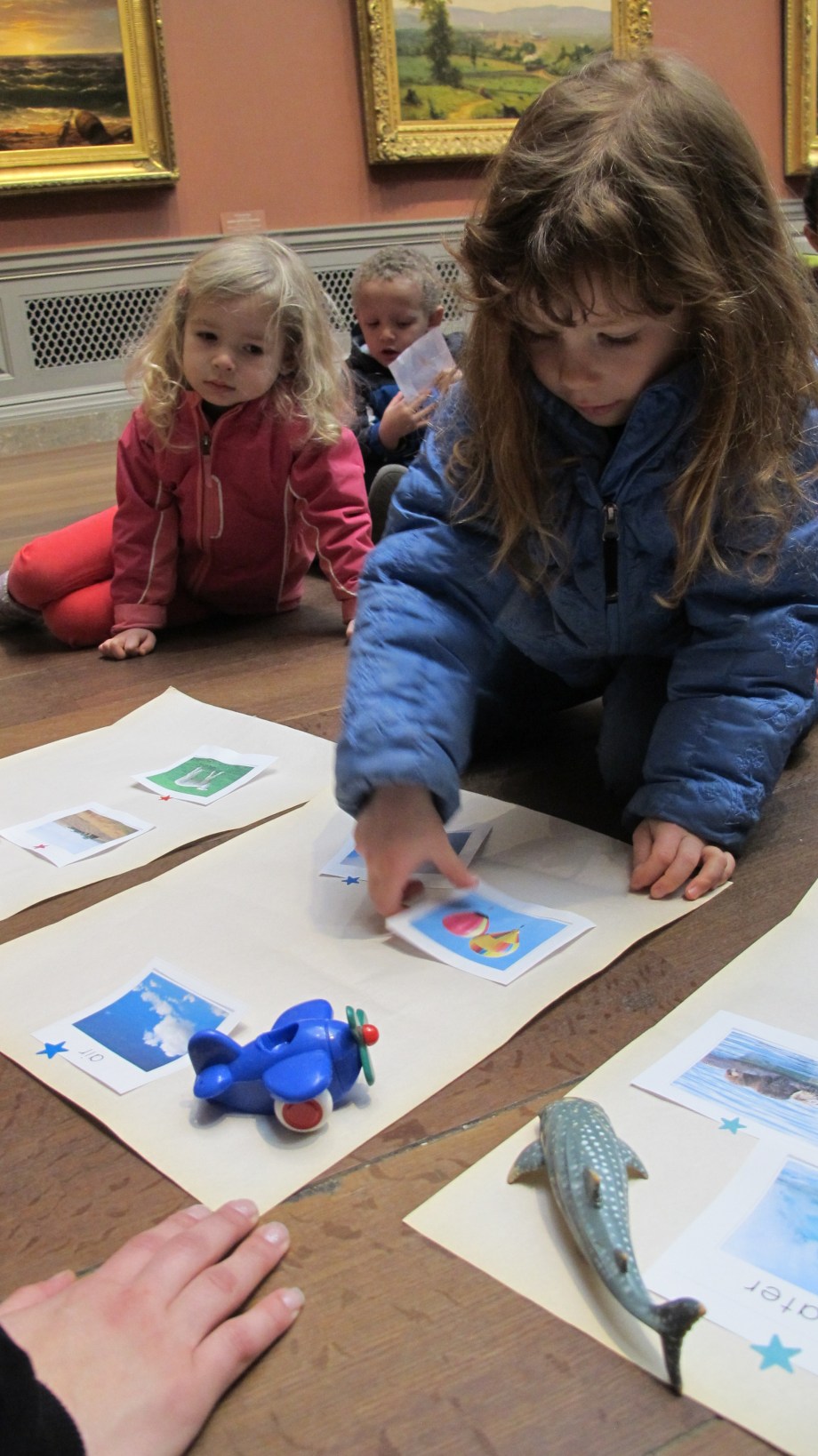 After carefully looking at the object or animal in their picture, Katie called each child up one by one to stick their picture on the environment where it belongs.
  Once everyone had had a turn the class had three pages full of objects and animals that are found in the water, air or on land.
 After completing their sorting game, the class began to head out of the gallery, however they stopped when they spotted more landscape paintings by Thomas Cole, and identified elements of the land, water and air.
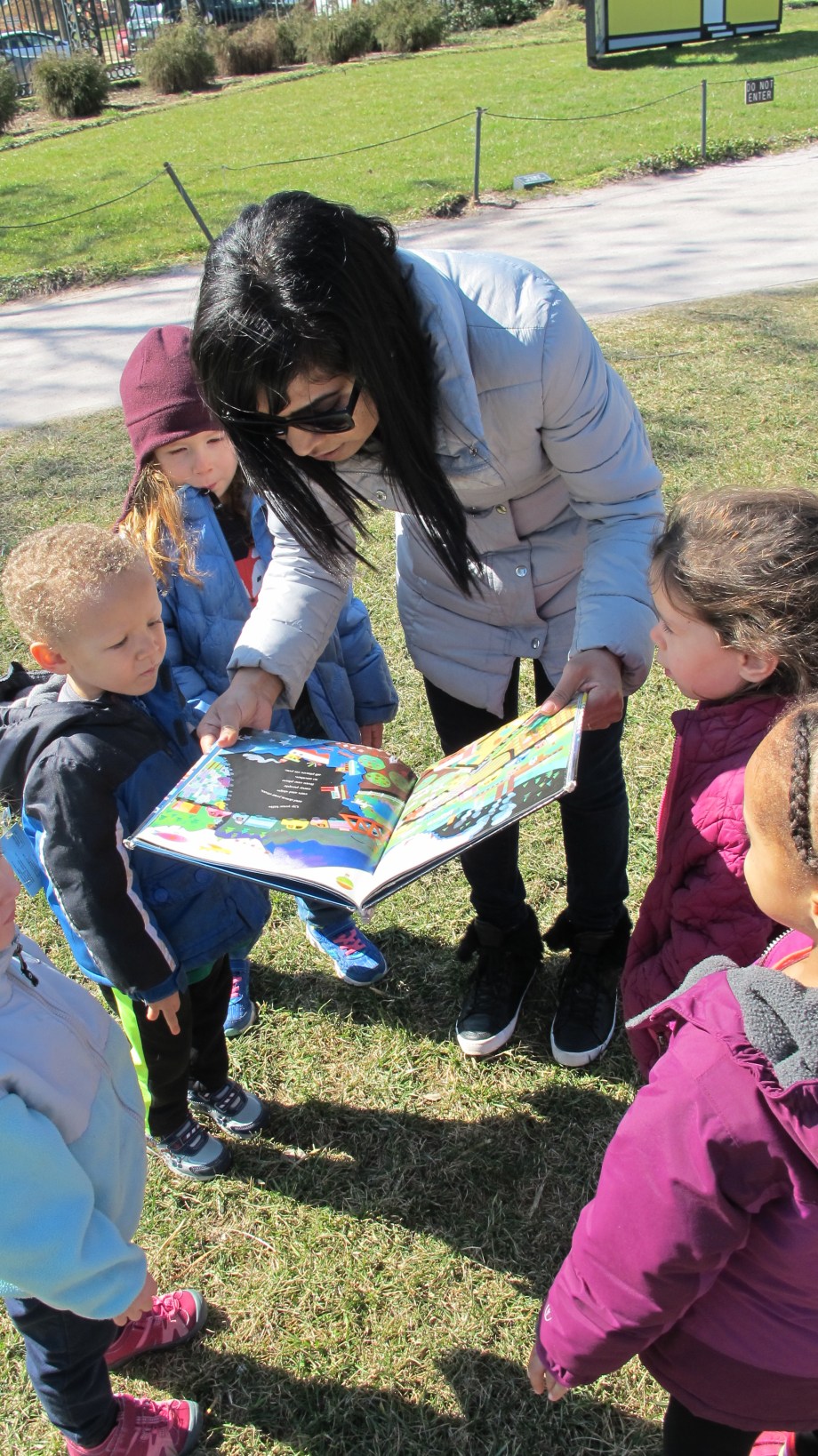
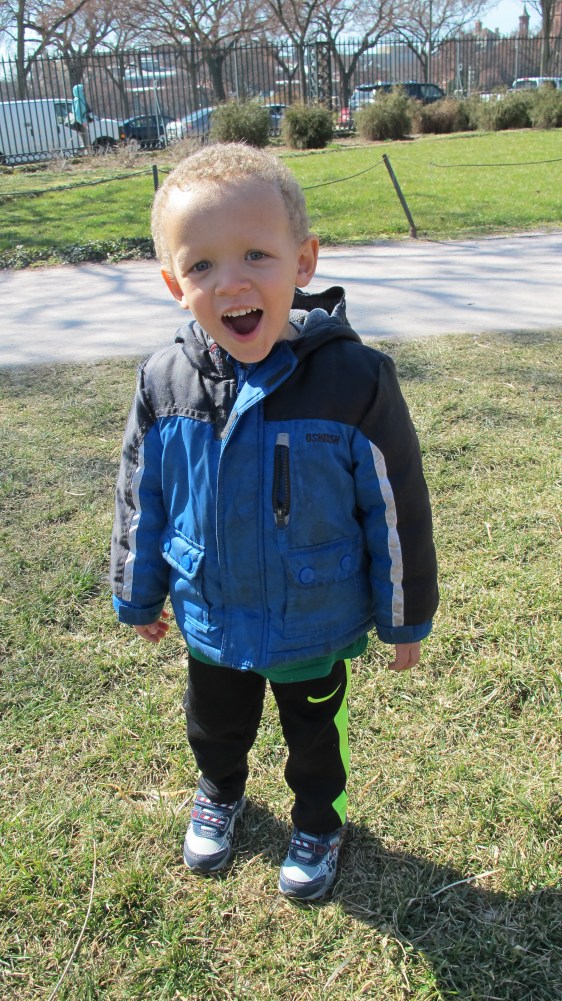
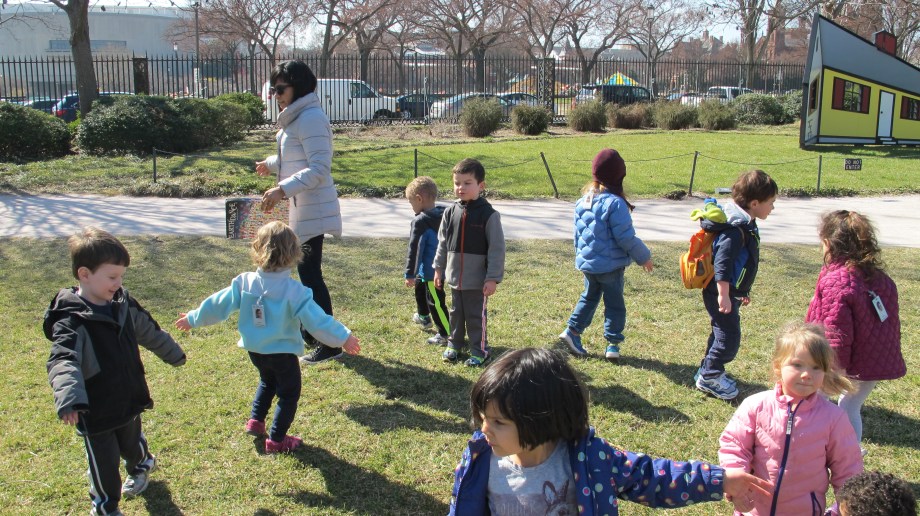 The children spread their hands out wide and spun around like Earth.










 What were your topics of exploration? Why did you choose them? Where did they come from?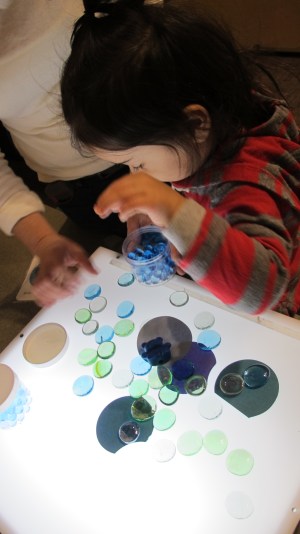
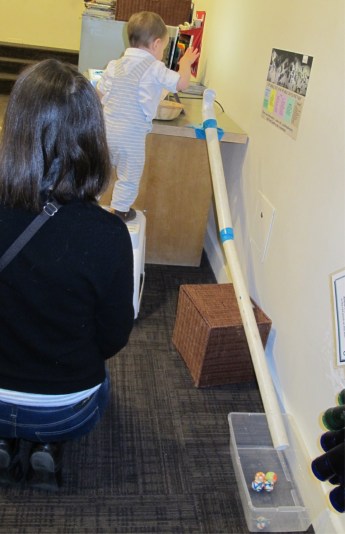 Children had lots of choices to explore. A light table lit up different water colored objects including glass marbles and water beads. Children rolled bouncy balls down a PVC pipe to illustrate how water runs down a mountain.
 They also experimented with this concept by pouring water down empty water bottles, and watching as the water zoomed back and forth as it slid down into a pan.
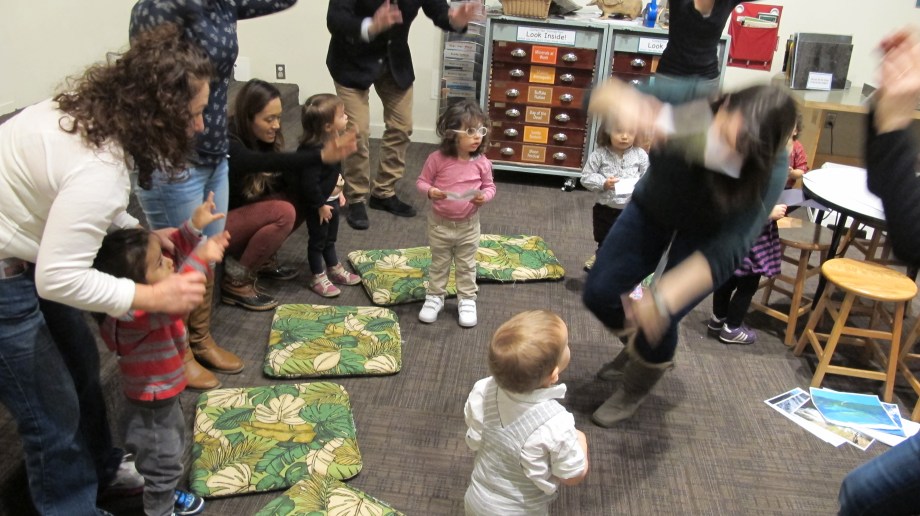 After learning centers, Allison called the group together for their morning meeting. First, she reinforced the concept that rivers flow down a mountain from high to low by demonstrating with her body. The students and their caregivers jumped in and also moved their bodies from high to low, like a river traveling down a mountain.
 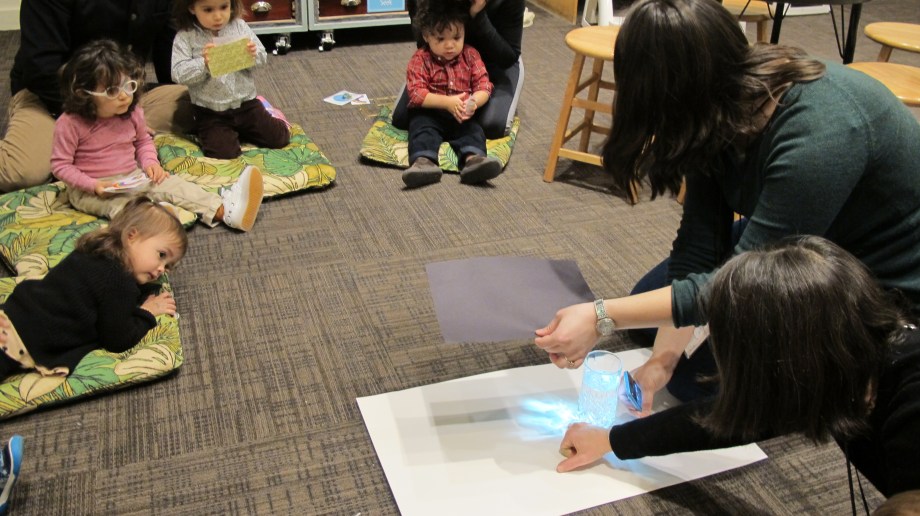 Then it was on to the focus of the day – waterfalls and rainbows. Allison explained that waterfalls are a part of rivers, and that sometimes you can see rainbows at waterfalls. Allison told the group about refraction, the interaction between water and light. She illustrated this by demonstrating what happens when light penetrates water- sometimes there’s a rainbow!
 Once in the museum, the class searched for waterfalls and rainbows, and found both in the painting The Great Horseshoe Fall, Niagra by Alvan Fisher. The group observed the painting and compared the rainbow in the painting to the one they were holding. They noticed that all the colors were present and sang a rainbow song.
  Allison used a felt sun to reinforce the concept that rainbows appear because of refraction; the sun is shining on the waterfall, which causes the rainbow.
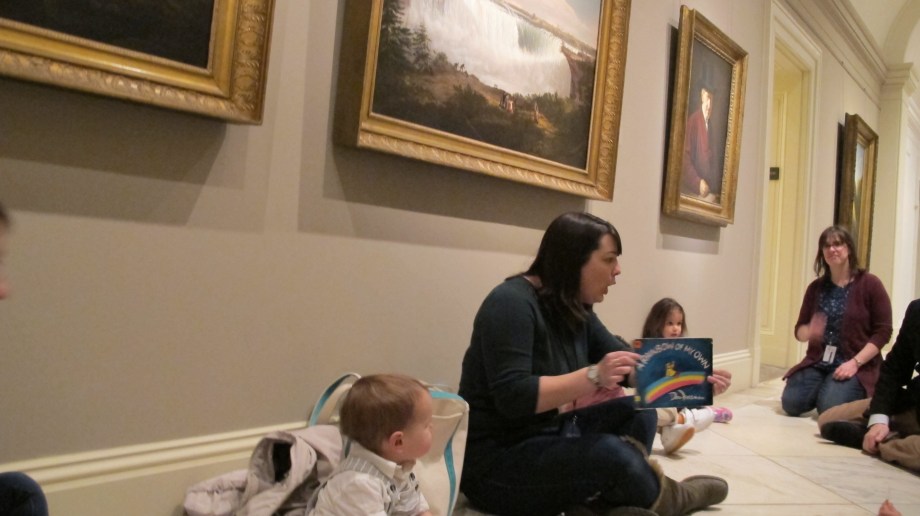 Next the class read
  Allison then reminded the class that bears catch fish in rivers and waterfalls, showing them a picture of a bear catching salmon in a waterfall.
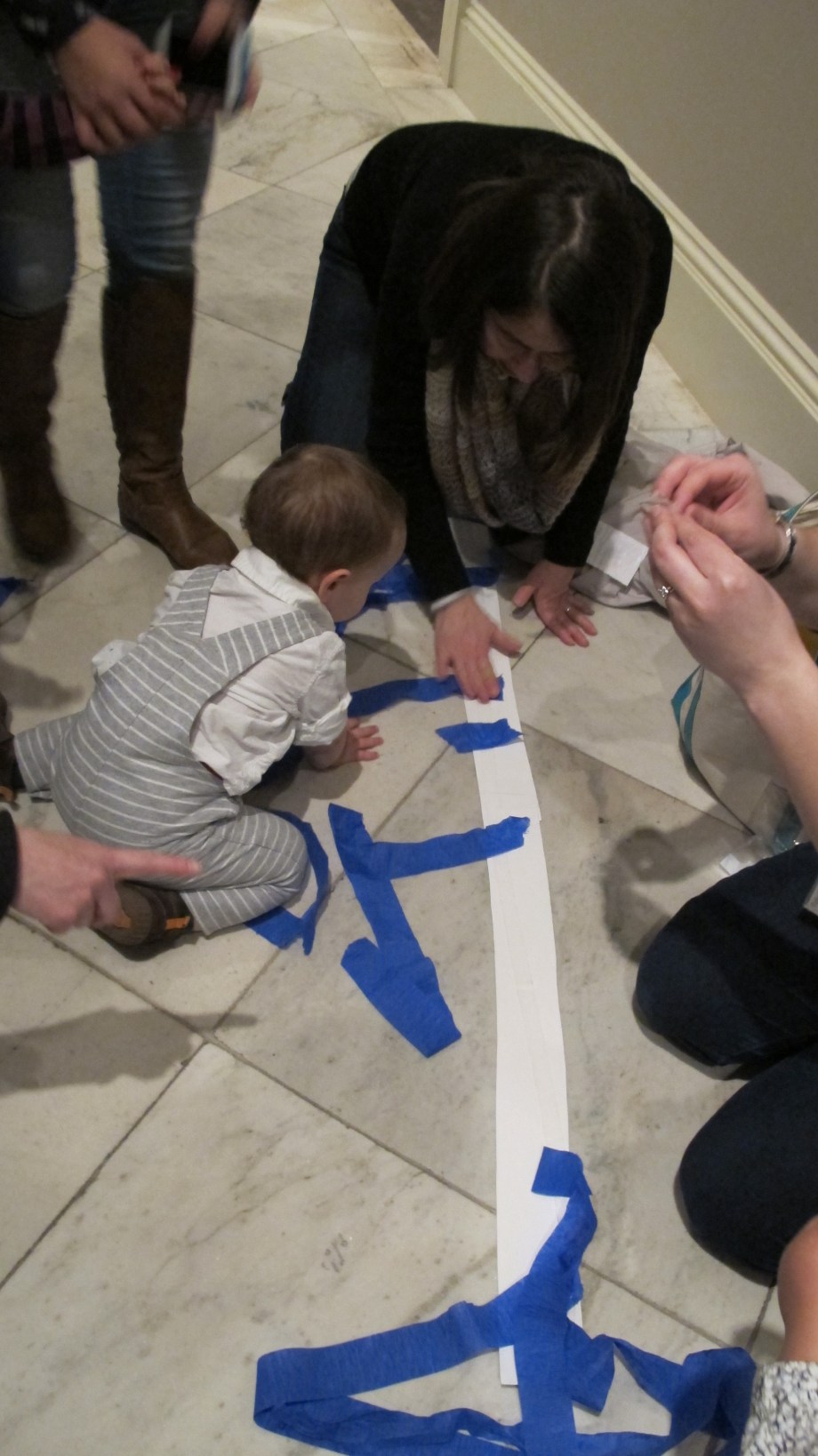 Then it was time to make their own waterfall by sticking blue crepe streamers to a long, narrow piece of poster board.
  When they were finished Allison held up the waterfall and shook it, making the crepe paper wiggle. The class made the whooshing sound of a waterfall.
  Then the group moved down to the Kogod Courtyard to play in their waterfall. They got into bear mode and jumped through the waterfall to go fishing.
 The kids put on a paper bear paw and used the velcro to capture fish. Then they brought the fish back through the waterfall to the appropriate color bucket.
 Lastly, the group loved playing in the water feature in the courtyard of museum. They experimented walking over the flowing water, and feeling it run over their fingers.
 seecstories.com