Celebrate NAEYC’s 2016 Week of the Young Child™! Guest Post by Rhian Evans Allvin

NAECY1

A special guest post by Rhian Evans Allvin, Executive Director of the National Education for the Education of Young Children

Every year, NAEYC’s Week of the Young Child™ brings together thousands of young children, educators, and families from around the globe in celebration of our youngest learners. WOYC™ is a wonderful opportunity to celebrate the joy and play that are at the heart of early learning.

During this year’s Week of the Young Child™, April 10—16,  parents and teachers are encouraged to explore developmentally-appropriate activities based around five fun daily themes: Music Monday, Taco Tuesday, Work Together Wednesday, Artsy Thursday, and Family Friday. These suggested themes offer activity ideas supporting early math, language, literacy, and more, while promoting social-emotional development with diverse hands-on learning opportunities.

For this year’s WOYC™, NAEYC invites everyone to get involved in the celebration!  Make up a fun dance routine to our 2016 featured song, “One Love” as performed by Aaron Nigel Smith and the One World Chorus on Music Monday, or invite children to help measure ingredients on Taco Tuesday. Work Together to explore the world around you on Wednesday, create imaginative works of art on Artsy Thursday, and celebrate your unique family on Family Friday!

The Week of the Young Child™ is also a great opportunity to thank early educators for their hard work and dedication to the early learning profession. Research tells us that US voters overwhelmingly believe that early educators play an essential role within our communities—nearly on par with firefighters and nurses. These same voters recognize that early childhood educators have complex and demanding jobs and responsibilities, and that our national policies do not reflect the vast amount of developmental science supporting the importance of high-quality early learning experiences during a child’s most formative years. No matter how you celebrate WOYC™ this year, be sure to thank the early educators in your life, and the family members who help encourage learning at home.

As an NAEYC-accredited program, the Smithsonian Early Enrichment Center has proven to maintain high-quality early learning standards and offers quality learning experiences to its students and community. NAEYC is excited to see the fun activities and learning experiences that will be taking place this year! Teachers and families are encouraged to share their WOYC™-inspired activities by sharing photos, activity ideas, videos and more to NAEYC’s Facebook or Twitter using #woyc16, or sending directly to woyc@naeyc.org. We can’t wait to see how you celebrate the early learners in your life!

NAECY2To learn more about NAEYC’s Week of the Young Child™ visit naeyc.org/woyc. To get involved in the conversation about supporting and elevating the early education profession through our nation’s public policy, join NAEYC’s Early Ed for President movement at earlyedforpresident.org.

Teacher Feature: Four Year Old Classroom Explores Egyptian Tombs

It’s Teacher Feature Thursday!

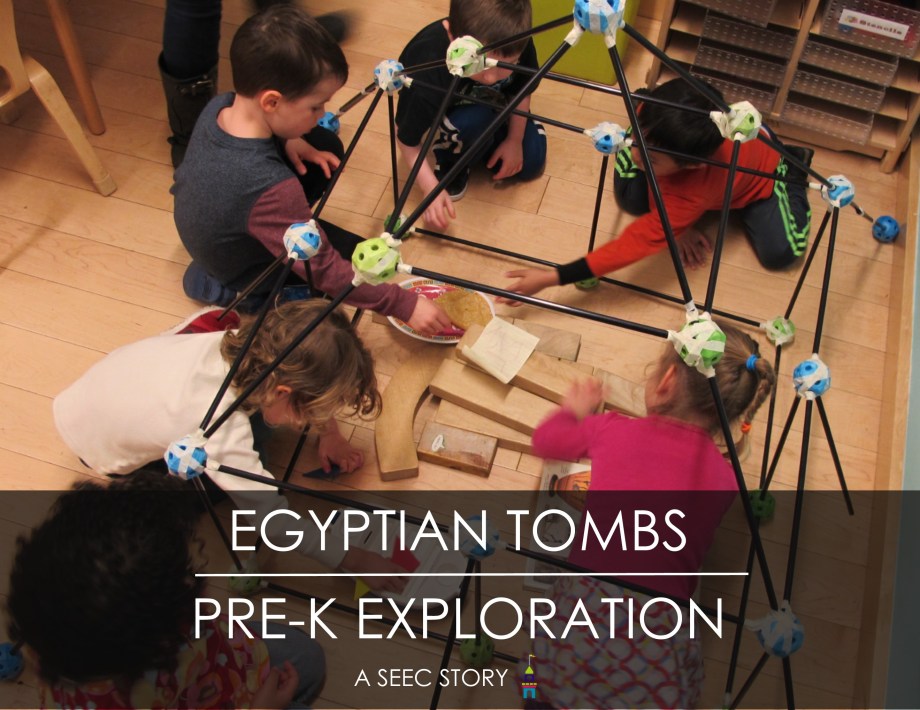
This week we are featuring Will Kuehnle and Jessie Miller in the four year old Honey Bear classroom.  Our teachers were inspired by the children’s interest in Ancient Egypt and mummies during their unit on digging entitled, “Can You Dig It?”  I joined their class for a lesson led by Will on Egyptian tombs.  Below you will find a reflection from Will and Jessie, and images from the lesson.
Cover2

What were your topics of exploration? Why did you choose them? Where did they come from?

Our topic for the majority of the first half of the year from the end of October through the end of January was digging and the underground world. The concept was sparked by the children’s interest in using shovels to dig holes on the playground. While children dug outside they would find rocks, bugs and roots that sparked questions about what was going on underneath their feet. We knew that there was a whole world underground that could be dug up, so we created a thematic web to corral all of our ideas. The subject of Ancient Egypt came to light after learning about archaeology. Our original thematic web included many concepts and we hoped that we would eventually get to archaeology, but with an emergent curriculum you are always on your toes for shifts in the children’s interest, so we were fully aware that our roadway of topics leading up to archaeology could easily shift course in an entirely different direction.

When we started back in October with our, “Can You Dig It?” unit we began with gardens and digging to plant seeds to grow. Continuing our exploration through such themes as animals that dig, underground construction, utilities, mining, buried pirate treasure, caves and plate tectonics, we were excited to see strong interest in the subjects presented. After winter break we knew the children would love to hear about how digging underground can give you clues about the past because of the children’s questions surrounding old artifacts spotted in museums and an interest all preschool students seem to have: dinosaurs and fossils. When we returned in January we explored the differences between archaeology and paleontology before learning more detailed information about Ancient Egypt due to the children’s many questions about mummies. It was an exciting journey and by far the longest we have stayed under one subject umbrella, but it felt fresh the whole time because of the various ways we approached the “Can You Dig It?” theme.

Why and how did you choose the visit?

We chose to see the photographic collage Oum el Dounia by Lara Baladi, which is on display in the lobby of the Arthur M. Sackler Gallery of Art until June 5, 2016 as part of the museum’s Perspectives series. We actually stumbled upon the piece during one of our first archaeology lessons. On that day, we were heading to the museum’s Feast Your Eyes: A Taste for Luxury in Ancient Iran exhibit to think about why archaeologists search for clues and what those clues can tell about the past. Our walk through the lobby of the museum that morning took us right by Lara Baladi’s tapestry. Our agenda that day was put on pause for a moment so that the whole group could soak up the work of art for a moment. The objects size and scope made it an approachable work of art for children. One of the main focal points on the tapestry was the image of a sphinx in a dessert looking landscape, which had many of the children wondering if the collage was Egypt. We acted just as curious as the children and filed away the piece as an object to visit again with more time to observe and intentionally dissect what we discovered. When our archaeology exploration landed on Ancient Egypt as a point of interest, we knew we had to go back to the piece that had planted a seed of curiosity in the subject.

What were your learning objectives? (What did you want your children to take away from the lesson?)

The main objectives for this lesson were to connect the mummy and Ancient Egypt information we had been learning about with the creation of our own pyramid and tomb.  We also wanted to provide a fun and engaging experience driven by the children and their desire to do something with the knowledge they had been gaining through our exploration. Specifically, we wanted the children to learn the motives (tomb robbers) of the evolution of tombs in Ancient Egypt, from mastabas to the Valley of the Kings. We try to weave many areas of developmental growth into all our lessons, and this particular lesson provided a great platform. New vocabulary was spoken consistently throughout the morning, books were used as a tool to quench curiosity, whimsical figurines in the tapestry were counted, different types of tombs were categorized, reflective opportunities surfaced when the children thought about what a person might need in the after life, motor skills and creativity were utilized in adorning the inside of the pyramid with paint and hieroglyphs. The kids had a blast with the lesson, and we as teachers we were glad that their enjoyment coincided with development of skills we feel are important to their growth.

What was most successful about your lesson?  How did the lesson reach your objectives to expand the topic?  What was successful in terms of your preparation and logistics?

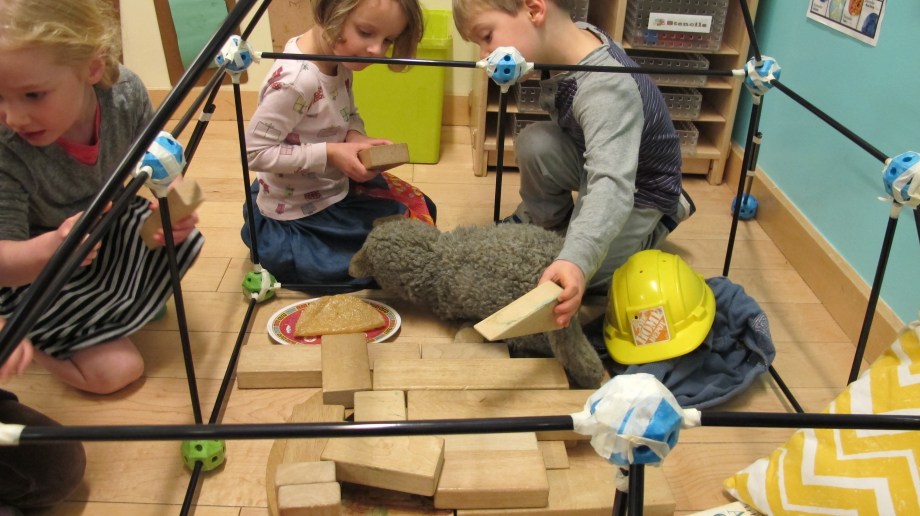
The most successful part of our lesson was how the children took the lead in creating the pyramid. Their excitement and creativity in finding objects to contribute to the tomb was terrific to watch. As preparation in the days leading up to this lesson the class had wrapped our mummy (which was a plastic human body with removable parts) after dissecting vital organs for canopic jars the children decorated. The class then made a sarcophagus for the mummy a different day when we viewed an actual sarcophagus at the National Museum of Natural History, and an actual archaeologist gave us insight into how color was used in Ancient Egypt. The outside of the pyramid (which was made by using a construction fort by Discovery Kids found on Amazon) was decorated with paint and sand (plus a few sprinkles of glitter) prior to the lesson as well. All these objects were on display in the classroom and added to the curiosity and excitement building up to the creation of the tomb. Logistically, having all those materials made before the lesson made the creation of the tomb more streamlined. All that was left to do was collect items for the tomb to be included alongside the canopic jars and sarcophagus, and decorate the inside walls of the pyramid. By breaking the class into two smaller groups we were able to give each child a quality experience doing both tasks.

What could you have done differently to better achieve your objectives and expand the topic?  What was challenging regarding logistics?  What recommendations would you have for another teacher trying out this lesson?

Reflecting back on the lesson we thought one thing that could have been done differently was the timing of the lesson. We felt that we could have split the lesson into two different days: one day to go to the museum to discuss what a tomb is and the different types of tombs, and another day to focus on creating the tomb in the classroom. We felt painted into a corner with the timing of the lesson due to an unrelated activity we were obligated to do later in the week and did not want to wait until the following week to create the tomb.

Thinking back on it, we probably could have delayed the creation of the tomb and spent more time exploring the evolution of tombs in Ancient Egypt from mastabas to the Valley of the Kings because the class was highly interested in this topic.  This was so fascinating to the children because one of the main reasons pyramids went out of fashion was due to the their clear invitation to tomb robbers of possible treasure inside (which brought back many fantastic memories of our time exploring pirates and buried treasure earlier in the “Can You Dig It?” unit). A simple follow up activity such as a journal entry prompting the children to choose a type of tomb they wanted to draw and items they wanted to put inside the tomb could have been a great wrap up after the museum visit, with the actual pyramid creation the next day or week.

One thing that challenges us in teaching is whittling down a complex topic to the main points we want to get across in a developmentally appropriate way. This is a challenge because we must balance our desire to dive into a topic of interest with the desire to keep the children’s interest. With this particular lesson on tombs, we probably could have kept the obvious high level of interest and excitement going for little bit longer, but we as teachers were also excited to shift themes after a successful three months of digging.

One tangible recommendation we would give teachers thinking about doing this lesson would be to look into acquiring a large image of the object you are going to view. Our museum education team was able to print one for us using Microsoft Publisher and it made the interaction with the object mush more meaningful because although the children cannot touch the real art, they could touch the print out and interact with it (such as adding different types of tombs to the landscape). The print out also has the added benefit of bringing a museum like experience into any classroom, regardless of museum access. As luck would have it, it was raining the morning of our lesson and we thought of skipping the walk to the museum, which would have made the print out a vital component for the lesson if we had stayed inside the four walls of our classroom.

Here are a few images from their lesson on Egyptian Tombs:
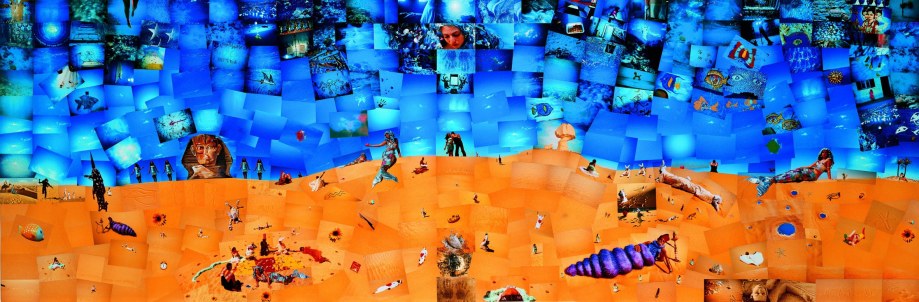
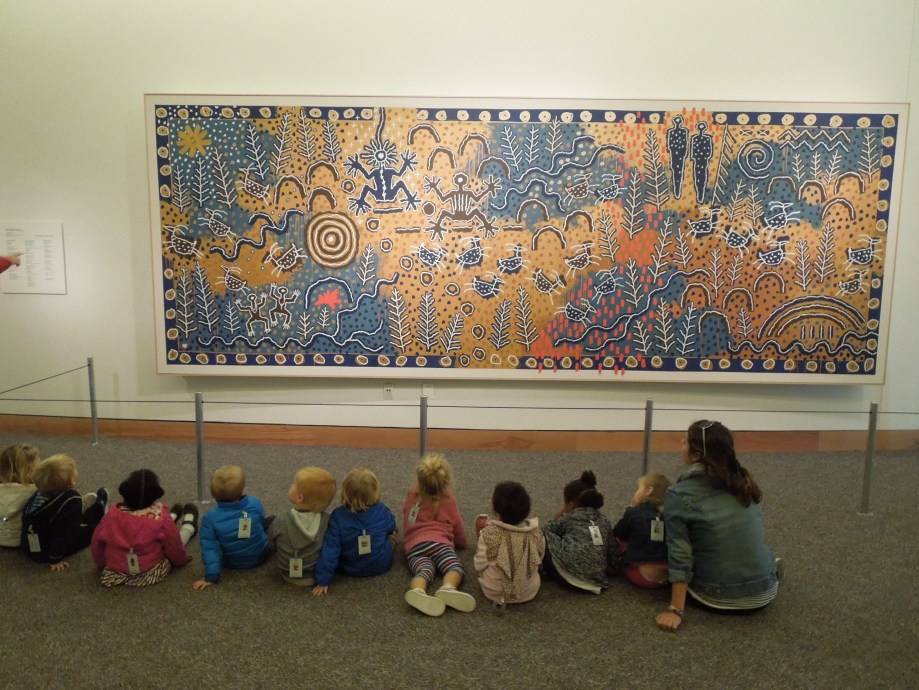
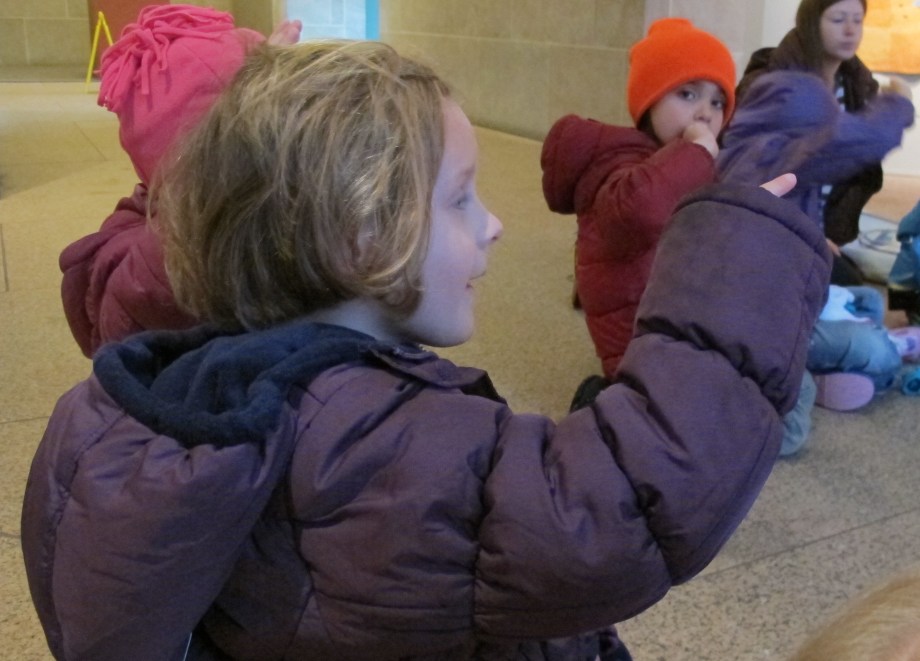
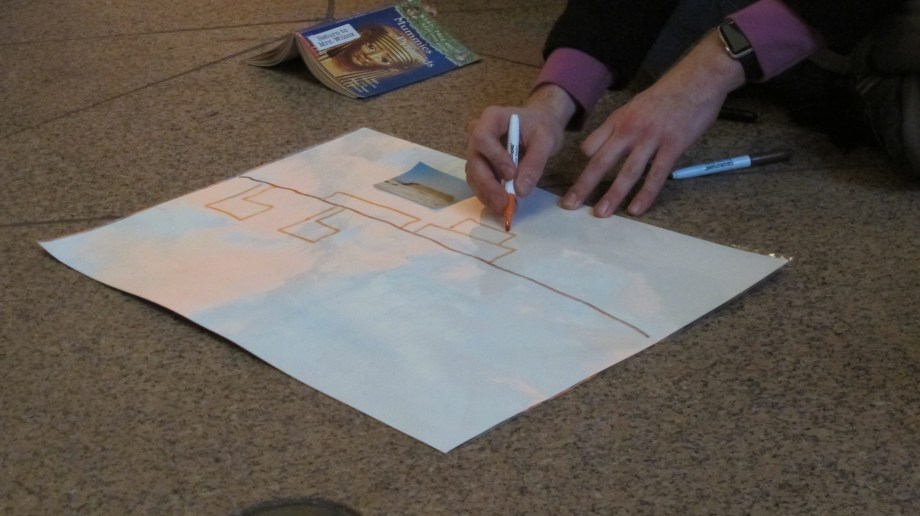
Lara-Baladi-Oum-el-Dounia%201MB%20(2)Will began the lesson by heading straight to the Arthur M. Sackler Gallery to see Lara Baladi’s Oum el Douna (The Mother of the World) as part of the museum’s Perspective series (Photo courtesy of the Arthur M. Sackler Gallery.) This large piece is located in the far end of the gallery lobby, which provided a large, quiet area for the class to sit in a semicircle and become absorbed in Oum el Douna. IMG_0779.JPGWill asked the children what they noticed about the piece.  Oum el Douna is so large, with so many aspects that the children had many observations to share.  Several children spotted the Sphinx immediately, and many others mentioned the two bright colors, and how they believed this represented the sandy desert and blue sky or water (“maybe it’s the Nile River!” said one child). IMG_0785The class decided that the piece was most likely depicting Egypt due to the Sphinx and the desert.  Will asked the class what might be missing from the piece if it was Egypt.  Many students said, “pyramids!”, and when asked what pyramids are they said, “tombs”.  To learn more about the evolution of tombs, Will read an excerpt from Mummies and Pyramids by Will and Mary Pope Osbourne.  To demonstrate this information further, Will also drew a picture to illustrate the evolution of tombs from mastabas to the Valley of the Kings.IMG_0790Will explained that tombs in pyramids became targets for tomb robbers due to their size and promise of treasure, so Pharaohs began building their tombs underground in the Valley of the Kings to keep them secret and protected from tomb robbers. IMG_0794
After learning more about pyramids and tombs, the class worked together to add pictures of pyramids, mastabas, and the Valley of the Kings on a print out of Oum el Douna that Will brought with the class. IMG_0815After all the discussion about tombs, the class went back to school and began readying a tomb for their mummy, Claudia, who they had prepared earlier in the week.  The class split into two groups- one with Will to decorate the tomb walls, and the other with Jessie to gather items to go inside the tomb.  Jessie explained that mummies laid in their tombs with anything they might need in the afterlife.  The group brainstormed what Claudia might need, and came up with lots of ideas including food and chapstick.IMG_0874
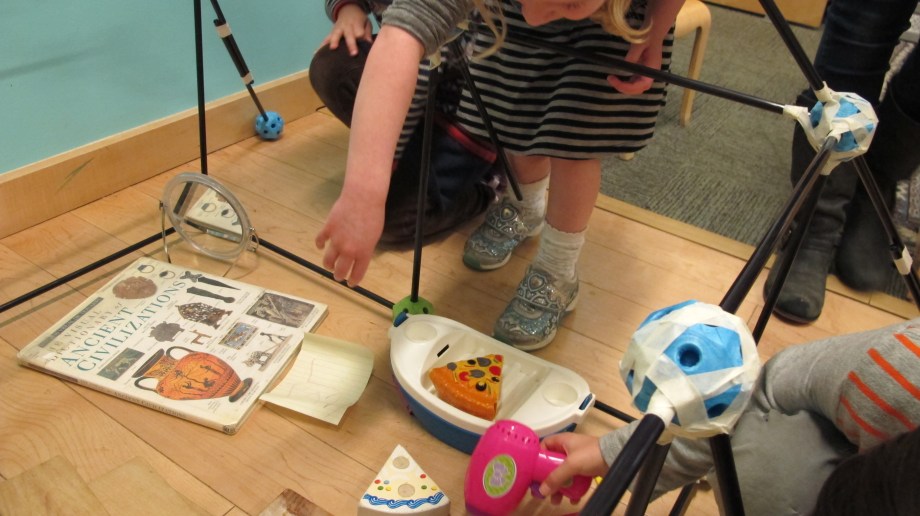
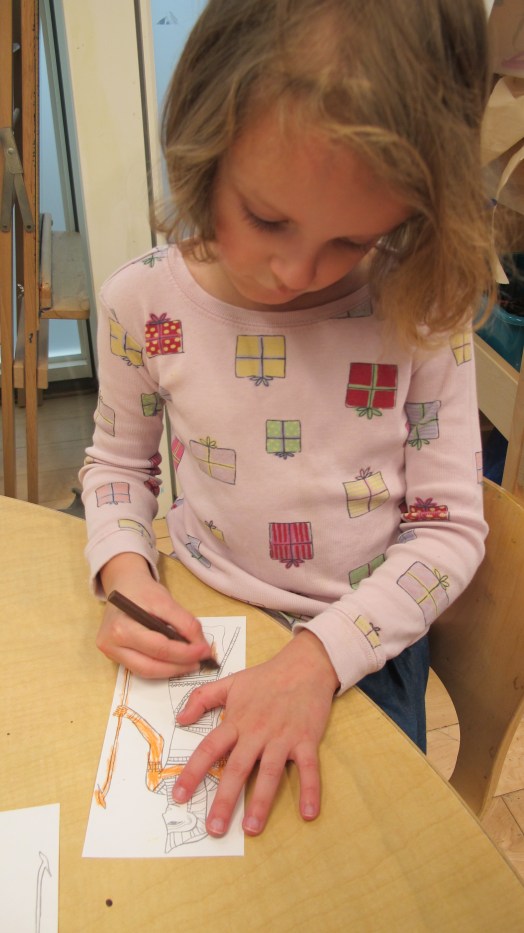
Jessie took the group around the school and the children each chose an object they thought Claudia could use in her next journey.  They placed them carefully in their tomb structure.  IMG_0877Once the objects were in place they built a podium for their sarcophagus.IMG_0816IMG_0865.JPGThen it was time for the groups to switch so they each had an opportunity to gather objects, and decorate the tomb walls.  Will helped the children color hieroglyphs, paint with glitter paint, and add hieroglyphic stamps to the inside of the pyramid walls so that Claudia’s tomb would be colorful.IMG_0890Finally, the class came back together to finish off the tomb walls by adding a dash of glitter to make it extra opulent, just like the Ancient Egypt Pharaohs would have wanted.IMG_0919.JPG   IMG_0920Lastly, the class laid Claudia in the tomb and touched her mouth for the “Opening of the Mouth Ceremony” so that Claudia could live on in the afterlife.  They wished her safe journey and put the final wall on their tomb.
Will and Jessie ended their “Can You Dig It?” unit with Ancient Egypt, and started exploring Storytelling and Theater. Check out our Facebook, Twitter, Instagram, and Pinterest for more ideas from their unit on “Can You Dig it?” and Ancient Egypt! See you in two weeks with our next Teacher Feature!

Teacher Feature: Infant Classroom Explores Music

It’s Teacher Feature Thursday!

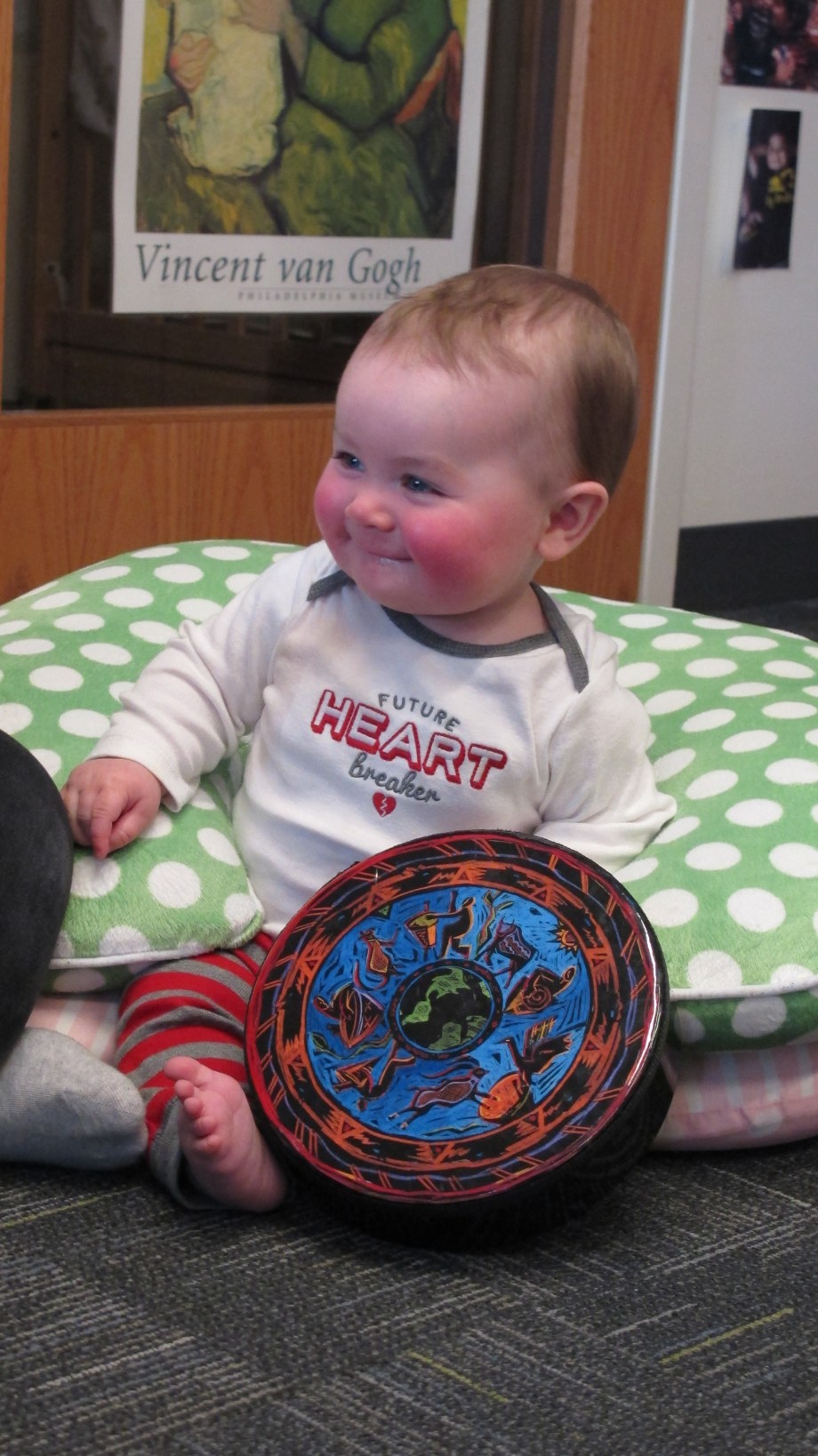
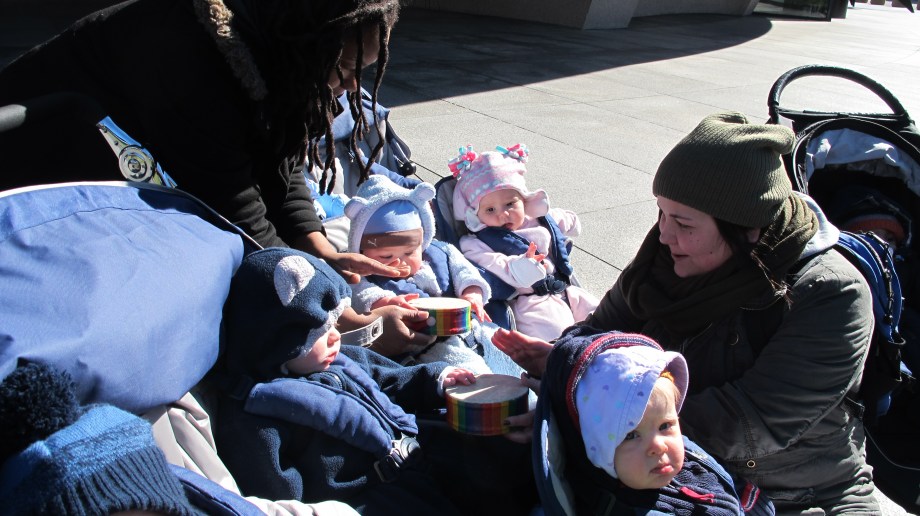
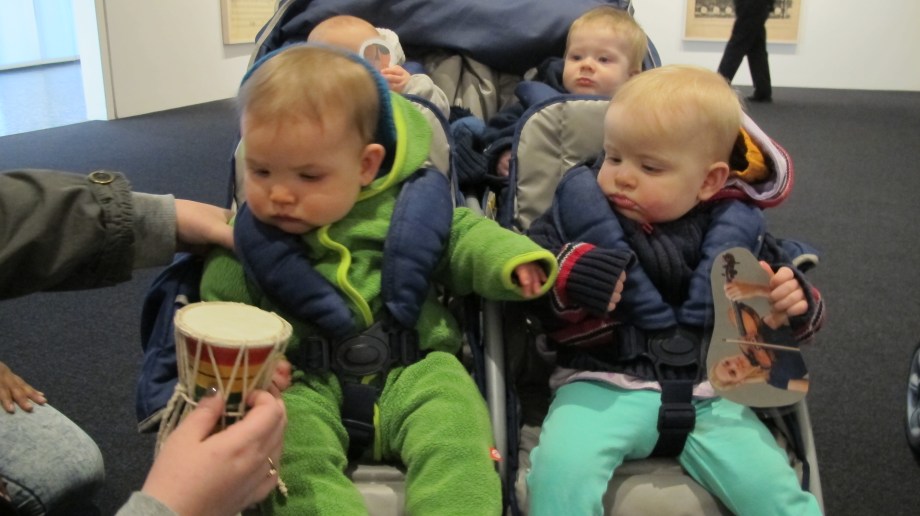
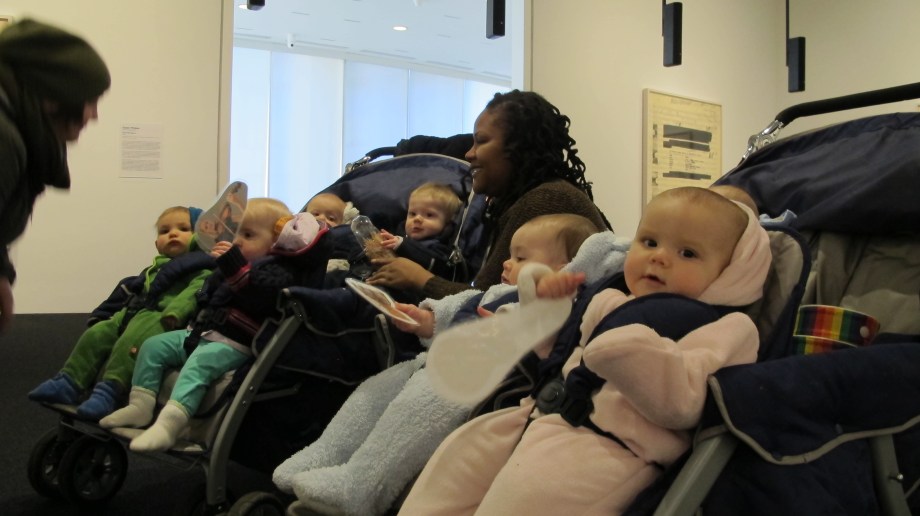
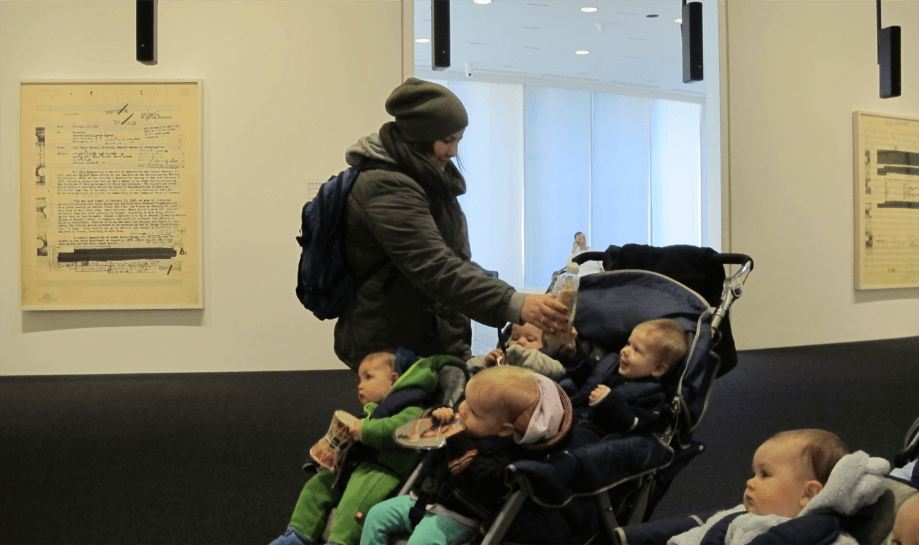
This week, we are featuring Katy Martins, Noel Ulmer, and Nessa Moghadam, who teach our youngest group of infants at SEEC, the Cottontails. These teachers recently explored music and musical instruments with their young learners, and thoughtfully selected activities and museum visits that were developmentally appropriate and suited the needs of their young age group. I joined the Cottontails on a visit to the Hirshhorn Museum, where they spent time in an auditory-based exhibit featuring quiet violin music. Below you will find a reflection from Katy, Noel, and Nessa, and some images from their lesson on music.

Vertical Cover_cottontail

What were your topics of exploration? Why did you choose them? Where did they come from?


We decided to explore music. The Cottontails love when we have music with Allison (SEEC’s music enrichment educator) and were really enjoying the different rattles we had around the room. Music was a great topic to explore because even with our various ages everyone would be able to participate.

Why and how did you choose the visit?


We chose our visit because we wanted to explore a new space. The Hirshhorn can be a great space because it is a very quiet, calm space and we really wanted them to be able to focus on the instrument and pictures we brought with us.

What were your learning objectives? (What did you want your children to take away from the lesson?)

We wanted them to get used to being in a new environment. We also wanted them to make a connection between the music that was playing in the exhibit and the sounds they were making with the instruments we brought along with us. With infants, sometimes all we want is for them to get used to longer visits without the buggies constantly moving.

What was most successful about your lesson? How did the lesson reach your objectives to expand the topic? What was successful in terms of your preparation and logistics?


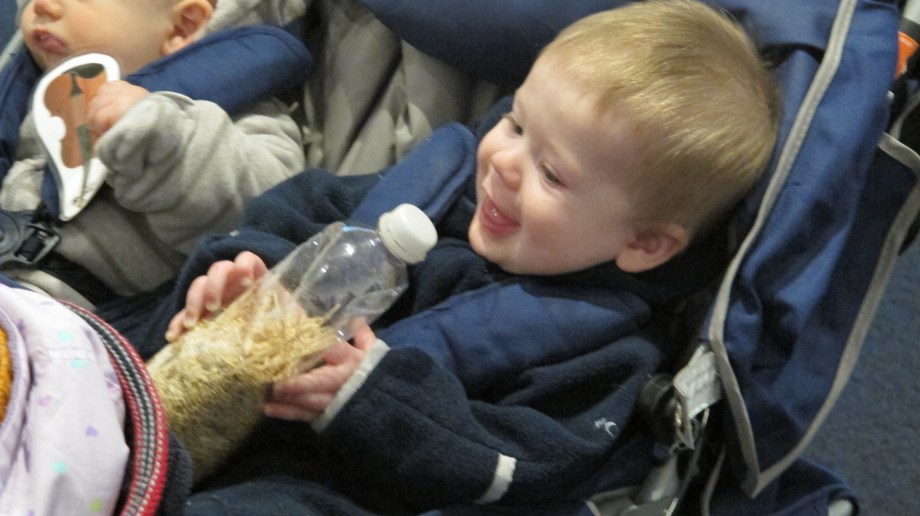
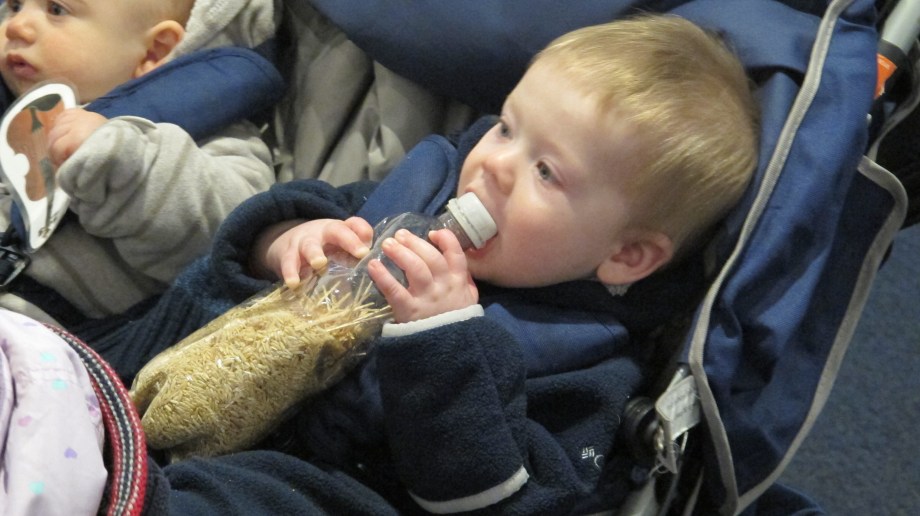
I think the instruments we brought were the most successful part of our lesson. It kept their interest while we were stopped at the exhibit and allowed them to make a connection between the music we were hearing and the music they made while playing the instruments. In preparing for our trip, we made sure that we had lots of options for holding their interest.

What could you have done differently to better achieve your objectives and expand the topic? What was challenging regarding logistics?  What recommendations would you have for another teacher trying out this lesson?

I wish we had more time to explore the space before we brought the kids. The Hirshhorn is a great place to go when they are a bit older because it is very visual and there is no space for them to come out of the buggies on a blanket like we do on most of our visits. We had a really great mellow visit but we know it’s not always so easy, and every visit could have different outcomes. I would recommend a teacher bring lots of manipulative objects and not be afraid to change plans. If we had gotten there and they all fell apart, we would have had to change our plan on the spot. Even though we didn’t need to, I wish we had just in case.

Here are a few photos from their unit on music:

IMG_1047

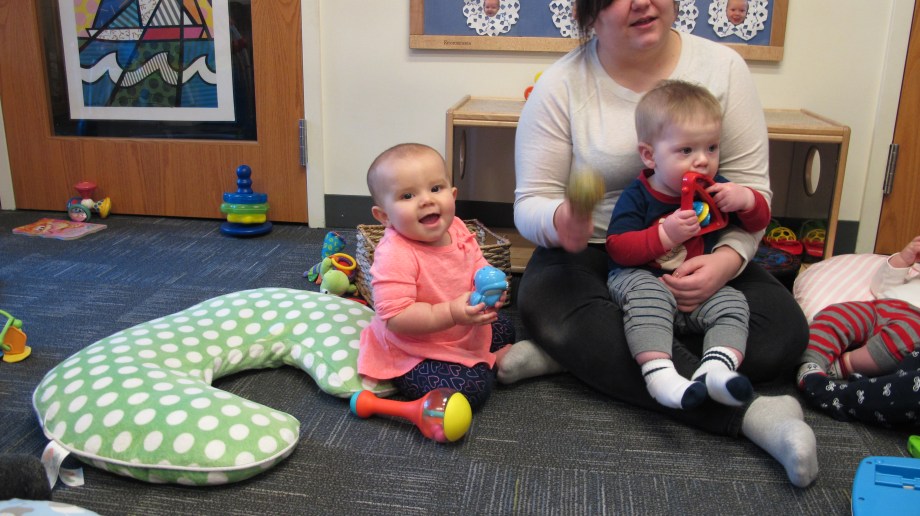
Before venturing out to a different museum to learn about musical instruments, the teachers made sure their students had multiple exposures to music in their own classroom to become familiar with the topic. The class spent plenty of time singing, clapping, and exploring different types of shakers and authentic musical instruments.

IMG_1091

IMG_1042

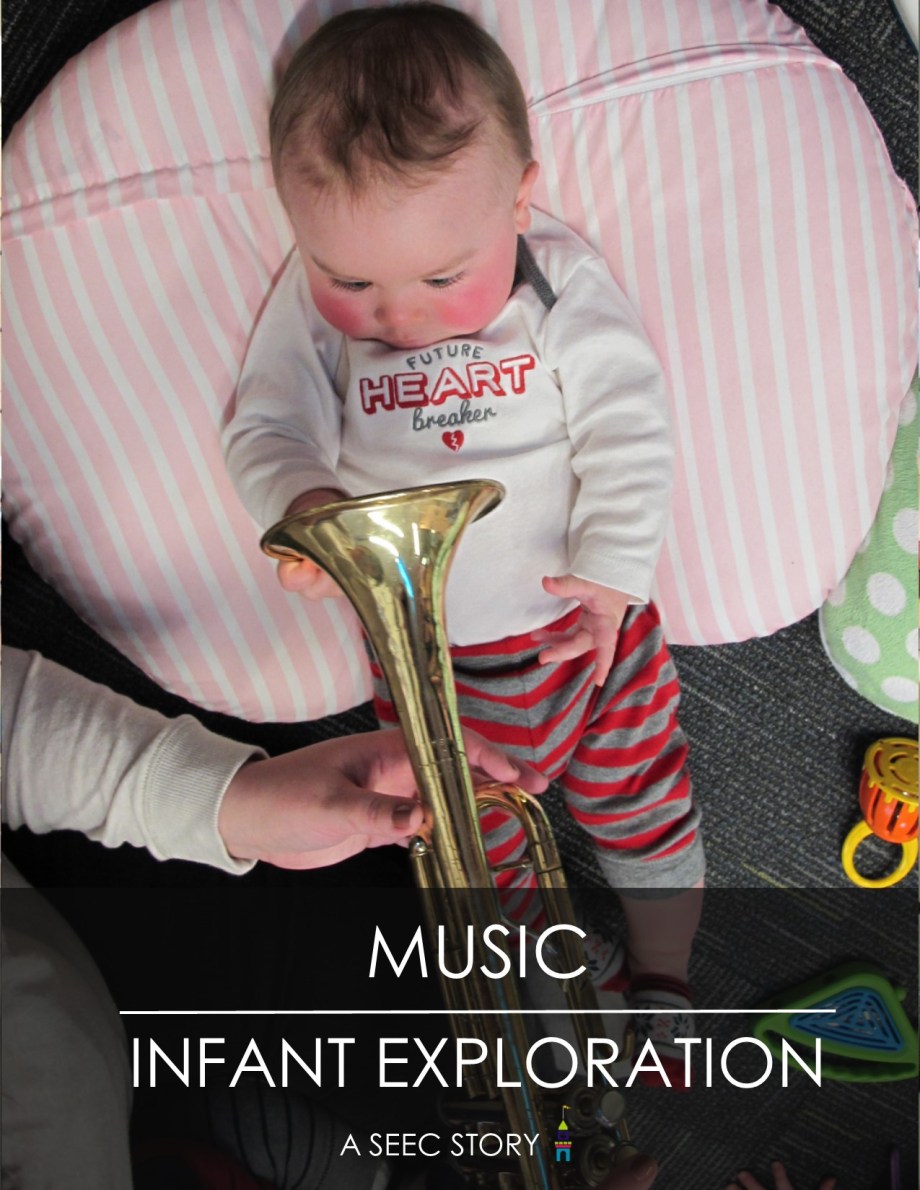
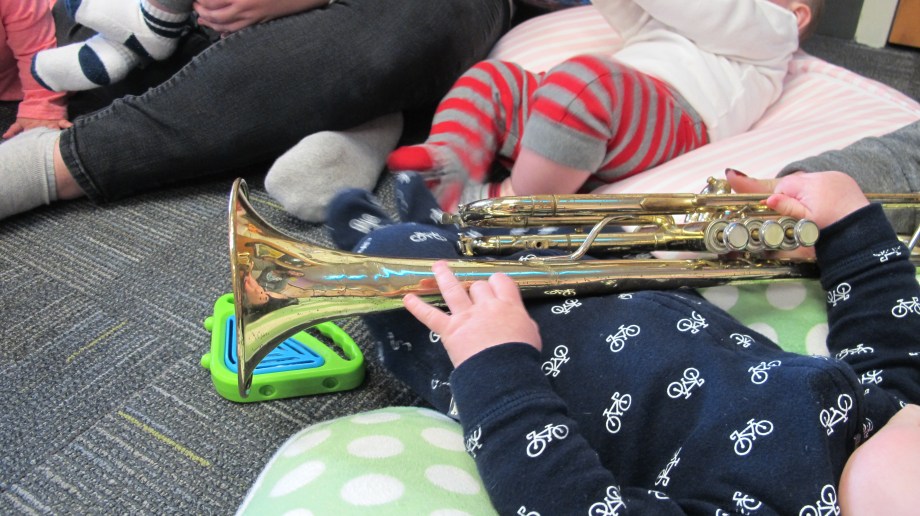
About a week before their Hirshhorn visit, the class had their first exposure to a real trumpet.

IMG_1067IMG_1070

Many children enjoyed pushing the trumpet’s buttons with their fingers and looking inside of the bell. Other children noticed that they could see their reflection in the shiny surface of the trumpet. One teacher played some loud notes on the trumpet as the children watched. Some were captivated by the noise, while others weren’t sure about the loud volume.

IMG_1072

The following week, after more exploration, the teachers and students bundled up and walked across the mall to the Hirshhorn Museum. Before entering, Nessa read the children a book about musical sounds, while Katy and Noel provided them with the tactile experience of touching instruments related to the story.

IMG_1112

The group then headed upstairs to view Susan Philipsz’ installation entitled Part File Score, a visual and auditory installation featuring sheet music and the sound of a violin playing.

IMG_1137IMG_1146IMG_1122

The large space and music provided a great environment for this class of young learners to spend some more time exploring instruments through touching, shaking, and mouthing. The violin music selected for this installation often starts and stops abruptly – garnering some priceless reactions from these infants.

Picture1IMG_1143IMG_1144

During this unit, the Cottontails experienced many types of musical sounds and were able to make cause-and-effect connections through hands on exploration with instruments. Check out our Facebook, Twitter, Instagram, and Pinterest for more ideas from their unit on music! See you in two weeks with our next Teacher Feature!

The Art Room

We recently featured our art educator, Carolyn Eby, in our bi-weekly Teacher Feature.  We thought it would be great to take another look at the work she is doing with all of our age groups. Check out some of her great ideas!

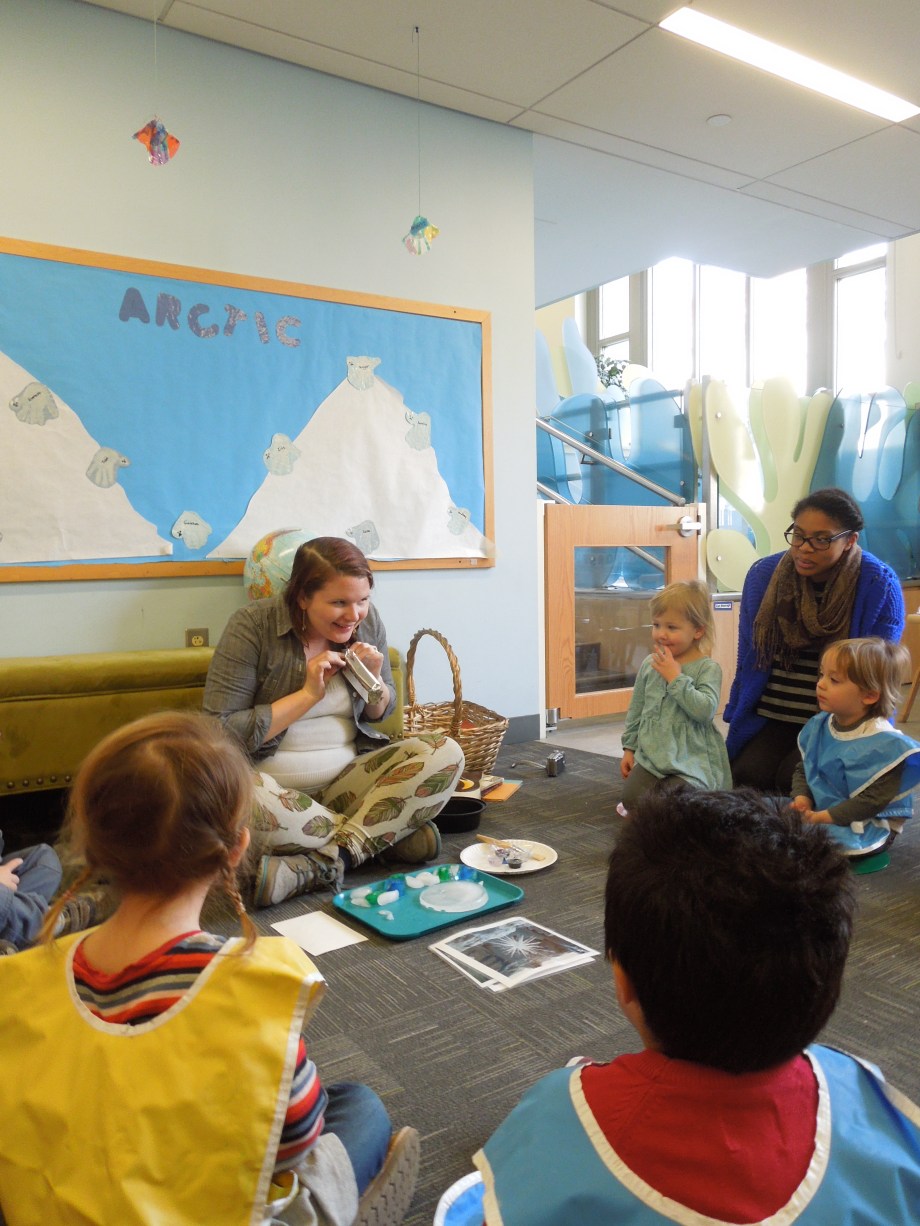
Infants Explore the Arctic

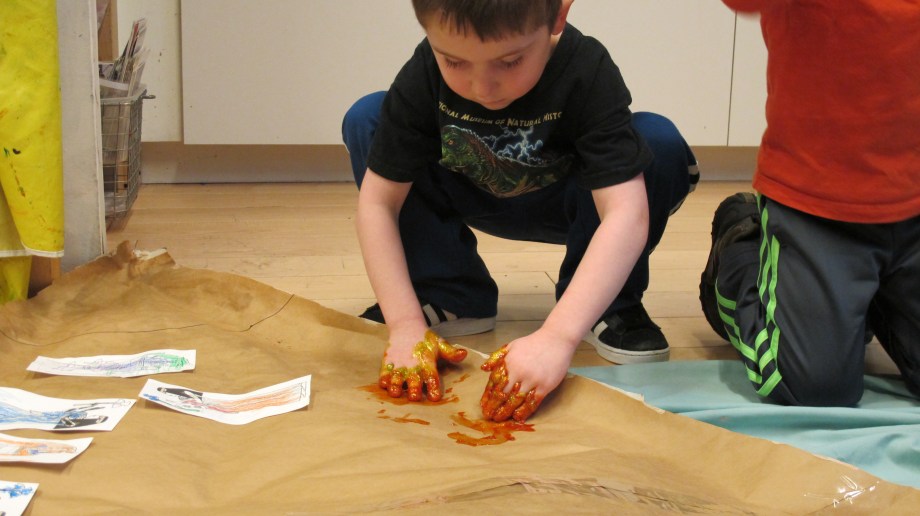
Carolyn used frozen paints and invited each child to mix them with other colors on their tables. After which, she took a mono print of their work. Children later ripped the mono print to create a collage – a fun activity that also helped them build important fine motor skills!

Toddlers Sand Paint

This sand paint, made with puffy paint and baking soda,  was delivered straight to the toddler class in dump trucks — the perfect accompaniment to their study of, you guessed it, trucks!

PreK-3 Color Mixing

Our preschool students join Carolyn every afternoon for art. Here we see them exploring color with the help of a light table. They also used eyedroppers and watercolors to explore what happened when the colors ran together. So focused!


PreK-4 Shapes

Like the three-year-olds, the fours join Carolyn every afternoon. Here she took a common  theme, shapes, and added depth. On the floor, the students are participating in a drawing game in which the dice indicate a color and a shape. Then, she had the class paint with sponges cut into specific shapes. Finally, she has them cutting shapes to match an artwork. They approached the concept in a variety of ways and thus, got a deeper understanding of it and had a lot of fun!

Teacher Feature: Toddler Classroom Explores Farm to Table

It’s Teacher Feature Thursday!

This week we are featuring Meg McDonald, Katie Heimsath, and Laura Bonilla in the toddler Dragonfly classroom. Their class was showing interest in animals and food so they decided to learn about how food comes from the farm to their table. I joined their class for a special visit with the head chef at the National Museum of American History. Below you will find a reflection from Meg, Katie, and Laura and images from their visit.

Dragonfly cover

What were your topics of exploration? Why did you choose them? Where did they come from?

Our unit was on food; we talked about different kinds of food and the different places that it came from. The children were familiar with lots of fruits and vegetables, so this was a great way to reinforce that knowledge while integrating and exploring the places we get our food from, like a farm, a store or a kitchen.

Why and how did you choose the visit?

We chose to visit the kitchens at American History to show an example of a type of kitchen. As an added bonus, we knew that Chef William would make a pizza for us! Our class loves pizza.


What were your learning objectives? (What did you want your children to take away from the lesson?)

Visiting the kitchens at the Museum of American History was a fantastic real life example of where we can get our food. Our class is familiar with their kitchens at home and the kitchen at our school, but we thought it would be an exciting experience to see a bigger kitchen with a walk-in refrigerator, a huge stove, and a pizza oven. They were able to see familiar objects in a different context and larger scale. We were also able to take a short peek at the chefs making our pizza. We hoped the children would walk away seeing a new example of where food comes from.


What was most successful about your lesson? How did the lesson reach your objectives to expand the topic? What was successful in terms of your preparation and logistics?

The walk-in refrigerator was a huge hit. The previous Monday we had hands on exploration of lots of vegetables which our Dragonflies immediately recognized in the refrigerator.

In terms of logistics and preparation, the visit went very smoothly. Our class was eager and excited and had a great time. Chef William was a great host and was very flexible and amenable to having such a young audience in the kitchens.

What could you have done differently to better achieve your objectives and expand the topic? What was challenging regarding logistics?  What recommendations would you have for another teacher trying out this lesson?

Our class absolutely loved seeing a new and exciting space. This may have been our downfall though, as the connection to our lunch may have been lost. There was just so much to see! In the future, we could have made the visit focus on something a little more specific, like the pizza oven.

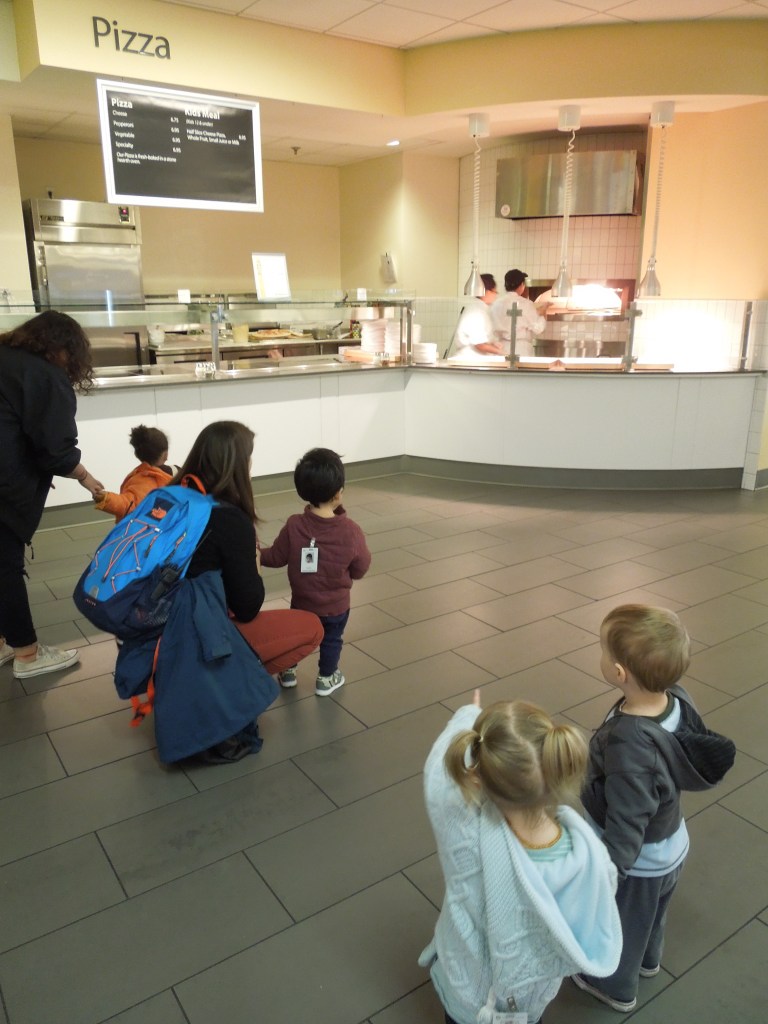
Here are a few images from their unit on farm to table:DSCN4198As a way to conclude their unit and talk about food once it reaches a kitchen, the team thought it would be great to meet with a chef and who better than the chef in charge of the food at the American History Museum. The head chef very graciously offered to show the group around their kitchen to see where they serve and prepare the food for all the people in the museum.
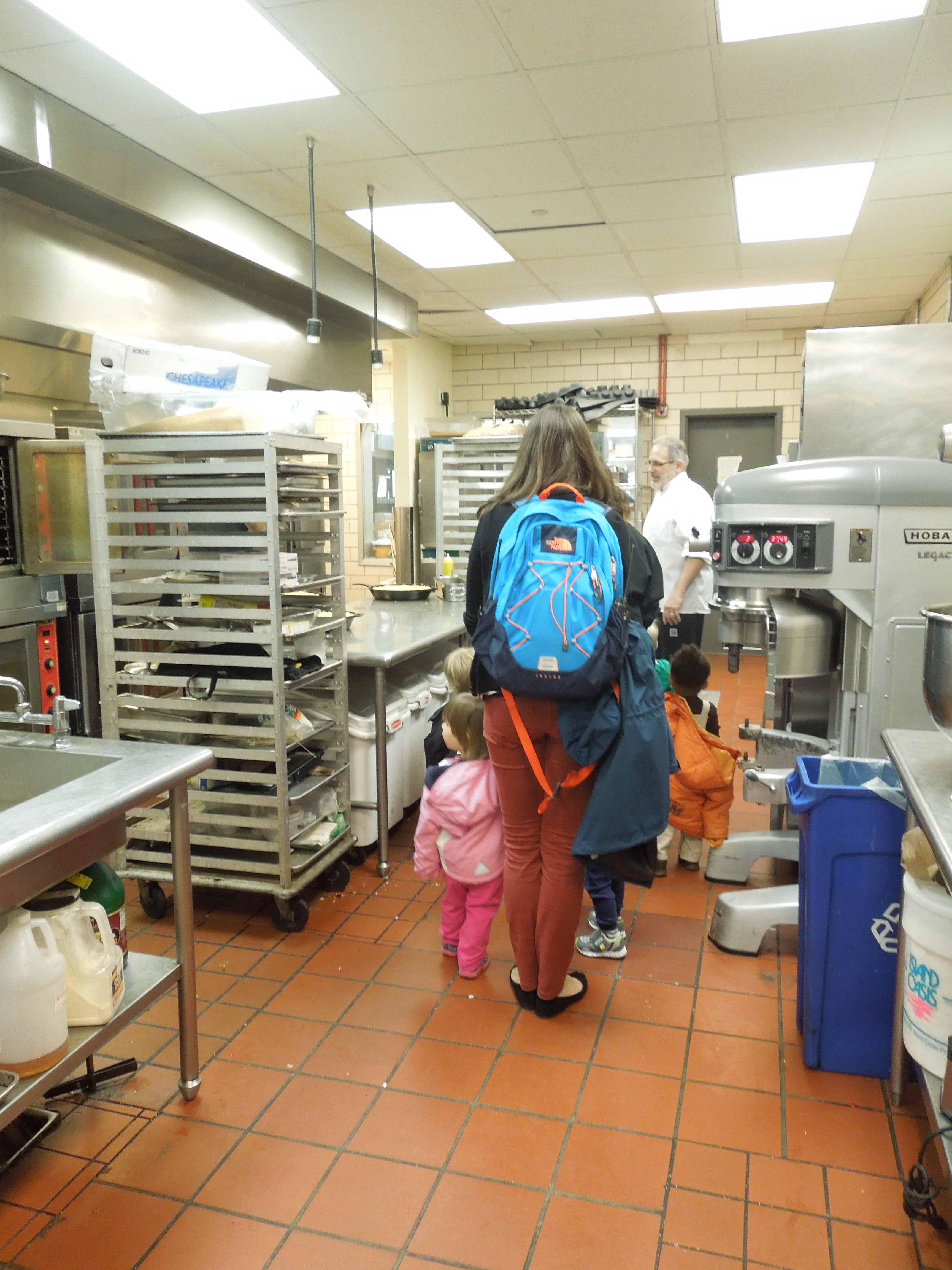
DSCN4207The chef began by showing the group the MANY ovens, huge stand mixers, and all the chefs that it takes to prepare the food.

DSCN4211The children loved seeing the huge ice machines. 
DSCN4216
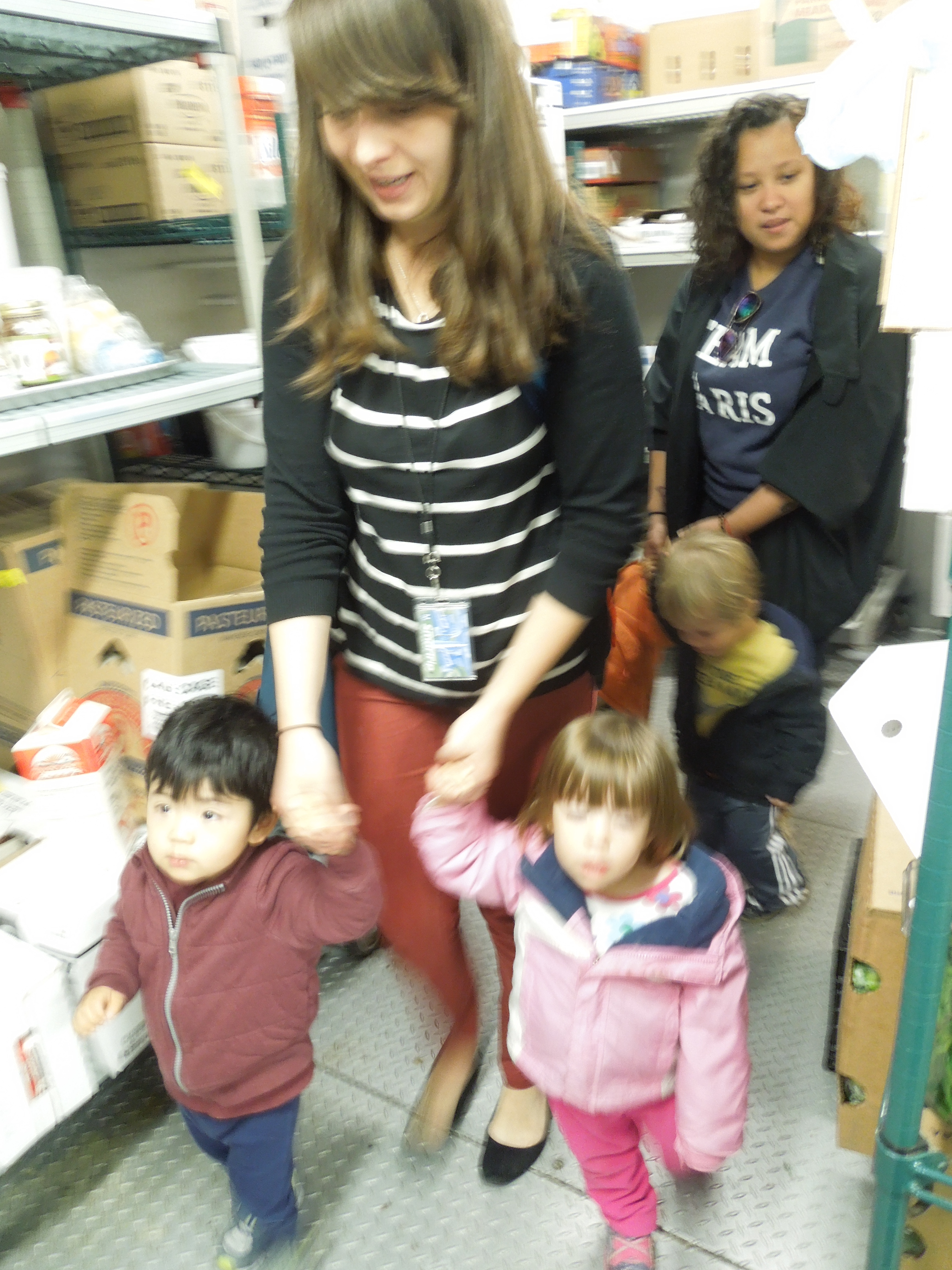
The chef explained to the children that they use a huge refrigerator to help store and keep the food fresh until they can prepare it to serve to the visitors.DSCN4222 DSCN4223After the tour and seeing the different ingredients needed to make a meal, the chef prepared some food for the children to sample. A perfect ending and a great way to connect the American History Museum’s great big kitchen to the familiar experience of eating pizza.
DSCN4237
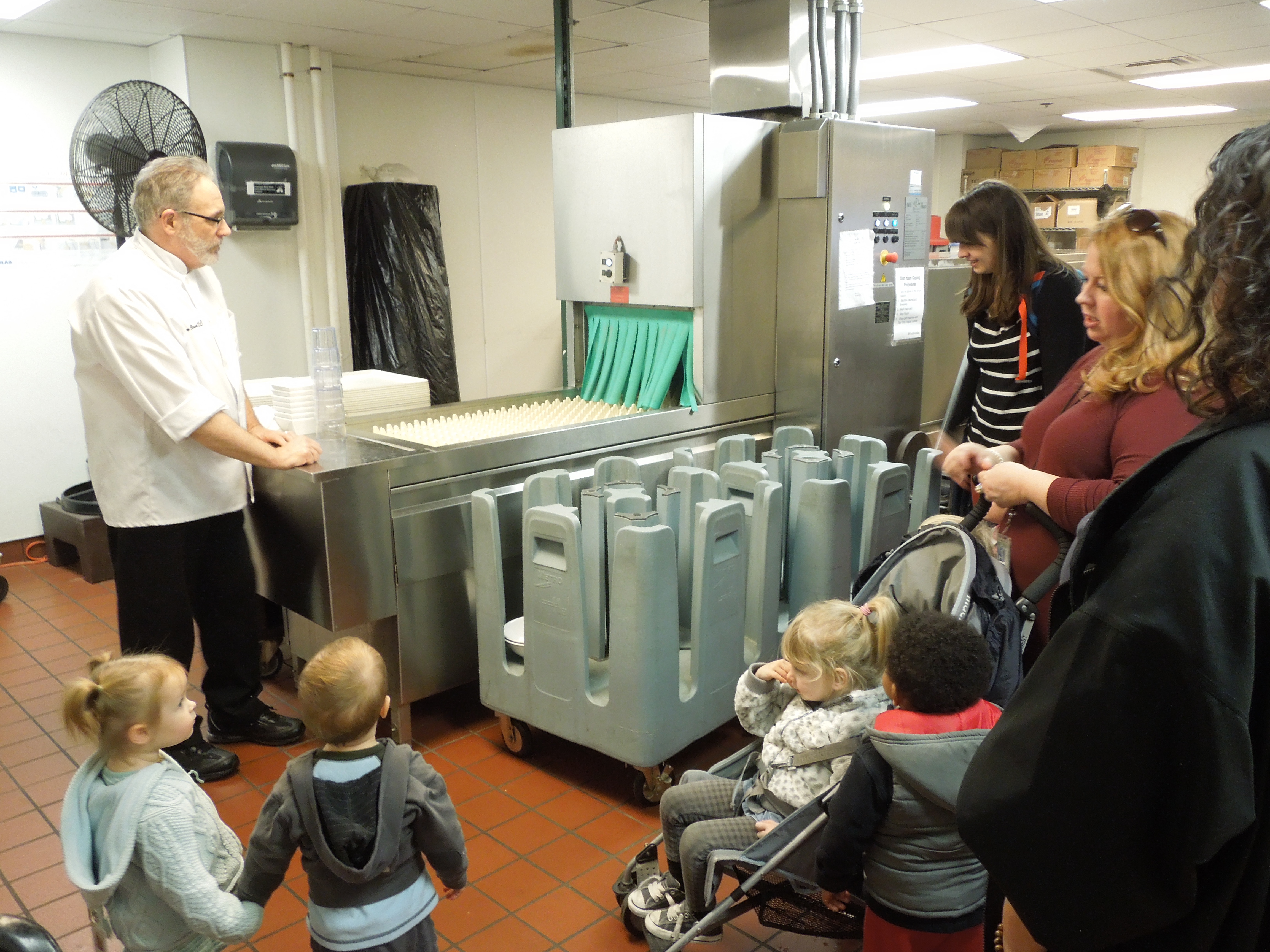
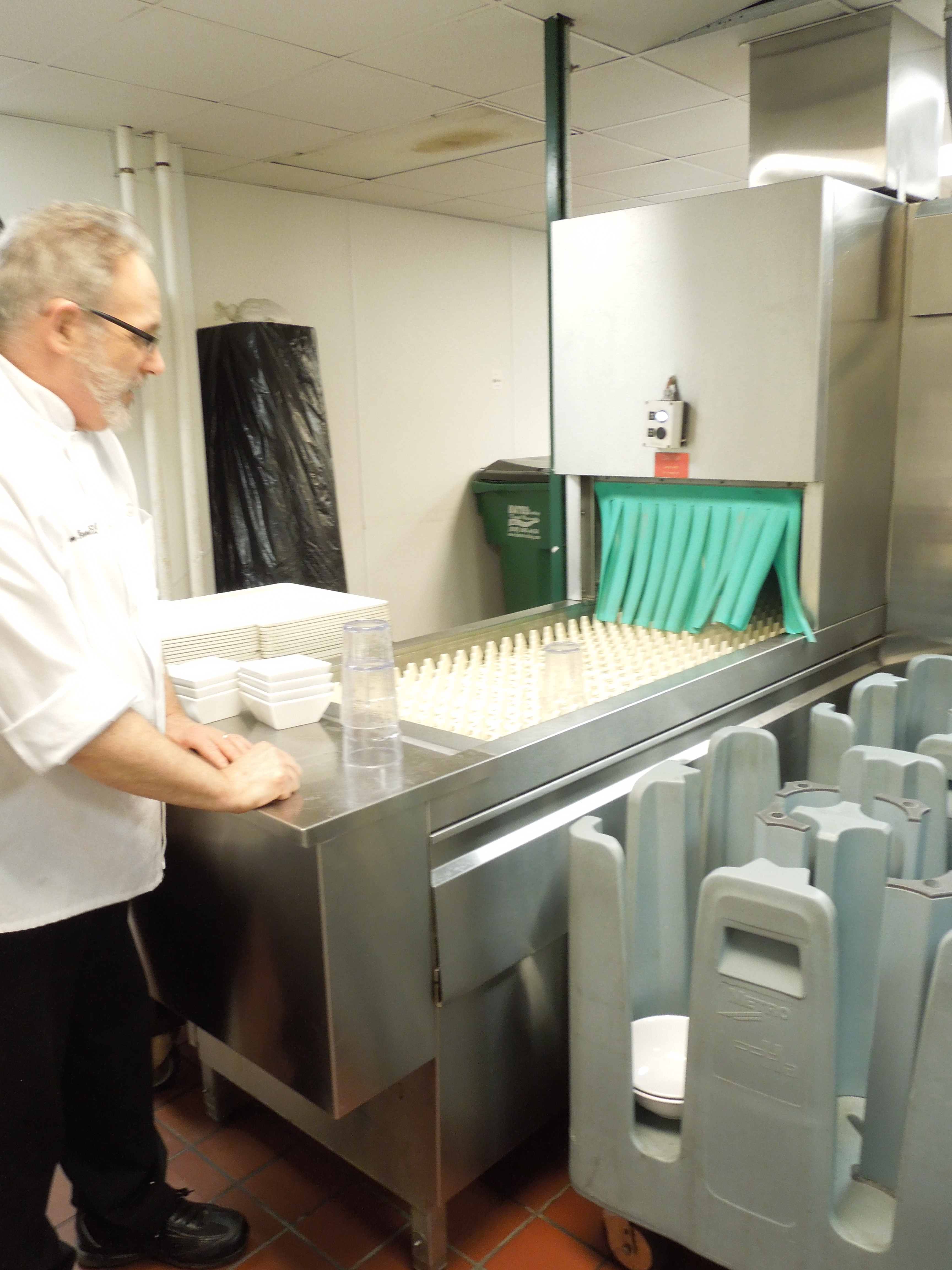
The last stop was a visit to the kitchen’s industrial dishwasher, so the children could observe how their dishes are cleaned after they are used. Each child had a turn putting a cup on the conveyor belt. They were so excited to watch their cup come out the other side!

As Meg, Katie, and Laura finished up their unit on farm to table, the children gained plenty of great ideas about food preparation in all different types of kitchens. Check out our Facebook, Twitter, Instagram, and Pinterest for more ideas from their unit on farm to table! See you in two weeks with our next Teacher Feature!

What happened to Kindergarten?

When I went to Kindergarten it was the place where I learned about being in school. Nobody expected me to be reading by the time the year was over. I had music and art and recess. It was a gentle transition into school and one that made me love learning and be excited to go to school, a feeling that is still with me to this very day.

Sadly, the same is not true for many children today. For them, Kindergarten is a place of high stress and pressure. Stories and questions have been replaced with worksheets and testing. Rugs and shared round tables have been replaced by individual desks. But none of this is true in our Kindergarten at SEEC. Sure, our morning is spent learning math and reading but not in a high pressure, “you have to learn this by the end of the year” way. Instead, it is done in large circles on a rug with conversation, at shared tables with the children discussing what they are learning, and in ways that introduce concepts connected to things the children care deeply about. In the afternoon they head out on their daily trip to the museums of the Smithsonian to more deeply explore some of their ideas, to ask questions and search for answers, and to learn to look carefully at the world around them.

Let me give you and example of how this works. During the fall months our Kindergarten teachers noticed the children had a strong interest in Star Wars. For months they used that interest to teach everything from reading to appropriate behavior, from marketing strategies to the elements of a fiction story. Some of the activities that happened during these months included the following…

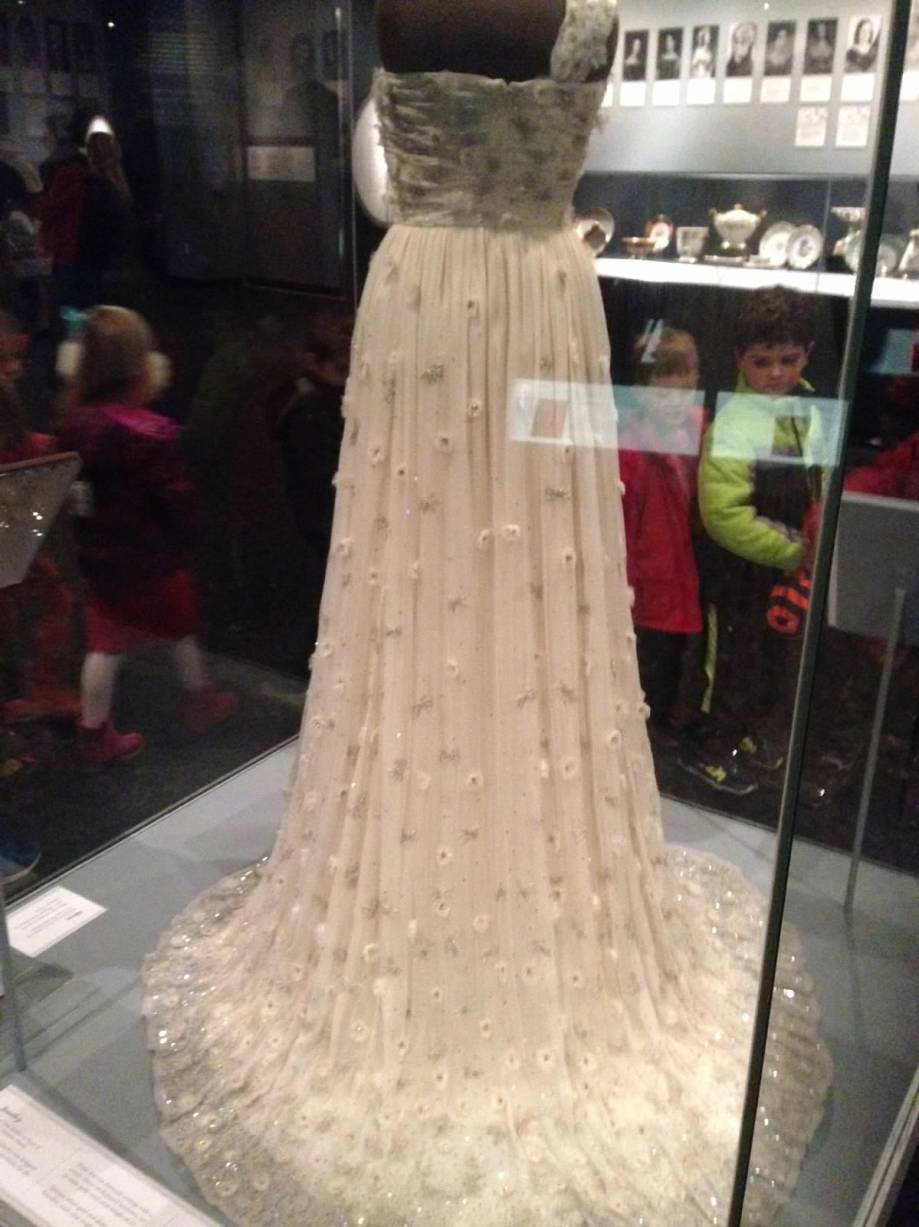
The classroom made connections between the women of Star Wars and the First Ladies of our country, exploring everything from their clothing to their characteristics. They explored the First Ladies exhibit in the National Museum of American History and through careful looking noticed that Michelle Obama’s dress looked very similar to the dress worn by Princess Leia!

IMG_1407

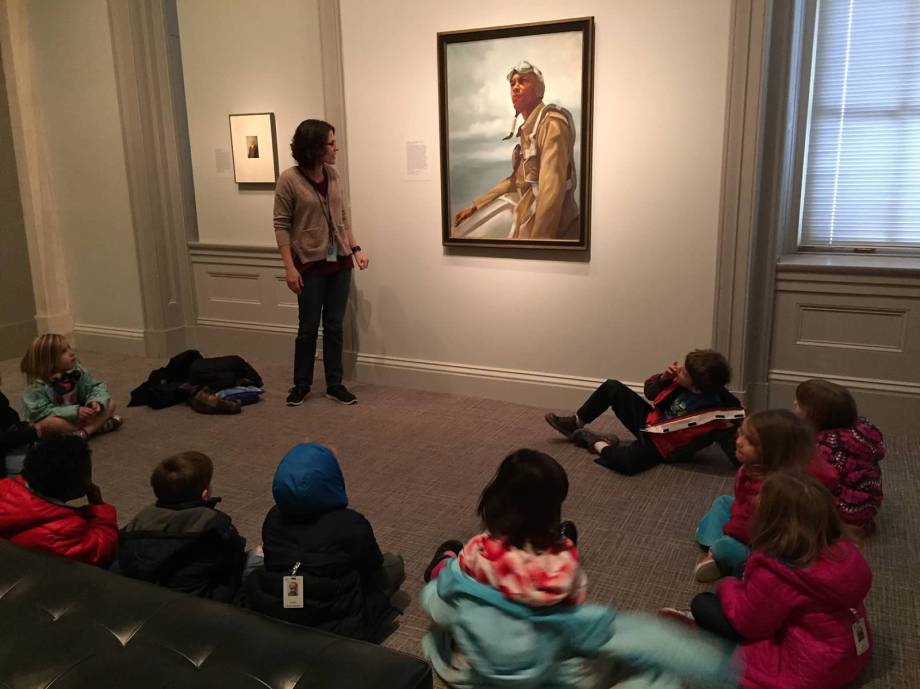
They talked about Luke Skywalker and then visited the National Portrait Gallery to look at a painting of William Campbell, a fighter pilot who flew more than 100 missions across three different wars. They talked about the characteristics of a hero and what makes a person brave and what courage looks like.

IMG_5570

They learned math and compared their own heights to the height of C3PO, learning to measure and compare.

IMG_0527


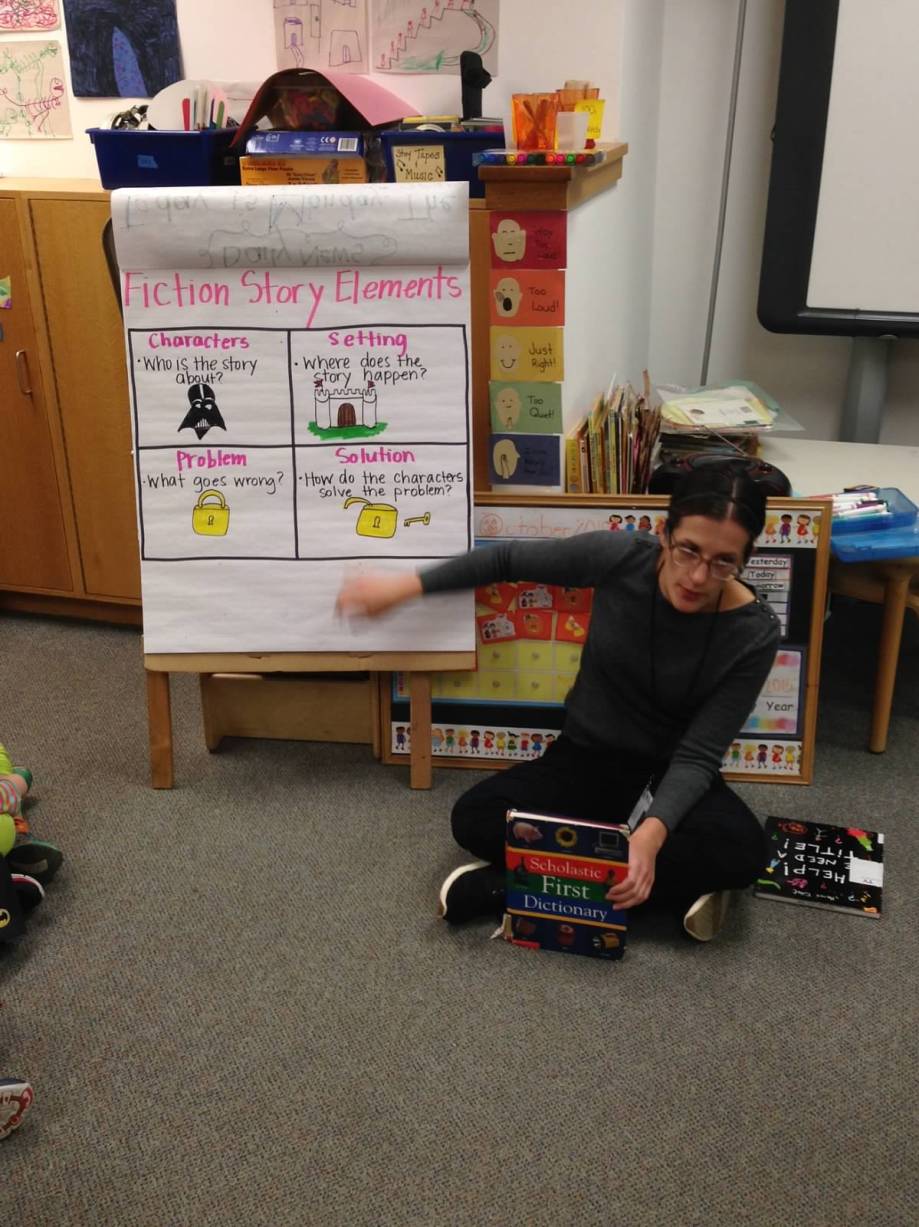
They learned about the elements found in fiction stories as they explored the Star Wars story.

IMG_0529

And, of course, there was a lot of learning about space and the stars!

At SEEC we also believe that art and music are vital parts of the curriculum and we have playground time every day. We have a Spanish teacher who comes several times each week and a researcher from the Smithsonian who comes to teach science as well. All of this is done in ways that are engaging and fun—no high pressure, no testing. But there is a lot of conversation, a lot of questions being asked by both the teachers and the children, and a lot of curiosity. Do our children learn to read by the end of the year? Those of them who are ready to read absolutely do, the rest leave us with the skills they need to make that leap in first grade. Do they do well when they leave us for “regular” school? Absolutely. The biggest concern we hear from parents is that when their child gets to their new school they get in trouble for asking so many questions. If that’s the biggest issue that comes up we’ll take it because ultimately the best learning comes from asking questions. So we will keep encouraging questions, helping children learn to look at the world around them carefully and with great curiosity and allowing them to explore their own ideas and search for their own answers to things that interest them.  Because we believe that is what Kindergarten should be– a gentle transition into school that leaves you hungry to learn more.


Teacher Feature: Art Enrichment Explores Andy Goldsworthy

It’s Teacher Feature Thursday!

This week we are featuring Carolyn Eby, our art enrichment educator. Carolyn has the pleasure of working with all the children in our school on age appropriate and creative art projects. Today I joined Carolyn in the two year old Firefly classroom. This group was learning all about the Arctic so Carolyn decided to do an Andy Goldsworthy’s inspired ice sculpture lesson. Below you will find a reflection and images from Carolyn’s lesson.
ART cover

Teacher Feature

What were your topics of exploration? Why did you choose them? Where did they come from?

The Fireflies have been studying Arctic habitats, which led me to the idea of working with snow or ice. I really enjoy taking the topics that students are working on in their classrooms and try to further their experience with that topic. For this topic I knew I wanted to work with ice and snow (since we have an abundance of these materials in DC right now), something that people do not usually associate with art making. Thinking of artists who work with ice or snow as a medium I knew I had to do something related to Andy Goldsworthy!

Why and how did you choose the visit?

Andy Goldsworthy is an artist that I think inspires both the young and old to go out in nature and play.  Unfortunately, most of his work is impermanent so there was not an ice sculpture I could take the Fireflies to visit. I did however bring to the classroom several laminated copies of his works such as “Ice Arch”, “Stacked Ice”, “Touching North”, and “Icicles” . We took some time looking at each picture closely and noticed different elements of his photos such as shapes, weather, and placement of his sculptures. If I were to continue working with Andy Goldsworthy I would consider going to visit his piece in the National Gallery of Art entitled “Roof”.

What were your learning objectives? (What did you want your children to take away from the lesson?)

There are so many things that I, as a teacher and an artist, admire about Andy Goldsworthy’s work. For one, his work exemplifies patience, which is a virtue I think is really important to making art, and also everyday life. The students who wanted to build really had to take time to balance the cubes and try to stick them together. I also really enjoy that Andy is both a sculptor and photographer, and it was so much fun introducing photography as an art form to the Fireflies. I don’t think any of them had ever seen, let alone touched, a point and shoot camera with a viewfinder!

What was most successful about your lesson?

The students really enjoyed watching how the watercolor paint interacted with their ice. Their interest was strong in watching how the ice would melt and change consistency with the paint. At first the paint froze against the ice, but eventually it became a fun soup to mix!

How did the lesson reach your objectives to expand the topic?

The Fireflies and I have continued working on their exploration of the Arctic habitat since this Goldsworthy lesson. After looking at and working with ice as a material we have moved on to snow. This week we looked at the treks that are left in the snow after humans and animals pass. We worked on making a landscape of snow and animal prints!

What was successful in terms of your preparation and logistics?

It is really tough to find a good container to prepare sheets of ice in, so I ended up using the lids from buckets we use to keep toys in our classrooms. It took me quite some time to prepare the ice cubes and sheets of ice with the freezer space available, but in the end it worked out great! We also have a freezer very close to the classroom so I was lucky enough to keep it freezing until I was done explaining what we were going to do that day. It was fun to bring a material that they have found outside on the playground inside to the classroom where they were more free to explore the ice without all the winter layers. With that said, I think it was also a good move to have a huge pile of towels ready, both on and under the table to ensure no slips or boo boos!

What could you have done differently to better achieve your objectives and expand the topic?

It would have been a blast to take the Fireflies outdoors and have them work just like Andy Goldsworthy does, in the cold. But I knew that it would not be as comfortable, and not as much exploration would be able to take place. It is possible that sometime soon we will try this lesson again on the playground and compare and contrast the two times. Next time it would also be great to have some old film cameras to pass around during circle time to explore.

What was challenging regarding logistics?

I was expecting the ice to do a little bit more sticking with the use of the liquid watercolors (I was hoping it would sort of act as an ice adhesive).  I was hoping that the Fireflies could make more three dimensional work with the cubes, but they had fun regardless and their sheets of ice looked fascinating!

What recommendations would you have for another teacher trying out this lesson?

I think it is better to be over prepared than under prepared for this lesson. I mean this in the sense that I made a huge batch of colored ice cubes, regular ice cubes, and ice sheets. This stuff can be temperamental and you definitely want to have a backup if one of the sheets didn’t freeze entirely or broke en-route to the classroom. I was also very cautious about keeping ice on the table and making sure we had a huge pile of towels as a backup.

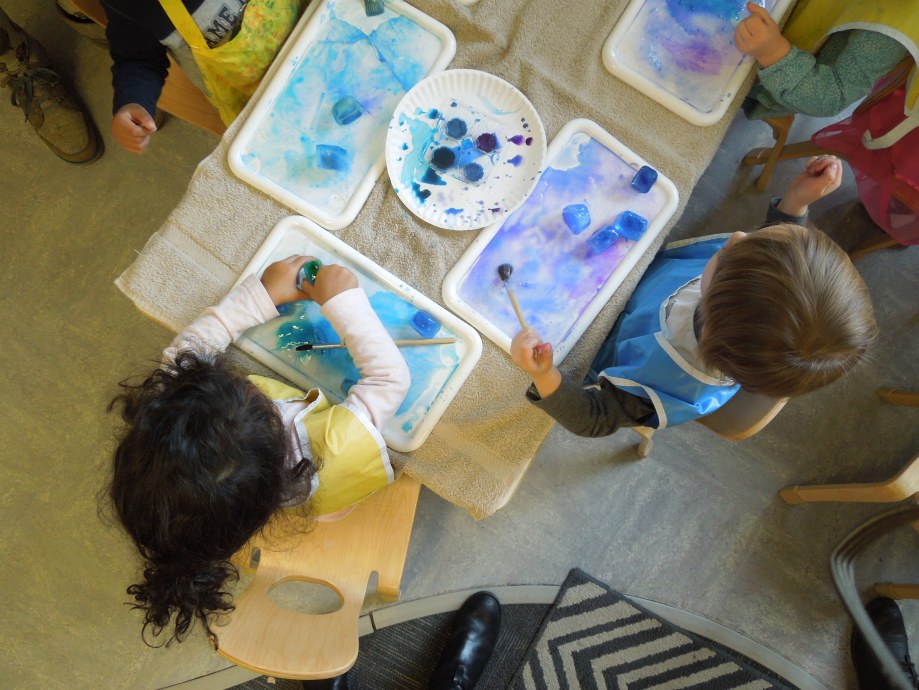
Here are a few images from her unit on Andy Goldsworthy:DSCN4508Since the class was already learning about the Arctic, Carolyn began her lesson by selecting a book from their classroom. That way the children could make a quick connection to their topic of study and the exploration Carolyn would be introducing.DSCN4540Carolyn introduced the group to Andy Goldsworthy by showing them images of his ice sculptures. She explained that Andy makes things out of things found in nature and the class took a few minutes to think of some things that he might like to create with. Carolyn then went on to explain that unfortunately Andy’s sculptures do not last forever so he takes pictures of his art so that lots of people can see it and record his project. DSCN4544After learning about Andy, Carolyn said that today they were going to make their own ice sculptures. She also bought a small disposable camera for the group to use to photograph their own ice sculptures.
DSCN4506Carolyn cut egg cartons to use as liquid water color containers!DSCN4564Each child was provided with a tray of ice, paint ice cubes and a paint brush. They were encouraged to paint with the liquid water colors and build with the ice cubes. DSCN4579DSCN4584DSCN4587As you can see, this project was a huge hit! The children spent nearly 30 min on their project.DSCN4596

DSCN4601
Once a child indicated they were finished, Carolyn gave them a quick camera tutorial and the child took a photo of their sculpture. I can’t wait to see their images!

Check out our Facebook, Twitter, Instagram, and Pinterest for more ideas from Carolyn! See you in two weeks with our next Teacher Feature!

Teacher Feature: Infant Classroom Explores Chanukah

It’s Teacher Feature Thursday!

This week we are featuring Logan Crowley, Jill Manasco, and Ashlee Smith in the infant Duckling classroom. Our teachers were once again inspired by the changing environment and the events their children would soon experience so they decided to learn about winter holidays.  I joined their class for a lesson led by Logan on Chanukah. Below you will find a reflection from Logan, Jill, and Ashlee and images from Logan’s lesson.
Duckling Cover 1

What were your topics of exploration? Why did you choose them? Where did they come from?

We had recently come off a month-long study of music and decided to spend a couple of weeks focusing on winter holidays as a transitional theme. Having a more straightforward theme gave us the opportunity to spend some time observing the kids to see what we may want to explore next. This specific theme also helped us to bridge connections between school and our children’s family traditions, as well as an opportunity to explore cultures other than their own. During this particular week, we were exploring Chanukah and also using that topic as an opportunity to explore properties of light.

Why and how did you choose the visit?

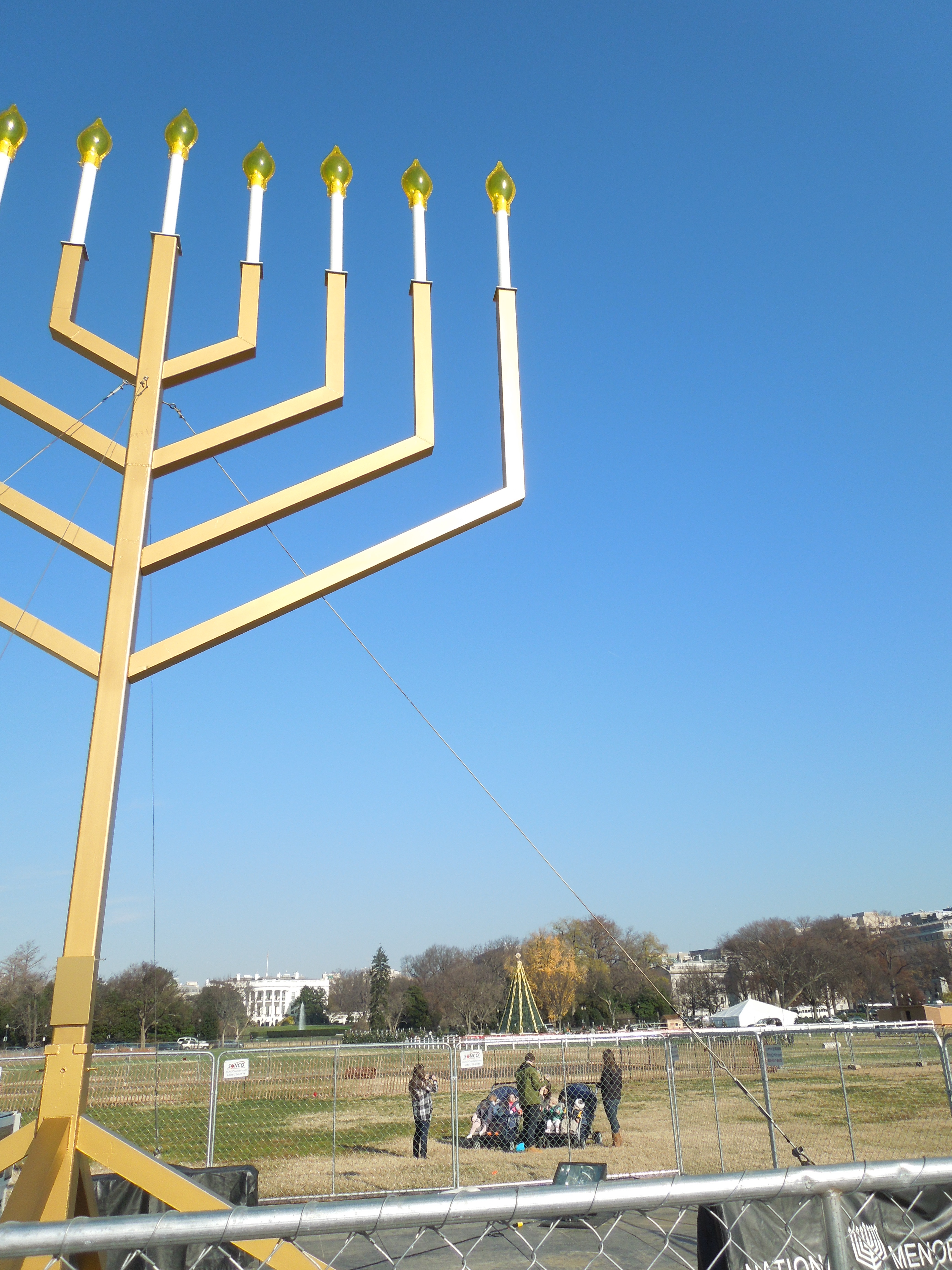
The menorah is a staple of Chanukah and tied in well with the exploration of light as well as it’s lit with either candles or bulbs, in the case of the White House menorah. The menorah is also very large and since our kids are still riding in buggies, I wanted something that they would be able to observe easily. Finally, we were having unseasonably warm weather so it was a perfect time for a nice long walk.

What were your learning objectives? (What did you want your children to take away from the lesson?)

In teaching infants, my primary goal is to give them a break from the classroom and provide them with an experience that is interesting and meaningful to them. Anything else is pretty much gravy. In this case, my hope was to also give them exposure to the concept of the menorah and the traditions that many observe during Chanukah.

What was most successful about your lesson?

We made it there and back without anyone falling apart! I think the most successful part was how much they seemed to enjoy the experience in general. It is always a toss-up when we stop the buggies, because if we have chosen something that doesn’t engage them, they become restless very quickly. In this case, they spent a long time observing the menorah. I think having some tangible objects helped maintain their interest- namely sensory bags with pictures of menorahs inside them and a short board book about Chanukah. They spent a decent amount of time manipulating the sensory bags and many of them showed a lot of interest in the book, smiling or pointing as I showed them the pictures.

How did the lesson reach your objectives to expand the topic?

We successfully got out of the classroom and got some much-needed fresh air. The kids also became increasingly interested in our Chanukah books throughout the week. Children, especially infants, love familiarity so the experiences we planned for them, including our visit to the White House menorah, were planned to help them to gain familiarity with menorahs and Chanukah and increased their interest in looking at related materials.

What was successful in terms of your preparation and logistics?

I was really glad I did the sensory bags. They were somewhat of a last minute addition and I think they helped some of the kids who may otherwise have gotten restless quickly to spend time engaging and more thoroughly enjoy the outing.

What could you have done differently to better achieve your objectives and expand the topic?

I’m not sure, honestly, I felt it all went pretty well. I might have come into it with a more solid concept of what I wanted to say or a wider variety of manipulatives for them to engage with. I also may have brought a blanket and taken them out of the buggy to give them a bit more freedom of movement.

What was challenging regarding logistics?

We did not have any major logistical challenges other than just getting them out the door, I purposely kept the lesson pretty simple since I knew they may already be tired from the long ride.

What recommendations would you have for another teacher trying out this lesson?

Think about what interests your kids the most and plan around that. Since this is an object they cannot touch, bring something tangible for them to interact with. And of course, something I constantly remind myself of, it’s okay to throw your plans to the wind and improvise if something just doesn’t work.

Here are a few images from their unit on Chanukah:

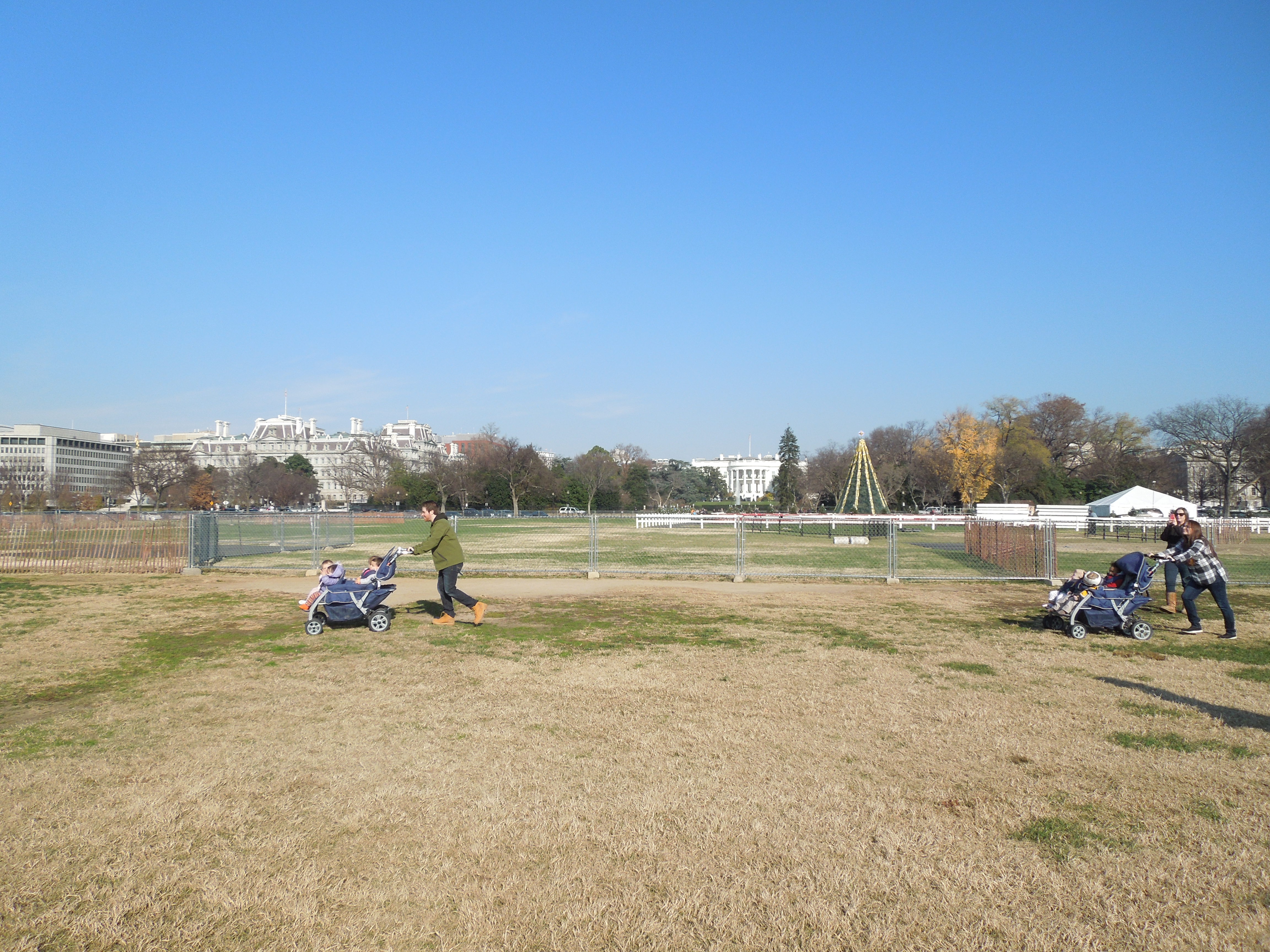
DSCN4373Logan, Ashlee, and Jill bundled up their group and headed straight to the National Menorah in front of the White House.
DSCN4399The Menorah is located in the grassy space in front of the White House and set back from the road. So it’s location and size, make it an ideal spot to learn about Chanukah traditions.
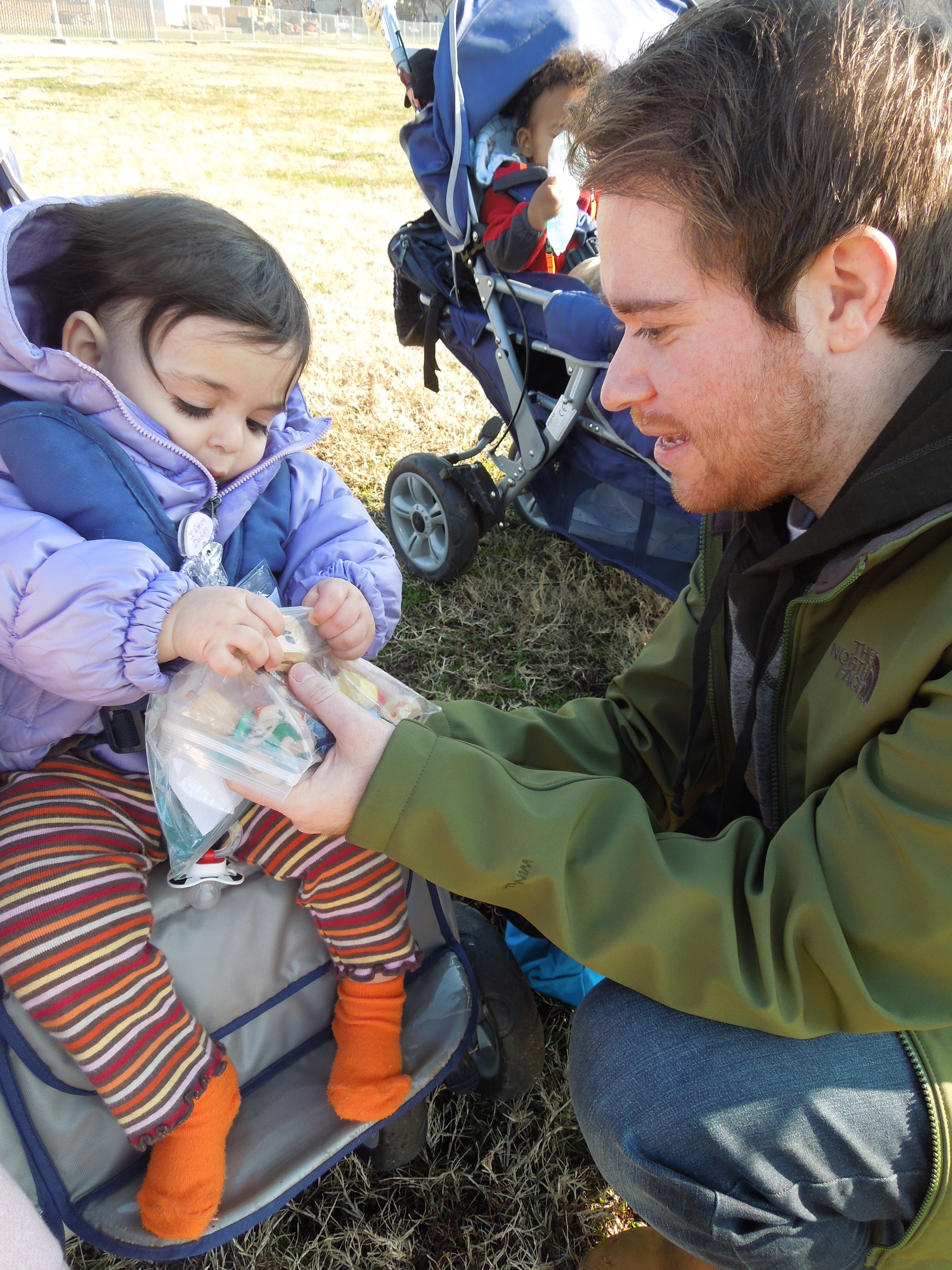
DSCN4383Once the group was settled in front of the menorah, Logan provided the children with sensory bags filled with blue water,silver sparkles, and images of the menorah. The teachers then began pointing out the different parts of the menorah and matching them to the images in their hands.DSCN4390 Logan then read the group, My First Chanukah  by Tomie dePaola. 
DSCN4406 DSCN4420Logan also brought along a bag of dreidels and menorah for the children to explore.

Logan, Ashlee, and Jill finished up their unit on Chanukah and started exploring Arctic Animals. Check out our Facebook, Twitter, Instagram, and Pinterest for more ideas from their unit on Chanukah! See you in two weeks with our next Teacher Feature!

Teacher Feature: Two Year Old Classroom Explores Fall

It’s Teacher Feature Thursday!

This week we are featuring Javasia Finney, Shawna Williams, and Stephanie Jimenez in the Penguin classroom. These teachers decided on fall as their next unit because their children were noticing the changing season in their everyday lives.  I joined their class for a lesson led by Javasia that concluded their fall unit. Below you will find a reflection from Javasia, Shawna, and Stephanie and images from Javasia’s lesson.
P cover

What were your topics of exploration?  Why did you choose them? Where did they come from?

During the month of October the Penguins learned about and explored the beautiful season of fall.  We chose this topic because the Penguins were starting to notice the leaves changing colors and falling off the trees. We wanted the children to experience learning about fall with sensory experiments.  While learning about fall we spent some time covering the following topics:

  • foods
  • colors
  • clothing
  • weather
  • leaves
  • holidays
  • changes in outdoor environment

Why and how did you choose the visit?

The day of our teacher feature was actually our last day learning about fall.  For our last day covering this topic we had the Penguins make a large collage using several different materials that had different textures.  They used paint, glue, acorns, glitter, pumpkins seeds, pictures, and leaves. Our collage included all the different topics they learned about. Then I thought it would be a great idea to go visit the National Museum of the American Indian.  On the third floor they have a large painting “The Maidu Creation Story” by Harry Fonseca.  I chose this painting because it has fall colors and reminds me of a fall scene or fall collage.  I had the Penguins sit in front of the painting and we analyzed and made observations about it.  We also shared the fall inspired objects we saw in the painting.

What were your learning objectives?  What did you want your children to take away from the lesson?

I wanted the children to be able to describe:

  • What the weather is like in the fall
  • What kind of clothes are worn in the fall
  • What holidays we celebrate in the fall
  • What happens to the leaves in the fall
  • What foods do we eat in the fall
  • What happens to the outdoor environment in the fall


 What was most successful about your lesson? How did the lesson reach your objectives to expand the topic? What was successful in terms of your preparation and logistics?

The lesson was successful because by doing so many sensory experiments during this unit the children were truly able to internalize many of our fall topics.  What helped in terms of preparation and logistics was very simple, it was Mother Nature.  By learning about a topic like fall the children are exposed to the changes that come with the season.  It affects their everyday life, i.e. putting on a jacket, going to the farmers market, carving a pumpkin, or celebrating Halloween and Thanksgiving.   They can relate to this topic because they can make the connection between nature and their own personal lives.  It is now two months later and every time we go outside they are still pointing out the leaves on the ground.  They tell us stories about the different color leaves near their homes and helping to rake them.  They now realize that this is happening because it is fall.

What could you have differently to better achieve your objectives and expand the topic? What was challenging regarding logistics? What recommendations would you have for another teacher trying out this lesson? 

Looking back now I think to better achieve our objectives and expand the topic, we could have talked more about the other seasons.  Then we could have made comparisons.

Overall this particular lesson went really well, the only challenging part of the day was getting to the National Museum of the American Indian.  It is a pretty far walk for two year olds, but luckily the weather was nice that day.  If I could make a recommendation for another teacher, I would probably say choose a closer museum with a similar style painting.

Here are a few images from their unit on fall:

DSCN4084

Javasia began the lesson by collecting books, images and objects from throughout their unit. She went through each item reminding the children how the object connected to a lesson earlier in the month. Javasia even invited a friend to model the type of clothing one might wear during the fall.
DSCN4096DSCN4105Then it was time to start collaging all of their materials to create on collective fall mural. The leaves and sticks were collected the day before during a nature walk around the National Mall. Once each child had a turn they headed to the National Museum of the American Indian.
DSCN4122

When they arrived at the National Museum of the American Indian, Javasia read The Museum by Susan Verde. The book talks about the different types of paintings that can be found in a museum. Since this unit fell early in the year, Javasia wanted to spend some time formally introducing the children to the concept of a museum and the art of careful looking.

DSCN4133DSCN4127Javasia selected the Creation Story by Harry Fonsec because the painting not only reminded her of fall but also provided a lot for the children to discover. She invited each child to tell the group what they saw and talk about the painting. The children spent nearly 15 minutes carefully looking! They kept noticing new things and couldn’t wait for their turn to share.

Javasia, Shawna, and Stephanie finished up their unit of fall and started exploring shapes found in architecture. Check out our Facebook, Twitter, Instagram, and Pinterest for more ideas from their unit on fall! See you in two weeks with our next Teacher Feature!

Connecting Through Play

We often talk about play as it relates to learning, something that is certainly important for all ages. But there is a “softer” side to play that I think we sometimes forget about. Children form friendships through their play. Adults build some of their best connections and memories through play. Play binds us together. Play binds us across generations.

My children are now 31 and 26 but there are toys that I see in the stores and immediately I am taken back to their childhood. I am taken back to hours of building with Legos, days filled with building forts with chairs and blankets and filling them with baby dolls and Matchbox cars, and to playing games lying on our stomachs in the living room. I am taken back to playing Teenage Mutant Turtles with my son, Clint, and Barbie in the backyard with my daughter, Karlyn. Some of my best memories of my children’s growing up years are associated with play.

This year I was so excited when I found a set of building toys to buy for my granddaughter, Kayla, for Christmas (don’t worry, she is only three and won’t be reading this!). This set of big building materials is almost like a set my kids had when they were little. They literally spent hours together building things like houses with this building set. But my son particularly loved this set so when I found this new set I knew it was perfect to send to his daughter for Christmas. As a child he not only built houses with his sister, but he built cars for them to “drive” around the neighborhood and an airplane that he was determined to test out by jumping off the roof of our house.  I don’t know who will be more excited when she opens the gift—him or my granddaughter (which is why the tag is addressed to both of them!)


Toys and play can also be nostalgic, taking us back to our own childhoods and connecting us across generations. I also bought Kayla an Etch-A-Sketch this year, a toy that I adored as a kid and that both of my kids played with for hours. And sometimes the connections goes not only across generations but across a family. At Thanksgiving this year my mom gave my sister, Shari, and I the game Mystery Date. We were immediately children again, opening the game and lying on the floor to play together. But I also had to text my cousin, Pam, and my daughter to let them know that we now had the game to play at our 2016 girls weekend at the beach! My cousins, my sister and I spent hours playing this game during summers spent at our grandparents’ farm and I am so excited to bring my daughter into the world of Mystery Date because I know that we will create great memories playing it together.

There is no doubt that play is an important tool for learning but its’ role in building connections and memories may be just as important. It is in these connections that we find meaning for our lives.