Kindergartners and Exhibit Design, Part II

exhibit eval page 1

Kindergarten Exhibit Survey, Pt. 1

exhibit eval page 2

Kindergarten Exhibit Survey, Pt. 2

In our last blog,  we discussed the first part of our experiment with SEEC kindergartners visiting the Smithsonian National Museum of American History Golden Books exhibit.  When we left off, they had just concluded their first visit.  The following week, they went to the museum again and like the previous time, we split them up into small groups of three.  Each group had an adult and walked through the exhibit with an educator and were given a “survey.”  After these were completed in the exhibit, they headed out to a small circle to discuss their observations with another educator.

The Results

1) Look at the other people do they like this exhibit? Visitor Graph
Comments:

  • Looking closely
  • Beautiful
  • Pretty good
  • Really liking it
  • Liked it
  • Enjoying everything
  • Looking at computer
  • Looking at all sorts of books
  • Enjoying it
  • One person was normal, so…so-so
  • Some were in to it, some were not
  • 1 vote for all 5 choices
  • All the people were different

2) Look at the objects; do you like how they are displayed?Objects
Comments:

  • Lots of color, some were dusty
  • Loved them
  • They books were having a good time because they were safe in the glass and no robbers were breaking in
  • Could not see, too tall
  • Pretty good
  • Pretty good, a little bad though because it only showed one page of the book
  • Didn’t like, hard to see

3) Look at the lights; do you like how they are used?
Lights Graph

Comments

  • Dark but good
  • Pretty good
  • 1 vote for Liked
  • Orange, it was ok, and I liked it
  • ok

4) Look at the colors; do you like how they are used?
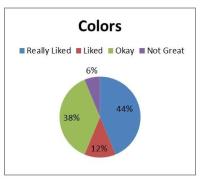
Colors Graph

Comments

  • The ceiling was green, there were good colors
  • A lot of white

5) Look at the signs, are they helpful?

Signs Graph

Comments

  • Really focused about creation, someone worked very hard

6) Look at the computers; do you like how they were used?
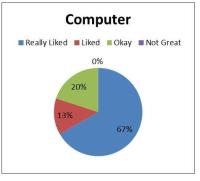
computer Graph

Comments

  • I clicked on two books
  • You could look at the books, I pressed the button and it read the story to us
  • Really cool
  • I touched it
  • I didn’t get to touch it
  • I chose different books, it was awesome, and not too tall
  • I liked pressing buttons
  • Zooming in was cool
  • It shows the books

7)  Look for things you can touch, did they help you enjoy the exhibit?
Touching Graph

Comments

  • Only one thing to touch
  • Touching the computer
  • Computer was just ok
  • I wish there was more stuff to touch, more computers with newer books
  • No touching uhhhhh

Outcomes

I was surprised that they found the lighting and signs appealing.  Like any exhibit featuring paper, it is a dark space, and I assumed that would be unappealing.  Interestingly when the exhibit designer talked to the students during their first visit, he mentioned that the low lighting help protect the books. I wonder if that made a difference.  I also wonder if it was the spotlighting to which they felt drawn.  Despite the overall darkness, light was strategically positioned to make the cases pop. There was minimal distraction.

I was also intrigued by their positive reaction to the signs.  Many in the group are emergent readers and I thought the labels would have been of little or no interest to them.  I wonder if they were responding to the fact that the educators, many of whom were not familiar with the exhibit’s content, used the labels to help add to their conversations.

That they responded positively to the colors and book illustrations was no shock.  Children are naturally drawn to strong, vibrant visuals.  They are also naturally drawn to things they can touch or tinker with.  The opportunity to play with the computer at the end of the exhibit got them very excited and made them notice more about the objects in the cases, encouraging them to revisit objects and think more deeply about some of their conversations.  Interestingly, the computer engaged many of the children, but not all.  Some of them were frustrated  because they weren’t certain how to work it, but I guess usability for young children is another topic entirely!

Although we didn’t measure this in the survey, its important to note that the children responded to the content of the exhibit.  They were familiar with Golden Books and could make connections to the illustrations, many of which depicted children playing.  At SEEC, we encourage our educators to utilize familiar objects or themes when teaching.  Finding this thread can be difficult when considering the often nuanced and complex nature of many exhibits. Still, I would encourage museum staff to consider how they can incorporate familiar elements as a way to engage a young child’s interest in new content.
 

Government Shutdown Blues

_MG_3540

Our family workshops typically run four consecutive weeks. Somewhere around week three, we slip into a sweet spot. The kids are familiar with me as a teacher. I find myself getting hugs and requests to hold hands on our walk to the museums. The parents get comfortable with each other and the framework of the class. Nobody seems to be judging anyone’s parenting and everyone is enjoying time together. During our first fall workshop, Marvelous Museums, we made it to our sweet spot and then had the rug pulled out from under us. SHUTDOWN!!!!

Politics aside, I was really disappointed that the continuity of the class was interrupted. Developmentally, pre-K children benefit from consistent and frequent experiences. If you are a parent, think about what happens when your child returns to school/daycare after a vacation. It takes time for them to re-acclimate themselves. For example, there is one boy in my class who found it very difficult to share his thoughts with the group. By the third week, his answers came easily and in much louder and clearer voice. Similarly, by the end of the class the children know the safety routine for walking to the museum. The time is takes us to walk is sometimes cut in half because the children know what is expected of them and are excited to reach their destination. Most of all, there is a camaraderie that is established among everyone, which is easily lost. The shutdown has taken away from the meaning and impact of our family workshop experience and while, in the big picture, it isn’t the end of the world, I can’t help but feel frustrated. After all, it is no easy feat to get families of young children into museums on beautiful fall mornings.

_MG_3595

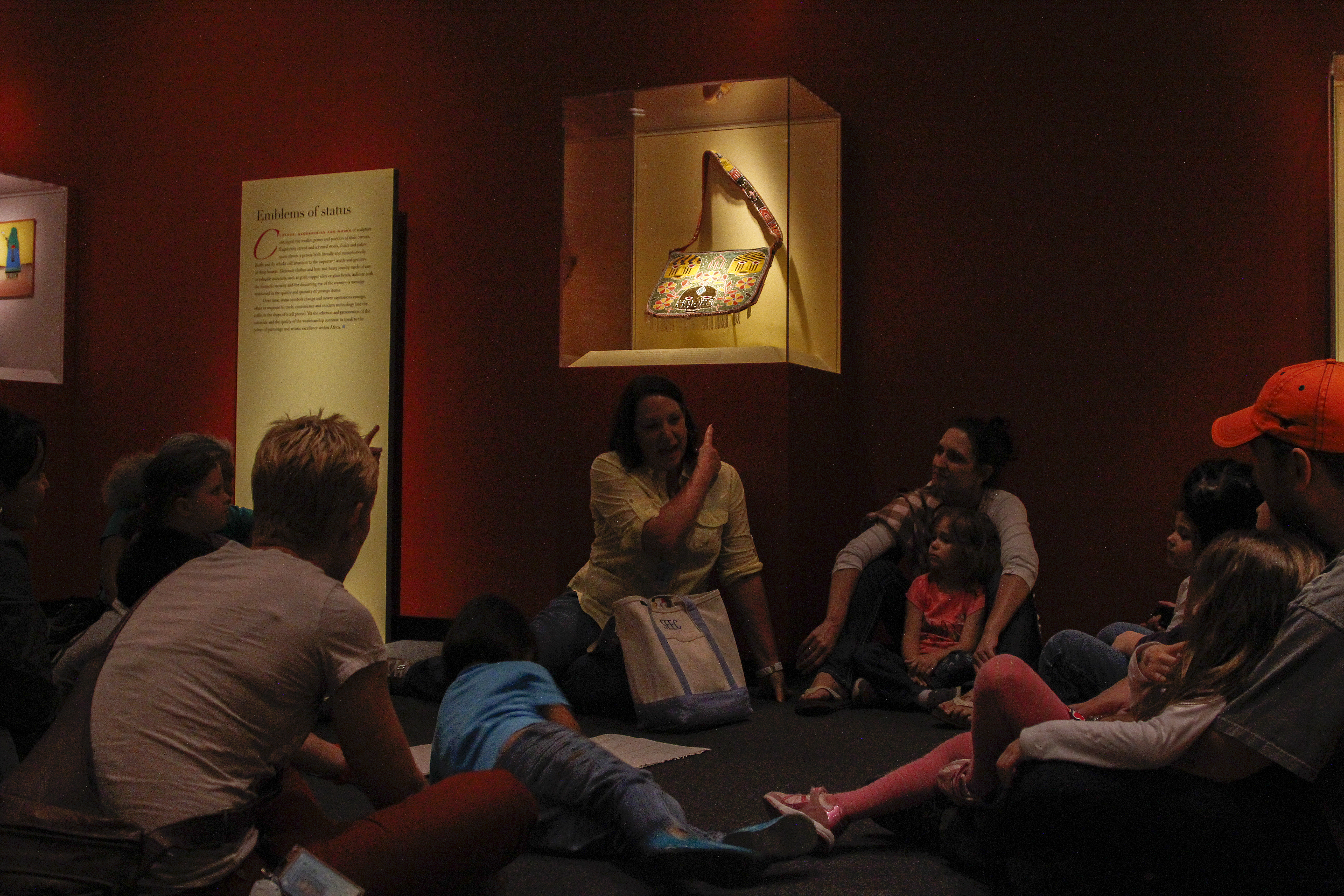
Discussing what is art at the National Museum of African Art

Of course the children enrolled in SEEC’s lab school are bearing the brunt of the impact. Our workshop attendees come once-a-week, lab school students come everyday, many of whom have been coming everyday for years. Consider the effect on the infants who are transitioning to group care for the first time or the kindergartners who are going to have to make-up this time off. And because most of our students were just settling into their new classrooms, the timing of the shutdown could not have been worse. Students were still busy acquainting themselves with a new environment, new teachers and in many cases, new friends. I know many parents are enjoying their time with their children. But, I also know that students are missing their friends and the familiar framework of their school day.

To counteract these blues, I am posting photos from our recent family workshop as a reminder of what we did accomplish. I am feeling optimistic that we will be able to get back to our job of educating soon.

_MG_3613

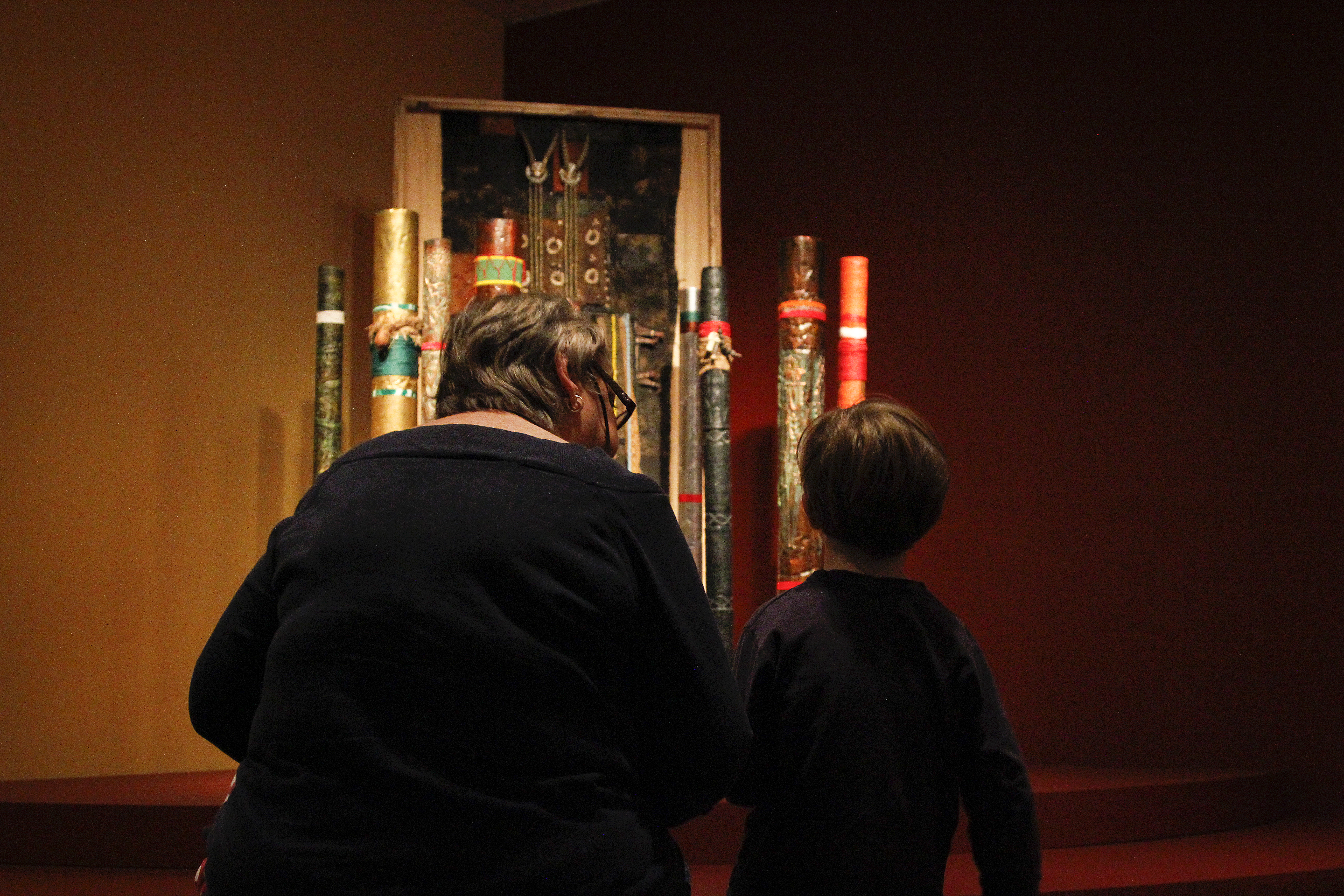
A boy and his grandmother explore what the meaning of this object.

_MG_3632

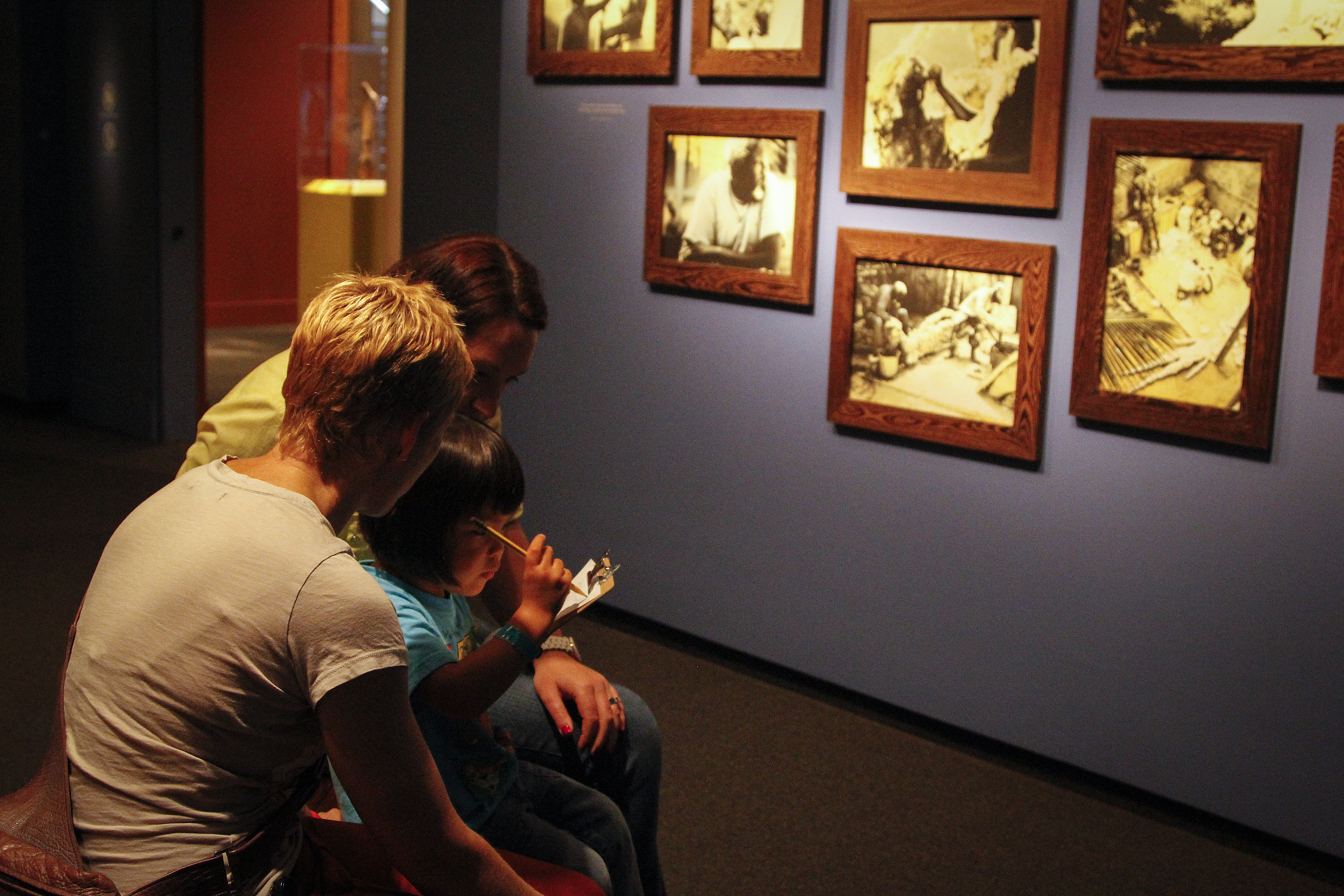
Families work together to look at an object and describe its’ features.

_MG_3633

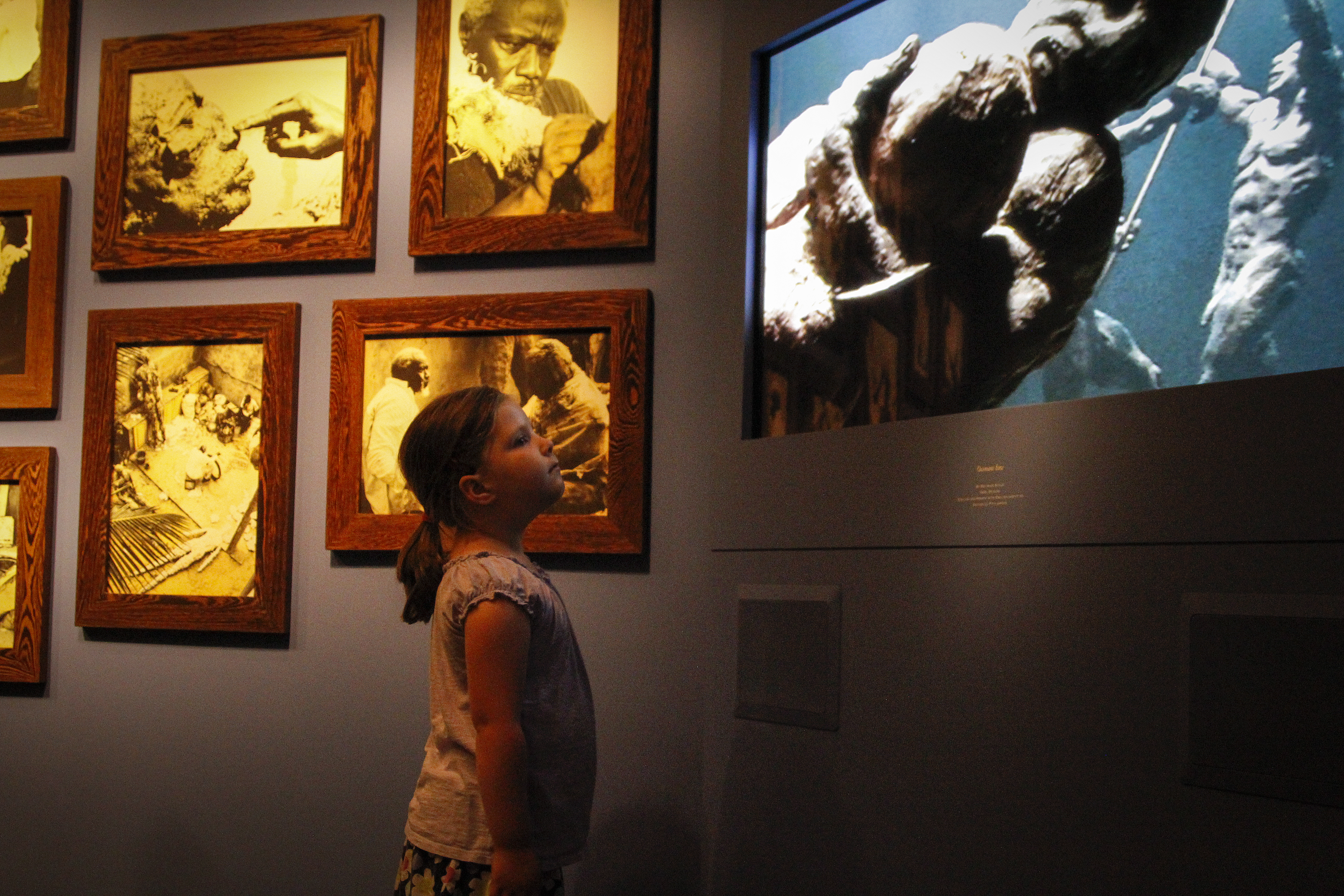
Careful looking, a child decides which object she wants to learn more about.

_MG_3650

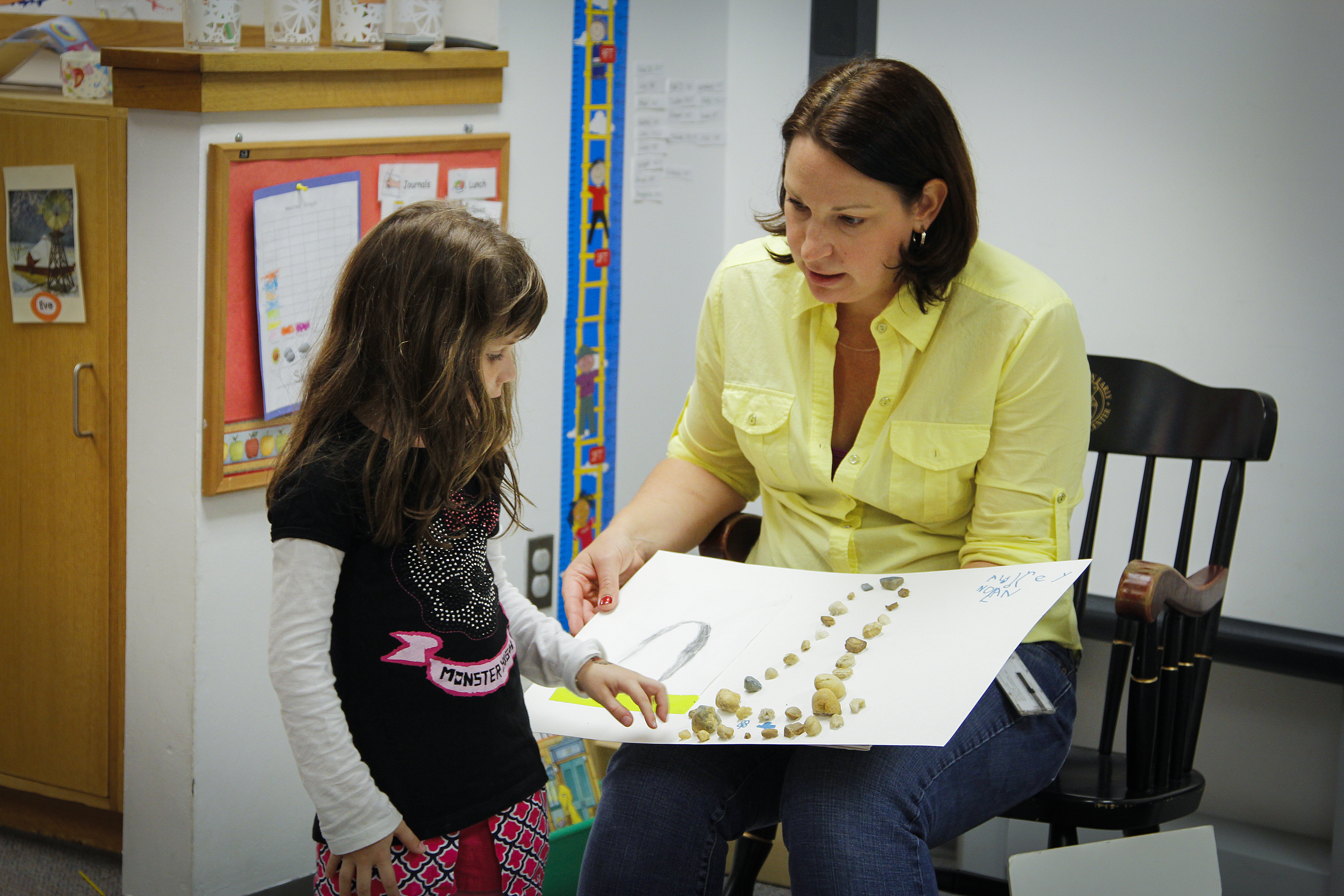
Creating collections from items found on the National Mall and sharing with the class.

_MG_3659

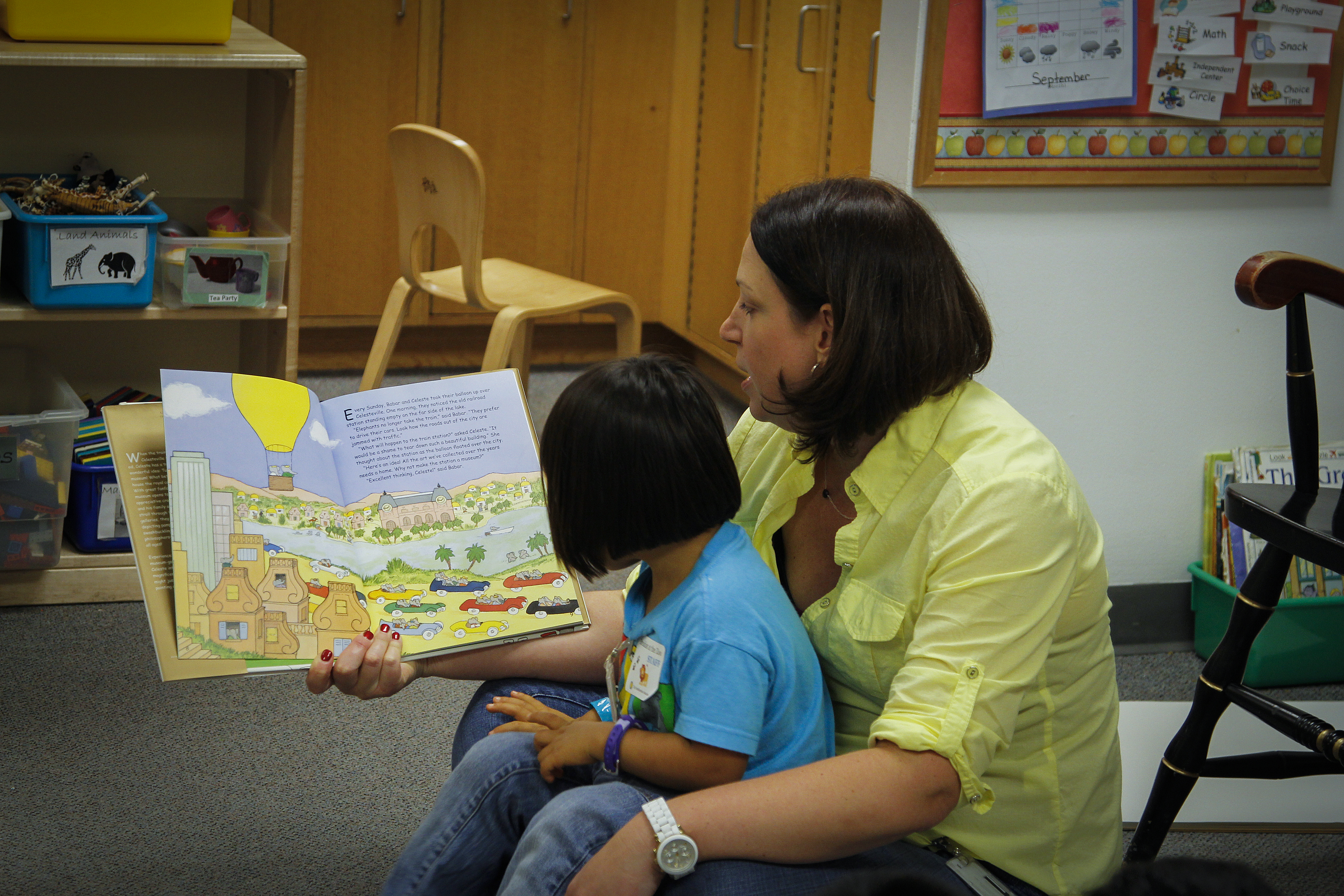
Reading Babar’s Museum of Art

Smithsonian Pre-K Classes

Renaissance Composition 2

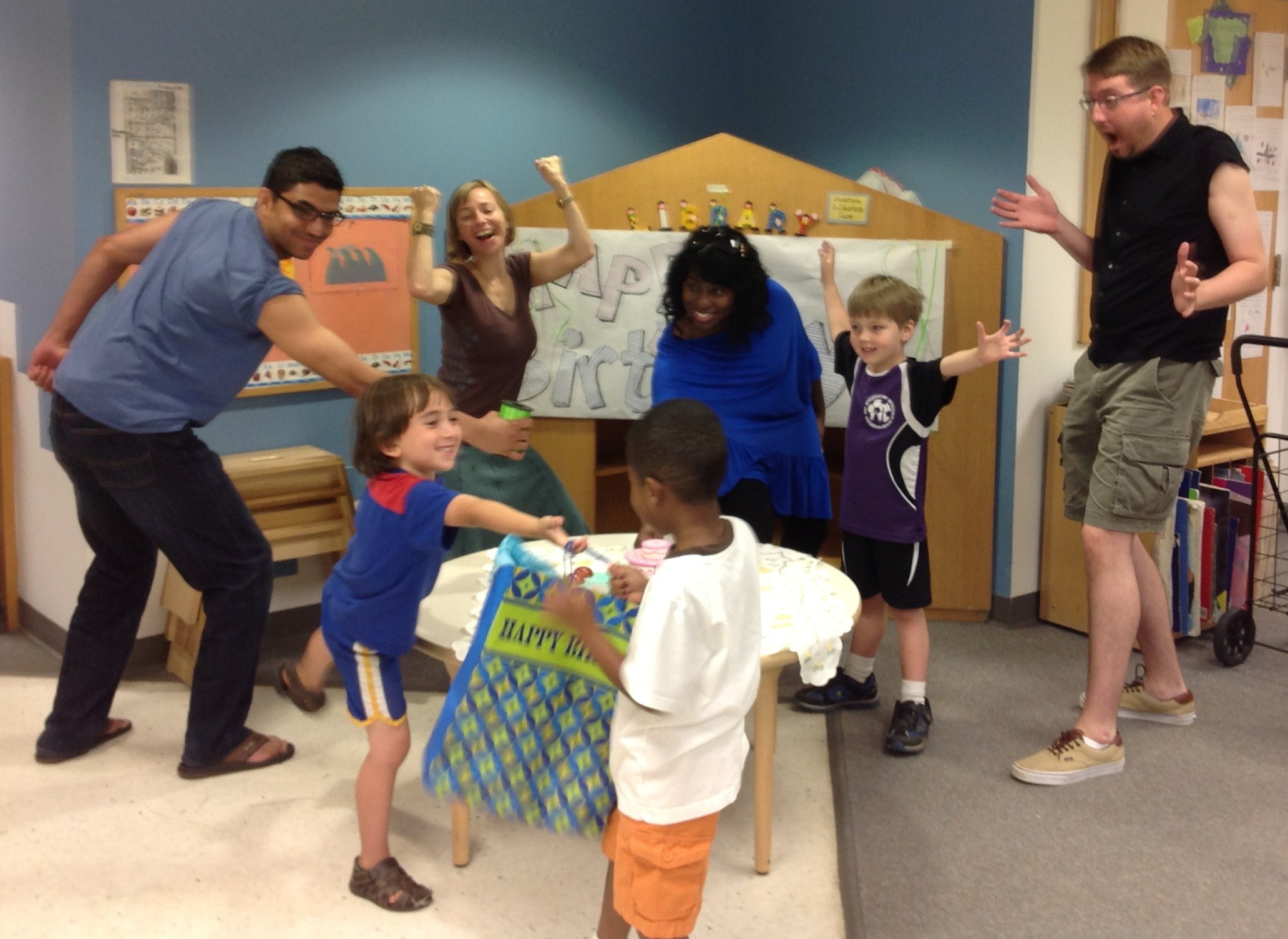
Acting out a Renaissance Composition

In our first blog, I talked about what the museum education department does at the Smithsonian Early Enrichment Center. Just to recap, we have two educators who work specifically with our classes here at the lab school. Our director, Betsy Bowers, heads our professional development efforts (more on that later) and my main responsibility is to promote and coordinate our outreach efforts for families who are not enrolled in the school.

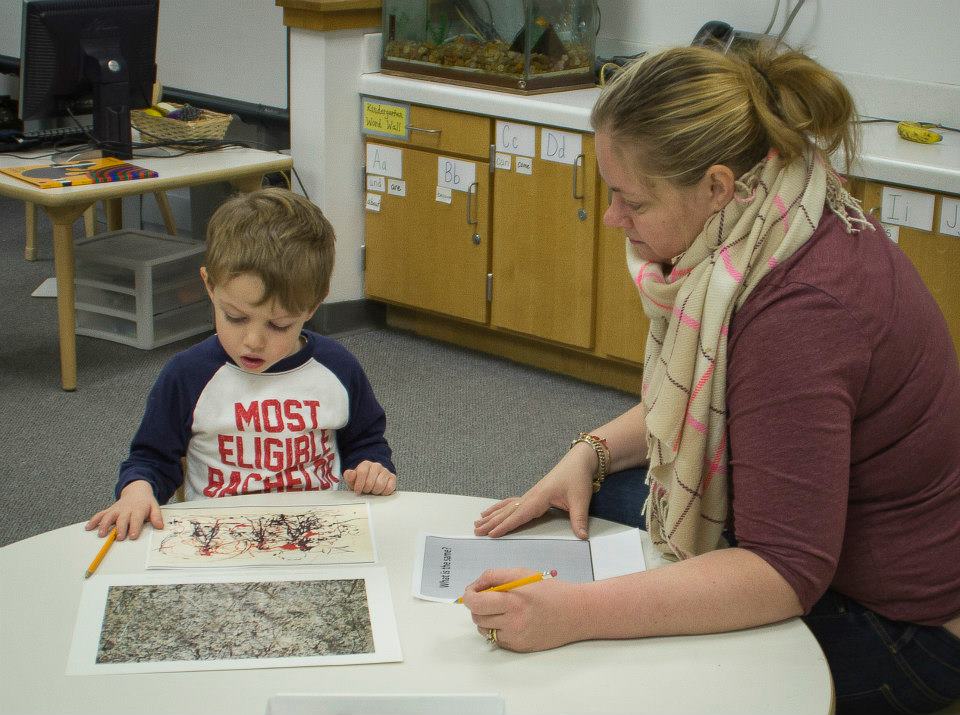
Comparing Jackson Pollock paintings

Comparing Jackson Pollock paintings

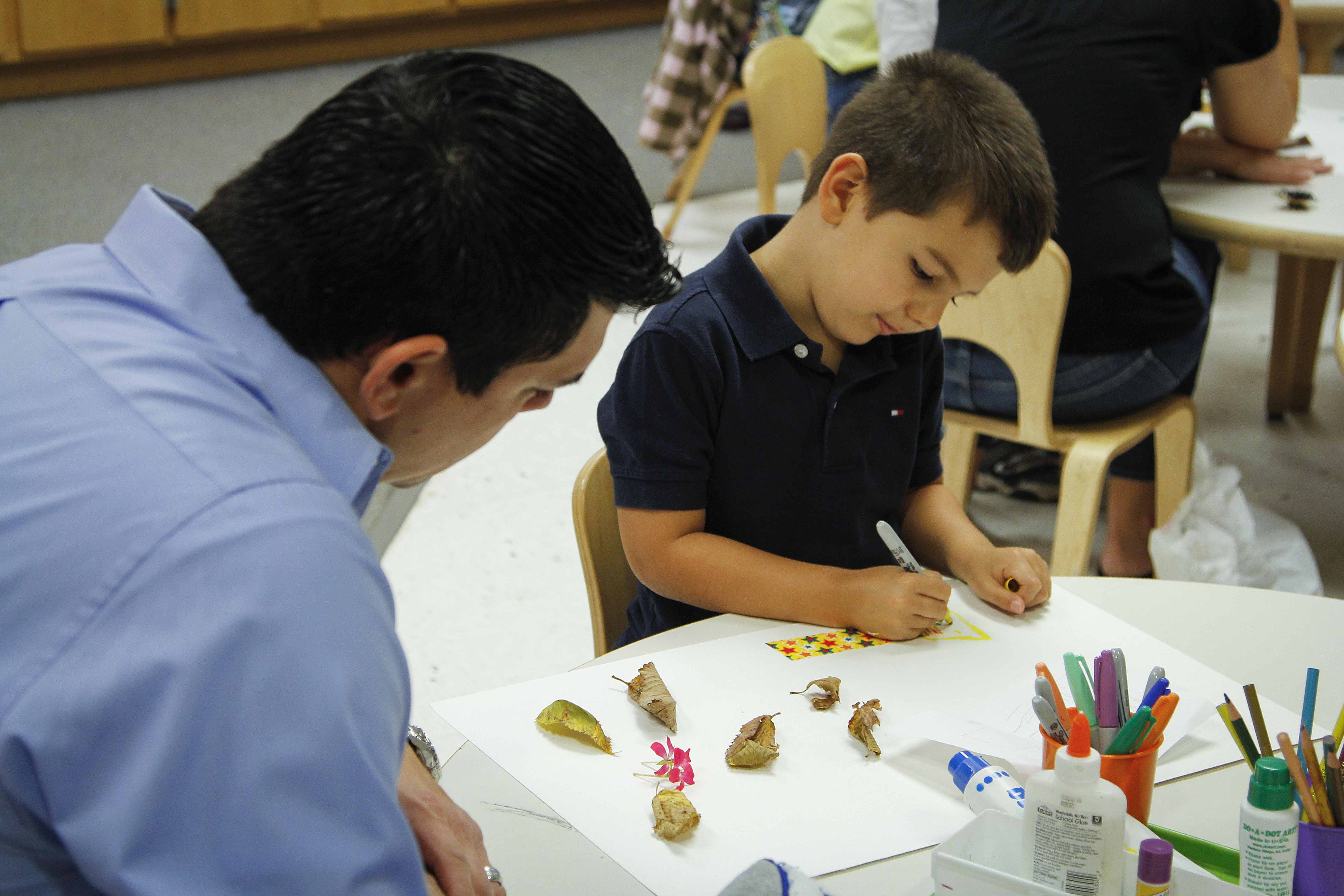
With Labor Day in our sights, I thought it was the perfect time to take a look ahead at what we are doing for our community families. Last year, we started offering preschool courses. These courses took place over a four-week period, meeting Saturday mornings. Each course had a theme (more information) and met for two hours. In the first portion of our morning, we would do some sort of introductory activity. This activity ranged from exploring a discovery box featuring cultural objects to comparing two paintings. Almost always these activities were meant to be done independently, meaning child and caretaker working together separate from the teacher. (These classes are very literally family classes, so caretakers play an important role). After our initial work, we would come together in a circle to discuss what they had done. Our discussion led us to an introduction to the museum visit.  

Cary teaching

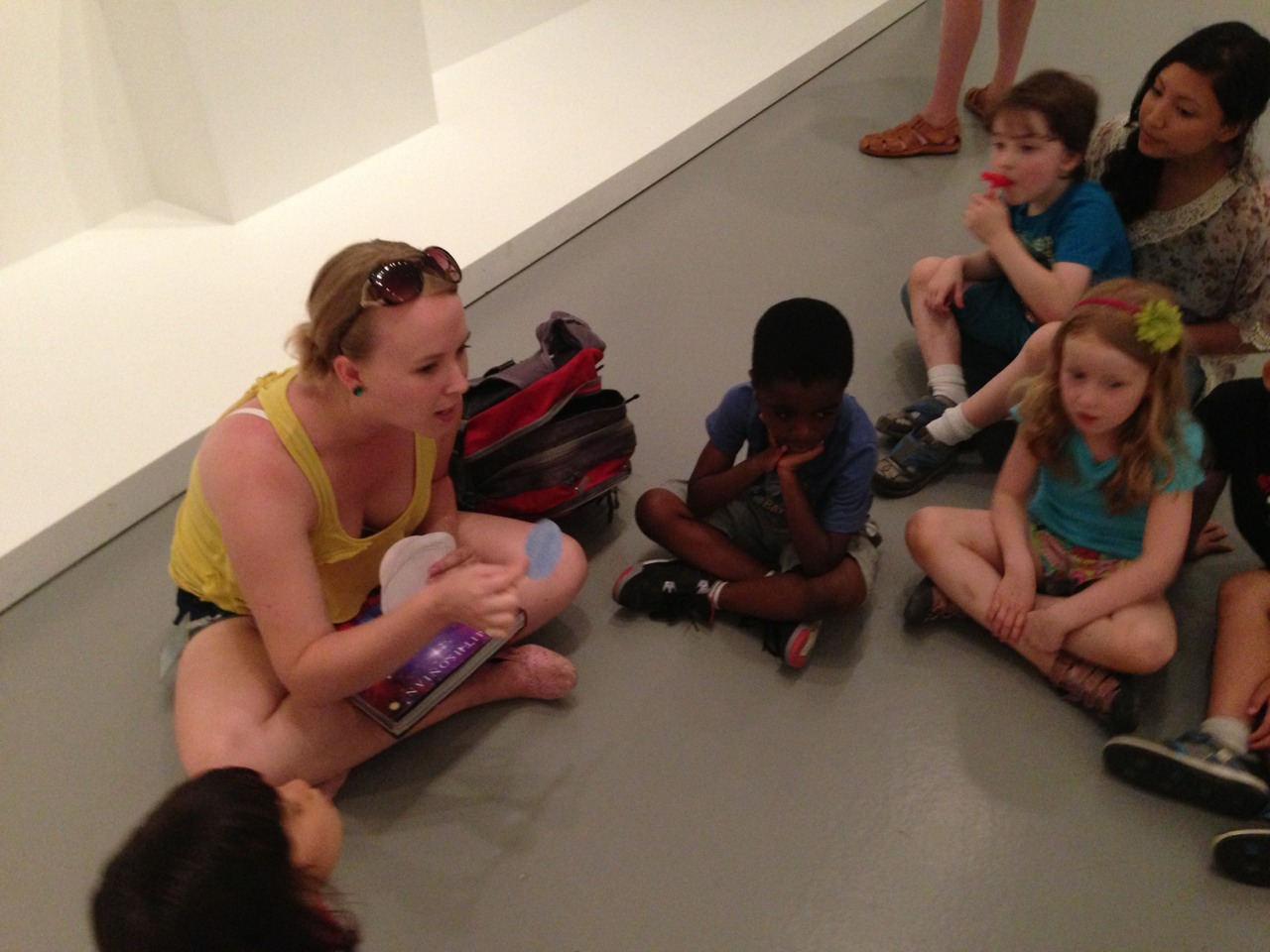
Using hands-on objects to teach in the galleries

After bathroom breaks and the putting on of coats, we head to the museum for what is typically a 20-30 minute visit to one to two objects. During our visits, we use hands-on objects to engage the children in a multi-sensory experience and inquiry to guide the conversation. Museum educators are likely familiar with these approaches of object-based learning and the inquiry method. For educators who are unfamiliar with these approaches, let me suggest SEEC’s line of professional development seminars and/or MOMA’s inquiry course offered through Coursera (just completed it myself, very informative).

F2003.2

Freer Gallery of Art
Shiva Nataraja, ca. 990
Chola Dynasty, India
Bronze
Purchase–Margaret and George Haldeman, and Museum funds F2003.2

After our visit, we head back to the classroom where we wrap up with a final project.While it’s most often an art project, I do not limit myself to that platform. This is extremely helpful for two reasons; first, sometimes it is not developmentally appropriate for children to recreate the art they have just seen and second, sometimes it’s not culturally sensitive to recreate the art either. A good example of the first scenario is when I did a lesson on the Renaissance and I wanted to talk about composition. They were not up for the challenge of creating a masterpiece that depicted, balance, dynamism and fluidity. However, they could connect to these concepts by acting out their own birthday party photo and seeing the results. And when we do our class on Hinduism and visit the Freer’s Shiva Nataraja, we opt to look at videos of Bharatnatyam dance, do a sample of mudras and keep a beat with bells on our ankles. All activities are meant to build upon the concepts introduced through the lesson in a way that is interactive and self-directed.

This year we also offering infant and toddler class, so keep an eye out for future blogs about these audiences. In the meantime, let me know what is working for you with young audiences in your museum!

An Intern’s Perspective of SEEC

BethAnne_2
Written by: Beth Anne Kadien
Rising senior at Georgetown University – SEEC Summer Intern

I started in January doing behind-the-scenes work for SEEC’s Museum Education department, creating a database for the objects and prints that are used in SEEC classrooms. This summer I continued my internship, but in a more hands-on way. My experiences have been varied and always interesting. Moving from archival work to observing and leading classroom lessons was incredibly rewarding, both in what I had the opportunity to learn, and the witty student commentary. I came home to my roommates each day with a new story about the kids, which I have pared down to a top three favorite things overheard at SEEC:
1. One student looking over at me and asking “Hey, do you wanna put your stuff in my cubby?”
2. Asking a student where a colleague and I should get lunch, with a response of “Well do you girls like toys? Because then you should go to McDonalds.”
3. Receiving a superhero alter ego and superpower from one of the Koalas. “You’d be Star Girl, and your superpower would be shooting penguins out of your hands.”

BethAnne_1

What I learned, while less entertaining, will have a long-term impact on my career choices. Here it is, the top 3 (okay, really 4) things I learned from SEEC.

1. I am more creative than I thought. One of my proudest accomplishments, making a photo projector out of a shoebox.
I wrote lessons for both SEEC classes and their weekend family workshops, with a range of topics from food to the science of colors and pigments, to transportation. These all seemed incredibly daunting when assigned, but now I know how to better think out-of-the-box so that I can create an age-appropriate and interesting lessons.
2. Even if you think you have enough work, ask for more. One of my extra assignments was helping to write family programming for a partnership with a museum in my hometown of Memphis. It was so worth it!!
3. Be mindful. One thing that is common in the various people I worked with at SEEC is that each employee takes the utmost care in considering others. Museum educators go to great lengths to be a resource to their classroom teachers; teachers know their students’ dietary needs, pet’s names, favorite things, and greatest fears better than I know my own. Each decision made is made with consideration to how it will affect the teachers and students. This is something I greatly admire about SEEC, and it is now a model to which I strive in my on-campus job.
4. Actually the most important thing I learned, is that Splash Day is the greatest day, but you need to remember a change of clothes or else it’s a very cold metro home.
BethAnne_3
This summer has been incredibly rewarding, and I am more than grateful for the opportunities SEEC has given me.

Do Museums Make a Difference in Early Learning?

Penguins Engaged w NicoleEvery day our educators here at the Smithsonian Early Enrichment Center (SEEC) find ways to use the museums and community to engage young children in deep and meaningful explorations. We know that traditional object-based museums everywhere have taken on the challenge of creating incredible experiences for children under the age of 6 years old. It makes sense, then, that we’ve been thinking a lot about how museums can systematically support the President’s investment in early care and education. As we talk to folks in the field, we’re hearing that we need to pull together and share information. The children’s museum community provides us with an important foundation for this kind of work. If we want decision makers to recognize that all museums are an important resource in preparing children to succeed in school and life, we need proof. Who is doing what? What’s working? Who has research that provides evidence that our efforts are making an impact? Let find out. Tell us what you’re up to and how you know it’s working.

On August 14, the Smithsonian’s Early Learning Collaborative will convene. It would be great to share a few of your highlights as we continue our Smithsonian wide conversation about serving the unique needs of very young audiences. We’ll keep you posted as things proceed!