Teacher Feature: Toddlers Explore the Ocean

It’s Teacher Feature Thursday!

This week we are featuring Dana Brightful. Her toddler classroom was learning all about the ocean and decided to spend a day focusing on anemones. Below you will find a reflection from Dana and images from some of her lessons.
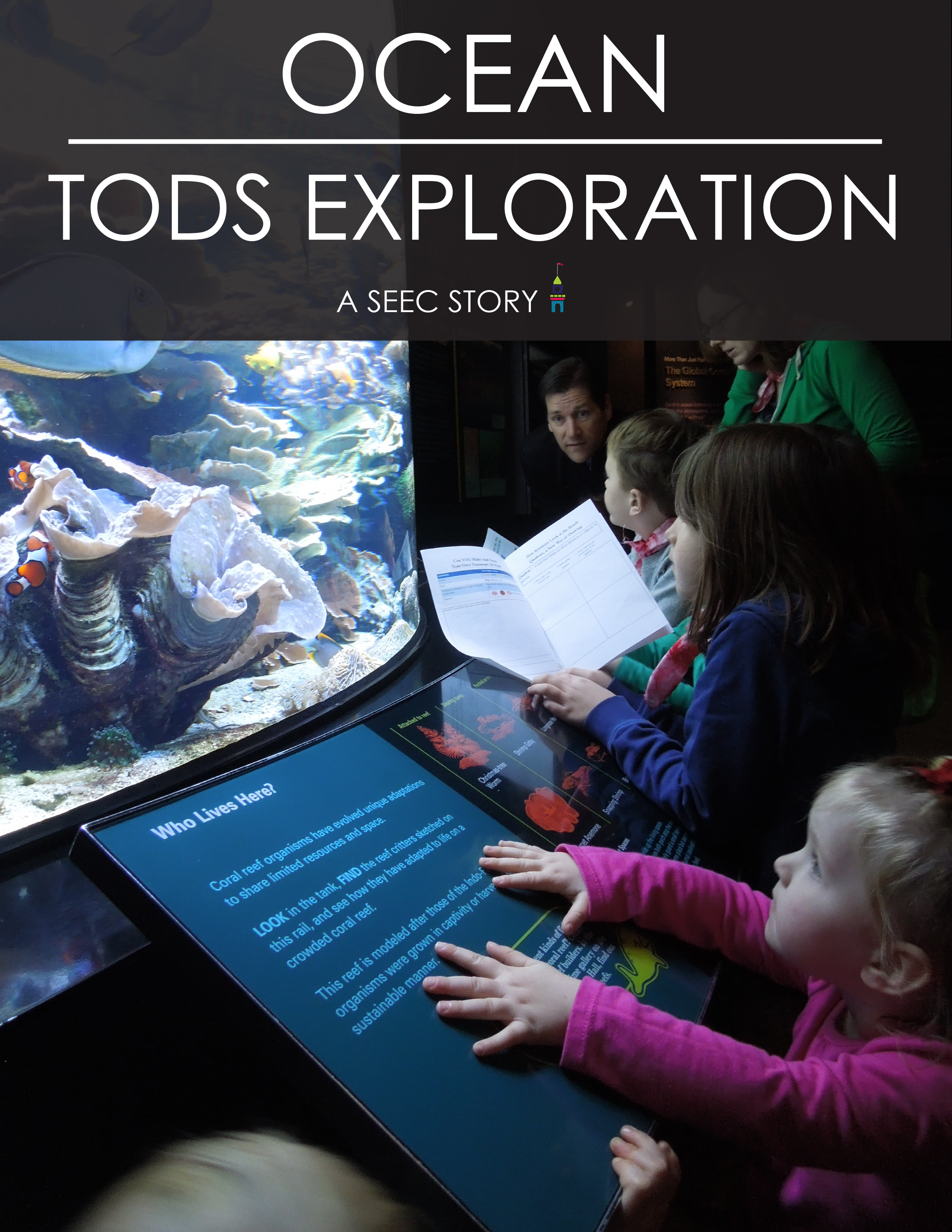
Ocean_Cover

What were your topics of exploration?

Our topics of discussion that week were Oceans and Coral Reefs. We specifically focused on symbiotic relationships between clown fish and sea anemones and the importance of coral reefs and octopi.

What were your learning objectives? (What did you want your children to take away from the lesson?)

My main goal for this particular group of children was for them to understand the importance of working together like the sea anemone and clown fish. This group is working on building their relationships with each other and to consistently work cooperatively.The activities that were included in this unit encouraged hand holding and the importance of collective responsibility in the classroom.

What was most successful about your lesson?

The children really remembered the vocabulary words like coral, ocean, clown fish and even anemone. Also, that week, the group was particularly successful walking together as partners holding hands and even beginning to identify the feelings of their classmates.

What could you have done differently? What recommendations would you have for another teacher trying out this lesson?

I would actually have done the tunnel portion (hiding from the shark) in an open space, like the classroom. The space in the museum or smaller spaces proved to be a challenge and the idea/ concept was lost on the group.

Here are a few images from her unit on anemones:
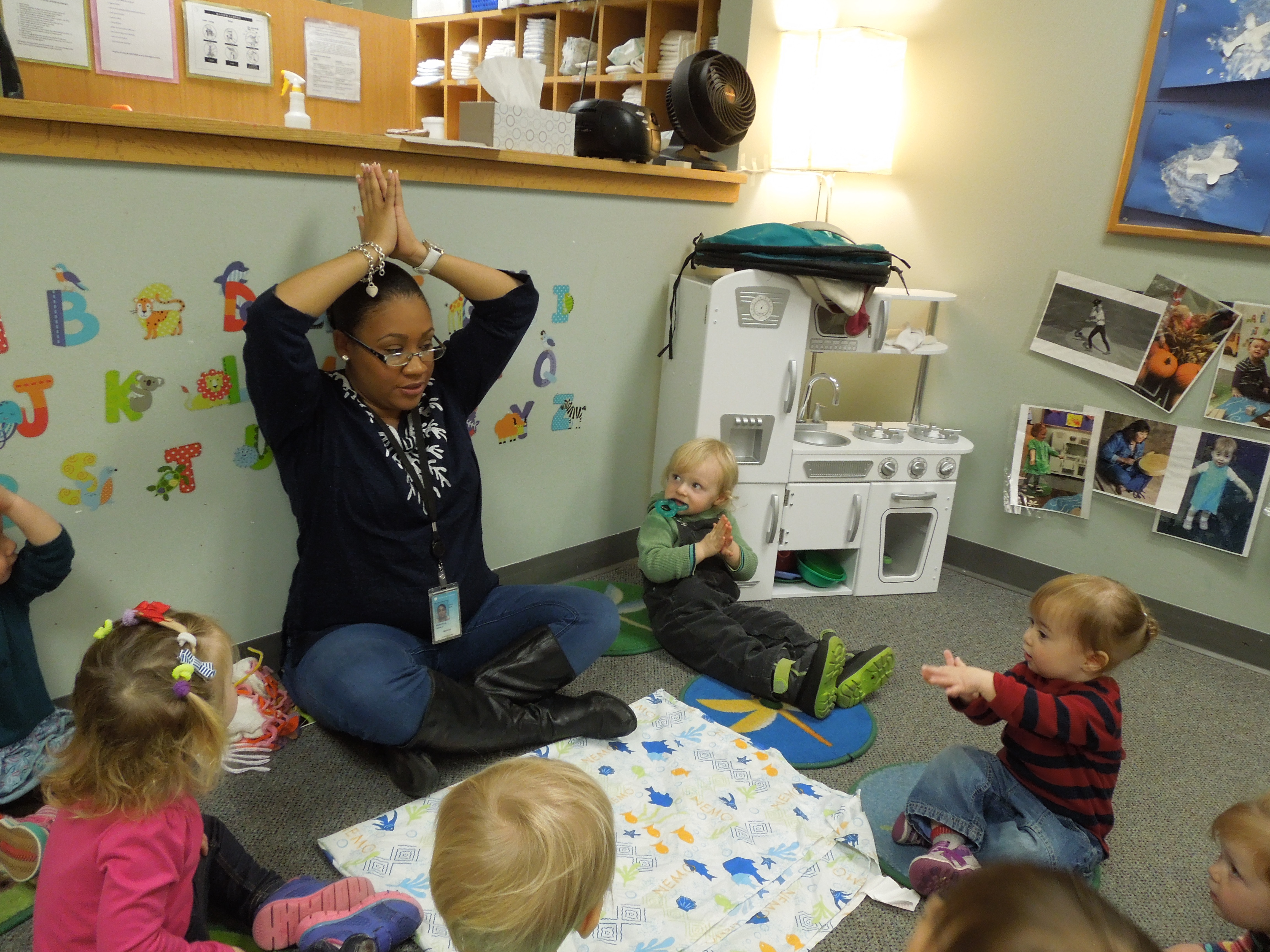
DSCN1450Dana stared the lesson by asking the group to dive into the ocean.
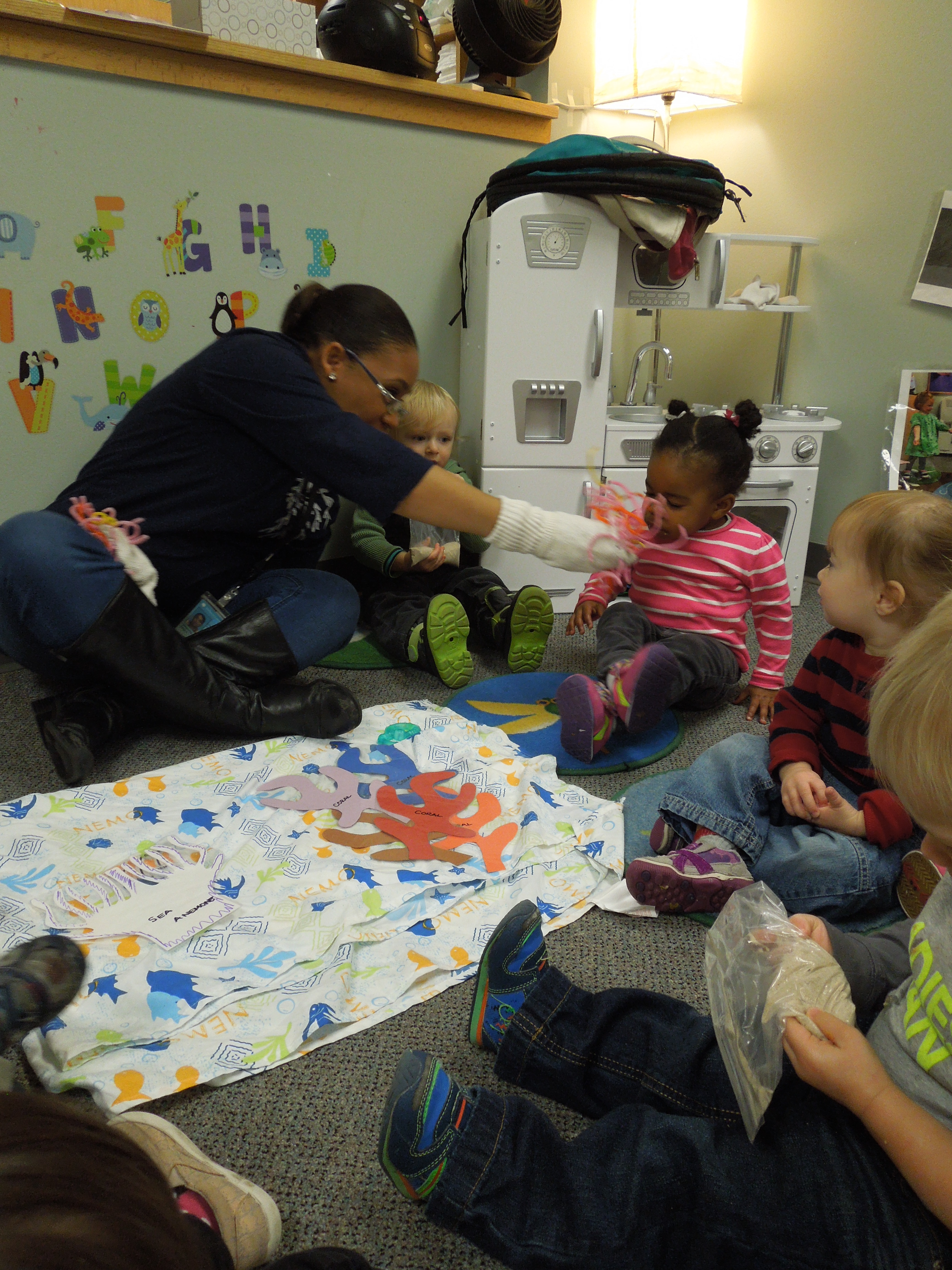
DSCN1458Down on the ocean floor they found coral, an anemone, and sand. The group took turns passing around the different items and reviewing the different sea creatures they had studied earlier in the week.
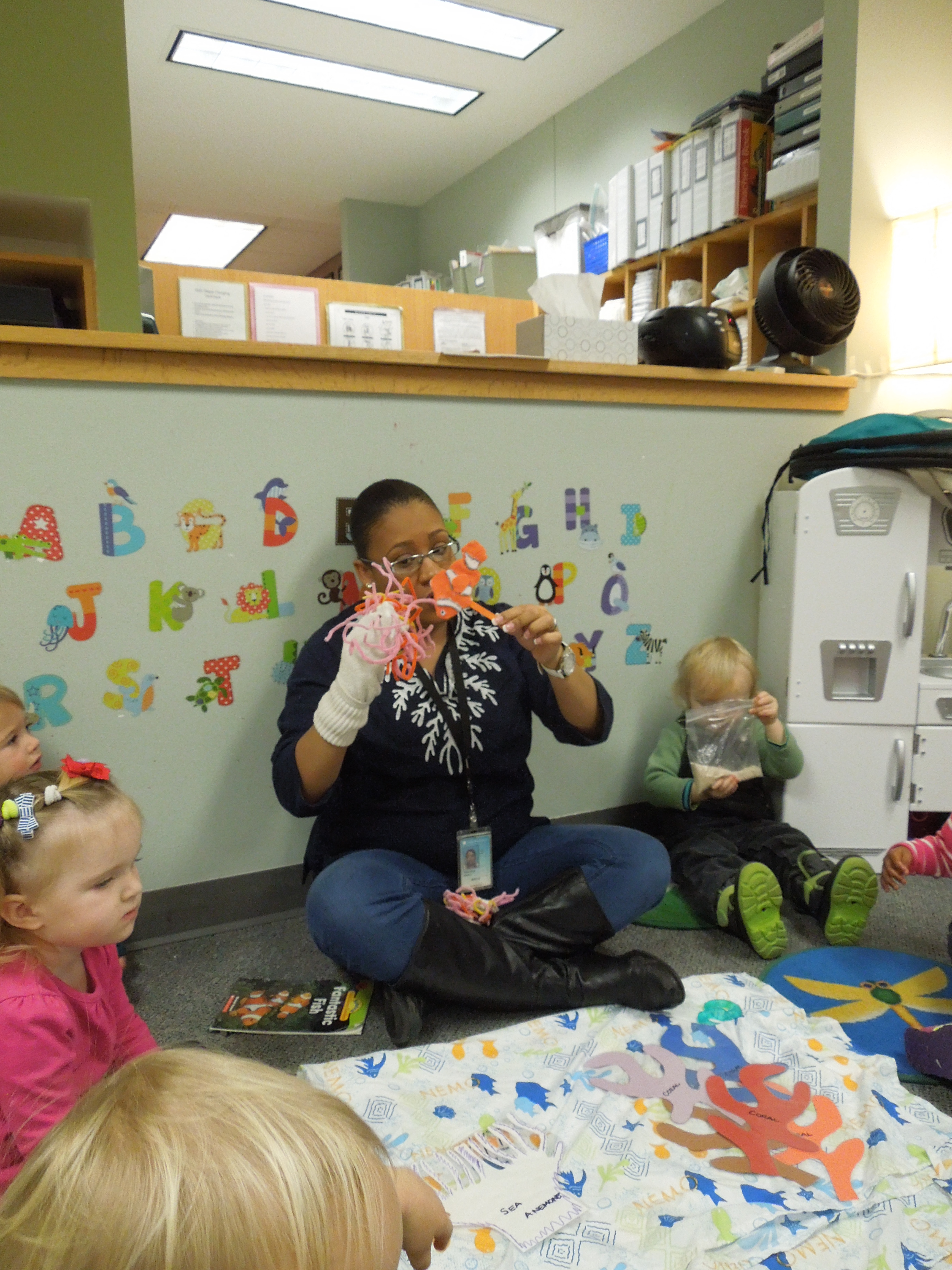
DSCN1461Dana then explained how clown fish live in anemones. The anemone keeps the clown fish safe and in turn it keeps the anemone clean. To emphasize this point she used puppets to sing a song about their relationship. Here are the lyrics  (sung to the tune of ‘This Old Man’): I hide you, you clean me, clown fish and anemone, They work together can’t you see? Living in the coral reefs!
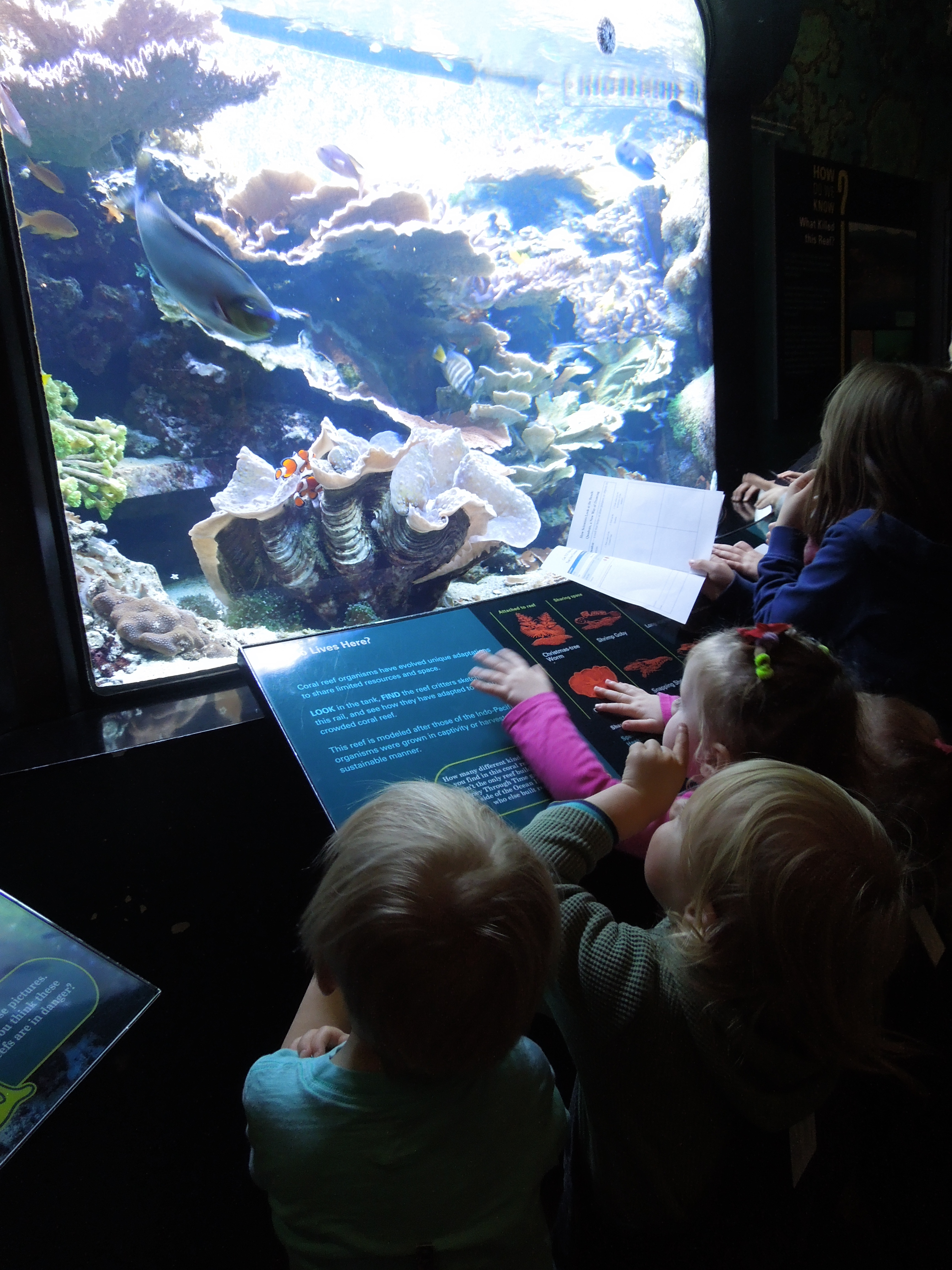
DSCN1467

DSCN1475The group then walked up to the Natural History Ocean Hall to see the clown fish in action.
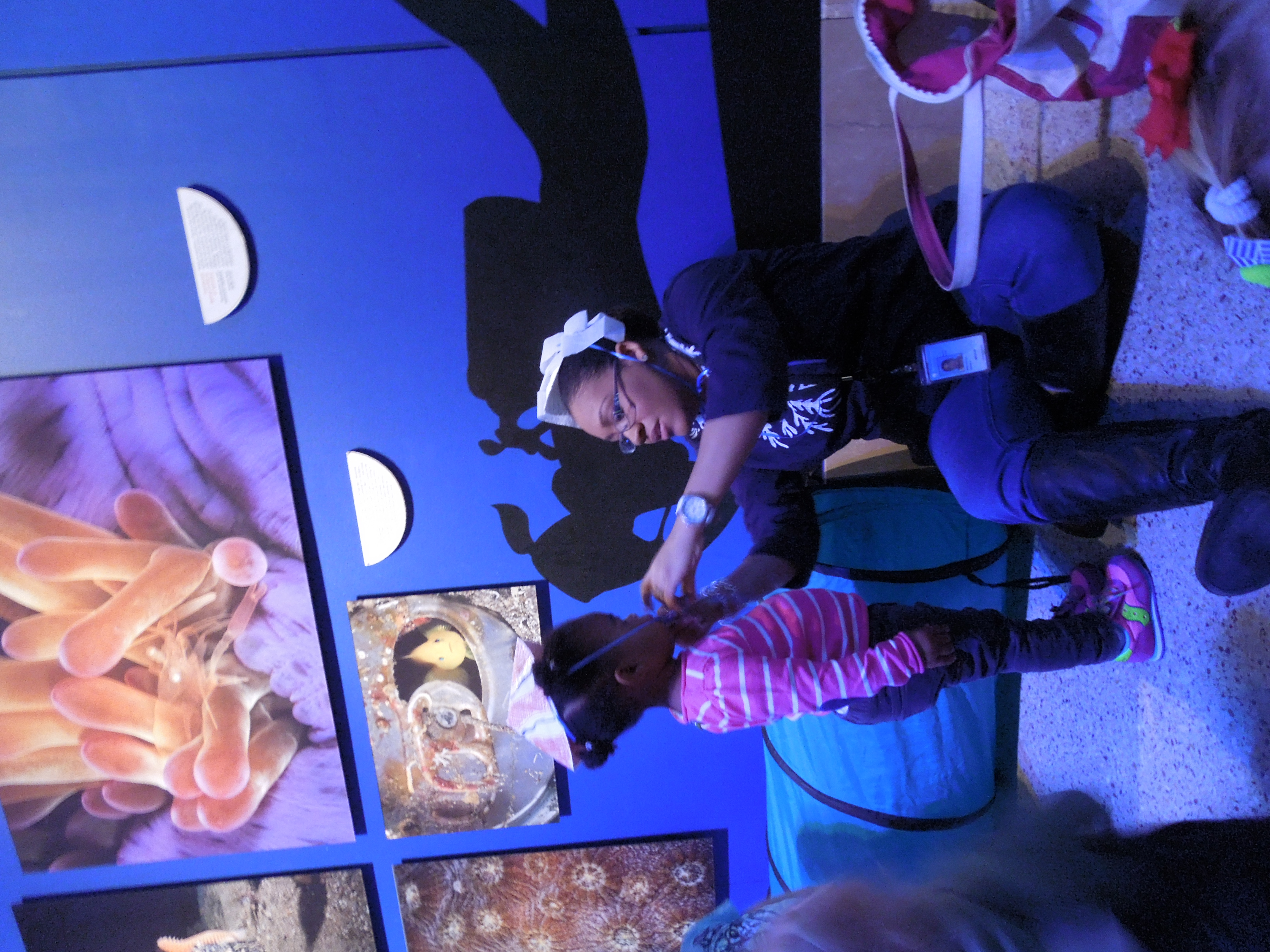
DSCN1485After they had a chance to observe the fish, they ventured over to Portraits of Planet Ocean: The Photography of Brian Skerry (http://bit.ly/1CklPMe) to see a photograph of an anemone. Sitting in front of the photo, Dana introduced the game they were going to play in the museum. She was going to be an anemone and a child was going to be a clown fish. Dana used a paper plate, streamers, and string to create an anemone hat. She also made an additional hat out of a paper plate with the colors of a clown fish. The children took turns wearing the hat and pretending to be a clown fish.
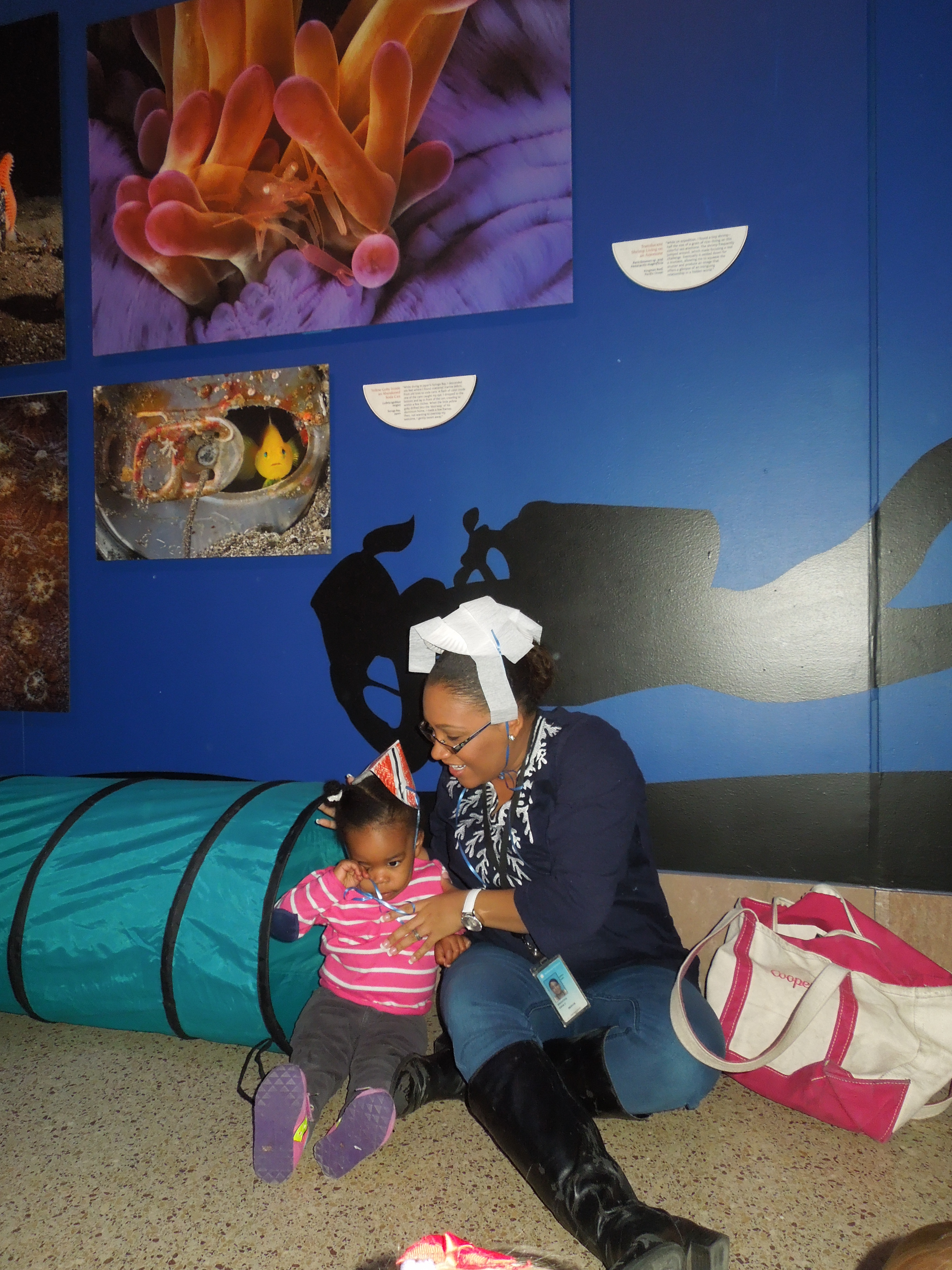
DSCN1487 DSCN1489She asked one of the other teachers to be a predator trying to catch the clown fish and Dana told the children to quickly hide in the anemone (the tunnel). The kids had a blast playing in the museum.

The class had a wonderful time studying oceans and has now swum on to their next topic. Check back next week for another teacher feature!
 

Teacher Feature: Two Year Old Classroom Explores Trains

It’s Teacher Feature Thursday!

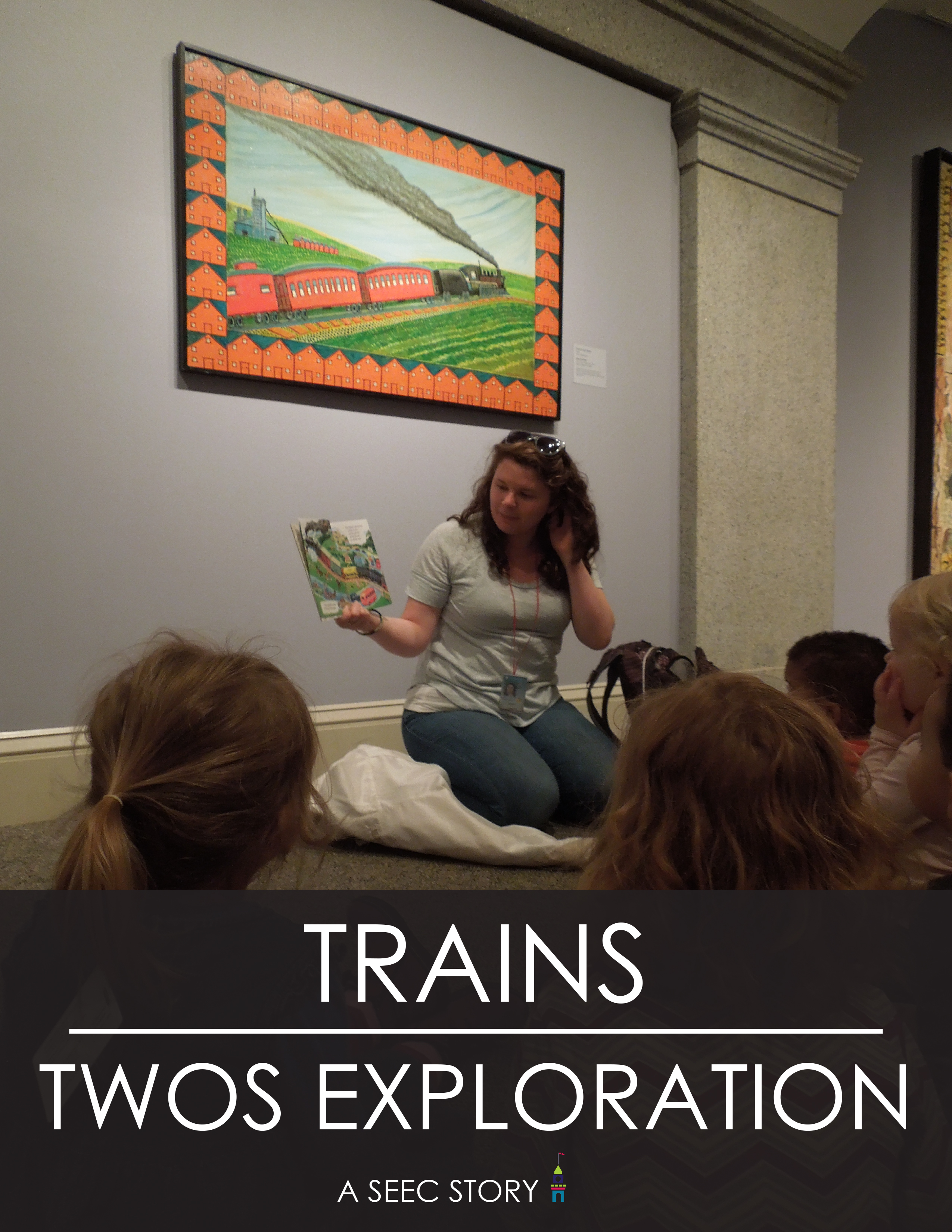
This week we are featuring Carolyn Eby. Her two year old classroom was learning all about trains and decided to spend a day focusing on the Little Red Caboose. The teachers had decided to focus on this topic because the children were showing continued interest in trains. They were pretending most objects were trains and wanted to talk about them during their walks in the community. In addition, one focus that SEEC toddlers have is walking safely together. Since they are just learning how to walk on “trains” there is a lot of interest in what trains are all about, how they stay together and, of course, train safety. This unit was able to connect all these aspects into one cohesive lesson. Below you will find a reflection from Carolyn and images from some of her lessons.

Train_Cover

What were your topics of exploration?

Our class was spending time learning about the different parts of a railroad train such as the locomotive, tank car, and so on. We had spent the week looking at different cars and their various functions. On this specific day we were talking about the Little Red Caboose and how it keeps everyone safe.

What were your learning objectives? (What did you want your children to take away from the lesson?)

I wanted the group to understand the safety function of the caboose and its location in the order of the cars. The class has a great sense of compassion for each other and characters in books and by personifying the caboose through the book Little Red Caboose by Marian Potter I was able to illustrate how the train “keeps an eye out” for the other cars.

We were also able to work on some developmental goals by involving dance and call and response during our circle.

What was most successful about your lesson?

I found that the most successful part of my lesson was the connection between the book and the work of art. We visited the Smithsonian American Art Museums to see Train in Cole Town by Jack Savitsky. Both the illustrations and painting had a funky feeling which made the flow from reading the book to looking at the art work very easy for the group to connect. It was really fun to spend time looking at the painting, imagining how it could be an extension of the text we were reading!

Surprisingly, right around the corner were several other train paintings! We decided to stop and spend some time discussing what we saw in those works. We wondered about the people riding in the passenger trains and where the rail road tracks may lead. These conversations were exciting and included thoughtful connections to previous units since the class had been spending so much time working on trains! Sometimes the best parts of a lesson are not planned!

What could you have done differently? What recommendations would you have for another teacher trying out this lesson?

It was difficult for me to think of an age appropriate activity that I could pack up and take with me to the museum. I loved singing with the kids and reading them a story, but I feel like the lesson could have made a greater connection with the group if they had a hands activity to do in the gallery. Also, I would have probably spent more time talking through the lyrics of the song which may have resulted in a more dynamic discussion.

Here are a few images from her unit on the caboose:

DSCN1509 Carolyn introduced her topic for the day by creating a small red car to add to their bulletin board train. She reviewed the parts of the train that they had previously studied and asked the group where they thought they should put this car. Carolyn then explained that this car was a caboose and it had a very special job.

DSCN1513Carolyn then played a video for the group with the tablet. It showed a musical group singing “The Little Red Caboose.”

DSCN1515Carolyn wanted to provide multiple exposures to the same song so she also sang a slightly different version with the class. She also showed them a few train movements to do while they were singing. The group loved them!


DSCN1530Following the story, the class walked up to the Smithsonian American Art Museum to see Train in Cole Town by Jack Savitsky (http://bit.ly/1xh3FWZ). They spent some time looking at the work and talking about the different parts of the train. They thought about where it might be going and how quickly or slowly it might get there. Carolyn then read The Little Red Caboose by Marian Potter.

DSCN1539Carolyn asked the group if they could see similarities between the book and the painting. The children had a lot to share and were able to talk about the role of the caboose in both the book and the work of art.

DSCN1544On their way out of the museum the group spotted a few more train paintings. Subway by Lily Furedi  (http://bit.ly/1DPTbDW) served as a great way to review passenger cars. The group talked about what the people were doing on the train.

DSCN1546The children also spotted train tracks in Third Avenue by Charles L. Goeller (http://bit.ly/1BUh9yj). They wondered where they were going and what kid of train would use that type of track.

The class had a wonderful time studying trains and has now chugged along to their next topic. Check back next week for another teacher feature!


Teacher Feature: Two Year Old Classroom Explores The Human Body

It’s Teacher Feature Thursday!

This week we are featuring Javasa Finney. Her twos classroom was learning about the human body and decided to spend a day learning about hair and how the human body grows. Below you will find a reflection from Javasa and images from some of her lessons.

Body_Cover

What were your topics of exploration?

During the months of October and November the Penguins were exploring the human body.  We talked about the different parts of the human body.  Some of the parts we focused on included:

  • hair
  • skin
  • mouth
  • bones
  • eyes
  • brain
  • heart

In addition to how these body parts work we had a lot of fun learning about the five senses.  We talked about nutrition, how important it is, and how what we eat affects our body. Then they made delicious food from the different food groups with my co-teachers throughout the week. We also talked about the importance of sleep and how important exercise is for the human body.  They were extremely excited to have the opportunity to go exercise at the Washington Monument.

What were your learning objectives? (What did you want your children to take away from the lesson?)

I wanted the class to learn all about their amazing bodies. My main learning objective when teaching the kids about the human body was for them to learn about how important their bodies are and how to care for them. I also wanted them to learn all the bodies’ functions and abilities.

What was most successful about your lesson?

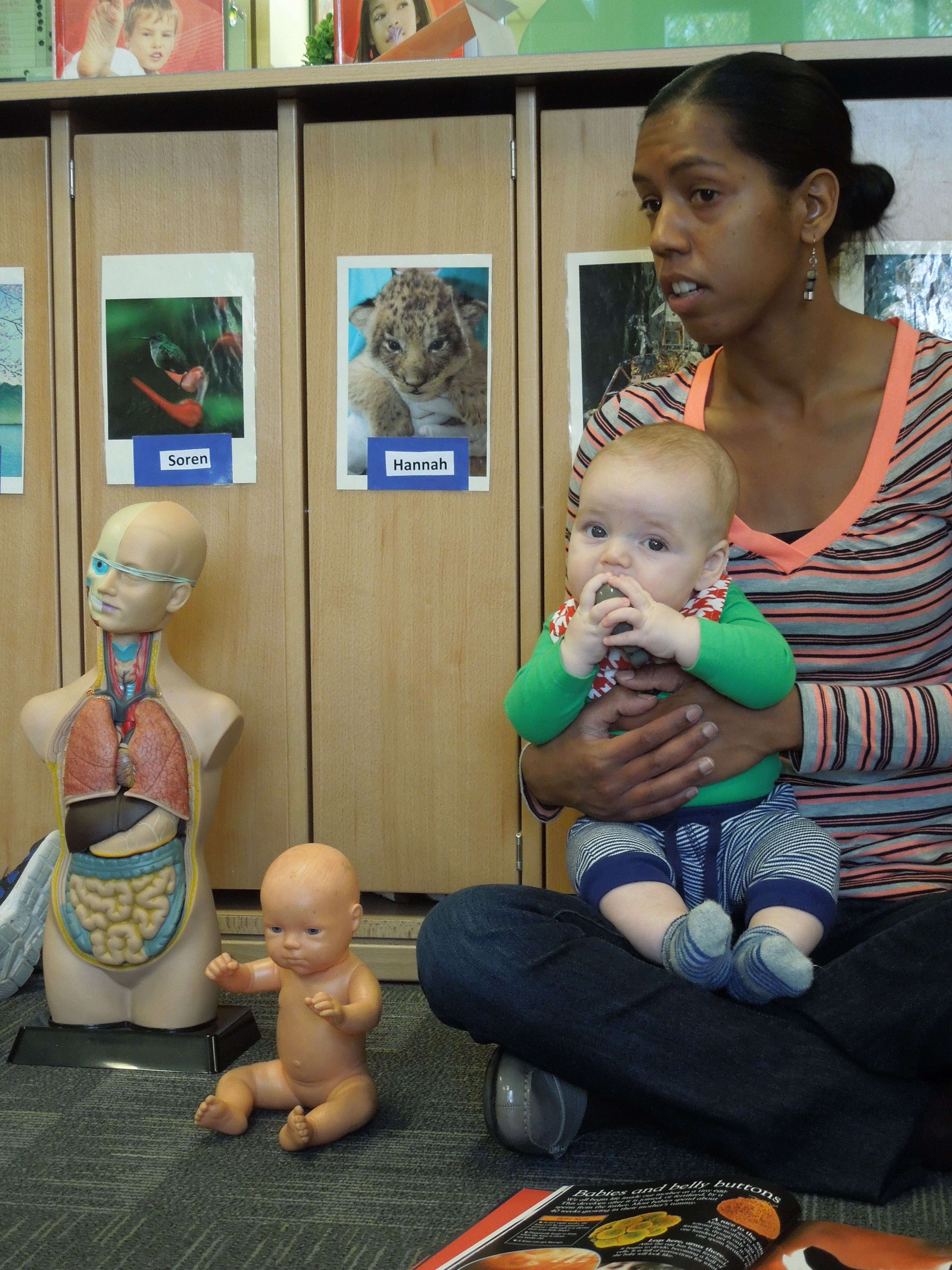
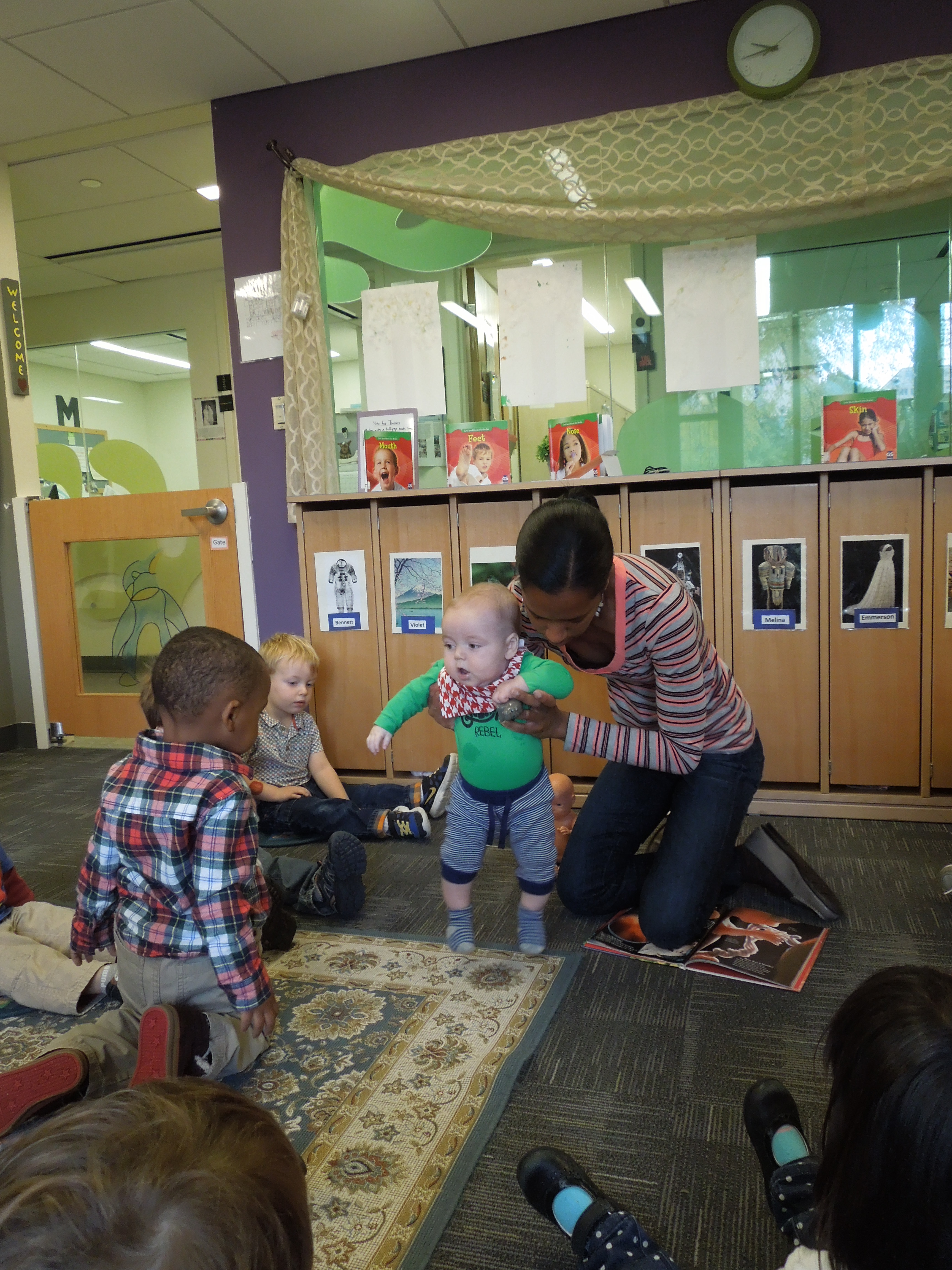
During the time we spent learning about the human body there are two lessons that I feel were extremely successful and memorable.  The first one would definitely be when a baby came to visit.  The child is currently a student in the infant class here at SEEC.  The five month old was our model for the lesson. During this lesson I talked to the Penguins about how we start out as small babies.  We talked about how different a baby’s body is compared to older people.  We talked about how when babies are born they don’t have teeth and can’t talk, walk, run, or jump.  They learned that during the first year a baby sleeps and drinks a lot and cries to communicate.  During circle time we made observations about the baby’s body and talked about how fragile it is.  Then the Penguins had the opportunity to touch him.  It was wonderful to see the children light up and respond to the child.  The second most successful and memorable human body lesson was our lesson on hair.  We learned how hair can be many colors, textures, and lengths.  We talked about the things we use to care for our hair.  Then the Penguins had the opportunity to try on wigs that were different colors, textures, and lengths. This lesson was followed up with a trip to the National Gallery of Art.  We went to look at the “Little Dancer” by Edgar Degas sculpture. First we made observations about the body and then we had the Penguins take a closer look at her braid.  The braid is made of real human hair, coated and held in place by wax.

What could you have done differently? What recommendations would you have for another teacher trying out this lesson? 

During the first lesson, if I were to do this again, I wouldn’t keep the baby on my lap the entire time.  I realized later it would have been nice for the kids to see him crawling, playing, etc.   For the second lesson about hair, I would have picked a different day to go to the National Gallery of Art.  The day we went there were several trips there and the room with “Little Dancer” was extremely crowded.

Here are a few images from their unit on the human body:

DSCN1370Javasa began the week by exploring how our bodies grow and change. As a way to illustrate this development, Javasa invited a child from the infant classroom to visit. She wanted the class to look at the baby and compare his body to their own and the teachers’. Javasa explained that people start by needing a lot of help from adults but as our body changes we become more independent.

DSCN1373Javasa explained that the baby couldn’t feed himself, talk, or even walk yet. She showed how the baby would eventually learn how to do all these things as he gets older.

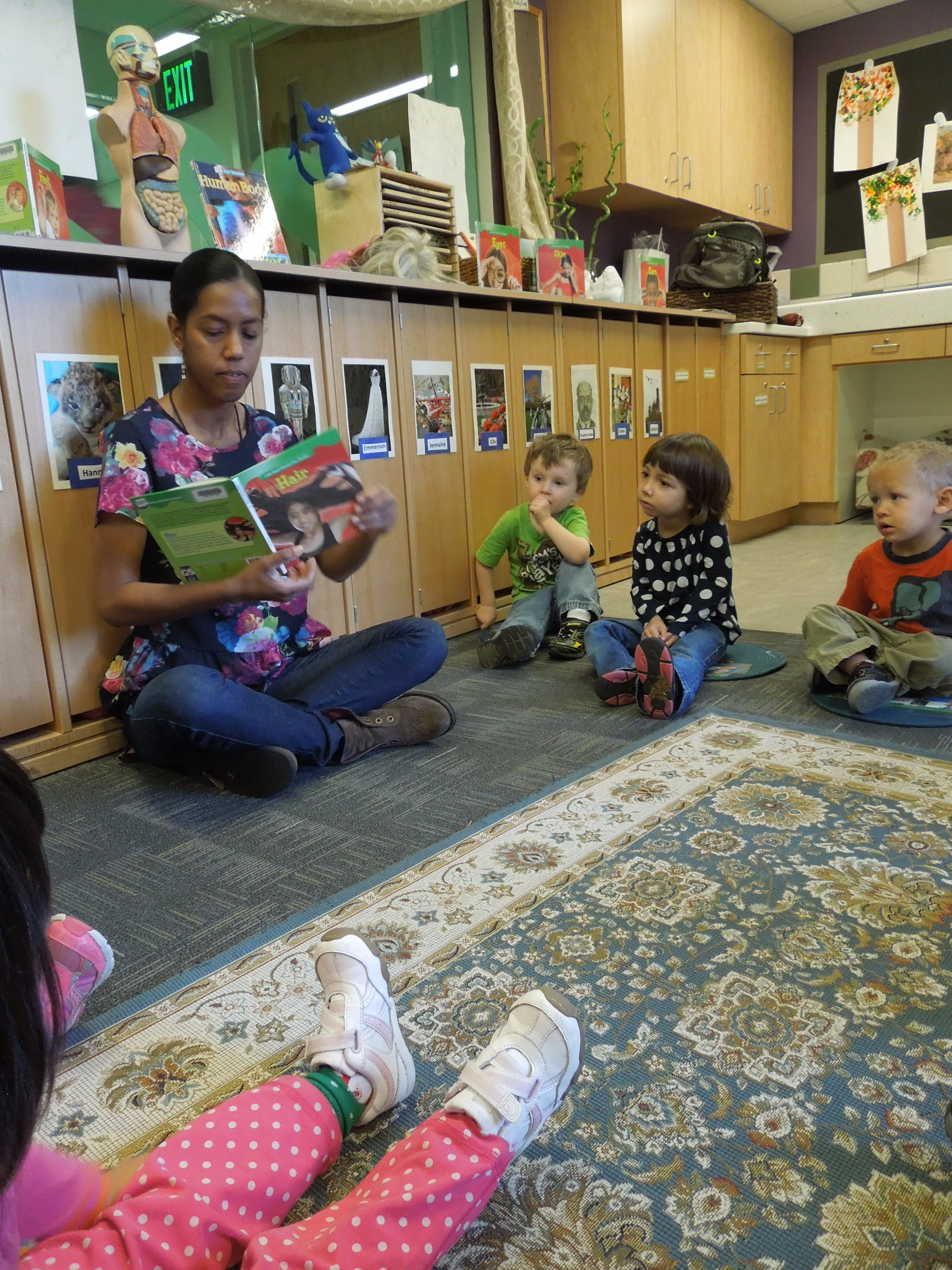
DSCN1382The next day the class moved on to Hair. Javasa read “Hair” by Cynthia Klingel and Robert B. Noyed to introduce the topic. The book helped students understand that people all over the world have many different types of hair and hair styles and each one is as special as the next.

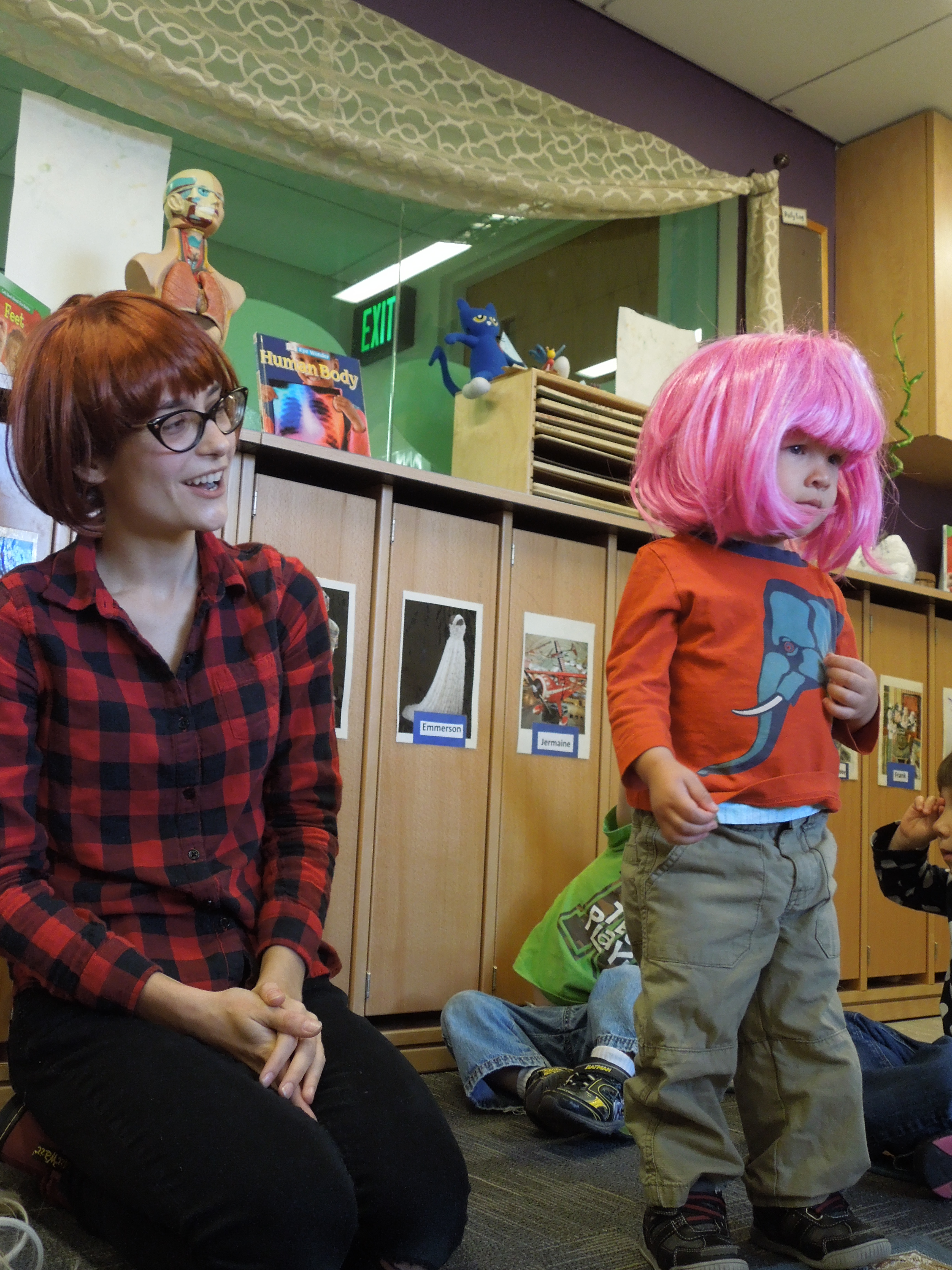
DSCN1387One of Javasa’s co-teachers shared her collection of wigs as way to talk about how hair can be all different colors, textures, lengths, and styles. She explained that hair comes in a range of color but if you want certain colors (for example, pink) you would need to dye it that color.

DSCN1390She showed the group a zoomed in picture of a hair follicle. The kids couldn’t believe how the root of their hair looks.

DSCN1393Javasa went on to explain that hair can grow curly, straight, or wavy.

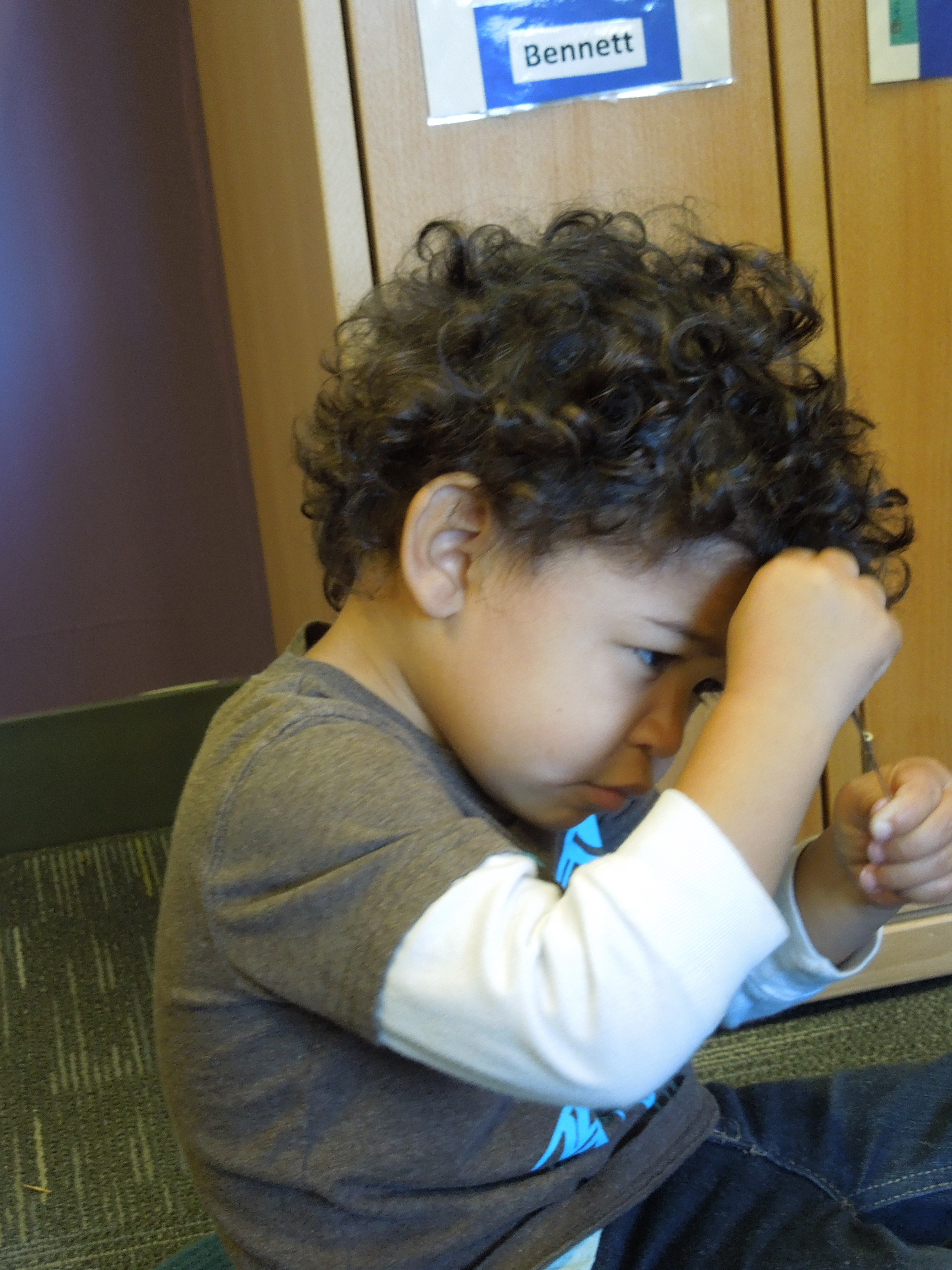
DSCN1397 DSCN1398The group spent a long time looking and touching their own hair.

DSCN1409Then it was time to try out new hair!

DSCN1415 DSCN1431They had a wonderful time trying on the different wigs!

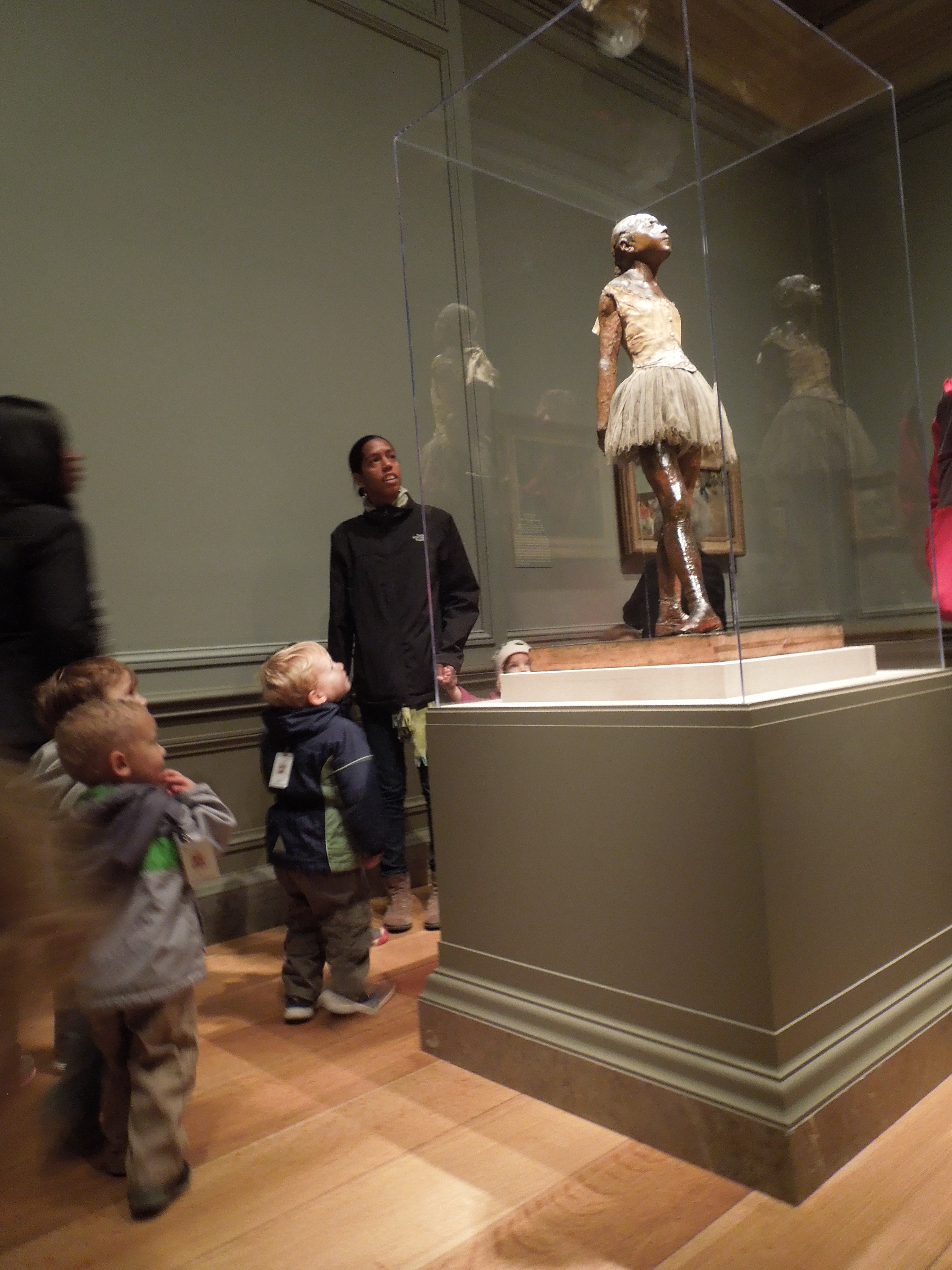
DSCN1436 DSCN1438The group then walked over to the National Gallery of Art to see Degas’ “Little Dancer.” They were fascinated by how Degas used real hair for the sculpture. The children discussed the color, length and style of the dancer’s hair.

This class had an awesome time learning about their bodies! Be sure to check back for our Teacher Feature next week!

You Teach Art History to Preschoolers?

Written by Carrie Heflin

Art History

The lesson on emeralds.

Twenty five thousand years ago our rapidly-evolving ancestors discovered a network of caverns in the region currently known as Lascaux, France. What they did there made an indelible mark on our species and our planet.

For most of our early years, man was focused solely on our own existence. But these images on the walls of the caves at Lascaux were created by human hands. We don’t know why they were created or by whom. All we know is that, as our most ancient ancestors spent hours in the dark musty interior of the caves at Lascaux recording the world around them in a way that would preserve their thoughts and feelings for thousands of generations to come.

Today we seem to have lost sight of this earliest vision of our forefathers. As we slash budgets, we often do so at the expense of museums and their programming, art classes in schools, and extracurricular activities. Art and its history are not just some frill belonging to the upper one percent of modern society. They are an element of our most basic nature- a calling in our souls.

I am in my third year as a pre-kindergarten teacher at the Smithsonian Early Enrichment Center and I use my art history degree every day as part of the curriculum. I teach my children to be critical thinkers and careful observers from early on.

The Wizard of OzLooking at a pair of emerald earrings.

One of the first topics we explored at the beginning of the 2013-2014 school year was Frank L. Baum’s timeless classic, The Wizard of Oz. We talked about everything Oz, from men made out of tin, to things that melt when they get wet. At the end of the unit I had two anecdotes that reaffirmed for me that the way that I implement art as an educational tool in my classroom is vital. The first was from a mother who had spent the weekend trying to design her family’s annual Christmas card with her two sons. As they sat in front of the computer trying various filters on the images, her older son became intent on using the dreaded sepia tone filter that makes everyone look like they’re in an amusement park Wild West saloon shoot. To appease him the mother clicked on the sepia option and her younger son (who is my student) immediately pointed at the screen and yelled, “Hey, it looks like we’re in Kansas!” This comment refers back to the first week we studied Oz almost a month prior when we went to the Hirshhorn Museum to look at two Wall Drawings by Sol Lewitt. One piece was in color and the other on the opposite wall was in black and white. We explored the art and how it was created and then we talked about how different color schemes make us feel and how the filmmakers in the Wizard of Oz used this concept to show viewers how Dorothy felt in Kansas.

The second comment was made during a morning circle on the letter “B.” We asked the students to think of words that started with “B” and one boy called out “beryl!” We asked him if he remembered what beryl is and he exasperatedly explained that everyone knows it’s the main ingredient in emeralds. He is four. Did you know what beryl was before you read this paragraph?

As much as I would like to tell you that they are, my students are not all geniuses. They are not smarter because their parents read to them in utero or played Baby Einstein movies in their nurseries. They are able to process and retain knowledge because they have learned critical thinking skills the likes of which I was still honing in high school. They answer open-ended questions with thoughtfulness and clarity that floors me on a daily basis and they remember what they have learned and apply it to their future endeavors. These are the skills that we as educators strive to instill in our students because they are the tools to success. Being able to analyze and apply what you have learned is the only thing that makes knowledge useful.

Conquering the climber with our hand-crafted emerald vision spy glasses.I firmly believe that the work we do in the museums is the key to unlocking these skills at such an early age. Every day I see my students connect with art and with objects. I see their eyes light up when I tell them stories of people who felt and questioned long, long ago and who made beautiful wonderful things that we can see and explore today. I hear their questions as we wander the halls of our nation’s most expansive art collections- “Why is that so blue? Who made those statues? Is that a sculpture or a painting? Is that Hermes or Zeus?”- and I watch them implement their knowledge in their play. My students have used dress up to be French flaneurs and turned our climbing structure into a ship sailing to see Claude Monet and Edgar Degas. They can tell you who the Neanderthals were and what their favorite Shakespeare play is. They are sensitive and passionate and insatiable learners. My greatest fear is that they will leave our school and become less curious and more focused, less passionate and more dedicated to trying to memorize information and facts.

Final ThoughtsLooking at Elizabethan clothes at the beginning of the Shakespeare unit.

As we rang in 2014 the Smithsonian was preparing itself for budget cuts that may have required our nineteen museums to close one day a week for an indefinite period of time. One day a week, we were told, we might not be able to go see the art. While it was only one day, it felt like the beginning of something very big and very bad. When the largest and most renowned museum network in our country is forced to consider closing its doors it seems like only a matter of time before other institutions must follow suit. It didn’t end up happening, thankfully, but it did make me want to sit down and put my thoughts to paper. I didn’t write this article to protest government budget cuts.

There are already plenty of people doing that. I just hope that what I have to say can make my fellow educators stop and think about the enormity of the task before us and I want to offer a suggestion for a way to make it more manageable. Use the mistakes and triumphs of our species’ long and winding path to show your students a better way into the future. Don’t let those critical thinking skills that we worked so hard to develop be lost on a future generation of people with endless knowledge at their fingertips, because the more we depend on our gadgets for answers the less we will seek them ourselves. Instead, use the tools that you have been given- tablets, projectors, laptops, and yes, museums to encourage your students to seek out and interpret knowledge. Immerse yourselves in the passion of human creation and discovery and you will be amazed the places it will take all of you.

Fountain Fun

DSCN3881Pools, beaches, lakes, sprinklers…it’s that time again! Children all over the US are enjoying summer-time to its fullest and likewise, parents are looking for water-inspired activities. Here in DC, we are lucky enough to have a number of public fountains that are both beautiful and refreshing. Fountains capture the imagination of children, so why not take this opportunity to create a learning experience?

Duckling FountainInfants
Infants often have mixed feelings about water, it can be both scary and exhilarating. Why not introduce them to water through their senses, especially sight, sound and touch. Simply draw their attention to different aspects of the fountain.

  • Do they hear that sound? Mimic the roar of the fountain.
  • Describe the color of the water.
  • Connect the fountain to the actual feeling of water by getting their hands wet.
  • At home, identify other places where you might find water and remind them of their visit to the fountain.

Toddlers

Toddlers are excited by new things and fountains are no exception. Take the time to explore the fountain and ask simple questions about its design:

  • What direction is the water moving?
  • Is there water that is still, where?
  • From where do you think the water is coming?
  • What else do you see besides water?
  • Do you see any pictures or decorations?
  • Try making your own fountain at home with a hose and baby pool.

Preschool and UpFirefly Fountains

By now your child has seen a few fountains and you can begin to investigate the concept further. Here are some fun multidisciplinary ideas:
  • Rainbows, light and water. This blog has some nice experiments you can easily duplicate.
  • Experiment with force and getting water to move in a certain direction. You can even perform this experiment at home if you are feeling adventurous.
  • Discuss why fountains are used: are they pretty, do they help us remember something, are they for cooling off, do people seem to like them?
  • Ask them to choose a location in your community and design their own fountain.

Favorite DC Fountains

Fountain at the Hirshhorn

Fountain at the Hirshhorn

  • Hirshhorn Museum and Sculpture Garden
  • National Museum of American History (Constitution Ave. Entrance)
  • US Navy Memorial Plaza
  • National Gallery of Art
  • National Museum of the American Indian
  • Senate Fountain
  • WWII Memorial Rainbow Pool
  • Bartholdi Fountain
  • What is your favorite community fountain? Leave us a message!

    Ready Set Go

    Post by Betsy Bowers, Director of the Center for Innovation in Early Learning
    As another school year comes to a close and we begin to say farewell to the many children who have spent the past 5 years or so with us, it’s hard not to wonder what’s ahead for them. Our educators tirelessly support SEEC students as we help them make sense of the world, love learning and grow into thoughtful young citizens. Over the course of this past year, a group of SEEC educators discussed what our students should be able to do when they leave SEEC.

    Critical thinking and analysis.

    Critical thinking and analysis.

    There’s quite a long list. A few of the things we agreed on were that our students should leave SEEC being able to solve problems, be responsible, take risks, understand their role in the community and their ability to affect change, have compassion, respect and empathy for others, and communicate their ideas.

    It’s a lot to ask a 5 year old if they know how to solve a problem or be responsible, because of course they will say, “yes.” We are, after all, working on having them leave SEEC with self confidence so a positive response is expected. Because I wanted to find out if our 5 year olds are entering Kindergarten as independent thinkers, I asked a few of them this more indirect question: “If I told you that five of your friends wanted you to climb up the Washington Monument so that you could jump off, what would you say?” One student gave me an odd look and responded, “That’s not really a good idea.” One student did say, “Yes.” We’ll hope that she has some clever ideas about how to do that safely. One student simply said, “Ouch,” while a few others were much too busy to want to elaborate and so responded with a “no.”

    Ability to share ideas.

    Ability to share ideas.

    The response, though, that reminds us that all these skills are intertwined and expands our notion of “independent thinking” was this – “Only if we could jump off like a cannonball and onto a big trampoline!” Of course, why didn’t I think of that?

    Here’s hoping that this playfulness, creativity, critical thinking and overall healthy outlook on the world that we have worked so hard to nurture is embraced by our elementary school colleagues and the world. Good luck, dear friends, as you now go and bravely pursue life.

    Self esteem and confidence.

    Self esteem and confidence.


    Summer Fun: Building Collections with Your Child

    If you have a child in elementary school, they have probably come home with some sort of summer packet. I’ve seen the “packet” take various forms: from a list of innovative ways to encourage reading to a dull packet of worksheets. Either way, parents and educators alike want to encourage learning outside of school and during a time that has been characterized as the “summer slide.”  I hope some of the ideas on how to build a collection will inspire your family to engage in playful learning this summer. Adjust as you see fit for age and your schedule.
    table
    household objects
    Flower Parts
    Looking at flowers
    1. Choose a topic in which your child is interested and then find a space in your home where you can place a table and don’t mind hanging things on the wall.
    2. Begin building your collection by visiting your local library and selecting several books.
    3. Find other toys and household items that you don’t mind donating to the cause.
    4. Use these items in a way that they can explore them with their senses, i.e. what does the flower smell like or what sound do seeds make in a bottle. Also allow them to manipulate the toys or objects so they are using they are able to discover how things work and practice their fine motor skills.
    5. Build a model, draw pictures and display.
    6. Add vocabulary words.
    7. Take it outside of the home and “experience” the topic, i.e. pick flowers or keep a journal of flowers you see during your day.
    8. Take to the community and visit a museum, local store, etc. Take pictures and post in the collection area.

    Helpful Hints

    • Collect, create and display together!
    • Keep the collection at their height.
    • When they are ready, change it up or expand on the topic, i.e. flowers – gardening – water cycle.
    • Let them come and go on their own and edit along the way.
    • Have fun!


    5 Things I Learned About Art From Children

    For the past year and a half, SEEC has worked with the Memphis Brooks Museum of Art and the Lifelong Learning Group on a project designed to positively impact the educational experience of young children and their families through the arts. As we collaborated with the Memphis based museum educators, docents and early childhood teachers to create meaningful interdisciplinary classroom and museum based hands-on activities, we found that each of us learned more than we imagined possible at the start of the project. The following post presents one great unexpected example of the project’s impact.

    Thanks to the partnership with the Brooks Museum of Art, the following is posted on behalf of docent Cheryl Caldwell: Docent Leading Group

    5 Things I Learned About Art From Children

    Art is so much more than just art: It can be science, culture, motion, and history, as well as color, line, and shape. Young children naturally think like artists, and their imagination is at its peak during their early development as students. Yet educators struggle with ways to develop and instill creative and critical thinking skills—crucial tools that this generation needs to utilize their creative impulses in educational and civic pursuits. As a docent at the Memphis Brooks Museum of Art, I work in conjunction with the Smithsonian Early Enrichment program, engaging Pre-Kindergarten and Kindergarten children from Title 1 schools, where 40 percent or more of the students enrolled are eligible for free or reduced lunches.

    Equipped with my knowledge from the six-month docent training course, I teach these children about visual art in a museum setting. As a new docent, I am excited to introduce children to a museum and see that they fully experience all it has to offer. At the Brooks, children have the opportunity to see, touch, and feel the materials an artist might have used in creating a piece. Engaging these children in this setting while they are young takes the fear out of the museum experience and brings out the fun. Of course, the kids aren’t the only ones gaining from this experience.

    Here are the top five things I’ve learned during my first year as a Brooks Museum docent:

    ▪ Get down low and look up at the artwork through the eyes of a child. This perspective might just give you new insight on a piece of art you thought you knew all about.
    ▪ Art inspires critical thinking rather than getting the right answer
    ▪ The smiles and enthusiasm are contagious.
    ▪ You won’t know everything, but you will probably learn something new with every tour.
    ▪ Children are far smarter and more creative than we give them credit for. You will often be amazed at how much they can offer if you take the time to watch and listen.

    Participating families gathered in the Memphis Brooks Museum of Art.

    Participating families gathered in the Memphis Brooks Museum of Art.

    Saturdays with SEEC Teachers

    Posted on behalf of SEEC two year old teacher Javasa Finney:

    Javasa at the Hirshhorn with SEEC's two year old class.

    Javasa at the Hirshhorn with SEEC’s two year old class.

    This spring I decided to volunteer with the museum education team at the Smithsonian Early Enrichment Center (SEEC) to help out with the weekend family workshops. I currently teach in one of the two year old classesthere and was interested in seeing how the experience changes once parents are involved, in the classroom and museum visit.

    During the workshops I worked with the infants, toddlers, and preschoolers. The theme for the infants/toddlers was “Tiny Gardeners” and in these classes the children had the opportunity to explore flowers and gardens. The theme for the older toddlers and two year olds was, “Where Does it Come From” which focused on exploring different foods and the origins of food. Every week we met at the Natural History Museum and then headed to the museum where we would find out the topic for the day by focusing on a particular object, exhibit or art work. _MG_4180After our visits, we headed back to the SEEC classrooms for some hands-on activities related to our topic of the day. Time in the classroom was spent, planting, cooking, painting, reading, singing, and additional play. It was also wonderful to see the children socializing and making new friends.

    In the museum the children did a fantastic job. They all seemed very curious and ready to explore. Everyone was respectful of the exhibits and stayed together as a group. We were often even able to sit down together to share a story and hands-on objects while we were inside the museum. Everyone seemed captivated and engaged. During our trips we visited exhibits that were directly related to what our topic for that day was. Some of the museums we visited during the four weeks include the American History Museum, Freer Gallery, the Botanic Gardens and National Gallery of Art.

    As I reflect upon my time in the family workshops, I have many great memories. It was great to see the children so involved at the end of the session that they didn’t want to leave. Since several of our families return from one session to the next, I imagine that they are also finding the experiences together both meaningful and memorable as well. Museums have so much to offer, they are inspiring and educating. They are great for introducing new topics or re-enforcing facts. The most wonderful thing I saw during my time volunteering at the family workshops was the parents and children bonding, learning, and discovering new things together at the museum. What a wonderful way to spend a Saturday morning!_MG_4086 SEEC’s infant, toddler and pre-k Family Workshops will start up again in the fall. We hope to see you there!

    Perfect Spring Break Family Museum Visit

    signSpring and summer break are just around the corner and I know a lot of our parents are looking for some local, inexpensive family outings. Well, look no further than the Museum of Natural History. I am sure a lot of families have done it’s most popular features but, for this visit we are headed up to the top floor to  Beyond Bollywood: Indian Americans Shape the Nation. This jem has a lot to offer the younger child in your family.

    First, it’s spacious, colorful and inviting. Read our recent blog on environment – it makes a difference.

    Second, there are a lot of mirrors.  From infants to preschoolers, mirrors are fascinating portals to understanding more about themselves and how their bodies work.

    Image 280

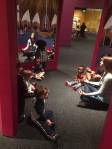
    One of SEEC’s classes practices their yoga.

    Finally, there are interactive sections where you can listen to music, watch a video and sit at a table set with Indian food. This will give your child different types of sensory input and provide a chance for some dramatic play.

    Depending on the age of your children, you can choose to approach the exhibit from several perspectives, here are some ideas:

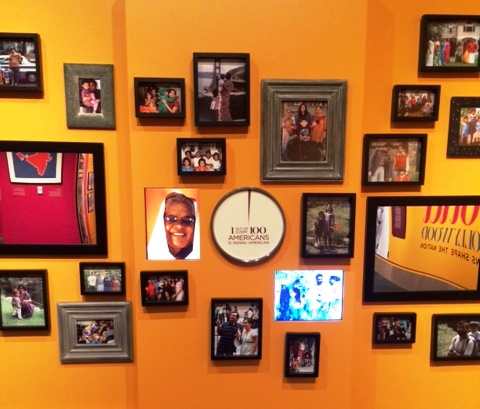
     families6 months – 18 months: Babies are learning to recognize themselves and their families. Take the time to look in a mirror and identify baby and yourself. Describe your features and talk about your similarities and differences. Head over to the family photos and pull up a family photo on your phone. Compare it to the families on the exhibit wall. At home, share a book about families or sit down and make a toy family. This is a great opportunity to begin talking about how not all families are the same. Even at such a young age, you can begin to lay a foundation for understanding and respecting diversity.

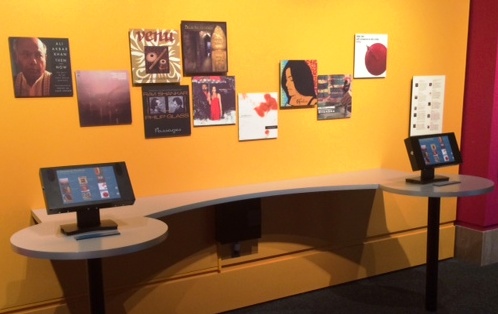
    listening station19 months – 3.5 years: Toddlers love music and dancing, so it is great that this exhibit features a listening station. Pick a couple of tracks and see if you can compare their tempo or guess the instruments. You might simply ask which their favorite was. Give them a chance to dance to the music and then go to the outer hallway and see the images of Indian dancers. Notice how the dancers are moving their body and what they are wearing. Build on the experience at home by listening to more Indian music or discovering that of another country. Look up a few videos highlighting different Indian dances and watch them together on a tablet or computer. Similar to the infant experience, introducing your toddler to the arts of other countries will help them gain an appreciation of their culture and, those of others.

    photo (5)Preschoolers – Early Elementary:  A great way to connect with young children is to begin with their personal experiences. Since food is universal, the table would be a great place to begin a conversation about the foods we eat at home or at our favorite restaurants. The exhibit can teach children about food from India AND about the many cultures that contribute to the food we eat in the United States. If food doesn’t interest your child, consider talking about some of the notable Indian Americans like football player, Brandon Chillar or fashion designer, Naeem Khan.

    Finally, consider going to visit the Freer and Sackler’s collection of Indian art on another visit or grabbing a bite of Indian food at the Natural History’s café.

    Like with any visit, keep in mind some of these helpful tips for visiting a museum with your kiddos and enjoy!!