Rethinking the Environment

Posted on behalf of SEEC Educator Amber Simatic:

For the past several years, my classroom left much to be desired: white walls, fluorescent lighting, and undefined spaces. However, at the beginning of the school year, I set a goal to create a more comfortable and inviting environment and to truly utilize the classroom as a teaching tool. I tried everything — changing bulletin boards, hanging art prints, displaying children’s drawings; but having mismatched, bright, primary colors everywhere was just not cutting it.

Early in the school year, I was unable to focus on the environment as much as I would have liked, given the challenges of settling in with a new class of students and getting to know a new team of teachers. However, within a few months we found our rhythm and I was able to focus again on the world around me. That’s when I noticed another SEEC center had used magnetic paint on a large wall to hang art with magnets instead of tape, which caused the wheels to start turning and brought me to my current realization: that I could expand the definition of changing my classroom beyond that of simply rearranging bulletin boards; that I could begin to think of my classroom as a home away from home and put just as much thought and care into it as I do my own home, because, after all, teachers and students spend a lot of time in their classrooms!

Once I realized my classroom’s potential, the possibilities became limitless.
A particularly challenging area of my room, above the changing table, could use some magnet paint, I thought:
“If that area can be magnetized, why not the whole wall?”
“And if I can use magnetic paint — why not colorful, magnetic paint?”
“Why not paint the whole room?”
“And if I can paint the whole room — what other changes, big and small, could I make to turn this classroom into a home?”
Each day at nap time, when the room was quiet and the soft music played, I would pat the kids to sleep and look around at the white walls, dreaming of color and comfort. For people who know me well, this concept is not a novel one: every apartment in which I’ve ever lived has been painted, if the lease allows.
I love having the creative outlet to change a space, but until recently I had never thought of applying it to my classroom.

To begin, I reflected on how the space worked, where the kids congregated, and how the placement of furniture influenced traffic patterns. I made several lists of what I liked and what I didn’t like; what I could change and what I couldn’t change; words that would describe my room and words that I would like to describe my room. These lists were extremely helpful in determining how to start the process.

There are a lot of things to consider when it comes to the physical classroom environment, the basics include: color, line, texture, form, and space. These five elements work together to create the physical environment.
Color can evoke certain moods and emotions. We even use this idea in our daily lives with sayings such as “green with envy” and “feeling blue”. Generally, when painting walls, cool colors like green and blue are calming while warm colors like red and orange tend to be stimulating.

Line can also set the emotional mood. Horizontal, vertical, curved, and diagonal lines all evoke different feelings. For example, diagonal lines suggest motion while curved lines relax a room.

Texture, both tactile and visual, engages learners and creates interest.

Form and space relate to how a room is set up. For example, does the placement of shelving units create symmetry and balance?

Baskets

Thinking about all of these items at once can quickly become overwhelming. I started with color by painting the walls then branched into some of the other elements, such as line, by adding a curved curtain draped along a window, and texture, by replacing plastic toy bins with baskets. Other things started falling into place too; I brought in plants, made slip-covers for brightly colored pillows and bought rugs.

Full view

If there is one thing I’ve learned throughout this entire journey it’s that reinventing the classroom is indeed a process. It’s a transformation that doesn’t happen overnight. Plans change and the project must adapt to fit our needs, and, more importantly, those of the children.

I’ve also learned to be vulnerable. Parents, kids, other teachers, and any one who walks into our center will see my classroom “unfinished” and that’s okay. As it turns out, the process is about figuring out what works best and feels most authentic for you and your classroom.
Pedagogies of Wonder

Image

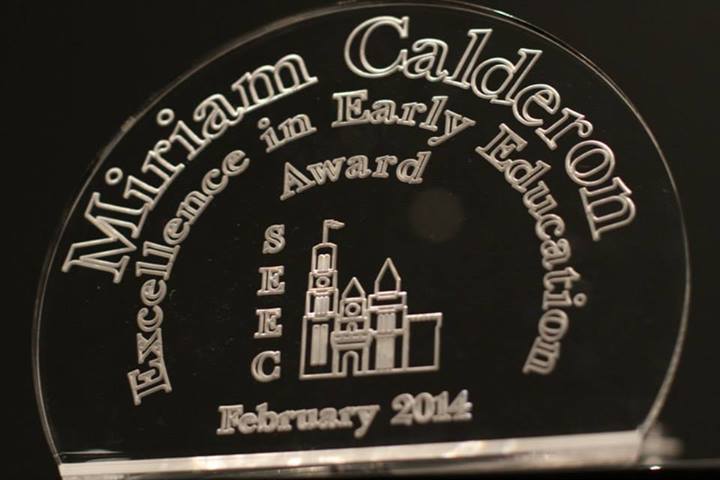
On February 22, 2014, Miriam Calderon was recognized by SEEC for her thoughtful work in the field of early childhood. She has held influential positions such as Senior Advisor on Early Learning to the Obama administration, Director of Early Childhood Education for DCPS and Associate Director of Education Policy at the National Council of La Raza. She currently supports the work of School Readiness Consulting.

We would like to share Miriam’s presentation comments from SEEC’s Excellence in Early Learning gala: Miriam Receiving Award

“Thank you Kim, and the leadership at SEEC for this recognition. It’s truly humbling to be at this wonderful event with all of you – Dr. Sullivan, the first woman in human history to walk in space, and to precede Josh Bernstein – who shows us the power of what can happen when we allow children to approach the world with wonder. Thanks to my husband, my friends and colleagues at School Readiness Consulting for being here this evening. I do want to use the honor of this award to share with you a few thoughts and conclude with a question for us all.

First, I cannot speak highly enough of SEEC! SEEC works so intelligently to light the fire of curiosity in young children – connecting children to a world of wonder using the Smithsonian’s rich collections – it is truly inspirational. To some it may look easy, but it’s not! Teaching in this manner is a craft. SEEC teachers apply developmental science daily to inform their teaching and interactions with children. As early learning gets more attention nationally, it’s absolutely critical that places like SEEC exist as a model and vehicle for others to see what it should look like.

This last point brings me to a second thought. Simply put, America needs more SEEC’s…SEEC serves over a hundred very lucky young children annually, but there are not enough SEECs for all the children that need a place like it. Millions of children in our nation endure poor quality early learning or go without it. D.C.’s children are fortunate enough to benefit from universal pre-school under Mayor Gray’s leadership but nationally the reality remains grim.

Only about half of three- and four-year olds nationwide attend preschool. That alone is a problem given the strong evidence linking the lack of quality early childhood experiences to delinquency, school drop-out, poverty and poor health in adulthood.

That National Institute for Early Education Research estimates that about nine out of ten children in the top 20% of America’s wealthiest households attend pre-k. Compare that to just under half of middle-income children, and less than half of poor children. Less than 5% of infants and toddlers in low-income households are in quality programs.

Unfortunately, despite the overwhelming and preponderance of evidence demonstrating that 90% of a child’s brain forms before the age of five, high quality early learning is only guaranteed to those families that can afford to pay for it. We also lack equity in the quality of children’s early learning experiences – how they are taught. Children from more affluent families are more likely to get richer experiences rooted in creative play with an eye to nurturing a skilled sense of wonder. This we might call a ‘pedagogy of wonder.’ In contrast, children from families who lack resources are more likely to be in environments where they are drilled on their letters and numbers, tied to tests, and punished for misbehavior, what Martin Haberman has called a ‘pedagogy of poverty.’

The science of child development and the craft of early childhood tell us that all of these children can learn in the same manner. All children come into the world with an innate curiosity and love of learning. Indeed, we need more SEECs to spread a pedagogy of wonder and ignite a curiosity in a child that will last them a lifetime. Nothing short of this will ensure that a child’s zip code doesn’t determine whether or not they realize their full potential.

So the question I want to leave you with is this:
How do we make this happen? How do we spread pedagogies of wonder?

All of our children – and their development – must be a shared public responsibility.

Thank you.”

Upcoming Teacher Workshop

LTOWell, we have made it to January. That delightful in between month—the month where we leave the stretch of holiday breaks behind and take a deep breath before the chaos of spring begins. Our students are settling back into familiar routines but experiencing the expected adjustments that time away from school brings. As educators, we too are experiencing the adjustment, searching for renewed inspiration in the face of the winter blues, unpredictable weather, and in my case, growing preschoolers. It seems almost daily one of my students leaves early for their five year preschool check-up.

We are also in the period of resolutions: Join the gym. Use your phone less. Sleep more. Build up your savings. Be more creative in the classroom or museum. In the midst of the screaming gym ads and hyper students, come join us for some respite and rejuvenation. SEEC is offering a space to renew your creativity, collaborate with peers, and take some deep breaths. Our premier seminar, Learning Through Objects, is almost upon us (February 27th & 28th). This seminar brings together educators from a diverse set of learning environments such as classrooms, museum galleries, and cultural centers. Presented by our staff and representing work from our 25 years of learning with young children in museums, LTO may be the perfect antidote to the winter doldrums.

A LTO alum wrote of her experience, “I walked away not only refreshed and inspired, but also with a variety of ideas for how I can incorporate museums, objects, and artist studies into my classroom teaching. I am looking forward to sharing the lesson plan and field trip ideas I learned with my colleagues and of course to sharing the activities themselves with my students.” Additionally, for those in the DC area, LTO is accredited by the DC Office of the State Superintendent of Education and counts as CEUs. Come be renewed, come be refreshed, and check one or two of your resolutions of the list. We look forward to seeing you.

LTO_2

Full registration info can be found here. Keep that “save money” resolution as well, register before February 14th for our Early Bird Rate and plug in discount code SEECPD14 for an additional 10% off!

Onwards!

Smithsonian Pre-K Classes

Renaissance Composition 2

Acting out a Renaissance Composition

In our first blog, I talked about what the museum education department does at the Smithsonian Early Enrichment Center. Just to recap, we have two educators who work specifically with our classes here at the lab school. Our director, Betsy Bowers, heads our professional development efforts (more on that later) and my main responsibility is to promote and coordinate our outreach efforts for families who are not enrolled in the school.

Comparing Jackson Pollock paintings

Comparing Jackson Pollock paintings

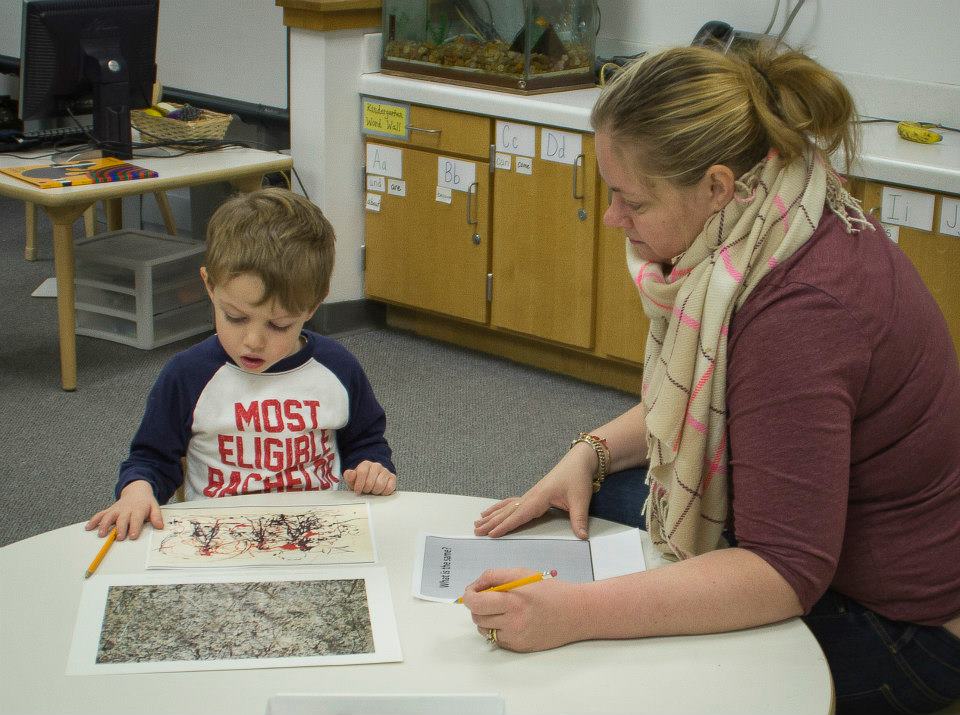
With Labor Day in our sights, I thought it was the perfect time to take a look ahead at what we are doing for our community families. Last year, we started offering preschool courses. These courses took place over a four-week period, meeting Saturday mornings. Each course had a theme (more information) and met for two hours. In the first portion of our morning, we would do some sort of introductory activity. This activity ranged from exploring a discovery box featuring cultural objects to comparing two paintings. Almost always these activities were meant to be done independently, meaning child and caretaker working together separate from the teacher. (These classes are very literally family classes, so caretakers play an important role). After our initial work, we would come together in a circle to discuss what they had done. Our discussion led us to an introduction to the museum visit.  

Cary teaching

Using hands-on objects to teach in the galleries

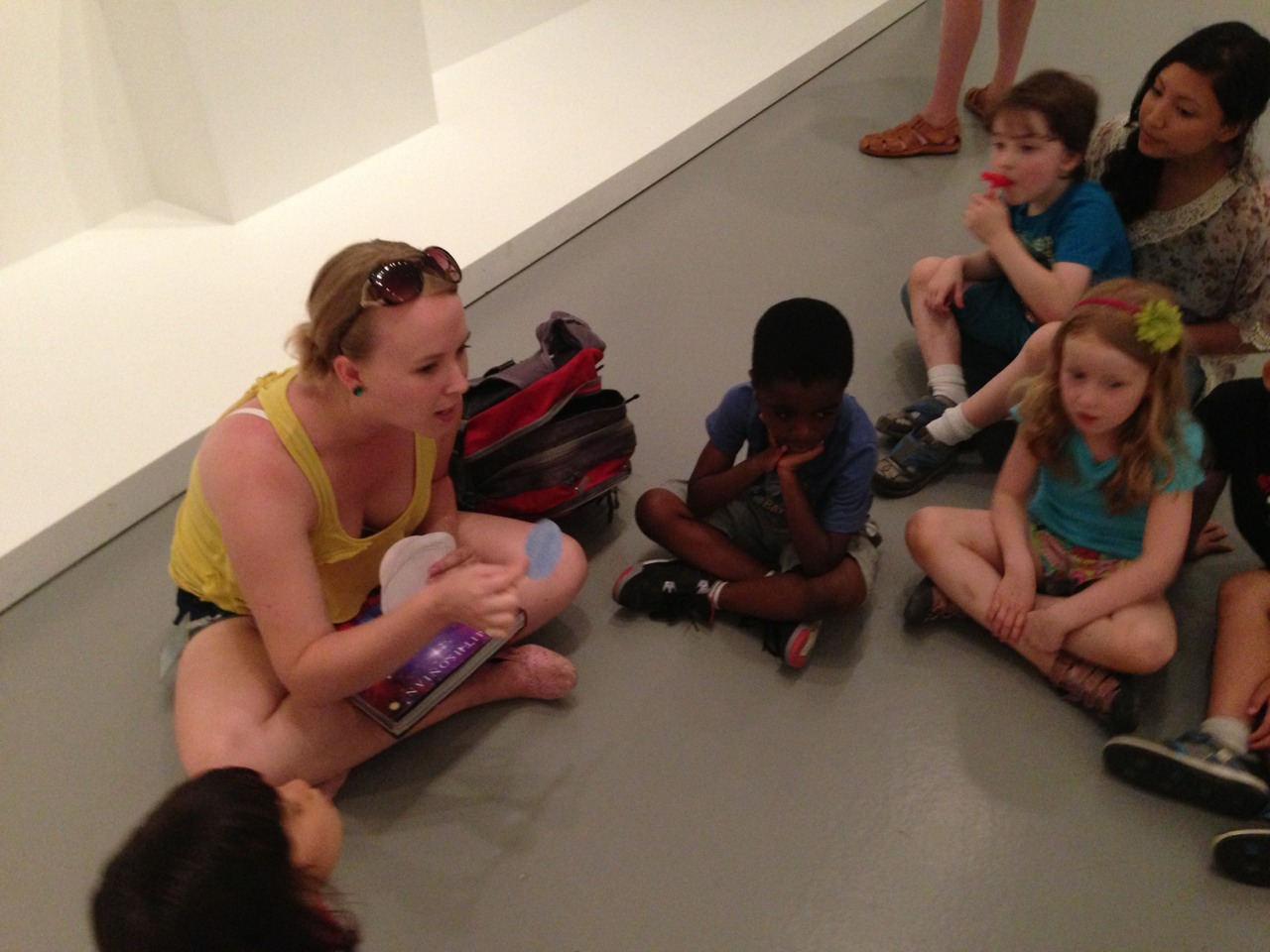
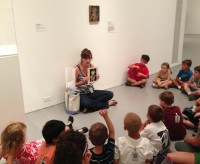
After bathroom breaks and the putting on of coats, we head to the museum for what is typically a 20-30 minute visit to one to two objects. During our visits, we use hands-on objects to engage the children in a multi-sensory experience and inquiry to guide the conversation. Museum educators are likely familiar with these approaches of object-based learning and the inquiry method. For educators who are unfamiliar with these approaches, let me suggest SEEC’s line of professional development seminars and/or MOMA’s inquiry course offered through Coursera (just completed it myself, very informative).

F2003.2

Freer Gallery of Art
Shiva Nataraja, ca. 990
Chola Dynasty, India
Bronze
Purchase–Margaret and George Haldeman, and Museum funds F2003.2

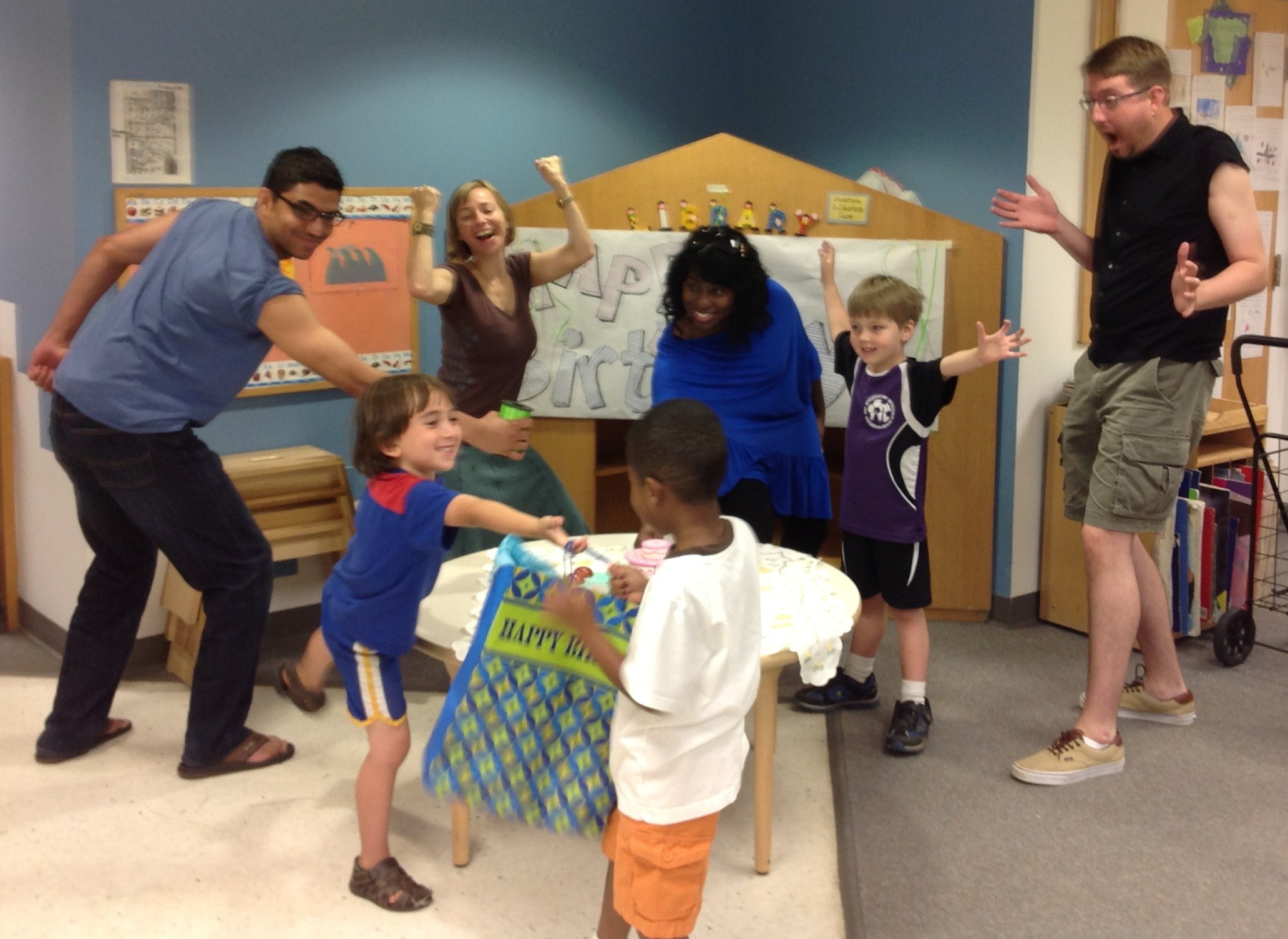
After our visit, we head back to the classroom where we wrap up with a final project.While it’s most often an art project, I do not limit myself to that platform. This is extremely helpful for two reasons; first, sometimes it is not developmentally appropriate for children to recreate the art they have just seen and second, sometimes it’s not culturally sensitive to recreate the art either. A good example of the first scenario is when I did a lesson on the Renaissance and I wanted to talk about composition. They were not up for the challenge of creating a masterpiece that depicted, balance, dynamism and fluidity. However, they could connect to these concepts by acting out their own birthday party photo and seeing the results. And when we do our class on Hinduism and visit the Freer’s Shiva Nataraja, we opt to look at videos of Bharatnatyam dance, do a sample of mudras and keep a beat with bells on our ankles. All activities are meant to build upon the concepts introduced through the lesson in a way that is interactive and self-directed.

This year we also offering infant and toddler class, so keep an eye out for future blogs about these audiences. In the meantime, let me know what is working for you with young audiences in your museum!

An Intern’s Perspective of SEEC

BethAnne_2
Written by: Beth Anne Kadien
Rising senior at Georgetown University – SEEC Summer Intern

I started in January doing behind-the-scenes work for SEEC’s Museum Education department, creating a database for the objects and prints that are used in SEEC classrooms. This summer I continued my internship, but in a more hands-on way. My experiences have been varied and always interesting. Moving from archival work to observing and leading classroom lessons was incredibly rewarding, both in what I had the opportunity to learn, and the witty student commentary. I came home to my roommates each day with a new story about the kids, which I have pared down to a top three favorite things overheard at SEEC:
1. One student looking over at me and asking “Hey, do you wanna put your stuff in my cubby?”
2. Asking a student where a colleague and I should get lunch, with a response of “Well do you girls like toys? Because then you should go to McDonalds.”
3. Receiving a superhero alter ego and superpower from one of the Koalas. “You’d be Star Girl, and your superpower would be shooting penguins out of your hands.”

BethAnne_1

What I learned, while less entertaining, will have a long-term impact on my career choices. Here it is, the top 3 (okay, really 4) things I learned from SEEC.

1. I am more creative than I thought. One of my proudest accomplishments, making a photo projector out of a shoebox.
I wrote lessons for both SEEC classes and their weekend family workshops, with a range of topics from food to the science of colors and pigments, to transportation. These all seemed incredibly daunting when assigned, but now I know how to better think out-of-the-box so that I can create an age-appropriate and interesting lessons.
2. Even if you think you have enough work, ask for more. One of my extra assignments was helping to write family programming for a partnership with a museum in my hometown of Memphis. It was so worth it!!
3. Be mindful. One thing that is common in the various people I worked with at SEEC is that each employee takes the utmost care in considering others. Museum educators go to great lengths to be a resource to their classroom teachers; teachers know their students’ dietary needs, pet’s names, favorite things, and greatest fears better than I know my own. Each decision made is made with consideration to how it will affect the teachers and students. This is something I greatly admire about SEEC, and it is now a model to which I strive in my on-campus job.
4. Actually the most important thing I learned, is that Splash Day is the greatest day, but you need to remember a change of clothes or else it’s a very cold metro home.
BethAnne_3
This summer has been incredibly rewarding, and I am more than grateful for the opportunities SEEC has given me.

CREATING COLLECTIONS WITH YOUNG CHILDREN

Do you have a collection? What do you collect? If you are leaning toward “no”, think again.

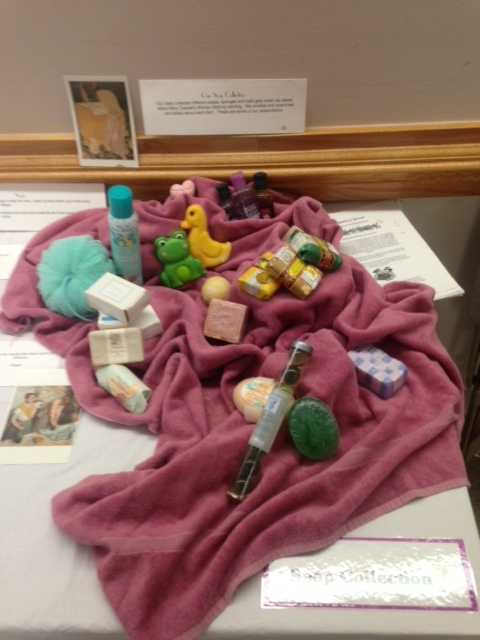
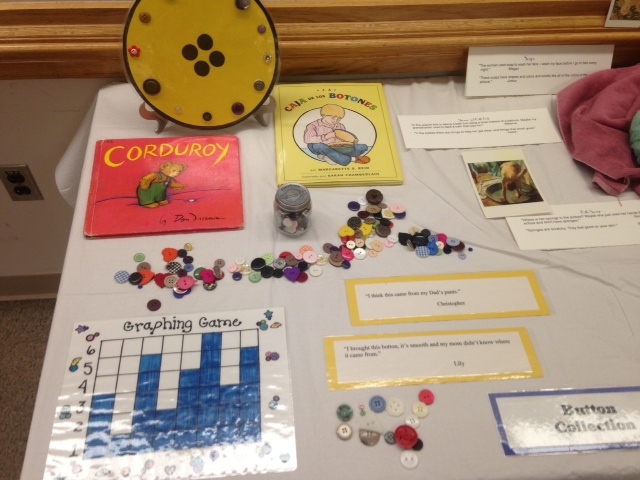
On June 14th we ran our day-long seminar for professional development, Creating Collections with Young Children. After establishing soap, tea, buttons, and cooking pots are all valid collections we moved on to the Why?

Why do you collect?   Is it to preserve a memory of a moment? Is it because youwere inexplicably drawn to an item? Is it out of function? Or something you’ve just done for so long you don’t know anymore?   Weather it’s a stack of family photos, a closet of shoes, stickers for scrapbooking, or trinkets from your childhood, they all tell a story.

As humans, collecting is part of our hardwiring. From the days of our hunter-gather ancestors, we still use that natural instinct to process, categorize, and understand our world. The more exposure we have to a concept, the wider our knowledge becomes on that topic. Expanding our mind’s collection of “tree” allows for flexible thinking; it is no longer only a triangle on top of a stick but can flow from a sapling to redwood to a sculpture to a print.

We’ve all discovered the end-of-the-day pockets full of treasures on our toddlers, so we know that the drive to collect it there. They may not be able to explain to us why, but these items chronicle their story.

So how can we use this universal predilection to enhance their learning?   In our seminar we explored a collection on chopsticks, containing prints, text, advertisements, and plenty of hands-on time with the object. We discovered how important is to have a varied collection that presents one idea through multiple entry points. With this basic concept you can use collections to introduce a topic, explore a topic, or expand a topic.

Matisse chat

  • Talking about patterns? Give your students collections of wallpaper and fabric swatches. Throw in Matisse prints and shells to see how they come alive in art or nature.
  • Doing a unit on birds? Sort a collection of feathers, or create a collection of nest materials. Add in Audubon prints and binoculars and magnifying glasses.
  • Interested in the food? Bring in a collection of labels to sort. Top it off with Warhol prints and various containers.

These are just a few way that our wonderfully willing audience of teachers and museum educators brought collections to life. How can you bring collections into your classroom?