An Intern’s Perspective of SEEC

BethAnne_2
Written by: Beth Anne Kadien
Rising senior at Georgetown University – SEEC Summer Intern

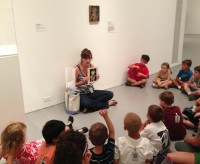
I started in January doing behind-the-scenes work for SEEC’s Museum Education department, creating a database for the objects and prints that are used in SEEC classrooms. This summer I continued my internship, but in a more hands-on way. My experiences have been varied and always interesting. Moving from archival work to observing and leading classroom lessons was incredibly rewarding, both in what I had the opportunity to learn, and the witty student commentary. I came home to my roommates each day with a new story about the kids, which I have pared down to a top three favorite things overheard at SEEC:
1. One student looking over at me and asking “Hey, do you wanna put your stuff in my cubby?”
2. Asking a student where a colleague and I should get lunch, with a response of “Well do you girls like toys? Because then you should go to McDonalds.”
3. Receiving a superhero alter ego and superpower from one of the Koalas. “You’d be Star Girl, and your superpower would be shooting penguins out of your hands.”
BethAnne_1

What I learned, while less entertaining, will have a long-term impact on my career choices. Here it is, the top 3 (okay, really 4) things I learned from SEEC.

1. I am more creative than I thought. One of my proudest accomplishments, making a photo projector out of a shoebox.
I wrote lessons for both SEEC classes and their weekend family workshops, with a range of topics from food to the science of colors and pigments, to transportation. These all seemed incredibly daunting when assigned, but now I know how to better think out-of-the-box so that I can create an age-appropriate and interesting lessons.
2. Even if you think you have enough work, ask for more. One of my extra assignments was helping to write family programming for a partnership with a museum in my hometown of Memphis. It was so worth it!!
3. Be mindful. One thing that is common in the various people I worked with at SEEC is that each employee takes the utmost care in considering others. Museum educators go to great lengths to be a resource to their classroom teachers; teachers know their students’ dietary needs, pet’s names, favorite things, and greatest fears better than I know my own. Each decision made is made with consideration to how it will affect the teachers and students. This is something I greatly admire about SEEC, and it is now a model to which I strive in my on-campus job.
4. Actually the most important thing I learned, is that Splash Day is the greatest day, but you need to remember a change of clothes or else it’s a very cold metro home.
BethAnne_3
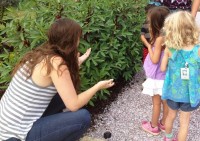
This summer has been incredibly rewarding, and I am more than grateful for the opportunities SEEC has given me.

Building Meaning for Young Children in the Museum

still lifeWhen it comes to teaching young children using the collections along the National Mall, there are some obvious candidates; Wayne Thiebaud’s cakes or traditional still lifes at the National Gallery of Art and the Mammal Hall at the National Museum of Natural History.  But, what about objects that seem less approachable from a young child’s perspective.  Do we forgo teaching about them altogether? And if we do decide to take that leap, how do we approach it?  It’s a question we consider a lot at SEEC and in effort to understand the process a little better, I share this story.

ImageA few months ago, I was teaching a course for children, ages 3-5 on different genres of art; portraiture, landscape, etc.  It occurred to me that the art of the book would be a nice topic to add to the curriculum.  I had for a long time reserved the theme of Islamic art to classes I taught for early elementary-aged children. But, I love the Freer’s collection of Islamic book art and so,  I decided to take the plunge.  Typically I correlate the beauty of the art form with the importance of the Koran in Islamic culture, but with 3-year olds as my target audience, I had to rethink that strategy.  I was plagued by questions: How do I define religion?  How do I explain the meaning of a holy book?  How do I address the topic by respecting different traditions?.  Basically, how do I teach about these objects without overlooking their cultural significance, but in a way that is developmentally appropriate?

The answer was: exposure.  Early learning often takes the form of introducing students to something new.  By simply visiting the Koran pages in the Freer, we were bringing to light a new concept.  To help them understand the unfamiliar, I built on their own knowledge of books.  Before heading to the museum, we looked at classic children’s books and discussed their different features, specifically; text, pictures and the front cover.   I featured a song that helped them remember these and by the time we got to the Freer, the children were able to identify the Koran pages as pages that would be in a book.  They also noticed the writing and easily observed that it was different from the letters we saw in our classroom books.  With a picture of the Arabic and Roman alphabets in hand, we explored the visual differences between them.  For many, the knowledge of more than one alphabet was novel.  They also compared their classroom books and noticed that the illustrations often included people and the Koran pages illuminations did not.   Armed with real flowers and leafs, we explored the similarities between these objects and the Arabesques on the pages of the Koran.  Finally, we looked at examples of book covers and talked about how we had to put the pages together to form a single book.

It felt like a good lesson, but I still had a nagging feeling that I wasn’t do the subject justice. That was when a colleague reminded me that over the course of their development and education, these children would, hopefully, return to the Freer or another museum and build on their knowledge of the Koran and Islamic art, in general.

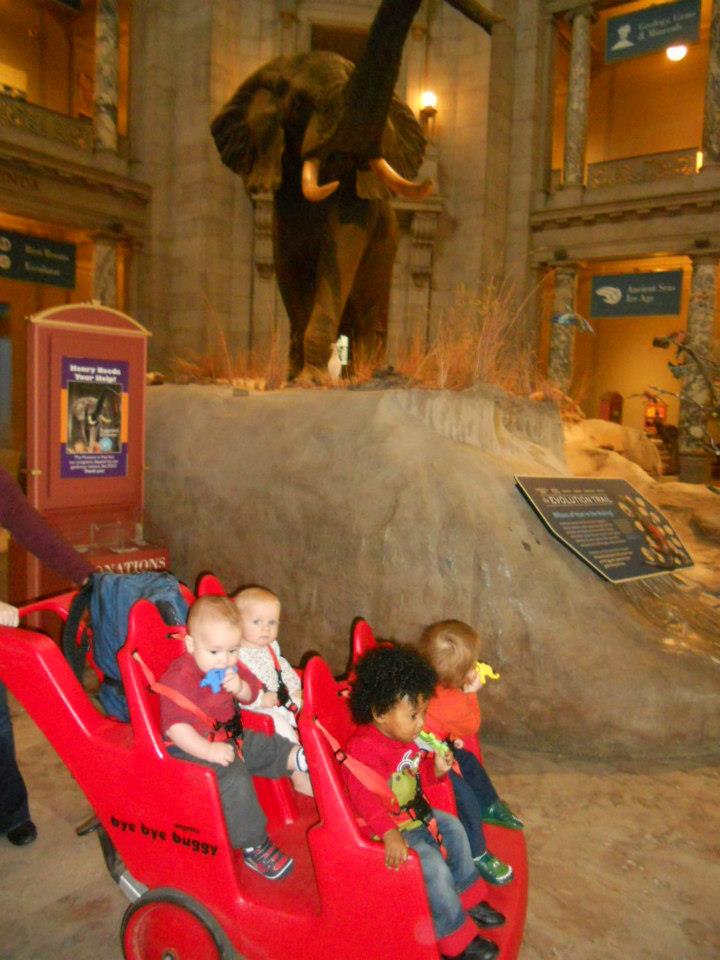
ImageCertainly, we see that happening with students enrolled in the SEEC program.  When they pass Henry, the elephant in the Natural History rotunda as babies they are learning to identify him as an elephant.  By the time they are toddlers, they can recreate the sound elephants make and most will be able to show you from where that sound comes.  As they reach the age of two, they can learn more specifics like what Henry eats or where he lives.  By the time they are in the Pre-K program, they have a solid foundation and are ready to explore more complex issues.

Instead of cramming a lot of information into one session, I focused on encouraging parents to return to the galleries on their own.  Letting caretakers know the importance of returning to the same object and seeing it from multiple perspectives became part of all my lessons.  It really sets the stage for multiple exposures over time, that will help children understand the complexities and nuances that are often in contained in just a single object.

CREATING COLLECTIONS WITH YOUNG CHILDREN

Do you have a collection? What do you collect? If you are leaning toward “no”, think again.

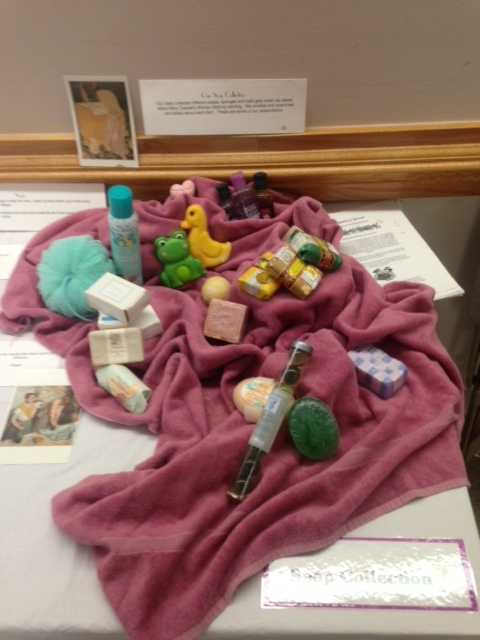
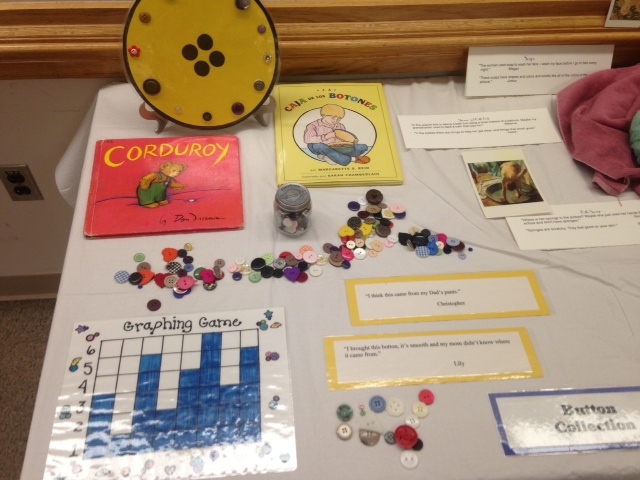
On June 14th we ran our day-long seminar for professional development, Creating Collections with Young Children. After establishing soap, tea, buttons, and cooking pots are all valid collections we moved on to the Why?

Why do you collect?   Is it to preserve a memory of a moment? Is it because youwere inexplicably drawn to an item? Is it out of function? Or something you’ve just done for so long you don’t know anymore?   Weather it’s a stack of family photos, a closet of shoes, stickers for scrapbooking, or trinkets from your childhood, they all tell a story.

As humans, collecting is part of our hardwiring. From the days of our hunter-gather ancestors, we still use that natural instinct to process, categorize, and understand our world. The more exposure we have to a concept, the wider our knowledge becomes on that topic. Expanding our mind’s collection of “tree” allows for flexible thinking; it is no longer only a triangle on top of a stick but can flow from a sapling to redwood to a sculpture to a print.

We’ve all discovered the end-of-the-day pockets full of treasures on our toddlers, so we know that the drive to collect it there. They may not be able to explain to us why, but these items chronicle their story.

So how can we use this universal predilection to enhance their learning?   In our seminar we explored a collection on chopsticks, containing prints, text, advertisements, and plenty of hands-on time with the object. We discovered how important is to have a varied collection that presents one idea through multiple entry points. With this basic concept you can use collections to introduce a topic, explore a topic, or expand a topic.

Matisse chat

  • Talking about patterns? Give your students collections of wallpaper and fabric swatches. Throw in Matisse prints and shells to see how they come alive in art or nature.
  • Doing a unit on birds? Sort a collection of feathers, or create a collection of nest materials. Add in Audubon prints and binoculars and magnifying glasses.
  • Interested in the food? Bring in a collection of labels to sort. Top it off with Warhol prints and various containers.

These are just a few way that our wonderfully willing audience of teachers and museum educators brought collections to life. How can you bring collections into your classroom?

Smithsonian Early Enrichment Center – Museum Education

SEEC_Castle

The Smithsonian Early Enrichment Center or SEEC, as it is commonly called, was founded in 1988. It is currently housed in two locations at the National Museum of Natural History and another, at the National Museum of American History.  The school serves children ages 3 months – 6 years and boasts a staff of early childhood educators, art educators, a music educator, a resident scientist and a department of 4 museum educators.

It might seem odd for an early learning center to have a museum education department, but it makes a lot of sense when you consider all that museums have to offer young audiences.   And because of SEEC’s location on the National Mall, it is able to integrate the museum into the fabric of our students’ daily experiences.  Children are naturally curious and museums offer an ideal setting for them to explore, investigate and learn.  Encountering an object helps a child solidify their understanding of a concept and it sparks their imagination.  Whether it’s a trip to the National Zoo to see the snakes, a visit to the Castle to explore architecture or a stop at the Hirshhorn to see examples of modern art, the children are exposed to a variety of disciplines and ideas.

Sara_Vishnu1

Pre-K takes a trip to Arthur M. Sackler Gallery to see a statue of Vishnu

So, what do museum educators do here at SEEC?

  • We educate students within SEEC and the larger community – using methods unique to young learners.
  • We are a conduit between our classroom educators and the museums.
  • We maintain and offer resources to support the classroom in the form of hands-on objects, prints and books
  • We provide high quality research and information on objects within the collections and assist our classroom educators in framing that information in a developmentally appropriate way.
  • We plan special programs within SEEC and for museums across the country.
  • We have a unique understanding of museums and early childhood development and combine those perspectives to offer training to early childhood and museum educators.
  • We believe that young children can benefit from museums and we hope to encourage museum professionals to embrace them as an audience.  Similarly, we hope to encourage early childhood educators to see the museum as an informal learning environment for their students.

    Sara_Vishnu2

    Museum Ed leads Pre-K circle on Vishnu

Our hope is that our blog will open a larger dialogue about early learning and museums.  Please join us and share your thoughts!