Smithsonian Pre-K Classes

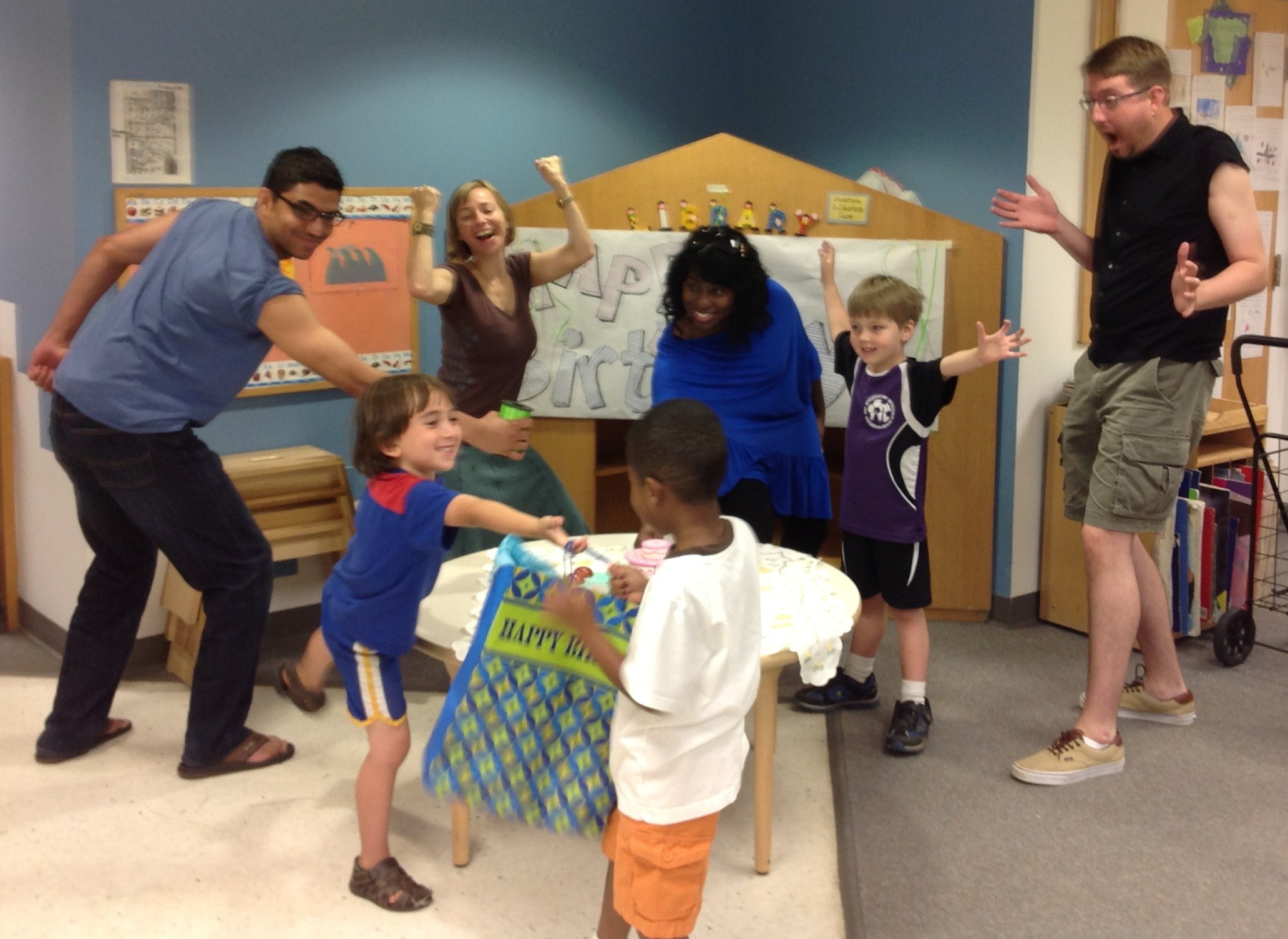
Renaissance Composition 2

Acting out a Renaissance Composition

In our first blog, I talked about what the museum education department does at the Smithsonian Early Enrichment Center. Just to recap, we have two educators who work specifically with our classes here at the lab school. Our director, Betsy Bowers, heads our professional development efforts (more on that later) and my main responsibility is to promote and coordinate our outreach efforts for families who are not enrolled in the school.
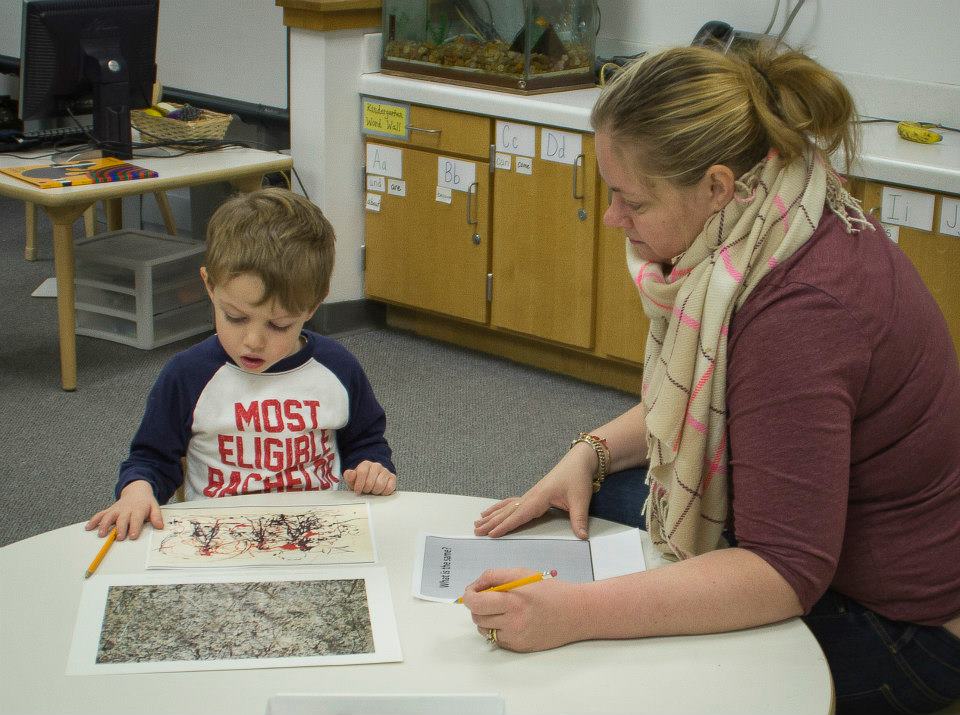
Comparing Jackson Pollock paintings

Comparing Jackson Pollock paintings

With Labor Day in our sights, I thought it was the perfect time to take a look ahead at what we are doing for our community families. Last year, we started offering preschool courses. These courses took place over a four-week period, meeting Saturday mornings. Each course had a theme (more information) and met for two hours. In the first portion of our morning, we would do some sort of introductory activity. This activity ranged from exploring a discovery box featuring cultural objects to comparing two paintings. Almost always these activities were meant to be done independently, meaning child and caretaker working together separate from the teacher. (These classes are very literally family classes, so caretakers play an important role). After our initial work, we would come together in a circle to discuss what they had done. Our discussion led us to an introduction to the museum visit.  
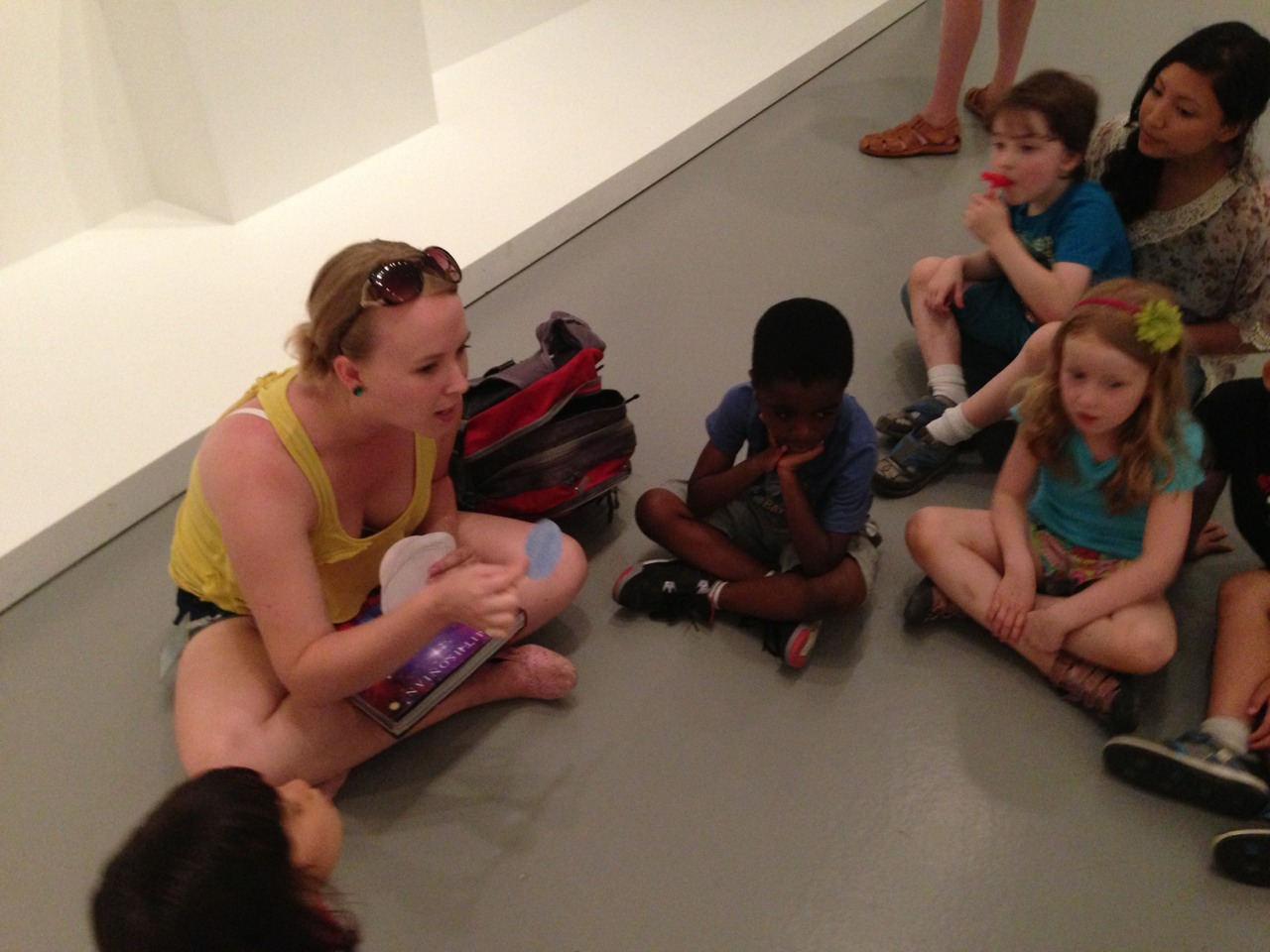
Cary teaching

Using hands-on objects to teach in the galleries

After bathroom breaks and the putting on of coats, we head to the museum for what is typically a 20-30 minute visit to one to two objects. During our visits, we use hands-on objects to engage the children in a multi-sensory experience and inquiry to guide the conversation. Museum educators are likely familiar with these approaches of object-based learning and the inquiry method. For educators who are unfamiliar with these approaches, let me suggest SEEC’s line of professional development seminars and/or MOMA’s inquiry course offered through Coursera (just completed it myself, very informative).

F2003.2

Freer Gallery of Art
Shiva Nataraja, ca. 990
Chola Dynasty, India
Bronze
Purchase–Margaret and George Haldeman, and Museum funds F2003.2

After our visit, we head back to the classroom where we wrap up with a final project.While it’s most often an art project, I do not limit myself to that platform. This is extremely helpful for two reasons; first, sometimes it is not developmentally appropriate for children to recreate the art they have just seen and second, sometimes it’s not culturally sensitive to recreate the art either. A good example of the first scenario is when I did a lesson on the Renaissance and I wanted to talk about composition. They were not up for the challenge of creating a masterpiece that depicted, balance, dynamism and fluidity. However, they could connect to these concepts by acting out their own birthday party photo and seeing the results. And when we do our class on Hinduism and visit the Freer’s Shiva Nataraja, we opt to look at videos of Bharatnatyam dance, do a sample of mudras and keep a beat with bells on our ankles. All activities are meant to build upon the concepts introduced through the lesson in a way that is interactive and self-directed.

This year we also offering infant and toddler class, so keep an eye out for future blogs about these audiences. In the meantime, let me know what is working for you with young audiences in your museum!

Building Meaning for Young Children in the Museum

still lifeWhen it comes to teaching young children using the collections along the National Mall, there are some obvious candidates; Wayne Thiebaud’s cakes or traditional still lifes at the National Gallery of Art and the Mammal Hall at the National Museum of Natural History.  But, what about objects that seem less approachable from a young child’s perspective.  Do we forgo teaching about them altogether? And if we do decide to take that leap, how do we approach it?  It’s a question we consider a lot at SEEC and in effort to understand the process a little better, I share this story.

ImageA few months ago, I was teaching a course for children, ages 3-5 on different genres of art; portraiture, landscape, etc.  It occurred to me that the art of the book would be a nice topic to add to the curriculum.  I had for a long time reserved the theme of Islamic art to classes I taught for early elementary-aged children. But, I love the Freer’s collection of Islamic book art and so,  I decided to take the plunge.  Typically I correlate the beauty of the art form with the importance of the Koran in Islamic culture, but with 3-year olds as my target audience, I had to rethink that strategy.  I was plagued by questions: How do I define religion?  How do I explain the meaning of a holy book?  How do I address the topic by respecting different traditions?.  Basically, how do I teach about these objects without overlooking their cultural significance, but in a way that is developmentally appropriate?

The answer was: exposure.  Early learning often takes the form of introducing students to something new.  By simply visiting the Koran pages in the Freer, we were bringing to light a new concept.  To help them understand the unfamiliar, I built on their own knowledge of books.  Before heading to the museum, we looked at classic children’s books and discussed their different features, specifically; text, pictures and the front cover.   I featured a song that helped them remember these and by the time we got to the Freer, the children were able to identify the Koran pages as pages that would be in a book.  They also noticed the writing and easily observed that it was different from the letters we saw in our classroom books.  With a picture of the Arabic and Roman alphabets in hand, we explored the visual differences between them.  For many, the knowledge of more than one alphabet was novel.  They also compared their classroom books and noticed that the illustrations often included people and the Koran pages illuminations did not.   Armed with real flowers and leafs, we explored the similarities between these objects and the Arabesques on the pages of the Koran.  Finally, we looked at examples of book covers and talked about how we had to put the pages together to form a single book.

It felt like a good lesson, but I still had a nagging feeling that I wasn’t do the subject justice. That was when a colleague reminded me that over the course of their development and education, these children would, hopefully, return to the Freer or another museum and build on their knowledge of the Koran and Islamic art, in general.

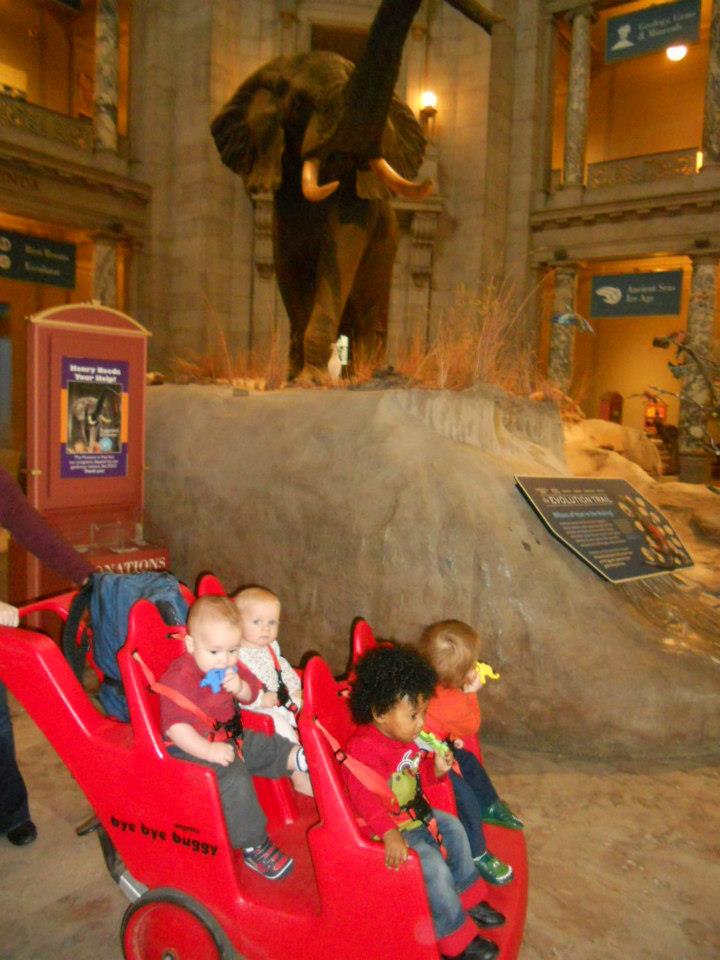
ImageCertainly, we see that happening with students enrolled in the SEEC program.  When they pass Henry, the elephant in the Natural History rotunda as babies they are learning to identify him as an elephant.  By the time they are toddlers, they can recreate the sound elephants make and most will be able to show you from where that sound comes.  As they reach the age of two, they can learn more specifics like what Henry eats or where he lives.  By the time they are in the Pre-K program, they have a solid foundation and are ready to explore more complex issues.

Instead of cramming a lot of information into one session, I focused on encouraging parents to return to the galleries on their own.  Letting caretakers know the importance of returning to the same object and seeing it from multiple perspectives became part of all my lessons.  It really sets the stage for multiple exposures over time, that will help children understand the complexities and nuances that are often in contained in just a single object.