Teacher Feature: Infants Explore How Things Move

It’s Teacher Feature Thursday!

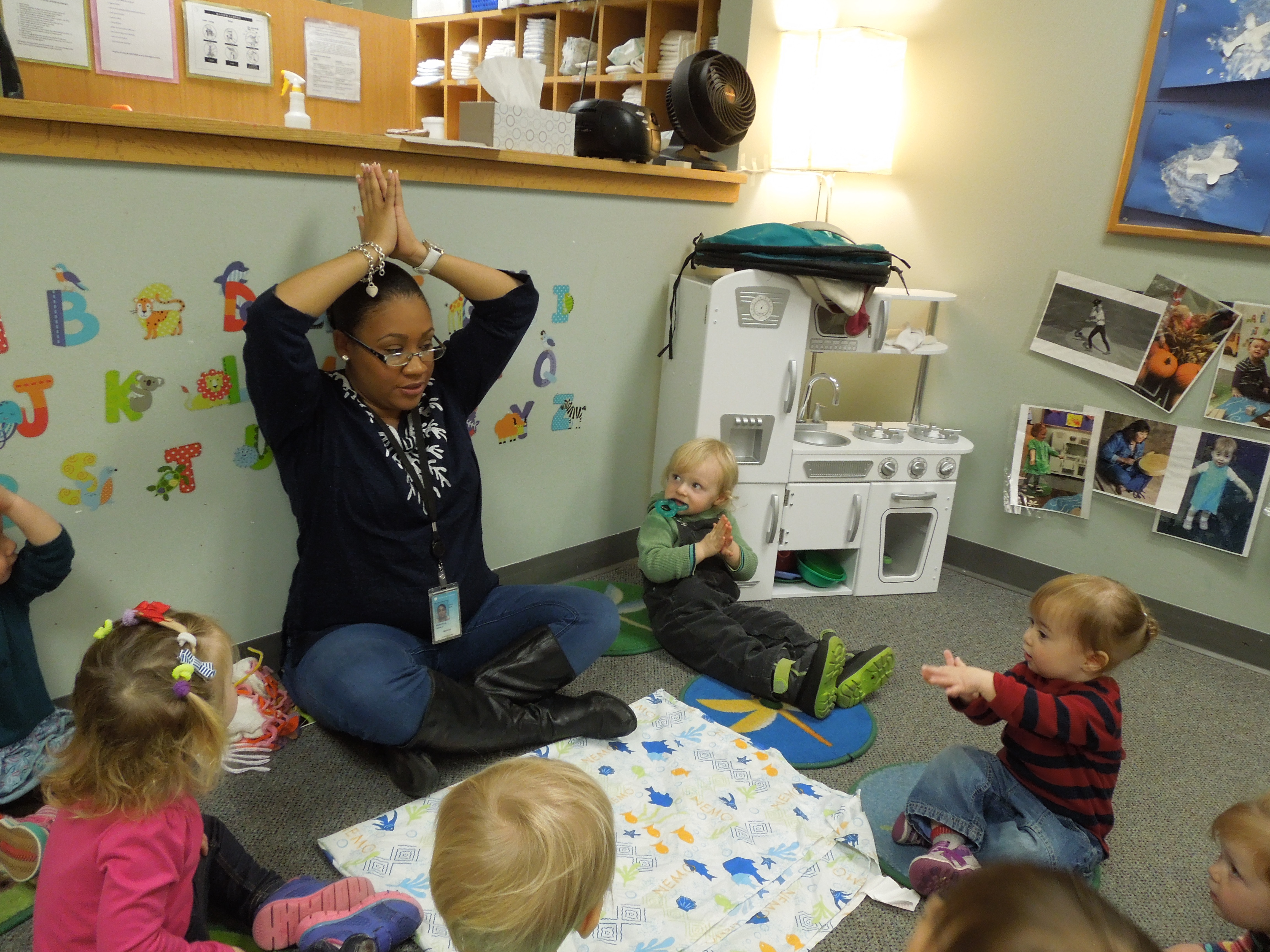
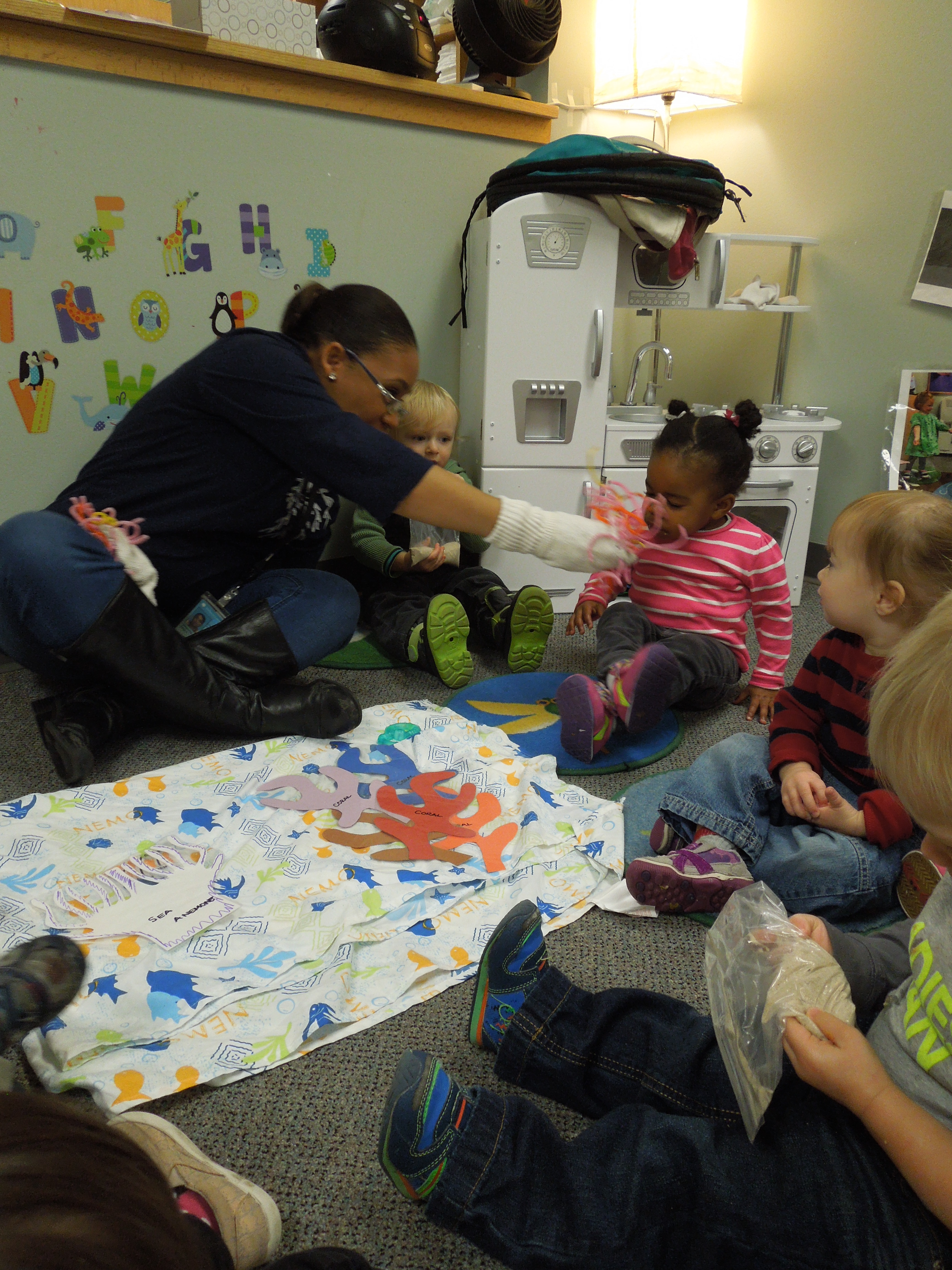
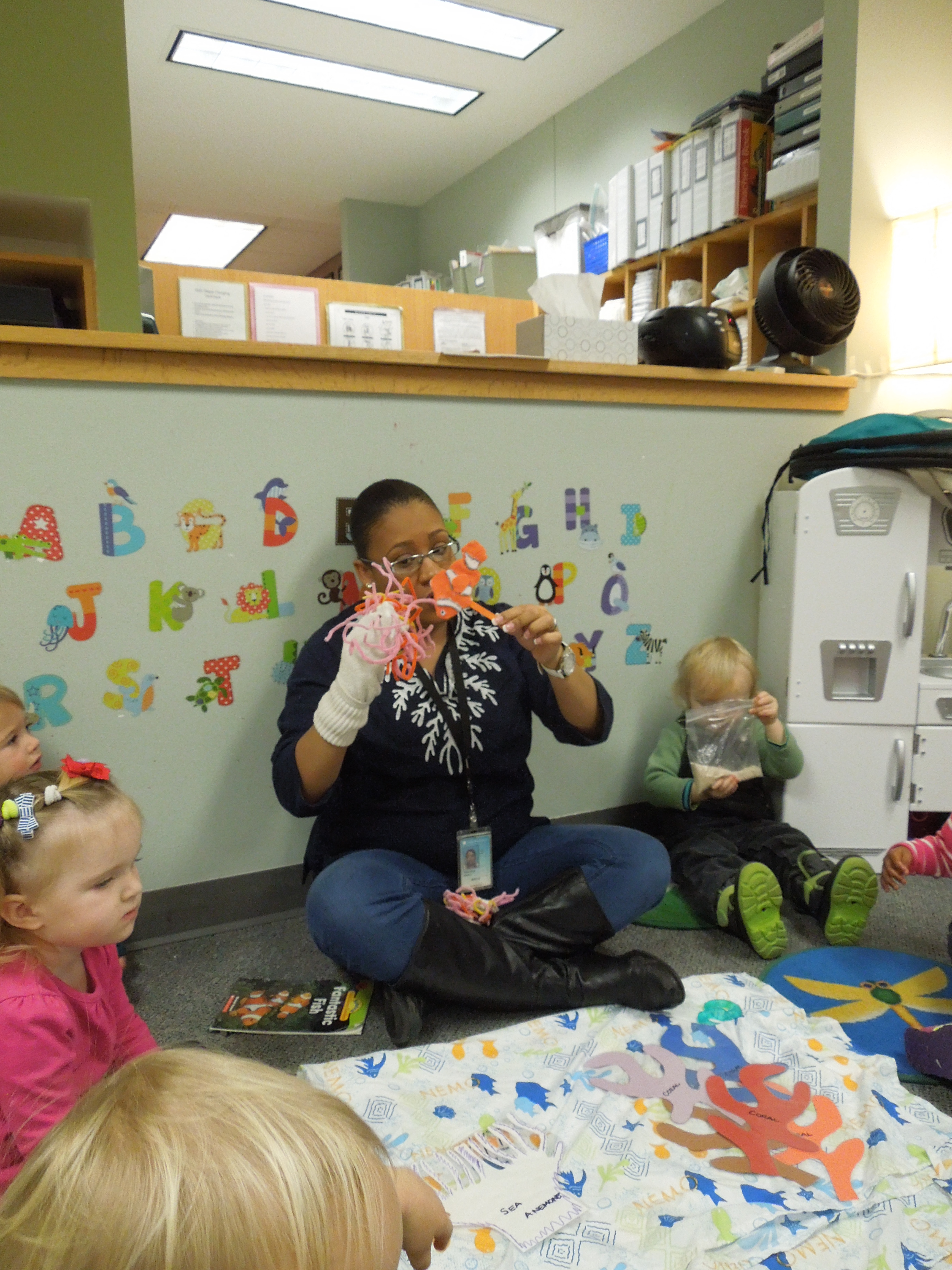
This week we are featuring Meredith Osborne. Her mobile infant classroom was learning about how things move and decided to spend a day comparing how birds fly and fish swim. Below you will find a reflection from Meredith and images from some of her lessons.

Duckling_Cover

What were your topics of exploration?

We were exploring “How Things Move”. I always like to start with the concrete/familiar and move to the abstract, so we began the month looking at how we, as mobile infants, move our bodies. It was particularly fitting to focus on how we move, as this is a skill that all the children in my class are working on, experimenting with, and perfecting.

On this particular day, we had expanded to “How Things Move: By Land, By Air, and By Sea”. We started by visiting “The Birds of D.C.” and “Once There Were Billions: Vanished Birds of North America” exhibitions. To keep with the idea of starting based in the concrete, we went outside earlier in the week to look at the birds on the National Mall, which introduced the ideas of birds and flying. Since we were not able to touch any of the birds in the exhibitions, I brought toy stuffed birds ( falcons, mallards, and cardinals) with us to hold and explore while in the exhibition. We also listened to bird songs, tried our best to mimic the birds by flapping our arms, and attempted to copy the bird calls. Later that day, we played with feathers, felt their textures, dropped them through the air, and blew air through them.

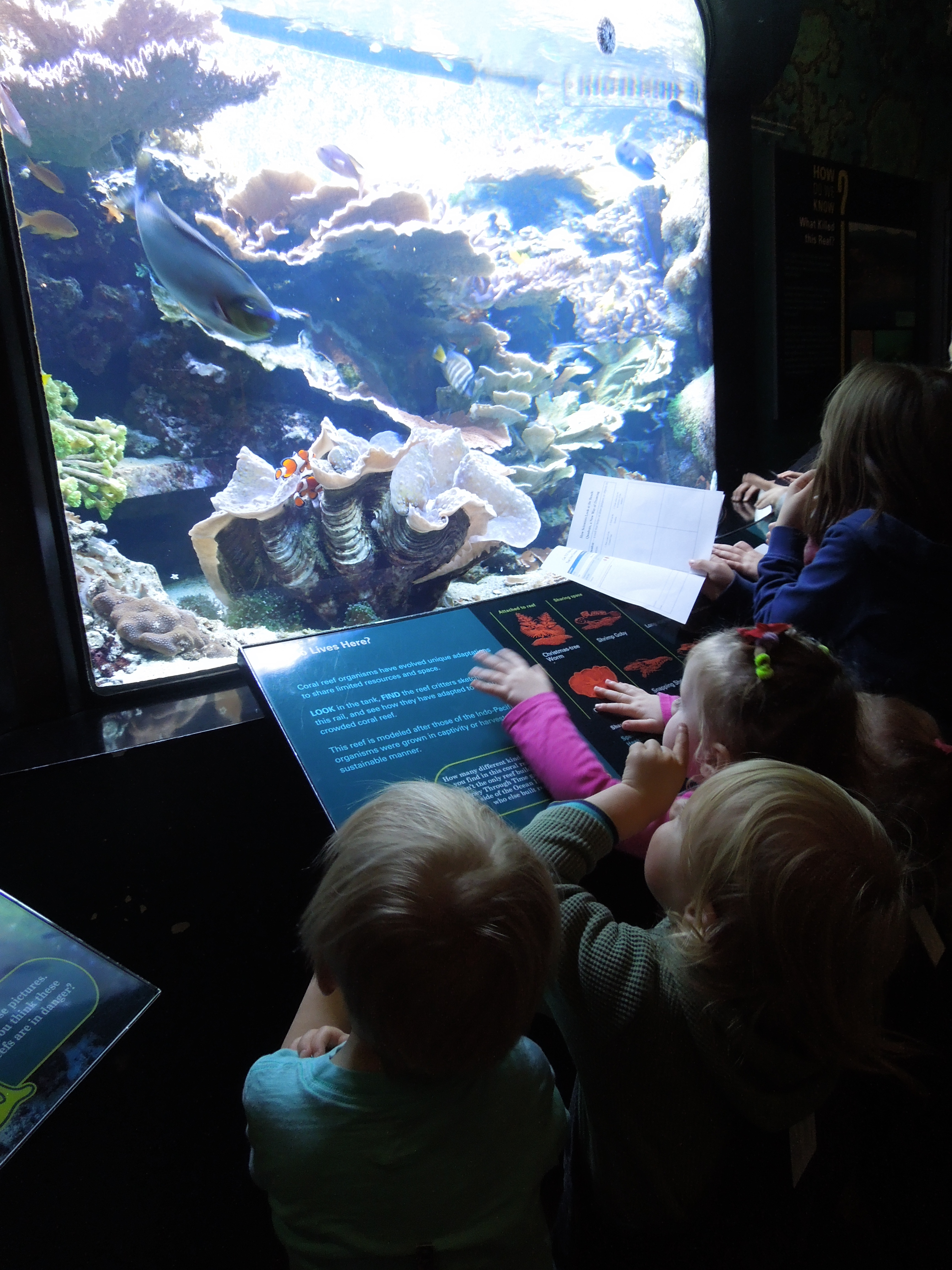
After visiting the bird exhibitions, we moved on to “How Things Move: By Sea” and watched the fish swimming in the coral reef aquarium. While watching the fish, we talked about what we were observing and sang the song “Let’s Go Swimming” by Laurie Berkner.

In the afternoon, we dropped objects in water to see what would float and sink. I asked the group, “did anything swim like a fish?” To finish up the lesson, we did a semi structured story time (structured for the teachers in that we built a routine, but mostly unstructured for the children), where we read “The Little Blue Truck Leads the Way.” I laminated images of the characters in the books for everyone to hold while we read the story. While “The Little Blue Truck” by Alice Schertle did not fit perfectly into the lesson for the day, it did fit perfectly into the overall lesson of “How Things Move” and we had been reading it all week to become familiar with it. By reading it daily, the book quickly became one of our favorites. We ended the storytime by singing our closing song, “If You are happy and You Know It!”

 What were your learning objectives? (What did you want your children to take away from the lesson?)

For this lesson, I was interested in introducing the large concepts of what floats and flies. I was also hoping to practice some gross motor skills through flapping our hands like birds and to provide a sensory experience through touching water and feathers.

However, with this age learning objectives are very fluid. My goal is to provide the children with a new experience and see how they interpret it and work to make it their own.

 What was most successful about your lesson?

In a word: Experimenting. In a reflection on our classroom, one of my teaching partners explained she likes “how we try new things and are not afraid of it.” It can be hard to experiment, because you need to find the balance between routine / stability and the change that comes with trying new things. Both routine and new experiences are vitally important to the mobile infants; it is the challenge of the teacher to make sure that the classroom has an appropriate balance of both for each individual child.

Experimenting can also be a difficult thing to observe. I go into the classroom everyday knowing that I am experimenting and changing variables to see how the children will react. As a result, this means that no lesson will be the ideal. For this particular observation, we had just started doing our semi structured story time. We, as teachers, were working to establish a routine and the children, as learners, were working to comprehend the purpose of story time. It was exciting to do, but it had not been worked out fully. We have changed several things about our story time format and continued to make our stories more interactive since this lesson took place.

What could you have done differently? What recommendations would you have for another teacher trying out this lesson?

I would recommend that other teachers observe their mobile infants carefully and try to change the lesson according to the child or group of children’s individual needs and interests. Planning is very important for mobile infants. It is good to plan an experience that starts with the concrete and moves slowly towards the abstract, but do not be upset if your lesson does not fully jump into the abstract, as that is not developmentally appropriate. Provide experiences that involve all the senses if possible. Reach for ways to incorporate touch, taste, smell, and sound; do not rely purely sight. Always have new things for little hands to hold and explore while they are looking at an object. Enjoy your time interacting with the children! It is your opportunity to learn from them as much as they are learning from you!

Here are a few images from their unit comparing the movement of birds and fish:

DSCN1613Meredith began their lesson by passing out different stuffed birds for the group to hold and explore. They then headed straight to The National Museum of Natural History to see the “Once There Were Billions: Vanished Birds of North America” (http://bit.ly/16SbzAu).


DSCN1636As they wandered through the galleries they worked on matching their bird to the ones on exhibit.
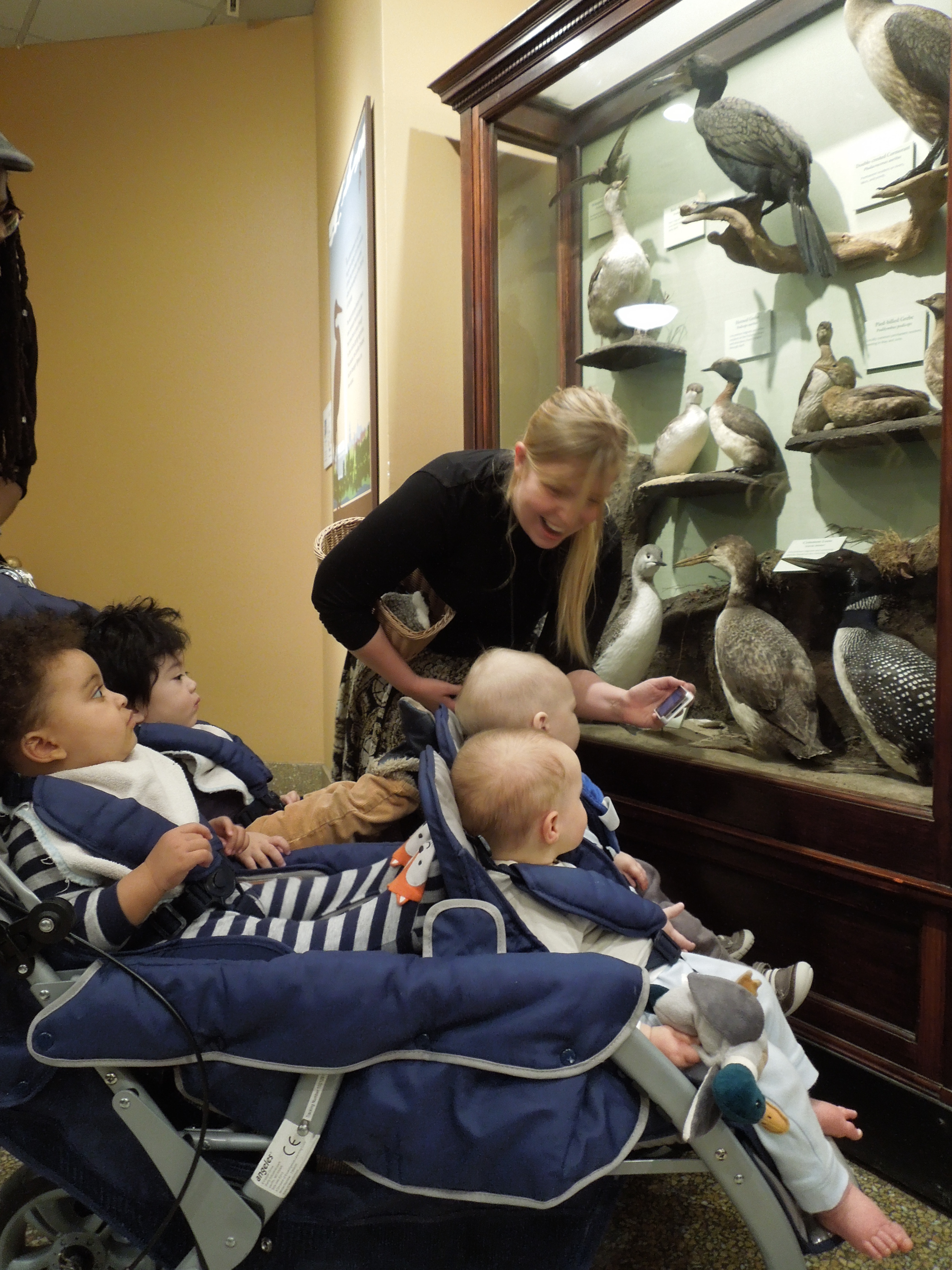
DSCN1647Meredith had pre-downloaded sound bites of the different birds to share with the child once they had made a match.

DSCN1656When the duck was matched the group all quacked and flapped their “wings.”

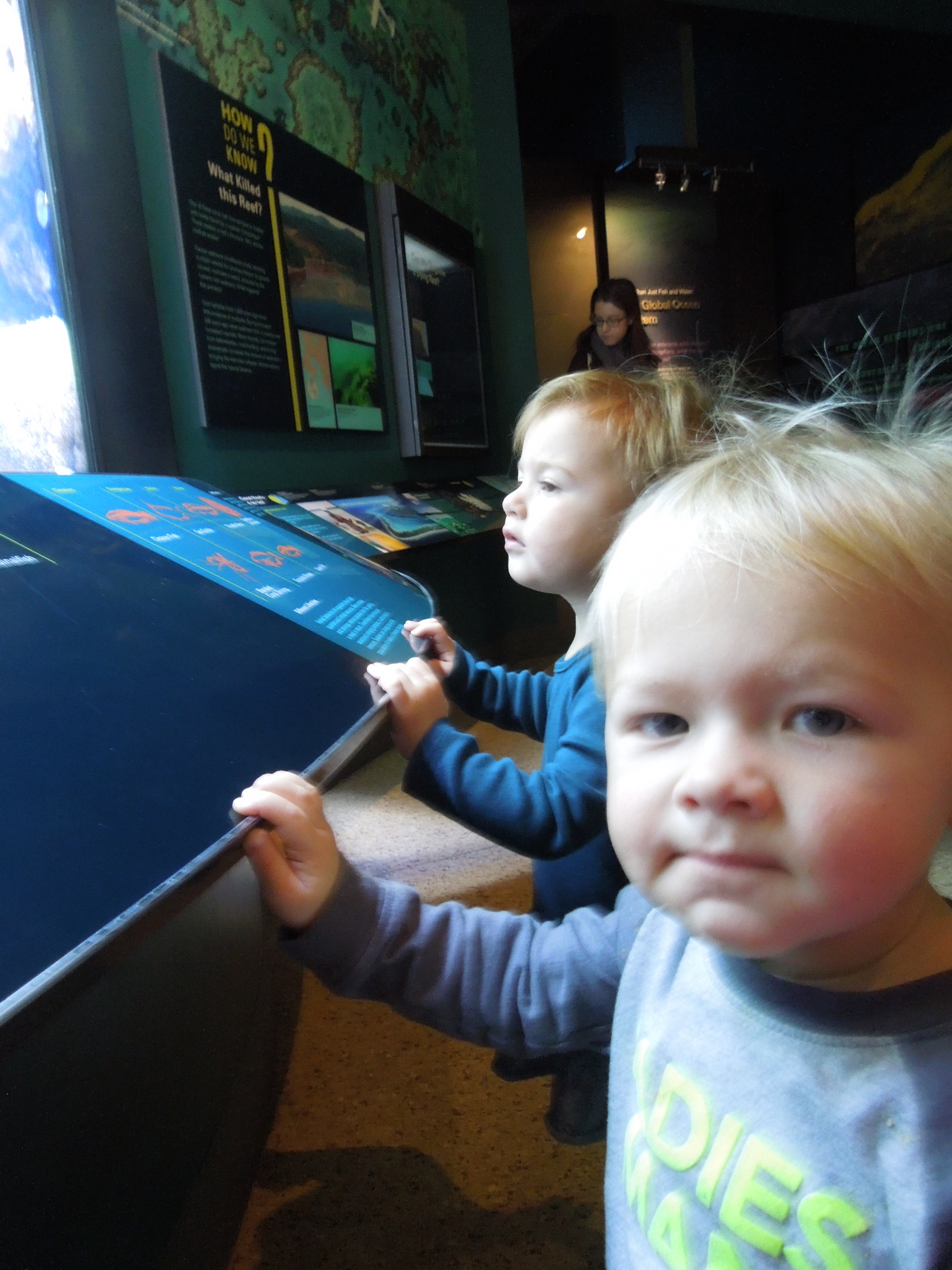
DSCN1659The group then headed up to the Ocean Hall (http://bit.ly/1zLDrSx) to watch some fish in action.
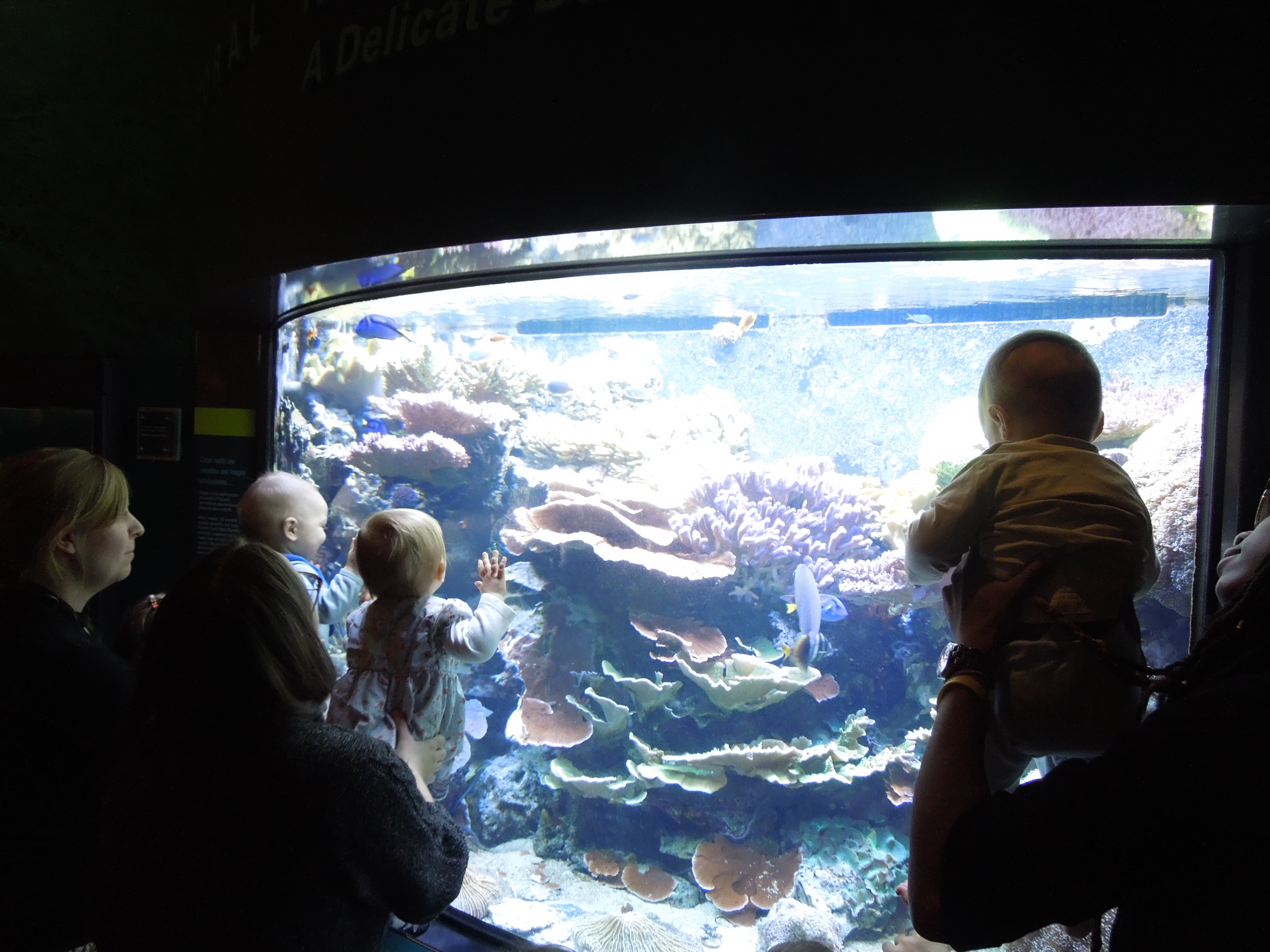
DSCN1667The group was mesmerized and loved being able to get so close to the fish.

DSCN1672While looking at the fish, Meredith lead the group in singing “Let’s Go Swimming” by the Laurie Berkner Band.

DSCN1689After nap, the children gathered to read the Little Blue Truck by Alice Schertle. Meredith had printed and laminated images from the book to give the children something to interact with during the story.
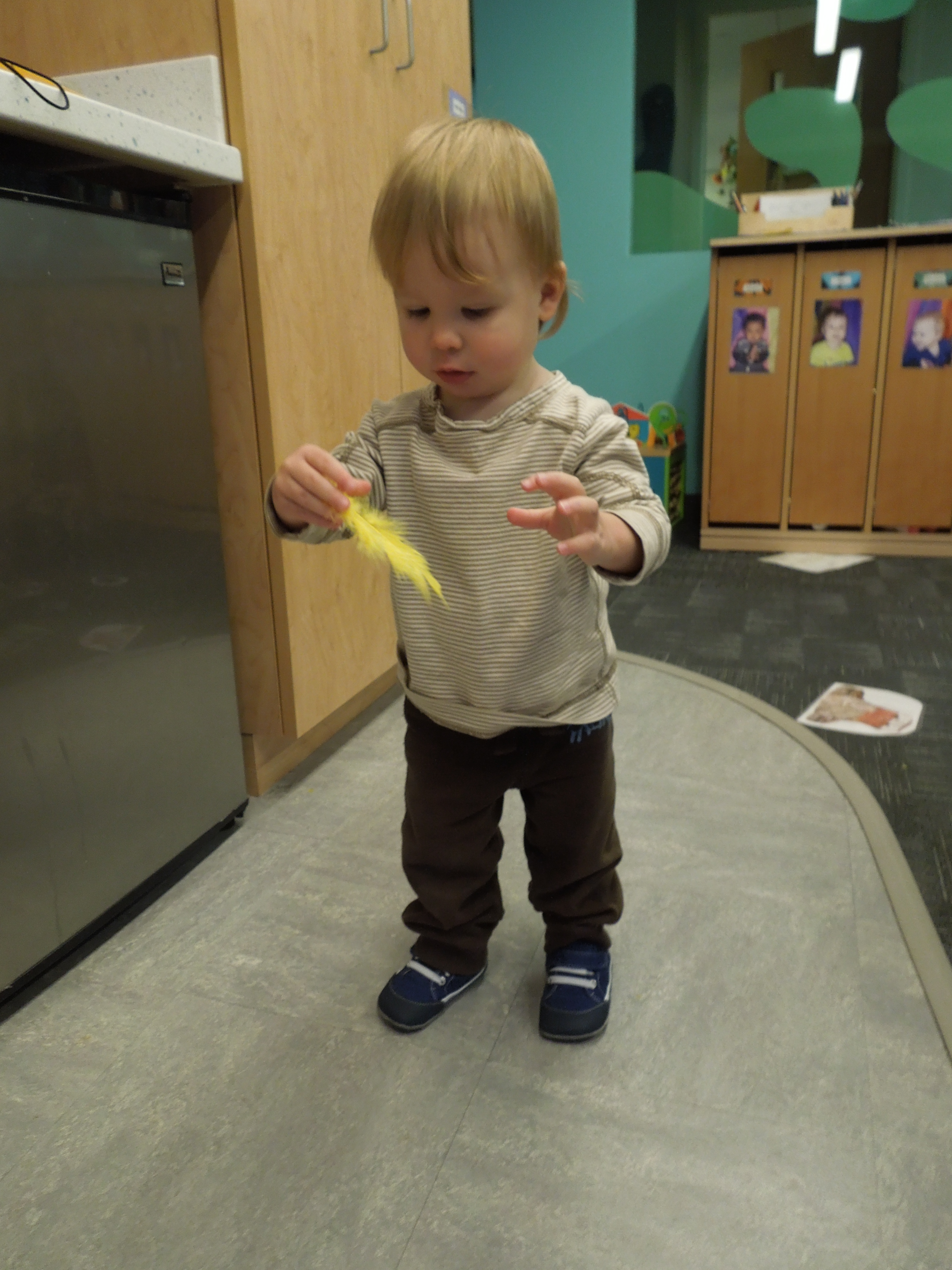
DSCN1699 DSCN1700Once they had finished, Meredith passed out feathers to the children. The group had a great time blowing on the feathers and watching them float to the ground.


This class had an awesome time learning about how things move! Be sure to check back for our Teacher Feature next week!

Teacher Feature: Toddlers Explore Family Traditions

It’s Teacher Feature Thursday!

This week we are featuring Anna Wilson. Her two year old classroom was learning all about family traditions and decided to spend a day focusing on decorations.

Toucans_Cover_Family_Traditions

What were your topics of exploration?

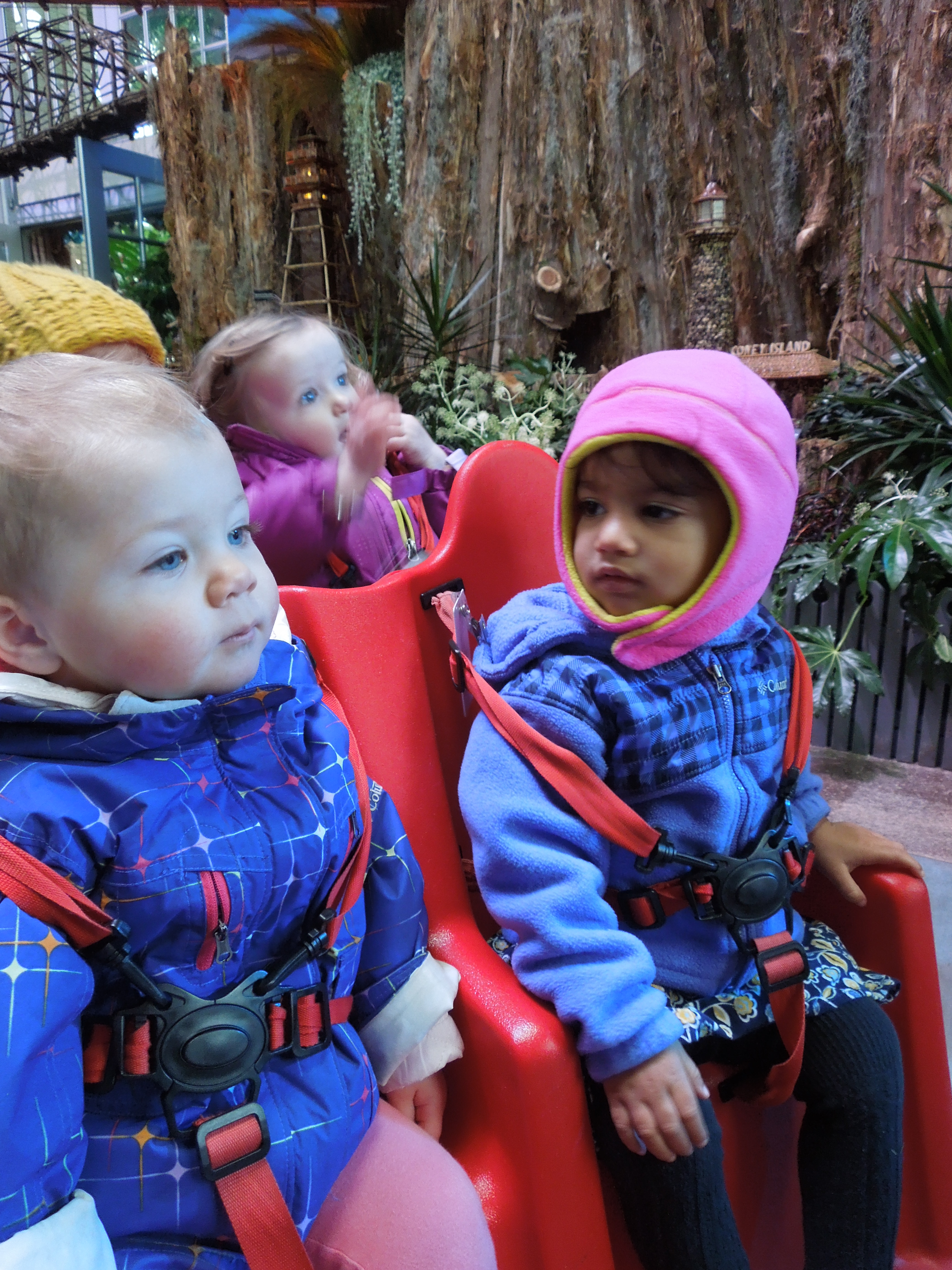
Our class was exploring family traditions and holiday celebrations. It can often be hard to address the holidays at school because people celebrate many different things, but we decided that we could explore some of these traditions together. We spoke to each family to find out what customs they observe. We then made lessons around these ideas so the students could connect what they learn in the classroom to their home life. This particular lesson focused on holiday decorations. We explored the National Botanical Gardens to see the greenery and trains that many of our families talked about putting up each year.

What were your learning objectives? (What did you want your children to take away from the lesson?)

The main objective for this lesson was for the students to learn about themselves and others in a way that they could connect to and understand. We wanted to give students opportunities to become a part of the classroom and community so that each child feels accepted and gains a sense of belonging. We also wanted to provide opportunities for our students to use their senses to explore the objects during the visit.

What was most successful about your lesson?

The students really enjoyed seeing all the wonderful plants and trains. They were engaged and excited.

What could you have done differently? What recommendations would you have for another teacher trying out this lesson?

I would recommend bringing manipulatives for the students to hold. They aren’t allowed to touch any of the decorations in this space, so something they can handle will help them stay engaged.

Here are a few images from her unit on holiday decorations:

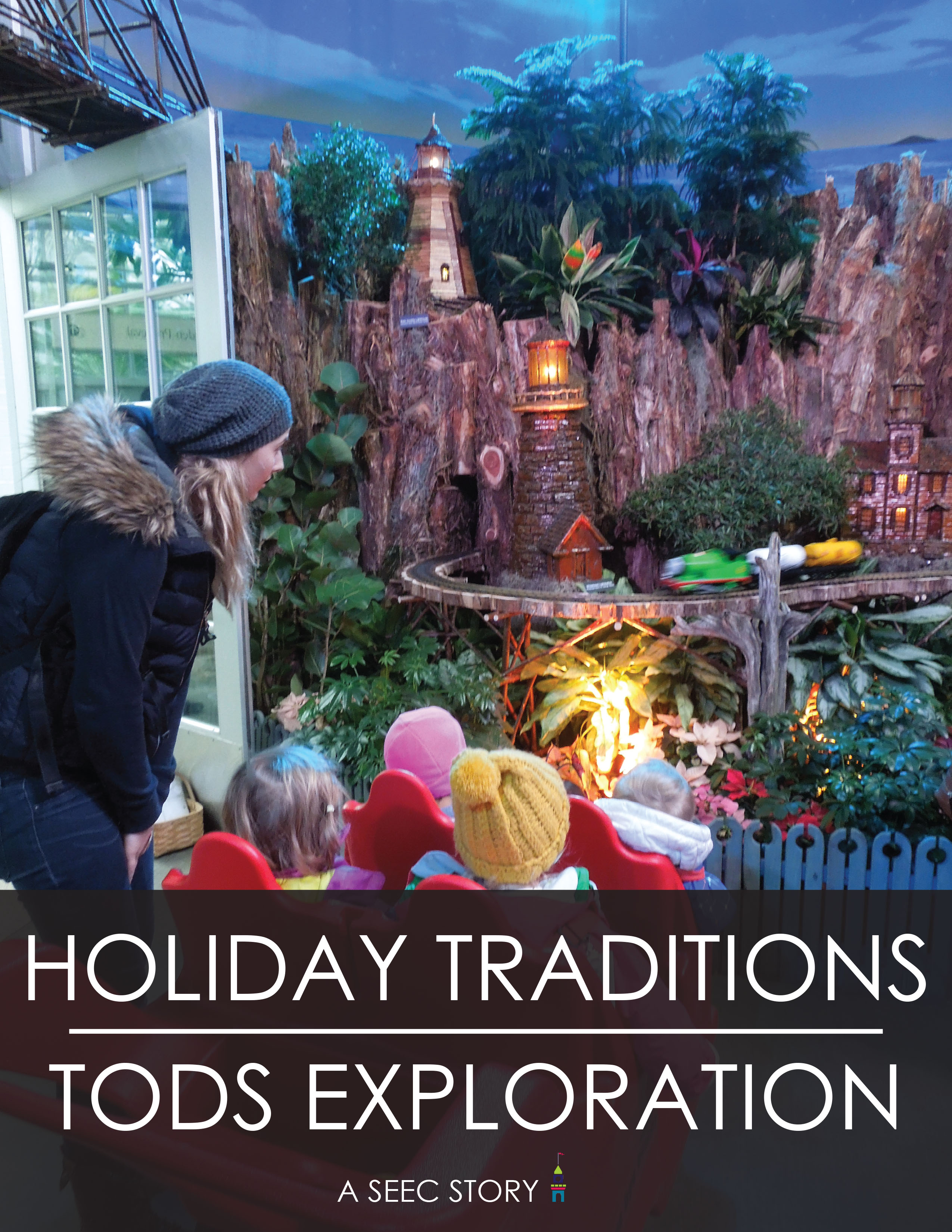
DSCN1547The visit began at the U.S. Botanic Gardens. During the month of January the Gardens create lush scenes for model trains and decorate their green house with seasonal plants.

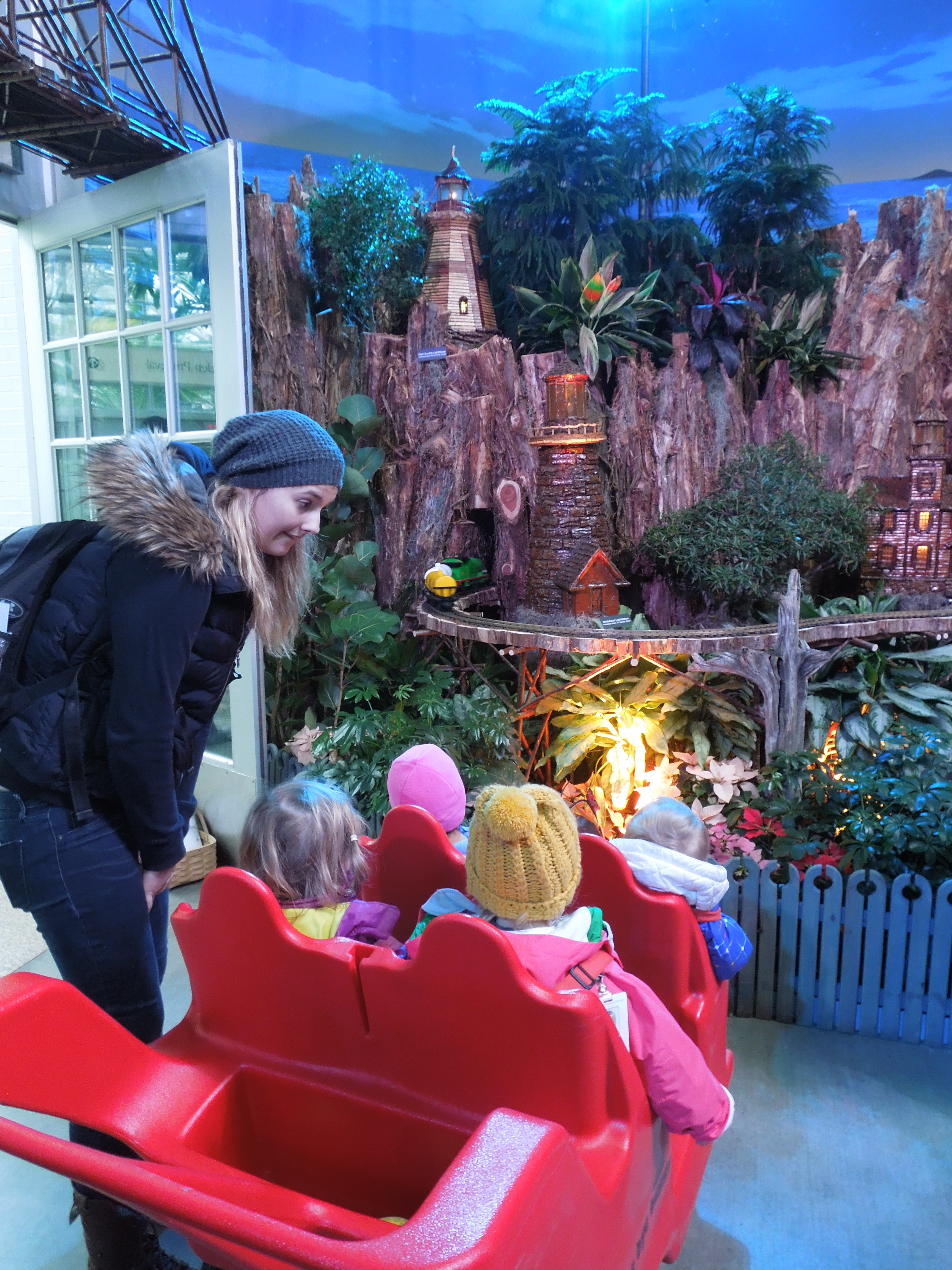
DSCN1559Anna and her co-teacher slowly wheeled the group through the gardens asking the group what they heard, smelled, and saw. The kids also enjoyed communicating with each other through pointing and squeals as they moved around the displays.

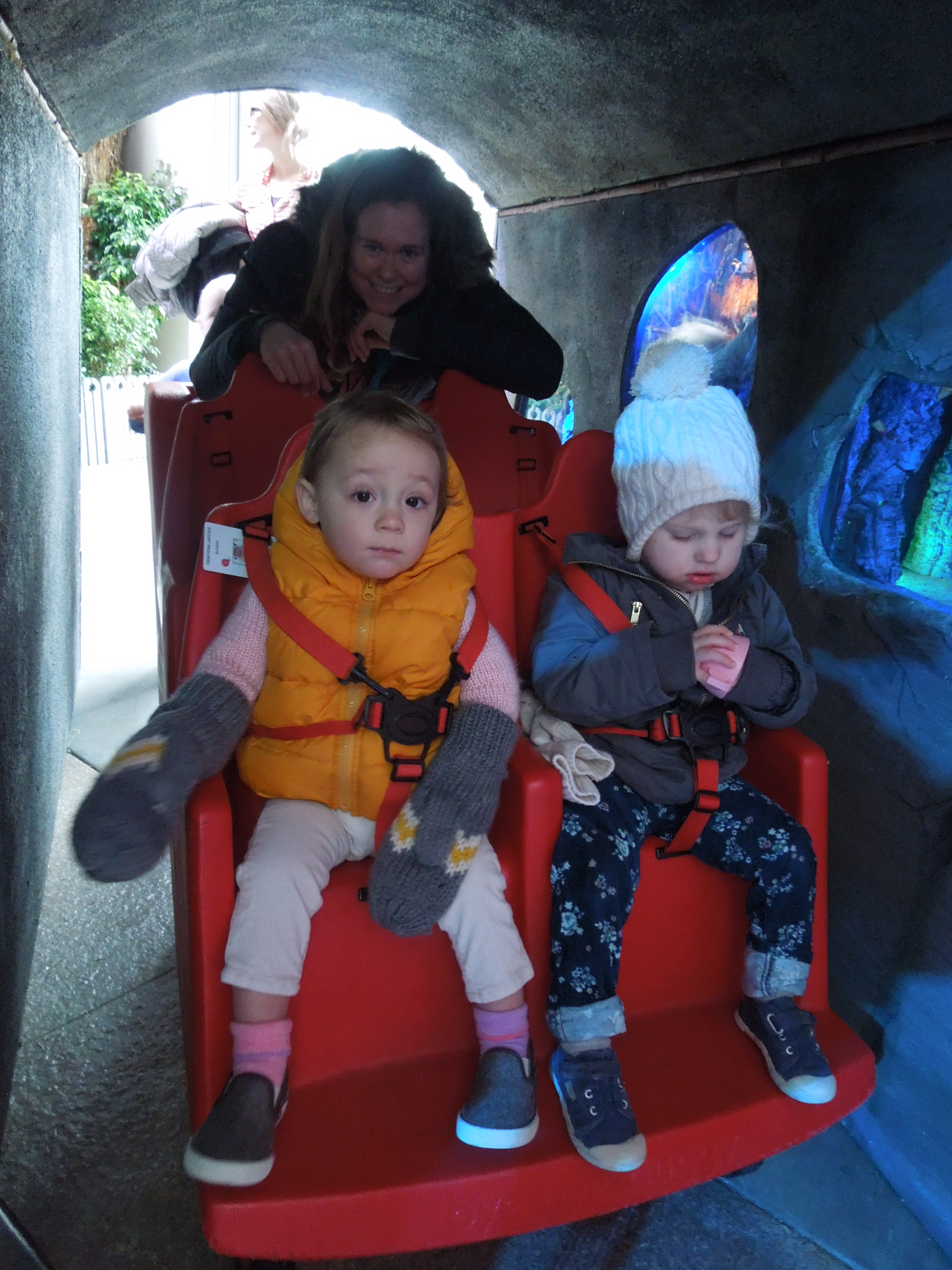
DSCN1570They especially loved the little tunnel in the space. Their teachers made train sounds and had the group pretend they were a train traveling underground!

DSCN1573Anna was very careful to give the group plenty of time to look. She would narrate what the group was seeing and ask them to predict where they thought the train would show up next.


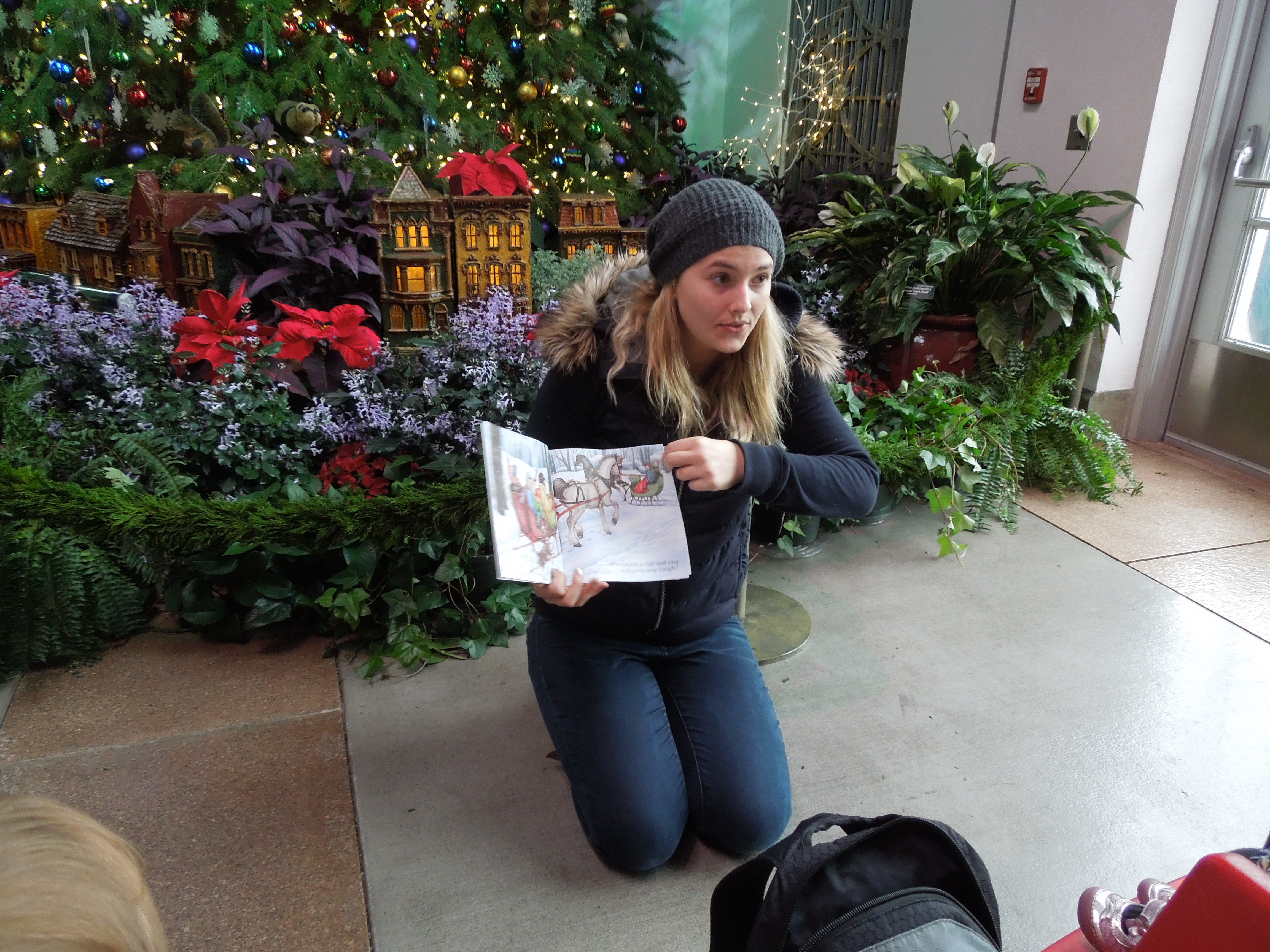
DSCN1597After spending a long time looking at the trains, Anna found a quiet spot in front of the Christmas tree to gather the group. She asked the children to use their different senses to explore the tree in front of them. Anna then passed out jingle bells to each child so they could have a manipulative to use while she read Snowballs by Lois Ehlert.

DSCN1587The group explored the bells with all of their senses.

DSCN1602Anna noticed that the group was really enjoying the space and the bells and decided to read a second book (Jingle Bells by Darcy May). 

The class had a wonderful time studying family traditions. Check back next week for another teacher feature!


Teacher Feature: Toddlers Explore the Ocean

It’s Teacher Feature Thursday!

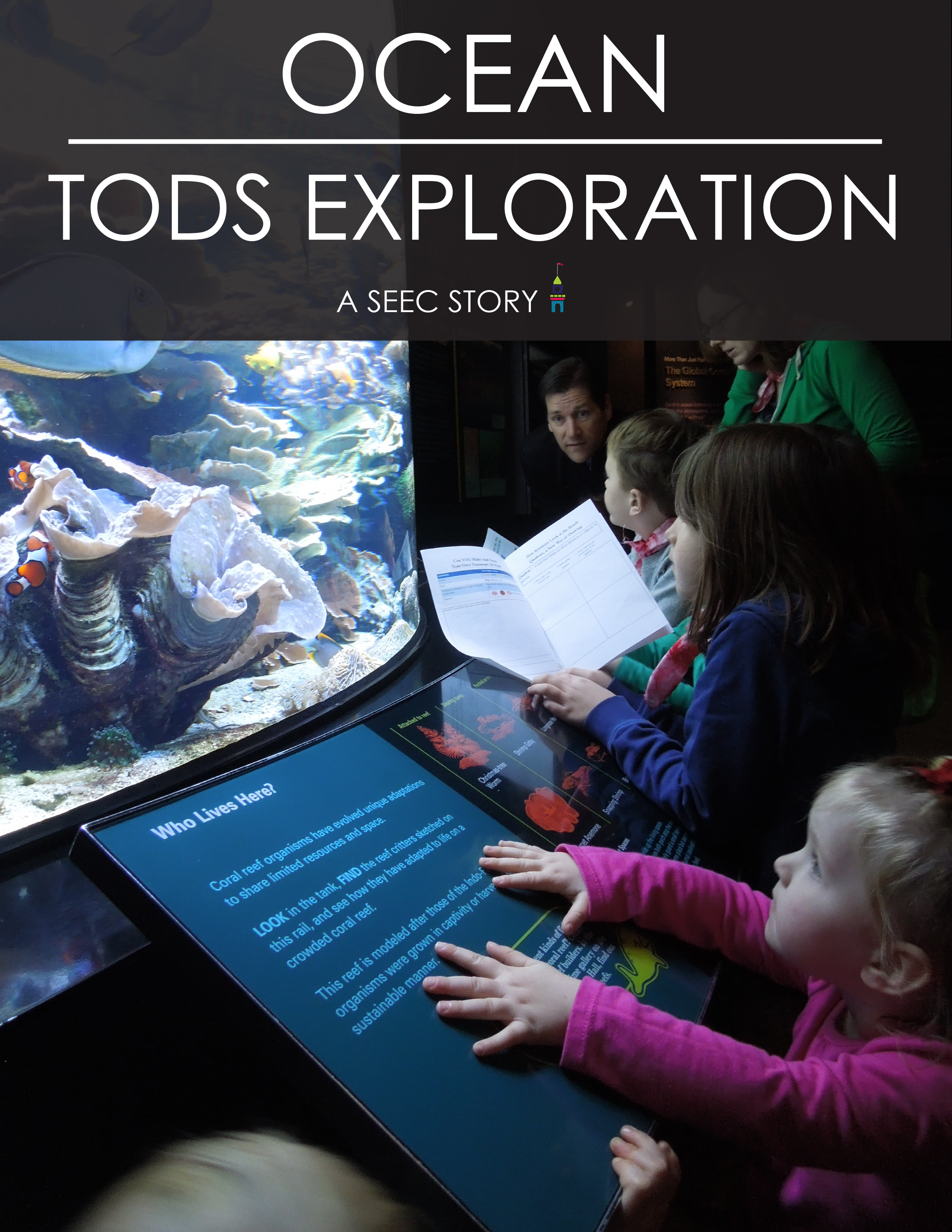
This week we are featuring Dana Brightful. Her toddler classroom was learning all about the ocean and decided to spend a day focusing on anemones. Below you will find a reflection from Dana and images from some of her lessons.

Ocean_Cover

What were your topics of exploration?

Our topics of discussion that week were Oceans and Coral Reefs. We specifically focused on symbiotic relationships between clown fish and sea anemones and the importance of coral reefs and octopi.

What were your learning objectives? (What did you want your children to take away from the lesson?)

My main goal for this particular group of children was for them to understand the importance of working together like the sea anemone and clown fish. This group is working on building their relationships with each other and to consistently work cooperatively.The activities that were included in this unit encouraged hand holding and the importance of collective responsibility in the classroom.

What was most successful about your lesson?

The children really remembered the vocabulary words like coral, ocean, clown fish and even anemone. Also, that week, the group was particularly successful walking together as partners holding hands and even beginning to identify the feelings of their classmates.

What could you have done differently? What recommendations would you have for another teacher trying out this lesson?

I would actually have done the tunnel portion (hiding from the shark) in an open space, like the classroom. The space in the museum or smaller spaces proved to be a challenge and the idea/ concept was lost on the group.

Here are a few images from her unit on anemones:

DSCN1450Dana stared the lesson by asking the group to dive into the ocean.

DSCN1458Down on the ocean floor they found coral, an anemone, and sand. The group took turns passing around the different items and reviewing the different sea creatures they had studied earlier in the week.

DSCN1461Dana then explained how clown fish live in anemones. The anemone keeps the clown fish safe and in turn it keeps the anemone clean. To emphasize this point she used puppets to sing a song about their relationship. Here are the lyrics  (sung to the tune of ‘This Old Man’): I hide you, you clean me, clown fish and anemone, They work together can’t you see? Living in the coral reefs!

DSCN1467

DSCN1475The group then walked up to the Natural History Ocean Hall to see the clown fish in action.

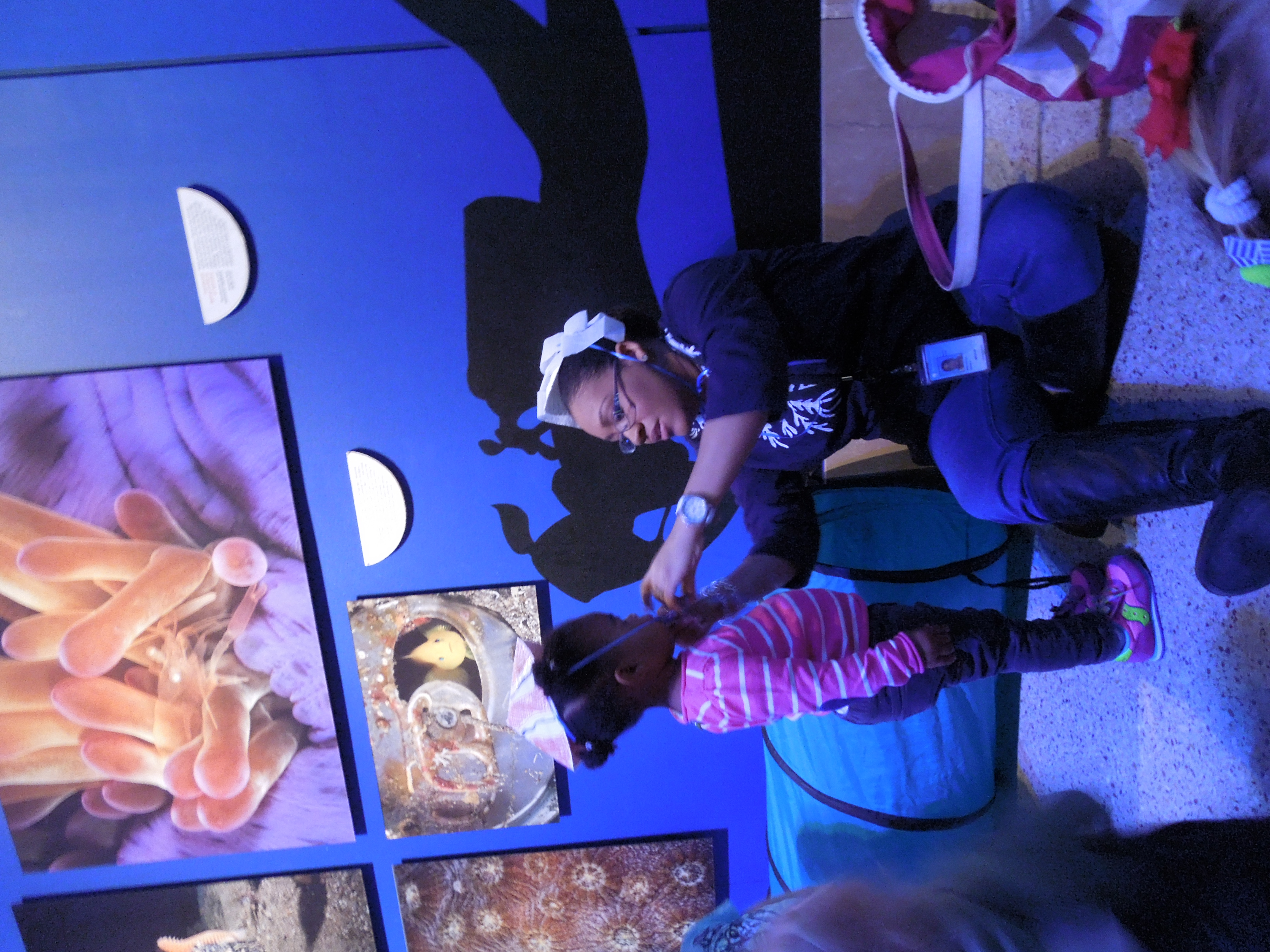
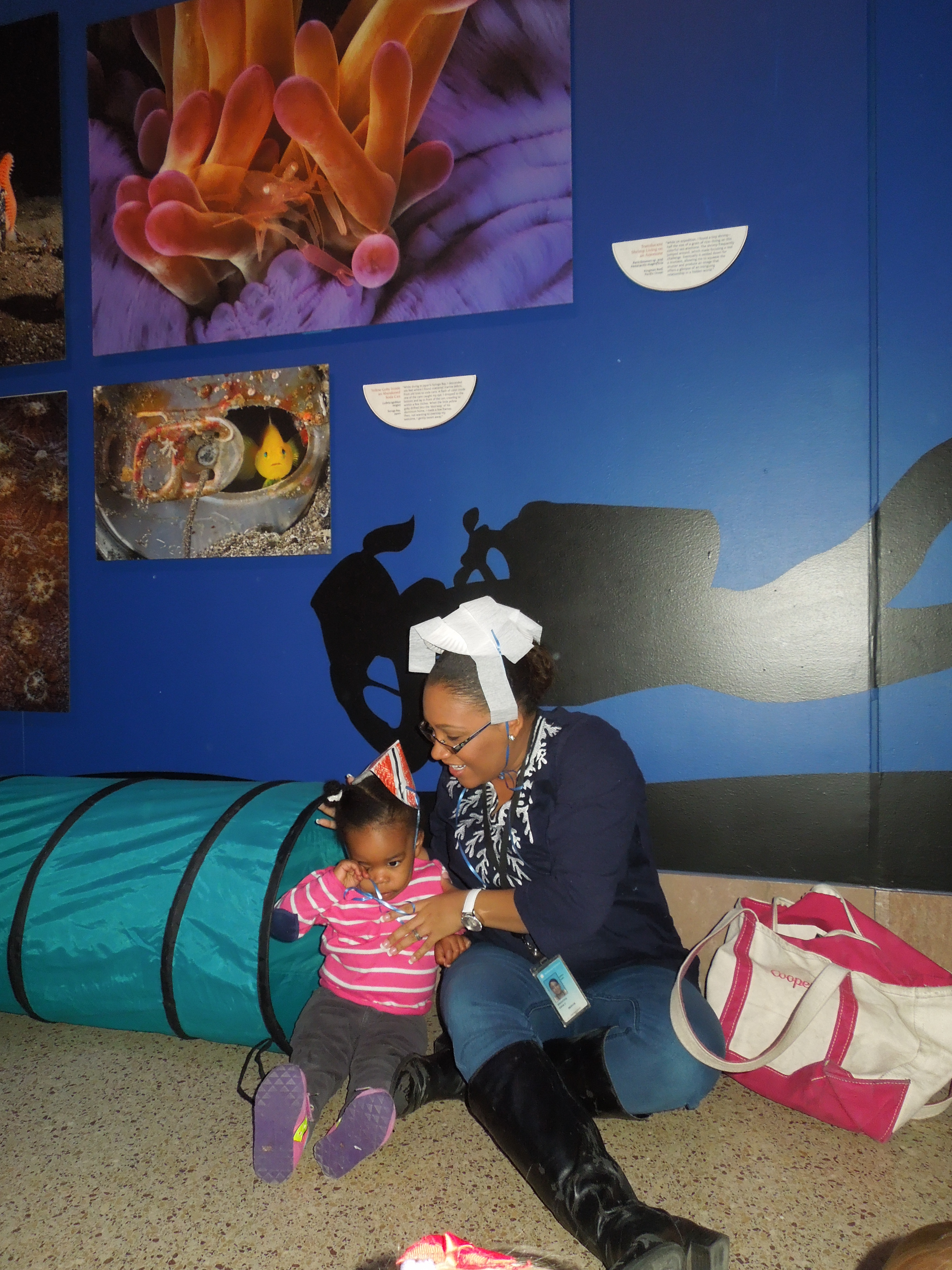
DSCN1485After they had a chance to observe the fish, they ventured over to Portraits of Planet Ocean: The Photography of Brian Skerry (http://bit.ly/1CklPMe) to see a photograph of an anemone. Sitting in front of the photo, Dana introduced the game they were going to play in the museum. She was going to be an anemone and a child was going to be a clown fish. Dana used a paper plate, streamers, and string to create an anemone hat. She also made an additional hat out of a paper plate with the colors of a clown fish. The children took turns wearing the hat and pretending to be a clown fish.

DSCN1487 DSCN1489She asked one of the other teachers to be a predator trying to catch the clown fish and Dana told the children to quickly hide in the anemone (the tunnel). The kids had a blast playing in the museum.

The class had a wonderful time studying oceans and has now swum on to their next topic. Check back next week for another teacher feature!


Teacher Feature: Two Year Old Classroom Explores Trains

It’s Teacher Feature Thursday!

This week we are featuring Carolyn Eby. Her two year old classroom was learning all about trains and decided to spend a day focusing on the Little Red Caboose. The teachers had decided to focus on this topic because the children were showing continued interest in trains. They were pretending most objects were trains and wanted to talk about them during their walks in the community. In addition, one focus that SEEC toddlers have is walking safely together. Since they are just learning how to walk on “trains” there is a lot of interest in what trains are all about, how they stay together and, of course, train safety. This unit was able to connect all these aspects into one cohesive lesson. Below you will find a reflection from Carolyn and images from some of her lessons.

Train_Cover

What were your topics of exploration?

Our class was spending time learning about the different parts of a railroad train such as the locomotive, tank car, and so on. We had spent the week looking at different cars and their various functions. On this specific day we were talking about the Little Red Caboose and how it keeps everyone safe.

What were your learning objectives? (What did you want your children to take away from the lesson?)

I wanted the group to understand the safety function of the caboose and its location in the order of the cars. The class has a great sense of compassion for each other and characters in books and by personifying the caboose through the book Little Red Caboose by Marian Potter I was able to illustrate how the train “keeps an eye out” for the other cars.

We were also able to work on some developmental goals by involving dance and call and response during our circle.

What was most successful about your lesson?

I found that the most successful part of my lesson was the connection between the book and the work of art. We visited the Smithsonian American Art Museums to see Train in Cole Town by Jack Savitsky. Both the illustrations and painting had a funky feeling which made the flow from reading the book to looking at the art work very easy for the group to connect. It was really fun to spend time looking at the painting, imagining how it could be an extension of the text we were reading!

Surprisingly, right around the corner were several other train paintings! We decided to stop and spend some time discussing what we saw in those works. We wondered about the people riding in the passenger trains and where the rail road tracks may lead. These conversations were exciting and included thoughtful connections to previous units since the class had been spending so much time working on trains! Sometimes the best parts of a lesson are not planned!

What could you have done differently? What recommendations would you have for another teacher trying out this lesson?

It was difficult for me to think of an age appropriate activity that I could pack up and take with me to the museum. I loved singing with the kids and reading them a story, but I feel like the lesson could have made a greater connection with the group if they had a hands activity to do in the gallery. Also, I would have probably spent more time talking through the lyrics of the song which may have resulted in a more dynamic discussion.

Here are a few images from her unit on the caboose:

DSCN1509 Carolyn introduced her topic for the day by creating a small red car to add to their bulletin board train. She reviewed the parts of the train that they had previously studied and asked the group where they thought they should put this car. Carolyn then explained that this car was a caboose and it had a very special job.

DSCN1513Carolyn then played a video for the group with the tablet. It showed a musical group singing “The Little Red Caboose.”

DSCN1515Carolyn wanted to provide multiple exposures to the same song so she also sang a slightly different version with the class. She also showed them a few train movements to do while they were singing. The group loved them!


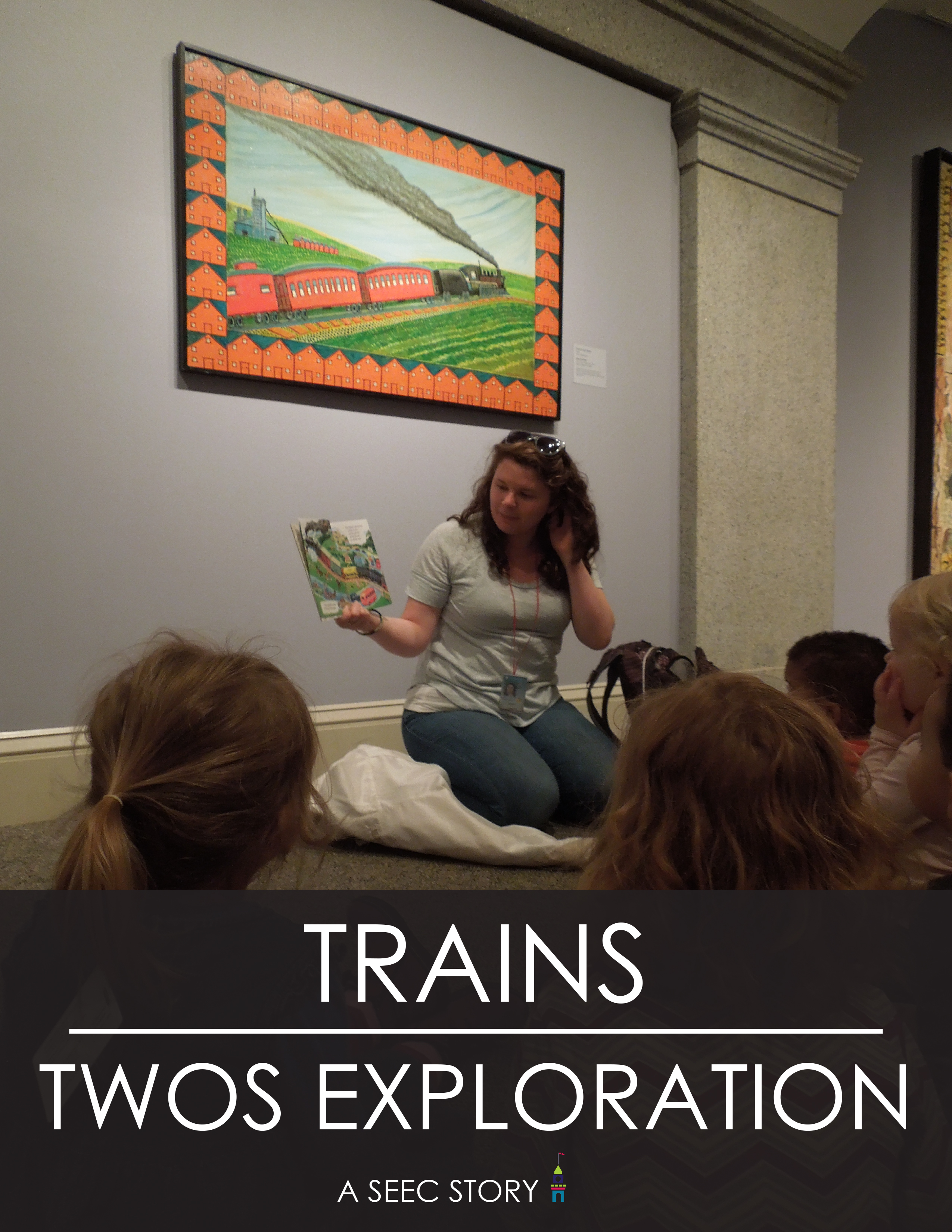
DSCN1530Following the story, the class walked up to the Smithsonian American Art Museum to see Train in Cole Town by Jack Savitsky (http://bit.ly/1xh3FWZ). They spent some time looking at the work and talking about the different parts of the train. They thought about where it might be going and how quickly or slowly it might get there. Carolyn then read The Little Red Caboose by Marian Potter.

DSCN1539Carolyn asked the group if they could see similarities between the book and the painting. The children had a lot to share and were able to talk about the role of the caboose in both the book and the work of art.

DSCN1544On their way out of the museum the group spotted a few more train paintings. Subway by Lily Furedi  (http://bit.ly/1DPTbDW) served as a great way to review passenger cars. The group talked about what the people were doing on the train.

DSCN1546The children also spotted train tracks in Third Avenue by Charles L. Goeller (http://bit.ly/1BUh9yj). They wondered where they were going and what kid of train would use that type of track.

The class had a wonderful time studying trains and has now chugged along to their next topic. Check back next week for another teacher feature!


Teacher Feature: Two Year Old Classroom Explores The Human Body

It’s Teacher Feature Thursday!

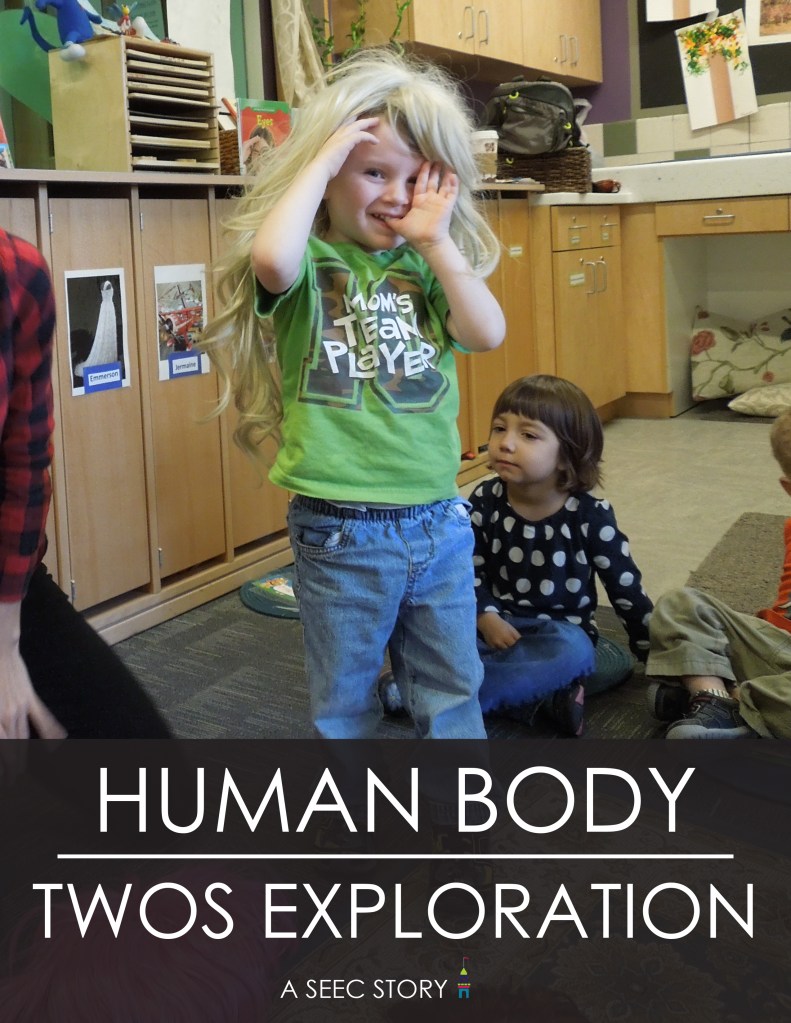
This week we are featuring Javasa Finney. Her twos classroom was learning about the human body and decided to spend a day learning about hair and how the human body grows. Below you will find a reflection from Javasa and images from some of her lessons.

Body_Cover

What were your topics of exploration?

During the months of October and November the Penguins were exploring the human body.  We talked about the different parts of the human body.  Some of the parts we focused on included:

  • hair
  • skin
  • mouth
  • bones
  • eyes
  • brain
  • heart

In addition to how these body parts work we had a lot of fun learning about the five senses.  We talked about nutrition, how important it is, and how what we eat affects our body. Then they made delicious food from the different food groups with my co-teachers throughout the week. We also talked about the importance of sleep and how important exercise is for the human body.  They were extremely excited to have the opportunity to go exercise at the Washington Monument.

What were your learning objectives? (What did you want your children to take away from the lesson?)

I wanted the class to learn all about their amazing bodies. My main learning objective when teaching the kids about the human body was for them to learn about how important their bodies are and how to care for them. I also wanted them to learn all the bodies’ functions and abilities.

What was most successful about your lesson?

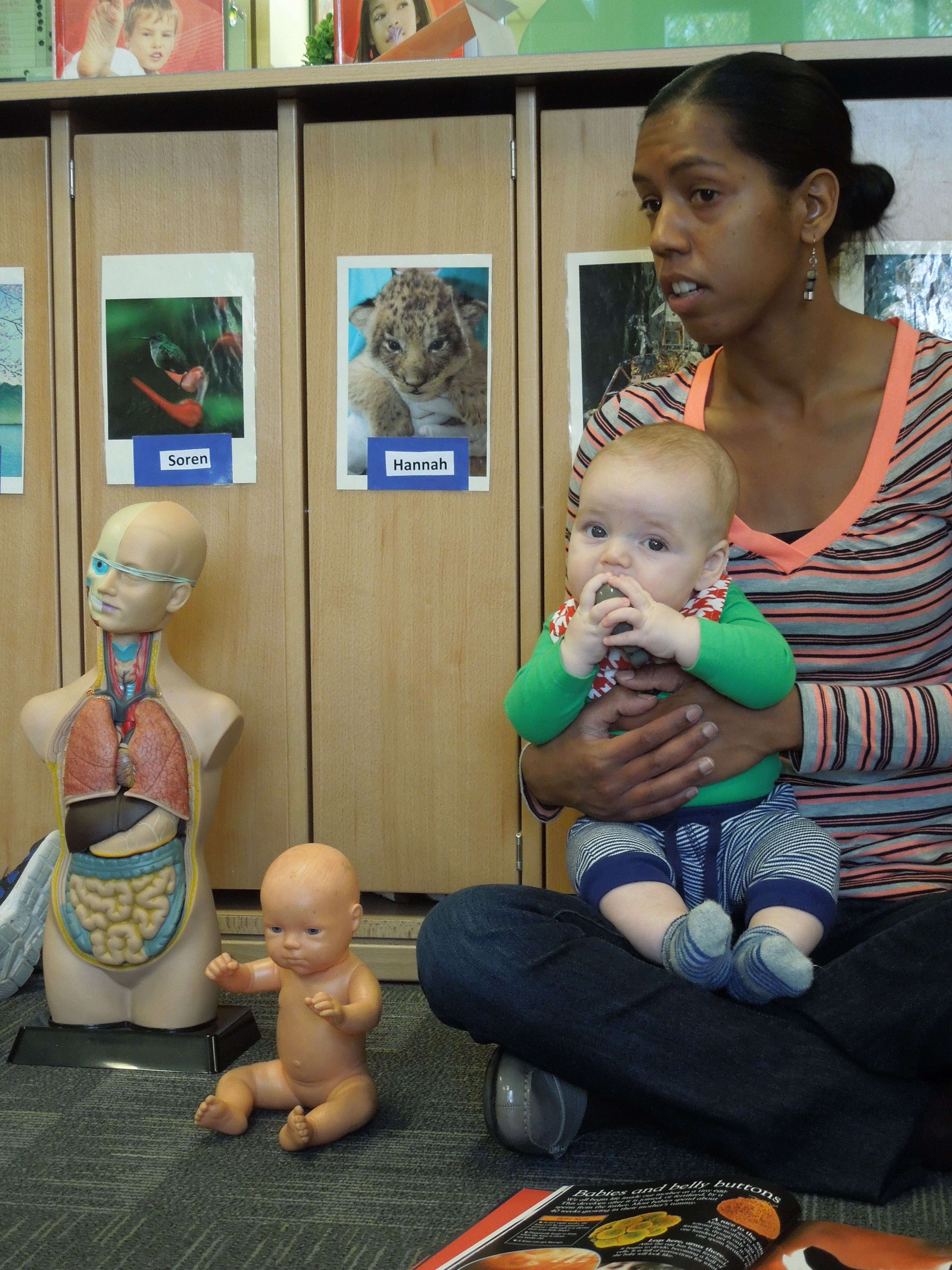
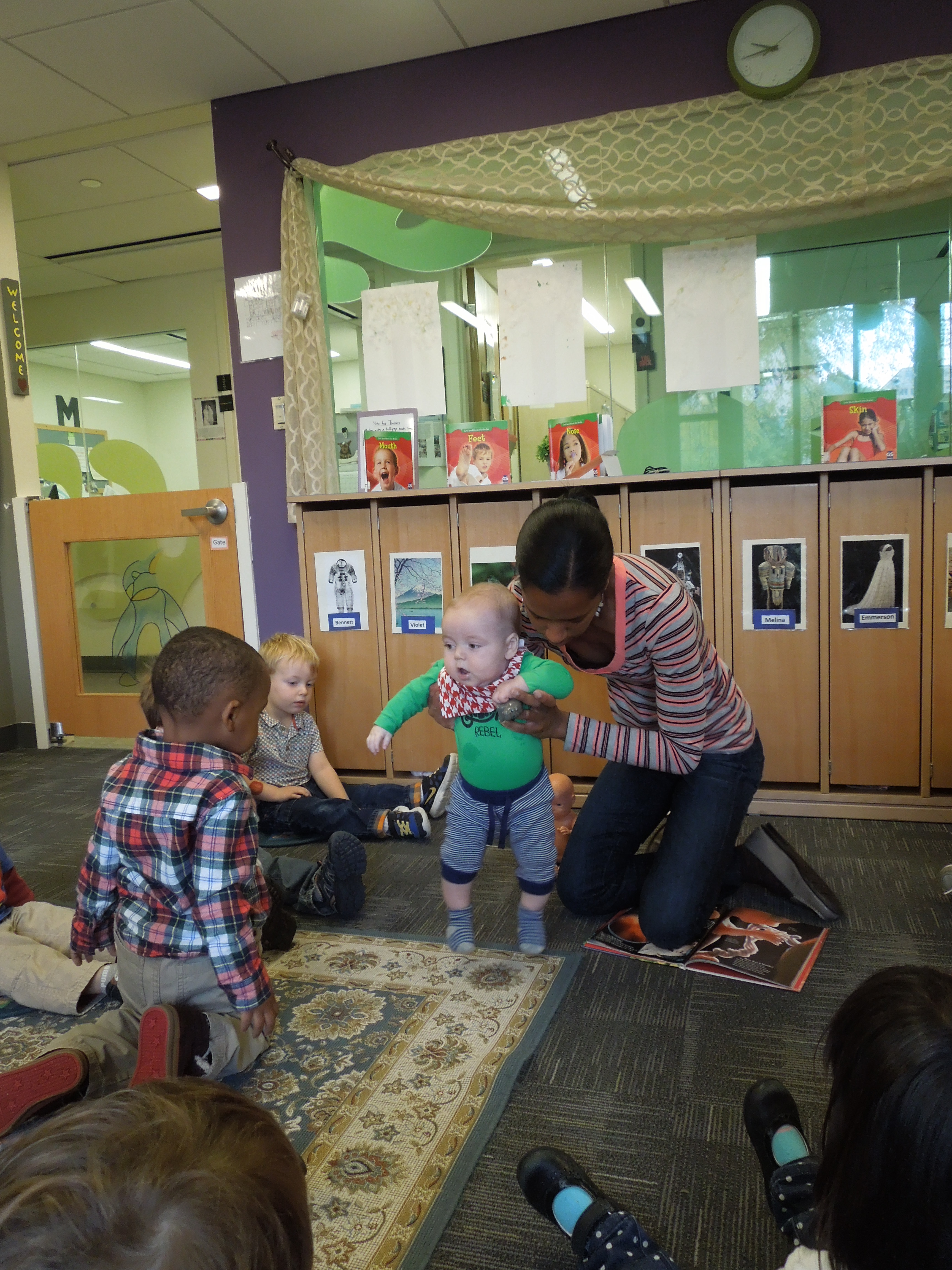
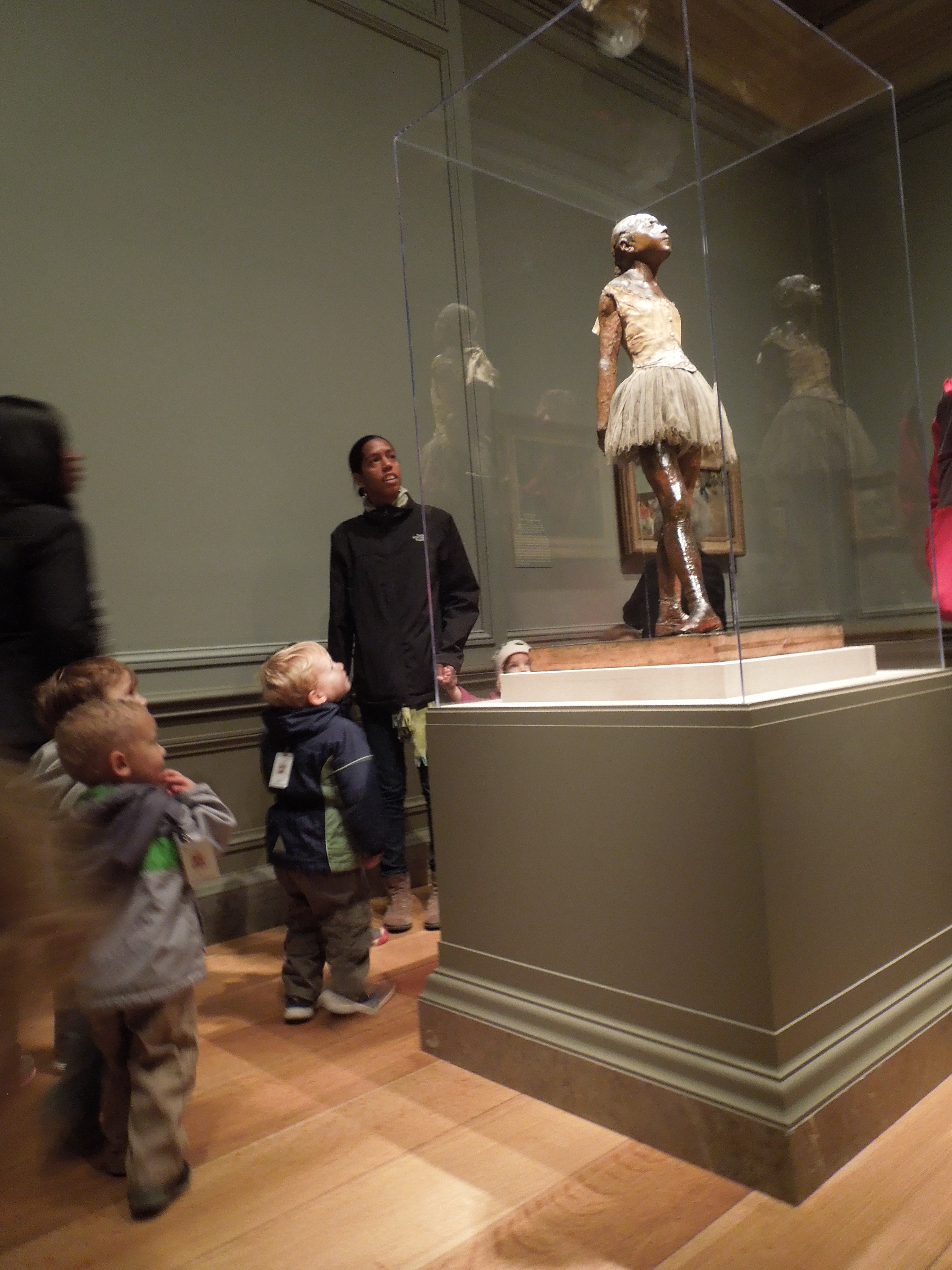
During the time we spent learning about the human body there are two lessons that I feel were extremely successful and memorable.  The first one would definitely be when a baby came to visit.  The child is currently a student in the infant class here at SEEC.  The five month old was our model for the lesson. During this lesson I talked to the Penguins about how we start out as small babies.  We talked about how different a baby’s body is compared to older people.  We talked about how when babies are born they don’t have teeth and can’t talk, walk, run, or jump.  They learned that during the first year a baby sleeps and drinks a lot and cries to communicate.  During circle time we made observations about the baby’s body and talked about how fragile it is.  Then the Penguins had the opportunity to touch him.  It was wonderful to see the children light up and respond to the child.  The second most successful and memorable human body lesson was our lesson on hair.  We learned how hair can be many colors, textures, and lengths.  We talked about the things we use to care for our hair.  Then the Penguins had the opportunity to try on wigs that were different colors, textures, and lengths. This lesson was followed up with a trip to the National Gallery of Art.  We went to look at the “Little Dancer” by Edgar Degas sculpture. First we made observations about the body and then we had the Penguins take a closer look at her braid.  The braid is made of real human hair, coated and held in place by wax.

What could you have done differently? What recommendations would you have for another teacher trying out this lesson? 

During the first lesson, if I were to do this again, I wouldn’t keep the baby on my lap the entire time.  I realized later it would have been nice for the kids to see him crawling, playing, etc.   For the second lesson about hair, I would have picked a different day to go to the National Gallery of Art.  The day we went there were several trips there and the room with “Little Dancer” was extremely crowded.

Here are a few images from their unit on the human body:

DSCN1370Javasa began the week by exploring how our bodies grow and change. As a way to illustrate this development, Javasa invited a child from the infant classroom to visit. She wanted the class to look at the baby and compare his body to their own and the teachers’. Javasa explained that people start by needing a lot of help from adults but as our body changes we become more independent.

DSCN1373Javasa explained that the baby couldn’t feed himself, talk, or even walk yet. She showed how the baby would eventually learn how to do all these things as he gets older.

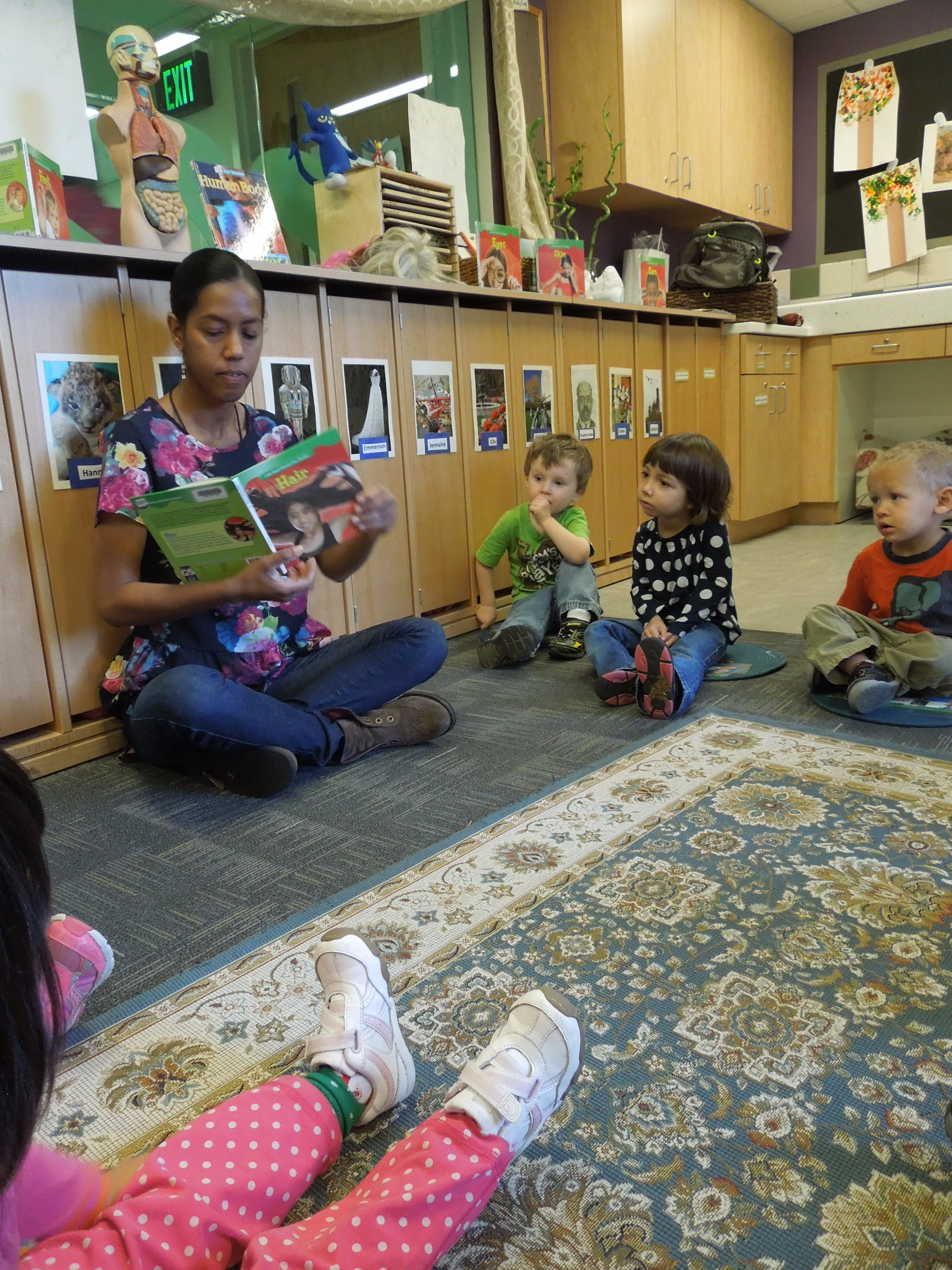
DSCN1382The next day the class moved on to Hair. Javasa read “Hair” by Cynthia Klingel and Robert B. Noyed to introduce the topic. The book helped students understand that people all over the world have many different types of hair and hair styles and each one is as special as the next.

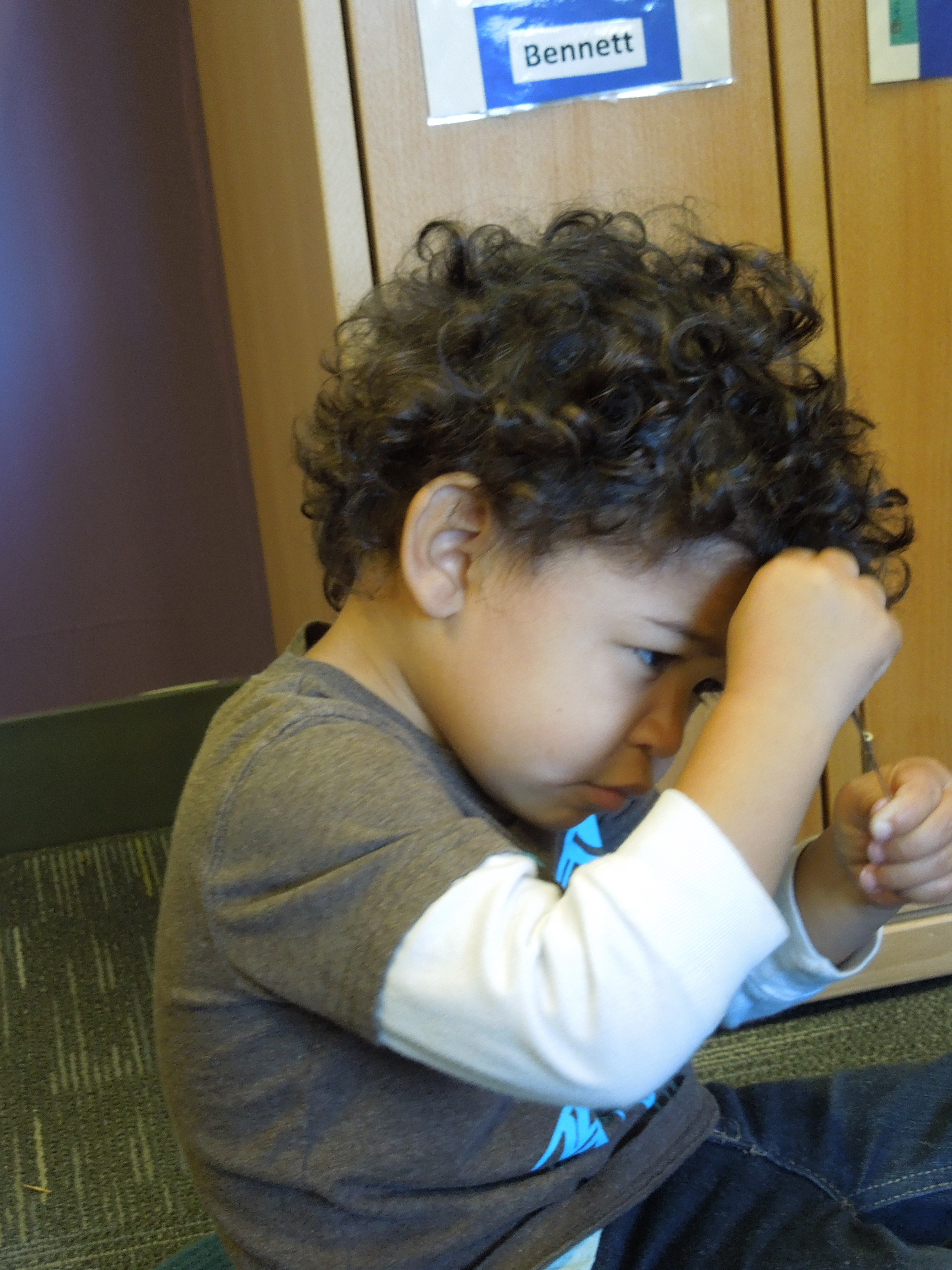
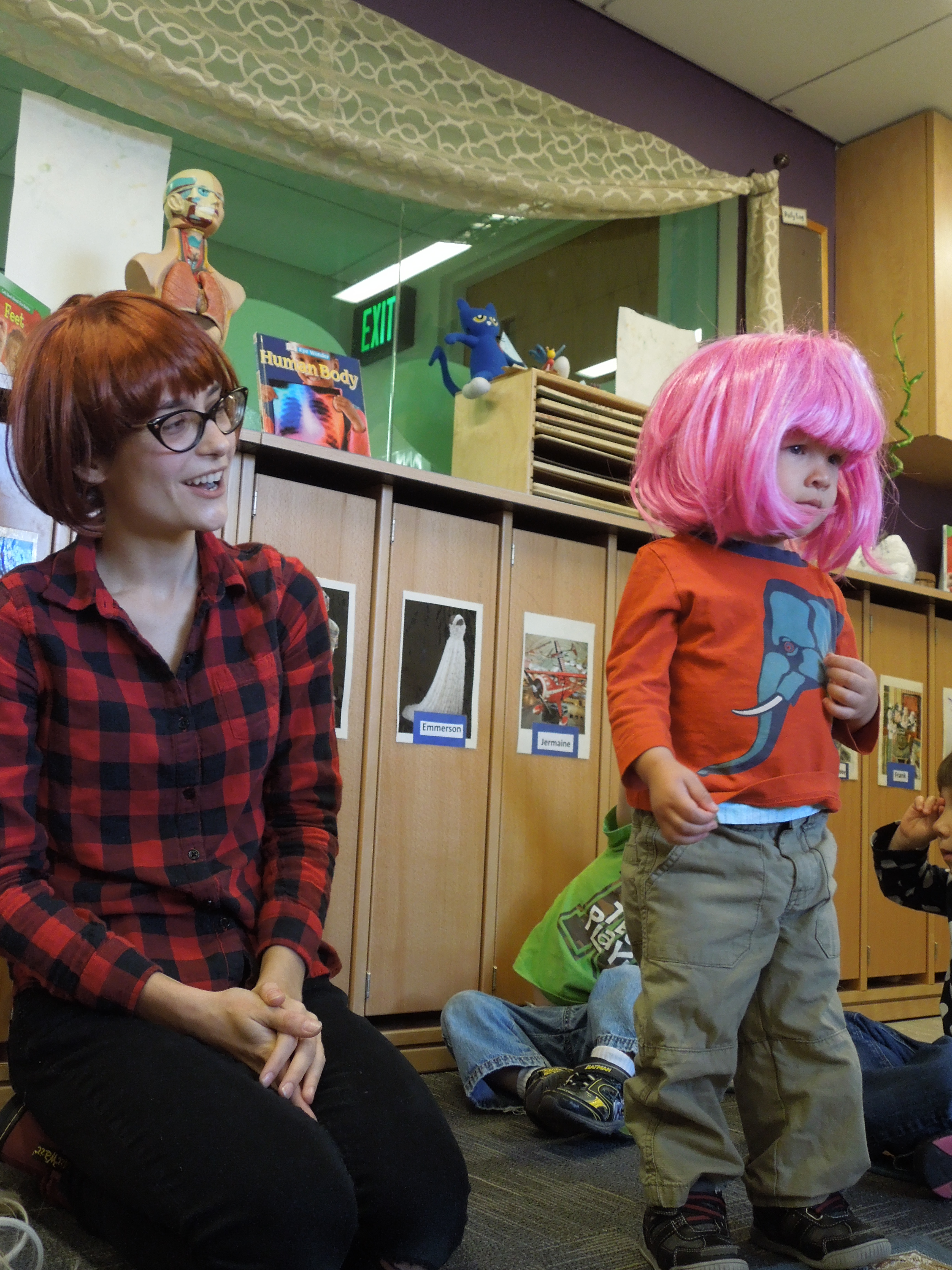
DSCN1387One of Javasa’s co-teachers shared her collection of wigs as way to talk about how hair can be all different colors, textures, lengths, and styles. She explained that hair comes in a range of color but if you want certain colors (for example, pink) you would need to dye it that color.

DSCN1390She showed the group a zoomed in picture of a hair follicle. The kids couldn’t believe how the root of their hair looks.

DSCN1393Javasa went on to explain that hair can grow curly, straight, or wavy.

DSCN1397 DSCN1398The group spent a long time looking and touching their own hair.

DSCN1409Then it was time to try out new hair!

DSCN1415 DSCN1431They had a wonderful time trying on the different wigs!

DSCN1436 DSCN1438The group then walked over to the National Gallery of Art to see Degas’ “Little Dancer.” They were fascinated by how Degas used real hair for the sculpture. The children discussed the color, length and style of the dancer’s hair.

This class had an awesome time learning about their bodies! Be sure to check back for our Teacher Feature next week!

Teacher Feature: Four Year Old Classroom Explores Camelot

It’s Teacher Feature Thursday!

This week we are featuring Will Kuehnle. Will’s pre-k four classroom is currently learning about Camelot. Below you will find a reflection from Will and images from some of his lessons.

Print

What were your topics of exploration?

“We were exploring the world of King Arthur and Camelot. The children at the beginning of the year were enjoying the idea of dragons chasing them when we were running around on the playground. Dragons were also popping up during our chatter around the snack table. I definitely noticed an interest. My associate teacher and I put our heads together to think of a topic to explore that would quench the students interest, touch on topics we thought would be useful for the children to have as a foundation for the year ahead (chivalry, community) and also allowed us as educators to have a wide variety of ideas to teach upon, which makes lesson planning fun and flexible.”

What were your learning objectives? (What did you want your children to take away from the lesson?)

“I always want my students to take away a sense of enjoyment from a unit of study. I want them to have that everyday we are together, no matter if we are going on an exciting museum visit or stuck inside the classroom on a rainy day.  For this particular unit I wanted to have each student have a strong sense of what the code of chivalry was, because that can be applied to so many routine situations throughout our day. I wanted to be able to focus my language with children around kindness, bravery, loyalty, community and justice. To be able to do that with such a fascinating backdrop as King Arthur and the Knights of the Round Table was a real treat. Another objective I had for the students was to nurture their sense of adventure and curiosity towards learning. We can take that energy and harness it towards future lessons and topics this year, I’m really excited to see where this year leads us.”

What was most successful about your lesson?

“I believe the way the children used what we were discussing into their play was the most successful. I did not notice it at first, but after a few weeks into the unit the play structures in the classroom were really developing. The dramatic play we had in the classroom, the manipulatives the children were using, the art they were making and the games they were creating on the playground were centered around the world of Camelot. The children were so whimsical in their approach to the unit that you really saw what you were talking to them about sink in. I am able to suggest to a child that they be knightly or chivalrous and see them reflect with positive reaction to the choice they are making.”

What could you have done differently? What recommendations would you have for another teacher trying out this lesson?

“Reflecting back on the unit, which is still going on up until our knighting ceremony on December 18th, I wish that the transition of topics within the unit were more thought out and not as rushed. I think we were really excited to dive head first into something for the start of the year that we barreled through ideas that we could have taken more time on. Maybe it was because we wanted to go from looking at the places of Camelot, to the people of Camelot, to the stories of King Arthur, to the code of chivalry, to how castles were built and protected, etc. As an educator I am trying learn how best to balance all the information there is to know and all the information I believe is best for my students to know, and then unveiling that in a cohesive story line that is engaging and enriching for them. I think having a strong idea of what you want to the overall story to be in the unit when you are first venturing out is very helpful, and that is something I struggled with in this unit. At the same time you always need to be flexible.”

Here a few images from their days in Camelot:

They began their exploration of the topic with the story of the Sword in the Stone. Will had the students create their own stone from a cardboard box and painted paper. They were very surprised and excited when Merlin dropped off a sword later in the day.

IMGP8021To encourage close looking, Will asked the children to create their own illustrations of the sword for their journals.

IMGP8008

IMGP8022The children were very thorough in their illustrations. Some even included the text found below the sword.

IMGP7996DSCN0837The children were then offered the opportunity to try and pull the sword out of the stone. Will explained that the person who was able to remove the sword from the stone would be the rightful ruler of their kingdom. He reminded the children that they might not be the strongest or largest person but the one with the truest and kindest heart would be able to claim the sword. In the end it was their center director Megan who was able to remove the sword from the stone and students talked about why she would make a great ruler of their kingdom.

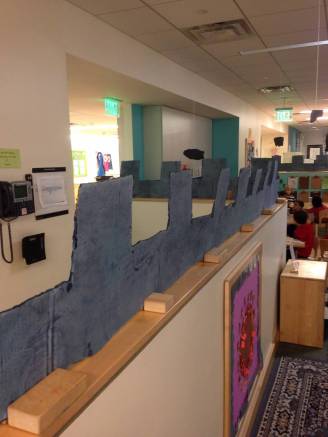
file (16)file (17)Will also began to alter their classroom to take on the attributes of a castle. Above the students are painting the castle wall and below you can see it installed in their space.

DSCN1099DSCN1096In addition to the castle wall, Will wanted a way to track their their progress through Camelot so they created a board with the different locations they might travel. As part of the board, he also created popsicle sticks with images of the children as their favorite Camelot characters which will move around the board as they continue through the story.

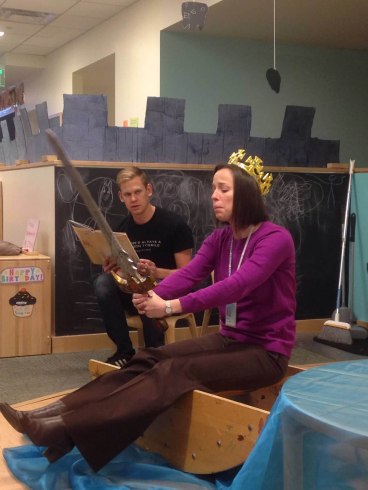
file (14)The group was so excited about Excalibur that Will decided to do a theatrical reading of the Lady in the Lake with help from a few educators and our site director.

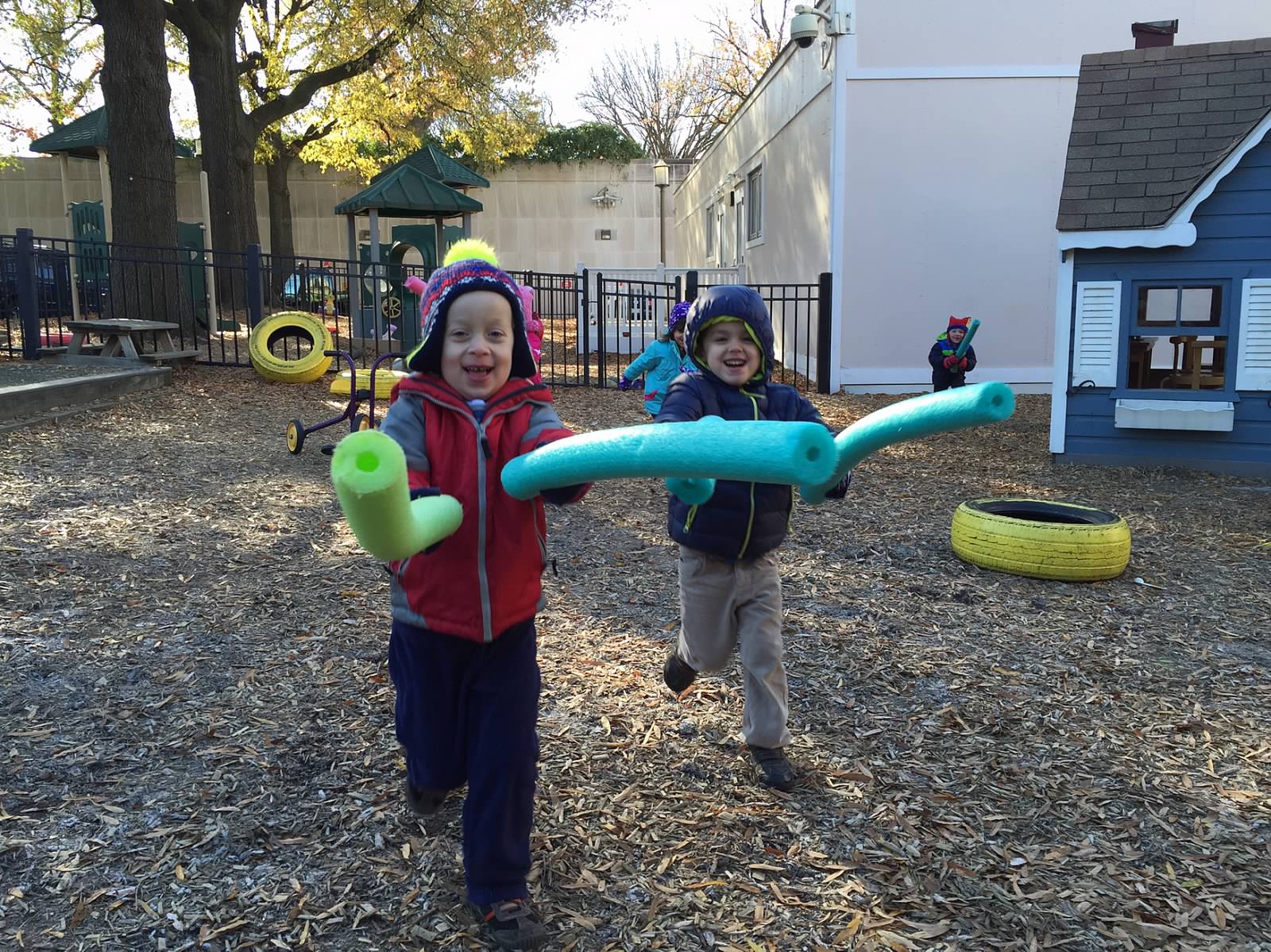
file (20)Their exploration of Camelot even extended out to the playground where they used pool noodles to do some jousting.

The children continue to be extremely excited about this topic and have exciting adventures in Camelot. Be sure to check back for our Teacher Feature next week!
Rethinking the Environment

Posted on behalf of SEEC Educator Amber Simatic:

For the past several years, my classroom left much to be desired: white walls, fluorescent lighting, and undefined spaces. However, at the beginning of the school year, I set a goal to create a more comfortable and inviting environment and to truly utilize the classroom as a teaching tool. I tried everything — changing bulletin boards, hanging art prints, displaying children’s drawings; but having mismatched, bright, primary colors everywhere was just not cutting it.

Early in the school year, I was unable to focus on the environment as much as I would have liked, given the challenges of settling in with a new class of students and getting to know a new team of teachers. However, within a few months we found our rhythm and I was able to focus again on the world around me. That’s when I noticed another SEEC center had used magnetic paint on a large wall to hang art with magnets instead of tape, which caused the wheels to start turning and brought me to my current realization: that I could expand the definition of changing my classroom beyond that of simply rearranging bulletin boards; that I could begin to think of my classroom as a home away from home and put just as much thought and care into it as I do my own home, because, after all, teachers and students spend a lot of time in their classrooms!

Once I realized my classroom’s potential, the possibilities became limitless.
A particularly challenging area of my room, above the changing table, could use some magnet paint, I thought:
“If that area can be magnetized, why not the whole wall?”
“And if I can use magnetic paint — why not colorful, magnetic paint?”
“Why not paint the whole room?”
“And if I can paint the whole room — what other changes, big and small, could I make to turn this classroom into a home?”
Each day at nap time, when the room was quiet and the soft music played, I would pat the kids to sleep and look around at the white walls, dreaming of color and comfort. For people who know me well, this concept is not a novel one: every apartment in which I’ve ever lived has been painted, if the lease allows.
I love having the creative outlet to change a space, but until recently I had never thought of applying it to my classroom.

To begin, I reflected on how the space worked, where the kids congregated, and how the placement of furniture influenced traffic patterns. I made several lists of what I liked and what I didn’t like; what I could change and what I couldn’t change; words that would describe my room and words that I would like to describe my room. These lists were extremely helpful in determining how to start the process.

There are a lot of things to consider when it comes to the physical classroom environment, the basics include: color, line, texture, form, and space. These five elements work together to create the physical environment.
Color can evoke certain moods and emotions. We even use this idea in our daily lives with sayings such as “green with envy” and “feeling blue”. Generally, when painting walls, cool colors like green and blue are calming while warm colors like red and orange tend to be stimulating.

Line can also set the emotional mood. Horizontal, vertical, curved, and diagonal lines all evoke different feelings. For example, diagonal lines suggest motion while curved lines relax a room.

Texture, both tactile and visual, engages learners and creates interest.

Form and space relate to how a room is set up. For example, does the placement of shelving units create symmetry and balance?

Baskets

Thinking about all of these items at once can quickly become overwhelming. I started with color by painting the walls then branched into some of the other elements, such as line, by adding a curved curtain draped along a window, and texture, by replacing plastic toy bins with baskets. Other things started falling into place too; I brought in plants, made slip-covers for brightly colored pillows and bought rugs.

Full view

If there is one thing I’ve learned throughout this entire journey it’s that reinventing the classroom is indeed a process. It’s a transformation that doesn’t happen overnight. Plans change and the project must adapt to fit our needs, and, more importantly, those of the children.

I’ve also learned to be vulnerable. Parents, kids, other teachers, and any one who walks into our center will see my classroom “unfinished” and that’s okay. As it turns out, the process is about figuring out what works best and feels most authentic for you and your classroom.

Upcoming Teacher Workshop

LTOWell, we have made it to January. That delightful in between month—the month where we leave the stretch of holiday breaks behind and take a deep breath before the chaos of spring begins. Our students are settling back into familiar routines but experiencing the expected adjustments that time away from school brings. As educators, we too are experiencing the adjustment, searching for renewed inspiration in the face of the winter blues, unpredictable weather, and in my case, growing preschoolers. It seems almost daily one of my students leaves early for their five year preschool check-up.

We are also in the period of resolutions: Join the gym. Use your phone less. Sleep more. Build up your savings. Be more creative in the classroom or museum. In the midst of the screaming gym ads and hyper students, come join us for some respite and rejuvenation. SEEC is offering a space to renew your creativity, collaborate with peers, and take some deep breaths. Our premier seminar, Learning Through Objects, is almost upon us (February 27th & 28th). This seminar brings together educators from a diverse set of learning environments such as classrooms, museum galleries, and cultural centers. Presented by our staff and representing work from our 25 years of learning with young children in museums, LTO may be the perfect antidote to the winter doldrums.

A LTO alum wrote of her experience, “I walked away not only refreshed and inspired, but also with a variety of ideas for how I can incorporate museums, objects, and artist studies into my classroom teaching. I am looking forward to sharing the lesson plan and field trip ideas I learned with my colleagues and of course to sharing the activities themselves with my students.” Additionally, for those in the DC area, LTO is accredited by the DC Office of the State Superintendent of Education and counts as CEUs. Come be renewed, come be refreshed, and check one or two of your resolutions of the list. We look forward to seeing you.

LTO_2

Full registration info can be found here. Keep that “save money” resolution as well, register before February 14th for our Early Bird Rate and plug in discount code SEECPD14 for an additional 10% off!

Onwards!