
This week’s teacher feature highlights a lesson from toddler teachers Lauren Bundy, Katherine Custer, and Emily Romig on natural wonders. The class went to the National Gallery of Art to look at nineteenth century American landscapes. In these painting the class was able to identify and think about natural wonders such as mountains, rivers, and waterfalls. Below you will find images from the lesson as well as a reflection from the teachers.
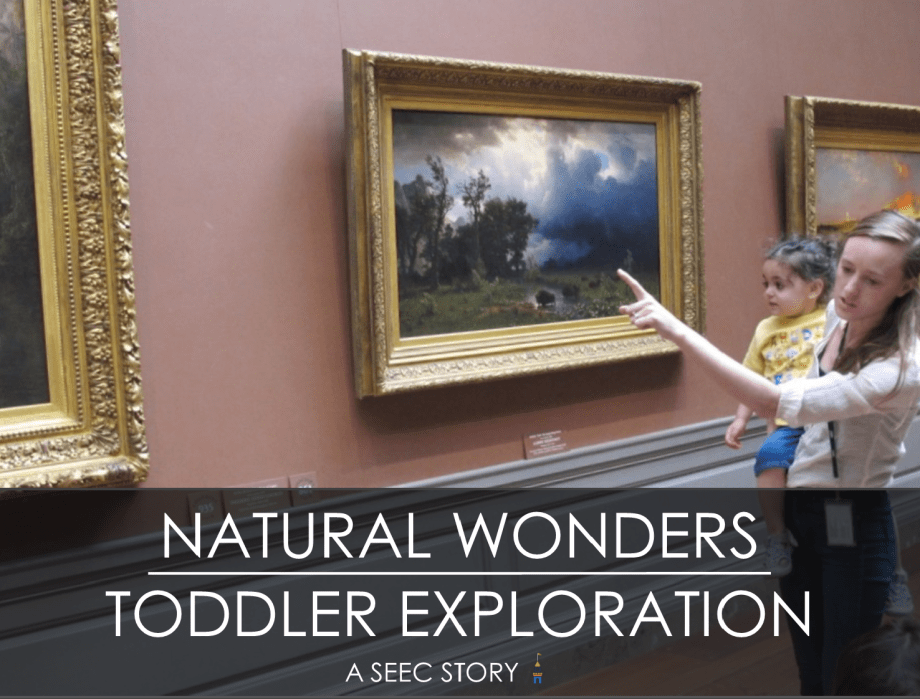
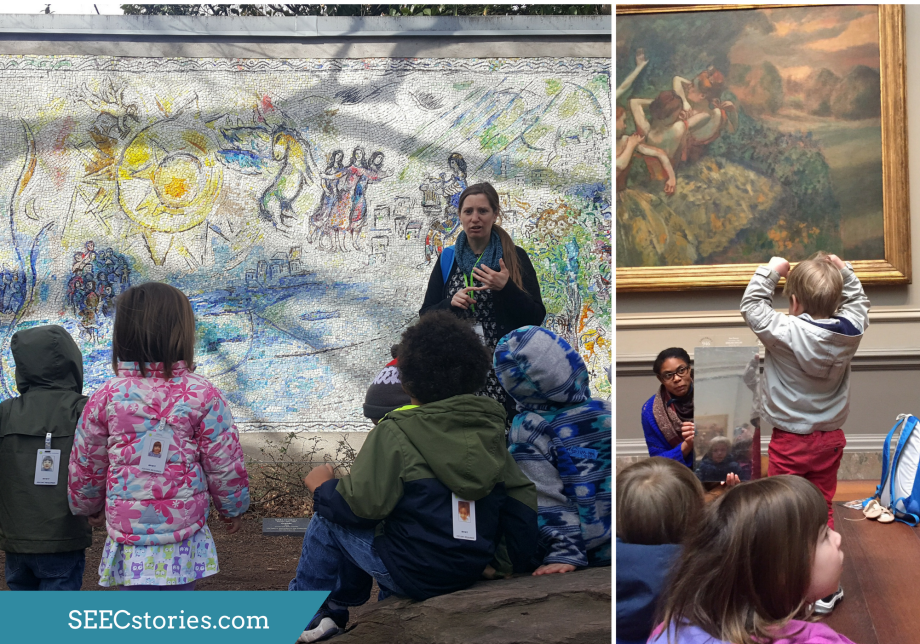
Here are a few images from their lesson on Natural Wonders:
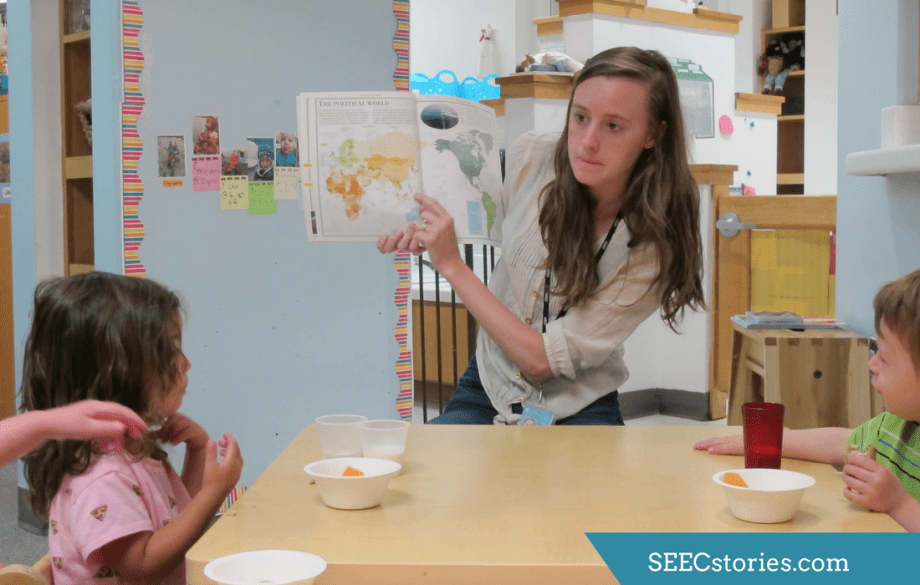 To start the day, Katherine sat down with the class during snack to have an informal discussion. She started the discussion by asking, “Who is not in class today?” The class listed a couple of children who had not yet arrived and then turned their attention to the fact that one of their teachers, Lauren, was not there. Katherine explained that Lauren was in Asia on a trip and pulled out an atlas for the class to look at and learn more about Asia. The class was able to look at maps and pictures of the natural wonders in Asia.
 After snack, the toddler class sat down for a more formal learning experience. To start the circle, Katherine sang hello to each child and gave each child the opportunity to talk to the group about something that they were wearing that day.
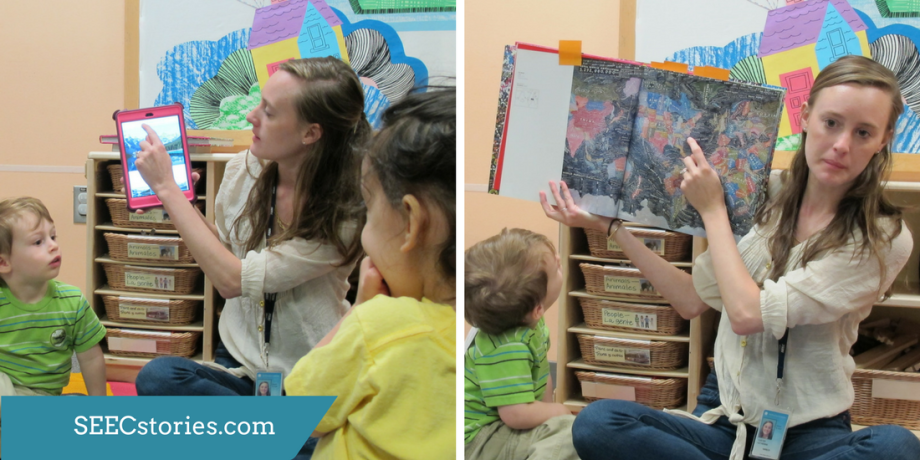 During circle, the toddler class used technology and books to look at examples of natural wonders. The class looked at images of rivers, mountains, and streams. After looking at the images, the toddler teachers explained that the class was going to visit the National Gallery of Art and look for paintings of some of these natural wonders.
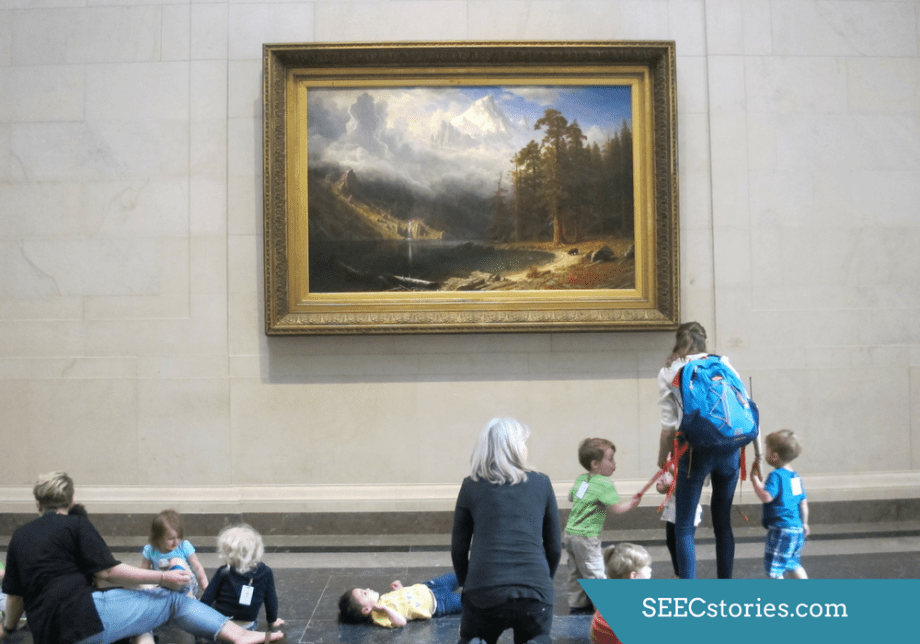 At the National Gallery of Art the class stopped to look at Mount Corcoran by Albert Bierstadt as a group. The class saw different things in this painting including “water”, “mountains”, and even “volcanoes”. After a few minutes of observing the painting, the class moved on to other galleries.
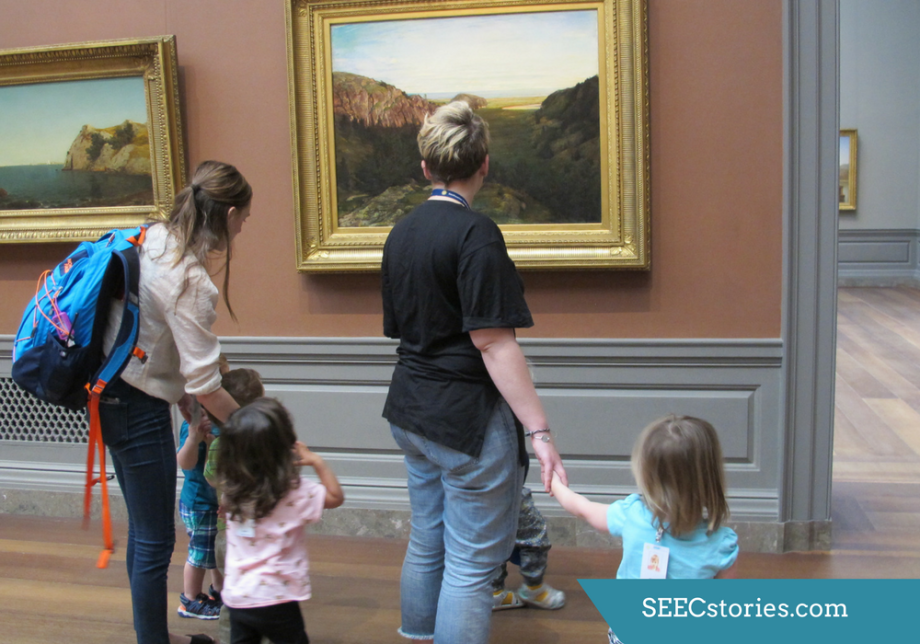 As the teachers walked through the galleries, they were able to have more individualized discussions about the natural wonders depicted in the paintings. The teachers followed the children’s interests by walking closer to the paintings that the children pointed to. Katherine and Emily used a stream of consciousness technique to describe all the things they saw in the paintings, which introduced many new words to the toddlers.
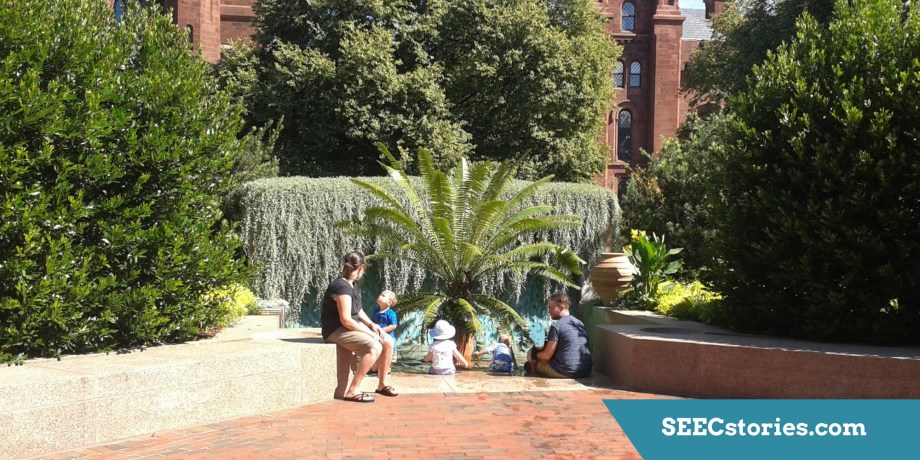
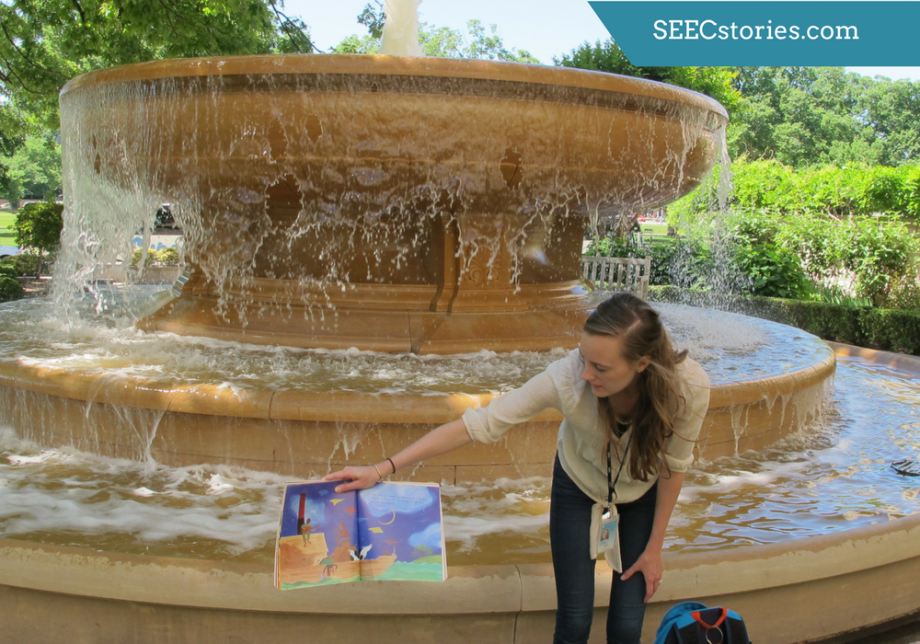 After exiting the National Gallery of Art, the class found a shady spot by a fountain to read the book How to Make an Apple Pie and See the World by Marjorie Priceman. It is a story about traveling around the world to collect items for an apple pie.
 Reading the book outside allowed the children more freedom in their movements. Some children even chose to stand up to get a closer look at the book. The class thoroughly enjoyed experiencing the around-the-world adventure.
A reflection from Katherine:
This year, our toddler class has explored many topics and we just recently began a new unit on exploring the outdoors. We developed this idea from some emerging interests we saw in the class. For example, on our outings around the National Mall, our toddlers began observing more about their surroundings and even started to use familiar landmarks to help them navigate. We also noted their curiosity in a small gardening lesson we had done a couple weeks prior. I’ve discovered that for our class of young children, lessons seem to be absorbed best when they can find ways to relate the topic back to themselves or create a memorable experience with it. We began our new unit on exploration by talking about maps and discussing where we live and places we have traveled to. In an effort to personalize the lesson, I wanted to share somewhere special to me – the American West. Not only have I visited there and have personal accounts to share, I also love the late 19th century paintings of these landscapes and the way they are displayed. I wanted to try to incorporate these paintings into our lesson as visuals for unique land features that can be found in the outdoors. On a different level, I liked the idea of using these paintings for a similar purpose to their original function – showing Americans on the East Coast the beauties of the American West.
In the classroom, we began by looking at photos of some common land features, such as mountains, waterfalls, rivers, forests and deserts. Some of the children already knew the words for these things, while others seemed to be learning them for the first time. When we arrived at the National Gallery of Art, they were very excited and energized by the large-scale paintings. We initially stopped at Albert Bierstadt’s Mount Corcoran, but I could tell we would need a bigger space to keep the class engaged and also to diversify our scenery. We walked to a larger gallery with many similar paintings and took a seat on the floor.
It can sometimes be challenging to engage toddlers in lessons that are purely two-dimensional, so I tried to pay special attention to the things they were noticing on their own in the paintings to affirm their sense of curiosity. This age group enjoys identifying what they see, and these paintings, which are realistic in nature, allowed them to do just that, as we observed the works in the gallery. They wanted to label everything they saw, including their new words (“mountain”, “river”, “forest”, “waterfall”) and living things, such as animals and people.
When our students became too wiggly for the indoors, we moved outside to a large water fountain where I had them sit while we read a book. My hope was that the water feature outside would provide both a tangible connection for them to a waterfall painting we had seen and a break from looking at the landscape paintings. We read a book called How to Make an Apple Pie and See the World. The book covered many different countries with different landscapes and resources that gave us a diverse understanding of the outdoors. They were able to draw parallels between landscapes they saw in the book and the things we had already seen and discussed in the galleries.
We faced a few obstacles throughout the course of our lesson and during the field trip that provided some opportune learning moments for me as a teacher. My biggest takeaway was that I should be looking for more ways to engage and hold attention while in the galleries. In hindsight, I should have provided some kind of sit-upon for our students in the gallery to create a physical indicator of what their bodies should be doing while we were in the space. Throughout our discussion, we struggled with wandering around and with containing our energy. I also would have liked to provide some kind of three-dimensional object for the children to hold while we talked to help channel their attention to our topic of conversation – perhaps an object from nature, such as a rock or leaf.
Keep an eye out for the Round Up on explorers to learn more about this unit and for ideas on how to do an explorers theme in your toddler classroom!
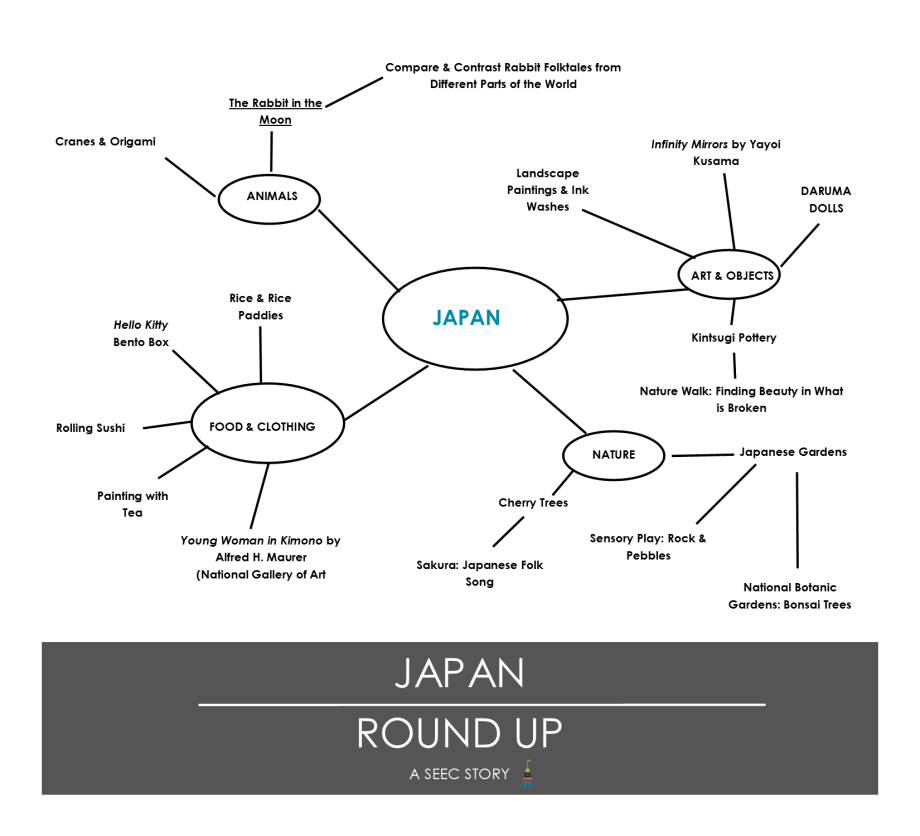
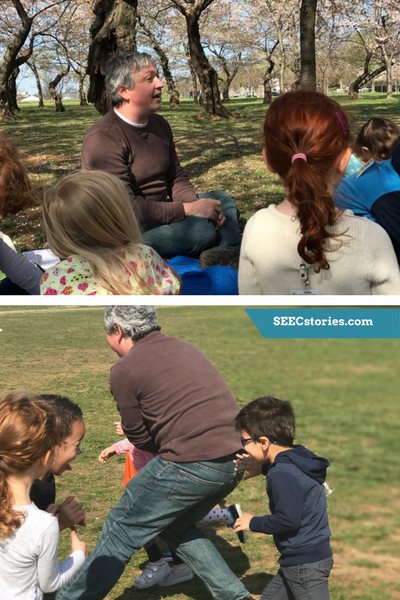
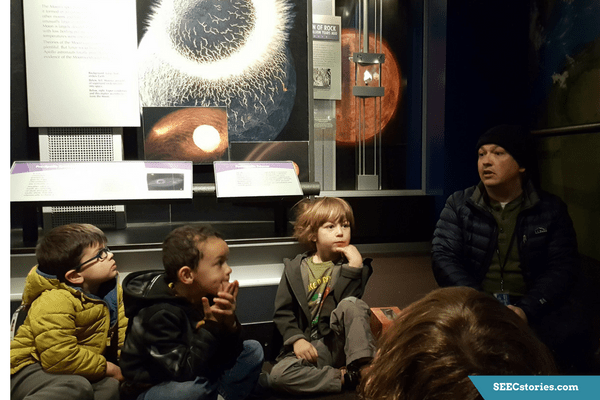
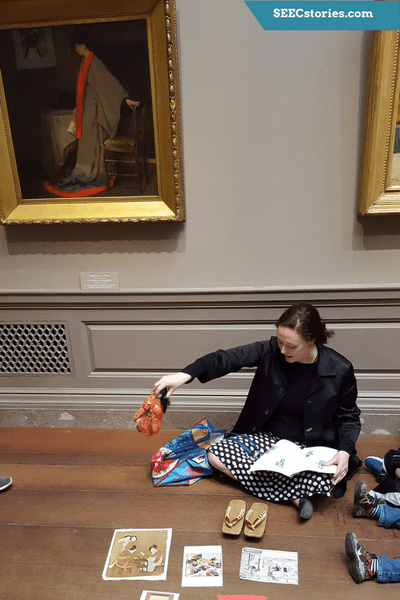
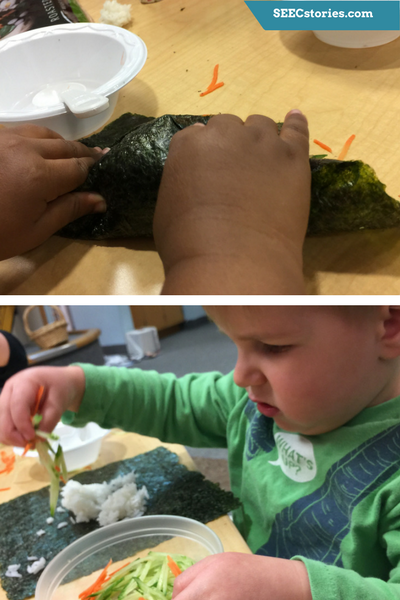
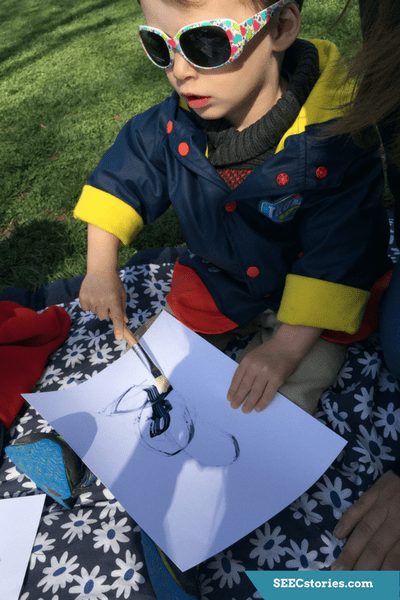

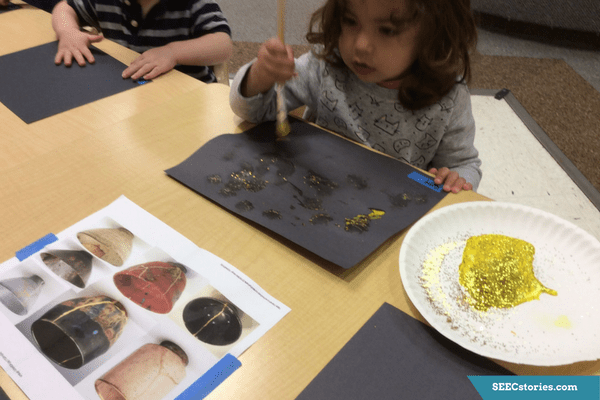


 The class began their morning by walking to the National Gallery of Art. Along the way they spotted cherry blossom blooms that were just starting to emerge around the city.
 Once inside the museum, the class found Robert Rauschenberg’s
  After reading the book, Krystiana asked the children to look carefully at the artwork, and make observations about what they saw. The children sat for a minute silently looking and then began sharing observations. Krystiana went down the line and asked each child to share something they observed. One child noticed an area on the painting that looked like lightening, another observed that there might be tissue paper on the artwork because there were lines that looked wrinkled. The class also noticed green blobs, a map, a crane, photos, and a big fish.
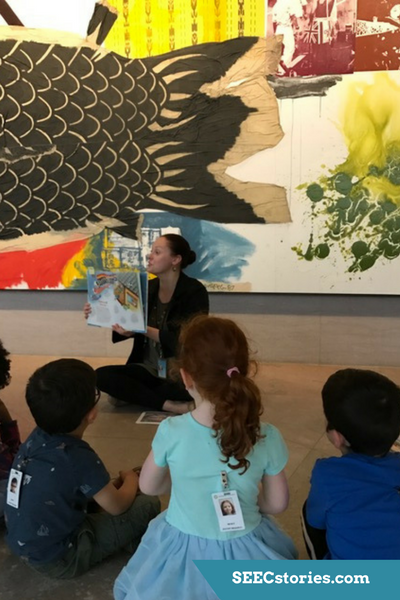 Krystiana congratulated the class on their concentration and thoughtful observations. She explained that the fish is a carp, which is seen often during a holiday in Japan – Children’s Day or Kodomo No Hi, which celebrates how wonderful children are. She read a section of
  Next, Krystiana explained that the big carp on the artwork was in fact a big carp kite, and she brought out a carp kite that she had made herself. She asked the children why they thought carp might be important to this holiday. The children had lots of ideas including, “they have scales, and because you catch them and it’s yummy”, and “because it’s [Japan] is an island and there’s lots of fish around”. Krystiana explained that when carp travel in the water, they go up stream and it takes a lot of power and speed to swim against the flowing water. She said that the carp have to have lots of perseverance to keep trying even when it’s hard. She went on to say that these traits (bravery, strength, and perseverance) are what families want their children to have, which is why carp are a symbol of Kodomo No Hi. The children discussed and agreed that their families wanted them to have these traits. They also discussed what else their families wanted for them.
 Back in the classroom, Krystiana set out the books that she had brought to the museum and encouraged the children to do their own research to learn more. Many of the children sat with the books, looking through them and asking questions of their peers and teachers.


 A few weeks later, the class revisited their kites, and took them out to fly on a particularly windy day!
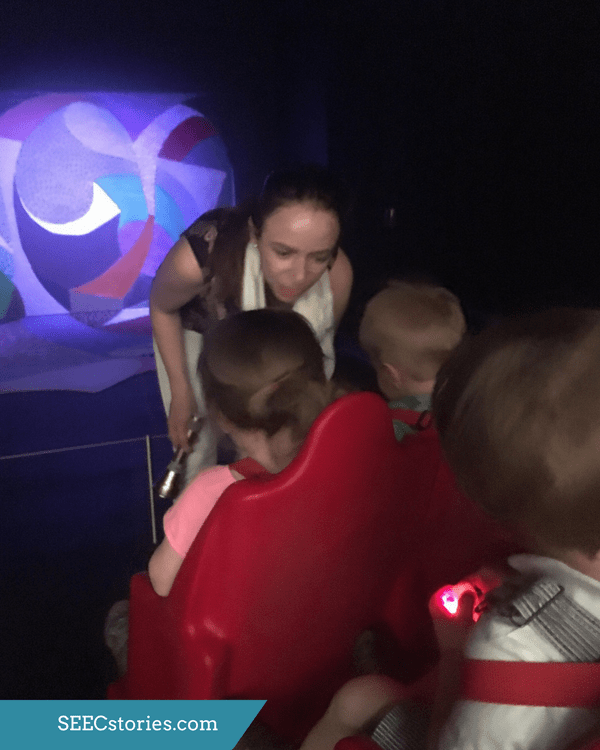
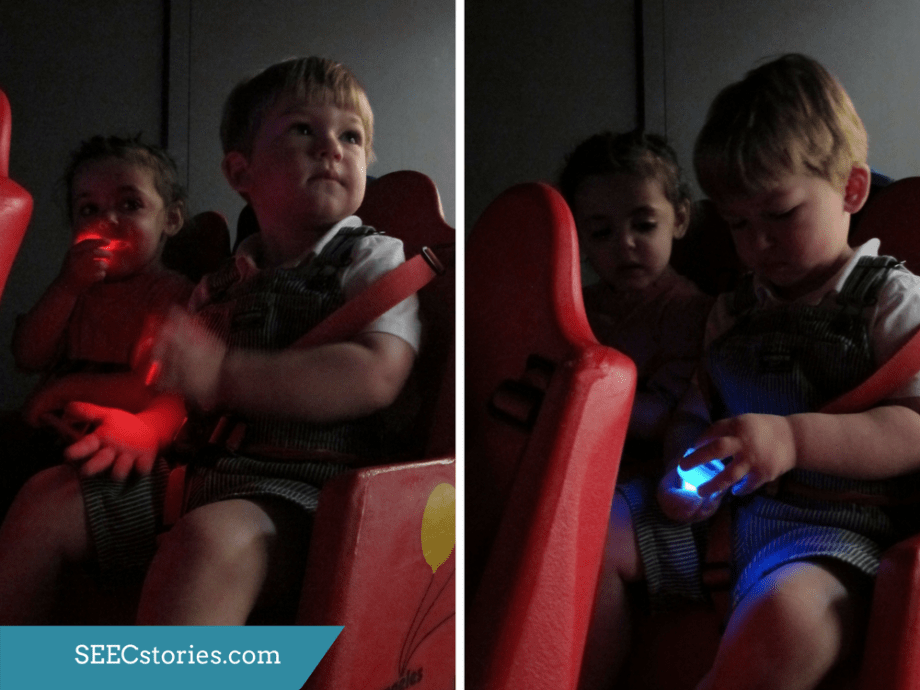 Light was another topic that the teachers were hoping to explore with their class since karaoke performances often involve a light show. As part of the instillation of Snail Space color changing lights are projected onto the two canvas’ and floor space design. In addition to experiencing the light that is part of the performance of Snail Space, the teachers brought battery powered tea lights to allow the children to explore and manipulate their own light.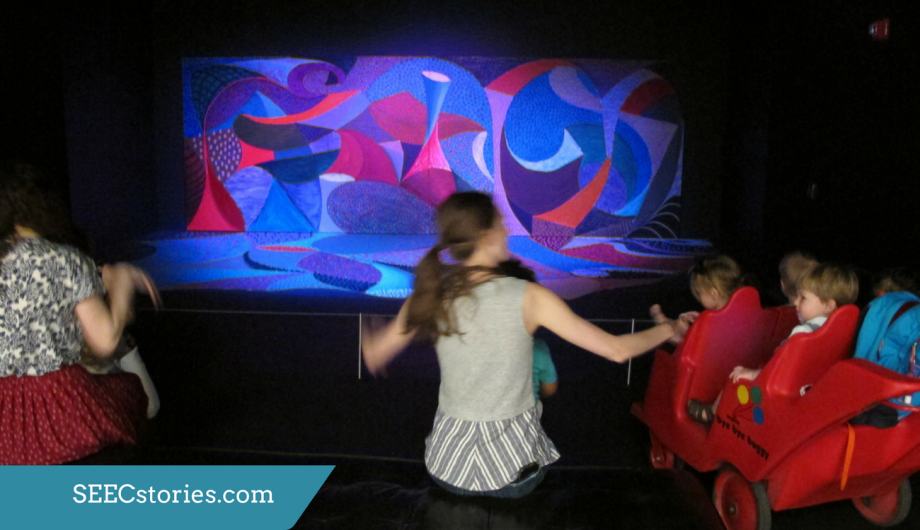
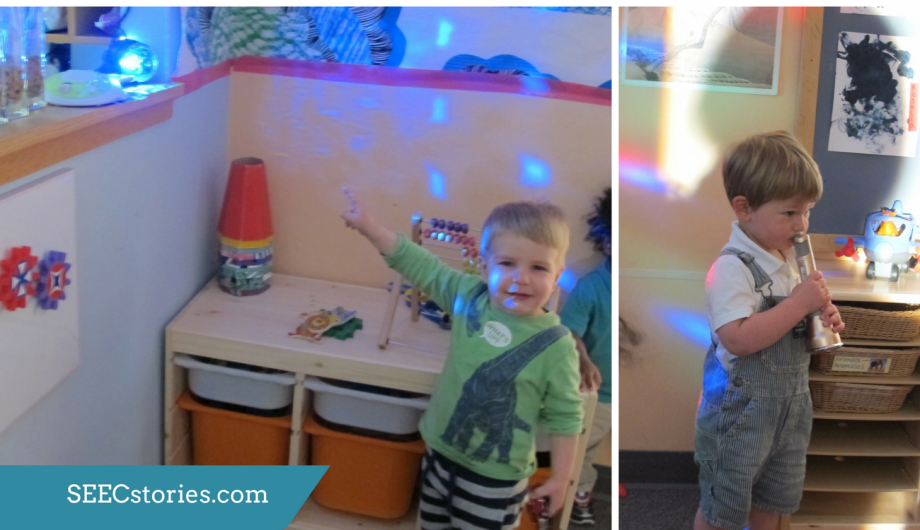
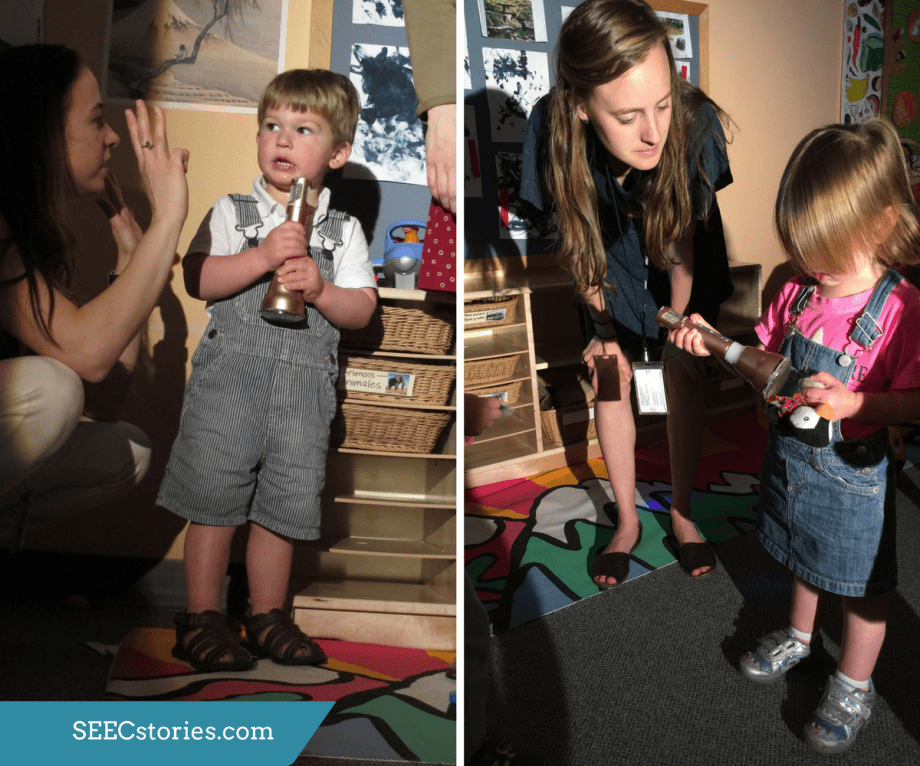


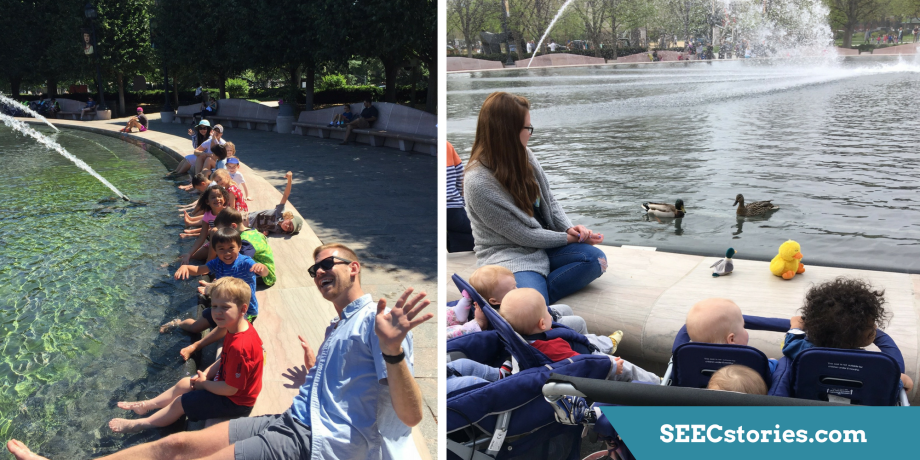
 Be sure to stop back by in the winter as National Gallery of Art turns its fountain into an ice rink during cold months!


 On a recent trip to the Postal Museum, I was reacquainted with how perfect the National Postal Museum is for young children. Throughout the experience, there were two things that stuck out to me – hands-on objects and imaginative experiences.
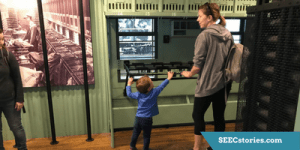 Within this small space there are a lot of opportunities for your child. The letter sorting is a fun way to spy a letter – V is for Virginia or D for DC. Caretakers can lift up children to allow little hands to practice placing the mail into the slots. It is also a great way for a few young children to build their team working skills. You might want to play a game of passing, sorting, and delivering envelopes from the train. You can even watch this
 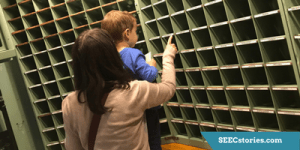 Though the bags in the exhibit are secured, a clever caretaker might bring a few small bags and give the children a chance to carry the bags or even compare weight — all of the sudden your visit into a STEM lesson! Those letter bags are also a great place to stop and do a simple sorting activity. You can sort blocks by colors or shapes to explain how the bags were used to sort mail by location. This a simple way to introduce some math too!
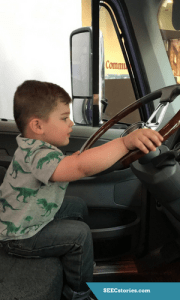 Consider using the train as an anchor object to compare with other forms of transportation in the hall. With some Velcro and photos, you can create a visual timeline showing the progression of a carriage, train, plane, and truck. You can actually get inside the truck and steer – they will love it. Of course, you can also introduce your young child to the concept of mail and how it moves from one place to another. Its a great opportunity to have them help you compose a postcard to a loved one and then send it off.



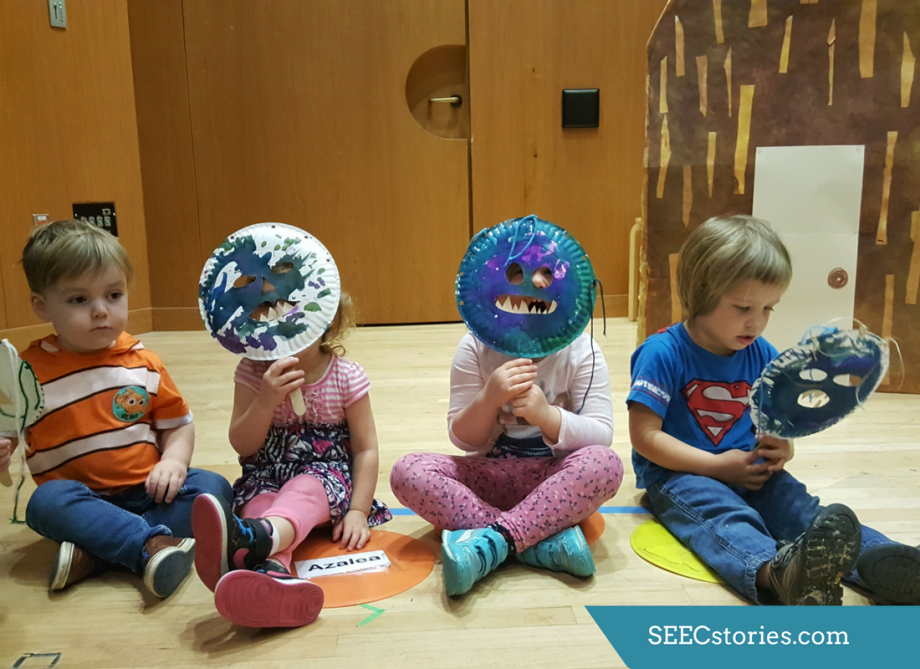
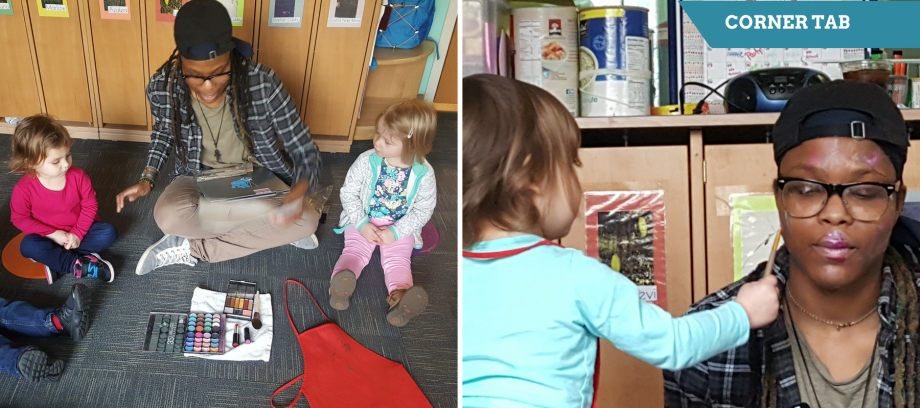
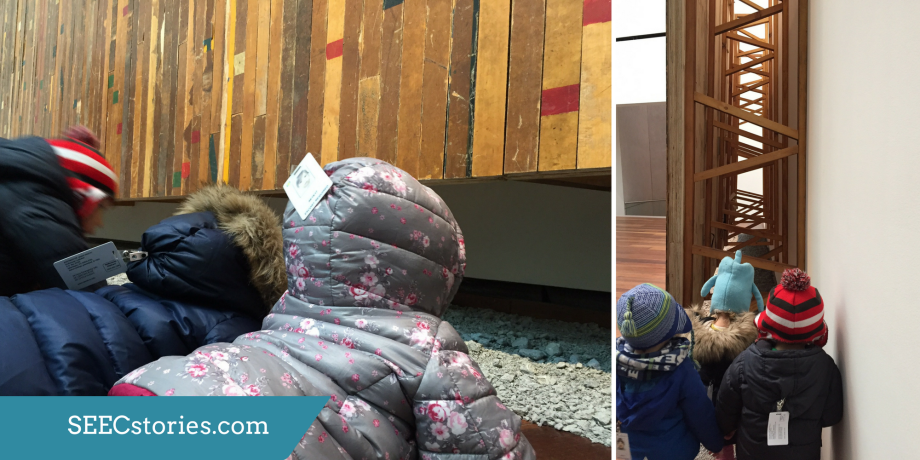


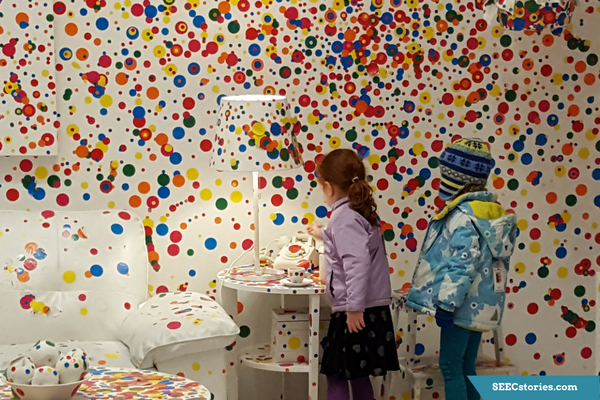
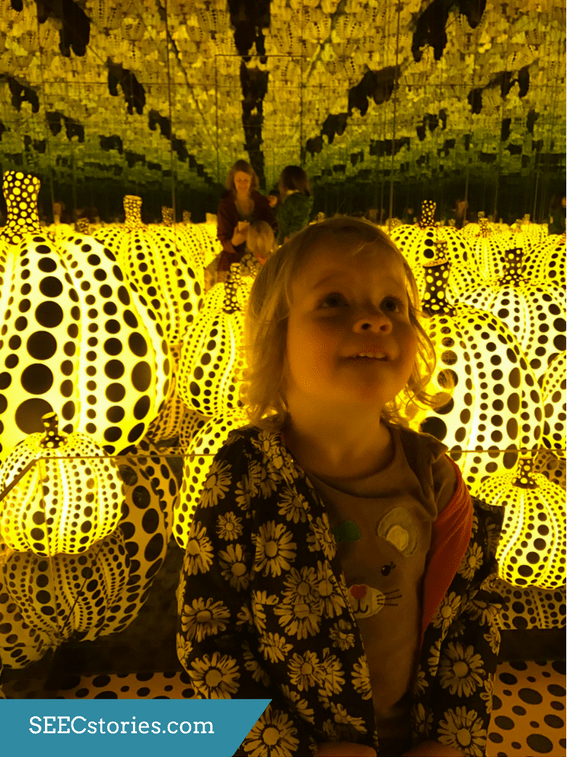
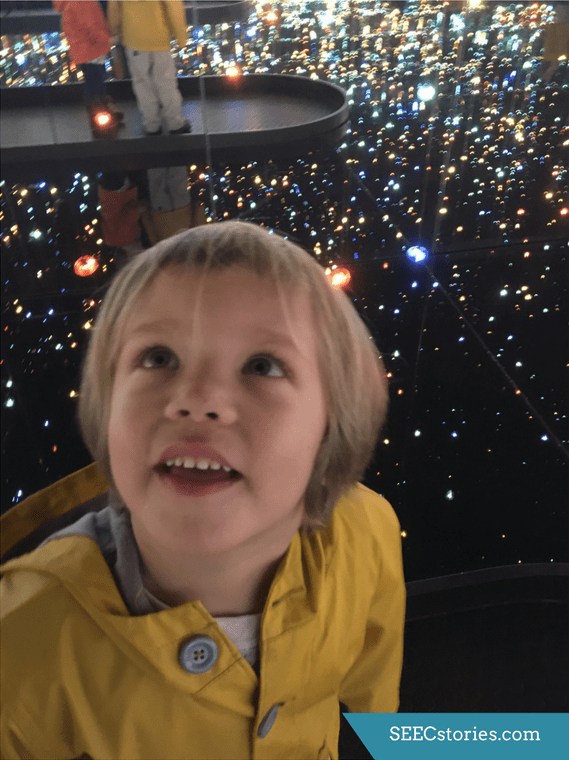 The first Infinity Mirror room that the class visited is entitled “Souls of Millions of Lightyears Away”. Before each group entered the space, their teachers asked them to think about “What story might take place here.” When the children exited the room, some of their answers included a story about “outer space” and “rainbows” and a story that included “flashing light, jingle bells inside a cave.”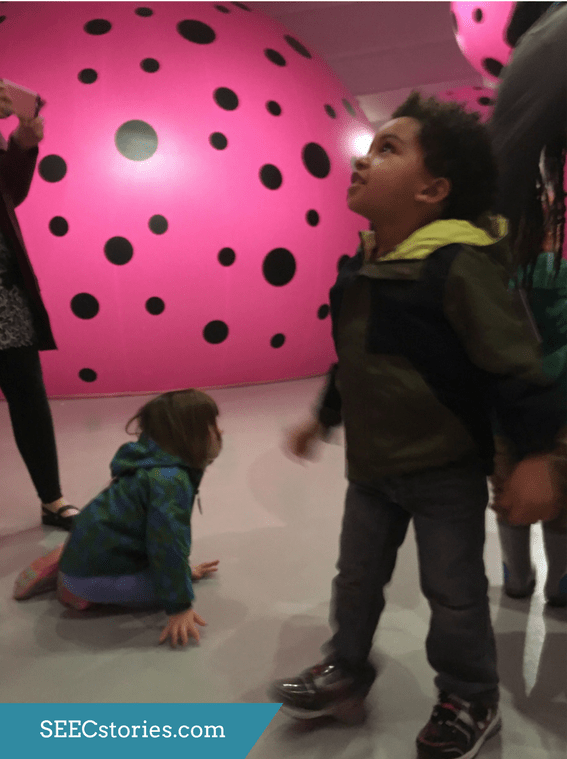

 seecstories.com