
We recently decided to start up our own book club and chose The Scientist in the Crib: What Early Learning Tells Us About the Mind for the club’s second meeting. We featured this book in a recent blog post “From Blobs to Beings: An Overview of Research on Baby Brains” and it made sense for us to come together as a group of professionals to think more about it. In the course of our book club discussion several topics emerged including teaching empathy, learning, and language. Below are some highlights from our discussion.
On Empathy
The Scientist in the Crib explained that “real empathy isn’t just about knowing that other people feel the same way you do; it’s about knowing that they don’t feel the same way and caring anyway” (p. 39). The authors describe an experiment during which they provided young children with broccoli and goldfish and then requested some broccoli from the children. Children younger than 18 months, gave the researchers goldfish, despite the researchers requesting broccoli. These children cannot fathom someone wanting anything that differs from their own desires, which in this case are clearly the tasty goldfish. By 18 months, children realize what they want may actually be different from what someone else wants, hence they are willing to give broccoli to the person who requests it even if goldfish seem like the only logical choice to them (p. 38-39).

This example of young children showing empathy was shared at book club. The teacher described the situation by explaining that one of the children in her class was feeling upset and another child crawled over to pat the child’s belly, which made everyone feel better.
Our discussion began largely by sharing examples of young children being empathetic in our own classrooms. The teachers fondly recalled examples of young children acting emphatically for the first time. There was a discussion about a toddler offering to help zip up their friend’s jacket and another example of a young child who was barely talking going out his way to find a sad child’s favorite toy in hopes of making the child feel better. These examples of young children showing empathy were clearly some of the teachers’ favorite memories of their past classes. The teachers also talked about how important it was to teach social emotional learning, because according to one teacher “children need to learn how to become people”. We concluded that teachers need to focus on teaching empathy as well as teaching the classic academic skills in their classrooms.
On Learning and Language
Much of The Scientist in the Crib featured the different ways that babies learn about the world around them and it devoted a whole chapter to children’s development of language. As a group, we talked about how difficult it can be to learn a new language as an adult and how baby’s brains are better suited for the task than adult brains.
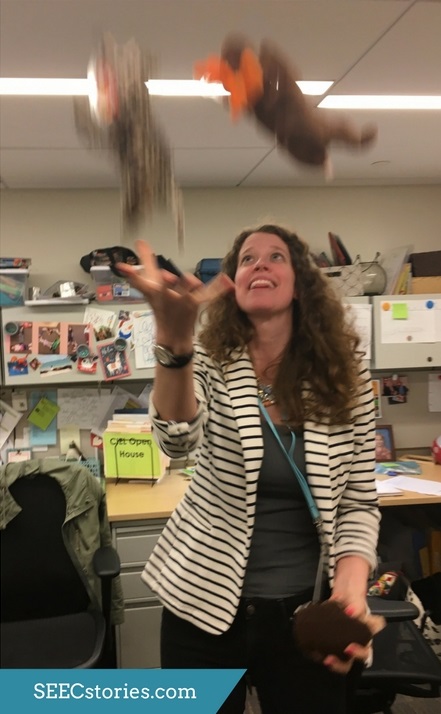
Brooke demonstrating her juggling, which she used as an example of something that she learned to do as an adult.
Babies are learning far more than just language as they develop. In fact, since everything they experience is brand new, they are actively learning about everything. As adults, we rarely get to experience the challenge of learning something completely new. This is yet another difference between adult learning and children’s learning. One participant, Brooke, brought up the challenge of learning how to juggle as an adult. She explained that it was “Simple once you get it; you can actually move your hands and stop paying attention.” But before you get to that point it was “super hard!” From the discussion of the difficulties of learning a new language and learning how to juggle, we noted how hard we had to work to accomplish our goals and we were amazed by just how much and how quickly infants and young children are able to learn. Throughout our discussion we became more and more amazed by the infant brain.
Required Reading
As we were concluding our discussion one participant said “I think this book should be required reading!” When pressed about who should be required to read The Scientist in the Crib, the group decided with a resounding “everybody!” The benefit for parents and caregivers seemed obvious. In fact, one book club participant had texted the paragraph on the “deliberately perverse” two years to a friend of hers who was currently experiencing that phenomenon (p. 39).
In addition to parents and caregivers, we discussed how policy makers should read this book so they can gain an understanding of the importance of early childhood education. We concluded that everyone was a child once and will probably interact with a child at some point and this book would help people gain an understanding of their own brains as well as the brains of young children.
Catch us next time when we will be reading For White Folks Who Teach in the Hood, and the Rest of Y’all Too by Chris Emdin.
References:
Gopnik, A., Meltzoff, A. N., & Kuhl, P. K. (2004). The Scientist in the Crib: What Early Learning Tells Us About the Mind. New York, NY: Perennial.

 which your child can participate. Ask them what they want to talk about. Children have a lot to share if they are given a chance!
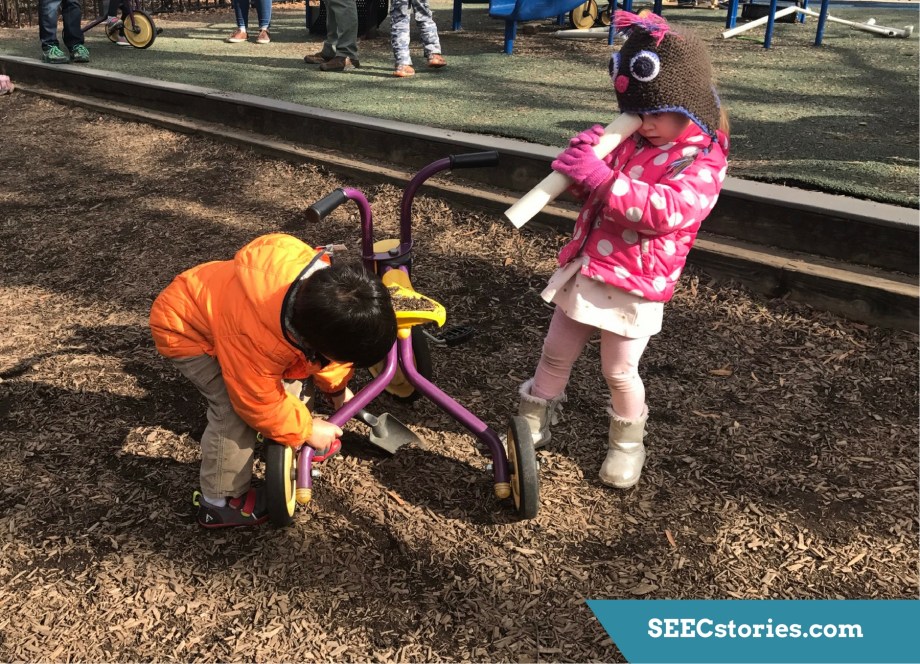
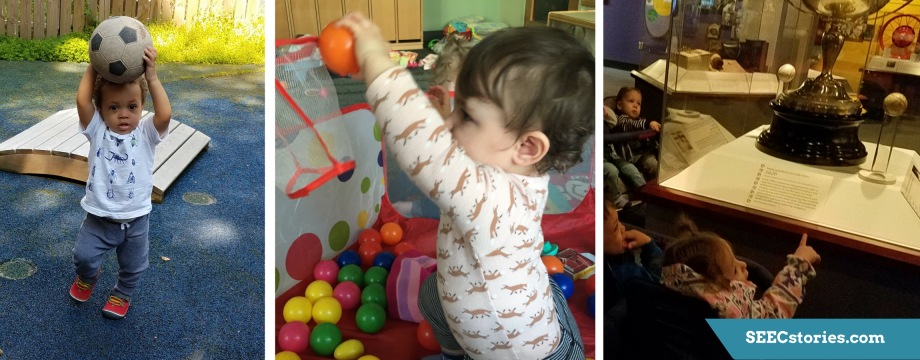
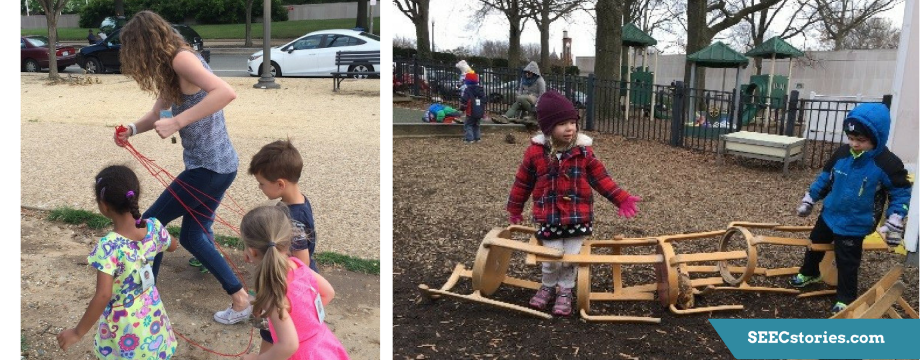


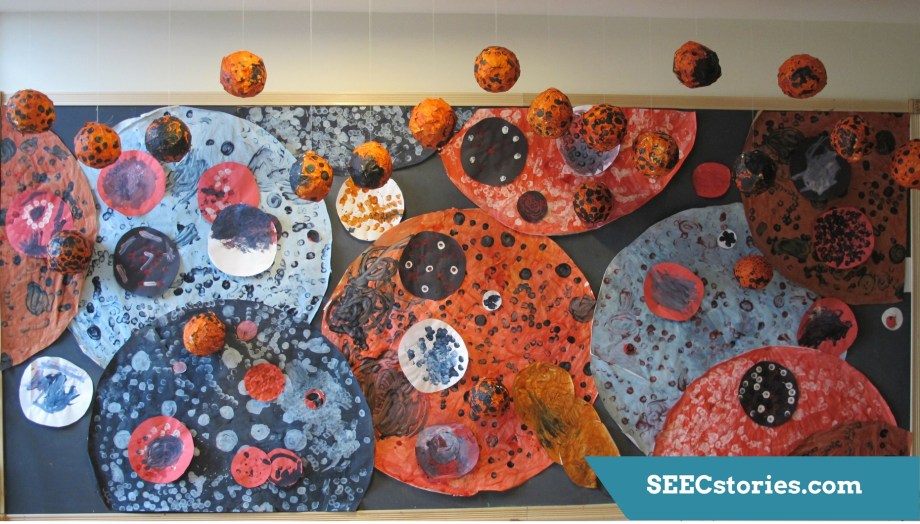 Carolyn started this particular lesson by reviewing what they had done so far in their Kusama unit. They remembered the flat pieces that Kusama makes, and looked at the flat artwork they made with inspiration from Kusama.
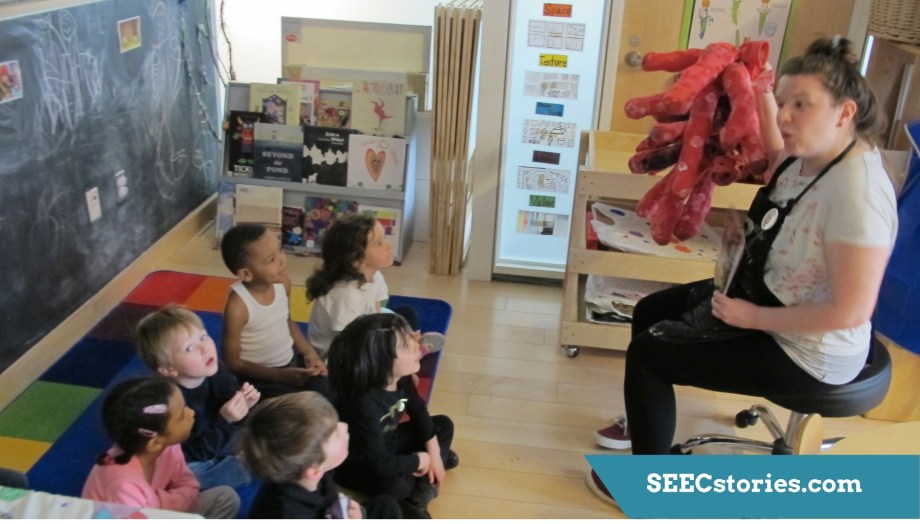 They also talked about Kusama’s sculptural art, and looked at their spheres and “sock-sculpture” they had collaboratively made together in previous art classes.
 Carolyn told the children that there was one more type of art that Kusama makes that they hadn’t talked about yet – clothes! Carolyn explained that when Kusama came to the United States from Japan, she began to make her own clothes.

 The class then looked at images of Kusama in her clothes and noticed patterns. Some questions Carolyn asked were, “Are the polka dots carefully placed or random?” “Do the polka dots go in a line?” “What size are the polka dots?” Through this careful looking of Kusama’s art, the children were analyzing the fundamentals of art that they learned about at the beginning of the year including shape, line, and color.
 Then it was the children’s turn to be a clothing designer! They had each brought in an old shirt from home, and the first step was placing a piece of cardboard inside the shirt so that the paint didn’t leak through from one side to the other. This was tricky for many of the children, and Carolyn encouraged teamwork to accomplish the task.
 The next step was taping down the sleeves on the back, so that the shirt was tight on the cardboard, making an easy surface for the children to paint on.
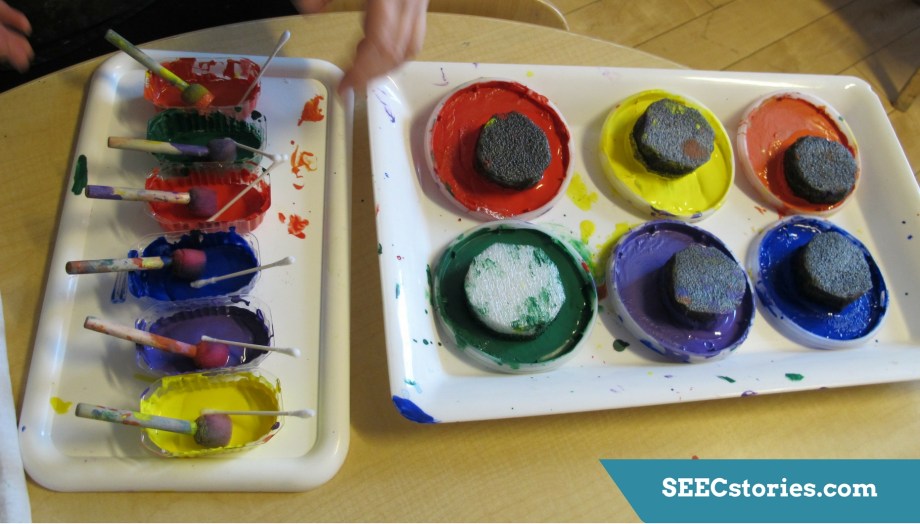 Carolyn had acrylic paints and tools ready to go. She explained that unlike the paint they normally use, acrylic paint does not wash out of clothing, so they needed to be extra careful! She showed the children the colors, as well as the tools to make different sized polka-dots. There were cotton swabs for small dots, foam circle paint tools for medium dots, and circles cut from foam packaging for large dots.


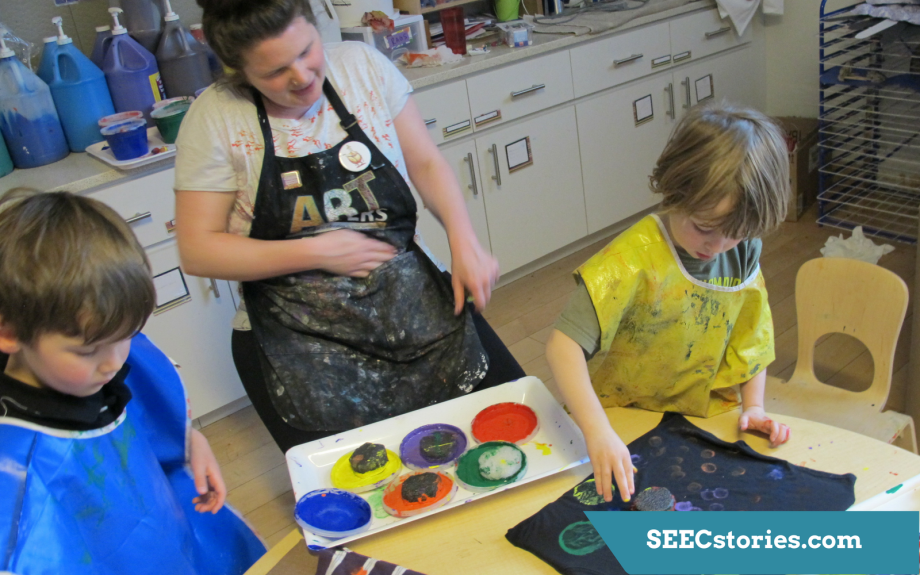
 While all the children used the same tools and artist as inspiration, each designed a very unique shirt. When I asked this child about her design, she said, “I just had to think of it, and then I made it. It’s a flower!”

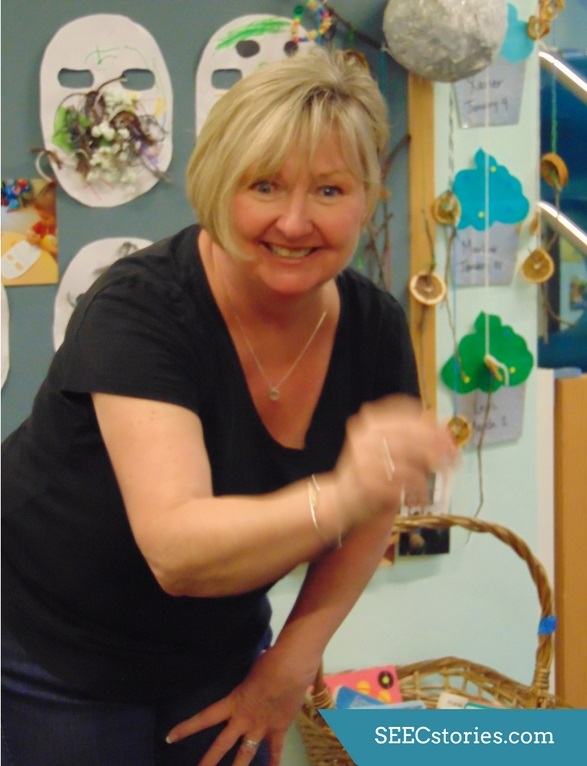
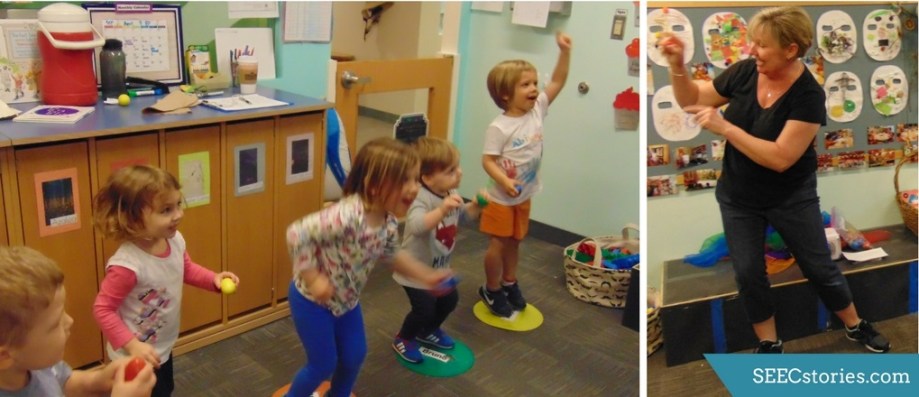
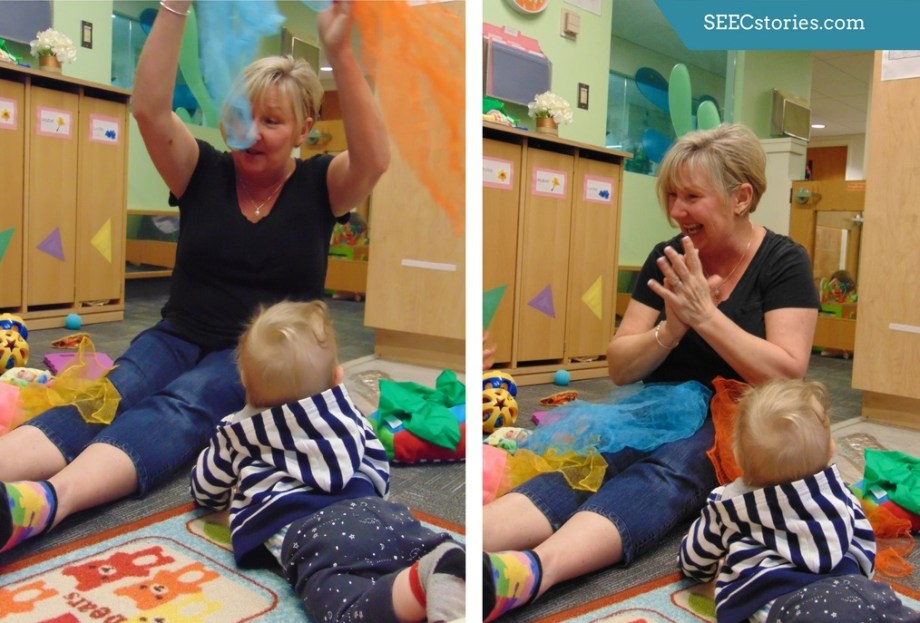 While Allison believes that music is a vital program for children of all ages, she focused on the importance of music with the youngest of children. In particular, Allison highlighted how hearing familiar sounds or songs helps infants learn to self-regulate and self soothe. She also discussed how music helps to build babies’ language development. She noted how she likes to start her classes by singing a song that includes each child’s name. With the babies, she explains that they very quickly respond to hearing their own name by clapping, bouncing, or smiling.
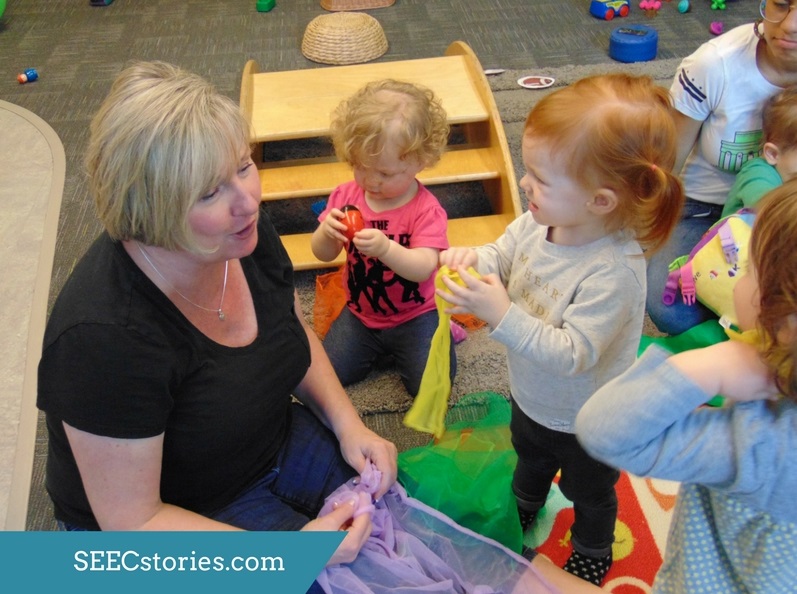 Beyond name recognition, Allison explained that singing hello to the individual is important for the start of each of her music classes. It gives her the opportunity to “build off who the child is” from the start of each class. She explained that it set the class up for social emotional growth opportunities since music class is the whole group singing with opportunities for the individual to shine.
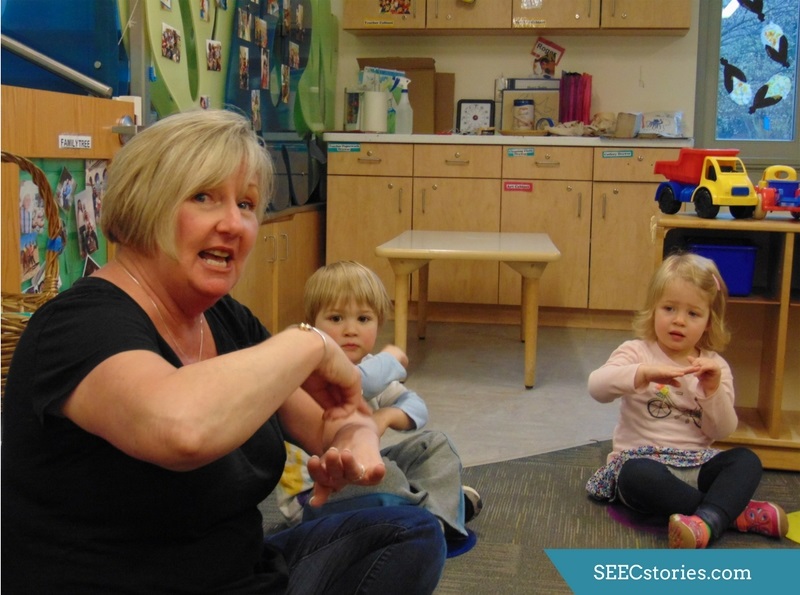 Her advice for teachers included using music as cues when transitioning in the classroom and repeating songs so that children can learn them. Once the class knows a song, then the teachers can add variety and build upon the songs so that they are challenging and offer new opportunities.
 Lastly, Allison told us some of her favorite songs. She said that she loves “








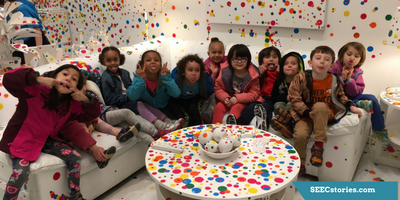

 During their morning lesson, Maureen met with the kindergartners in small groups to introduce them to the day’s topic. She began by sharing a map of the world with the children. They were quick to point out the countries they had already learned about. Maureen explained that today they would be moving to a country in South America – Colombia!
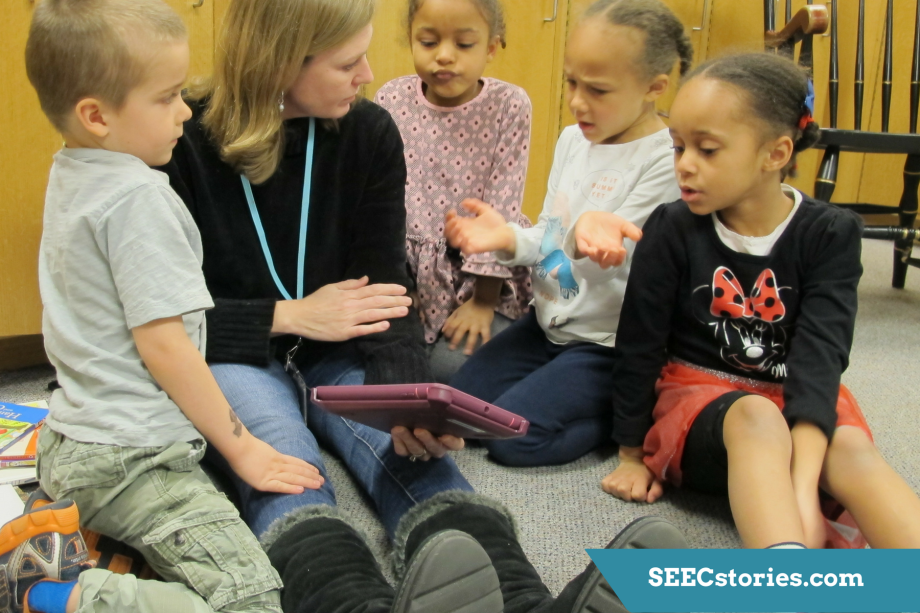 In preparation for this lesson, Maureen asked each child to bring a special book from home. After looking at the map, one child exclaimed, “If we’re talking about Colombia, why did we bring in our books?” Maureen said that was a great question, and she had a video to show them that would make clear the connection between Colombia and books.
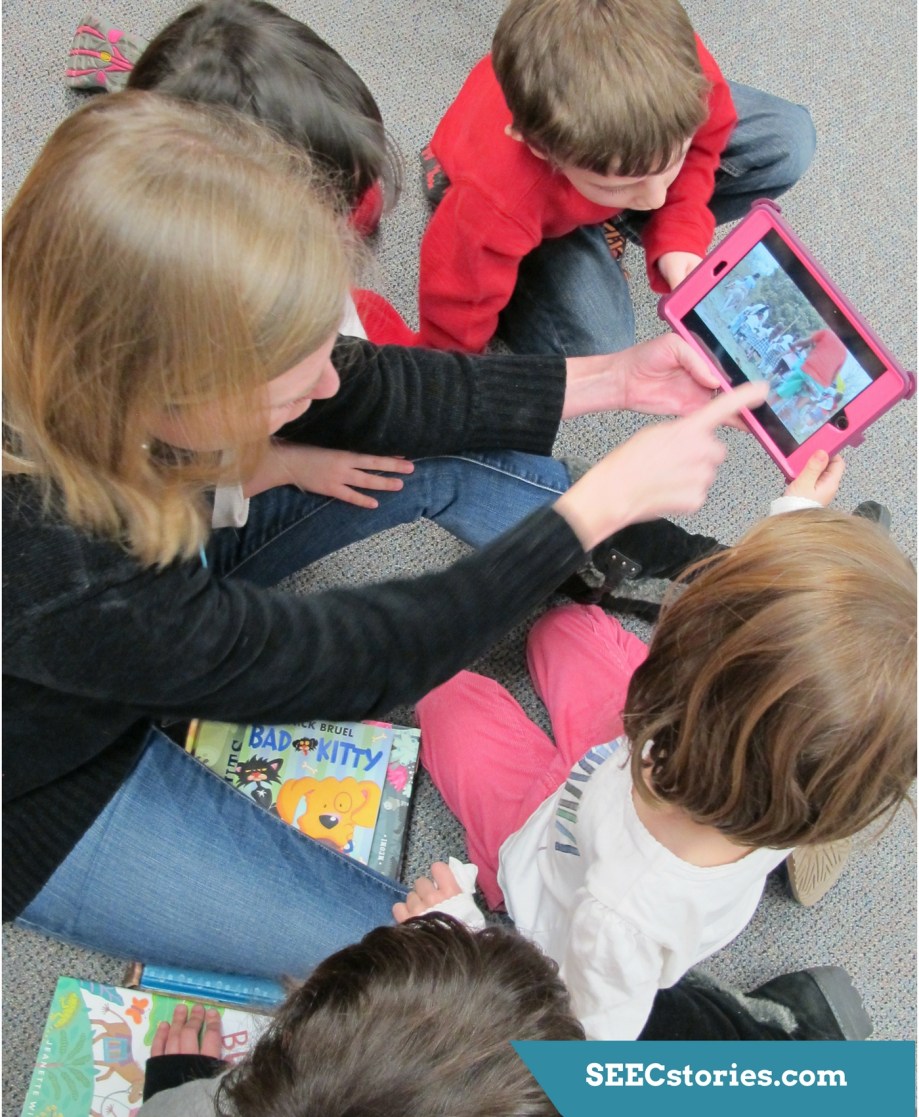 Maureen introduced the children to a man from Colombia named
  As the children watched the video, they were impressed by the number of books that the donkeys carried. Maureen asked questions to get the children to think about what it would be like if they lived in a place where they did not have easy access to books. The children were very engaged in the video, and had comments and questions of their own including, “I can tell he loves books!”, “Is this happening right now?”, “Does he still have that donkey?”, and “I think it makes sense that we brought in our books!”
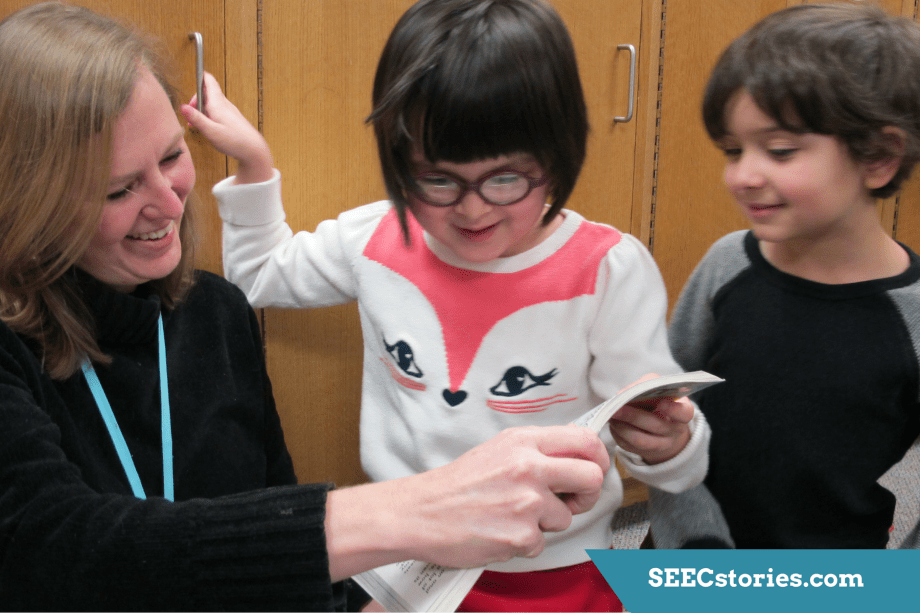 After watching the video, Maureen turned to the children’s special books from home. She asked why they thought books were important. All the children had something to say about this including, “because if you don’t have school, you need to learn from something”, and “you can learn words from books.” Then the children took turns sharing their books, and why they were important to them, whether they were gifts, they loved how funny they were, or provided knowledge.
 To end their morning lesson, Maureen read the children
  That afternoon, the class went to one of the
 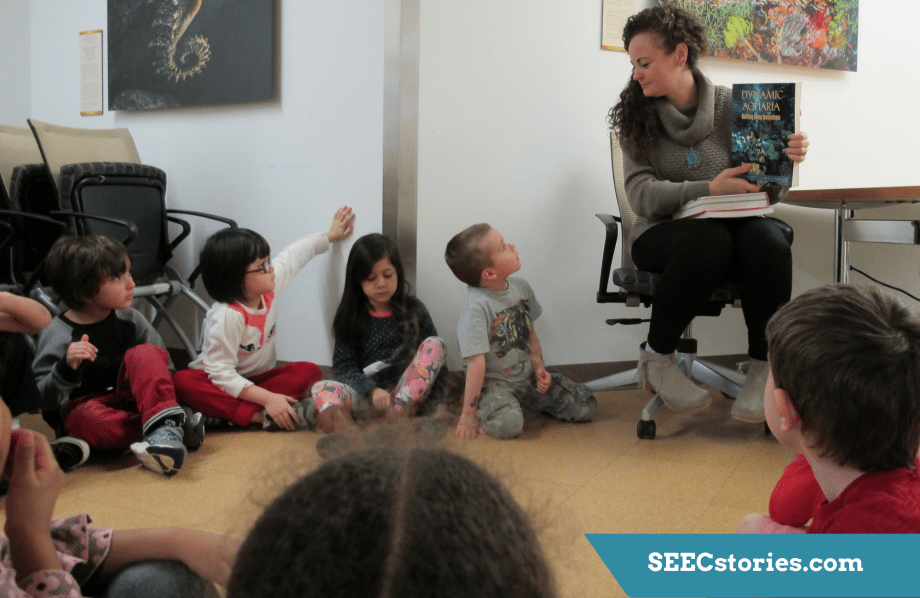 The class sat down and discussed with Sara what you can do in a library including reading, and finding out information if you have a question. The children talked about what they normally check out from libraries, such as books, CDs and DVDs. Then Sara told them a little bit about the Smithsonian Libraries and how they differ from the libraries they might be familiar with. She explained that all the Smithsonian Libraries are usually used by people who work within the Smithsonian who need to do research about something specific.
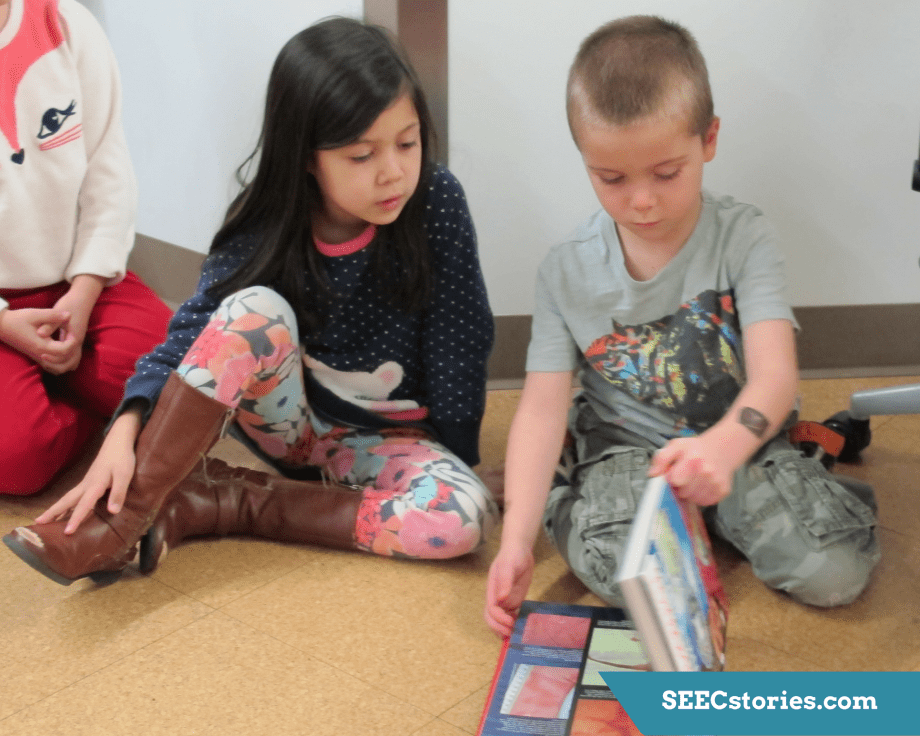 She shared several books from the library about marine life with the children since they were currently studying the ocean. As they flipped through the books, they noticed that there weren’t many photos, and that they contained lots of words, unlike the books that they might check out from the library near their homes.
 On the way out of the library, Sara showed the class an interesting feature of the bookshelves. She explained that since they have lots of books, and not too much space, the bookshelves are on tracks and can move apart if a book from a particular shelf is needed.
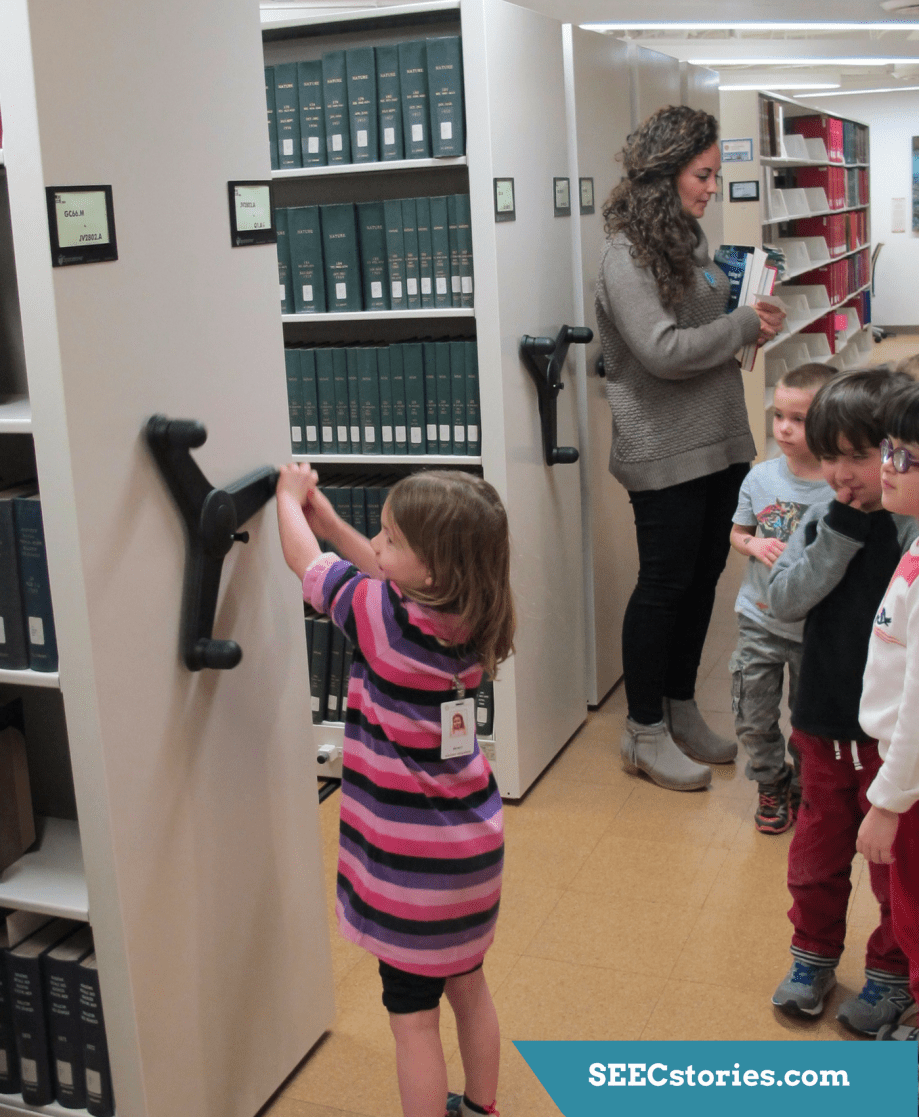 All the children enjoyed taking a turn using their muscles to turn the wheel to move the shelves.
 Following their trip to the library, Maureen brought the lesson full circle by reading
 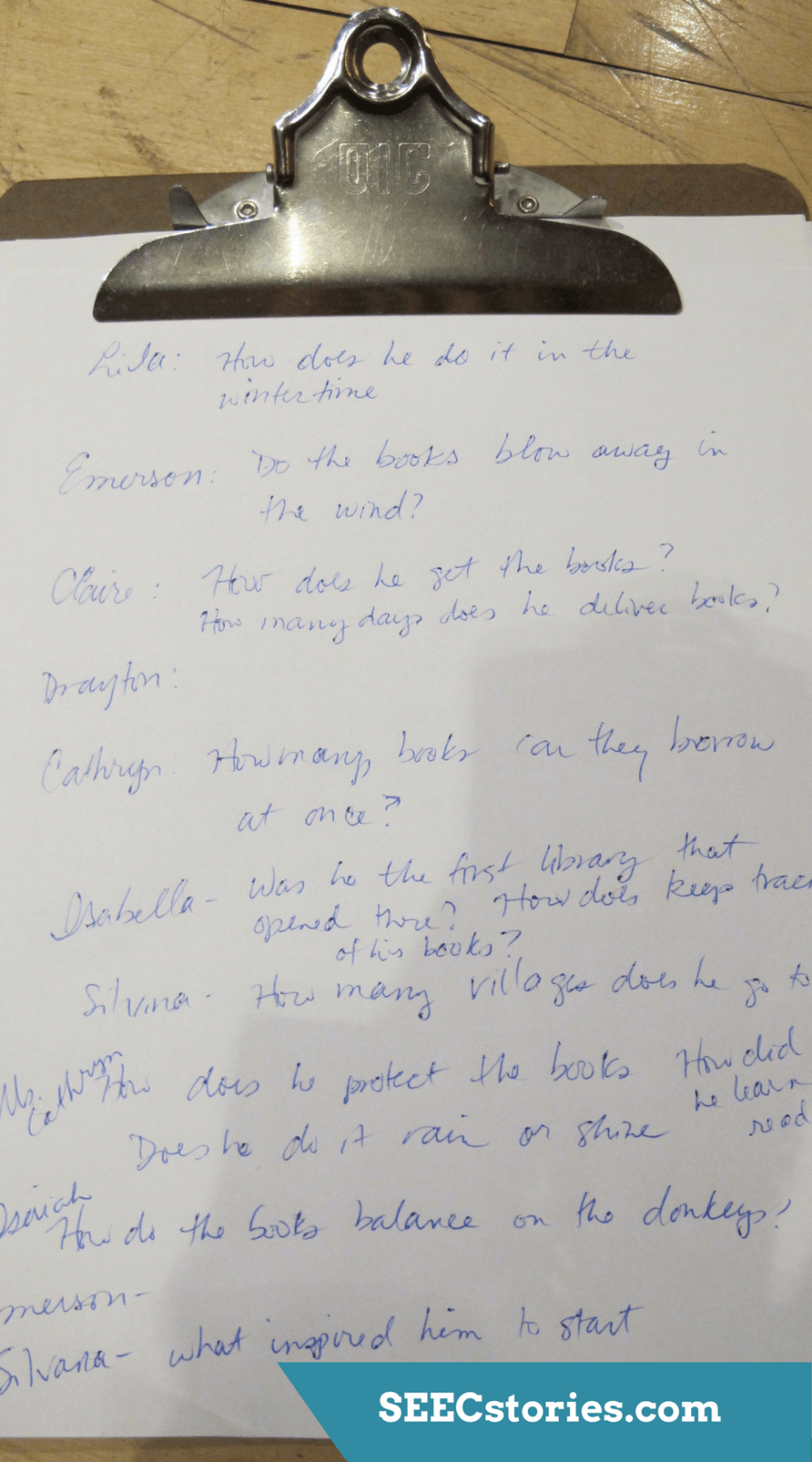 She asked the class if they would like to create their own book and send it to Mr. Soriano to add to his book collection. They were excited at the idea and also had some questions that they wanted to send back to Mr. Soriano. After this lesson the class corresponded with Mr. Soriano to find out more about him, as well as began their work on their book and a fundraiser for the library.
 seecstories.com