Teacher Feature: PreK 4 Class Explores Archaeology

Today we’re featuring Pre-K 4 teacher Jessie Miller of the Honey Bear classroom. The class has been exploring topics related to digging, and I joined them for a lesson at the Freer Sackler Galleries about archaeology.  Below you will find images from the lesson, as well as reflections from Jessie. 

cover1

The children had recently shown a growing interest in digging and the creatures and objects they were discovering underground. To build on this interest, we decided to start a “can you dig it?”unit where we would explore a variety of topics related to digging, such as underground animals and insects, construction, gems and minerals, paleontology, archaeology, etc.

i-fd5P3n5-L

 The class visited the Freer Sackler Galleries for their lesson on archaeology. There are many wonderful exhibits at the Freer Sackler, but for this lesson, they looked for gallery 21: Feast Your Eyes: A Taste of Luxury in Ancient Iran.

Engaging the children throughout the entire journey from classroom to the museum and back to classroom creates excitement and curiosity. This also scaffolds their learning and gives them multiple exposure to a topic. For example, we will often tell them the name of the exhibit we are looking for before we leave the classroom, then ask them what we are looking for before we enter the museum, and once we find the exhibit inside. This gets the children looking for letters, words, and/or numbers, as well as sparks their interest about our learning topic for that day.
i-PFhtz49-L

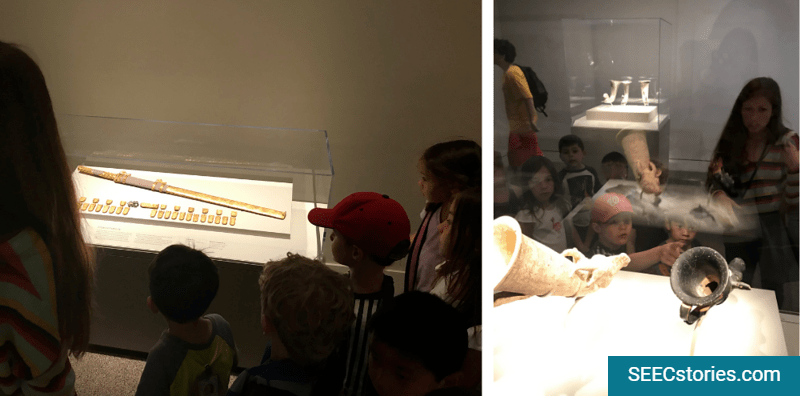
After finding the gallery, the class walked through it, stopping at artifacts that they wanted to look closely at. Jessie went with the groups’ pace and read information about each object that interested the children. They wondered and predicted together what each object was used for and from what materials they were made.

I chose this exhibit because it has a variety of objects to explore rather than just one. I also wanted the exhibit to provide our class with enough space to move around freely. This exhibit in the Sackler Gallery tends to have less foot traffic, and it has an array of objects to observe. The word ‘ancient’ in the title of the exhibit indicates the objects are from a long time ago, which was perfect for us to use in our exploration of archaeology.
i-SRCn7DM-L

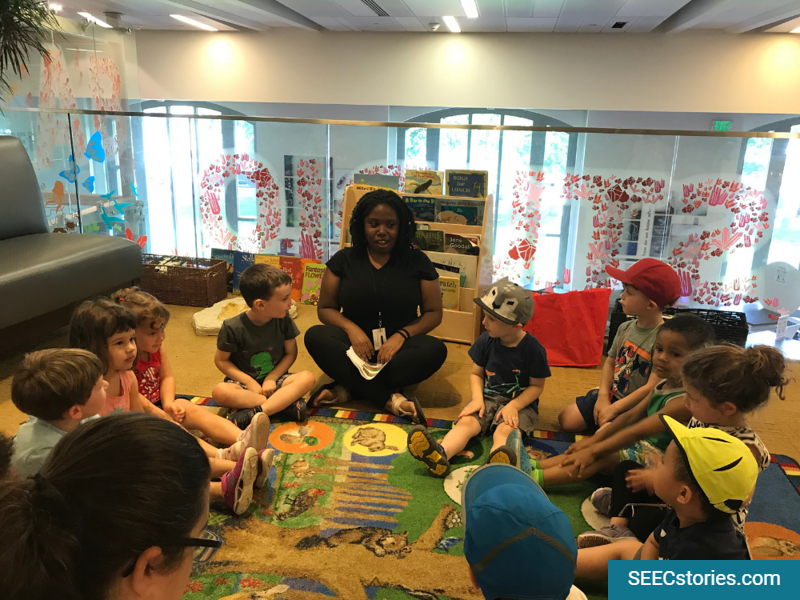
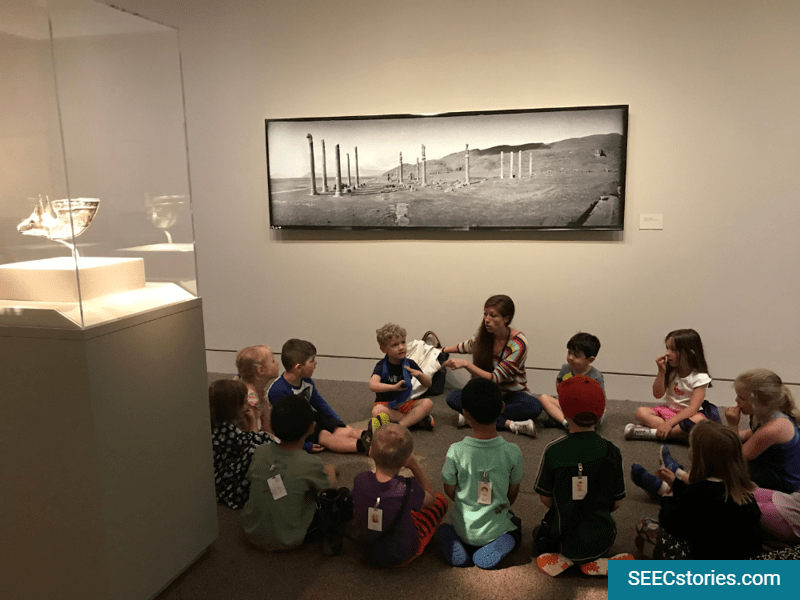
Near the end of the exhibit, the class sat down in a circle in front of the photograph Panorama of Persepolis by Ernst Herzfeld. Jessie asked the children to remember what paleontology is and the class recalled that it is the study of fossils or things that were once alive. Jessie asked if they saw any fossils in the exhibit or in the photograph behind them. The children said that they couldn’t see any fossils, but perhaps there were some beneath the surface in the photograph. One child said that they weren’t sure about fossils, but that the pillars in the photograph looked old because she could see holes, scratches, and dents on them.

The children had learned about fossils and paleontology the day before this lesson. We explored the fossil hall in the Natural History Museum and observed a variety of things paleontologists study. The main learning objectives of this lesson were to reflect on what we had learned about paleontology, compare and contrast paleontology and archaeology, and provide the children with some authentic objects archaeologists would work with. These objectives provided the children with exposure to these two fields of science, and their similarities and differences.
i-TLdrFvm-L

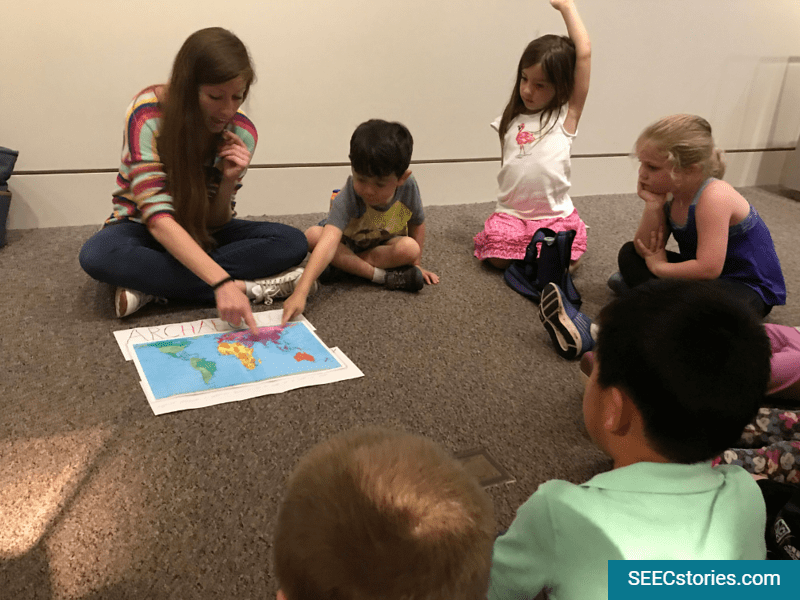
Jessie told the group that the pillars or columns were old and in the country of Iran. All the artifacts they had seen in the galleries are from Iran as well. To better understand where Iran is located, the class looked at a world map and sang the song, “7 Continents“, which they often sing when locating a place on the map. Jessie told the group that Iran is on the continent of Asia and pointed out where it is.

i-35wp6ZF-L

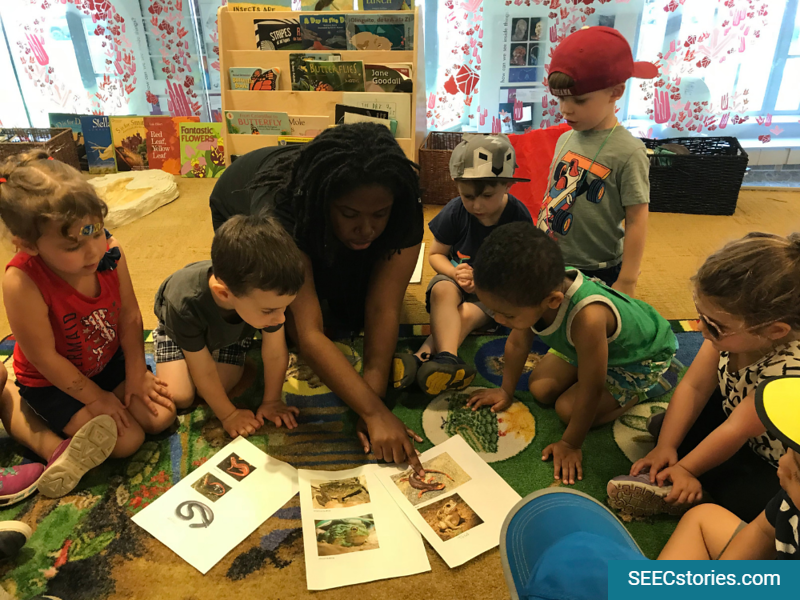
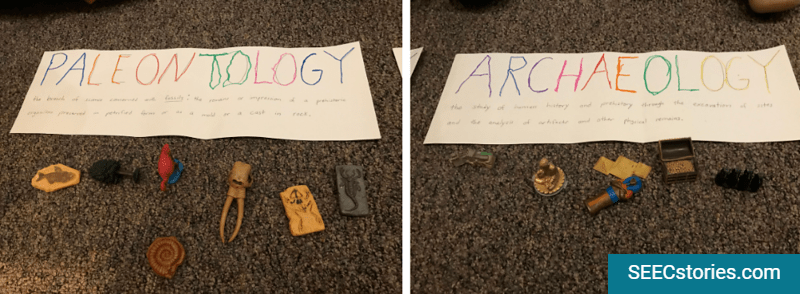
Next, the group thought about the difference between paleontology and archaeology. While both fields dig into the Earth to find clues about the past, paleontology is the study of fossils, and archaeology is the study of objects that are human-made. To further explore this, Jessie gave each child an object to examine. Then, everyone had a turn to place their object either in the paleontology group if it would be studied by paleontologists, or the archaeology group, if it would be studied by archaeologists.   

I already had some previous knowledge about these two topics and had created related lessons in the past. However, I wanted to prepare myself a bit more for this lesson through online research and books to make sure my knowledge was up to date. I also relied on the exhibits we visited to provide us with information. For example, as we ventured through the exhibit before sitting down for our lesson, I made observations about the objects we were seeing along with the children, and then read the titles and descriptions from the labels so we could have organic conversations about the pieces in the exhibit.
i-63BRQ62-L

 When the game ended there were two distinct piles for each field of study. The children understood that paleontologists study fossils, or things that used to be alive, while archaeologists study objects or buildings that were human-made.

i-VSksDFQ-L

Jessie reiterated that we know how people lived long ago because of the artifacts that archaeologists dig up and examine. She shared some pages from the book A Street Through Time by Anne Millard, which shows the same street and how it might have looked from the Stone Age to modern day. 

i-BcQTQp4-L

To end their lesson Jessie gave the children a challenge: pick an artifact in the exhibit that made them curious, observe it closely, and sketch what they saw.

Going into the lesson I wanted to make sure the children had time and space to complete structured as well as unstructured activities. Sometimes providing the children with too much freedom in a space can cause silliness but by preparing them for the sketching activity and giving them specific guidelines to follow they completed the activity with no issues.

 Back in the classroom, we asked each child to describe the object from the exhibit they had chosen to sketch. We wrote these descriptions on their paper with the date and a title, and then hung them up in the classroom. Once they were up in the classroom, we could refer to them later and encourage the children to share them with their families and friends. This provided multiple exposures to the topics we were learning about and enhanced their curiosity to learn more.

i-vvLCkcL-L

If another teacher wanted to try this lesson, I would recommend finding spaces for the lessons and activities that give the children enough space to move around and explore. I would also recommend being prepared with a few things, such as a book and activity or two, but also leave plenty of time for organic conversation to happen. By building in time to just wander around and chat about what you are seeing, the children get more unstructured time to simply enjoy the space and objects and share their thoughts with their classmates and teachers.

After this lesson, the children were provided with a variety of tools, such as paintbrushes, gloves, magnifying glasses, pencils, and sketch paper, that would help them to explore little “dig sites”with sand, and mini objects that an archaeologist would study. We also picked out books from the library related to digging and incorporated story times into multiple parts of our day. This lesson was one of our final explorations in our “can you dig it?”unit, so we spent the following days reflecting on and making comparisons between the digging topics we had explored over the previous weeks.


After exploring digging, it was time for our preschoolers to graduate! For more digging ideas, visit our Dinosaurs, Can You Dig it?, and Ancient RomePinterest boards.
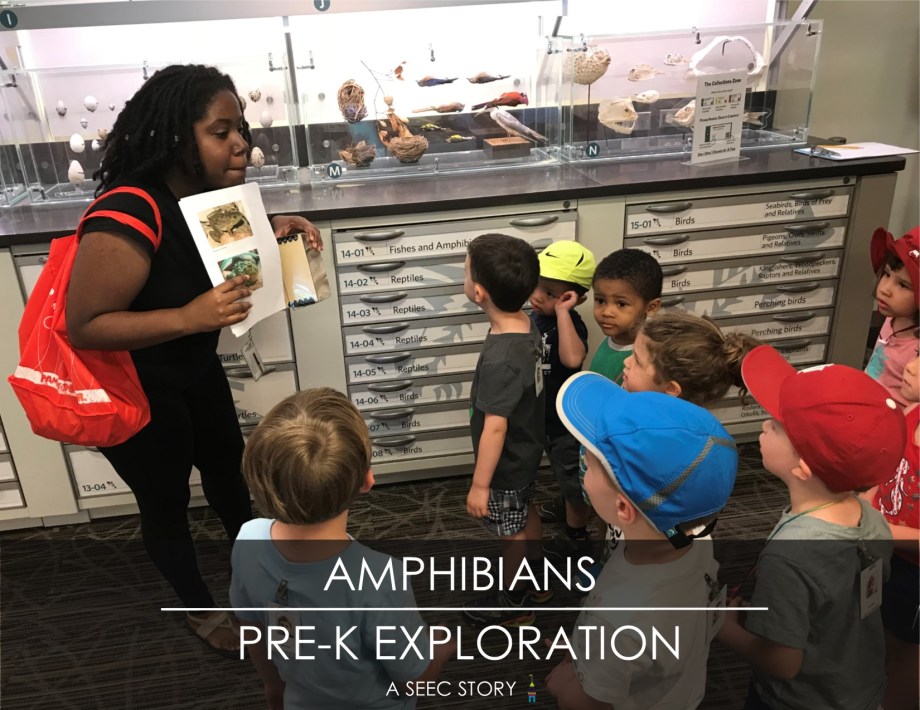
Teacher Feature: Three-Year-Old Class Explores Amphibians

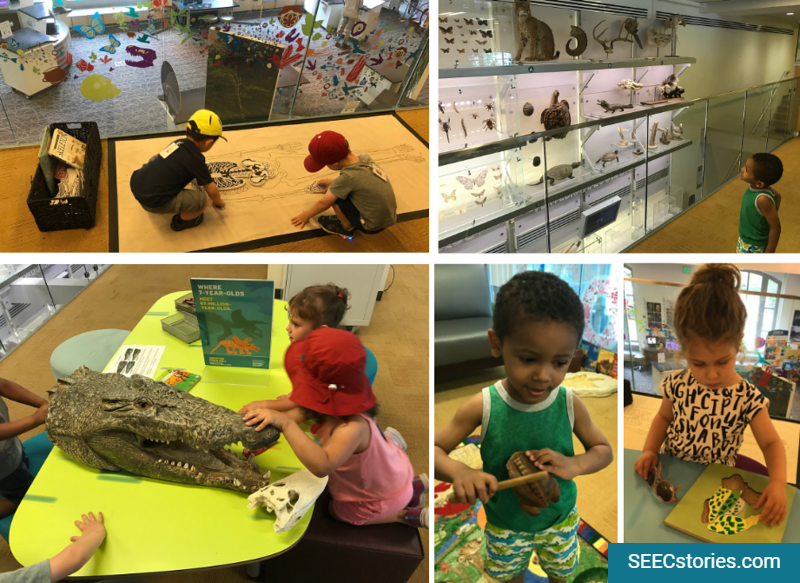
Today we’re featuring Maya Alston and Amy Schoolcraft, the teachers of the three-year-old Wallaby class. The class has been busy exploring the Animal Kingdom, and I joined them for a lesson about amphibians and frogs at the National Museum of Natural History. Below you will find images from the lesson, as well as reflections from Maya.

cover.jpg

For the past two years, a mallard duck has made SEEC’s playground her nesting ground to lay her eggs. Every year we section off a part of the playground for mama duck to lay her eggs safely and use this as an opportunity to engage the children about the importance of respecting her space while she cares for her babies. This was the Wallabies’ first time experiencing the process, and while they have always shown interest in animals through play, we noticed that this experience really seemed to stick with them and pique their interest. Amy and I decided this was the perfect time to begin a unit on the animal kingdom.

i-vp9nVnv-L

For their lesson, the class headed to Q?rius, an interactive learning space at the National Museum of Natural History, for their lesson.

Q?rius is a space dedicated to encouraging young children to be curious and investigate through hands on exploration. I wanted my students to be active participants and be able to have tangible objects to help them make these connections. I took some time to explore Q?rius on my own first, imagining how my children could engage with objects that were relevant to our lesson. From there, I began to piece together what I wanted the lesson to look like based off what the space offered.

Since it was also my first time going to Q?rius, I wanted to make sure the space was appropriate for my students. I took time to explore on my own as well as speaking with Q?rius employees about what objects they had related to amphibians.

i-h6ccHXB-L

Q?rius has many objects and specimens to examine closely. Maya led the class to a case and took out a specimen box without showing the class. She gave the group some clues as to what might be in the box including making a frog noise with a frog musical instrument, and showing them an image of a frog. Between both clues many children exclaimed, “a froggie!”

For this unit, we wanted our students to understand the concept that animals belong to different groups. While animal kingdoms are generally taught in later years, I wanted to build a foundation of the concept of categorizing animals based on physical traits, habitat, and other characteristics unique to that animal group. In this lesson, we began exploring amphibians.

i-mR8hMt8-L

Maya shared two frog skeletons and allowed each child a turn to look closely. They noticed the difference in sizes between the skeletons.

i-SQK6pGb-L

Next, the class went upstairs to the Q?rius jr. space, a dedicated area of Q?rius for young children. They sat down and Maya told the class what they were going to learn about today: amphibians. They practiced saying the word and Maya explained that amphibian means two lives; one life in the water, and one on land. She asked what animals they know of that live in the water. The children listed animals such as sharks, fish, and dolphins. Next, she asked what animals live on land. They identified many animals including butterflies, cheetahs, birds, bunnies, and elephants.

i-8rMq2MP-L

Maya reiterated that amphibians are special because they live in both the water and on land, such as frogs. She showed them images of more amphibians including newts, salamanders, toads and caecilians. The group remembered some previously learned knowledge about how many legs insects have (six) and arachnids have (eight). Maya let the class know that many amphibians have four. The class counted the legs of the amphibians together. The group explored another physical aspect of amphibians – how they feel. The class felt their own skin and described it as smooth and soft. Maya let them know that amphibians are smooth and soft as well, but they’re also moist, meaning they’re always a little bit wet.

I knew very general information about amphibians and frogs, but to prepare for this lesson I took some time to research as well. Sometimes the children have questions that I might not have been expecting, so it’s always helpful to come with some additional information prepared.

i-bRkj9rB-L

One of the children brought up how bunnies feel, and Maya took this opportunity to transition to her next point. She asked the group what bunnies like to do. They excitedly said, “hopping!” Maya told the group that frogs also like to hop. The class began jumping and hopping like frogs all over the circle. Maya let them have some time and then said, “3, 2, 1, and done.” The children took the cue and sat back down in their circle.

While I had not planned for the group to jump like frogs at this point, it was the children’s way of staying engaged and actively participating with the lesson. I really want them to connect with our lesson in a way that speaks to them, and most often, it is through movement. It makes our lessons feel a lot more organic and can even help to push the conversation along. I’ve found my lessons to be much more fun and exciting when I allow the kids to steer the direction we go in just a little during our discussions. It’s an excellent way to gauge their interest and see what they know already.

i-mFQxwrX-L

Next, they explored frogs more deeply by looking at plastic frogs, and playing wood frog guiro musical instruments. They enjoyed stroking the wooden frog’s back with the mallet and listening to the ribbit-like sound. They also compared the difference in sound between the larger frog guiro and the smaller one.

i-zwFxKZm-L

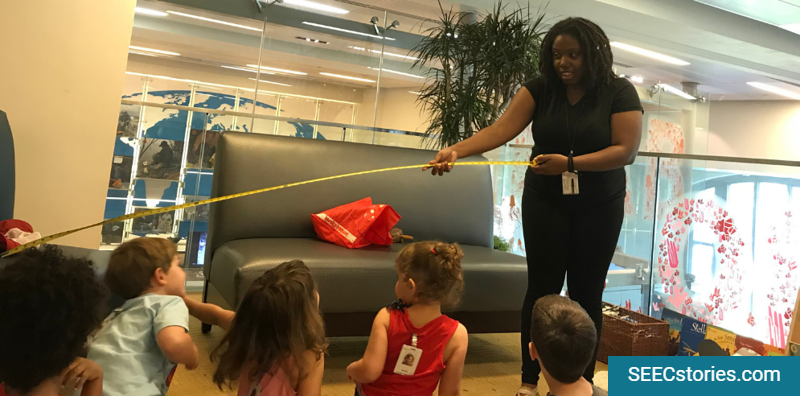
The last aspect of the lesson was to explore how strong frog legs are and how they help them to jump very far distances. Maya said that some frogs can jump up to seven feet! To illustrate this she measured out the distance with a tape measure.

The inclusion of math skills into the lesson was something that happened naturally. I really wanted to provide a visual to see just how far of a distance it was, and a tape measure was the perfect object. It just so happened to be a great way to incorporate math skills!

i-kX7b5QQ-L

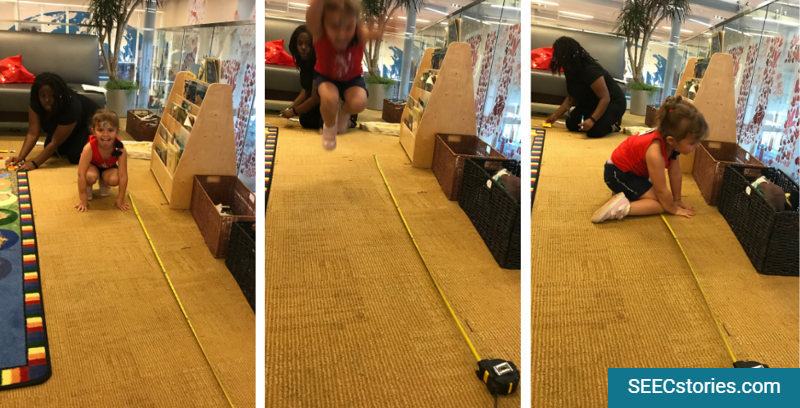
Then it was the children’s turn to jump like a frog and measure how far they could go. Maya randomly pulled each child’s photo from a bag to indicate it was their turn to jump.

The children seemed to really take to the activity portion and liked comparing their distances to see if they could jump as far as their friends. I think the activity was engaging enough that even when it wasn’t their turn to jump, they were still excited to get to participate in some fashion, for example cheering on their friend who was jumping.

There’s always a little bit of unknown when taking your students to a new space. Sometimes doing gross motor activities in confined spaces can be a little tricky. I wanted to make sure the kids were able to get the most out of the lesson, while also respecting other people using the space, so we discussed.

i-PjNpgwb-L

As each child jumped, the rest of the class cheered for them and how far they went. Maya integrated math skills by measuring how far each child went and writing down the numbers next to their photo. To conclude this part of the lesson Maya let them know that they were all great jumpers, but frogs could still jump a lot further and they would learn more about them later in the week.

I absolutely loved how the group waited so patiently to take their turn to jump and were cheering each other on. It can be difficult to wait patiently for eleven other people to go before it’s finally your turn. Unity and camaraderie are concepts we encourage throughout the year, and seeing them be so supportive unprompted was very heartwarming.

i-ZHjGptc-L

To end the visit, the class got a chance to explore the Q?rius jr. space. Some children explored the many specimens both displayed and available to touch. Some played more with the frog instruments or engaged in a variety of puzzles (including a frog puzzle!).

I think what’s great about this lesson is the fact that it can be done in just about any setting with objects. My recommendation for other educators without easily accessible museum spaces, but wishing to do a similar lesson would be to go sit outside or go to a local nature center or pond to connect with the concepts.

We made sure to say a quick goodbye to our frog skeletons before leaving Q?rius. Upon reflection, this would have been an excellent time to have the students take another look at the skeletons and have a brief discussion about what new information they had learned during the lesson. That would give them the opportunity to make connections and help to bring the visit full circle.

Later in the week, we continued the conversation by visiting the Moongate Garden to talk about the life cycle of frogs. Following our week on amphibians, we began to explore other animal classifications.


After exploring frogs the class learned about reptiles. For more animal ideas, visit our Amphibian, Birds, Reptile, and Ocean Pinterest boards.

Our second posting in our Diversity, Equity, Accessibility, and Inclusion Series.

i-jgMbrGZ-X2The Journey

People familiar with Diversity, Equity, Accessibility, and Inclusion (DEAI) will often describe it as a journey or a process. Now that I am a couple of years into my own DEAI experience, I can finally say that I understand what they mean. Each time I feel like I make some headway, I find that something comes along and reminds me that I still have work to do.

Such was the case at a recent educator workshop I was co-leading, Never Too Young. Going into the workshop, I was feeling confident and prepared. Overall the morning went well and there were many meaningful conversations. During the section where we discussed relationships with families, we asked participants to split up in small groups and talk about one of a variety of scenarios that we described as, “difficult conversations.” As each group shared their thoughts, it became clear that some of the participants were uncomfortable because the scenarios portrayed lifestyle choices with which they disagreed. It was a conundrum; the focus of the workshop was to help educators create an inclusive environment where children can develop a positive sense of self.  Yet, I could see that the discussion made some people uncomfortable and moreover, these participants had stopped listening.

i-pKMtvLP-X2As a facilitator, I recognized my role in their discomfort and I felt like we needed to reconsider our approach – we were talking about inclusion after all. I had several questions:

How do we navigate conversations when peoples’ ideals are not aligned with inclusivity? Was it my role to challenge those ideas? What are SEEC’s priorities when providing these types of training? And most importantly, how do we keep the children’s best interests at the center of what we do?

At the next session of the workshop, I made a few modifications. We added inclusive language to our introduction so that participants knew what to expect and understood we would talk about some issues with which they many not agree. Before the scenarios, we reiterated the role of the caregiver as the decision maker and the role of the educator as someone whose role was to make a child feel safe and loved. I think this helped, but we are definitely still thinking things through.

DEAI and Educator Programs

i-bH6jtnR-X2In addition to this specific experience, we have been thinking about our entire menu of educator workshops through a DEAI lens. Some of the changes are small and obvious, and others are still in the “thinking” phase, but as I said….it’s a journey. Below is a list of ways we are thinking about DEAI in terms of our professional development options. These perspectives are with us as we rethink content and introduce new conversations to our educator programs.


  1. Demonstrating how objects can tell stories of similarities and differences.
  2. Exploring ways community visits can:
    • Provide children with experiences to connect with peoples and cultures that are different or similar to their own, which may not always be the case in their classroom.
    • Create opportunities for children to build social emotional skills, especially in terms of empathy and considering perspectives other than their own.
    • Provide real-life examples of people working for change.
    • Provide real age-appropriate experiences for children to make change.
  3. i-LbjP8rd-X2Considering how the museum community views families and young children and how we can help museum professionals understand that children are capable and should be respected. Helping museums think through how to make their spaces accessible to families, and how to support family learning.
  4. Strategies for talking to children in age appropriate ways about history, culture, and current events.
  5. The role silence plays when educators don’t acknowledge bias in the classroom.
  6. Ways of building classroom lessons and environments that authentically weave in diversity and inclusion, and avoid tokenism.
  7. How educators can build strong relationships with families to establish a community in which everyone feels respected, even when there are disagreements.

10 Reasons Your Child’s Rock Collection is Important


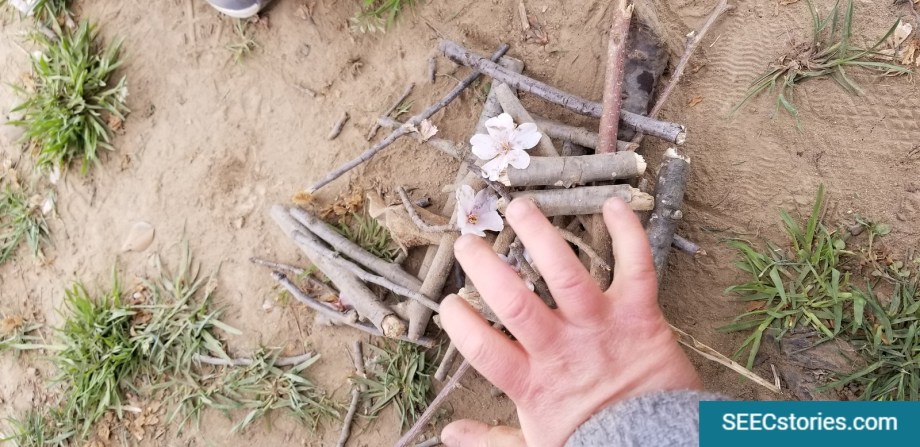
PondIf you have a child age two or older, chances are that you also have a collection of their “treasures” in your home. They may include rocks, sticks, sea shells, cars, or even stuffed animals. To children, these objects are irreplaceable artifacts to be cherished and preserved. They take their collecting seriously and we should too! Collecting provides a multitude of learning opportunities for your child. Below you’ll find just 10 examples of the many lessons your child is learning through their collections and collecting habits.
Categorizing and Sorting

As children collect, they will start to sort their objects into different categories: Big, medium, small rocks, Rough, smooth, and spiky rocks etc. Categorizing and sorting are important early math skills and build the foundation for understanding more complicated patterns in the future. Encourage your child to continue to re-sort their collection in different ways.

Looking on groundCounting

Counting is also an early math skill. As your children mature, they will become interested in counting the things around them, including their collection. Encourage them to count the number of items in their collection and then how many are in each category. With a slightly older child, take away or add an item and ask them to count again. This is addition and subtraction!

Storytelling and Imaginary Play

A child’s collection provides endless opportunities for storytelling and play. Encourage them to tell the story of how and where the object was found or make up something entirely different. Rocks and stuffed animals often take on names and personalities. They may also use their rocks as construction materials for roads, walls, and even castles. Pretend and role playing are important part of children’s social and emotional development. It allows them to work out scenarios before they encounter them in real life situations.

Care and Empathy

Have you noticed how much your children love their rocks? Sometimes you’ll find them being washed or wrapped in blankets. This is a great lesson in caring for others. If you take care of your collection it will last longer!

Memory and Timeline

A young child’s perception of time is not a straight line. Things that didn’t happen that day usually fall into a “yesterday” category, even if they happened two days or even a week before. A collection allows a child to practice recalling information and acts as a physically representation of a time in the past. For example, children may recall collecting a particular rock from the beach when it was warm out. Since it’s not warm out now, they will be able to deduce that it must have been a long time ago. If a child allows, you could even write down where the rock was found on its’ underside.  This will also help you remember where and when the rock was collected and facilitate conversations on that topic.

Stick and hand

Same, Same but Different

Very young children start by sorting items into familiar categories. For example, if you tell an infant or young toddler that something with four legs and a tail is a dog, then things that fit that description will automatically be labeled a dog until you tell them otherwise.  A collection is a great way to show how things can be in the same category, but look completely different. For example, their collection may consist completely of rocks but no two rocks are the same.

Communication

Speaking with your children about their collections facilitates vocabulary building. They are learning how to describe objects and will begin to incorporate new synonyms and adjectives into their glossary as you provide them.

Understanding Limits

Sometimes they can’t have every rock they see and it’s ok for them to hear, “no.” Collecting doesn’t automatically mean they can have every item they see and it’s a great way for them to get practice respecting limits. Make sure to take time to explain to them why they can’t have certain items. Does it belong to someone else? Is it too big to take home? This will help them understand that actions have consequences.

Ownership

A child loves having something that is truly their own. A collection of rocks or sticks that have been found and brought home by children gives them a sense of ownership they might not feel for their other things. They may feel a tremendous amount of pride showing off their collection to others.

Self-Soothing and Comfort

Since children can become very attached to their collection, bringing along an item in a pocket or backpack can act as a great tool for self-soothing and comfort. Having a special item from home can remind them of family when they are at school or away from home visiting relatives or friends and begin to miss their parents.

What does your child collect? A great way to take their collection one step further is to create a mini-museum in your home. Select a low shelf and help your child arrange the items and create labels describing them. Host an opening for your friends and family and allow your child to give tours of their collection!


SEEC Faculty’s DC Summer Favorites

Summer in DC offers lots of great opportunities to get out of the house and experience nature, art, sports, and more. Our faculty shared some of their favorite DC summer activities and events. Maybe something will catch your eye and you can start a new tradition with your family this summer!

Kenilworth Aquatic Gardens

Our art educator, Carolyn, recommends Kenilworth Aquatic Gardens. Located in Anacostia Park, the Gardens is hosting their annual Lotus and Water Lily Festival on July 13th. Not only will the lotus be in full bloom, but there will also be live music, crafts, and a live animal exhibit. 

i-W3D87Vk-X2.jpg

Yards Park

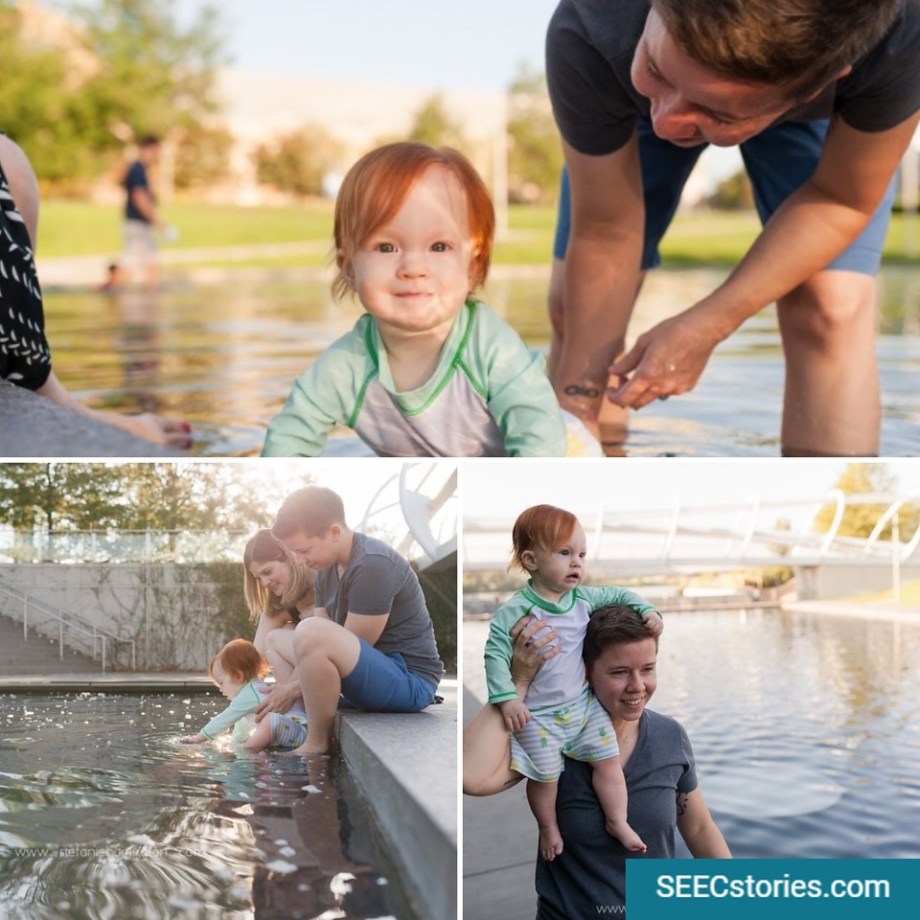
Infant and Twos Director, Melody, loves taking a visit to Yards Park to cool off. She says, “It’s free and it’s a big area with shallow water to splash around. We haven’t been in awhile and hope to go back this summer with the new baby!”

i-S2d6vgS-L

National Building Museum 

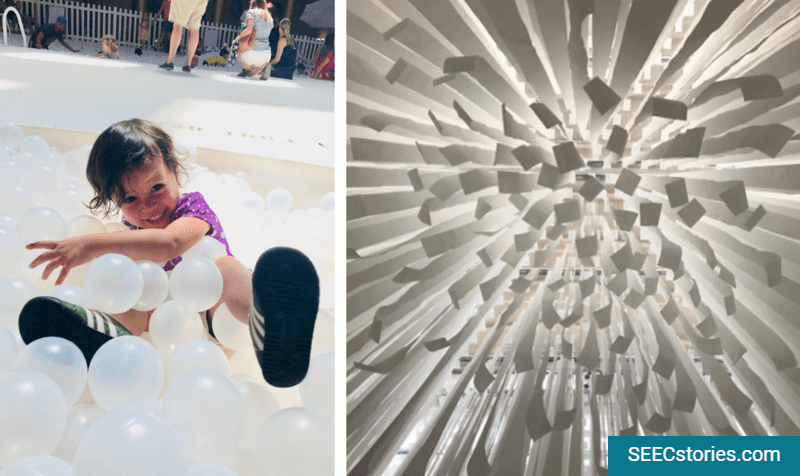
Pre-K 4 teacher, Sara, looks forward to the National Building Museum’s summer exhibits. “Last year was the first year I went. I loved the immersive experience. It was a celebration of avant-garde architecture and also pure fun. I felt like a child, jumping in ball pits and running through streamers. I had a blast.” Check out information about this year’s exhibit, Lawn, which opens July 4th.

i-hCdkZ2R-XL

Nationals Park

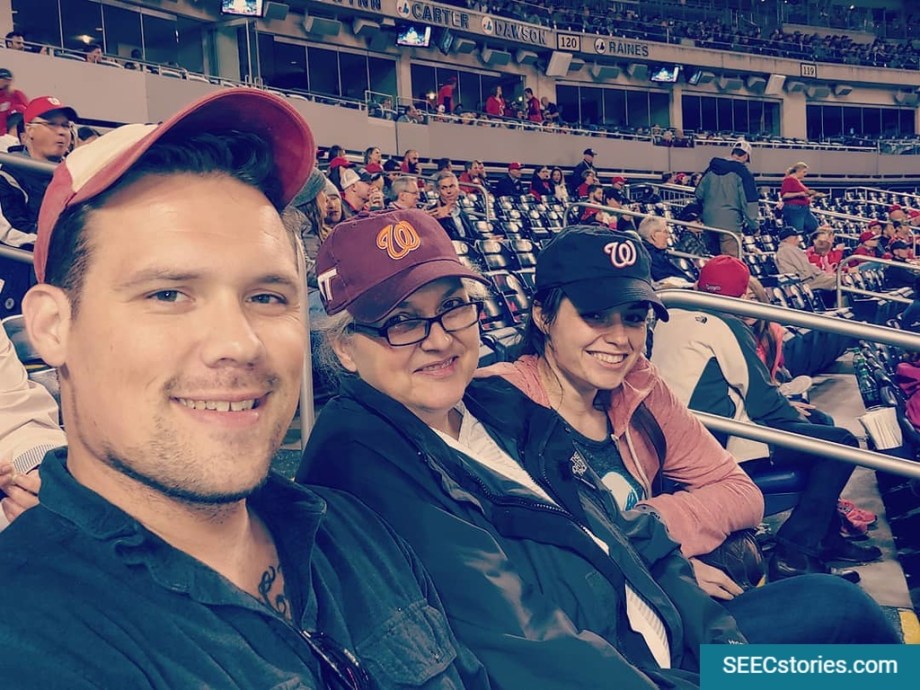
Toddler educator, Kat, loves to go to Nationals Park to catch a game in the summer. She elaborates, “Plus, every year they have Opera in the Outfield in partnership with the Washington National Opera; you can bring a blanket and sit on the field while enjoying a show! It is one of my favorite places to be in DC. Go Nats!”

i-N5qL6LH-L

Great Falls National Park

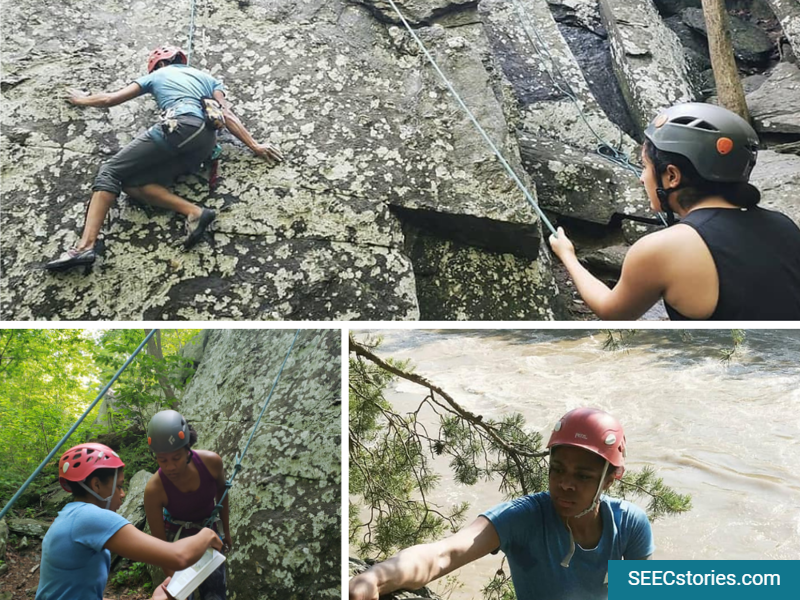
Brittany, twos educator, enjoys hiking and climbing at Great Falls National Park. Brittany says, “Growing up in the area visiting Great Falls was a weekend tradition. It is a great space to explore and learn the local history of DC. You are able to see great beautiful views of the Potomac River gushing over rocks, plus the awesome wildlife. For the climbers, Great Falls is one of the first Climbing areas in the Mid-Atlantic area. It is a great spot to work on top skills. Plus climbing by the water is always fun!”


What’s your favorite DC summer activity? Be sure to let us know in the comments!

Changes: Advice from Parents on Preparing for a New Sibling

Over the past year, we have created a blog series on potential changes that may occur in a young child’s life in the hopes that we can help provide some resources for families, caregivers, and educators. For this blog, which focuses on helping young children adjust to a new sibling joining their family, we polled SEEC educators on what they did to prepare. Below you will find their experiences and advice and since we are all always learning from each other, please be sure to comment and share what worked (or didn’t work) for you.


Take a New Sibling Class

Signing up for a sibling class or a sibling tour of the hospital can help prepare young children for the birth of the new baby. Many hospitals offer classes like these and they can help young children to feel comfortable in the hospital, which eases some of the tension that comes with meeting the new baby for the first time.

New sibling classes can also teach young children how to do tasks that will help when the new baby comes. These tasks may include diapering, singing songs to the baby, or bringing mom a snack. Practicing these tasks ahead of time means that your child will be able to start immediately helping when the baby arrives. Your child might even start seeing themselves as a “helper”. As one of our parents explains, “I made sure that I gave my oldest specific tasks to help with the baby so she would feel included. She was able to help me diaper the baby and I wonder if that wasn’t something that helped her not regress when the baby was born.”

Preparing the Room

Several parents cited the importance of having the new baby’s room or crib prepared before the baby arrives. Some parents explained that having the crib set up helped children to think of and verbalize their questions as it served as a concrete reminder that the baby was coming. Other parents said that having the crib set up ahead of time made it so that their older children did not experience too many changes at once. The older child was able to get used to sleeping in a bed or even sharing bedrooms with older siblings before the baby came.


Books

Another great way to help families prepare is to read books together. Books can give adults language for how to discuss the changes that are coming up and they can help give children an idea of what life will be like with the new baby. Some of our favorite books about getting a new baby are You’re Getting a Baby Brother! by Sheila Sweeny Higginson, Hannah Is a Big Sister by Alyssa Satin Capucilli, The New Baby at Your House by Joanna Cole, and Peter’s Chair by Ezra Jack Keats.

i-kJ47zp2-X2

Picking out Presents

A fun way to prepare for the new baby is to have the older siblings pick out presents to give to the baby. Take them to the store and have them pick out a special present. Children can help with the wrapping process too. When the baby is born, bring the presents to the hospital and have the children give it to the new baby. The baby can also have presents to give the older siblings. Make sure that the gift to the older siblings is hospital friendly and they can play with it when they meet the new baby.

Setting Aside Time for Older Sibling

Setting time aside to ensure that the older siblings still get individual attention is crucial. It can be as simple as going for trip to the playground without the baby or signing up for a weekend class. We recommend checking out our Weekend Family Workshops. Many parents find it valuable to set time aside for the whole year. One parent recommended joining a CO-OP preschool so the older child could have their own opportunity to learn and the parents could volunteer once a month. Another option is our Smithsonian Early Explorers program, which is a caregiver child program that meets twice a week on the National Mall.

Other Life Changes

If you want to learn about how SEEC educators teach about getting a new sibling, check out “How to Take Care of a Baby Shark (and Baby Human)”. Much of this advice can be applied to other changes that might occur in a young child’s life. For example, we believe in discussing the changes with young children in frank, simple terms. This includes talking about difficult topics including death, which you can read more about in our blog “Changes: Talking with Young Children about Death”. All children go through changes as they grow up. In fact, the act of growing up might be one of the most universal changes but it is also a change that some people do not think to discuss with young children. Our blog “Changes: Facing the Strange at the Smithsonian American Art Museum”, provides tips on how to talk about the strangeness of growing up.

The Summer Blues: How Museums and Libraries Support Summer Learning

Summer Camp 2013Summer conjures up images of running around barefoot, catching fireflies, and endless hours at the pool. In reality though, it can be an insanely stressful time for families. Sometime in February (at least in the DC metro area), parents start enrolling their children in summer camp. In the nation’s capital there is no shortage of camps, but that is assuming you can pay between $300-600/week tuition. It doesn’t end there either. Many camps charge extra for before and after care, tacking on an extra $50-100. Now, multiply that times the number of children you have and you wind up with a pretty hefty price tag.

Many parents turn to alternative options: in-home daycare, families, neighbors or child-homeworkthey adjust their own work schedule. Your checkbook is likely to appreciate the break, but parents and educators worry about their children forgetting what they learned during the school year. While your child might have brought home a packet of worksheets or a mandatory reading list, neither are particularly engaging. The dilemma remains: How can we support children to learn in fun ways that support and maintain school year gains and not break the bank?

The Institute of Museum and Library Services recently published a paper entitled Growing Young Minds: How Museums and Libraries Create Lifelong Learners. With the national discussion on early childhood education at the fore, this paper examines the important role that museums and libraries play in supporting learning within the community. It makes particular mention of how museums and libraries can serve to lesson what many refer to as the “summer slide.” Utilizing libraries and museums makes a lot of sense for budget-minded families who are looking for ways to engage their children. Firstly, many of these institutions often offer free/reduced admission and programming for families. Secondly, their offerings are diverse in subject and increasingly, hands-on in nature. These institutions are more often taking into account what and how your children are learning in school and are offering programs that extend current studies or prepare them to be successful learners. Moreover, the museum and library environment lends itself to a family experience. Generally, child and caretaker can go together where they both can observe, experience, and discuss an exhibit or program together. Having a shared experience brings families together for one-on-one time and can inspire more learning at home or in the community.

What if you can’t make it to the museum, you ask? Go on-line! Museum and library resources are becoming increasingly child-friendly and parents can be assured that their children are having a safe and educational experience. Take a look at some of the tips below and get rid of those summer blues!

Parent Tips:

Spend time looking at what your local museums offer and have your child choose a few exhibits that interest them. Choice is the key word here – the more interested a child is in something, the more likely they are to want to learn.

Don’t forget about Smithsonian Story Times and Play Spaces:

Check out the Smithsonian Science Education Center’s new engineering game, Tami’s Tower 

Link the library and museum visit by checking out books pertaining to an exhibit or object of interest.

Find a good parent blogger (We love KidFriendlyDC and Beltway Bambinos) and follow them for ideas of what to do and special deals!

Visit the National Gallery of Art’s website for interactive on-line games.


Object Feature: Louise Bourgeois’ Spider

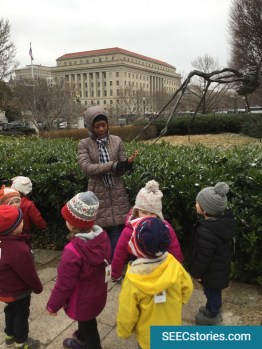
It was during a recent conversation with one of our faculty, that made me pause and consider Louise Bourgeois’ Spider at the National Gallery of Art. To be honest, I wasn’t immediately drawn to this piece. I’m admittedly not a big fan of spiders, but, as is often the case, when you learn more about something it opens up new doors.i-k7Trf6j-X2

Size and Location

On the surface, this piece has a lot of elements that make it ideal for young audiences, most noticeably its location. I truly enjoy being in sculpture gardens. They are an all-ages space – conducive to movement and activity for children and still, contemplative, and provocative in a way that appeals to adults. The sculpture garden is a community space akin to a central square or other public space that features art. It is family friendly space that speaks to different generations who can learn and be inspired.

The piece is also worth highlighting for its size and 3-dimensional nature. While I rarely say “no” to using smaller artworks, a large piece that allows a child to move around it and view it from multiple perspectives, is always ideal. So caregivers and educators, if you visit, make sure that you leave time for ample careful looking. Notice things like the texture of the material, the details of the legs, and how it looks from different perspectives.i-ctMrDxC-X2

Content Connections

The artwork is an ideal segue into STEM, social emotional, and literary learning. First, it’s a spider. Spiders, while not always a crowd favorite, serve an important and definitive purpose in ecology. As an insect eater…. Young children don’t always see spiders as important or as helpers, but this immense artwork provides the opportunity to introduce the spider in a way that is new to a child. This makes me particularly excited as we think about museums as catalysts for children for learning about and protecting their community. In this case, being able to impart some information about the importance of spiders in our ecosystem, one can help children connect to their environment and understand that all living things play a valuable role.

i-mrJb3V9-X2Meaning

My colleague recently shared with me about the significance of the spider. Ms. Bourgeois created spiders in the latter part of her career as a symbol of her mother. Like the spider, she saw her mother as a protector. She viewed her as strong, but also vulnerable. While these are abstract concepts for young children, they can be illustrated by looking closely at the spider. Notice that it is large and tall, yet its legs outstretched like a hug. The spider is a childhood recollection, so the spider’s size is like that of an adult. Have the children imagine a favorite adult, how do they express their love or what do they do to help keep you safe.

Though I would not likely add onto this during a single lesson with young children, its worth noting that spider’s figure is also very delicate. I encourage you to look closely and find what areas of the sculpture look vulnerable or contradict its overall looming presence. Interestingly, Bourgeois’ memories of her mother reflect her father’s ten-year affair with her governess.

Finally, for learners of all ages, connecting art to literature is a way to enhance and build on both the literary and visual experiences. The first thing that came to mind was Charlotte’s Webb, but of course there are many child friendly stories out there that would accompany this sculpture. For example, Eric Carle’s The Very Busy Spider.

i-ZwMc9ms-X2Learning Extensions

Go on a hunt for spiders and spider webs.

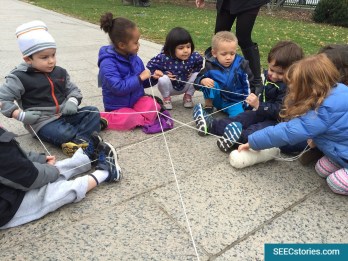
Create a web together using string.

Visit the Insect Zoo and look for different types of spiders or Learning Lab – notice similarities and differences.

Spiders have eight legs, but did you know that most spiders have eight eyes too.

Make spider webs by laying paper down in an aluminum pan and moving tiny balls around that have been dipped in paint.

Teacher Truths: Working with Toddlers

Welcome to Teacher Truths presented by the Smithsonian Early Enrichment Center, SEEC. Each episode of Teacher Truths take place between two SEEC faculty members and explores a topic related to education. Have a topic you’d like to hear about? Email SEECSocialMedia@si.edu.

This week features a conservation between Kat Schoonover and Shannon Conley who are both toddler teachers. They spoke about working with toddlers and focused on toddlers growing independence and need for communication. Please listen and enjoy!

Highlights from the conversation between Kat and Shannon: