Week of the Young Child 2018

For this past week, we have been celebrating the National Association for the Education of the Young Child’s Week of the Young Child. Week of the Young Child was started in 1971 and we are excited to help promote a week celebrating children and their caregivers, including parents and educators. This week also serves to bring attention to some of the unique issues surrounding early childhood and to highlight children’s incredible ability to learn while promoting young children’s need for bonding, love, and emotional support.

Since each day of the week has its own unique theme, we have decided to compile some of the resources that we used throughout this week in the hope that you will find these resources interesting and inspiring.

Music Monday

SEEC believes in the importance of music and movement, which helps to promote language, literacy, motor skills, and more! We even have our own music teacher who visits all of our classes.

Here are some other resources related to music:

Tasty Tuesday

Eating may seem like a simple, everyday task, but children are expanding new horizons while consuming meals together. They have to practice navigating new social experiences and also have the opportunity to be introduced to unfamiliar tastes and textures.

Here are some other resources related to eating and preparing food:

Work Together Wednesday

At SEEC, we embrace play as a crucial form of learning. We encourage children to interact and work together to develop their social-emotional skills and believe that when young children work together they will develop novel solutions to any problem which may occur.

More resources related to working together:

Artsy Thursday

Even the youngest of children benefit from the opportunity to create. These enriching, multisensory experiences help them make sense of their world.

More resources related to creating:

Family Friday

SEECstories.com

We were lucky enough to have Family Friday and SEEC’s Grandparents’ Day fall on the same day. We love having the grandparents visit – almost as much as the grandparents love visiting our SEEC classrooms and going on museum visits with their grandchildren!

More family resources:

How to Take Care of a Baby Shark (and Baby Human)

This week’s blog is written by Phoebe Cos.  Phoebe is a preschool educator at the Smithsonian Early Enrichment Center. 


Baby shark (doo, doo, doo, doo, doo, doo), Mama shark (doo, doo, doo, doo, doo, doo), Daddy shark (doo, doo, doo, doo, doo, doo)Preschool Song

The first time I sang this song in my three-year-old class this year, one child cut into the song halfway through and said, “We missed brother shark! What about him?” This question made perfect sense. We were singing about a shark family and the child is a brother in his family. This child, like many children, felt very strongly about their responsibility and place in their family and wanted that role to be acknowledged. When a child gains a new sibling, their family dynamic changes and it is understandable if that change can be hard to cope with.

This winter, my class showed an interest in babies during our ocean unit. Many of the kids in our class have younger siblings and were concerned when they learned some ocean animals are never taken care of by their parents. To further discuss this concern, my colleague, Katie, and I ventured over with our class to the National Museum of Natural History’s Nature’s Best Photography exhibit to meet and learn from some great white sharks.

We chose to first talk about sharks, as it engaged with the larger topic of familial care through a topic the children were familiar with discussing: ocean animals. The sharks made their appearance as three vivid photographs by nature photographers. We started by looking at the photographs and two toy sharks. Using these objects, we briefly explained that sharks take care of their babies primarily before they are born like finding hidden places to lay their eggs or (for sharks that give live births) feeding their babies through umbilical cords. We learned that humans also feed their babies before birth by umbilical cords and found our belly buttons where our umbilical cords used to be.

preschool families SEEC

For comparison, we next turned to human babies. Drawing a baby doll out of my backpack, I asked, “What do we need to do as humans to take care of our babies?” Many of the older siblings and cousins in our class quickly raised their hands, wanting to share their life experiences: “We need to rock them, like this (cradling arms)”; “Don’t yell around them”; “Sing them songs”; “Feed them milk”; “Change their diapers”; “Not throw them”. We noticed how a lot of these human care practices happen after a baby is born and how some can be done by brothers and sisters, as well as by parents. The children noted that many of these practices existed, because babies had a hard time moving or communicating on their own yet. The children each took a turn cradling the baby doll gently, adding a physical element to their cognitive and social emotional learning. Many children took great care passing off the baby to their neighbor and were proud when a teacher or friend noticed how gentle they were being.

We are lucky enough to be part of a school that includes infant classes and thought we might be able to discover some more ways that humans take care of their young by visiting one of the classes. Our first stop was to the infant director’s office to ask some questions about how she sees teachers helping out the infants in our community everyday. After the hands-on engagement and listening portion upstairs, the class was excited to ask her questions. From my experience, children get excited and inquisitive when they are able to have a special conversation with an expert. More voices and sources for children to access allow for a greater exploration of a topic. An expert does not need to be exclusive to a certain academic field; experts that we have talked to here at SEEC include geographers, curators, construction workers, dentists, Metro workers and librarians to name a few.

SEEC preschool babies new


After discussing how we can take care of the babies in our school with quiet voices and calm bodies, the director led us to the infant classroom, where we met them at the doorway. Children noticed that the teachers talked to the babies and that when some babies fell, the teachers would check on them. At SEEC, our preschool center is not connected to the center that houses the infants and twos, so after half a year of being in the preschool center, many children enjoyed visiting their old school. “I’m not a baby anymore,” said one child as we walked back to school. “Now I’m the big kid.” The feeling of responsibility that comes with being older in a room of younger humans carried great importance around our classroom when we came back to school. One child said that if he ever gets a baby sister, he will rock her so softly and gently and sing her to sleep. Another child said he helps his mom with his brother.

preschool SEEC venn diagram

To recap the day, we set out a large Venn Diagram on the floor and compared what was the same and different between how sharks and humans take care of their babies. This exercise gathered all of the information found throughout the morning and prompted the class to use their cognitive and language skills to compare and contrast the different traits we’d learned about.

A baby doesn’t need to be coming into a family to have conversations about taking care of younger humans. Children encounter children that are younger than them all the time, be it at family reunions, story hours or on the playground. It is valuable to create an awareness of how humans take care of each other at different ages. And if a baby is joining a child’s life in the future, these discussions and physical practicing can prepare a child to take on their new role as brother or sister shark in their family with pride and a feeling of importance.

Recommended Books We Love About Taking Care of Babies

Peter’s Chair by Ezra Jack Keats

The Baby Sister by Tomie DePaola

Mr. Seahorse by Eric Carle

Waiting for May by Janet Stoeke

Julius, Baby of the World by Kevin Henkes


SEEC Speak

Every community, whether it be a neighborhood, family, school, etc., has a unique culture with its own language. Schools typically have common phrases, as it is helpful for children to hear consistent messages from the adults around them. Here at SEEC we call the phrases that are unique to our school “SEEC Speak”. We often hear from parents that when their child first uses these phrases at home they’re not sure what they mean, but as one parent said, they soon “just become so much a part of our lives I don’t even remember that they are SEEC speak!” We have detailed some of our most common SEEC Speak phrases below in hopes that they might be useful in your setting, whether it be your home or classroom!

Dip and Flip

Dip and flip is a trick that even the youngest of children can master and allows them to put on their coat independently. To dip and flip, place your coat on the floor in front of you with the hood or collar in front of your feet. Dip your arms into the sleeves and flip the coat over your head.

Walking On Trains

As we travel to our museum and community visits safety is our priority, therefore we stay safe by “walking on trains”. This means that there’s a teacher at the front or engine, with one to two children holding hands on either side of them. There is also a teacher at the end or caboose with one to two children holding hands on either side. There are also trains in between the “teacher trains”. These train cars can be teacher trains with a teacher and children, or “free trains”, meaning children holding hands without a teacher. In our toddler and twos classes, we generally only have teacher trains, and begin to have free trains in our preschool and kindergarten classes.

Gobble Up

As you can imagine, sometimes our trains slow down and we need to speed up. A teacher will give this cue to our students by saying “gobble up!”, and the children speed up to connect the train once again. Legend has it that the phrase “gobble up” came from a reference to the video game Pac-Man, meaning to gobble up the space between your train and the next just like Pac-Man gobbles up pellets. Whatever the origin, if you’re with a SEEC class on any given day you’re sure to hear “gobble up”, and many of our parents report using the phrase at home as well.

Hands Up, Bubbles In

While we encourage children to talk on our walks and share observations, we want to ensure they are very focused when crossing streets.  To achieve this, we say “hands up, bubbles in”.  The “hands up” refers to putting their free hands up high to ensure that cars see them. “Bubbles in” or “catch a bubble” means that it’s time to be quiet and attentive to the teachers. Children pretend to catch a bubble in their mouth and know that the teacher will let them know when it’s time to talk again.

Friday Song

Our Friday Song was brought to SEEC from a teacher who left several years ago, but it can still be heard throughout our school on Fridays. Teachers love it, children love it and it’s a great way to celebrate a Friday.

Lyrics:

It’s Friday, it’s Friday, it’s the end of the week, it’s the last day, so ___________ it’s on you, so what’re you gonna do? Go _______, go __________, go ___________, go _____________!

Stop, Drop, Hands Up Top!

This phrase is a new one to SEEC, and was picked up by one of our preschool classes from another school who was visiting the same exhibit as they were. The children love it and it’s a great cue that it’s time to clean up and transition to a new activity.


To see all the SEEC Speak phrases in one video, visit our YouTube page. Keep a look out for another installment of SEEC Speak where we’ll outline the language we use to guide children in their interactions with their peers that help build social emotional skills.


Book Club: Free to Learn

For our most recent book club we read and discussed Free to Learn: Why Unleashing the Instinct to Play Will Make Our Children Happier, More Self-Reliant, and Better Students for Life by Peter Gray. We were initially drawn to this book because of how it embraced play and we were excited to read, learn, and discuss teaching methods that are not often embraced by the public schools. Our book club meeting was lively and you can find a recap of our discussion below.

51UmYPiSXHL._SX326_BO1,204,203,200_

Trustful Parenting vs. Trustful Teaching

Gray describes trustful parenting as the belief that “children’s instincts can be trusted, that children who are allowed to follow their own wills will learn what they need to learn and will naturally begin to contribute … when they have the skills and maturity to do so” (26). He explains that this style of parenting has deep roots in human history and was used by our hunter-gather ancestors whose children were “allowed to spend most of their time playing and exploring freely” (28). Gray traces the decline of trustful parenting to the decline of neighborhood playgroups and the rise of fears about safety and future job employment opportunities for their children as well as the role of schools (213 – 218). Gray advocated for a resurgence of trustful parenting and argued that considering alternative schools might be a necessary step to becoming a trustful parent (226-227).

Since trustful parenting and the education system are seemingly at odds with one another. We decided to look critically at the parenting philosophy and see how if it could be adapted to a teaching philosophy that we could embrace at SEEC. In some ways, it was easy for our SEEC educators to say that they were on board with a trustful teaching philosophy. We fully embrace the importance of learning through play and exploration and believe in child-directed learning. We hesitantly agreed to the children’s use (or at least being exposed to) of adult tools, even the dangerous ones, because we believe that children learn through objects. At school, we are comfortable with children taking risks, while as educators we simultaneously try to minimize hazards. This balance between risk and hazards was what Gray was describing when he explained that children are trusted “to have enough sense to not hurt themselves” with “some limits”, such as the “poison-tipped darts or arrows (that) are kept well out of small children’s reach” (29).

There were reasons that we had difficulties embracing the philosophy of trustful parenting and therefore were unable to adequately adapt it. In many ways, being a teacher and trying to impart knowledge on a child goes against the philosophy of trustful parenting. As educators, we all felt that a crucial part of our jobs is to impart knowledge. This means that while being receptive and responsive to the children, we make lesson plans with the goal of opening their eyes to new things. We actively monitor our children to make sure that they are meeting developmental milestones and try to seek out ways to encourage growth in areas that children are not mastering by themselves. While we trust children to learn, we also hope that our children will trust us as teachers to help guide them.

SEECstories.com (4)

Rethinking Shame and Discipline

While Gray mostly focused on shame used as a tool against older children, we found that this argument could be applicable to the field of early childhood education. Gray explains that using shame as a tool to entice children to perform better actually causes an increase in cheating (73). While young children are unable to cheat, they are able to lie and we know that children are much more likely to lie about a situation if they are worried that they will disappoint us. For this reason, we decided that it is crucial to look at how we are treating children when we are disciplining or redirecting their behavior.

At SEEC, we never purposefully shame children into changing their behavior. But, we wondered if there were times when we might have been shaming unknowingly. While having this discussion, we came to another question, “What is the difference between correcting and shaming?” We decided that at least one key component of trying to change a problem behavior without shaming was to describe why that behavior cannot be allowed to continue. Rather than saying “Don’t do that!”, we should say “When you hit, it hurts my body” or ask an older child to explain why that behavior cannot continue by asking them “Is that hurting someone?”. These are pillars of SEEC’s behavior management philosophy and we feel comfortable using them. After reading Free to Learn and thinking deeply about the role of shame in discipline, we left the discussion unable to draw a distinct line between correcting and shaming. In the end, we decided that we all needed to go back to our practices and be mindful of this topic.

SEECstories.com (2)

Alternative Schools

Much of Free to Learn is a description and study of the Sudbury Valley School. Gray explains that to “visualize the Sudbury Valley School, you have to set aside all of your notions of what traditional schools look like, including your notions of what progressive versions of traditional schools look like” (88). We found this statement to be true. Sudbury valley is indeed “something entirely different” (88). The Sudbury Valley School is founded on the belief that the students, as a democracy, run the school and are in charge of their education. Staff members, which there are very few of, are not called teachers “because they recognize that students learn more from one another” (90 – 91) and must be reelected by the students yearly to keep their positions (90). Children are able to explore the entire campus whenever they want, do not have grades or tests, and do not have to join a single class. The principle tenet of the Sudbury Valley School is that “each person is responsible for his or her own education” (91).

In some ways, the Sudbury Valley School was almost impossible to compare to other schools. As a group we found this both frustrating and enlightening. It was frustrating because so many of the practices highlighted seemed impossible to adapt to other schools, particularly public schools. We discussed how some public schools want to be progressive, but testing and pressure make it impossible. The pressure on schools, teachers, and students is so overwhelming that no one is willing to experiment or try new educational methods. This problem also extends past discouraging teachers from experimenting with new educational methods. It was recently discovered that D.C. public schools graduated more than 900 students who had not earned their graduation last year. With this need to push children through the school system, rather than considering their needs, how can schools be expected to take a gamble and embrace such extreme teaching alternatives?

SEECstories.com (1)

Ways to Incorporate Ideas at SEEC

 At SEEC, we are lucky to be able to discuss concepts, adapt them, and implement them in our own ways. Even though our student population is under the age of six, we value their voices. Students as young as two years old regularly hold votes about what the class should learn about next. At the beginning of the school year, our four-year-old classes create a class contract, which explains the rules of the room, and the teachers and students sign it. We are able to embrace democracy within limits and still give each child a voice.

We believe that children are constantly learning from each other. Rather than try to solve disputes, we give children the words to create their own solutions. For example, if two children are fighting over a shovel, we could say, “It is Sally’s turn for five minutes and then it is Jose’s turn for five minutes”. Rather than forcing a teacher directed solution in that manner, we say “I see there is problem here. What should we do to fix it?” The children may very well choose a five minute on, five minute off solution, or they may decide that Jose should play with it because he is wearing blue shoes and the shovel is also blue. So long as both children agree, a SEEC teacher will happily accept this solution. We believe that when children are given the freedom to learn from each other, they learn critical thinking and real life skills. Our goal is to help children discover these skills and grow to love learning.

While we were unable to incorporate all the things that Gray advocated for in Free to Learn, we were able to have a vibrant discussion on the book. In the end, we valued Gray’s embrace of learning through play but advocated that thoughtful educators can have a meaningful place in a young child’s learning.

Celebrating our Faculty

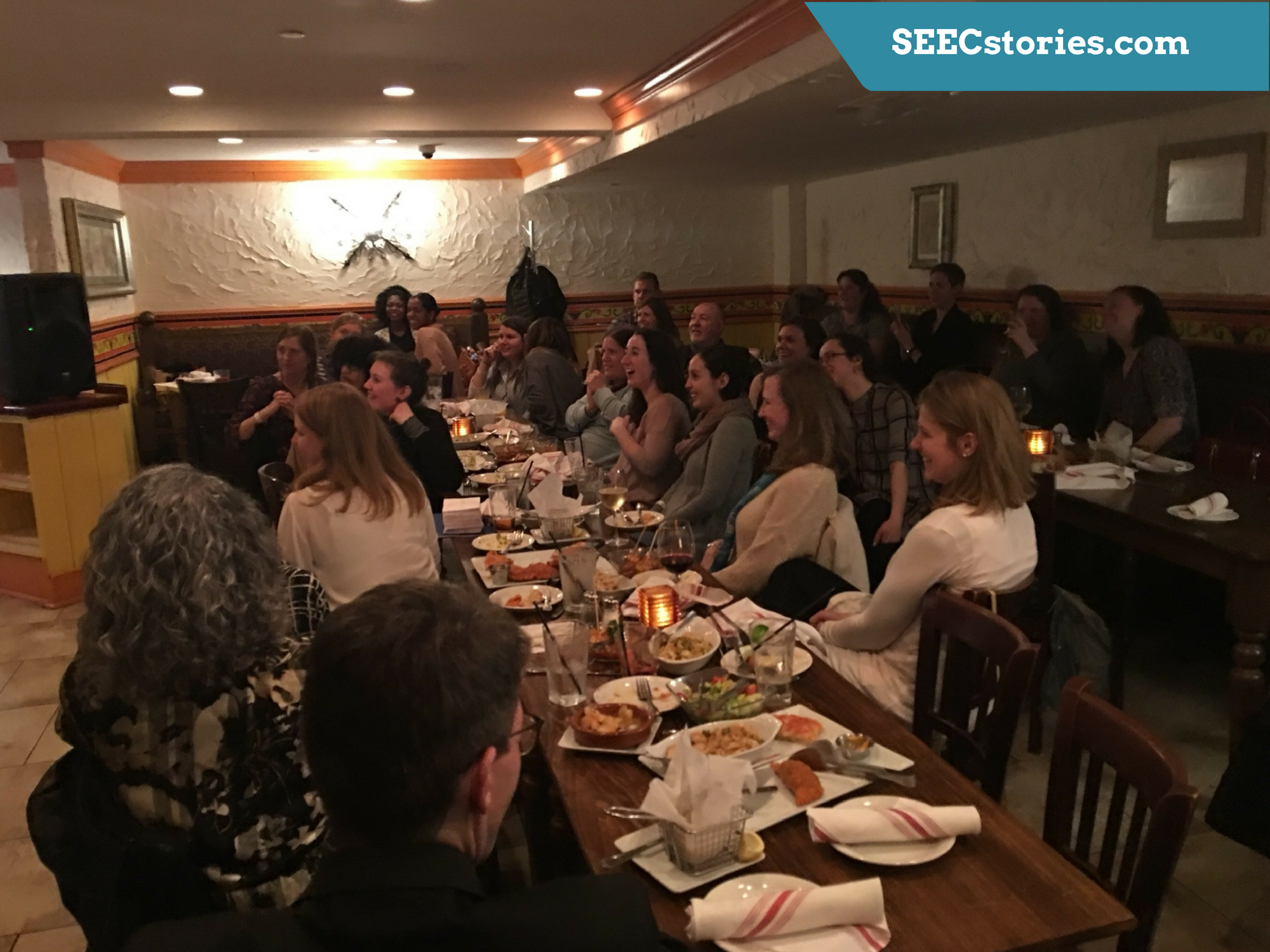
Every year, SEEC hosts a dinner in honor of its educators. This annual event takes place at a local restaurant where we enjoy food, drink, and each other’s company. In addition to the  festivities, we also use a portion of the evening to honor our faculty. This year, our center directors took a moment to individually recognize each of SEEC’s educators. Though our administrative team feels that SEEC is an amazing school because of its unique approach to learning and location on the Smithsonian campus, they also know that at the heart of this school are the amazing individuals who spend their days loving, teaching, and nurturing our students.

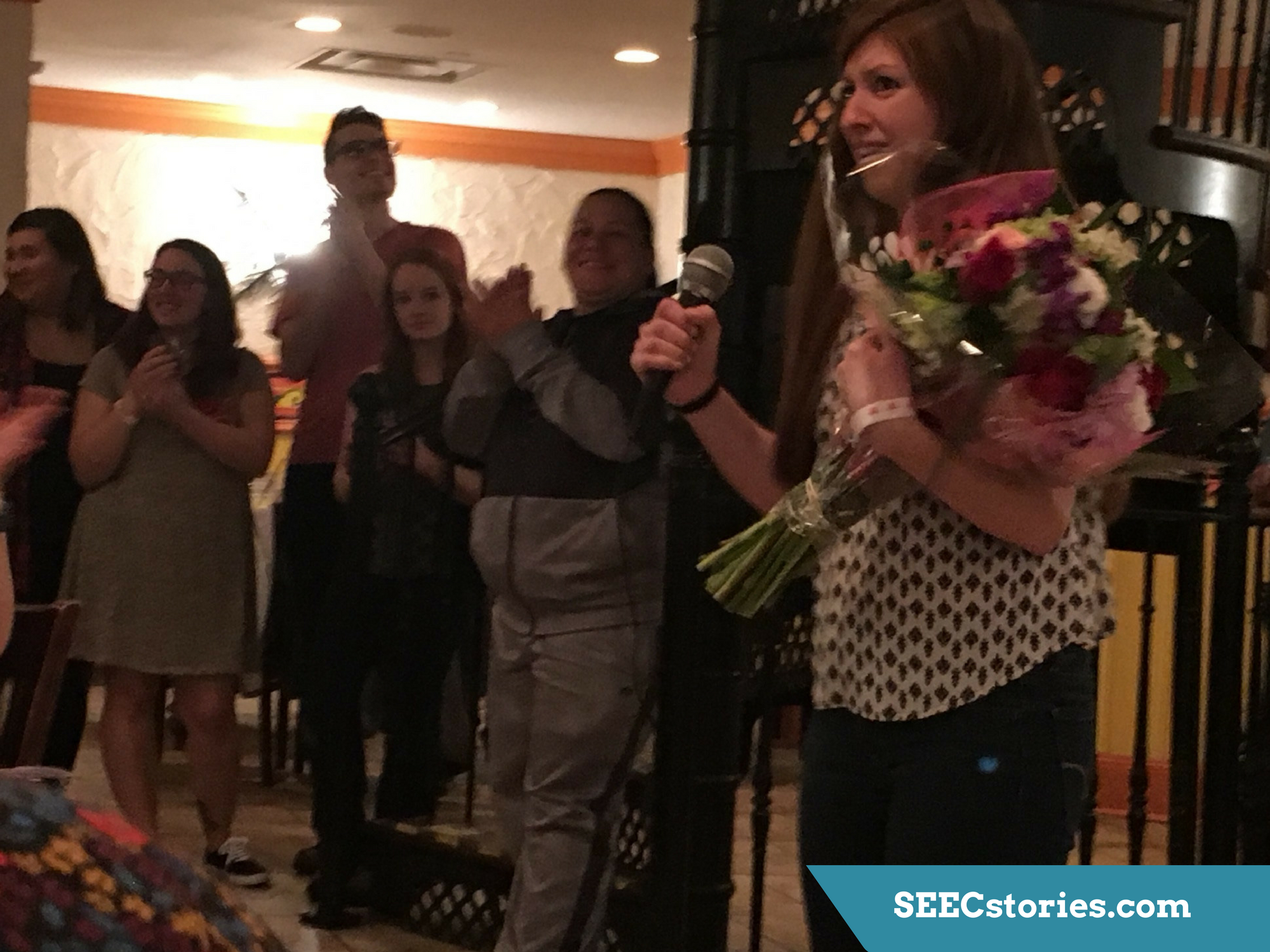
Once we concluded sharing about our team as a whole, a few special educators were singled out for their work. We began by recognizing Jessie Miller, the recipient of the Diane Homiak award. This award is a long-standing tradition at SEEC that recognizes the commitment, creativity, and contributions of a stellar educator. Jessie is an educator in one of our Pre-K 4 classrooms and has been teaching at SEEC since 2012.  She is originally from Norfolk, VA and completed her Master’s in Early Childhood Education at George Mason University in 2015. In numerous nominations from both current and former parents, as well as her colleagues, Jessie was singled out for the creativity she brings to the learning experiences she creates, her boundless enthusiasm and energy, her caring nature, and her ability to tap into the innate curiosity of her students in meaningful ways.

SEEC also  recognizes educators from each of its three centers who are team players. These educators were selected for their willingness to lend a hand, positive spirit, and for contributing to a strong sense of community.  Support educator, Dana Brightful was honored for her work at our preschool location at the American History Museum. Dana realized her passion for teaching young children while in college and has been part of the SEEC family since 2005. Silvana Oderisi, kindergarten teacher, was acknowledged for her work at one of our Natural History locations. Before joining SEEC, Silvana completed her Bachelors in French from George Mason University and taught as a Corps Member of Teach for America. Finally, an entire team from one of our infant classrooms was awarded the team player award for our second Natural History location: Rosalie Reyes, Morgan Powell, and Mallory Messersmith. This threesome truly exemplifies the spirit of SEEC.

All in all, we had more than 30 different educators that were nominated by families and peers this year. It was a difficult decision, but we are so proud of our team and are thrilled to be able to honor their hard work and dedication.

10 Things You Can Do Right Now with Your Child at the Doctor’s Office

5

You made it to the doctor on time, but now you are stuck in the waiting room! Here are a few things to help you and your child pass the time!

  1. Prep for the Appointment: Use this extra down time to help calm any pre-appointment jitters. Help your child transition by describing what will happen between now and when they enter the exam room. This is a good time to break the news about shots so they don’t come as a total surprise.3
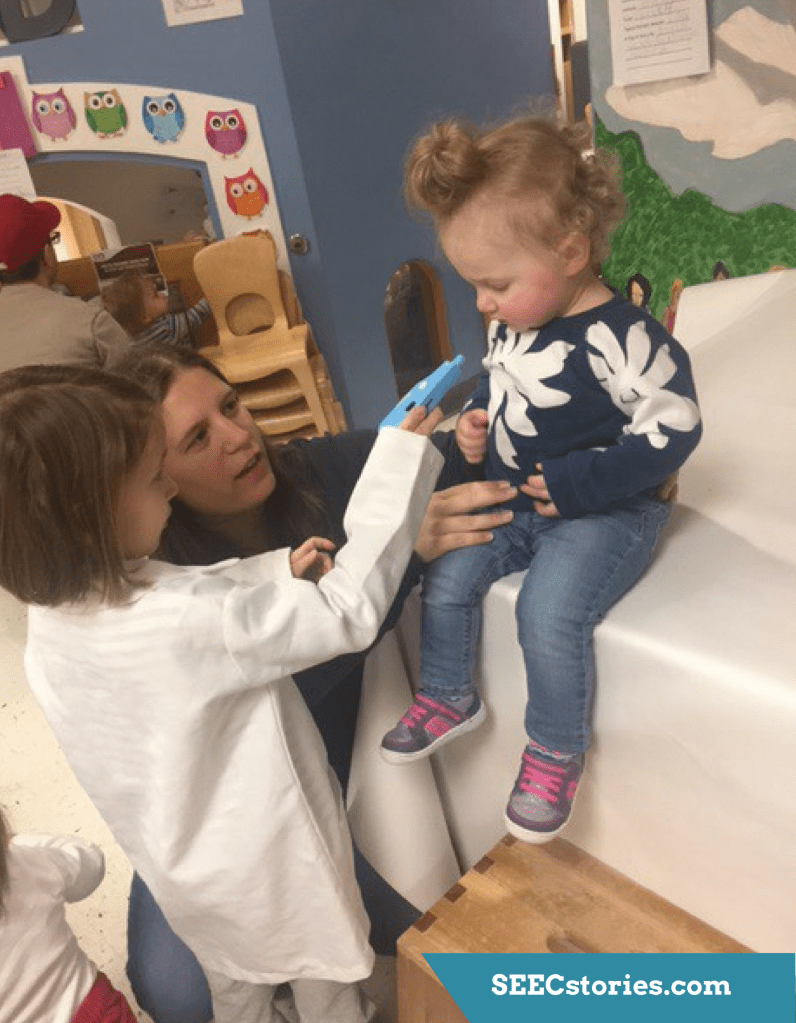
  2. Doctor Pretend Play: Allow your child a chance to pretend to be the doctor! It is a fun and easy way to have your child feel more comfortable.
  3. Magazine Collage: There are always an abundance of old magazines in the waiting room. Ask the receptionist if you can use one for an art project. Tear or borrow scissors to make a temporary collage of magazine images.
  4. Magazine Drawing: Ask the receptionist if you can use one of the older magazines as a sketch pad. Your child can add their own illustrations to the images in the magazine.
  5. Chair Exercises: Get in a little gross motor movement while sitting in the waiting room. In a seated position have your child place their palms on either side of their upper thighs and try to lift themselves up using only their arms. You can also have your child sit on the edge of their seat and have them lift their legs up and down slowly. This engages the abs and helps them build core strength. It will also test their self-control since your child’s urge will be to swing their legs back and forth quickly. You can also search for more ideas on the web using “seated exercises.”4
  6. Play Charades: Take turns miming different activities (eating ice cream, reading a book, etc.).
  7. Play Categories: Take turns selecting a topic and then work together to make a list of all the things in that category. For example, if you select the topic “Animals,” take turns listing all the animals you can think of. For an extra challenge use a letter of the alphabet as the category subject.
  8. Stack Something: No blocks in sight? Not a problem! Grab cups, pens, magazines, or even appointment cards and start building a tall tower!
  9. Practice with Zippers, Shoelaces, and Buttons: Take advantage of this quiet time by having your child practice their fine motor skills. To make it a little more exciting allow them to practice on your clothing.
  10. Write a Thank You Note: This is a simple but impactful activity! It helps the child recognize the role of the doctor as someone who helps take care of them and not someone who is scary. It also helps your child build a habit of gratitude. Who knows, it may also make your doctor’s day!

Have other great waiting room activities? Please share!

Top 5 – Elements of a Great Read-Aloud

This week’s blog is written by Silvana Oderisi. This is Silvana’s seventh year teaching kindergarten and her third year with the Smithsonian Early Enrichment Center where she is the reading teacher. Prior to joining SEEC, she spent two years as a Corps Member of Teacher for American in Tulsa, Oklahoma as well as teaching in the District of Columbia. She is passionate about reading, learning languages, and being active. 

SEECstories.com (2) - Copy

Read-alouds are my absolute favorite part of the day in my kindergarten classroom! You can often find me animatedly reading my favorite stories to my captivated students. Beyond simply reading the text, I am actively asking and answering questions to help my students infer meaning from the text. Not only do I love reading aloud to my students, I make sure to intentionally plan each and every lesson to teach the necessary skills my kindergartners need to develop their literacy and comprehension.

It is well known that reading aloud to children is great for developing early literacy skills like print awareness, one to one correspondence, and letter and sound recognition, but did you know that reading aloud to children could be the most important way to build comprehension skills? It helps young children understand what they are reading by allowing them to make connections, infer meaning, and develop higher-order thinking skills. Reading aloud is an important activity to do at home too, as research shows that children’s brain activity increases when parents or caregivers read to them.

At school, a read-aloud is a planned part of reading instruction where a teacher reads aloud to their students. It is an opportunity for a child to witness the ways a confident, expert reader approaches reading a story. It gives children the chance to hear how a fluent reader reads text with expression and excitement while allowing them to think through the various elements of a story. Most importantly, it is through read-alouds that children are able to experience the way reading can take them places through their imagination.

Here are five ways that I make my read-aloud lessons as meaningful as possible for the children in my kindergarten class.

SEECstories.com (5) - Copy

Modeling Thinking Routines

I always remember that when I am reading aloud to children, they are experiencing the many ways a fluent reader approaches text. One thing that I try to do is model my way of thinking, decoding, and making connections to a story. One great way to do this is to use thinking routines when reading aloud.  Some of my favorites are, “This reminds me of the time…” and “Have you ever…?” Although these types of thinking routines may be second nature for fluent readers, this foundational skill helps children make connections to the real world.

SEECstories.com (3) - Copy

Checking for Understanding

I have to make sure that the skills that I am teaching in my read-aloud are understood by all the children in my group. For example, a student might not be able to make inferences to a certain situation because they have no background schema to connect them to the events in the story. When I ask detailed questions, I can begin to pinpoint where the breakdown in understanding is occurring. It also helps me to glean an individual’s comprehension and understanding. Asking comprehension questions while reading aloud also engages children to think critically about the content instead of simply relying on the adult to break down everything for easy understanding. That being said, it is also important to gradually release responsibility to the child by asking questions throughout reading the text that allow them to build on skills and knowledge they have already acquired.

SEECstories.com (1)

Engagement

Who doesn’t love to see an adult dress up and get silly? This shows that adults are never too old to enjoy a good book and nurtures a lifelong love of reading. It also helps relieve tension for some children who find reading difficult by making it more fun! In my classroom, we love to incorporate dramatic play to encourage children to participate and be involved in reading.

SEECstories.com

Visuals

Children are more likely to remember the content when some type of visual is presented such as an anchor chart. Anchor charts are a great way to make thinking visible. I record strategies, processes, cues, guidelines, and other content on a chart during the learning process. Whether it is an anchor chart with pictures to help them identify the setting of a story or steps that show the moral of a story, these visuals help them to build comprehension and make further connections to the story that is being read. I also use these visual charts as a reference to help the children think about what is being read to them and formulate their answers to questions about the text.

SEECstories.com (4) - Copy

The Right Book

The single most important part of a read-aloud is making sure that I have chosen the right book! I try to choose books that are not only connected to the skills that we are working on, but that are also engaging and exciting. Whenever possible, I try to connect the book to the interests of my students. For example, my students really enjoy books written by Mo Willems, so I incorporate his books into as many of our units as possible. When we were learning about how to identify the setting of a story, we read Knuffle Bunny which takes place in Brooklyn, New York, a place that some of the students had even visited before!

Stay tuned for my list of the Top 10 Books for Kindergarten Read-Alouds!


Teacher Feature: Toddler Class Explores Setting the Table

This week’s teacher feature highlights one of our toddler classes who explored the idea of helping others by setting the table. The teachers, Lauren Bundy, Morgan Parr, and Julia Smith, had been brainstorming ways to discuss topics such as “family”, “love”, “community”, and “traditions” to help their toddlers prepare for the upcoming holidays. It occurred to them that their class could practice setting the table as way to show that they cared for each other. To experience coming together, the toddlers visited FOOD: Transforming the American Table 1950–2000 at the National Museum of American History.
Cover Photo

Preparation:

SEECstories.com (1)

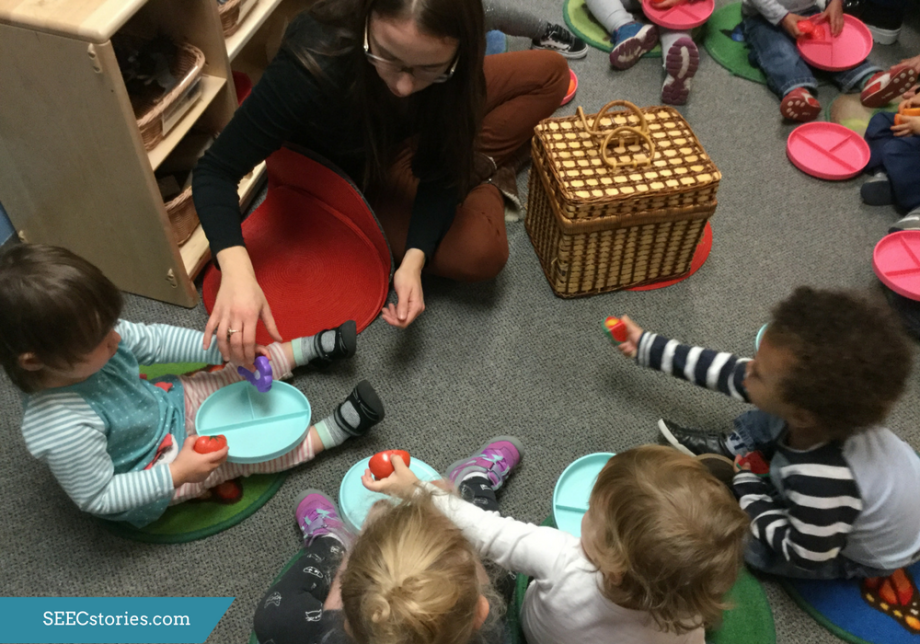
Lauren began the day by having a class circle where she showed the contents of her picnic basket. Lauren handed out the plates and requested that each child hand their plate to their neighbor. She gave clear and concise instructions and was clearly excited when each child successfully passed on their plate.

The topic of our lesson was “What brings us together?” which we explored by talking about setting and eating at the table. To prepare for the lesson, I thought about the lesson in terms of how we would incorporate the topic in our day. I thought about a circle time activity, a museum visit, and finally bringing it all together by actually carrying out the activity at meal time. Working with toddlers, I have found it to be best if we work on a lesson in small bits throughout the day, rather than at one sitting.
SEECstories.com (2)

After passing out the plates, Lauren pulled toy food from the picnic basket. Passing on the toy food proved more challenging for the toddlers, but Lauren was undeterred. She made sure that every child had at least one piece of play food before encouraging them to pass on their food. She also allowed time for the children to play with and explore the food at their own pace.

We were inspired to choose this topic because our Dragonflies love food. And they love seeing pictures of their families. We thought about the holidays and Thanksgiving and we decided to explore the idea of “What brings families together?” We hoped that our class would come away from this lesson with the idea that sharing and taking care of others can be fun. This is something that we work on throughout the year, because a big part of coming to school is learning how to get along in a group setting. We also had some more concrete objectives, which included where to put a placemat, learning to serve food, and understanding the importance of using plates while eating.

SEECstories.com (3)

The class finished their circle by singing several songs. Many of the children chose to follow Lauren’s lead and tapped their legs as they sang. Rather than collecting the toy food and plates before starting the songs, the children were encouraged to play and interact with the toys as they sang, which helped them to make connections since the song directly related to the topic at hand.

Songs are how we end every circle time. It’s a cue for them to get ready for the next part of our day and helps them retain something from the lesson.

We sing songs at every circle and always end circle with a song. These songs help the children retain information from the lesson and also act as a cue that we are going to get ready for the next part of the day. To end this circle, we sang a new song that specifically dealt with the topic. The song was called “Thank you for the food we eat” and we sang it to the tune of “London Bridge is Falling Down”.

This song was fun to sing and helped the Dragonflies learn that saying thank you can be enjoyable. We also liked that the song could be interpreted to show thankfulness for the food itself and also to thank the person whose hands helped prepare the meal.

SEECstories.com (6)

After circle, as is their normal routine, the class began to prepare for snack by washing their hands and finding their seats. To build off their normal routine, the toddlers were given the opportunity to help set the snack table. One child passed out the cups while another handed out spoons.

Having the toddlers set the table was challenging in some ways. The toddlers are working on developing their fine and gross motor skills so just physically placing the placemat was a challenge. Teaching toddlers requires a lot of scaffolding. Meaning that we work with them to help them complete task that is just beyond their reach of completing themselves.  Inviting a toddler to challenge themselves keeps their interests engaged even if you have to help them.  And letting the child engage in the challenge, helps foster a sense of independence.

For this activity, we first explained how to set the table. Then we showed them an example. Before having them set the table, we asked them to verbal describe the steps that they would take to set the table. Then finally we let them try it for themselves while providing assistance when needed.
SEECstories.com (7)

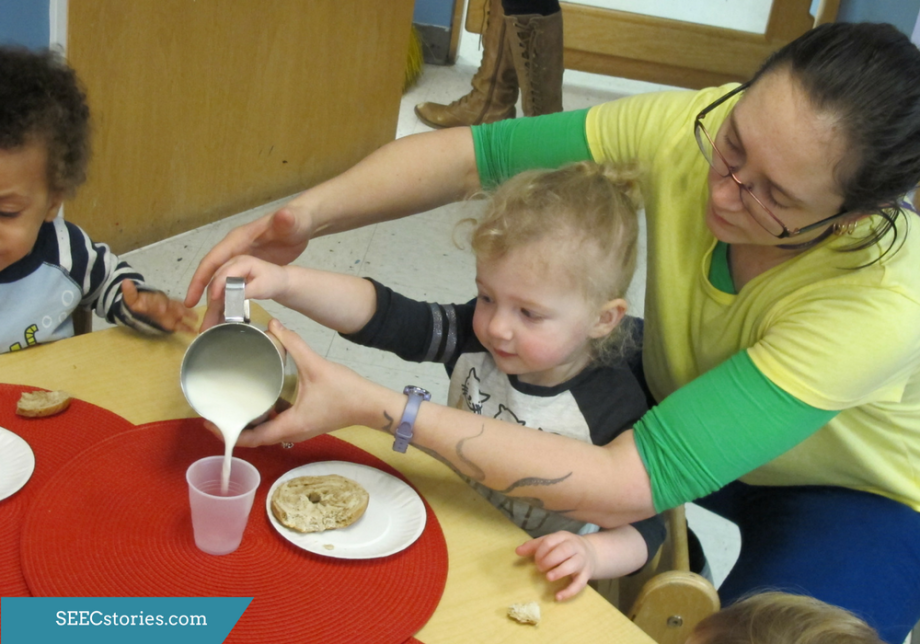
Once the table was set, the toddlers had the chance to practice some self-care skills, which allowed them to be more autonomous. They carefully scooped out cut apples onto their plate and with the help of a teacher poured milk from a pitcher into their cups.

Pouring the milk into the cup was an example of skill that our toddlers were not quite ready to do completely by themselves. We wanted them to practice this skill because the only way to learn is to practice! It can be hard to watch a child do something that you know is going to result in a mess. But we realized that cleaning up is usually not as bad as we think and even cleaning up can be a learning opportunity.

Lesson Implementation:

SEECstories.com (16)

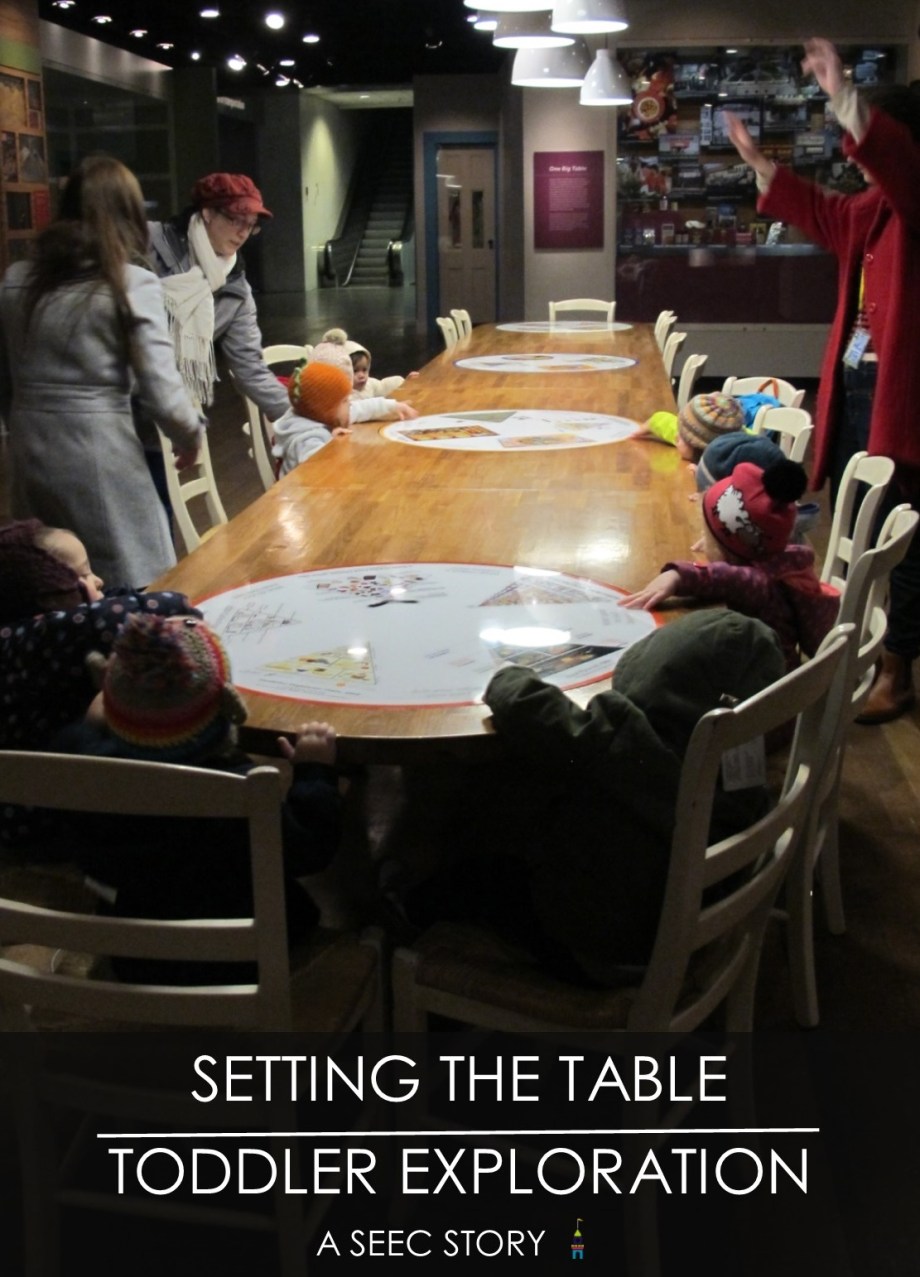
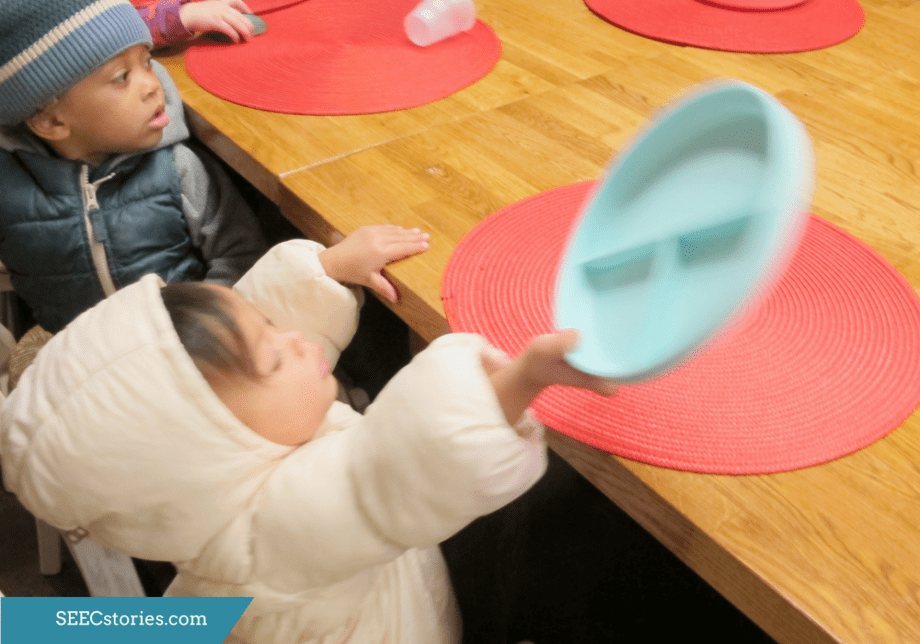
The class walked over to the National Museum of American History to sit at the large table in the FOOD exhibition. The table in FOOD was different from the classroom tables. It was very large with many white chairs surrounding it. The first challenge for the class was figuring out how to climb onto the chairs. Once up, the class was able to gaze across the table and see their classmates and teachers.

We chose to visit the National Museum of American History’s FOOD: Transforming the American Table 1950–2000 exhibit because it has a communal table where we could experience coming together. While visiting the FOOD exhibit, we gave our class the opportunity to practice setting the very large table. Our class loved visiting the exhibit and it gave them the chance to experience setting a table outside of our classroom and in the larger community.
SEECstories.com (8)

Upon getting to the large table, which is in the middle of the exhibition, the class once again practiced setting the table. Doing the task in a new setting was exciting for the toddlers. They had to learn how to navigate the new space and to use their already practiced skills on the large table.

It is always helpful to make connections outside the classroom. For this lesson, we repeated the experience of setting the table, but this time it was in a new setting. We purposefully chose to repeat the activity, because each time we repeat something we talk about it in a slightly different way, which allows our class to build more connections. While in the FOOD exhibit, the large table became the focus of our toddler’s attention. We were able to compare this large table to other tables that the class had seen elsewhere.

SEECstories.com (11)

The class then began doing what many people do when they sit at the table; they began conversing with each other. While some children talked and pointed, others listened and observed, and still others took the opportunity to play and explore. The group was able to enjoy their time together while sitting at the table.

We then sat around the table and talked. In some ways this was very similar to our snack and lunch times. We frequently sit with the kids and talk to them about their food, some element of the lesson, or just little things. However, we did focus our conservation on the large table and the experience of coming together around it.

Even though we chose to visit this table because of its large communal size, we were surprised by the size of the table compared to our toddlers. In our classroom, everything including the tables and chairs are child sized. Compared to the tables that we had just eaten snack on, this table was enormous. This extra element made it more exciting and also made it more interesting to compare and contrast. Both the toddler sized tables in our classroom and this large communal table in the exhibit were tables and yet they were drastically different from each other. We were able to enjoy our time sitting at both tables even though they were different from each other.

SEECstories.com (15)

Then the class walked by Julia Child’s Kitchen and stopped to look at her table. While carefully looking, Lauren, Morgan, and Julia led their toddlers in a discussion comparing Julia Child’s table to other tables that the class had seen. They asked, “At your home, is the table in the kitchen like Julia’s or in another room?” This helped the class discuss similarities between their homes while celebrating the differences. It allowed them to gain a better understanding of their class community.

When we stopped to look at Julia Child’s Kitchen, the toddlers noticed the things that were familiar to them like the table and chairs and plates. They also noticed many of the kitchen tools, tableware, and appliances. This was a fun experience because it was yet another table in a different context! Sometimes tables are in the kitchen!

Reflection:

SEECstories.com (13)

Before leaving the exhibit, the class paused to watch some videos of Julia Child preparing different recipes including rinsing salad greens. As they watched, Lauren, Morgan, and Julia were able to more thoroughly introduce their class to Julia Child and began discussing the ideas of preparing meals for others.

Reflecting back on this lesson, we could have done some things to simplify and avoid distractions. For example, rather than trying to set the whole table, we could have focused on putting the cups out. Once the children mastered that task, we could have added passing out a different item like plates. We also found that the plastic food was quite noisy when it dropped to the ground at the FOOD exhibit. It might have been better to bring stuffed or felt food with us to the museum.

SEECstories.com (17)

When the class had completed the lesson, each child had the opportunity to help another child. Many helped to set the various tables and others helped to pass out food. The children experienced the challenge of passing on something that they valued and would have liked to keep for themselves, but with the support of their teachers, Lauren, Morgan, and Julia, all were able to be successful at the various tasks.

Since we finished this lesson, our toddlers have been setting their own table during snack times. We now choose one child to help us pass out each item (cups, plates, and utensils). Since they have responded so well to this, we have continued to practice pouring. Now at snack time, we give each child a small pitcher with milk or water to pour into their own cup. We also have them scoop out a small amount of fruit for themselves with a spoon. They love being able to have the independence of getting their own sustenance. Most of them are able to pour and scoop their own drink and food without any mess at all; even with those who have a little spill, it’s minimal. And this gives us an opportunity to allow them to use a washcloth to clean up.

10 Ways to Make your House as Cool as a Children’s Museum

10 Ways to Make your House as Cool as a Children’s Museum!

When a child enters a Children’s Museum, they immediately understand that the space is for them! How? Objects are presented low to the ground, the exhibits are large and colorful, and there are hardly any barriers to prevent them from getting “hands-on.” A children’s museum’s first priority is the learning encounters of the visitor, not on the preservation and protection of the objects. While this means that children’s museums have few, if any, “museum quality” objects, they do present endless hands-on learning opportunities for young visitors.

www.SEECstories.com.png

Explore! with the National Portrait Gallery – A gallery space dedicated to children.

The common mission in exhibition design for a children’s museum is to create child-centric informal learning spaces. While the themes and subjects may differ, they tend to be large-scale interactive displays that allow children to conduct imaginative play.

You may be saying, “This all sounds great, but I don’t have a children’s museum nearby!” No problem! Here are a few simple ideas adapted from actual children’s museums that can be integrated easily into your home. Remember to embrace the children’s museum philosophy of bigger is better. Large scale spaces for your child to act out their play scenarios are ultimately what makes these museums so magical. You will soon be 10 steps closer to making your home as cool as a children’s museum!

www.SEECstories.com (1)

  1. Large-Scale Light Board

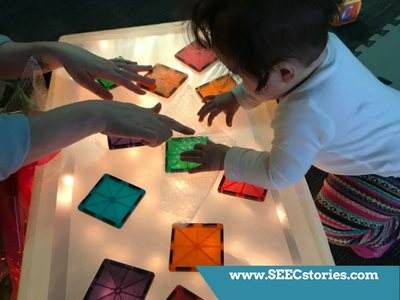
Many children’s museums include a space for light play. Remember the small light up peg board of your childhood? Many children’s museums have super-sized it. While you might not have an exhibition crew to build one for you, you can easily DIY this project! Place a large wine rack in front of your largest window. Next transform water bottles into colorful pegs by putting a few drops of food coloring into the bottle. Then watch as your child spends hours creating patterns and designs while also working on their spatial relations and fine motor skills! No large window? Can’t find a large wine rack? No problem. You can also create your own light table by placing some rope lights in a large storage bin (pro tip: Use a battery-operated strand of lights so you don’t have to plug in the bin. This makes it easy to store and move around to different areas of your house.) While this doesn’t have quite the same “wow factor” it will still be great fun and it can be used with a variety of objects. They will have a great time experimenting with how the light can move through or around various objects.

  1. Water Table

The “splash zone” is always a big draw at a children’s museum. As it should be! Playing with water not only inside, but in a museum? Unheard of! Children’s museums also spice up the water play by creating large scale waterways and adding pumps, fountains, and challenges to the water basin. While building a roaring river in your house is probably out of the budget, try using a large under-the-bed storage tub as your water table. Make sure it is at your child’s standing height. This will prolong their play since they won’t be uncomfortably crouching over the tub and it also invites them to move around the table as they play. You, your child, and the space around you will get wet, so place the tub in an appropriate area. Water tables can be filled with standard boats and buckets but try including things to challenge their play and encourage problem solving. For example, provide toy people and blocks and suggest that the people need to make it across the water without getting wet. Another challenge is to ask your child to create a water path for a boat so that it goes directly from one side of the table to the other. The best part about this table is that the options are endless and can be switched easily to suite your child’s interests!

  1. Grocery Store in Your Kitchen

There is something magical about the grocery store space in a children’s museum. It is often the most popular exhibit in the museum. This is because children love acting out adult scenarios and large-scale spaces in these museums make it feel even more real, rather than just pretend. Recreate this in your own kitchen by keeping clean and sturdy food containers on low shelves for your child to “shop for.” Enhance play by purchasing a small grocery cart or basket and including a checkout lane with a small cash register. Want to get your child involved during dinner prep? Have them “shop” in your kitchen for the ingredients you will need for the recipe. This will also help them understand the value of these items and in turn may make them a bit less wasteful at dinner.

www.SEECstories.com (2).png

  1. Tent/Camping Inside

By changing how a space looks you can inspire a whole different type of play for your child. Children’s museums achieve this is many different ways. For example, they might make a forest or even build a car repair shop. For a more budget-friendly option, bring your camping tent inside. Set up a faux fire with logs, battery candles, and tissue paper. Only use lanterns to light the room and turn on nature sounds. For added fun let your child sleep in a sleeping bag and adhere glow in the dark stars to your ceiling for star gazing. Your children will love having a new space and context for their imaginary play!

www.SEECstories.com (3)

  1. Tracks and Roads

Many museums include large train track tables that allow a child to continue building without limits. Why not spend the day doing the same and install train tracks or roads with your child throughout your house? Don’t have enough actual tracks? Draw them! Your child will have a great time problem solving how to get over, under, and through furniture!

www.SEECstories.com (5).png

  1. Obstacle Course

Big play is an essential in children’s museums. These often include complicated and expensive play structures that would be impossible to integrate in your home. Instead, create an indoor obstacle course. At SEEC, we often will have obstacle courses than span several classrooms and require the children to practice controlled gross motor movements. Try including tunnels to crawl through, a beam or piece of wood to balance on, hoops to hop in, and a big pillow pile at the end for a safe tumbling space!

  1. Jumbo Blocks: Supersize them!

Large foam blocks are awesome but expensive! They allow your child to actually turn their imaginative structures into 3D life sized forms. As an alternative, upcycle boxes from your recent online orders or stop by a local store to ask for unwanted boxes. Tape down any flaps and let your child’s imagination go wild!

  1. Pipes, Funnels, and Tubes! Oh My!

You can often find large systems of tubes and pipes for your child to build and connect in these museums. These serve as a nice change to traditional block building materials. A quick trip to the hardware store will let you recreate a version of this in your home! Challenge your child by asking them to try and get a small ball from one end of their structure to the other or turn the tubes into musical instruments by providing your child with a stick or small mallet (like the blue man group). Experiment with different lengths to see how the sound changes.

  1. Fan fun!

In some children’s museums, you will find an exhibit exploring the power of air. There are several ways to do this at home. Use a leaf blower to explore which things are light enough to blow away and which things are too heavy. You could also do the same experiment with a large fan. This is a great way to expose your child early to the scientific method. Ask them to ask a question: will X float? Make a prediction aka hypothesis: X will not float and then try their experiment. You could even ask your child to revise their experiment: will X float with less air?

www.SEECstories.com (4).png

  1. Mini Museum

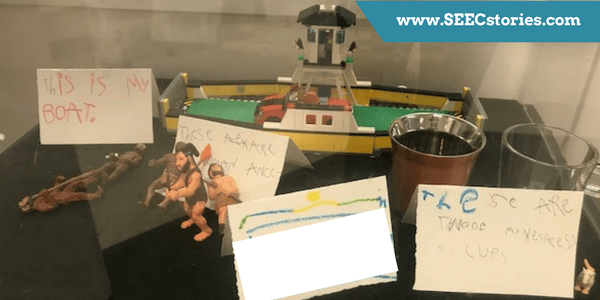
Create your own mini museum at the house out of a collection you already own. Does your child love super hero toys? Why not display them in a prominent place in your home and invite your child to work with you to make small labels! They will love seeing their objects honored in a special display and are sure to love giving “tours” to all the visitors in your home.


Changes: Facing the Strange at the Smithsonian American Art Museum

This week’s blog is written by Phoebe Cos.  Phoebe is a support educator at the Smithsonian Early Enrichment Center. She spends most of her time working with the three and four-year-old classes at the National Museum of American History campus.


“Cha-cha-cha-cha-changes. Turn and face the strange.” – David Bowie

Changes. Life is full of them starting from the day one comes into the world. With life experience that they carry with them, young children encounter change on a whirlwind level with a swirl of mixed feelings that can be hard to unpack. Eating solid food for the first time, entering a new classroom, losing teeth, meeting a new sibling, all have conflicting joys and concerns that accompany them. Although it sometimes feels uncomfortable, having direct conversations about change in children’s lives can help young minds “turn and face the strange,” in the words of David Bowie. The strangeness of change is bound to be much less scary if you have been presented with the space to talk about your fears and given the tools to face uncertainties.

2

My first experience crafting a lesson specifically on life changes was last May while working with one of the pre-kindergarten classes at SEEC. It was the end of the school year and many of the children in the class were leaving the school they had attended since they were infants. Mixed emotions filled the classrooms. In an attempt to unpack and reflect on the change that was about to take place as our students moved onto kindergarten, I took the class to the Smithsonian American Art Museum. The children were familiar with the Smithsonian American Art Museum, as it is one of the many museums we visit often in our daily museum visits around the National Mall. At SEEC, we use objects to discuss and learn as we explore galleries and cultural spaces around Washington, DC. An object, image, song or texture can be a great way to engage children in a complex conversation, as both adults and the children encounter the space with a shared point of entry.

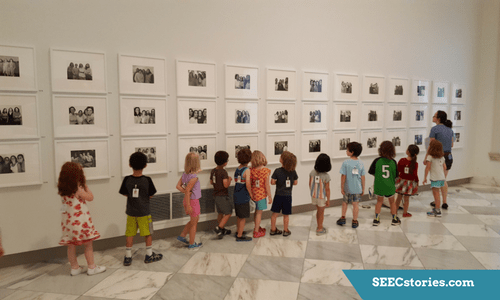
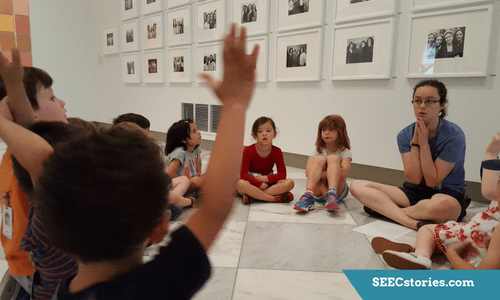
In this case, I chose the collection of photographs entitled The Brown Sisters by Nicholas Nixon, which documents the images of the photographer’s wife and her three sisters over forty years. We began the lesson talking about portraits and why people get their portraits taken. Then, in a single file line we slowly looked at the pictures. “What do you see?” I asked, broadly opening up the floor, unsure myself at what they might have picked up on. Many hands go up.

1

“I see a bunch of girls over there,” one four-year-old said pointing to the early photos on the left.

“There are old ladies over there,” another child said pointing to the right side.

“How do you know they are old?” I asked.

“Because they have gray hair,” the child answered. “That means they are going to die soon.” This led to an outbreak of conversations and a few tears from children who worried that their loved ones were going to die because of their hair color. My colleague and I assured them that while hair color can determine age, it doesn’t determine death. We named multiple people in our school community with gray hair that were healthy adults.

After this period of analysis, I told the class the women in all of the pictures were the same; that they were four sisters. “How are the pictures of them different?” I asked.

“They look like they are at the beach. Though they look like they are in the country in that picture” a five-year-old observed. We talked about why they might be in different places.

“They look further away in that photograph,” a four-year-old observed. “Maybe she’s mad at her sister.” With each observation, children used their cognitive reasoning to build connections on how these women’s lives changed overtime.

What tools did this exercise provide for the children as they were grappling with their changing identity as they moved from being preschoolers to kindergarteners? By reflecting on the sisters’ changes, the children were ready to look analytically at their own past and the physical changes they had gone through over the last year, or for those at SEEC, from infancy. I passed out the youngest photograph of each child that I could find in their portfolio, a binder full of projects and developmental write-ups that follow each child throughout their time at SEEC (for more on these portfolios, look below). These photographs provided a tangible layer to their experience. Next, I placed a mirror next to each child. Then, I asked everyone to hold up both the picture and the mirror and compare what they saw. “My cheeks are less puffy. They have kind of flattened out,” one four-year-old observed.

“My hair is more blonder here,” another four-year-old boy stated, pointing to a picture of his two-year-old self, surprised that his own hair color had changed. “And [my baby brother] now wears those shoes. My feet won’t fit them.” Children were picking up on their own signs of aging. It was at this point that I told the children that although they might not feel ready or old enough for kindergarten, they had all changed in many ways over the past year. My colleague and I assured them that we had seen them grow over the school year and that their bodies and minds were ready for all the things to come in a new school. Sometimes to face change, you need to see and hear that you are ready for the change to come.

3

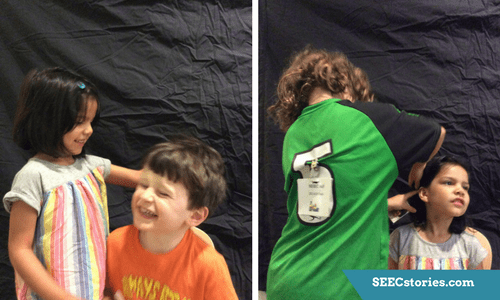
Later in the day, a dramatic play “photo studio” was set up where children had the option of trying to replicate these photos of their younger selves. Children used their analytical and language skills to position each other to match the photograph, while remarking on changes to their classmates’ physical appearances, like shorter hair or lost teeth. By discussing these changes through play, children were able to share their fears and excitement in a social setting with their peers.

Over the course of the next year, we will delve deeper into specific life changes and how to discuss them with children. From transitioning out of diapers and into underwear, to talking about death, to moving to a new house, we look forward to sharing our ideas and stories with you, and hearing about your successes and challenges in explaining and discovering this constantly changing world with young children.


Portfolio Close Up:

CORNER TAB.jpg

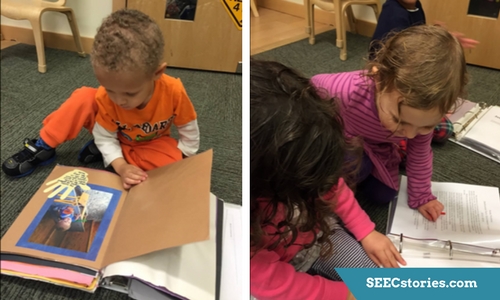
When a child enters SEEC, their teachers create a portfolio that follows their journey throughout their time at the school. The portfolio consists of a binder that contains artwork, photographs and anecdotes by teachers that document the development of the child over time. The children love to look through their portfolios with peers, sharing about past experiences, and self-reflecting on their young lives. Portfolios serve as a tangible representation of how a child has grown and changed over the years.