Teacher Feature: Infant Classroom Explores Mail

It’s Teacher Feature Thursday!

This week we are featuring Jill Manasco. Her infant class was learning about communication and decided to spend time learning about mail. Below you will find a reflection from Jill and images from her lesson.

Mail_Cover

What were your topics of exploration?:

Our topic of exploration was mail/communication/writing letters. We looked at the different types of mail like magazines, letters, bills etc. We also talked about where our mail comes from and how it gets from place to place.

What were your learning objectives? (What did you want your children to take away from the lesson?):

I wanted them to see where our mail comes from and how it gets to other people. Also, I wanted them to see what kinds of things are sent and received through the mail.

What was most successful about your lesson?:

Our trips to the post office and NH mail room were the most successful things about our lesson. They enjoyed mailing a letter to our friend Emerson and also picking mail up for the school.

What could you have done differently? What recommendations would you have for another teacher trying out this lesson?:

The entrances to the post office were tricky for us since we are in buggies. The doors were not automatic and they were really hard to open but with an older group that would not be a problem.

Here are a few images from their unit on mail:

DSCN2721The group got all bundled up and headed straight to the post office for their lesson!

DSCN2725Earlier in the week the group worked together to write a letter to a friend who had moved. Jill showed the class the mailbox where they were going to drop off the letter but explained that they needed stamps to make sure it got all the way to their friend in a different state!
DSCN2731In the post office, they stopped to check out some of the boxes where people get mail.

DSCN2737Jill showed and re-read the note to the group.

DSCN2742

DSCN2748She invited each child to help participate in the mailing process. Above a child is adding the letter to the envelope and below he is helping to seal it up!

DSCN2755Then it was time for Jill to weigh the letter and purchase the postage. Jill narrated the whole process to the friends.

DSCN2761Last step was the postage! This little boy loved how sticky it was!

DSCN2767Then it was time to mail the letter! When the letter arrived at its location the group was able to Skype with the recipient and see how their letter had traveled all the way to her.

This class had a wonderful time learning about communication! Be sure to check back for our Teacher Feature next week!

Teacher Feature: Three Year Old Classroom Explores Eric Carle

It’s Teacher Feature Thursday!

This week we are featuring Laura Muniz. This three year old classroom was learning about Eric Carl and Laura decided to spend a week focusing on the animals featured in his books. Below you will find a reflection from Laura and images from her lesson.

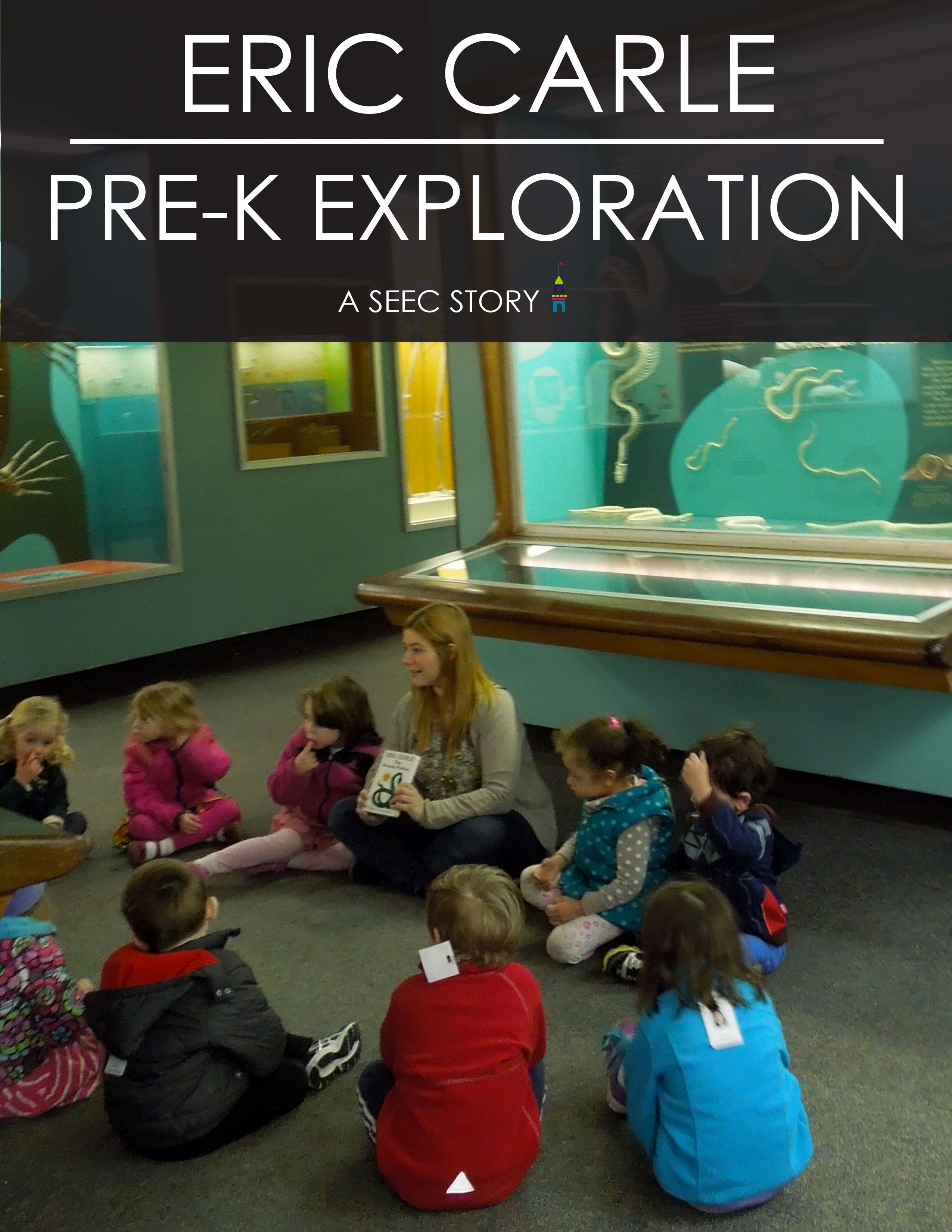
Carle_Cover

What were your topics of exploration?

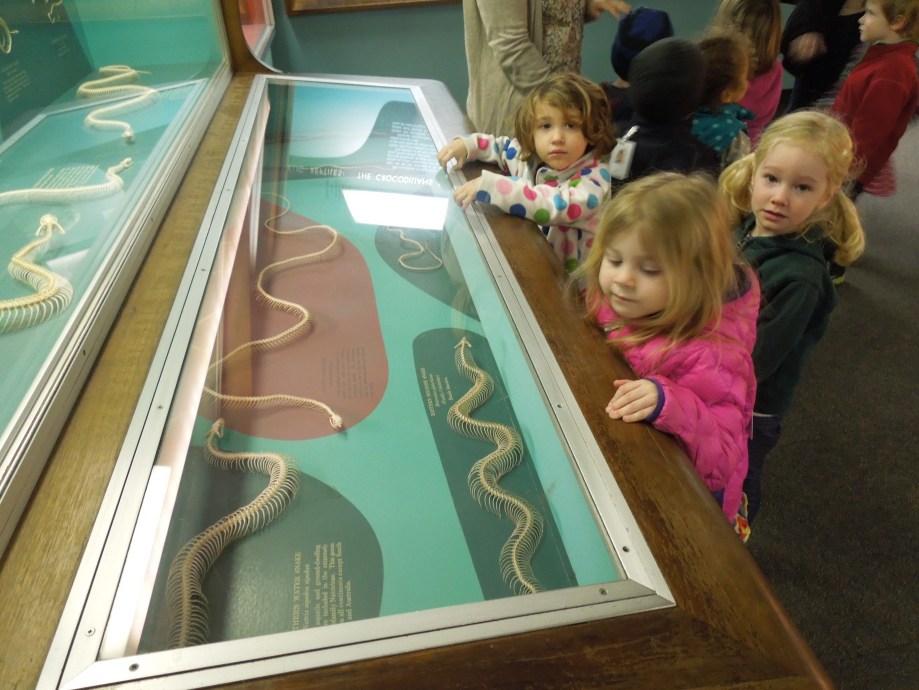
Some of Eric Carle’s books talk about animals, what they see and what they hear, so we decided to explore animal senses.  For this lesson we wanted to focus on snakes and how they use their tongues to smell.  We went to the Bone Hall at The National Museum of Natural History and checked out some cool snake bones.  We also read Eric Carle’s The Greedy Python.

What were your learning objectives? (What did you want your children to take away from the lesson?)

I wanted the children to learn that animals sometimes experience things differently than humans.  On this day, I wanted to emphasize the distinction between our sense of smell and taste and that of a snake’s.

What was most successful about your lesson?

I think the most successful part of the lesson was the game we played with the small jars with scented cotton balls inside. The kids took turns using their nose to smell, trying to guess what the “mystery scent” was.  They then stuck out their tongues, the way a snake would, to see if they could smell with their tongues.  The activity not only allowed the kids to engage with the lesson, it was also lots of fun!

What could you have done differently? What recommendations would you have for another teacher trying out this lesson?

We were talking about snakes, so naturally we went to the Bone Hall to check out some snakes and other reptile bones.  Unfortunately, the space in the Bone Hall is a little awkward because it is a popular thorough fare to other exhibits. I feel like I could have also done this lesson outdoors or even at the Zoo.


Here are a few images from their unit on snakes:

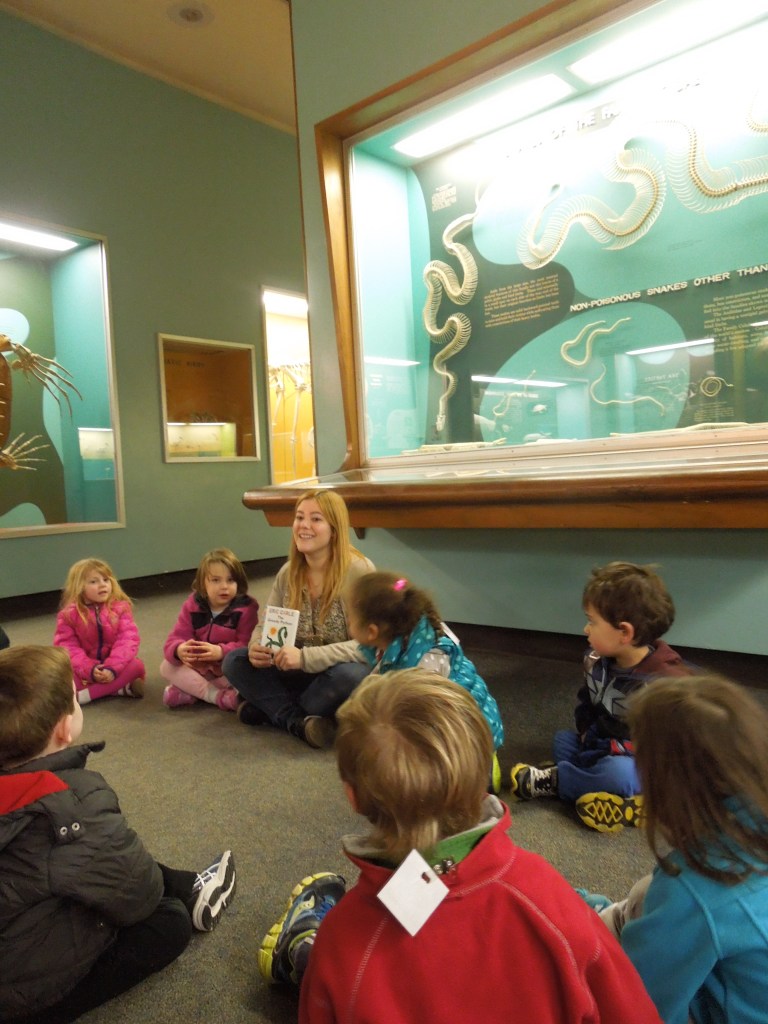
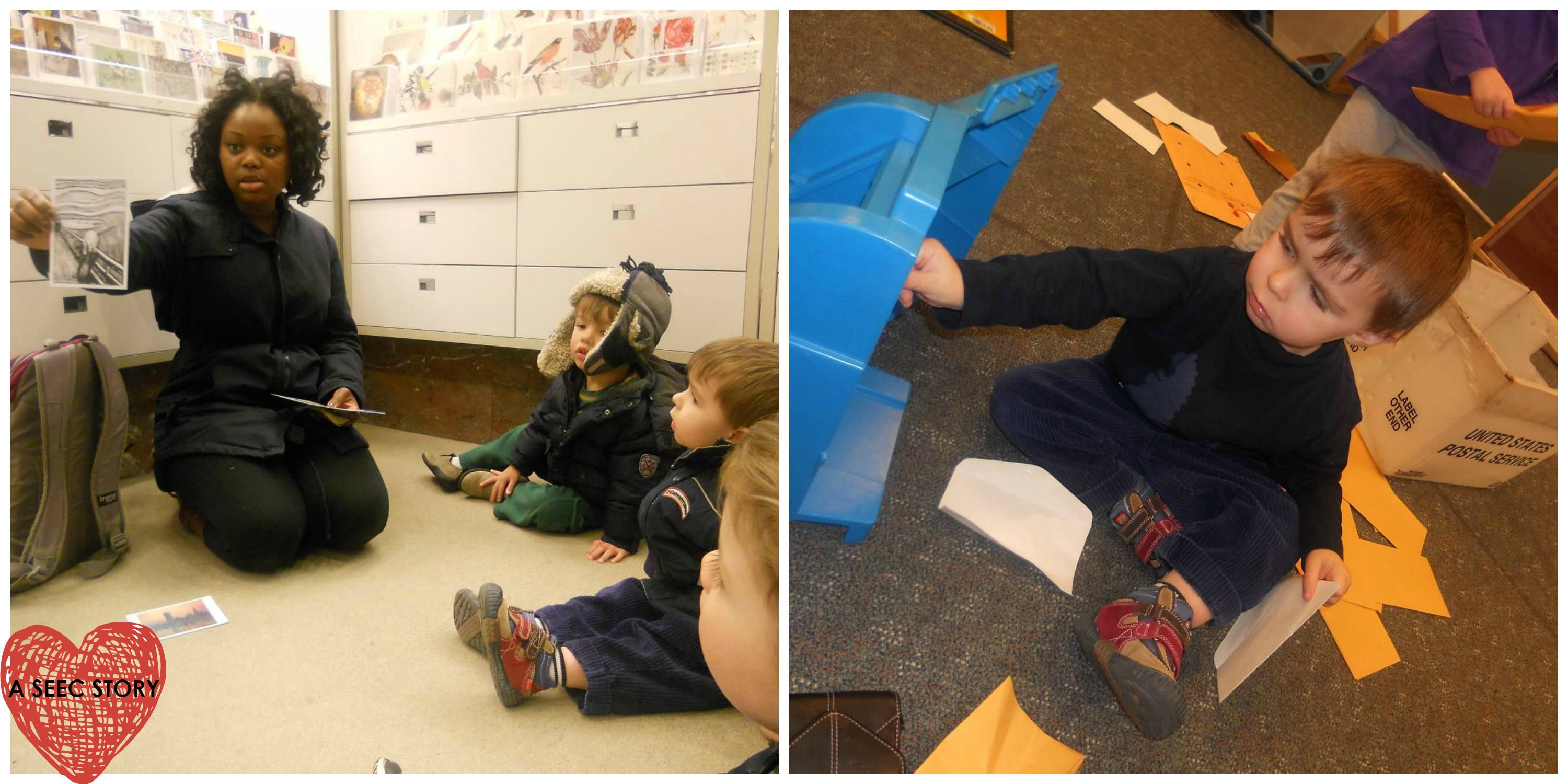
DSCN2424Laura began her lesson at the National Museum of Natural History. She read Eric Carle’s The Greedy Python and asked the group about what they knew about snakes. Laura then asked the group to compare the image of the snake in the book to the ones in the case explaining that we were seeing the skeleton of a snake.

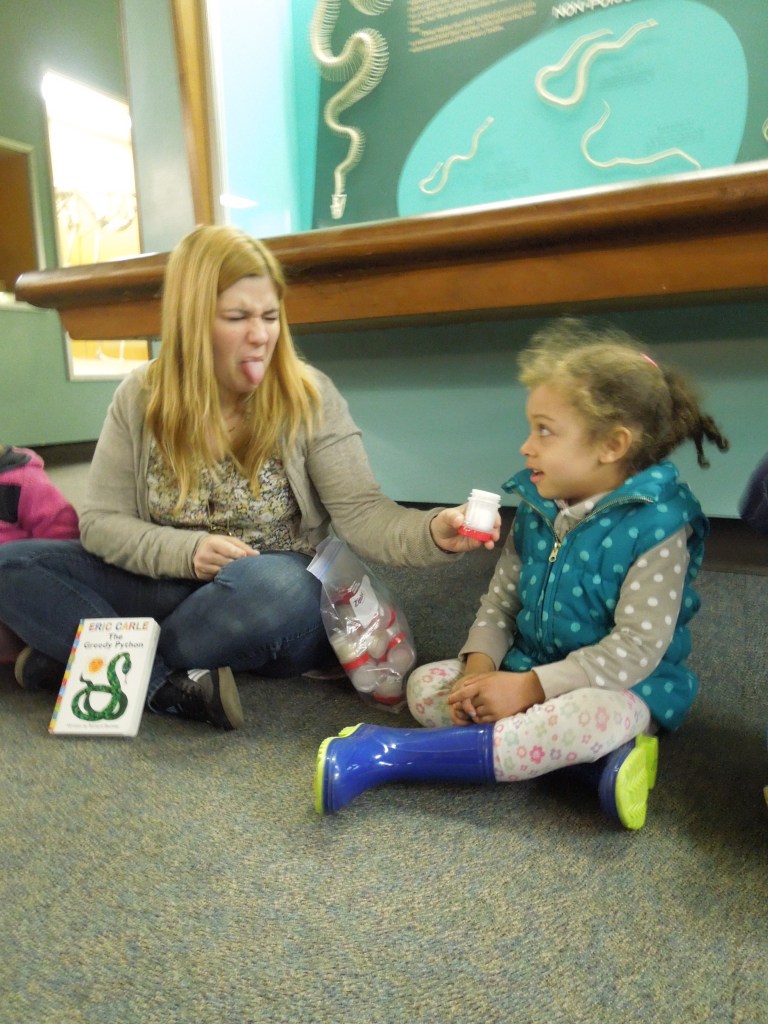
DSCN2432Laura then asked the group what part of our body we use to smell. The group was quick to respond and Laura followed up by asking about the snake’s sense of smell. She explained that snakes use their tongues to taste the air around them instead of smelling with a nose.

DSCN2434Laura invited friends to try smelling the bottles first with their nose and then with their tongue.

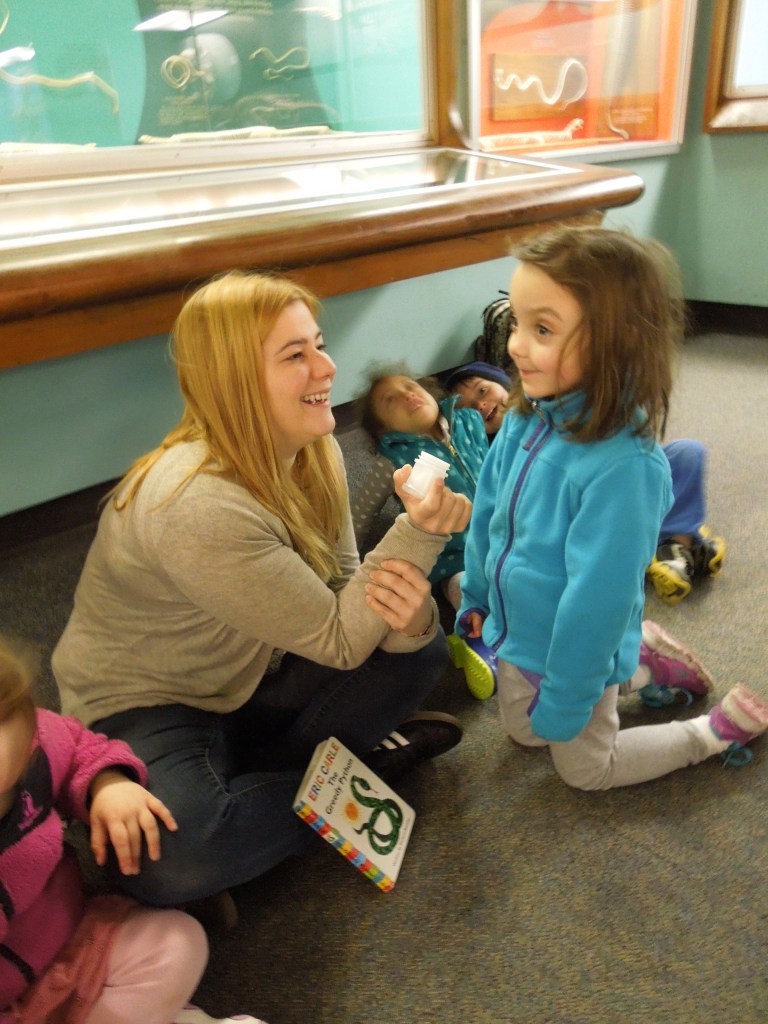
DSCN2439Laura added the extra challenge of having the children try to guess the scent in the bottle. They had such a great time working together to try and figure out the scents!

DSCN2455Before heading back to the classroom, Laura invited the friends to take a closer look at the skeletons. They compare the different sizes of the snakes and their bones.

This class had a wonderful time learning about Eric Carle! Be sure to check back for our Teacher Feature next week!

Springtime Fun: Full STEAM Ahead

Parent as Teacher_MG_0715_72dp_webi

It has been a long time coming, but spring is finally here and it is the perfect time to introduce your child to some of the changes that are occurring right in front of their eyes. I recently did a lesson on clouds for a family workshop and that, coupled with, some fantastic lessons from my fellow teachers was the inspiration for this blog. These ideas are a blend of natural observation, art, science and museum visits and have all the components of STEAM. STEAM is a popular and important educational movement, which advocates for using science, technology, engineering, art, and math as a means through which children can learn and develop critical thinking skills.

Parents, remember you are your child’s teacher too. When you teach them you are expanding their world,  sharing your interests and bonding. Don’t feel like you have to be a Pinterest guru and spend hours developing a lesson or buying materials. Instead, keep it simple and have fun by using ideas that are easily accessible and follow your own interests.

Clouds and Rain

Natural Observation

  • Walk outside during a light rain and enjoy the feeling of the water or notice the water droplets on the leaves.
  • Feel the ground after a rainstorm and notice the difference in texture and weight when it’s wet.
  • Notice how the sidewalk changes color after its wet.
  • Take a picnic to a nearby park and spend time observing the clouds. Look for shapes and movement.

Science Experimentfile (7)

  • Fill a cup with water and top it off with shaving cream. Add food coloring. Eventually the food coloring will begin to fall when the shaving cream is too full, just like rain falls when a cloud is too full of water.
  • For infants and toddlers, they will enjoy watching the color and might not understand the concept of the cloud, it will help them understand from where rain comes.  Consider using different colors and having fun with it.

Literacy

  • Eric Carle’s The Cloud works well for infants through preschoolers. When you are reading to your child, remember to include them in the book too. In this book, for example, you could ask them what sounds a sheep makes or encourage them to move their arms like a wave when the cloud passes over the ocean in the story.
file (9)

3-year-olds at the National Gallery of Art

Museum Visit

  • Choose a straightforward piece like Ships in Distress of a Rocky Coast by Ludolf Backhuysen at the National Gallery of Art and bring a few simple scarves to reenact the wind from the storm.
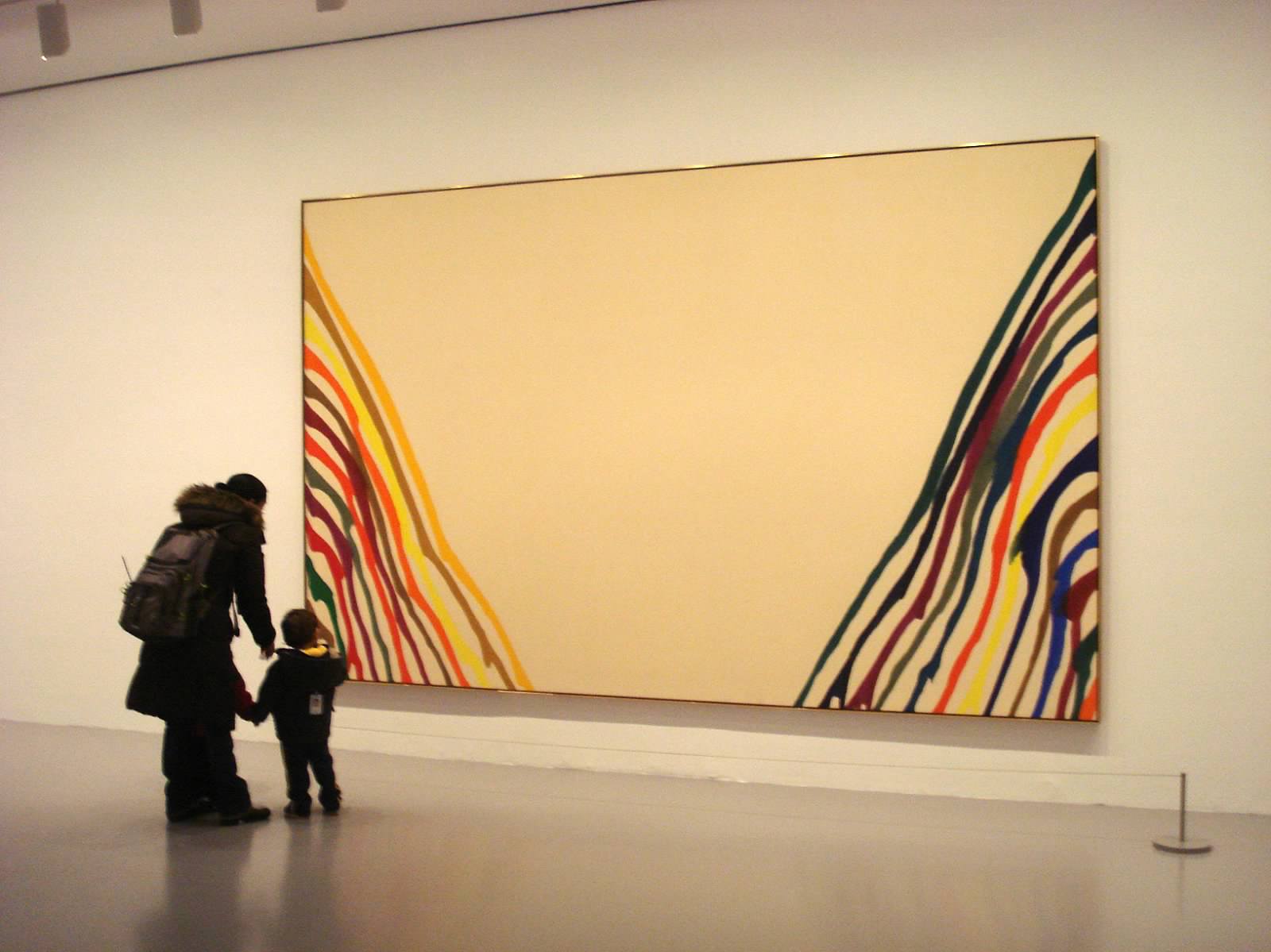
  • Choose something more imaginative like the Dangerous Logic of Wooing by Ernesto Neto at the Hirshhorn Museum and Sculpture Garden. We made  tactile clouds by filling white nylons with marshmallows. Even the adults loved them.
  • Don’t live in DC? Visit your local museum or explore these pieces online with your child–that is some worthwhile screen time.

Art Project

  • Make your own clouds with blue construction paper, cotton balls and glue.
  • Make umbrellas using a half paper plate and Popsicle stick. We used do-a-dot markers to decorate them. These are not messy and the perfect size for older infants and toddlers to use.

Gardening

Now that you have had some fun with clouds and rain, your child might be interested in other, related topics. Here are a few more ideas!

Natural Observationfile (1)

  • Get out the sand toys and play in the dirt. If you want to keep things a little neater, you can always grab a large tub and fill it with dirt. I find that a little goes a long way. The sensory experience will give infants and toddlers the chance to experience different textures and to practice filling and dumping.
  • Preschoolers might enjoy the opportunity to plant a few seeds and watch the outcome of their efforts. Not only will they see the physical changes that will occur, but they will likely take ownership and pride in their planting.

Museum Visit

  • Local gardens are everywhere! Even if you just visit a neighbor’s garden.
  • Visit a farmer’s market.
  • My top DMV choices are: the Victory Garden at the National Museum of American History, the US Botanical Gardens and Brookside Gardens in Silver Spring

Fun in the Kitchen_SAM0126

  • Use this chocolaty recipe for making dirt and include some gummy worms for added realism. The kitchen is a great place for a young child to learn because of the countless learning and developmental opportunities like: math – sorting, counting measuring, fine motor skills – pouring, stirring, sensory input, practice working together and following directions.

Literacy

  • Lois Ehlert’s books Eating the Alphabet or Planting a Rainbow.
  • Flower Garden by Eve Bunting and Kathleen Hewitt

Keep visiting us for more ideas. Enjoy your time together and the beautiful spring weather.


7 Valentine’s Day Ideas for your Classroom

Valentine’s Day

Here at SEEC we are often looking for new ways to approach the holidays. We never like to miss a teachable moment! Here are few lesson plan ideas from our classrooms to help take your Valentine’s Day beyond heart shaped treats and doilies.

Collage:

Have your group practice their scissor and folding skills by spending a few days on collage. Matisse and Bearden are two artists who have wonderful examples to share with the class. Having the children cut out hearts and work together to create a large class mural for their celebration is a great way to connect the topic to Valentine’s Day. Collage


Baking:

Baking or cooking are always popular activities for any age group and provide an excellent STEM connection. This group of toddlers mixed their ingredients in a plastic bag to help keep things contained and sanitary. It provided an excellent fine motor and sensory experience. Have your class cook up a treat for your Valentine’s day celebration or send them home as a gift to share with their families.

Cookie Collage


Red Exploration:

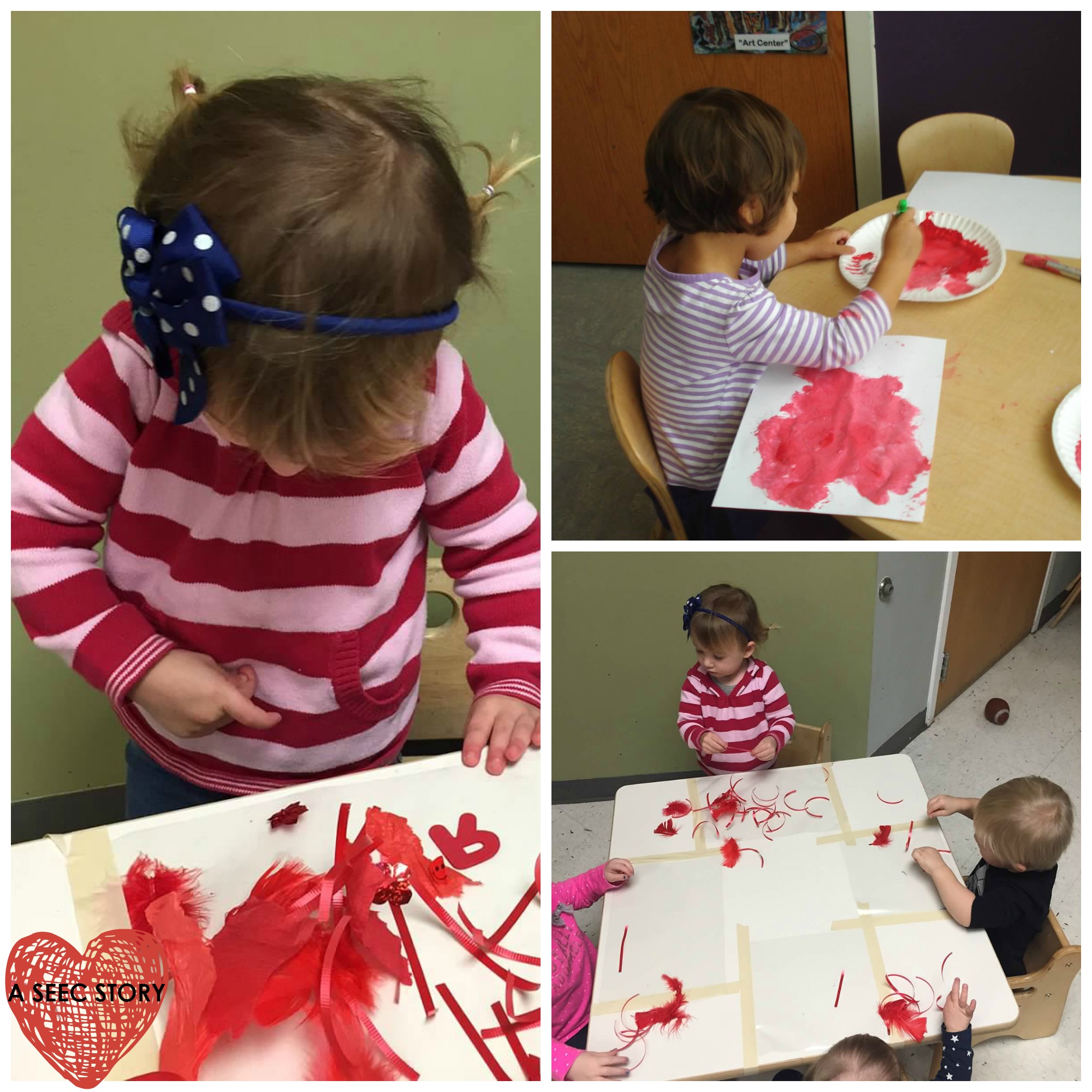
Red, Pink, and White are colors synonymous with Valentine’s Day. Spend some time going on a color hunt in your classroom or community and then return to your classroom to do some color sorting. You can have the children create artworks with only those colors or have some fun color mixing.

Red

The Tin Man:

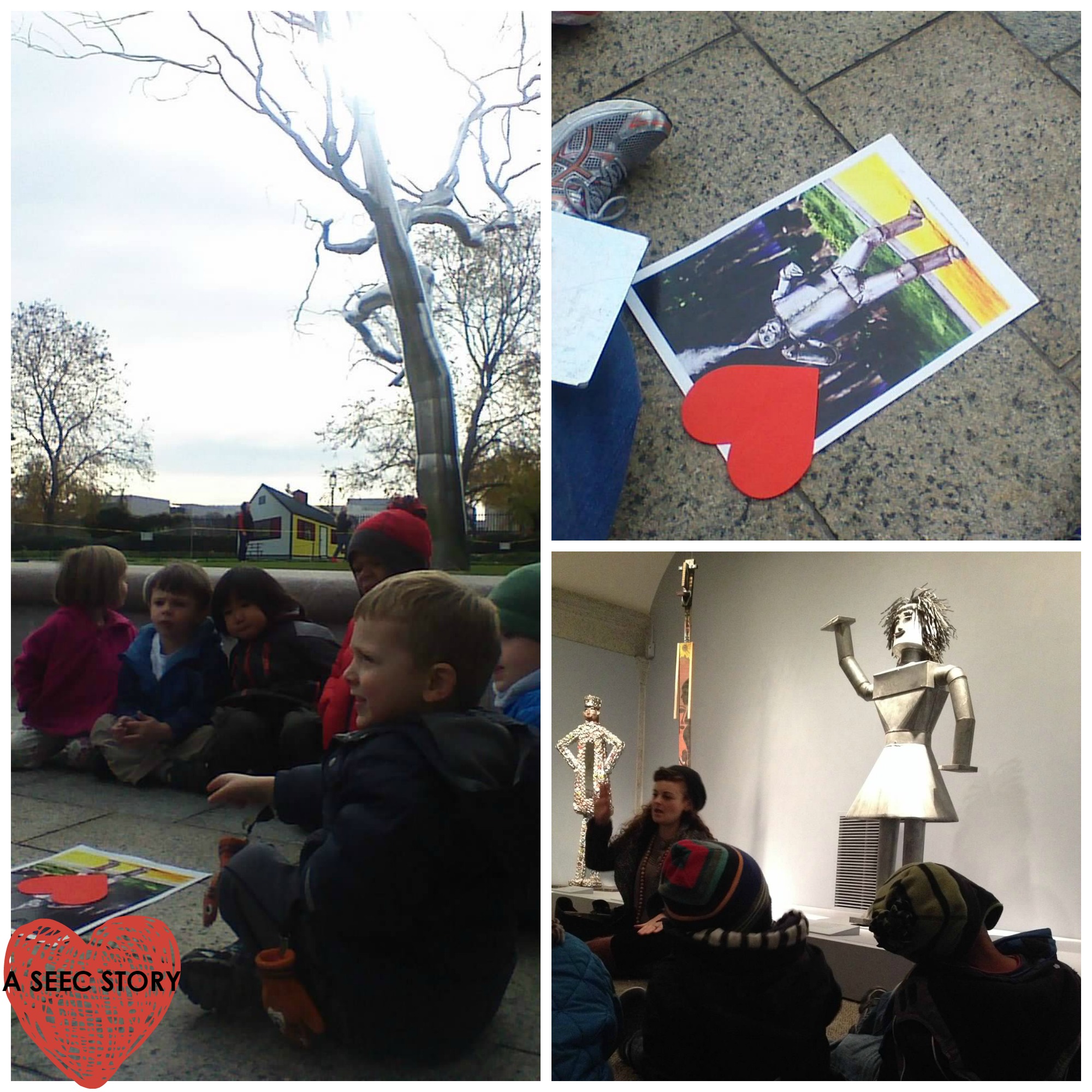
The Wizard of Oz is a beloved story at our school and the Tin Man is a great way to talk about the heart and emotions. Spend some time talking about why the Tin Man wanted a heart and talk about the ways your group might show their emotions to people close to them this Valentine’s Day. You can even take this lesson one step further and discuss material that the Tin Man was made out of and look for examples of it within your community.tin man heart collage

Flowers:

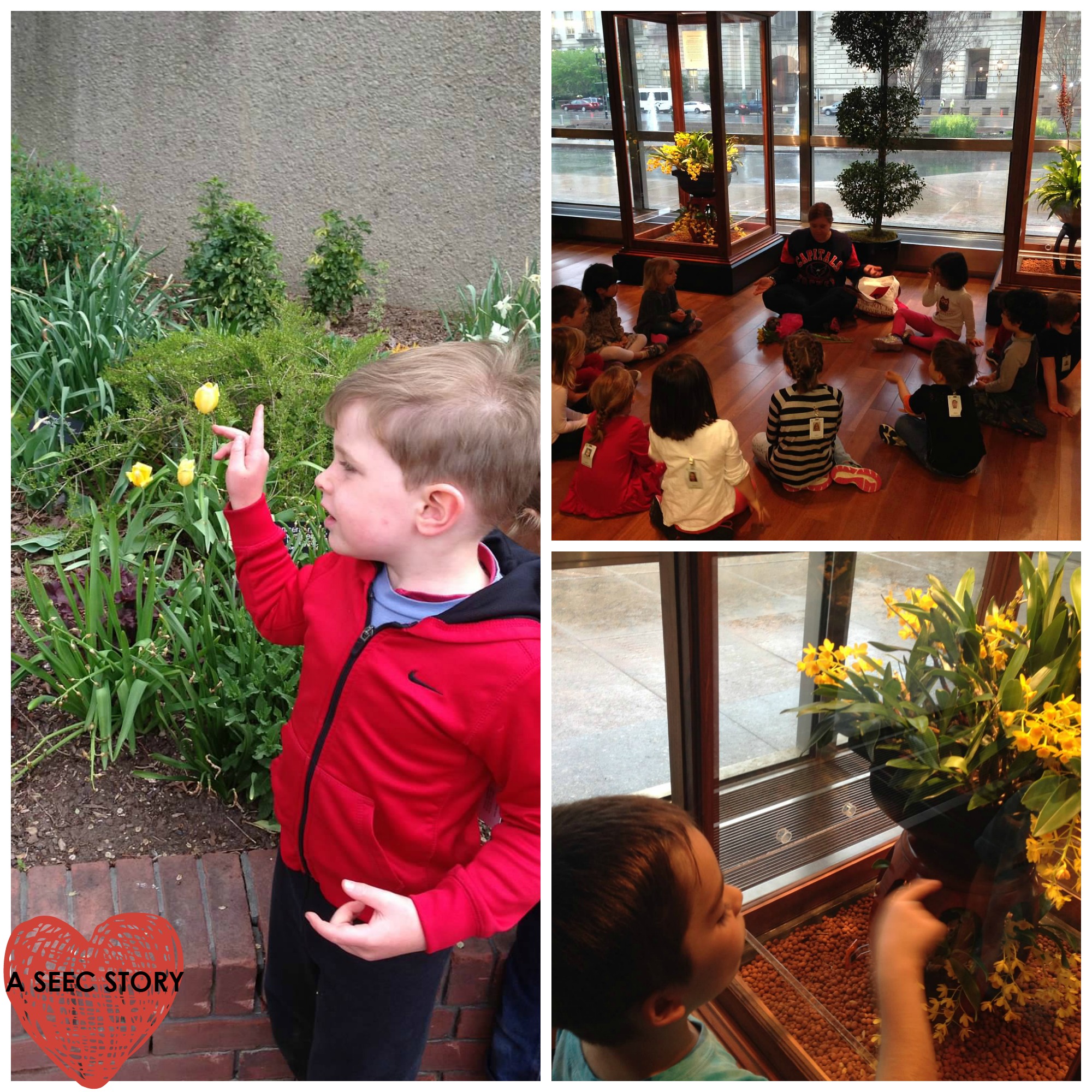
Many of your children may give their adults flowers for the holiday. Why not spend some times learning about them? Try introducing the different parts of the flower and then heading out into the community on a flower hunt.
Flowers

Hearts:

Valentine’s Day is the perfect time to talk about the human body. Give your group a chance to compare the shape of heart to that of an actual functioning heart. You can show them the different ways we can listen to our own hearts. This group even went to the museum to check out a heart rate monitor.  Heart collageCommunication:

Valentine’s Day celebrations involve the customary sharing of valentines. Extend this concept to communication and have your group write letters or postcards and actually send them in the mail. One class this year will be sending drawings and letters to a local hospital.

Mail

We hope you found some new ideas! Happy Valentine’s Day from all of us at SEEC!

What Makes a Good Museum for Young Audiences: The Hirshhorn Museum and Sculpture Garden

SEEC’S LOVE FOR THE HIRSHHORN

Thinking

Sometime back in the spring the Hirshhorn Museum and Sculpture Garden closed a large part of its galleries to the public and the reverberations could be heard throughout SEEC. The Hirshhorn is hands-down one of our favorite stops along the National Mall. Thankfully, their second and third floors reopened this past week and they do not disappoint (more on that below).
The conversation among our teachers got me thinking: Why is the Hirshhorn such a favorite with our educators? I placed an idea web in each of our teacher lounges and asked them: Why do you love teaching at the Hirshhorn? What I learned in a nutshell: engaging collections + ideal layout = a great early childhood experience.

THE COLLECTION

SEEC’s teachers are, without a doubt, drawn to the modern and contemporary collection. One educator noted; “…so open ended.” Her comment encapsulates our approach to teaching at SEEC. Whether it be through play, engagement, or lessons/curricula, our teachers provide students with the chance to inquire, investigate and explore their own interests. Similarly, the Hirshhorn’s collections offer children (really, all visitors) works of art that are open to interpretation. Teachers feel comfortable using such artworks because their meanings are layered and can be adapted to a variety of themes that resonate with young children.


BROAD CONCEPTS

Of equal importance to our educators was that many of their exhibitions explore

Two-year olds visiting Gravity's Edge Exhibit.

Two-year olds visiting Gravity’s Edge Exhibit.

broad concepts. For example, in an exhibition like Gravity’s Edge, where gravity was a determining factor in the works on display, students were able to see multiple examples of a single idea and we know that children, and young children especially, benefit from such repeated exposures. Similarly, the Ai Weiwei zodiac animals fountain was a huge hit with our students. While the animals were not the work’s main focus, it was an exhibition that engaged our students and offered them a portal to learning more about the piece itself.

MATERIALS

Pre-K family workshop in front of Nick Cave’s Soundsuit.

Pre-K family workshop in front of Nick Cave's Soundsuit.

Pre-K family workshop in front of Nick Cave’s Soundsuit.

Our educators also appreciate that the collections demonstrate a unique and varied approach to materials. The introduction of new materials helps children think about things from new perspectives and activates their imagination. A great example is Nick Cave’s Soundsuit, which is currently on display. Cave’s use of unorthodox materials is an attention grabber that uses objects familiar to young children. It also encourages young children to open their minds and be creative.
Varied materials can also be beneficial to the young learner because they appeal to more than just the sense of sight. A few years ago, Suprasensorial: Experiments in Light, Color and Space captivated the whole school because it was just that – suprasensorial. Young children learn better when all of their senses are engaged. Children reacted to and interacted with these artworks through sight, sound, touch and smell. Teachers used that space to explore color, light, lines and even swimming.

THE SPACE
For young audiences, the layout of a museum or gallery can be almost as important as the lesson. Early childhood educators generally look for large spaces with little distraction and the Hirshhorn has all of that. Their spacious galleries make it easy for our teachers to have a circle and not block other visitors. The floorplan’s circular flow makes it easy and fun to move around. Teachers also commented on the building’s architecture and how its shape and outdoor sculpture appeal visually to our students. The fountain was also high on the list of why the children liked going there. (see our blog on fountains and learning spaces).

Having fun exploring the newly opened galleries.

Having fun exploring the newly opened galleries.

On Thursday, I headed over to see the newly opened galleries and I was not disappointed! This piece entitled The Dangerous Logic of Wooing basically sums up why the Hirshhorn is so appealing to young audiences – playful, imaginative and whimsical. What more could you want?

SEEC 3-D!

The Smithsonian Early Enrichment Center is incredibly fortunate to have access to some amazing resources! It’s not just the museums but we often have wonderful experiences with the people working in the museums. For example, over the summer two of our classes were able to collaborate with colleagues at the National Museum of American History. It was great for our students to have an opportunity to work with one of American History’s interns and technology wiz Mariya Sitnova. The following post was written by Mariya and is shared on her behalf. Thanks for introducing us to some cool new technology,  Mariya!

As an education intern at the National Museum of American History, I spent my summer working on various projects that bring the contents of the Museum content to classrooms across the country, including the Smithsonian’s very own classrooms in SEEC. My graduate studies at the Rhode Island School of Design (RISD) have focused on considering the potential relevance of 3D technology (3D scanning and 3D printing) in our every day lives. During this internship I was able explore this idea while working with the students and teachers at SEEC.

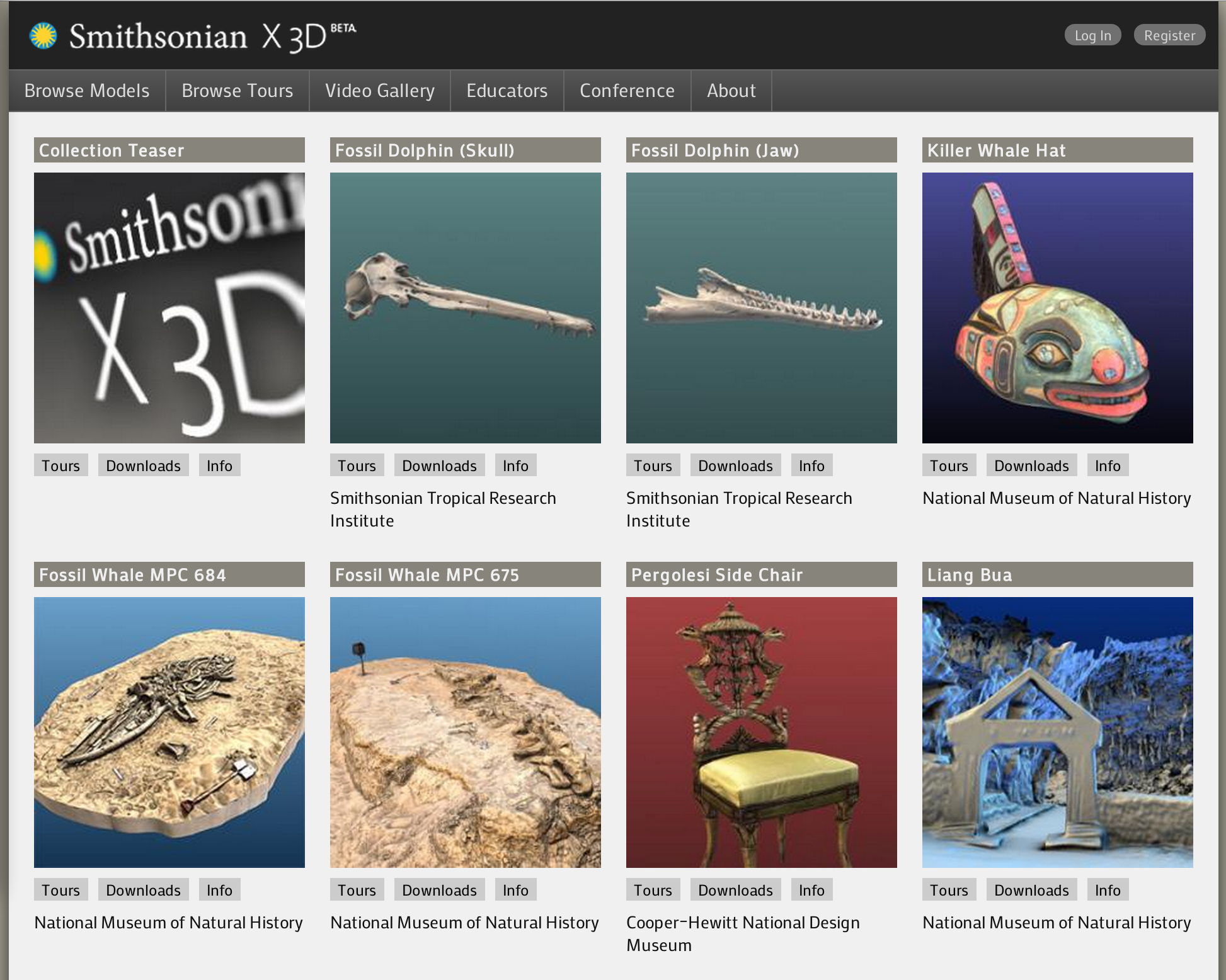
The Smithsonian is in the process of 3D scanning select objects from the collections and some are already available on 3d.si.edu. This summer I explored how young learners interact with these types of objects in 3D printed form.

pic_1_3d.si_screenshot-2

My first pilot project was one I carried over from RISD. I had 3D scanned a few marine creatures from the RISD Nature Lab and added Lego “feet” in various positions. The idea was to 3D print something that enhanced the learning value of the 3D scanned object. The Lego connections resonated with the students because they were familiar with the brick toy concept. For the younger SEEC crowd I created a Duplo connection (the slightly larger Lego) and made the animals significantly bigger. The students asked interesting questions and proposed engaging narratives around these creatures. The wondered about where these creatures lived and where they would go with their new Duplo wheels. I’d be curious to keep going with the connections project by allowing them to choose where on the creature to add the Lego “feet” so they can explore the object even further in digital form.

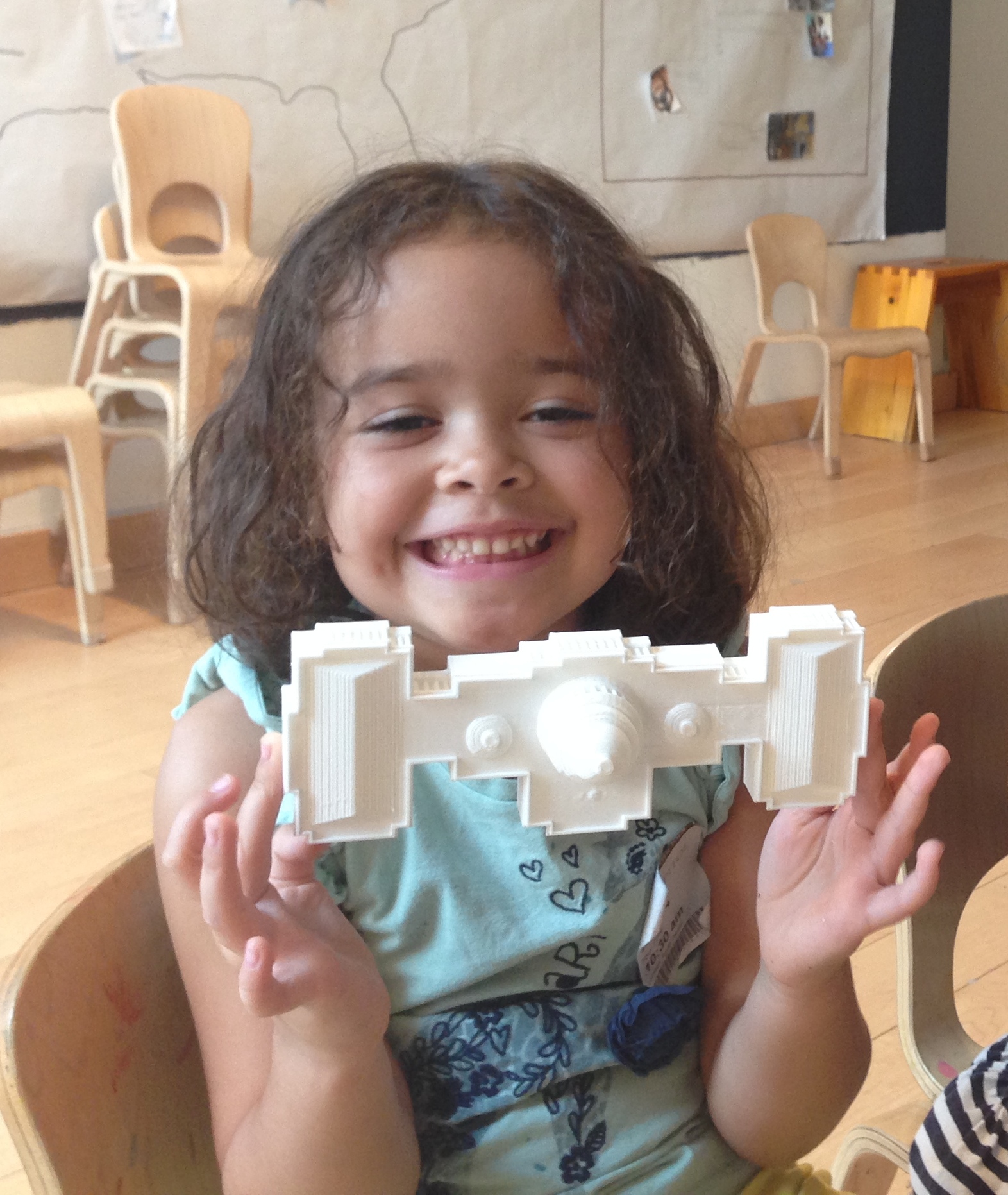
The other project consisted of printing architectural models of the Capitol and the White House. The older group had planned to visit both buildings as part of their community theme. I created the 3D models using computer aided design software and 3D printed them in front of the students to gauge their responses. The project was to serve as a lead into a lesson on Abraham Lincoln whose life masks have been 3D scanned by the Smithsonian 3D team. The life masks are a more complicated concept, so we thought we could introduce 3D first through a simpler object and build up to the Lincoln material. I was genuinely impressed by the complexity of the questions the students asked about the process of 3d printing and 3d modeling and the models themselves. They were intrigued by how the printer functioned and how they could mix up materials to create these models in different colors and size.

photo%20%284%29

Current preschoolers are going to grow up with this technology in their classrooms and maybe even their homes. It’s really impressive to see the Smithsonian pursuing projects that will help determine how this technology can take early education and museum education to a much more engaging level. I’m really looking forward to hearing more about the subsequent 3D projects in the future!

pic5


Fountain Fun

DSCN3881Pools, beaches, lakes, sprinklers…it’s that time again! Children all over the US are enjoying summer-time to its fullest and likewise, parents are looking for water-inspired activities. Here in DC, we are lucky enough to have a number of public fountains that are both beautiful and refreshing. Fountains capture the imagination of children, so why not take this opportunity to create a learning experience?

Duckling FountainInfants
Infants often have mixed feelings about water, it can be both scary and exhilarating. Why not introduce them to water through their senses, especially sight, sound and touch. Simply draw their attention to different aspects of the fountain.

  • Do they hear that sound? Mimic the roar of the fountain.
  • Describe the color of the water.
  • Connect the fountain to the actual feeling of water by getting their hands wet.
  • At home, identify other places where you might find water and remind them of their visit to the fountain.

Toddlers

Toddlers are excited by new things and fountains are no exception. Take the time to explore the fountain and ask simple questions about its design:

  • What direction is the water moving?
  • Is there water that is still, where?
  • From where do you think the water is coming?
  • What else do you see besides water?
  • Do you see any pictures or decorations?
  • Try making your own fountain at home with a hose and baby pool.

Preschool and UpFirefly Fountains

By now your child has seen a few fountains and you can begin to investigate the concept further. Here are some fun multidisciplinary ideas:
  • Rainbows, light and water. This blog has some nice experiments you can easily duplicate.
  • Experiment with force and getting water to move in a certain direction. You can even perform this experiment at home if you are feeling adventurous.
  • Discuss why fountains are used: are they pretty, do they help us remember something, are they for cooling off, do people seem to like them?
  • Ask them to choose a location in your community and design their own fountain.

Favorite DC Fountains

Fountain at the Hirshhorn

Fountain at the Hirshhorn

  • Hirshhorn Museum and Sculpture Garden
  • National Museum of American History (Constitution Ave. Entrance)
  • US Navy Memorial Plaza
  • National Gallery of Art
  • National Museum of the American Indian
  • Senate Fountain
  • WWII Memorial Rainbow Pool
  • Bartholdi Fountain
  • What is your favorite community fountain? Leave us a message!

    Ready Set Go

    Post by Betsy Bowers, Director of the Center for Innovation in Early Learning
    As another school year comes to a close and we begin to say farewell to the many children who have spent the past 5 years or so with us, it’s hard not to wonder what’s ahead for them. Our educators tirelessly support SEEC students as we help them make sense of the world, love learning and grow into thoughtful young citizens. Over the course of this past year, a group of SEEC educators discussed what our students should be able to do when they leave SEEC.

    Critical thinking and analysis.

    Critical thinking and analysis.

    There’s quite a long list. A few of the things we agreed on were that our students should leave SEEC being able to solve problems, be responsible, take risks, understand their role in the community and their ability to affect change, have compassion, respect and empathy for others, and communicate their ideas.

    It’s a lot to ask a 5 year old if they know how to solve a problem or be responsible, because of course they will say, “yes.” We are, after all, working on having them leave SEEC with self confidence so a positive response is expected. Because I wanted to find out if our 5 year olds are entering Kindergarten as independent thinkers, I asked a few of them this more indirect question: “If I told you that five of your friends wanted you to climb up the Washington Monument so that you could jump off, what would you say?” One student gave me an odd look and responded, “That’s not really a good idea.” One student did say, “Yes.” We’ll hope that she has some clever ideas about how to do that safely. One student simply said, “Ouch,” while a few others were much too busy to want to elaborate and so responded with a “no.”

    Ability to share ideas.

    Ability to share ideas.

    The response, though, that reminds us that all these skills are intertwined and expands our notion of “independent thinking” was this – “Only if we could jump off like a cannonball and onto a big trampoline!” Of course, why didn’t I think of that?

    Here’s hoping that this playfulness, creativity, critical thinking and overall healthy outlook on the world that we have worked so hard to nurture is embraced by our elementary school colleagues and the world. Good luck, dear friends, as you now go and bravely pursue life.

    Self esteem and confidence.

    Self esteem and confidence.


    Caring in the Classroom

    Posted on behalf of SEEC teacher Carrie Heflin:

    Hello Fellow Champions,

    Whether you are a parent, grandparent, teacher, babysitter, or just an awesome person, you are reading this right now because you are a champion for the embattled cause close to all of our hearts- childhood. Day in and day out you find yourself concerned with nurturing the growth of another human being in a world that seems determined to fight you every step of the way. As a teacher preparing to enter my fourth year in a pre-k classroom, I just want to say that I know what you are feeling. I know that there are days when you feel utterly and completely defeated.

    This is how I was beginning to feel every time I, as a classroom educator, had to mediate a forced apology between two or more of my students. Do you know what I mean by a forced apology? It’s what happens when Johnny knocks over little Suzie’s carefully-constructed block castle with his super-laser-rocket-robot feet and she yells, “Hey!” and shoves him into Tommy who falls and bumps his head. So AngryAt this point, all three children are crying and screaming for justice and you get to take on the coveted role of apology-enforcer. Wrong has been done and the only way to make it right is to frog-march Johnny over to Suzie and coerce him into mumbling, “Sorry I broke your castle,” with liberal amounts of eye rolling. At which point Suzie must chime in with a completely unrepentant, “Sorry I pushed you,” and you are so tired from the twenty emotionally-trying minutes spent wringing these two “heartfelt” apologies out of Suzie and Johnny that Tommy, the innocent victim, has to make do with a back pat and you saying, “Sorry you got knocked over,” as you make your way away from the ticking time bomb that is Johnny and Suzie (who are both still angry at each other and currently plotting their revenge).

    After three years of these incidents, I was beginning to lose hope. I had spent countless hours stewing about my inability to create an effective apology scenario in my classroom. I had tried every way I could to talk to my students through their disagreements in a way that would make them see the situation in a rational way, but the fact of the matter is that once a problem is already happening, both parties are too emotional to see reason. My co-teacher and I had done our research and we knew the problem. We were trying to force empathy on people who just hadn’t developed it yet. All the experts agreed. The children with whom we work are just too young to possess a developed sense of empathy. I suppose we could have just accepted that fact and moved on with business as usual, but the issue still rankled both of us. We knew that in today’s zero-tolerance-for-“violence” world, we were doing our children a disservice by continuing the forced apology routine. What was it teaching them? Did they really understand that hitting was wrong or did they just continue hitting with the understanding that a couple words makes it all better and then you can go back and do it again the next time you’re upset?

    So we put our heads together and decided that we needed to make some changes. We knew that it wasn’t practical to expect our students to develop empathy overnight or to make them want to apologize just by using different words. The change had to be big. We wanted to do something that would help make our students more aware of the needs and feelings of others. That way, they might consider those needs and feelings more within the context of the choices they make. The result of this epiphany was a unit that we began in February and continued singularly for about a month and a half. The theme of the unit was, Heroism.

    The foundation for the progression of our lesson plans was psychologist Philip Zimbardo’s Heroic Imagination Project. This is an initiative, created and implemented by Zimbardo, that claims it is possible to teach and learn heroism. There are three basic phases: 1) define heroism 2) explore examples of heroism and its obstacles 3) practice heroism in your daily life.

    We used these principles in our lessons by first focusing on defining heroism (we talked about the difference between heroes and superheroes, the difference between being kind and being heroic, people who we think are heroes). Next we looked at some real life heroes. We visited exhibits featuring Nelson Mandela and Gandhi and brought police officers and EMT’s into the classroom to talk to the children. And we talked a lot about how it is often hard for heroes to be heroic, but they choose to do it anyway. When we talked about Mandela and Gandhi we looked at how hard it was for them to stand up against the governments with whom they disagreed. The kids were amazed that they were willing to give up their personal freedom to change something that wasn’t right.

    The final step was practicing heroism in our own lives which we accomplished through a series of service learning projects. We wanted to make sure that all of the projects we undertook were actually heroic (as heroic as is possible in a pre-k classroom) rather than just kind, so we made sure there was an element of choice and sacrifice for the children in each task. One day we asked another class to leave for the playground without cleaning up their classroom. We told our class that they had to leave in a hurry and didn’t have time to clean. We showed them on a timer that they had 30 minutes of play time before lunch and that they could either stay in our room and play or use some of that time to go clean up the other classroom. Three quarters of the class went and cleaned the other classroom and they received individual thank-you notes from the other class. The rest of my students really regretted not going to help and the next time we had a project they were ready and willing to participate.

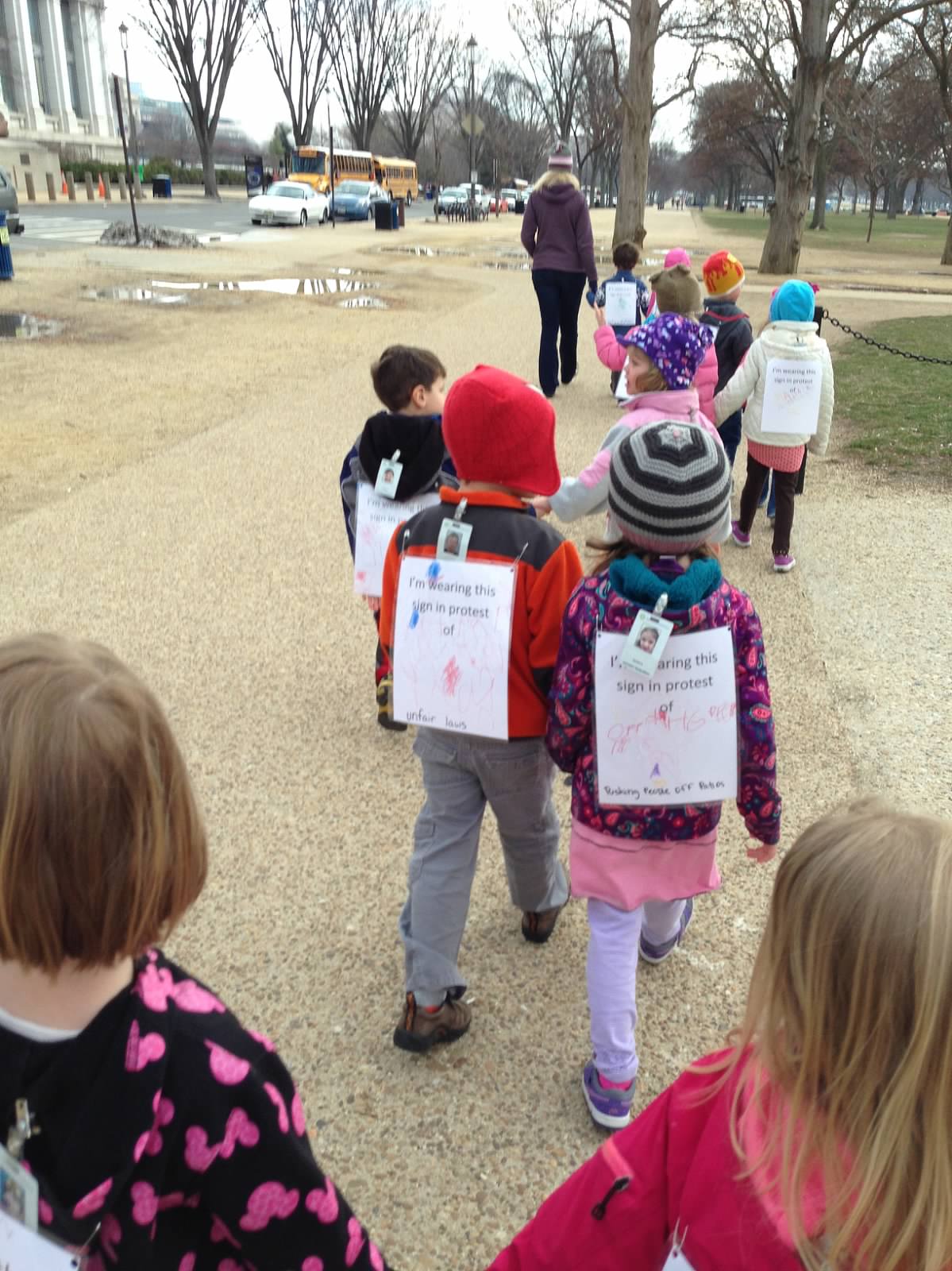
    Protesting.The next project involved giving back to the greater DC community. We did a lesson one day on a painting in the National Gallery of Art that tells the story of the Prophet Elijah and the Widow of Zarephath. In the story, Elijah is traveling through the town where the widow and her son live. He comes across mother and son and asks them if they have any food to spare a weary traveler. Even though she knows what it will mean for her and her child, the widow uses the last of her food supplies to make Elijah a loaf of bread. In return, Elijah blesses the widow with enough food to feed her and her son for the rest of their lives. My class struggled a lot with the context of this story. “Why didn’t she go to the store and get more bread,” they asked.
    -Because she didn’t have any money with which to buy more food.
    -“Why didn’t she go get money from her bank?”
    -Because the bank doesn’t give you money for free. You have to put your money in and they hold onto it until you need it. She didn’t have any money to put in the bank. A lot of people don’t have any money to put in the bank.
    -“How do they get food?”
    -They don’t.

    It was a hard lesson to hear and a hard lesson for me to teach. Afterward, my co-teacher and I knew it was time for our next project. The following week we told the kids that there was a special place in DC called Martha’s Table where you could take food for people who can’t afford to buy their own. “We have lots of food in our kitchen at my house,” one girl said. “I’ll bring some to school and we can send it to the Martha’s Table.” It was a sweet offer, but it didn’t require any heroic action on the part of our students and it didn’t teach them anything other than how to ask their parents for food- which was always available to them. So we told them to go ahead and bring some food from home to flesh out our donation and then we put our grand plan to a class vote. We told them that what we really wanted to do was to make sandwiches to take to Martha’s Table and that we wanted to use the sliced bread that was going to be delivered as a side dish for the children’s lunch the next day. The vote was unanimous. We used all of the bread that was delivered the next morning, made 30 sandwiches, loaded them in a wagon along with 50 additional pounds of food and took them on the metro to hand-deliver them to Martha’s Table. The kids were so proud of their work and I was so proud of their choice to take food that was meant for them and give it to someone who needed it more.Marthas Table

    We got an overwhelming amount of positive feedback on the Martha’s Table project from the parents of our students. They told us how their kids talked about the project at home, how it really resonated with conversations about privilege that they had struggled to have with their children, and how grateful they were that we had taken the time to teach this important lesson. Heartened by these results, our class forged ahead with new projects. We were inspired by an elementary school class whose story we found online. They started a “Kindness Club” to send cards to people who were ill, hurt, suffering a loss, etc… Our first batch of cards went to the Children’s Hospital. The second batch was hand-delivered to the security staff in our building. After that, the students began bringing in their own requests. A cousin with a broken leg, a grandpa with a hurt shoulder, and a grandma recovering from surgery have all received cards so far. Sunshine Cards

    Needless to say, things have changed in my classroom a little in the past few months. The kids are still kids. They have ego-centric disagreements and sometimes they get physical instead of using their words. What has changed is my response to these circumstances. When a child comes up to me screaming, “Miss Carrie she hit me,” I smile and turn to the offending party and say, “What would a hero do?” This one tiny question stops my students in their tracks. The other day I said it to a little girl who answered, “but I’m not a hero,” to which I responded, “but you could be.”

    Sincerely,
    A Happy Teacher

    5 Things I Learned About Art From Children

    For the past year and a half, SEEC has worked with the Memphis Brooks Museum of Art and the Lifelong Learning Group on a project designed to positively impact the educational experience of young children and their families through the arts. As we collaborated with the Memphis based museum educators, docents and early childhood teachers to create meaningful interdisciplinary classroom and museum based hands-on activities, we found that each of us learned more than we imagined possible at the start of the project. The following post presents one great unexpected example of the project’s impact.

    Thanks to the partnership with the Brooks Museum of Art, the following is posted on behalf of docent Cheryl Caldwell: Docent Leading Group

    5 Things I Learned About Art From Children

    Art is so much more than just art: It can be science, culture, motion, and history, as well as color, line, and shape. Young children naturally think like artists, and their imagination is at its peak during their early development as students. Yet educators struggle with ways to develop and instill creative and critical thinking skills—crucial tools that this generation needs to utilize their creative impulses in educational and civic pursuits. As a docent at the Memphis Brooks Museum of Art, I work in conjunction with the Smithsonian Early Enrichment program, engaging Pre-Kindergarten and Kindergarten children from Title 1 schools, where 40 percent or more of the students enrolled are eligible for free or reduced lunches.

    Equipped with my knowledge from the six-month docent training course, I teach these children about visual art in a museum setting. As a new docent, I am excited to introduce children to a museum and see that they fully experience all it has to offer. At the Brooks, children have the opportunity to see, touch, and feel the materials an artist might have used in creating a piece. Engaging these children in this setting while they are young takes the fear out of the museum experience and brings out the fun. Of course, the kids aren’t the only ones gaining from this experience.

    Here are the top five things I’ve learned during my first year as a Brooks Museum docent:

    ▪ Get down low and look up at the artwork through the eyes of a child. This perspective might just give you new insight on a piece of art you thought you knew all about.
    ▪ Art inspires critical thinking rather than getting the right answer
    ▪ The smiles and enthusiasm are contagious.
    ▪ You won’t know everything, but you will probably learn something new with every tour.
    ▪ Children are far smarter and more creative than we give them credit for. You will often be amazed at how much they can offer if you take the time to watch and listen.

    Participating families gathered in the Memphis Brooks Museum of Art.

    Participating families gathered in the Memphis Brooks Museum of Art.