Teacher Feature: Toddlers Explore the Ocean

It’s Teacher Feature Thursday!

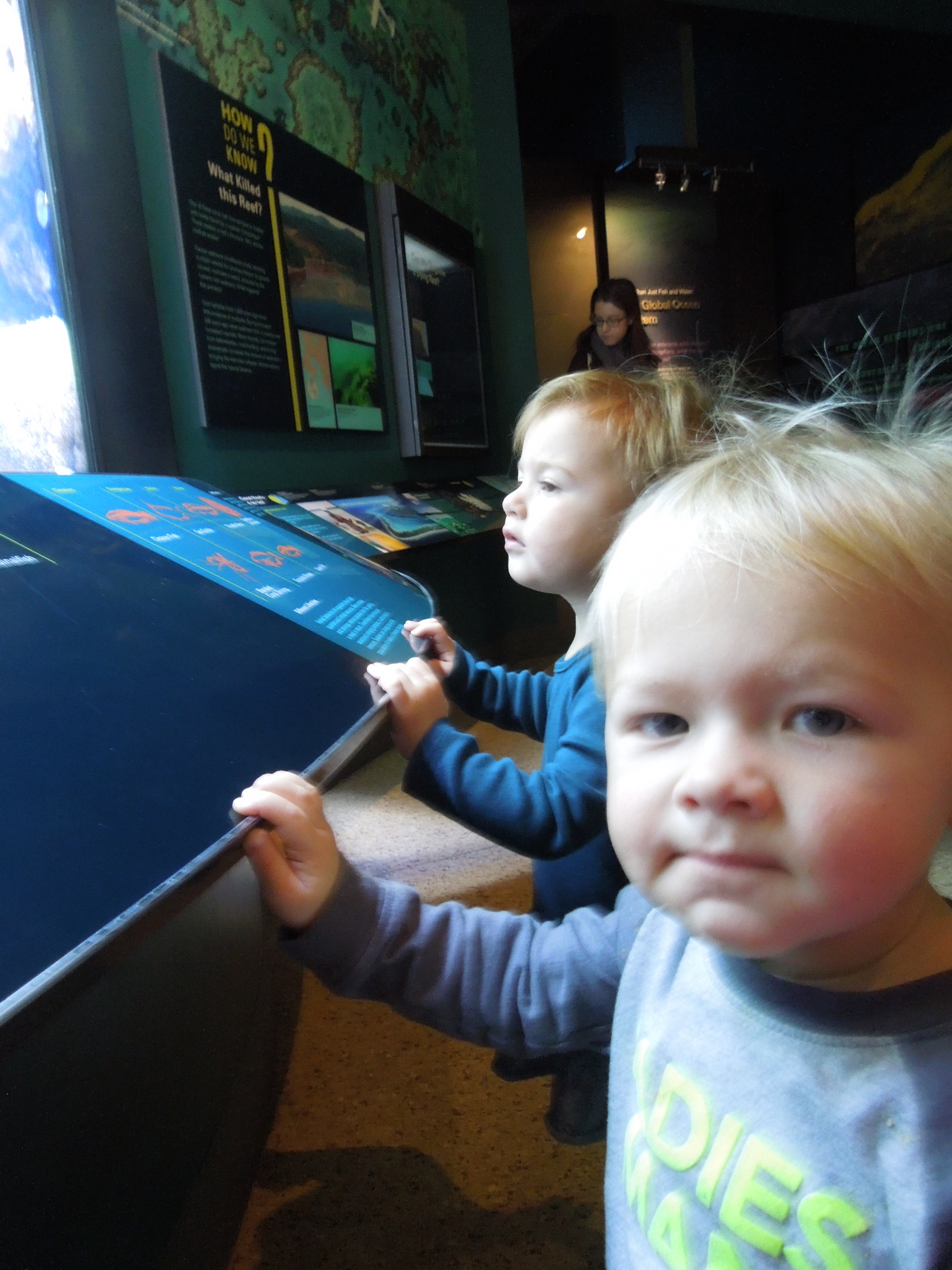
This week we are featuring Dana Brightful. Her toddler classroom was learning all about the ocean and decided to spend a day focusing on anemones. Below you will find a reflection from Dana and images from some of her lessons.
Ocean_Cover

What were your topics of exploration?

Our topics of discussion that week were Oceans and Coral Reefs. We specifically focused on symbiotic relationships between clown fish and sea anemones and the importance of coral reefs and octopi.

What were your learning objectives? (What did you want your children to take away from the lesson?)

My main goal for this particular group of children was for them to understand the importance of working together like the sea anemone and clown fish. This group is working on building their relationships with each other and to consistently work cooperatively.The activities that were included in this unit encouraged hand holding and the importance of collective responsibility in the classroom.

What was most successful about your lesson?

The children really remembered the vocabulary words like coral, ocean, clown fish and even anemone. Also, that week, the group was particularly successful walking together as partners holding hands and even beginning to identify the feelings of their classmates.

What could you have done differently? What recommendations would you have for another teacher trying out this lesson?

I would actually have done the tunnel portion (hiding from the shark) in an open space, like the classroom. The space in the museum or smaller spaces proved to be a challenge and the idea/ concept was lost on the group.

Here are a few images from her unit on anemones:
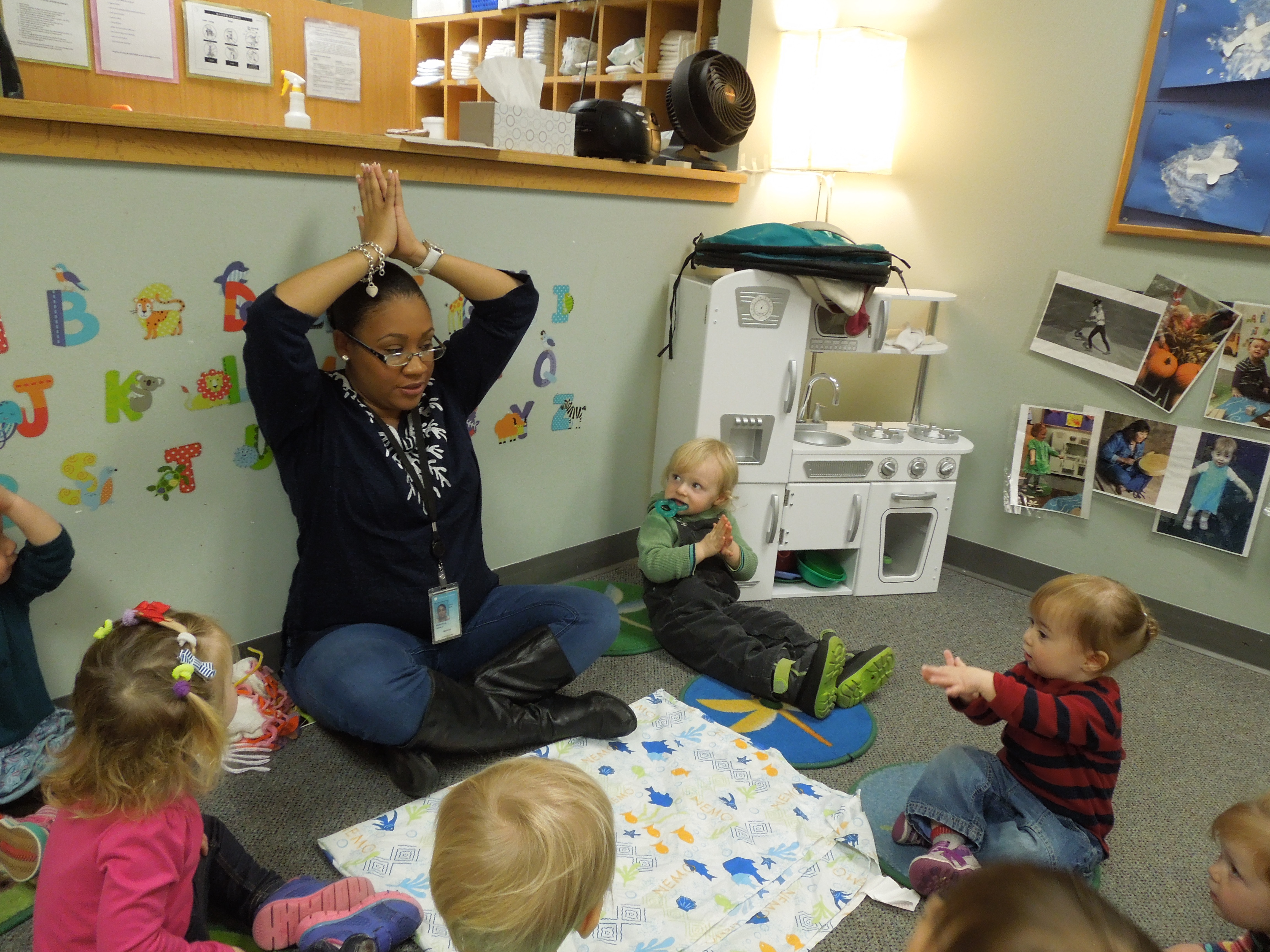
DSCN1450Dana stared the lesson by asking the group to dive into the ocean.
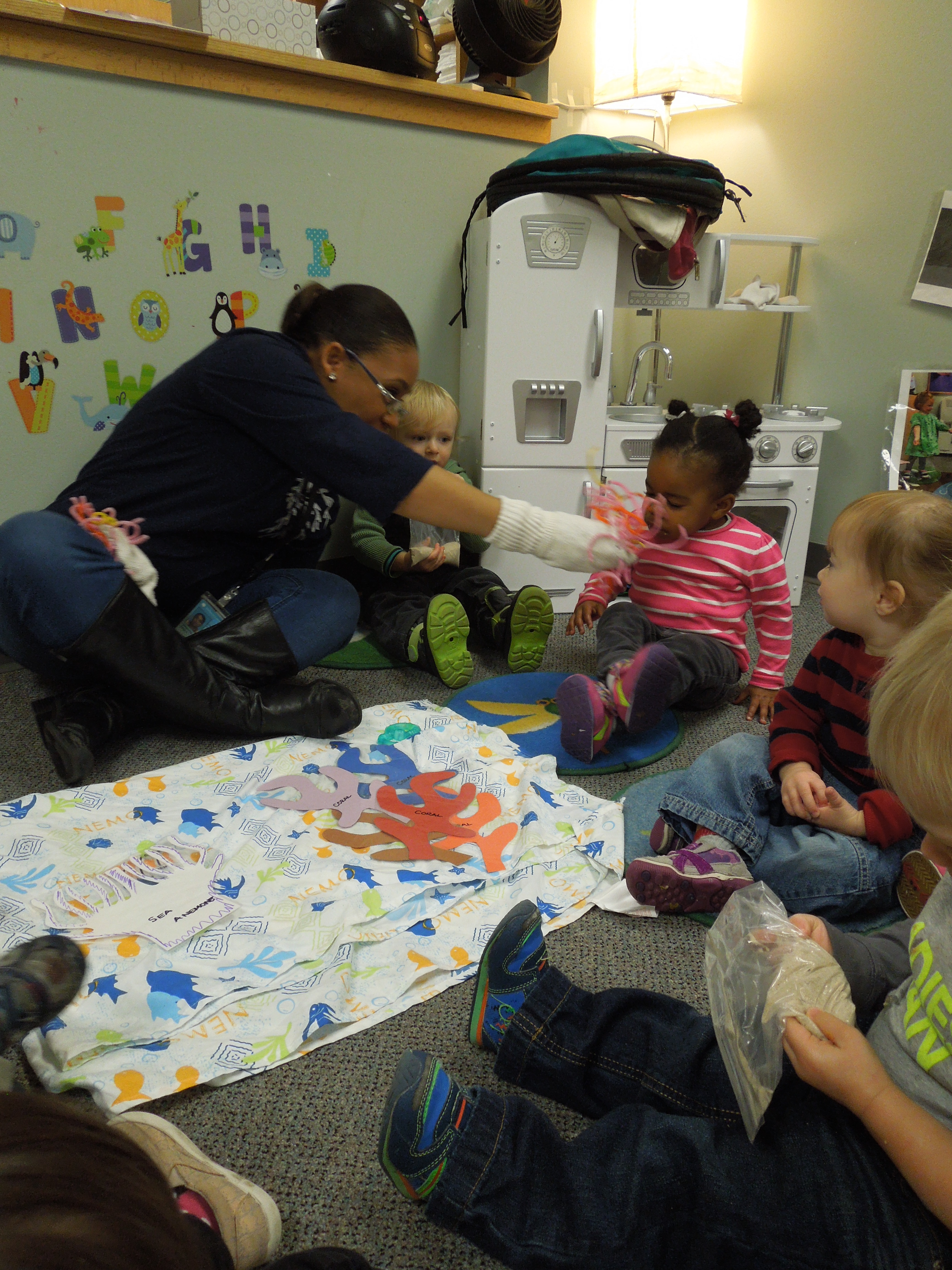
DSCN1458Down on the ocean floor they found coral, an anemone, and sand. The group took turns passing around the different items and reviewing the different sea creatures they had studied earlier in the week.
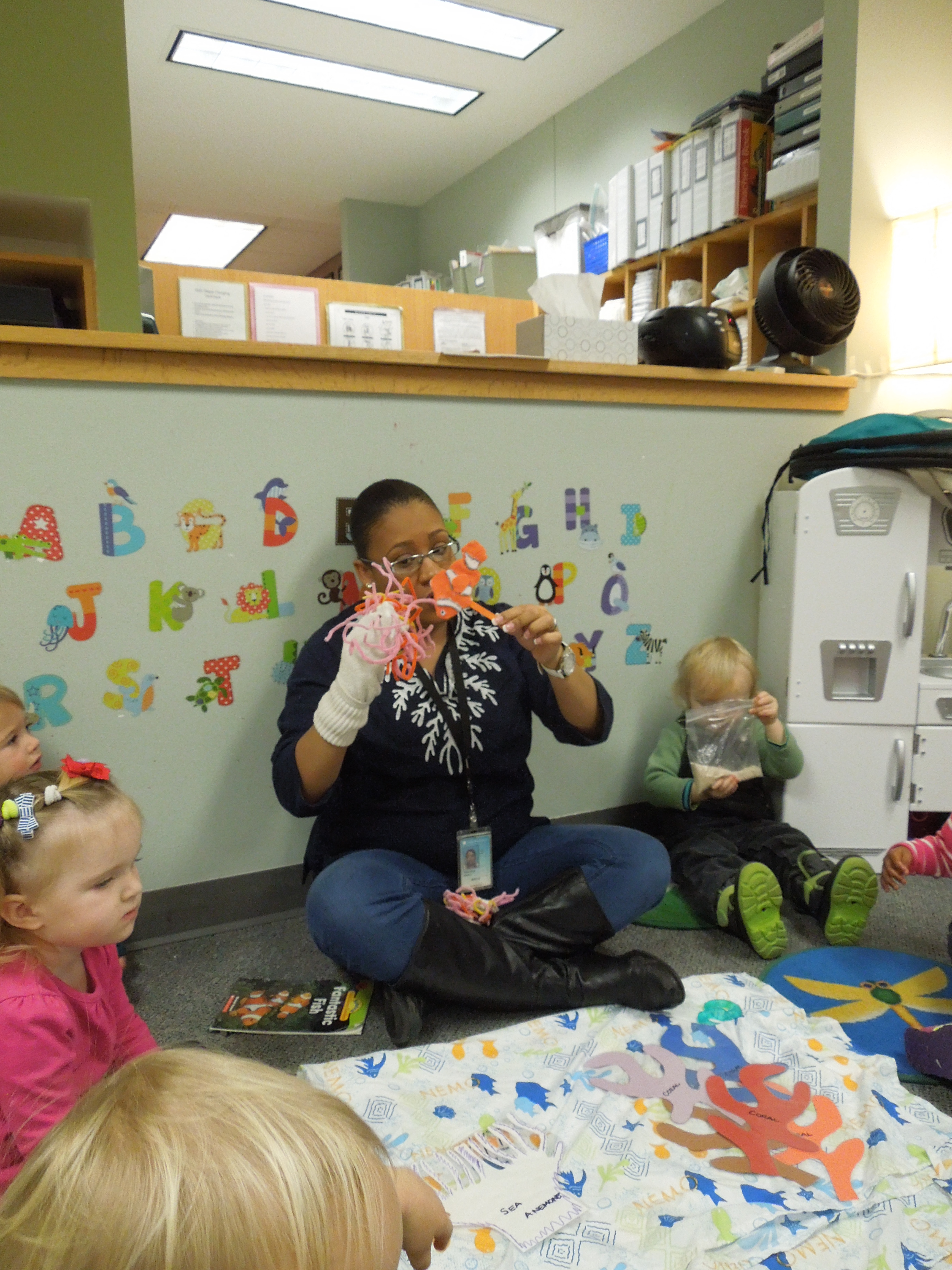
DSCN1461Dana then explained how clown fish live in anemones. The anemone keeps the clown fish safe and in turn it keeps the anemone clean. To emphasize this point she used puppets to sing a song about their relationship. Here are the lyrics  (sung to the tune of ‘This Old Man’): I hide you, you clean me, clown fish and anemone, They work together can’t you see? Living in the coral reefs!
DSCN1467

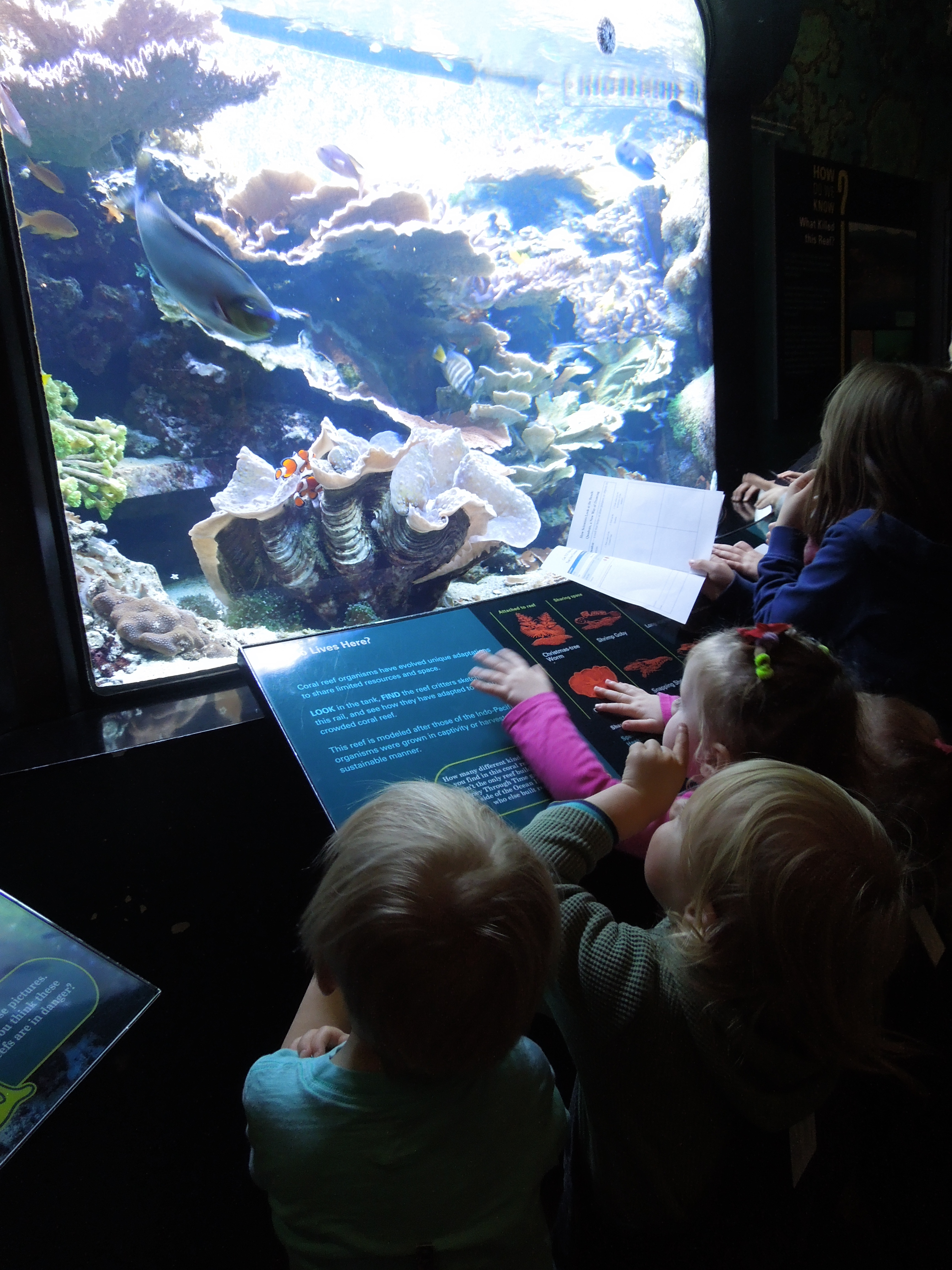
DSCN1475The group then walked up to the Natural History Ocean Hall to see the clown fish in action.
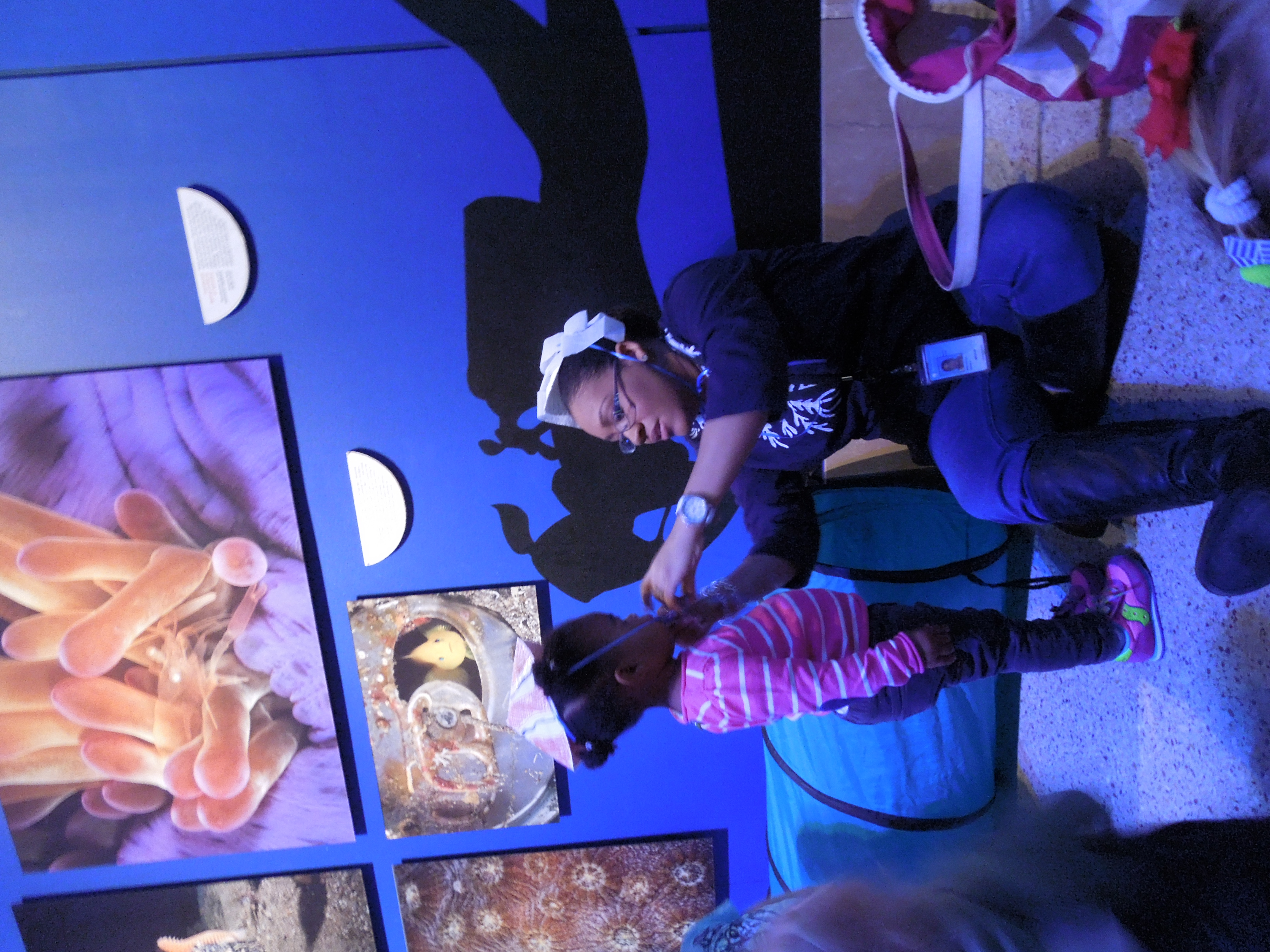
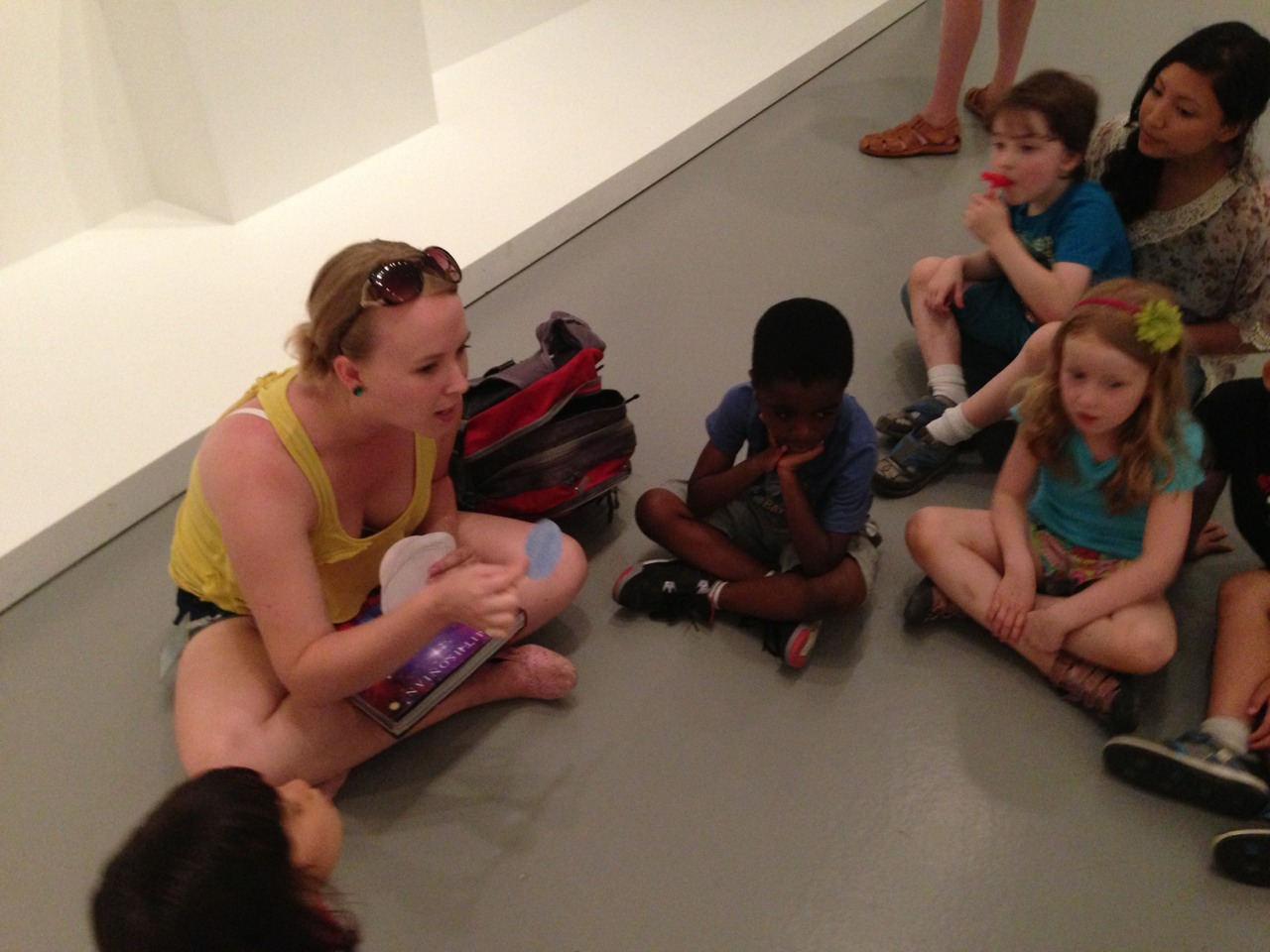
DSCN1485After they had a chance to observe the fish, they ventured over to Portraits of Planet Ocean: The Photography of Brian Skerry (http://bit.ly/1CklPMe) to see a photograph of an anemone. Sitting in front of the photo, Dana introduced the game they were going to play in the museum. She was going to be an anemone and a child was going to be a clown fish. Dana used a paper plate, streamers, and string to create an anemone hat. She also made an additional hat out of a paper plate with the colors of a clown fish. The children took turns wearing the hat and pretending to be a clown fish.
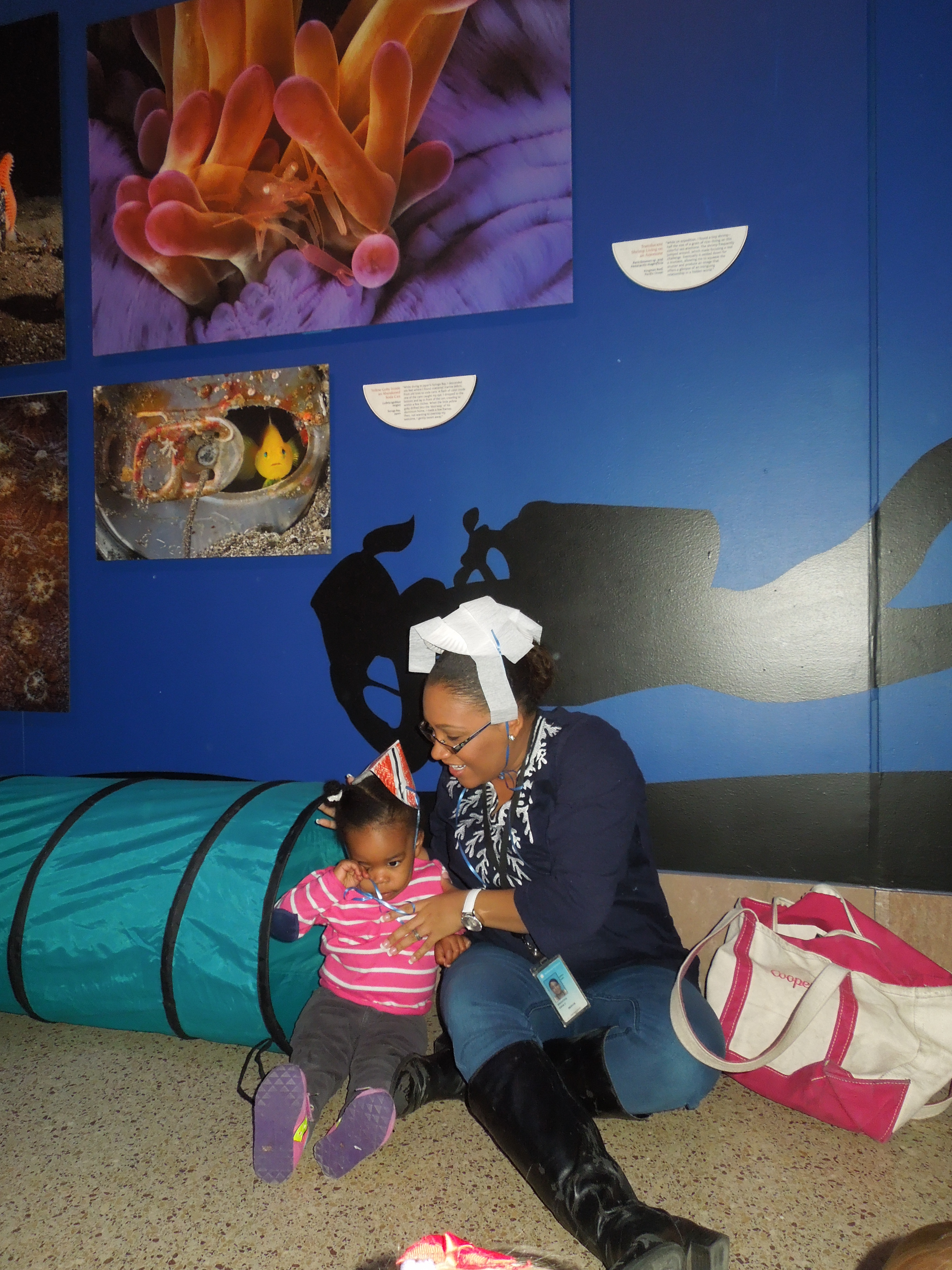
DSCN1487 DSCN1489She asked one of the other teachers to be a predator trying to catch the clown fish and Dana told the children to quickly hide in the anemone (the tunnel). The kids had a blast playing in the museum.

The class had a wonderful time studying oceans and has now swum on to their next topic. Check back next week for another teacher feature!
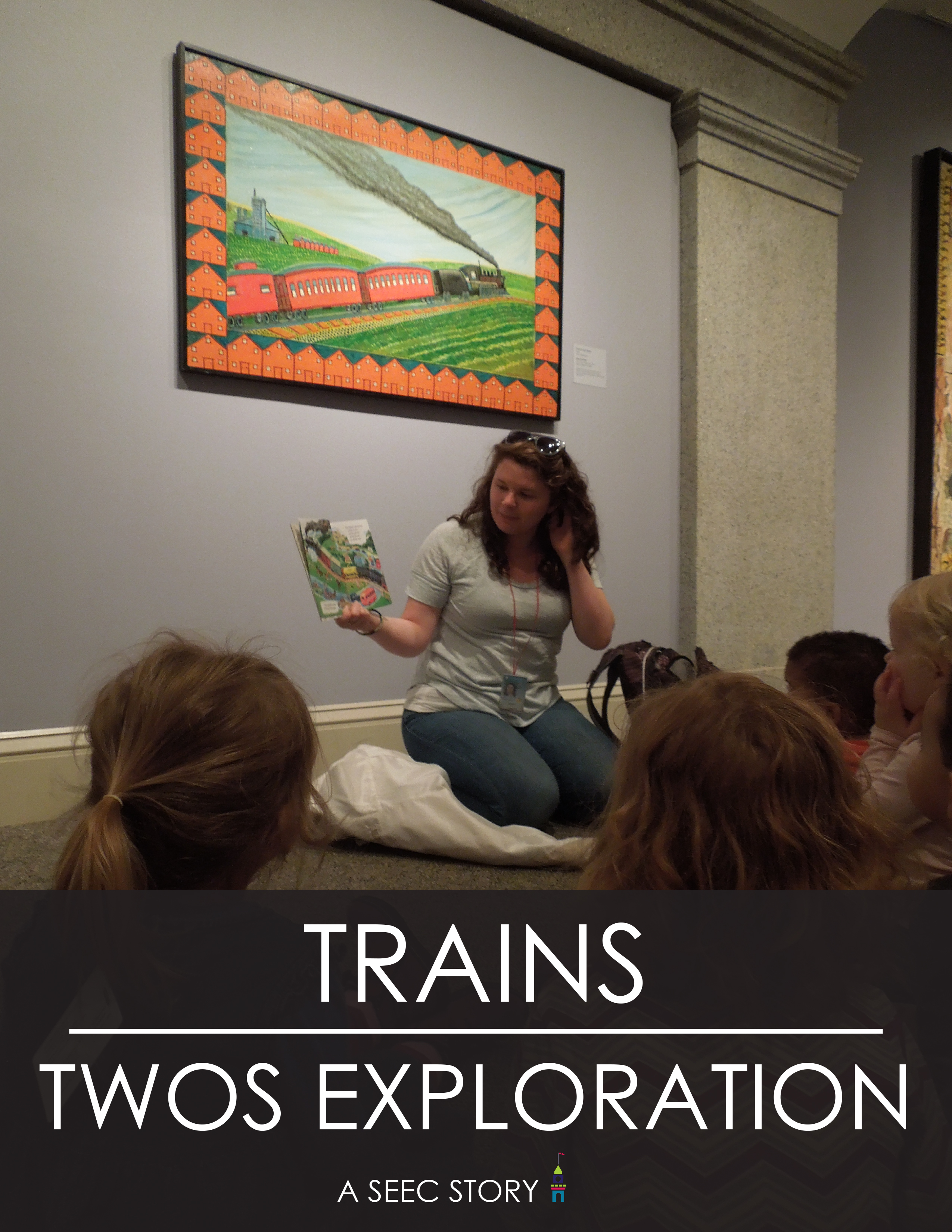
 

Teacher Feature: Two Year Old Classroom Explores Trains

It’s Teacher Feature Thursday!

This week we are featuring Carolyn Eby. Her two year old classroom was learning all about trains and decided to spend a day focusing on the Little Red Caboose. The teachers had decided to focus on this topic because the children were showing continued interest in trains. They were pretending most objects were trains and wanted to talk about them during their walks in the community. In addition, one focus that SEEC toddlers have is walking safely together. Since they are just learning how to walk on “trains” there is a lot of interest in what trains are all about, how they stay together and, of course, train safety. This unit was able to connect all these aspects into one cohesive lesson. Below you will find a reflection from Carolyn and images from some of her lessons.

Train_Cover

What were your topics of exploration?

Our class was spending time learning about the different parts of a railroad train such as the locomotive, tank car, and so on. We had spent the week looking at different cars and their various functions. On this specific day we were talking about the Little Red Caboose and how it keeps everyone safe.

What were your learning objectives? (What did you want your children to take away from the lesson?)

I wanted the group to understand the safety function of the caboose and its location in the order of the cars. The class has a great sense of compassion for each other and characters in books and by personifying the caboose through the book Little Red Caboose by Marian Potter I was able to illustrate how the train “keeps an eye out” for the other cars.

We were also able to work on some developmental goals by involving dance and call and response during our circle.

What was most successful about your lesson?

I found that the most successful part of my lesson was the connection between the book and the work of art. We visited the Smithsonian American Art Museums to see Train in Cole Town by Jack Savitsky. Both the illustrations and painting had a funky feeling which made the flow from reading the book to looking at the art work very easy for the group to connect. It was really fun to spend time looking at the painting, imagining how it could be an extension of the text we were reading!

Surprisingly, right around the corner were several other train paintings! We decided to stop and spend some time discussing what we saw in those works. We wondered about the people riding in the passenger trains and where the rail road tracks may lead. These conversations were exciting and included thoughtful connections to previous units since the class had been spending so much time working on trains! Sometimes the best parts of a lesson are not planned!

What could you have done differently? What recommendations would you have for another teacher trying out this lesson?

It was difficult for me to think of an age appropriate activity that I could pack up and take with me to the museum. I loved singing with the kids and reading them a story, but I feel like the lesson could have made a greater connection with the group if they had a hands activity to do in the gallery. Also, I would have probably spent more time talking through the lyrics of the song which may have resulted in a more dynamic discussion.

Here are a few images from her unit on the caboose:

DSCN1509 Carolyn introduced her topic for the day by creating a small red car to add to their bulletin board train. She reviewed the parts of the train that they had previously studied and asked the group where they thought they should put this car. Carolyn then explained that this car was a caboose and it had a very special job.

DSCN1513Carolyn then played a video for the group with the tablet. It showed a musical group singing “The Little Red Caboose.”

DSCN1515Carolyn wanted to provide multiple exposures to the same song so she also sang a slightly different version with the class. She also showed them a few train movements to do while they were singing. The group loved them!


DSCN1530Following the story, the class walked up to the Smithsonian American Art Museum to see Train in Cole Town by Jack Savitsky (http://bit.ly/1xh3FWZ). They spent some time looking at the work and talking about the different parts of the train. They thought about where it might be going and how quickly or slowly it might get there. Carolyn then read The Little Red Caboose by Marian Potter.

DSCN1539Carolyn asked the group if they could see similarities between the book and the painting. The children had a lot to share and were able to talk about the role of the caboose in both the book and the work of art.

DSCN1544On their way out of the museum the group spotted a few more train paintings. Subway by Lily Furedi  (http://bit.ly/1DPTbDW) served as a great way to review passenger cars. The group talked about what the people were doing on the train.

DSCN1546The children also spotted train tracks in Third Avenue by Charles L. Goeller (http://bit.ly/1BUh9yj). They wondered where they were going and what kid of train would use that type of track.

The class had a wonderful time studying trains and has now chugged along to their next topic. Check back next week for another teacher feature!


Teacher Feature: Two Year Old Classroom Explores The Human Body

It’s Teacher Feature Thursday!

This week we are featuring Javasa Finney. Her twos classroom was learning about the human body and decided to spend a day learning about hair and how the human body grows. Below you will find a reflection from Javasa and images from some of her lessons.

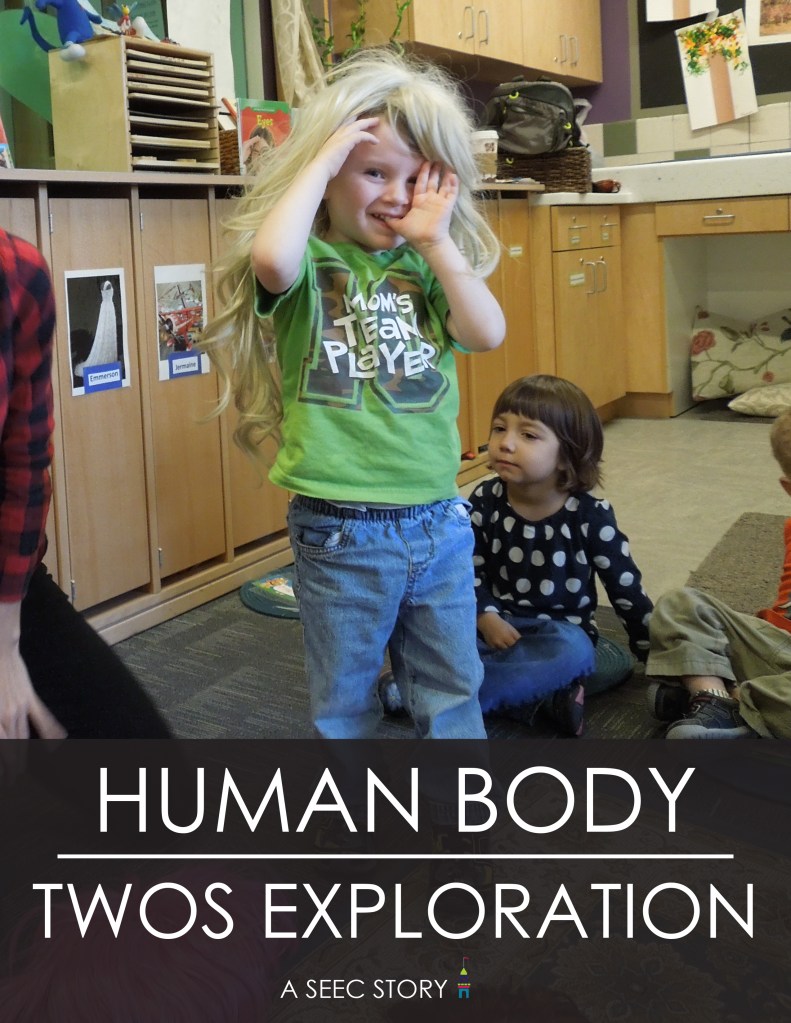
Body_Cover

What were your topics of exploration?

During the months of October and November the Penguins were exploring the human body.  We talked about the different parts of the human body.  Some of the parts we focused on included:

  • hair
  • skin
  • mouth
  • bones
  • eyes
  • brain
  • heart

In addition to how these body parts work we had a lot of fun learning about the five senses.  We talked about nutrition, how important it is, and how what we eat affects our body. Then they made delicious food from the different food groups with my co-teachers throughout the week. We also talked about the importance of sleep and how important exercise is for the human body.  They were extremely excited to have the opportunity to go exercise at the Washington Monument.

What were your learning objectives? (What did you want your children to take away from the lesson?)

I wanted the class to learn all about their amazing bodies. My main learning objective when teaching the kids about the human body was for them to learn about how important their bodies are and how to care for them. I also wanted them to learn all the bodies’ functions and abilities.

What was most successful about your lesson?

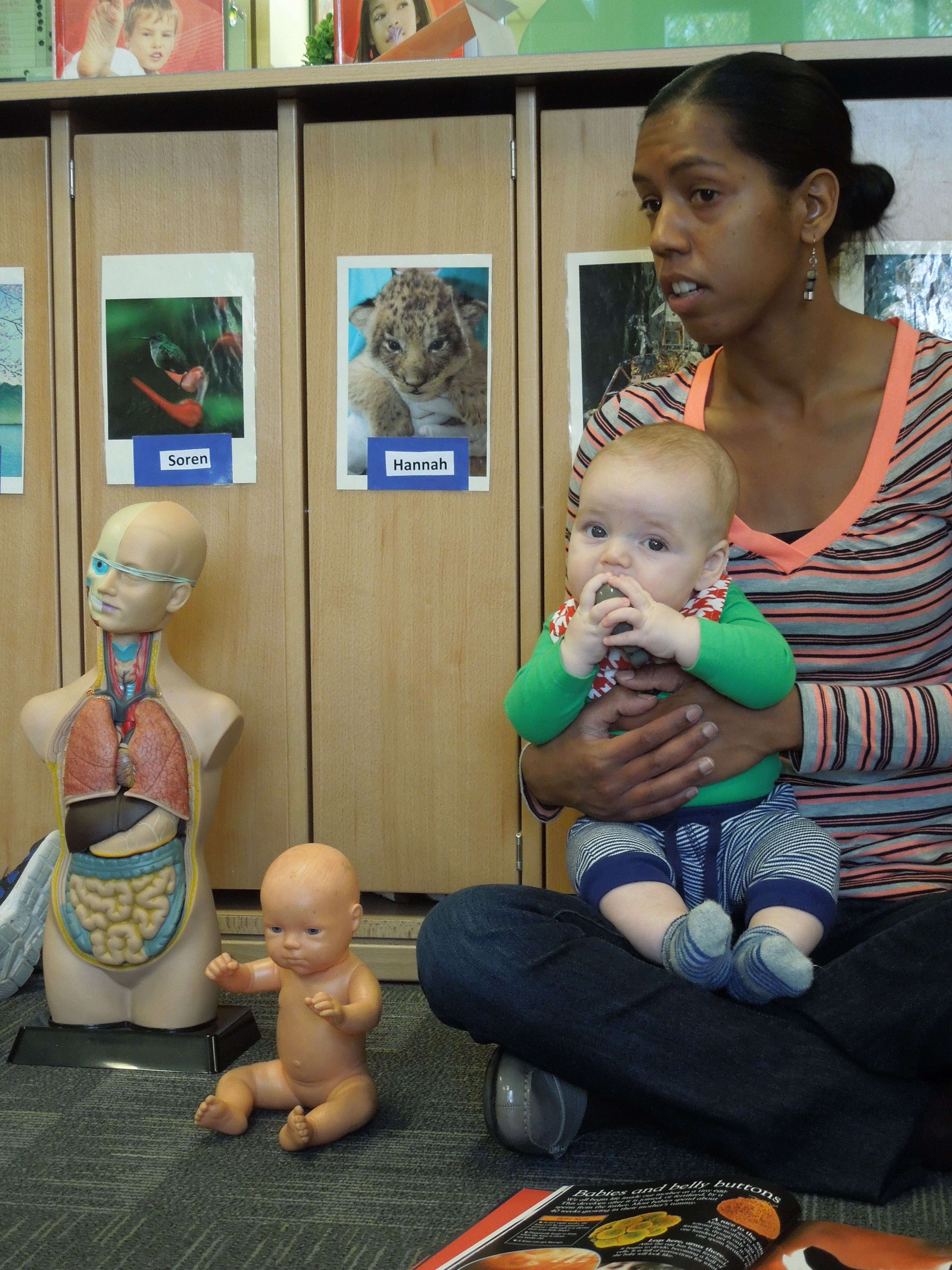
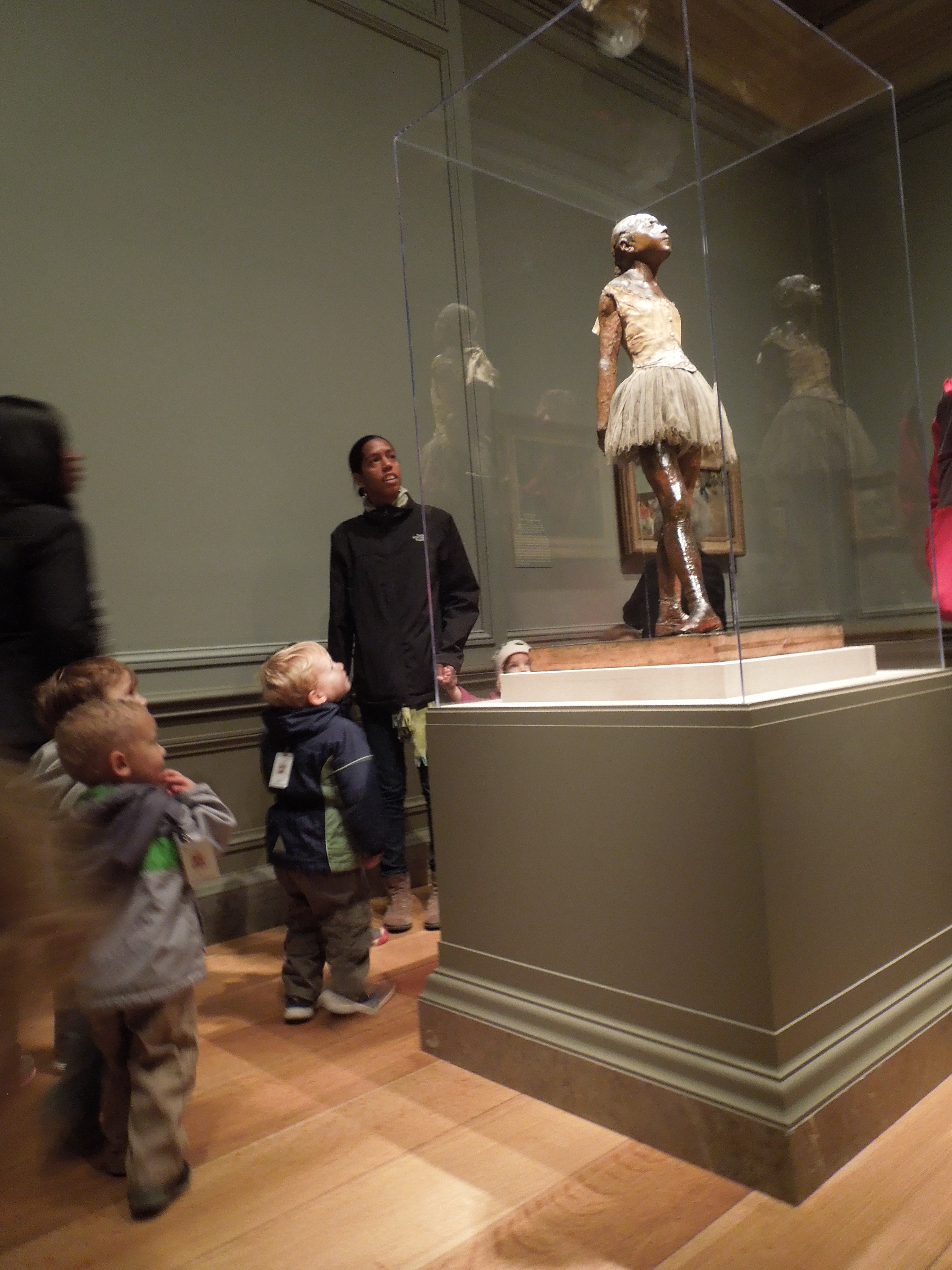
During the time we spent learning about the human body there are two lessons that I feel were extremely successful and memorable.  The first one would definitely be when a baby came to visit.  The child is currently a student in the infant class here at SEEC.  The five month old was our model for the lesson. During this lesson I talked to the Penguins about how we start out as small babies.  We talked about how different a baby’s body is compared to older people.  We talked about how when babies are born they don’t have teeth and can’t talk, walk, run, or jump.  They learned that during the first year a baby sleeps and drinks a lot and cries to communicate.  During circle time we made observations about the baby’s body and talked about how fragile it is.  Then the Penguins had the opportunity to touch him.  It was wonderful to see the children light up and respond to the child.  The second most successful and memorable human body lesson was our lesson on hair.  We learned how hair can be many colors, textures, and lengths.  We talked about the things we use to care for our hair.  Then the Penguins had the opportunity to try on wigs that were different colors, textures, and lengths. This lesson was followed up with a trip to the National Gallery of Art.  We went to look at the “Little Dancer” by Edgar Degas sculpture. First we made observations about the body and then we had the Penguins take a closer look at her braid.  The braid is made of real human hair, coated and held in place by wax.

What could you have done differently? What recommendations would you have for another teacher trying out this lesson? 

During the first lesson, if I were to do this again, I wouldn’t keep the baby on my lap the entire time.  I realized later it would have been nice for the kids to see him crawling, playing, etc.   For the second lesson about hair, I would have picked a different day to go to the National Gallery of Art.  The day we went there were several trips there and the room with “Little Dancer” was extremely crowded.

Here are a few images from their unit on the human body:

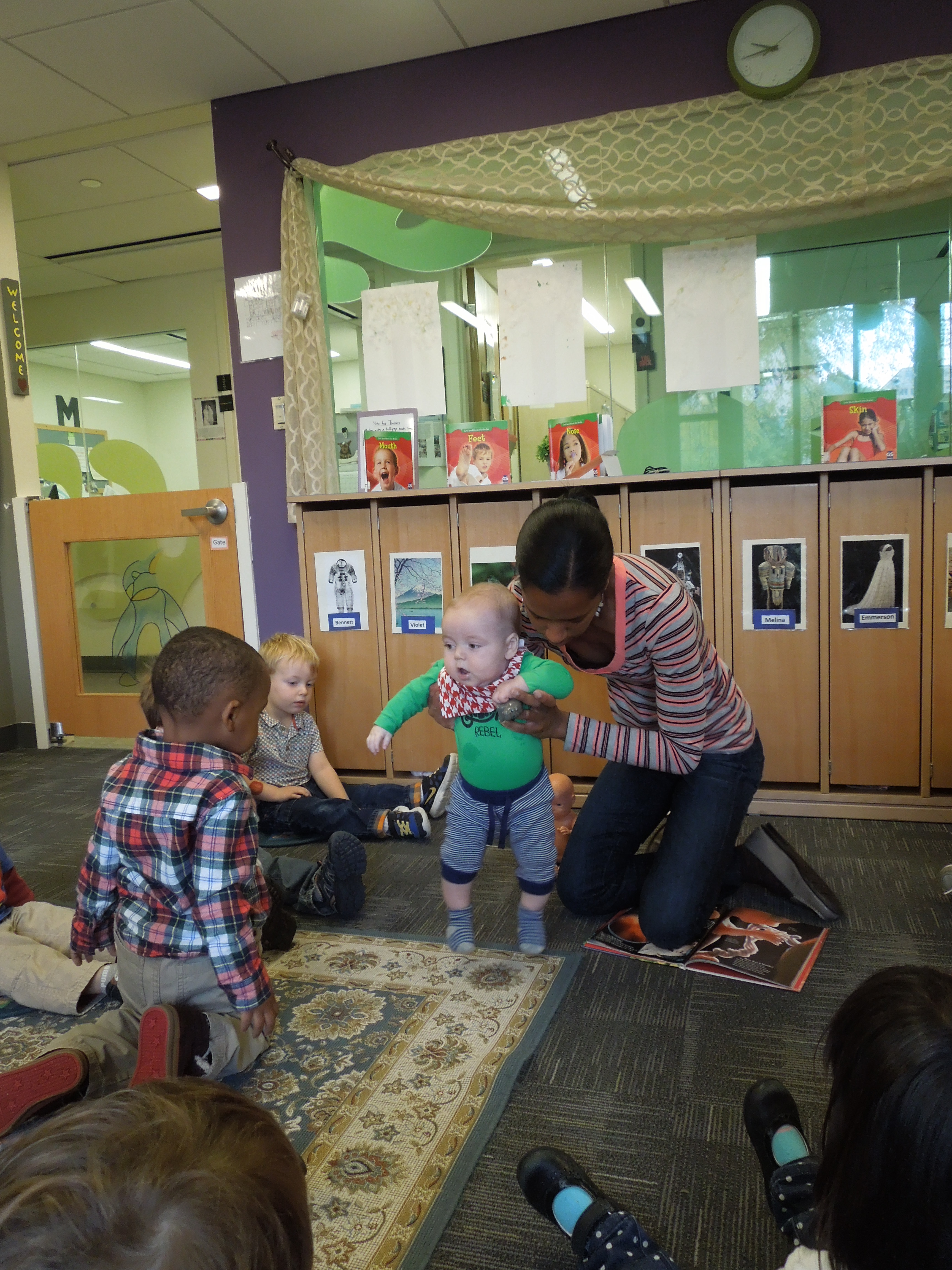
DSCN1370Javasa began the week by exploring how our bodies grow and change. As a way to illustrate this development, Javasa invited a child from the infant classroom to visit. She wanted the class to look at the baby and compare his body to their own and the teachers’. Javasa explained that people start by needing a lot of help from adults but as our body changes we become more independent.

DSCN1373Javasa explained that the baby couldn’t feed himself, talk, or even walk yet. She showed how the baby would eventually learn how to do all these things as he gets older.

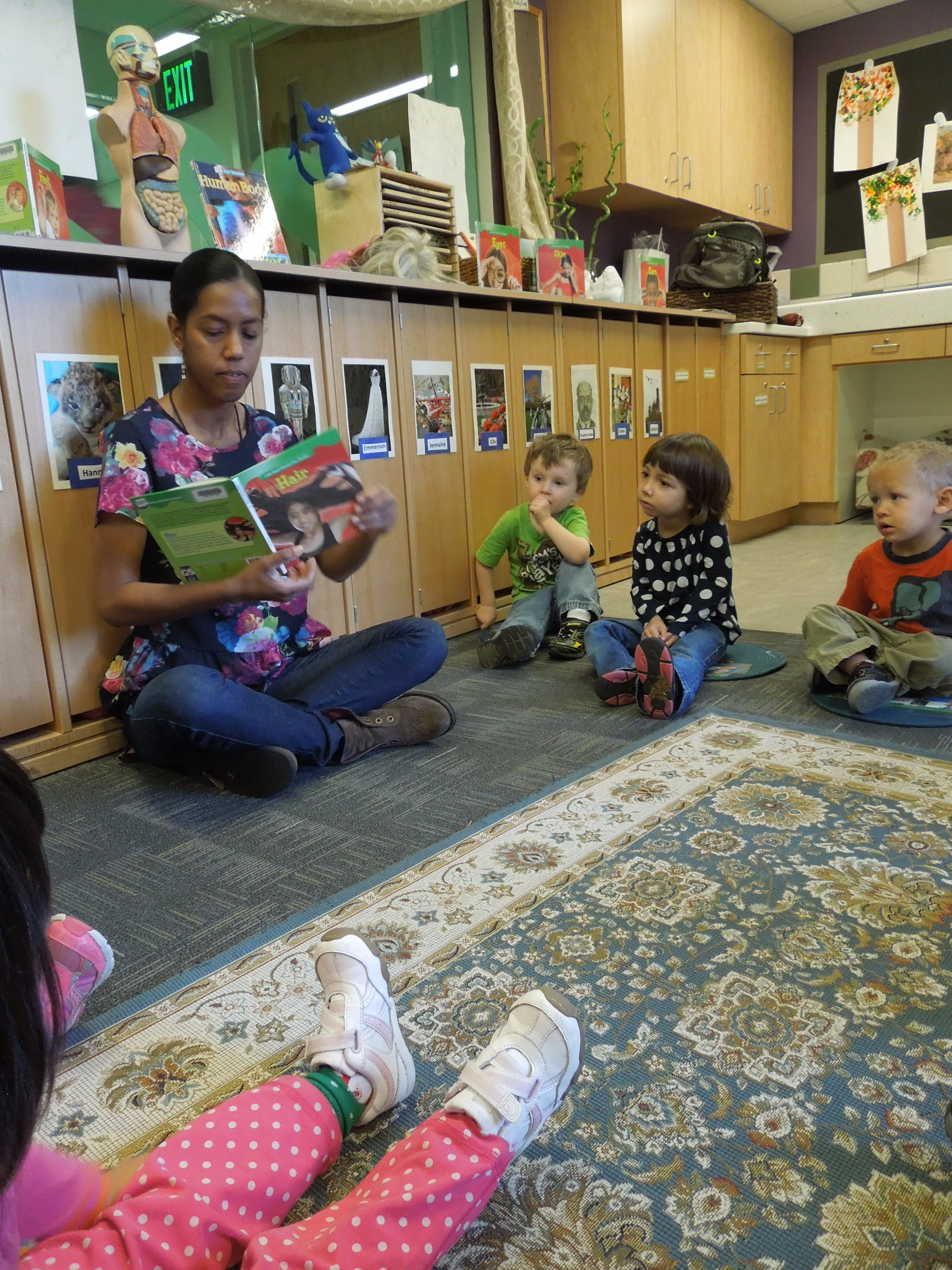
DSCN1382The next day the class moved on to Hair. Javasa read “Hair” by Cynthia Klingel and Robert B. Noyed to introduce the topic. The book helped students understand that people all over the world have many different types of hair and hair styles and each one is as special as the next.

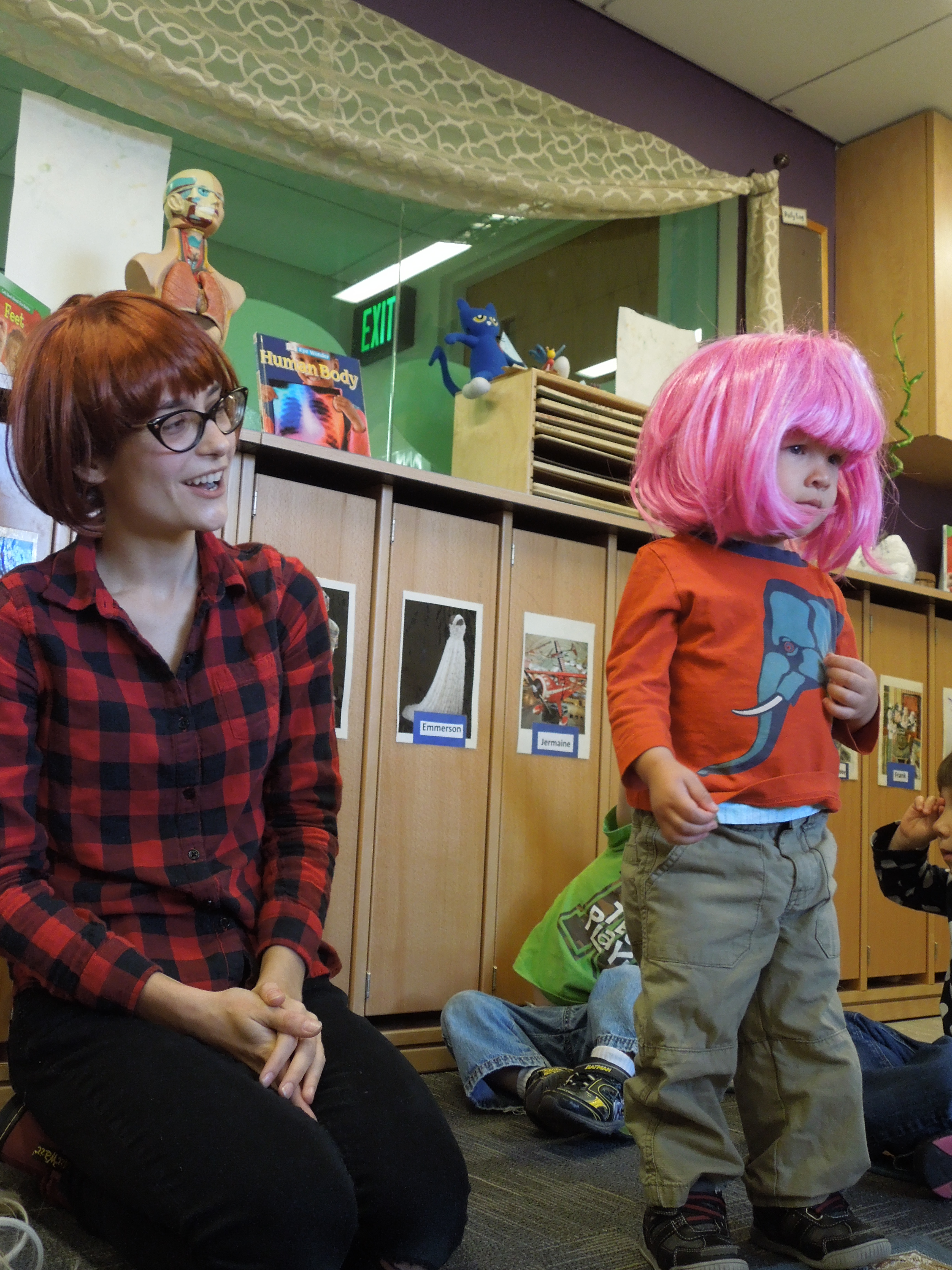
DSCN1387One of Javasa’s co-teachers shared her collection of wigs as way to talk about how hair can be all different colors, textures, lengths, and styles. She explained that hair comes in a range of color but if you want certain colors (for example, pink) you would need to dye it that color.

DSCN1390She showed the group a zoomed in picture of a hair follicle. The kids couldn’t believe how the root of their hair looks.

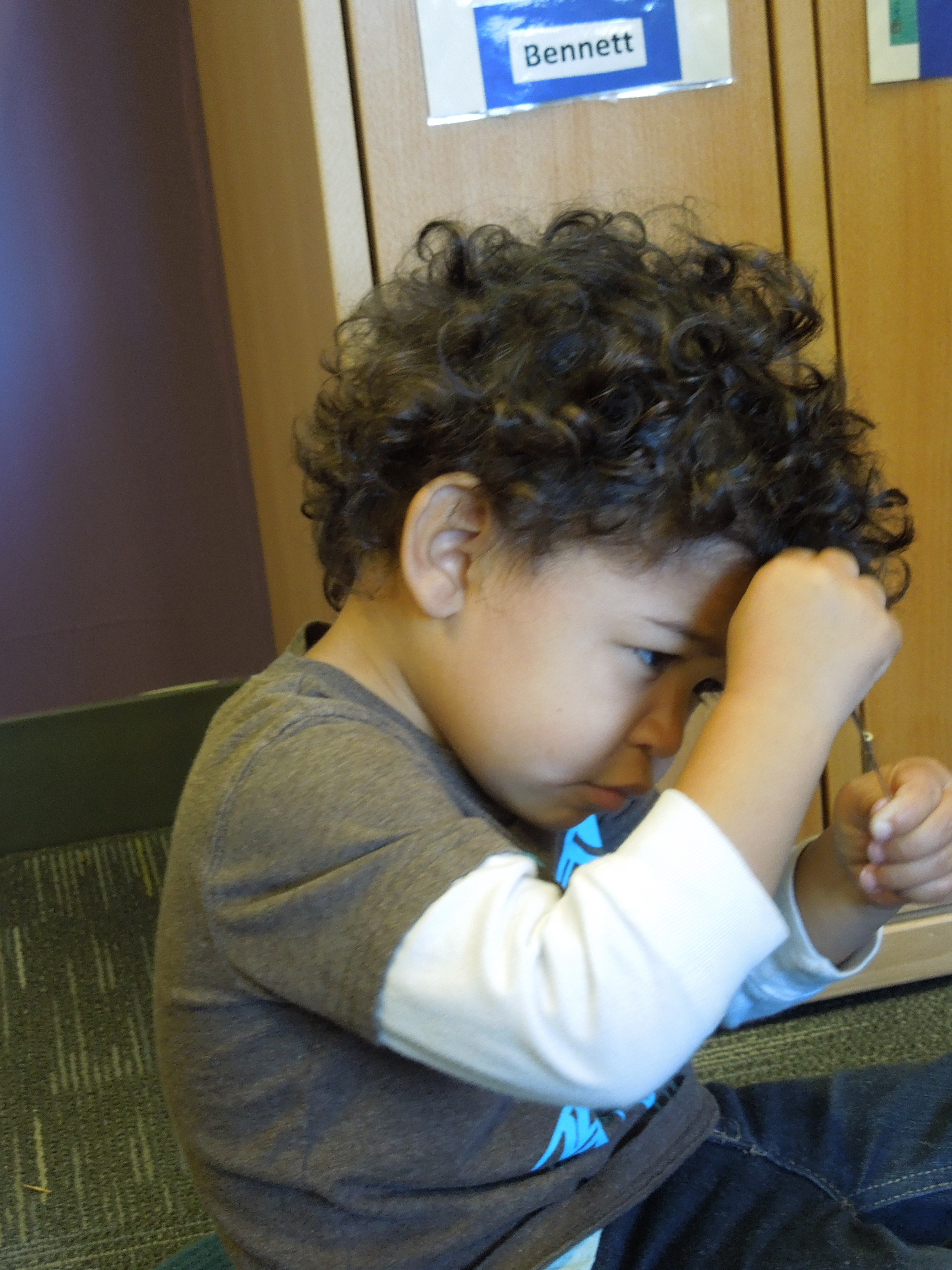
DSCN1393Javasa went on to explain that hair can grow curly, straight, or wavy.

DSCN1397 DSCN1398The group spent a long time looking and touching their own hair.

DSCN1409Then it was time to try out new hair!

DSCN1415 DSCN1431They had a wonderful time trying on the different wigs!

DSCN1436 DSCN1438The group then walked over to the National Gallery of Art to see Degas’ “Little Dancer.” They were fascinated by how Degas used real hair for the sculpture. The children discussed the color, length and style of the dancer’s hair.

This class had an awesome time learning about their bodies! Be sure to check back for our Teacher Feature next week!

Summer Fun: Building Collections with Your Child

If you have a child in elementary school, they have probably come home with some sort of summer packet. I’ve seen the “packet” take various forms: from a list of innovative ways to encourage reading to a dull packet of worksheets. Either way, parents and educators alike want to encourage learning outside of school and during a time that has been characterized as the “summer slide.”  I hope some of the ideas on how to build a collection will inspire your family to engage in playful learning this summer. Adjust as you see fit for age and your schedule.
table
household objects
Flower Parts
Looking at flowers
  1. Choose a topic in which your child is interested and then find a space in your home where you can place a table and don’t mind hanging things on the wall.
  2. Begin building your collection by visiting your local library and selecting several books.
  3. Find other toys and household items that you don’t mind donating to the cause.
  4. Use these items in a way that they can explore them with their senses, i.e. what does the flower smell like or what sound do seeds make in a bottle. Also allow them to manipulate the toys or objects so they are using they are able to discover how things work and practice their fine motor skills.
  5. Build a model, draw pictures and display.
  6. Add vocabulary words.
  7. Take it outside of the home and “experience” the topic, i.e. pick flowers or keep a journal of flowers you see during your day.
  8. Take to the community and visit a museum, local store, etc. Take pictures and post in the collection area.

Helpful Hints

  • Collect, create and display together!
  • Keep the collection at their height.
  • When they are ready, change it up or expand on the topic, i.e. flowers – gardening – water cycle.
  • Let them come and go on their own and edit along the way.
  • Have fun!


Pondering Play

NMAH PG

When museum folks think of “play,” the “go to” place that comes to mind is often one of the many amazing children’s museums found across the country. For many, when used together, the words “play” and “museum” conjure images of boisterous children engaged in hands-on learning experiences in an interactive museum play space or exhibit. On the other hand, early childhood educators are inclined to think about play in the context of their classroom. A carefully structured environment supports literacy development in the dramatic play area, pre-math concepts in block building and social emotional growth during “free choice” time. Whether working in a museum setting or classroom environment, educators that work with young children recognize the power of play in developing skills essential to one’s future success in school.Transportation line up

What does “play” look like for young children in a traditional object centered museum setting? Is it possible to help early learners embrace the “free choice learning” aspect of museums in a constructive and meaningful way? On RapidIn early May, SEEC will launch a new two day professional seminar called, “Play: Engaging Young Learners in Object Rich Environments.” Museum professionals and early childhood educators will collaboratively explore potential intersections between play and traditional object centered museums. The workshop will feature new approaches to museum learning used by SEEC educators as they determine how to best connect children’s emerging interests to museum exploration. This pilot program makes use of the Smithsonian Institution’s collection and enlists the perspective and expertise of participants as workshop content takes shape over the course of the two day Smithsonian based seminar. No doubt you have some questions, considerations, or examples of your own that come to mind as we post these thought provoking questions about play in museums. Please share!

Through SEEC’s flagship seminar, “Learning Through Objects,” we have had an opportunity to present ideas about using objects and museums to build critical thinking skills in young children to hundreds of museum and classroom educators. SEEC’s latest “Play” workshop takes this foundational information to the next level as we challenge ourselves to consider how to support positive learning experiences for young children through the use of play, objects and museums. Participants will consider the role that storytelling and question asking takes in play and museums as we encourage children to become curious explorers, creative thinkers, inquisitive learners and 21st century problem solvers.

Checking Out the Car

Upcoming Teacher Workshop

LTOWell, we have made it to January. That delightful in between month—the month where we leave the stretch of holiday breaks behind and take a deep breath before the chaos of spring begins. Our students are settling back into familiar routines but experiencing the expected adjustments that time away from school brings. As educators, we too are experiencing the adjustment, searching for renewed inspiration in the face of the winter blues, unpredictable weather, and in my case, growing preschoolers. It seems almost daily one of my students leaves early for their five year preschool check-up.

We are also in the period of resolutions: Join the gym. Use your phone less. Sleep more. Build up your savings. Be more creative in the classroom or museum. In the midst of the screaming gym ads and hyper students, come join us for some respite and rejuvenation. SEEC is offering a space to renew your creativity, collaborate with peers, and take some deep breaths. Our premier seminar, Learning Through Objects, is almost upon us (February 27th & 28th). This seminar brings together educators from a diverse set of learning environments such as classrooms, museum galleries, and cultural centers. Presented by our staff and representing work from our 25 years of learning with young children in museums, LTO may be the perfect antidote to the winter doldrums.

A LTO alum wrote of her experience, “I walked away not only refreshed and inspired, but also with a variety of ideas for how I can incorporate museums, objects, and artist studies into my classroom teaching. I am looking forward to sharing the lesson plan and field trip ideas I learned with my colleagues and of course to sharing the activities themselves with my students.” Additionally, for those in the DC area, LTO is accredited by the DC Office of the State Superintendent of Education and counts as CEUs. Come be renewed, come be refreshed, and check one or two of your resolutions of the list. We look forward to seeing you.

LTO_2

Full registration info can be found here. Keep that “save money” resolution as well, register before February 14th for our Early Bird Rate and plug in discount code SEECPD14 for an additional 10% off!

Onwards!

Smithsonian Pre-K Classes

Renaissance Composition 2

Acting out a Renaissance Composition

In our first blog, I talked about what the museum education department does at the Smithsonian Early Enrichment Center. Just to recap, we have two educators who work specifically with our classes here at the lab school. Our director, Betsy Bowers, heads our professional development efforts (more on that later) and my main responsibility is to promote and coordinate our outreach efforts for families who are not enrolled in the school.

Comparing Jackson Pollock paintings

Comparing Jackson Pollock paintings

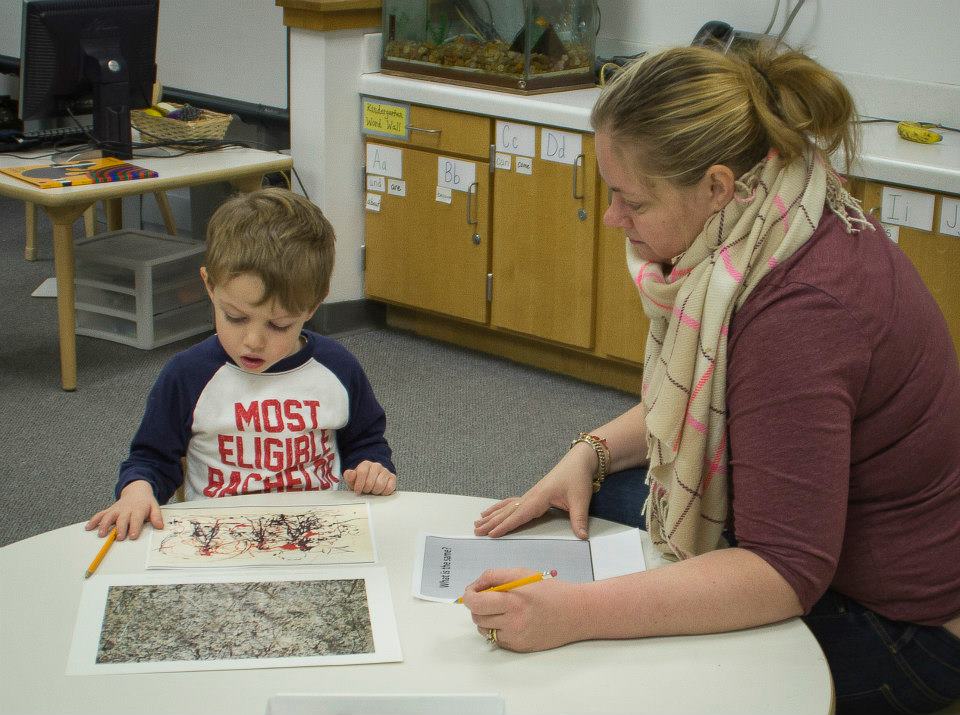
With Labor Day in our sights, I thought it was the perfect time to take a look ahead at what we are doing for our community families. Last year, we started offering preschool courses. These courses took place over a four-week period, meeting Saturday mornings. Each course had a theme (more information) and met for two hours. In the first portion of our morning, we would do some sort of introductory activity. This activity ranged from exploring a discovery box featuring cultural objects to comparing two paintings. Almost always these activities were meant to be done independently, meaning child and caretaker working together separate from the teacher. (These classes are very literally family classes, so caretakers play an important role). After our initial work, we would come together in a circle to discuss what they had done. Our discussion led us to an introduction to the museum visit.  

Cary teaching

Using hands-on objects to teach in the galleries

After bathroom breaks and the putting on of coats, we head to the museum for what is typically a 20-30 minute visit to one to two objects. During our visits, we use hands-on objects to engage the children in a multi-sensory experience and inquiry to guide the conversation. Museum educators are likely familiar with these approaches of object-based learning and the inquiry method. For educators who are unfamiliar with these approaches, let me suggest SEEC’s line of professional development seminars and/or MOMA’s inquiry course offered through Coursera (just completed it myself, very informative).

F2003.2

Freer Gallery of Art
Shiva Nataraja, ca. 990
Chola Dynasty, India
Bronze
Purchase–Margaret and George Haldeman, and Museum funds F2003.2

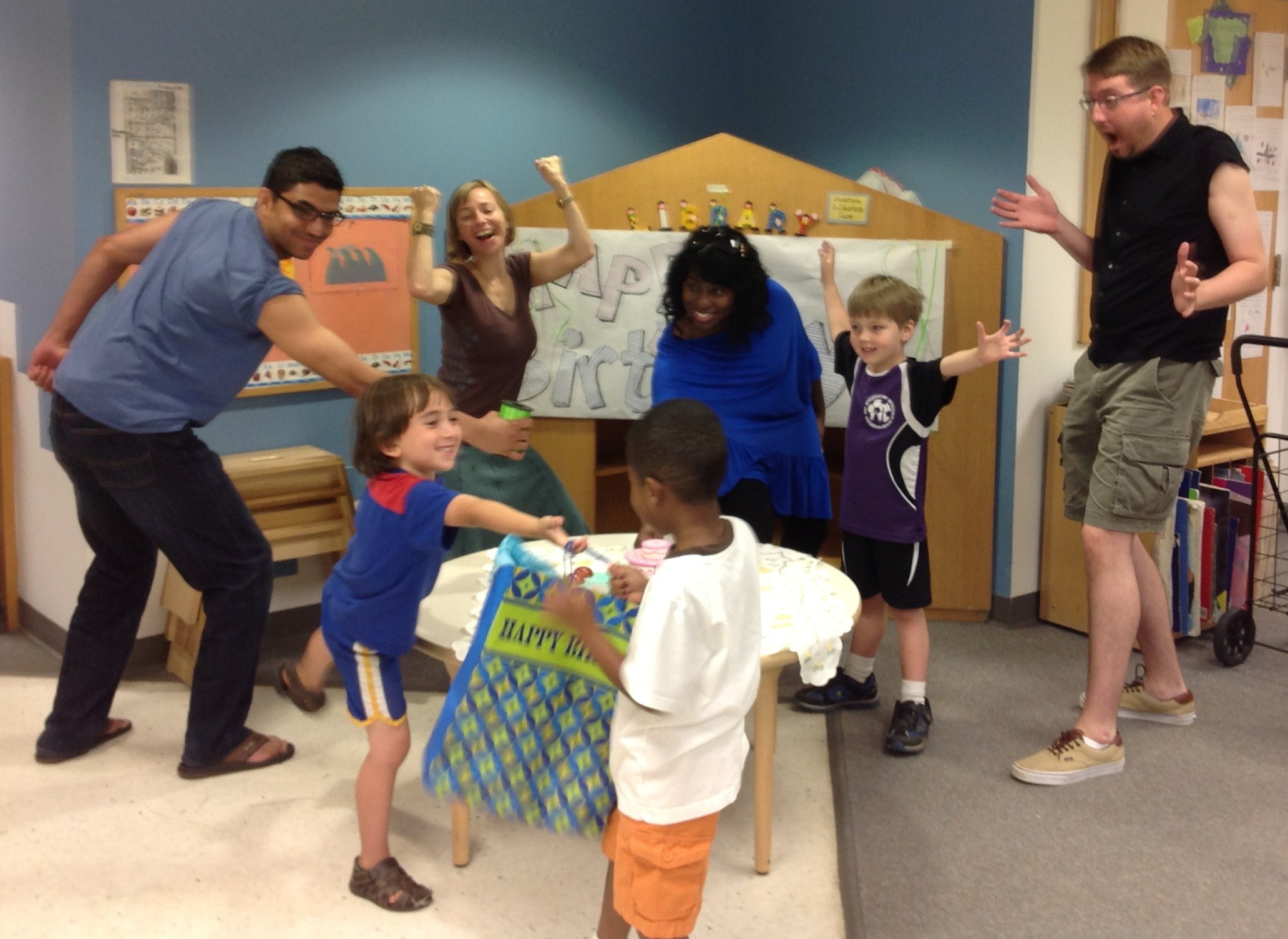
After our visit, we head back to the classroom where we wrap up with a final project.While it’s most often an art project, I do not limit myself to that platform. This is extremely helpful for two reasons; first, sometimes it is not developmentally appropriate for children to recreate the art they have just seen and second, sometimes it’s not culturally sensitive to recreate the art either. A good example of the first scenario is when I did a lesson on the Renaissance and I wanted to talk about composition. They were not up for the challenge of creating a masterpiece that depicted, balance, dynamism and fluidity. However, they could connect to these concepts by acting out their own birthday party photo and seeing the results. And when we do our class on Hinduism and visit the Freer’s Shiva Nataraja, we opt to look at videos of Bharatnatyam dance, do a sample of mudras and keep a beat with bells on our ankles. All activities are meant to build upon the concepts introduced through the lesson in a way that is interactive and self-directed.

This year we also offering infant and toddler class, so keep an eye out for future blogs about these audiences. In the meantime, let me know what is working for you with young audiences in your museum!