This blog was first published last spring during NAECY”s Week of the Young Child. We decided to re-post it as we so often get ask the question, “What do you do with babies in a museum?” We hope this answers some of your questions. If you are interested in seeing our work in action, families are welcome to join us for one of our Infant Investigators classes that occur most first Saturday and Sundays of the month.
When I first discovered that the theme for NAEYC’s 2016 Week of the Young Child™ was “Celebrating Our Youngest Learners,” I was excited by how clearly it related to my work as an infant and toddler teacher. Most people who read the phrase “Celebrating Our Youngest Learners” would immediately think of children older than the ones I work with every day. Even among the early childhood community, the term “young learners” often refers to Pre-K and Kindergarten students. I believe that we should include infants and toddlers in our celebration of the youngest learners. In my mind this is something that is both natural and necessary. In fact, it has so permeated my life that I sometimes forget that not everyone feels the same way that I do.
As an infant and toddler teacher at the Smithsonian Early Enrichment Center, I take my class on daily outings into the museums that line the National Mall. Upon seeing a group of infants or toddlers in a museum, visitors often remark on how amazing it is to see so many young children or how engaged my class seems. But far too often we get another response; people will come up to my class and say “Aren’t they too young for a museum?”
While I understand that a class of infants and toddlers may be an unusual sight in a museum, I can’t help but be baffled by the very premise of their question. My audible response to this accusation is a cheery “Never too young,” but my inner dialogue consists of wondering “Too young for what? Too young for learning?” I believe that museums make ideal places for self-directed learning. For an infant or toddler to be considered too young for a museum, then the extension of that logic is that the child is too young to learn, which cannot be further from the truth.
Infant’s and toddler’s brains are ripe for learning and processing. In fact, they are learning at a faster rate than at any other time in their life. They are learning language, how to move their bodies, pre-literacy skills, how to interact with others, and whether or not their world is a safe and secure place. Beyond that infants and toddlers are discovering what interests and motivates them. All of these things and more can be learned in museums. Below are a couple of examples:

We visited Shirin Neshat’s The Book of Kings, My House is Burning Down (2012) at a recent Hirshhorn Museum and Sculpture Garden exhibit as part of a unit of Eric Carle’s From Head to Toe. We were looking at the parts of the body and a favorite movement came from the line “I am a gorilla and I thump my chest. Can you do it?”

To discover more about different types of shoes, such as wooden clogs and ballet slippers, we went to the National Gallery of Art to see Paul Gauguin’s Breton Girls Dancing, Pont-Aven (1888). For a toddler, shoes represent a way for them to start creating a sense of autonomy. In my class, my students often come dressed in pink cowboy boots or purple rain boots that they picked out themselves. They are expressing their new found independence by choosing what shoes or clothes they want to wear.

Infants and toddlers expend much of their energy discovering how they can move. Here my class of mobile infants visited a termite mound at the O. Orkin Insect Zoo in the National Museum of Natural History, which they were able to crawl through.
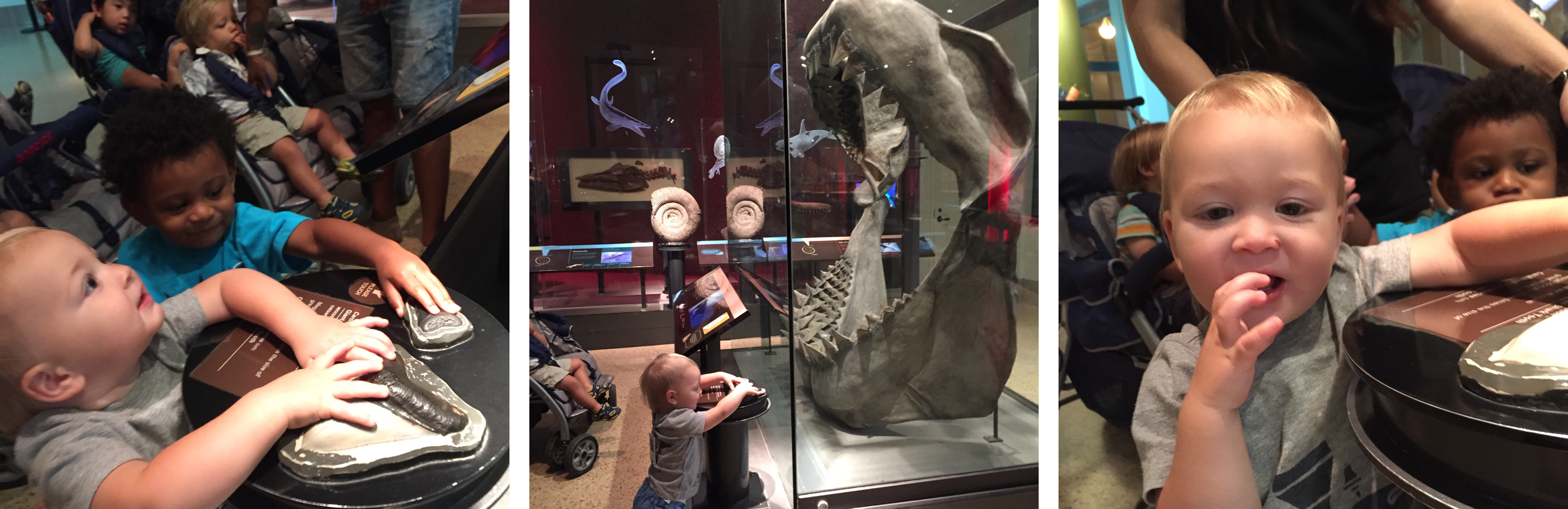
Getting new teeth impacts so many aspects of the lives of infants and toddlers. It allows them to transition to eating solid food, affects their mood, and is often detrimental to their sleep. What better way to learn about what is happening inside their own bodies, than to examine the jaw of a great white shark and touch a replica of some of the shark’s teeth in the Sant Ocean Hall at the National Museum of Natural History.
Great strides have recently been made in explaining the importance of Pre-K and Kindergarten to the public. People across the nation now believe in the importance of these early learning experiences. While there is more work to be done, it is important that do not waver from celebrating and supporting the youngest of the young learners — infants and toddlers.
Infants and toddlers are active learners, so the environment and the people they interact with impact their learning. Infant and toddler educators need extra support and should be encouraged to see the myriad of possibilities for learning that occur with infant and toddlers every day. I hope that one day everyone who hears the term “youngest learner” will automatically include infants and toddlers in that group. I am excited for the day that I am greeted with “What are they learning about?” when I am walking in the museum with the infants and toddlers in my class.
 Meredith Osborne is the infant and toddler specialist at the Smithsonian Early Enrichment Center. She received her Master’s in museum education from The George Washington University and studied history and psychology at Ohio Wesleyan University. She has experience working with both children and adults including positions at Playgroup in the Park, the Children’s Museum of Cleveland, teaching adults literacy classes, and interning at the Supreme Court of the United States.



 Smithsonian and stop by the Sackler Gallery to see the
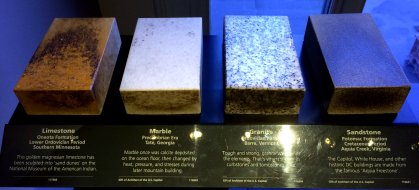
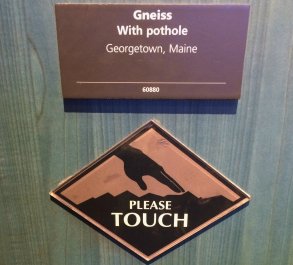 Our inaugural Object of the Month is actually not so much an object, but a gallery. The Rocks Gallery in the National Museum of Natural History is tucked at the back of the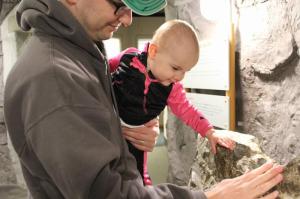
 In the fall of 2015, the Friends of the National Zoo, National Museum of African American History and Culture, National Air and Space Museum, National Museum of American History, National Museum of Natural History, Smithsonian Associates’ Discovery Theater, and the Smithsonian Early Enrichment Center, together with the DC Promise Neighborhood Initiative (DCPNI) were awarded a two-year grant through Grow Up Great, PNC’s initiative focused on early childhood education, to launch Word Expeditions. The grant’s objective is to build vocabulary in preschool students from the Kenilworth-Parkside neighborhood in Northeast DC. DCPNI works exclusively with this neighborhood supporting all members of the Kenilworth-Parkside and describes its mission as “improving the quality of their own lives and inspiring positive change in their neighborhood.” The group has a strong foothold with families of young children and so it seemed natural to integrate Word Expeditions into their already existing Take and Play structure. Once a month, Smithsonian representatives visit Neval Thomas Elementary School during which time, families participate in activities that teach about the Institution’s collections, build vocabulary, and support a child’s development. The evening concludes with a meal and families take home a kit from DCPNI outlining fun and simple ways to incorporate learning and vocabulary skills at home.
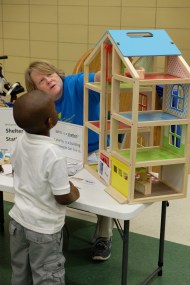 A few weeks later, families are invited to come to the museum that co-hosted the
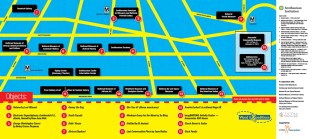 accompanied by what I like to call, conversation starters. These conversation starters include key vocabulary terms that help families define some big ideas they can use to discuss the object. They also pose open-ended questions and suggest easy ways to engage with the object and use the vocabulary in ways that will help children understand and recall the word’s meaning. For example, The Smithsonian Gardens description asks families to look closely at an elm tree and find its parts. The children will walk away with a concrete understanding of terms like roots, trunk and bark. The National Portrait Gallery’s entry asks families to imagine what they would see, hear and taste if they jumped into the portrait of George Washington Carver and suggest that parents use the term five senses and, of course, portrait.
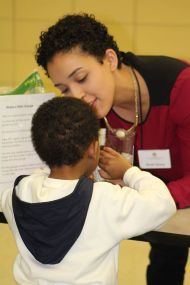 I find that dinner time at the Take and Play program provides the perfect opportunity for me to get to know families on a deeper level as I talk with them about the maps and their museum visits. Recently, I engaged in a conversation with two families who have become “regulars” at the workshops and museum visits. When I asked what museums the families had visited lately, the mothers immediately began to list all of the museum trips they had been on since the program’s inception in the fall and what’s more, they described their visits in detail – recalling the vocabulary that was introduced and the activities in which they participated. It was exciting to see their enthusiasm for the program and it was clear that the map had helped foster and grow their interest in museums.
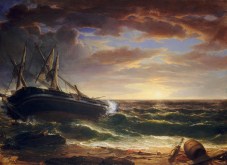
 As the last part of the object lesson, I laid out several objects and asked them to work together to recreate the painting. They needed no instruction, but went right to work, collaborating until the composition was complete. Was it exactly like the painting, no, but they had used these tools to create their OWN composition. They were quite proud and were completely engaged in the activity. I saw them looking back at the painting, rearranging objects and making their own decisions.
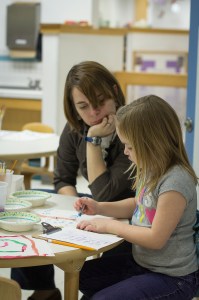 yet, I find myself in the position of having to provide and support art based projects. I am not going to lie, I have often felt a little out of my element and concerned about creating authentic art experiences. And I’m guessing I’m not the only one. I am certain there are other early childhood educators and parents out there who dread the “art activity” largely because many of us have the mindset of either being good or bad artists.


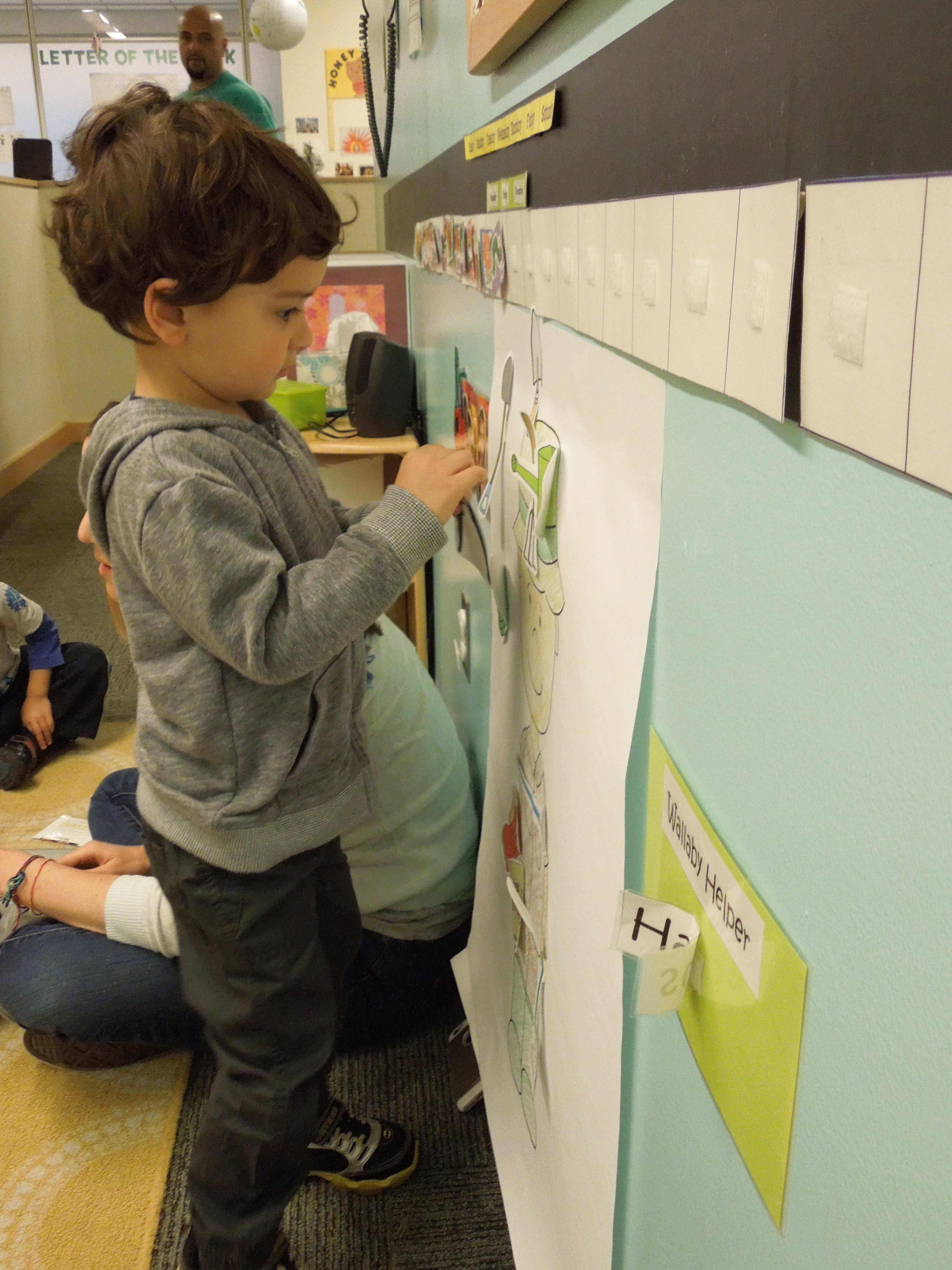
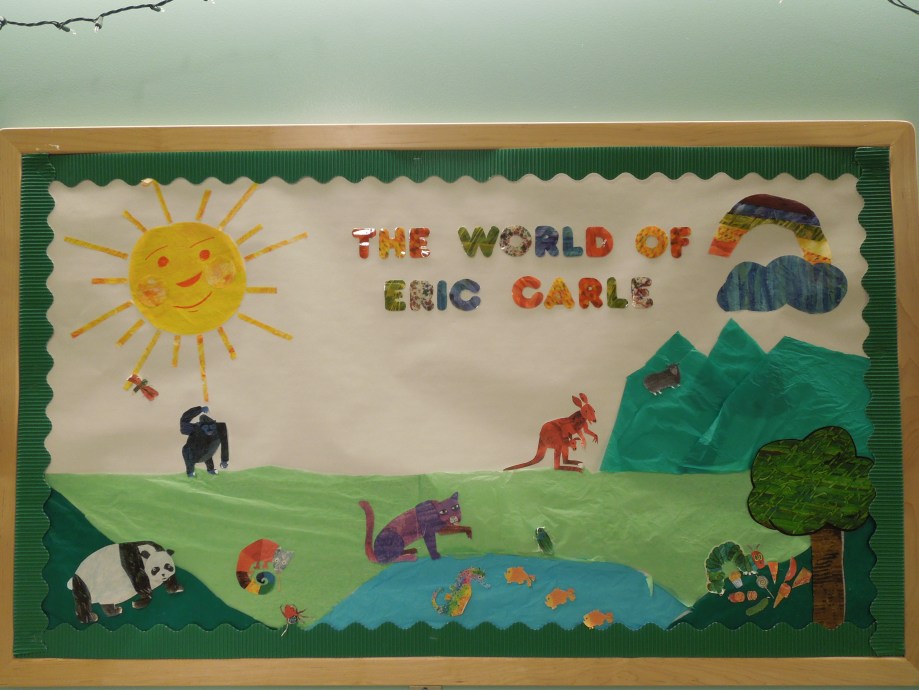 Erin’s class was spending time exploring the wonderful world of Eric Carle and decided to spend a week on his book, The Tiny Seed.
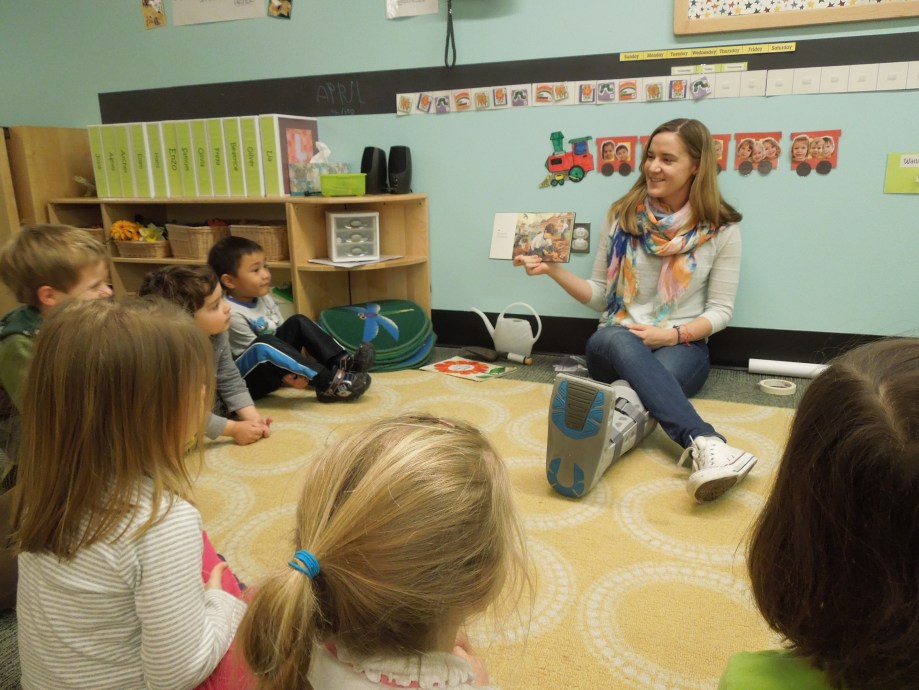 Erin then read a new book to the group: A Seed Grows by Pamela Hickman. The book introduces the different tools used in gardening.
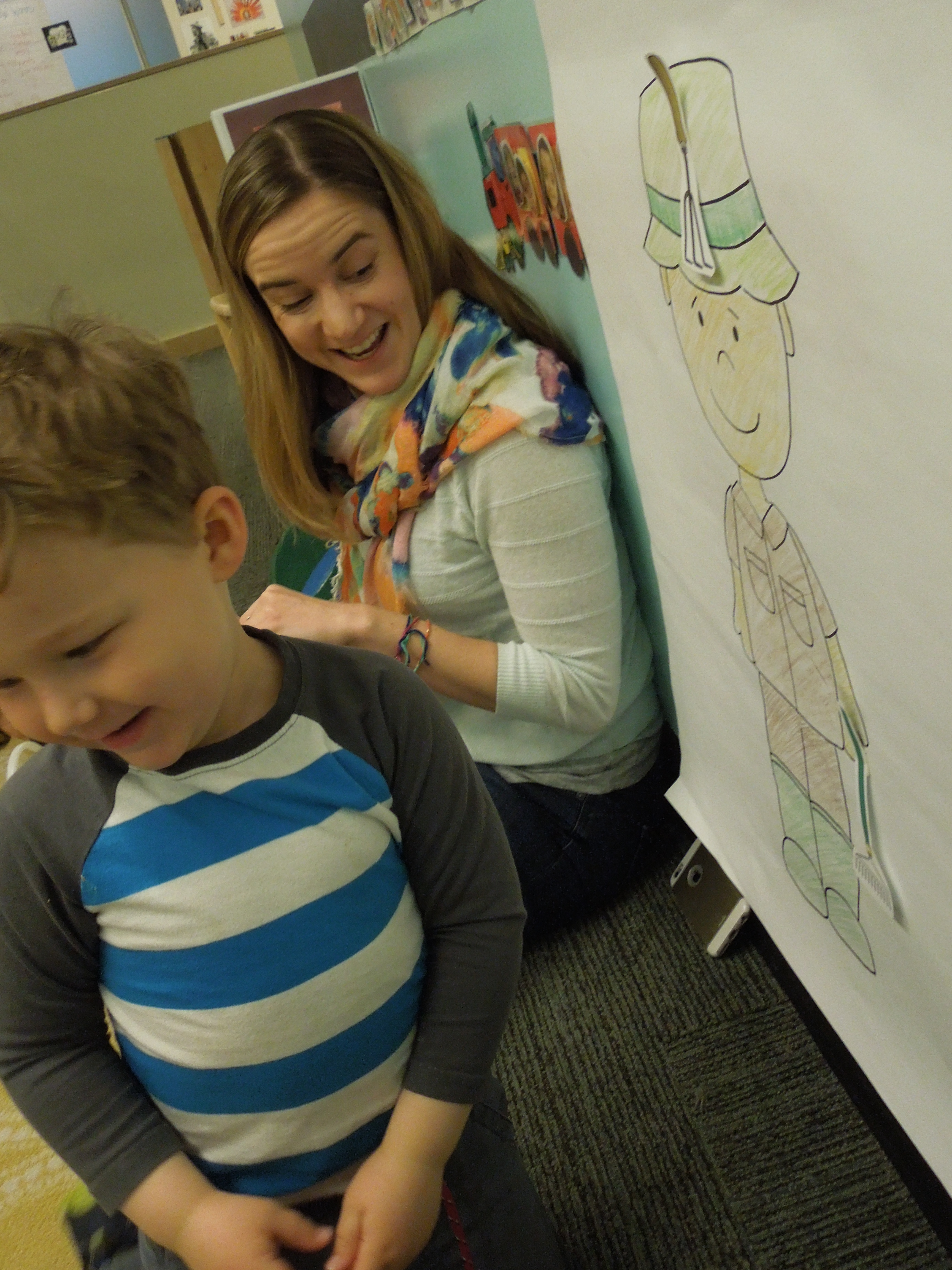
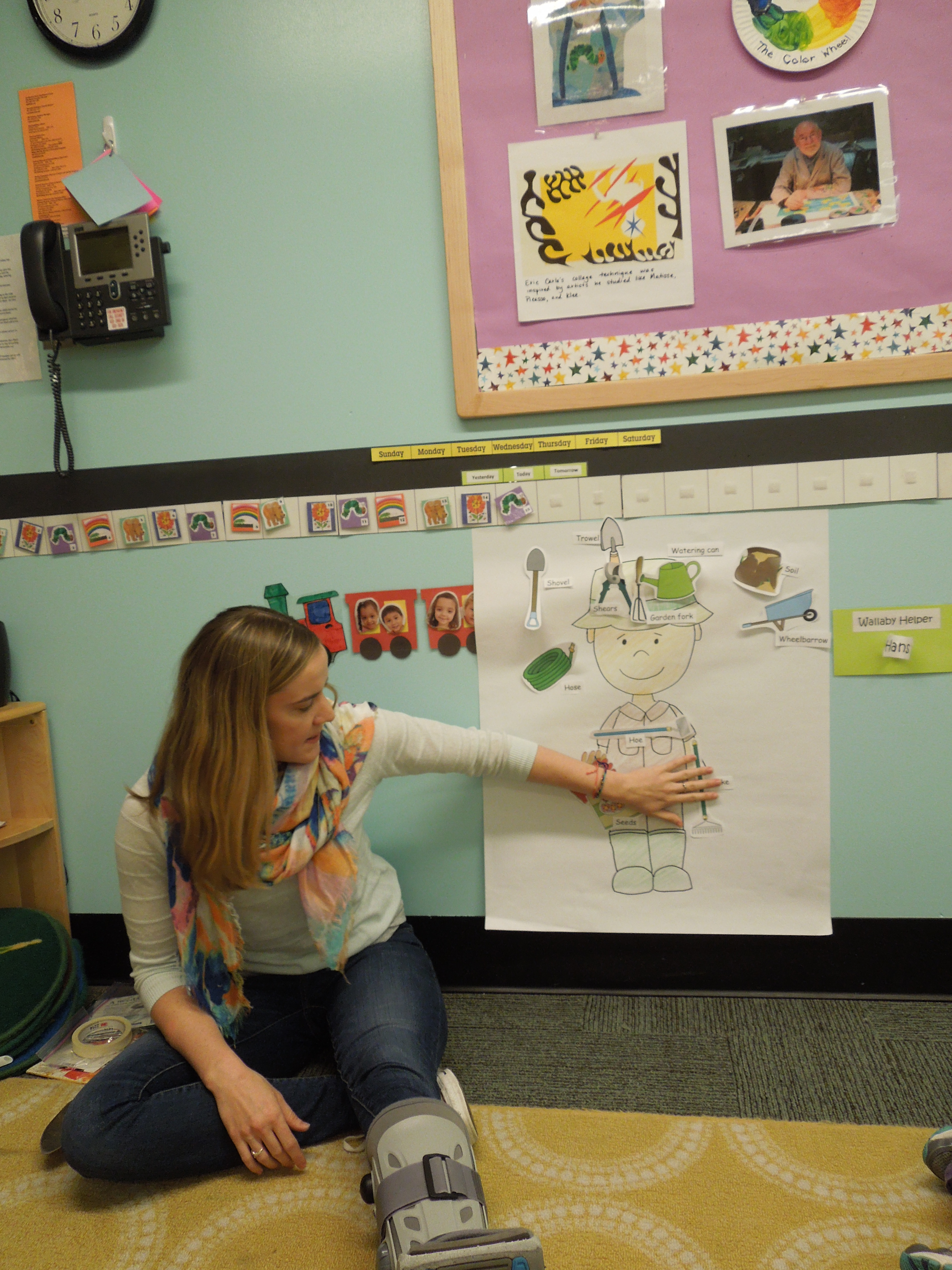
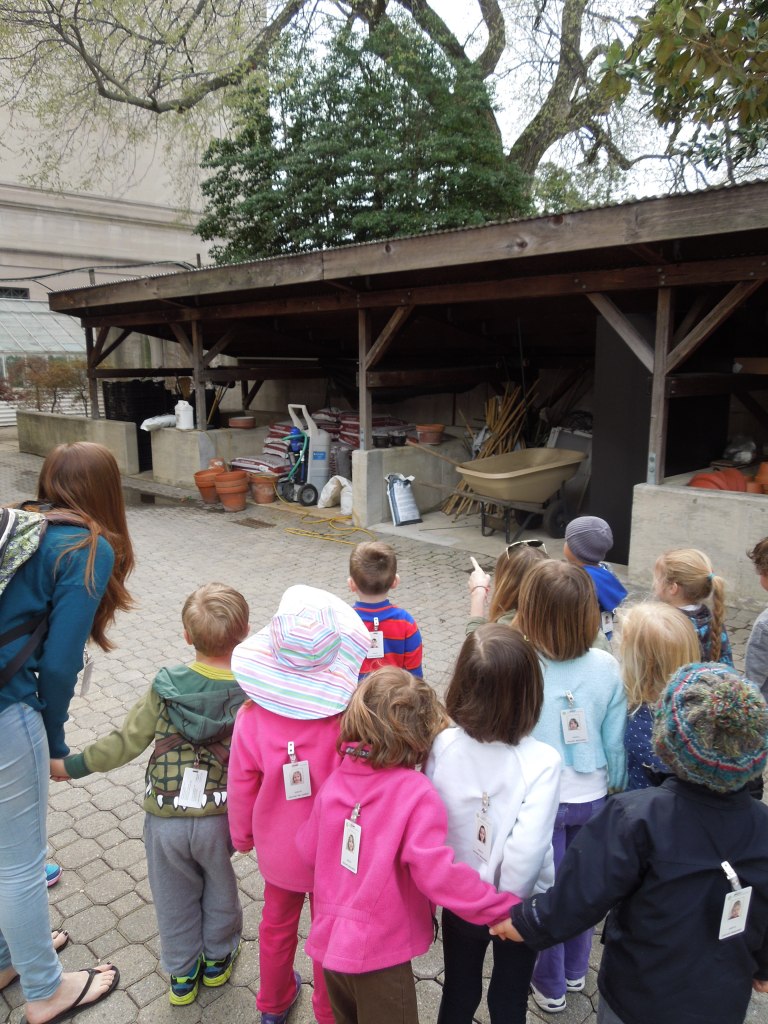 The class then headed out to the National Gallery of Art (NGA). On their way into the museum one of the NGA gardeners invited the students to check out his gardening tools.
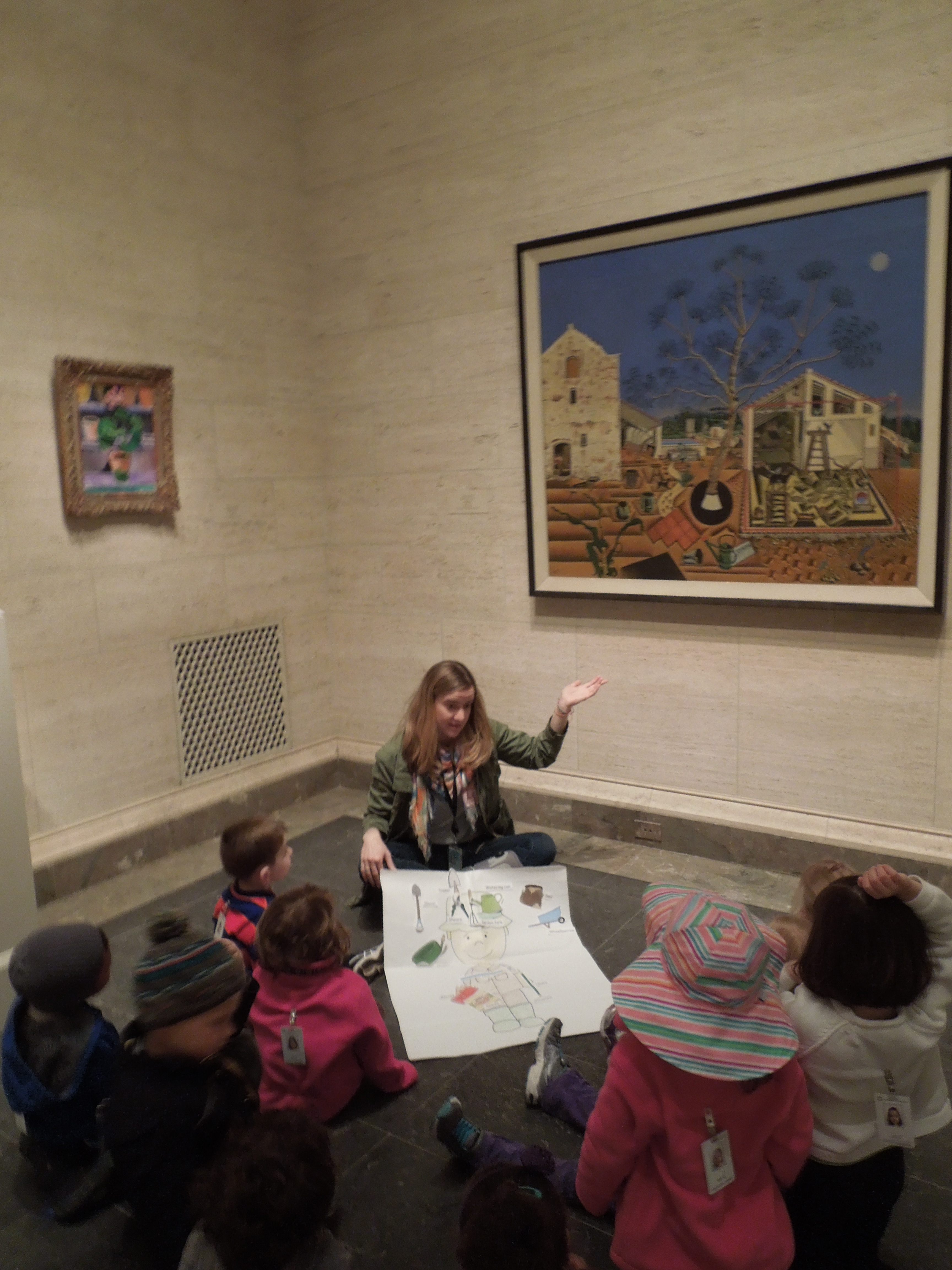
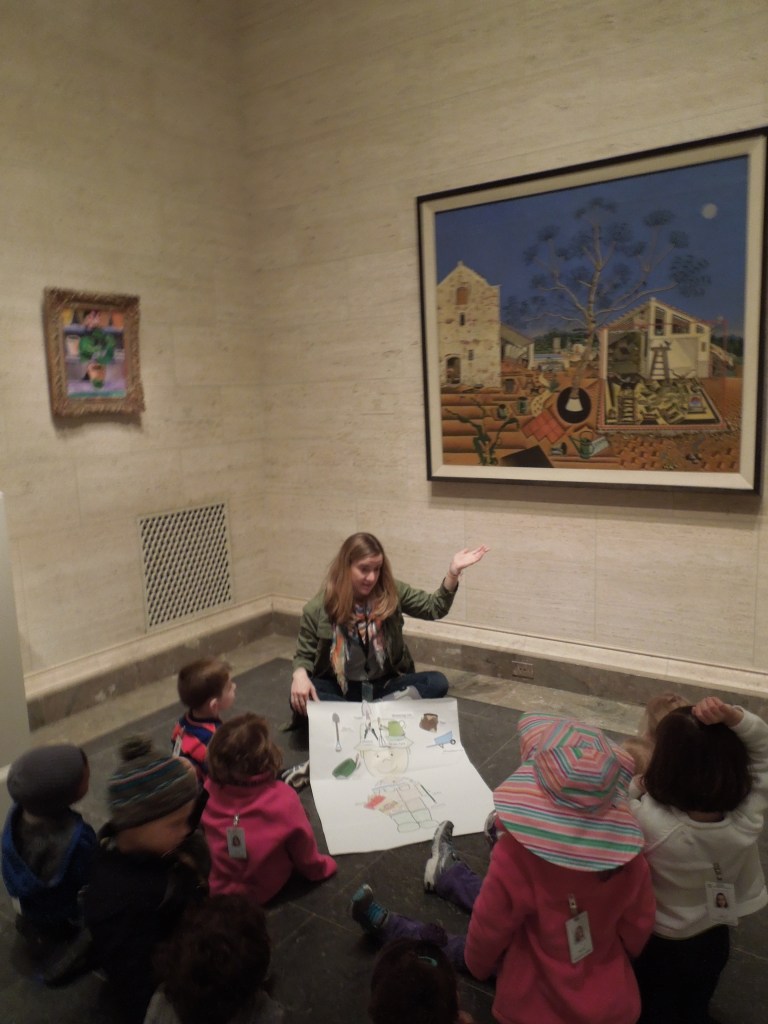 The final stop was to see Miro’s The Farm and Matisse’s Pot of Geraniums. Erin asked the group to do some close looking and describe what they saw in the two paintings. She emphasized that these paintings were both of gardens but one would be found indoors and the other outdoors. Erin then brought out “Gus” and had the group work together to identify which tools could be used to plant in either garden or both.


 seecstories.com