Word Expeditions

PrintIn the fall of 2015, the Friends of the National Zoo, National Museum of African American History and Culture, National Air and Space Museum, National Museum of American History, National Museum of Natural History, Smithsonian Associates’ Discovery Theater, and the Smithsonian Early Enrichment Center, together with the DC Promise Neighborhood Initiative (DCPNI) were awarded a two-year grant through Grow Up Great, PNC’s initiative focused on early childhood education, to launch Word Expeditions. The grant’s objective is to build vocabulary in preschool students from the Kenilworth-Parkside neighborhood in Northeast DC. DCPNI works exclusively with this neighborhood supporting all members of the Kenilworth-Parkside and describes its mission as “improving the quality of their own lives and inspiring positive change in their neighborhood.”  The group has a strong foothold with families of young children and so it seemed natural to integrate Word Expeditions into their already existing Take and Play structure. Once a month, Smithsonian representatives visit Neval Thomas Elementary School during which time, families participate in activities that teach about the Institution’s collections, build vocabulary, and support a child’s development. The evening concludes with a meal and families take home a kit from DCPNI outlining fun and simple ways to incorporate learning and vocabulary skills at home.
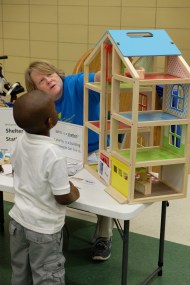
DSCF1330A few weeks later, families are invited to come to the museum that co-hosted the
Take and Play. During their visit, families engage in similarly fun activities that reiterate the vocabulary and theme from the Take and Play. In addition to the literacy component, the Smithsonian wants to create a welcoming experience that will make families feel at-home and inspire them to visit again. We also hope that through these programs, they will begin to see how museums can be used as a place to learn and explore together as a family.

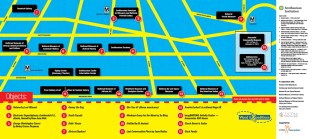
As part of the grant, SEEC was tasked with creating a unique map featuring the Smithsonian in Washington, DC. The map displays the museums on and off the Mall and includes the Smithsonian Gardens and Discovery Theater. Each one is represented by an object, which isWord_Expeditions_Map Word_Expeditions_Map2accompanied by what I like to call, conversation starters. These conversation starters include key vocabulary terms that help families define some big ideas they can use to discuss the object. They also pose open-ended questions and suggest easy ways to engage with the object and use the vocabulary in ways that will help children understand and recall the word’s meaning.  For example, The Smithsonian Gardens description asks families to look closely at an elm tree and find its parts. The children will walk away with a concrete understanding of terms like roots, trunk and bark.  The National Portrait Gallery’s entry asks families to imagine what they would see, hear and taste if they jumped into the portrait of George Washington Carver and suggest that parents use the term five senses and, of course, portrait.

These conversation starters also motivate families to stop and take a look – conveying the importance of observation and careful looking. The Hirshhorn Museum and Sculpture Garden encourages families to walk around Juan Muñoz’ Last Conversation Piece and try to pose like the figures. The description features the words pose and conversation and also asks families to imagine what their conversation is about. Using a concrete analogy to the vocabulary is so important for young learners.

To keep families returning, we offer them four free tickets to Discovery Theater after visiting five museums, and a free book after visiting ten. Perhaps more important to the map’s success is the presence of Ariel Gory, Education Specialist for Early Learning, from the National Museum of American History. She speaks directly to families about the map. Her presence has been important in communicating the purpose of the map, encouraging families to use it, and creating a sense of community. She shares her experiences:
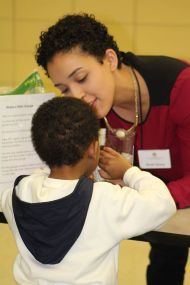
DCPNI NASM Photo1 (002)I find that dinner time at the Take and Play program provides the perfect opportunity for me to get to know families on a deeper level as I talk with them about the maps and their museum visits. Recently, I engaged in a conversation with two families who have become “regulars” at the workshops and museum visits.  When I asked what museums the families had visited lately, the mothers immediately began to list all of the museum trips they had been on since the program’s inception in the fall and what’s more, they described their visits in detail – recalling the vocabulary that was introduced and the activities in which they participated. It was exciting to see their enthusiasm for the program and it was clear that the map had helped foster and grow their interest in museums.

 Getting to see the map in action is one of the most uplifting aspects of this program. During a spring visit to the National Museum of American History, I noticed one mother rustling through her backpack before pulling out a well-worn map. “I can’t forget to get this signed!” she said. As I took a closer look at the map, I noticed that she had a signature for the National Air and Space Museum. I asked her when she had visited and she responded that they had gone the day before because her children had the day off from school. She noted that even though they weren’t in school that day, she still wanted them to “learn something.” Seeing that this mom had used the map to independently seek out a museum to expand her children’s learning shows the importance of programs like this.

So often we realize that local families are unfamiliar with the Smithsonian or feel that it is a place that they don’t belong. We hope that the map and the Word Expeditions program not only help to build young children’s vocabulary, but also encourage families to explore the opportunities for wonder and learning located in their backyards.

Supported by:
GUG_RGB


In cooperation with:

Friends of the National Zoo
Smithsonian Early Enrichment Center
National Air and Space Museum
National Museum of American History
National Museum of Natural History
National Museum of African American History and Culture
Smithsonian Associates/Discovery Theater
DC Promise Neighborhood Initiative
A Playful Experiment

Originally posted May 2014:

This past week I had the chance to attend one of SEEC’s seminars: Play: Engaging Learners in Object Rich Environments. During the two-day workshop, we explored the meaning of play and how to use it when teaching with objects. We began the seminar by defining play as a group. Some of the key words were: fun, tools, free thought, child directed, social, emotional, intellectual. To help us articulate the discussion, we also read Museum Superheroes: The Role of Play in Yong Children’s Lives by Pamela Krakowski, which distinguishes play as:

active engagement, intrinsic motivation, attention to process rather than the ends, nonliteral (symbolic behavior) and freedom from external rules.1

I reflected on these concepts and how they related to my own teaching. I wondered how I could incorporate more play into my practice, especially when I was in the museums. I decided to try out some new play strategies on a recent visit to the National Gallery of Art with a group of preschoolers.

E11183

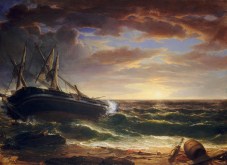
Asher Brown Durand The Stranded Ship 1844 oil on canvas National Gallery of Art Gift of Ann and Mark Kington/The Kington Foundation through Millennium Funds 2003.71.1

My first playful endeavor was completely spontaneous. I began the discussion by asking the children to describe this painting by Asher Brown Durand. One  girl pointed toward the artwork and said:

The sun is always moving through the sky.

I took this opportunity to ask the rest of the class whether they had ever noticed the sun moving through the sky too. They immediately offered their own examples. At that moment, I decided we should play the Earth. I asked everyone to stand up and slowly turn their bodies. I grabbed a parent and had her stand in the center pretending to be the sun.  As we moved, I explained how it was actually the Earth’s rotation that made it look the sun was moving in the sky. This was a completely unexpected and child-initiated moment, which was great. I think it was the playful element though that really made the experience memorable. If I hadn’t asked the children to get up and pretend to be the Earth, they would have been less likely to understand and remember the concept of rotation. By having them participate in the experience the concept was made real, tangible.

Part of the seminar was inspired by our colleagues at Discovery Theater. This session was, as one would expect, more theater driven and honestly, really challenged me. As the class continued to describe the Durand painting, I added secondary questions to enliven the discussion. For example, when the ocean was observed, I asked them to show me with their bodies how the ocean was moving and then I asked them to make the sound of the waves.  The kids were happy to illustrate both for me so when it came time to talk about the clouds and wind, we added sound effects and movements again. These exercises captured the essence of the painting, encouraged different learning styles and made everything more fun.

photo 2 (3)As the last part of the object lesson, I laid out several objects and asked them to work together to recreate the painting. They needed no instruction, but went right to work, collaborating until the composition was complete. Was it exactly like the painting, no, but they had used these tools to create their OWN composition. They were quite proud and were completely engaged in the activity. I saw them looking back at the painting, rearranging objects and making their own decisions.
All in all, the visit felt playful and meaningful. I am continuing to think about how to make my lessons more playful and how play can be a tool for learning within the museum environment.  If you have any ideas, please share!!!!

1. Journal of Museum Education, Volume 37, number 1, Spring 2012, pp. 49-58.

What happened to Kindergarten?

When I went to Kindergarten it was the place where I learned about being in school. Nobody expected me to be reading by the time the year was over. I had music and art and recess. It was a gentle transition into school and one that made me love learning and be excited to go to school, a feeling that is still with me to this very day.

Sadly, the same is not true for many children today. For them, Kindergarten is a place of high stress and pressure. Stories and questions have been replaced with worksheets and testing. Rugs and shared round tables have been replaced by individual desks. But none of this is true in our Kindergarten at SEEC. Sure, our morning is spent learning math and reading but not in a high pressure, “you have to learn this by the end of the year” way. Instead, it is done in large circles on a rug with conversation, at shared tables with the children discussing what they are learning, and in ways that introduce concepts connected to things the children care deeply about. In the afternoon they head out on their daily trip to the museums of the Smithsonian to more deeply explore some of their ideas, to ask questions and search for answers, and to learn to look carefully at the world around them.

Let me give you and example of how this works. During the fall months our Kindergarten teachers noticed the children had a strong interest in Star Wars. For months they used that interest to teach everything from reading to appropriate behavior, from marketing strategies to the elements of a fiction story. Some of the activities that happened during these months included the following…

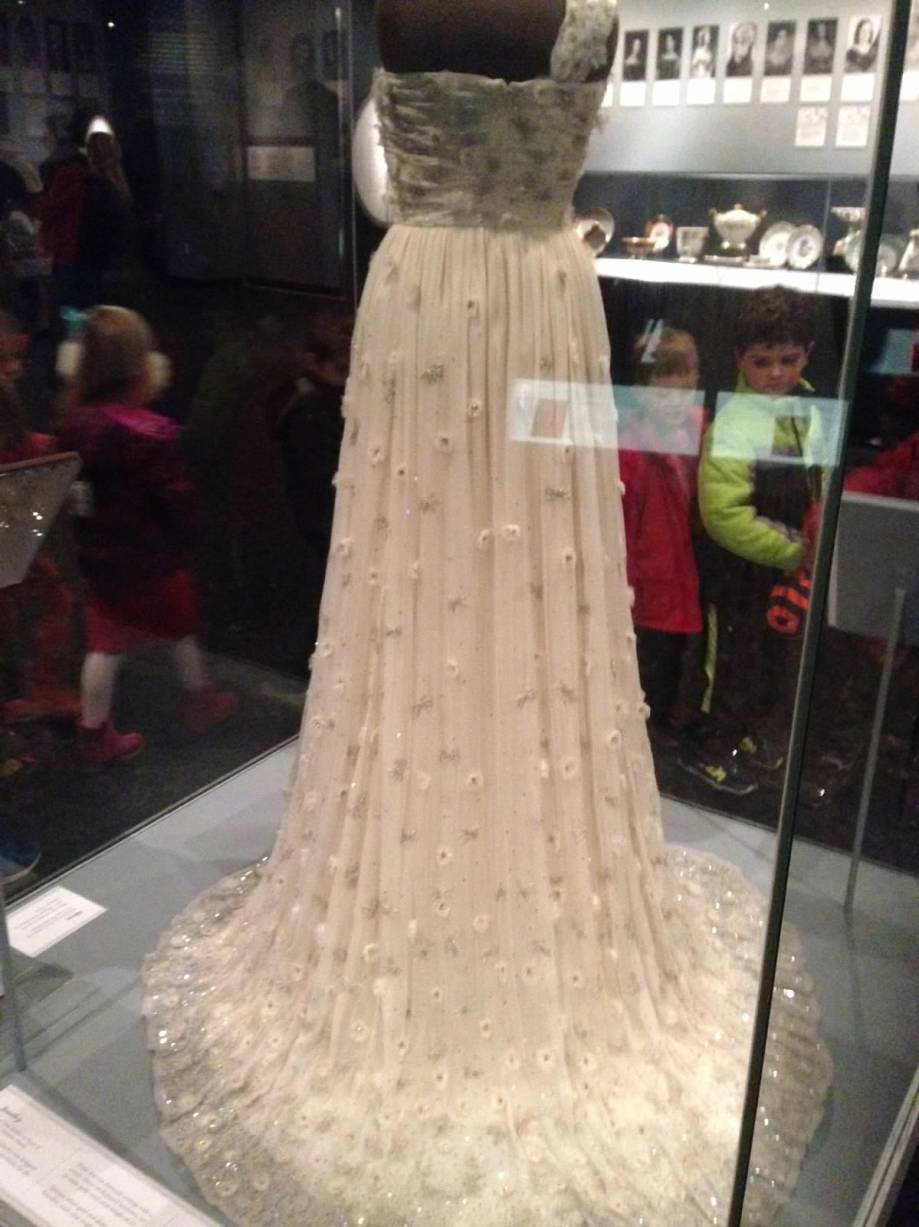
The classroom made connections between the women of Star Wars and the First Ladies of our country, exploring everything from their clothing to their characteristics. They explored the First Ladies exhibit in the National Museum of American History and through careful looking noticed that Michelle Obama’s dress looked very similar to the dress worn by Princess Leia!

IMG_1407

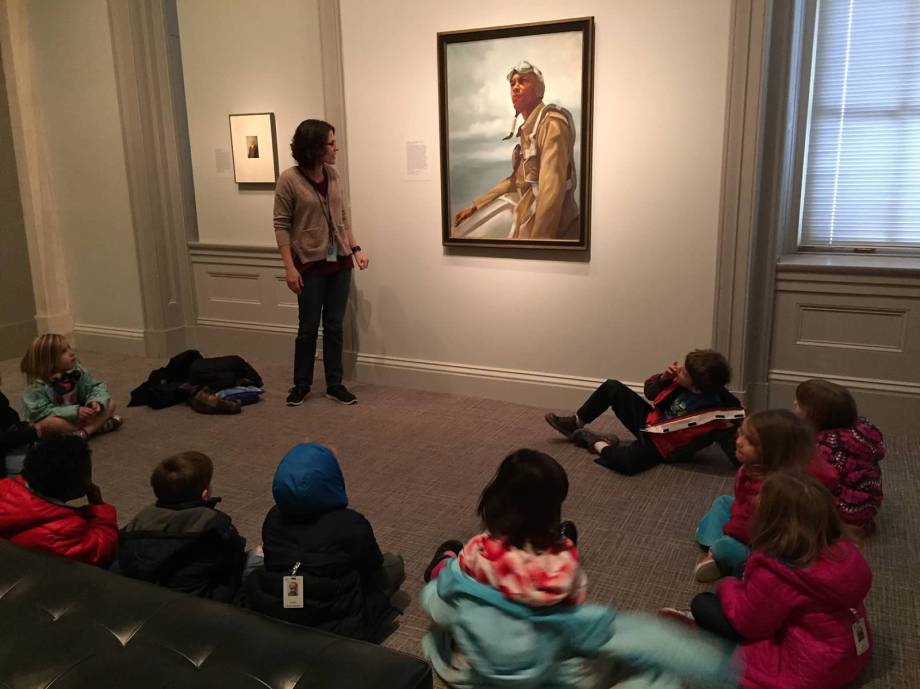
They talked about Luke Skywalker and then visited the National Portrait Gallery to look at a painting of William Campbell, a fighter pilot who flew more than 100 missions across three different wars. They talked about the characteristics of a hero and what makes a person brave and what courage looks like.

IMG_5570

They learned math and compared their own heights to the height of C3PO, learning to measure and compare.

IMG_0527


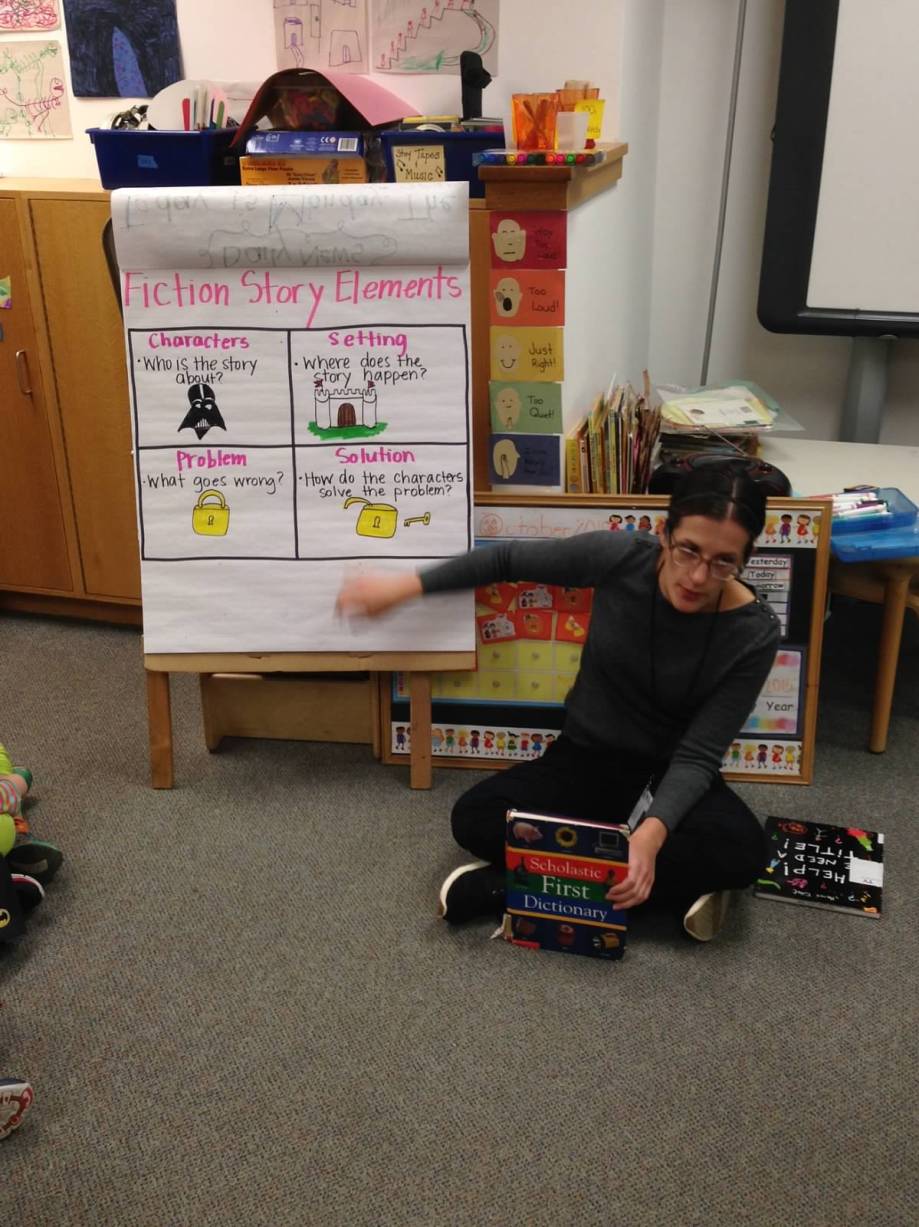
They learned about the elements found in fiction stories as they explored the Star Wars story.

IMG_0529

And, of course, there was a lot of learning about space and the stars!

At SEEC we also believe that art and music are vital parts of the curriculum and we have playground time every day. We have a Spanish teacher who comes several times each week and a researcher from the Smithsonian who comes to teach science as well. All of this is done in ways that are engaging and fun—no high pressure, no testing. But there is a lot of conversation, a lot of questions being asked by both the teachers and the children, and a lot of curiosity. Do our children learn to read by the end of the year? Those of them who are ready to read absolutely do, the rest leave us with the skills they need to make that leap in first grade. Do they do well when they leave us for “regular” school? Absolutely. The biggest concern we hear from parents is that when their child gets to their new school they get in trouble for asking so many questions. If that’s the biggest issue that comes up we’ll take it because ultimately the best learning comes from asking questions. So we will keep encouraging questions, helping children learn to look at the world around them carefully and with great curiosity and allowing them to explore their own ideas and search for their own answers to things that interest them.  Because we believe that is what Kindergarten should be– a gentle transition into school that leaves you hungry to learn more.


Museum Visits: Autumn Edition

Congratulations parents, you made it through the summer and the first month of school! By now, I hope you are settling into a routine and finding that you have a few free afternoons to enjoy this glorious time of year. While many of you are out apple-picking or in the pumpkin patch, the National Mall is another viable option. It can offer a cost-friendly opportunity where you can divide your time between the museums and taking in the beauty of the Nation’s Capital.

For this year’s fall picks, we have two categories: autumn-inspired exhibits and newly-opened features.

Autumn

PreK class making their own Arcimboldo portraits.

PreK class making their own Arcimboldo portraits.

Four Seasons in One Head is tucked deep inside the National Gallery’s main level in a room that is often forgotten but should never be ignored. Arcimboldo, known for his distinctive portraits in which faces are formed from natural materials, depicts the four seasons in this image. This portrait has an element of mystery that will pique a child’s curiosity and it offers a strong connection to what your child is observing everyday outside. To make deeper connections bring along straw and autumnal fruits for the child to touch and interact with during your visit (note: keep all materials in a sealed plastic bags).

Artifact Walls- You Must Remember This at the National Museum of American History is a no-brainer when it comes to fall-themed visits. Situated adjacent to the Warner Brothers Theater in the Constitution lobby of the National Museum of American History Museum, the cases showcase a selection of Hollywood costumes. In the past, it has featured such classics as robes from the Harry Potter films and Super Man’s cape. With Halloween fast approaching, this is a great stop for the family who wants to brainstorm costume ideas. It is also a learning opportunity for children to think about the process of costume making. PreK children might enjoy sketching their Halloween costume or working with an adult to make a list of materials you will need for the costume.   These simple activities will encourage fine motor development and planning skills. Younger children might enjoy reading a book where one of the costumes are featured or simply bringing a favorite book in which a character wears a costume.

image (7)Food: Transforming the American Table 1950–2000 also at the National Museum of American History is the perfect stop as we begin to approach Thanksgiving.   This exhibition demonstrates the inclusive nature of American culture as seen through food. Young children can see examples of our multicultural food identity in their everyday lives as they accompany you to the grocery store or eat at a local restaurant. Before your museum visit, identify foods in your kitchen that originate from countries other than America and then see if you can find them in the exhibition. Infants and toddlers, on the other hand, might enjoy taking a stroll through the space and matching cooking implements from home with ones on display. End your visit by sitting at the large table planning your Thanksgiving meal or reading a book about family meals.

What’s New

Don’t forget that the Smithsonian is also home to the Discovery Theater. On November 23 and 24, the theater will host Mother Earth and Me: Sister Rain and Brother Earth. This interactive musical uses life-size puppets to tell the story of Mother Nature and her determination to save the Earth from drought – with the help of the audience. Recommended for ages 4-8, this story conveys the importance of working together to protect the Earth.

The Great Inka RoadThe National Museum of the American Indian has it all! It is brand new and showcases the museum’s cutting edge collaboration with the company ideum to capture 3D imaging of the ancient Incan capital of Cusco. The images can be viewed on an interactive touch table and are completely spherical. This technological innovation allows visitors to move through the images in all four directions and transports viewers into the space of the pictures. But that is far from the only interactive element. The exhibit also features several video and audio elements which include bilingual storytelling and two “flythrough” stations where you can take a virtual tour of Cusco.

IMG_3588

Family workshop participants heading into the Sackler Gallery.

Sōtatsu: Making Waves opens October 24th at the Arthur M. Sackler Gallery and based on prior experience, this will be a great stop for the family. The spacious galleries in the Sackler are often quiet and work well for families who might need a little space. If the two screens highlighted on the Sackler’s website: Waves at Matsushima and Dragons and Clouds  are any indication, the exhibition will be full of lively, dramatic imagery that will capture a young child’s imagination.  In addition to featuring large-scale Japanese screens (perfect for young viewers) hanging scrolls and fans will also be included. It is a great opportunity to introduce young children to these mediums and experiment with making your own versions. Don’t forget to check out the ImaginAsia classroom schedule on the Sackler’s website for the all-ages offering tied to this exhibition!

Teacher Feature: Toddler Classroom Explores Safari

It’s Teacher Feature Thursday!

This week we are featuring Meg McDonald. Her toddler classroom was learning about safari’s and decided to go on one in the museum. Below you will find a reflection from Meg and images from her lesson.

Safari_Cover

What were your topics of exploration?

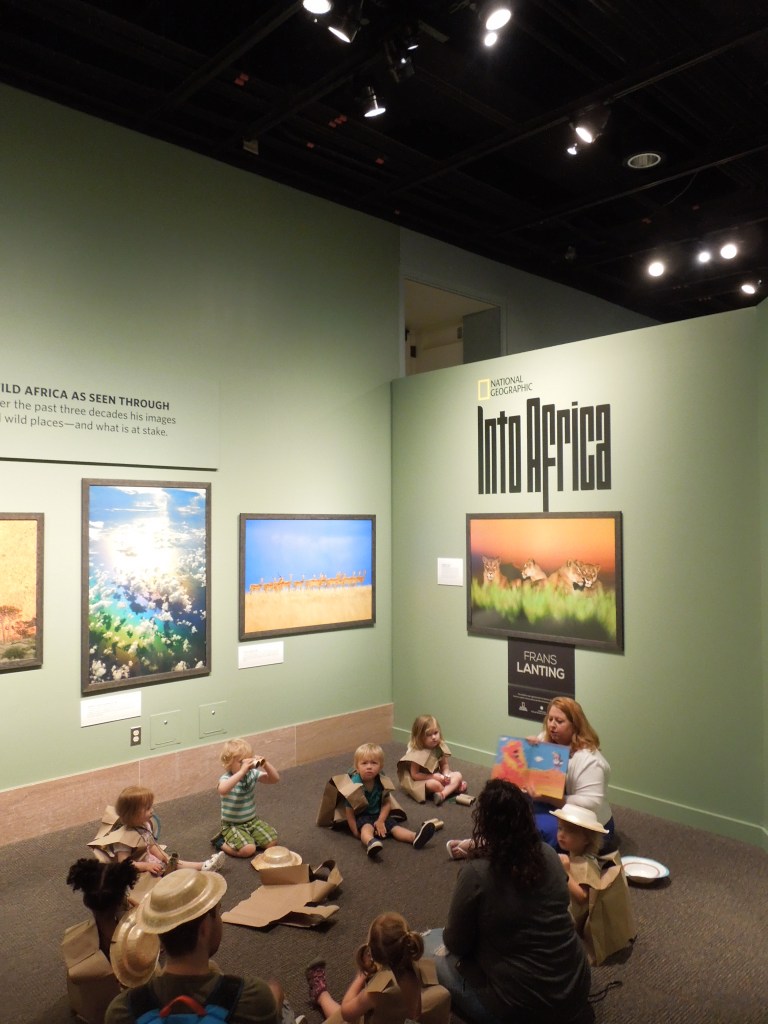
We had been studying jungle animals and this week we focused on going on a safari. We began by discussing the items we might need to have a successful safari. We decided on binoculars, safari hats and vests. Throughout the week we spent time creating these items so everyone could have them for our safari. The day of the lesson each child was decked out in the vest, hat, and binoculars and given a wooden puzzle piece of a jungle animal.  It provided the children with something tangible to hold while we read Rumble in the Jungle by Giles Andeae and took our safari through the exhibit.

What were your learning objectives? (What did you want your children to take away from the lesson?)

I wanted the children to gain some understanding of the natural habitat of some of their favorite animals and how we can observe them during a safari. Many books and movies mis-represent the habitats of these animals and I wanted to provide them with authentic information and exploration. I also wanted to provide them with authentic and exploration. I also wanted them to have practice with matching through the puzzle pieces and photographs.

What was most successful about your lesson?

I feel that the most important measure of success is if the children enjoyed what they were experiencing and in this case they definitely did. They got very excited when they found their specific animals and as well as all the animals that we had been learning about previously. They also really liked the photographs and even asked to go back and see them again.

What could you have done differently? What recommendations would you have for another teacher trying out this lesson?

Instead of giving them the wooden animals I would have given them a small photo that had a more realistic representation of the animal. I think that would have made a more concrete connection to the photo exhibit.

Here are a few images from their safari:DSCN3497DSCN3506Earlier in the week the group discussed the type of gear they might need for a safari and worked on making their own for the museum safari. The group got all dressed up and then headed straight to the Into Africa  exhibit at National Museum of Natural History. DSCN3545Meg had the group gather at the front of the exhibit. She passed out different animals found in Africa and invited the children to let her know when they saw the same animal in her book: Rumble in the Jungle by Giles Andeae.
DSCN3526DSCN3554They stayed very focused and attentive through the book, carefully watching for their animal to reveal itself. Some of the children worked together to help identify the animals of the different group. 
DSCN3569DSCN3570 DSCN3578Then it was time to head out on their safari. The binocular encourage lots of careful looking and sparked many conversations about the different animals.

This class had a wonderful time learning about safaris! Be sure to check back for our Teacher Feature next week!

Teacher Feature: Two Year Old Classroom Explores Baseball

It’s Teacher Feature Thursday!

This week we are featuring Ashlee Smith. Her two year old classroom was learning about baseball and decided to spend the day learning about what’s inside the ball. Below you will find a reflection from Ashlee and images from her lesson on baseball.

Baseball_Cover

What were your topics of exploration?

The Fireflies have been exploring baseball all summer. During this week, we talked about the baseball itself. We explored what a baseball looks like from the inside out and how it is made. We talked about how all baseballs (MLB) have to be the same size and weight and that baseballs are still hand-stitched.

What were your learning objectives? (What did you want your children to take away from the lesson?)

I wanted the group to understand the materials used to make baseballs and provide them with the opportunity to explore textures of the materials found inside (yarn, string, and cork). I also wanted them to think critically about the shape and weight of the ball, exploring questions such as: “what other known objects are spheres?” and “why is the baseball the weight that it is?” Through the baseball lesson, I was also able to introduce the group to Alexander Cartwright (the proclaimed father of baseball).

What was most successful about your lesson?

I invited each child to help me create our own baseball with a cork, yarn and rubber. They really enjoyed the experience of using the materials to create a ball of our own.  We also ventured to the Hirshhorn Museum after circle time and they were happy to find the spheres that we just learned about!

What could you have done differently? What recommendations would you have for another teacher trying out this lesson?

The children in my class seemed to really enjoy exploring what makes up a baseball. If I could recommend something to another educator, it would be to have more materials to explore. I had materials for the kids to touch, but splitting into small groups with more materials may help them relate to the objects a little more!

Here are a few images from their unit on the baseball:

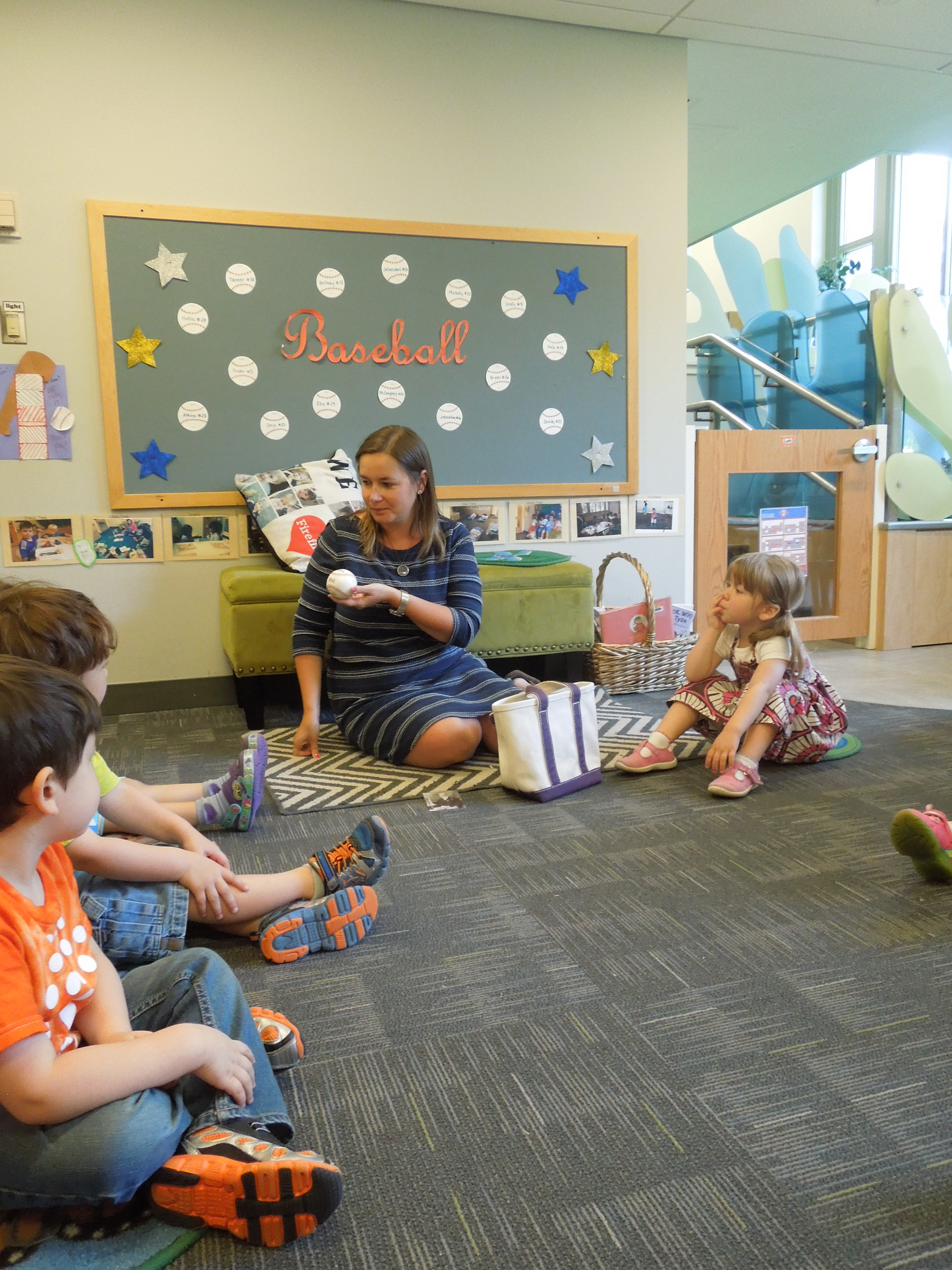
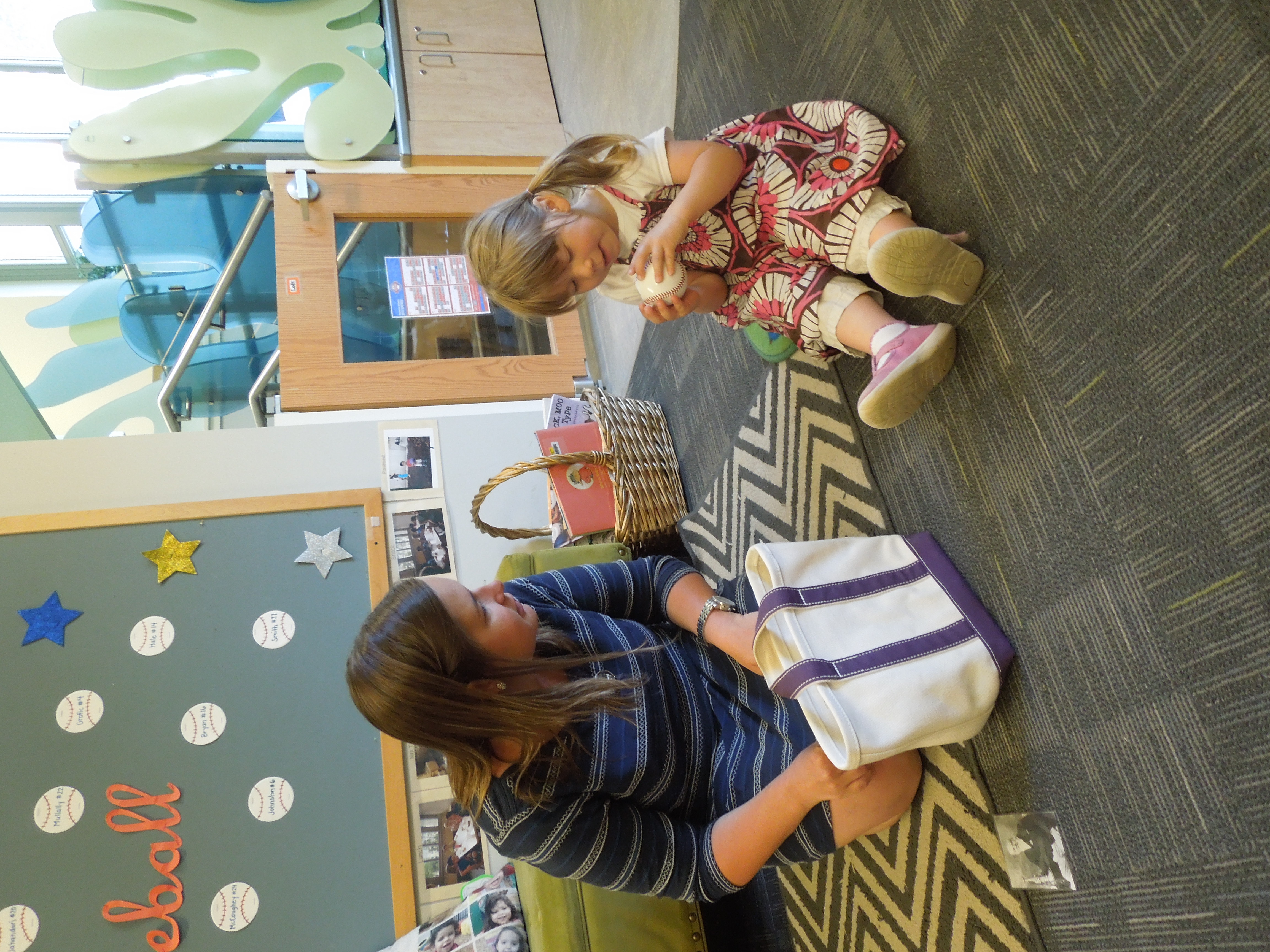
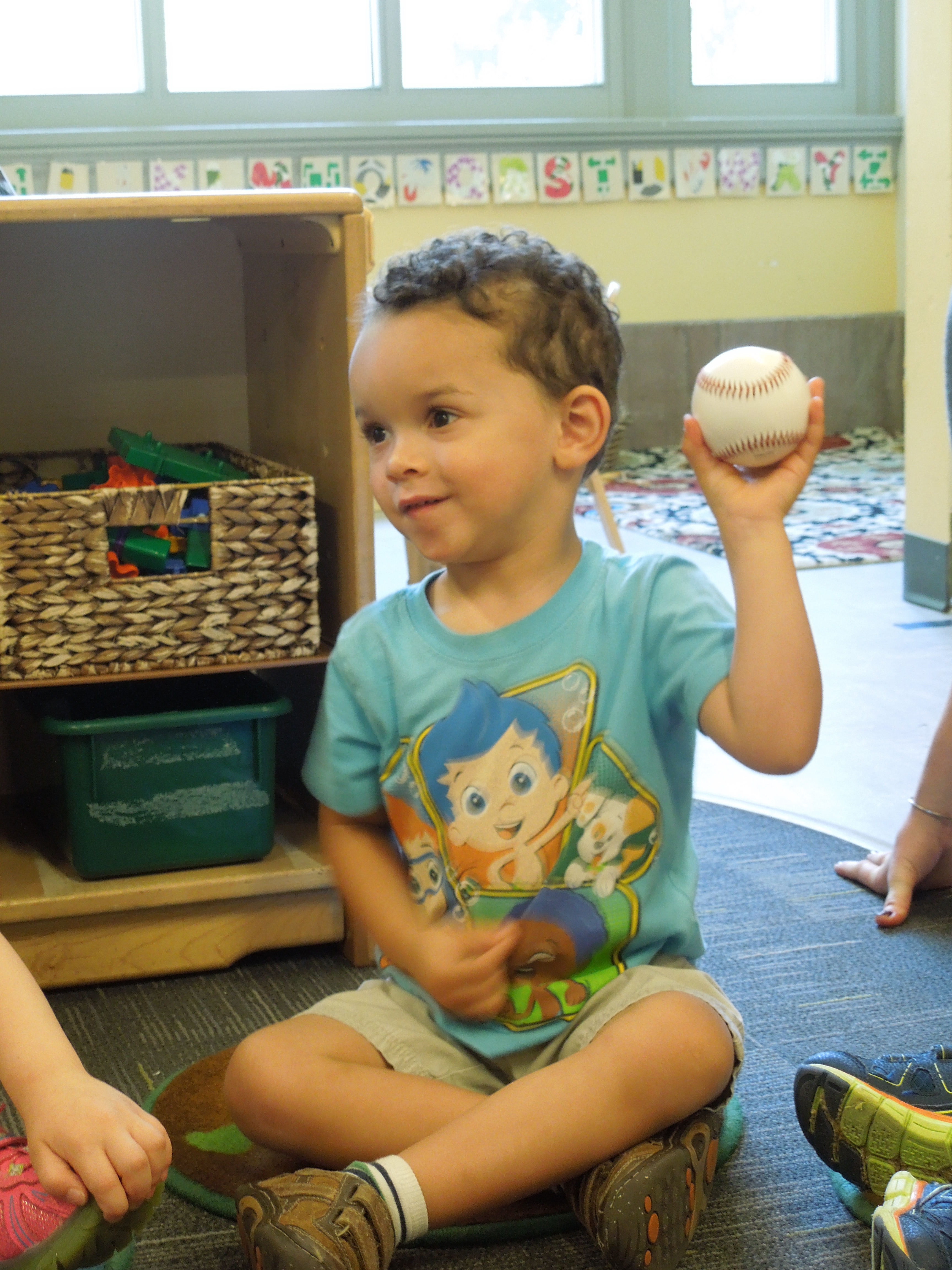
DSCN3343Ashlee began by asking the group to look closely at the ball and think about its characteristics. The group was able to describe the ball as round and Ashlee introduce the group to the term sphere. She then had the group try to guess what might be inside.

DSCN3357Each child had a chance to touch and explore the ball before making their predictions. One child exclaimed, “a tiny crocodile!” and another said, “a rock!”
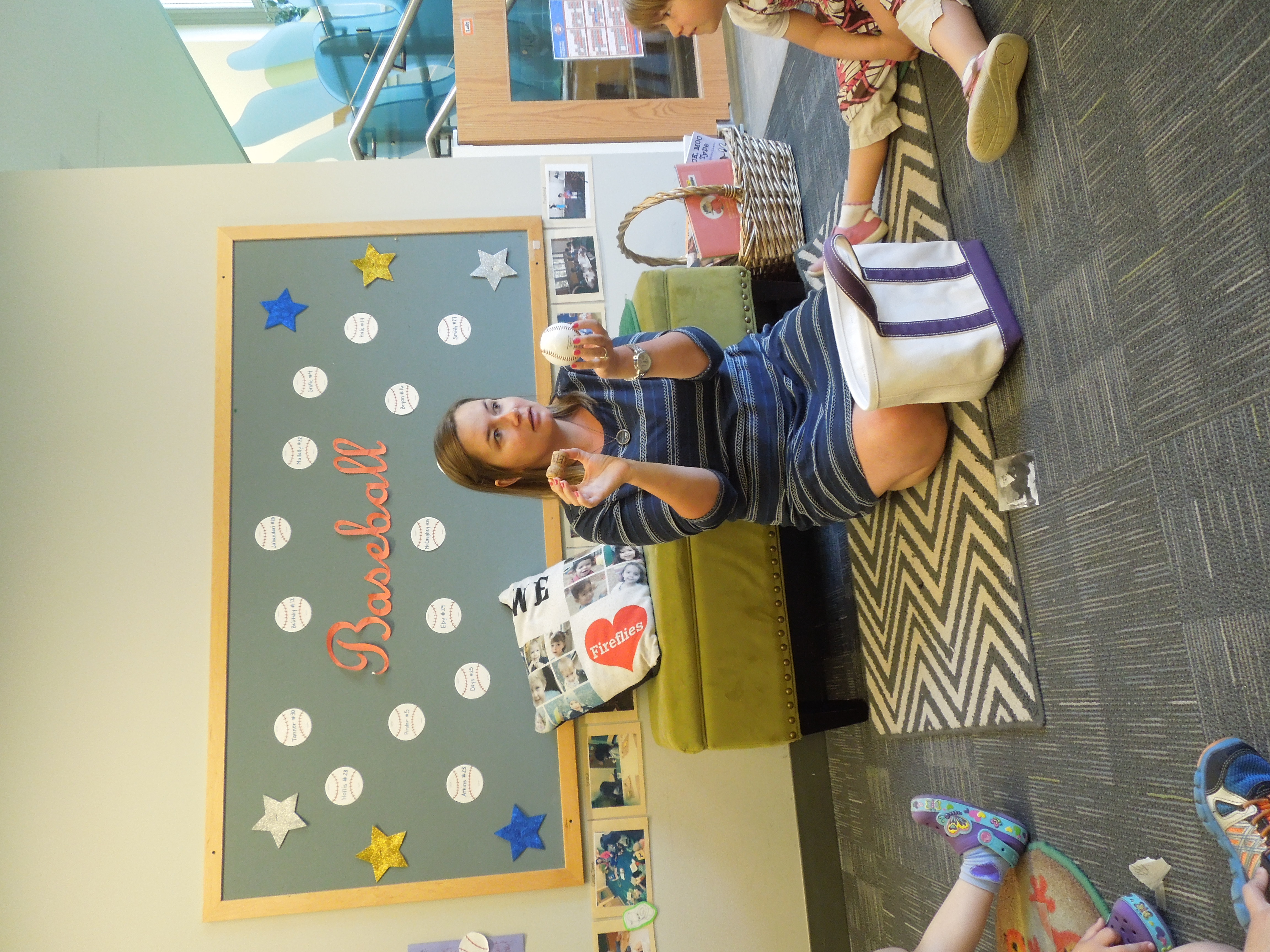
DSCN3365The class was very surprised to learn that baseballs have many different layers and at the very center is cork.
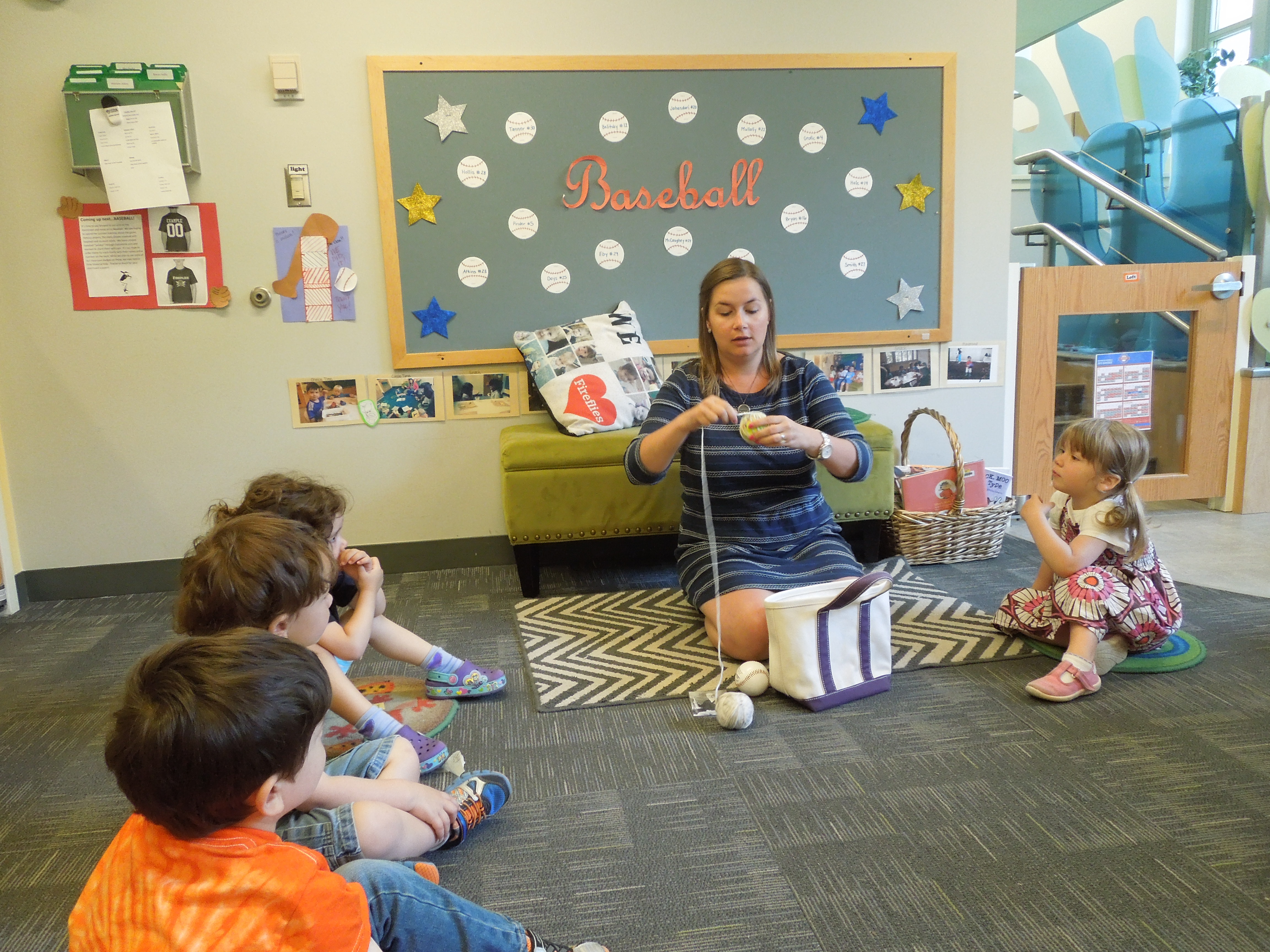
DSCN3378After explaining that the next layer of the baseball is rubber she then began demonstrating how the rubber is then wrapped in string and lastly covered in leather.
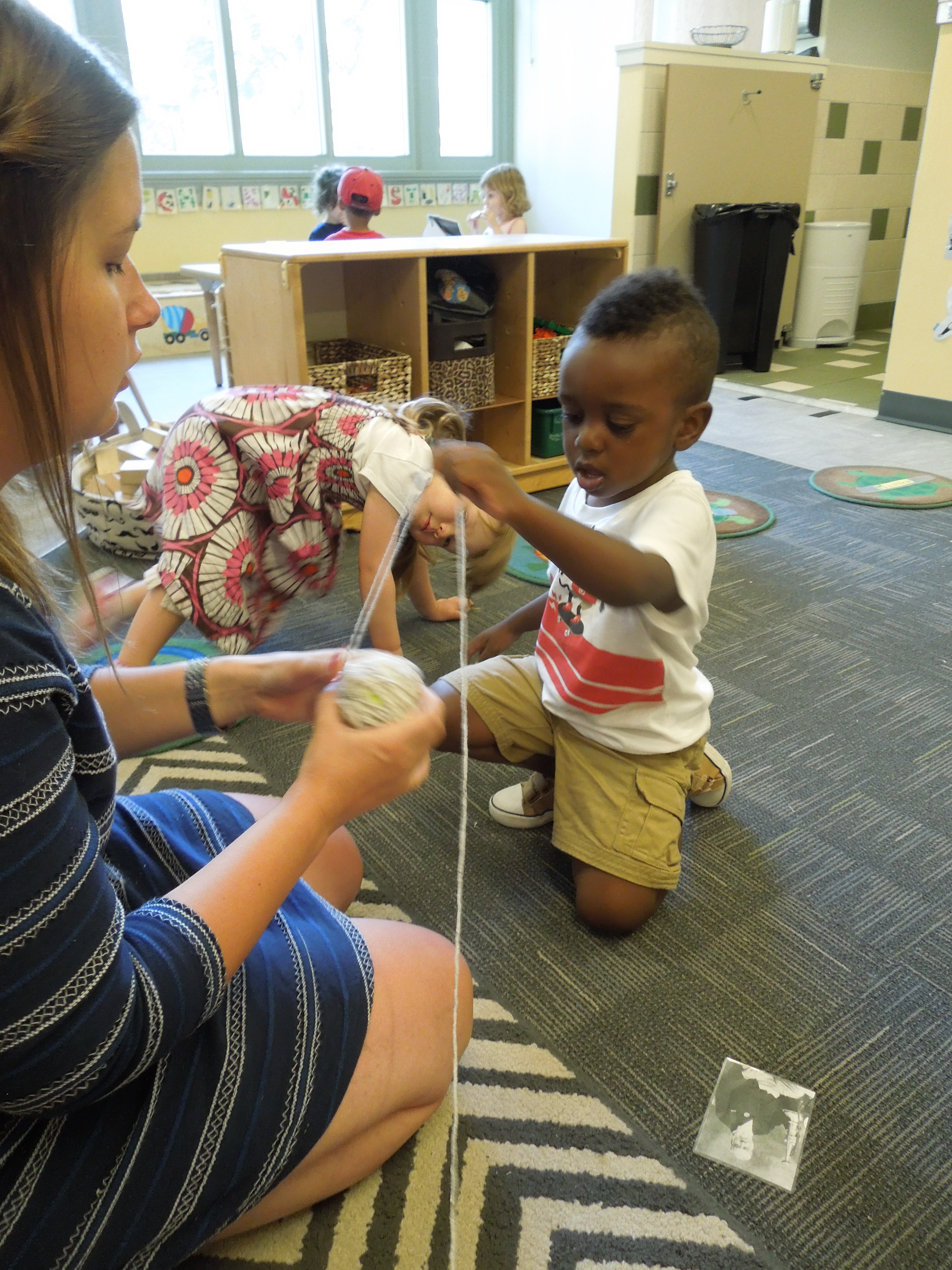
DSCN3396Ashlee then invited each child to take a turn wrapping the baseball in string.
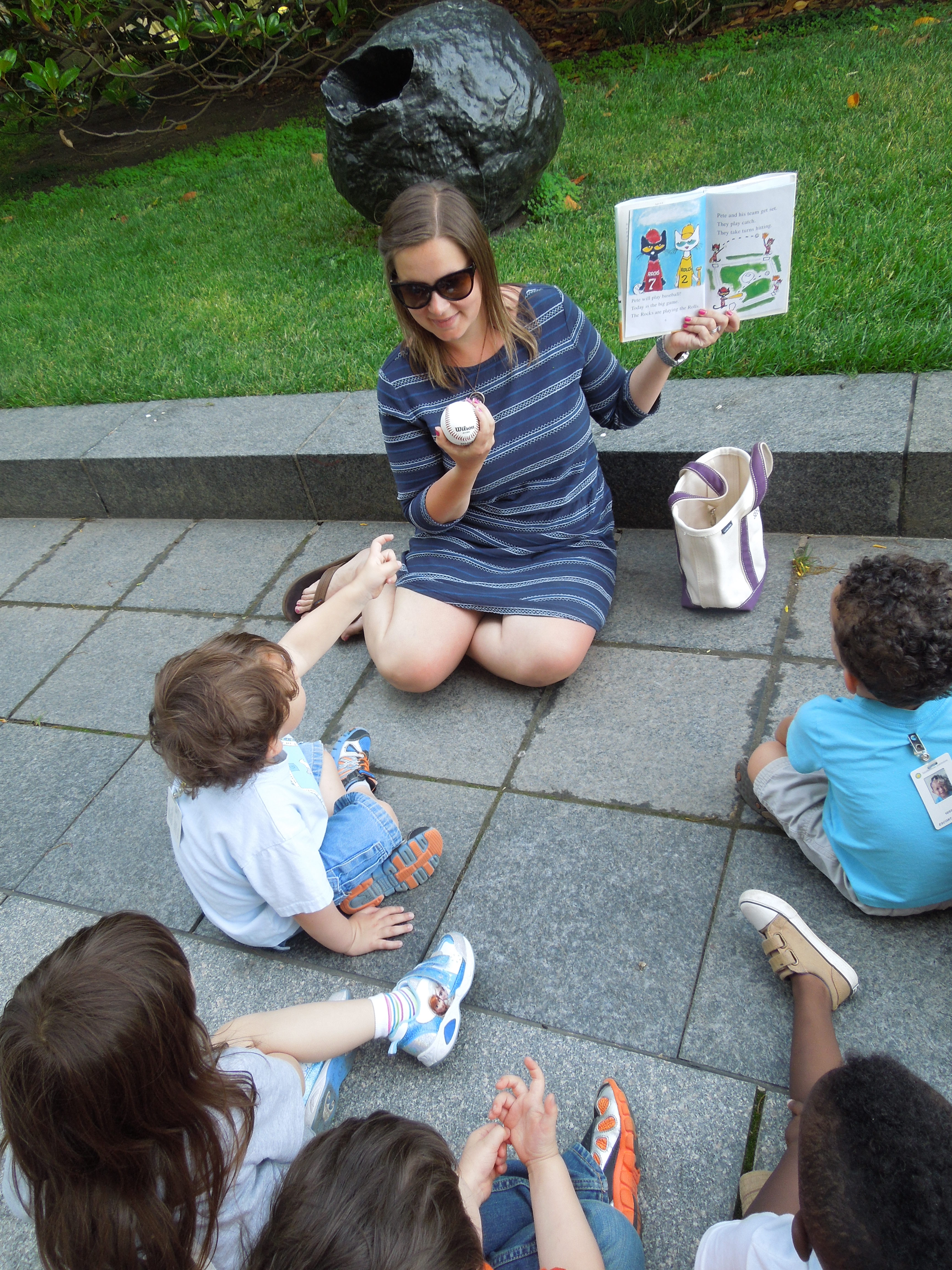
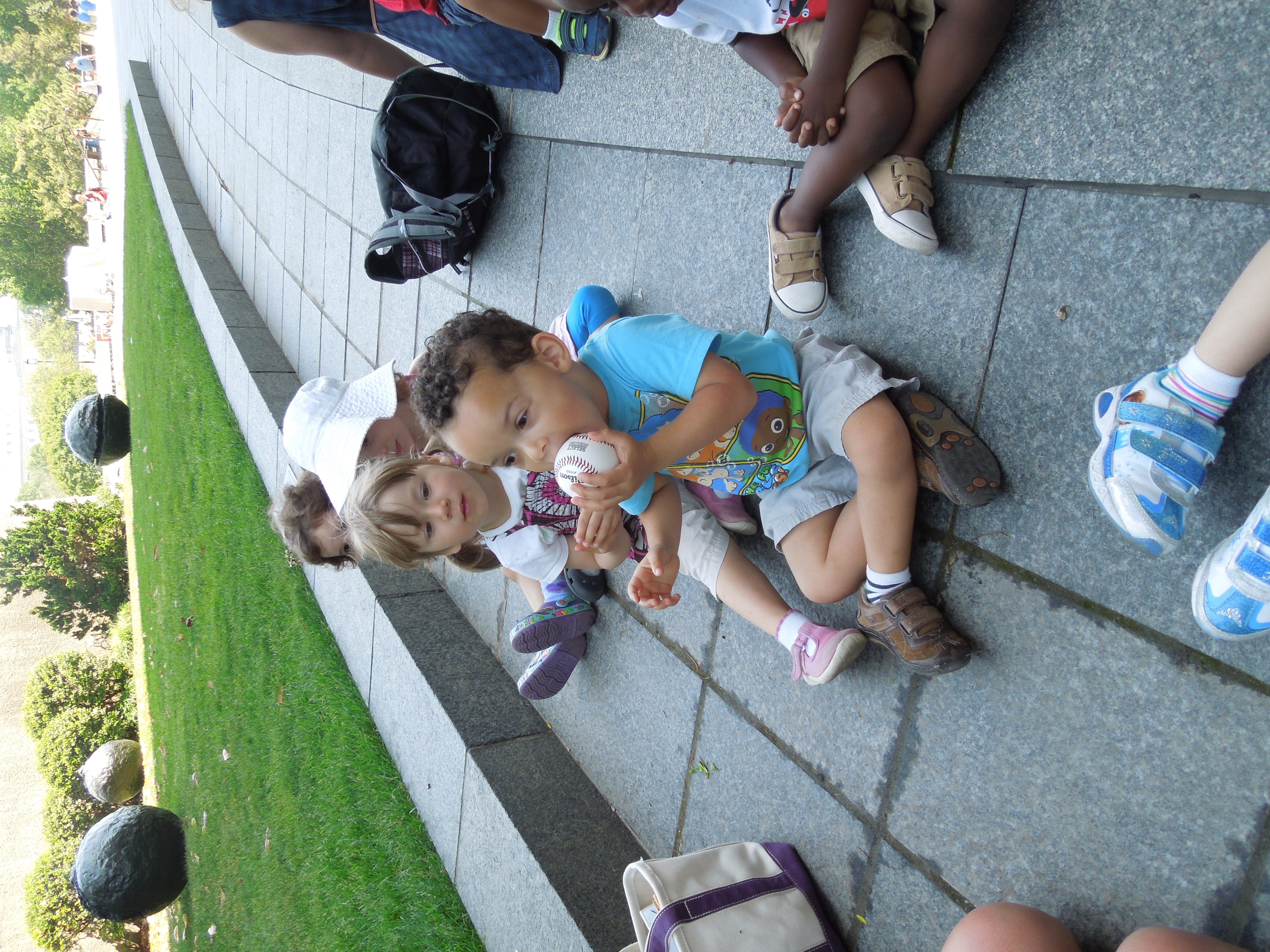
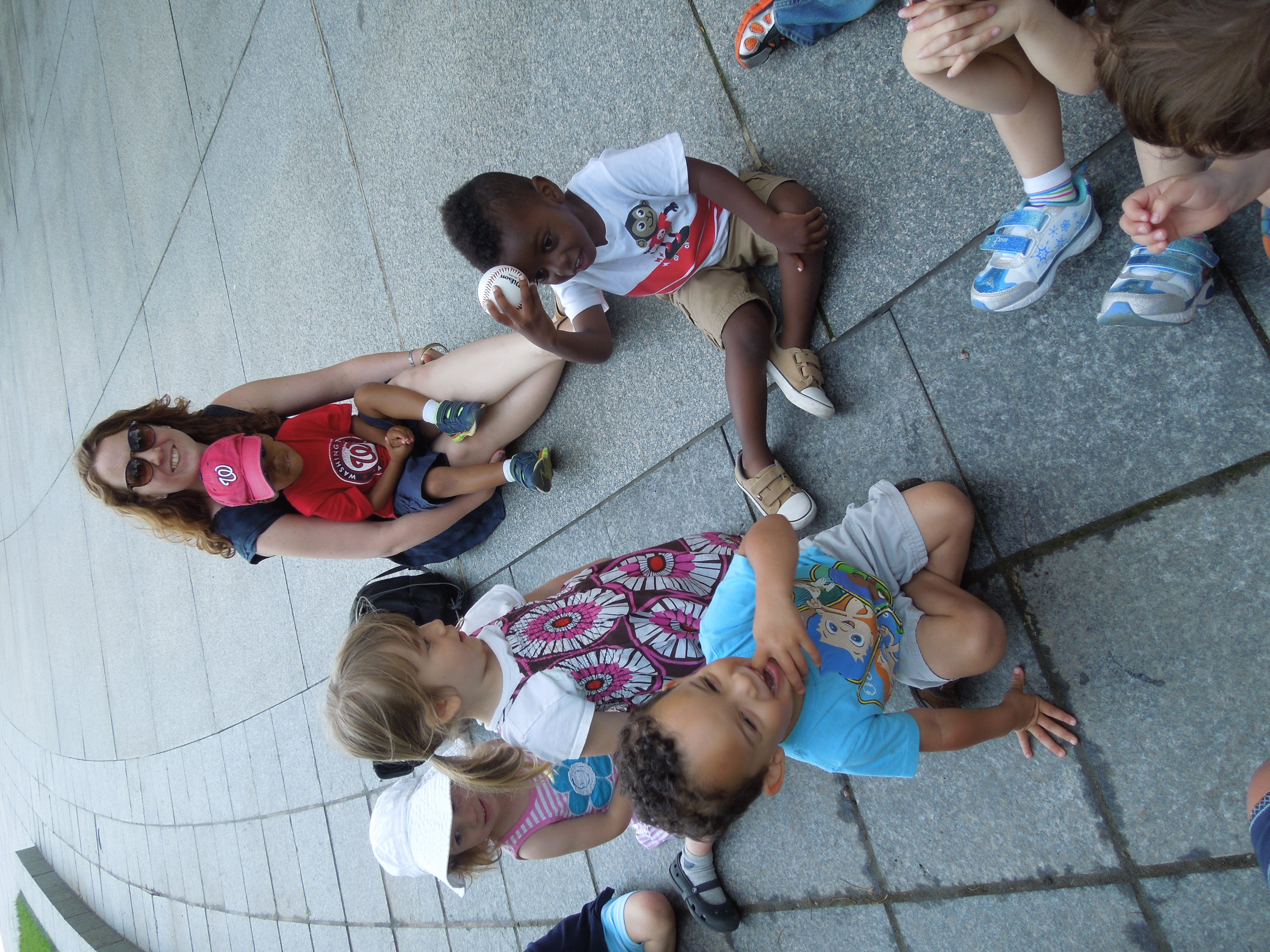
DSCN3420After a quick snack the class headed over to The Hirshhorn Museum and Sculpture Garden to see Spatial Concept Nature by Lucio Fontana. Ashlee began having the group compare the ball to the sculpture and reinforce the concept of a sphere. She then read the group Pete the Cat: Play Ball! by James Dean.
DSCN3427 DSCN3433Ashlee ended her lesson with a fun game that asked the children to use their imagination to pretend that the ball was something else. The game is called “This is What?” The child says “this is a ___” and the group responds with “a what?” You repeat this exchange three times and conclude with the group saying “ohhhh it’s ____.” The children had a fun time playing this game! One child claimed the ball was an apple and other made it a hat!

This class had a wonderful time learning about baseball! Be sure to check back for our Teacher Feature next week!

Teacher Feature: Infants Explore Nature

It’s Teacher Feature Thursday!

This week we are featuring Brittany Brown. Her older infant classroom decided to spend a day doing a survey exploration of nature. She wanted to introduce the group to the different aspects of nature to see what they were most interested in exploring. Below you will find a reflection from Brittany and images from her lesson on nature.

Nature_Cover

What were your topics of exploration?

We spent the day exploring nature and the environment around us.

What were your learning objectives? (What did you want your children to take away from the lesson?)

I wanted my students to have a better understanding of their environment. I noticed that the children were becoming increasingly interested in exploring the natural world they encounter every day and thought it would be an excellent topic for our group to focus on. I wanted the lesson to be as hands on as possible, and to teach them that it’s okay to interact with the different things you find (bugs, dirt, flowers, trees, grass). I tried to focus on nature in a more broad terms to start because I wanted to see which aspects in particular caught their interest. We could then move to doing a more in depth study on those topics later in the week.

What was most successful about your lesson?

I believe the most successful parts of our lesson were the hands- on materials I brought along to the museum visit. The great thing about exploring nature in the Natural History Museum is that we are able to provide the children with multiple touch points. In addition to the books and objects I brought into the gallery space, we were also able to observe real insects as well as view amazing nature photography. Seeing the children’s reaction to the variety of insects, objects, and images gave me a clear picture of their interest and provided inspiration for future lesson plans.

What could you have done differently? What recommendations would you have for another teacher trying out this lesson?

I decided to spend the entire week exploring nature. While I valued the general exploration of the topic, I think ultimately, it would have been better to break down the topic, maybe focusing on just trees, flowers, or insects. I believe the focused study would have given them a greater understanding of specific topics. Also, I would recommend using as many sensory based activities and books as possible when developing a lesson. I believe the combination really helps children better understand what’s being taught.

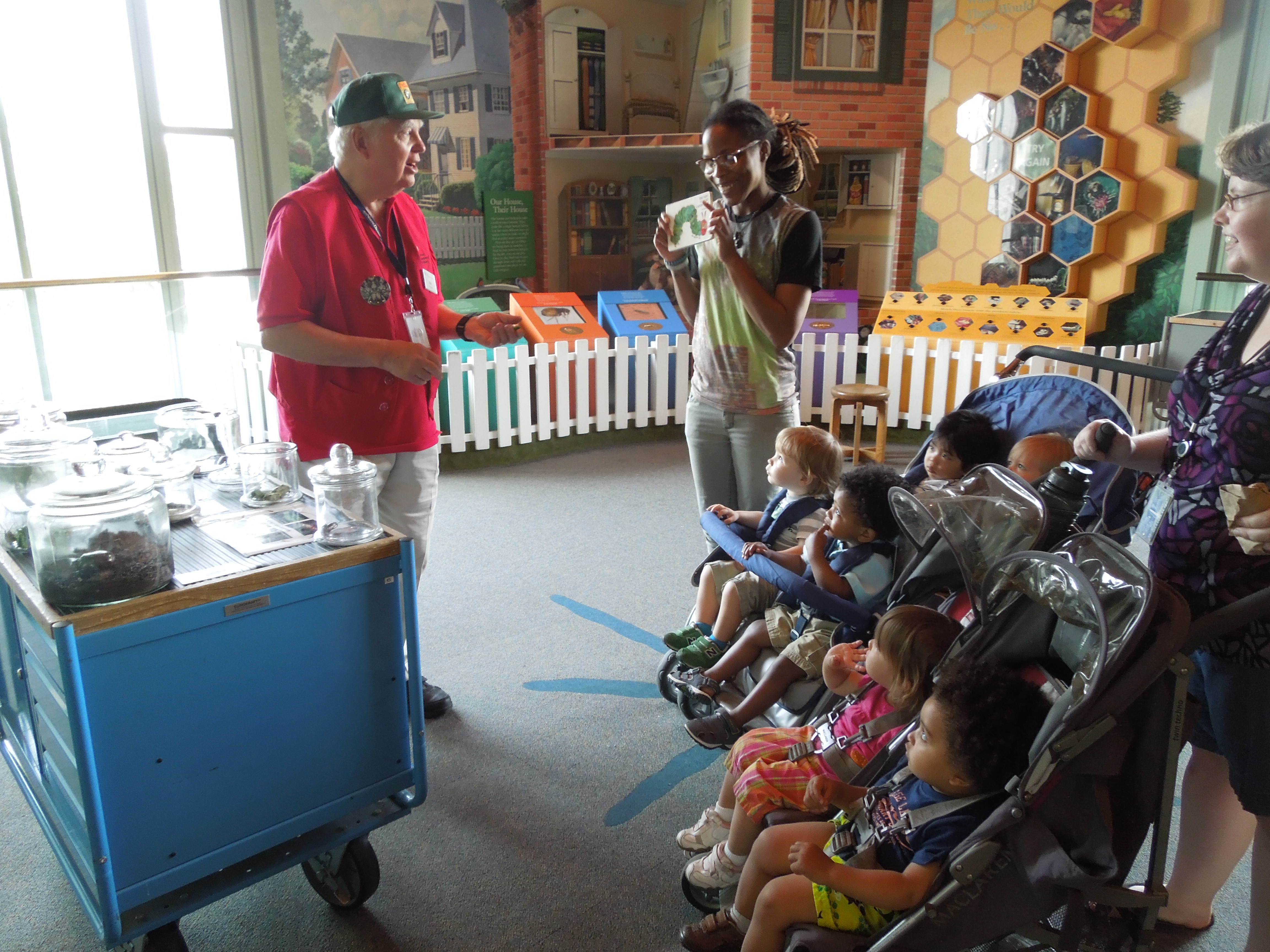
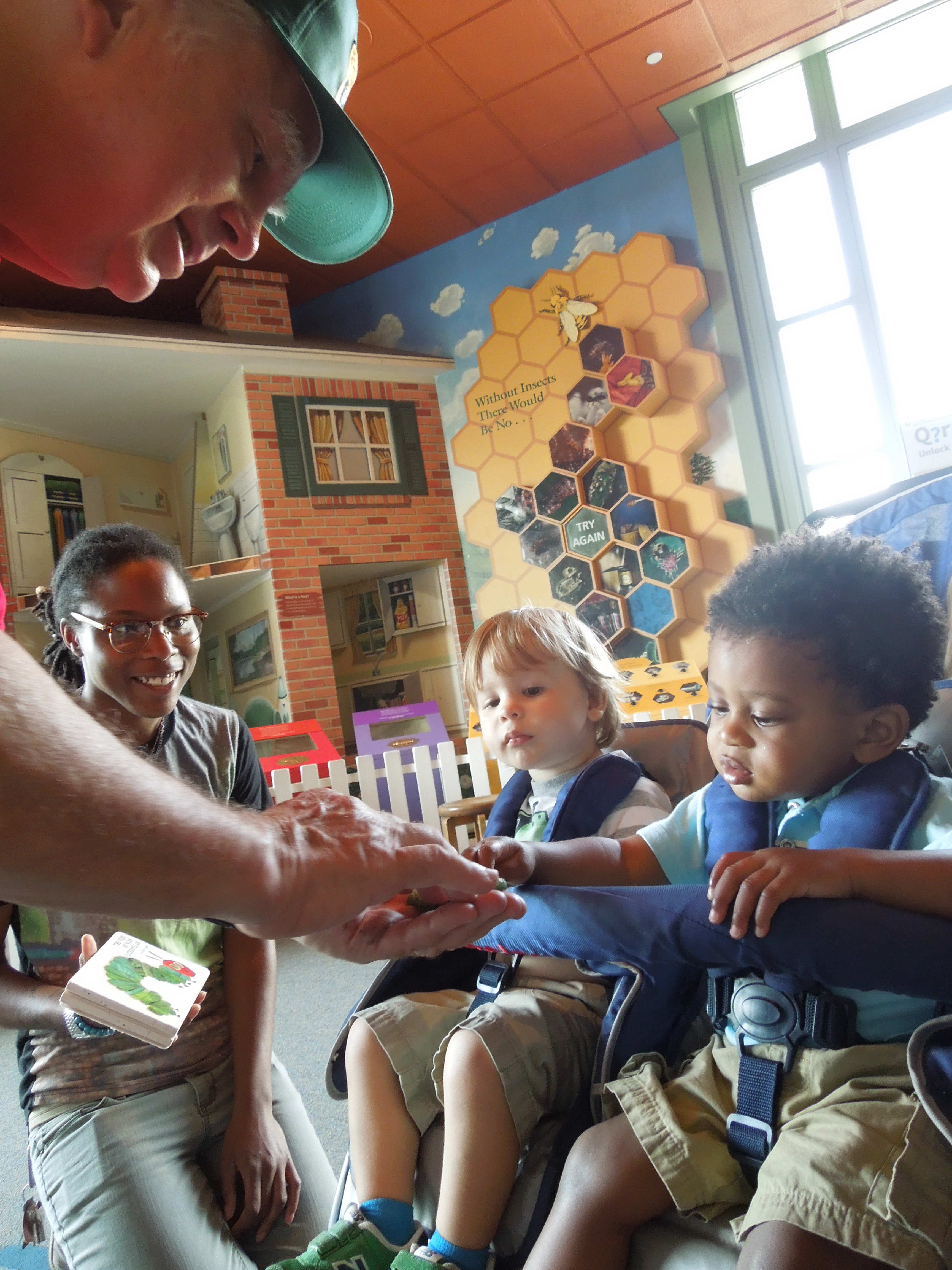
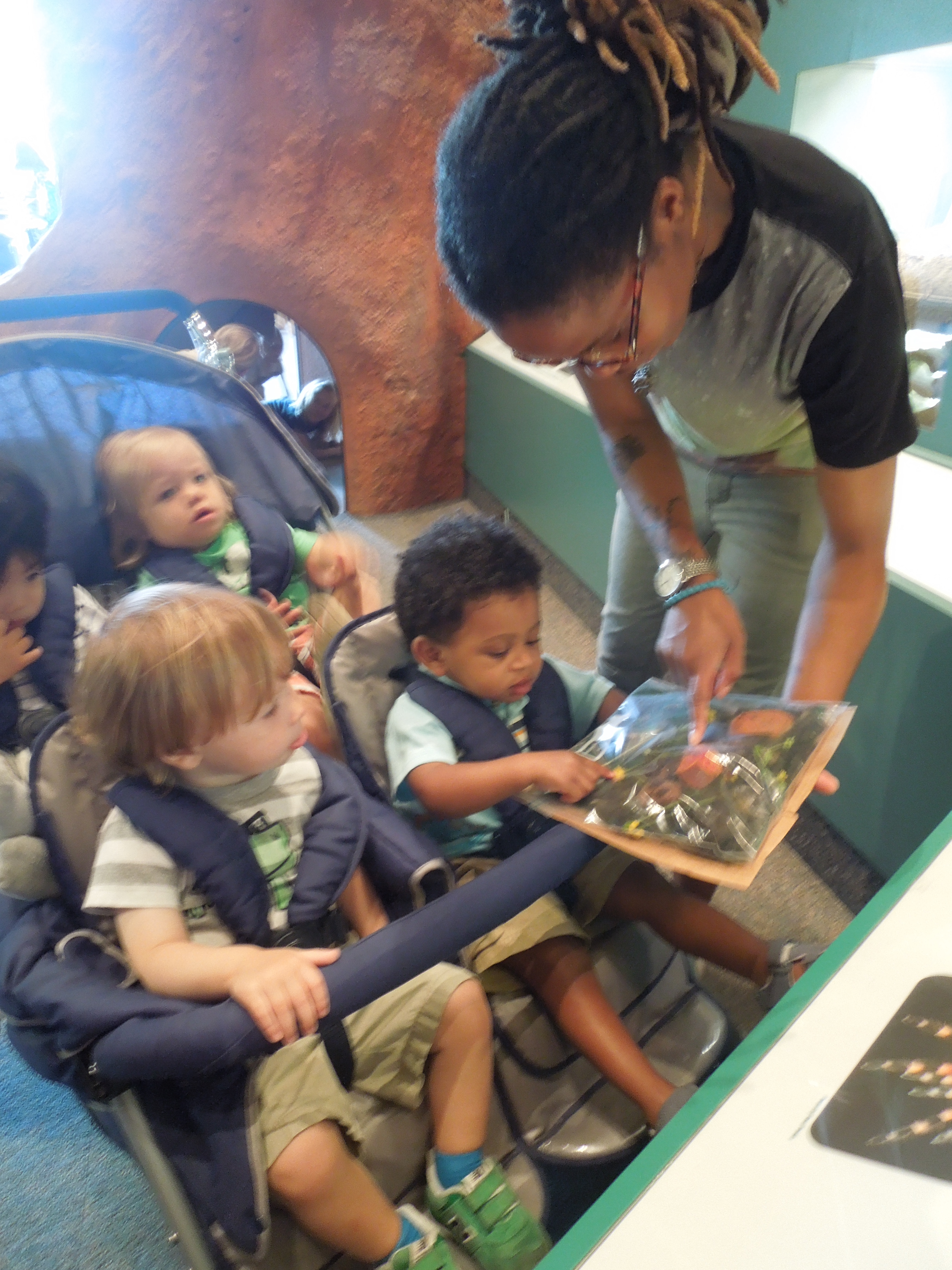
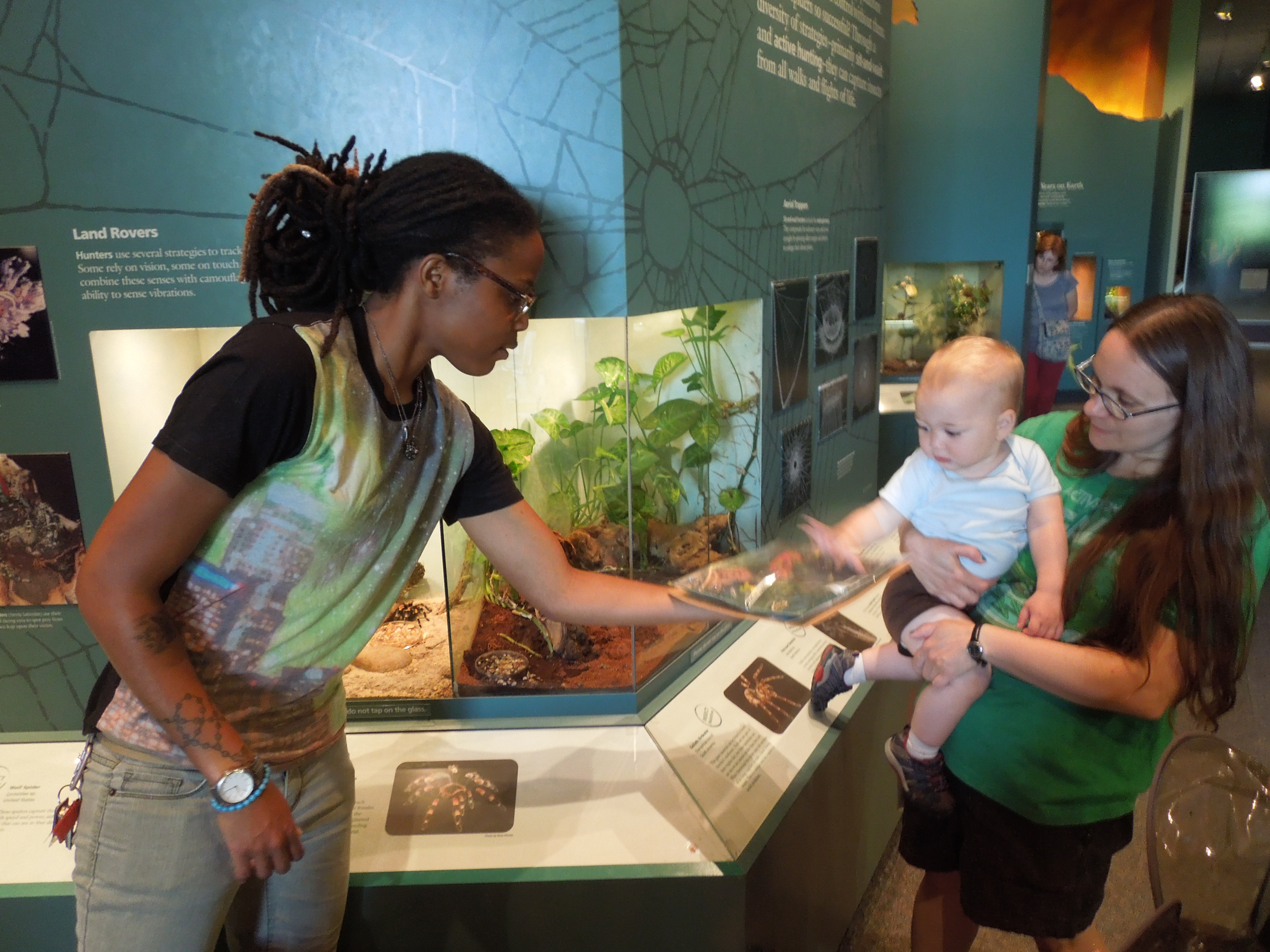
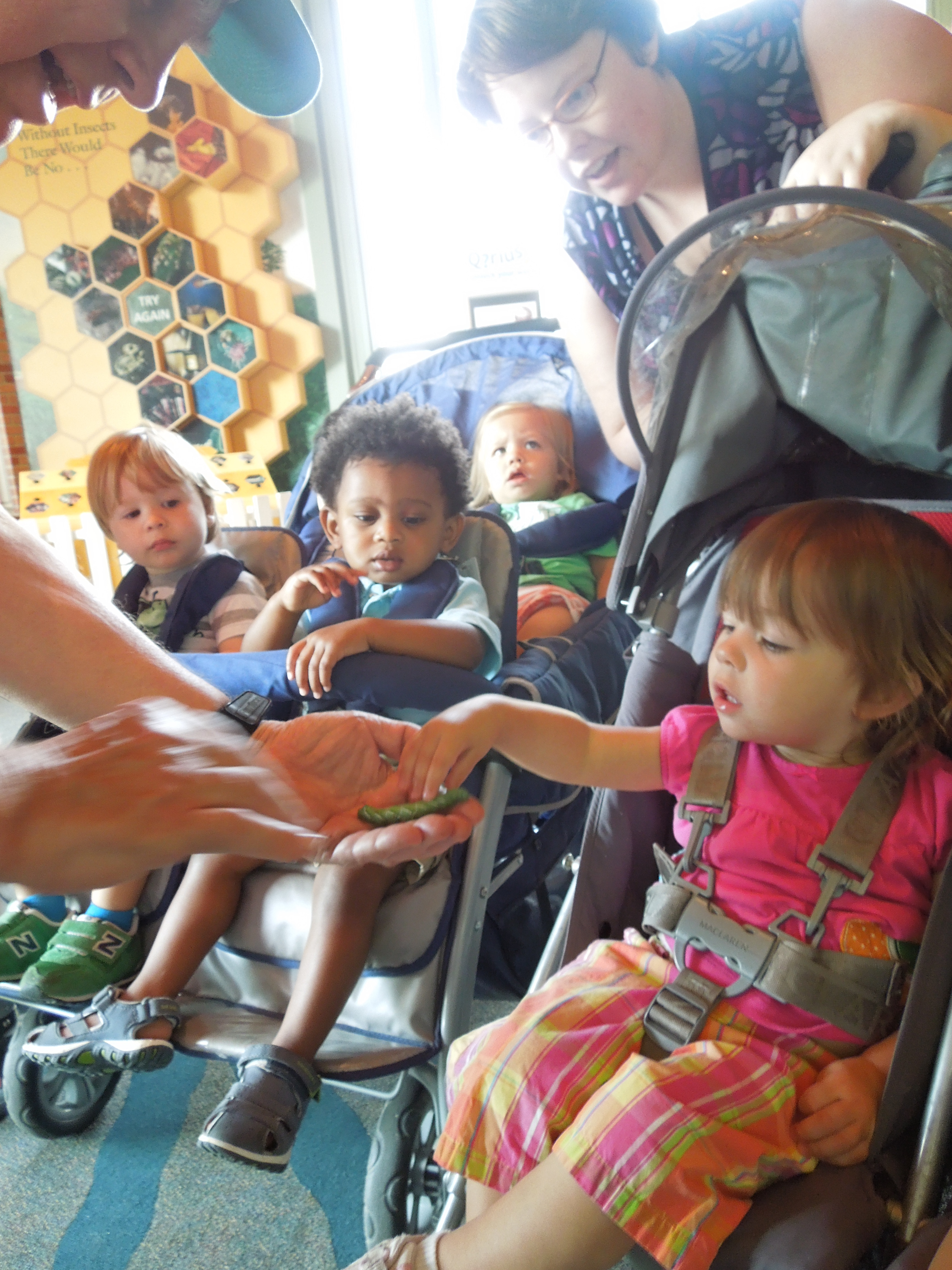
Here are a few images from their unit on nature:DSCN3140Brittany began by taking her group up to the Insect Hall at The National Museum of Natural History. On many mornings there is an interpreter in the gallery with different insects for the children to meet.  

DSCN3148
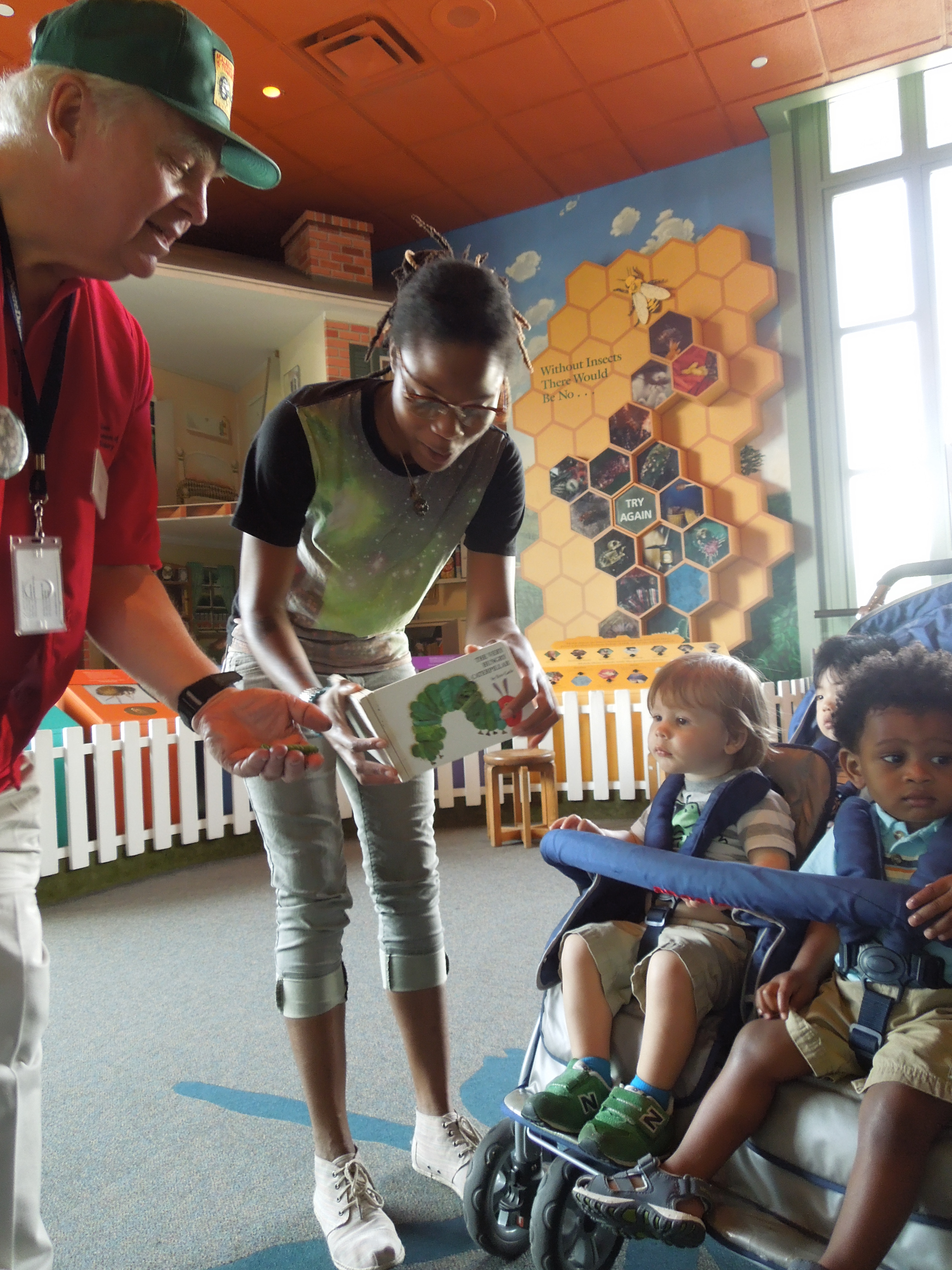
The children got to meet a live caterpillar and compare it to the Eric Carle’s The Very Hungry Caterpillar. The group practiced using gentle hands and loved exploring the texture of the caterpillar.

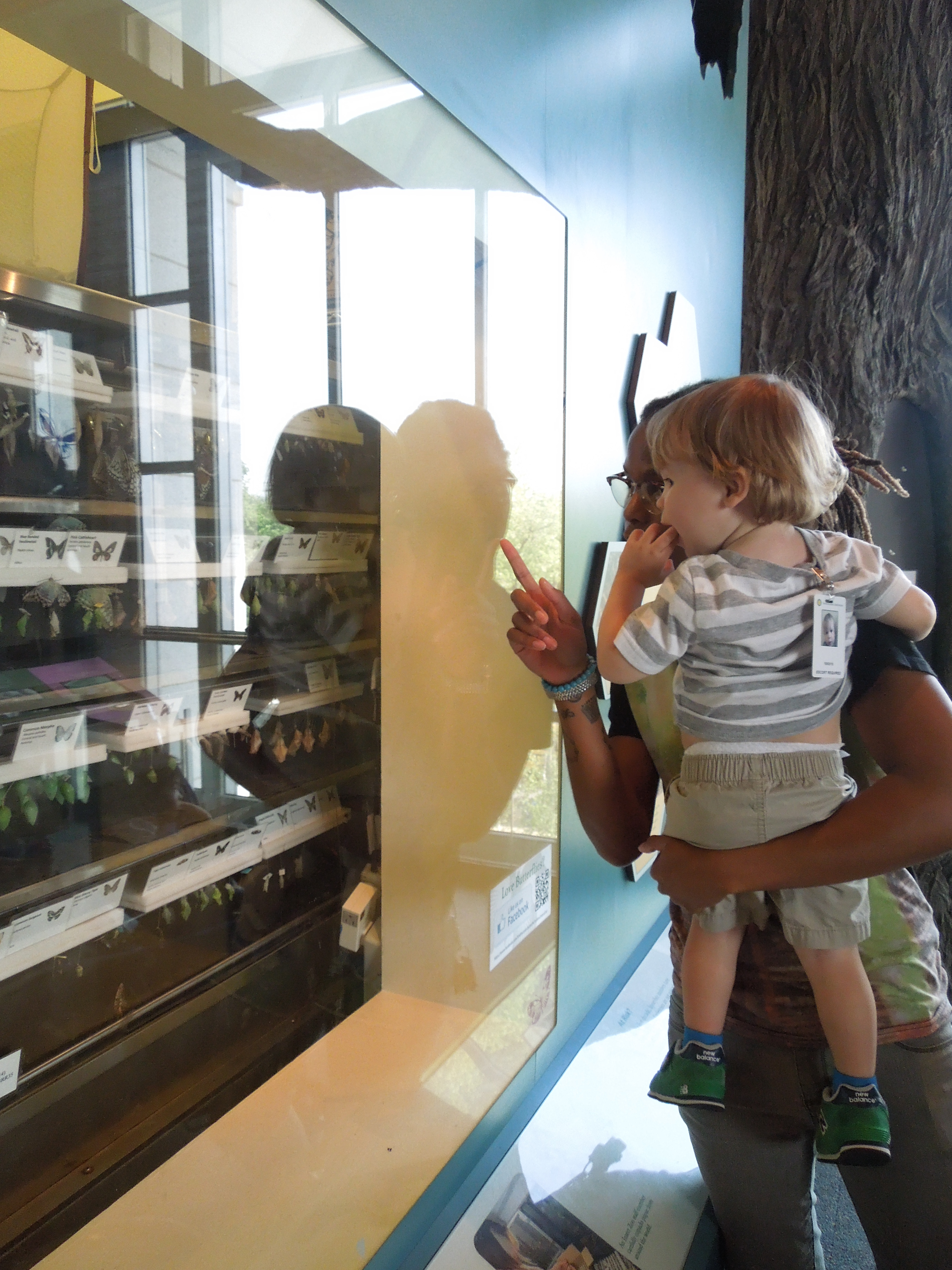
DSCN3157Brittany then had the group observe the display of chrysalis and butterflies. She explained that the caterpillar they just saw would eventually become a chrysalis and then a butterfly.


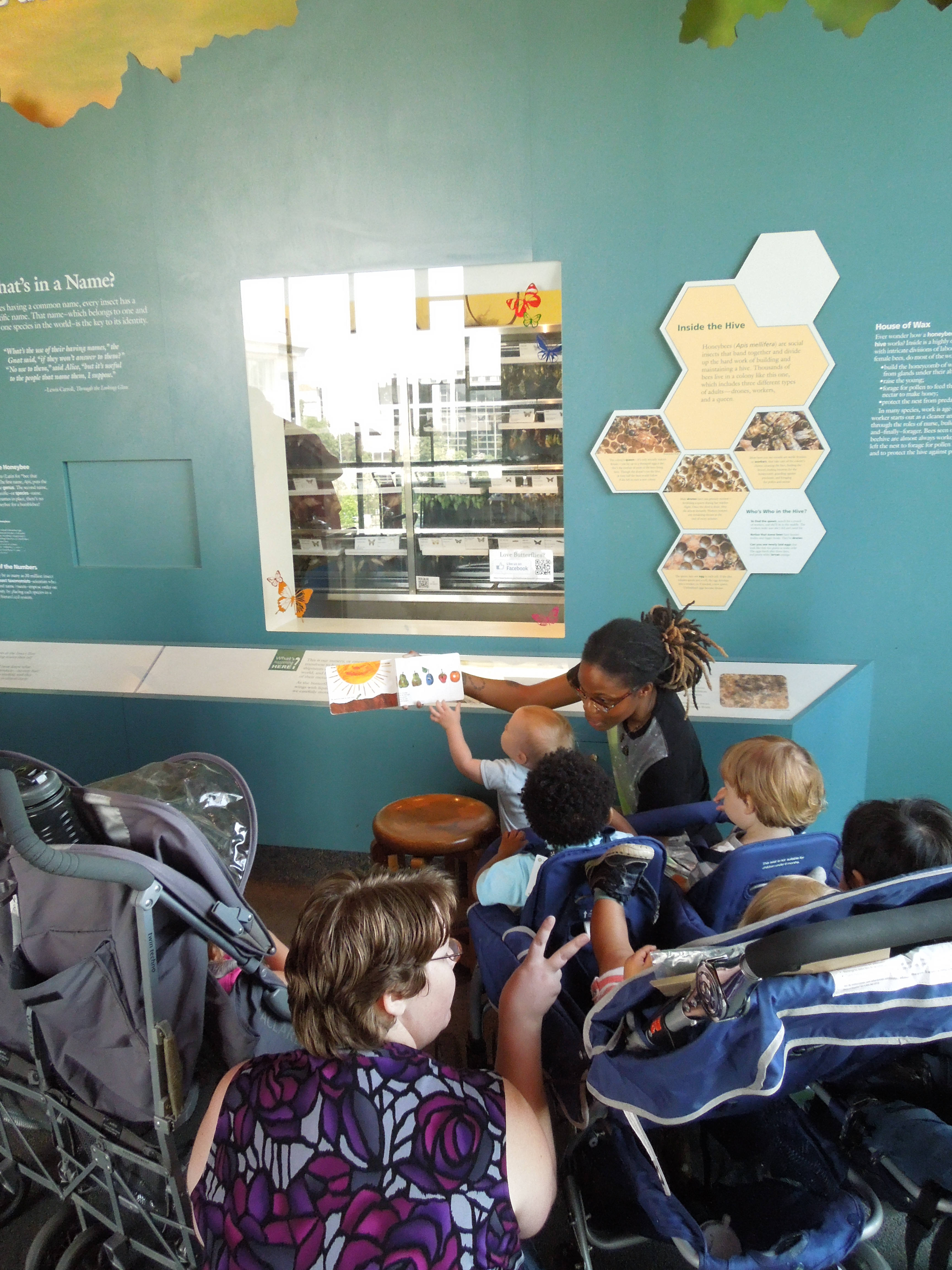
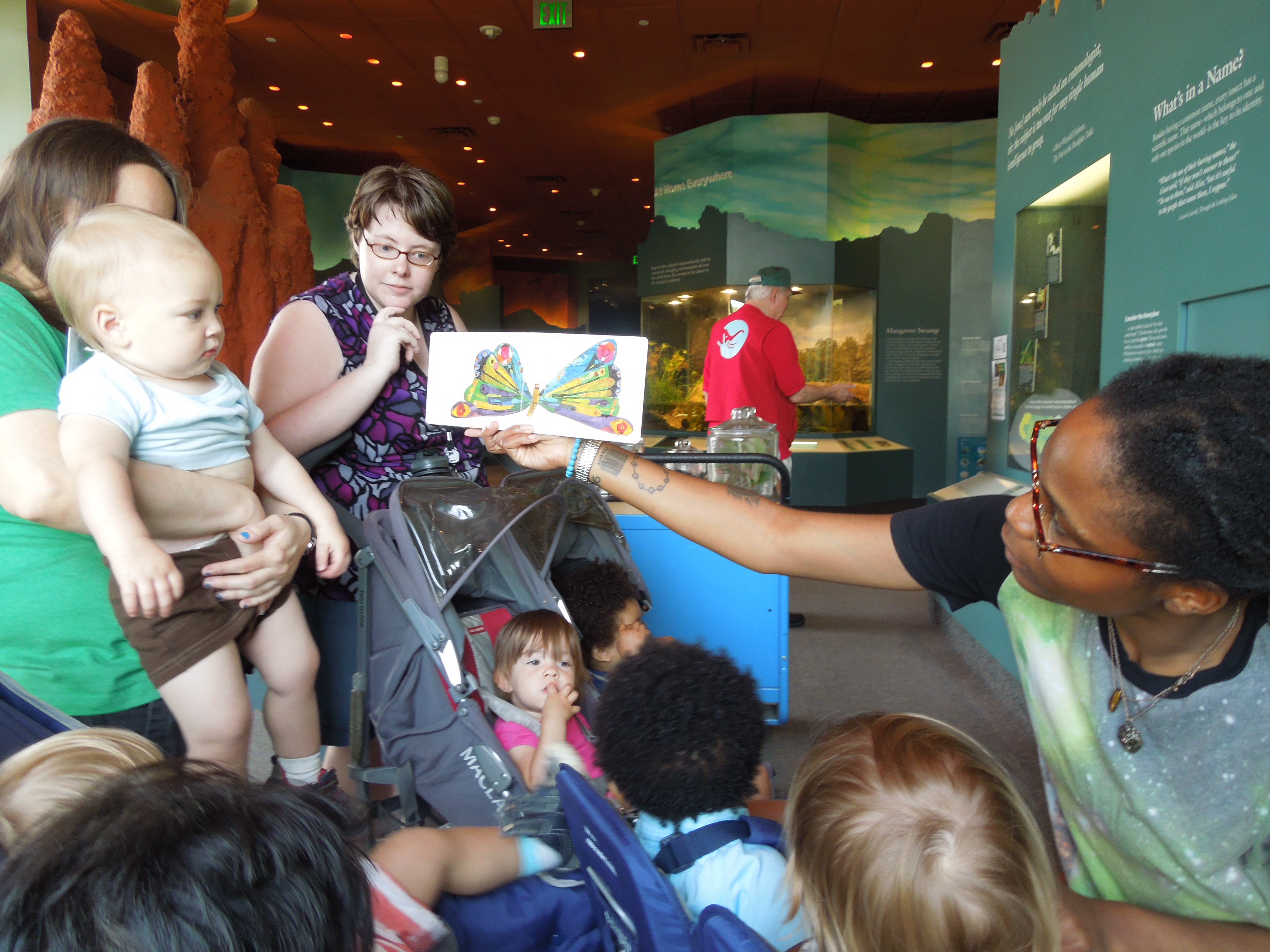
DSCN3164 DSCN3176To reinforce the information she was sharing with the group, Brittany read The Very Hungry Caterpillar. She was sure to point to the corresponding exhibits as she read.


DSCN3186
DSCN3197Brittany then led the group around the gallery to look at the other insects. She brought along a sensory bag full of dirt, small insects, and foliage for the children to touch in the exhibit.


DSCN3206
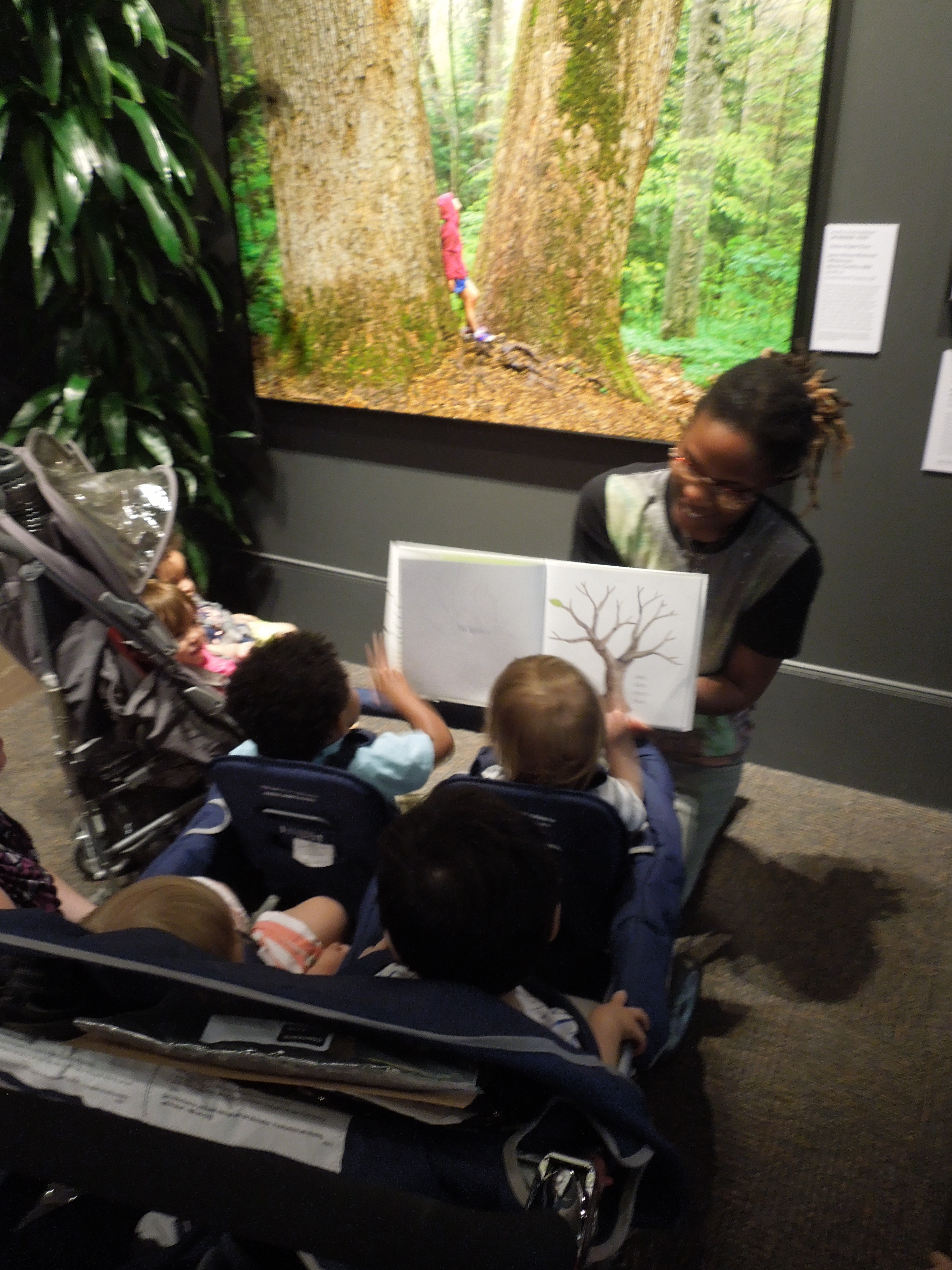
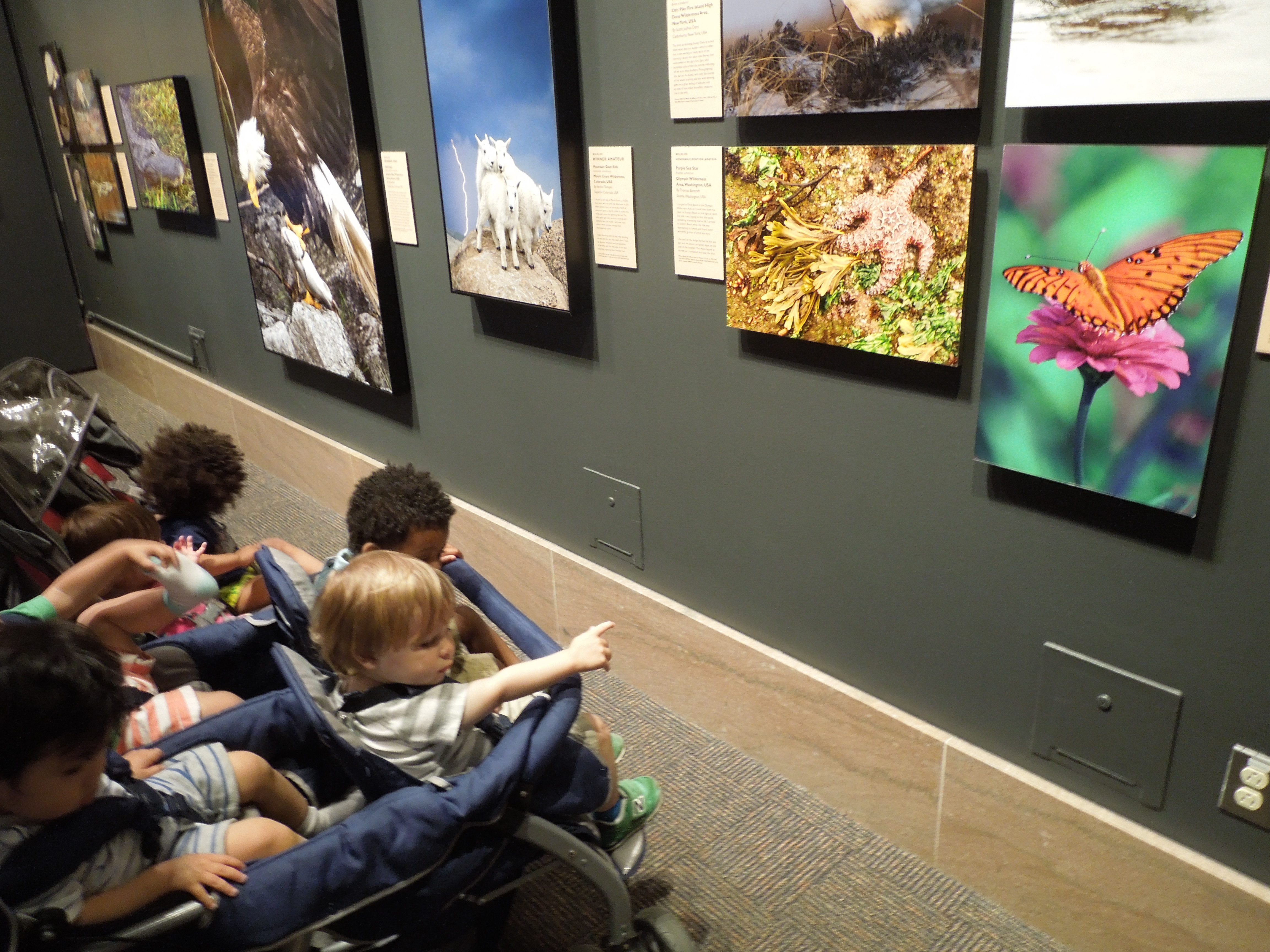
The group went up to see the Wilderness Forever: 50 Years of Protecting America’s Wild Places photography exhibit. The class had fallen in love with the book Tap the Magic Tree by Christie Matheson so Brittany read the book in front of one of the photographs in the exhibit.

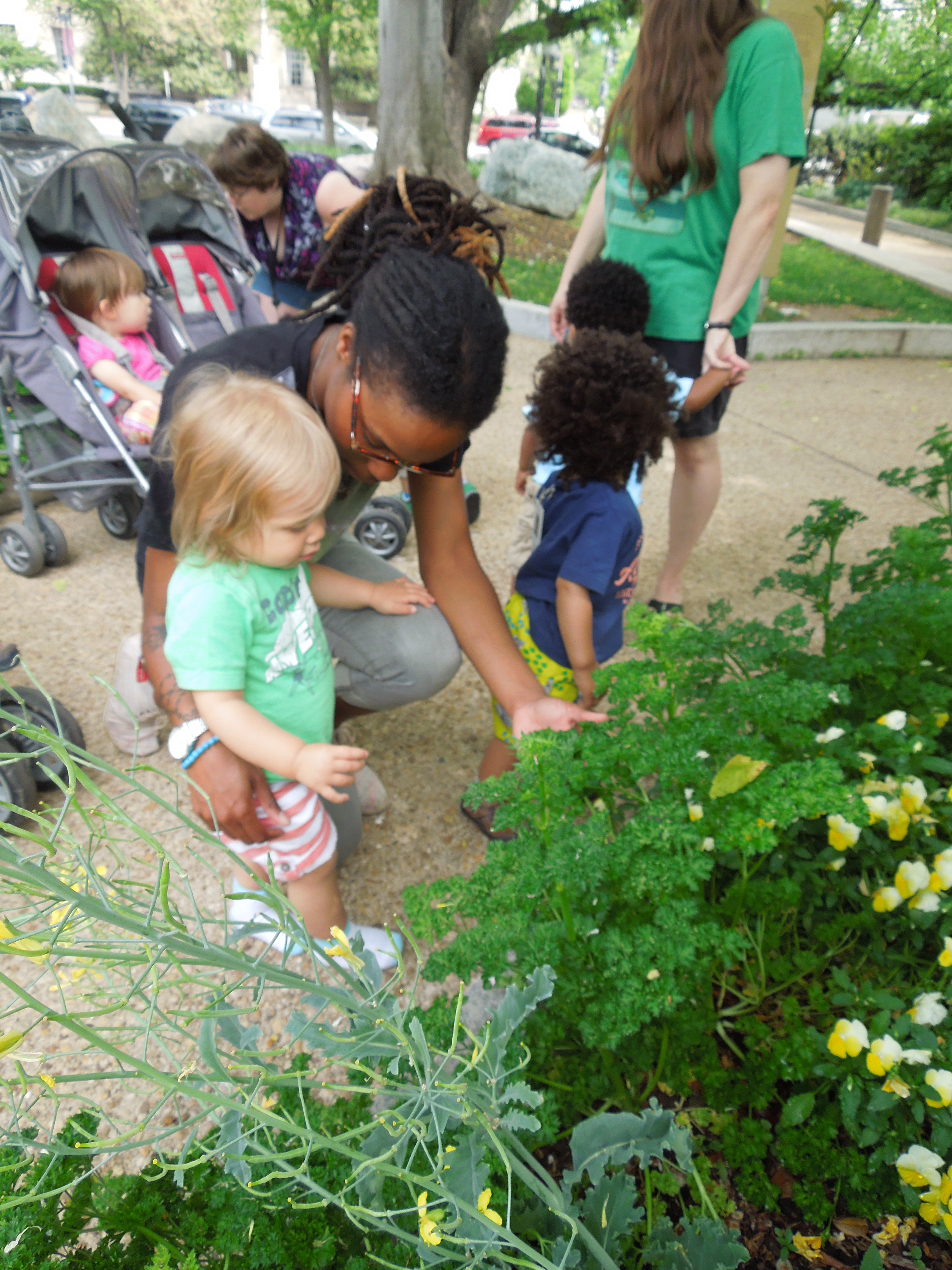
DSCN3230The last stop was to the edge of the Butterfly Garden (located outside of the Natural History Museum) to interact with plants and insects in their natural environment. Brittany encouraged the group to feel the textures and smell the different plants.

This class had a wonderful time learning about nature! Be sure to check back for our Teacher Feature next week!

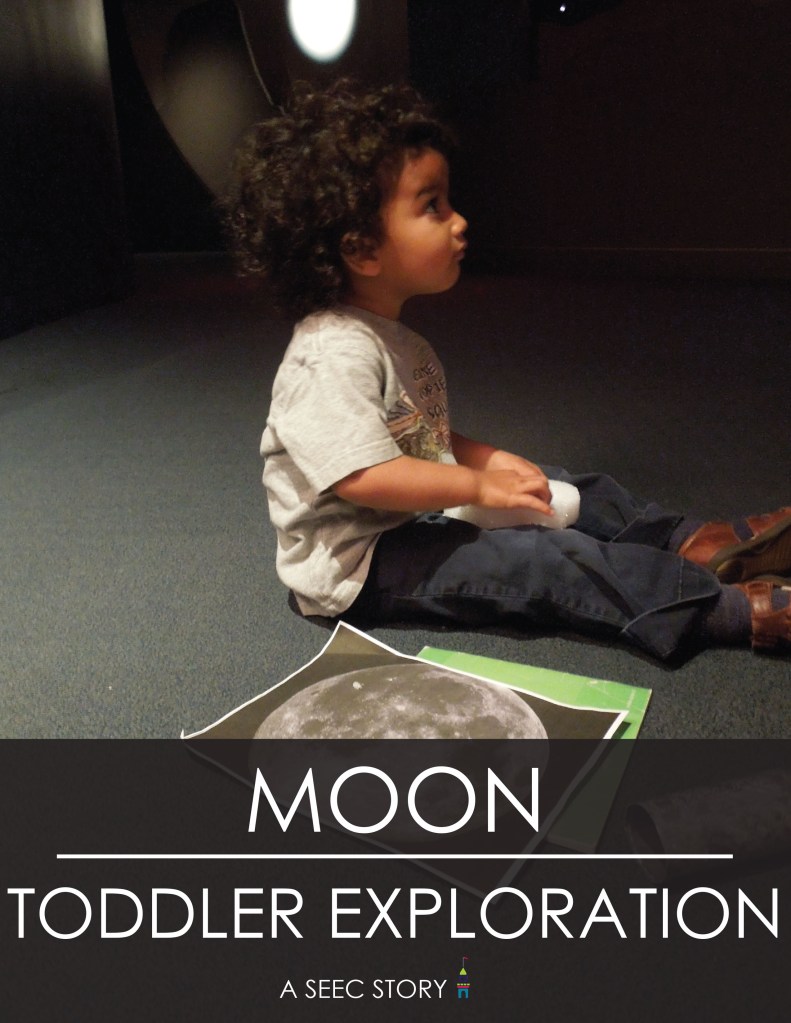
Teacher Feature: Toddler Class Explores The Moon

It’s Teacher Feature Thursday!

This week we are featuring Melinda Bernsdorf. Her toddler classroom was learning about opposites and decided to spend a week learning about the sun and the moon. Below you will find a reflection from Melinda and images from her lesson on the moon.

TeacherFeatureTemplate

What were your topics of exploration?

In our classroom, we have been talking about opposites. This week, we looked at day and night, something very familiar to the kids, and discussed the differences between these two concepts. We talked about the noticeable differences in the level of light, and the different objects we see in the sky during day and night. We started in the atrium of the National Museum of the American Indian. There is a large skylight that has metal work resembling a sun which lets sunlight shine into the space. There is also a set of prisms, and as the outside light shines through, rainbows move across the walls. We then looked at the amazing star scape on the ceiling of Our Universes in the National Museum of the American Indian. To focus our attention, we brought “telescopes” we made earlier in the week, and found shapes in the stars. To deepen our discussion on the moon, we talked about the texture of the surface, and each child was able to imprint their own Styrofoam moon with finger shaped craters. We also talked about how our actions are different in the day and night. There was lots of discussion about sleep and play.

What were your learning objectives? (What did you want your children to take away from the lesson?)

Exploring opposites is always a great way to involve our kids in scientific discovery and early math skills. I want the kids to become more familiar with the vocabulary on these subjects. We compare and contrast, and talk about observation and investigation. In this lesson, I wanted to bring the attention of the children to a more complex conversation about an everyday experience. I also wanted them to have a great immersive experience, reading about the sun and brightness in the atrium where they could see it shining through the prisms, casting rainbows on the walls, as well as talking about the moon and stars while sitting with “telescopes” under a night sky.

What was most successful about your lesson?

The kids really enjoyed the telescopes. They recognized their work from earlier in the week and felt a sense of ownership and pride as their art project became a tool. They focused on the stars and moon longer when using the telescopes, and having a tactile object that related to the lesson helped lengthen their attention span.

What could you have done differently? What recommendations would you have for another teacher trying out this lesson?

Trying to extend our lesson with the Styrofoam moon would have worked better in the classroom. I was hoping for an art activity that would lend itself well to the museum environment, however I ended up asking toddlers to sit for too long. Between the time in the atrium and then the time under the stars, we became a bit antsy. When I attempt this lesson again, I think we might talk a little more about the moon and its surface on a different day. I would also like to expand this project by having the kids paint the newly-cratered surfaces of their Styrofoam moons with a mud or clay based liquid, and decorate the other side of the Styrofoam with orange and yellow tissue paper. This will give them a tactile object that represents both the moon and the sun. Like the telescopes, these could be made ahead, and brought with us to the museum to bring both aspects of the lesson together.

Here are a few images from their unit on opposites:

DSCN3274Melinda took the group straight to the National Museum of the American Indian for their lesson. When they first pulled into the museum she had the group stop and observe the light coming from the ceiling portal.
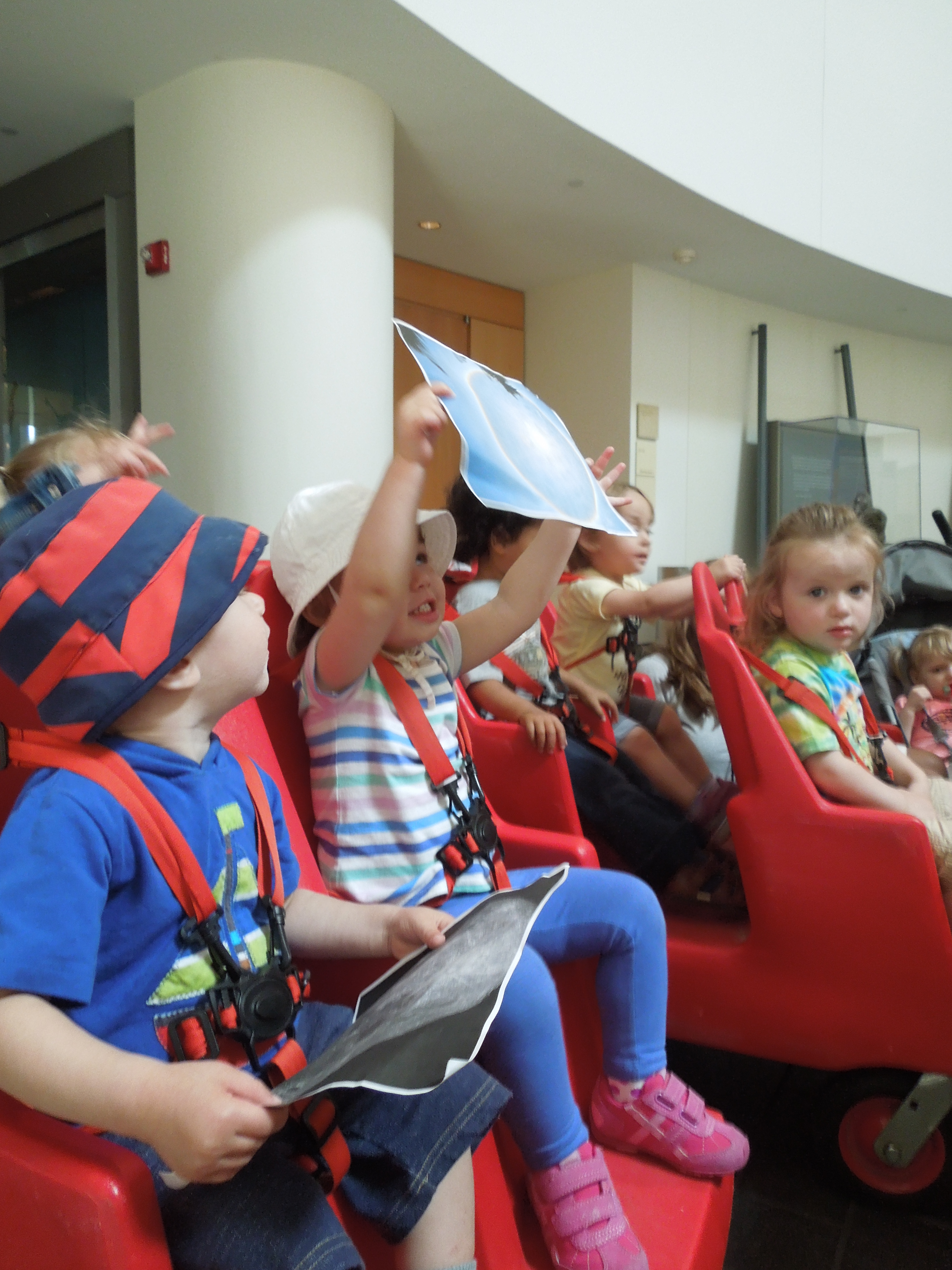
DSCN3277Melinda then showed the group an image of the sun and asked them to compare it to the light that was coming out of the portal. They talked about the shape and the amount of light they could see.
DSCN3282Melinda gave each child the chance to look closely at the image.
DSCN3284She also referenced a book they had read earlier in the week about the sun.

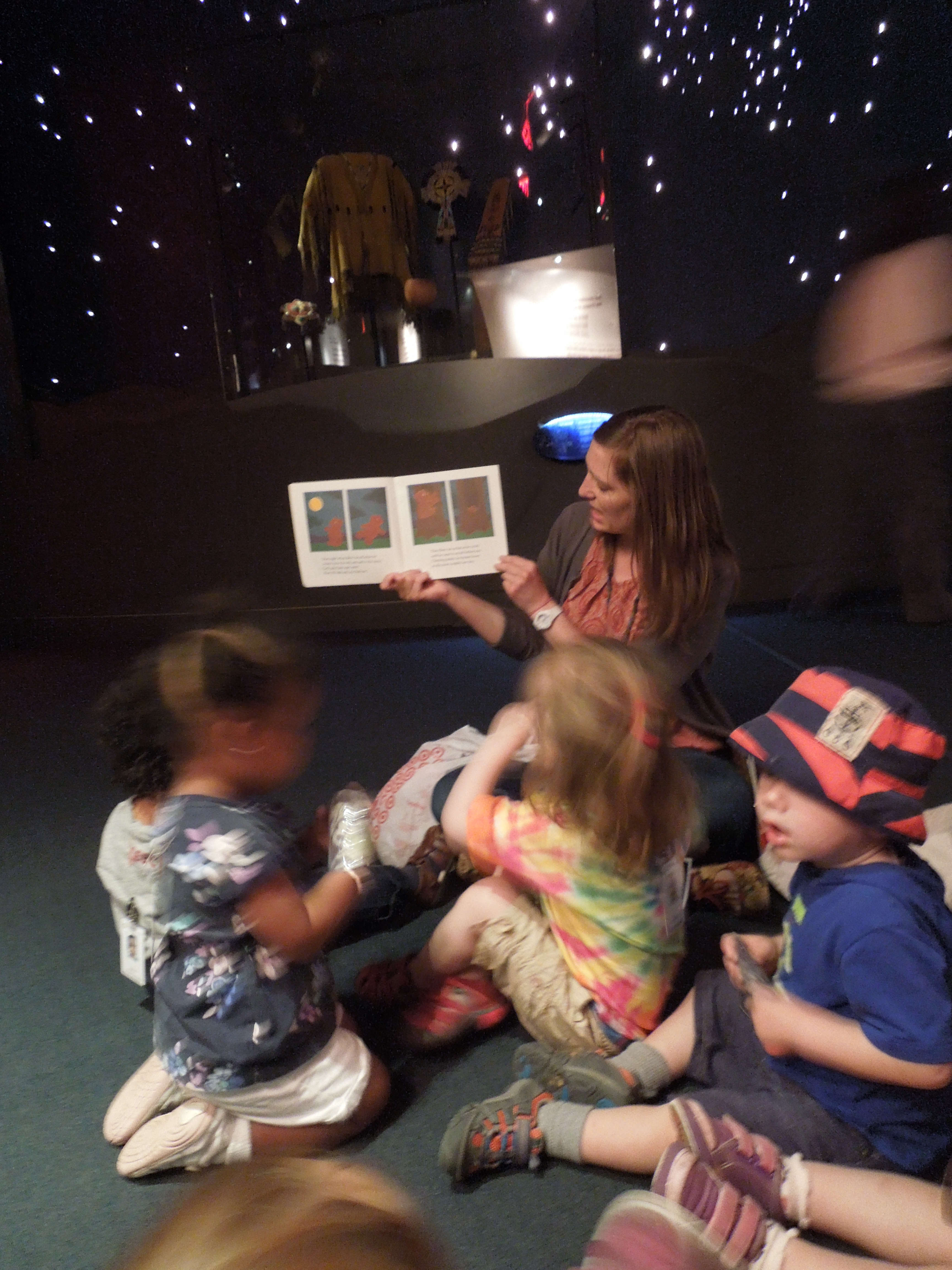
DSCN3300They then headed up to the Our Universes exhibit. The ceiling of the exhibit has a moon and is covered in stars. Melinda passed out telescopes that the children had made to help them look closely at the night sky. While the children were looking, Melinda read them Moon Game by Frank Asch.
DSCN3298The group loved looking closely at the book through their telescopes. 

DSCN3317Melinda then shared with the group an image of the moon and styrafoam circle. She talked about how the moon is covered in craters and that they were going to use their fingers to squish the foam and make their own craters.
DSCN3313They enjoyed the sensation of the foam squish beneath their fingers.
DSCN3324One little girl especially liked comparing her circle to the moon.
DSCN3329Melinda also had the group look at the House Post from the Dís hít (Moonhouse) of the Kwac’kwan Clan. She pointed out the circle shape and how the carved image on each post could reflect the different phases of the moon.

DSCN3335 DSCN3337They took one final look at the sun coming through the portal and compared the two images of the sun and moon before heading back to the classroom.

This class had a wonderful time learning about opposites! Be sure to check back for our Teacher Feature next week!

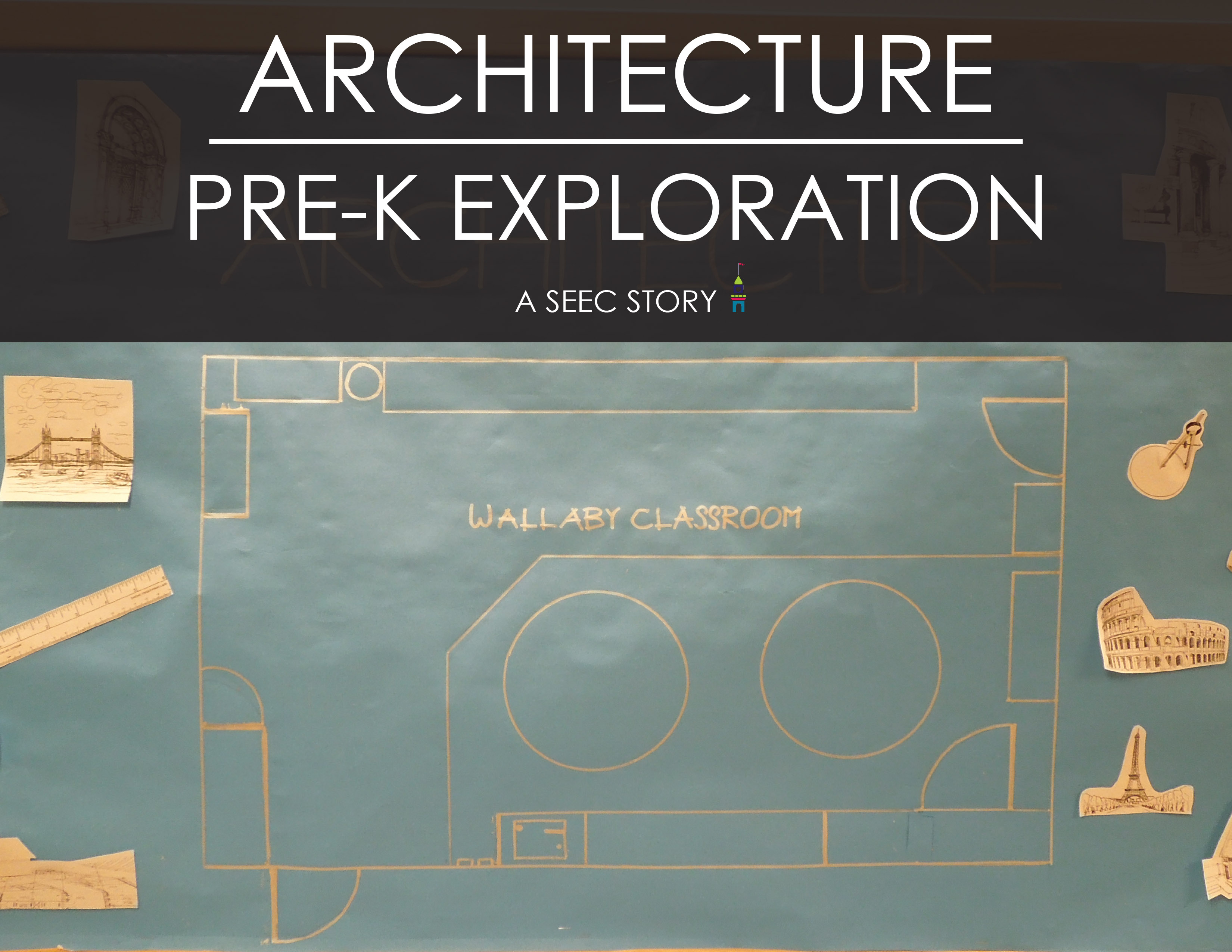
Teacher Feature: Preschool Classroom Explores Architecture

It’s Teacher Feature Thursday!

This week we are featuring Jessie Miller. Her three year old classroom was learning about architecture and decided to spend a day creating models. Below you will find a reflection from Jessie and images from her lesson on architecture.

Architecture_Cover_1

What were your topics of exploration?

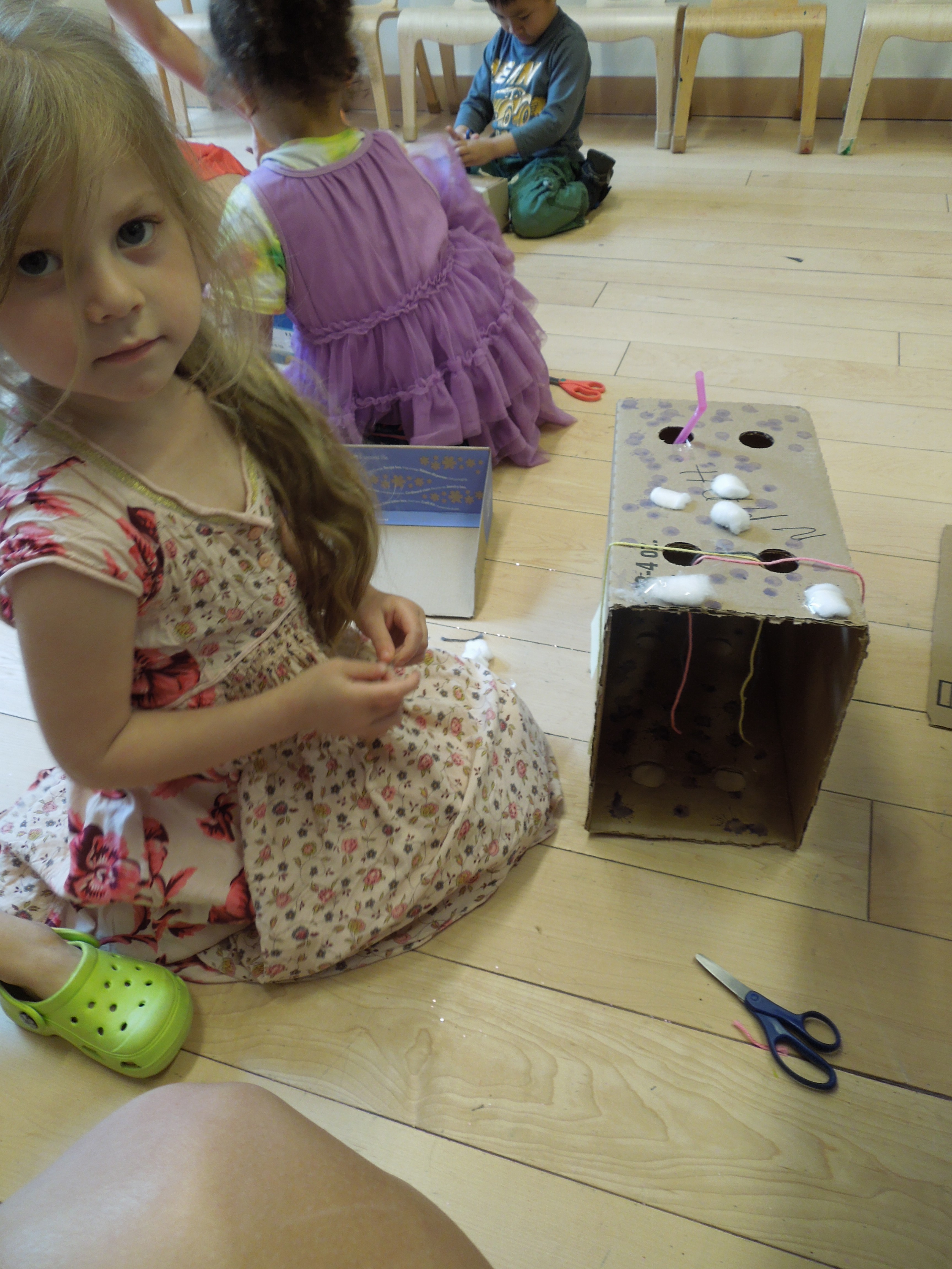
During our exploration of architecture, we talked about the process architects and builders go through to create houses. With the help of Chris Van Dusen’s book If I Built a House, we discussed what kinds of things we would want to include in our own dream house. After the architects make blueprints they often create models of what they want to build. The students used their previous knowledge of architecture and their new ideas from the story we read to create their own model of a house. Each child was given a shoe box as a starting point and they used materials such as cardboard, paper, ribbon, tape, markers, scissors, etc. to build their model homes. During this activity, we talked about making sure the houses have a solid foundation on which to build and what kinds of essential elements they needed to function as a home. It was also a way to show them how models are created to help architects visualize what they want something to look like before they actually begin building it.

What were your learning objectives? (What did you want your children to take away from the lesson?)

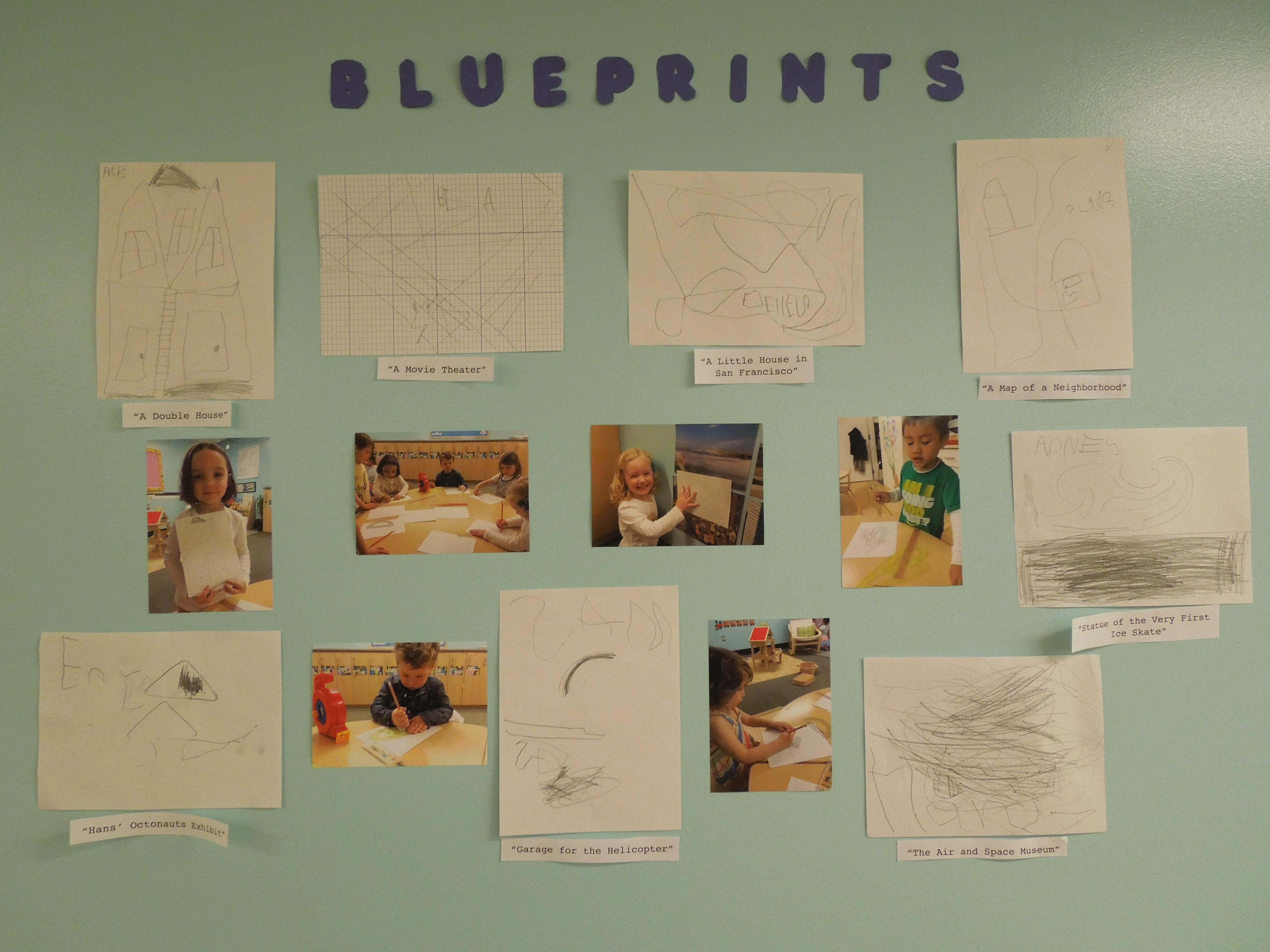
The class had been studying architecture for a few weeks prior to this lesson and I wanted them to have a hands on experience related to this topic. We had read countless books on architecture, created our own blueprints, observed the architecture around us, learned about building materials and tools, and even met with some real architects! I wanted the children to use all this knowledge they had learned and apply it to this project. After this lesson, they should understand the concept of what a model is and why they are an important tool for architects. I also wanted the class to take on the role of the architect and see how they can use their own ideas to create something. They should also be able to compare the things they were putting in their model to real life. For example, if they added cardboard to the top of their shoe box it could represent a roof or if they cut a hole in the side it may be a door.

What was most successful about your lesson?

This lesson was a great way to have the class express themselves in a creative way without many restrictions. They were given a lot of space and a range of materials to work with, which allowed them to all work on a project at the same time but at their own pace. There were three adults and twelve children so there were extra hands when the children needed help with something. I think the most successful part of the lesson was that the children were able to create something of their own and have fun with it. The lesson was structured in a way that allowed them to move around a lot and not be confined to sitting in one place or having to wait long periods of time to get a turn. The Wallabies really impressed me with all of the conversations they were having about what they were building and how they were able to take their ideas and turn them into something real. This lesson also leaves the children with a final product they can keep and be proud of.

What could you have done differently? What recommendations would you have for another teacher trying out this lesson?

This was a fun activity for the Wallabies but it takes some time and effort to complete. We were able to do the activity on the floor of a large art space which was much more conducive then tables in the classroom. However, because of the amount of children and materials it could get a bit cluttered at times and the clean up is a process as well. One issue that arose was how much tape the children needed. Because they still needed help from teachers to get tape, it was hard for me to pass it out as quickly as they needed it. Therefore, I would have more of that ready for them beforehand. Doing this activity with smaller groups could be helpful as well so the teachers can work with more children one on one. It is also important to either have a set time when everyone stops or have something for them to do once they begin finishing the activity. Some children get really detailed with their models, while others may rush through it quickly so it is important to be mindful of this difference.

Here are a few images from their unit on the architecture:

DSCN3089

Throughout the week the group studied blueprints and worked on their own sketches.

architect

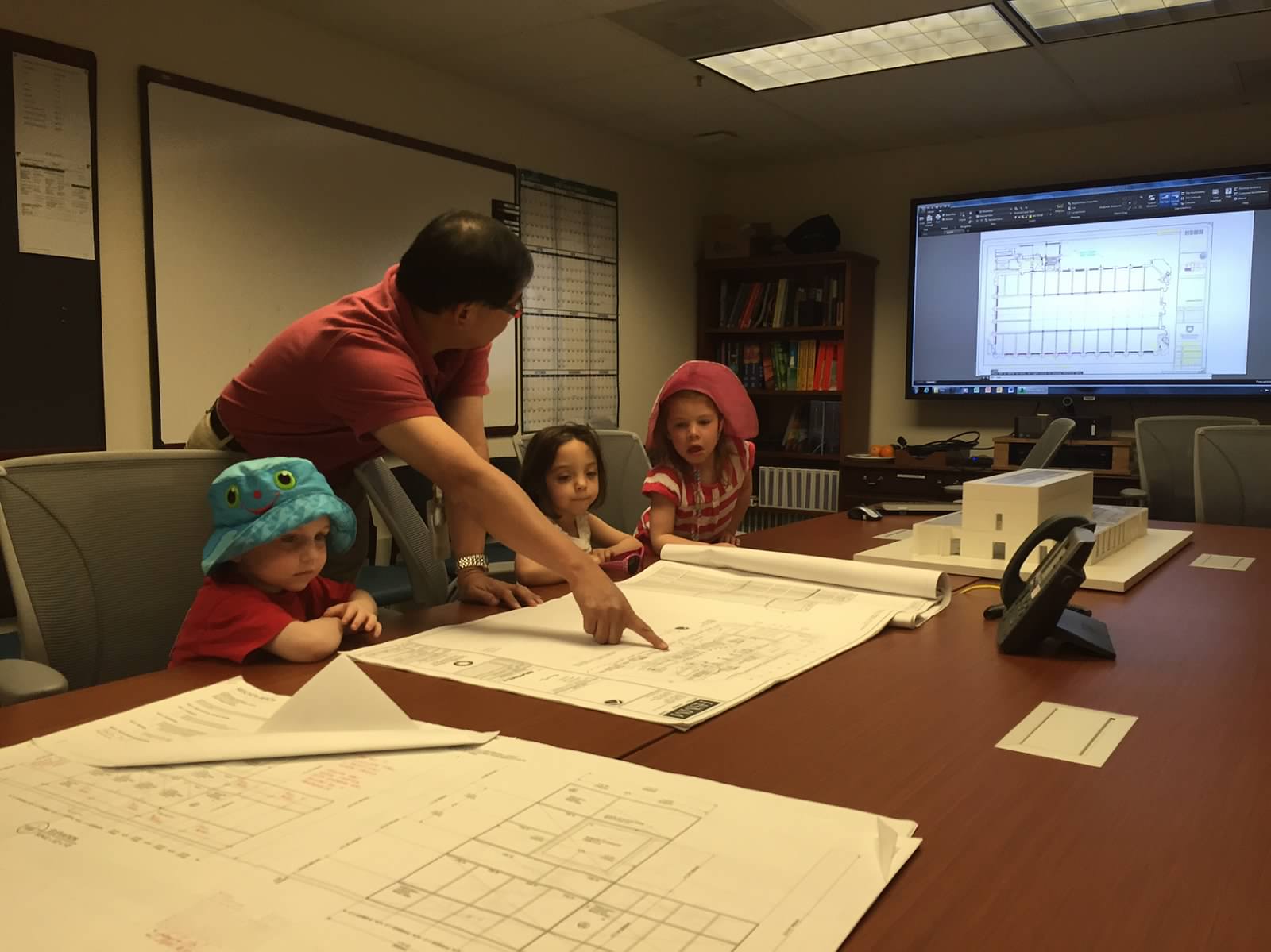
The group even visited with Natural History Museum’s building manager to look at blueprints for the museum and learn about the role of an architect.

DSCN3091

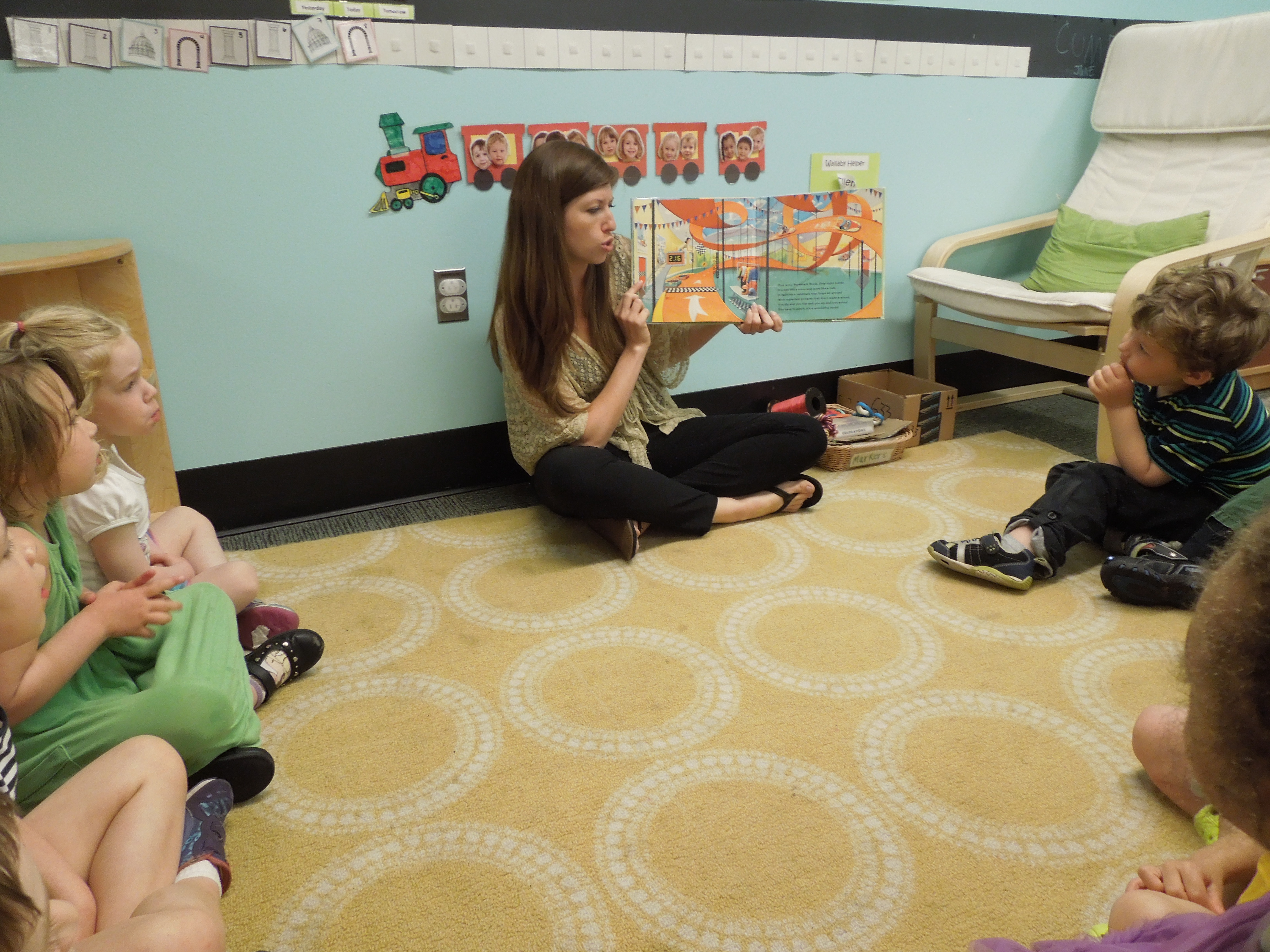
For this lesson, Jessie wanted to focus on the children creating models of a house of their own design. She read the group If I Built a House to inspire them to think creatively about what their dream house might include.

DSCN3097

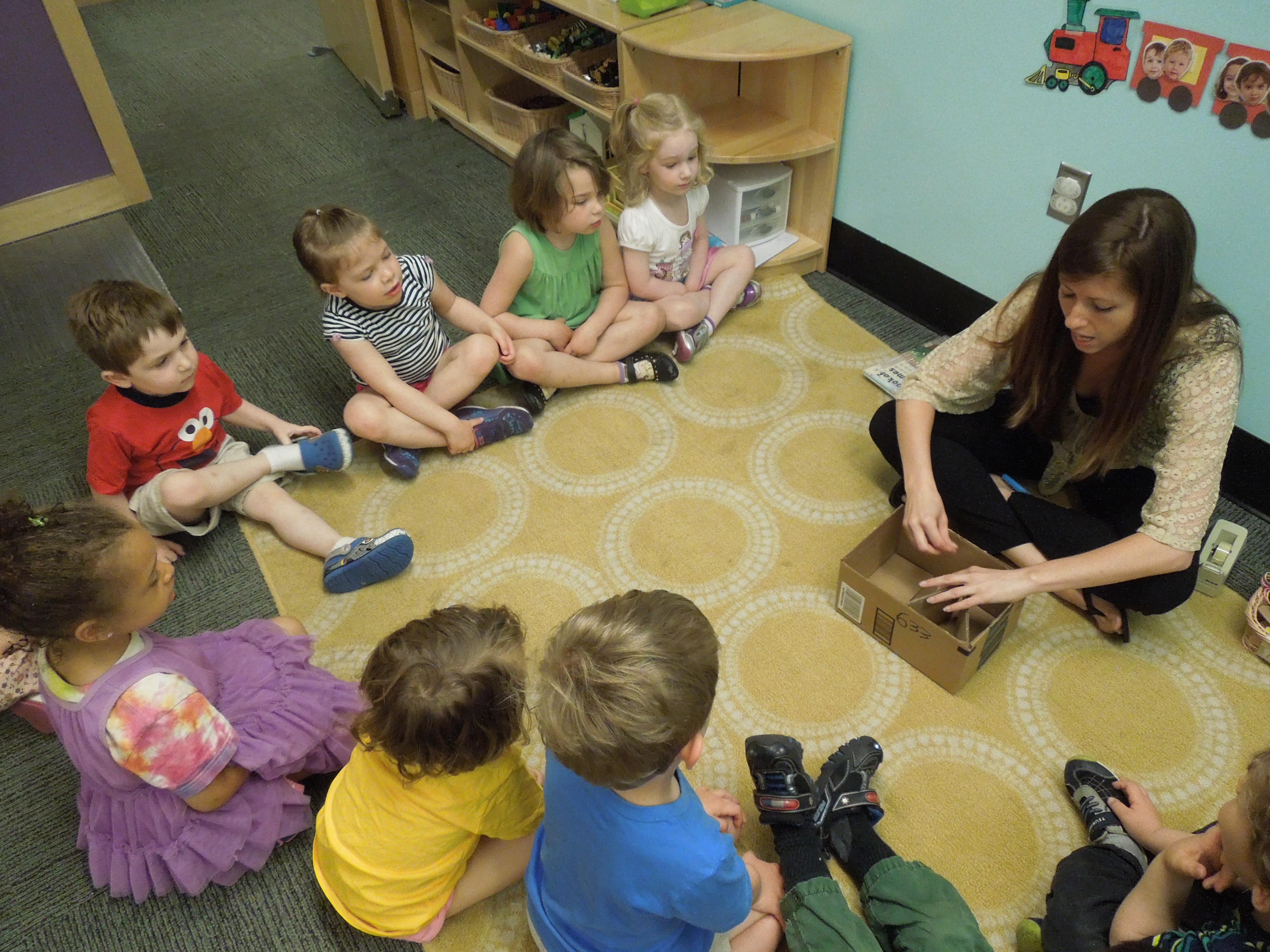
Jessie then explained that each child was going to get a box and could use any of the materials she collected (string, ribbon, cardboard pieces, dot paint, straws, etc) to create their model. Jessie had the group work together to help build her model before beginning to work on their own.

DSCN3108 DSCN3114

The children were able to get lots of fine motor and problem solving practice during their construction.

DSCN3133

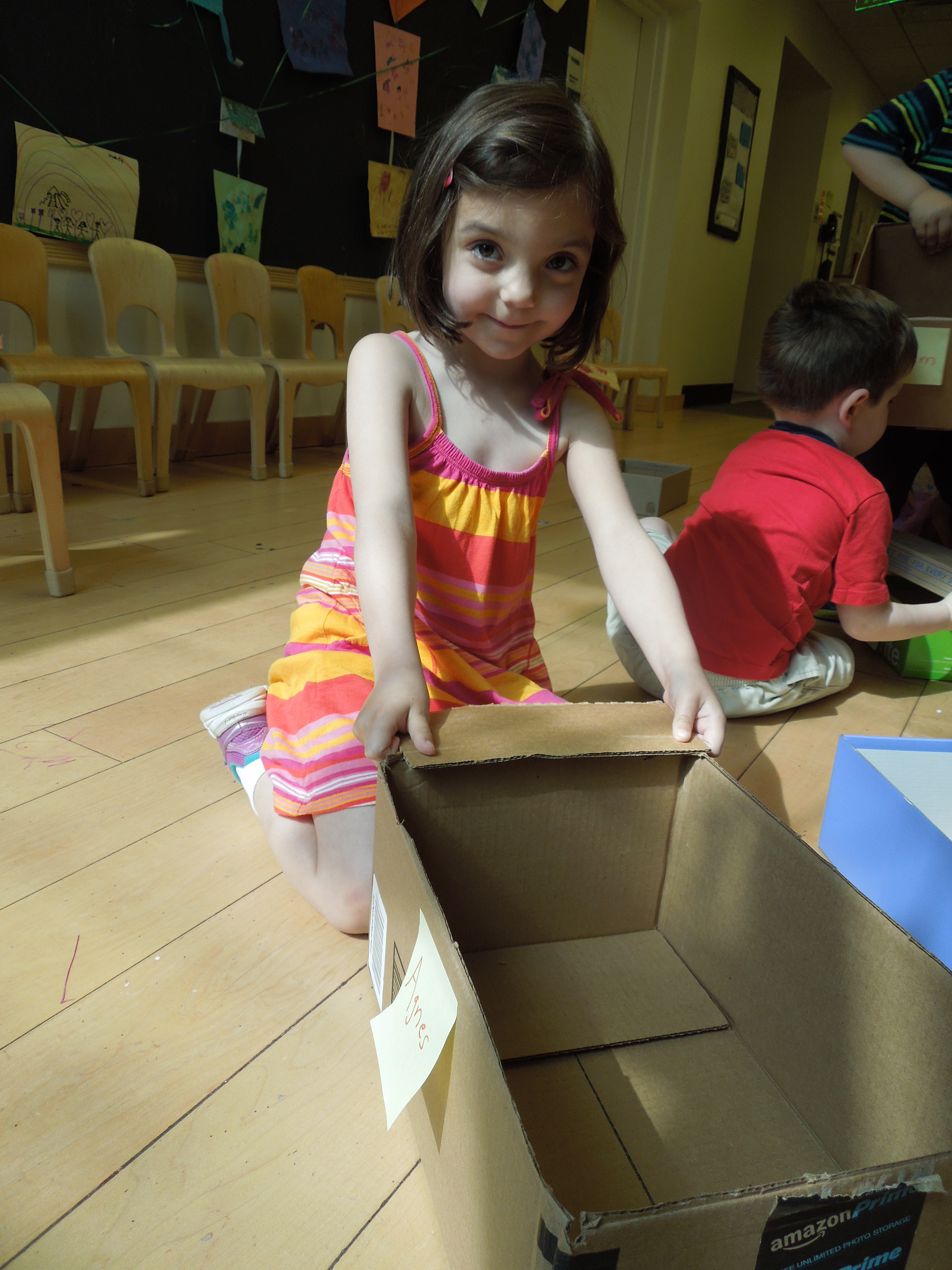
When the children were finished, they would describe their house to one of their teachers. This little girl explained: “I love the house. The strings are woggly and there are dots on the bottoms and dots on the top. The cotton balls are windows up top.”

This class had a wonderful time learning about architecture! Be sure to check back for our Teacher Feature next week!


Teacher Feature: Infant Classroom Explores Flowers

It’s Teacher Feature Thursday!

This week we are featuring Noel Ulmer, Nessa Moghadam, and Katy Martins. Inspired by the spring weather and blooms, their infant class decided to paint with flowers.  Below you will find images from their painting experiences with flowers.

Flowers_Cover


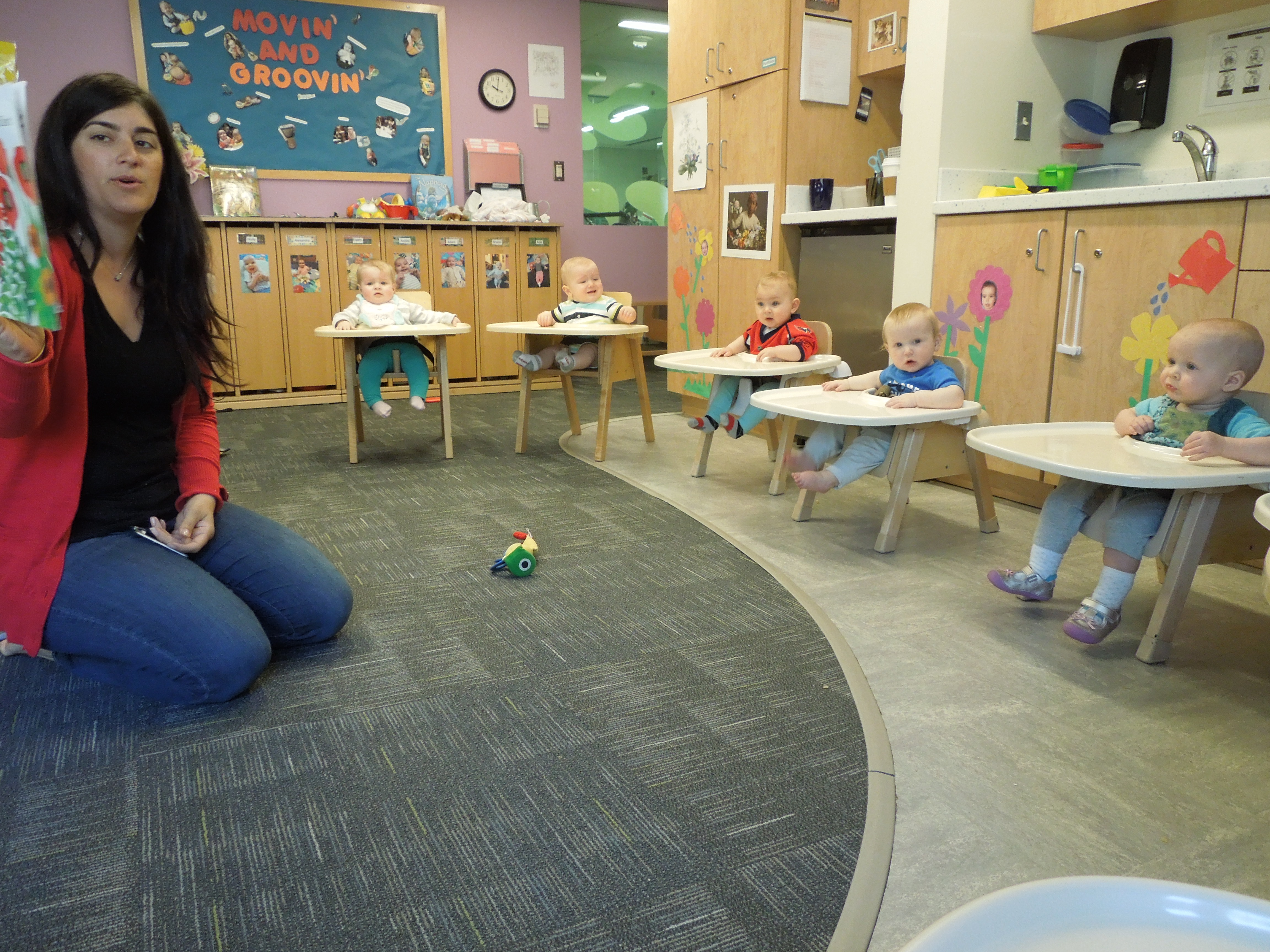
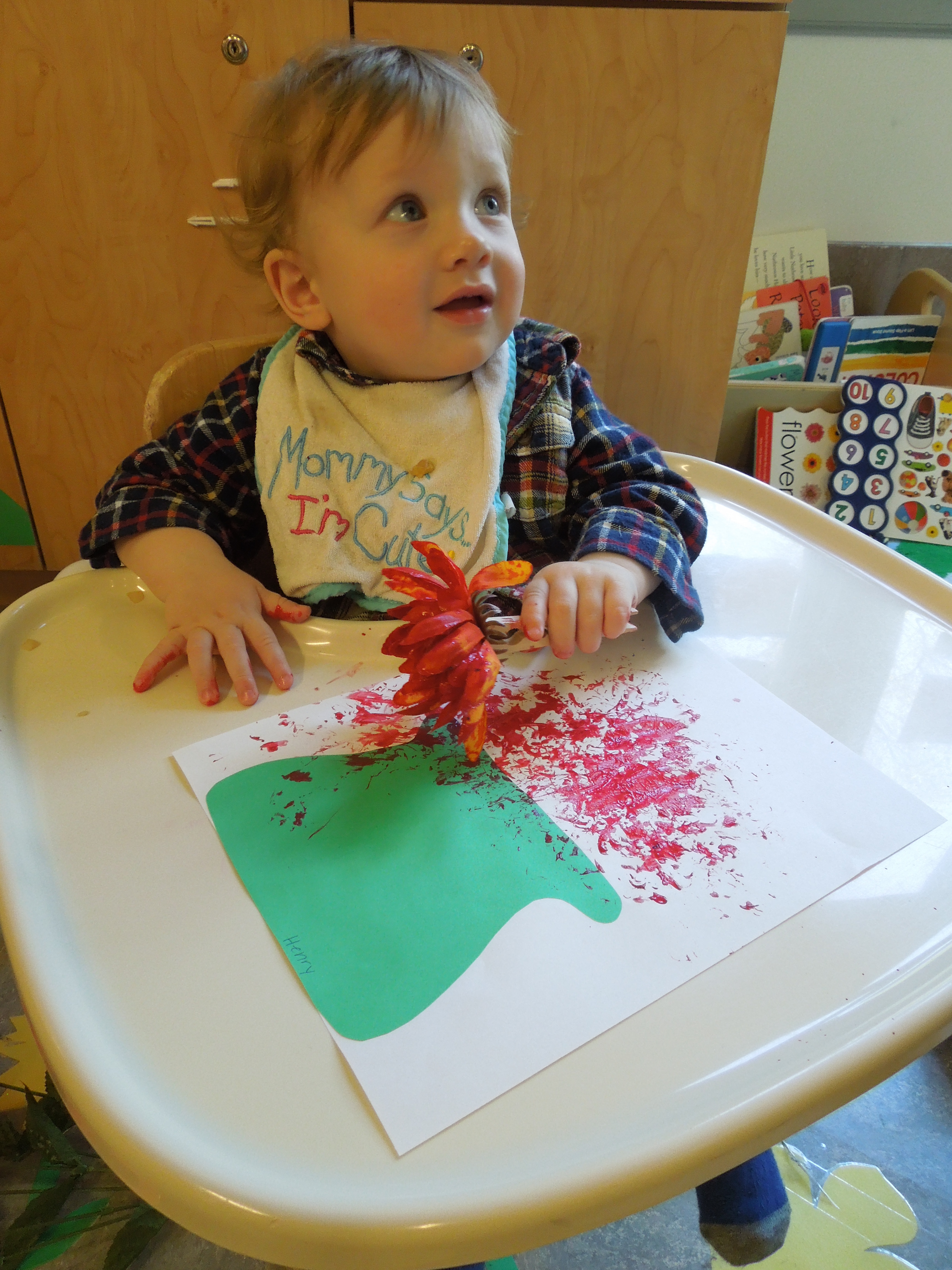
Here are a few images from their unit on the flowers:DSCN2973Nessa began the lesson by reading Planting a Rainbow by Lois Ehlert. The team had the children sit in high chairs so they could have a nice flat and accessible surface to do their painting.

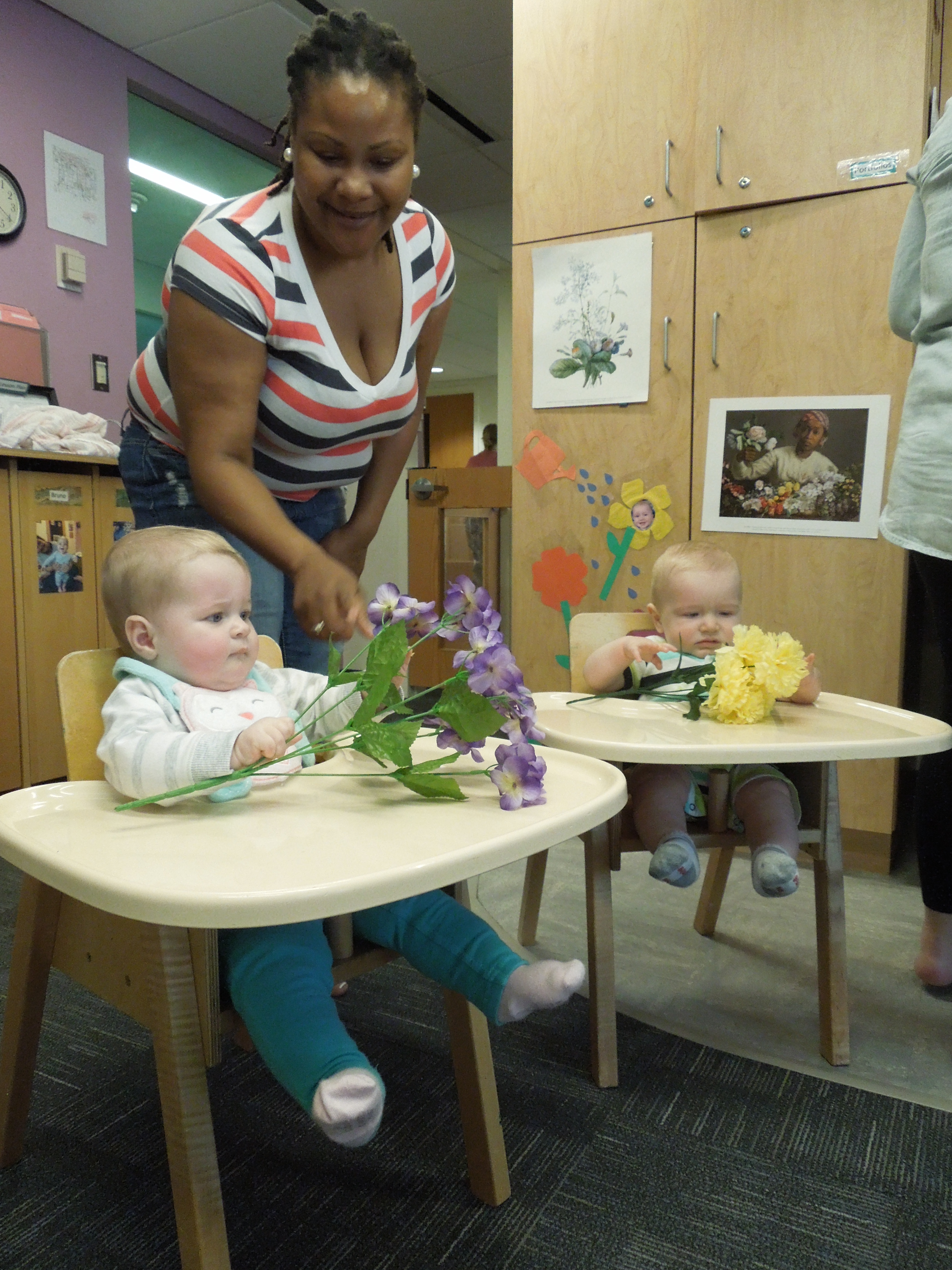
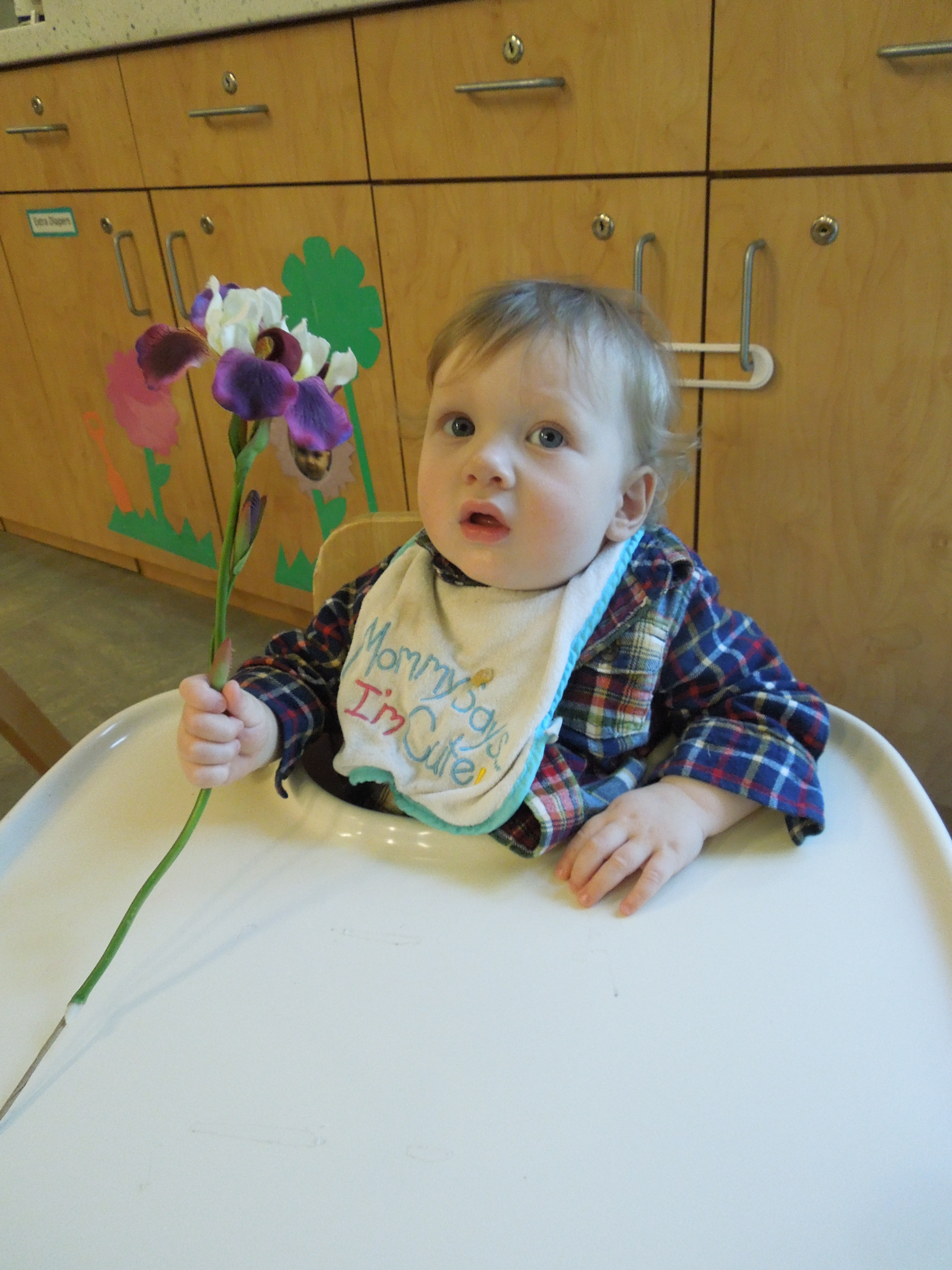
DSCN2977The children were first provided with silk flowers to touch and explore.

DSCN3003The children used all their senses!

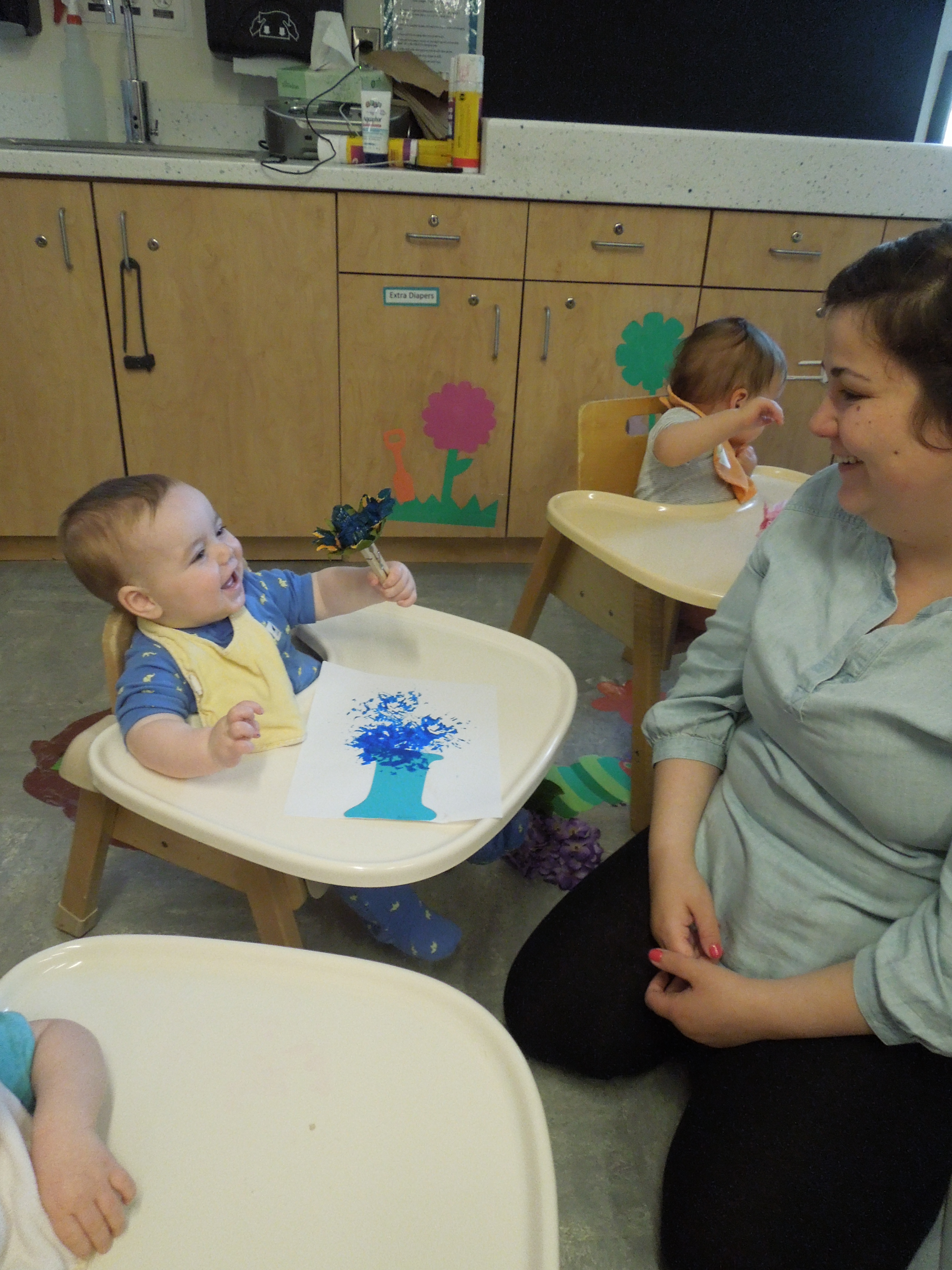
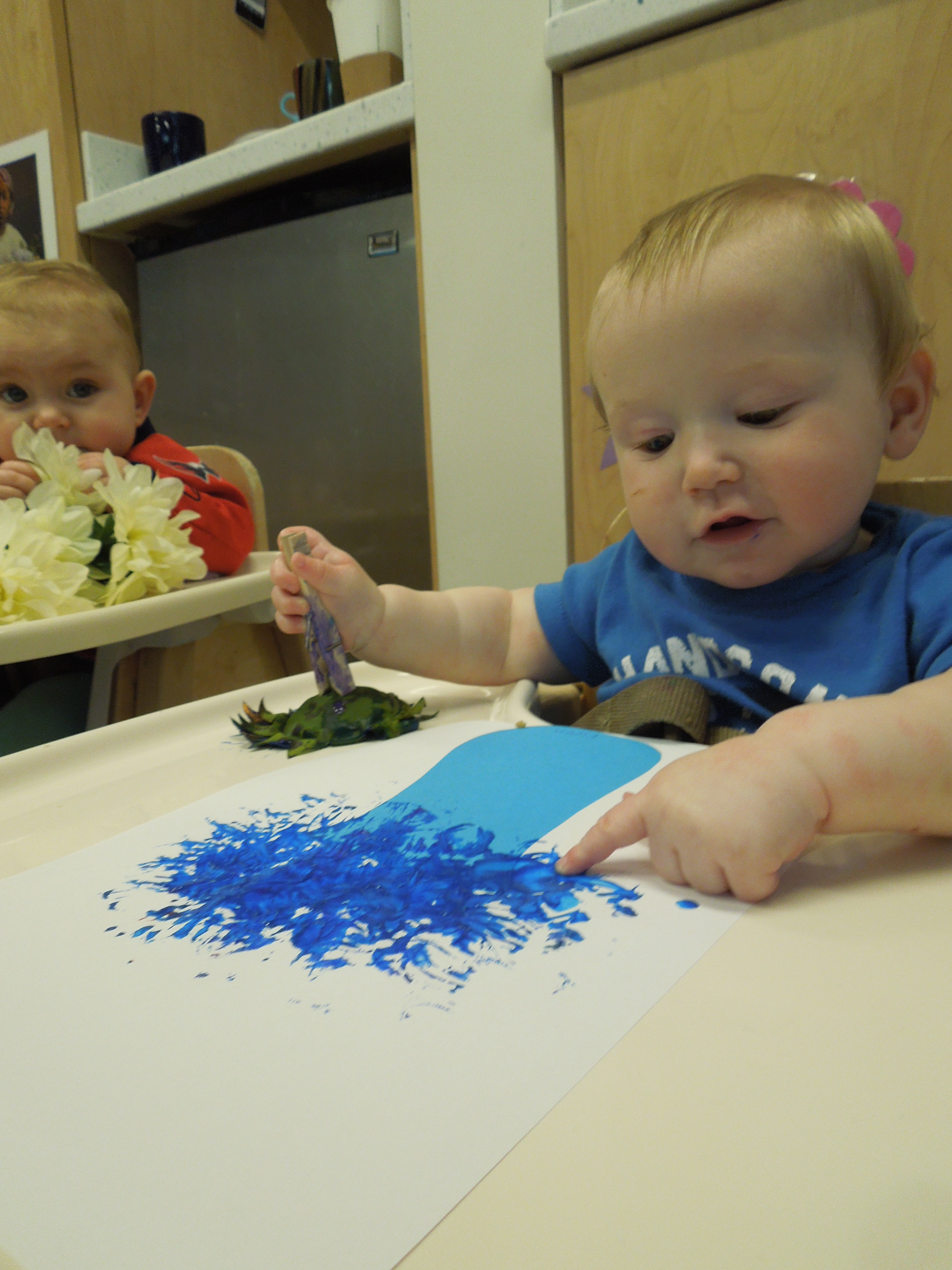
DSCN2999Then it was time to try out painting with the flowers.  The teachers had pre-made sheets with a vase for the children to add their flower prints.

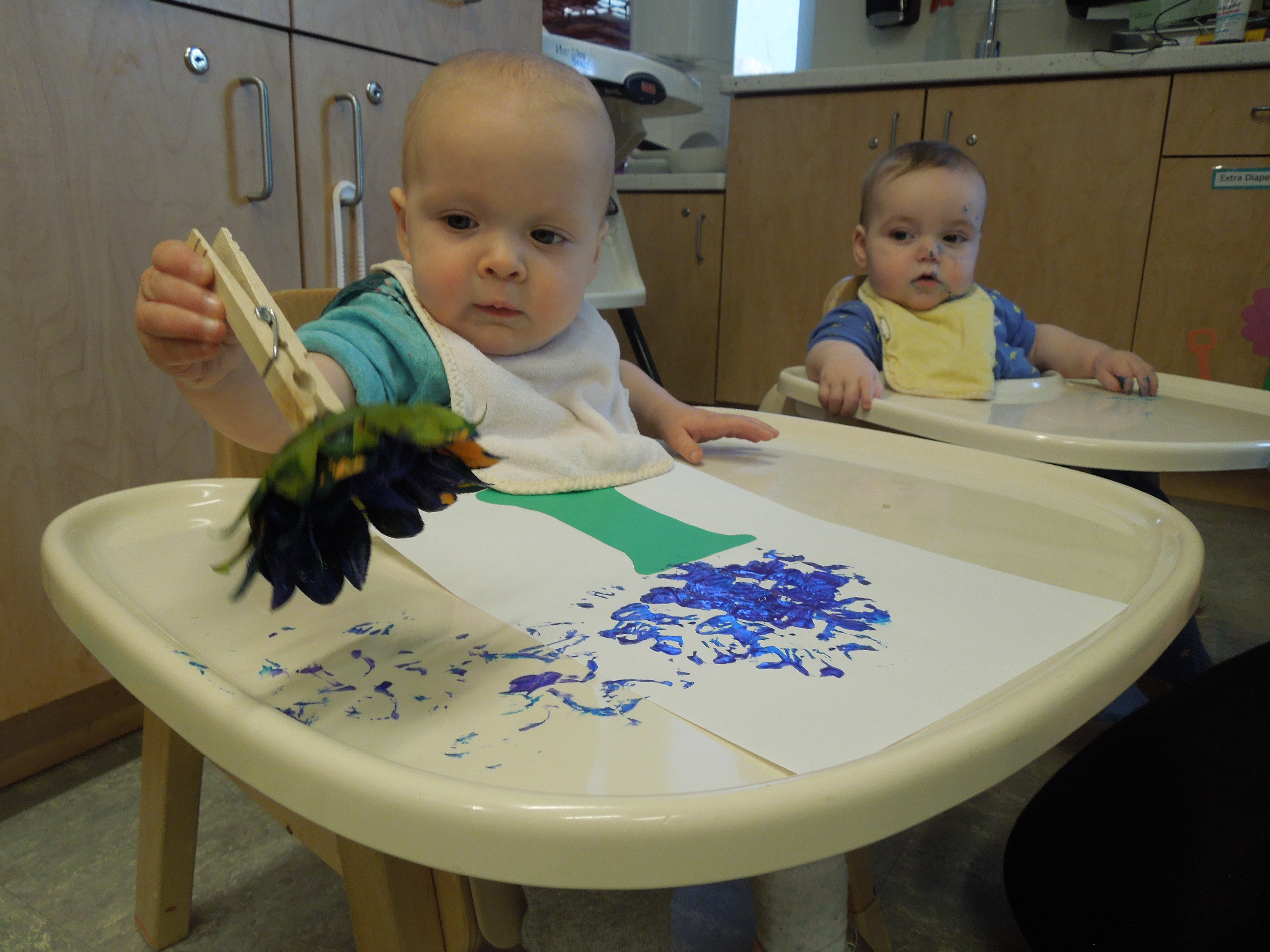
DSCN3008The teachers added a clothes pin to the shortened stem of the silk flower so they would be able to get a better grip. This was great activity for them to work on their fine motor skills. In addition, the babies began to notice that the painted blossom leaves marks where ever it lands.

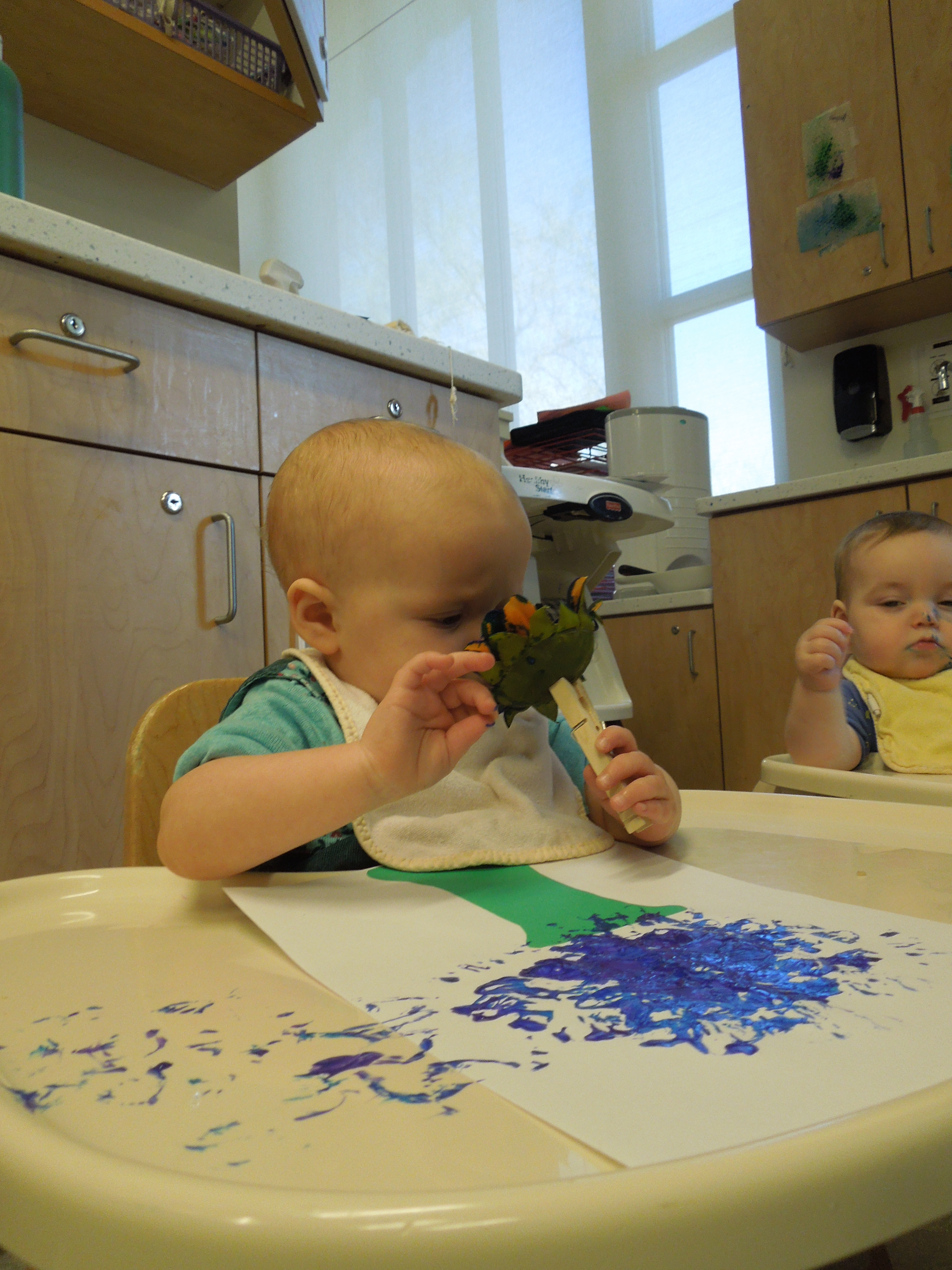
DSCN3012DSCN3030The children were interested in exploring the painted flower in many different ways, including smelling and touching the wet paint.

DSCN3023They had a great time!


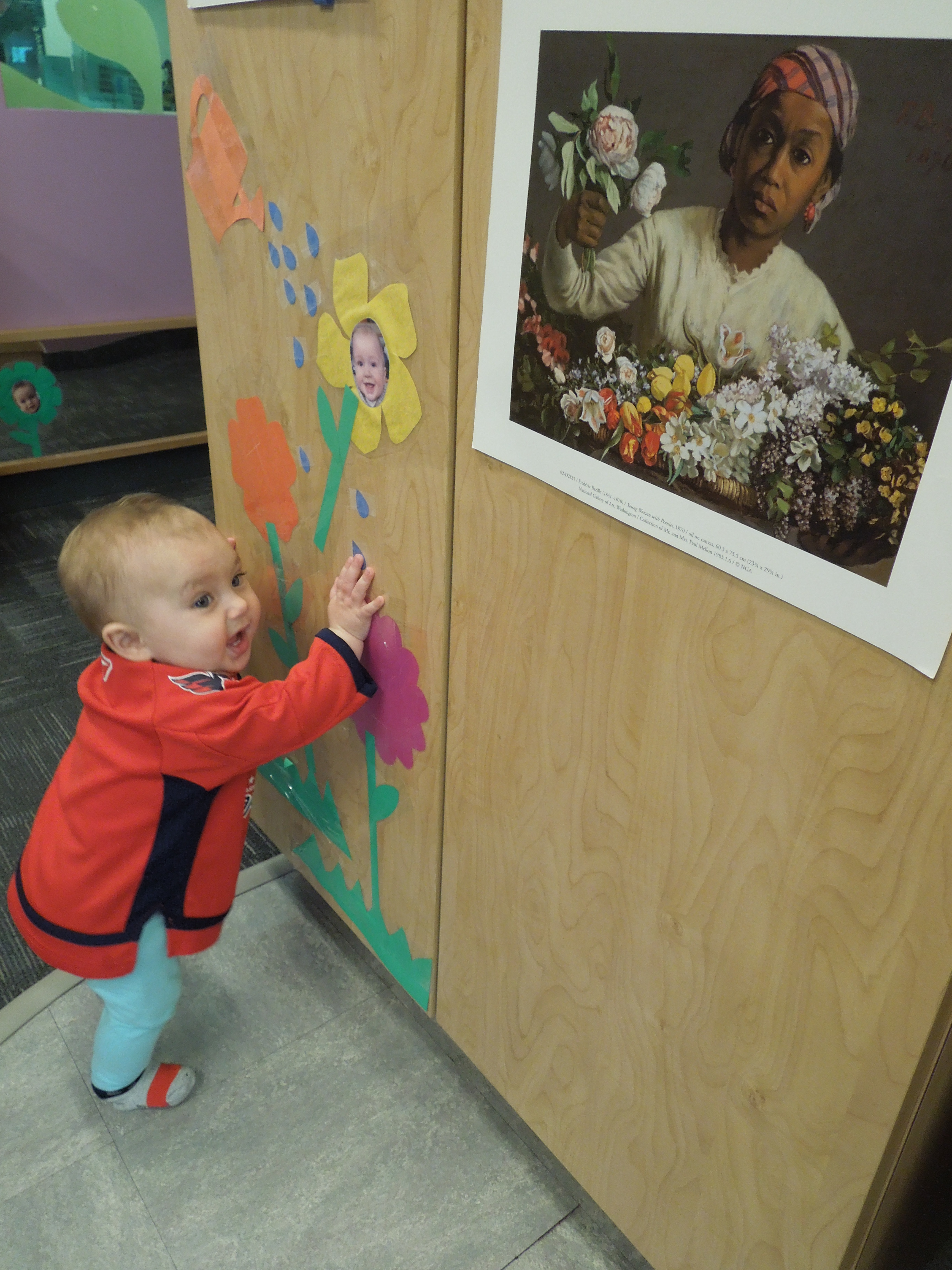
DSCN3045The teachers decorated their room with images of flowers, art prints, and images of the children. After painting, this little girl came over to check out the paper flowers on the wall.

This class had a wonderful time learning about flowers! Be sure to check back for our Teacher Feature next week!