Teacher Feature: Two Year Old Classroom Explores Trains

It’s Teacher Feature Thursday!

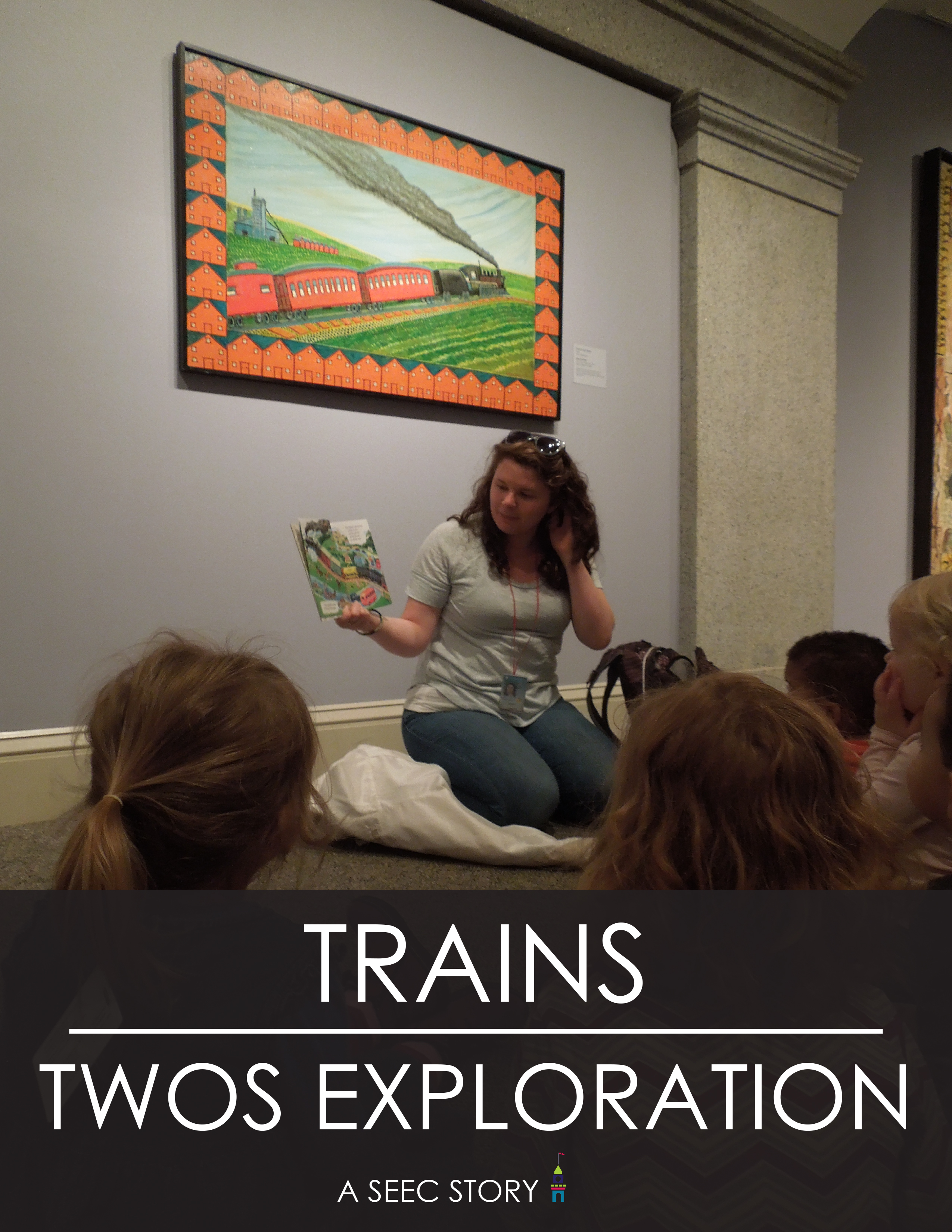
This week we are featuring Carolyn Eby. Her two year old classroom was learning all about trains and decided to spend a day focusing on the Little Red Caboose. The teachers had decided to focus on this topic because the children were showing continued interest in trains. They were pretending most objects were trains and wanted to talk about them during their walks in the community. In addition, one focus that SEEC toddlers have is walking safely together. Since they are just learning how to walk on “trains” there is a lot of interest in what trains are all about, how they stay together and, of course, train safety. This unit was able to connect all these aspects into one cohesive lesson. Below you will find a reflection from Carolyn and images from some of her lessons.

Train_Cover

What were your topics of exploration?

Our class was spending time learning about the different parts of a railroad train such as the locomotive, tank car, and so on. We had spent the week looking at different cars and their various functions. On this specific day we were talking about the Little Red Caboose and how it keeps everyone safe.

What were your learning objectives? (What did you want your children to take away from the lesson?)

I wanted the group to understand the safety function of the caboose and its location in the order of the cars. The class has a great sense of compassion for each other and characters in books and by personifying the caboose through the book Little Red Caboose by Marian Potter I was able to illustrate how the train “keeps an eye out” for the other cars.

We were also able to work on some developmental goals by involving dance and call and response during our circle.

What was most successful about your lesson?

I found that the most successful part of my lesson was the connection between the book and the work of art. We visited the Smithsonian American Art Museums to see Train in Cole Town by Jack Savitsky. Both the illustrations and painting had a funky feeling which made the flow from reading the book to looking at the art work very easy for the group to connect. It was really fun to spend time looking at the painting, imagining how it could be an extension of the text we were reading!

Surprisingly, right around the corner were several other train paintings! We decided to stop and spend some time discussing what we saw in those works. We wondered about the people riding in the passenger trains and where the rail road tracks may lead. These conversations were exciting and included thoughtful connections to previous units since the class had been spending so much time working on trains! Sometimes the best parts of a lesson are not planned!

What could you have done differently? What recommendations would you have for another teacher trying out this lesson?

It was difficult for me to think of an age appropriate activity that I could pack up and take with me to the museum. I loved singing with the kids and reading them a story, but I feel like the lesson could have made a greater connection with the group if they had a hands activity to do in the gallery. Also, I would have probably spent more time talking through the lyrics of the song which may have resulted in a more dynamic discussion.

Here are a few images from her unit on the caboose:

DSCN1509 Carolyn introduced her topic for the day by creating a small red car to add to their bulletin board train. She reviewed the parts of the train that they had previously studied and asked the group where they thought they should put this car. Carolyn then explained that this car was a caboose and it had a very special job.

DSCN1513Carolyn then played a video for the group with the tablet. It showed a musical group singing “The Little Red Caboose.”

DSCN1515Carolyn wanted to provide multiple exposures to the same song so she also sang a slightly different version with the class. She also showed them a few train movements to do while they were singing. The group loved them!


DSCN1530Following the story, the class walked up to the Smithsonian American Art Museum to see Train in Cole Town by Jack Savitsky (http://bit.ly/1xh3FWZ). They spent some time looking at the work and talking about the different parts of the train. They thought about where it might be going and how quickly or slowly it might get there. Carolyn then read The Little Red Caboose by Marian Potter.

DSCN1539Carolyn asked the group if they could see similarities between the book and the painting. The children had a lot to share and were able to talk about the role of the caboose in both the book and the work of art.

DSCN1544On their way out of the museum the group spotted a few more train paintings. Subway by Lily Furedi  (http://bit.ly/1DPTbDW) served as a great way to review passenger cars. The group talked about what the people were doing on the train.

DSCN1546The children also spotted train tracks in Third Avenue by Charles L. Goeller (http://bit.ly/1BUh9yj). They wondered where they were going and what kid of train would use that type of track.

The class had a wonderful time studying trains and has now chugged along to their next topic. Check back next week for another teacher feature!
 

Teacher Feature: Two Year Old Classroom Explores The Human Body

It’s Teacher Feature Thursday!

This week we are featuring Javasa Finney. Her twos classroom was learning about the human body and decided to spend a day learning about hair and how the human body grows. Below you will find a reflection from Javasa and images from some of her lessons.

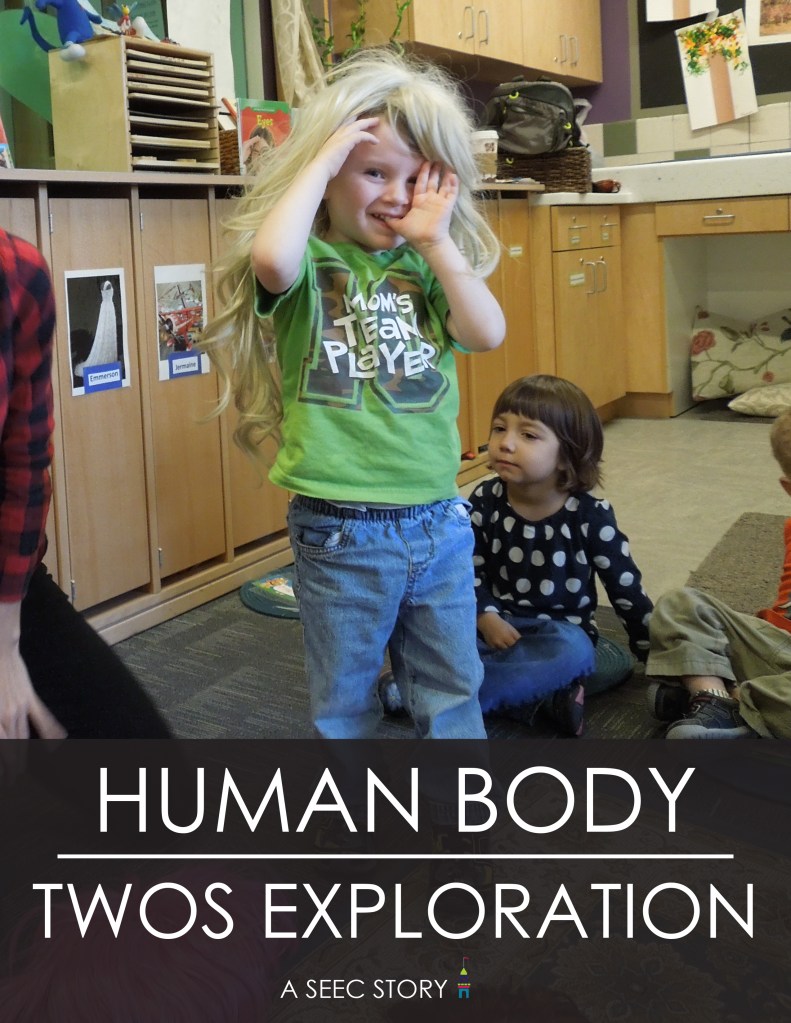
Body_Cover

What were your topics of exploration?

During the months of October and November the Penguins were exploring the human body.  We talked about the different parts of the human body.  Some of the parts we focused on included:

  • hair
  • skin
  • mouth
  • bones
  • eyes
  • brain
  • heart

In addition to how these body parts work we had a lot of fun learning about the five senses.  We talked about nutrition, how important it is, and how what we eat affects our body. Then they made delicious food from the different food groups with my co-teachers throughout the week. We also talked about the importance of sleep and how important exercise is for the human body.  They were extremely excited to have the opportunity to go exercise at the Washington Monument.

What were your learning objectives? (What did you want your children to take away from the lesson?)

I wanted the class to learn all about their amazing bodies. My main learning objective when teaching the kids about the human body was for them to learn about how important their bodies are and how to care for them. I also wanted them to learn all the bodies’ functions and abilities.

What was most successful about your lesson?

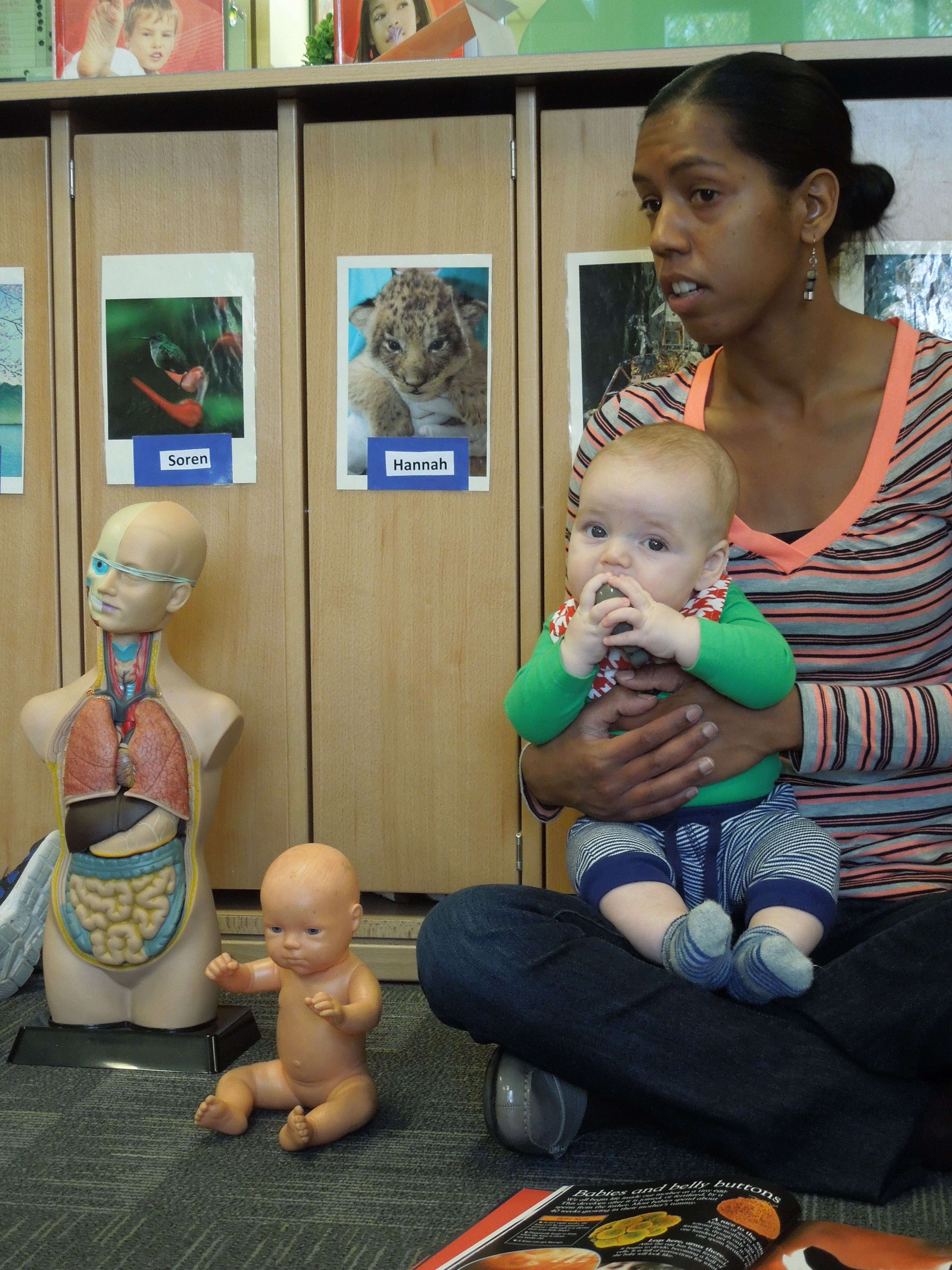
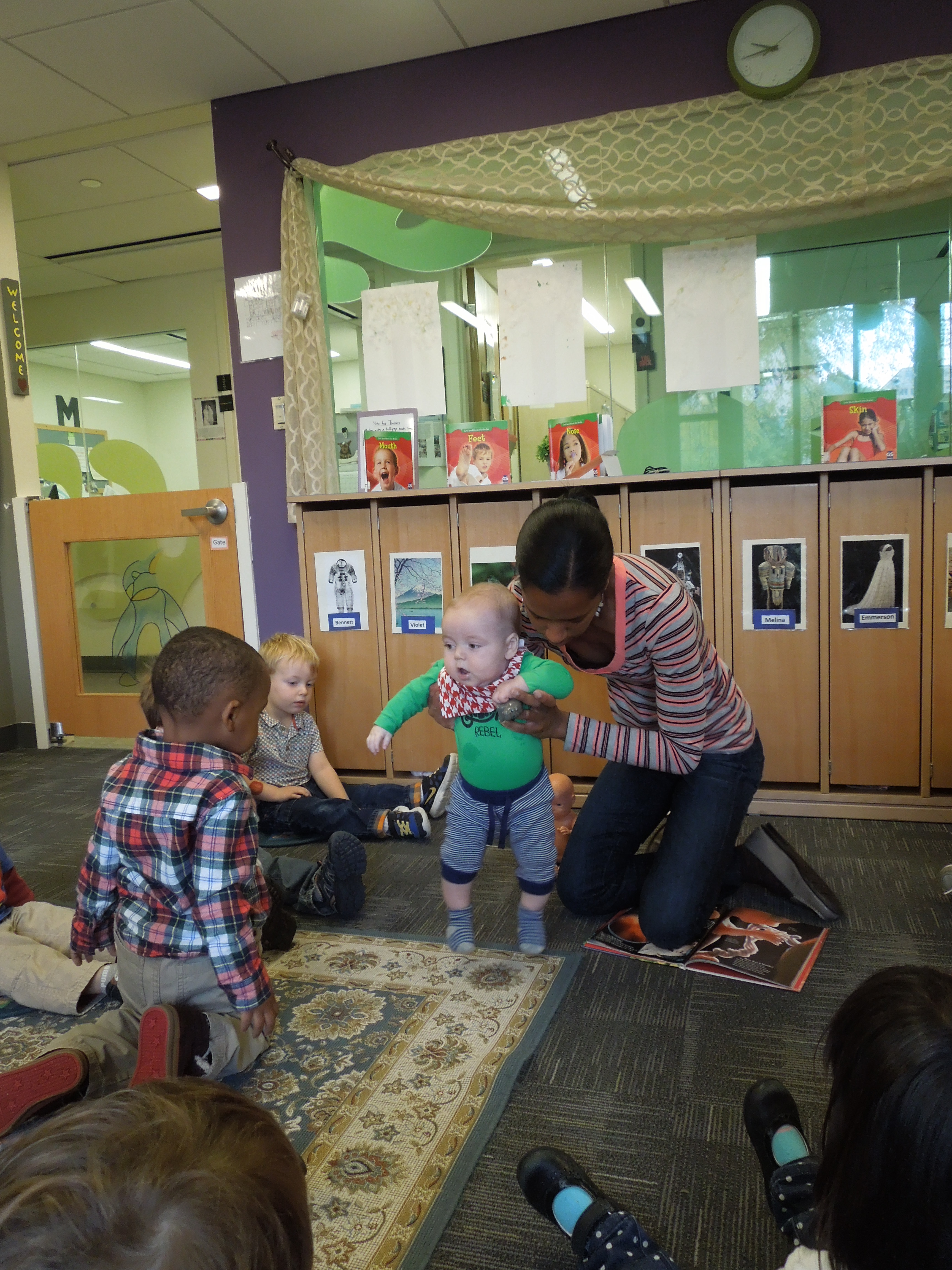
During the time we spent learning about the human body there are two lessons that I feel were extremely successful and memorable.  The first one would definitely be when a baby came to visit.  The child is currently a student in the infant class here at SEEC.  The five month old was our model for the lesson. During this lesson I talked to the Penguins about how we start out as small babies.  We talked about how different a baby’s body is compared to older people.  We talked about how when babies are born they don’t have teeth and can’t talk, walk, run, or jump.  They learned that during the first year a baby sleeps and drinks a lot and cries to communicate.  During circle time we made observations about the baby’s body and talked about how fragile it is.  Then the Penguins had the opportunity to touch him.  It was wonderful to see the children light up and respond to the child.  The second most successful and memorable human body lesson was our lesson on hair.  We learned how hair can be many colors, textures, and lengths.  We talked about the things we use to care for our hair.  Then the Penguins had the opportunity to try on wigs that were different colors, textures, and lengths. This lesson was followed up with a trip to the National Gallery of Art.  We went to look at the “Little Dancer” by Edgar Degas sculpture. First we made observations about the body and then we had the Penguins take a closer look at her braid.  The braid is made of real human hair, coated and held in place by wax.

What could you have done differently? What recommendations would you have for another teacher trying out this lesson? 

During the first lesson, if I were to do this again, I wouldn’t keep the baby on my lap the entire time.  I realized later it would have been nice for the kids to see him crawling, playing, etc.   For the second lesson about hair, I would have picked a different day to go to the National Gallery of Art.  The day we went there were several trips there and the room with “Little Dancer” was extremely crowded.

Here are a few images from their unit on the human body:

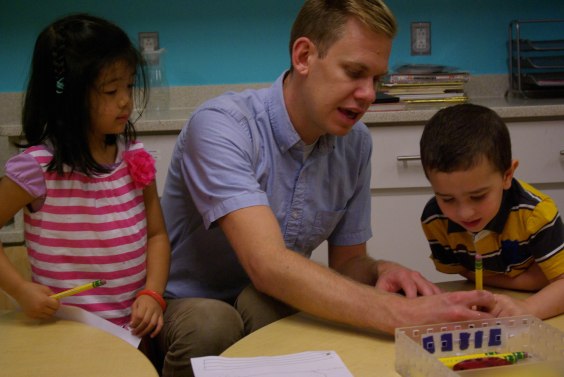
DSCN1370Javasa began the week by exploring how our bodies grow and change. As a way to illustrate this development, Javasa invited a child from the infant classroom to visit. She wanted the class to look at the baby and compare his body to their own and the teachers’. Javasa explained that people start by needing a lot of help from adults but as our body changes we become more independent.

DSCN1373Javasa explained that the baby couldn’t feed himself, talk, or even walk yet. She showed how the baby would eventually learn how to do all these things as he gets older.

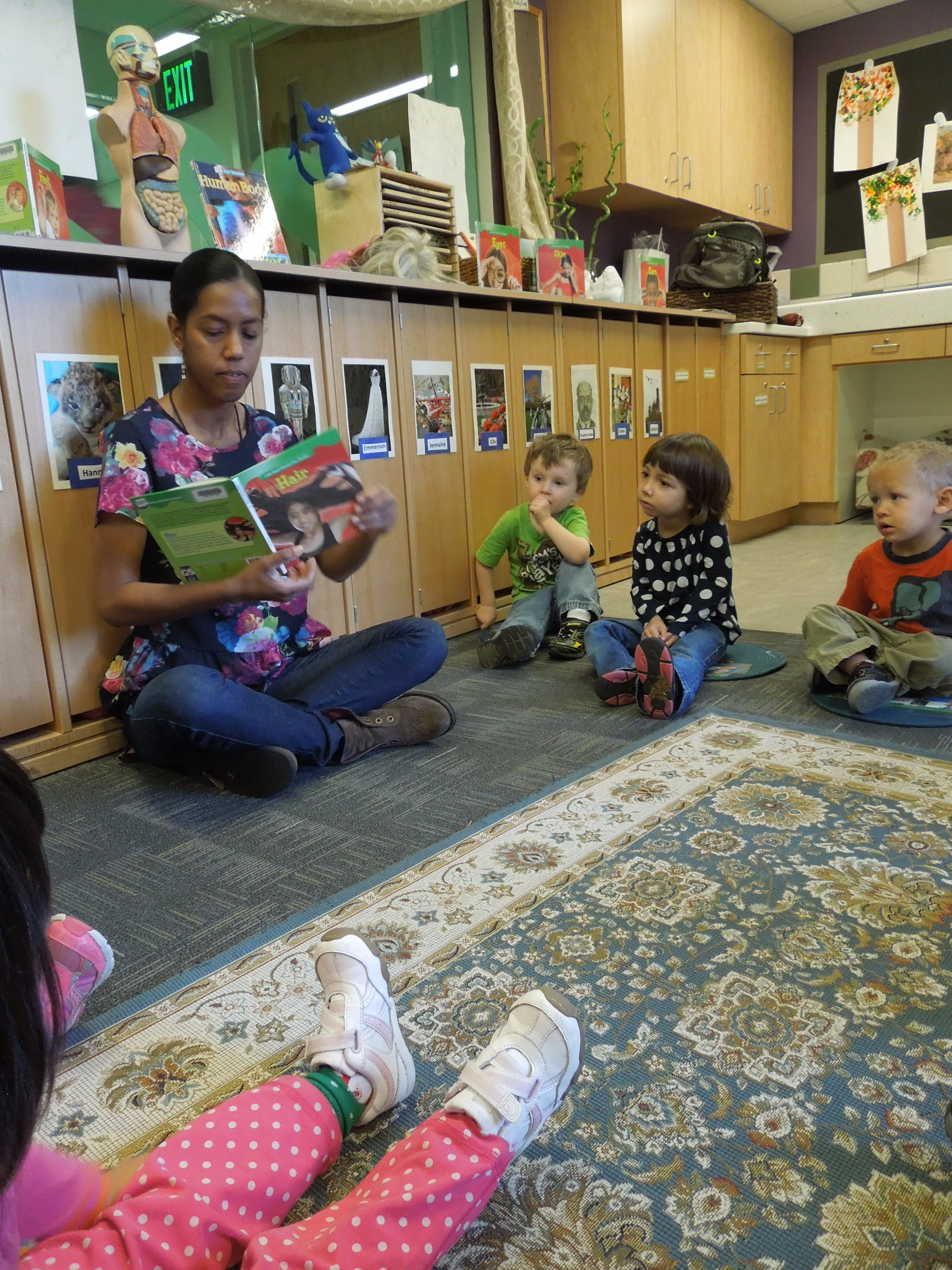
DSCN1382The next day the class moved on to Hair. Javasa read “Hair” by Cynthia Klingel and Robert B. Noyed to introduce the topic. The book helped students understand that people all over the world have many different types of hair and hair styles and each one is as special as the next.

DSCN1387One of Javasa’s co-teachers shared her collection of wigs as way to talk about how hair can be all different colors, textures, lengths, and styles. She explained that hair comes in a range of color but if you want certain colors (for example, pink) you would need to dye it that color.

DSCN1390She showed the group a zoomed in picture of a hair follicle. The kids couldn’t believe how the root of their hair looks.

DSCN1393Javasa went on to explain that hair can grow curly, straight, or wavy.

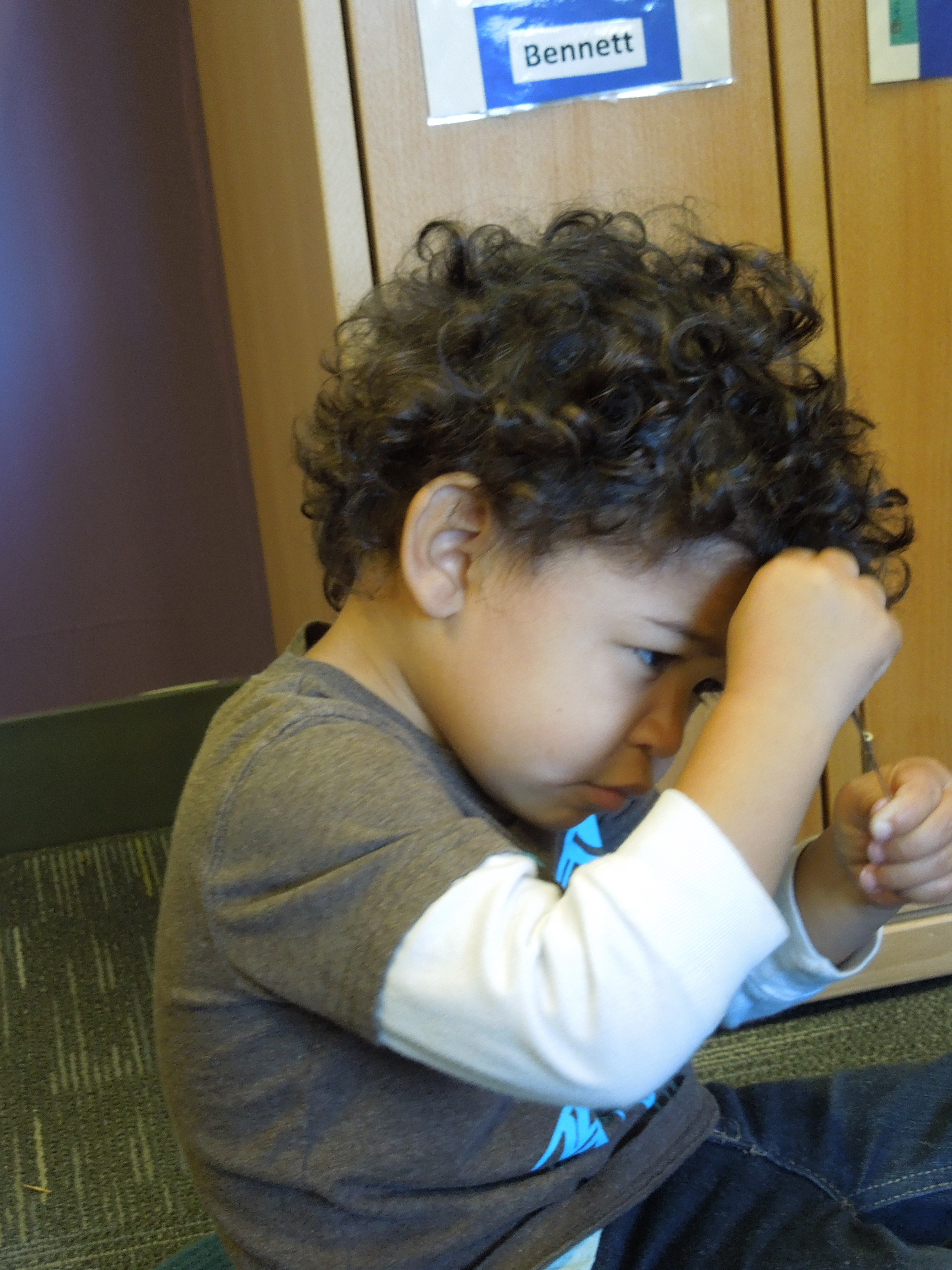
DSCN1397 DSCN1398The group spent a long time looking and touching their own hair.

DSCN1409Then it was time to try out new hair!

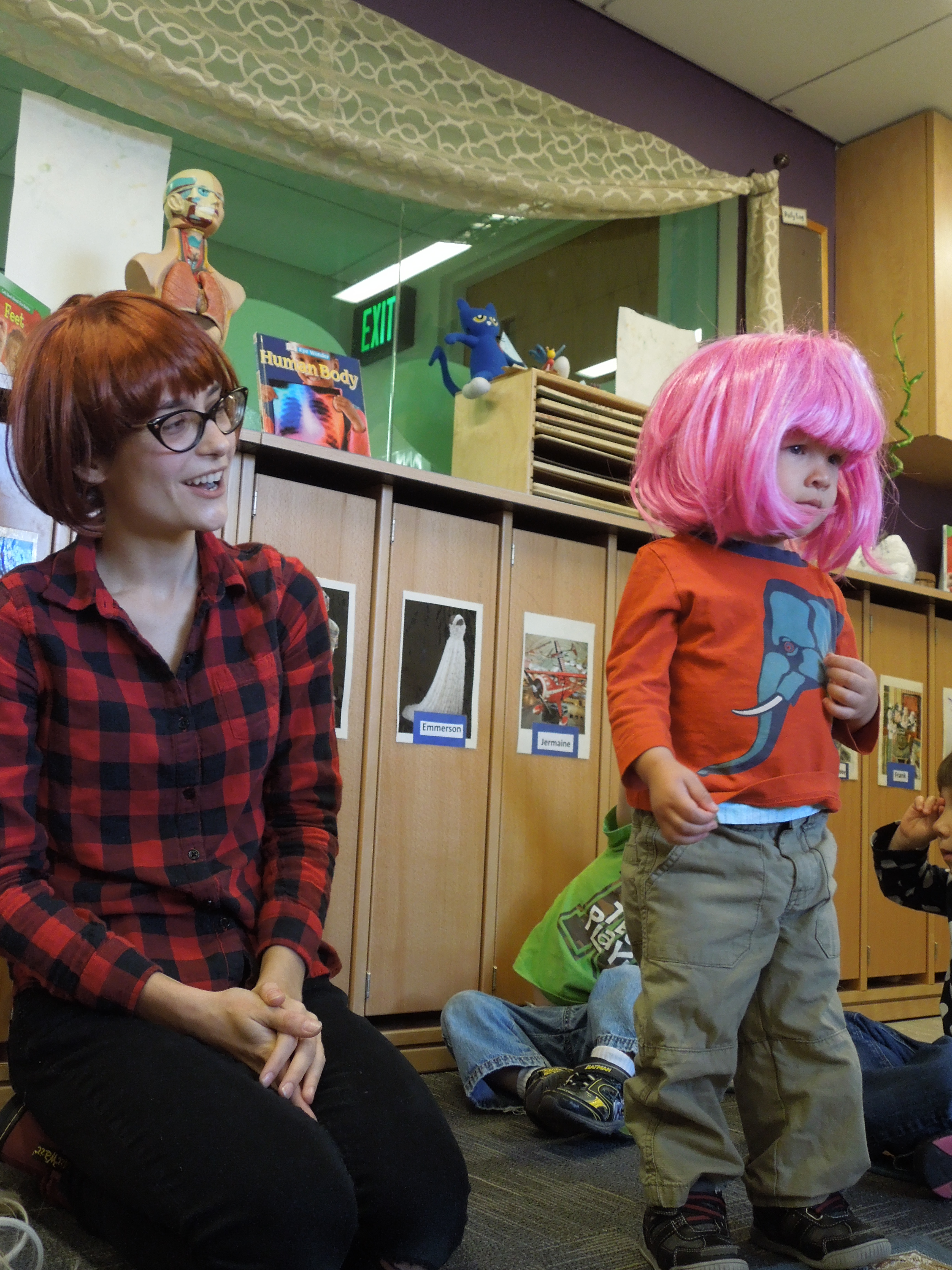
DSCN1415 DSCN1431They had a wonderful time trying on the different wigs!

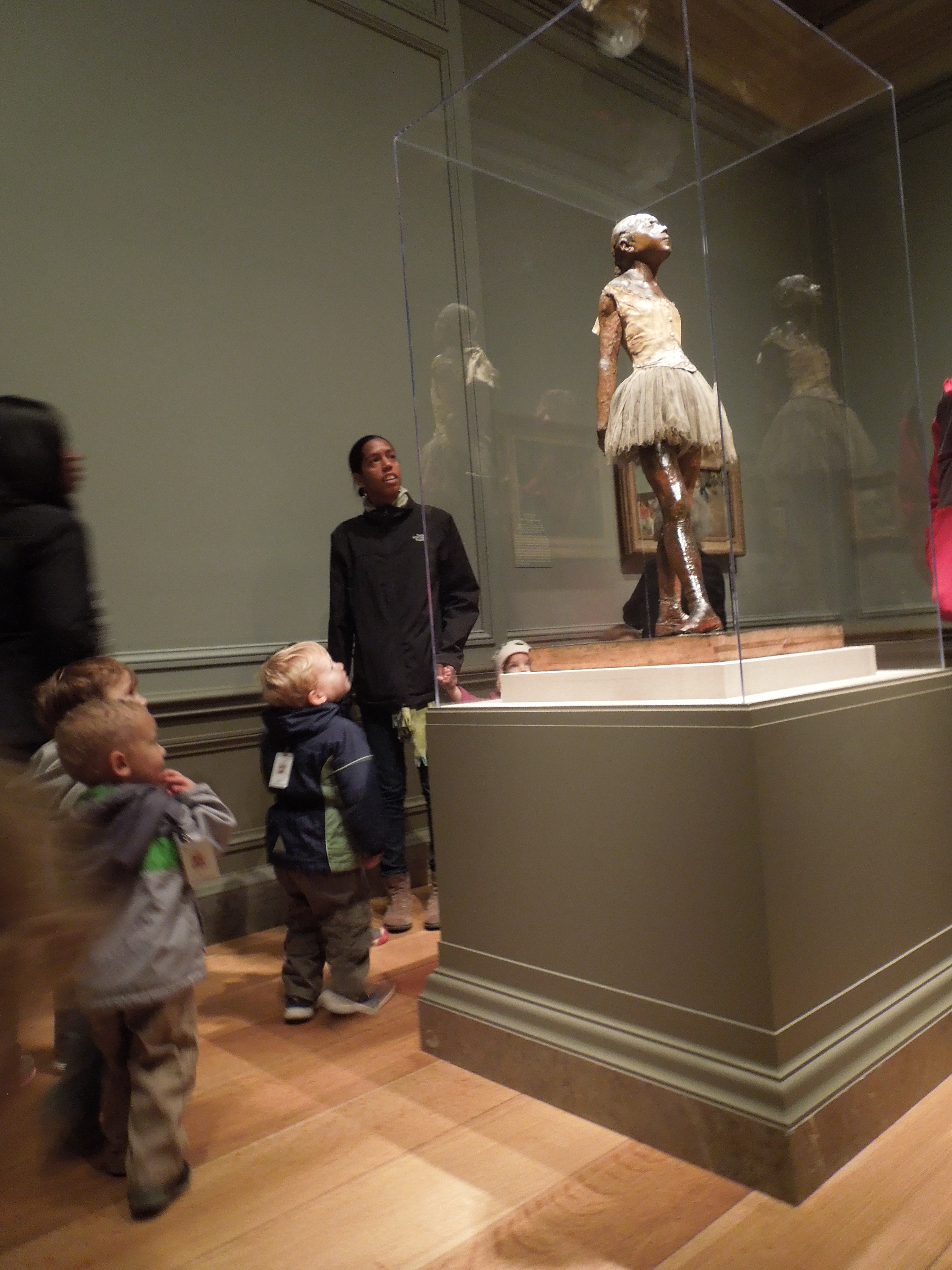
DSCN1436 DSCN1438The group then walked over to the National Gallery of Art to see Degas’ “Little Dancer.” They were fascinated by how Degas used real hair for the sculpture. The children discussed the color, length and style of the dancer’s hair.

This class had an awesome time learning about their bodies! Be sure to check back for our Teacher Feature next week!

Looking Back: Family Workshop Review

FAMILY WORKSHOP EVALUATION

In early November, we wrapped up our first round of family workshops for the year and the last few weeks have been spent reflecting and sorting through evaluations. We received positive feedback about the types of activities we provided in the classroom, the rapport teachers had with the children and the overall quality of the program. Our families were very thoughtful in the type of feedback they provided – really allowing us as educators to dig deep and see a different perspective.

HOW MUCH TIME IN THE MUSEUM?Nicole in Cave

Last week we met to discuss the evaluations and while we had a lot to talk about, the focus of the conversation was on the museum experience.  Many of our parents indicated they wanted more time in the museum. The art historian in me was excited to hear that parents were craving more of the museum! The early childhood educator, on the other hand, was challenged: How do we develop a longer museum visit without jeopardizing a positive experience.

LAB SCHOOL V. WEEKEND PROGRAM

When we develop our museum visits we think a lot about what is best for the child and what is developmentally appropriate. For example, with each age group we know about how much time they are comfortable and engaged during museum visits and try to plan visits that match the developmental stage of the students. We provide multiple exposures to a single concept in order to help them fully engage in the learning process.

This museum framework is also based largely on our experiences at the lab school. We work in an environment where our students visit the Smithsonian museums almost daily. When we plan our museum visits this ease of access is paramount. Our teachers are great at responding to the needs of the children from one moment to the next and can easily shorten a museum visit or cancel it altogether because they can always return. If there is a protest on the Mall or the weather is bad, there is always tomorrow. Not so with the family programs.

On the weekends, tables are turned; the museum visit has to work that day. We don’t have the option to return. We have to make it work!

PARENTS

Unlike the lab school experience, the parents are present and therefore, are also a key part to the workshop experience. They want to learn and explore the museums. For many this is chance for to visit museums they may not normally get to. They also see the workshops as a time of connection with their children where they can encourage, teach and engage. What they don’t want is a child who is starting to get antsy and is feeling frustrated. We have to carefully consider what works best for both the child and the parent.

EXPERIMENTS

In the past, we’ve experimented with a hybrid model that includes a group learning component with a guided exploratory activity.photo (5)

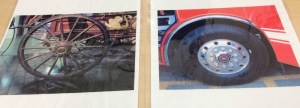
For example, my colleague used a flip book for a toddler lesson on fire trucks. First families were asked to find the parts of the wagon and then came back to the group to share. Matching the photos encouraged families to look closely and the group portion gave everyone the opportunity to connect and share what they had learned.  This is a great example of how we can make the museum visit more focused and detailed, but it doesn’t work in every situation. Another colleague did a lesson with no group component for our infants at the US Botanical Gardens in which she planned four caretaker-directed activities. There was no group component and the class remained entirely at the Gardens – omitting the classroom portion because the walk was too long.  My co-manager is also excited to try out another model: adding a second object. By and large we only visit one object per a museum visit, but having had experience with toddlers using 2-3 objects, she is eager to see if this model might also prove effective.

NO ONE DEFINITIVE ANSWER

I believe that all of these models have real value. As early childhood educators we often have to take the temperature of a group and make adjustments on the fly.  What works once, doesn’t always work again. Part of our challenge is being able to read those signs and being prepared with additional content (early childhood educators do a lot of content research just for this purpose) and being ready to present that content in a variety of ways. Sometimes all the planning in the world can be for naught the day of a lesson because no matter how good we have gotten at anticipating a child’s needs, they are still unpredictable.

I really look forward to experimenting and growing these family Javasa at Hirshhornworkshops. If you are an educator, post your ideas and thoughts. If you are a parent, come and check us out. Our next set of classes begins January 31st when we are offering infant, toddler and pre-K classes. Don’t be deterred by the weather families – what we lack in warmth we make up for in ample parking during this time of year!
Teacher Feature: Four Year Old Classroom Explores Camelot

It’s Teacher Feature Thursday!

This week we are featuring Will Kuehnle. Will’s pre-k four classroom is currently learning about Camelot. Below you will find a reflection from Will and images from some of his lessons.

Print

What were your topics of exploration?

“We were exploring the world of King Arthur and Camelot. The children at the beginning of the year were enjoying the idea of dragons chasing them when we were running around on the playground. Dragons were also popping up during our chatter around the snack table. I definitely noticed an interest. My associate teacher and I put our heads together to think of a topic to explore that would quench the students interest, touch on topics we thought would be useful for the children to have as a foundation for the year ahead (chivalry, community) and also allowed us as educators to have a wide variety of ideas to teach upon, which makes lesson planning fun and flexible.”

What were your learning objectives? (What did you want your children to take away from the lesson?)

“I always want my students to take away a sense of enjoyment from a unit of study. I want them to have that everyday we are together, no matter if we are going on an exciting museum visit or stuck inside the classroom on a rainy day.  For this particular unit I wanted to have each student have a strong sense of what the code of chivalry was, because that can be applied to so many routine situations throughout our day. I wanted to be able to focus my language with children around kindness, bravery, loyalty, community and justice. To be able to do that with such a fascinating backdrop as King Arthur and the Knights of the Round Table was a real treat. Another objective I had for the students was to nurture their sense of adventure and curiosity towards learning. We can take that energy and harness it towards future lessons and topics this year, I’m really excited to see where this year leads us.”

What was most successful about your lesson?

“I believe the way the children used what we were discussing into their play was the most successful. I did not notice it at first, but after a few weeks into the unit the play structures in the classroom were really developing. The dramatic play we had in the classroom, the manipulatives the children were using, the art they were making and the games they were creating on the playground were centered around the world of Camelot. The children were so whimsical in their approach to the unit that you really saw what you were talking to them about sink in. I am able to suggest to a child that they be knightly or chivalrous and see them reflect with positive reaction to the choice they are making.”

What could you have done differently? What recommendations would you have for another teacher trying out this lesson?

“Reflecting back on the unit, which is still going on up until our knighting ceremony on December 18th, I wish that the transition of topics within the unit were more thought out and not as rushed. I think we were really excited to dive head first into something for the start of the year that we barreled through ideas that we could have taken more time on. Maybe it was because we wanted to go from looking at the places of Camelot, to the people of Camelot, to the stories of King Arthur, to the code of chivalry, to how castles were built and protected, etc. As an educator I am trying learn how best to balance all the information there is to know and all the information I believe is best for my students to know, and then unveiling that in a cohesive story line that is engaging and enriching for them. I think having a strong idea of what you want to the overall story to be in the unit when you are first venturing out is very helpful, and that is something I struggled with in this unit. At the same time you always need to be flexible.”

Here a few images from their days in Camelot:

They began their exploration of the topic with the story of the Sword in the Stone. Will had the students create their own stone from a cardboard box and painted paper. They were very surprised and excited when Merlin dropped off a sword later in the day.

IMGP8021To encourage close looking, Will asked the children to create their own illustrations of the sword for their journals.

IMGP8008

IMGP8022The children were very thorough in their illustrations. Some even included the text found below the sword.

IMGP7996DSCN0837The children were then offered the opportunity to try and pull the sword out of the stone. Will explained that the person who was able to remove the sword from the stone would be the rightful ruler of their kingdom. He reminded the children that they might not be the strongest or largest person but the one with the truest and kindest heart would be able to claim the sword. In the end it was their center director Megan who was able to remove the sword from the stone and students talked about why she would make a great ruler of their kingdom.

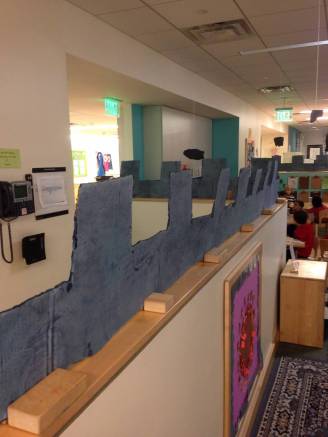
file (16)file (17)Will also began to alter their classroom to take on the attributes of a castle. Above the students are painting the castle wall and below you can see it installed in their space.
DSCN1099DSCN1096In addition to the castle wall, Will wanted a way to track their their progress through Camelot so they created a board with the different locations they might travel. As part of the board, he also created popsicle sticks with images of the children as their favorite Camelot characters which will move around the board as they continue through the story.

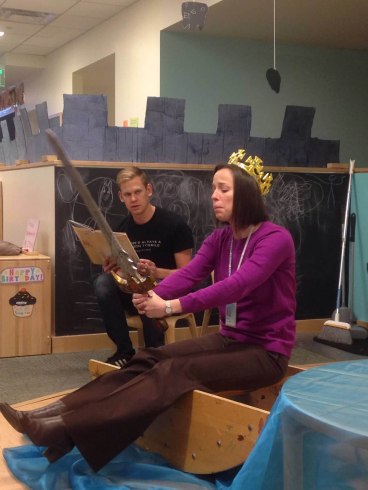
file (14)The group was so excited about Excalibur that Will decided to do a theatrical reading of the Lady in the Lake with help from a few educators and our site director.
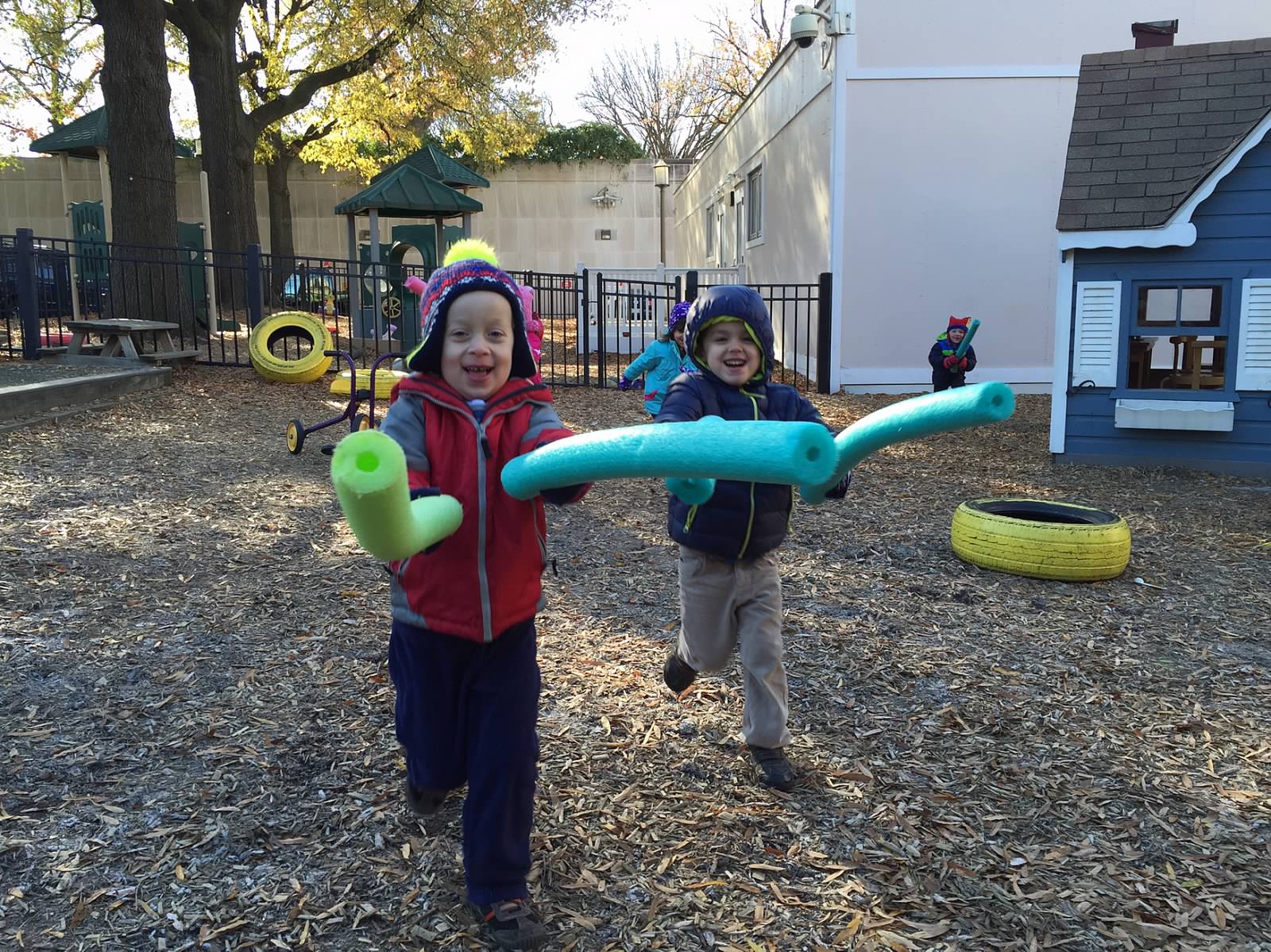
file (20)Their exploration of Camelot even extended out to the playground where they used pool noodles to do some jousting.

The children continue to be extremely excited about this topic and have exciting adventures in Camelot. Be sure to check back for our Teacher Feature next week!

Early Learning in Museums: A Thoughtful Process at DAM

Denver Art Museum
Denver Art Museum

We’ve noticed that more and more museums are thinking about how to create effective programming for children under the age of 6 years old. Why do you think that is? I know we have some ideas but would be curious to know what you all are thinking.

Just last month, SEEC had the opportunity to work with one such museum.  It was inspiring to see how thoughtful they are being about the process. Over the next year, the Denver Art Museum (DAM) will systematically develop programs for early childhood programs in their area. Implementation of these programs is scheduled to start next year.

Mud Woman by Roxanne Swentzell at the Denver Art Museum
Mud Woman by Roxanne S Wentzell at the Denver Art Museum

To get this effort off the ground, the education department has created a case statement that articulates why this initiative is important and how it ties to the mission and vision of the larger organization. In addition, they have brought together a team of stakeholders that will contribute to the development of concepts, monitor progress, communicate considerations and keep the process moving forward. They have considered external factors and internal implications and are working together in new ways to better accommodate the unique of early childhood audiences – whether they arrive in school groups or with a family.

In addition, they engaged the local teacher community. On a Classroom Shotbeautiful October morning in Denver, Colorado, over 20 early childhood educators devoted their time to talking to the Denver Art Museum about what their idea of an ideal early childhood program would include. The teachers were extremely enthusiastic about the possibilities and informed the museum educators that they would like to see everything from museum experiences led by visiting artists to workshop spaces that encouraged young children in “messy” but meaningful play.

We know that many museums are doing interesting programming for young children. If you have stories to share or lessons learned, we would love to hear from you!

Denver Art Museum

Denver Art Museum

Saturdays with SEEC Teachers

Posted on behalf of SEEC two year old teacher Javasa Finney:

Javasa at the Hirshhorn with SEEC's two year old class.

Javasa at the Hirshhorn with SEEC’s two year old class.

This spring I decided to volunteer with the museum education team at the Smithsonian Early Enrichment Center (SEEC) to help out with the weekend family workshops. I currently teach in one of the two year old classesthere and was interested in seeing how the experience changes once parents are involved, in the classroom and museum visit.

During the workshops I worked with the infants, toddlers, and preschoolers. The theme for the infants/toddlers was “Tiny Gardeners” and in these classes the children had the opportunity to explore flowers and gardens. The theme for the older toddlers and two year olds was, “Where Does it Come From” which focused on exploring different foods and the origins of food. Every week we met at the Natural History Museum and then headed to the museum where we would find out the topic for the day by focusing on a particular object, exhibit or art work. _MG_4180After our visits, we headed back to the SEEC classrooms for some hands-on activities related to our topic of the day. Time in the classroom was spent, planting, cooking, painting, reading, singing, and additional play. It was also wonderful to see the children socializing and making new friends.

In the museum the children did a fantastic job. They all seemed very curious and ready to explore. Everyone was respectful of the exhibits and stayed together as a group. We were often even able to sit down together to share a story and hands-on objects while we were inside the museum. Everyone seemed captivated and engaged. During our trips we visited exhibits that were directly related to what our topic for that day was. Some of the museums we visited during the four weeks include the American History Museum, Freer Gallery, the Botanic Gardens and National Gallery of Art.

As I reflect upon my time in the family workshops, I have many great memories. It was great to see the children so involved at the end of the session that they didn’t want to leave. Since several of our families return from one session to the next, I imagine that they are also finding the experiences together both meaningful and memorable as well. Museums have so much to offer, they are inspiring and educating. They are great for introducing new topics or re-enforcing facts. The most wonderful thing I saw during my time volunteering at the family workshops was the parents and children bonding, learning, and discovering new things together at the museum. What a wonderful way to spend a Saturday morning!_MG_4086 SEEC’s infant, toddler and pre-k Family Workshops will start up again in the fall. We hope to see you there!

Perfect Spring Break Family Museum Visit

signSpring and summer break are just around the corner and I know a lot of our parents are looking for some local, inexpensive family outings. Well, look no further than the Museum of Natural History. I am sure a lot of families have done it’s most popular features but, for this visit we are headed up to the top floor to  Beyond Bollywood: Indian Americans Shape the Nation. This jem has a lot to offer the younger child in your family.

First, it’s spacious, colorful and inviting. Read our recent blog on environment – it makes a difference.

Second, there are a lot of mirrors.  From infants to preschoolers, mirrors are fascinating portals to understanding more about themselves and how their bodies work.

Image 280

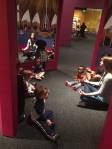
One of SEEC’s classes practices their yoga.

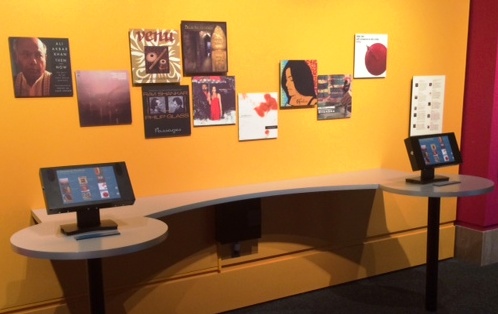
Finally, there are interactive sections where you can listen to music, watch a video and sit at a table set with Indian food. This will give your child different types of sensory input and provide a chance for some dramatic play.

Depending on the age of your children, you can choose to approach the exhibit from several perspectives, here are some ideas:

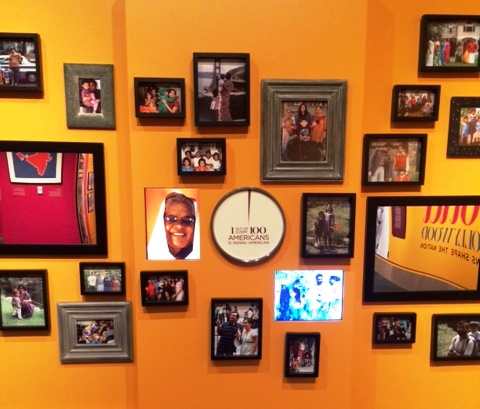
 families6 months – 18 months: Babies are learning to recognize themselves and their families. Take the time to look in a mirror and identify baby and yourself. Describe your features and talk about your similarities and differences. Head over to the family photos and pull up a family photo on your phone. Compare it to the families on the exhibit wall. At home, share a book about families or sit down and make a toy family. This is a great opportunity to begin talking about how not all families are the same. Even at such a young age, you can begin to lay a foundation for understanding and respecting diversity.

listening station19 months – 3.5 years: Toddlers love music and dancing, so it is great that this exhibit features a listening station. Pick a couple of tracks and see if you can compare their tempo or guess the instruments. You might simply ask which their favorite was. Give them a chance to dance to the music and then go to the outer hallway and see the images of Indian dancers. Notice how the dancers are moving their body and what they are wearing. Build on the experience at home by listening to more Indian music or discovering that of another country. Look up a few videos highlighting different Indian dances and watch them together on a tablet or computer. Similar to the infant experience, introducing your toddler to the arts of other countries will help them gain an appreciation of their culture and, those of others.

photo (5)Preschoolers – Early Elementary:  A great way to connect with young children is to begin with their personal experiences. Since food is universal, the table would be a great place to begin a conversation about the foods we eat at home or at our favorite restaurants. The exhibit can teach children about food from India AND about the many cultures that contribute to the food we eat in the United States. If food doesn’t interest your child, consider talking about some of the notable Indian Americans like football player, Brandon Chillar or fashion designer, Naeem Khan.

Finally, consider going to visit the Freer and Sackler’s collection of Indian art on another visit or grabbing a bite of Indian food at the Natural History’s café.

Like with any visit, keep in mind some of these helpful tips for visiting a museum with your kiddos and enjoy!!

Upcoming Teacher Workshop

LTOWell, we have made it to January. That delightful in between month—the month where we leave the stretch of holiday breaks behind and take a deep breath before the chaos of spring begins. Our students are settling back into familiar routines but experiencing the expected adjustments that time away from school brings. As educators, we too are experiencing the adjustment, searching for renewed inspiration in the face of the winter blues, unpredictable weather, and in my case, growing preschoolers. It seems almost daily one of my students leaves early for their five year preschool check-up.

We are also in the period of resolutions: Join the gym. Use your phone less. Sleep more. Build up your savings. Be more creative in the classroom or museum. In the midst of the screaming gym ads and hyper students, come join us for some respite and rejuvenation. SEEC is offering a space to renew your creativity, collaborate with peers, and take some deep breaths. Our premier seminar, Learning Through Objects, is almost upon us (February 27th & 28th). This seminar brings together educators from a diverse set of learning environments such as classrooms, museum galleries, and cultural centers. Presented by our staff and representing work from our 25 years of learning with young children in museums, LTO may be the perfect antidote to the winter doldrums.

A LTO alum wrote of her experience, “I walked away not only refreshed and inspired, but also with a variety of ideas for how I can incorporate museums, objects, and artist studies into my classroom teaching. I am looking forward to sharing the lesson plan and field trip ideas I learned with my colleagues and of course to sharing the activities themselves with my students.” Additionally, for those in the DC area, LTO is accredited by the DC Office of the State Superintendent of Education and counts as CEUs. Come be renewed, come be refreshed, and check one or two of your resolutions of the list. We look forward to seeing you.

LTO_2

Full registration info can be found here. Keep that “save money” resolution as well, register before February 14th for our Early Bird Rate and plug in discount code SEECPD14 for an additional 10% off!

Onwards!

Smithsonian Pre-K Classes

Renaissance Composition 2

Acting out a Renaissance Composition

In our first blog, I talked about what the museum education department does at the Smithsonian Early Enrichment Center. Just to recap, we have two educators who work specifically with our classes here at the lab school. Our director, Betsy Bowers, heads our professional development efforts (more on that later) and my main responsibility is to promote and coordinate our outreach efforts for families who are not enrolled in the school.

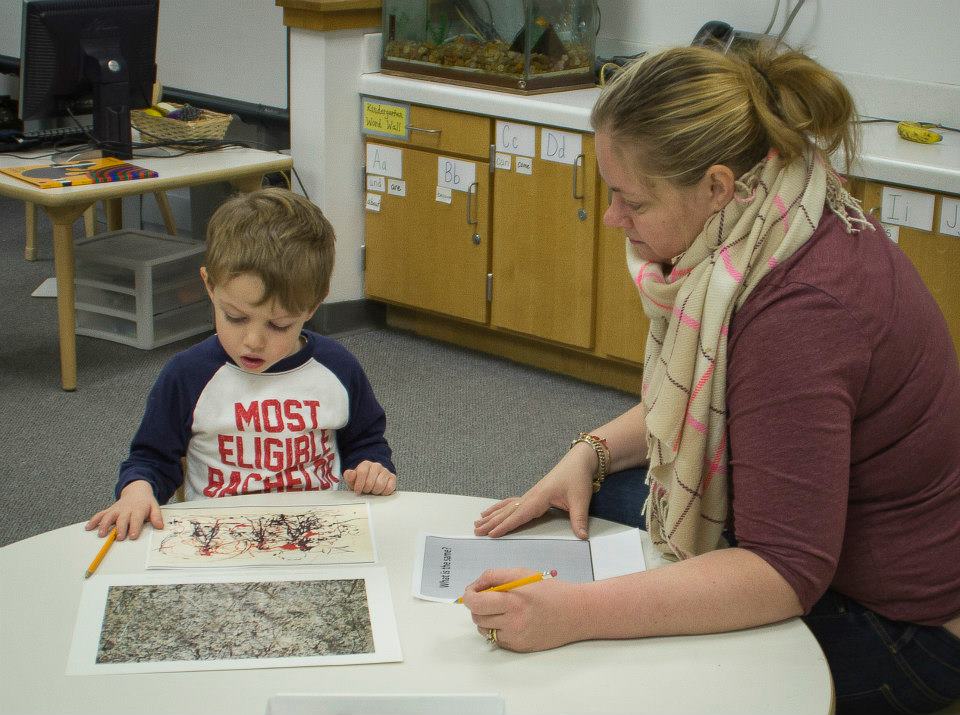
Comparing Jackson Pollock paintings

Comparing Jackson Pollock paintings

With Labor Day in our sights, I thought it was the perfect time to take a look ahead at what we are doing for our community families. Last year, we started offering preschool courses. These courses took place over a four-week period, meeting Saturday mornings. Each course had a theme (more information) and met for two hours. In the first portion of our morning, we would do some sort of introductory activity. This activity ranged from exploring a discovery box featuring cultural objects to comparing two paintings. Almost always these activities were meant to be done independently, meaning child and caretaker working together separate from the teacher. (These classes are very literally family classes, so caretakers play an important role). After our initial work, we would come together in a circle to discuss what they had done. Our discussion led us to an introduction to the museum visit.  

Cary teaching

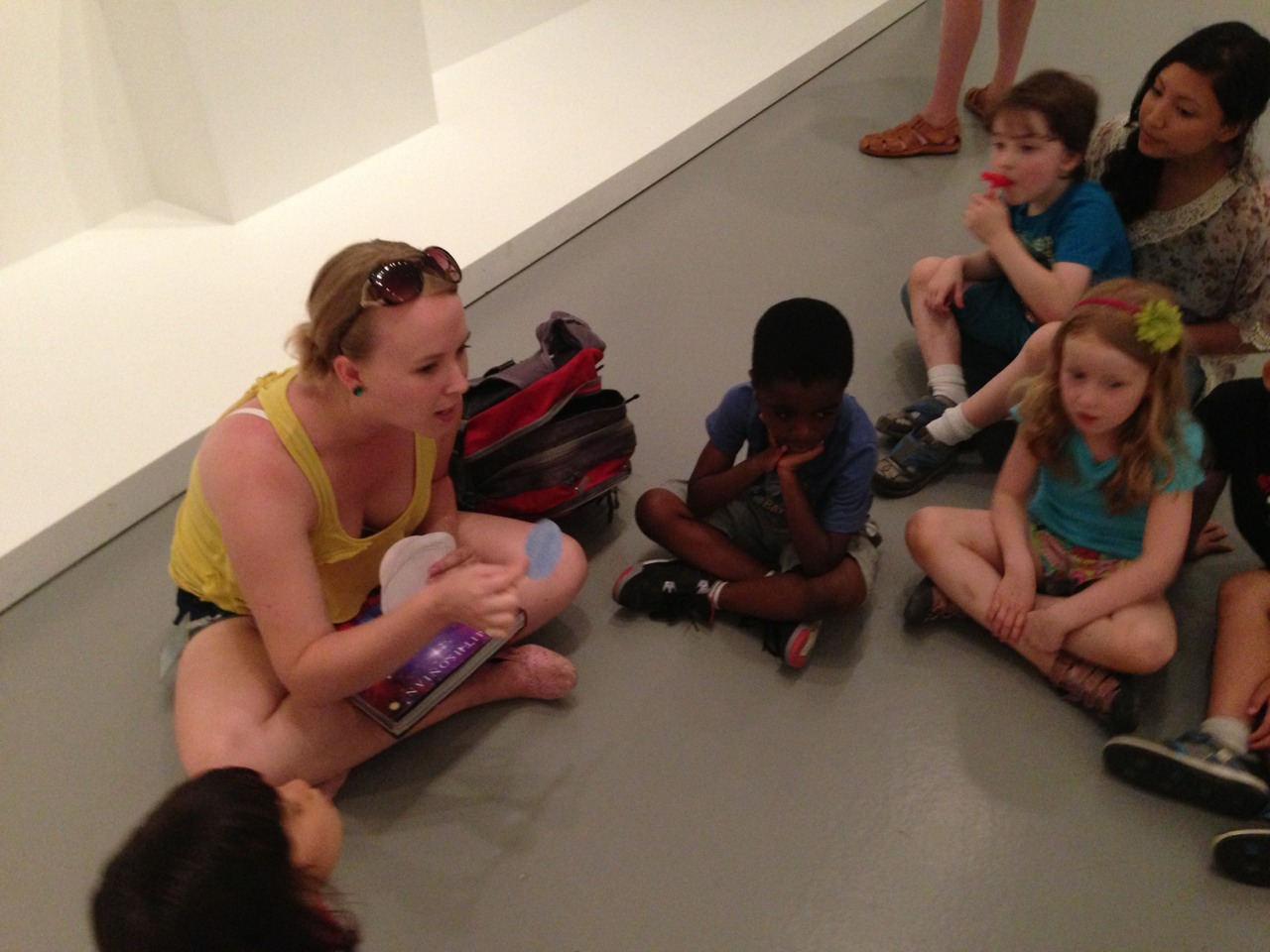
Using hands-on objects to teach in the galleries

After bathroom breaks and the putting on of coats, we head to the museum for what is typically a 20-30 minute visit to one to two objects. During our visits, we use hands-on objects to engage the children in a multi-sensory experience and inquiry to guide the conversation. Museum educators are likely familiar with these approaches of object-based learning and the inquiry method. For educators who are unfamiliar with these approaches, let me suggest SEEC’s line of professional development seminars and/or MOMA’s inquiry course offered through Coursera (just completed it myself, very informative).

F2003.2

Freer Gallery of Art
Shiva Nataraja, ca. 990
Chola Dynasty, India
Bronze
Purchase–Margaret and George Haldeman, and Museum funds F2003.2

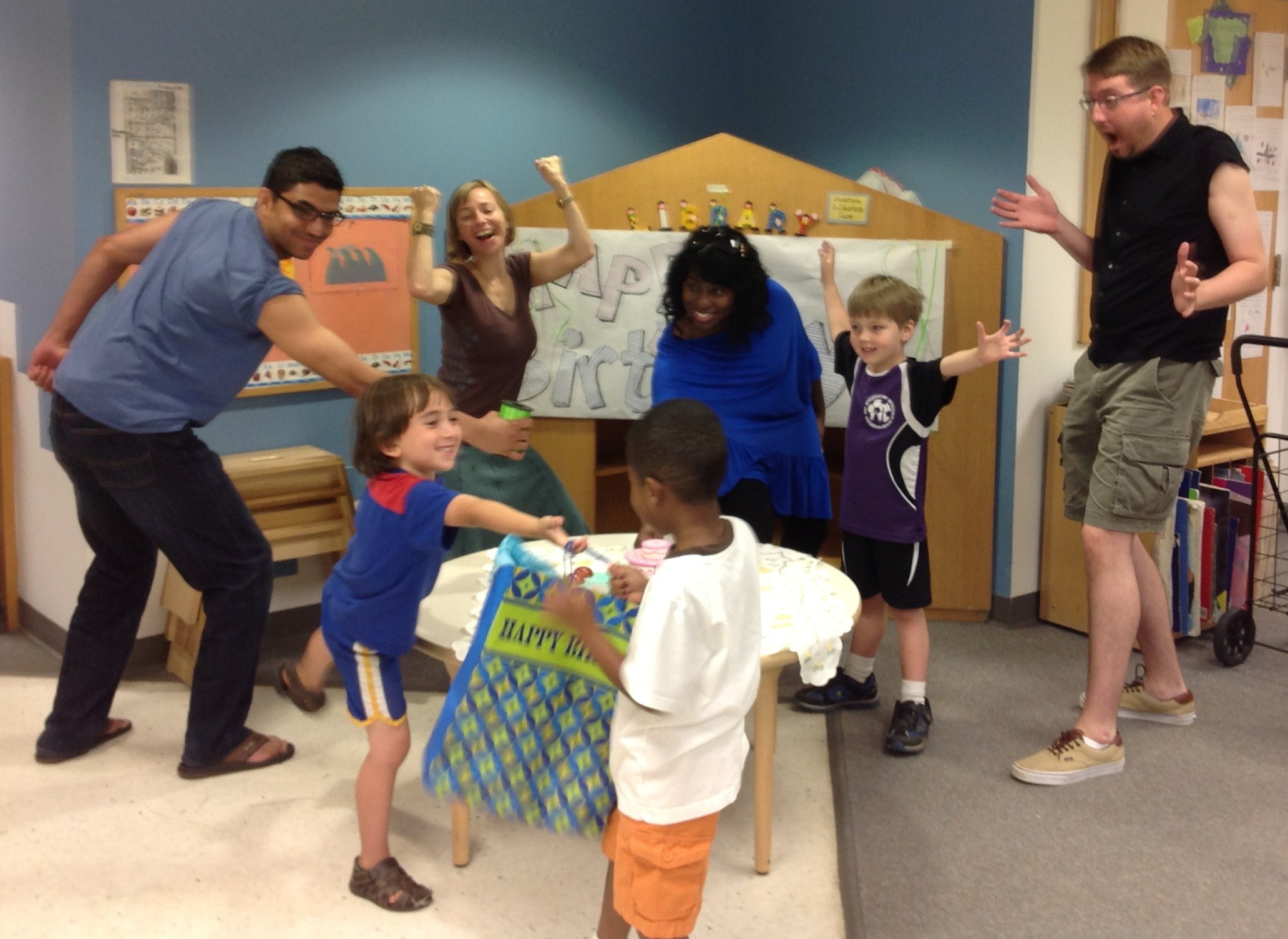
After our visit, we head back to the classroom where we wrap up with a final project.While it’s most often an art project, I do not limit myself to that platform. This is extremely helpful for two reasons; first, sometimes it is not developmentally appropriate for children to recreate the art they have just seen and second, sometimes it’s not culturally sensitive to recreate the art either. A good example of the first scenario is when I did a lesson on the Renaissance and I wanted to talk about composition. They were not up for the challenge of creating a masterpiece that depicted, balance, dynamism and fluidity. However, they could connect to these concepts by acting out their own birthday party photo and seeing the results. And when we do our class on Hinduism and visit the Freer’s Shiva Nataraja, we opt to look at videos of Bharatnatyam dance, do a sample of mudras and keep a beat with bells on our ankles. All activities are meant to build upon the concepts introduced through the lesson in a way that is interactive and self-directed.

This year we also offering infant and toddler class, so keep an eye out for future blogs about these audiences. In the meantime, let me know what is working for you with young audiences in your museum!

An Intern’s Perspective of SEEC

BethAnne_2
Written by: Beth Anne Kadien
Rising senior at Georgetown University – SEEC Summer Intern

I started in January doing behind-the-scenes work for SEEC’s Museum Education department, creating a database for the objects and prints that are used in SEEC classrooms. This summer I continued my internship, but in a more hands-on way. My experiences have been varied and always interesting. Moving from archival work to observing and leading classroom lessons was incredibly rewarding, both in what I had the opportunity to learn, and the witty student commentary. I came home to my roommates each day with a new story about the kids, which I have pared down to a top three favorite things overheard at SEEC:
1. One student looking over at me and asking “Hey, do you wanna put your stuff in my cubby?”
2. Asking a student where a colleague and I should get lunch, with a response of “Well do you girls like toys? Because then you should go to McDonalds.”
3. Receiving a superhero alter ego and superpower from one of the Koalas. “You’d be Star Girl, and your superpower would be shooting penguins out of your hands.”

BethAnne_1

What I learned, while less entertaining, will have a long-term impact on my career choices. Here it is, the top 3 (okay, really 4) things I learned from SEEC.

1. I am more creative than I thought. One of my proudest accomplishments, making a photo projector out of a shoebox.
I wrote lessons for both SEEC classes and their weekend family workshops, with a range of topics from food to the science of colors and pigments, to transportation. These all seemed incredibly daunting when assigned, but now I know how to better think out-of-the-box so that I can create an age-appropriate and interesting lessons.
2. Even if you think you have enough work, ask for more. One of my extra assignments was helping to write family programming for a partnership with a museum in my hometown of Memphis. It was so worth it!!
3. Be mindful. One thing that is common in the various people I worked with at SEEC is that each employee takes the utmost care in considering others. Museum educators go to great lengths to be a resource to their classroom teachers; teachers know their students’ dietary needs, pet’s names, favorite things, and greatest fears better than I know my own. Each decision made is made with consideration to how it will affect the teachers and students. This is something I greatly admire about SEEC, and it is now a model to which I strive in my on-campus job.
4. Actually the most important thing I learned, is that Splash Day is the greatest day, but you need to remember a change of clothes or else it’s a very cold metro home.
BethAnne_3
This summer has been incredibly rewarding, and I am more than grateful for the opportunities SEEC has given me.