
 If you visit our toddler and twos classes you are bound to hear joyful voices singing songs as they begin their morning routine. The classes sing hello to each student, use songs during their morning circles, and to help ease transitions throughout their day. While a chorus of young voices is undeniably sweet and fun, their singing is helping to set a strong academic foundation by strengthening the children’s pre-literacy skills.
Songs & Vocabulary
When children hear a song, they are exposed to new words. The words that young children hear, whether spoken or sung, are the words that form their vocabulary. The repetitive nature of many song lyrics, combined with the fact that children are likely to hear the same song many times, gives them the opportunity to fully learn new words. Later in their academic lives, this understanding of a variety of words will help with their ability to read and their overall reading comprehension.
Songs, Sounds, Rhymes

For very young children, listening to songs exposes them to the many different sounds that make up our words. As you sing a song, you emphasize certain sounds and by doing so, you highlight the building blocks of our language. Singing gives the youngest children the opportunity to mimic and communicate with these sounds in a way that is ideal for toddlers. When singing, they are given the freedom to be loud, let their voices ring, and play with sounds. Additionally, a child whose words often slur together or who regularly skips words while speaking is often able to sing a tune in such a way that an adult will know what they are singing. This can hold true even in cases where the adult is not able to understand many of the individual words being sung. Children rely on the sounds they learned while singing when they start sounding out words and when they are developing the ability to read.
As young children develop pre-literacy skills, they begin to have the ability to rhyme. Singing songs such as Willoughby Wallaby Woo, Down by the Bay, and Silly Nilly Name Song allow children to explore rhyming sounds while singing. Pausing before you say the rhyming word can give the children the chance to fill it in, which helps children progress from hearing rhymes to creating their own rhymes. These singing games can provide hours of entertainment while challenging young children to explore sounds and rhymes.
Songs, Symbols, & Letter Recognition
A crucial component of learning to read is recognizing that the letter “m” means the sound “mmm”. In order to learn this, children must first understand the use of symbols, because the letter “m” is a symbol for the sound “mmm”. Children begin recognizing symbols well before they are ready to read and symbol recognition is considered an important pre-literacy skill. While using songs to help children understand letters may seem unlikely, song cards offer the ideal opportunity to pair singing with symbol recognition.
Songs cards are images that are used to represent or be a symbol for a particular songs. For example, an image of a sun might be used to represent Mr. Sun and a star might be used to represent Twinkle, Twinkle. When using song cards, make sure that image is large, engaging and/or colorful. Also be sure that the images are double sided and laminated for durability. Then dramatically spread the song cards out in the middle of the circle and encourage the class to explore the cards. As they pick up the images, sing the corresponding song. Over time, children will learn that specific images represent their favorite songs and will go out of their way to find these images. Young children love using these song cards because it helps them to communicate what songs they want to sing without having to come up with the name of the song or even the tune. In essence, song cards help young children to learn about symbols in a way that is appealing to them by helping to fulfill their need to communicate their wants and desires.
 The Journey
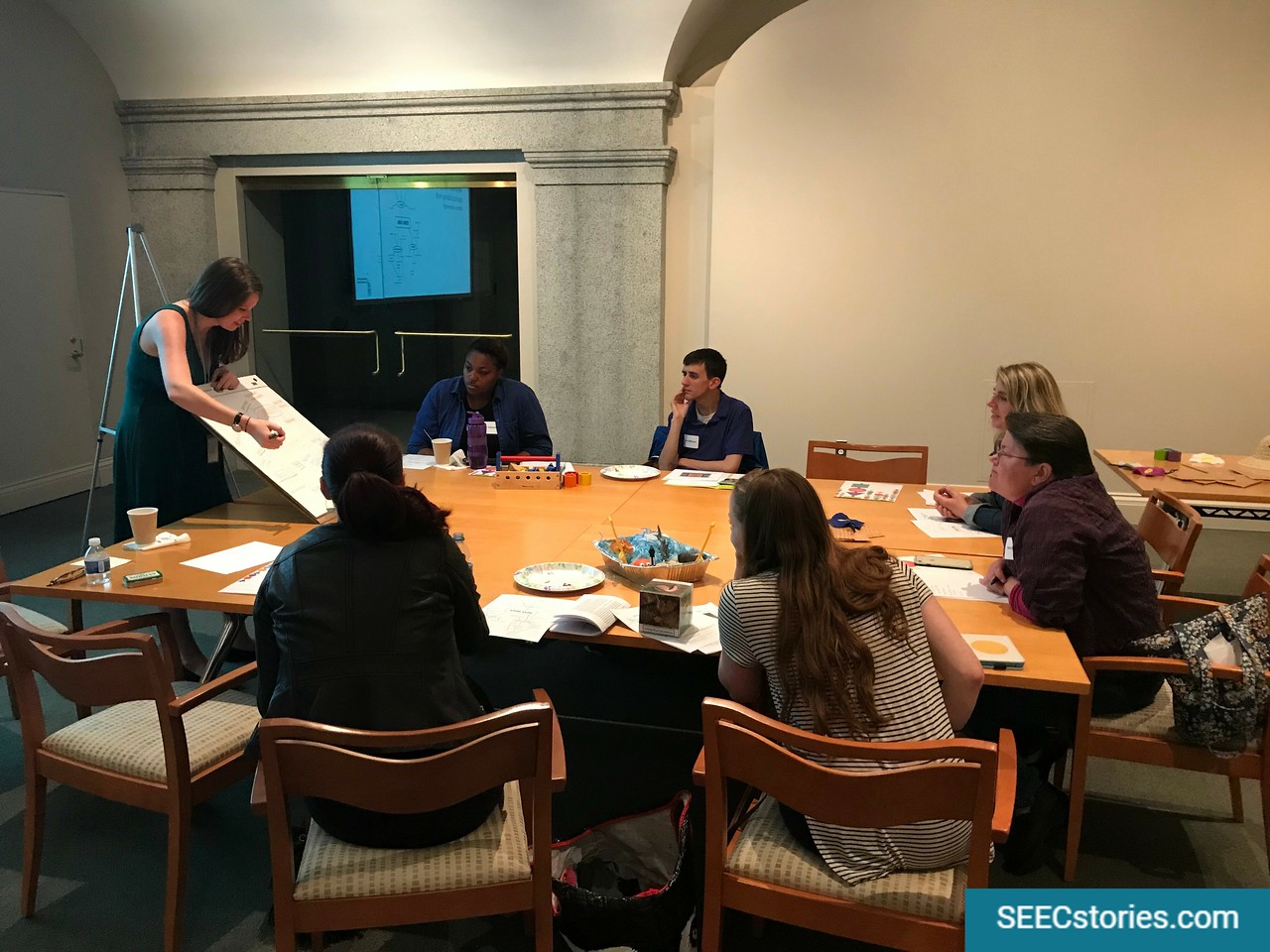 As a facilitator, I recognized my role in their discomfort and I felt like we needed to reconsider our approach – we were talking about inclusion after all. I had several questions:
 In addition to this specific experience, we have been thinking about our entire menu of educator workshops through a DEAI lens. Some of the changes are small and obvious, and others are still in the “thinking” phase, but as I said….it’s a journey. Below is a list of ways we are thinking about DEAI in terms of our professional development options. These perspectives are with us as we rethink content and introduce new conversations to our educator programs.
 Considering how the museum community views families and young children and how we can help museum professionals understand that children are capable and should be respected. Helping museums think through how to make their spaces accessible to families, and how to support family learning.


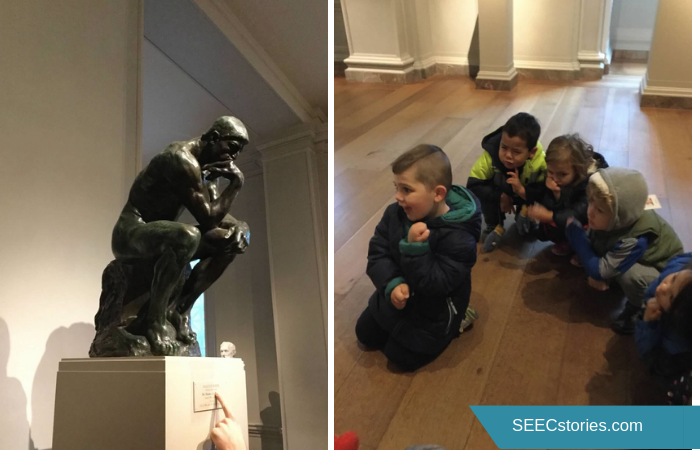
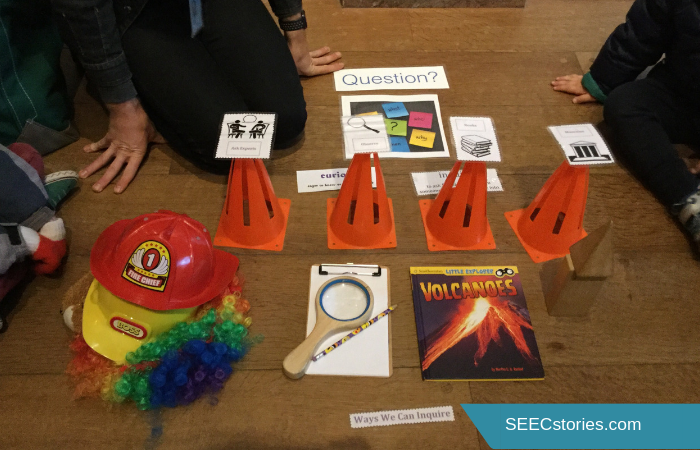

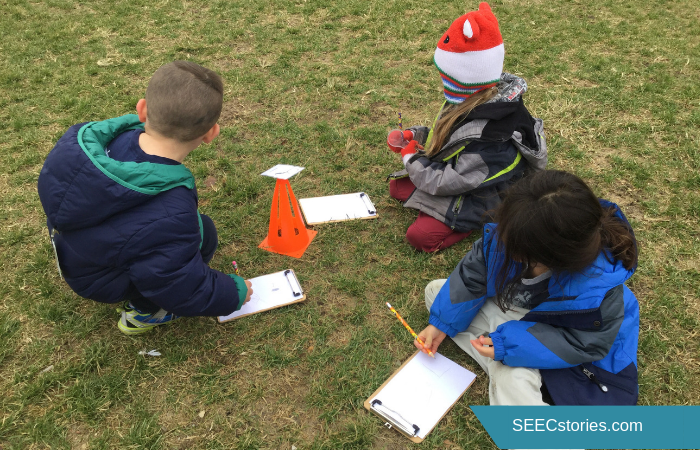
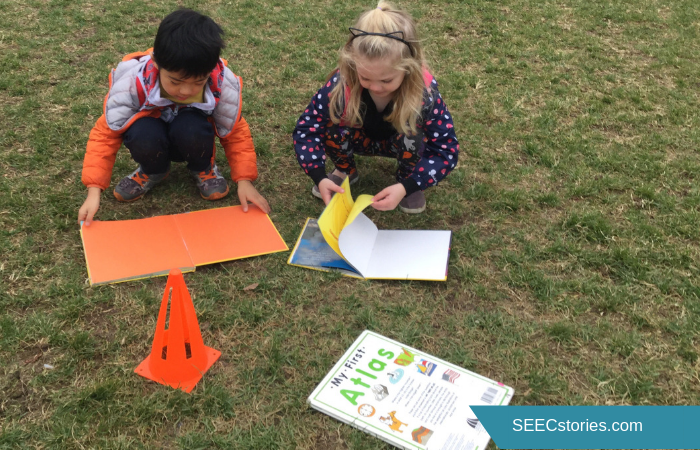


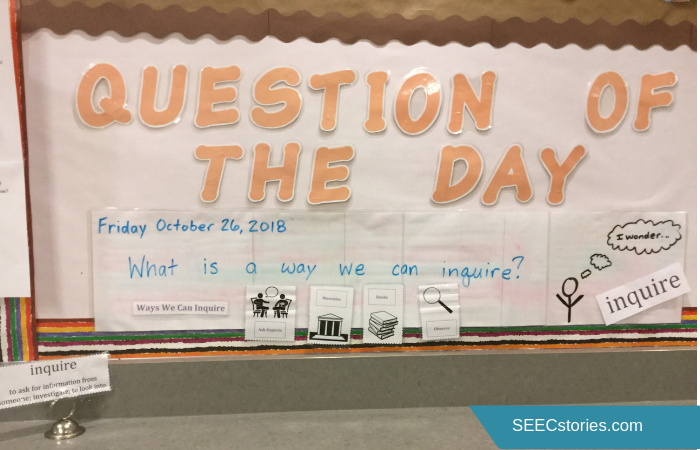
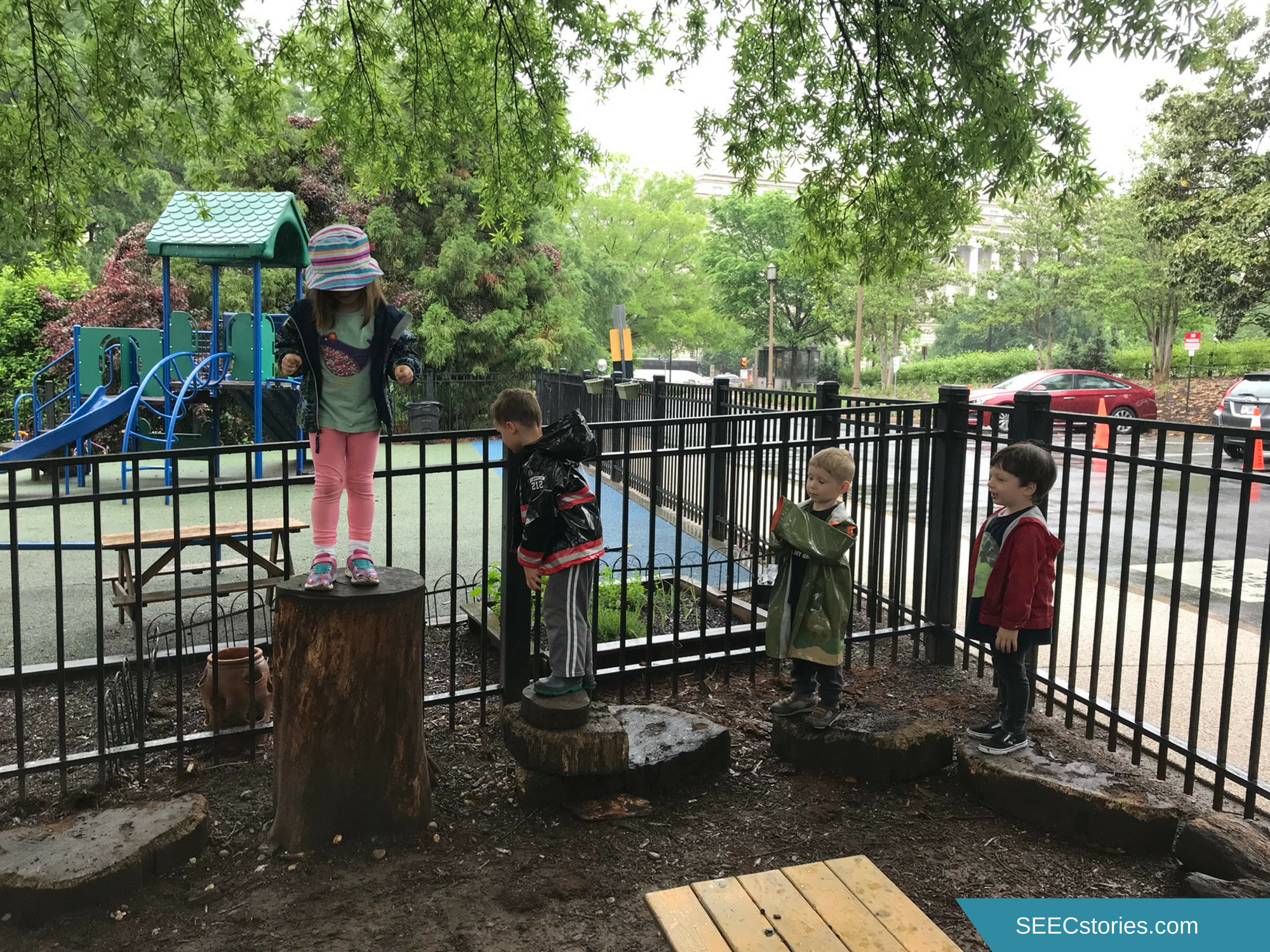

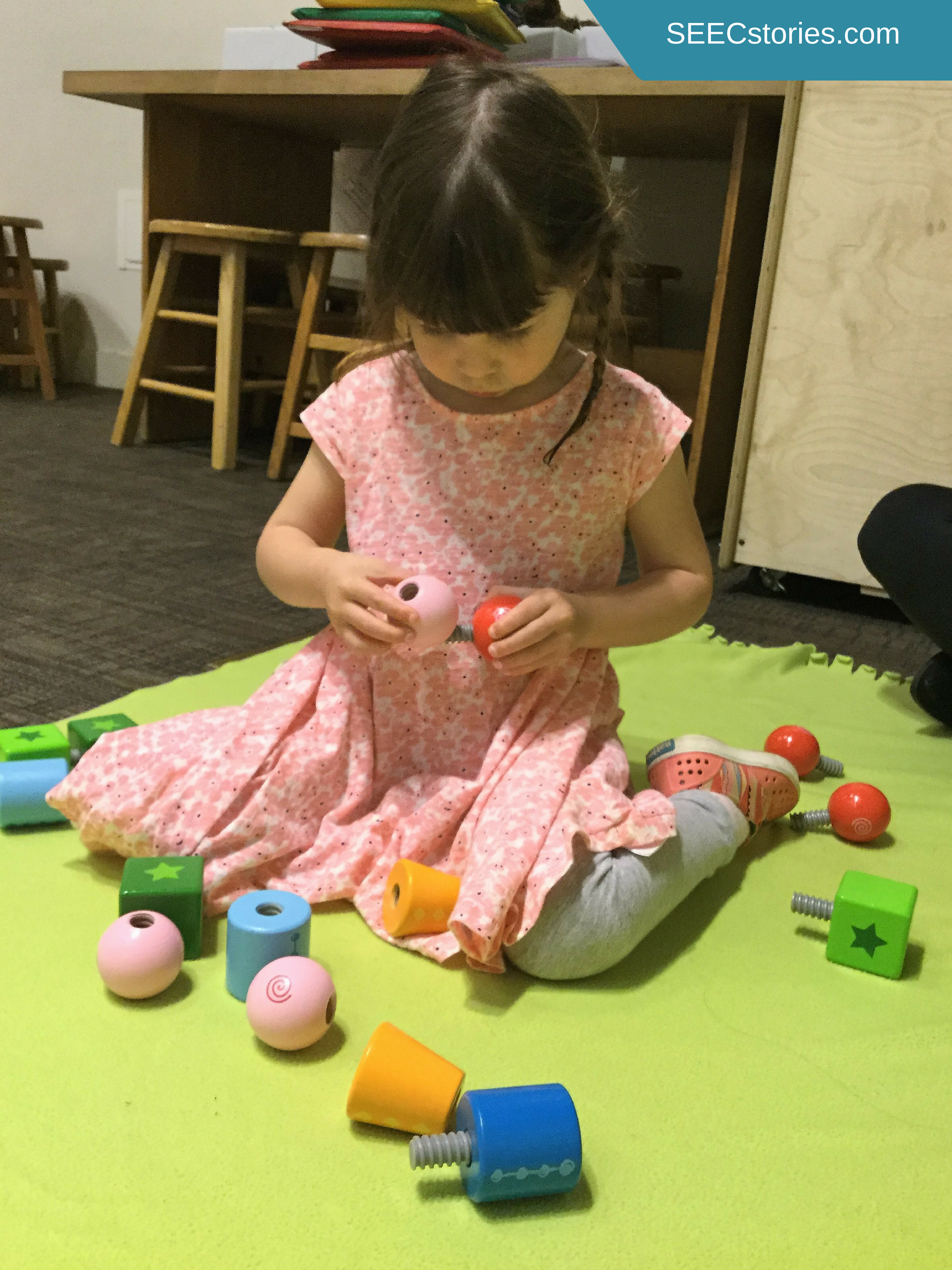
 Playing won’t give them the skills to be successful in life.


 While Allison believes that music is a vital program for children of all ages, she focused on the importance of music with the youngest of children. In particular, Allison highlighted how hearing familiar sounds or songs helps infants learn to self-regulate and self soothe. She also discussed how music helps to build babies’ language development. She noted how she likes to start her classes by singing a song that includes each child’s name. With the babies, she explains that they very quickly respond to hearing their own name by clapping, bouncing, or smiling.
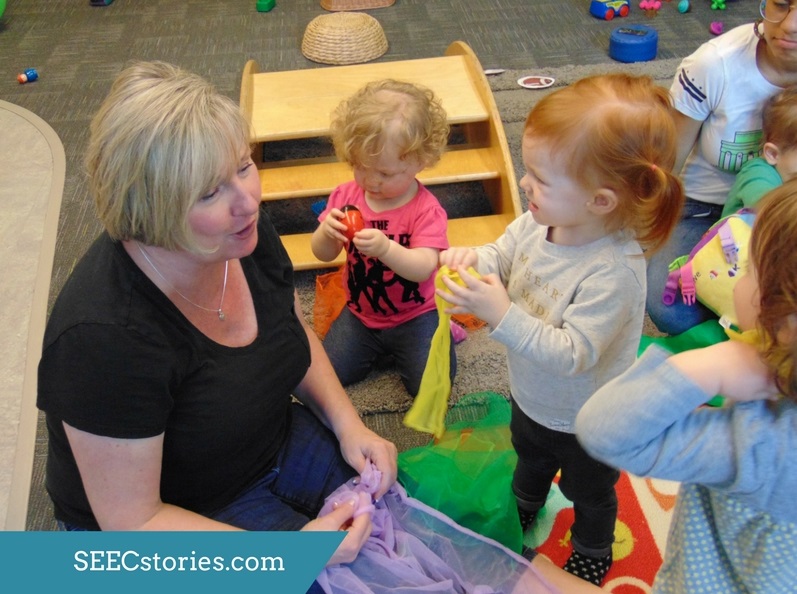 Beyond name recognition, Allison explained that singing hello to the individual is important for the start of each of her music classes. It gives her the opportunity to “build off who the child is” from the start of each class. She explained that it set the class up for social emotional growth opportunities since music class is the whole group singing with opportunities for the individual to shine.
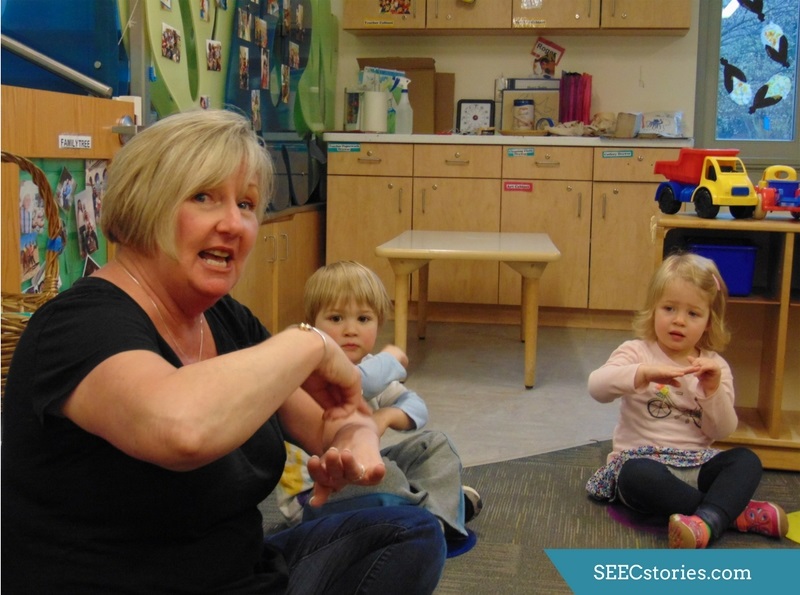 Her advice for teachers included using music as cues when transitioning in the classroom and repeating songs so that children can learn them. Once the class knows a song, then the teachers can add variety and build upon the songs so that they are challenging and offer new opportunities.
 Lastly, Allison told us some of her favorite songs. She said that she loves “
 As the last part of the object lesson, I laid out several objects and asked them to work together to recreate the painting. They needed no instruction, but went right to work, collaborating until the composition was complete. Was it exactly like the painting, no, but they had used these tools to create their OWN composition. They were quite proud and were completely engaged in the activity. I saw them looking back at the painting, rearranging objects and making their own decisions.


 seecstories.com